








![[기능의학교실_편집본] 마이크로바이옴 / 장 건강/ 장내미생물/ 디스바이오시스/ 천랩 천종식 교수](https://i.ytimg.com/vi/QYSKTXhkLr0/sddefault.jpg)








The gut microbiota influences chronic liver disease through multiple mechanisms: (1) Gut-derived metabolites like short-chain fatty acids and lipopolysaccharides travel via the portal vein to the liver, affecting lipogenesis and inflammation; (2) Bile acids are modified by gut microbiota and act as signaling molecules through FXR receptors, regulating liver function and intestinal barrier integrity; (3) Dysbiosis associated with metabolic syndrome contributes to NAFLD/NASH progression; (4) Fecal microbiota transplantation shows modest but promising effects on metabolic syndrome and liver disease, suggesting microbiota modulation as a therapeutic strategy.
Gut Microbiota in Chronic Liver Disease | Medical Lecture
Added:Understanding the basic anatomy and physiology of the liver, specifically the portal circulation system that connects the gastrointestinal tract directly to the liver (the gut-liver axis).
Familiarity with the progressive pathology of chronic liver diseases, including the differences between Non-Alcoholic Fatty Liver Disease (NAFLD), Non-Alcoholic Steatohepatitis (NASH), and cirrhosis.
Basic knowledge of immunology, specifically how the gut mucosal barrier functions and how bacterial endotoxins, such as lipopolysaccharides (LPS), trigger inflammatory cascades.
An introductory understanding of the human gut microbiome, including the concepts of microbial diversity, dysbiosis, and key bacterial phyla.
Exploring microbiome-targeted therapeutic interventions, such as the clinical efficacy of probiotics, prebiotics, and fecal microbiota transplantation (FMT) in managing chronic liver diseases.
Investigating how specific dietary interventions (like the Mediterranean diet) alter the gut microbiota composition and influence metabolic liver health.
Advanced study of metabolomics to identify specific microbial-derived metabolites that can serve as non-invasive diagnostic or prognostic biomarkers for liver fibrosis.
Reviewing novel pharmacological developments targeting the gut-liver axis, such as Farnesoid X Receptor (FXR) agonists and therapies stabilizing the gut mucosal barrier.
1.3K views15likes27:14Original Release: 2021-04-16
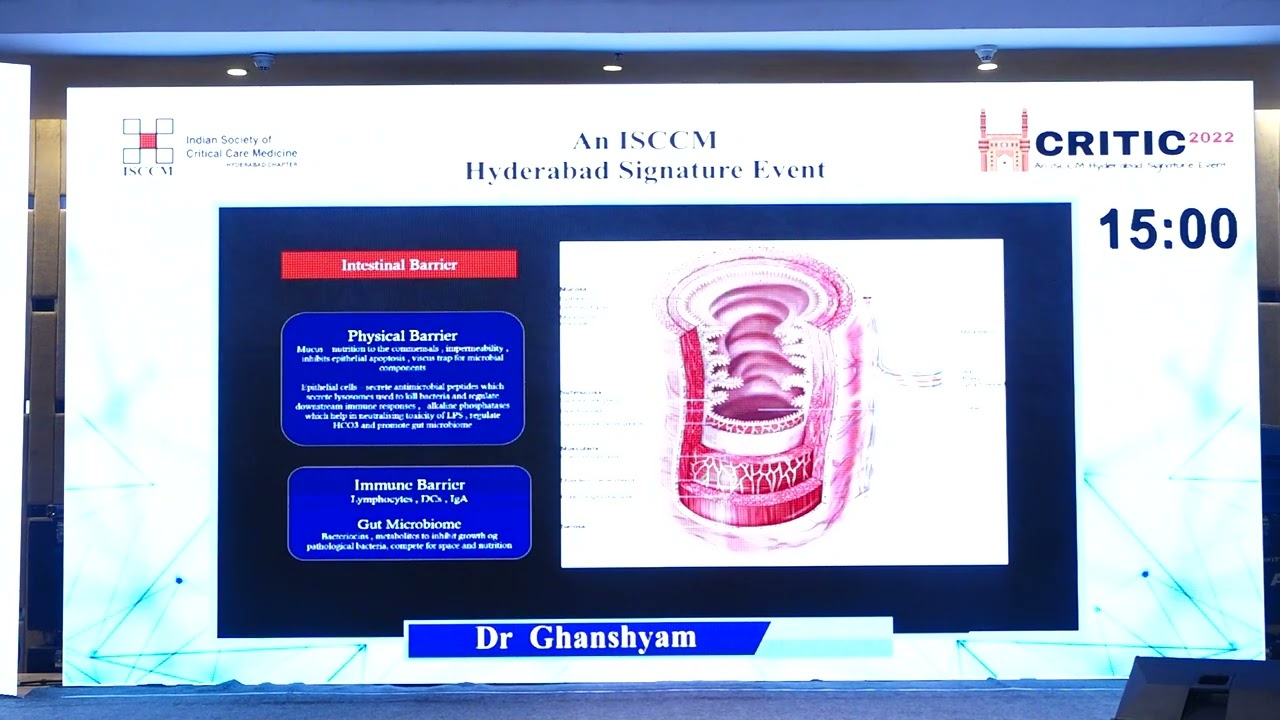
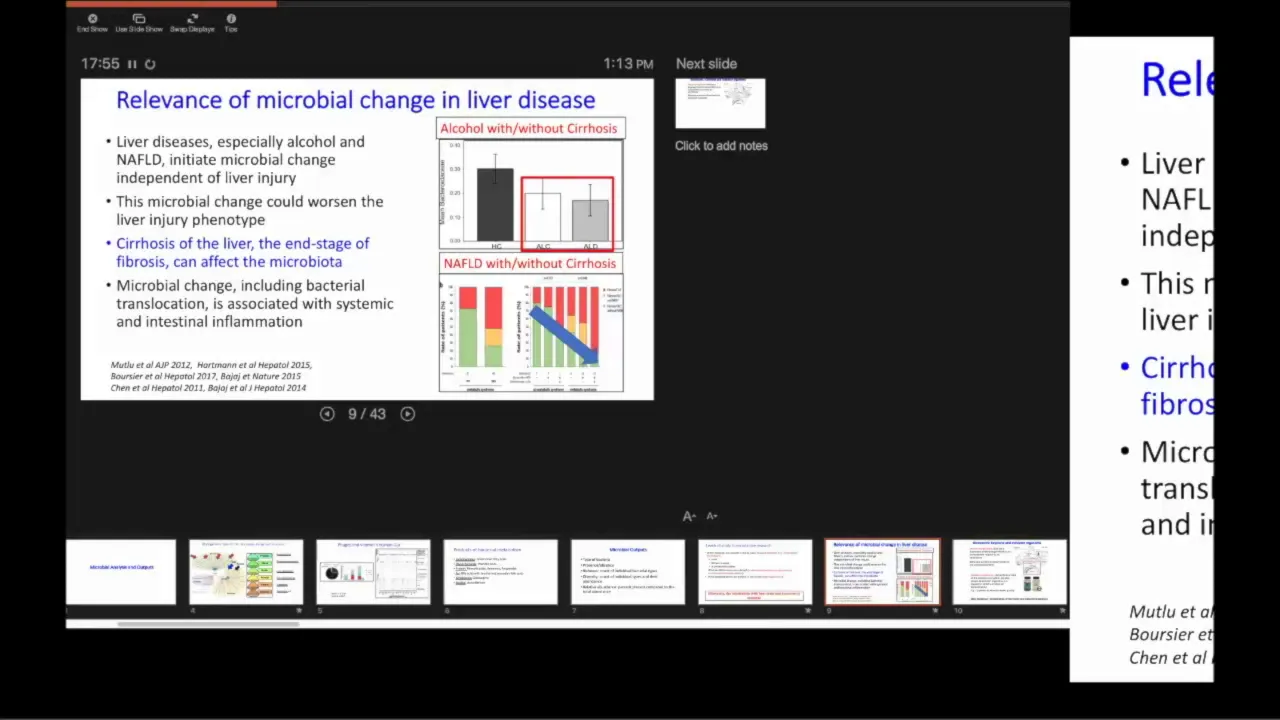
i'm not really going to talk about our own work in the lab rather i'm going to give you a 30 000 foot overview of the interaction between the microbata and chronic liver disease i was asked to focus primarily on non-alcoholic fatty liver disease and and nash because i think that this is probably the most relevant to hiv and the drugs that are being used but i will use as a couple of examples other disease processes and what i'm going to really try to do over the next 25 minutes or so is try to get this as close to human biology as possible so i'm going to use some i think salient examples of how the microbiome and their metabolites uh may be influencing chronic liver disease so this is what the order of my talk and we've already heard a really nice introduction i'm going to give you slightly different view of it so the the microbiome and we'll be hearing about the other types of organisms other than bacteria but for the purposes of this talk i'm going to be focusing on the bacteria we've already heard about the complexity of the gut microbata in particular so this is my 30 000 foot view of of our interaction with the microbotta so topologically obviously the gut microbot is in the external world and in the internal world is the mucosal immune system obviously oversimplified here but what separates us from the external environment is uh remarkably only one cell layer thick and that's the intestinal epithelium so we obviously produce substances like mucin and antimicrobial peptides that help to shape the composition of the microbiota and have alter its function in return the microbot interacts with us producing various substances as well as certain taxa that are more anti-inflammatory t-regulatory types of responses other more pro-inflammatory and a lot of interest uh now about the ability of the microbiota in general to program plasma cells to secrete specific immunoglobulin a for the purposes of my talk it's also very important to recognize that what you eat in terms of diet antibiotics and xenobiotics can not only shape the composition of the microbiota but especially diet can serve as a substrate for the production of various types of small molecules that we end up absorbing and the notion is that our ability to absorb this myriad of small molecules made by the gut microbiota which by the way i don't think we have a good understanding of how many molecules there are but a lot of people are studying this together with the effect on mucosal immunity we think plays a role in increasing incidence of diseases that we see associated with industrialization but i think it's very important to recognize that we have co-evolved with our microbiota largely to live in a mutualistic relationship this is something that was brought forth by jeff gordon probably over a decade ago and that the host provides a lot of benefits to the bacteria but then the bacteria provide a lot of benefits to us and what i've highlighted here are just some interactions that are actually relevant to the liver so let me now segue to uh liver disease uh and focus on nafld and nash some plausible interactions here so you know why what is the relationship between the gut microbiota and the liver and and why is it such an important um physiologic target well the the reason is obvious is a direct portal between the gut and the liver so the the liver receives 75 percent of the blood supply from the portal vein and so that means that a lot of things that are produced by the microbata actually influence the liver and because of this there are interactions between the microbiota and many different types of liver diseases and could spend an entire session talking about any one of these different types of diseases but let me just focus on nafldia and nash so non-alcoholic fatty liver disease and non-alcoholic steatohepatitis so this is sort of a spectrum of disease it begins as a steatosis just fat in the liver which is uh remarkably benign but for unknown reasons certain individuals will begin to develop inflammation and as we begin to see hepatocyte injury associated with inflammation we we develop another entity called non-alcohol external hepatitis or nash that then leads to the progression of the disease and fibrosis ultimately to cirrhosis and increasing the risk for hepatocellular carcinoma so nafld just fat in the liver it's an enormous uh finding in western populations about 25 percent of individuals in western populations have fat in the liver abnormal fat in a liver or nafld that's approximately 300 million uh people and then as i mentioned due to some other hit maybe genetic predisposition some individuals a fraction of these individuals not ins insignificant substance a group of these individuals will begin to develop inflammation a non-alcoholic steno hepatitis estimated to 50 to 100 million individuals and a proportion of those individuals will go on to cirrhosis and those are the people that we really worry about it's that conversion of inflammation into cirrhosis that increases the risk for for hepatocellular carcinoma ultimately leading to death and you know as uh hepatitis c virus is ultimately a curable disease now uh non-alcoholic dead hepatitis is going to be the probably the major indication for liver transplantation so so you know i'm talking to you about fat in the liver because it's relevant to hiv now we know that there are co-concurrent infections like hepatitis c virus that together with hiv can accelerate liver disease and that's why we treat both hcv and hiv together but we do know that hiv is associated with uh with liver disease and protease inhibitors can lead to insulin resistance and lipodystrophy and fat in the liver so i show you on the bottom right hand corner here just a picture of macrovesicular steatosis with minimal inflammation but the burden of of disease of liver disease leading to death is actually not insignificant so we really can't talk about fat in the liver nafld and nash without talking about metabolic syndrome because they're really very closely intertwined so metabolic syndrome as you know is is central obesity hypertension hypertriglyceridemia or dyslipidemia and insulin resistance so when we think about the interaction with the gut and and metabolic syndrome you can draw out a diagram like this so things that live in the gut lumen and i'm going to touch upon each one of these things throw through flow through intestinal tissue and it can impact intestinal tissue and lead to alterations in immunity as i mentioned uh production of gut hormones there are neuronal inputs that that can be essentially uh affects centrally mediated mechanisms that affect energy balance but these same types of products can also have an effect on the liver both inputs leading to alterations in energy balance and then promoting metabolic syndrome so when we think about the animals excuse me the animal models that we have for obesity and metabolic syndrome associated with the gut microbata there are a number of different types of of animal models here and they have different types of phenotypes and you see different types of associations i'm not really going to get into any one of these things in particular i just want to give you an overview and one way of looking at this is that there are some animal models of metabolic syndrome and diet-induced obesity through the microbiota that are diet dependent others deal with small molecules and short chain fatty acids are produced from fermentation of undigestible carbohydrates by the microbota and it's been a target of a lot of intense interest and then as i mentioned immune function also has an input through the development of metabolic syndrome and even anatomic and so there are a number of papers looking at roon y gastric bypass the effect on the microbata and functionally what that might mean again mostly in animal models so i mentioned this on a previous slide one of the most salient features of the gut microbiota it's deeply fermentative so it digests complex carbohydrates into short chain fatty acids that are used as an energy source and leads to lipogenesis in the liver and that might be important for nafld but these short chain fatty acids also have epigenetic effects and they also activate g protein-coupled receptors so the whole notion that these molecules that are produced by the microbota or modified by the microbiota could actually be signaling molecules to receptors is a very important concept that i will be coming back to later on in my talk again with that 30 000 foot view in mind what are the different types of pathways when we think about the input of the microbota into metabolic syndrome and obesity well roughly divided there are microbial metabolites that can either affect epithelial cells themselves and lead to inflammatory processes but as i mentioned can can induce various types of products like peptide yy or activate various type of g-protein-coupled receptors so there are examples of all of these in the literature looking at various cell culture model systems various type of knockout mice to show that for example again short-chain fatty acids will have this effect that ultimately leads to inflammation metabolic syndrome and obesity but the other way of looking at it is really thinking about the direct effect of microbes on immune activation and again so there are various models tlr5 and knockout moss is one particular model that leads to dysbiosis and then alters the microbiota that leads to an inflammatory process so there are many examples of this but it's not the mic it's not the metabolites but the microbes themselves that are playing a role in um in in metabolic syndrome all right so what about diet a diet obviously is a major driver of obesity in fact i'm a believer that that's the primary reason for the increasing incidence of of obesity and metabolic syndrome uh so this is uh the only piece of work that i'm going to show of that we published many years ago and this was an association between all these different types of micronutrients and different bacterial taxa the positive correlations are in red the negative correlations are blue and the intensity of the the colors indicates the strength of the correlations i just want to point out one thing and that there are two genre here bacteroides and pravatella that have distinctly opposite associations with micronutrients and i'll come back to that on my next slide so just remember back to rudy's in pravitalla so there are associations between a diet and humans and the microbiome and in general we see a decrease in microbial richness that's a decrease in numbers of bacteria in their genes that are associated with both disease states and the consumption of a westernized diet so what do i mean by that individuals with marked obesity insulin resistance dyslipidemia inflammatory phenotype have low bacterial richness on the other hand consumption of an agrarian diet is associated with increased bacterial gene richness and energy restricted diets increase bacterial gene richness so this is essentially what we see in individuals living in industrial in agrarian cultures for example africa having higher microbiome richness versus individuals living in industrialized nations and individuals in a more agrarian culture have a decreased incidence of various types of diseases immunological diseases as well as metabolic diseases that doesn't obviously necessarily mean as the microbiome that's doing that obviously the microbiome could simply be responding to diet but let me show you um a little bit of controversy but there is uh some i think an important point when we when we talk about this one one issue is that how you look at the microbiome sort of is very sensitive to the way you analyze the data so this is uh this is the notion of enterotypes that was uh put forth by the european metahit group and the idea was that individuals could be classified based on the composition of microbota and they they they they claimed that there were three major drivers of this associations with ruminococcus predominant bacteroides predominant and and pravatella predominant i think the the uh this there's been a lot of discussion about this um and i think that the the best uh i think uh evidence that we have right now is it's more of a gradient and that extremes you have bacteroides predominant and prevalent predominant individuals but the interesting thing is that they seem to co-exclude each other uh in the same environment and that is individuals that have high bacteroides have low prevotella and vice versa that has been demonstrated time and time again both computationally as well as in many different data sets so the interesting thing is that individuals largely living in more agrarian cultures tend to have a higher abundance of prevotella and lower abundance of bacteroides and individuals living more in industrialized nations have just the opposite higher levels of bacteroides and lower levels of pravatella so why do i tell you about this well there was a there was a paper that was published by frederick backhead which i think was quite interesting so this is again trying to get a little bit closer to humans so it's actually been known for a very long time that the con that the consumption of uh fermentable carbohydrates that we can't digest and in this case frederick was looking at barley kernel residues that seems to improve glucose tolerance through mechanisms that have not been completely well characterized but in human populations individuals that have higher levels of prevotella and lower levels of bacteria seem to respond better to this dietary intervention in terms of glucose tolerance and then he goes on to show that it's trans the phenotype is transferable on mice and gets into some mechanisms the point i think is that if if this is reproducible that and very robust it could be a biomarker for individuals that might respond to a certain type of dietary intervention when we think about metabolic disease the other and more aggressive thought would be well maybe you could change somebody's microbiota so they would respond better to dietary interventions so i think this is where the field is sort of going and i you know i started with a relatively controversial notion that has evolved in nature uh in in terms of analyses to what we actually observe in human populations and now maybe to some type of functional relevance to metabolic disease again with the notion that we're trying to get a little bit closer to humans what do we know about metabolic syndrome and the gut microbiota in terms of transfer well you all know the story about fecal microbiota transplantation which is exceptionally advantageous and individuals have that have recurrent cluster of difficile infection a lot of you may also be aware of the work by max newdorp where he transferred the microbot of lean individuals to individuals that had metabolic syndrome and could show a statistically significant but modest improvement when he did this now he's he's gone on to expand this cohort and has shown that this that this continues to be the case the effects are relatively modest however this is very important data because this is human biology there's a lot of information in animal models as i've shown you but this is one of the few examples that in humans that a significant alteration of the microbiota using a very complex community approach might have an impact on human biology so i think we should stay tuned these are very interesting data sets that certainly bear a lot more of analysis with that notion in mind there are a lot of clinical trials ongoing with fmt looking at many different types of disease states and i highlighted the ones that that are associated with nafld national obesity and metabolic syndrome there's a lot of interest in this because it works so well and clustered a difficile infection obviously that's an infectious process right that that's not a complex disease entity with a genetic input and it's not necessarily a chronic disease so i think the notion that fmt would be advantageous in many of types of these diseases i think waits to be determined but i would not be terribly optimistic that you would see a very significant input nevertheless i think understanding whether or not you see anything at all is extraordinarily valuable so the collection of the biospecimens in these in these data sets if a subset of individuals respond or if they don't respond analyzing those data sets tells us something about human biology because that's really the only approach that we have right now so now let me talk about the gut microbiome and nafld and nash again building on some of the concepts that i talked about earlier so the concept is again things that live in the gut can transmit things directly to the liver but in order to get to the liver you have to get through the barrier which i'm sorry this looks terrible here but i'll walk you through it so it turns out that the microbiota obviously makes various types of metabolites ethanol trimethylamine short-chain fatty acids then then flow into the liver and can have an effect on lipogenesis for example but then bacterial products lipopolysaccharide being one example of this can flow to the liver where it can play a role in inflammation and there's a notion that that lps itself through toe like receptor four might play be playing a role in progression of cirrhosis or fibrosis in the liver but then alterations of the host themselves can alter the microbiota leading to dysbiosis that then accentuates this circular phenomenon so the the issue is that we the microbiota can can transmit signals to the liver but the leaky gut is a common theme in a lot of these diseases in which the microbiota is trying to communicate to the host and that'll be an important concept that i'll come back to uh towards the end of my talk all right so so the notion that the microbata function might be altered uh with nafld and nash thereby those taxa themselves or their byproducts could be accentuating disease is is inherent in the notion that the microbot is different in nafld and nash and so there are a number of studies that suggest that there is a difference you can't really read any of this and that's on purpose because it's not really important that you know that you you can't read any of these things because the effects are relatively modest at least in my mind and not completely reproducible between studies yet there are some variations nevertheless there are stronger associations with chronic liver disease in a microbiome and so cirrhosis is one of those areas chronic end stage cirrhosis is associated with a very strong impact on the microbiota as well as the the genome of all those organisms to the degree that discriminatory index can be developed that would could be used diagnostically to identify patients with cirrhosis now we obviously have many other ways to identify cirrhosis but it's proof of concept that the effect is strong enough in certain types of liver disease that you could develop a diagnostic modality but this will also maybe tell us something about the pathogenesis of disease all right and then in my last portion of my talk let me just talk about bile acids because i think it's relevant to therapeutic interventions so so we all know that bile acids are produced in the liver from cholesterol into conjugated bile acids and and they're dumped into your intestinal tract and then they're reabsorbed in the terminal ileum and returned to the liver so 90 of those bile acids undergo enterohepatic circulation they're returned to the liver but that's a highly regulated process as i will show you so bile acids are important for dietary fat and vitamin nutrient absorption because it's an emulsion has emulsifying effect but bile acids also directly affect bacteria they have profound bacterial static effects that are very dependent on a bacterotaxa bile acids are the new hormone they are signaling molecules so they are the ligands for nuclear hormone receptors like fxr and g-protein-coupled receptors like tgr-5 so the notion is that intestinal microbiota could affect the liver by modifying bile acids and altering for example fxr signaling so we know that gut microbiota converts primary to secondary bile acids i'll show you that in a minute and then there's evidence that the that bilateral production in germ-free mice versus colonized mice is is altered and it's through the activation of fxr again sort of closing the loop on the effect of the microbata and liver function and importantly it's been demonstrated that activation of fxr can improve intestinal barrier function so again primary bile acids from the liver are metabolized by the gut microbiota through deconjugation and then dehydroxylation into secondary bile acids that are primarily bile acids that we find in the colon this is actually quite important and clustered a difficile infection in ways that i really don't have time to talk about but these do have very important physiologic impacts on the host so thinking about the fxr fxr is a nuclear homo receptor found in many different tissues but at very high levels in the intestinal epithelium and the terminal ileum the same cells uh in in which enteropathic circulation actually occurs the natural ligand for fxr the most uh potent ligand is kino deoxycholic acid the primary bile acid the activation of fxr and the terminal helium leads the production of a soluble meter called fiberglass growth factor 19. fgf19 flows to the liver where it then inhibits bile acid production fxr can also be activated directly in the liver so the notion is that bile acid activation of fxr shuts down bile acid synthesis so it's a it's a it's an autoregulatory loop there is a drug that is currently in develop right now that i'll talk about o beta colic acid which is a very potent fxr agonist and the notion is that by shutting down bile acid production in the liver that might be advantageous in liver disease and as i mentioned this whole pathway here could be significantly regulated body cut microbiota because we know that it is in germ-free versus colonized mice so what's the active what's the what's the notion that activation of fxr is beneficial in a treatment of liver disease both rodents and humans well there is uh there have been a number of studies in in chronic liver disease in rodents and i just show you one of these here that the use of this o beta colic acid this derived a bile acid uh can be beneficial in cirrhosis by decreasing the rate of gut bacterial translocation it does it through several mechanisms it decreases bacterial fecal load there's a partial improvement in dysbiosis most importantly it investigators have shown at least in rodent models that improves intestinal barrier function and all these things together reduce liver fibrogenesis but but we actually see an input in humans and this is very important there is no current treatment for non-alcoholic steatohepatitis so this may be the first treatment for this o beta colic acid and since this was a placebo-controlled trial published in lansing about two years ago where investigators using this drug show the significant decrease in inflammation in fibrosis and improvement in liver function tests through the use of this now there are some challenges because it somehow alters lipid profiles but there are there's there are very large clinical trials ongoing right now and there are a number of different types of formulations of these fxr agonists again how the microbiota could interact with this because the microbiota has an effect on bile acids it's something that is of significant importance in that field so again getting back to my very first slide here uh just sort of summing up what i've shown you is that things that live in the gut lumen especially got microbottom may be important for nafld and nash diet and weight control is important and i gave you a notion that prevotella abundance in the microbota may be an important target reversing dysbiosis might be something that we would think about and i gave you a early notion of how fmt could be a proof of concept that altering the microbata may be important in metabolic syndrome bile acids are important through activation of fxr and other g-protein-coupled receptors and then enhancement of barrier function to prevent the transmission of microbes their products or their metabolites to deliver might be important concept and fxr may be one of those potential potential targets to enhance barrier function so that's it and again thank you very much for giving me the opportunity to speak to you
Up Next

52:36
Hepatobiliary Lecture: Jaundice, Gallstones, and Cirrhosis
@Countdown2Finals
2.4K views•2013-02-18

48:47
Graphic Medicine: Comics for Collaborative Healthcare Communication
@nationalpatientadvocate
189 views•2023-12-04

10:28
Neuroanatomy: Central and Peripheral Nervous System Divisions Explained
@AKLECTURES
136.2K views•2014-09-20
3:05
Stages of Labor and Vaginal Birth | Childbirth Animation
@nucleusmedicalmedia
52.1M views•2017-08-18
Related Study Plans & Knowledge Roadmaps
Structured learning paths in Medicine
medicine
Abnormal LFTs: Diagnostic Workup & Pathology
01Liver Anatomy and Basic Physiology
02Introduction to Liver Function Tests (LFTs)
03Hepatocellular vs. Cholestatic Patterns
+ 3 more learning modules
12h6 modules
Explore Roadmap
medicine
Analyzing Blood Smears: RBC, WBC & Platelets
01Introduction to Blood Components & Smear Preparation
02Normal Morphology of Blood Cells
03Erythrocyte Pathologies & Morphological Variants
+ 2 more learning modules
12h5 modules
Explore Roadmap
medicine
Mechanical Ventilation: Waveforms & Alarms
01Anatomy and Physiology of Breathing
02Introduction to Mechanical Ventilation & Core Modes
03Ventilator Settings and Waveform Interpretation
+ 2 more learning modules
12h5 modules
Explore Roadmap
medicine
Neuro Exam: Localization & Stroke Syndromes
01Foundations of Neuroanatomy and Vascular Supply
02The Neurological Examination: Step-by-Step
03Principles of Neurological Localization
+ 3 more learning modules
18h6 modules
Explore Roadmap