![Chemical Bonding and Molecular Structure One Shot NEET 2022 Chemistry Preparation [Complete]](https://i.ytimg.com/vi/lsxrI9AOF6Q/maxresdefault.jpg)












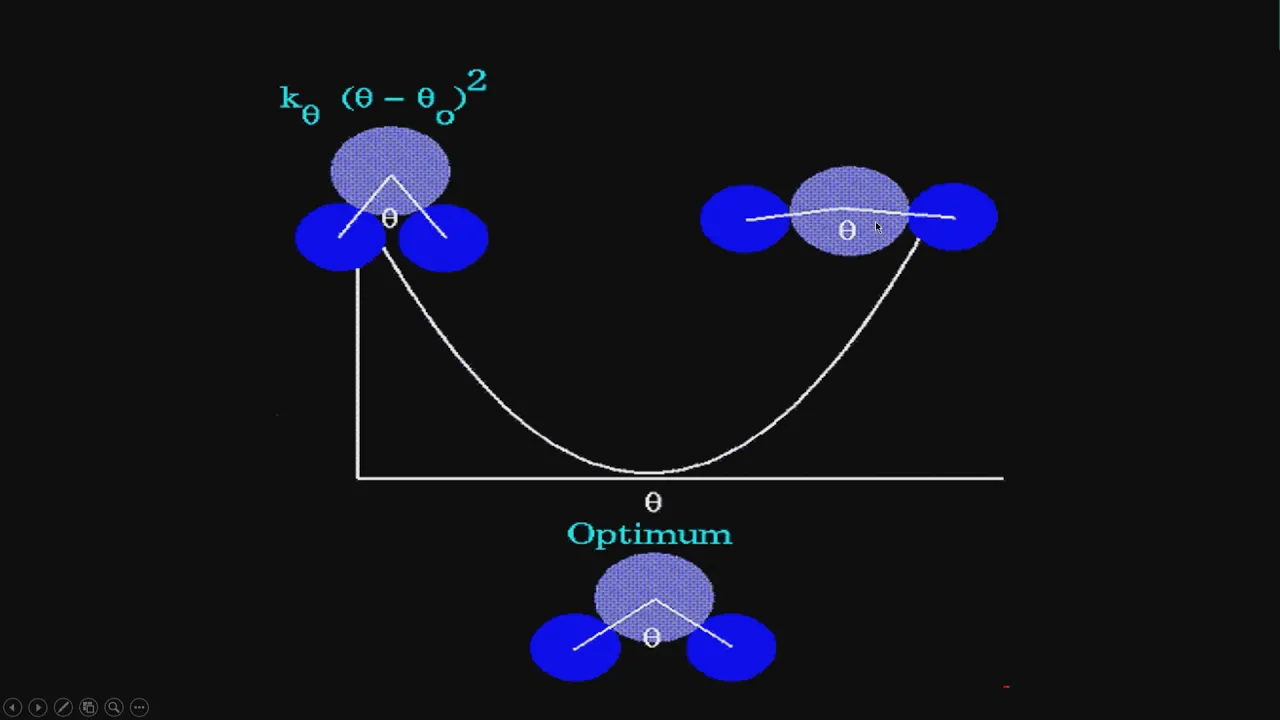













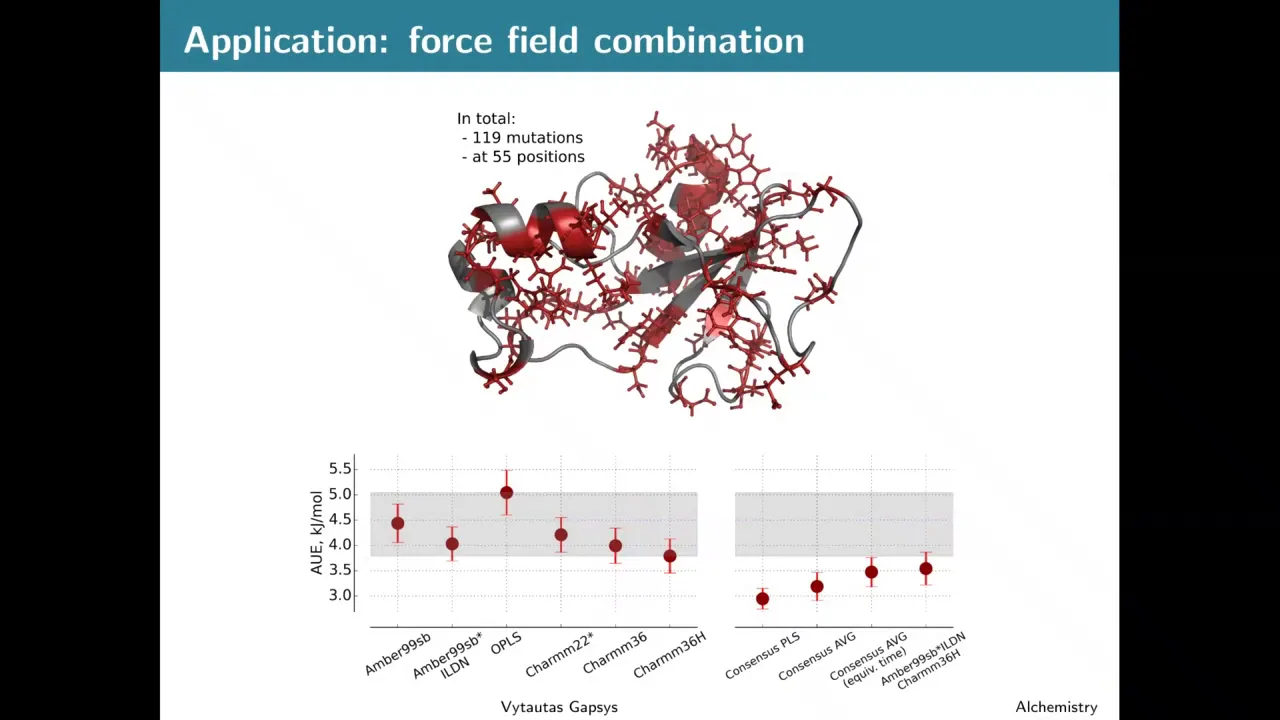

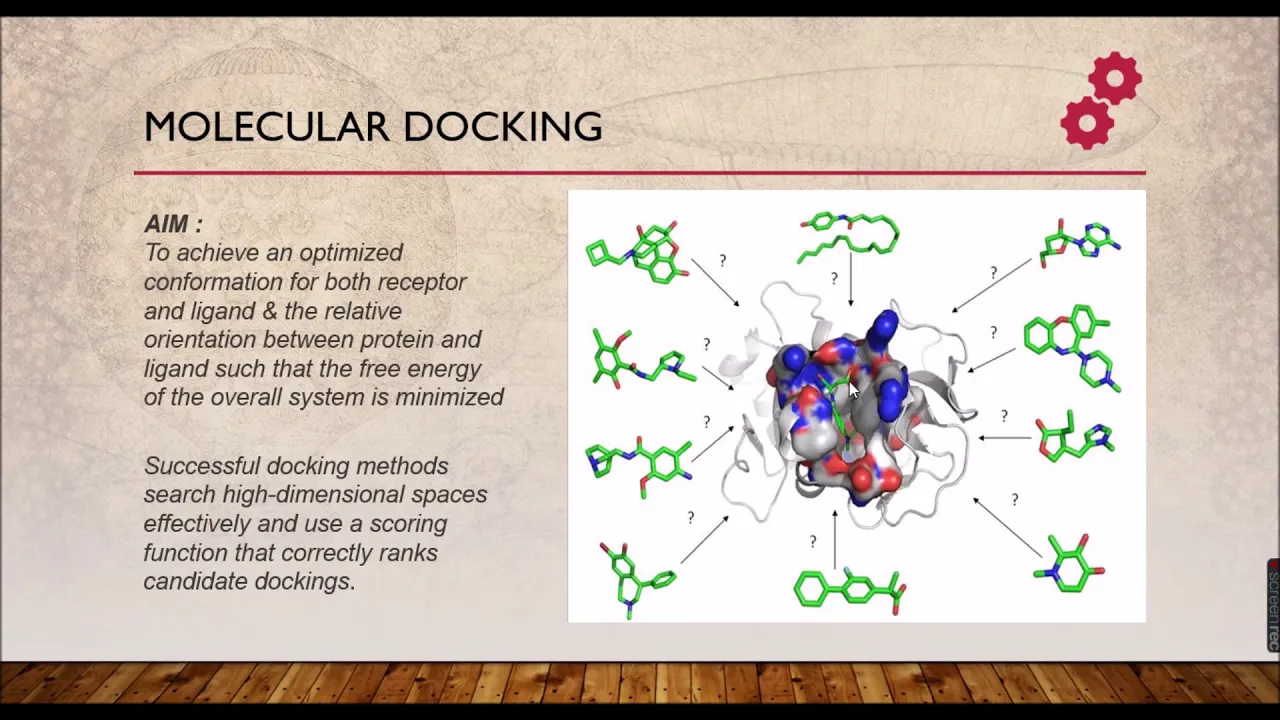

Force field parameters are arbitrary scalar constants that characterize elements of a molecular mechanics simulation system; they define the energy contributions from various interactions such as bonds, angles, and non-bonded forces, with parameters like bond equilibrium lengths (req) and spring constants (KB) needing specific units (e.g., KB in kcal/mol·Å²) to ensure dimensional consistency in energy calculations, and these parameters are typically determined through experimental data analysis, quantum mechanical calculations, or published force field databases to achieve generality, transferability, and accuracy across different molecular systems.
Force Field Parameters in Computational Chemistry
Added:Fundamental molecular structure and chemical bonding concepts, including covalent bonds, bond lengths, and molecular geometry.
Basic classical physics principles, specifically Hooke's Law and the concept of potential energy in a harmonic oscillator.
The conceptual distinction between quantum mechanics (electronic structure calculations) and molecular mechanics (classical atomistic approximations).
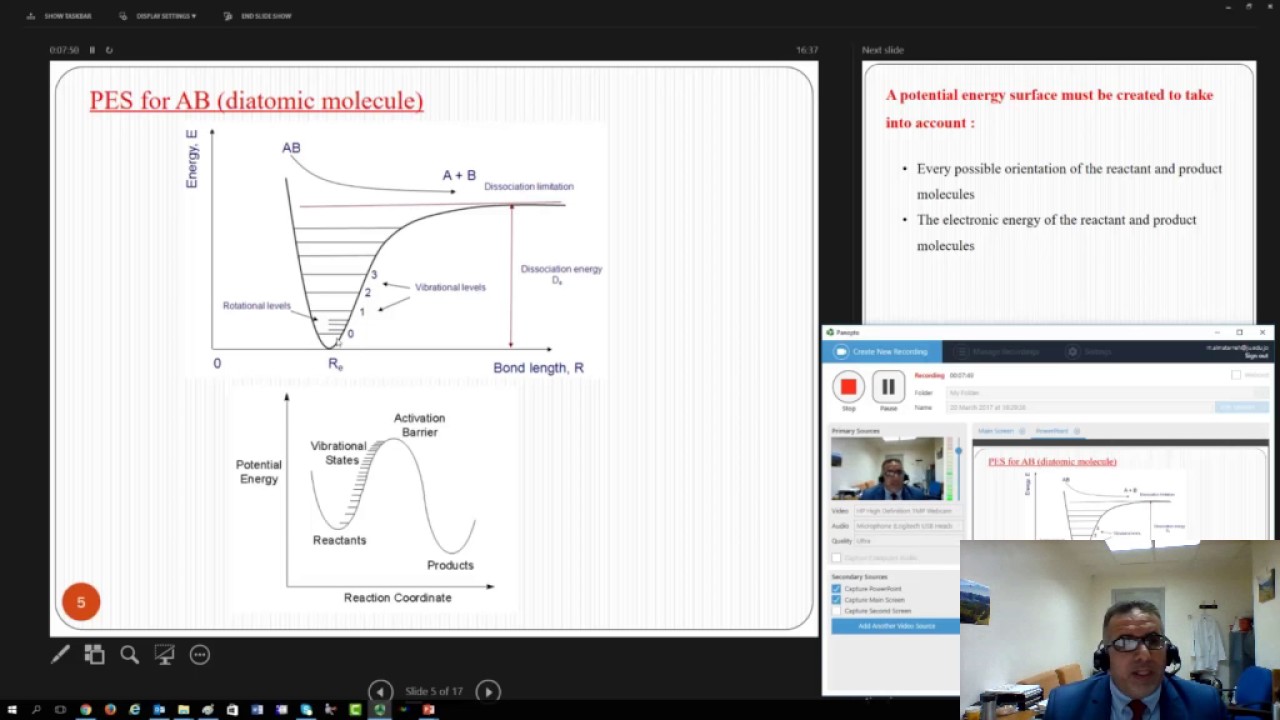
An understanding of Potential Energy Surfaces (PES) and how molecular energy varies with changes in atomic coordinates.
An introduction to specific standard force fields (such as AMBER, CHARMM, and OPLS) and the methodologies used to parameterize them from quantum calculations or experimental data.
The mathematical formulations for non-bonded interactions, including Lennard-Jones potentials for Van der Waals forces and Coulomb's law for electrostatics.
How to set up and run Molecular Dynamics (MD) simulations, which integrate these force fields over time to study molecular motion.
Advanced computational chemistry applications, such as protein-ligand docking, free energy calculations, and conformational sampling in drug discovery.
21K views215likes6:39Original Release: 2017-03-16
this video will discuss force field parameters so a parameter in general is just some arbitrary constant whose value characterizes some element of a system in our simulation so for example in the total energy function in Amber which is a molecular mechanics energy function the total energy has a term which depends on the bonds in the system you have Each Bond has an energy determined by a parameter KB times the bond length minus a parameter req quantity squared and then there are various other terms in the energy function that continue on from there so the energy overall frequently might be indicated in a unit like kilocalories per mole or kilojoules per mole or joules or any kind of any kind of unit the unit I'm frequently going to be using in this chapter and others will be kilocalorie per mole and a common unit of distance for Atomic scales would be angstroms that'll also be the unit I'm using for distance so in order to make this total energy be in kilocalories per mole we need to make all these things cancel out so we have R is going to be in angstroms here so we're subtracting something that has uh or subtracting from something that has units of angstrom so we better be subtracting angstroms there so our equilibrium Bond length there has a unit of angstroms and multiplying something by angstroms to get KCAL per mole or multiplying angstrom squared because we Square this multiplying something that's angstrom squared by KCAL per mole we better get KCAL per mole as a result so our K here which is our what we would call a spring constant in the next video is equal to is units of KCAL per mole angstrom squared so for example the water molecule in Amber 95 which is the uh the exact energy function that we're going to be using for H2O the oh Bond length in water in Amber 95 has an equilibrium Bond length of 0.96 angstroms and it has a spring constant of 553.0 kilocalories per mole angstrom squared so these values are typically published somewhere or they're deep inside of some program that you can download and install some of them free some of them not free so for example the Amber 95 parameters were published in this paper which I mentioned in the previous video as well Jax 1995 117 page 5179 is the citation you can take a look at that if you have some type of access to uh to online journals through your institution and in this chapter I'm going to be going through a program that I've used to implement that energy function and some other stuff so from my GitHub account you have the computational chemistry repository as in the previous chapter and then from the top level directory of that we have the scripts molecular mechanics mm lib directory and all the Amber 94 95 or 94 whichever it is parameters are in this uh are in this module param dot pi and this includes some python dictionaries that include all that good stuff so if we go to bond parameters and we find for example h w o w which one comes first o w h w you see 553.0 0.9572 and those are the two parameters that I just mentioned there for our Amber 95 water oh Bond okay so where do we get these parameters from how do we choose them so there are several different strategies you could use depending on your goal applications you might look at various structures either Crystal structures of of various you know proteins crystals Etc maybe you'll look at Fair like electron density Maps or other kinds of things maybe the maybe you're trying to reproduce the density of water or to choose this Bond length you might look at Spectra you might look at IR Spectra so they probably chose this spring constant to represent to uh to replicate the vibrational frequency of some of the bonds in water you might look at NMR Spectra can have information about various structural properties inside of it or you might come from more advanced simulations so and what's increasingly being done these days is you'll do some type of quantum mechanics based simulation to derive parameters which might give you some potential energy surface from which you could derive these parameters for other molecules where the experimental information might not be available or might not be very high quality okay so some types of properties that you would desire in parameters you would desire that they are General that they can apply to any kind of any kind of molecule any kind of situation so I wouldn't want different parameters for water whether it's interacting with different kinds of molecules I don't want to have to you know redefine it if it's at a different temperature I don't want and I might want um you know parameters for a wide variety of molecules I might want them to be transferable so for example if I derive parameters for butane I probably want those parameters to work for pentane or hexane as well hopefully those are pretty similar and I can transfer those parameters from similar systems and interchange them and then lastly we desire that they would be accurate so whatever type of property that we're hoping to reproduce in a simulation we would hope that our choice of parameters is such that whatever properties we desire to simulate we're going to be able to do so with some type of high degree of fidelity to the original chemical system that we're trying to model
Up Next

50:06
Understanding Basis Sets in Electronic Structure Theory
@mitocw
24.3K views•2019-01-09

83:56
Biocatalysis and Catalysis in Islatravir Synthesis | Merck Webinar
@SCIwheresciencemeetsbusiness
675 views•2020-10-08
8:45
Z-Matrix Format | Computational Chemistry Explained
@TMPChem
30.4K views•2017-03-16

17:31
Edible Water Bottles: A DIY Guide to Sodium Alginate Spherification
@ryan
10.5M views•2019-06-21
Related Study Plans & Knowledge Roadmaps
Structured learning paths in Chemistry
chemistry
Nuclear Chemistry: Decay, Meds & Fuel Cycle
01Introduction to Nuclear Structure and Radioactivity
02Decay Dynamics and Kinetics
03Radiation Interaction and Detection
+ 2 more learning modules
24h5 modules
Explore Roadmap
chemistry
Supramolecular Chemistry: Forces & Machines
01Foundations of Chemical Bonding and Intermolecular Forces
02Introduction to Host-Guest Chemistry
03Thermodynamics and Dynamics of Self-Assembly
+ 2 more learning modules
16h5 modules
Explore Roadmap
chemistry
Photochemistry: Excited States & Reactions
01Foundations of Light-Matter Interactions
02Molecular Orbitals and Electronic States
03Photophysical Processes and Jablonski Diagrams
+ 2 more learning modules
18h5 modules
Explore Roadmap
chemistry
Coordination Chemistry: Bonding & Properties
01Introduction to Transition Metals and Ligands
02Crystal Field Theory (CFT) and Geometry
03Magnetic Behavior and Spin States
+ 2 more learning modules
14h5 modules
Explore Roadmap