

















![[Sherrill Group] Summer Lecture Series in Theoretical Chemistry 2012: Basis Sets](https://i.ytimg.com/vi/ae_HNqR3UmM/maxresdefault.jpg)



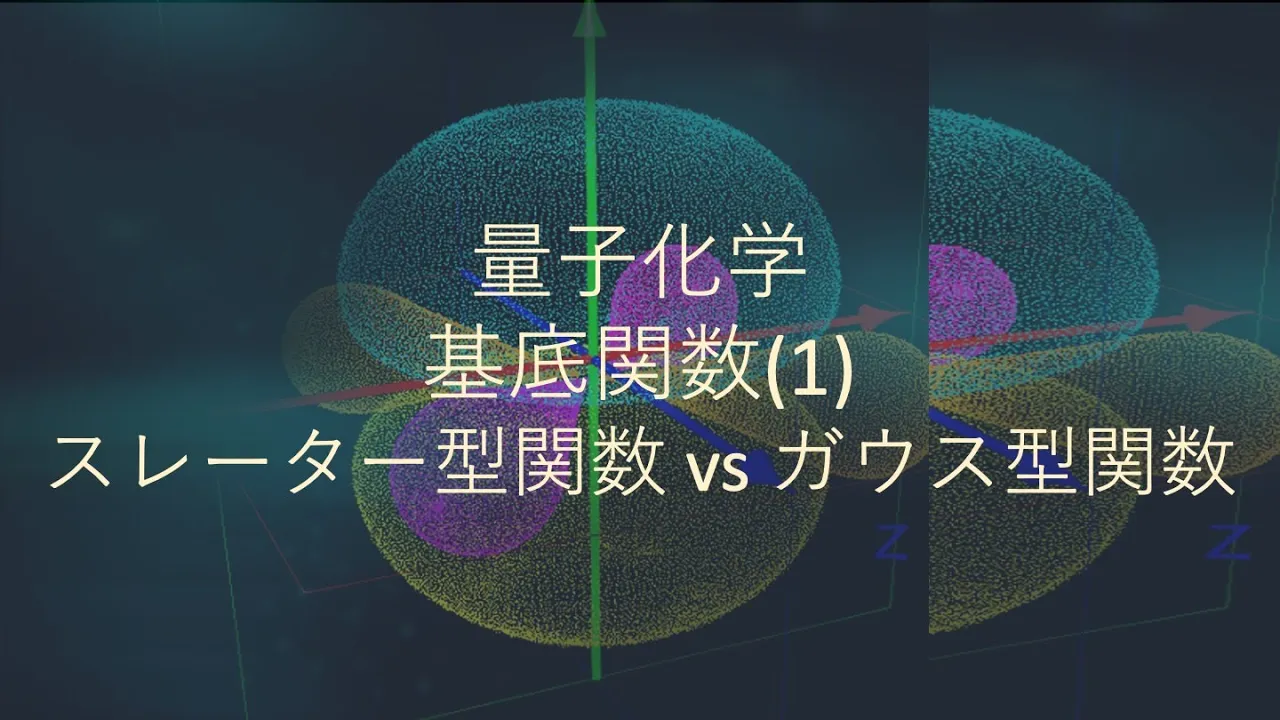
In electronic structure theory, basis sets are predefined collections of atomic orbital functions used to approximate molecular wavefunctions; they range from minimal basis sets (single-zeta, containing one set of valence functions per atom) to more sophisticated double-zeta and triple-zeta basis sets, with additional polarization functions (higher angular momentum) and diffuse functions (for anions/Rydberg states) improving accuracy at increasing computational cost, ultimately approaching the complete basis set limit where infinite basis functions yield exact results.
Understanding Basis Sets in Electronic Structure Theory
Added:Fundamental principles of quantum mechanics, including the Schrödinger equation and the physical meaning of wavefunctions.
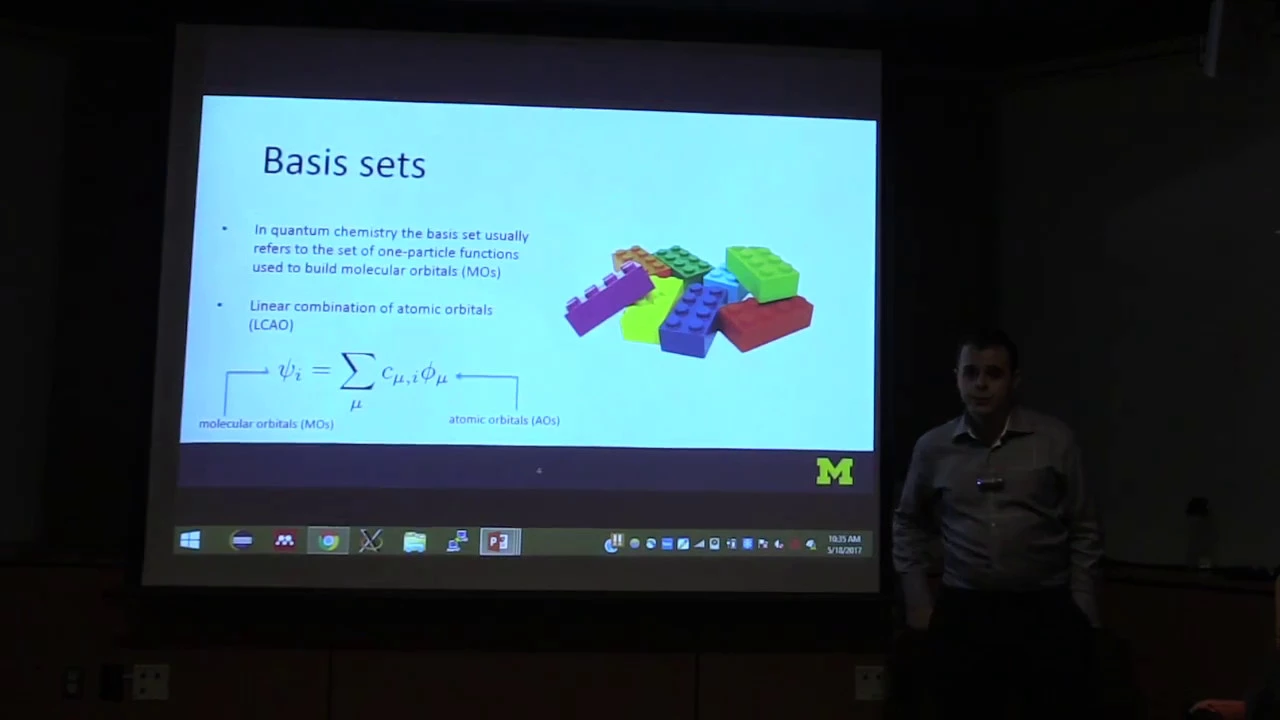
The concept of atomic orbitals (AOs) and molecular orbitals (MOs), specifically the Linear Combination of Atomic Orbitals (LCAO) approximation.
Basic Hartree-Fock (HF) self-consistent field theory and how it approximates electron-electron interactions.
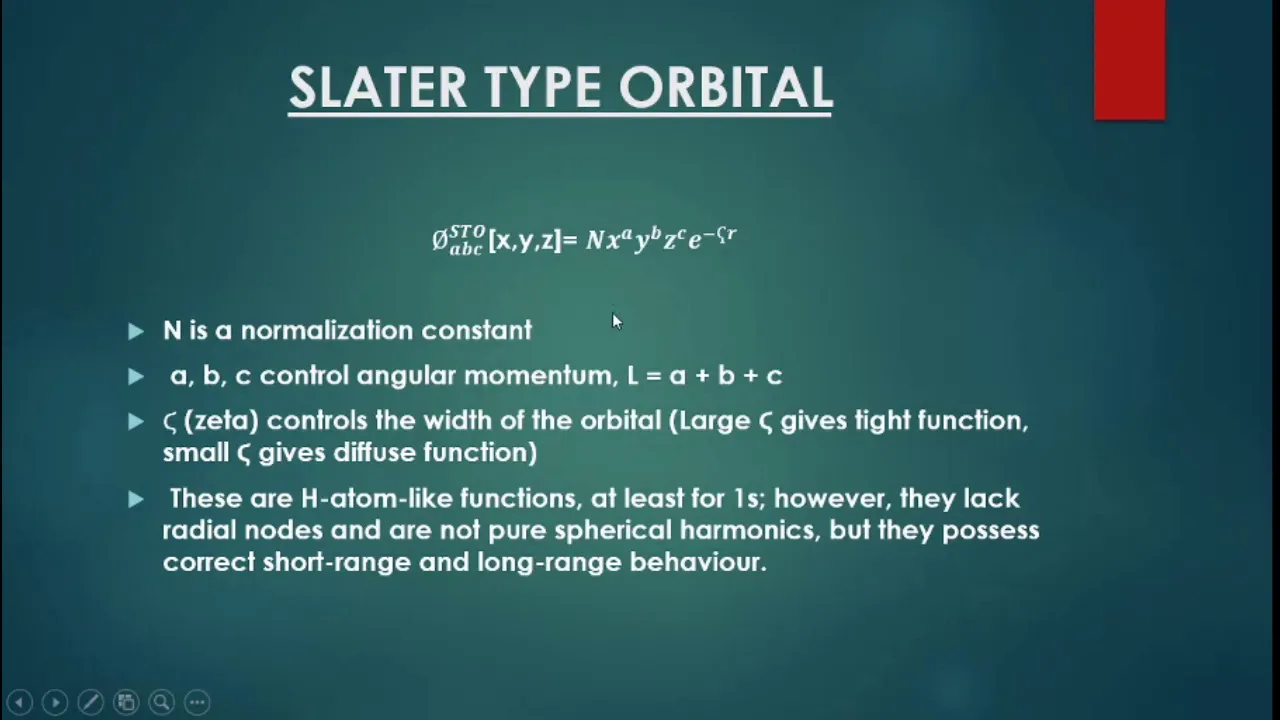
Mathematical familiarity with functional representation of physical shapes, such as Gaussian and Slater-type functions.
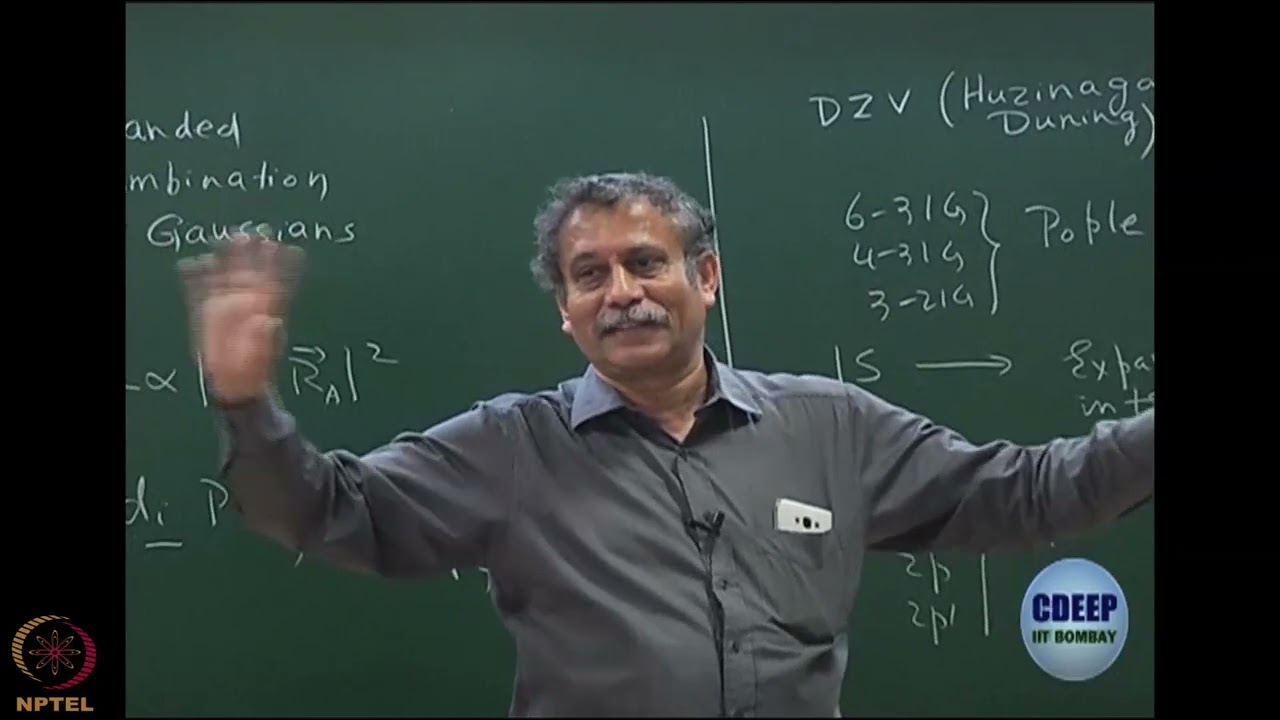
Classification and selection of common basis sets, such as Pople split-valence sets (e.g., 6-31G) and Dunning correlation-consistent sets (e.g., cc-pVDZ).
Understanding and correcting for Basis Set Superposition Error (BSSE) using the counterpoise method.
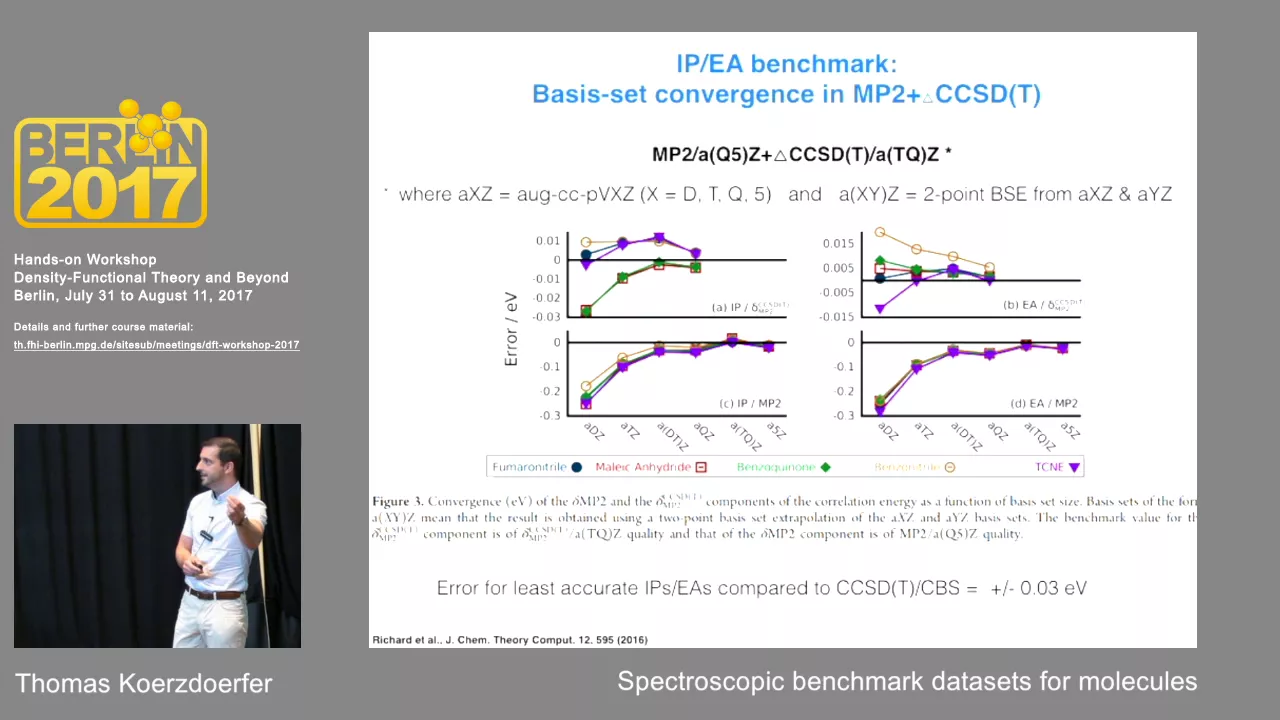
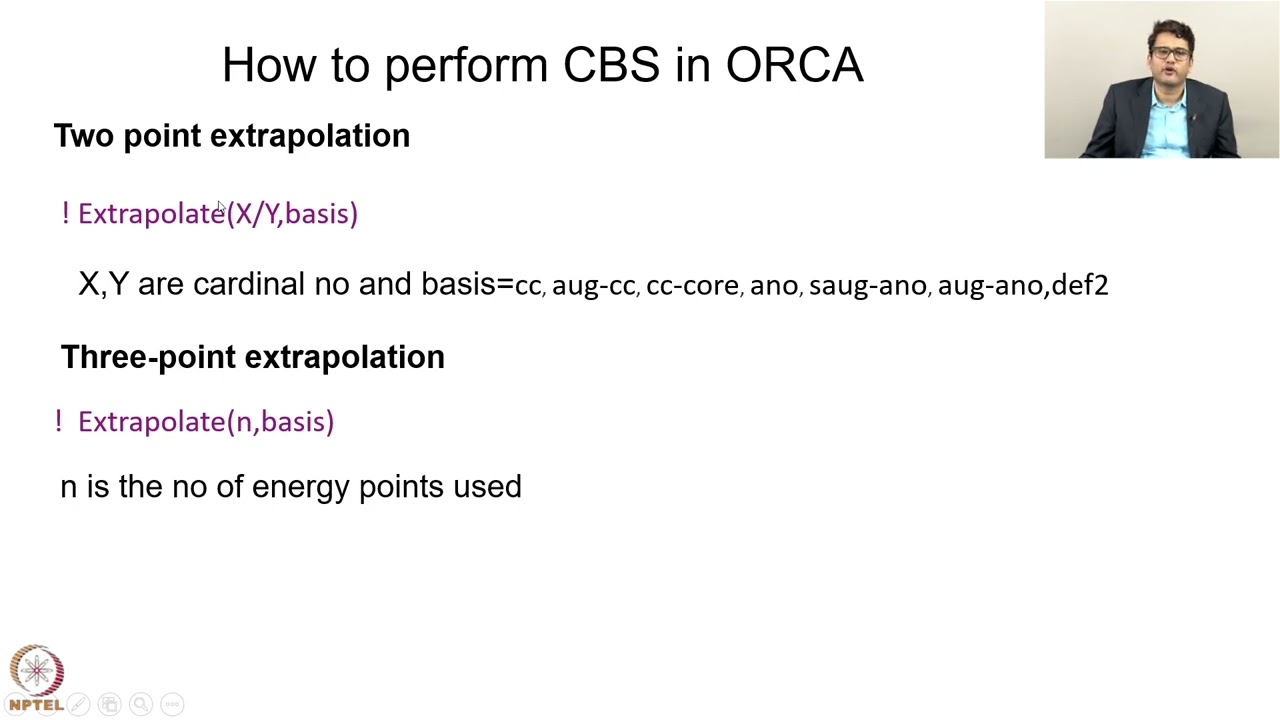
Extrapolating calculation results to the Complete Basis Set (CBS) limit to eliminate basis set truncation errors.
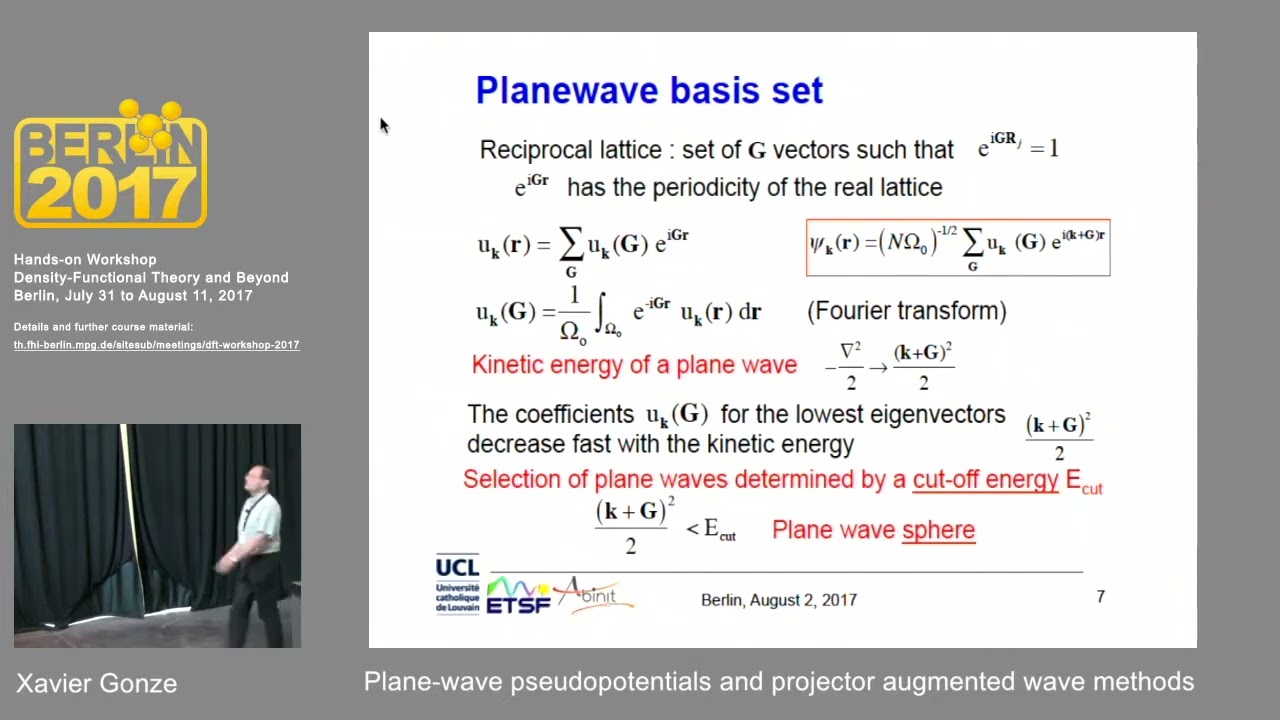
Exploring plane-wave basis sets and their application in periodic boundary condition calculations for solid-state materials.
24.3K views500likes50:06Original Release: 2019-01-09
the following content is provided under a Creative Commons license your support will help MIT OpenCourseWare continue to offer high quality educational resources for free to make a donation or to view additional materials from hundreds of MIT courses visit MIT opencourseware at ocw.mit.edu all right well good morning everyone I'm not Bob field but I'm Troy nice to see everyone so I'm here we're gonna spend the next couple of lectures talking about electronic structure theory and at this point I'll I'll give you the I'll give you the big reveal which is that at this point you if you you have already encountered virtually every problem that you can solve by hand in electronic structure theory so there's a handful of other things you could do if you really like knew your hypergeometric functions and some things like this but basically every electronic structure problem that you can solve by hand you've already encountered and so if chemistry relied on us being able to solve things by hand we wouldn't get very far be pretty limited in what we can do so we end up using the fact that we have computers and computers are far more good at doing tedious repetitive things than human beings are they don't complain at all and so we can use computers to do fairly neat things so I'll show you a couple of just a couple of quick pictures here of things that you can we can do so if you open up any research paper these days even if it's just in that synthesis you know we made this catalyst we did this thing whatever there's always some part of the part of it where they say well when we did a calculation and you know this is what the structure looks like or this is what the orbitals look like or something like this so this was actually a calculation we are computational chemists I guess I'll use this screen over here am i using is this the one that you're are you filming this one this one aren't so I'll film this one go this one breaking the fourth wall there so this is a picture of the homo the reactive orbital in a water splitting catalyst that we computed so you can see that there's you know 50 60 atoms here probably several hundred electrons we did not do this by hand we didn't draw the surfaces by hand the computer did all of this for us and you can also do things like look at chemical reactions and run dynamics so we can do there we go so you can run dynamics of molecules so this is a particular molecule in solution and we can use the electronic energy in order to govern the dynamics of the molecule and actually computer can actually predict for us whether this molecule is gonna react what it's going to do how it's gonna behave and so in one solution say versus another or at one particular temperature versus another are those kinds of things and all of these again are based off of the idea that we can use computers to solve problems in electronic structure or at least approximately solve problems that we couldn't do by hand and so what what the goal over the next couple lectures is is for us to learn enough of the basics so that you you can do some calculations like this yourselves and then see see what what you what you can do with that alright so now I will switch over the want to notice one of the other you'll find one the other differences which is that I don't and don't like the feeling of chalk on my fingers so I use my iPad as a chalk board so the rest of this will all be on the iPad there we go so for those of you who want to you may not have gotten that gotten them gotten them this time but I will add the idle I've literally posted the but what I'm gonna be writing on here these blank notes online you can download them and print them off if you want if you have an iPad and you like to take an or computer and you like to take notes on that you can download them to your iPad or computer and take notes that way but I find it's just it's good because there are some things that take a long time for me to write at the board and that it would take a long time for you to write in your notes and we can just sort of have them written down in advance so the starting point for all of these things that you can do on a computer for electronic structure theory we start with the born-oppenheimer approximation so the born-oppenheimer approximation was the idea that because the nuclei are very heavy you can clamp their positions down to some particular values so in this particular case here in this equation I have it such that big R here are the nuclear positions so there's going to be more than one nucleus generally so there's gonna be R 1 R 2 R 3 all those crammed together I'm just going to denote big R and that's where the nuclei are and so in the born-oppenheimer approximation we clamp the nuclei down and then what we're left with is the electrons the electrons whiz around they move in the field dictated by those by those nuclei so we have a Schrodinger equation that describes the motion of the electrons in the presence of the nuclei and so here I'm using the lowercase letters lowercase R so again many electron so R 1 R 2 R 3 so on and so forth and it's the electrons that are really doing all that all the dirty work in this equation they're the ones that are moving around I've clamped the nuclei down there just parameters in this equation and so what I have is I have an electronic wave function that describes the distribution in electrons I have an electronic Hamiltonian that governs the motion of the electrons I'm gonna have an electronic energy after I've solved this Schrodinger equation and the nice thing about this is that for an arbitrary number of electrons in an arbitrary number of nuclei I can in one line in about 10 seconds write down the Hamiltonian so the Hamiltonian is pretty easy to write down I've even written it right here so I did use the cheat of using atomic units so the reason there's no H bars or mass of the electrons or any of that appearing in here is because I chose atomic units but then the ingredients of my Hamiltonian are all pretty well-defined so I'll have some kinetic energy and that kinetic energy will just be for the electrons because the nuclei are fixed I'll have an electron electron repulsion term so of course the electrons repel each repel each other I'll have an electron nuclear attraction term because the nuclei are fixed in positions and the electrons feel a potential due to that and then I have a nuclear-nuclear repulsion term and in this case because the nuclei are fixed that nuclear-nuclear repulsion is just a number because I've know where all my nuclei are they have some particular repulsion energy that's just some number that I add onto my Hamiltonian there but if I put all those things together I get the Hamiltonian so I can write down the Hamiltonian without too much difficulty but of course the interesting thing here is this Hamiltonian depends on these nuclear positions so I have to know what we're depending on where the nuclei are I'm parametric parametrically changing this Hamiltonian that changes H and it also changes the eigen value the electronic eigen value E and so there's an obvious question well what is this electronic eigen value it turns out to be a very important thing we will typically call this thing a potential energy surface and it turns out it turns out to Jen to govern a whole host of chemical phenomena so the first thing that it could generate that it that we've we've actually we can look at we've already actually seen potential energy surfaces so on the left-hand side here I have the picture from the case of H 2 plus so here we had the energy of the Sigma orbital as a function of R it formed some bond so as we brought that Vadar shorter the Sigma orbital formed a bond and we had also this Sigma star orbital as a function of R when who brought the atoms together and that one there was no bond those Fermi energy just went straight up so we've got two of these things and I should label my axes so I'm plotting here is the energy as a function of the bond distance R so this was our first example of a potential energy surface electronic energy as a function of R and we see that it taught us about the bond the bond strength so forth there's one other thing that that this picture reminds me of is and that's that for the same problem here I actually had two different potential energy surfaces I have the Sigma's potential a new surface and Sigma star and that's because I left something out in my Schrodinger equation up here there's of course an index I have different eigenfunction of the Schrodinger equation so I have an electronic Hamiltonian you'll have many different eigenfunctions so I have an index n for those eigen functions and each of those eigen functions will have a different energy and each of those energies is a different potential energy surface so the Sigma state was the lowest solution the Sigma star state was the next lowest solution they had different potential surfaces but I will often not refer to potential energy surfaces plural but instead to potential energy surface singular because most chemistry occurs on the lowest potential energy surface so it involves just the lowest potential energy surface and the reason for that is because electronic energies tend to be very big in chemical terms so the interesting Sigma and Sigma star is several evie and typically and chemical reactions on that same scale are usually tenths or hundreds of an Eevee so the chemical reaction energy might be somewhere way down here way way way below the amount of energy you would need to get all the way up to Sigma star and so the Sigma star penetrative service is just irrelevant it's there but it doesn't participate in reactions at all so in most cases knowing about the lowest potential energy surface gets you most of chemistry and so then let's look at a but then we can also sort of schematically talk about how these potential energy surfaces will look for a more complicated example so let's say I had the water the water molecule H 0 H so this is a more general case we have at least two coordinates here R 1 and R 2 there's also going to be an angle but I can't really plot 3 dimensional hyper surfaces even with my computer so I'll stick with two there's a third and third coordinate there which is theta which I'm not gonna play around with but we'll play it will play around with just R 1 and R 2 so I can change individually the O H bond lengths in this molecule so then this is going to give me an at the energy as a function of R 1 and R 2 so it'll be a surface so it's a function of two variables that's a surface and that surface might look like what I have plotted there where it would have you know various peaks and valleys on it the very very lowest Valley the very lowest minimum just like we found for h2 that lowest minimum was the equilibrium bond bonding configuration so for this two-dimensional potential surface that lowest minimum is going to be the equilibrium configuration but there's also the possibility of other minima on this potential energy surface those would be metastable intermediates things that you could get trapped in things that would live for a while but eventually go down towards the lowest minimum and there'd also be reaction barriers so these are the things that we learn about governing how fast they convert from these metastable States into the most stable States so that's what you would get if you had just two coordinates and so then you can sort of try to generalize in your head well what if we had 3 4 5 6 127 368 lots and lots of coordinates in some many dimensional space that would still have the same qualities there'd be minima and barriers and so forth and we would get those out of the Schrodinger equation the electronic show dagger equation and so that is the electronic structure problem how do we accurately solve we look for the electronic eigenvalue and the electronic wave function for an arbitrary molecule and the key word here is accurately I didn't just say how can we solve for electronic energy and the electronic wave function because in general here's exact and solutions are impossible and I don't mean impossible for 561 I mean impossible for humans or computers so in general electronic structure theorists love approximations we love to make approximations because that's the only way that you can make progress and so what we're gonna learn about today and next Monday are they're sort of different categories of approximations that we make and what the pluses and minuses of those are so I'll pause there and see if anybody has any questions all right so we'll move on then so we we have an out there's X so it there's actually an outline of how different electronic modern electronic structure methods make approximations and these follow the same kinds of steps that you would use in a molecular orbital calculation okay so the first thing that you typically had to do in these calculations it was to choose a set of basis functions so you had to choose like 1s function over here or 1s function over there 2's function to P and to choose some set of atomic orbitals that you're going to use as the starting point of your calculation then you've made linear combinations of those things to get better functions and so then after you'd chosen that that basis you had to build some matrices and then you had to solve the eigenvalue problem for that matrix then you had to pick out which orbitals you were actually gonna occupy those were the next few steps and then finally you had to compute the energy now that's already kind of a detailed outline if it seemed like we had to understand the nuances of every one of those five steps we'd be kind to beat well we could we can't you can do that it would be an entire course unto itself and that's not what we're gonna be doing the reason that we can avoid going over every single nuance is twofold so first we can do we can avoid more or less steps two through four because they're done automatically so once you have chosen your basis that you want to use the computer knows how to build matrices it knows how to diagonalize matrices and find eigenvalues it knows how to pick out which orbitals to occupy it knows how to do all those things without you telling anything telling it to do anything you don't really have to do you know to change anything so the only things you have to worry about our choosing a good basis and then also choosing telling the computer a good way to compute the energy the other reason that we can actually do something useful here is because using a computer to solve an electronic structure problem is much like using an NMR to get a spectrum of a compound I doubt that anybody in this room could build their own functioning NMR like we just I mean I know general the principles of how an NMR works but building from the ground up oh so we ever do have any takers anybody maybe we'll build an NMR huh from the ground up I'm betting you see yeah you got it like you know get your you have to actually like make your own superconducting magnet you've got it you know from the ground up actually building your own NMR will be very very difficult but that doesn't preclude you from knowing how to use in NMR because you know okay well this piece is right this dial is roughly doing this I change this over here i sim this that's how I make the NMR work it's the same thing with electronic structure codes you need to understand a little bit of how they work in order to use them effectively but you don't have to understand every single line of code that went into building it which is good because there's you know several hundred thousand lines of codes and many of these electronic structure packages so we're gonna try to understand the principles that go into this so that we know how to be good users of computational tools and we can actually then organize so roughly speaking we'll be focusing on step one today and step five next Monday but we can organize these approximations on a sort of two dimensional accent two-dimensional plot which is sort of summarizes the whole idea of what we're going to be getting at so the idea here is that on one axis we have the step one thing which is the basis the atomic orbital basis and we can organize those basis those choices of basis from roughly speaking on the left hand we have bad choices and then on the right hand we have good choices now you might say well why would you even include choices if we know they're bad because the bad ones also happen to be the fast basis and the good ones tend to be slow and so it's a time trade-off so you have a lot of time you might choose a really good basis set if you have basis if you have not a lot of time you might choose not a very good one and then we can do the same thing with the energy we have different choices of how we compute the energy and we can roughly arrange those from bad choices to good ones but again these bad choices are fast and the good ones are slow and so the general thing that we want is we want to get up here into the upper right hand corner where the exact answer is somewhere up there with a very good energy and a very good basis we're gonna get the exact or nearly the exact answer so that's where we want to get but moving from the lower left to the upper right every time we move in that direction we're making the calculation slower and slower and slower and slower and slower until eventually we just lose patience and so then we cut it off and say all right this is as far as I'm willing to go what's the best answer I can get what's the most best cost-benefit analysis I can do and so in terms of being good users of electronic computational chemistry it's about knowing okay well if I've only got you know three hours for this calculation to run or two days or however long I'm willing to let the computer run on this you know what's the best combination of a basis and an energy to get me a decent result in that kind of time okay so questions about that before I move on okay so we'll focus on choosing an atomic orbital basis so we already have chosen an atomic orbital basis before so when when we did h2 plus which is sort of standard Scituate standard problem that you can actually solve by hand if you choose the right basis when we did that calculation we chose to have an atomic orbital on a the 1s function on a and the atomic orbital on b1 s on B and those two things together formed our basis so we wrote our molecular orbitals as linear combinations of those two functions we got Sigma and Sigma star out and we were able to work out the energies now this type of basis is a useful basis and it has a name and is called a minimal basis and it's minimal because you could not possibly do less so if you want to form a bond between two atoms you need at least one bate one function on each atom if you had more you know if you had only one function period you couldn't really four move out so it's as low as you can go can't go lower than this now you could think about the possibility of adding additional functions so I could add in say the 2s function on a 2's function on B I can come up with various things now you might ask why would I want to do this and there's a very good reason for doing this which is one of the principles that we need to learn in constructing basis functions basis choosing our basis which is that adding basis functions always improves the calculation so even though I think that adding 2's a and 2's be why would those be important I can't really say adding basis functions always makes matters better makes things better and the reason for that is because we're doing a variational calculation we're trying to approximate the lowest energy of the system and just choosing the 1s a and 1's B functions doesn't give you the lowest energy it may be close but it's not exact so then by adding the 2's functions the result could get better by adding a little you know by making c3 and c4 maybe you know a little bit adding making c3 and c4 not quite zero here maybe the answer gets a little bit better maybe it doesn't but it can't get worse because it could the calculation could always choose c3 and c4 to be 0 so adding basis functions always makes things either better or at least not worse than they were and so well you'll find is that when we're talking about a o basis choosing an a o basis we're gonna be choosing bases that are much bigger than your chemical intuition would suggest okay so for h2 I think o 1sa 1sb that should more or less describe things and if I was doing things by hand that's what I would do but if the computers doing the work well it doesn't Renault skin off my nose at this computer waste some time doing some 2's or 3s or 4s integrals I'll let the computer do that as long as it gives me a better answer so the bases we have will be much bigger because of this but the other thing I want to note is that when I talk about these one s functions I probably you probably all have in your head you know you know what one s functions look like they look like e to the minus a times R so they just look like exponential decay decay functions it turns out that for for practical reasons these are inconvenient things to use on a computer and that is because integrals involving Exponential's are not analytic in three dimensions primarily because of the cusp that occurs at R equals zero so if you multiply two of these things times each other and try to do an integral you have a cusp over here and a cusp over here and the integral is just not something that can be worked out and so when the going gets tough the tough get empirical and so instead of using these exponential functions what we use in practice are gaussians so gaussians are things that instead of looking like e to the minus AR they look like e to the minus alpha r squared so if I was to plot a Gaussian here on the same axes and choose the Alpha value appropriately I could get a Gaussian that might look like that similar to that one s that actual 1s function but particularly near the origin where it doesn't have a cusp and and particularly in the tails where it where e to the minus alpha R squared decays very quickly they don't actually look that similar so the whole read the whole reason to do this is not that we have some physical reason to think that Gaussian described atoms better than hydrogenic functions they don't it's just that we can do the integrals so there's easy integrals here and if we want really do want a hydrogen like function we can get that by just including more than one Gaussian so one Gaussian doesn't look very much like an exponential but if I take two gaussians and choose their exponents and their coefficients appropriately I can make a linear combination of two gaussians so this was the one Gaussian result I could make I could make with two gaussians I could make something that might look and with three gaussians I might be able to do something that would look like and for gaussians in five gaussians six gaussians but it's clear then that by using a large number of gaussians i could get whatever i want just by Bruce brute-force and so those are the two things about building basis choosing basis beyo basis and at this point you should start to feel a little bit intimidated because I've said that for atoms you're going to need more basis functions than you thought just to try to get a variational a lower energy and those basis functions are likely to be constructed out of gaussians of which you'll need a bunch of gaussians to even really approximate one hydrogen like orbital so you're gonna have lots and lots and lots of gaussians for on every atom and you're gonna choose the exponents if every single one of those gaussians be yourself and that would be just horrible to have to do and the thing that comes to our rescue is a thing that's known as a basis set so a basis set is constructed in the following way a graduate student probably long before you were born spent years of their life going through and figuring out okay for carbon what is a good combination of gaussian exponents okay they're a hundred and thirteen point six seventy four point two eleven point three and one point six and they wrote that down they said okay now for nitrogen what are a good set of gaussian textbooks and then they went through and they did this for every element or at least many many many elements in the Parekh table and then they wrote a paper that said here is and i did it so i'm gonna say here is the troy basis set and it the troy basis that means when you say you're doing the troy basis that means you're using though those exponents that i wrote down for carbon or for nitrogen or for oxygen or for fluorine or for hydrogen and it's all predefined it's all laid out you know and if I was really diligent its laid out for every element in the periodic table if I was less diligent maybe it's only the first two rows or something like that but the result is that all you have to say is I want the Troy basis set because Troy makes really good base of sets and so I'm gonna use that and then the computer can go and just say okay well there's some file that has all those exponents and the computer looks up the numbers and says four-carbon you need this for oxygen this for nitrogenous and so the key idea here is that these are predefined sets of AO basis functions so somebody already defined these you don't have to make a choice other than choosing the set there's not other knobs that you have to turn so there's you can obviously see the benefit of this which is you don't have to put down hundreds and hundreds of numbers in order to get the calculation to run so that's a big win which hopefully you remember for the next 25 minutes because the the downside then is that you just noticed I called my basic set the Troi basis set which would give you absolutely no idea of what was in that basis and adjust that I made the base of set and then if somebody else might call it the the Cambridge basis set because they did it in Cambridge and somebody else might might number their basis sets you know this is this is basis set number 17 and none of those things actually tell you what's actually in the basis set and how they designed it they just give it a name but then that name is you have to know the name in order to be able to specify the basis set and you have to know what you know you have to have to sort of memorize oh well this basis that does this this basis set does this or at least remember where to look up what those basis sets do so for the next 20 minutes or so we're gonna talk about some of those things and you bit you'll be annoyed at the fact that these basis sets have these funky weird names and design principles I think but just remember I don't have to put in a hundred numbers this is the price you pay for not having to put in 100 numbers okay so the first thing that we talked about here so so I'll say that basis sets are typically grouped by by row of course the basis that's gonna be different so hydrogen is gonna have a different number of basis function need and different number of basis functions than carbon you know argon is gonna need a different number from carbon or hydrogen just because they have different numbers of valence functions and different numbers of core functions and I'm also going to introduce a shorthand oops so first of all I'll note that we already have okay so I shall just introduce the shorthand so for say for nitrogen and for the basis that we talked about before we've talked about so far the minimal basis of a set the smallest basis that I can come up with come up with four nitrogen would need to have the 1s function the 2's function and the 2p function I need at least those functions to have places to put all of my nitrogen electrons now I get I'll get writers cramp if I have to write all of these things out so I'm going to develop a shorthand which is when I have 1s and 2s I'm just going to denote that as 2's so that's not not indicating that 2's is the last function indicating that there are two of them so I have two s type functions one that sort of core like and one that sort of valence like but there's two of them and then I have one P like function so I'll put one piece so that's just telling me how many of each of these things I have so again this is the number S type functions this is the number of P type function and so then we can go and we can talk about the one basis set we've dealt with so far which is the minimal basis set so for hydrogen and helium there's just gonna be that 1s function on each of those and then when I go down to the next row it looks just like nitrogen they all gonna orginated in s core function and their surveillance function and a P valus function so they'll be 2 s 1 P like and then I go down one more row for sodium through argon and I'll need another s function so they'll be total of 3 s type functions and then I need two sets of P a core P and a valence P so there's 2 P so that's the the minimal basis set that's the smallest basis that I could conceive of for any atom and then we're going to have various ways of trying to make these things more elaborate more baroque and the most common way to do this is to note that well when I bring atoms together it's the valence functions that actually either contract or expand in order to describe those the electrons moving around the core functions don't really change very much and so in order to give the valence functions functions flexibility to change it makes sense to add more valence like functions so if the valence was s it makes sense to add another s function or if the valence was P it makes sense to add another P function and so we get a name here this concept which is a minimal basis is what's known as a single zeta basis set because it has just one set of valence functions it might make it might seem like would make better sense to call it a single valence basis set but history made a different choice it said that it's data I don't know why they chose the name Zeta but they did so the Zeta just means that there's one set of valence functions and then you could think about making a double Zeta so you take every valence function just add a another valence function that has a different exponent so it would allow more flexibility so that would be a double Zeta base to set DZ so for hydrogen and helium we would just dump it all valence so we just get two s functions for things in the in the same row as lithium and neon the valence function is functions are 1s and one are an S and a P and so when we double those where it's gonna add another S type function and another P type function so we would go three s to P here because we'd add one s function and one P function and then for sodium through argon we would have 4 s 3 P and then we could go on and talk about Oh what about a triple Zeta so triple Zeta would be 3 s for hydrogen helium and then we add an S and a P for the next row so it's 4 s 3 P and then we add s and P for this we end of 5 s 4 P and so again the idea here is that you know for carbon we might have 1s that's the core and then we'd have 2 s and 2 P as the first valence and then 3 P and these would respectively be so the single Zeta or and then you include the next shell and it becomes alright single data would be all of this sorry how was the core and then you could do say all right well but then I include another set and this gives me a double Zeta kind of basis set and then I could include yet another set and this would give me a triple theta kind of basis set and you can go on and on and on okay so you can just make a quadruple Zeta and quintuple Zeta basis set and then this is where the names get annoying so there the name of the most common minimal basis set is sto - 3 c g and that stands for slater type orbitals 3 gaussians just in case you're wondering why it's sto 3g and then for the double zeta basis set there are ones that are called 3 - 2 1 g 6 - 3 1 g another one that is somewhat confusingly just called easy double Zeta as if there was only one such basis set and then for triple Zeta you can do 6 - 3 1 1 G triple Zeta valence others so there are other abbreviations out there as well but that's how you would do these kinds of how you change there's the Zeta the valence four questions about those yeah so is there lineups in the example you're including as your additional data it's like yes so there are occasionally times where people include basis functions that aren't don't look like atomic orbitals so the most common one is to make bond centered functions like you say oh I want a bond here I'm gonna put a put a basis functions there there are there's a couple of reasons that becomes just undesirable one one is that then you can't use a standard basis set because the basis sets have to be sort of anchored to the atoms that's how we catalog them if you're say oh I'm gonna put one in the middle of the bond you say well it would depend on both atoms involved in the bond and how long the bond was and things like that so that's a little bit undesirable the other one is that unless you pin that bond function down to a particular position if you let it let the center of that bond function move there's actually a numerical instability that happens when two gaussians come on top of each other and that can sometimes cause calculation that computer to choke so so that in practice we usually stick to in increasing the atomic basis sets but um oh but there is also one other case in physics they are much more fond of using solids that's sort of one of the things that chemists tend to think about molecules as the example physicists tend to think about solids and in solids they're much more fond of using plane waves as their basis basis set so they start off with the fruit they're free and so they're starting off with atoms is their reference they start off with free electrons as their reference and then say oh and then we introduce these potentials which are perturbations to the free electron so you get plane waves as your basis set you make linear combinations of plane waves instead of atomic functions yeah that's exactly the next next you hit on exactly the next thing which is that none of those include any D functions so on cart on a man I could go up to like a team Zeta and I would never have any D functions and on he hydrogen and helium I could go up takings and I wouldn't even have any P functions and certainly there are situations where you would want these higher angular momentum Mendte one of them is if you're in an electric field so that polarizes electrons intends to actually require slightly hiring Alimentum functions in order to describe that polarization and the other one is for just the directionality of bonding that you know if you had like an sn2 reaction or something like this where temporarily something was either actually hypervalent or you know sort of hypervalent you would need these higher angular momentum functions to describe the hyper valency and so those are called polarization functions so here polarization functions are things that add higher angular momentum and valence so yeah you need this for things like polarizability which is why they're called polarization functions but you also needed it for things like hyper valency and so that nomenclature for polarization functions is a little bit is is also a bit weird but the the simplest one is that you just add the letter P so P standing for polarization to the basis set and then the idea is that you're just gonna add one function with that P you at when you add the P that means you're adding one function that has one unit higher angular momentum so if P was your highest angular momentum you're gonna add a D function and if s was your highest anka Wrentham you're going to add a P function so hydrogen helium that's got a p2 lithium two argon it's gonna add a D if you did this also two transistors metal atoms you would note the transition line metal atoms have D functions already so the polarization would add in F function just adding one higher in go Wrentham so then going back to our table up here use my magic copy that double zeta basis results here copy there's my double zeta now I'm just gonna add the polarisation to this so double Zeta plus polarization now I add my polarization functions and so for hydrogen and helium I'm gonna add one P function to get a dzp basis set for lithium to neon I'm gonna add one D function for sodium to argon I'm gonna add one D function and then I can do the same thing with triple Zeta so if I make a tzp basis set and I'll add one p 1d and I'll note that you could also do a TZ to P basis set and then you're added the 2p just indicates that I'm adding even more polarization function so I'm adding two sets of D functions instead of just one or two sets of P functions instead of just one and then these things have names so there's a 6-3 one g star which is a very common dzp basis set or there's also DZ basis that i mentioned above has a DZ p generalization of it or you could have for the triple zeta the TZ VP basis or the longest basis set named 6-3 one 1g parentheses D comma P so these are these are via Noi this is this is where the annoyance starts to come in you're like this is annoying but it's less annoying than the alternative so we deal with it okay so questions about that yeah yep all right sorry like one D just like its which one set of D functions yes yeah yeah yep what oh we could but yeah we couldn't do that so this that part of this has to do with that and there are a couple of basis sets that do that this mainly represents the hierarchy of empirically what people have found is most important so if you just start with a minimal single zeta basis set you say well what's the next most important thing usually going almost always going to double zeta base double zeta is more important than the polarization functions so every no one bothers making very few people bother making single Zeta plus polarization they'll say okay well do double zeta and then after you double say - then maybe you want to go to polarization or maybe you want to go to triple zeta depending on what you're doing does that make sense it would be 1 s 1 P 4 hydrogen 2 s 1 P 1 D 4 carbon it would just be to add that extra polarization function on top of the existing set which you know what I mean it would be like adding that no so for hydrogen it would be like adding yeah hi drew be like the 2p function but again when we go back we remember that we're not actually using the hydrogenic functions we're using gaussians to approximate them and so all it really means is that it has the same angular distribution as a P function but the radial part is whatever the person who made the basis set decided to make it alright then I have a question so then when I teach this class I often have clicker questions so this would have been the clicker question so we'll do it by show of hands instead of by clicker since you know we're small enough so so here here here here's a test of whether we understand I can't show any way so I'll go back and put the put that put things up in just a second if you need them but my question is how many basis functions will there be for C 60 in AD Z P basis set I guess I should say about this so option a is there'll be 60 basis functions so that would be how many basis functions per carbon atom one all right or 180 that's three per carbon 360 that's six per carbon 840 is okay anybody do the math better than me is that fourteen no no wait yeah it's fourteen yeah fourteen fourteen per carbon this is huh eighteen and then this is twenty-one then right yes so so we've got one three six fourteen eighteen twenty-one as the number of basis functions per and I'll go back and throw this up for those who want the table up we didn't write all that down so here's our easy P basis vet carbons in this this group here so I'll give you a minute to think about it all right so then now I'll go back everybody feel like they got their answer okay so how so by show of hands how many people think the answer is a 60 nobody all right how about b/c we got most on C okay D I don't know what e F okay everybody every since C C is not the correct answer and every year every year but if you people miss this question so so the the the key thing to get that get this right them we're gonna repol in a minute here but the key thing to get this right was actually the question that you asked which is that you said when I add the defunct who do I add D when I add a DP folks do I had DZ squared or do I and I said no you add a set of D functions which is how many functions in d5 all right so now Han will go back and look all right but don't feel bad it happened every year the majority of people choose choose that same answer so now let's do that's redo our math never gotten it right okay [Laughter] all right so now now we'll go through okay how many people think a how many B okay nobody just AC because iron told Ron how many people say D alright good you're alright yes the answer is D and the dzp basis there are 14 basis functions per carbon atom now you can already start to see in for this D Z P basis which isn't the biggest basis we've talked about for C 60 you've got 840 basis functions that's a lot of basis functions so that's why we're really glad that the computer is doing the work and not us because 840 integrals well 840 by 840 matrices are hard to diagonalize by hand doing all those integrals is really really a pain ok so then going beyond those basis so those two things are the key basis set ideas I will I'll just touch on a couple of other things before we before we finish up so the first thing is diffuse functions so occasionally if you have an anion so you have an extra electron that extra electron is not very well described by the valence because negative negative electrons tend to spread out a great deal if Bob is one of the world experts in in Rid Berg states which is where these electrons spread out a really really significant amount and so these Gaussian functions that decay quickly don't describe those well and so you have to add a Gaussian with a small value of alpha and it's mostly useful for anions and so you'll del you the so you add these in order to describe anions better and the notation here is either you use the phrase AAG or plus so the basis that has the word log in front of it that means it has some diffuse functions on it in order to describe those and weakly bound electrons or the plus indicates it has some of those functions in it and again that those are added with the same angular momentum is the valence they're not usually polarization and diffused at the same time and then the final thing is you can generalize these ideas to transition metals it's a little bit hazy because a lot of this is predicated on us knowing what the valence of the element is and for transition metals it's like well is s and the valence yeah probably is P in the valence well maybe I don't know D is definitely in the valence but depending on whether you think of what you think the valence is your definition of some of these things is a little bit fuzzier sometimes you add a P function sometimes you don't when you go from triple Zeta double Zeta to triple data for a transition metal and but the overall idea here is that we're trying to approach this this particular limit which is known as the complete basis set limit which is the result that you would hypothetically get with an infinite number of atomic orbitals so you just crank up conclude all the time the corbels the university would get to an answer that would be the right answer and we're just trying to asymptotically approach that by making our basis sets bigger and bigger until we run out of steam okay all right so that's everything about basis sets and tomorrow or not tomorrow next Monday we will talk about how you compute the energy all right Happy Thanksgiving
Up Next

90:14
Molecular Dynamics: Beginner's Introduction & Force Fields
@giribio
59.3K views•2020-05-25

83:56
Biocatalysis and Catalysis in Islatravir Synthesis | Merck Webinar
@SCIwheresciencemeetsbusiness
675 views•2020-10-08
6:57
Ocean Acidification Chemistry | MIT Solid-State Chem
@mitocw
5.5K views•2020-12-07

17:31
Edible Water Bottles: A DIY Guide to Sodium Alginate Spherification
@ryan
10.5M views•2019-06-21
Related Study Plans & Knowledge Roadmaps
Structured learning paths in Chemistry
chemistry
Nuclear Chemistry: Decay, Meds & Fuel Cycle
01Introduction to Nuclear Structure and Radioactivity
02Decay Dynamics and Kinetics
03Radiation Interaction and Detection
+ 2 more learning modules
24h5 modules
Explore Roadmap
chemistry
Supramolecular Chemistry: Forces & Machines
01Foundations of Chemical Bonding and Intermolecular Forces
02Introduction to Host-Guest Chemistry
03Thermodynamics and Dynamics of Self-Assembly
+ 2 more learning modules
16h5 modules
Explore Roadmap
chemistry
Photochemistry: Excited States & Reactions
01Foundations of Light-Matter Interactions
02Molecular Orbitals and Electronic States
03Photophysical Processes and Jablonski Diagrams
+ 2 more learning modules
18h5 modules
Explore Roadmap
chemistry
Coordination Chemistry: Bonding & Properties
01Introduction to Transition Metals and Ligands
02Crystal Field Theory (CFT) and Geometry
03Magnetic Behavior and Spin States
+ 2 more learning modules
14h5 modules
Explore Roadmap