






















Molecular Dynamics (MD) is a computational technique that simulates the physical movements of atoms and molecules using Newton's laws of motion and force fields to calculate interatomic forces; the simulation process involves preparing the molecular system, performing energy minimization to correct initial positions, equilibrating under controlled thermodynamic conditions (NVT, NPT ensembles), running production simulations to generate trajectories, and analyzing results such as RMSD, RMSF, and hydrogen bonding patterns to understand biomolecular behavior and interactions.
Molecular Dynamics: Beginner's Introduction & Force Fields
Added:Basic Classical Mechanics: Understanding Newton's laws of motion, particularly F=ma, and the relationship between potential energy and force.
Intermolecular Forces and Chemical Bonding: Familiarity with covalent bonds, electrostatic interactions (Coulomb's Law), and Van der Waals forces.
Introduction to Statistical Mechanics: Conceptual understanding of temperature, pressure, and thermodynamic ensembles (such as NVT and NPT).
Fundamental Mathematical Concepts: Comfort with vector algebra and basic calculus, as simulations calculate movements in 3D coordinate space.
Hands-on MD Simulation Software: Learning to set up, run, and analyze trajectories using standard packages like GROMACS, AMBER, or NAMD.
Advanced Sampling Techniques: Exploring methods like Metadynamics, Umbrella Sampling, and Replica Exchange to study transition states and rare events.
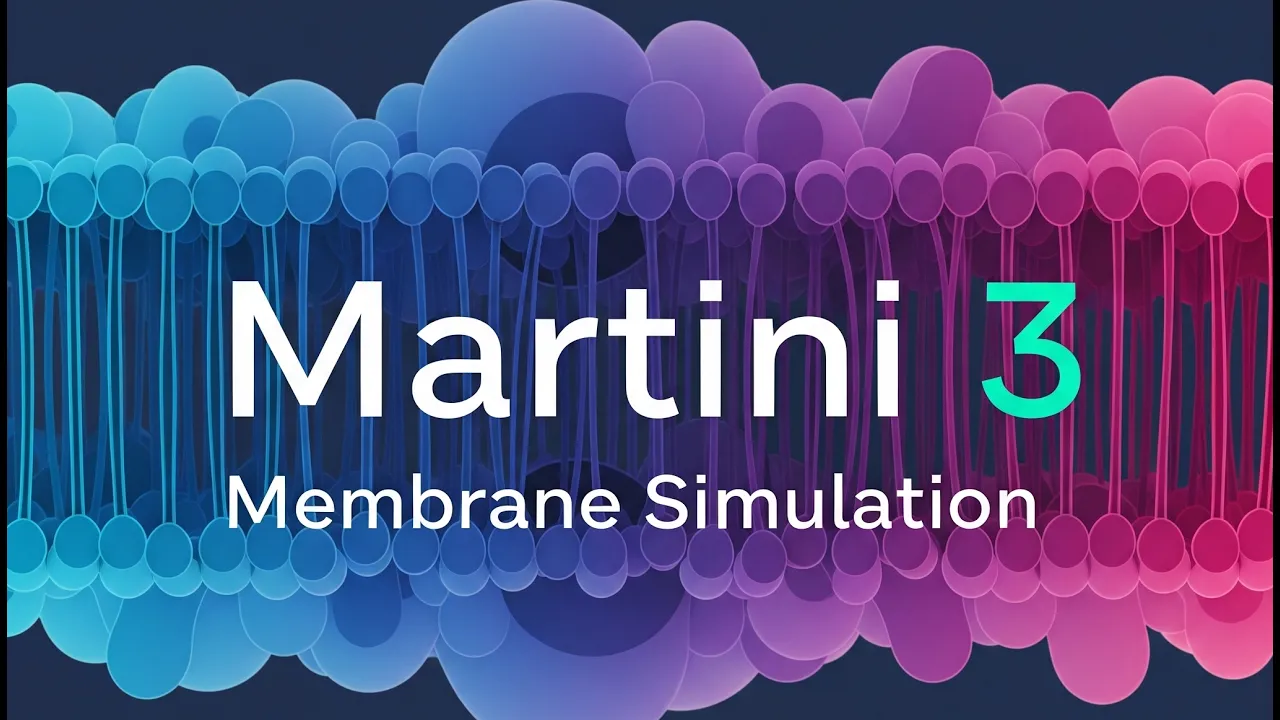
Coarse-Grained Molecular Dynamics: Studying simplified molecular representations (e.g., the MARTINI force field) to simulate larger systems over longer timescales.
QM/MM Hybrid Simulations: Understanding how to combine quantum mechanics (for chemical reactions and bond-breaking) with molecular mechanics (for the surrounding environment).
59.3K views1Klikes1:30:14Original Release: 2020-05-25
today we'll be covering molecular dynamics for uh beginners more on a theoretical perspective uh the practical sessions of course we can have a follow-up session but today i'll be giving an assignment to all the students and you're free to get back to me if you have any glitches on working on those things so moving forward the people who have joined through meet uh kindly switch off your webcam for better buffering so that it's better for you also uh you should be in mute mode unmute to engage in discussions in q in this session and kindly tell your name so that your faculties will be able to know and all your questions could be shared by a mentee if you wanted to be failed to be anonymous uh kindly share some um your feedback on the next few questions in the next slides so please go ahead if you go to mendy.com143282 you can let me know i know majority of the students are today in biotech and uh yeah already 17 people have already submitted and i can see yeah some people from um other platforms they're submitting their uh it's just easy so you just click one and at the bottom of the page there is submit button so i can see there is others also there okay so there's a mixed community but students mostly are from biotech as i'm aware the next question is currently are you using any md related software that is molecular dynamic software i can see majority of them are saying no but uh feel free to uh update your uh your uh updated so i can see 82 percent is not using it uh the software's okay oh okay someone tried it but hard people who tried it but hard i'll make it much easier don't worry uh there is a process to make things easier okay i can see many people are submitting okay so on a journal i am not wasting too much time here i can see majority have not uh not currently using it and almost 25 percent is using and i'm sure you are already well versed with the theory as well as how to work on and all and i can see tried but hard let let make a find a solution today um so could you please rate your confidence on understanding of protein modeling molecular dynamics biophysics something very very important in molecular dynamics and md softwares and molecular docking so here you have to rate from one to five one means you do know much you do not know much five means your expert so you can rate for all of them and at the bottom there's a submit button and you can submit it okay i'll wait for few more seconds because this is very important i could see that biophysics is something is hitting everyone okay okay i'll wait for three more seconds three two one so thank you so much so there are almost 23 people who casted the award so i can understand many of you are concentrating more on molecular docking uh and also a bit then the next comes with more protein modeling so keep in mind in molecular docking if you wanted to confirm your molecular docking studies you have to do and perform uh molecular dynamics studies especially protein ligand interaction studies and energy binding energy studies all those things and coming to protein modeling you have to understand the mutations uh the stability of your model the structure whether the confirmations are satisfactory those things to be also confirmed using molecular dynamics so don't think that just online tools for protein modeling and molecular docking is a final answer for your study on those aspects now biophysics is very important because today whatever i'm talking initially there are statistical mechanics uh which again terms of biophysics uh thermodynamics are also there i know i was also hating all these terminologies when i was doing my academic career but when tried starting applying to projects on real life examples and to be honest with you when started earning money uh using science of course we have to earn money for our bread and butter right so we need to be expertise in areas so there i realized that biophysics has a major role if you want to do something on molecular dynamics so i i could see but i am sure that once you read and spend some time on biophysics you will be also mastered in that so keeping all this uh in mind uh so today we will be discussing and focusing on molecular dynamics and uh we all should refer to open source references and no promotions of paid products are being entertained and i myself will be not doing any paid products entertained all will be open source and everything is which is free for academics and as a student you are able to reproduce whatever data that i'm going to show here today all the opinions and discussions are my personal view and with no connection to relation to any current employees or corporates of any other individuals so uh keeping this in mind i'm going to my presentation and starting it so i hope you are able to see my presentation slide let me go for percentage okay just a minute let me conf oh yeah i am sure that you are able to see my screen uh so it is a blue colored slide with the molecular dynamics as it try to yes sir we can see yeah okay great thank you thank you for that confirmation so uh let me put a disclaimer here um okay by the way if you wanted to contact me any social media it is just the identifier bio wherever you put even emails also so kindly uh unmute yourself if you wanted to get engage in questions during the session and you can also switch on your webcam if you wanted to be visible if your screen is not visible with the slides kindly go to these three dots press on the spotlight and go to the research india research india name on your under people and select them so that you will be see able to see the screen in full mode a full screen mode and if you want to ask any questions as i already told you you can use mendy.com uh please do not share any personal details as we are in the online meeting it's very important uh privacy and uh all of you please mute and which i already told and this is very important for me all the slides contains contents picture and videos taken from websites research articles others lectures and tutorials and its respective others on say copyrights and i do not own any of them because this is a very wide subject so i cannot create all content myself so i cite every them and i respect their copyrights to them the slides will be uploaded to slideshare so you can use this material and this video is also will be there in my channel and there will be an exercise today that is an assignment for you to perform molecular dynamics using a jupiter notebook where people said it they tried but very hard to make them make their life much easier so this notebooks will be very useful so today what to expect so let me uh first of all tell you that all my slides will have a little bit more explanation which i usually don't do i give only three or seven or maybe eight keywords and then try to explain being a student you can use this as a study material so i put a lot more text into slides so feel free uh if i'm reading too much or uh it to be honest it will be useful for usm study material anyway so today we will more focus about what do you mean by uh molecular dynamics how it is being performed what are the different force fields available what are the different steps involved in it what are the limitations and applications and why it is computationally intensive a majority of the participants today might not be going for md it's only because it is computationally intensive and you don't have a capable computers for that so let's let's try to find out what how we can come across with that limitation and then let us see how we can make use of these technologies so molecular dynamics is kind of a mimics what atoms do in real life assuming a given potential at energy function so we relate it to the energy analyzing the physical movements of atoms and molecule is that what we do the energy function also allows us to calculate the force experienced by any atom given at the positions of other atom don't confuse when i am going to talk about periodic boundary condition you will have a clear picture there of course it's all related to newton's law so newton's law tells us how these forces will affect the motion of the atoms this is just a normal idea about molecular dynamics but you have to think the first md simulation of simplified protein folding was carried out in 1975 but still we are in 2020 the amount of molecular dynamics research or in-depth knowledge on the student community is very minimal it's only because we have an intention that which are very difficult it's very hard now think try to overcome that and get into it and the next first md simulation on biological process again happened in 1976 and it went on like that and from 2011 there had been a very good traction because a lot of computing powers were being capable and available and people started exploring more into molecular dynamics what are the key properties in md in real life and in md simulation atoms are in constant motion as what you have seen in the previous slide animation they will not go to an energy minimum and stay there so it will be always in a constant motion given enough time the simulation samples a boltzmann distribution i'll explain what is boltzmann distribution the probability of observing a particular arrangement of atoms is a function of potential energy but in reality one often does not simulate long enough to reach all energetically favorable arrangements that's what we find it very difficult because we say uh please do it in 100 nanoseconds or 15 nanoseconds we wanted to get the energy energetically favorable arrangements otherwise it's not a favorable uh what is a confirmation this is not only the way to explore energy surface that's where it is pretty effective way to do so now what is boltzmann distribution the probability distribution or probability measure that gives the probability that a system will be in a certain state as a function of that state's energy and the temperature of the system so you have to uh uh making uh keep in mind the temperature is also that's where thermodynamics is coming into the picture now the mechanics of md consider each atom is considered as a particle with mass m i and charge q i that's why we apply newton's second law of motion so the second law of motion what we apply is force is equal to mass into acceleration but here acceleration of the atom at time particular t also can be calculated that's where actual acceleration is a derivative velocity is a derivative of position and therefore the position of atom at a particular time where the changes in time can be this is the mechanics of uh molecular dynamics acceleration position movement mass force velocity and time so this is all to be considered in each and every step we are um just considering the fact of these parameters so keep that in mind now what is second law of newton's second law it's the acceleration of an object in dependent upon two variables that is a net force acting upon object and the mass of the object now md in energy terms we always talk about total energy or it should be negative it should be but there's no ballpark like this is the value because we always consider it to be a minima that's where we have to reach so the part we call it as total energy but that should be conserved but in atomic arrangements with the lower potential energy atoms much moves much faster but in practice total energy tends to grow slowly with time due to numerical arrest that is a one of the limitation when you are coming to a molecular dynamics in many stimulation one adds a mechanism to keep the temperature roughly constant that's why we use something called as thermostat hope you know thermostat in refrigerator right to make the temperature constant so there are algorithms being used here in molecular dynamics to as a thermostat to keep the temperature constant as well as barostat to keep the pressure constant we will be looking at during the where we discussed about equilibration at different end symbols these algorithms are being used a thermostat will dampen the energy increase in energy over time the surrounding atoms will absorb energy from the system if the system increases in edge so this thermostating barrister controls uh things so otherwise it will blow out your system will block that shouldn't happen in dynamics right how molecular dynamics is performed a molecule which contains atom information of covalent bonds of each atoms are considered as particle and bond is considered as flexible spring there's a good meaning for the word flexible screen which you will which you will be seeing in next few slides the size of the particle can be defined by wander wall radii and strength of the spring is determined by the strength of the bond right so the size of carbon will be larger than hydrogen but they are smaller than oxygen similarly double bonds will have smaller of course the length will be smaller but they are much stronger than single bond but they are larger and weaker which is for triple bond so this is what we are comparing the size of the particle that is the atom and how strong or weak how large or small the bond sizes or bond length is electrostatic interaction also plays a vital role due to high charge densities on the particle and the proper charges are also assigned to each one of them so we we do ionization and neutralization all those things to be done on the step in molecular dynamics because we wanted to understand electrostatic interactions including color interactions they are the non-bonded interactions using these details we determine a potential energy from mathematical equation and with the combination of different parameters like van der waals charges bond order and we call those combination of parameters as molecular mechanics force field so now we will go to what is required for to perform molecular dynamics the first is you need to have a 3d structure of the molecule that means you need to have xyz coordinates and 3d structure of the molecule with the connectivity need not to be a secondary structure it can be a primary secondary it depends upon what kind of uh uh data or what kind of problem statement you're trying to solve um sorry just a notification okay so uh she has been taken out now the toys right force field with the element coverage is also very trivial and very very important most of the time when we are working on certain metals and certain complexes that is where i hear from many of the users that they have a challenge because the force field were not correct and the program giving error that is because the element coverage is less for that particular force field so you need to choose you need to have a thorough understanding about what is the coverage of the force field and you have to use the right one for right kind of macromolecular biomolecule the next comes with van der waals radii bonding geometry charges force constant and other parameters also to be considered or while performing uh i mean the data required for them mathematical formula to calculate potentials and other properties of course you don't need to do it manually uh there are programs available yeah i think your slides has shifted i don't know i'm not able to see your slides after ashita came there some something i understand sir uh please go to people and then uh find the research india in that research india you will see a slide you just click on that icon the uh there will be a pin button will be there you click on that pin you'll be able to see it okay thank you thank you one other people yeah right no problem so and then uh these mathematical formula don't worry about it i also hate formulas and equations right so these are already algorithms the software's already implemented these formulas we have to use it in right way that's all our job now as i told you earlier time is a big important factor so we have to divide time into discrete times so each time step will be a few family seconds femtosecond means 10 raised to minus 15 seconds is femto say 150 seconds so each step should have few femtoseconds and then we have different time steps or steps to simulate it we will be discussing about time steps and minimum in much now coming to force field so i told you there are parameters on under the force field what are these parameters they are bonded and non-bonded wherever i have colored from like a reddish brown they are all bonded that is bond stretching bond angle bending and dihedral wherever you see a blue color they are non-bonded that is van der waal interaction and coulomb interactions now let us have a better understanding here the bonded interaction these are the interaction potential rises due to covalent bond properties so that's where we have a thorough understanding of catalytic site of oil and bond formation between the um the drug and the protein of course we need to have a better unders standing there a bond stretching and bond angle bending can be also described by hooke's law coming to non-bonded interaction the potential arises due to non-covalent bonded properties this again defined by leonard john's or coulomb's potential just to recap going to this so here you see there is no bond so they are non-bonded interactions right between this carbon and this carbon between this nitrogen and this oxygen the others are all connected by covalent bonds and they are all bonded interactions so these are the different or two types of interactions considered for force field now there are different lists of different type force fields available uh uff cfm f2 34 mx these all force fields are set for any type of molecules where they have more coverage of elements but keep in mind the accuracy is very bad unfortunately yes very bad and uh they are much faster okay but they are being used for conformation analysis especially mmx mmx is a forcefield which is uh used for conformational conformer generation including mmf f94 these are used for conformation and source molecules definitely available tools available one is called a pc model earlier there was a paid version from since this year uh the order made it a free version for academics so mmx that is a software name is uh pc model so you can do confirmation generation from there now coming to the bottom uh charm i'm sorry it's all capital so that last m also should be capital so charm m amber is one of my favorite force fields because it works for lipids uh membranes uh proteins and nucleic acids and there are regular updates happening because there's a good uh a team working uh with these particular software as well as uh phosphate grommers force wheels are also available of course for carbohydrates and proteins and also opls uh well kindly don't conclude charmander and amber force fields with charm and amber software packages this same we will discuss about the software in a while now what are the steps that is covered in particular dynamics it is not a single click job it's a different um step and each step requires different data and from each data we pass on that data to the next step to uh for data collection data generation that's what i can generalize it okay so the first is preparation of the molecule you have to remove unnecessary heteroatoms water molecules to be removed so and you focus on which particular chain you want or the whole chain uh whether it is a dimer or a monomer so you have to have a thorough understand what should be my system to consider for dynamics and simulation the step two will be you need to define a box that means above where should my molecule where it can pass what is the limit then i have to solvate it whether the solvation should be implicit or explicit and i have to ionize it because i need to have a neutral system in order to calculate electro statistics and other parameters it's mandatory that i should have a neutral system to perform my molecular dynamics then comes initialization and equilibration so equilibration is where we talk about statistical mechanics where nvt npt ensembles will be considered then we do the production or simulation run that production run is what we have a larger time scale of in nanoseconds like 10 nanoseconds 100 nanoseconds 200 nanoseconds it goes on and ultimately we have data collection we have analysis of trajectories then rmsd rmsf and gyration so rmsd is root mean square deviation rms rmsf is root mean square fluctuation uh so residue dependent bond formation hydrogen bond and many more details will be analyzed at the end of the simulation the initiation and the basics of md process this i have to repeat each and every 10 bits this should be in your mind this is the basics so we have we need to have an interaction model and we need to have an initial position of your atom then you calculate the total force required that to be applied on the number of atoms of or n atoms then we calculate the acceleration of each atom and then we calculate the velocity of each atom and move all atoms to a new position that's where and we calculate in the function like energy function as a parameter so keep this in mind this is what is happening throughout the md process and we are trying to find out a satisfactory position for your atoms to achieve a global minima energy or other properties that what you are looking at now let's what understand what is this periodic boundary conditions a video will be played there based on my explanation also so boundary conditions are required to control the flow of atoms or molecules that is moving away from simulation system so we do not want the atom to move away out of your simulation system so each of the box is a replica actually so the center box represents the simulation system and surrounding box are just exact copy all the details including position velocity everything will be the replica and whenever an atom leaves a simulation cell as you can see here or as you can see in the video when they leaves the simulation cell it is replaced by the image which enters the opposite cell as you see here in the video so it's just going on a looping actually and this is to avoid the edge effect due to the movement of system during the simulation as well as molecule interacts with images in the replica as uh to mimic the bulk phase and from this particular boundary condition we are able to understand what kind of pressure stress to be applied in order to reach a global minimum and we can also estimate the density the volume and area of the box because density volume and area is very very important especially density and volume is very important uh considered to understand mass and many more other properties next comes with the solvation in our step so we need to solve it why we are solving we need we wanted to avoid any artifacts so ignoring the solvent could lead to artifacts now how do we solvate it using water molecules so our salt ions and lipids of the cell membranes this is to provide a dielectric effect that affects the electrostatic interactions for determining forces sorry if it is boring it's a statistical thermodynamics so it's a continuum solvation models that's what we speak usually on implicit solvation so we wanted to generate an environment surrounding the molecule to solvate it so there are two options to taking solvent into account one is implicit solvation there are different models which i mentioned i'm not going to discuss about that so these are mathematical models to approximate average effects of the solvent they are very less accurate but faster there are many softwares available on implicit solvation they're faster that means you might get the energy terms much faster but they're not accurate like molecular dynamics that's the reason why uh the molecular dynamics software is when we work on proteins like simulation free energy or perturbation studies we do explicit solvation for explicit solvation we have different models as i have shown here spc tip3p 4p and 5p when we do the tutorial session i'll explain more what is the difference and what is impact there on these models but they are highly computational expenses but more accurate that means it takes more time of your computation but more accurate they are the actual models of solvent molecule so they usually assume the periodic boundary conditions also so periodic boundary conditions are considered here this is the explicit situation and this is the implicit situation so implicit situation is just taking considering only the molecule and surrounding they try to create a continuum model or a solvation model so that's why they are much faster when compared to the solvents being completely filled within the periodic boundary condition on an explicit condition next comes with the ionization ionization neutralizing a system is carried out for obtaining correct electrostatic values during the simulation and it is mandatory because uh under the periodic boundary condition pme is used for calculating the electrostatic so the system has to be neutral in order to do or calculate electro strategies addition of ions means that some salt is present however this is not equal to saline condition so we want to make the system neutral so if you want to simulate your system in the presence of a salt neutralize and achieve the concentration of interest so here we need to understand okay in my system how many more positive or negatively charged ions are required in order to neutralize them of course there are algorithms to help you understand how what is the existing situation of the system whether it is whether it requires eight positive ions so whether it requires 20 negative ions it will give an information accordingly you have to improve and also keep in mind most of the time in the tutorial of the software for good morning uh so in the tutorial it is already being mentioned that okay you add sodium ions positive plus ions or cl minus signs not necessary it's only sodium or chlorine there are many other ions that is available for you to make the system neutral so some proteins in real might be sensitive to the salt concentration therefore ensure that the positioning of ions is acceptable in the system prior to simulation don't worry about this by yourself because now there are algorithms to take care of this automatically but earlier days there were no algorithms to do that so manually you have to position it the problem when i'm talking about positions everywhere that's where we are doing the next step to do minimization so minimization good morning sir sir sorry for the interruption this is uh i want to ask you one question on this neutralization can i ask you sir shivam uh i highly recommend you to please ask it during twenty session not now sorry okay sorry sorry no no no no problem i think you were a bit late to join the session no worries okay so uh minimization is preparation of the system which have introduced unnatural stress for example by placing two atoms accidentally too close to each other this is what i said so when you're trying to neutralize and if you're putting your ions and if the atoms are too close then your system is not stable so if we wanted to make have we want to have an initial positions to be right in order to simulate it and equilibrate it for that first we have to do minimization so don't avoid minimization step and we don't do it in a very high level time scale at a nominal time scale and result in a large forces acting on the particle that would blow up the system that's where so if you don't um correct the positions uh the system might blow up so to solve this problem an energy minimization is performed in which the system is relaxed to the closest local energy minima that's the first step that we have to do the second it goes with equilibration and this is conducted under the end symbol of interest to remove the effect of adding water ions and whatever else around some initial solute of interest so we initially removed water molecule then we added water molecule that is we solvated it and then we added ions to neutralize it so equilibration is conducted at a particular end symbol of interest that means we wanted to avoid all possible artifacts during the construction of the system with the low entropy and high regularity and we do not want the protein to move significantly during the equilibration phase so that we want to restrain it with harmonic forces to its initial position now how do we restrain it so that is where we are going to look at the next so during equilibration we look at the terms of statistical thermodynamics and which explains the thermodynamic behavior of larger system and for that you can see here there are different levels of equilibration available like nve nvt uh micro uh vt nph and npt all these represents like v for volume e for energy t for temperature h for enthalpy then p for pressure and n for number of atoms or substances so there are different levels of equilibration being considered so mostly uh in molecular we look at nb nvt and npt equilibration so at nve we changes in the isolation of uh the changes in moles that is an n at a different volume and temperature energy and these are conserved so given the initial positions and velocities we can calculate all future or past positions and velocities of that next comes canonical that is nvt the amount of substance that is n at a particular volume and the temperature are being conserved so here are the energy of endothermic and exothermic hope you know about endothermic and exothermic absorption of heat reaction is endothermic and release of heat is exothermic process is exchanged with a thermostat of course the temperature is controlled here and then comes isothermal and isobaric that is npt where pressure and temperature is considered so here it is close to very close to lab conditions with ambient pressure and temperature so we always do nvt and then we scale it up to npt on the production run that's where i got a discussion from researchgate that nv is to increase the temperature and then npt to production simulation nv is not at equilibrium therefore we have to check the temperature pressure density and also the total energy if all these terms are stable then it might be at equilibrium state and in most of the simulation the system will change a lot in nbe and also during the first period of npt then only the system becomes stable that's the reason why we need to have a larger in order to build the our macronutrient or biomolecular system because we don't [Music] so okay so to understand how much time we have to give all those parameters but here we are trying to do a restrained production of md simulation again i already told about who was uh most who was posted the rhythms um temperature and pressure if the system starts far away from equilibrium so you know and then we scale it to npt and the production run so that is very important so minimization to correct your positions nv and it will reach a situation of equilibrium and then you uh scale it up the goal of most typical simulations is actually to have equilibrium sampling during the production because after the production we are generating a lot of trajectories and we are doing data collection the data collection of course we are going to discuss now what are those data collections but the parameter that is used during md simulations are a lot because most of the time we just follow tutorials and do md simulation without knowing if i change a number what happens to my system if i choose a different algorithm what happens to the system if i reduce the temperature what happens if i increase the temperature what happens without knowing that based on trial and error we try to learn but md simulation cannot be done in that so when we say these parameters it's very important because most of the time uh just a tutorial we follow the instructions and we try to apply the same in our system also and sometimes it doesn't work because our systems are different from the tutorial systems i mean system i mean the biological system so we need to understand what to be applied where to be applied for example if you're using a particular force field then the algorithms and certain cutoff values should match to that particular force field so you cannot apply the same cut off value to all the force so you need to have a better understanding there now if i say or if i claim that okay my computers can do 50 nanoseconds per day okay fine what is the next question that you have to ask what is the number of your particles or what is your simulation size because based on that it will change if my simulation size is larger i cannot do 50 nanoseconds per day might be only 10 nanoseconds per day so we should have a understanding of what parameters and what things to be looked at and then different end symbols whether i should consider first nvt or nve and then npt so we have to have a better understanding and what kind of algorithms to be used for thermostat and barostar to be honest with you most of the software takes care of automatically but let me tell you all the parameterization which we're using from uh tutorial they have already set those parameters there but if you want to change of course you need to know the understanding what are the restraints and constraints so we do a conditions or filtering approach so what are these things what are the algorithms to be given whether it should be a short range or a long range electro statistics on using pme algorithms then time step should be femtoseconds nanoseconds or picoseconds and what is the duration of md run that is a time step into number of steps which i will be discussing in in a while and then we also need to understand the integrator so integrator is like virulet is something which is commonly used in most of the programs this is to integrate newton's equation of motion the first time it was used in 1791 by del mabre so during their times of course there was no sophisticated tools that what we have now so they have to choose everything manually apply with equations and come up with the results here we are not playing around with any equation because the software takes care of it here is what the data collection what i was telling you during the production run what all data that we get from the production md that is temperature pressure volume total energy which is like kinetic potential in total we do get rmsd rmsf secondary structure analysis radius of gyration hydrogen bond analysis covariance and pca protein ligand interaction studies if you're then free energy surfaces and binding energies all these analysis and the data all including clustering and many more can be done analyzing the trajectories now this is one of uh the slide that i took more time to prepare because lot of information i can see already a few questions in the mentee as well as in youtube so what is the right time what is the time that to be given for an md simulation and what is the number of cpus and how how many more other things to be given and what is the minimization step and this slide is the answer for that for you're doing a normal uh compound let's say a ligand molecule and you're doing some bond stretching or something so we always start with 10 ephemetic seconds right so femtoseconds is 10 raised to minus 15 seconds is 1 femtoseconds so like symmetry stretching then bond asymmetric stretching then bond b like angle bending those things will be taken care so bond stretching interaction it is helpful to consider how the energy of a bond changes with its length so force field takes care of it right next comes with structure by stretching vibrations because the stretching vibrations of symmetric stretching two or more bonds vibrate in and out together and asymmetric stretching bonds are getting shorter then there are hinge bending like bending is in the variations of angle of the bond caused by vibration now you can see here how the hench bending is happening towards you towards backward up and down left and right all these kinds of orientations will happen uh when you uh do md simulation that's where uh the molecular uh force field uh should take care of uh these kinds of parameters and these are all done in nanoseconds right so you need to run it on that much level in order to do those calculations or actually that next is uh alpha helix the protein structure of the secondary structure define alpha heli right the common motif in the secondary structure of proteins and is a right hand helix conformation in which every backbone with hydrogen group hydrogen goes to the backbone of the keto group c double bond o that is again on micro seconds we look at which is 10 raised to minus 6 seconds then beta hairpin or we call it as sometimes beta sheets so uh a simple protein structure motif involving two beta strands that look like a hairpin and that is done in level of milliseconds 10 raised to minus 3 seconds and then when you're going for a large protein folding which is a chain 4 big perfectly active is crucial to its function so most of the time when you understand the protein folding there is an or dissipating function and calculations are done in real life right so now the question comes okay all these understanding is where do we apply this uh this i have taken from a paper uh where uh femtoseconds to fico seconds is for bond vibrations uh side chain rotations are from picoseconds to nanoseconds backbone fluctuation for example you did a homology modeling and you wanted to understand what is the fluctuation what is stability of the structure of course you can do it in nanoseconds but if it is a loop motion or gating or conformational changes active inactive position then you have to do it in between microseconds and milliseconds and if it is again binding or unbinding events it is more than you have to do calculations more than 100 nanoseconds then collective domain uh of course is greater than microsecond now there is a challenging part here so to do this what kind of computer power we require let me give you an idea about that also when you're doing anything on bond fitting as you can see here like bond stretching and small ligand md simulations one gigaflops is required so latest laptops they are capable of one gigaflops anyway of course if there are some uh what the same nvidia graphics cards are available uh the amd graphics card has compilation issues with certain md simulation but not all some so you have to be very careful if you're a person who is enthusiastic for molecular dynamics try to consider nvidia graphics because they only support cuda kuda libraries are required for uh gpu parallelizations when compared to cpu so yeah so laptop has a capability to do that but don't try to do nanoseconds on a large scale on lap uh and then where it has 10 teraflop power and when you go for a small cluster cluster means you have 10 15 nodes and then you have a capability of 100 teraflops there you do micro seconds of course you need more computing power it's not the way i told you it's much much more required and gpus are more recommended for micro seconds and when you're going for milliseconds you require a data center data center means multiple clusters put together where you are going for one peta flops uh where you can do a high level simulations can be done unfortunately you need uh to have a good computing resources in order to perform these kinds of calculations uh don't worry about noting it down all these things all the complete slides will be shared in the slideshare.net after this presentation so you need not to take down anything all this will be shared okay so moving forward to the next slide why md is computationally demanding so md is computationally demanding because many time steps are required like millions to trillions uh in indian terms if you say um 10 100 10 lakhs one crore 20 crore time steps are required that's where it is computationally defined so each time step is like two femtoseconds or 0.2 femtoseconds and when you multiply it it converts to nanoseconds i'll show you in the next slide how that is being calculated so substantial amount of computation at every time step is required which is dominated by non-bonded interaction as they act between every pair of atoms and in a system of nitrogen atoms or sorry n number of atoms the number of non-border terms is proportionate to the second set of atoms or the position of the uh atom can we ignore these interaction beyond the atoms separated by more than some fixed cut off distance for van der waals yes but for electrostatics no so you have to consider a good time step in order to have a better system now how to your speed up the md simulation there are several ways to speed up but the question is how accurate you want and how fast are you and that is a question if you want to be much more balanced you should have a very good computing resources and have a balanced parameterization for computing per time step but if you think that i don't have any computing system but very minimal but still i need accuracy then it takes tremendous amount of time for mdc you cannot speed it up so fast approximation methods are to compute electrostatic potentials i mean interactions so algorithms you have to use the right force field and the right algorithms in order to have a better approximation reduce the number of time steps required to simulate a certain amount of physical time so if you the time step time if you reduce a number and increase the step that that is also one way uh for increasing uh the several fold by freezing out some fast motions reduce the amount of physical time that must be simulated i'm not going to constant much here because that when you do a trial and error then only you'll get to know because uh low energy confirmation states are more quickly at a different artificial forces when you apply so different applications will have a mixed idea about what time frame should be given for a better system okay and then uh paralyzing the simulation across multiple computers that's what i said now uh in my laptop i can run up to eight core i have an i7 then recently i purchased a workstation which has 32 cores so there also we can scale it up on multiple computer multiple cpus but let's say you're running a old i3 or i5 dual core i don't recommend you to run it on two cores please run it only on one core because one core is required for your operating system to run anyway so that's where the limitations are available then redesign the computer that's so there are anton computers and others are available so these are specialized computers mainly for frequency based and time-based simulation studies uh including gpu systems so gpu as i already told you need to look at your graphics card whether they're capable of cuda cores and whether to support cuda libraries then only it will work so not simply that you have a graphics card it should work for empty simulations now comes with the applications of md simulations i will take another 10-15 minutes hope it is fine with you all so applications of md simulation is like kinetic properties which is time based evolution of confirmation which is a refinement of protein structure and complexes stability of protein structure if you're done a homology modeling conformational sampling of small molecules a protein folding stability of protein ligand interactions transport of ions and ligands i'll show you an example of transport of ions and then thermodynamic properties we all talk in the terms of intermolecular interactions like free energy of binding uh then perturbation that is fep then pbsa and gbsa which is poison balsams surface area or generalized bond surface area so these are continuum solvation model these models are much faster but less accurate in order to calculate energy mostly used for ligand and protein interaction studies heat of vaporization pressure and boiling point these are all statistical thermodynamics where we apply uh implicit uh kind of solvations now where does a ligand bind this is a kind of a micro second simulation is being applied if you want to look at the simulation you can go to the paper 2013 paper and simulations were used to determine where the molecule binds to its receptor and how it changes the binding strength of molecule that binds elsewhere so what is the change at different positions and this information is used to modify uh what kind of data that to be or what kind of where the positions also to be changed now this picture is uh giving you a different information uh this particular picture you can see uh between lysine 1149 and between this nh it is showing you 96 percentage that 96 what it resembles means throughout the simulation time how much percentage of time the reaction was being there active that means the interaction was there after that it got broken up so 96 percentage of the simulation time this uh interaction was there if you see here this particular bond with alanine 546 with this oxygen only 45 percent of the simulation time that interaction was present so this is also coming to an understanding after doing your molecular docking how far this interaction sustainable when you try to simulate at the equilibration right so this is what i said molecular molecular docking is not an ultimate result for you to say that these are my interactions these are my drug molecule these are my interact inhibitors no we have to see how far this is stable on a dynamic situation on a system so this particular paper will help you to understand how these calculations are estimating how these interactions are stable throughout the simulation time another application is like functional mechanism so these simulations were performed which uh receptor proteins transition spontaneously from its active structure to enact so here the video is telling you uh the simulation of sodium plus ion channels so the conformation opens up and the ion passes through and it closes so we are trying to see a different conformational studies also used in the md information to explain the mechanism by which the drug bind to one end of the receptor causes the other end of the receptor to change the shape so there are con open conformation and close conformation when a drug goes and binds to a particular region of the receptor that also can be analyzed then comes with the process of protein folding very time intensive as you can see slowly at nanoscale it forms a helix and then the rest of the protein is still unfolded at nanoscale uh the time scale and then hydrophobic collapse happens and then uh then it enters into microscale uh second scaling the n-terminal beta hairpin forms that is a beta happens and it got stuck in a non-native trapped state now the folding is not yet complete because the end terminus is still on unfolded stage so uh here the non-native contacts break now and there's a helix formation and then the clean secondary structure units are formed now now the n-terminus is still pending so on a larger micro seconds calculations the third part of the sheet is missing so now it forms a sheet as you can see on a larger time scale the c terminus will heads up and they slides into the proper place and you can see the sheet has formed so it is they are just replaying how the c terminus has formed again so you can see tremendous amount of time scale is required for uh protein folding studies to be done so in which order of secondary structure elements form and also not that short mds are generally not the best way to predict the folded structure so you need to have a good amount of computing resources to do understand protein folding this i have taken from the folding at home website so you know this fold it there's a game available so there they do back and simulations on the fly uh in order to check whatever predicted is good so i i don't know how many students are aware of this game called folded during my pg studies this was there so this is a game like you have to predict what are the possible fold and submit it they try to simulate it and see it's like a puzzle right so some do it with sense some just like your puzzle uh like an md as a snapshot you can see at a temperature 325 uh kelvin at the pressure one uh bar and from nanoseconds it is going to scale up to thousands of nanoseconds and you can see how the structure folding and secondary structure being defined at high pressure equilibration and then they bring down the pressure to understand what is a change in the structure formation is happening also including different properties on energy terms as well as on electrostatics but you can see how much nanoseconds it's going even i cannot do it in my workstation it's like uh 3 800 nanoseconds of course we cannot do we need a very good computing resources available so define your objective first for what you wanted to do molecular dynamics and then find out what is your computational resources available and then decide whether you have to do it or not so that that's where it's uh understanding now understanding the time scale so there are many questions in youtube as well as in the chat box um how to decide what is the time scale and how to do this calculation so it's a pretty simple like they require a short time step so one step requires a very short time okay so one time step should be approximately less than or equal to two femtoseconds that is 10 raised to minus 15 seconds now how to calculate the total production time so one time step is two femtoseconds and if i'm putting one crore one crore hope you know what is the number right well there are uh more than around seven zeros so uh one crore uh steps so when you multiply with one time step time into the steps you get two crore femtoseconds that is equivalent to twenty thousand fico seconds one 1000 picoseconds is one nanosecond so 20 000 microseconds is equal to 20 nanoseconds that's how you do the calculation so when you in your parameterization file of any md program there are two things that you have to give one is the step the time step that is the time that you have to mention and number of steps so when you define that calculate yourself what will be that at the end how much time your md is going to run now there's a limitation that's where we are talking about going to talk about limitations so far we were talking about applications now uh limitations of md coming to limitation the structural change in protein can take as you already observed in nanoseconds it forms secondary and when it goes to microseconds and much longer then only the fold happens so it's a limitation because if you don't have a good computing how can you reach to a micro in milliseconds so millions to trillions of steps uh for nanoseconds to millisecond events are required that is one of the drawback uh until recently simulations of one microseconds were rare and now i have seen there are plenty of microsecond papers also coming out of course your institution should have that much capability to have a competition facility personally uh i cannot or we all cannot afford that much of expense to come up with a data center then advances in computer power which also have enabled us uh simulations but simulation time scales remains always a challenge so enabling long time scale simulation is an active area involving algorithmic improvements or if you are coming up with the new force fields parallel computing check gpu coding and specialized hardware checking so that's where we enable longer time scales in order to check that the next limitation is force field accuracy that's the biggest uh challenge throughout our time period molecular mechanics phosphoryla inherently approximation so they have improved sustainability over last decade but still the limitations remains right so in practice one needs to have some experience you know water trust in simulation that's what i told you you need to have a better understanding about force field uh in order to whether to trust your simulation or not don't think that whatever you got at the end of the simulation is the right result no it could be junk so you need to have uh some experience to trust them so this is a publication from plus one as you can see the plus one citation there they have compared uh uh the force field which is having the lowest score was having a close agreement with experimental data but don't think that a score which is zero is perfect they're very imperfect they're not very unreliable so wherever you see this ff03 ff99 they are all amber force feet okay they're all amber others are opl's and charman so considering the publications they could find that amber ildn then ff03 as well as charm m uh so charm now the latest one is charm m36 uh so older versions were 22 and 27 the latest one is 36.
they all have good agreement with uh that's why i told you my favorite force fields are charming and amber initially this is because they have good close agreement with experimental data another limitation of md that is again through force field we don't talk in the terms of bond formation of breakage that means uh force field standard forceful doesn't talk in terms of chemistry right only in biophysics so once a protein is created most of its covalent bonds do not break and form during typical function a few covalent bonds do form and break frequently in real life but in the force field no so the limitations here is low temperatures are not well described tunneling of hydrogens are not described heat capacity is considered in a wrong way chemical reactions are not described high frequency vibrations are inaccurate electronic polarizations are also described implicitly so these are the drawbacks also coming up there now uh coming up what are the different types of specialized types of md available so there are certain specialized md's are available like simulated annealing just a minute okay simulated annealing then targeted md which we are exploring the conformational path so wherever you have seen that sodium ion channel that is tmd that is a targeted md with the final confirmation of a opening and closing of ion channels they are tmd steered md's are similar to tmd but using a pulling force so here we are studying the mechanism of association of dissociation of ligand receptor then we also do replica exchange md which is combination of monte carlo with md this is to overcome the high energy barriers and sampling of conformational space of proteins langevin dynamics and brownian dynamics are also integrated with actual molecular dynamics wherever whatever tools we are using considering the not considering the degree of freedom uh these two dynamics algorithms are also used now um few more slides and then we are done so just to tell you the resources so so far i was telling you about uh do's don'ts why how when where or what about md and its related uh parameters now let's see where to apply and where to get it first thing is what are the softwares available for md all these software which i listed here is completely free so don't think that i have to pay now only thing you have to dedicate your time for learning them my first choice is amber which is assisted modeling building with energy refinement then as gromacs which is grogan machine of chemical simulations then you have who are windows lover you can go for namd because nmd is the only tool that is available for windows others all are for linux and mac os so nmd is nano scale molecular dynamics then you have char m chemistry at harvard macro molecule mechanics then you have desmond that is also completely free then you have lamps which is for solid state and materials i'm sure not for the audience for today because you're more working on macro molecules biomolecules and some small molecules now for growmax you can go to this website gromacs.org go to the download link and now let me give you some preferences if you wanted to do protein ligand or molecular docking complex energy analysis all those things try to install only 5.1.4 version because mm pbsa quotes are available only for 5.1.4 not yet for the latest version 2020. so if you're working on any drug interaction studies uh install only 5.1 1.4 and if you are working on gpu but not on routine ligand interaction studies especially on mmp bss so let me be honest with you uh people who want accuracy they don't ever go for mm-pbsa studies because they are continuum solvation models otherwise latest versions of chromax are preferably preferred and they work only on linux 64-bit or mac os 64-bit you have to extract and compile the package there are many tutorials available in youtube how to compile them now for windows also there is an availability you can go to this particular website winmo star download the situant so you can inst so that particular download it's around 600 mb you will have siguen with the gromacs keep in mind you have to use all linux based commands there but you can run gromacs in windows that's only advantage there okay in the command line this is how you look when you run gmx commands for grommash then comes namd you have to go to this ligand sorry link and then ensure that you register for that after you register you can go to the download libraries here you have all the operating systems available and the good thing with the namd is that you have something called vmd which is a visualizing software uh you can integrate namd with the vmp so all your initialization preparation of the system everything can be done using vmd and just use commands to run the calculation so if you ask me namd is much more straightforward than gromacs but it has its own glitches here and there but let me tell you as a beginner you won't see any much difference so if you are want to start with the very few commands little commands then i would recommend an amd amber as i told you it's much more sophisticated so amber earlier days it was paid but now they made amber tools for free so if you're running any calculations on cpu it's free but if you want to run on gpu of course you have to pay so go to ambermd.org and you can download the amber you have to extract and compile the package then you have desmond a desmond is from d shaw research this is also free for academics holding and let me tell you that if you are trying to use cpu that means you don't have a gpu then try to download versions of 2018 this also comes with a gui called maestro but it works only for linux uh all the versions works only for linux platform and if you uh and from 2019 version it works only on gpu no cpus are supported for md simulation so this is also completely free for academics so if you want to get the slides of today's and other slides you can go to my slideshare.net free bio there you get all my slides today's slides i have not yet uploaded i will be uploading after the session and this is the exercise that i wanted to give you so uh i have created a jupyter notebook jupyter notebook is something that a collection of all the commands and the next steps narration everything is given there you have to just execute it bring in some protein and execute it so i have published this in general if you want to download the notebook you don't go to github go to md notebooks you can download it so and there are instruction what all software is to be installed it's a straightforward instruction after the installation is completed you can run keep in mind mac os and linux is more preferred if it is in windows there are additional configurations to be made so if a person who is using linux and mac it is straightforward you can straight forward use the notebook without much worry and this is how the jupyter notebooks look like so all the gromacs so here i have used gromacs so all the gromac steps is being already inbuilt into it and it takes care of the steps and there's already a live demo uh demo i have uploaded a previous session where i have done for grow max in jupiter notebook it's available in the youtube channel so if you have any issues while executing the uh that particular notebook of course you can refer to that video uh it's a one and a half hour video so that everything is well explained there so thank you so much there will be a follow-up session uh we have to schedule and we'll check what's the time frame available where we have to in practical uh as a hands-on session how to apply this theory whatever we learn do's and don'ts on a live example but uh i would recommend all the enthusiasts people to kindly go to the jupiter notebook which i showed you uh download one aki pdb which is a lysosome and then you could submit your queries and links to this particular github so i can reply if you have any difficulty so try to play around nothing goes harm your machine will not crash uh software will not have any issues try to play around we will we all learn from mistakes so it's a good time to do that being during the lockdown so try to do that um so during this lockdown i have learned many things did many things so let's be very productive so uh let us go to the q a section so now i will take the questions from mentee.com i hope you are able to see my screen with the questions any any questions to the presenter so first of all i will try to complete the questions on the mentee and then we can go for the live questions so okay there are 20 questions let us see how to finish how to understand the right parameter cutoff for certain calculations uh as i told you uh you need to have uh understanding about what for which force field and for which algorithm or what is the right cut of that to be given one is you have to go to the publications of those respective force fields and also you have to take some case studies where they have used these kinds of tools and what kind of things they have used then why protein folding and time consuming and computation but which is pretty fast at cellular level you're very right computational because as i told its approximation uh so if you have a better force field if the approximation is achieved immediately then that is faster but we have limitations in our force fields parameterization that's the reason why the protein folding is time consuming when compared to a normal backbone conformation checking and normal bond and because bond stretching bond angle bond dihedral they are very well defined in force fields what is your suggestion about energy minimization of drug protein before molecular docking um if it is a crystal structure of drug as well as protein i don't recommend you to do minimization team minimizations are performed in many softwares it's because of the software requirement because for that particular algorithm to run they wanted the minimization or apply force field is required now minimization is required hundred percent on a protein where you find there are missing residues so when there are missing residues you have to add those residues and once so when you're adding receipts build right it's a homology model like then you have to do minimization 100 but a drug anyway when you do docking it will do confirmation analysis within the pocket it will generate a lot of uh after minimization it will generate a lot of confirmation that means docking process so it depends upon the cases but generally no uh can you give an in-depth explanation of parameter files as i found most of the people just give demo to tutorial you're right those are much not much helpful in real research you're absolutely right that's what i said the tutorials are fit to that particular biological system when we create a different system that might not work it it might blow up a lot of errors will come up now when when you wanted to give me in-depth exponential parameter files as i told you i'll be doing a session to do a live example so in that parameter files will come i have to explain each and every parameter so i i think i have to take uh uh sorry for that to not explain right now because that is a writer because in that parameter flight there are many options to be discussed i didn't cover any one of them here so i will take that and i hope you will join that session how's the visualization with percentages done in slide 28.
i read that paper they didn't mention anything but what i could see is uh they would have seen uh the frames right right when the trajectories are generated the frames will be there right so on the frame they would have seen on which frame that bond the br the interaction is not present or the it is it is going away uh that frames divided by the total frame that is the percentage that's my guess that's what i understood from the paper but when i did that on their case it was true but i have to explore this is what i understand if we do md simulation of a protein what are the insights that we can derive from it i think i already answered this question on the application side on kinetic and thermodynamic factors and insights is the stability what is the conformational changes on real life is this is my ligand is going to stay there for a longer period or it just goes in and goes out so those kinds of insights that you can derive are there any md online play of course there is something called as md web but don't expect too much nano seconds there very small and for limited time scale yes it works md uh web and another is galaxy platform so galaxy also helps you with they have their own workflows so that also works well with uh online md but or keep in mind all these online web md is useful for your learning process but uh consumes a lot of lot of time uh sorry it's institute of a lot of time you cannot carry out those calculations there how to make use of aws gcp okay i think aws you mentioned as amazon cloud google cloud platform azure of course if you have money uh you can take instances okay take instances like linux instances there will be like a virtual machine buy for eight core or 12 core with certain memory and then compile your gromacs or amber or whatever software you want and do the simulation so you're doing it on the cloud but let me tell you it is expensive there um so be careful when you're trying to do but uh let me tell you that everybody can try so aws and uh google cloud is giving 300 dollars worth of credits for free for any account you sign up so you can play around but don't waste too much time there is it necessary to understand statistical thermodynamics in depth of course if you're working on mm pbsa gps a implicit solvation or continuum solvation model it is required and when you're doing equilibration uh it is also required what what temperature i should uh go over to the peak but of course we have a thermostat to control our temperature but still what is the extent where should i start where should i end what is the limitation of the force field for lower temperature all those things understanding is required could we get this right of course i told you you can go to slideshare.net probably in another one or two hours i'll upload it there or exact same slide no difference are there uh there are there are training programs offered by you uh what is the fee uh see i don't conduct any programs but i do lot of webinars all my webinars are free and it's there in the youtube you can watch anytime but maybe a drawback is all my webinars a bit lengthy one and a half hour two hours lengthy but i guarantee you you get everything from there can you please give detailed explanation or any of your research paper that we can try as an exercise of course i will put it in the slides that i'm going to upload i'll put a slide with references so that you can take and during when we are doing a session on the practical exercise i'll take one example which is published paper and we will try to reproduce that data good morning sir we are really thankful to you and for teaching oh thank you so much no problem your motivation helps me to learn new things and teach you uh are you going to conduct any session for md simulation or drug protein by using amber tools uh yes that is my next agenda to use amber tools using jupyter notebook once something is there i will let you know uh after docking auto dock or veena we are getting multiple process you're right as in your last structure you mentioned that energy is 80 and remaining is 20 yes how to select the best post for md very good question so here uh when you're selecting any of which posts that to be selected for your md uh don't think that you did and now let me divide this question into two one is you have only one compound selected you did docking and you want to perform md the second is you have 20 or 100 molecules with you now in that 100 molecules i have best 20 forces choose 20 molecules chosen for from the docking which one i have to do md right these are the two scenarios on the first scenario you have to consider whether there are polar interactions what is the distance between the ligand atom and the amino acid atom whether the residues are the key amino acid residues that is interacting what is the energy sorry scoring terms uh and what are the clashes is there any intra ligand or interligan clashes considering all these factors and also the hydrophobicity or lipophilicity of your pocket based on that you can choose the best pose and bring it to md on the second scenario i cannot say you can do only md on one single compound one single post you have to carry out for few of them that's the reason why we use implicit condition that is mmp bsa or gbsa they are much faster to calculate the energies and there are many tools who have implemented calculating the binding affinity that is the delta g uh i mean free binding energy based on mmp bsng because they're much faster you you need to do a longer md hope i answered your question uh your last lecture on md with jupiter notebook nine and adt was very info thank you oh thank you so much uh i was wondering if we can use molecular dynamics to gain insight into nonsense mutation in protein not missense mutation and compare it with wild type using free energy oh yeah of course there are recently there are a lot of examples came uh with free energy calculation as well as on mutation studies yes you can for how long the initial minimization step should be done ah okay good question uh usually it is done on 100 picoseconds or that is what normally i have seen um or some a smaller system it's 10 picoseconds also so that's what i have seen generally if it is a complex system i have seen people a very disordered system people have gone for a bit higher like 500 or even 1000 uh microseconds also so that's that's where it is uh then how to select appropriate pocket for protein during uh docking uh i would recommend uh whoever asked this uh it's a little bit more lengthy explanation so i don't know take your time it's already 12 so i would recommend you to uh please go to our youtube and listen to how to do docking um it's a two and a half hour session but for your question it takes around 15 minutes so you please listen from there sorry it will take more time here a drug protein complex what will be the minimum nanoseconds 100 unfortunately but i know we don't have computers to do that much of you can do it on a desktop uh wait for a few days but ensure that try to run a short uh so okay this i forgot to mention whenever you are doing a large production md keep in mind try to run short md ensure that everything is intact everything is proper and then try to do a long run initially when you're doing a long run at the end if there's artifacts of the ratio you wasted your whole time of computing and you waited for long so try to run short md like a test run see if everything is going smooth and everything okay and then only try to put your long range md's please do it as a practice height scoring should be done prior to md or vice versa so hide is independent i hide the scoring is a particular software so they do more of uh continuum solvation so uh it is like mm pbsa similar to that so there it is much faster so it is not empty you have to do empty so after height scoring you can always do it would you recommend any book or free online course on md see there are plenty of resources available the problem is we start with good enthusiasm and then in between we break it that's a problem so i think we need to dedicate like daily one hour or half an hour i will study one topic in a day or something like that so there are many uh courses in coursera than edx then forget about that there are stanford hogwart even in india nptel partshala ugc spot shala uh their uh their programs are also available uh so uh there it will be uh taken care of properly so there are a lot many uh recommendations are there uh but uh there are a lot of videos also in the youtube oh sorry uh there were four more questions uh can you make tutorial on vmd visualization for md i'll try if time permits but let me tell you there are plenty of them available so what i'm trying to do is i'm not doing any sessions which is already there in youtube very well explained i'm trying to do sessions which is something missing there so in today's presentation i have collected almost eight of different tutorials and presentations put together where it was missing when will be your next lecture alexis okay thank you so much i will keep you posted uh on homology models md simulation has a limitation of only doing small correction but what should be done if side chain distortions are there and how to find them uh you're very right because md simulation when we do short run md only the backbones are being corrected that's that's what you mean as small corrections when you wanted to do side chain distortions of course you have to go for a lower time scale that you have to do no other choice and then then go back to check with your ramachandran plot and errat what if check pro check and then if they are not good again come back to a different model and again do md7 it's a iterative process now because of time constraints and resources constrained we always limit our md with 20 nanoseconds report our rmsd values and we finish it up but if you check those 20 nanoseconds or 10 nanoseconds of distorted system you can see the rmst are are not not stable so yeah what will uh what will you take on between charm 36 all atom force field or dude i would go for the latest one but uh keep in mind please read the respective papers because in latest one they might remove something because of some bug the old one might be having it as i said if you are trying to use mm pbs or gbsa algorithms in grow max because gromac doesn't have any inbuilt amber has inbuilt mmp bsa but gromacs doesn't have so if you want to use mmp bsa in grommets you have to use 5.1.4 version itself don't use the latest version so similarly you have to have a better understanding on what these improvisation or depreciation has been happening on the latest versions of forcefield so from there you have to have a better understanding for me uh i'll try with the latest version if it doesn't work then we'll go for the old version so i can see most of the questions are being answered now if someone from the online if you wanted to ask question please go ahead uh my question is are you sorry you mentioned about the force fields so you mentioned about charm um amber you mentioned about the force fields like sir now if i want to deal with rna sequence like if i want to deal with single stranded nucleic acids can can i use the same force fields for the md stimulation of those things so uh see for nucleic acids uh as you mentioned about single stranded so you have to use a right force field so now coming to force field charm or amber is something more recommended there so um you have to see whether in earlier publications they have used a similar single stranded nucleic acids and what kind of force fields not only force field what kind of parameterization or the cut-off values are given to them otherwise this doesn't go well so choosing only the force field is not an estimation that you are going to get a right satisfactory confirmation okay so i have one more question yeah sir uh can can we use md stimulation to study the effect of drugs on enzymes allosteric sites um to be honest which the answer is yes but i have never come across anything uh because allosteric since you mentioned allosteric is where i am confused i have to check about that i i have to come across so what i will do is i will try to put uh in the slide i will try to include about uh this if there are some references let me know down below okay so thank you so thank you so much yeah thank you any other questions oh that's great so there were more than 23 questions on the mentee being anonymous but through the audio it was just one someone else was asking me questions in between the presentation uh i hope it was shivam right yes sir sir can i ask you one more question sir all right no bro if you have time okay sir one more thing you mentioned about this neutralization part so you mentioned in the neutralization part we are giving if if my complex if if i'm dealing with a dna that is negatively charged then i have to give positively charged atoms or ions right to neutralize it if the system is negative yes yeah so now the if i'm dealing with a complex suppose uh dna is there and and up and a drug is there which is negatively which is positively charged and which is bound in a complex state now if i if i want to neutralize this complex then if i'm applying different like different atoms or ions with respect to different entities so will not this affect the stability of that complex in that md stimulation part so you are trying to say that insertion of salts right yeah okay so that's what i was mentioning in the slide when you're inserting the salt the positions and the concentration is very important if the concentration you have not checked at it then yes the system will block the equilibration state will not be reached because electrostatics will be because it has not the system is not known so for that we use algorithms to achieve the particular concentration by adding plus or minus to make it neutral so you need to have an understanding of what should be my concentration of the system okay so when you look at the tutorials you are just adding plus or minus ions to it that's all but for yourself it's more of concentration also okay sir okay so thank you so much anything else so if uh not much then thank you so much for your time and patience and thank you very much okay very very informative and i'm sure it was very useful for all of us happy to know that and i will be uploading this slide uh it's like a note people can consider if they have it in their curriculum they can use it as no problem thank you for your valuable time gary thank you all very much for joining thank you so much and thank you students stay safe and take care thank you thank you thank you
Up Next
54:17
Hartree-Fock Theory Introduction | Theoretical Chemistry Lecture
@physbean
25.6K views•2012-07-18

83:56
Biocatalysis and Catalysis in Islatravir Synthesis | Merck Webinar
@SCIwheresciencemeetsbusiness
675 views•2020-10-08
10:06
1H NMR: Determining Number of Peaks from Structure
@MSJChem
59.2K views•2017-04-06

17:31
Edible Water Bottles: A DIY Guide to Sodium Alginate Spherification
@ryan
10.5M views•2019-06-21
Related Study Plans & Knowledge Roadmaps
Structured learning paths in Chemistry
chemistry
Nuclear Chemistry: Decay, Meds & Fuel Cycle
01Introduction to Nuclear Structure and Radioactivity
02Decay Dynamics and Kinetics
03Radiation Interaction and Detection
+ 2 more learning modules
24h5 modules
Explore Roadmap
chemistry
Supramolecular Chemistry: Forces & Machines
01Foundations of Chemical Bonding and Intermolecular Forces
02Introduction to Host-Guest Chemistry
03Thermodynamics and Dynamics of Self-Assembly
+ 2 more learning modules
16h5 modules
Explore Roadmap
chemistry
Photochemistry: Excited States & Reactions
01Foundations of Light-Matter Interactions
02Molecular Orbitals and Electronic States
03Photophysical Processes and Jablonski Diagrams
+ 2 more learning modules
18h5 modules
Explore Roadmap
chemistry
Coordination Chemistry: Bonding & Properties
01Introduction to Transition Metals and Ligands
02Crystal Field Theory (CFT) and Geometry
03Magnetic Behavior and Spin States
+ 2 more learning modules
14h5 modules
Explore Roadmap