


![Introduction to Density Functional Theory [Part One] Background](https://i.ytimg.com/vi_webp/Ez_Fm4iTUeo/maxresdefault.webp)













![[Sherrill Group] Summer Lecture Series in Theoretical Chemistry 2012: Hartree--Fock part 2](https://i.ytimg.com/vi/1jHkt1Qzv1A/maxresdefault.jpg)









Hartree-Fock theory is a variational method for approximating molecular electronic wave functions using Slater determinants constructed from orthonormal orbitals, where the energy is expressed as a sum of one-electron integrals (kinetic and nuclear attraction) plus Coulomb and exchange two-electron integrals, and the optimal orbitals are found by minimizing this energy subject to orthonormality constraints using Lagrange multipliers.
Hartree-Fock Theory Introduction | Theoretical Chemistry Lecture
Added:Fundamental concepts of quantum mechanics, including the time-independent Schrödinger equation and wavefunctions.
The Born-Oppenheimer approximation, which separates nuclear and electronic motion to define the electronic Hamiltonian.
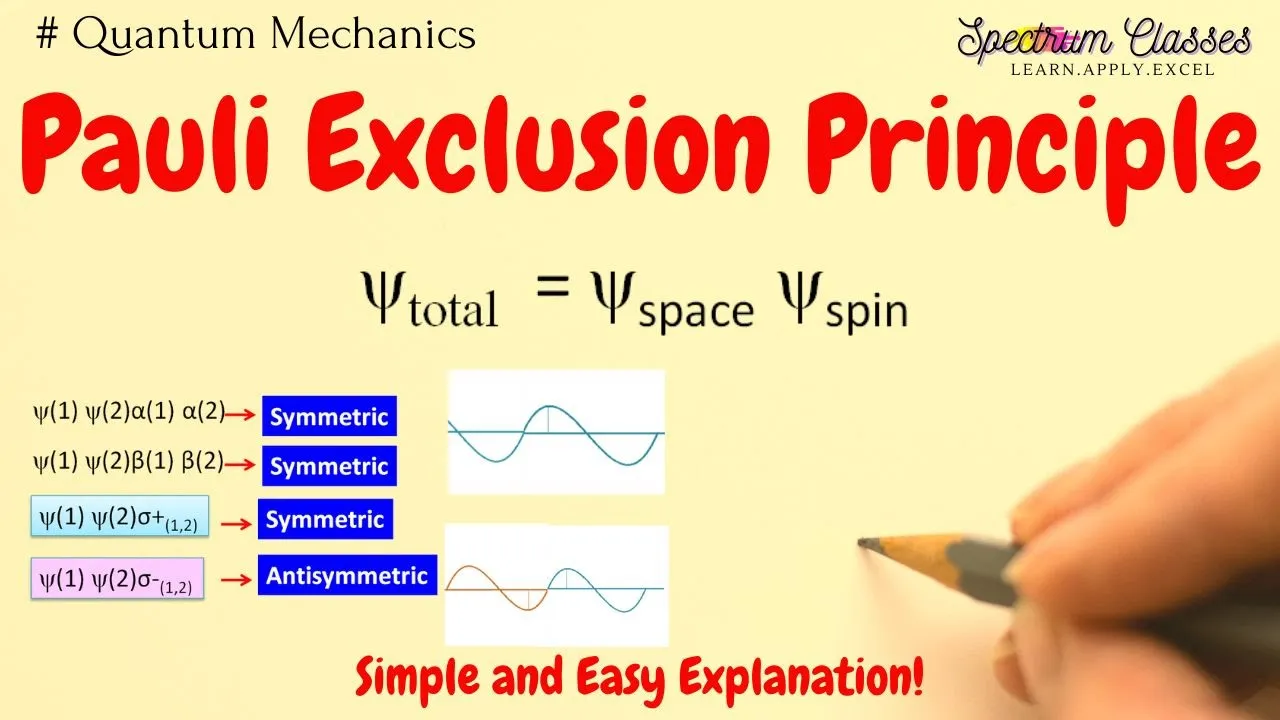
The Pauli Exclusion Principle and the mathematical requirement of wavefunction antisymmetry for fermions.
The Variational Principle in quantum mechanics, as Hartree-Fock theory relies on minimizing energy expectation values.
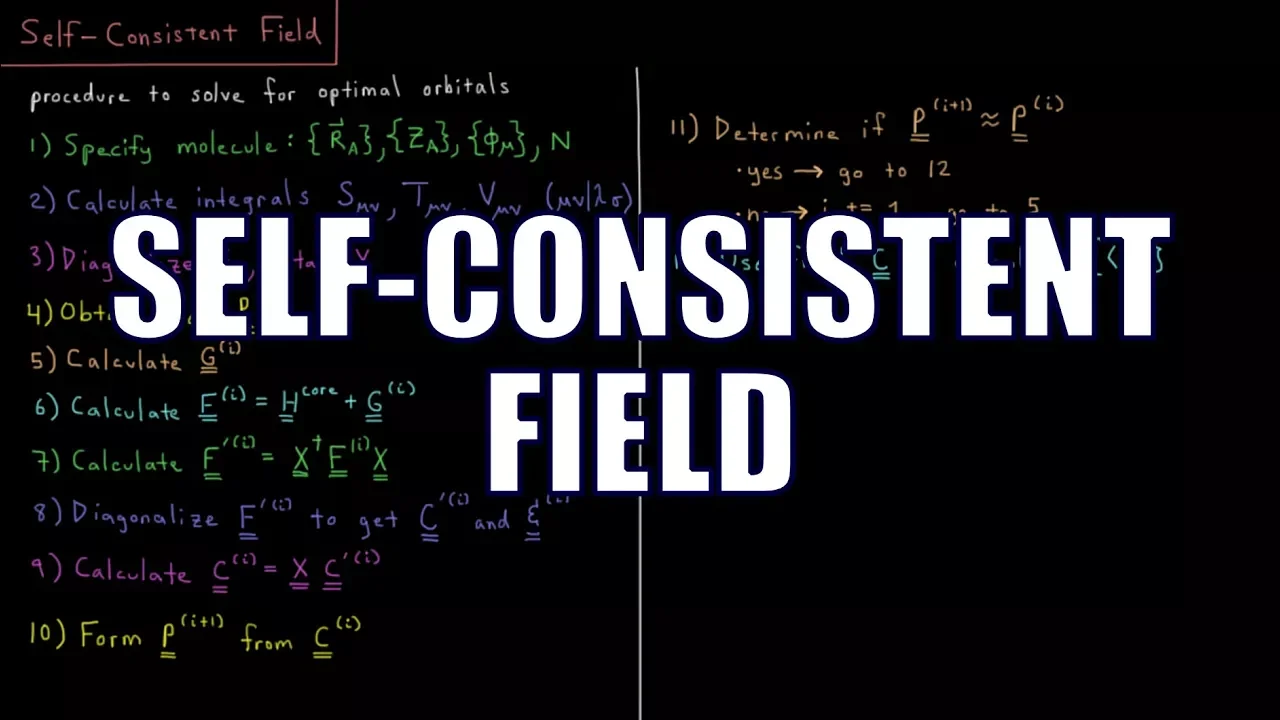
The Self-Consistent Field (SCF) iterative method used to practically solve the Hartree-Fock equations.
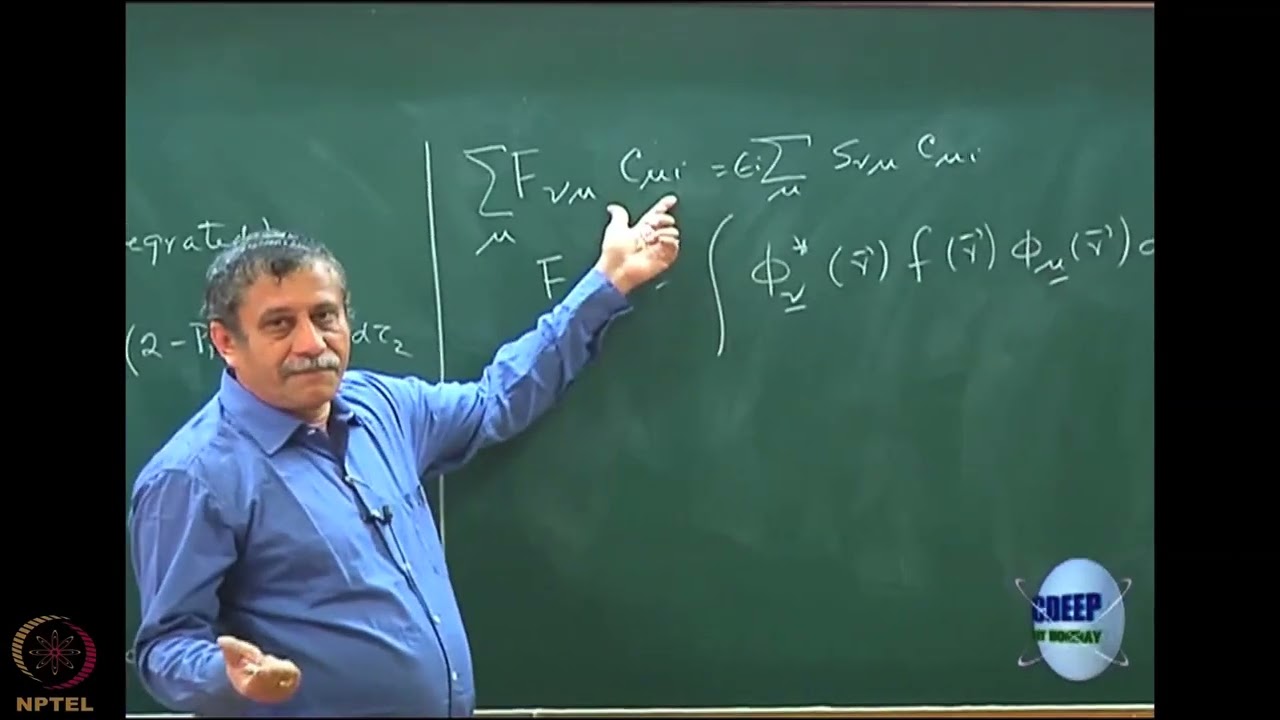
The Roothaan-Hall equations, which introduce basis sets to convert integro-differential equations into a solvable matrix eigenvalue problem.
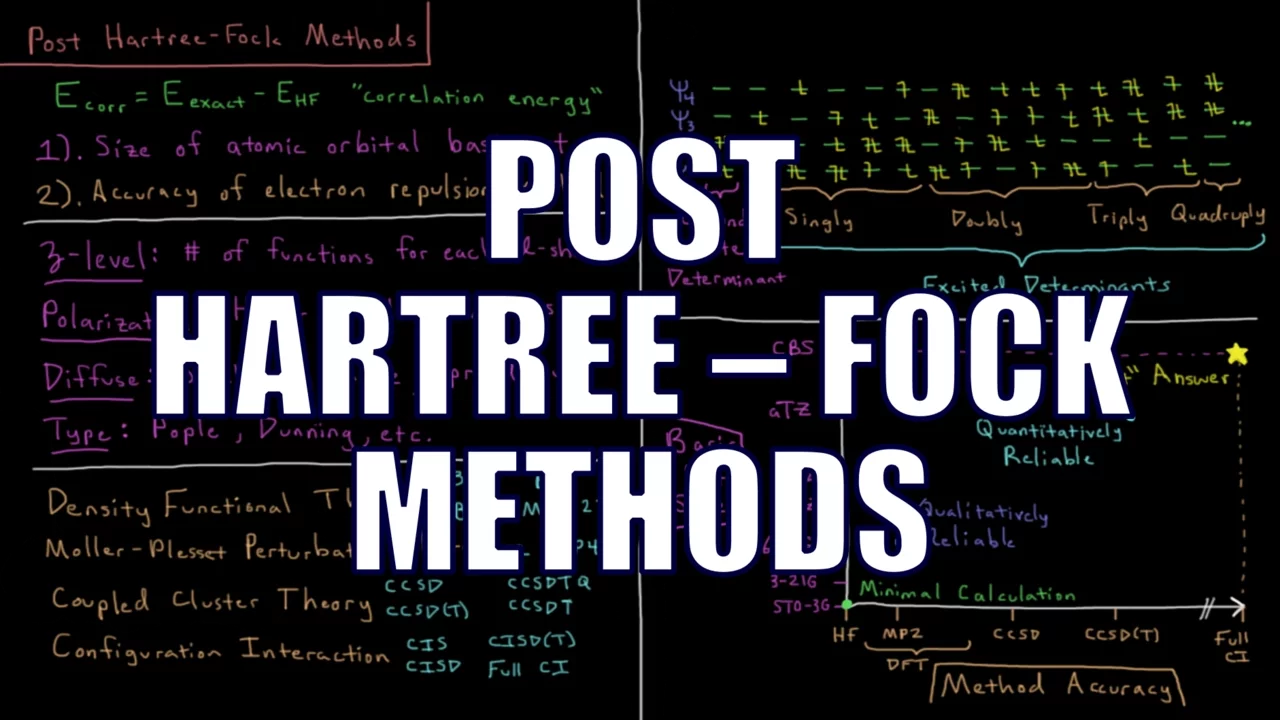
Post-Hartree-Fock methods (such as Møller–Plesset perturbation theory, Configuration Interaction, and Coupled Cluster) to address electron correlation.
Density Functional Theory (DFT) as an alternative and highly popular approach to the many-body electronic structure problem.
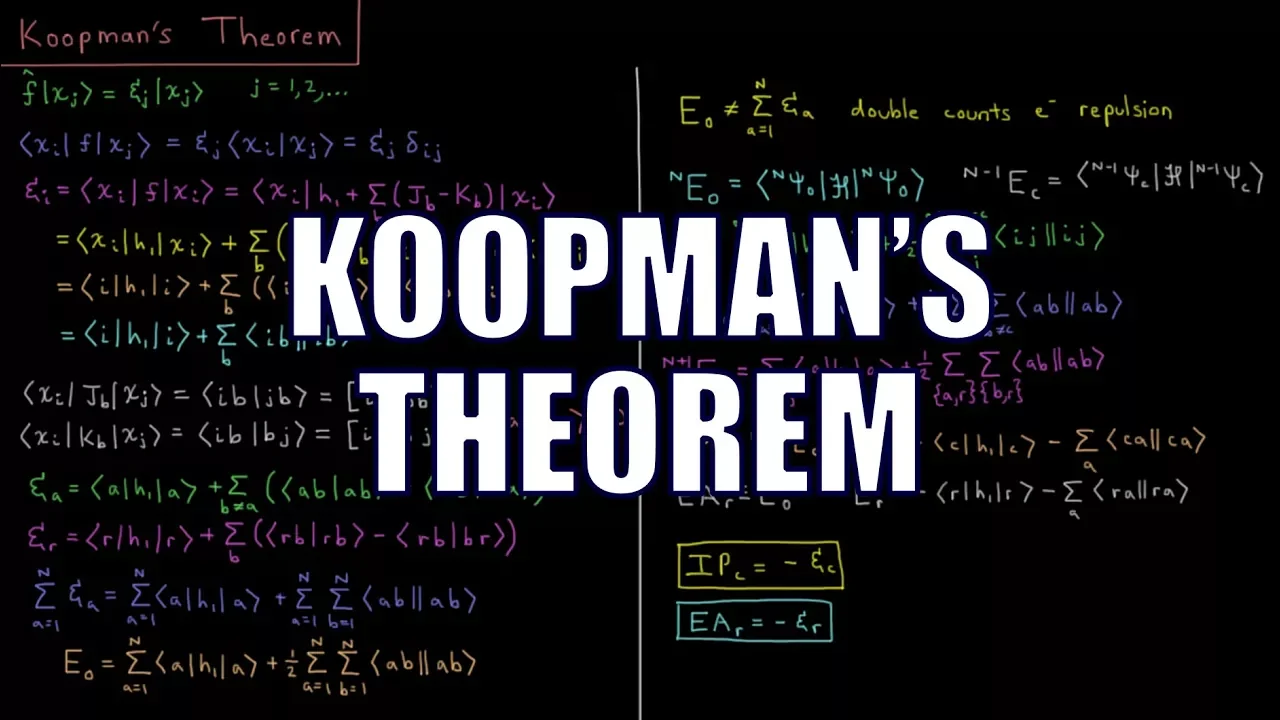
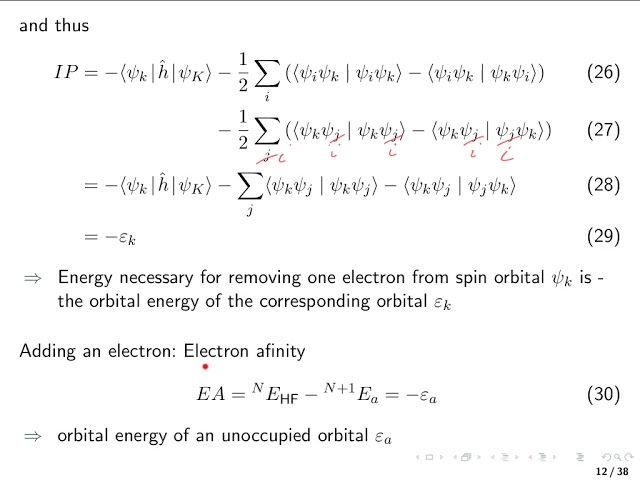
Koopmans' Theorem, which relates Hartree-Fock orbital energies to physical ionization potentials and electron affinities.
25.6K views134likes54:17Original Release: 2012-07-18
okay today we're going to talk about archery Fox Theory uh what it is and how it works um unfortunately we won't really be able to get to the Heart of Heart Tree fog Theory till the next lecture which would be Wednesday at this time in this room and that's because uh it really takes a lot of notation to be able to write down the equations in a somewhat compact form so it may take me quite a few minutes this morning just to get all the notation out there but that's what I'll attempt to at least get done and then we'll see how far we can get into the actual method but let me remind you uh what it is we're doing which is solving the furniture equation for some molecule and last time I wrote up the hamiltonian I'll do that briefly again today just to kind of remind you this time I'll go ahead and cheat and I'll switch over to Atomic units because it's faster to write down in atomic units and that's because H bar becomes one massive electron becomes one four Pi Epsilon not becomes one so lots of things become easier so the molecular Hamilton again is the kinetic energy of the nuclei last time this time I'll call those capital a capital B Etc nuclei there uh one over two times the mass of the nucleus times the second derivative with respect to those nuclear coordinates uh same thing for the electrons but that's easier to write in atomic units and I'll use little I Little J Etc to denote electrons that's minus one-half Del I squared because the mass of electron is one and H part is one Atomic units okay so I've got nuclear kinetic energy electronic kinetic energy um what else do I have I have a potential energy I have electron nuclear attraction so I'm going to sum over all the nuclei and sum over all the electrons and that's going to be the charge on the nucleus times e squared but e an atomic units is one divide by four Pi Epsilon that goes to one a distance between electron I nucleus a is Ria um I have electron electron repulsion that's positive I'm sending over the unique pairs I'll call it I greater than J 1 over r i j that's pretty darn easy on top and then finally same thing for nuclear nuclear pulsion um a greater than b 1 over r a b okay so that's all the terms in the hamiltonian and when we invoke the born Oppenheimer approximation we're going to assume that the nuclei are fixed at some positions and just solve the Motions of the electrons so that means I'm going to have a electronic hamiltonian which is going to basically neglect this term because if the nuclei are fixed the second derivative inspector is zero but then I'm just having remain units now this guy RAV um the the the sum of all the nuclear nuclear repulsions that strictly speaking is a nuclear term there's no electronic coordinates there they're all nuclear and so if I want to talk about solving the electronic Schrodinger equation maybe I would take that out but in practice we normally go ahead and fold it into the electronic change equation and that's because if the nuclei are at fixed positions that's just a constant and the constant's just going to shift up the energies by some amount it won't affect the wave function and then just practically speaking electronic structure theorists go ahead and throw that in the electronic transgender equation because it's easy to handle even though strictly speaking it is a nuclear term so if you do all this you solve for the electronic Trader equation which is all of that minus this nuclear part and the wave function is an explicit function of all the nuclei of all the electronic coordinates which I might call delar and it also depends parametrically on the fixed nuclear coordinates that gives me an electronic energy which depends on the nuclear coordinates times that wave function back and I'll call this size of e because it's an electronic wave function and then if I want to know what the nuclei are doing I can then subsequently solve a nuclear schranger equation where I take this nuclear kinetic energy which I'll call TN plus this electronic energy now serves the role of the potential but the nuclei field times a nuclear wave function holds the total energy times the nuclear wave function okay that's all a bit of a reminder of some stuff I mentioned last week but that's what we're going to do we're not going to have an approximation let's install the electronics range equation once we have that the electronic energy is play the role of a potential energy that the nuclei feel and then we can solve for the nuclei do then if we have the electronic wave differential and the nuclear wave function we kind of have everything in principle anything should be derivatable from those quantities this would only not work if you had very strong coupling between the nuclear and electronic degrees of freedom which can occasionally happen that's called a breakdown of important Oppenheimer approximation but it's somewhat rare that that happens unless you work in certain certain fields for most run-of-the-mill problems we're not minor approximation works great and there is good decoupling between nuclear and electronic coordinates Okay so I'm going to solve The Chronic change equation and what I need to do is now introduce some of this notation I've been talking about instead of writing all this I'm going to write something even shorter than that and I'm going to refer to my notes to see what symbols I am using today hi yes okay I'm going to introduce what I'm going to call one electron operator little h of I and this is going to be a so-called one electron hamiltonian for electron I and what's going to be is the nuclear kinetic energy of electron I so the piece of this that corresponds to electron I um minus the attraction that that electron feels to all the nuclei so Somewhere over the nuclei Z sub a over Ria so the nucleus the electron eye has a kinetic energy it has an attraction to all the nuclei I have those two bits that really describes electron I except for one other piece the repulsion it feels from all the other electrons that comes from here I'm going to treat that one as a separate term because I want to lump the one electron bits together so I'm going to call this the one electrons the two electron bit well it's easy enough to write but sometimes we write it v i j which is really just one over rij so sometimes I'll use one sometimes I use the other and then with this notation the electronic hamiltonian becomes a sum over all the one electron terms h of I Plus a sum over all the unique pairs of these v i Js and as I mentioned a second ago it's traditional to go ahead and include the nuclear nuclear repulsion even though it's not really an electronic part but anyway um vnn then is going to denote this sum here and for fixed nuclear coordinate systems to constant all right any questions about where we are so far if not then let's roll on all right what am I going to do with this how am I going to try to solve this well next thing I need to do I'm going to assume that the solution is a single slated term and I mentioned that last time I'll write it up again quickly so we kind of remember what it looks like we're going to talk a lot more about slater Germans today okay so I've got a slave determinant I'm going to call this uh what do we want to call this I'm going to introduce a shorthand for the Slater determinant as well the Slayer determinant is specified basically by what orbitals go into it and the orbitals are columns as I'll show in a second and now I'm going to index them I think I'll call them p q r something like that okay you are so put that in a kept symbol I don't know if everybody's familiar with direct notation or not but even if you're not that's okay we don't really need to worry about what it means right now this symbol will denote this layer of the current um there's a normalization factor which is one of the square root of n factorial where n is the number of electrons then each column denotes an orbital and each row to notes an electron so column one is going to be orbital P I'm going to call it orbitals Chi and as I mentioned last time x Vector is going to denote a set of coordinates for electron one so X1 y1z1 and the spin of electron one maybe call it Omega one so that's really four coordinates in one here in this Vector X1 the next column is for the next orbital which you don't call Q and so on and so forth up to orbital r and it's all electron one in the first row the second row is the same except you switch to electron two X to Chi Q of X2 Chi R of X2 and so on and so forth you get to the end Chi P of X in if you have n electrons Chi Q of x n the entire rfx okay so you can see why I want some kind of shorthand like this because writing this more than once it starts to be pretty tedious and so we normally don't write it that way but it does represent a determinant and two and in fact even the determinants are shorthand because you might remember if you have a two by two determinant you can expand to determine it out the two by two gives you multiplication going down the diagonal subtract going up the other diagonal we get two terms if you had a three by three you actually get one two three four five six terms which is three factorial that's kind of one of the factorial is up here um and in general if you have a in by end determinant you get n factorial terms out of it so instead of writing in factorial terms this is a lot shorter but then instead of writing that that's a lecture um so I'll write those texts with these determinants so this guy is going to be the solution to the electronic syringe equation is it an exact solution no because the exact solution requires more than once later determine but to a pretty darn good approximation once later determined that gives you a nice approximation to an electronic wave function much of the time if you have transition metals or you're breaking bonds and you have di radicals you really need to have at least two or sometimes three or four or five or six slated determinants to even get a good approximation even even qualitatively sometimes but but if you've got a well-behaved molecule in its Grand electronic State and you're not breaking bonds and it's not a transition metal one of these is going to be pretty darn accurate okay so then the question is how I get the orbitals and that's what archery Fox theory is going to do for me and we're going to use the variational theorem we're going to tweak the orbitals till we get the lowest energy possible and that's what Heart Tree Fox theory is going to do so if I want to do that how do I minimize the energy with respect to the orbital rotations well I have to know what the energy is so if I had a slave determinant made out of these orbitals looking like this with this normalization and I wanted to get the energy of that what would it be well the energy we're going to assume since we're doing variational approximations I'm going to assume that the energy looks like a sort of a symmetric kind of quantity I'll show what I mean by that so we're going to assume we're going to work with an energy that looks like the integral of PSI where this is going to be PSI now the archery clockwise and maybe we should say Mercury Fox so we kind of remember it's an approximate size that so I take the Mercury flock wave function um take my electronic hamiltonian I'm just going to start writing H instead of electronic presence because in my job I only ever work with this one pretty much but it is the electronic hamiltonian I'm talking about if I integrate this over all space then I get some archery Fox energy maybe I'll call it a hurricane and in direct notation if you're familiar with that or if you're not it looks like this where um anything that is complex conjugate goes over here on the left this is called the bra and draft notation because direct thought it was kind of a joke that you could have a bra and this is called the KET and then it spells bracket and you thought that sounded cool so anyway this is called cat that's called the prime this is just the one that has condoms coming and we don't need to write the integral because if you have an inner product like this it implies that you're doing an integral overall space so that's a definite integral not an indefinite integral so it actually values to a number and energy should be numbers that's good and in fact because of the properties of hamiltonian and the symmetric nature of this and the fact that hamiltonian separation operator turns out this number is guaranteed to be a real number so it's not complex and that's also good because energy should be real numbers all right so what I do is I take this and I plug it in here and there take complex conjugates on the left side I'm going to go ahead and assume I'm going to work with a real wave function PSI and real orbitals you don't have to make that assumption in fact probably the energy equation I'm about to write maybe doesn't necessarily make that assumption but in practice Quantum cameras don't like writing codes with complex numbers so in reality if you were literally do this on a computer the program would almost invariably assume that these are real and everything works out to be real all right so how in the world do I plug this in here and there and actually get some number out of this this looks insanely complicated well you could brute force it if you had say say it was just a two by two case you could do it if it was a two by two determinant well you can expand a two by two determinant and you get a couple terms and you could throw that in here and here or there and there and it would be really messy algebra that after some patience and effort you would write down this big long expression and you'd have the result for the energy is a function of those orbitals but it turns out it's a little easier than all that um even if I have a 10 by 10 or 100 by 100 or a thousand by a thousand it simplifies a lot because if I think back to the nature of H which I just raised H remember it has one electron terms and two electron terms that means the hamiltonian only deals with at most two electrons at once like the electron electron repulsion term that's the two electron term there's no terms in the hamiltonian that involve three electrons or four electrons or five electrons that winds up being very helpful to us because of that many many many of the terms that come out when you expand this determinant I'll drop out to zero or one which is great um it would take too long to actually prove that to you so I'm not going to do that but maybe I can kind of convince you suppose suppose you multiply this out when you do you get a product of orbitals you get like say I go down this diagonal that's going to be one of the terms and there's many other terms Chi P of X1 times Chi Q of X2 times some other stuff down here times Chi R of x n so I get a product of orbitals there's n of those orbitals in the product if I have an electrons and each orbital has a different electron in it either X1 or X2 or whatever all right so I did a product of n orbitals suppose I have such a product uh here on the left and another product on the right the different terms of the determinant will give me plus and minus a bunch of other possible products I'm not worried about that right now each of those products though has in or n orbitals multiplied by each other here in orbitals multiplied by each other here if this is a two electron operator it can do something to two of those electrons let's say electron one electron two for the sacred simplicity but then if it's affecting electron one and electron two it does not it has no power left to do anything to electron three four five six whatever and that's good because if I have such a product here and I have electron 3 say in orbital Chi Q let's say t i don't want to interfere with some other letter I'm using suppose we've got Chi T here of X3 and then some stuff here but electron 3 is not effective then on the other side suppose I've got Chi on S with X3 well other stuff may happen with inspector electron one electron two but with respect to electron three I've got electron three and orbital t or orbital s these orbitals we choose them to be orthonormal and because of that that term will go to zero unless s equals t and if s was T then it would go to one so all these guys some of you may have taken a class where they've denied that as chronic or Delta you get lots and lots and lots of chronic or Deltas for the two elect for the any pair of electrons that aren't the two that are present inside a piece of this two electron hamiltonian so most of the terms um well all the terms go to zero one except for bits that evolve at most two electrons and then those are the bits that remain and if you're interested to see the details of how this work um the book by zavo and oslin modern quantum chemistry actually derives these so-called Slater rules that I'm about to give all right but hopefully that gives you a flavor of providing so given that it turns out that if I have a slave determinant and I try to get its Matrix element like this I only get one and two electron terms but this particular one I get uh refer to my notes to make sure I don't switch notations on myself unnecessarily yep there we go all right this guy winds up being the sum over I um that quantity which I'll Define in a second plus this quantity these are sums over electrons again okay that's the heart refock energy in terms of one electron quantities and two electron quantities but what are these quantities okay well hopefully this little H reminds you of little H I had a minute ago the one electron operator and that's exactly what it is this is the same thing maybe I guess it did before um this is just a matrix element of the one electron operator for orbital I and to write that out explicitly so you have a little bit more of a clue what that is this let me switch from direct notation to integral notation in case it makes some of you happier I've got an electron in orbital I um it's a function of its three spatial coordinates and spin coordinates which I'll call X1 vector I have this H operator here and I have okay so that's all it is that's just this operator and I put some orbital and we'll write in the left and integrate our model space how do I do this integral well that's the subject of a whole other lecture or a series of lectures but in principle you could do it right it might be hard okay so in in the end I get a number right it's a definite integral to get a number yeah um and what is this number physically this reflects basically the kinetic energy of electron one and orbital I because that was a part of the age remember what was the other part it's attraction to all the nuclei in there too and the reason I have to do all this integration and stuff as well because it's quantum mechanics and the electron isn't just sitting at some point in space it's smeared out and has different probabilities of being being at different locations and that's what the chi-star chi has kind of giving me that's the probability that electron one in orbital I is at location X1 at any given moment in time and then I multiply those probabilities by what it would do at that location with respect to its kinetic energy and its contraction to all the nuclei okay so that's that this bit gets the remaining physical part which is what the electron electron repulsion these are the so-called two electron integral terms in this I'm going to make myself some more space I don't think [Music] let me go up here just in case I want that in a second okay so this other one let me write it generically I should have written this generically too this is correct but you could also have a more general form of this orbital is different than that one it doesn't happen in r25 but it can happen somewhere else so I could if I wanted to I could call that P in that q p and Q that would be fine too let me go ahead and write this one in a generic way pqrs is this is a so-called double bar integral it's shorthand for pqrs minus PQ Sr all right well that doesn't help you much because you don't know what the other two things are okay so let me Define those all right so the other two guys this is now called single bar integral double bars right pqrs is well it's one of these integrals it's integral over sets of coordinates for two electrons I'll call it X1 and X2 again these are vectors so they have four coordinates inside each of them uh chi let's see let's which one is this p this one star Chi Q of X1 no kind of Q star of X2 1 over the distance between the electrons Chi r of x 1 Chi s of X2 okay this is the so-called physicist notation or direct notation for the integrals where the quantities that have complex conjugate are on the left in bra and the quantities that are not complex conjugate are on the right in the cat and this is the electron pulsion between the two electrons it's a little hard to decipher this physically but we can do it let me go ahead and rearrange this in another form since we are doing notation this is the so-called physicist notation there's another notation called the chemist notation which is the same quantity just written in a different way the chemists tend to like to put electron one on the left and electron two on the right because they think that's just easier to look at so let me give you the chemist version of this so we could do this now I'm going to put electron one on the left one IQ of X One people okay R star of X2 Chi s of X2 so now I have electron one here and electron two there um I could write things this way but notice this is not identical to the thing above because I swapped what letter was what right I had Q is complex conjugate of chi 2 now Q is not complex kind of difference Chi one so this is not the same as that um but these are all kind of generic indices for the moment so that's kind of okay and I need a different symbol to denote this versus that because you need to know what order to come in so to use a different symbol I'm going to use square brackets and write it like that so that's going to be the chemist version this is the physicist version now I can convert between the two if this mean if this is defined in fact if this is defined this way and this is defined that way you can convert between one or the other and we do that all the time in quantum chemistry from this guy if I want to convert it well what's the same and what's different p is the same s is the same what gets flip-flopped is the meaning of r and Q is changed so this guy to convert from one to the other I just flip indices two and three this is the same as prqs is that right if I had an R here that would be the same as that okay let me pause for a second since I've been dishing out some meditation and say does any of that make any sense for any questions about one of these things what any of these things are all right people seem relatively happy okay great um let me see if I've told you everything you need to know about these things no not yet um now I've tried to write this in a nice generic form I already mentioned though in reality we don't like working with complex orbitals so most of the time in a real calculation these orbitals will all be real that means well whether I take this complex conjugate or not it's irrelevant if it's the real number complex can't do with real numbers just the real number back so I don't have to do anything so normally when we do these derivations we try to be careful and proper at first and we put all our complex conjugates where they go and then later we say all right now I'm going to assume real orbitals all right that's a kind of a relevant comment here because um if I do assume real orbitals I can get some extra little tricks I can play even if I don't I've got some tricks I can play look at this guy first this p uh Kai P star Chi Q Star product well obviously um actually let me be careful about what I say about that I like to work with these guys all right which one of these I want to tell you about um okay first thing physicist notation does it matter which one Electro is which electron is electron one and which electron is electron two no it's just a dummy index now once you've picked one to be one and one to the other you need to be kind of consistent about what you're doing but but I'm integrating over X1 I'm integrating over X2 if I wanted to flip-flop which one was X1 and which one was X2 it would be the exactly the same quantity right so in that sense this thing must also be equal to um what happens if I reverse electron one and two so what does that mean it means I flip these two indices I flipped these two indices so pqrs equals QP Sr if I flip those two in those two because that's just interchanging which one's electron like one and electron two and that's irrelevant uh I could do the same thing in chemist notation but then that gets trickier in a way no it's easier in a way electron ones now on the left electron two is on the right so then in chemist notation that means I just flip which one's the left and the right so that's rspq okay so I can do some tricks like that the other thing I can do if they're real orbitals then if I look at this product well if the no I want to look at this point if they're real orbitals if I look at P times Q they're both X1 well that's the same thing as Q times P because it no longer matters which one's got to start they're all real so for real orbitals I can then interchange p and Q or by the same reasoning RNs and get exactly the same thing and I could do an analogous thing up here in physicist notation I could swap p with r or Q of s so there's a lot of swapping amenities you can do with these guys to show which ones are the same which ones are different and in my notes I go through the full eight-fold permutational symmetry that these have if they're all real orbitals and that's useful when you're doing derivations because sometimes you'll drive one and then the other one then you need to realize oh these two are the same thing and then go ahead and add them up or sometimes you subtract them to cancel um maybe I'll briefly mention we've got these jotted down I can write them down real quickly but I don't know there we are yeah so in terms of I guess we'll have to lose this in terms of chemist notation I actually wind up if you do all these tricks I said and put them all together you get a whole bunch of permutations ijkl winds up being the same thing as klij but if they're real orbitals then I can flip one of these so that's the same as jikl but if I flip that one I could and free to flip these two also so that's the same thing as ijlk but I could flip those at the same time so that's the same thing as j i Del k and then for each of these I can flip left and right well I already did that for that one I haven't done that here yet so that's the same thing as klji and this is the same thing as lkij and that's the same thing as lkji and two things I have one two three four five six seven eight eight full permutations so and you could do something analogous notation all right so I think that's enough notation now back to Heart Tree Fox let me rewrite my country Fox energy expression uh I'm just erasing winter Edition the PQ double bar RS equals PQ single bar RS minus PQ single Darkness R let me erase what's below that I guess to me it's easier to understand the Harker Fox energy expression if you're in chemist notation so that's the way I'm going to explain it to you but it's valued by part so what did I say the Petrified energy expression was well I said to sum up over all the one electron disc and I hope you feel like you have a feeling for what those are they're just kinetic energy in the attraction to the nuclei what's more interesting is these two electron bits um I did it as a double song one half semoral pairs of electrons IJ and they do at that later let me decode this into canvas notation this guy is equal to sum over I and J um what's i j double bar i j I'm going to use this trick it's i j i j single bar minus i j j i and now I'm going to convert that into chemist notation how do you do that again you swap indices two and three so that's the same thing as one half sum over i j um bracket notation now i i j j minus 5j that's what it is in chemist notation so just went from double bar to single bar then from single bar to chemist you swap indices two and three you get that but then I have to put it in Brackets to denote the kind of swap notations now the reason I like this is because at least part of this you can get a physical understanding of what this is which I'll see if I can squeeze in we don't need this anymore so what is this guy i j j tennis notation it's Chi I star electron one times the chemist notation electron one comes first both times one over r uh one two distance between electrons point two Chi J star of X2 Chi j and x this guy actually has some physical meaning look at the left turn chi I star chi I what is that if electron one is an orbital I which is is for this purpose then chi I star of X1 chi I of X1 is the probability that electron one in orbital I is located at position X1 or more precisely within some infinitesimal volume elements all right so that's probability electron one in orbital I is at excellent but then by the same token this is analogous this is the probability that electron 2 in orbital J is at X2 all right so there's some probability that electron one in orbital I is at this location and then there's some probability that X2 is that is where electron two is at in orbital J oh if this electron were here and if that electron were here the distance between them would be R12 and then the repulsion between them would be 1 over R12 which is exactly what I wrote here so what this is telling you is this is the coulomb repulsion between two electrons but it's a quantum mechanical version of coulomb repulsion because I don't know where the electrons are I only know what their probabilities are so if electron one was here and electron 2 was there then the repulsion would be that but do I know that they're there no they have some probability given by that times that what if they're somewhere else well they might be at some other location X1 X2 that's why I integrate over all possible places either of them could be and I integrate over all space so overall space electron one could be at position X1 electron 2 could be position X2 that's the probability electron one is there if it's a normal I that's probability electron two is an orbital is there it's an orbital J and then I just sum up all these probabilities times the coulon propulsion and that gives you the overall quantum mechanical coolant propulsion between electron one and verbal I electron two normal J does that make sense I hope so because the next term doesn't make sense the next term is just like this what is it it's i j j i so the next term what I do that becomes a j and that becomes an i can't make any nice handwave argument like I just did this doesn't have a good physical interpretation the best we can say is it is close to something that does have a physical interpretation but I've interchanged or exchanged to the latest these two have exchanged these students and for that reason this guy is called The Exchange term and it has its origin and the fact that we assume the Slater determinant as the functional form for the Hartford wave function that's really ultimately where it comes from the fact that we need the wave function to change sign if I Interchange to sets of electronic coordinates ultimately filters down and gives me that term so it's really kind of a reflection of the anti-symmetry principle or its special case the poly exclusion principle that that term comes in this term is just called the coulomb term and it makes a heck of a lot of sense it's just the repulsion the two electrons field given the fact that they're in orbitals and they have different probabilities of being being in different places in space um so that's your hertory fog energy it consists of kinetic energy for the electrons the attraction of the electrons to the nuclei those are both folded up in that one electron term of the lake and then there's coulomb term which is often denoted J while while I'm on notation uh in part 3 Fox here you notice the indices always come in pairs right there's two eyes and two J's two eyes and two J's because we Quantum chemists really hate writing down more than we have to if you haven't already picked up on this we introduced yet another shorthand it would call this guy j i j and we call that guy k i j and this is easier because they always come in those pairs at least in a hearty thought Theory okay um so now we at least know what the Heart Tree fog energy expression is it's a sum of the one electron bits for each electron in fact we also have a shorthand notation for this by the way sometimes we'll call that little h I I where it just says if it's an orbital eye it has that and we sum up inside so you have one electron but two electron bets two electrons coulomb Exchange and there's your energy and this I've written to be pretty generic this equation should work no matter how many electrons you have and you just sum up these things one interesting fact away that might be useful if you ever play around with these equations think about the special case I equals J what happens there because I've written this as a unrestricted sum where I chose to do it right now well if I equals J I have III minus III it cancels that's good so I don't have to worry about the case I equals J if I wanted I could rewrite this sum as just as the unique bits I greater than J j i j minus k i j that would work out to be the same thing as this because the I equal J part cancels anyway now it's an interesting little factoid that in density functional Theory this doesn't exactly happen that these exactly cancel for various reasons and well those would still cancel but there are other bits that go into the exchange and so you don't have an exact cancellation in Disney functional theory of Exchange in coulomb terms which you should so in a sense in density functional Theory an electron can see itself which is kind of bad and that gives you something called the self-interaction error and sometimes that can give you slightly weird results when you use DFT that you shouldn't get it doesn't mean people won't use DFT because you get a lot of benefits from it so um you know there's always trade-offs all right any questions about any of that all right let's see there's actually another problem if you have a Delta function so you're really even if you're at a table your coulomb and your exchange are both Infinity to a thin line yes that's true too yes there are lots of tricks that can come up with these equations someone has to watch out for all right well now that I've got the energy let me then see if I can at least get the stage started towards doing the derivation of the archery Focus which we will definitely not finish but we can at least get it rolling which is a good thing uh I think I'll leave Slater rules to um Trent if you're going to do the CI lecture I could talk about Slater's rules here which are just what happens if I have two Slater determinants that are different what are the Matrix elements but for Heart Tree Fox I only need the special case where it's the same Matrix element the same side of the terminal on either side so I'll just run with that for now but uh in general it's also useful to know how to work out the Matrix elements if you did have two difference later determinants and that is relevant for something called configuration interaction all right but now that I have an energy which I'll probably have to erase to make room with anybody we've seen the energy write it down in terms of these guys now we want to actually do archery clock all right so how am I going to do that well we'll get it started on the equations and we'll finish them next time what I want to do is I want to tweak my orbitals Chi eyes Chi J's to get the minimum possible energy by the variational theorem I mentioned that last time so how do I do that well I'm gonna set up something else I'm going to set up a LaGrange unit depend on all the orbitals so this is a function of all the orbitals and it's going to be equal to the hertory fog energy fog energy also of course depends on assessment orbitals right so that then I'm going to do this funny business where I'm going to subtract off the so-called undetermined multipliers I'm going to call them Epsilon on J of course orbitals remain orthonormal so what I want to happen is that this guy which is just the overlap between orbital eye and orbital J so that's just as much as that if these are orthonormal orbitals this should equal The Chronic or Delta which is just one if I equals J or 0 I is we want this to be true to the extent that it's not true we want to sort of force it to be true so I'm going to kind of throw this in to my lagrangian as a constraint and this is kind of a useful trick when you're doing this kind of variational approach as a way to kind of keep those orbitals working around why do I care if the orbitals are over well I mentioned a minute ago when we did our Slaters rules that all the terms besides the two electrons that are being operated on in the two electron hamiltonian go to one or zero because orbitals are worth a normal I need that to stay true because otherwise my energy expression gets crazy complicated so we want that to stay true and we're just going to insist whatever it is we do when we vary Chi and Kai J we're going to vary them in such a way that they remain orthoreable and then I can use the same energy expression okay so instead of just sort of saying in words U orbitals have to stay with the normal I'm kind of going to enforce it in mathematically all right so I'm going to start with that and then I'm going to minimize that instead of this because if I just do the straight minimization of this I might goof up my orbital ortho normalization I'm going to minimize that with respect to the Chi's and I'm going to write down the so-called first variations which basically means pretend you're going to kind of do a little tweak on Chi I or KJ and you're going to say how much did capital L change all right so the change is Delta l well it's whatever the changes in the Heart Tree Fox energy we need to work out what that is you'll have some change of course sometimes a couple minus what happens if I do some tweak of chi I or kaija here well um subtract over i j Epsilon i j um tweaking Chi or KJ doesn't change this this just to find the zero one if I equals a or not so let's change kind of like a constant here these are constants here but this will change because this equals this foreign it will of course change this result so some little change in this changes this and I need to reflect that here and I'm going to call that whatever the change is in this which I'll work out in just a second all right so basically all I'm saying is if you tweak chi I you can change that we won't change that by definition we will change that but we'll change that so now I need to know what is the change in this what is the change in that the easy one to work out first is this because that's the definition and it's pretty easy well what happens if I do tweak Chi to that let's assume that our tweaks have a certain form which is this form let's say chi I is tweaked a little bit and goes into chi I plus Delta Chi that'll be easy to track well let me just kind of throw it in what if I tweak Kyle this way if I substitute that in here well I'll get the original integral plus some extra bit that involves this Delta chi I right I'll get mainly foreign Delta chi I here Plus chi I Delta Chi J because I could tweak either I or J so whichever one look at two terms so that's okay and I'm only interested in the change so I'm not writing Chi kaija again that's that's where we started from so I just want the difference so the difference is either this one this tweak or that tweak now what about the archery clock energy that's probably a good place to stop the next thing I want to do is write down what the change in the Heart Tree Fox energy is which might take me more than a couple minutes so that might be a good place to resume next time we'll write down this tweak by writing down again what e is in terms of one and two electron integrals we'll tweak each of those kind of like this but there's more of them and then next time we'll kind of grind through the equations to see what all comes out of this and then we'll collapse it back down into something we can work with and then we'll have heart refactory and then if I have time I'll say a little bit about when we're done with the equations about qualitatively how they behave how they work how can converging things like any final questions okay if not then for those who are interested and see the conclusion of this I'll see you here Wednesday at 10.
Up Next

12:45
Density Functional Theory: Hohenberg-Kohn Theorems Explained
@ChemProfCramer
29.5K views•2014-06-03
83:56
Biocatalysis and Catalysis in Islatravir Synthesis | Merck Webinar
@SCIwheresciencemeetsbusiness
675 views•2020-10-08
10:06
1H NMR: Determining Number of Peaks from Structure
@MSJChem
59.2K views•2017-04-06

17:31
Edible Water Bottles: A DIY Guide to Sodium Alginate Spherification
@ryan
10.5M views•2019-06-21
Related Study Plans & Knowledge Roadmaps
Structured learning paths in Chemistry
chemistry
Nuclear Chemistry: Decay, Meds & Fuel Cycle
01Introduction to Nuclear Structure and Radioactivity
02Decay Dynamics and Kinetics
03Radiation Interaction and Detection
+ 2 more learning modules
24h5 modules
Explore Roadmap
chemistry
Supramolecular Chemistry: Forces & Machines
01Foundations of Chemical Bonding and Intermolecular Forces
02Introduction to Host-Guest Chemistry
03Thermodynamics and Dynamics of Self-Assembly
+ 2 more learning modules
16h5 modules
Explore Roadmap
chemistry
Photochemistry: Excited States & Reactions
01Foundations of Light-Matter Interactions
02Molecular Orbitals and Electronic States
03Photophysical Processes and Jablonski Diagrams
+ 2 more learning modules
18h5 modules
Explore Roadmap
chemistry
Coordination Chemistry: Bonding & Properties
01Introduction to Transition Metals and Ligands
02Crystal Field Theory (CFT) and Geometry
03Magnetic Behavior and Spin States
+ 2 more learning modules
14h5 modules
Explore Roadmap