










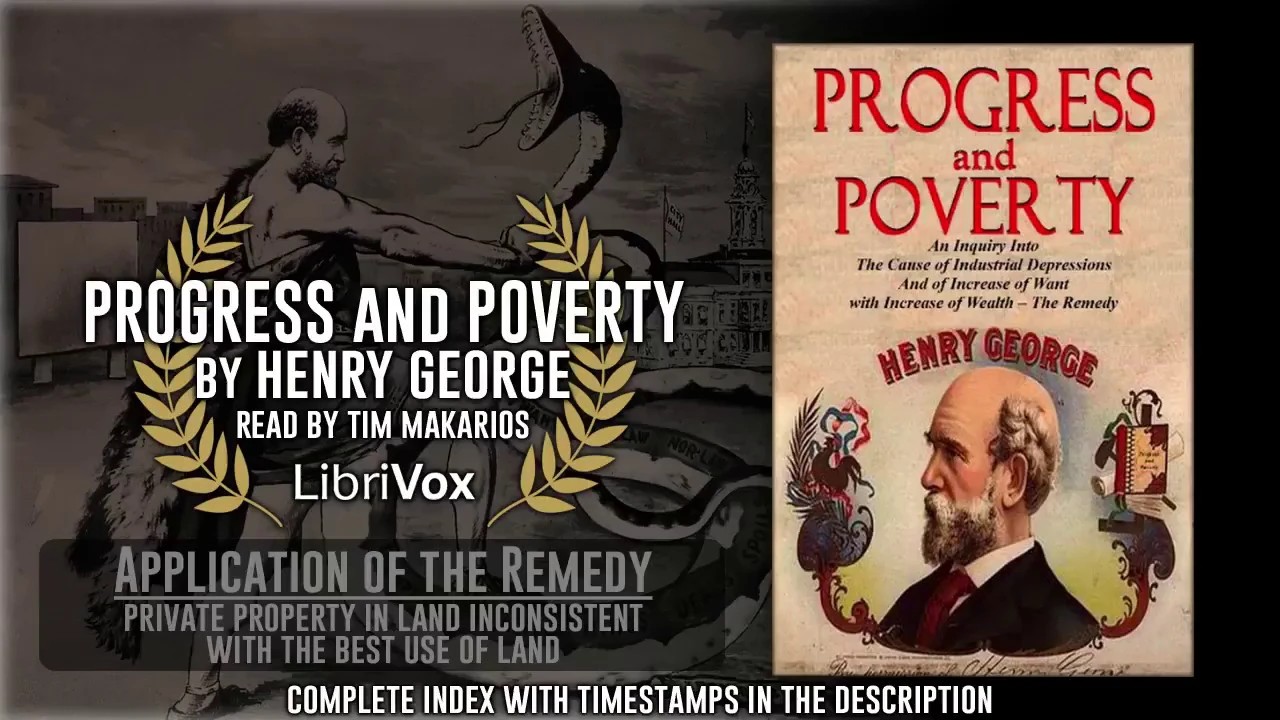


![세계 경제학 필독서 50 (18C~19C) [05] 헨리 조지의 《진보와 빈곤》1879년](https://i.ytimg.com/vi/JIoy6ymaEQA/maxresdefault.jpg)

![[헨리 조지의 진보와 빈곤] "'종부세' 비난하던 경제학자들 문제 있다"](https://i.ytimg.com/vi/dl0_GaqAFJc/hqdefault.jpg)


Georgism, founded by economist Henry George, advocates for a single land value tax as the only tax needed to address poverty and inequality, arguing that economic rent from land ownership—wealth derived from natural resources without personal contribution—should be taxed rather than taxing labor or capital, which would discourage work and investment; however, despite its logical appeal and efficiency (since land supply is fixed and doesn't cause deadweight loss), Georgism faded due to powerful landowner opposition, political compromises, and urban sprawl expanding land availability, though it has seen recent resurgence among younger generations concerned about rising land prices and housing affordability.
Understanding the Land Value Tax and Georgism: A Historical Analysis
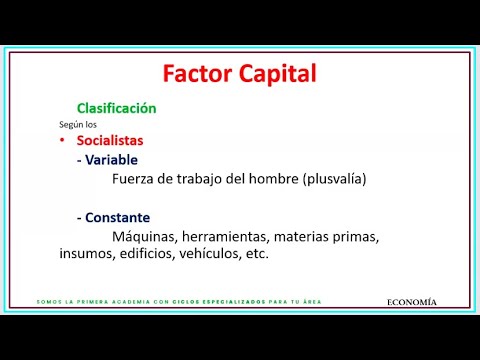
Added:The classical factors of production: distinguishing between Land, Labor, and Capital.
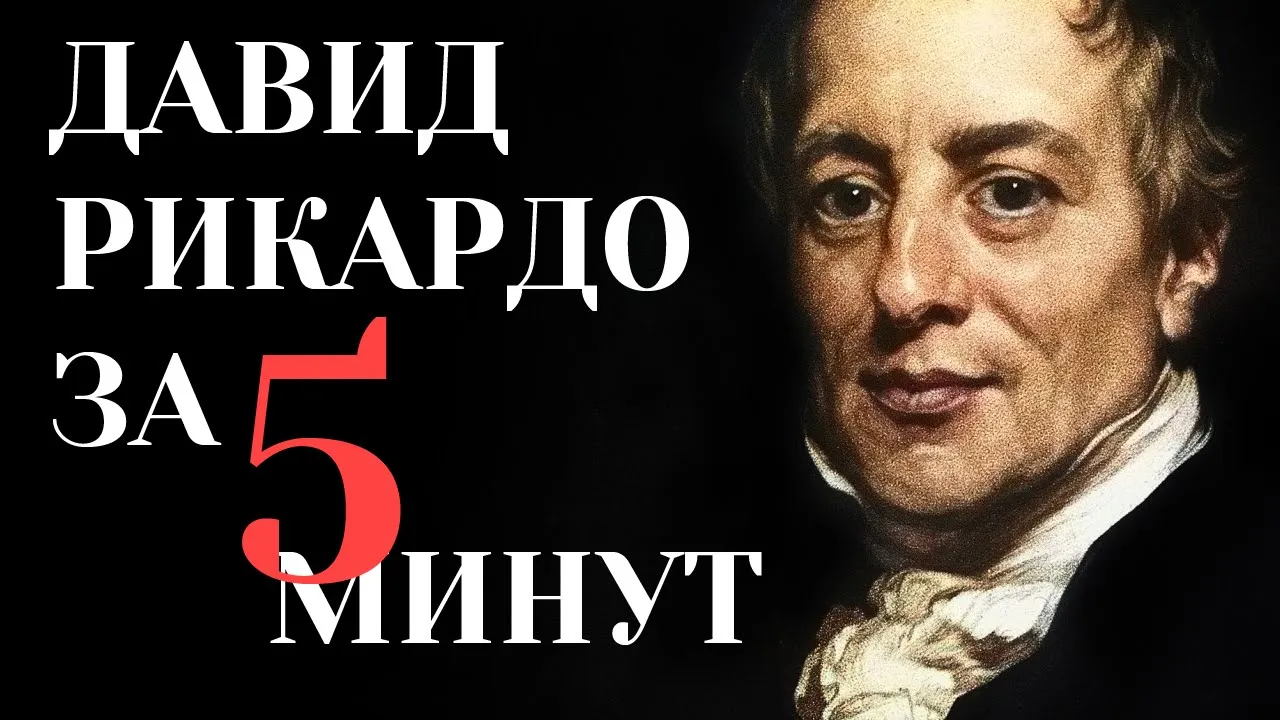
David Ricardo's Law of Rent and the economic concept of unearned increment.
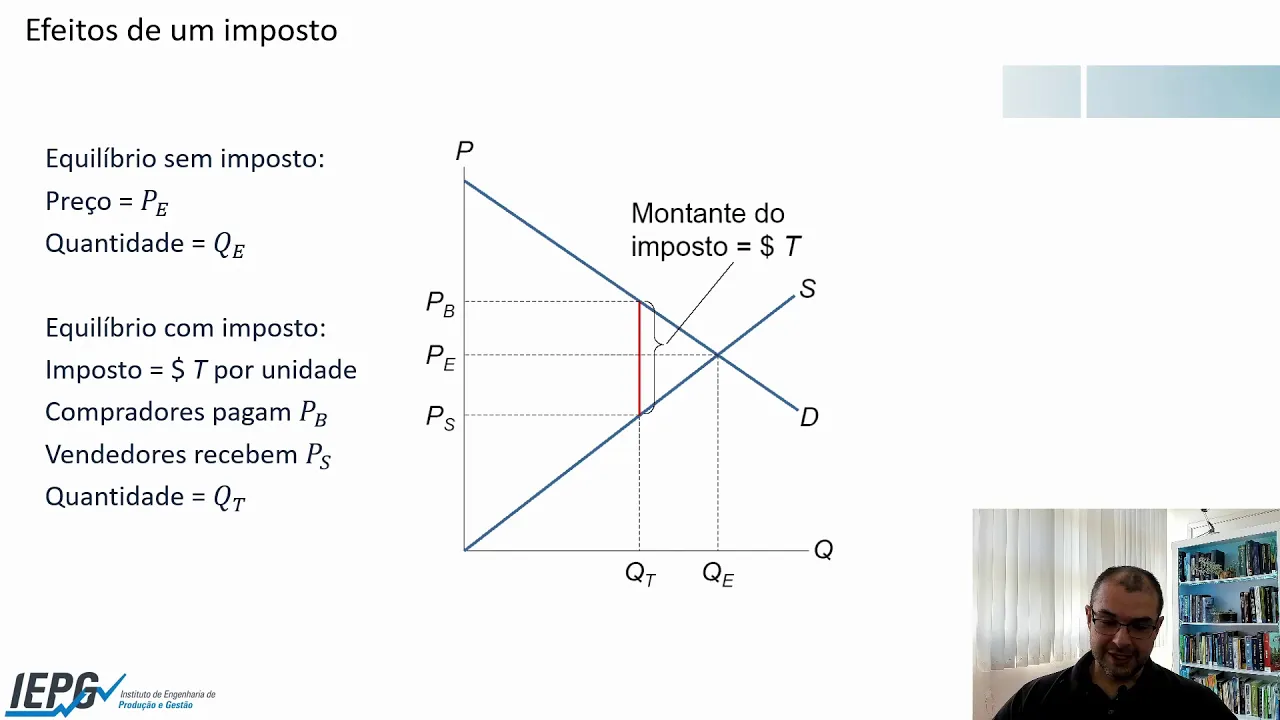
Basic principles of tax incidence, market distortion, and deadweight loss.
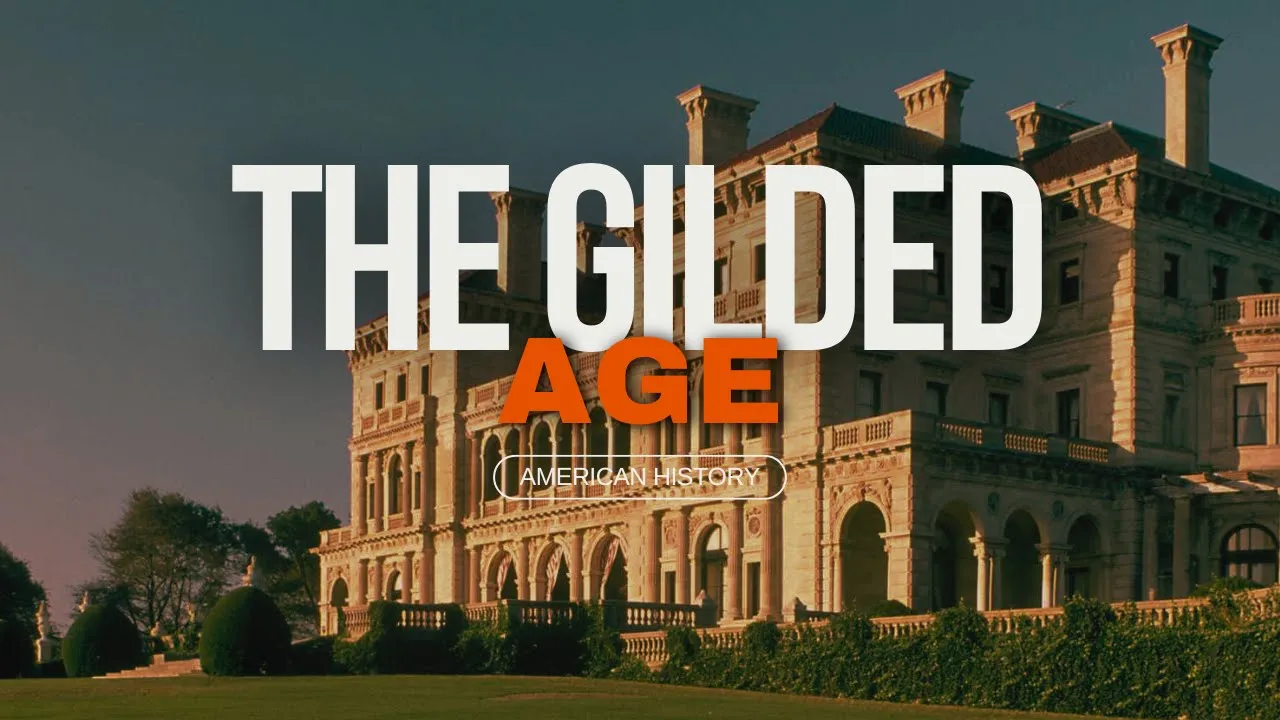
The socioeconomic context of the late 19th-century Gilded Age and the rise of rapid urbanization.
Empirical modern case studies of land value taxation, such as Singapore's land policy and Pennsylvania's split-rate tax.
The practical and administrative challenges of accurately assessing land value independently from building improvements.
Neoclassical economic critiques of Georgism and the debate over the 'single tax' viability.
Modern extensions of Georgism, including urban planning policy, carbon taxes, and natural resource dividend models.
1.3M views55.7Klikes23:08Original Release: 2022-06-10
Do you know who this man is?
You probably don’t.
But he was once considered one of the most influential Americans in history.
One journalist called him “the most famous American economic writer” and “author of a book which probably had a larger world-wide circulation than any other work on economics ever written.” Well, more on this man and the book he wrote in a few seconds.
But first, let’s go to a random field.
Oh hey, I’m Mr. Beat just sitting here in a random field touching grass.
That man you just saw a picture of was the economist and journalist Henry George, and the book he wrote, which eventually sold MILLIONS is called Progress and Poverty: An Inquiry into the Cause of Industrial Depressions and of Increase of Want with Increase of Wealth: The Remedy Goodness what a title.
That title was so long I lost my train of thought.
Where am I?
Why am I in this random field again?
Oh I remember.
Ok, so I previously released a video about every major type of tax.
Oh there it is now, you’d better catch it before it’s gone.
It’s gone.
Anyway, in that video I said “There is a tax called the “single tax” by the legendary Henry George.
I’m going to make a future video about this” Well this is that future video ok?
And actually, I should have been more specific.
Henry George’s single tax, the ONLY tax that he believed should exist, was a land value tax.
To help explain it, let’s bring in Economist, and fellow Youtuber, Jacob Clifford.
Thanks Mr. Beat.
A land value tax is a tax on the unimproved value of land.
It’s only on the land itself.
Not on any buildings or other physical assets that may go up or down in value based on market conditions.
But before he goes into more details about a land value tax [Clifford looks up in the distance as he reacts to me talking and looking confused] But before he goes into more details about a land value tax, let me first explain who this Henry George fella was.
After all, if you are watching this, you probably don’t know about him at all, even though he kind of used to be a big deal.
Henry George was born in Philadelphia on September 2, 1839, the second of ten children.
His dad, Richard George, published religious books and was a devout Episcopalian.
Henry was uh…not so much.
His dad forced him to go to the Episcopal Academy, but he hated it there, eventually dropping out.
That didn’t mean he didn’t enjoy learning, though.
He convinced his dad to hire him a tutor and he still read a bunch and even attended lectures at the Franklin Institute for fun.
He was particularly into economics.
He read Adam Smith and David Ricardo.
By the time he was 15, Henry had realized his parents were barely scraping by to feed the family, and he knew if he wanted to make some money, he must go out on his own.
So he traveled the world as a cabin boy on a ship, which means he basically took care of the captain’s needs.
He got paid six dollars a month.
Instead of returning to Philadelphia after he got done working at sea, he went to San Francisco to first potentially seek gold, but after that was a bust he worked as a typesetter, a weigher in a rice mill, and a farm laborer.
The job he kept coming back to was typesetter, though.
Unfortunately, Henry rarely made much money.
When he was 21, he met Annie Fox, an orphaned immigrant from Australia, and the two fell in love.
Annie’s uncle, who had been her guardian after her grandma died, didn’t appreciate how poor Henry was, though, and didn’t approve of the relationship.
But they secretly got married anyway.
Despite a happy marriage, the couple did struggle financially.
Even though they couldn’t afford to feed them, they had four kids together: Henry George, Jr., who later became a United States Representative and wrote a biography about his father, Richard, Jennie, and Anna.
Following the birth of Richard, times were so tough for the Georges that Henry often had to beg for food.
He later recalled one story… “I walked along the street and made up my mind to get money from the first man whose appearance might indicate that he had it to give.
I stopped a man—a stranger—and told him I wanted $5.
He asked what I wanted it for.
I told him that my wife was confined and that I had nothing to give her to eat.
He gave me the money.
If he had not, I think I was desperate enough to have killed him.” Things began to turn for the better when Henry decided he wanted to become a writer in 1865.
By that time he had steady printing work for the newly created San Francisco Times and began writing political editorials for local newspapers.
Even though Henry never went to college and had no formal training, his editorials became quite popular, and due to this, he got promotions at the Times.
By the summer of 1867, he was the managing editor.
In 1868, he left the Times to become managing editor of the bigger San Francisco Chronicle.
Soon after that, he wrote his most influential article up to that point, called “What the Railroad Will Bring Us.” It was a response to the first transcontinental railroad being completed, and while most everybody was excited about it, Henry was a bit more cynical, writing that the railroad would only benefit some people.
He argued the railroad would kill small towns and small businesses while propping up already great cities and already huge corporations.
Keep in mind that this was in 1868.
DECADES before the Populist Movement.
Henry’s popularity as a writer only grew after that.
While he passionately called for future Populist reforms like the secret ballot, public ownership of certain natural monopolies, and the right to vote for women, he also thought free trade was way better than protectionism.
(shaking head) Very nice.
And he dabbled in politics, running for the California State Assembly.
But was handily defeated by the…you guessed it…railroad industry.
As Henry’s editorials grew more popular, his family finally got out of poverty, but Henry wouldn’t constantly stop thinking about poverty for the rest of his life.
He had two “aha” moments that ultimately is the reason why I’m making this video about him and his ideas today.
The first happened in 1868 when he traveled to New York City.
He was struck by the fact that those in poverty in such a great city with great wealth were apparently a lot worse off than those in poverty back home in California, a place with much less development.
The second “aha” moment happened one day in 1870 when Henry sat on his horse overlooking San Francisco Bay, after a dude told him that an seemingly unimportant acre of farmland nearby would sell for $1,000.
“Like a flash it came over me that there was the reason of advancing poverty with advancing wealth.
With the growth of population, land grows in value, and the men who work it must pay more for the privilege.” Soon, Henry wrote his first analysis of what he called “the land question.” In 1871, Henry helped found the San Francisco Daily Evening Post and he became its editor.
This is when many first became exposed to his land value tax idea.
However, he accumulated lots of debt with the Evening Post, and his family ended up in dire poverty again.
Fortunately for Henry, by 1876 he was now a minor celebrity and began giving speeches.
He also still made some money as a freelancer of sorts.
On September 18, 1877, he began to write his masterpiece book, the one I told you about earlier, ya know, with the long title.
Yeah that’s the one.
We’ll just call it Progress and Poverty from here on out.
He finished the book in March 1879 and supposedly dropped to the floor and wept like a baby after completing it late one night.
That sounds a bit dramatic, but maybe it actually happened.
Anyway, by this time, he and his family lived in New York City, and that’s where Progress and Poverty first got published in 1880.
Oh, and at this time, he was 40 years old.
That’s my age!
Well the book didn’t sell that well at first.
But slowly but surely, thanks to word of mouth, it began to catch on, as did Henry George’s reputation.
He promoted the book in Europe, spreading his solution for eradicating poverty and reducing extreme wealth inequality.
Yep, the world was learning about his single tax on the value of land to completely replace the taxes the workers paid on their income and the taxes the owners paid on their capital.
Little did he know (did you say little did he know) that he would literally ignite a gigantic social movement that was a major catalyst of not just the Populist Movement but the entire Progressive Era.
Progress and Poverty eventually sold millions of copies and made Henry George a household name.
In fact, at the peak of the book’s popularity, I’ve read from multiple sources that George was the third most famous man in the United States…behind Thomas Edison and Mark Twain, of course.
George’s idea of a single land value tax became RIDICULOUSLY popular.
Actually, can…can I jump in here?
Well of course, Mr. Clifford.
A land tax is more efficient than other types of taxes.
Taxes influence decision making.
When we tax cigarettes, people smoke less.
Great.
But taxing other things that we actually want will decrease their production and consumption.
This causes what economists call, deadweight loss - inefficient markets that are not producing the amount of goods or services that society wants and needs.
But, since the supply of land is fixed, a land tax doesn’t decrease its production.
It doesn’t cause deadweight loss.
It’s efficient.
So sales taxes and excise taxes, and even income and corporate taxes, can slow down an economy by discouraging production.
But, George argued that a single land tax would promote productivity by preventing people from hoarding land or holding it for speculation.
If you own huge tracts of valuable unimproved land, a land tax encourages you to either improve it or sell it to someone that will improve it- by adding homes or a farm or factory- to earn enough money to pay the tax.
In the end, land would be used efficiently all while generating tax revenue for the government.
Well thanks Mr. Clifford.
Oh hey everyone be sure to check out his YouTube channel.
His videos were the main things I had my students watch when I taught Econ in the classroom.
(pops back in)Wait you really forced your students to watch me?
It’s true!
Anyway, In Progress and Poverty, George argued that a single, land value tax was needed because most of the wealth created by social and technological advances in an industrial free market economy was actually owned by landowners, and many of those landowners had monopolies over markets through something called economic rent.
Economic rent is basically income gained from controlling a limited resource.
So even though these landowners did nothing to improve the land value, they still got the profit.
And remember, this was land, a natural resource.
It was there already, these landowners didn’t create it.
They were just benefiting from something they did nothing to help create nor improve.
In Progress and Poverty, George argued the game was rigged, and the only way to fix the game was not to tax the worker on what they earn, because that would disincentivize them from working, and not to tax the owner of capital through taxes on what they own or buy, because that would disincentivize them from investing.
To George, land was common property, meaning everyone was entitled to it.
However, don’t you be thinking he was a Marxist now.
Uh, George was a GEORGIST.
George was fine with capitalism, it just wasn’t a fan of rigged capitalism in which the land owners were essentially parasites.
Because he thought everyone was entitled to the land, many of George’s followers hesitated to even call a land value tax…a TAX.
They preferred to call it basically rent paid to society in exchange for getting to exclusively use the land for whatever they wanted, while also compensating for the fact that others COULDN’T use it.
By the way, uh yeah George’s followers soon became known as “Georgists'' and George’s whole economic ideology became known as “Georgism.” Anyway, George’s book and ideas became so popular around the world that governments everywhere eventually got rid of all taxes, and that’s why today we only have land use taxes.
And we all lived happily ever after.
The end.
Except no.
Just no.
What I just said…I was just making that up.
Land wins You see, people who owned land, and this may be a bit surprising to you, DIDN’T LIKE THE IDEA OF A LAND VALUE TAX GO FIGURE HUH.
Many people liked the fact that they could just let land sit there and it would automatically go up in value.
In 1886, Henry once again gave politics an ol’ try after he was recruited by the United Labor Party to run for mayor of New York City.
However, he was up against The Machine, aka The Establishment…ok Tammany Hall, the powerful political organization that essentially controlled New York politics.
Tammany Hall feared that if George won the election politics in the city might be reorganized along class lines instead of ethnic lines, which is where Tammany got its power.
Tammany Hall called George’s supporters “anarchists, nihilists, communists, and socialists.” Well George lost the election but he surprised many with a strong second-place finish.
Not only that, but there is some evidence that there may have been some voter fraud involved.
His supporters were not even allowed to oversee the ballot count.
Regardless, he did finish ahead of an obscure dude by the name of Theodore Roosevelt.
And despite losing the election, for the rest of his life, George’s popularity only continued to grow.
In 1897, he ran for mayor of New York City again, but just four days before election, he suffered a fatal stroke that shocked the nation.
His death made international headlines and possibly as many as 200,000 people showed up to view his body.
At the time of his death, Henry George was the most well-known economist around and Georgism was arguably at its peak.
And yet, I only learned about George and Georgism like three years ago, and as I researched for this video, I noticed that the man and his land value tax idea are more obscure than goat cheese on pizza.
Why is that?
Why did Georgism go out of style?
Why did Georgism go out of style huh?
Well first of all, in his later years, George was too much of a purist.
He often refused to compromise on his ideals with other progressive reformers.
Other progressive reformers didn’t like how he was still ok with almost all capital uh…existing, and how he rejected a strong role for government.
They didn’t like his opposition to public ownership of certain types of infrastructure, his support of free trade, and him being a gradualist versus trying to start a radical revolution.
Overall, he frustrated fellow progressive reformers by not shutting up about a land value tax, thinking that was the only thing that could solve everybody’s problems.
But of course, there were also the landowners and the speculators.
Even today, much wealth is earned through owning land, and a land value tax threatens that.
But more importantly, land speculators have tremendous power over the government and the media, and they would simply not get to make money any more with a land value tax.
Now, there are other reasons why Georgism faded out in the 1900s.
World War I really hurt its momentum, for starters.
Another big thing that is probably not brought up enough by Georgists is that cars got way more popular during the century so that people could more easily travel longer distances to get to their land.
Simply put, being able to get around more easily increased the amount of land available.
See all this urban sprawl?
That’s because of cheaper land out on the fringes of metropolitan areas, and that’s a big reason why Georgism became somewhat obsolete.
Landowners have also been somewhat successful at other reforms to help the poor, like welfare, which, wouldn’t you know it, also helps them out ‘cause this ALSO helps their land value go up.
Go figure!
But here I am…on land…in the year 2022, and I’ve noticed a slight resurgence of Georgism, especially with the younger folk online.
What’s up with that?
Well, despite urban sprawl continuing to be a thing, land prices keep rising sharply, to a point now where many young folks are priced out, stuck as renters maybe forever.
The dream of owning a home to build up wealth is slowly fading away, so young folks are like “screw it, let’s revisit this land value tax idea again.” You might be thinking, well Mr. Beat, if a land value tax is so great, why doesn’t any place in the world do it?
Well, there ARE places where they do it.
It’s not what Henry George envisioned, but variations of a land value tax exist around the world, in places like Estonia, Singapore, Denmark, Taiwan, and even in parts of the United States.
However, for a land value tax to truly be effective it must be widespread.
Otherwise, those not having to pay a land value tax will have an even bigger advantage.
And if a land value tax was ever widely implemented, it couldn’t happen overnight.
It would be incredibly unfair in the short term to property owners who paid a lot for their land, as many of them would likely see their land lose its value over time with a land value tax.
What’s fascinating to me is how Georgism is not left wing or right wing.
It’s kind of a good balance of uniting liberty and equality.
The more I learn about it, the more impressed I am.
It kind of makes too much sense, which is why it will never happen.
(sit on ground and touches grass) This video is sponsored in part by Fabulous, the #1 self-care app to help you build better habits and achieve your goals.
The Fabulous app is a digital coach, or “happiness trainer” basically, that uses insights from behavioral science to develop great habits that will help you live the life you want.
One thing that I’ve been trying to get better at lately is eating more fruits and vegetables.
Well, my Fabulous premium account has kept me on track and held me accountable dad gomit.
You can either choose a self-guided approach or the guided approach.
I’ve used the self guided habit tracking to allow me to choose between more than a hundred habits, or even create my own!
I really dig its timely reminders, motivating lessons and engaging animations.
So join me!
Start building your ideal daily routine.
The first 100 people who click on the link will get 25% off a Fabulous subscription.
So there it is.
I finally made a video about Georgism.
Hopefully I didn’t disappoint the passionate Georgists out there.
I did have a Georgist read over this script, by the way.
A shout out to Georgism expert Adam Monroe for looking over the script and giving me feedback.
And you should follow him on Twitter.
His handle is…no joke…TAX LAND NOT MAN.
Oh, and I hope I made it obvious that I’m biased toward liking Georgism.
You Georgism haters out there- I want to hear from you.
Tell me why Georgism sucks.
Thanks for watching!
Up Next

80:48
Optimal Taxation Theory: Ramsey Rule | Economics Lecture 1
@harvard
40.7K views•2012-12-06

5:07
Impact of Yuan in Indo-Russian Trade Amid Sanctions
@WION
261.9K views•2022-07-01

18:33
Understanding Taxes: Types and Economic Functions Explained
@iammrbeat
225.2K views•2021-08-27

113:18
The Age of Easy Money: Fed & Inflation | Full Documentary
@frontline
21.2M views•2023-03-15
Related Study Plans & Knowledge Roadmaps
Structured learning paths in Economics
economics
Sovereign Debt: Defaults, IMF & Restructuring
01Introduction to Sovereign Debt & Government Bonds
02Debt Sustainability & Credit Ratings
03Anatomy and History of Debt Crises
+ 2 more learning modules
12h5 modules
Explore Roadmap
economics
Market Design: Matching Theory & Gale-Shapley
01Introduction to Market Design and Price-Free Markets
02Two-Sided Matching & The Gale-Shapley Algorithm
03School Choice Systems and Mechanism Design
+ 2 more learning modules
10h5 modules
Explore Roadmap
economics
Impossible Trinity: Forex, Capital & Policy
01Introduction to Monetary Policy and Central Banking
02Exchange Rates and International Capital Flows
03The Mundell-Fleming Model
+ 2 more learning modules
8h5 modules
Explore Roadmap
economics
Healthcare Economics: Market Failures & Systems
01Introduction to Healthcare Markets and Market Failure
02Asymmetric Information and Adverse Selection
03Moral Hazard and Insurance Design
+ 2 more learning modules
12h5 modules
Explore Roadmap