



















According to Einstein's relativity, there is no universal 'now' shared by all observers; instead, each person's present moment is a private slice through spacetime that tilts based on their motion. This means two people walking past each other on a sidewalk may have presents that differ by days when considering events in distant galaxies like Andromeda. The fixed speed of light forces this relativity of simultaneity, and while this creates a 'block universe' where past, present, and future exist equally in spacetime, the universe protects causality by placing all disputed events in the 'elsewhere'—regions too far away for any signal to reach, ensuring no paradoxes can arise.
There Is No Universal Present: Relativity and the Illusion of Now
Added:Einstein's Special Theory of Relativity and the constancy of the speed of light in a vacuum.
The concept of inertial reference frames and how relative motion is measured.
Classical Newtonian physics' assumption of absolute space and universal time.
Basic geometry of spacetime, specifically how space and time merge into a four-dimensional continuum.
The Rietdijk-Putnam Argument (Andromeda Paradox) and its philosophical implications on Eternalism and the 'Block Universe'.
Light cones, past/future boundaries, and how local causality is preserved despite the relativity of simultaneity.
General Relativity and how gravity (mass-energy) warps spacetime to cause gravitational time dilation.
Practical technological applications of relativistic time adjustments, such as high-precision GPS satellite clock synchronization.
124 views4likes1:52:55Original Release: 2026-06-12
There is a person somewhere near you right now. And you would swear the two of you share this moment, the same instant, the same now, ticking for both of you. It is the most ordinary assumption in the world. And it is wrong. If that person is simply walking while you stand still, their present and yours, measured out at the distance of another galaxy, come apart by days. One of you lives in a now where a distant event has happened. The other lives in a now where it has not. Neither of you is mistaken because the universe keeps no master clock to settle it. This is not philosophy.
It is the same relativity that makes the satellites overhead tick faster than the clocks on the ground by 38 millionths of a second every day. The shared present, the floor under your whole life, turns out to be something you do not share, even with the stranger beside you. So, who's now is the real one? Get cozy and let yourself settle. Hit subscribe if this is your first time here. Because by the end of this, the stranger walking past you will never look quite the same.
Now, let's slowly settle into this.
Part one, the clock on the wall.
There is a clock on the wall somewhere near you, and you trust it completely.
You trust it not just to tell you the time here in this room, but to tell you something about the whole universe at once. When the second hand sweeps past the top of the dial, you quietly assume that this exact instant is happening everywhere. The sun is doing something right now. The moon is hanging over some ocean right now. A galaxy you will never visit, so far away that its light took millions of years to reach you, is doing something right now in this very moment.
The same moment you are living. That word now feels like the most solid thing you own. It feels like the one piece of reality that could never be taken from you. Tonight, I want to take it from you. Not with a trick and not with a riddle, but with ordinary physics. The same physics that guides the airplanes overhead and steadies the little blue dot on the map in your pocket. By the time we are finished, you will understand something that sounds impossible when you first hear it and then sounds unavoidable once you see how it works. There is no such thing as now.
There is no single universal present moment ticking across the universe like a heartbeat shared by everything. The instant you are living is not the instant anyone else is living. Not exactly. And the farther away we look, the more violently those moments come apart. You can feel how strange that claim is because everything in your experience argues against it. When you talk to someone across a table, you feel as though you share the same instant with them. When two people look up at the same star, it seems obvious that they are seeing it in the same moment.
We build our entire lives on this assumption. We schedule, we meet, we say the words at the same time and we mean them. The shared present feels less like a belief and more like the floor under everything else. And yet the floor is the thing that is about to move. Let me be careful here because I am not telling you that clocks are unreliable or that time is some grand illusion in the cheap sense, the kind you might read on a poster. The clock on your wall is honest. It keeps perfect time for you where you are moving the way you move.
The strangeness does not live inside the clock. It lives in the assumption you wrapped around it without noticing. The assumption that your now reaches out and touches the whole universe. That it stretches across all of space and lands on every distant world at the same instant. That assumption is the one physics quietly takes apart.
What you are left with is something smaller and far more personal. You are left with your own private now. A slice of the universe that belongs to you and to your particular motion and to no one else. Think about how rarely anyone questions this. We have argued for centuries about almost everything, about what the stars are made of, about how life began, about whether the universe had a beginning at all. But the idea that there is one shared present, one moment we are all standing inside together has felt too obvious to even put into words. The great physicist who first cracked it open did not set out to attack time. He set out to understand light. And when he followed the behavior of light honestly all the way to its conclusion, the shared present simply fell out of the picture like a support beam that turned out to be holding nothing up. His name was Albert Einstein and the year was 1905.
He was 26 years old, working as a cler in a patent office in Switzerland, thinking in the margins of his day about a question that had been nagging at physics for a generation. The question sounds almost childishly simple. What would happen if you could chase a beam of light? If you ran fast enough to catch up to it, would it slow down beside you the way a car beside you on the highway seems to slow when you match its speed? Einstein worried at this question until it gave way. And the answer he found did not just change our understanding of light. It changed what the word now is allowed to mean. I want you to hold on to the image of that clock on the wall as we go because we are going to keep coming back to it.
Right now it tells you the time and you believe it tells everyone the time everywhere. By the end of tonight, you will see the same clock differently. You will see that it tells you your time in your place along your path through the universe and that the person walking past your window carries a clock that disagrees with yours about what is happening on the other side of the sky.
Neither of you is wrong. That is the part that takes the floor out from under you. Not that one of you is mistaken, but that both of you are right. And the universe simply has no opinion about which present is the true one. We tend to think the strangest things in physics happen far away in the centers of stars or inside the smallest particles. This one is different. This one is happening to you in this room at the gentle pace of a person crossing a street. The disagreement is small here, far too small to ever notice. But it is real. It is measured. And it grows without limit as we look outward. A small wrongness in a quiet room becomes across the distance to another galaxy, a gap of days, then years, then centuries.
The same effect, the same equation, the whole range in between. It is worth knowing that this assumption once had the full force of physics behind it. For more than two centuries, the science of motion rested on an idea set down by Isaac Newton, who wrote it straight into the foundation of everything. That time is absolute, true, and mathematical, flowing equally everywhere without regard to anything outside itself.
Newton's time was a single universal clock ticking in the background of the cosmos. The same for a stone and a star and a sleeping child. the same here as in the farthest reaches of space. Every law he wrote assumed it. For 200 years, no experiment so much as scratched it, and no one had any reason to doubt that the universe kept one master time. That is the measure of what Einstein overturned. He did not adjust a detail at the edge of physics. He reached into its foundation and removed the universal clock that everything had been built upon. and somehow the building did not fall it stood straighter than before.
This is why the loss of the shared present is so disorienting even now. It is not a strange result tucked away in some exotic corner of science. It is the quiet correction of an assumption so basic that Newton did not argue for it.
He simply assumed it the way you assume it every time you glance at the clock on your wall and imagine its instant belongs to the whole world. So let us begin the way Einstein began. Not with galaxies and not with paradoxes but with a single stubborn fact about light. A fact so simple it looks harmless and so strange that once you accept it, the universal present cannot survive. Before we can take your now apart, we have to understand the one thing in the universe that refuses to change no matter how you chase it.
Part two, the one thing that never changes.
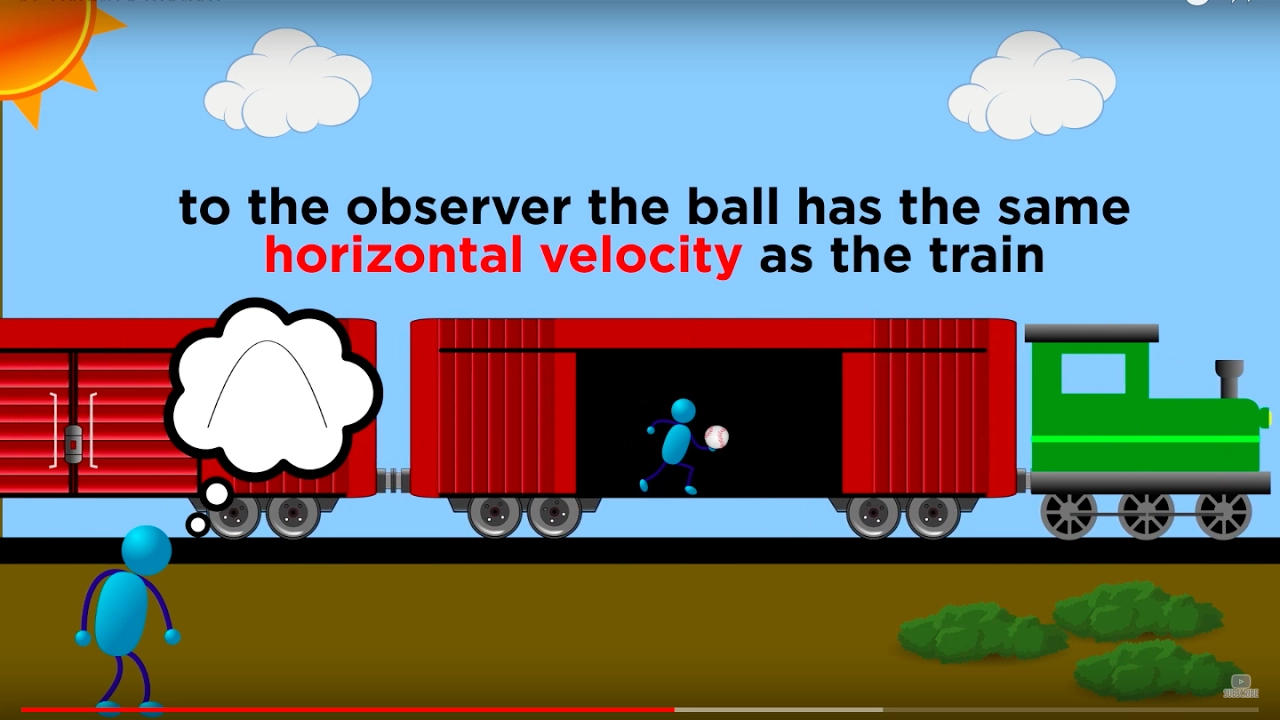
Everything you have ever experienced about speed is a kind of addition. When you walk forward on a moving train and the train is rolling north, the ground sees you moving at the train's speed plus your own. When you throw a ball from the back of a truck, the ball flies away at the truck's speed plus the speed of your throw. Speeds stack. They add together in the simplest possible way.
And this rule is so reliable that your body uses it without a single conscious thought every time you catch something or cross a road. The whole of ordinary life agrees. Motion adds to motion.
Light refuses to play this game. This is the single fact that everything tonight will balance on. So, let me say it plainly. The speed of light is always the same, no matter how fast you are moving toward it or away from it. Light travels at roughly 300,000 km every second. Fast enough to circle the Earth more than seven times in the time it takes to say the word once. And that number does not change. If you race toward a beam of light at half the speed of light, you do not measure it rushing at you faster. You measure it arriving at exactly the same speed as someone standing still. If you flee from that same beam as fast as you possibly can, it does not fall behind. It still catches you at the same unchanging speed. This is not a small adjustment to the rules. This is a flat contradiction of everything your intuition knows about motion. Imagine running from something at nearly its own speed and finding it still approaching you as quickly as ever, as if your running made no difference at all. That is what light does to every observer everywhere, always. It was first hinted at in careful experiments in the 1880s when scientists tried to detect the Earth's motion through space by measuring tiny differences in the speed of light in different directions and found to their confusion no difference at all. The light did not care which way the Earth was moving. It came in at the same speed every time. For about 20 years, the finest minds in physics tried to explain this away. They invented invisible substances for light to travel through.
They proposed that moving objects physically squeezed in just the right way to hide the effect. They bent the mathematics into knots, trying to save the comfortable old picture in which speeds simply add. Einstein's genius was to stop trying to save it. He looked at the experiments and asked a braver question. What if the speed of light is not hiding anything? What if it really is the same for everyone? And the thing that has to bend is not the light, but our ideas about space and time themselves.
You have to feel the size of that choice to understand what came next. Faced with a fact that broke the rules, Einstein decided the fact was solid and the rules were soft. He kept light speed fixed and let everything else give way around it.
And the moment you do that, the moment you insist that light moves at the same speed for a person standing still and a person racing along beside you, the universe is forced into a series of strange compromises. Moving clocks must run slow. Moving objects must shrink along the direction they travel. and the compromise that concerns us tonight. Two people moving differently must disagree about which faraway events happen at the same time. That last consequence is the quiet one. The slowing of clocks gets all the attention because we can picture an astronaut aging more slowly than her twin. But hidden inside the same logic is something that reaches all the way out to the edges of the sky and rearranges the meaning of the present.
To keep the speed of light the same for everyone, the universe has to let go of a shared now. There is simply no way to hold both. You can have one universal moment that everyone agrees on. Or you can have a speed of light that never changes, but you cannot have both. And the universe, as far as every experiment has ever shown, has chosen the unchanging light. Why does light hold this strange privilege? The honest answer is that the speed of light is not really about light at all. It is the speed at which cause can reach effect, the maximum rate at which anything in the universe can influence anything else. Light just happens to travel at that speed because it has no mass to slow it down. So when we say the speed of light never changes, we are really saying something more fundamental. The universe has a built-in speed limit on cause and effect woven into the structure of space and time. And that limit looks the same from every point of view. Light is simply the messenger that travels at the limit and shows us where it is. Keep that idea close because it is the thread that will protect us later. When we reach the part where your present and a stranger's present disagree by days across a galaxy, you may start to worry that something has broken, that information is leaping around, that effects are racing ahead of their causes. The fixed speed of light is exactly what prevents this. The same fact that destroys the universal now also guards the order of cause and effect like a single rule that gives with one hand and takes with the other.
We will see how that works when we get there. There is a detail in this history worth pausing on because it shows how hard the old picture fought to survive.
For most of the 19th century, physicists were convinced that light, like sound, needed a substance to travel through an invisible sea, filling all of space, which they called the ether. Sound needs air. Water waves need water, so surely light needed something, too. And if the Earth was moving through this sea of ether, then a beam of light sent in the direction of our motion should travel at a slightly different speed than a beam sent across it. The way a swimmer makes different progress with the current than against it. In the 1880s, two scientists named Michaelelsson and Molly built an instrument of exquisite delicacy to catch that difference. They expected a small effect. They found nothing at all.
The light came in at the same speed in every direction, no matter how the Earth was moving. That result was so unexpected that for 20 years it was treated almost as an embarrassment, a measurement that must be hiding something. People proposed that the instrument itself was being squeezed by its own motion in just the right way to mask the effect, a desperate patch to save the ether. What no one wanted to say out loud was the simplest thing of all. That there is no ether, that light needs nothing to travel through, and that its speed is simply a fixed feature of the universe. The same for everyone.
Einstein was the one willing to say it.
He took the failure to find a difference, not as a problem to be explained away, but as the most important clue anyone had been handed.
It helps to understand why light of all things gets to hold this privilege and the answer reframes the whole subject.
The speed of light is not really a fact about light. It is the speed of cause itself, the fastest rate at which any influence, any signal, any push or pull can travel from one place to another. It is the universe's speed limit on the connection between events. Light travels at that limit only because it carries no mass to hold it back. Anything without mass runs at exactly the same speed. So when we say light speed never changes, we are really saying the universe has one single speed of cause and effect and it looks identical from every point of view. Light is just the messenger that rides the limit and lets us see where it is. Once you see it that way, the constancy stops feeling like a quirk and starts feeling almost necessary.
A universe in which the speed of cause depended on your motion would be a universe in which the basic rules changed every time you sped up or slowed down a universe with no firm laws at all. Nature chose the other path. It kept the rules identical for everyone.
And to manage that, it had to let space and time themselves stretch and tilt to absorb the difference. The fixed speed of light is the price the universe pays for having laws that hold no matter how you move. And the vanishing of the universal now, as we are about to see again and again, is simply part of that same price. For now, sit with the one fact. Light moves at the same speed for everyone, no matter what. It sounds like a small piece of laboratory trivia. It is actually a crack running straight through the idea of a shared present.
And in the next part, we are going to follow that crack into a moving train where a single flash of light will force two honest people to disagree for the first time about the meaning of the words at the same time.
Part three, the train that broke the present.
Einstein loved to think in pictures and the picture he used to break the present is one you can hold in your mind without a single equation. Imagine a long train car moving smoothly down a track and imagine a lamp hanging at the exact center of that car. The lamp flashes once. The light spreads out in every direction and we are going to watch it race toward the front wall and the back wall of the car. That is the whole experiment. A lamp, two walls, one flash. Everything that happens to your sense of now is hidden inside this simple scene. Picture yourself first as a passenger sitting beside the lamp in the middle of the car. The flash goes off. The front wall is the same distance from you as the back wall and light travels at the same speed in both directions. So, the light reaches both walls at the very same instant. There is no mystery from where you sit. The two events, light touching the front wall, light touching the back wall, happen together. They are simultaneous. If someone asked you whether the light hit the two walls at the same time, you would say yes without hesitation, and you would be completely correct. Now, keep the same flash, the same lamp, the same walls, but move yourself outside.
Stand on the platform and watch the train rush past you as the lamp flashes.
Here is where the floor begins to move from your place on the platform. The train is traveling forward, which means the back wall is rushing toward the spot where the flash happened and the front wall is racing away from it. The light still travels at the same fixed speed for you. Remember that is the one fact that never bends.
But the back wall is hurrying to meet the light while the front wall is fleeing from it. So the beam reaches the back wall first and the front wall a moment later. From the platform, the two events are not simultaneous at all. One clearly happens before the other. Stop and notice what just happened because it is easy to rush past it. We did not change the flash. We did not change the speed of the light. We changed nothing about the events themselves. We only changed who was watching and where they were moving. The passenger says the light hit both walls at the same time.
The platform says it did not. And there is no experiment, no measurement, no clever instrument that can settle the argument because both of them are right.
Simultaneity whether two separated events happen together is not a fact about the events. It is a fact about the observer. It depends on how you are moving. This is the moment the universal present cracks. We are used to thinking that whether two things happen at the same time is just a feature of the things like their color or their weight.
The train shows us it is nothing of the kind. Two events that are perfectly simultaneous for you can be clearly separated in time for someone moving past you and neither of you holds the true answer because there is no true answer to hold. The order of distant events, the very meaning of together in time, slips and slides depending on your motion. And it slips for a reason you cannot argue with because the only alternative would be to let the speed of light change and the universe will not allow that. I want to slow down and put you inside this because reading it and feeling it are different things. So let me set the scene as if you are there.
You are standing inside the train car in the middle and the air is humming with the soft motion of the rails. The lamp above you flashes, a single clean pulse of light. To your eyes, it spreads out perfectly evenly, a sphere of brightness reaching the front and the back of the car in the same heartbeat. You would swear on anything that the two walls lit up together because for you they did.
Now the scene shifts. You are on the platform and the same car is sliding past you at speed and the same flash blooms from its center. But now you watch the back wall rush up to catch the light early and the front wall slide away so the light has to chase it, the back lights first, the front lights after. You would swear just as honestly that they did not happen together. Two versions of you, two truths, one flash.
The universe holds both without blinking. The amount of disagreement in a real train is almost laughably small.
A train moves so slowly compared to light that the gap between the two events is a sliver of a sliver of a second, far too tiny for any human to sense. This is exactly why we never notice it in daily life. At the speeds we live at, the disagreement about now is so minuscule that it might as well be zero. And a single shared present feels not just true but obvious. The effect hides itself at human speeds. That hiding is the reason the universal present has fooled every person who ever lived. But the effect is not zero. That is the thing to carry forward. It is small but it is real. And smallness is not the same as nothing. A whisper is quiet, yet it is still a sound. And if you could stretch that whisper across a great enough distance, it could grow into something you cannot ignore. The disagreement about now works the same way. In the train, it is a sliver of a second. But the size of the gap does not depend only on how fast you move. It also depends on how far away the events are. And once we let the distance grow from the length of a train car to the width of a city to the span between worlds to the gulf between galaxies that sliver of a second swells into days and then into centuries. There is a second version of this scene that Einstein also liked and it makes the asymmetry vivid.
Imagine lightning hitting a long railway platform at two places at once. One strike at each end as a train speeds through. A person standing exactly at the midpoint of the platform sees the two flashes arrive together and rightly says the strikes were simultaneous. But a passenger sitting at the midpoint of the moving train is rushing toward one flash and away from the other. The light from the strike ahead reaches them first. The light from the strike behind reaches them a moment later. The passenger just as honestly says one strike came before the other.
Same lightning, same platform, two truths about the order of events, and no way to crown a winner. What makes this so hard to accept is that we are used to disagreements being settled by better information. If two people argue about which of two runners crossed a line first, we imagine that a fast enough camera could decide it. But here, there is no camera that helps because the disagreement is not about who saw what.
It is about the events themselves woven into the geometry of space and time. A faster camera would only give you another observer with another state of motion and another honest answer. There is no view from nowhere, no neutral referee standing outside all motion who could declare the true order. The universe does not provide one and the relativity of the present is precisely the discovery that it cannot. Let me connect this back to where we are going so the thread stays visible. Everything tonight grows from this one seed. That whether two distant events happen together depends on how you move. In the train, the events were only a few steps apart. So the disagreement was a sliver of a second, but nothing in the rule limits it to trains or platforms. The same tilt of the same present continues outward, and the farther apart the events, the larger the disagreement it opens. We are about to take this seed and plant it at the scale of galaxies, where a sliver of a second becomes days, and where two people who merely walk past each other turn out to live in genuinely different presence. To see how a quiet effect can grow into something enormous, we need a better picture than a train. We need a way to see all of space and all of time at once laid out together so we can watch how your now becomes a kind of surface cutting through the whole universe and how that surface tilts the moment you begin to move. That picture was built 3 years after the train by a mathematician who had once been Einstein's teacher and it is where we are going next.
Part four, a slice through everything.
In 1908, a mathematician named Herman Minkowski stood up to give a lecture and he opened it with one of the boldest sentences in the history of science. He said that from then on space by itself and time by itself were doomed to fade into mere shadows, and only a union of the two would hold any independent reality. Manowski had been one of Einstein's teachers years earlier, and he had once thought of the young Einstein as a lazy student. Now he took his former students theory and gave it a shape, a geometry that even Einstein had not fully seen. He fused space and time into a single fabric, four dimensions woven together, and he gave it a name we still use. He called it spacetime. To feel what Manowski did, you have to stop thinking of time as a river flowing past you and start thinking of it as a direction like north or up. In his picture, the universe is not a three-dimensional stage on which events happen one after another. It is a four-dimensional structure that contains every event all at once, every place and every moment laid out together as a finished whole. Your birth is a point in this structure. This moment, you listening, is another point. Your last day, whenever it comes, is already a point in the fabric, too. Nothing in the structure moves. The whole of time simply is the way the whole of a map simply is with every city already on it, whether you have visited it or not. Now, here is where your now reappears, transformed in Minkowski's spaceime.
Your present moment is not a point and it is not a thing that flows. It is a slice. It is a single cut through the whole fourdimensional fabric, the set of every event everywhere that you call happening. Now picture it as an enormous flat sheet passing through the entire universe, gathering up this instant on Earth, this instant on the sun, this instant in a galaxy across the sky and binding them all together into one surface you label the present. That sheet is your now made visible and the moment you start moving that sheet tilts. That is the whole secret told in a single image. When you are at rest, your slice of the present is level, cutting cleanly across the fabric. When you begin to move, the slice rotates, tipping forward in the direction you travel and backward behind you. The faster you move, the more it tilts. And because the slice reaches all the way across the universe, a tiny tilt near your feet becomes an enormous displacement far away. Tip a flat sheet by the smallest angle and the corner near you barely shifts while the far edge of the sheet a great distance off swings up or down by a wide margin. Your present does exactly this. It pivots around you almost unnoticeably close by, sweeping through years and centuries out among the stars. This is why the train showed us only a sliver of a second. The two walls of the train car were just a few steps apart, so even with the slice tilted, the gap it opened between them was tiny. The closeness of the events kept the disagreement small. But the tilt does not stop at the walls of a train. It continues outward through the city, past the moon, beyond the sun, on and on, and the displacement it produces grows in step with the distance. near you, your now and a moving stranger's now are almost identical. Far away, they peel apart. The same gentle tilt that does nothing across a room can throw the present off by days across millions of light years. I want you to hold the image of the tilting sheet for a moment slowly because it rewards a patient look. Imagine standing perfectly still and imagine your present as that infinite flat surface, level and calm, touching every distant world at what you call this instant. Now imagine taking a single step forward. The surface tips just slightly, almost nothing under your feet, but follow it outward with your eye, out past the planets, out past the nearest stars, out to a far away galaxy, and watch the far edge of the sheet glide forward through time, sweeping across days, across years, settling on a different moment in that distant place than it touched a second ago. You did nothing but take a step. The geometry did the rest. Your present rearranged itself across the sky because you shifted your weight from one foot to the other. There is something almost unbearable about how personal this makes the present. Your now is not a public square that everyone stands in together.
It is a private surface angled by your own particular motion belonging to you and you alone. The person sitting beside you, if they are moving even slightly differently, carries a surface tilted at a slightly different angle, gathering up slightly different events into their present. You can be shoulderto-shoulder, breathing the same air, and still be slicing the universe at two different angles. Each of you binding a different set of distant moments into the word now. This is your own private now and it is the thing you will never share completely with another living soul.
Notice that none of this makes the present less real to you. Your slice is perfectly definite. Everything on it is for you genuinely happening at once. The strangeness is not that your present is fake. The strangeness is that it is yours, that it is one cut among countless possible cuts, and that the universe provides no master slice, no official present, no true level surface that everyone else's tilted slices should be measured against. There is just a fabric, and there are slices through it, and every slice is as valid as every other. The democracy of it is the disorienting part. No present is privileged. No now is the now. Let me give you one more way to hold the fabric because it rewards a slow and sleepy kind of attention.
Imagine you could rise up and out of the present entirely and look down on spaceime from outside the way you might look down on a long valley from a high ridge. You would not see things moving.
You would see the whole of history laid out at once. Motionless. Every sunrise that has ever happened or ever will.
Every life from its first slice to its last. Every star from its kindling to its slow cooling. All of it present together in a single immense structure.
Nothing would be flowing because from outside there is nothing for time to flow through. There would only be the fabric complete and the long threads of everything that exists running through it like grain through wood. From up on that imagined ridge, your present, the now you are living right now would be just one thin cut across the valley, one particular slice at one particular tilt.
And every other slice, every other observer's now would be just as visible, just as valid, lying across the same motionless fabric at its own angle.
There would be no way to look at the valley and find the true present any more than you could look at a loaf of bread and find the true slice. The slices are something observers bring to the fabric. The fabric itself simply is.
Hold that picture as we go, and let it rest quietly under everything else. A still, complete structure, and a multitude of tilted nows cutting through it. None of them the master, none of them the truth. Minkowski died young, only a few months after he gave that lecture, and he did not live to see how far his geometry would travel. But he had already glimpsed the thing that troubles us tonight. Once you accept that space and time are a single fabric and that your present is a slice through it, the universal moment is gone, there is no way to draw one slice and declare it the truth. And so the question becomes almost irresistible if your now is just one tilt and a stranger's now is just another. How far apart can two ordinary people's presence actually drift? Not in theory, but in practice, out where the distances are real. To answer that, the great physicist Roger Penrose imagined two people doing the most ordinary thing in the world, passing each other on a street and followed their two slices all the way to another galaxy. That is where we go now.
Part five. The stranger on the sidewalk.
Roger Penrose gave us the picture that makes all of this impossible to forget.
And like Einstein's train, it begins with something almost comically ordinary. Imagine two people on a sidewalk about to pass each other. One of them is standing still, perhaps waiting at a corner. The other is walking by at a gentle, unremarkable pace, the speed of someone heading home with no particular hurry. That is the entire setup. Two people, one street, one of them walking. There are no rockets, no near light speeds, nothing exotic at all. And yet, between these two utterly ordinary people, the present moment of an entire galaxy comes apart.
The galaxy in question is Andromeda, the great spiral that is our nearest large neighbor in the universe, hanging about 2 1/2 million lighty years away. That distance is almost impossible to feel.
So, let me try to give it a handle. The light entering your eye from Andromeda tonight left that galaxy 2 and a half million years ago before our species existed when our ancestors were just beginning to shape the first stone tools. The journey of that light is so long that it crosses an emptiness no human number really captures. Hold on to just this. Andromeda is unthinkably far, and that enormous distance is exactly what turns a gentle walk into something staggering. Here is what Penrose realized. The person standing still has a present, a slice through the universe that reaches all the way out to Andromeda and binds some particular moment there into their now. The person walking has a slightly different present because they are moving and their slice is tilted. Near the sidewalk, the two slices are practically identical. The two people agree about everything happening around them on Earth. But follow those two slices all the way out to Andromeda across two and a half million lightyear, and the tiny tilt has swung the far edge by an enormous amount. The two pedestrians passing within arms reach of each other are slicing Andromeda's history at two different moments. Their nows out there do not match and the gap between them is not a fraction of a second. It is days.
Penrose dramatized it with an unforgettable detail. Suppose that on Andromeda, a great fleet of ships is being prepared for a journey. A decision is being weighed. A launch is being considered. For the person standing still on the sidewalk, the moment their present touches Andromeda is a moment before the fleet has departed.
The decision has not yet been made. The ships still sit waiting. But for the person walking past them, walking in the direction of Andromeda, their tilted present touches a later moment out there. A moment in which the fleet has already launched, already set sail across the void. One person's now contains a fleet still sitting in its harbor. The other persons now contains the same fleet already gone and they are standing right next to each other on the same quiet street. I want to put you inside this because it is the center of everything we are exploring tonight. So slow your breathing and stand on that sidewalk. You are the one who is still waiting at the corner in the cool evening air. A stranger approaches on foot, unhurried, and for the length of a single breath they draw level with you and then pass. Nothing happens. A shoulder goes by. Footsteps fade.
But in that ordinary instant, reach your imagination outward across two and a half million light years to a fleet of ships poised at the edge of another galaxy. In your present, in the now that belongs to you, standing still, the order to launch has not yet been given.
The ship's wait, the future is open. And in the present of the stranger who just walked past close enough to touch that same fleet left days ago, its ships are already underway, already committed, the decision long since made. Two people brushed past each other on a sidewalk and across the gulf between galaxies.
They carried two different worlds. One where a great journey had not begun and one where it already had. Neither of them is wrong. That is the line you have to keep saying to yourself because every instinct fights it. We want to ask which of them is right. Has the fleet really launched or not? But the question has no answer because there is no universal now to settle it against. The standing person's present is a valid slice of the universe. The walking person's present is an equally valid slice. The fleet's departure sits in one slice and not the other, and the universe does not arbitrate between them. It is not that one pedestrian has bad information and the other has good information. It is that the words has the fleet launched right now contain a hidden assumption, the assumption of a shared now. And that assumption is the very thing that does not exist. You may want to object that this is just about what each person could see or measure. Some delay in light reaching them. It is not. This is not about when the news of the launch arrives. Light from that event will not reach either pedestrian for 2 and 1/2 million years. So neither of them can see anything. Neither of them will know for the rest of their lives. The disagreement is not about perception or delay. It is about the structure of the present itself about which events genuinely belong to this moment. Their slices are different all the way out here and now regardless of what light has had time to arrive. The fleet that may or may not have launched is not a puzzle about messages in transit. It is a puzzle about what now even means. Let me linger inside that passing moment a little longer because it has more to give. Suppose you turn around. Suppose that instead of standing still, you begin to walk in the opposite direction away from Andromeda. Now your present slice tilts the other way, and the moment it touches out at Andromeda slides earlier rather than later. The fleet you almost watched depart recedes back into a moment before any decision was made. Walk toward the galaxy and its present rushes forward. Walk away and its present falls back. You are doing nothing but choosing a direction to stroll. And the present moment of a place 2 and a half million light years away swings forward and backward across days in answer to your idle choice.
There is something close to vertigo in how little it takes. You do not accelerate to tremendous speeds. You do not strain or struggle. You shift your weight. You pick a direction. You walk at the pace of a person with nowhere urgent to be. And the now of an entire galaxy reorganizes itself around your motion. The smallalness of the cause against the size of the effect is the thing that makes this paradox impossible to forget. A whole galaxy's present hanging on the direction of a single quiet step. And still the hardest point is the one that fights every instinct.
Neither version is the real one. We are so trained to believe there is a fact of the matter that the fleet either has or has not launched full stop that the mind keeps trying to smuggle that fact back in. But there is no such fact because the fact would need a universal now to live in. And there is no universal now for it to live in. The launch is perfectly real as an event sitting at its own place in the fabric of spacetime. What is not real is any answer to the question is it happening in the same now I am in because your now and the strangers now are different slices and the universe keeps no master slice to break the tie. Let that settle because it changes the texture of an ordinary day. The next time someone walks past you on a street, you might remember that the two of you for that single instant did not share a present.
You agreed about the sidewalk, the street light, the sound of the traffic, because those things are close, and closeness keeps the slices together. But out among the galaxies, your two nows had already come apart by days quietly without either of you feeling a thing.
The shared present you have trusted your whole life turns out to be something you do not even share with the stranger beside you. And we have only let them walk. In the next part, we are going to let the distances and the speeds grow and watch the gap between two presents widen from days into centuries.
Part six, days across a galaxy.
Let me give you the actual numbers because they are where this stops feeling like a story and starts feeling like a measurement. The rule that governs how far two presents drift apart is simple enough to say in words. The gap in time that opens up at some distant place is equal to how fast you are moving multiplied by how far away that place is divided by the speed of light squared. You do not need to calculate anything. You only need to feel the shape of it. The gap grows when you move faster. The gap grows when the place is farther away. And because the speed of light squared is an enormous number sitting in the bottom of that fraction, the effect stays invisibly small until the distance becomes astronomical and then it erupts. Walk that gentle sidewalk pace about 1 meter every second and aim it at Andromeda and the gap between your present and a standing person's present out there comes to roughly 3 days. Let me hold that still for a moment because it is easy to say and hard to absorb. A slow walk the speed of someone strolling to their door opens a gap of about 3 days in the present moment of a galaxy.
Quicken to a brisk walk around 5 kilometers an hour and the gap widens to a little over four days. Climb onto a bicycle and pedal at 15 m an hour and now shifts by about 20 days between you and a person standing still. You are doing nothing that would raise your heartbeat. You are moving at the speeds of an ordinary errand. And the present moment of another galaxy is sliding back and forth across weeks beneath your feet. Now let us take our own foot off the ground entirely and let the planet do the moving. The earth is not sitting still. It is racing around the sun at nearly 30 km every second. That is far faster than any walk or bicycle fast enough to cross from one coast of a continent to the other in a couple of minutes. Aim that speed at Andromeda and the gap it opens in the galaxy's present is no longer days. It is about 250 years. Simply by riding the Earth along its orbit, your present moment on Andromeda is displaced by 2 and 1/2 centuries compared to the present of someone who is somehow at rest. And because the Earth swings around its orbit and reverses its direction over the course of the year, the now you point at on Andromeda in the summer and the now you point at in the winter are separated by something like 500 years.
Half a millennium of Andromeda's history sweeps past your present. And all you did was let the seasons turn. I want you to ride that orbit with me because it is worth feeling from the inside. Picture yourself sitting still in a chair, not moving a muscle, perfectly at rest as far as your body can tell. But you are not at rest. You are fixed to the surface of a planet that is hurtling around its star at 30 km a second, carrying you with it in a great curving arc. Now stretch your attention out to Andromeda and watch what your motion does to its present. As the Earth swings through spring and into summer, your slice of Andromeders now glides steadily forward through the galaxy's history. By the time the Earth has rounded its orbit and is racing the other way, half a year later, your present out there has slid across centuries.
Whole generations of whatever exists in Andromeda pass into and out of your present moment. Not because anything happened to them, but because you were carried around a star. You sat still in a chair and you're now wandered across 500 years of another galaxy. Keep climbing the distances and the picture only grows wilder. Andromeda is our near neighbor. The observable universe stretches out to galaxies billions of light years away. At those distances, the same gentle motions that shifted Andromeda's present by days would shift a farway galaxies present by spans of time longer than the age of the Earth.
For the most distant reaches we can see, two people in ordinary relative motion would slice the universe at moments separated by millions of years. The farther out you look, the more violently the present shatters until the whole notion of one shared moment across the cosmos becomes not just wrong but almost laughable, a comfortable little human assumption that holds only in the small close world of a single room. You might be feeling right about now that something has to be breaking. If my present can contain a galaxy's future, if I can carry events that have not yet happened for someone else, then surely I could exploit this somehow, learn something, send something, reach into a future that is already sitting in my now. This is the worry that the fixed speed of light was always there to answer and we are finally close enough to face it directly. The reassurance is real and it is built into the same geometry that caused all the trouble.
Your present may contain a distant galaxy's future, but you can never touch it, never see it, never receive a whisper of it. The events you disagree about are always, every single one of them events you are completely sealed off from. Let me stretch the ladder one more rung because the far end of it is genuinely staggering. Andromeda is our near neighbor, but the universe runs out to galaxies billions of light years away, a thousand times farther and more.
At those distances, the gap opened by ordinary motion no longer grows by days or by centuries. It grows by millions of years. Two people on a sidewalk walking past each other would slice the present of a far-off galaxy at moments separated by spans longer than the entire history of life on Earth. For one of them, some event out there belongs to a present older than the first animals. For the other, the same event has not happened yet. And both, as always, are equally correct. I want to make sure the reversal of the seasons does not slip past you because it is the most personal version of all. The earth swings around the sun once a year and at any two opposite points in that orbit, it is moving in opposite directions at nearly 30 km a second. So the present you assign to Andromeda in June is cut from one angle and the present you assign in December is cut from the opposite angle and the two are separated by roughly five centuries of that galaxy's history.
You will live through that swing this year and every year of your life. Each summer you're now out there points at one moment. Each winter it points at a moment 500 years removed. You feel nothing at all because here close to home your present barely shifts. It is only out among the galaxies that the same gentle motion fans out across the centuries. None of this, I want to stress again, is happening to Andromeda.
Nothing out there shuddters or jumps because you took a step or because the Earth rounded its orbit. The galaxy goes on exactly as it would whether you existed or not. What changes is only which of its already existing moments your particular slice of the present happens to gather up. The fabric is not being disturbed. You are simply cutting it at a different angle and at that distance a different angle means a different century. The motion is yours.
The rearrangement lives only in the labeling of a now you can never touch.
Hold on to that promise because it is the thing that keeps the universe sane.
We have let the gap between two presents grow from a sliver of a second in a train to days across a galaxy to centuries with the turning of the seasons to millions of years at the edge of the visible universe. It would seem that such a thing should tear cause and effect to pieces. It does not. The very structure that makes your now a private tilting slice also draws a hard boundary around what that slice can ever reach.
There is a region of the universe you can affect and be affected by and a region you are forever cut off from and the disagreements about now live entirely in the part you can never touch. In the next part we are going to map that boundary the edge of what you can reach and see why the universe lets us disagree about the present precisely because that disagreement can never be cashed in.
Part seven. the edge of what you can touch.
We have reached the place where most people start to panic a little. So, let me meet that feeling headon. If my present can hold a galaxy's future, the mind reasonably asks, then surely something is leaking. Surely I could find a way to peak at what has not happened yet or to send a signal that arrives before it was sent or to tangle cause and effect into a knot. This is the natural fear and it is the right question to ask. The answer is the most elegant part of the whole story because the universe has built a wall in exactly the right place. A wall that lets us disagree about the present as wildly as we like while never once allowing that disagreement to break the order of cause and effect. To see the wall, we have to go back to Minkowski's spacetime and add one more feature to it. From any event, say you here, now light spreads outward in every direction at its fixed speed.
If you trace the path of that light through spaceime into the future, it carves out a shape. Everything that your light or anything slower than light could possibly reach lies inside that shape. Physicists call it your future light cone. And it contains every event you could ever influence. Every place a signal or a ship or a touch from you could arrive. There is a matching cone reaching into the past containing every event that could possibly have influenced you. Every place from which a signal could have already reached you together. These two cones are the map of your connection to the universe.
Everything you can affect and everything that can affect you. But the cones do not fill all of spaceime. There is an enormous region left over. a region that lies outside both your future cone and your past cone events too far away in space for any light to have crossed the gap in the time available. Minkowski had a plain name for this leftover region.
He called it the elsewhere. The elsewhere is the part of the universe you are completely sealed off from right now. Too far to have sent it anything, too far to have received anything from it. And here is the crucial fact. The fact that makes everything safe. Every single event that observers disagree about, every distant now that tilts and slides depending on motion lives in the elsewhere. The fleet that may or may not have launched is in your elsewhere. You cannot see it. You cannot signal it. You cannot be touched by it. Think about what that means for the Andromeda fleet.
Whether the ships have launched or not, in your present or the strangers, the event sits 2 and a half million light years away. For 2 and a half million years, no light from that launch can reach either of you. Neither pedestrian will ever in their entire life learn what happened. The news is far slower than any human lifetime, slower than the whole history of human civilization. So the disagreement between the two presents can never be tested, never be cashed in, never produce a paradox because the event is forever out of reach of both of them. You can argue all you like about whether the fleet has gone. The universe will never hand either of you the receipt. This is why the relativity of the present does not let you cheat. To use your present version of a distant event to profit from the fact that your now contains a galaxy's future, you would have to receive information from that event faster than light. And that is the one thing the universe absolutely forbids.
The fixed speed of light, the same fact that destroyed the universal now back in the train car returns here as a guardian. It tilts your present into a private slice and then it stands at the boundary of that slice and makes sure you can never reach the parts that disagree with anyone else. The hand that takes away the shared present is the same hand that protects cause and effect. One rule doing both jobs. I find something quietly profound in that balance and it is worth sitting with for a moment in the slow part of the night.
The universe is not careless with the present. It does not scatter nows at random and leave causality to fend for itself. It hands each observer a definite private slice and then it draws with perfect precision a line around the events that slice is allowed to contain in any shared sense, sealing the disputed ones away in the elsewhere where no contradiction can ever surface.
It is as if the cosmos knew that a flexible present would be dangerous if it were ever connected to action. And so it made absolutely certain that the flexible part, the distant tilting now, is always the part you can never act upon. The freedom and the safety are cut from the same cloth. But notice the price of that safety because it is steep and it points us straight toward the most unsettling idea of the night. The universe keeps cause and effect intact by sealing the disputed events away beyond your reach. Fine, but those events are still there. The fleet's launch is a definite event sitting in spaceime, real enough that your motion can pull it into your present or push it out. You cannot touch it, but it is not nothing. It is a feature of the fabric as solid as the sidewalk under your feet. And if an event in what you would call the future is already definite enough to belong to someone's present, already fixed enough to sit at a particular place in the fabric of spaceime, then a hard question rises up that we can no longer avoid. In what sense is that event still in the future at all? In what sense has it not already happened? You can feel the ground tilting again the same way it tilted with the train and the sidewalk, only steeper. Now we started by losing the shared present. The idea that everyone agrees on now we are about to lose something larger. Because if your future can be another observer's present and that observer is every bit as real as you, then the events of your future may be every bit as real as the events of your present. The wall of the elsewhere keeps you from touching them, but it cannot make them unreal. And that is the doorway out of physics and into something that has unsettled philosophers and physicists alike for over a century. The possibility that the future, your future, every moment you have not yet lived, is already out there, already finished, as real as the chair you are sitting in right now.
Before we walk through that doorway though, I want to do something important. I want to make sure you trust the ground we are standing on.
Everything we have said so far follows from one fact about light and one geometry of spaceime. And it would be fair to wonder whether all of this is just a beautiful argument, a clever set of pictures that might quietly be wrong.
It is not. The effects we have been describing are not speculation. They are measured every day by machines you depend on in numbers engineers have to correct for or watch their systems fail.
In the next part, I am going to take this strange physics out of the realm of thought experiments and put it where you can hold it in the navigation device in your pocket in clocks flown around the world in particles raining down through your body as you listen. The vanishing of the universal now is not a story. It is engineering part eight. The proof in your pocket.
I want to start with something you have almost certainly used today without a second thought. The little blue dot that tells you where you are on a map. That dot is calculated from signals sent by a fleet of satellites circling the Earth.
Each carrying an atomic clock of extraordinary precision. And those clocks do not tick at the same rate as the clocks on the ground beneath them.
They cannot because the satellites are moving fast and sitting higher in the Earth's gravity. And both of those facts change the flow of time in exactly the way Einstein's physics predicts.
The engineers who built the system did not have the luxury of treating relativity as a philosophical curiosity.
They had to build the disagreement about time directly into the machinery or the whole system would fail. Let me give you the number because it is wonderfully concrete. The clocks on those navigation satellites run fast compared to clocks on the ground by about 38 millionths of a second every single day. That sounds impossibly tiny. The kind of difference no one could ever care about. But the system works by timing signals that travel at the speed of light and light crosses about 30 cm in a billionth of a second. So an error of 38 millionth of a second per day left uncorrected would throw your position off by roughly 10 km every day growing without end. Within minutes your navigation would be useless. Within a day it would place you in the wrong city. Every time that blue dot finds you on a street, it is because engineers accounted for the fact that time itself runs differently for the satellites than for you. You trust your way home every day to the reality of relativistic time. The deeper point is that the slowing of clocks and the relativity of the present are not two separate claims you have to swallow independently. They are two faces of the same geometry, the same tilt of the same slice through spaceime. The relativity of the present is the sideways shadow of the slowing of time. You cannot have one without the other because they both come from the single fact that light speed never changes. So every time a moving clock is measured running slow and this has been measured thousands of times in countless ways, it is also a confirmation that the present tilts that simultaneity bends that there is no universal now. You cannot accept the navigation in your pocket and reject the vanishing present. They are the same physics wearing two expressions. The measurements go back decades and they are relentless. In 1971, two scientists named Haile and Keiting did something almost comically direct.
They bought tickets on ordinary commercial airliners, carried atomic clocks on board, and flew them around the world, first eastward, then westward. When they brought the flying clocks home and compared them to a clock that had stayed on the ground, the traveling clocks were out of step by exactly the amount relativity predicted.
The clock flown eastward had lost about 59 billionths of a second. The clock flown westward had gained about 273 billionths of a second. The difference between east and west comes from the earth's own rotation carrying the clocks along and the books balance to the decimal. Time, it turned out, really does depend on how you move through the world. And you can measure it with a clock and an airline ticket. The experiments have only grown more delicate since. In the year 2010, researchers at a national laboratory in the United States built optical clocks so precise that they could see time bending at the speeds and heights of ordinary human life. They measured one clock ticking slower than another when it moved at only about 10 m/s, roughly the speed of a sprinter, a pace you could match on a good day. And they measured time running slower for a clock that was simply lowered by 33 cm, about the height of a single step on a staircase, sitting closer to the Earth and therefore deeper in its gravity. Let that land for a moment. They detected the warping of time across the height of a foottool. The effect that erases the universal now is not reserved for starships and black holes.
It is present in the difference between your head and your feet, between standing and crouching, between walking and standing still. There is one more witness I love because it falls through your body as you listen. High in the upper atmosphere, cosmic rays from space slam into the air and create showers of tiny particles called muons. A muon is an unstable thing. Left alone, it survives for only about 2 millionth of a second before it falls apart. At that lifespan, even traveling near the speed of light, a muon should decay long before it could reach the ground from so high up. The distance is simply too great for the time it has. And yet, muons reach the ground in enormous numbers, passing through the roof above you, through your body, through the floor constantly. The only reason they survive the trip is that they move so fast that their internal clocks run slow. Their brief lives are stretched from their breakneck speed just long enough to complete the journey. Every muon that passes through you is a little messenger confirming that time bends with motion and with it that the present bends too. So when I tell you there is no such thing as now, I am not asking you to follow me into a clever argument and take it on faith. I am pointing at the clocks in orbit that steer your car, at the clocks flown around the world in 1971.
At the laboratory clocks that felt time change across a single step. At the particles raining through your body this instant. All of them say the same thing.
Time is not a universal river.
It is personal, local, dependent on motion and place. And the moment you accept that and the evidence gives you no honest way to refuse it, the shared present has nowhere left to stand. The universal now is not merely unproven. It contradicts what we measure every day.
The confirmations reach back further than the airplanes, too. As early as 1938, a pair of scientists named Ives and Stillwell found time dilation written directly into the light of fastmoving atoms. They sent a beam of hydrogen ions racing down a tube and measured the color of the light those ions gave off. Because the ions were moving so quickly, their internal clocks ran slow. And that slowing showed up as a precise shift in the color of their light. exactly the shift relativity predicted and measurable on a laboratory bench. It was the first direct controlled confirmation that motion changes the rate of time and it has been repeated with ever greater precision in the decades since. Particle physics turned the effect into an everyday tool.
In the great accelerators, physicists routinely take unstable particles that should live for the tiniest fraction of a second and whip them around enormous rings at nearly the speed of light. When they do, those particles survive far longer than their natural lifespan, sometimes dozens of times longer, because their internal clocks are running slow at such speeds. The machines simply would not work if relativity were wrong. the particles would fall apart before any experiment could be done. Every result that comes out of those rings is built on time dilation being not a theory but a fact of engineering as dependable as the strength of the steel. I keep returning to one point because it is the bridge to everything strange tonight. The slowing of clocks and the relativity of the present are not two separate things to believe. They are one geometry seen from two sides. The tilt of your present slice and the slowing of a moving clock both come from the single fact that light speed never changes and you cannot have one without the other. So every airplane clock, every accelerator particle, every navigation satellite that confirms time dilation is at the very same moment confirming that simultaneity tilts that there is no shared now. The evidence for the slowing of time is overwhelming and the evidence for the slowing of time is the evidence for the death of the universal present.
They are the same pile of proof and that is what makes the next step so heavy. We are not building on speculation when we ask what the vanishing present means. We are building on some of the most thoroughly confirmed physics in all of science. The slowing of clocks is rock solid. The tilting of the present is its inseparable twin. And once both of those are as certain as anything we know, the question of whether your future already exists stops being idle word play and becomes a genuine consequence to be reckoned with. Two thinkers reckoned with it directly and they arrived at a conclusion that still divides physicists today that the relativity of the present taken seriously means the future is as real as the present already written already there. That argument is where we go next.
Part nine. If there now is real.
In the middle of the 20th century, two thinkers working independently took the physics we have been building and pushed it to its breaking point. One was a Dutch physicist named Cornelis Villim Riettdike who published his version in 1966.
The other was an American philosopher named Hillary Putnham who published his in 1967 in a paper with the modest title time and physical geometry. Neither of them was inventing new physics. They were doing something arguably more daring.
They were taking the relativity of the present already settled, already measured, and following it with ruthless honesty to a conclusion most people would rather not face. Their argument has a name now. It is called the Riet Dyke Putnham argument, and once you see its steps, it is very hard to unsee. The argument is built from pieces you already hold. Step one, take any event in what you would call your future say, a decision that will be made on Andromeda or for that matter a choice you yourself will make next year. Step two, remember that there exists an observer moving differently from you but standing right beside you at this very instant for whom that future event lies in their present. We have proven this.
It is the whole point of the tilting slice for someone walking the right way at the right speed. Your future is there now. Step three, and this is the hinge.
That other observer is just as real as you are, and their present is just as valid as yours. There is no privileged person in relativity, no master observer whose slice is the true one. Step four, if their present is real, then everything in it is real, including that event, the one you call your future. And what is real cannot depend on who happens to be looking at it. Reality is not a matter of perspective. Therefore, the event your future must already be real, already out there, already definite. Run that argument once and it unsettles you. Run it for every event everywhere and it remakes your entire picture of time because there is nothing special about the example. For any moment you have not yet lived, there is some valid observer for whom it is already present. And so by the same reasoning, it is already real. Your next birthday is real. The last word you will ever speak is real. Every choice you have not yet made, sits somewhere in the fabric of spacetime, as fixed and definite as this moment, waiting not in the sense of approaching, but in the sense of already being there, a place on the map you have not yet reached. This is the view philosophers call eternalism, and it is the natural reading of the geometry we have spent the night building. Past, present, and future are all equally real. The universe is not a story being written.
It is a book that already exists. Every page, and we are reading it one line at a time. Come back to your own private now and feel how it has changed. We began the night thinking. Your present was a slice everyone shared. Then we learned it was personal, tilted by your own motion, yours alone. Now we learn something stranger still about that private slice. It is one cut among countless cuts through a fabric that already contains all of them. Your now is not a moving spotlight illuminating a present that comes into being as it passes. It is one particular angle of cut through a structure where every moment already sits finished. The privacy of your present was the first shock. The completeness of the thing it slices through is the second and the larger one. Your own private now is a window onto a future that is not waiting to be made because in the most natural reading of the physics it is already made. I want to be scrupulously honest with you here because this is the part of the night where it would be easy to oversell. The relativity of the present is settled physics measured, confirmed, woven into the machine in your pocket.
The leap from there to the future is already real, fully written is an interpretation.
It is the most natural reading of the geometry, the one that the Riety Putnham argument lays out with great force, and many serious physicists and philosophers accept it. But it is not a thing you can put on a laboratory bench and weigh. It is a conclusion drawn from settled physics by a chain of reasoning. And we will spend a later part of this video taking that chain seriously enough to test its weakest link. For now, I only want you to see how short the distance is. You do not have to add anything exotic to relativity to arrive at a fixed future. You only have to take what relativity already says, no universal now, every observer equally real, and refuse to flinch. Sit with the human weight of that for a moment in the quiet. If the future is already real, then everything you will ever do already exists somewhere in the fabric of spacetime. Every joy you have not yet felt, every grief you have not yet survived, the whole shape of your life, present and complete, like a song that exists all at once, even though you can only hear one note at a time. Some people find that idea suffocating, a cage in which nothing is open and everything is fixed. Others find it strangely consoling because it means nothing is ever truly lost. Every moment that has ever happened still exists, permanent, unerasable, held forever in the structure of the world. We will come back to both of those feelings before the night is over because they are not just reactions. They are the reason this physics matters to a human life at all.
But first, I owe you a warning against a tempting mistake. The mistake almost everyone makes when they first meet this idea. If the future is already written, the mind leaps. Then nothing I do matters. My choices are an illusion. I am a passenger watching a film that was finished long ago. That conclusion feels like it follows and it does not. The future being real is not the same as the future being imposed on you from outside. In the fabric of spacetime, your choices, your struggles, your deliberations are themselves part of the structure. The future is what it is in part because of what you do. We will untangle that carefully later because it is one of the most important and most misunderstood corners of this whole subject and getting it wrong has caused a great deal of needless dread. The whole argument turns on a single principle and it is worth naming because it is the part people most want to deny.
There are no privileged observers. In relativity, the person standing still and the person walking are not ranked.
Neither one is closer to the truth.
Neither one's present is the official present against which the others should be corrected. They are simply two valid points of view, equal in every way the laws of physics can see. Once you accept that and a century of experiment gives you no honest way to refuse it, the rest of the argument is almost forced. If their present is as real as yours and their present contains your future, then your future is as real as your present.
The only escape is to claim that one observer really is privileged. after all that there really is a true present hiding somewhere and that is exactly the universal now the physics already took away. You can feel the argument multiply if you let it run. Your future is some passing observer's present. But that observer has their own future which is yet another observer's present. And so the chain runs outward, observer after observer, each one's present reaching into the next one's future until every event anywhere in the fabric of spacetime is somebody's present. And therefore, by the same reasoning, real.
There is no event you can point to and say that one is still unreal, still waiting to be made, because for some valid observer, it is already now. Run the logic to its end, and the entire four-dimensional fabric lights up as equally real, every moment of it, with no special glowing edge to mark where reality has reached. Bring it home to your own life and feel the weight of it.
If this reasoning holds, then the day you will die is already real, sitting in the fabric at its own place, as definite as this moment. So is every ordinary afternoon between now and then. So is the next thing you will say and the last thing and every choice you imagine is still open. None of it is approaching you out of some misty non-existence. All of it is already there and you are simply moving through it, lighting up one moment at a time. The way a needle moves along a record that already holds the whole song. That is the picture the argument hands you. And whether it fills you with dread or with a strange calm, you cannot say it came from nowhere. It came from the physics in your pocket, followed honestly to its end. For now, hold the result, strange as it is, the physics that runs your navigation, taken at its word, points toward a universe in which the future already exists.
To make the idea bearable and to make it concrete, I want to give it an image you can hold. And I want to tell you about a letter, a letter written by Einstein himself in grief near the end of his own life that turns this cold geometry into something unexpectedly human. That is where we turn next.
Part 10, the loaf and the letter.
I promised you an image you could hold, and here it is. Borrowed and worn smooth by physicists over the years, because nothing else works quite as well.
Picture the entire universe, all of space, and all of time, every event that has ever happened or ever will as a single loaf of bread. The loaf is four-dimensional, which no one can truly picture. So, let the bread stand in for it. The whole loaf exists all at once, complete from end to end. And a single moment of time, a single now, is a slice of that loaf, one thin cut across it, gathering up everything that is happening in that instant everywhere in the universe. That is what your present is in this picture. Not a thing that moves through the loaf, but one particular slice of a loaf that is already whole. Now bring back everything we have learned because the loaf makes it almost simple. When you are standing still, you slice the loaf straight across cleanly at right angles.
When you move, you slice it at a slight angle instead, and your slice scoops up a slightly different set of crumbs, a slightly different collection of distant events into your present. The standing pedestrian and the walking pedestrian are cutting the same loaf at two slightly different angles, which is exactly why their slices disagree about Andromeda. There is no argument about which cut is correct because the loaf does not care how you slice it. Every slice is just a slice. And here is the part that matters most. Every slice is already there, already in the loaf before anyone cuts it. The far end of the loaf, what you call the future, is every bit as baked, as finished, as solid as the near end you are living in now. Nothing in the loaf is coming into being. The slicing only feels like motion because you can take in one slice at a time. This is the block universe and it is the natural home of everything we have said tonight. The vanishing of the universal now, the tilting private slice, the fixed future of the Reit Dyke Putnham argument, they all live comfortably inside the loaf. Your sense that time flows, that the present is moving forward and the future is rushing toward you, becomes in this picture a feature of how you read the loaf rather than a feature of the loaf itself. The bread does not move. You do not even really move through it. The whole of you, every moment of your life is already in the loaf. A long shape running along the time direction from the slice that holds your birth to the slice that holds your final breath. All of it there together all at once. I know how cold that can sound. So let me tell you about a letter because the man who built this picture reached for it at the end not as cold geometry but as comfort.
Albert Einstein had a friend named Michelle Besso who had been close to him since their student days. The one person Einstein thanked in his original paper on relativity, the friend he argued physics with for half a century. In the early spring of 1955, Besso died and Einstein, old now and not far from his own death, sat down to write to Besso's grieving family. What he wrote has been remembered ever since because of what it reveals about how seriously he took the loaf. He told them that Besso had departed from this strange world a little ahead of him. And then he wrote that this fact meant nothing. Because for those who believe in physics, the division of time into past, present, and future is only a kind of stubborn illusion. He was not offering them a platitude. He was offering them the block universe as consolation. He was telling them in the gentlest possible way that their friend had not been erased. That in the four-dimensional fabric of the world, every moment Besso had lived was still there, still real, permanent and unreachable, but never gone. Besso's birth, his laughter, his long friendship with Einstein, the whole shape of his life, all of it still existing in the loaf, exactly where it always had been.
To die in this picture is not to vanish.
It is to come to your last slice while every earlier slice remains fixed forever in the structure of spaceime.
Sit in that for a moment slowly in the quiet of the night because it is the most human thing physics has to offer on this subject. We spend the whole of this video taking something away from you.
The comfortable shared flowing present you walked in with. And here in a letter from a grieving old man to a grieving family, the same physics gives something back. If the future is already real, then so is the past. Every bit of it, never lost, never undone. The people you have loved and lost are not nowhere. In the structure of the world, they are still there in their slices, as real as you are in yours. You cannot reach them any more than the pedestrian can reach the fleet. The wall of the elsewhere stands between you and every moment that is not your own. But unreachable is not the same as gone. That is the strange gift hidden inside the cold geometry.
Nothing that ever happened is erased.
Stay in that consolation for a moment because it is doing real work, not just offering comfort. We tend to think of the past as the realm of things that have been destroyed, gone, finished, nowhere. The block universe says the opposite. The past is not destroyed. It is simply elsewhere in the fabric, as solid as ever, sealed away behind the same wall that keeps us from the distant present. A childhood afternoon, a voice you will never hear again. A moment of happiness you thought was lost in this picture. None of it has been erased. It is still there in its slice, exactly as real as the moment you are living now.
You cannot return to it because the wall of the elsewhere stands between you and every moment that is not your own. But unreachable and destroyed are not the same word, and the distance between them is the whole of Einstein's consolation.
There is a quiet test hidden in how that idea makes you feel. For some people, a fixed and permanent past is a comfort beyond measure. The promise that nothing good is ever truly lost, that everyone they have loved is still somewhere in the structure of the world, untouched by their absence. Here for others, the same permanence is a kind of trap, the thought that nothing can be changed or undone, that every grief is fixed forever exactly where it fell. The physics does not choose between these feelings. It only tells you that the moments endure. What you make of their endurance is yours. And that may be one of the most personal things this whole strange subject ever asks of you. I find it remarkable that the coldest seeming idea in all of physics, a universe with no flowing present, every moment frozen in place, is the one Einstein reached for when a friend died and words were needed. He did not offer Besso's family the usual comforts. He offered them geometry because he believed the geometry was true and because believed without reservation it was kinder than anything else he had. That a theory born from chasing a beam of light could end up consoling the grieving says something about how far this one idea reaches. It begins as a fact about clocks and ends as a way of holding on to the people we cannot keep. Einstein died about a month after he wrote that letter in the spring of 1955.
By his own physics, he did not pass out of existence either. He came to his final slice and every other slice of his long life remained and remains in the loaf, the patent clark, the young man chasing a beam of light, the old man consoling his friend's family with the very theory that made him famous.
Whether you find that idea unbearable or quietly beautiful may say more about you than about the physics. I have given you the comfort because it is real and it is honest. But I would be failing you if I let you think the matter is settled, that the loaf is simply true and the flowing present simply false. It is not so clean. Some very serious people think the whole argument proves less than it seems to. In the next part, I am going to turn the camera around and let the doubts speak because the honest position tonight is not certainty in either direction. It is a genuine living mystery and the doubts are part of what makes it one.
Part 11, the honest doubt.
I have spent most of this night building a case, and a good case deserves an honest cross-examination. So let me now argue against myself as fairly as I can.
The relativity of the present is not in doubt. That part is measured and certain. What is in doubt is the grand conclusion we drew from it. That the future is already real. That the loaf is simply the way things are. There are thoughtful physicists and philosophers who accept every piece of the physics and still refuse that conclusion. and their reasons are good enough that you should hear them before you decide what to believe. The sharpest objection came from a philosopher named Howard Stein and it was developed by others like Steven Savit and it strikes right at the hinge of the Riet Dyke Putnham argument.
Remember the crucial step there exists an observer for whom your future event is present and their present is real. So the event is real. Stein's reply is that this step smuggles in exactly the thing relativity took away. In relativity, he argued, the only present that is truly well-defined for an observer is the single point where they are here and now, not a great extended slice reaching across the universe. The slice is a convenient drawing, a coordinate choice, not a physical surface of real things.
So when the argument says the distant event is present for that passing observer, it is quietly assuming you can stitch all those local here's and nows into one universewide present. And stitching local presence into a global now is the very move that relativity forbids. On this reading, the relativity of the present may prove less than it claims. It dissolves the shared global now. Yes, but it does not necessarily prove that your distant future is fixed and real. It may only prove that the question what is happening now far away does not have a meaningful answer at all. There is a second way to resist older and more stubborn called presentism. The presentist simply insists that only the present moment is real. The past is gone. The future does not yet exist because that is how reality feels and feeling is not nothing. The trouble as we have seen is that relativity offers no shared present for the presentist to point to. So to keep their view, presantists usually have to do something bold. They have to propose that there really is one true present, one preferred way of slicing the loaf that is physically correct.
Even though no experiment can ever detect it. This is sometimes called a neolorencian view after the physicist whose mathematics Einstein replaced. It can be made logically consistent. But it asks you to believe in an absolute now that is by its own admission forever hidden from every possible measurement.
A true present that makes no difference to anything you could ever observe. Some find that a fair price for keeping the flow of time. Others find it a heavy thing to believe in something defined to be undetectable.
A third position tries to split the difference and it is called the growing block. On this view, the past and the present are real and fixed, but the future is genuinely open. Not yet real, not yet there. The loaf is real up to the present and then simply stops and time passing is the loaf growing. A new slice of reality added at the leading edge. It is an appealing idea because it keeps an open future while granting that the past is permanent. But it inherits the same wound. If there is a leading edge of reality, a boundary where being becomes not yet being, then relativity asks where that edge is, and the lack of a universal now makes it very hard to say. Every observer would draw the edge at a different tilt. The growing block has to explain how reality knows where to stop growing and relativity does not hand it an answer. Now, let me address the thing that has probably been nagging at you for an hour because it is the most natural doubt of all. If there is no flowing present, why do I feel time pass so vividly? Why does the past feel gone and the future feel open if the loaf is just sitting there complete? The leading answer points not to time itself, but to entropy, the relentless tendency of ordered things to fall into disorder. The universe began for reasons we still do not fully understand in an extraordinarily ordered low entropy state and disorder has been increasing ever since. That one-way increase gives every process a direction. Cups shatter but do not reassemble. Heat spreads but does not gather. And your memories record the lower disorder past and never the future. On this view, the feeling of time flowing is not the loaf changing.
It is what it is like to be a creature made of memory and metabolism sitting inside the loaf, riding that gradient of increasing disorder from the ordered end toward the disordered end. The direction of time is real and physical, but a direction is not the same as a movement.
An arrow that points one way is not an arrow that travels. The flow may be the story your mind tells about a structure that does not actually flow. People sometimes ask whether the universe has a master clock. After all, some natural cosmic present we could appeal to. There is something close and it is worth being honest about it. On the largest scales, there is a convenient frame. the one in which the leftover glow of the early universe, the faint radiation filling all of space looks the same in every direction. Cosmologists use a kind of time measured in that frame to say the universe is about 13.8 billion years old. But this is a convenience singled out by how the matter in the universe happens to be spread, not a law that makes it the true present.
It is one slice among countless valid slices chosen because it is tidy not because the universe stamps it as now.
Local physics still has no privileged present. There is in the end no master clock only the slice you happen to carry. There is one more frontier worth naming because it suggests the vanishing present may be a clue to something larger. At the cutting edge of physics, where scientists try to join relativity with the quantum world, they keep running into a strange obstacle they call the problem of time. When you write down the most fundamental equation, these theories point toward the one that would describe the whole universe at once. The time variable simply drops out. The equation has no now in it, no flowing moment, no before and after in the usual sense. Time on this view may not be a basic ingredient of reality at all. It may be something that emerges from a deeper timeless structure the way temperature emerges from the jostling of countless atoms that individually have no temperature. If that turns out to be right, then the absence of a universal present is not a quirk of relativity. It is an early hint that the flowing time we feel is a surface appearance and that underneath it the universe keeps no clock whatsoever. It is worth being honest that none of these positions is comfortable. The block universe asks you to accept that the future is already real and the flow of time is a kind of illusion. Presentism asks you to believe in a true present that no instrument can ever detect. The growing block asks you to locate an edge of reality that relativity will not let you draw. And the emerging view from quantum gravity asks you to imagine that time itself is not fundamental. Every door out of the room leads somewhere strange. There is no version of this story in which you get to keep the cozy, shared, flowing present you walked in with. The only choice is which strangeness you find easiest to live beside. And underneath all of it sits the entropy story which I think is the most important piece to hold because it explains the one thing the others leave dangling the feeling of flow. The reason you experience time moving even if the fabric does not move is almost certainly that you are a creature built out of memory and memory runs one way. You remember the past and not the future because the past is the lower disorder direction, the direction of the ordered beginning and your memories are records that can only be laid down as disorder increases. The flow you feel is the feeling of disorder climbing moment by moment all around you and inside you. It is real as an experience. It simply may not be a movement of the world so much as the shape of what it is like to be a small ordered thing riding the universe's long slide from order into disorder.
And finally, let me clear away the wilder readings gently but firmly because they grow like weeds around this subject. Some hear that the future is real and conclude that free will is an illusion, that everything is predetermined and our choices are theater. that does not follow. A real future is not a future imposed on you.
In the loaf, your deliberations and your decisions are part of the structure. The future is the way it is, partly because of the choices you make within it.
Already there is not the same as decided without you. Others hear all this and imagine that premonitions or prophecy must be real, that if the future exists, we ought to be able to sense it. But the wall of the elsewhere forbids exactly that. No signal from the future can reach you. Which is why a fixed future and an unknowable future sit together with no contradiction. And some conclude that if the present is an illusion, then nothing matters. That is a feeling, not a finding, and it points the wrong way.
The same physics says nothing that happens is ever erased. That every moment endures. Whether you find that cold or consoling, it is the opposite of nothing matters. In the loaf, everything is permanent.
Part 12. The feeling physics can't find.
We have taken a great deal apart tonight. So, let me gather it back together before we reach the one question that survives all of it. We began with a clock on a wall and the certainty that its instant was shared by the whole universe.
We watched a single flash of light in a moving train pull that certainty apart until two honest people could no longer agree on what at the same time means. We laid space and time out as a single fabric and saw the present become a slice through it, tilting with our motion private to each of us. We followed two people past each other on a sidewalk and found their nails out at Andromeda, separated by days, and we let the Earth's own orbit sweep that present across centuries. We learned that cause and effect are protected always by the wall of the elsewhere. We saw the proof in the navigation in our pockets and the particles falling through our bodies.
And we followed the geometry with two careful thinkers all the way to the edge of a fixed future. And then we let the doubters pull us honestly back from certainty. After all of that, one question is still standing. And it is the one physics cannot answer. The question is this. Why do you feel a now at all? Look back over everything we have built and notice what is missing from every piece of it. The equations of relativity contain no special moment.
The loaf of the block universe contains no slice marked. This is the real one happening now. While the others merely exist. Even entropy, which gives time a direction, gives you an arrow that points but does not move. Nowhere in any of our physics is there a thing that singles out this instant, the one you are living right now. this breath, these words as the moment that is happening as opposed to all the other moments that simply sit in the fabric. And yet the feeling that this moment is happening that now is real and alive and yours is the single most undeniable fact of your entire existence. It is the one thing you cannot doubt and it is the one thing physics cannot find a place for. That is the strange country we end up in. We can prove there is no shared present. We can show that your now and arrangers now diverge by days across a galaxy by centuries with the turning of the seasons. We can argue from physics that runs the machines you trust your life to that the future may already be written.
Every moment of it real and permanent in the loaf. What we cannot do, what no equation we possess can do is explain the warm blazing ordinary sense that you are here now in a present that feels completely real. The relativity of the present tells us that feeling cannot be a fact about the universe because the universe has no universal now to ground it in. It leaves wide open what that feeling is a fact about. There is no master clock out there in the cosmos.
The only clock that insists this moment is happening is the one inside you, and physics cannot tell you why it ticks.
So, let me leave you where the honesty of it leaves me gently as the night settles.
Think once more of the stranger on the sidewalk, the person who walked past you carrying a different present. And now that disagreed with yours about a fleet at the edge of another galaxy, a fleet that may or may not have launched and that neither of you will ever see. You will pass people like that every day for the rest of your life. And you will go on feeling, as you must, that you share this moment with them. That feeling is your own private now. The slice of the universe that belongs to you and to no one else tilted by every step you take.
The physics says it is not the universe's now. The physics says there is no universes now. And still you will feel it exactly as strongly as before because the feeling does not answer to the physics. It never has. Notice that nothing in the physics will ever take the feeling away. You can understand every step of this argument except every experiment. Follow the loaf and the slice and the tilting present all the way to the end. And you will still wake tomorrow inside a now that feels completely real, completely shared, completely solid. That is not a failure of understanding. It may be the most important clue of all. The feeling of the present is not a belief you can talk yourself out of. the way you might give up a superstition once you learn better.
It sits underneath thought in the place where experience itself begins. Physics can take apart the idea of a universal now and leave the experience of now entirely untouched, standing there as strong as ever, asking a question that the taking apart only makes louder.
Maybe one day a deeper theory will find a place for it will explain why in a universe of motionless slices there is something it is like to be here in this one with this moment lit up and the others dark. Or maybe the feeling of now belongs to the study of minds rather than the study of physics and the two will have to meet somewhere we cannot yet see. I do not know. And tonight I would rather tell you that honestly than pretend the gap is smaller than it is.
The not knowing is not a failure. It is the live edge of one of the most beautiful questions a person can ask and you are allowed to rest against it without needing it solved. Maybe that is the real lesson of the vanishing present. Not that the now is a lie, but that it is the most personal thing you own, more personal than you ever suspected. The universe does not keep a single time. It does not gather everything into one shared instant and call it the present. It hands each of us a slice, our own and no one else's, and lets us feel it as the whole world.
There is no such thing as now out there in the fabric of things. There is only your now here, this one, the one you are in. It cannot be shared and it cannot be proven and it cannot be located on any map of the cosmos. And it is all the same the only place you have ever lived.
Rest there tonight. It is yours. It was always only yours.
Up Next

54:11
Existential Physics: Big Questions About the Universe | Sabine Hossenfelder
@munichcenterformathematica2855
10.9K views•2023-08-18

4:32
How Tuned Mass Dampers Stop Structures from Shaking
@MinutePhysics
573K views•2018-08-28

32:32
NMR Spin Physics I: Zeeman Effect, Resonance Condition & Larmor Frequency
@nptel-indianinstituteofsci8064
2.3K views•2024-01-17

33:44
The Blue LED: A Decade-Long Scientific Challenge Explained
@veritasium
46.5M views•2024-02-08
Related Study Plans & Knowledge Roadmaps
Structured learning paths in Physics
physics
Medical Physics: Imaging, MRI & Radiotherapy
01Foundations of Radiation and Matter Interaction
02X-Ray Imaging and Computed Tomography (CT)
03Magnetic Resonance Imaging (MRI) Physics
+ 3 more learning modules
15h6 modules
Explore Roadmap
physics
Nuclear Physics (Decay, Fission & Reactors)
01Atomic Structure and the Binding Force
02Radioactive Decay and Half-Life
03Nuclear Fission Mechanics and Chain Reactions
+ 2 more learning modules
12h5 modules
Explore Roadmap
physics
Soft Matter (Polymers, Colloids & Rheology)
01Foundations of Soft Matter & Thermal Forces
02Polymer Physics and Macromolecules
03Colloids, Surfactants, and Self-Assembly
+ 2 more learning modules
38h5 modules
Explore Roadmap
physics
Analytical Mechanics: Lagrangian & Hamiltonian
01Mathematical Foundations: Calculus of Variations
02From Newtonian Mechanics to Constraint Dynamics
03The Principle of Least Action & Lagrangian Mechanics
+ 3 more learning modules
28h6 modules
Explore Roadmap