





















![O que são Transtornos Mentais? - Dra. Juliana Fonseca [Ep. 116] (Aula 1)](https://i.ytimg.com/vi_webp/ZAWR_k5qzHY/maxresdefault.webp)









Psychotherapy encompasses four major therapeutic orientations: psychodynamic therapy (rooted in Freud's psychoanalysis, focusing on unconscious processes and early relationships), existential-humanistic therapy (emphasizing personal growth, self-acceptance, and rational choice), behavioral therapy (changing unwanted behaviors through conditioning and learning principles), and cognitive therapy (modifying self-defeating thought patterns to influence emotions and behaviors); these approaches can be delivered individually, in groups, or within family systems to address psychological distress.
Psychotherapy Types & Approaches | Crash Course Psychology
Added:Basic understanding of key historical psychological perspectives, particularly Sigmund Freud's psychoanalytic theory of the unconscious mind.
Familiarity with the principles of learning and behaviorism, including classical and operant conditioning.
An introductory awareness of humanistic psychology, specifically Carl Rogers' concepts of self-actualization and client-centered growth.
A general understanding of what defines a psychological disorder and the historical context of mental health treatment.
In-depth study of Cognitive Behavioral Therapy (CBT) and its modern adaptations like Dialectical Behavior Therapy (DBT).
Comparison of psychotherapy with biomedical treatments, including psychopharmacology (medication) and neuromodulation.
Evaluation of therapeutic effectiveness, exploring evidence-based practice, clinical trials, and the concept of the 'therapeutic alliance'.
Analysis of ethical guidelines, professional boundaries, and cultural competence required in clinical psychology practice.
2.1M views28.6Klikes11:22Original Release: 2014-10-21
Bernice has issues, and sure we all do, but hers are getting out of hand. At times she goes through bouts of depression that make it hard for her to even get out of bed. Sometimes she suffers from serious anxiety around things like test taking, flying, lots of things.
All of which are brutalizing her self-worth and affecting her performance in work and life.
She's ready to get professional help and, lucky for Bernice, she has a lot of options.
Psychotherapy, perhaps the predominant type of psychological treatment, involves a therapist using a range of techniques to help a patient overcome troubles, gain insight, and achieve personal growth.
Now you know by now that there are kinds of perspectives on the human mind and lots of different philosophies on how to approach it. So it may not come as a surprise that there's also a variety of ways that experts analyze and treat ailments of the mind.
They each create their own kind of experience for a person seeking help and to be honest some approaches are better suited for treating certain psychological conditions than others.
But with Bernice as our guide we can see how each of these techniques works and maybe in the end we can get her out of bed, feeling more calm and confident, and back in the swing of things.
He's back!
If we're going to talk about psychotherapy, we've got to start with Freud, right? Psychotherapy, you will recall, is commonly grouped into four major schools or orientations. The psychodynamic, existential-humanistic, behavioral, and cognitive therapies. Freud's famous lay on the couch and talk psychoanalysis is just one of several related therapies in the psychodynamic family and it was basically the first.
In essence, Freud assumed that we didn't really know or at least fully understand ourselves or our motivations. So psychoanalysis served as a kind of historical reconstruction that helped patients access repressed feelings and memories and unconscious thoughts, by using free association and dream analysis with helpful interpretations from the therapist until they gained some self-insight.
As you free associate, talk about your past and answer questions, your psychoanalyst picks up on sensitive subjects around which you appear to show resistance. Mental blocks that keep you from your consciousness because they cause you anxiety. The psychoanalyst notes these resistances and offers interpretations of what might be going on to help promote insight.
So if Bernice was visiting a psychoanalyst, talking about her day, the therapist might say "Tell me more about that dream with the birds with the broken wings." Or he might point out resistance, like, "I noticed that when you mentioned your fear of flying, you tend to bring up your childhood, but you never talk about your mother. Why might that be?"
The therapist points out what may be unconscious themes to coax them into the light. Maybe Bernice needs to deal with a traumatic childhood memory or the fact that her mom ran away with a pilot or something to understand the roots of her fear.
Today, traditional psychoanalysis is less common. Critics have pointed out that psychoanalytic interpretations aren't easy to prove or disprove, which is a problem when you're trying to take the scientific approach. Plus, psychoanalysis tends to involve many sessions, sometimes 4 or 5 a week over a long period of time, and health insurance just won't cover that anymore.
Therapists who have branched off from the psychoanalytic school fall into the psychodynamic family, which includes not just Freudian, theory, but also ideas from Karl Jung, Alfred Adler, Karen Horney, and others.
The terms psychoanalytic and psychodynamic are often confused, but you can think of psychoanalysis as Freud's particular baby, while psychodynamic theory is really the family descended from that baby. Similar to psychoanalysis, psychodynamic therapy focuses on helping people gain insight on the impact of unconscious internal forces, early relationships, and critical childhood experiences. But these therapies don't dwell on the id and the ego and superego or all the sex stuff, at least not like traditional psychoanalysis does.
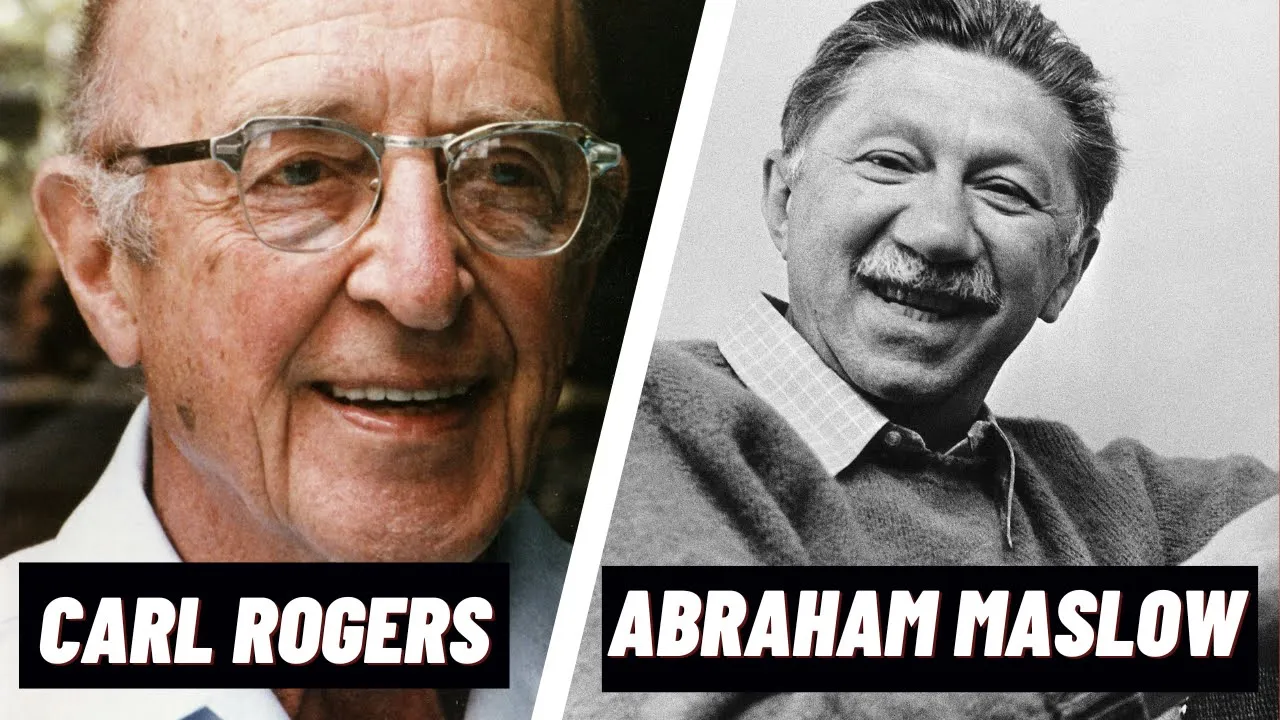
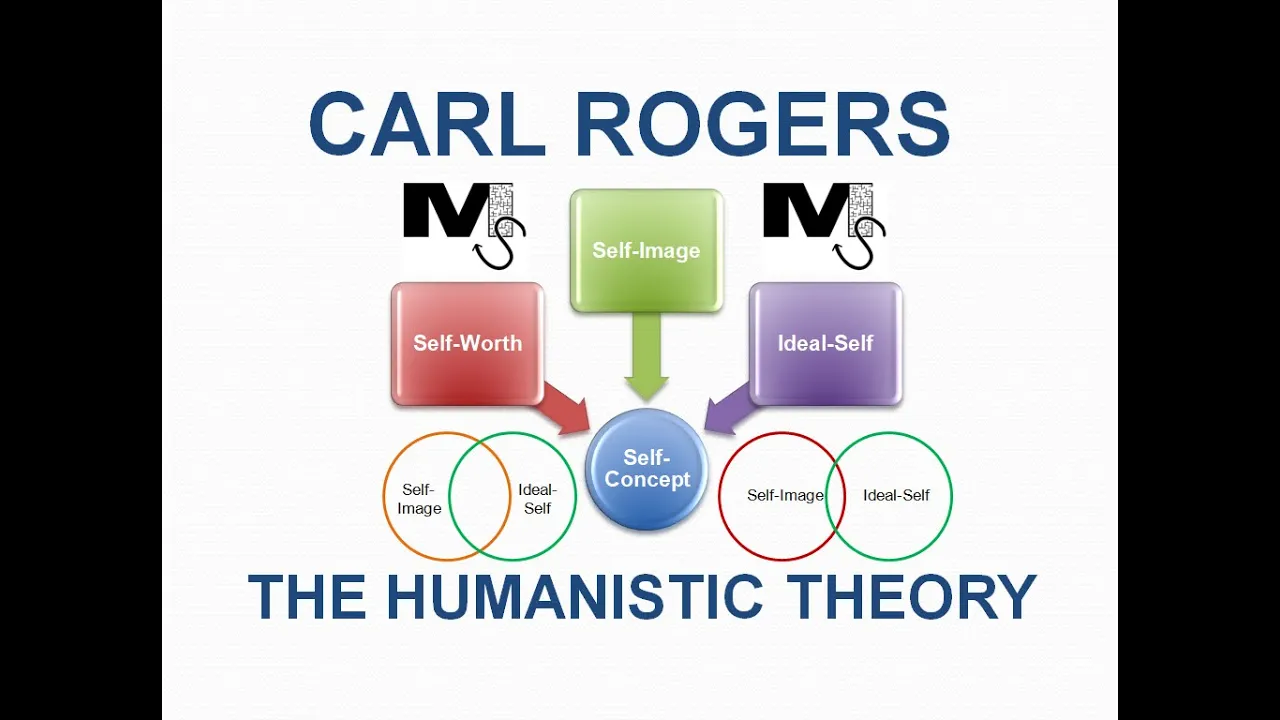
And not all psychologists are interested in rooting through your deep unconscious recesses like it was your underwear drawer. Some therapies focus more on conscious material and believe the present and future are worth more attention than the past. These include the existential-humanistic therapies, championed by Carl Rogers, Viktor Frankl, Fritz Perls, and others, who emphasized people's inherent capacity for making rational choices, achieving self-acceptance, and attaining their maximum potential.
Like the psychodynamic school, existential-humanistic therapy is still insight oriented, but it's much more about promoting growth rather than curing illness. Instead of calling folks patients, humanistic therapies refer to those they help as clients or just, ya know, people.
In the mid 1900s, Rogers developed a humanistic technique called client-centered therapy.
He encouraged therapists to help their client by providing an empathetic, genuine, and accepting environment and using active listening where the therapist echoes and clarifies what their clients are saying and feeling. Rogers believed these techniques helped to provide a safe, non-judgmental place where clients could accept themselves, feel valued, and work towards self-actualization. But other therapists in this school brought in more somber topics.
Perls, Frankl, and others incorporated the existentialist perspective, understanding anxiety and limits to personal growth is driven by the human impulse to deny the fact that, let's face it, we're all going to die. Sounds a little grim, but much like the existentialist philosophers, these theorists thought to maximize human potential and meaning in life in the face of those existential fears, helping people access their genuine selves.
So let's say Bernice sees an existentialist-humanistic therapist and talks about her depression and how it's keeping her from living a full life. By focusing on the present, this therapist might suggest that Bernice is afraid and avoidant of her true emotions, the bad and scary ones as well as the good ones, which is why she feels emotionally lifeless and drained. So her therapist might say, "Say more about the feelings that you're having right now, in this moment, as you talk about your depression." The therapist would listen without interpreting, at least at first, and help Bernice understand that she was being heard and accepted, which hopefully would give her comfort and strength to begin dealing with the tough emotions that she's been avoiding.
Now if Bernice were to make her appointments with a behavior therapist, she'd experience quite a different session. Behavior therapists argue that simply knowing that you're afraid of flying, for example, won't help you from freaking out at the thought of getting on a plane. Instead these therapists suggest that the problem behavior is the actual issue and the best way to get rid of unwanted automatic behavior is to replace it with more functional behavior through new learning and conditioning. In other words, behavior therapy aims to change behavior in order to change emotions and moods. Behavior therapy is rooted in the experiments of Ivan Pavlov and his classically conditioned dogs that drooled at the sound of a bell and work by E L Thorndike and B F Skinner on operant conditioning or changing behavior by using positive or negative reinforcement.
So say Bernice is seeing a behavior therapist because of an intense fear of flying. We know her fear is keeping her from personal and career goals like going to conferences and vacationing to Baja. But sometimes it even effects her ability to look up at a blue sky or flip through a travel magazine. Her therapist might use counter-conditioning to evoke new responses to the stimuli that trigger this unwanted behavior or she may use other behavior therapy methods like exposure, systematic desensitization, and aversive conditioning to help Bernice modify her reactions and behavior. So she doesn't dwell on having Bernice relive old memories or helping her self-actualize, she just wants to fix the problem behavior.
Aversive conditioning is less common and usually involves pairing an unpleasant stimulus with the targeted behavior. A classic example is giving someone with an alcohol problem a pill that makes them puke when they drink.
Far more common and better studied, the exposure therapies treat an anxiety by having a person face their fears by exposing them to real or imagined situations that they typically avoid. Systematic desensitization is a type of exposure therapy that associates a relaxed state of mind with gradually increasing anxiety-inducing stimuli. Taking Bernice from, say, just thinking about flying, to looking at photos of planes in the air to sitting on a grounded plane, to eventually soaring in the skies for reals.
Behavior therapy works pretty well in treating specific fears and problems like phobias and it can also work for people with generalized anxiety disorder or major depression, but it often needs a boost. And we can get that boost from the cognitive therapies, the kind that teach people new, more adaptive ways of thinking. Cognitive therapy focuses more on what people think rather than what they do, assuming that if you can change a self-defeating thought, you can change the related behavior.
This is the approach used by founding American cognitive therapist Aaron Beck. He and his colleagues pioneered the Socratic questioning method to help clients reverse destructive and catastrophic beliefs about themselves, the world, or the future at large, such as everything that could possibly go wrong will go wrong.
Say Bernice has a big test coming up, like a really big, all or nothing, end of the year exam. She's freaking out and her anxiety around the test already has her depressed, imagining that she'll fail. If she bombs the test, she fears that her dreams of getting into the graduate programs she wants will be dashed and her life will be over. Classic catastrophic thinking. A cognitive therapist would actively discuss all of this with her, challenging her thinking along the way and, in the end, help Bernice reexamine her assumptions about what's going to happen if she does fail like the world will not end and she will not utterly fail at life. Helping her work toward thinking more positive thoughts about herself and her future.
The cognitive therapist helps patients understand that changing what we say to ourselves is a very effective way to cope with our anxieties and modify our behavior. In other words, it really is the thought that counts. Not surprisingly, the cognitive and behavioral schools have joined forces frequently enough that cognitive-behavior therapies are typically considered a single school, and a lot of therapists use integrative approaches that try to use the best elements of all of these schools of thought.
But all of these different psychotherapies don't always mean being alone with your therapist and your thoughts. Most of them can be done in groups, too. Group therapy fosters the therapeutic benefits you get from interacting with other people. Not only does it help with the social aspects of mental health, but it also may remind clients that they're not alone.
In a similar way, family therapy treats a family as a system, and views an individual's problem behaviors as being influenced by, or directed at, other family members. Family therapists work with multiple family members to heal relationships, improve insight and communication, and mobilize communal resources.
So, the big question remains. Does psychotherapy work? You're going to have to wait until next time to find out because that is what we will be taking about, along with a look at the biomedical approach to therapy.
For now, you've learned about the major types of psychotherapy. These include psychodynamic therapy and Freud's famous psychoanalysis, existential-humanist therapy and Roger's client-centered focus, and behavior and cognitive therapies.
We also took a quick look at group and family therapy.
Thanks for watching, especially to all of our Subbable subscribers who make Crash Course free for everyone who can't pay for it. To find out how you can become a supporter, just go to subbable.com/crashcourse.
This episode was written by Kathleen Yale, edited by Blake de Pastino and our consultant is Dr. Ranjit Bhagwat. Our director and editor is Nicholas Jenkins. The script supervisor is Michael Aranda who is also our sound designer, and the graphics team is Thought Cafe.
Up Next

73:45
Depth Psychology: Sigmund Freud's Psychoanalysis and Defense Mechanisms
@JordanBPeterson
220.1K views•2015-02-04

68:32
Cognitive Skills for Differentiated Instruction | Teacher PD
@BrainWareLearning
631 views•2017-12-17

11:49
Classical vs Operant Conditioning: Learning Theories Explained
@crashcourse
4.3M views•2014-04-21

6:40
The Nocebo Effect: How Beliefs Can Cause Real Harm
@CGPGrey
10.4M views•2013-12-23
Related Study Plans & Knowledge Roadmaps
Structured learning paths in Psychology
psychology
Neuroscience of Creativity: Networks & Training
01Foundations of Creative Cognition
02The Cognitive Neuroscience of Insight & Fixation
03The Triple Network Model of Creativity
+ 1 more learning modules
15h4 modules
Explore Roadmap
psychology
Imposter Syndrome: Etiology & CBT Framework
01Defining the Imposter Phenomenon
02Socio-Developmental Etiologies
03CBT Fundamentals & Thought Distortions
+ 2 more learning modules
15h5 modules
Explore Roadmap
psychology
Adult ADHD: Executive Dysfunction & Scaffolding
01Neurobiology of the ADHD Brain
02The Core Triad of Executive Deficits
03Executive Dysfunction and Emotional Regulation
+ 2 more learning modules
12h5 modules
Explore Roadmap
psychology
Loneliness: Evolution, Neurobiology & CBT
01Evolutionary Origins of Human Connection and Loneliness
02The Neurobiology and Physiology of Chronic Loneliness
03Maladaptive Social Cognition: The Psychological Loop
+ 2 more learning modules
12h5 modules
Explore Roadmap