































![Psychodynamics - Approaches [A-Level Psychology]](https://i.ytimg.com/vi_webp/VZqd0bHbr1A/maxresdefault.webp)
Freud's depth psychology explains how unconscious psychological conflicts manifest through defense mechanisms (such as repression, denial, reaction formation, and displacement) and psychosomatic symptoms, with personality development proceeding through distinct psychosexual stages (oral, anal, phallic) that shape enduring character traits; however, modern perspectives suggest dreams serve a compensatory function for updating rigid beliefs and that personality development involves more complex neural processes than Freud originally proposed.
Depth Psychology: Sigmund Freud's Psychoanalysis and Defense Mechanisms
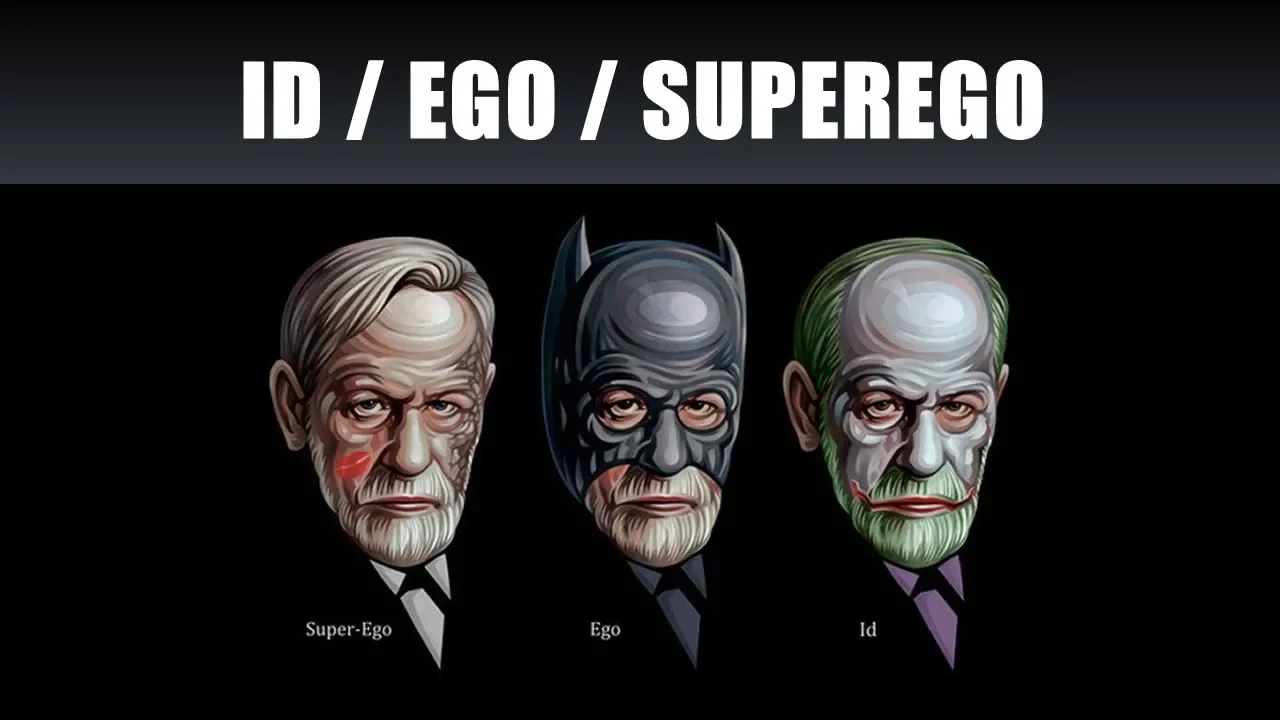
Added:Understanding of the tripartite model of the psyche, specifically the roles of the Id, Ego, and Superego.
Familiarity with the concept of the unconscious mind and how it differs from conscious awareness.
A basic grasp of the historical and cultural context of late 19th and early 20th-century Vienna, which heavily influenced Freud's perspectives on sexuality and society.
An introductory awareness of depth psychology as an approach that prioritizes hidden, unconscious motives over surface-level behaviors.
Investigation of Neo-Freudian perspectives, particularly Carl Jung's concepts of the collective unconscious and archetypes, and Alfred Adler's individual psychology.
Analysis of modern empirical critiques of psychoanalysis, including Karl Popper's arguments regarding the falsifiability of Freudian theories.
Application of psychoanalytic criticism to art, literature, and culture, analyzing how unconscious desires and sublimation manifest in creative works.
Exploration of how defense mechanisms are conceptualized and treated in modern clinical settings, such as through psychodynamic psychotherapy or Cognitive Behavioral Therapy (CBT).
220.1K views4Klikes1:13:45Original Release: 2015-02-04
As you know, um, Freud believed that substantial proportion of the symptoms he saw among his clients were of psychological origin despite the fact that some of them were manifest physically. Uh, these things do happen. By the way, uh I had a client who was from Eastern European background, which is relevant in that I believe her upbringing to be more similar to the kind of upbringing that the Victorians that Freud studied were than say more the people people in the west. Um, and she had the same thing that her grandmother had, which was um, psychossematic epilepsy.
And so she expressed what were often sexual conflicts through epileptic seizures. Um, she had an epileptic seizure of this type in my lab, my office one day. And, uh, you know, she was unsure whether they were real or not. But I've seen people have epileptic seizures. And as a general rule, it's quite upsetting. But she had an epileptic seizure in my office. And one of the things I noted was that it didn't really bother me. And one of the things I've noticed about being a therapist is if someone is is manifesting a lot of emotion and uh it's not bothering me, then it's a good hint that there's something wrong, that it's not real, there's something about it that isn't exactly right because it doesn't seem to hook in your empathic systems the same way. So, um, I had another client, this has actually happened to two of my clients.
The first one was attacked by her boyfriend and, uh, she was unbelievably naive. She was so naive you, you like, you could write a whole book about how naive she was. I'm serious. It was unbelievable. Her parents actually taught her, this is the literal truth, her parents taught her that adults were angels.
It's not a good way of preparing your child for the grown-up world. Anyways, she'd had a fight with her boyfriend and he attacked her um with with sexual intent. And when we went through this and it was under hypnosis, she described his face. She said he had a look of sheer malevolence, right? He she'd never seen that. She was like a 28-year-old woman. She was a she had a she had an undergraduate degree. She was no idiot. Um, I asked her like, "How could you reconcile your belief that adults were angels with all the things that you learned about history in your undergraduate degree?" And she basically said, 'Well, I just put those things in a compartment and didn't pay any attention to them. It's like, yeah, okay. So, she saw this guy's face when he was intending harm. And it was actually the look on his face that traumatized her. And it traumatized her so badly that she had severe psychosmatic symptoms. severe enough to get her diagnosed as schizophrenic for five years non-stop at night for four hours at a time. And the symptoms were that her whole body would shake and she would be unable to sleep. So, and I had another client who had the same thing, not the same thing, but a similar thing happened to her in high school where a a boy was picking on her continually with malevolent intent. And the thing that really made that memory stick in her face was the look of malevolence on his face. So, so you see some people are definitely capable of some behavior that is most properly explained as far as I can tell in terms that are similar to Freud's.
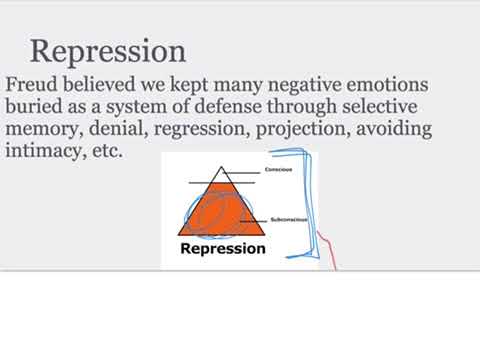
What's repressed? Unbearable memories, often sexual and impermissible desires.
How do you defend against things that you don't want to be true? Well, there's repression. Freud really thought that was unconscious. People didn't know they were repressing. So, I sent you guys a link, you may have noticed, about the Gottman studies on married couples. I think their studies are bloody brilliant, you know. And what Gottman found, and it's exactly typical, is that the couples who are going to get divorced, when you see them in their natural habitat, they're all nice to each other, but their psychophysiological systems are just going berserk. They're like prey and predator to each other, you know, and you know, I don't know if that's repression or if it's suppression. These things are very difficult to distinguish because they're not that well defined.
But but there is a lot of activity beneath the surface. That's for sure.
And the problem with being psychophysiologically aroused like that is that the the consequence of that over time is physical, right? Because what happens when you're aroused like that is you produce a lot of the stress hormone cortisol and that activates the general stress response. And the general stress response basically robs your future stores of energy and ability to overreact in the present. And if you do that long enough, well, you'll damage your brain. That's one of the things that happens. But there's many other things that happen, too. So, denial.
People will just say, "Well, that's not so bad." Or maybe that's normal. We'll see a lot of that when I show you this movie. Reaction formation, which is it's like it's it's overcompensation in some sense. So maybe you really hate your sister and you buy her a great big Christmas present, you know, because you'd like to think that you like her, but really you don't like her at all. Um there often sibling rivalry can be unbelievably intense. Um displacement.
This is a good one. My boss yells at me.
I yell at my husband. My husband yells at the baby. The baby bites the cat. You know, so it's a cascading chain of of emotion. Often I find with people though that if they come home and they're in a bad mood and they're touchy, you know, and you you you say something to them and you know they they fly off the handle, it isn't exactly so much that they've suppressed or repressed or denied what's happening at work, at least not in any obvious sense, not at that day. often you have to like pry around in the person and talk to them and harass them a bit until they you know often till emotion arises which is partly why Freud thought about his transformation process is cathartic and then they figure out they'll cry and say well I'm really upset but at my boss and it's not obvious that the person actually knew that when they came home and like it the unconscious issue is quite a difficult one to to tear apart my conclusion has been that when people that repression isn't really much different than lying except that the lie is initially conscious when you first make it. But if you keep habitually lying about something, you develop a little automated circuit that either does the lying or that has the replacement story at hand. And after, you know, 200 repetitions of the same damn lie, you've built a little machine in your head that handles all that. And at that point, it can be unconscious because you don't need it. You don't need to be conscious to make that decision anymore. So if you practice something deceptive long enough, I think it becomes habitual and unconscious. So I would recommend that you don't do that unless you want your head full of little pathological monsters that you can't control. I mean maybe it's already like that. That would be a Freudian idea.
Identification is another defense mechanism. You're bullied. You want to become the bully. Rationalization.
That's when you don't actually this is this is the thing that people who are highly intelligent are really good at you know they've got a problem and uh they come up with some perfectly coherent and reasonable explanation for the problem or the misbehavior that has absolutely nothing to do with what's actually going on. And if you if you marry someone for example who's more introverted you than you or less verbally fluent this is something to really watch out for because just because you could win an argument with someone doesn't mean you're right. And if you're verbally fluent and extroverted, you can often tie people up in knots. But I would say beware of that because just because the person you're arguing with can't formulate their ideas as fast as you. And just because they may not be able to hold their own in an argument with you, that does not mean they don't know what they see. And if you have any intelligence and you're married to someone like that, you actually try to coax what they think out of them and help them articulate it and formulate it because there's always the possibility that you're doing something underhanded and sneaky and dangerous in the medium to long term. And it might be better for both of you if you figured it out. Intellectualization. Well, if you've ever watched a Woody Allen movie, you know what that is. Um, Woody Allen should have had Yunian psychotherapy, not Freudian psychotherapy, because he's a creative person. And one of the things I've noticed is that I have clients who are very creative and other clients who aren't as creative and the ones who are creative spontaneously manifest processes in their dreams that are most easily interpreted in union form.
Doesn't seem to be the case for people who aren't creative though. And if I talk to them about mythological or symbolic ideas, it doesn't click for them. So what we usually do things that are much more practical, what much more like behavior therapy projection is a good one. I'm not irritated, you're irritating. You know, and it's it's it's a tossup often because, you know, you might think, well, no one can irritate you without your permission. It's like, believe me, if you think that you've not been around some worldclass irritating people, because there are certainly people, borderline personalities are like that who I don't care if you're a saint, man, sooner or later you're going to get irritated because that's actually the goal of the behavior in large part.
So Freud's fundamental theory was that unconscious ideas were at the core of many psychological conflicts like incomprehensible distress or psychosmatic symptoms. A psychossematic symptom is when your body attempts to represent something that you're repressing. Now I think there's two ways of looking at that because I don't actually think I don't always think that's what happens. I think sometimes the the reaction to the situation in question is actually sematic to begin with and then if it's articulated and worked out the body can can it's like the memory local shifts or the representation area shifts. So for example I had a client she had a wonderful time she she got fired from her job and they bundled her into her car and it was sudden she didn't see it coming and then on the way home her car was hit by another car. So, like that was a perfect way to be traumatized because she was already really upset and on edge obviously and then this car hit her at about 50 miles an hour and it hurt her quite badly and she had like minimal brain injury which is a really rough one because it has nonspecific symptoms and like she she she'd come to to therapy and I I talked to her her ideas were quite fragmented so it took us quite a long time to kind of weave a coherent story together but she'd sit there like this you And one of the things that I found after a while when I was working with her was that I was really uncomfortable watching her and it was a discomfort that seemed to center about here. It was a physiological response, probably a mirroring response.
And one day I said to her, it was like a spontaneous impulse. I said, "Come over." We'd worked together for a long time by this time. I said, "Look, come over here. Um, lean on the desk." So I had her lean on the desk and then I sort of pounded on her shoulders down her down her spine and she started to cry and she cried like for 45 minutes and then that loosened up a shoulder and then we another thing we did was to I had her she said she couldn't lift her arm. So we were doing basically exposure. I said okay lift your arm and then let it go and then lift your arm another inch and let it go and then lift your arm another inch and let it go. And soon we had her arm up like this. She hadn't moved her arm above her head in like five years because she was in this like protective crouch. It's like a startle response. And I I think that if you're traumatized often, what happens is your body throws itself into a state of hyperpreparation. And then unless you can unless you can bring the meaning of the traumatic event up and articulate it and throw away what it isn't, you know, like because when she got hit by the car and lost her job, part of her idea was, well, my life is over now, you know, because you can understand why someone would think that. So I would say, well, yes, that's understandable, but it's too global and vague a formulation to be helpful. But if your life is over and there's nothing you can do, this is probably the right thing to do, you know. And so sometimes it's not so much that the simp the sematic symptoms are a consequence of repression and then symbolic symbolic representation. It's that the actual response to the event starts out physiological and it never gets any farther than that. And so partly what you're doing is and I think it's it's like a permanent manifestation of the stress response. So he thought of behavior anomalies in this way and hallucinations and delusions like a lot of this stuff is dead on as far as I'm concerned. Like you see this you see this a lot with people that you you have an intimate relationship with. You know like there's something off about what they're doing. Well for example in the Gotman study that's a good example. You know how Gottman said um the successful couples responded to each other's bids, right? So, if if you're in the house and your your wife says, "Um, oh, look, there's a there's a cardinal in the backyard and it's really pretty." You know, what that means is maybe you could come over here and look at this bird with me. And, you know, that would help me understand that you like me and are interested in what I'm doing. You know, and so you can say in Gottman's terms, you can just say, "I don't want to look at your stupid bird." That's not a great response. Or you can say, "Really?"
Okay. you put down your newspaper, whatever it is, and look like you're really perturbed and then you walk over there and no, that's a good response, too, because then you can also destroy her pleasure in looking at the bird. So, without really looking like a son of a So, that's a good one. Or you can just sort of sigh. I love that one.
Which means, oh, you're annoying. I'm so put upon. I really, you're always asking me to do stupid things and I'm so generous and and giving and here you are exploiting me again. And then you go over and you look at the bird and you know maybe you smile with your mouth but not your eyes and that's real nice. And then the other one is well you go over there like a civilized human being like interacting with someone that you'd actually like to get along with for the next 30 years. the things in all those other three categories, those are there's like just in that sigh, there's a whole bloody mess of snakes underneath it, you know, and if you if you watch someone who does that and you go after them, you know, if you decide you're going to solve this, you have to dig down into that sigh like God only knows how deep. It might be a decade old. You know, they're harboring some bloody resentment that occurred like 15 years ago. those things are just stacked up like like little bombs underneath the surface of this little tiny behavioral action, you know, and usually people will just ignore it, which is not a good idea, but because they're conflict avoidant, people are very, very conflict avoidant and they like to think that, well, if everything's just all right right now, it'll stay all right into the future. It's like, no, it won't. It absolutely will not. And if you don't deal with those little things, then all the monsters that are packed up inside them will eventually eat you. So, but that's a while in the future. So you don't really have to worry about it.
It's not a very good good way of thinking about things. Freud also not noticed that people make jokes about things that are often repressed. And that's definitely the case. If you watch a good comedian, especially the ones that are more a little bit more on the outrageous side.
What they're doing constantly is saying things that people don't want to believe but know are true. And so they'll reveal some thing that everybody knows and everybody will laugh because yeah, we know that, but you're not supposed to say it. And um what's his name? The Indian comic from Yeah. Yeah. That's the guy. I mean, he's always making racial jokes, right? It's so funny cuz his whole audience is full.
It's really really racially and ethnically mixed mixed audience and all he does is pick out people and like assault them for their race or ethnic identity. And they're all laughing way like, "Oh, it's so cute that we're all in here like insulting each other."
But, you know, he's he's he's giving voice to um what to commonly held stereotypes that no one will admit to holding or knowing. And so, it's kind of a relief to everyone to have that brought out in the open in some safe place. So, slips of the tongue are also an interesting phenomena. You can watch people very carefully for this because now and then they'll say something that means something other than what they thought it would say or it means something contrary or it's a hint into one of these like stacks of monsters that normally they don't want to admit to. And you have to be sharp to to catch these things. You have to pay real attention. You can also see the same thing with micro expressions often with people. That's given rise to this whole new politically correct movement about suppressing microaggression, which is like one of the most pathological things I've ever heard of. You know, like getting rid of your microaggression expressions, that does not make you a good person. It just makes you a trickier sort of psychopath. So Freud also was extremely interested in dreams. And his theory was that a dream was a wish fulfillment. And like I really don't think that's a good theory.
I think that sometimes some dreams have a wish-like element. Although I should say, even though I'm not very fond of the wish fulfillment theory, I don't think it's comprehensive enough. His the other things he had to say about dreams were absolutely brilliant. So the his book um if you want to read one book by Freud, I would say the book on dreams is the best. And unfortunately at the moment I can't remember what it's called.
The interpretation of dreams, right?
It's a very thick book and you know you can't boil down Freud's theory of dreams it's a whole book into one phrase wish fulfillment you know he's way smarter than that and so you you don't Freud's writing is sort of like fiction you can't condense it you have to read it so you know sometimes it seems obvious like if the dream is of a sexual nature you can easily see well that that might be uh you know a wish fulfillment or something like that and hungry people will dream about food and so it's not the case that and lonely people will dream about social comfort and so forth.
So it's not the case precisely that the dream can't have anything to do with wishes. Jung's idea which I think is a better idea and I think it's more grounded in how we understand dreams in the modern world was that the dream was compensatory. So that if you're if you had a particularly rigid viewpoint and of the world and and that rigid viewpoint was actually impeding your progress forward that the dream would spin up counterpropositional fantasies in an attempt to update the the the stiffening and the and the rigidity of the more explicit belief system. And um I think there's some good evidence for that in modern studies of dreaming. It seems it's certainly the case that dreams do seem to update your memory. And uh I I think partly what the dreams are doing too, and this is maybe where some of the symbolic content comes from, is there's this, you know, it's not obvious how you should structure a category, right? Because categories are very fluid. You know, you might think, well, all men is a good category, you know, and then you might think, well, all white men and all non-white men is a good category, depending on what you're discussing and so on. you you know the contents of your categories often depend on what you want to do with the category. So it's not obvious what should be in the box and what shouldn't be. And partly what the dream is doing too is by loosening up the categorical structure, you know, because things can fluidly change and transform in dreams. It allows you to experiment with recategorization while you're asleep without having to suffer the consequences of that in the waking world because you're paralyzed, right?
So I think it's more accurate to think of the dream as an as part of the process by which new knowledge becomes eventually articulated and that's more of a union perspective. So you start out not knowing anything about it and then maybe you can code it onto your behavior. That would be something PJ would suggest and then after it's coded onto behavior maybe you can start expressing it in image especially in dynamic images. And so that would be something like fiction. And so you can think of dreams as a kind of fiction.
And then once you've got the thing laid out in fiction, especially if it's kind of coherent, then it's not a huge leap from that to having an articulated model. And I think a lot of what you're doing when you do dream interpretation in psychotherapy is you're doing the same thing that you would do if you were interpreting literature. Um, and you know, you think, well, is it worthwhile thinking about literature? It's like, well, you know, it's worthwhile reading it fine. Is it worthwhile thinking about what you're reading? It's different process. It's like arguably. Well, so the dream has a function and it does whatever dreams do. And then perhaps there's also some utility in attending to the dream consciously and trying to elaborate up on its contents. And Freud would do that with free association. It works. It really works. It's quite fun if you have someone who's a good dreamer. You know, you say, "Okay, they the way I do it is they they tell me the dream, they they read it, and I listen to it, and I let my imagination work on it." So it kind of builds up an associational net and then I have them start from the beginning again and whenever they come to a theme or an object or something like that that's identifiable then I ask them what that reminds them of and so to me what we're doing is fleshing out the associational network and that's a Freudian idea and then if you walk through the whole dream like and then you know people will associate and then that will remind them of something and then maybe they'll remember why a specific date is in the dream or something like that and so it's like the the dream is putting putting together ideas that have a vague cloud around them and it's trying to sequence and organize them and you seem to be able to facilitate that process with conscious reflection. So, and for some people it's extremely useful like I mean um one of the things Jung said which I really liked was that if you're stuck in a problem and you can't solve it, you have no idea how to solve a terrible conflict of some sort, you have to look where you don't know.
And he thought, well, one of the places that you don't know is in your dreams.
And you think, well, dreams are doing something. And there's good evidence that part of what dreams are doing is dealing with novel information. You know, they're trying to conceptualize novel information. And so, that's a good place to look for new potential solutions because you could also think of the dream as part of a hypothesis generating mechanism. That would also be the creative imagination. So I think often the reason I think maybe the reason that sometimes people remember dreams that are extremely emotional and they feel compelled to tell them is perhaps is because the people who did that think about it from an evolutionary perspective. The people who did that and exposed the fantasy to the group were more likely to gather information about what it meant and possibly more likely to survive. And so there seems to be a trigger level you know above which the dream is specifically particular sufficiently emotionally impactful so that you actually remember it when you wake up.
And Jung would also often consider those big dreams you know especially if they had archetypal content and those would also sometimes be dreams that had relevance beyond the relevance to the specific individual. So they might be dreams that are working really hard on a problem that's collective. So and you know you think well where do new ideas come from? you know, well, they just appear in my head. It's like, that's not a very good theory. You know, the idea has a birthplace. The birthplace is in the unknown. And then there's a tremendous amount of elaboration of that information before it ever gets up to where it pops into your head as an articulated statement. You know, that's not a that that's not an instantaneous magical transformation. Or maybe you can think it is, but it's you know, it's not a very useful theory. And the idea that there are multiple stages of processing of information, each with their own nature, is much more in keeping with the way that modern people look at the brain, which is as a um organ that's evolved that has very very archaic elements, like massively archaic like the ones I told you about that were that you share with lobsters. And then there's all sorts of weird systems built on top of that that are basically there for biological purposes. And you know then there's a cortical cap that sort of elaborates and all those things are working together to extract out information that you can use for living.
It's certainly not mechanical. It's not exactly computational.
It's it's a multi-stage process and dreams and imagination are involved at least at the hypothesis stage. So, so you can think of dream as a hypothesis in some sense and but although I don't think I don't think it's reasonable to say that dreams do one thing anymore than it is reasonable to say that thinking does one thing but the compensatory idea is a good one and you you can kind of think of the wish fulfillment idea as a subset of that. So the dream is also Freud says a process of regression that manifests itself simultaneously in three fashions as topical regression from the conscious to the unconscious as temporal regression from the present time to childhood.
Sometimes you see this with people who've had repetitive nightmares. One thing I can tell you, you can try this.
If you have a repetitive nightmare, usually it presents the same thematic problem over and over. Like maybe you're being chased by a monster when you turn around. um maybe your hands are tied or something like that, you know, which and if you told me about that, I'd think, well, who or what is tying your hands, right? That would be the first question.
But one of the things you can do to make that nightmare go away is to sit down, reimagine the nightmare, and fix the ending. Now, you have to come up with a reasonable ending. So, for example, I had a client who was afraid she had a cabin was very interesting case. She had a mouse phobia, and she was afraid mice would run up her leg. That was the specific content of the phobia. And she had a cabin and she didn't like to go to the cabin for two reasons. One was a mouse might run up her leg. And the second was she was up there alone and she was afraid that she would get attacked and sexually assaulted. So doesn't take much of a Freudian genius to figure out the connection between those two things. But one of the things we did was first of all talk it through as if it was a reasonable fear. It's like well you are up there alone. Maybe you could have an alarm system and some good locks. It's like, you know, so your fear might be predicated on some realistic some realistic uh appraisal, you know, which you're repressing.
You're not dealing with it. It is potentially dangerous. Fix that. Get a dog, you know. So, we did all that and simultaneously treated her mouse phobia through behavioral exposure. And then she was having these dreams of these guys breaking in and raping her. And so, we had her walk through. I think she bought a bat and put it by her bed, which was something I suggested. And then we walked her through I walked her through the dream and we changed the ending. So what she did was the guy climbed in the window and she picked up the bat and she smacked him one and then she sprayed him with oven cleaner which is like a really nasty thing to do. Then she tied him up in a chair and she was like she was dancing around in the office thinking that's you know that's a hero myth essentially right we change we transformed the dream from victim to hero essentially and that was the end of her nightmares and that happens more often than you than you might think because the dream is presenting you with a problem right it's like a threat detection mechanism it says well here's a threat maybe it's expressing it in symbolic terms or maybe it's using a general category like monster it's like are monsters chasing you well it depends on what you mean by monsters, but functionally, yes, they are. You know, while you might think, well, conceptualizing them as monsters isn't exactly accurate. It's like, well, it's not exactly clear that it's not accurate. So, I think a monster is a monster is like a representation of the class of all things that could chase you and devour you. And there's lots of those that are symbolic and articulate like if you're arguing with someone who can defeat you or you know there there are certainly predators on the on the internet that are waiting for you at pretty much any moment to slip up. And like the idea that the world is full of monstrous embodied forces that have you as target for prey. It's like yes that's right.
Obviously that's right. So, so Freud, Freud's theory of dreams was essentially that there was a latent content in the dream, which is what the dream really meant.
And then the layers of weird transformation of the idea. He thought about displacement where one thing would stand for another or condensation where a lot of events would be rammed together in a very short sequence or symbolization. So like the mouse in in my client's phobia would be a good example of of symbolization of fear of sexual penetration and dramatization. He thought of those as all ways that the dream was hiding the the latent content from the dreamer in order to protect sleep. Whereas Y Young and Freud really argued about this and it's part of what broke them apart. Young said, "No, no, no. That's that might be right in some cases, but generally what the dream is doing, it's just a fact of nature. The dream is trying to think something up."
And so it might be concentrating on something that you refuse to admit to and repress, but sometimes it's just like out there with free play at fantasy trying to generally orient you in the world. So he thought about it and Jung also thought it's like Jung was an archaeologist of the id in some sense you know he thought of the id as a much as a more creative place in some sense than than Freud did and as the place where new ideas and new adaptive patterns were born. So he believed that the dream was generally fairly illogical and that one of the things you did when you recounted the dream, no matter how accurately you tried to recount it, was to transform it into more of a narrative form than it actually took as a dream.
And so it's no doubt that's true because when you describe an experience, even if it's an experience you have every day, you basically extract out the gist and then describe the experience. And you have to do the same thing with dreams because you can't present the images. So it might that just the act of telling the dream might even be useful in that sense because what you're doing is making whatever that thought is more coherent than it would otherwise be. So so I want to run through this this psychosexual theory very rapidly and then I want to show you some examples of it. So Jung believed that in some sense you know you had a primary energy and that psychic energy that's what we call energy you know when you say I'm feeling energetic today it's not obvious what that means but Freud regarded that as libidinal and he thought that there were multiple sources of libido but the most fundamental source was sexuality and I think he thought that in part because of the influence of Darwin's ideas because Darwin basically said that the goal of organisms was essentially to procreate you know in the sexual urge is extraordinarily strong. And so he thought it was primary. And you can make a reasonable case that it's primary, but I think it's too reductionistic because there's lots of drives that people have and it isn't obvious that they all coagulate into a single source of energy somewhere in the psyche. If you look at the way the brain is structured, actually, the part of the brain that wakes you up is called the reticular activating system. And it's it's it's a it's some strands way down in the brain stem that that that branch out in in a m in many many ways out into the brain like a tree in some sense. If you twist your head the wrong way when you have a car accident sometimes you can shear off those tracts and then you're in a coma and there's nothing that can be done about it. But the reticular activating system is really really old. Like it seems older than all the motivational and emotional systems.
And so if there is a libido, which would be whatever it is that the reticular activating system does in order to awaken you from your slumber, say, or to put you on alert when something happens, it looks like it's older than all the the uh isolated motivational and emotional systems. So the libido per se isn't sexual by by all appearances. It's it's something that's below sexuality, you know. So, but you know, it's still reasonable to note that sexuality is a powerful driving force. So, Freud said it begins its development in infancy. The infant is a sexual being, by which he meant the infant is capable of experiencing sexual pleasure. So, well, and I should let you know that one of the practices of Victorian nurses with male babies was to masturbate them till they till satiation so they would sleep. So it's not it's there it's it's not like there's no evidence for sexual pleasure in in in children in infants in particular. Freud thought about that as polymorphously perverse by which he meant that the infant was willing to take pleasure in any in any activity whatsoever and babies can have some pretty messy habits without any structuring of that and then that that got channeled in various ways as the as the as the baby developed. So here here are his stages the oral period. Well, it's quite interesting that when a baby is born, the part of its body that is in fact most mature, most like a mature part in terms of its eventual function is in fact the mouth and the tongue. And obvious there's obvious reasons for that because the baby has to be able to latch onto the nipple, you know, right away.
And that's actually quite a complicated activity. It's a complicated social activity and it requires a fair bit of coordination between the baby and the mother. It's not something automatic. So if the baby didn't come out um you know wired up for certain basic in certain basic ways it wouldn't be able to get going to begin with. So it it's definitely wired up in an oral manner.
So he thought of the oral character as passive optimistic and dependent. Then there's the anal period where the the Freud thought that's where the ego met the super ego for the first time in some sense where the child had to renounce primary pleasure and so that would be the pleasure of defecation fundamentally in favor of a more complex form of behavior and that that was actually an inhibitory process. And it's certainly the case that parents can get into like year-long wars with with kids over toilet training, you know. So I've seen some pretty weird examples of that. So I I saw one parent who who it was in such a war with with their three-year-old that that three-year-old would only defecate if the mother put a diaper on them. So it had perfect control, but it was like there was a war going on. So and he thought of anal people as orderly, parsimmonious, and obstinant.
It's kind of interesting too because one of the things that we found recently is that conscientiousness is one of the big five traits, right? You can break it into orderliness and into industriousness.
and orderliness predicts conservatism and predicts authoritarianism and it's associated with disgust sensitivity. So I thought, huh, that's pretty interesting, you know, and it's also the other thing that's really cool about orderliness and disgust sensitivity is that it is associated with disgust associated with anything that would contaminate.
And so the idea that that's associated in some sense with with with anal thinking is It's there's something about it that's right, you know. And it's also pretty important to note that the reason that all you people are going to live to be 90 or thereabouts, roughly speaking, isn't doctors, it's plumbers.
So, right, really. So, you know, uh the the life is in itself contaminating and we have a built-in system that's the discussed system to take care of that problem. And it's clear that that does vary in strength between individuals.
And it's also clear that the degree to which that if if you have a stronger disgust system, you're much more likely to be conservative in your political beliefs. So that's pretty cool. It's like it's not something obvious. You know, the phallic period 3 to five. Um, that's when Freud believed that children often discovered masturbation and that's when girls developed penis envy and uh, boys developed castration anxiety which I said is a small price to pay for the possession of a penis. Yes. So, all right, here's a way of thinking about the ediple um phase. It's basically hostility and erotic attraction towards the parents. Now Freud thought about this as a normative part of development and that's a tough one.
It certainly does seem to be the case and there is some experimental evidence that boys fight more with their fathers and girls fight more with their mothers. So that's kind of interesting. But I think I'm not so sure that the idea that this is normative development is exactly right.
And maybe maybe Freud got skewed over a bit because he was always dealing with people who had one form of pathology or another. Now, here's here's how to develop an eatable situation if you want to with your children. Some of you will take this road. So maybe this will help you do it better if that's really what you're into. So the thing to do is make sure that your marriage is quite hostile so that you have a lot of underlying resentment to your partner. And that will that will encourage you to subtly turn one of your children or more of them against that parent without them really knowing it. And you can do that by covertly reinforcing them when they do that or ignoring them. That's even better when they do the opposite. So, you know, maybe your daughter is being nice to your husband, you're really mad at him so that you, you know, you make it known to her using one strategy or another that you don't really approve of that sort of behavior. So, that's pretty effective way of doing it. Then the next thing to do is this works really well if you have a young boy and you're a woman.
It's like, you know, you want to you want to develop a lot of hostility towards your husband. So you really don't want to have anything to do with him and you don't really want him to even touch you. And because of that, you're not even really all that happy about men. And so then you do two things. Is that you turn to your son because he's kind of harmless and you make your relationship way closer than it should be with him. And you encourage all sorts of things that are really kind of on the edge of acceptable behavior.
And at the same time, you repress and crush any part of him that would develop in the kind of masculinity that would enable him to turn into the kind of monster that you think your husband is.
So that's really effective and people can do that for like 20 years and the outcome is that I have a lot of business as a therapist because I I do see this sort of thing and a lot of a lot of what happens in therapy is that it's an interesting thing is people come to see me to solve all sorts of problems like of of a very large number of sorts but one of the common problems is they cannot get away from their families. They can't they can't break those initial isn't even break them. The family can't negotiate a way to allow the person to manifest the independence that would be necessary for them to have their own life and their own family and their own career. And so they're struggling and they're caught in these often ugly nets, like often unbelievably ugly nets and they can't get out of them. And that's what we're going to see right now.
So now this character, Robert Crumb, he's quite the character. We should turn those lights down. Yeah, that's good.
Maybe we can do a voice over on this later, so it doesn't really matter if we have wh Let's do that.
Okay. So, Robert Crumb was an underground cartoonist, is an underground cartoonist, and he lived in Berkeley in the late 60s. And this documentary was made about him and his family. And so, I'm going to get you to watch as much of it as we can watch, and maybe I'll show you a bit more in the next class. I'm not supposed to because we're supposed to do something else, but I might anyways. Now, this film, I love this film for a variety of reasons.
First of all, I think it's a work of genius. Second, I've never ever seen any film of any sort that does as good a job of illustrating not only what Freudian psychopathology is and how it manifests itself symbolically, but also how the family plays into it. So, away we go.
[Music] [Music] [Music] [Music] Hello.
brought me to Charles.
Okay, so here's what happened. The film crew wants to go to his house where his brother still lives and film his brother Charles who's lived there since he was he's like 55 and he's lived there since he was a teenager. And you notice how Robert uses a very soft voice. He's talking to his mother. And you know he's got a whole he's a famous guy. He's got a whole film crew there and he's basically asking his mother if it's okay if he brings his friends over. And she basically says, "Well, I don't think that would be such a good idea." And he backs off right away. And then when he gets off the phone, he says, "Well, she said no. you know, that's it. So, you know, that's that's if you if you have a good snake detector working and you're listening and watching closely, you know that there are a tremendous number of snakes under the surface already.
for humanity expressing their connection to eternity, whatever you want to call it.
that people can't express themselves that way anymore.
So that's a very paradoxical set of statements because on the one hand he's expressing he says he really loves old music and he loves it because he can hear the soul of the common man being expressed but then he takes like a potshot at the entire world of music since 1920 which indicates a tremendous amount of of implicit arrogance. And he also says that's the only time that he feels any love for humanity. It's like, well, first of all, I'm not sure that his attitude towards humanity as a whole is actually all that relevant. And second, if if you're if you've put yourself in the position where you regard yourself as a credible judge of humanity, it's like you might want to take a few back steps back from your narcissism right right then and there.
So, and I'm not kidding about this. I'll tell you those kids who shot up that Coline High School, they had their motivations and they wrote them down and they knew exactly what they were doing. And the leader, who was the more literary of the two, said quite explicitly that he was the judge of the human race. And as far as he was concerned, it didn't pass his judgment and that, you know, that he it was perfectly reasonable for him to go on a cleansing binge, you know, and and he didn't just want to shoot up a whole, you know, a few students in the school.
He had bombs planted all over the school. He wanted a whole apocalyptic scene. And they had dreamed about blowing up Detroit. And so you can imagine what would happen if someone like him got their finger on the button of the of the of a hydrogen bomb. So you know Jung said if you go deep enough into the shadow you find hell. It's like that's exactly right. And it's no joke.
[Music] This is mom's house.
So, you read any good books lately?
I don't know.
They've got a very interesting voice tone which which you might pick up on as well. It's very ironic. Like everything they say is ironic. It's got this kind of bitter and arrogant twist in it. And they're talking about absolutely catastrophic things, like nightmarishly catastrophic things. Yet there's this sort of adolescent like banter and and laughter about it. And 20 years ago now's recent writers interest.
So, you know, Freud would say here that there's an awful lot of intellectualization going on and there definitely is. So, these these guys are very divorced from their bodies and they have every reason to be.
My life has become so Charles is the one that started this whole comic thing in the family. He was completely obsessed with comics when we were kids. Had absolutely no other normal kid interest. He wasn't interested in toys or games. He play sports. He do anything but comics, draw comics, think comics and talk. I like drawing, but I had other drawing interest besides comic to draw realistic scenes and you know just pictures of buildings and cars and stuff was interested in that at all.
The earliest one that still exists that I have.
Yeah. So you hear that laugh it's like That's the situation they're in as adults. And Charles could see that coming. And he had all sorts of homicidal fantasies about about Robert.
imitating what my father maybe I was unconsciously imitating when I forced you to draw comic books.
There's still a kind of sibling rivalry going on between me and Robert like there was when we were little kids and he was still living in I think basically the Robert and I are still competing with each other drawing comics. I still think of Charles approval when I'm drawing like everybody drawing comics.
Yeah. So what basically happened was Robert got the world and Charles got his mother. So they both won. But Charles I don't think is very happy with what he won.
Publishing company that was the kind of club we had as little kids where we sat around and talked about comics. I was usually the president and Robert was usually the vice president and Carol was usually the secretary and Sandy was the treasurer and Max was the supply boy.
And he still he still he still resents that. He still resents the fact that we impose the role of supply 310.
Max was scapegoat.
He was definitely the bottom of this.
What I have to explain is that we had these meetings for this this club that Charles Yeah. some of comics and all that stuff.
Everybody got their had their different job, their different like a secretary, a president, a vice president, all I was supply.
I got more director than Robert did or something. But there was the whole thing. It's this like incredible crazy sibling thing between me and Charles and Robert up in this like little room upstairs and the whole rest of the world didn't know what the was going on.
It's like these three primordial monkeys working it out the trees, you know.
sat in the same bed together.
After we saw on TV in 1955, we started like playing like normal kids. We go out, you know, pretend we made this ship out refrigerator.
Charles would walk around town dressed up like long john silver this old coat of my mother's long green coat. He made himself a three-part hat. He had a crotch and he t his leg go around town that way. I didn't realize years later how fixated Charles really was in this treasure island. This thing dominated our play and our fantasy for six or seven years after that. do these comics about Treasure Island, but it became this baroque elaborate thing way beyond the original Disney film. This is one of Charles. This is one of our twoman comics in which he would draw some of the characters and I would draw some of them interact with each other. That was also a great school of cartooning for me is having to come up with clever retors to him. He was actually much clever and funnier than I was. It actually got kind of tiresome, but you know, he had to do it. He was in charge. I had this very like bad about Charles. Sometimes I think a lot of like overly morbid sensitivity to the guy or something too as well as his, you know, naturality to get in there and profit off. You know, Robert was somewhat of a middle this way of like restricting like terrible selfconciousness and restriction in me as a I was like morbidly lost in my body like sex like completely came time for me like to become sexually aware like puberty or something like sex was nowhere near my life you know just nothing to do with it like so heavily repressed which naturally have seizure started I have a seizure like behavior well I have to get the whole sex involved topic that's all I thought about when I was in my late 20s I masturbated about four or five times a week.
How frequently did you masturbate? My sexual desires are completely dead. Like I told you the other night, I can't even get any erection anymore.
I don't know whether it's it's one thing or maybe it's a combination of things.
Maybe it's a combination of medication and the lack of external stimulation.
Maybe approaching old age has something to do with some external stimul.
I remember actually I remember being like four years old and getting erections. I think it was my aunt or my my mother's sister and hing her legs and her shoes like under the I remember going my mother's closet and she had these cowboy boots that she wore when it rained and humping those in the closet.
singing wise doing about five or six. I was sexually attracted to Bugs Bunny and I cut out this Bugs Bunny off the cover of a comic book and carried it around with me. I in my pocket and took that and looked at it periodically and it got all wrinkled up and handling it so much that I my mother to iron it on the ironing board to flatten it out. And she did. And I was deeply disappointed because it got all brown when she ironed it brittle and crumbled it apart.
I don't know. I had this sexual attraction to cute cartoon characters.
You tell me.
That all changed when I turned 12. I fixated on She got me into the jungle TV show in like 55 56.
[Music] I get totally obsessed with humans. Went to bed every night thinking about things I want to do with [Music] Now you see how how he conceptualizes himself in relationship to her too. So he's like this well he's a lot smaller than she is and he's clearly dependent on her physical strength and ability and so he definitely conceptualizes himself as a subordinate entity.
Robert was very hung up on sex when he was a little kid even more so than I was.
I think you were more inhibited as a child than I was.
I think you were more afraid of women than I was as a young person.
When I was in high school, I had a few dates with girls when you were in high school. You didn't have any dates at all with anybody.
Sort of good looking at everything.
I was a handsome goodlook chap when I was a teenager, but there was just this something that was wrong with my the kids.
High school was an absolute nightmare.
I was the most unpopular kid in the high school.
People were always picking on me and beating me up and and the girls wouldn't have anything to do with me. They treated me like I was some of the this trip I'm talking all about my problems with women starting with high school where I learned a lot about women. This guy Scotch, this guy here was like this mean bully, but he was also very charming. And all the girls liked him.
The dream boat, but he's also a bully.
And my brother Charles is one of the guys singled out for particular attention. He had this gang of flunkies that hung around with this guy Scotch.
So remember this scene where they punches out my brother in the hallway at school.
Sense Charles gave up trying to be popular or have girlfriends or anything. Everybody saw that he couldn't fight back. Beat up by Scotch.
So that was probably enough to get his depression going because it's a major dominance hierarchy defeat. And he was also an outcast. So he's not even in the dominance hierarchy. He was one of the class of boys by his own account that was so contemptable that he wasn't even in the realm of possible date partners for any of the girls. And so when you're thinking about why Robert is dry drawing women with like vicious bird heads, one of the things that you might think about is that for men at the bottom of the dominance hierarchy or outside the dominance hierarchy completely like these guys were, all they ever got from girls, including their own mother, was rejection, like harsh rejection. And it was enough basically, well, it was really in the final analysis, it was enough to kill Charles. Now, I'm not blaming the girls, but um I'm trying to explain why Robert is expressing himself the way that he's expressing himself, why these images come up.
I made a few feeble attempts.
out there in the world to deal with you got to take into consideration the fact that makes it a lot easier than it would otherwise be you know and so Charles still has this kind of dream in the back of his head too which is really the image the idea that that Charles is living out which is that Charles has it much easier and much better than he does because he doesn't really have to deal with the world and he can just stay at home in comfort with his mother. It's like he's not in comfort. the guy, he commits suicide six months after this film.
If it wasn't for them, I'd probably go completely crazy living here at home with mother.
Now, that's extremely interesting. So, Jung had this idea about synchronicity, you know, and he said now and then things would happen in the world that were connected weirdly because of like an emotional contagion. And it's a very strange idea, but I want to show you an example of it because it's actually caught on film here. So, when Charles and Robert are talking about their mother, you notice Charles hunches right over, right? He's like even more inside than he normally is. And they they turn into two 13-year-old teenage boys talking upstairs so their mother won't hear them. As soon as they mention her, she pipes in.
If it wasn't for them, I'd probably go completely crazy living here.
I have to walk on eggs when I'm around.
You can't tell my mother the absolute truth.
I don't think we should.
[Music] Now you see when when he did hear her, she's complaining about the the curtains being closed or something and this camera crew cluttering up her house, which you know probably hasn't been cleaned since 1957. It's not really that she matters that she cares that they're there. What she's doing is expressing her dominance. And it's and she does it in a very a very subterranean way. And Charles is absolutely terrified of her.
What?
What thing?
What's wrong with it?
Some film equipment or something.
Some kind of film equipment, mother.
I don't know.
Don't worry about it. It's all going to be out of here. I'll be back to normal.
All these girls talking about One of their friends got a date with Scotch and how envious they all are. This is how I felt about it.
I'm a little bitter about it. As you can see here, show how I thought that most teenage boys are very cruel and aggressive and everything like that. If girls would see that I was more kind and sensitive, they would like me. Impressed by the fact that I could draw, but understand why they like these cruel and aggressive guys, not me because I was more and sensitive and more like them. I was more like them. I realized they didn't want me to be like them.
Basically, I felt very hurt and cruy misunderstood because I considered myself talented and intelligent and I was not very attractive physically. I didn't think those things really mattered. It was what's inside.
When I was 13, 14 trying to be a normal teenager, I was like a really a jerk.
Just I tried to, you know, act like I thought they were acting. It just came out all wrong and weird. So then I just completely and just became a shadow and I was wasn't even there. People weren't even aware that I was, you know, in in the same world they were in. And that kind of freed me completely because I was under those pressures to be normal.
So I got interested in old time music and went to the black section town, knocked on doors and looking for old records and things like that. It would be unthinkable if you were going to be a normal teenager. So, Robert, you know, he despite the fact that he grew up in a family that was very difficult to escape from, did follow his creative interests, you know, and he he picked a path that was characteristic of individuality and it did get him out, you know, he gave up on conformity, but he found an alternative. So, you know, it's pretty impressive and he did become very very successful. I want to show you I can't show you all of what I wanted to show you today, but I do. understanding through the war and they just wanted this thing that was so tight subconscious design teenager force me the door and you take her outside you got to put this girl as a living armed personality line you got a good testinating weeks.
Missed it. Where is it? Here.
I thought I died 82. My jaw hit me real hard.
I was 5 years old at Christmas.
This whole thing happened stack at me. Busted my collar bone.
Charles had a pinchion for getting in trouble.
It's very diabolical as a kid and my father would like beat him unmercifully for these things that he was always these crimes he was always committing and it just it just made him worse.
the subconscious desire to be punished.
I don't know. I think in the world is this.
Oh, yeah. Here we go.
Yeah, I think we've got 10 minutes here.
So, 17 I started being driven by that obsession that I'll go down in history as a great artist. That will be my revenge.
my image celebrating Valentine's Day.
February 13th, 1962.
I decided to reject conforming when society rejected me. I've heard all that be yourself stuff. When I myself, people think I'm nuts. Guess I'll have to be satisfied with cats and old records.
Girls are just utterly out of my reach.
They won't even let me draw them.
All that changed after I got famous.
I was used to what he had been doing which was really quite sweet and then he did this one that was just incredibly hostile to women very sexually hostile and I was I wasn't expecting it and it was really I was really shocked and just taken a back and you know really just kind of like whack. It's hard for me to believe that he can't just channel himself into doing better work.
I like a lot of his work and certainly I don't miss the satirical aspect of it, but then I find myself a completely different reaction perhaps one of being really turned off and disgusted. And um you know this this cartoon Joe Blow is one that I thought about um a lot in that light. On the one hand it's satire of the 1950s, the healthy facade of the American family, and it kind of exposes the sickness under the surface, but at the same time, you sense that Crumb is getting off on it himself in some other way. And on another level, it's an orgy. It's a self-indulgent orgy um in a fantasy. And the fantasy, you know, specifically this story is a story about a father who commands his daughter give her a and she does and they wind up having sex and the little sort of Leave it to Beaver type brother character comes running in and sees the father and the sister and he's shocked and upset and goes running to the mother to tell her and mom comes out of a closet wearing sort of SNM kind of get up and and the whole boys oh cool you know and the next thing mom and mom mom and son are having sex and the whole panel ends the whole cartoon ends with parents saying gee we should spend more time with the kids you know something like Um, so you know, you read something like this and I think that it has gone over the line from satire of um, a 1950s hygienic, you know, family in denial into something which is just crumb producing pornography. And I think this theme in his work is omnipresent. It's part of an arrested juvenile vision.
[Music] So the mother has these cute things scattered everywhere.
really talk that much.
We pulled a loop from each other for the most part. You spend all your time down here watching television and doing your crossend I spend most of my time.
So you can see how well they communicate.
get to sleep.
[Music] Well, you do you do most of the talking in the relationship. There's no doubt about that.
You may take those medication, but you still feel nervous and depressed sometimes.
Yeah. But not as not as much as I would when I wasn't taking the medication.
What do you think would happen if you stop taking that stuff?
I don't know. I tried it a couple of times.
starting to get unhinged so I got back on.
I tried this a couple of times about two or three times. Do you still think they're picking my brain?
Now she doesn't have to clean up for the cameras. That's for sure.
person.
People like Charles.
Some people like me and some don't.
So, you realize that this is a a man who spent like 30 years in his room upstairs and has no friends and has never had any friends. And and that's his mother's response.
very quiet, wellbeing around, you just went up to some old lady in the street and started like drilling her about her spiritual life and she just like got really frightened and threatened to call the police and everything goes up to these strangers on the streets raing at them.
No, he was just a kid having fun. That's all.
But that kind of stuff doesn't leave the house anymore.
He's always got trouble and everyone else.
Can you give me one good reason for leaving the house?
At least he's not out illegal drugs or selling illegal drug.
Got that, right?
This is true.
The one thing that runs ice and he's got those $200 teeth upstairs. They won't wear them.
Well, they are at first. You got to kind of leave them in there.
You don't even know they're there.
go anywhere in his own appearance.
I believe in I say I take a bath about once in six weeks.
I believe in having a certain pride in yourself and why not your ego gets out of hand or you're egomaniac.
I can't exist except in relation to other people.
Your hygiene habits are pretty good.
I've never constipated. That's about all I can say.
Give it 15 more seconds.
Your father used to have trouble that way.
You must call somebody.
You really I could say something, but I won't.
Your kids are always giving us story.
Always obsessed with Well, you when you all your kids were real little, I used to have to take care of you by myself. So, that tried giving us all enemas. That didn't work out.
No, I never gave anybody threatened to give us if we didn't.
I did not.
Somebody I don't know who it was.
All right.
The mind of a person who's interested in legs and feet is very different from Well, that gives you some indication of a Freudian family. It's not pretty.
Good luck on the exam on Thursday. As you know already that there are lots of sample questions posted on the net. So, it's all it's here, right?
Okay.
Up Next

100:29
Psychoanalytic Psychotherapy Fundamentals: A Beginner's Guide
@understandingpsychology
24.2K views•2021-09-06

68:32
Cognitive Skills for Differentiated Instruction | Teacher PD
@BrainWareLearning
631 views•2017-12-17

9:55
Thinking, Fast and Slow: Daniel Kahneman Animated Book Summary
@FightMediocrity
2.3M views•2015-06-05

6:40
The Nocebo Effect: How Beliefs Can Cause Real Harm
@CGPGrey
10.4M views•2013-12-23
Related Study Plans & Knowledge Roadmaps
Structured learning paths in Psychology
psychology
Neuroscience of Creativity: Networks & Training
01Foundations of Creative Cognition
02The Cognitive Neuroscience of Insight & Fixation
03The Triple Network Model of Creativity
+ 1 more learning modules
15h4 modules
Explore Roadmap
psychology
Imposter Syndrome: Etiology & CBT Framework
01Defining the Imposter Phenomenon
02Socio-Developmental Etiologies
03CBT Fundamentals & Thought Distortions
+ 2 more learning modules
15h5 modules
Explore Roadmap
psychology
Adult ADHD: Executive Dysfunction & Scaffolding
01Neurobiology of the ADHD Brain
02The Core Triad of Executive Deficits
03Executive Dysfunction and Emotional Regulation
+ 2 more learning modules
12h5 modules
Explore Roadmap
psychology
Loneliness: Evolution, Neurobiology & CBT
01Evolutionary Origins of Human Connection and Loneliness
02The Neurobiology and Physiology of Chronic Loneliness
03Maladaptive Social Cognition: The Psychological Loop
+ 2 more learning modules
12h5 modules
Explore Roadmap