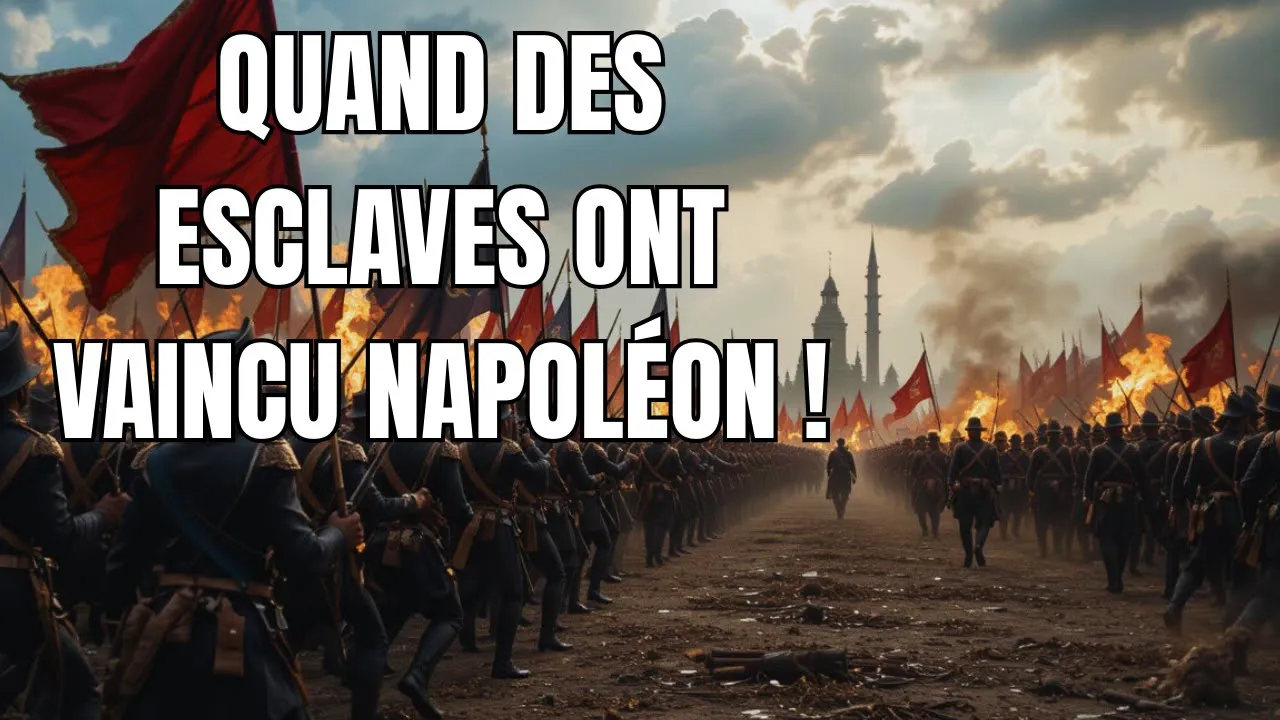













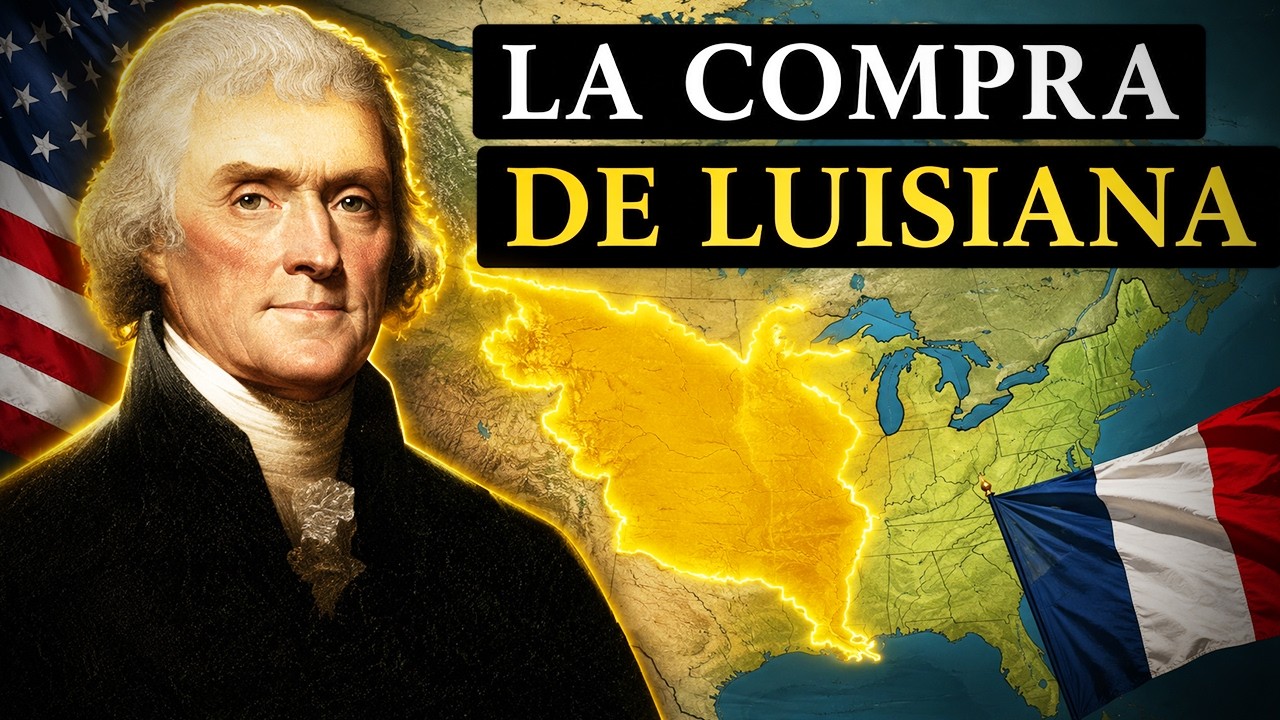





The Louisiana Purchase was not a diplomatic triumph but a desperate liquidation by Napoleon, who sold 828,000 square miles for $15 million (about 4 cents per acre) because his Haitian invasion failed catastrophically due to yellow fever and Toussaint Louverture's resistance, destroying his North American empire plans and forcing him to liquidate his only remaining American asset before British forces could seize it.
The Louisiana Purchase: Napoleon's Fire Sale and the Birth of an American Superpower (1803)
Added:The geopolitics of the Haitian Revolution, specifically how self-liberated slaves defeated French colonial forces and disrupted Napoleon's ambitions in the Americas.
Napoleon Bonaparte's rise to power in France and his military campaigns in Europe, which created an urgent need for financial resources.
The strategic economic importance of the Mississippi River and the port of New Orleans to early American trade and Western farmers.
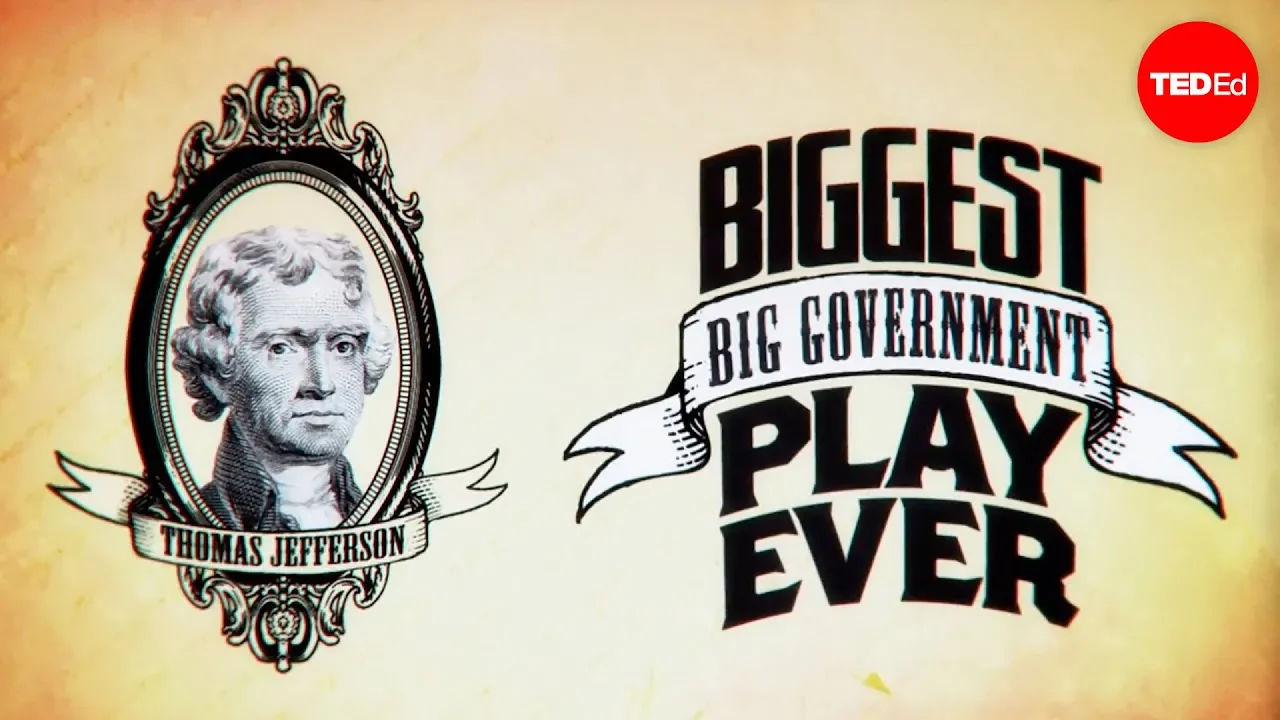
Thomas Jefferson's presidency and his strict constructionist view of the U.S. Constitution regarding federal power and territorial acquisition.
The Lewis and Clark Expedition (Corps of Discovery) and its role in mapping the new territory and asserting American claims to the Pacific Northwest.
The rise of the concept of 'Manifest Destiny' and the subsequent displacement and relocation of Native American nations from their ancestral lands.
How the acquisition of the Louisiana Territory exacerbated sectional tensions and debates over the expansion of slavery, leading to the Missouri Compromise of 1820.
The long-term geopolitical shift in North America, transitioning from European colonial dominance to American hegemony.
38.1K views834likes24:51Original Release: 2025-12-29
The year is 183 and the fate of the North American continent is about to be decided. Not in Washington or New York, but in a bathtub in Paris. Napoleon Bonapart, the first console of France, is soaking in hot water to relieve the pain of his skin condition. His brothers Joseph and Lucian are in the room with him. They are arguing. The argument is so heated that the splash of water hits the brother's expensive coats. They are screaming about a piece of land that is so vast it stretches from the Mississippi River to the Rocky Mountains and from the Gulf of Mexico to the Canadian border. It is a territory larger than France, Spain, Portugal, Italy, and Germany combined. It is the Louisiana territory and Napoleon has just decided to sell it. To the modern observer, the Louisiana purchase looks like the greatest real estate deal in the history of the world. Thomas Jefferson. The American president bought 828,000 square miles of land for $15 million. That works out to roughly 4 cents an acre. It doubled the size of the United States overnight. It opened the way for America to become a continental superpower. It seems like a stroke of genius by the Americans and a moment of madness by the French. Why would Napoleon, the greatest conqueror of his age, give up the heart of North America for a pile of paper money that wasn't even enough to fund his army for a month? The answer is not that Napoleon was stupid. The answer is that the Louisiana Purchase was not really about Louisiana at all. It was about a small island in the Caribbean Sea thousands of miles away. It was about a slave revolt that destroyed the finest army in Europe. It was about a mosquito that killed more French soldiers than the British artillery. And it was about a looming war that forced a desperate dictator to liquidate a failing asset before his enemies could steal it. This is the story of how the Haitian Revolution and the Yellow Fever saved the United States. This is the story of how a bankruptcy in the Caribbean led to a windfall on the Mississippi. To understand why Napoleon sold Louisiana, we have to understand what he wanted it for in the first place. We have to go back to the year 1800. At this time, France had no territory in North America. They had lost Canada to the British 40 years earlier. But Napoleon had a dream. He called it his western design. He wanted to rebuild the French Empire in the Americas. He wanted to restore the glory of New France. But this new empire would not be based on fur trading in the cold forests of Quebec. It would be based on sugar and slavery in the tropical heat of the Caribbean. The jewel in the crown of this planned empire was the colony of Santaing, which we now call Haiti. In 1789, on the eve of the French Revolution, Santa Doming was the most profitable colony in the world. It produced 40% of the sugar and 60% of the coffee consumed in Europe. It was called the Pearl of the Antilles. It generated more wealth for France than all the 13 American colonies generated for Britain combined. But this wealth was built on a foundation of human misery. Half a million enslaved Africans worked the plantations under conditions of unspeakable brutality. The death rate was so high that the French had to constantly import new captives from Africa just to keep the workforce stable. Napoleon's plan was simple and ruthless. He would restore total control over St. Doming, which had been in a state of rebellion since 1791. He would reintroduce slavery which had been abolished during the radical phase of the French Revolution. He would turn the island back into a cash machine for the French state. But there was a problem.
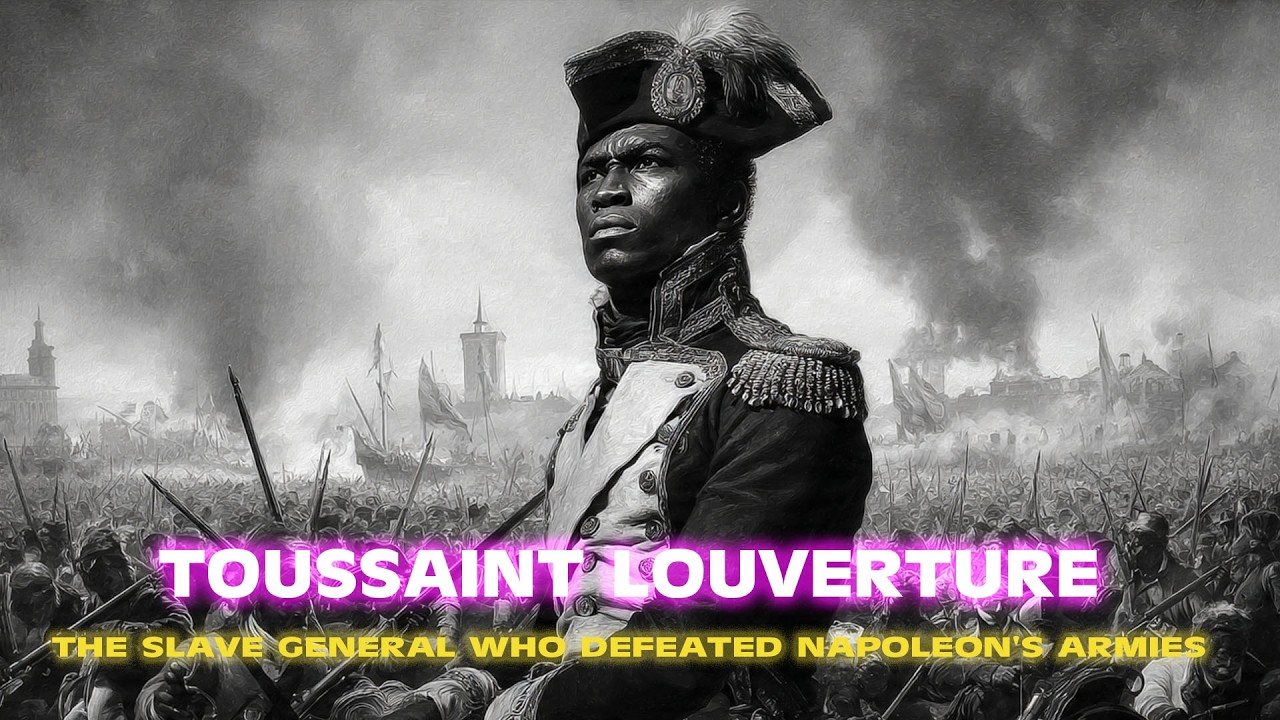
You cannot eat sugar. The enslaved population of Saint Doming needed food and the island was entirely devoted to cash crops. They also needed lumber to build sugar mills and barrels. This is where Louisiana came in. In Napoleon we s grand strategy. The Louisiana territory was not intended to be a major settlement for French people. It was intended to be the bread basket for the sugar islands. The farmers in the Mississippi Valley would grow the corn and the wheat and the salted pork. They would chop down the cypress trees for lumber. They would load it all onto barges and float it down the Mississippi River to New Orleans. From New Orleans, it would be shipped to St. Doming to feed the slaves who were making the sugar. Louisiana was simply a support system for the Caribbean plantation economy. It was the farm that fed the factory. So in 1800, Napoleon made a secret deal with Spain. Spain had controlled Louisiana for the last 40 years. But they were weak and they were terrified of Napoleon. In the secret treaty of San Ilonso, Spain agreed to give Louisiana back to France. In exchange, Napoleon promised to create a kingdom in Italy for the son-in-law of the Spanish king. It was a classic oldw world dynastic swap, a chunk of Italy for the middle of North America. The deal was kept secret because Napoleon did not want to alarm the British or the Americans until he was ready. But to make this western design work, Napoleon first had to retake Sanding. The island was currently under the control of Tusan Luvatur. Tusan was a former slave who had risen to become a brilliant general and the deacto ruler of the colony. He was technically loyal to France, but he governed the island as an independent state. He had written his own constitution. He had negotiated trade deals with the Americans. He was a black Napoleon, and the real Napoleon could not tolerate arrival. In 1801, Napoleon assembled a massive invasion force. He sent his brother-in-law, General Charles L. Cleric, with 20,000 of the finest troops in France. These were battleh hardened veterans who had conquered Italy and Egypt. Their orders were secret and brutal. They were to deceive Tusant with promises of peace, then arrest him and deport him. Then they were to disarm the black population.
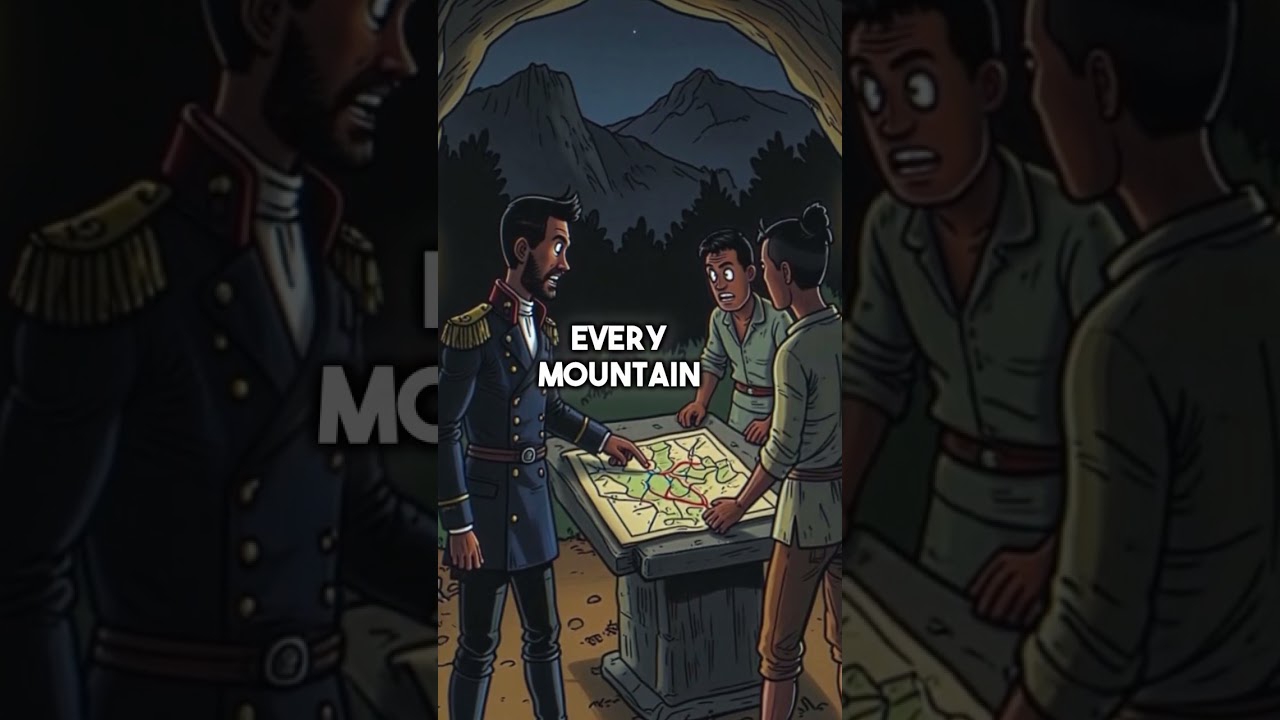
Finally, once the population was defenseless, they were to issue a decree restoring slavery. It was a plan of methodical treachery. The expedition arrived in Haiti in February 1802. At first, it seemed to go well. The French army had superior firepower. They captured the coastal cities. Tus San Louver realized he could not defeat the French in a pitched battle. So he retreated into the mountains. He fought a guerilla war, burning the plantations and poisoning the wells. He told his officers that they must wait for their greatest ally to arrive. That ally was the rainy season. Tusan knew that when the rains came, the mosquitoes would breed and the yellow fever would strike.
He famously said, "The insects will be our soldiers."
General was arrogant. He wrote letters to Napoleon boasting that he would have the island pacified in weeks. He tricked Tusan into a meeting arrested him and shipped him off to a cold prison cell in the Jura Mountains of France where the great liberator would eventually die of pneumonia and neglect. With Tusan gone, Llair thought the war was over. He began to disarm the population. But then the rumors started to spread. News arrived from the nearby island of Guadaloop that the French had restored slavery there.
The black population of Sanding realized that the same fate awaited them. They rose up in a second massive wave of rebellion. This time it was a war of extermination. The slogan of the rebels was independence or death. And then the reigns came. The yellow fever epidemic of 1802 was one of the worst in history.
The French soldiers who had no immunity began to die by the thousands. It started with a headache and a fever.
Then the skin turned yellow and the eyes became bloodshot. Then came the black vomit. Within days, strong, healthy men were dead. The hospitals were overflowing. The dead were piled in the streets because there were not enough people to bury them. General the clerk watched his magnificent army melt away.
He wrote desperate letters to Napoleon asking for reinforcements. He said, "I have no army left. I have only a hospital." By the end of 1802, General himself was dead from the fever. Of the 20,000 men Napoleon had sent, only a few thousand were left standing, and they were terrified. Napoleon sent another 20,000 troops, but they died just as fast. The French historian Adolf Tierre later estimated that 50,000 French soldiers, sailors, and administrators died in the failed attempt to retake Saint Deming. It was a catastrophe. The Western design was drowning in blood and vomit. Napoleon was a cold pragmatist.
He sat in his office in the Twilleries palace and looked at the reports. He realized that the game was up. Without St. Doming, Louisiana was useless. If there was no sugar colony to feed, there was no need for a bread basket.
Louisiana was a massive drain on the treasury. It generated no tax revenue.
It was populated by a few thousand French settlers and thousands of Native American warriors who had no interest in being ruled by Paris. To hold Louisiana, Napoleon would need to send thousands of troops to garrison the forts along the Mississippi. But his troops were dying in the Caribbean or needed in Europe.
And Europe was becoming dangerous again.
The peace of Amy, which had paused the war between France and Britain, was breaking down. Napoleon knew that war was coming. and he knew that the moment war was declared, the British Navy would blockade the French ports. Britain ruled the waves. Napoleon looked at the map and saw that Louisiana was indefensible.
The British Navy could sail into the Gulf of Mexico and seize New Orleans whenever they wanted. The British troops in Canada could march south and seize the upper Mississippi. France had no navy to protect the colony. Napoleon was faced with a stark choice. He could try to hold on to Louisiana and inevitably lose it to the British, who would take it for free as a spoil of war. Or he could sell it to the Americans. If he sold it, he would get some money to fund his war in Europe. But more importantly, he would achieve a strategic master stroke. He would strengthen the United States. Napoleon believed that a powerful United States would eventually rival Britain. He famously said, "I have given England a maritime rival that will sooner or later humble her pride." But the Americans were not thinking about global geopolitics. They were thinking about shipping crates. For the Americans, the issue of Louisiana was not about land. It was about water. The United States in 1803 ended at the Mississippi River. The entire economy of the western territories, states like Ohio, Kentucky, and Tennessee, depended on the river. Farmers floated their whiskey and flour down the Mississippi to New Orleans, where it was loaded onto oceangoing ships. Spain had allowed the Americans to use the port of New Orleans tax-free. This was called the right of deposit. But in 1802, just as the French were preparing to take over, the Spanish governor of New Orleans suddenly revoked the right of deposit. The river was closed. The American economy panicked.
Western farmers talked about seizing New Orleans by force. President Thomas Jefferson was a pacifist, but he knew he had to act. He famously wrote that there is on the globe one single spot the possessor of which is our natural and habitual enemy. That spot is New Orleans. Jefferson was terrified of having Napoleon as a neighbor. Spain was a weak neighbor and the Americans knew they could eventually push Spain around.
But France was a predator. Jefferson feared that if French troops landed in New Orleans, they would shut down the river forever. He feared that the United States would be forced to ally with the British to fight the French. The idea of allying with King George was repulsive to Jefferson, but the French threat was existential. So Jefferson made a move.
He sent his friend James Monroe to Paris. Monroe's mission was simple and modest. He was authorized to offer Napoleon up to $10 million for the city of New Orleans and the immediate surrounding area. That was it. The Americans didn't want the millions of acres of wilderness to the west. They just wanted the port. They just wanted to secure the mouth of the river. Monroe carried instructions that said, "If France refuses to sell New Orleans, you were to go to London and negotiate an alliance with the British." It was a highstakes diplomatic poker game. Monroe set sail for France in March of 1803. He traveled slowly across the Atlantic, unaware of the dramatic events unfolding in Napoleon's bathtub. He was unaware that the French army in Haiti had been annihilated. He was unaware that Napoleon had already decided to dump the entire territory. When Rorow arrived in Paris, expecting a difficult negotiation, he expected to be stonewalled. He met up with Robert Livingston, the American ambassador in Paris, who had been trying for months to get a meeting with Talon, the French foreign minister. Livingston was frustrated and deaf and felt ignored by the French court. On April 11th, 1803, Talon finally summoned Livingston. Talon was a slippery character, a survivor who had served the king, the revolution, and now Napoleon. He looked at Livingston and asked a question that stunned the American. He asked simply, "What will you give for the whole of Louisiana?"
Livingston thought he had misheard. He said, "No, we only want New Orleans."
Terren smiled and said, "Tried to think about the whole thing. Napoleon wants to sell everything." Livingston went home in a state of shock. He waited for Monroe to arrive. The next day when Monroe walked in, Livingston told him the news. They were supposed to buy a city and they were being offered a continent. They looked at their instructions from President Jefferson.
Their instructions said nothing about buying the territory west of the Mississippi. They had no authority to spend $15 million. They had no way to contact Washington. A letter would take six weeks to get there and six weeks to get back. By that time, Napoleon might change his mind. By that time, the British might declare war and seize the territory. Monroe and Livingston were alone in a room in Paris facing the biggest decision in American history. If they said yes, they might be impeached for exceeding their authority. They might bankrupt the United States Treasury. But if they said no, they would lose the chance of a lifetime.
They would leave the door open for Britain or France to control the future of North America. They looked at the map. They looked at each other. And they decided to go rogue. They decided to ignore the Constitution and ignore their instructions. They decided to buy the world. As we end the first part of the story, we leave Monroe and Livingston in that room in Paris, their hands shaking as they prepare to negotiate the details. We leave Napoleon fuming at the failure of his Caribbean dream, turning his eyes away from the Americas and back toward the battlefields of Europe. We see the vast territory of Louisiana, waiting in the silence of history, its indigenous inhabitants unaware that their land is being bartered by men who have never set foot on it. In the second part of the story, we will dive into the mechanics of the deal. We will see how the United States, which had almost no money, managed to pay for the purchase.
We will meet the British bankers who ironically financed Napoleon's war against their own country. And we will see the chaotic and often tragic transfer of power that reshaped a continent forever. James Monroe and Robert Livingston sat across the table from Francois Barb Marois, the French finance minister. It was late April 183.
The air in Paris was thick with the rumors of war. The British ambassador was packing his bags. The peace was collapsing. Napoleon was screaming at his generals to prepare for an invasion of England. Amidst this chaos, the three men were trying to hammer out the details of the largest land transaction in history. The negotiation was not about the borders of the territory because nobody actually knew what the borders were. When Livingston asked Taland what the eastern boundary of Louisiana was, Taland famously replied, "I do not know. You must take it as we received it from Spain." When Livingston asked about the western boundary, Talon shrugged and said, "I suppose you will make the most of it." It was a purchase of a vague abstraction. The Americans were buying a claim, not a survey. They were buying the right to displace the Native American nations that actually lived there. The negotiation was entirely about money. Napoleon wanted cash, and he wanted it immediately. He needed 50 million Franks to build a fleet of flat bottom boats to invade England. The final price they agreed upon was $15 million. This was a staggering sum for the Young American Republic. The entire federal budget of the United States in 1803 was only about $8 million. Jefferson was effectively spending two years of the nation's income on a single purchase. It would be like a modern president spending $10 trillion on a land deal today. But here was the twist. The United States did not have $15 million. They didn't have the gold in the vault. They didn't have the silver in the treasury. They were a landrich cash poor nation. So how do you pay for an empire when you are broke?
The answer lay in the complex world of international finance. The answer lay with the very enemy Napoleon was preparing to fight, the British. The financing of the Louisiana Purchase is one of the great ironies of history. The United States issued bonds. A bond is essentially an IOU. The US government promised to pay back the holder of the bond with interest over 15 years. But Napoleon couldn't use American bonds to pay his soldiers. He couldn't pay a French shipyard with a piece of paper signed by Thomas Jefferson. He needed gold coin. Enter the house of Bearing.
Bearing brothers was one of the most powerful merchant banks in London. They were British to the core. Their chairman, Sir Francis Bearing, was a pillar of the British establishment. Yet Bearing Brothers, along with a Dutch bank called Hope and Company, agreed to finance the deal. They bought the American bonds at a discount, giving Napoleon the hard cash he needed immediately. They then sold the bonds to investors across Europe and in London.
Think about what this means. British bankers were raising money from British investors to give to Napoleon Bonapart so that he could build an army to attack Britain. It seems like treason, but to the bankers of the city of London, it was just business. They reasoned that if they didn't do the deal, a French bank would. They reasoned that the United States was a good credit risk. And they reasoned that Napoleon would probably waste the money anyway. It is said that when the British Prime Minister Henry Addington heard about the deal, he did not stop it. He simply shrugged. The capital flows where the profit is. So the gold flowed from London to Paris and the title deed flowed from Paris to Washington. The treaty was signed on April 30th, 1803. As they signed the document, Robert Livingston stood up and made a prophecy. He said, "We have lived long, but this is the noblest work of our whole lives." From this day, the United States take their place among the powers of the first rank. But back in Washington, President Thomas Jefferson was not feeling noble. He was feeling a constitutional crisis. Jefferson was a strict constructionist. He believed that the federal government could only do exactly what the Constitution said it could do. He had spent his entire political career fighting against Alexander Hamilton, who wanted a strong central government with broad powers.
Jefferson had argued that if it wasn't written in the Constitution, the president couldn't do it. Now, Jefferson looked at the Constitution and he couldn't find a single sentence that said the president had the power to buy foreign territory. He was terrified that he was becoming the very thing he hated, a tyrant who ignored the law. He wrote letters to his friends admitting that the purchase was an act beyond the constitution. He drafted a constitutional amendment to legalize the deal, but his advisers told him there was no time. Napoleon might change his mind. The British might intervene. They told him to swallow his principles and sign the treaty. Jefferson agonized, but in the end, he was a pragmatist. He realized that the future of the agrarian republic he dreamed of depended on land.
He wanted a nation of yman farmers and for that he needs space. He justified the purchase as a necessary evil for the greater good. He later compared it to a guardian investing the money of a ward saying he did what was best for the country even if he broke the rules to do it. The Senate ratified the treaty and the United States doubled in size. The transfer of the territory was a bizarre piece of political theater. Remember that officially Spain still governed Louisiana. The secret treaty where Spain gave it to France had never been publicly enforced. So before the French could give it to the Americans, the Spanish first had to give it to the French. On November 30th, 1803, in the Cabildo building in New Orleans, the Spanish governor formally handed the keys of the city to the French representative Pierre Clemon de Los. The Spanish flag was lowered and the Frenchricolor was raised. For 20 days and 20 days only, France ruled Louisiana. Losat spent those 20 days abolishing Spanish laws and appointing French officials knowing full well that he was about to fire them all. Then on December 20th, the Americans arrived.
The weather was cold and rainy. A crowd gathered in the plastarm, which is now Jackson Square. The French flag was slowly lowered. As it came down, it met the American flag, which was being raised. The two flags tangled for a moment in the middle of the pole. A fitting symbol of the entangled histories of the two nations. Then the stars and stripes reached the top. A single cannon shot rang out. The crowd, which was mostly French and Spanish, stood in silence. They were not cheering. They were confused. They had gone to sleep. Spanish woke up French and were now going to bed American. They had not been consulted. Their nationality had been changed by a signature in a room 3,000 mi away. But the story of the transfer has a darker chapter in the north. In the city of St. Louis, which was the capital of upper Louisiana, the transfer happened 3 months later in March 1804. It was known as the day of three flags. On March 9th, the Spanish flag was lowered and the French flag was raised. The American captain, Merryweather Lewis, who was about to depart on his famous expedition to the Pacific, was present. The French flag flew for 24 hours. The people of St. Louis, who were mostly French settlers, cheered to see their old flag again. They sang the Marc. They celebrated all night. Then on the morning of March 10th, the French flag came down and the American flag went up.
The cheering stopped. The settlers looked at the new soldiers in their rough uniforms and realized that their world had ended. The American era brought with it a flood of settlers from Kentucky and Tennessee. These men did not respect the French customs or the Spanish land grants. They were landhungry and aggressive. They brought with them the English language and the common law and a deep racism against the indigenous people. And this brings us to the true victims of the Louisiana purchase, the Native Americans. The text of the treaty promised to respect the rights of the inhabitants. But the Americans did not consider the Sue, the Cheyenne, the Osage, or the Comanche to be inhabitants in the legal sense. They considered them obstacles. To the Native Americans, the idea that Napoleon could sell their land to Jefferson was absurd.
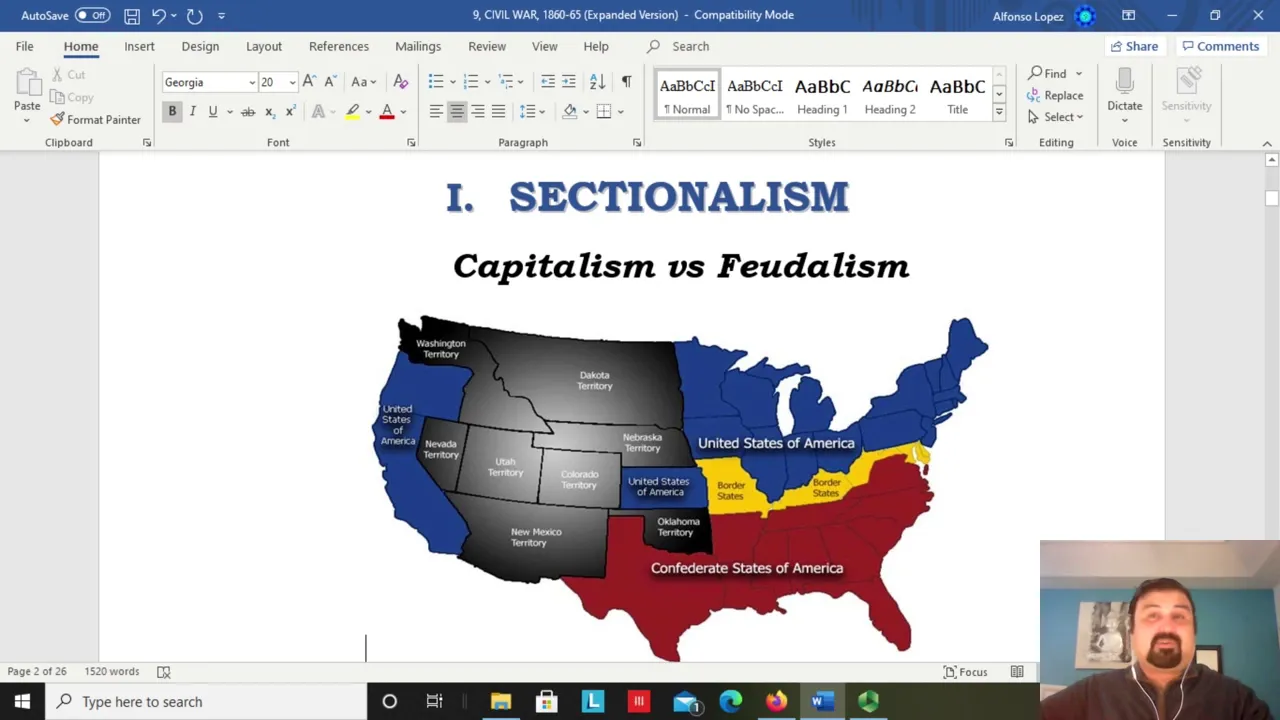
They had never heard of Napoleon. They had never seen a Frenchman. They were the masters of the plains. They had their own empires, their own trade networks, and their own diplomacy. But the Louisiana Purchase changed the legal framework of their dispossession. Before 1803, the United States had to treat with these nations as foreign powers outside its borders. After 1803, the United States considered them subjects living within American territory. It gave Jefferson the legal cover to begin the policy of removal. He looked at the vast emptiness of the new map and saw a place where he could deport the tribes of the east. The trail of tears was made possible because there was a destination for the tears. That destination was the Louisiana territory. The purchase also swed the seeds of the American Civil War. As long as the United States was confined to the east, the balance between slave states and free states could be managed. But with the acquisition of this vast new territory, the question arose every time a new state was formed. Would it be slave or free? Would slavery expand into the West?
This question plagued the American political system for 60 years. The Missouri Compromise, the Kansas Nebraska Act, the Dread Scott decision, all of these crises were direct consequences of the Louisiana Purchase. The land that was bought to secure the safety of the Union eventually tore the Union apart.
And what of Napoleon? What did he do with his $15 million? He spent it. He built his barges. He gathered his grand army at Bologone on the coast of France.
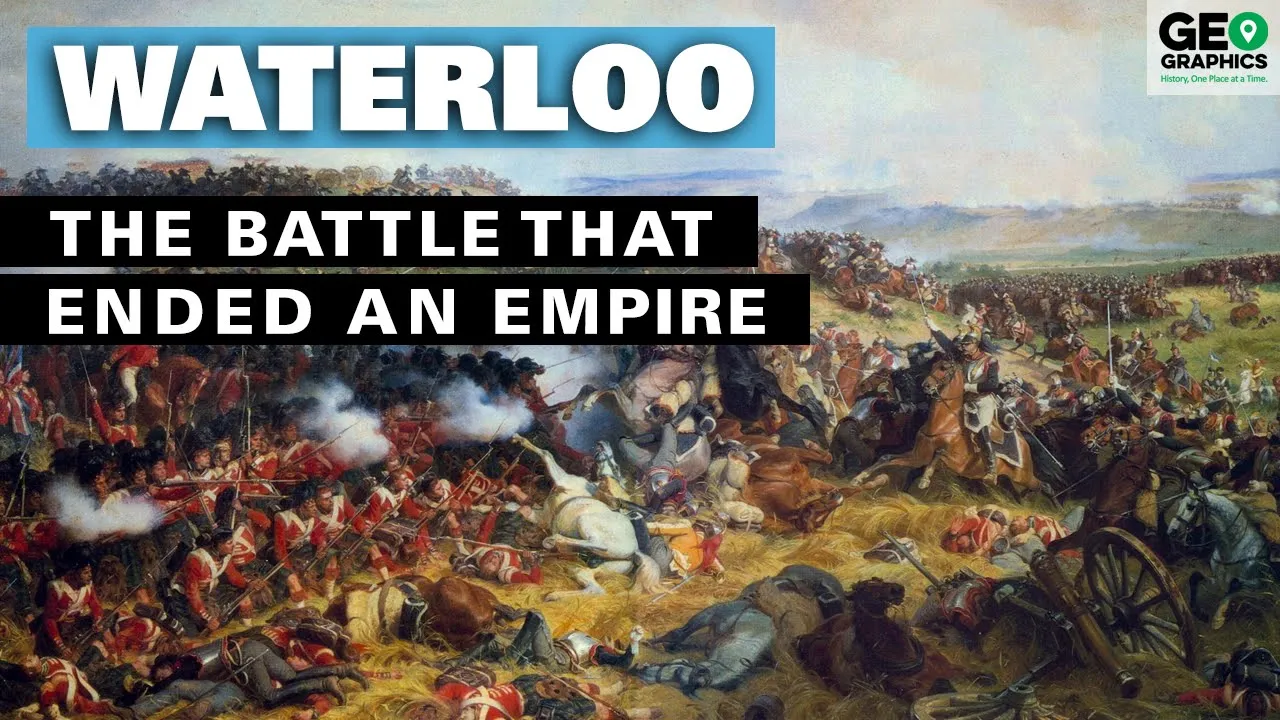
He prepared to cross the channel, but he never did. The British Navy was too strong. In 1805 at the battle of Trafalgar, Lord Nelson destroyed the French and Spanish fleets. The dream of invading England died. Napoleon turned his armies east and marched across Europe, winning brilliant victories at Ostulitz and Jana, creating a continental empire that lasted for a decade before collapsing in the snows of Russia. The $15 million bought him a few years of war, but it cost France a future superpower status. If France had kept Louisiana, the history of the world would look very different. North America might have been divided between an English-speaking east and a French-speaking west. The United States might have remained a second rate regional power hemmed in by rival empires. By selling the territory, Napoleon removed the last barrier to American expansion. He created the very giant that would eventually come back to Europe in 1917 and 1944 to save France from Germany. Today, if you walk through the French Quarter of New Orleans, you can still see the ghosts of this history. You see the Spanish architecture with its iron balconies.
You hear the French names of the streets. You eat the food that mixes African, Native American, and European ingredients. It is a city that remembers it was once the pawn in a global game of chess. But the most important monument to the Louisiana Purchase is not a building or a statue. It is the map of the United States itself. It is the shape of the nation. It is the fact that a country that began as 13 colonies on the Atlantic coast now spans a continent. This reality was not forged by destiny or divine providence. It was forged by the yellow fever mosquito in the swamps of Haiti. It was forged by the resistance of Tusant Luvver and his army of former slaves who broke the will of the French Empire. We often learn history as a list of great men making great decisions. We learn that Jefferson was a visionary and Napoleon was a genius. But the story of the Louisiana Purchase teaches us a different lesson.
It teaches us that history is chaotic.
It is driven by unintended consequences.
Jefferson didn't want the whole territory. He just wanted a city.
Napoleon didn't want to sell. was forced to by disease and defeat. The United States didn't have the money they had to borrow it from the enemy of the seller.
It was a fire sale, a liquidation of a failed business venture. The French Empire and the Americas went bankrupt, and the United States bought the assets for pennies on the dollar. The irony is that the slaves of Haiti, who fought for their own freedom and destroyed Napoleon western dream, ended up inadvertently doubling the size of a slave republic in North America. Their victory for liberty in the Caribbean led to the expansion of slavery in the Mississippi Valley. It is a bitter and complex legacy. So the next time you look at a map of the American West, remember that you are looking at the debris of a French catastrophe.
You're looking at the result of a bad day in a bathtub in Paris. You're looking at the legacy of the mosquitoes of San Dang. The Louisiana Purchase was not a triumph of American diplomacy. It was the greatest lucky break in the history of nations. A gift from the chaos of a world at war. I'm John and this is the Cinematic History Tales channel. Subscribe now to stay ahead of the curve because when the history books are written, you'll want to be among the few who saw it coming. If you want to see the next empire unravel before your eyes, don't forget to subscribe. Only those who pay attention learn what history hides.
Up Next

12:07
The 1811 German Coast Uprising: America's Largest Slave Revolt
@crashcourse
528.8K views•2021-08-06

33:02
The Great Schism of 1054: Causes and Consequences
@SacredCathedrals
113.5K views•2026-02-19
91:57
The Geopolitics of the Ukraine War and the Rise of Global Autocracy
@JordanHarbingerShow
468K views•2025-04-19
17:05
Understanding the Cold War: Superpower Conflicts and the Road to Détente
@OverSimplified
46.1M views•2019-01-24
Related Study Plans & Knowledge Roadmaps
Structured learning paths in History
history
Byzantine Iconoclasm: Theology, Art & Politics
01Foundations of Byzantium and Early Christian Images
02The First Iconoclasm: Leo III and the Crisis of Images
03Empress Irene, Nicaea II, and the Second Iconoclasm
+ 2 more learning modules
9h5 modules
Explore Roadmap
history
Iranian Revolution (Causes, Events & Legacy)
01The Pahlavi Dynasty and the Roots of Discontent
02The Spark of Rebellion and the Rise of Khomeini
031979: The Fall of the Shah and the Climax of the Revolution
+ 2 more learning modules
8h5 modules
Explore Roadmap
history
Mali Empire: Mansa Musa, Trade & Timbuktu
01Foundations of the Mali Empire
02The Trans-Saharan Gold and Salt Trade
03The Reign and Pilgrimage of Mansa Musa
+ 1 more learning modules
6h4 modules
Explore Roadmap
history
1947 Partition: Politics, Borders & Legacies
01Foundations of British India and the Divide
02The Political Negotiations and the Mountbatten Plan
03Drawing the Boundary: The Radcliffe Line
+ 2 more learning modules
8h5 modules
Explore Roadmap