


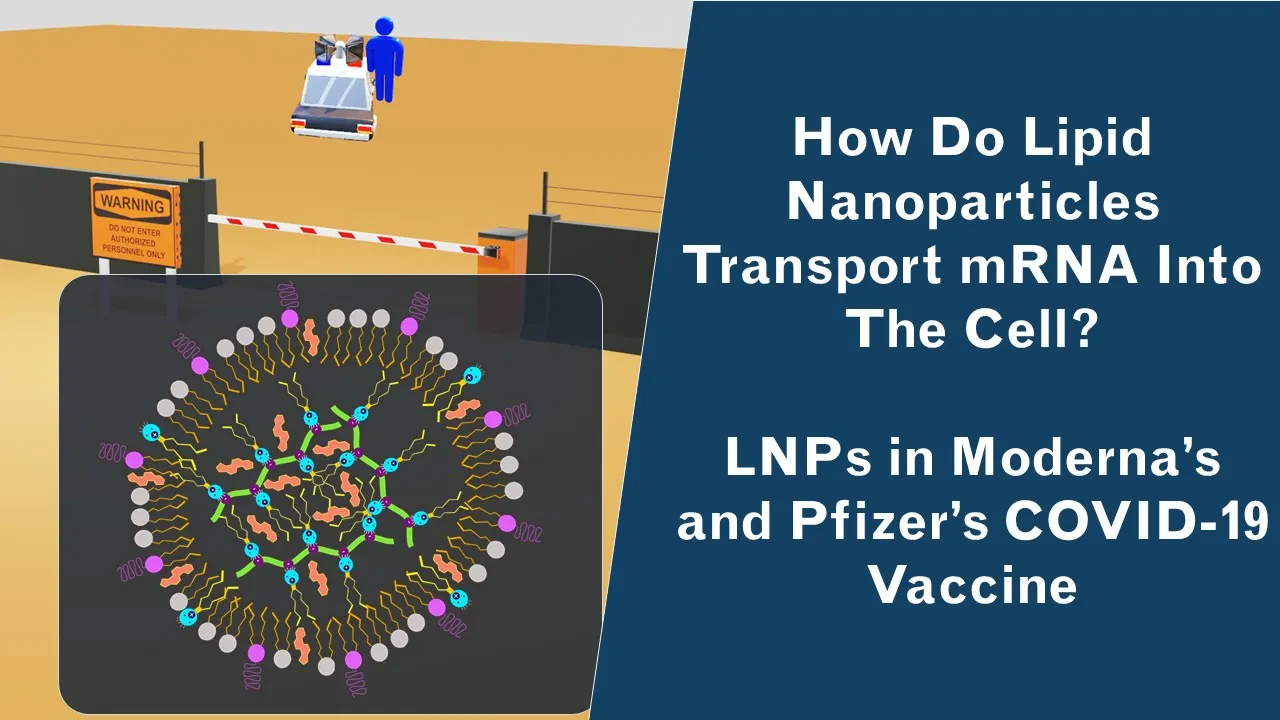
















Microfluidic systems enable rapid optimization of mRNA lipid nanoparticle (LNP) formulations by allowing precise control over mixing conditions (total flow rate and flow rate ratio) to achieve targeted particle sizes (50-200 nm) and high encapsulation efficiencies (>90%), with automated systems enabling multiple experiments to be queued and executed in under 20 minutes, streamlining the transition from discovery to clinical manufacturing.
Optimizing mRNA LNP Microfluidics: Formulation & Process
Added:Fundamental biology of mRNA, including its structure, stability challenges, and the necessity of delivery systems.
Basic composition of Lipid Nanoparticles (LNPs), including ionizable lipids, helper lipids, cholesterol, and PEGylated lipids.
Core principles of microfluidics, particularly laminar flow, diffusion-dominated mixing, and fluid dynamics at the microscale.
Introduction to key formulation metrics such as N/P (nitrogen-to-phosphate) ratio, flow rate ratio (FRR), and total flow rate (TFR).
Industrial scale-up strategies and GMP (Good Manufacturing Practice) compliance for translating microfluidic processes to clinical production.
In vivo biodistribution, cellular uptake, and endosomal escape mechanisms of optimized LNPs.
Advanced analytical characterization techniques for LNPs, such as Dynamic Light Scattering (DLS) and Cryogenic Electron Microscopy (cryo-EM).
Development of next-generation target-specific LNPs (ligand conjugation) and delivery of advanced payloads like CRISPR/Cas9 or self-amplifying RNA.
5.8K views78likes1:01:01Original Release: 2022-03-17
okay hello everyone we are live uh and we would like to start our webinar the webinar today as you will know will be rapid optimization of lipid nanoparticles using microfluidics formulation process and equipment my name is julia rashford step i am vp of uh r d and alliance management at phosphorus and i will be your host moderator of this webinar the speakers will have both representing dolomite uh dr kate o'brien and phosphorus dr nicholas boylan and dr nicholas carobin and they will share the insights about important considerations uh when making polymeric particles uh with microfluidics so the outline of the webinar will be first kate will get us started and she will talk about dolomite in ps microfluidic automated system um and kate would introduce few polls first and then we will see a pre-recorded case study on how to make this lipid nanoparticles using nps system are pre-recorded by any carbon and that's pretty much as close as possible for you to visit our lab and see how this lnp systems are done in real life um and then we will kick off the presentation from force works i will kick it off and talk about some development aspects of making this lipid nanoparticles and then i will turn it to nick boylan who would take it in depths on the formulation a little bit of history fabrication aspects and process aspects and then we'll have three polls a few housekeeping items we really want this webinar to be as interactive as possible as interactive as technology allows us and we have a lot of tools here um and um [Music] please get familiar with the interactive icons on the side so we have the chat and you can put your comments that would be greatly appreciated and also please participate in the polls as much as possible it really helps us to get an information from you what you're looking for and then we can put the better content for the next time we definitely listen to you uh the most important thing is the panel with the questions with the questions at the end we'll have q and a session and uh we really wanted the best part of this webinar is getting through the questions and answers and be interactive so uh please put your questions in one place with the question sir so it's easier for us to find all them in one place um so without further ado uh i'll turn it to uh to kato bryan keith please thank you julia yes so we're just gonna kick start with a few polls and just get an idea about audience and what um you guys are working in so the moment uh you should be able to see a poll question uh that looks at the volumes that you currently use um when you're making lmps so at the moment we've got quite a lot of people have voted to say that they're using greater than two mills as a sample volume and then some people kind of using the 0.5 to 2 ml um as the the two most popular um question uh answers so far of of the audience so still getting some uh votes in so i'll just give you everyone a couple more minutes a couple more seconds sorry um i think 60 now of the audience are looking at using greater than two mil sample volumes um and interestingly no one using less than 0.1 milliliters i guess that's the quite small volume to be uh to be working with cool so the next one um will load momentarily for everyone and then we've got one more after that um so this one is um what lmp size you are targeting um during your production so the moment most people are voting between the 50 and 100 nanometer size range that's a 65 of our our audience uh are looking at that range and then a few people either side so the 20 to not 15 nanometers and the 100 to 200 nanometers are also fairly popular answers at the moment we've still got quite a few votes coming in so i'll give everyone a couple more seconds to answer that question great and then the final one um which is similar to the first one so what sample volumes would you ideally like to produce before you dilute it before you work it up before any characterization and at the moment most people are again greater than two nils for the sample volume um but more people are also actually asking for 0.5 to 2 ml um when you're in your sample screening phase um which is really interesting to see give everyone a few more seconds just to make their choices on this vote on this poll and then i'll kick start my presentation momentarily thanks everyone for voting in that great so um let's get the webinar started so thank you for joining us today on our webinar about rapid optimization of mrna lmps using microfluidics as everyone is probably very well aware nanoparticles have been used very widely over the last decade or so as a excellent drug delivery method for a range of ingredients and specifically sorry specifically lmps have been used as drug delivery vehicles due to their their cell like structures you can see in this figure on the on the right hand side and this gives them really good bio compatibility so it allows them to be uh taken up in in cells quite easily microfluidic production methods have uh started to gain a lot of um a lot of attract attraction um to produce lmps and one of the methods you can use is hydrodynamic flow focusing which you can see in this figure and this produces lmps by uh controllably introducing an antisolvent so in this case aqueous phase which changes the solubility of the lipids in in your organic phase which initializes the the lmp self-assembly the they've got a lot of uh benefits over bulk production methods and that's due to a much greater control over the self-assembly process i just mentioned and this gives a really low pdi of your nanoparticles that you produce high encapsulation efficiency but the ability to work with very small sample sizes so in the in the range of kind of two mil like that we saw was really popular in the poll just now however there are some drawbacks to microfluidics um and this is generally around the difficulty in rapidly optimizing nanoparticles so it's quite hard to very flow conditions so if you change the total flow rate or the flow rate ratio you generally lead to a loss of sample during the change in those conditions which you can't collect basically and then if you want to change your cargo or lmp formulation you basically have to manually break down your microfluidic system to perform efficient cleaning steps which obviously really just slows your workflow um and is difficult to rapidly optimize your nanoparticles as i just mentioned so dolomite microfluidics were well placed we've had a a number of decades in the microfluidic phase um and we were well placed to develop the automated nanoparticle system which you can see here and this was produced to overcome some of those downfalls that i've just mentioned and i'll go into the why on the next slide but just to give you an introduction to the system the system comprises of these two sample loops one for your cargo phase and one for your um lmp phase or your lipid precursor phase and these are connected to your automated sample valves which are aliquot predetermined volumes into the whole the microfluidic system to produce your lmps these aliquots are pushed around the fluidic pathway by the use of your metos quad pumps of which there are three so one for your aqueous phase one for your organic phase and one for your dilution phase and these uh quad pumps are fed from the pressurized input store which can house up to 250 ml of your driver fluid the aliquots that have been um moved into the fluidic pathway uh are accurately um flown through the system to the microfluidic chip here and this is where the lmp production is initialized in a very controlled manner to ensure that you've achieved the mixing that you've set out in the software and then we have the option optional inline dilution chip as the second microfluidic chip and then the timing of the system because it is so precise it allows for the collection of your aliquoted um sample loop volumes um via the automated collector and any driver fluid that is in front or behind the sample loop is devoted to waste we will see um in the demonstration video that foster ex have recorded a bit more about the system and you'll get a kind of an overview of how it works basically but as i said the amp system it was generate was produced sorry to overcome some of those downfalls in microfluidic production and allow for rapid lmp generation and it does this um for a number of reasons so the first those sample loops that i mentioned earlier they allow for multiple experiments to be queued so for example if you're using 500 micro liter inputs from each 5 ml sample loop you can cue 10 experiments and that would produce a 1 mil sample for each experiment and that is before dilution these experiments will have the same reagent inputs but you can have discrete flow conditions so you have different flow rates and different flow rate ratios the automated protocol means that the only manual step is loading those sample loops uh everything else so the the operation of the metos quad pumps and the switching of the asvs are automatically controlled in the software and then we have automated cleaning cycles between each experiment that you've queued in a protocol but also at the end of the protocol which which means that after a protocol is finished you can load your next set of reagents so a change in your cargo or a change in your lmp formulation very easily without any extra manual steps required so just to show you how quick the system can be um we can see here this is what a a pressure readout from one of the pumps looks like so here that the system isn't really doing anything for the first couple of minutes and that's because the protocol has paused to allow you to load your samples manually and as soon as you've confirmed that this in the software that you've done that it will then prime the system which basically means that the entire fluidic pathway is wetted with your driver fluids before the first experiment takes place and then a wash cycle occurs and then this is repeated for as many uh experiments you've cued in your protocol and then finally we have the full wash system that i mentioned previously which takes a couple of minutes but after your final experiment has performed around been performed around the 15 minute mark you can actually take your samples off the system right now and process them for any characterization you've got um that you want to perform so here you can see that these 10 experiments took less than 20 minutes and this was with a total flow rate of 12 mm a minute the highest flow rate that you can run with the system is actually 15 millimeters you can make this a bit quicker if you chose to and so that's a very quick um introduction to the amp system and we can now um move on to thank you thank you thank you very much so i think that there's some questions coming and i would like to ask you just one really quick question uh yeah i think it's a quick question can you i think it would be helpful before the demo to talk about this can you use other microfluidic geometry with the amps system yes so any of the chips that dolomite microfluidics produce can be used um with the amp system the way that we connect the chips is ubiquitous across all chips across um every chip so that it's basically plug and play with the amp system uh if you choose at the moment we've got kind of a cross junction but we also have micro mixers which um segment the flow which some people use quite a lot in lmp production so yeah it's it it's really easy to swap them out basically thank you thank you and with that back to you and you can introduce nick yeah no worries so now we have a quick video on uh the amp system in phosphorex's lab today we'll be running through a quick demonstration using the dolomite automated nanoparticle system to highlight how this system can quickly be used to scan and select manufacturing parameters to prepare lipid nanoparticles in today's demo we'll go over how to open the software set up the instrument set up an experimental table and then lastly how to process your sample upon manufacturing before jumping into the software let's take a look at the different modules that compose the dolomite anps we have our pressurized input storage rack we have our midos automated sample valve these lower two modules are our two quad pumps note that each quad pump has two pairs of syringes each pair of syringes represent a separate pump so between the two modules we have a total of four pumps and then lastly we have our gilson automated collector after turning on each of the modules we're ready to start operating the anps open the software by double-clicking the dolomite flow control icon after opening the software click on the devices tab where six sub screens should appear one subscreen for the gilson collector one for the dilution pump one for our lipid pump one for our spare pump one for our cargo pump and lastly one for the automated sample valve feel free to drag and drop these subscreens to orient your field of view to your liking for each of the four pump modules click the initialize button once the initialization step is complete we're going to wet our system with ethanol and buffer and confirm that there are no leaks along the flow path to do so i typically run a timed pump so i'm going to adjust my fill empty and pump rates for my lipid pump as well as for my cargo pump then i'm going to adjust the length of this timed pump input from five minutes down to three minutes and once these parameters have been set to your liking feel free to initiate the timed pump after the timed pump is complete and you've confirmed that your system is leak free transition from the devices tab to the protocols tab at phosphorex we have two predefined protocols that we utilize frequently we have our default lipid nanoparticle protocol and our default polymer nanoparticle protocol for today's demo we'll be focusing on the lipid nanoparticle protocol note that when you open up the protocols window there are two sections that require user input this top section requires that a device be assigned to each of these five functions so in this case our automated sample valve is defined as our mitos our collector is defined as our gilson collector one note that we have defined the sample one pump to be our lipid pump the sample two pump to be our cargo pump and lastly our dilution pump is obviously dilution after assigning these devices to these functions shift your focus to this lower window where you need to define system parameters in this window the first two parameters are relatively general so for the protocol that we'll be using today we are not using inline dilution and therefore our dilution pump has been set to no we've set our wash rate here to three mils per minute or 3000 microliters per minute and now the next four values will be system specific so these four values are the volume of tubing going between two points so in this case the volume between valve one and the chip is 249 microliters from valve two to the chip is 304 microliters from the chip to the dilution t we have set to zero because as you recall we are not using inline dilution for this protocol and then lastly from the end of the dilution t to the gilson is set to 294 microliters and for our protocol as there is no dilution t this is really the volume going from the exit of the chip to the gilson once you've defined the inputs in the top and lower panels you're now able and ready to edit your experimental table to do so simply click edit once the table editor window opens you can now add multiple experiments in a single run on the anps note that each experiment which is defined as a separate row has several inputs moving from left to right for a single experiment you'll need to define the sample one pump flow rate and if you recall we've defined our sample one pump to be our lipid pump so this is the lipid flow rate your sample two pump flow rate which in this case is our aqueous or cargo flow rate your dilution pump flow rate the sample one volume for injection and collection which in this case is the volume of lipid that will be injected and collected per sample the volume of a heads cut if you choose to use one the volume of a tails cut if you choose to to use one and then lastly your sample name if you would like to add an additional experiment to your table simply click this green cross which is the add row button if you'd like to remove an experiment from this table simply click on the experiment hit this red subtraction button which is the remove row button note that for today's demo we have four experiments that we'll be completing in a single run note that these experiments have been listed as demo one two three and four now all of these samples have the same lipid volume that we'll be injecting and collecting which is 220 microliters they all have the same total volume as we're keeping the flow rate ratio constant at five but we are varying these four samples on their total flow rate so we're testing samples with a total flow rate equal to four three two and one mil per minute once you are content with your inputs simply click ok and to begin the experiment click start note as the experiment works its way through the protocol you'll be able to track the progress in this output log on the right hand side of the screen once the protocol has filled its pumps and wet the system you'll be prompted to inject the required volumes for your sample one and sample two note that for our four sub experiments we need to inject at least 880 microliters of lipid into sample loop one and note for our cargo we need to inject just about 4 400 microliters of sample into sample loop 2.
after injecting these volumes simply click ok to continue on with your experiment as the protocol progresses the gilson will adjust its position to collect sample in its designated sample too as depicted here the gilson has now moved over the second centrifuge tube and is collecting sample two in our experimental list once the manufacturing protocol is finished which in this case takes just over 22 minutes you're now ready to collect your four samples and process them at this scale we typically utilize dialysis to remove our ethanol and transfer our sample into our target buffer solution so in this case i've loaded a syringe with one of our four samples i'm going to inject this into one of our dialysis cassettes after injecting the sample we'll remove as much of that headspace as possible before transferring our sample within the dialysis cassette into our target buffer we'll then cover this beaker transfer this beaker onto a stir part stir plate set at 4c and we'll let dialysis take place overnight the next day we'll remove our sample from the fridge transfer the sample that was once in the dialysis cassette into our amicon centrifuge tube and we'll use centrifugation to concentrate our sample down to a target volume at which point we're now ready to remove an aliquot for dls analysis and a second aliquot for rival green analysis thank you very much nick thank you thank you for this virtual tour hopefully everyone enjoyed that so with that let's switch to the presentation from phosphorex first of all i would like to introduce a little bit more about the phosphates now we're switching gears from focusing on the equipment to the focusing on the formulation analytical development and process uh so phosphorus is contract research organization specializing in drug delivery with the focus on the particle based technologies uh located outside of boston about half an hour and our capabilities include formulation analytical lab process development all the way to glp manufacturing phosphorex has developed a comprehensive approach to optimization of lipid nanoparticles formulation and streamlining transition into the clinical manufacturing so our clients come to us and then different stage of the project development if they are very early on then we involved in the formulation design and prototyping and also including optimization of the small scale formulation in some cases this activity is already done and the client is like kind of like mid-stage development and focusing on help with the development in this case we would work together on the scale-up process development and optimization of the large scale and then we will help to produce glp badge to support ind enabling pre-clinical studies and we also support gmp manufacturing via the tech transfer our customers come across different industry segments we work with pharma with biotech animal health diagnostic and material research science we have industry and academic partners and we work with projects across very broad range of therapeutic indications of course a lot in the oncology and hunan ecology rare disease vaccines but they are also others um we where we are focusing on the development that's what we we try to put a d uh from the very beginning so um wherever we work on the optimization of the formulation and the process we look in this through the development lenses what exactly does it mean the development so here we call just your major point so start the first one is to start with the end in mind it's never too early to start thinking about the product concept of course we're utilizing stage approach we're not to planning to doing all the development activities but at least at least have it in the back of your mind and use it as a paper exercise very important tool is to start working on the target product profile and typically we'll lay out the one that is desired but also the one that minimally acceptable and which includes pharmaceutical or dosage form tpp but also clinical and commercial so for example stability of the lnp formulation we propose to use as one of the criteria for the for the lead formulation selection we've seen some cases when instability was discovered very late in the process and the partner needed to go back and reformulate process process is very important understand the process unit operations clinical critical process parameters effect of scale our mantra is the process is the product due to the nanoparticle complexity the best ways to control the product is to control the process rather than rely on very elaborate analytics and that would help to avoid redundant comparability work if you establish the process before getting into the clinic and the last but not the least of course to choose partner uh who has the experience and work with them and they would work together on the selection of the process and the equipment understanding equipment requirements and constraints it will help you to save the time and resources and in the long run to increase probability of the success so our approach here is to develop formulation process and analytics in parallel clearly they are interconnected and um we as we develop the product we pin pay attention to the process very early and we develop appropriate analytical methodology that allows us to more interpose the formulation in the process so with that i will send it back to nick boylen and he will take you through the history of the lipid formulations and in depth take on the lipid nanoparticle formulation and the process thank you julia hi my name is nick i'm the associate director of product and technology development here at phosphorics so i'm going to walk us through the rest of the slide deck and then lead us into a few additional poll questions before we get to our request question and answer session and so first just want to kind of highlight that with the success of the coded vaccines right this has really brought the lnp technology to the limelight but their success is really grounded upon decades of work that's been conducted in various fields including drug delivery and also immunology and likewise this is an exciting time as we see kind of the the expansion of potential therapeutic areas for this technology and the treatment of other diseases such as oncology and also autoimmune disorders just to name a few and so with regards to lipid-based strong delivery systems some of the common morphologies you might encounter include liposomes and lipoplexes um but again for today's conversation the focus will be on the lipid nanoparticle as depicted on the right hand side and lnps are composed of four key structural components each one of these plays a critical role in the the formation and stability and in performance of the formulation but just a quick note on the ionizable lipid one of its key attributes is the ability to be protonated or positively charged under slightly acidic conditions and this is important during the self-assembly process as it facilitates the encapsulation of our negatively charged rna cargoes and and likewise upon internalization in the cells through the endolysosomal pathway which is a slightly acidic environment these positively charged ionizable lipids can facilitate interaction with the negatively charged lipid bilayer and this can lead to things such as membrane fusion and disruption and essentially escape from that uh degradative traffic and pathway and so as both kate and nick pointed out earlier microfluidics plays a key role especially at the smaller scale screening phases and in the sense that right we have control of the mixing process and it's also very material sparing as well and and as they pointed out there are two critical process parameters here including both the total flow rate and also the flow rate ratio and we'll provide some examples in a few slides as how we go about optimizing these parameters so taking a look at the self-assembly process a little bit more detail so here we have the the lipids dissolved in ethanol entering on the top left and then we have our rna cargo in our aqueous slightly acidic buffer entering on the the bottom left and again in the microfluidic chip we have the controlled mixing and there are two factors that lead to the the self assembly one is change in the solvent polarity and also that slightly acidic ph which which again promotes the the protonization of our ionizable lipids and then post downstream processing through dialysis and in a micron centrifugation for example we essentially end up with our final lnp with our encapsulated rna cargo as depicted on the right hand side and so here at phosphorics again we employ the anp system especially for our early stage screening processes and this is due to sort of the efficiency of the system and kind of material sparing properties as well and as julia pointed out even before we kind of get started in the lab we like to work with our partners and really identify what the ideal product candidate looks like and this comes in the form of our target product profile or tpp and here's just an example table where we basically try to identify you know what are the appropriate particle size poly dispersity you know what type of payload are we trying to encapsulate you know what's our acceptable level of encapsulation efficiency and as well as how do we plan on storing this material and what stability requirements are are required and this is important especially as we get ready for pre-clinical testing say and an animal animal models right where we need to basically manufacture store this material and also be able to ship it to the testing facilities so in terms of some of the the downstream unit operations if you will um for for fabricating lmps and this is relevant even for your small scale screening processes um you know you're going to have various steps including solution prep and then likewise the microfluidic mixing step and as nick already pointed out for the buffer exchange and concentration steps at small scales you'll likely be using dialysis and a mic on ultra filtration and then for any material that's destined for in vivo right we'll employ a terminal or sterile filtration step and so for each of these unit operations there are going to be a number of process parameters and some of these are really critical as they directly impact the quality attributes of the final product and it they may impact things like size poly diversity you know encapsulation efficiency but also the stability and the final yield is of the material as well and so after running our kind of formulation screen and say we've identified some lean formulation candidates that we want to proceed with in pre-clinical testing again we'll use very similar unit operations but at this point phosphorus strongly recommends transitioning to tangential flow filtration or tff for the buffer exchange and concentration steps and and we'll kind of highlight some some of the benefits in the next couple slides but um in short it's a much more efficient and scalable process but also it comes with its own kind of list of process parameters and again these need to be optimized in order to kind of have the optimal final particle size and stability for example and again the sterile filtration step is is critical and and throughout this process we're always kind of looking to kind of assess the product stability under the appropriate storage conditions so here we have a example data set that was generated using the anp system kind of at our small scale kind of high through screening process and in this case we were looking at the effect of of the total flow rate and flow rate ratio on both the particle size and also encapsulation efficiency and in here we have it illustrated for two different lipid systems so the first one is utilizes the cationic lipid doe tap and the top panels and then we also have the ionizable lipid doddma in the bottom panels so as you can see on the right hand side by just adjusting our total flow rate we're able to kind of target lnps a size range of say like 80 nanometers up to 200 nanometers um but when it comes to encapsulation efficiency as determined by ribo grain you'll you'll note that with the dotap based system we were essentially at 96 or greater encapsulation efficiency across the board but for dogma we we needed to either optimize the flow rate ratio and or the the total flow rate to achieve encapsulation efficiencies say of 90 or greater but again this just kind of highlights you know using the amp system how we can quickly scan the space and identify appropriate processing parameters to move forward with so taking a look at a little bit more detail of the downstream unit operations so so again we we employ a tangential flow filtration and we try to do this as as early in the process as possible and just as an example with some of our smaller scales we can work with as little as a half meg of rna cargo for example and there's some key benefits here including the the collection of kind of real time data that tells us kind of the performance of the process at various stages of the process as well and by collecting this data even with the small scale batches this really enables us to one kind of assess reproducibility robustness it also puts us in a better position when we go to scale the formulation further whether it's generating larger scale batches say for pre-clinical testing and non-human primates or even kind of generation of clinical grade material and by a gmp tech so in addition to um kind of having expertise with tff development for lipid nanoparticles phosphorus also has a lot of expertise using this for purification of both polymeric nano and micro particle based regulary systems and we successfully developed these these processes and transferred them to cmos for gmp bash production so in addition to tff we also have significant expertise in house with cryo selection and this is important whenever you want to prepare say a frozen suspension of the drug substance or drug products and then also in the case if you want to try to develop a lyophilized based drug product as well and then finally uh sterile filtration is critical um you know one and to ensure sterility of the final products um but here you also want to have good yield of your product as well right and so we have a lot of expertise in optimizing that unit operation as well and so here's just a quick example data set for for tff for both the concentration of the lnp suspension and also performing the buffer extend exchange through what's known as uh diet filtration and so the schematic on the the bottom left uh basically illustrates here we have a feed reservoir which contains our lmps and this this would be basically the material post mixing say through the microfluidic mixer and then we have a peristaltic pump which basically pumps that solution through in this case a hollow fiber tff membrane and then depending on the molecular weights of the materials in solution for the larger molecular weight material including our lmps that's recirculated back to the feed reservoir through the retentate line whereas any impurities such as the ethanol or buffer salts can can actually kind of pass through the membrane and exit as a waste stream in the form of the permeate line and so one of the benefits of having these systems is one that can be automated but we also record data real time including just for example the pressures at the inlet permeate and retentate sides of the tff column and by having this data in hand this can allow us to kind of troubleshoot assess reproducibility and also scale up this process readily so with regards to uh analytics and our capabilities internally at phosphorics um so here's just a list of some of the typical analytical methodologies and we can always expand this list depending on our partners needs but for size analysis right we'll typically use dynamic light scattering and then ribograin to quantify both total and encapsulated rna we have the ability to to run hplc with charged aerosol aerosol detectors for lipid analysis and then sterility testing you know we can perform those assays and i think one of the most important parts here is is the stability testing of the final product and we have experience both as a liquid suspension but also frozen suspensions and then to assess the uh the efficiency of our tff process we can we can also evaluate any residual ethanol content in our final product and we can also select these analytical methodologies in a very stage appropriate manner so just for example at early stage you know we primarily be looking at particle size by dls and encapsulation efficiency by ribo green and also getting an early read on the stability of the material as well under various storage conditions and then as we transfer kind of transition right we have a lead up bleed formulation that we're optimizing for pre-clinical testing right we're going to add in things such as residual solvent analysis to assess the efficiency of tff and then also doing sterility testing right to make sure we have a clean process and deliver a quality material to our animal sierra and then likewise as we kind of move towards more kind of ind enabling studies and even kind of developing the process and tech transfer to cmo for gmp batch production right we're going to have additional assays such as kind of lipid identity and purity analysis and maybe also particle morphology by cryo-electron microscopy and in with regards to stability testing again this is kind of one of the critical parts of the process and you know we can monitor again certain attributes um between various unit operations say post mixing you know post buffer exchange right definitely monitoring things like size um but then also you know looking at our encapsulation efficiency and how that might change both posts kind of buffer exchange concentration and also post sterile filtration are there any trends there and then finally again looking at residual solvents and in sterility testing and then again confirming the stability of the products under the appropriate storage conditions right whether it's refrigerated or frozen so in summary you know the successful lmp development really requires a rational and thoughtful approach and in parallel we basically need to streamline both the formulation process and analytical development workflows and this is really critical as we transition you know from the earliest kind of feasibility stage work you know through pre-clinical and in working towards kind of gmp batch fabrication and as julia pointed out you know the product is the process and having the ability to control each of these unit operations is really key for the success of the project so with that we'd really love to hear from you so if you have any questions with the material or content presented today or if you'd like to just inquire more about phosphorus capabilities in the space please reach out to us either at the info line at phosphorics.com or you can contact julia or myself directly so thank you very much for your attention today thank you thank you thank you very much nick as as nick said we would love to hear from you would like to learn more about the your projects and we're happy to answer any questions about either dolomite about the equipment about the formulation and the process and with that we'll take few questions and then we'll go into the we'll go um and do the okay we'll do the polls first and then we'll answer a few questions so the first poll is what do you see as the largest challenge for lnp production development please we really want to hear from you okay so we're seeing some some answers flowing majority of you seeing microfluidic scalability i cannot agree more um and the second gmp manufacturing uh police will wait for few more answers 59 for microfluidic scalability 21 gmp manufacturing downstream processing absolutely and analytical testing okay next poll please what lnp scale do you need to support your clinical study of testing please ansem will share the aggregate with the group interesting majority of the group is still in the discovery stage uh how did it make our nadna we know the materials are very difficult to obtain and pricing and then but eleven percent is at one gram scale or more so the the whole spectrum um think of sharing we'll wait few more answers please that would be very helpful for us and now we can move to the third poll when do you plan to launch gmp production of lnp for clinical studies six months within a year one to two years more than two years waiting for the answers ah majority of you see within a year some more than a year two years but majority of you in one to two years very very nice okay thank you so now we can move into the questions and the first question will go to um we'll go to kate um [Music] what if i have more less than five milliliter uh for a sample input okay yes so the amp system is supplied as standard with the five mil sample loops but we also have a one mil sample loop and we are currently in the process of releasing a 10 mil sample loop so it can really scale with your your production and and the volumes that you're working with thank you very much i think that on that really quick too just to kind of compliment um you know our phosphorus experience with the system and and so when we say five mils or one mil this is sort of the max volume you could load um but you could load say if you only want to use 200 microliters of say your lipid base you know you can load just 200 microliters or a little bit after right just want to kind of clarify that point so again this is like our our upper limit on how much one single injection on the system yeah kate and maybe you can take this one how much mrna input is typically used for two ml lnp production run what is the typical final encapsulation efficiency how many uh that maybe phosphorus can jump in how many mouths in vivo doses certain meal production typically provide after dialysis and concentration for sure so it's definitely dependent on your lmp formulation that you're using um and any lnp formulation requires some sort of optimization of the flow rate ratios and the concentrations of of each lipid that you're using um the amp system has been shown with crosstracks of data as you've seen today to have upwards of 95 encapsulation efficiency um there's not much more i can say about that really but um thank you mouse invite vivo can you can you comment a little bit on the uh the design of the rodent studies that we do and how much material we usually request yeah let's see so i guess it depends on the study um but for example i guess we've used as little as is one to three migs of rna you know we can basically fabricate that by running multiple back-to-back batches on using the microfluidic system right and we can collect that material so we can pull it right whether it's even just using dialysis and in my constitution or i more ideally i pull it and process it downstream using tff into a single batch and likewise that's definitely a viable approach um but in terms of yeah the absolute amount of material it's going to depend on you know your target dose right how many animals um you know what your study design looks like on the indivo side but overall it's definitely doable to fabricate the material using the amp and whether it's dialysis or tff kind of process the material and have it you know be clean and worthy of an immediate study thank you very much nick carobin can you take the next one about the stability for the stability of lnp at which stage do you add cholesterol and pegs but maybe there was another question maybe you can comment a little bit in general what do we do to improve the stability of the final lnp drug product yeah yeah let's take that question so first of all if you're talking about adjusting your lipid mixture your lipid packet as we would refer to would want to do that fairly early on the study i wouldn't suggest you know identifying a an lmp lipid packet and then adding on additional components once you've already optimized based off of size i looked at your flow rate ratios so to do that optimization off of size and calculation efficiency you're going to want to start with your your end target lipid packet in mind uh as far as what we do at phosphorex you know we think stability is a critical component of these formulations i i think we've had several experiences in which we've seen people kind of get hung up just on efficacy and tolerability alone when they do maybe their initial screening but stability is almost equally as important that equation right because if you prepare a an applications formulation that later on down the road you determine you know isn't very stable you're gonna have to go back to that process and completely reformulate uh so we would suggest basically looking at those three aspects as kind of three pillars of your formulation during the selection process and weighing them equally such that as we start this process of trying to optimize that maybe the size of your particle uh you're in parallel looking at formulation stability at let's say 4c or minus adc as well uh so i think uh one thing to keep in mind and one thing i would stress to individuals looking to select a formulation for for scale-up is keep stability in mind very very early on in that process thank you thank you nick nick boyle and um can you take this one i think the video gives a good example on screening different flow rates thank you very much uh if i'm correct could you please share more insights on how to screen other formulation parameters such as categoric exceptions libra lipid cargo ratio flow ratio between aqueous and organic things okay beautiful yeah excellent question yeah and as we showed with our kind of model data set um it's actually you can at least narrow down right that the flow rate ratio and total flow rates that you want to assess and so essentially in this case let's say we we selected a total flow rate of four mils per minute and a flow rate ratio in this case even in general a ratio of three is pretty standard and acceptable and so under those conditions um yeah we could basically calculate our our lipid packets and and these could be varying yeah the type of ionizable lipid at a given mole percent and stay you know fifty percent standard for your ionized lipid um but even with a single ionizable lipid right we could adjust that up or down and since this is a four component lnp system right containing the the ionizable lipid chlorine helper lipid but also the tech lipid um there's a pretty vast space that could be explored right um but again on the system you know you could basically set up your total flow rate and your flow rate ratios that you want to stick with and then you would basically just calculate you know for each lipid packet you know how much kind of ionizability you would require how much cholesterol how much helper lipid how much kind of peg lipid and you'd have to prepare these separately but then you could do kind of uh individual runs on the system where you would load your your car excuse me your lipid loop with your your lip dissolve enough and all right so you inject your your sample loop your lipid phase and then you can run kind of multiple experiment experiments kind of back to back adjusting the total flow rate flow rate ratio and then once that experiment's complete right you pull those samples off the instrument and then you'd be ready to set up your your next lifting packet um and you basically proceed in that fashion thank you nick uh keith here's the uh question for you do you have temperature control on this device can you talk about this currently yeah currently we we do not have temperature control it is something that's on our radar um and if people need it immediately it doesn't mean that um i would recommend getting in contact with us um and we can help find solutions to it um if it's me that is a blocker for you at the moment thank you anything from phosphates from the downstream and how we control the temperature through the process i i i don't really have anything to add on that topic at this point i think uh it's exciting to hear that dolomite is actively working on kind of a way to provide temperature control during the manufacturing right now we basically have our samples either on a hot plate or kind of a warm water bath ahead of time or the carburetor on ice so that way we kind of have a set start point for our temperature but as kate pointed out solutions or opportunities are in the works to basically control that temperature during the manufacturing uh which is something that we really capabilities as well thank you so uh probably we are the top of the hour probably one of the last questions we spent a lot of time today talking about lipid nanoparticles but the question is can you talk about application to other nanoparticles polymeric and any other pretty much uh matrix so nick poland can you talk a little bit about some of our experiencing working on non-liquidic nanoparticles yeah absolutely so so in terms of polymeric particles with system and in this case you know you just need to identify what's your suitable solvent and this could be something like thf for example um and then this would be applicable say you want to make like a plga nanoparticle and then obviously you need to select your antisolvent but again this could just be pure water and so we've definitely so one nice thing about this system is you you do have four pump channels right so on on a single system we routinely run using kind of pump channels one and two our kind of lnp workflow and then we have a separate set of basically tubing and a separate ship that we run for our polymeric nanoparticle and we drive that set of chips using our pumps three and four effectively and again one pump will be driving your anti-solvent and the other pump would be driving your your solvent thf in this case and then just very similar to the example that nick provided today you know we could basically dissolve our our polymer at a known concentration you know and inject that into the sample loop and it basically fabricate and vary things like total fluorite and also fluoride ratio and in this case you know you might also want to consider uh inline dilution to further dilute that product and solidify the particles but yeah it's certainly all doable and there's a lot of room to explore there as well thank you so maybe one last question we'll take for analytics will you able to tell the composition of which of each lipid component in the final product let me take that absolutely so we didn't develop analytical methodology for each individual liquid component so for the uh for the cholesterol for the helper lipid for pegulated lipid and to compare the processes we were trying to stress we need to know for sure what is the composition of the final product vis-a-vis initial components and also what's happening during each unit operation during tff or during [Music] filtration or something you want to make sure you're not stripping one more than another so it's really important to know that uh unfortunately we were not able to answer all your questions thank you for the great questions it was a great discussion we really every time we'll learn from you hopefully you're learning from us our commitment is we'll get back to you uh to each person with uh with answers to your questions and we are really excited about being in this field and hearing about and working with you on your projects and helping to advance nanotechnology platforms forward thank you very much for your time and we will be in touch thank you thank you thank you bye
Up Next
11:06
Mammalian Cell Transfection: Methods and Optimization | Biology
@BioResource
98.5K views•2015-02-07
14:12
Quantitative Real-Time PCR (qPCR): Principle, Method & Data Analysis
@animatedbiologywitharpan
129.2K views•2023-09-06
23:33
Microbial Degradation of Plastics: Biodegradation Pathways & Sustainability
@majeedhammad
2.9K views•2021-04-11

16:04
CRISPR and Genetic Engineering: How Gene Editing Works and Why It Matters
@kurzgesagt
30.5M views•2016-08-10
Related Study Plans & Knowledge Roadmaps
Structured learning paths in Biotechnology
biotechnology
AAV Production: Transfection, Prep & qPCR
01Introduction to Gene Therapy and AAV Biology
02Mammalian Cell Culture: Suspension HEK293 Cells
03Upstream Bioprocessing: Triple-Transfection Optimization
+ 2 more learning modules
18h5 modules
Explore Roadmap
biotechnology
Building Gut-on-a-Chip: PDMS, Cells & TEER
01Foundations of Microfluidics and Gut Anatomy
02Cleanroom Fabrication & PDMS Soft Lithography
03Epithelial Cell Culture and On-Chip Seeding
+ 2 more learning modules
26h5 modules
Explore Roadmap
biotechnology
Optimizing CFPS: E. coli Extract & Yield
01Fundamentals of Molecular Biology and Translation
02Introduction to Cell-Free Protein Synthesis (CFPS)
03Preparing E. coli Crude Lysate (The Extract)
+ 2 more learning modules
19h5 modules
Explore Roadmap
biotechnology
Haematococcus PBR: Design, Stress & Astaxanthin
01Biology and Life Cycle of Haematococcus pluvialis
02Bench-Scale Photobioreactor (PBR) Design and Engineering
03Culture Media Formulation and Inoculation
+ 2 more learning modules
15h5 modules
Explore Roadmap