








![[샘플강의] 기하광학(1)](https://i.ytimg.com/vi/MM_YsjIFDUg/sddefault.jpg)

![우리는 이 빛의 존재조차 몰랐다!? 테라헤르츠 한 방 정리! (블랙홀 사진의 비밀, 차세대 전파, 무선통신) [안될과학-긴급과학]](https://i.ytimg.com/vi/pE1C0fyW_Hc/sddefault.jpg)






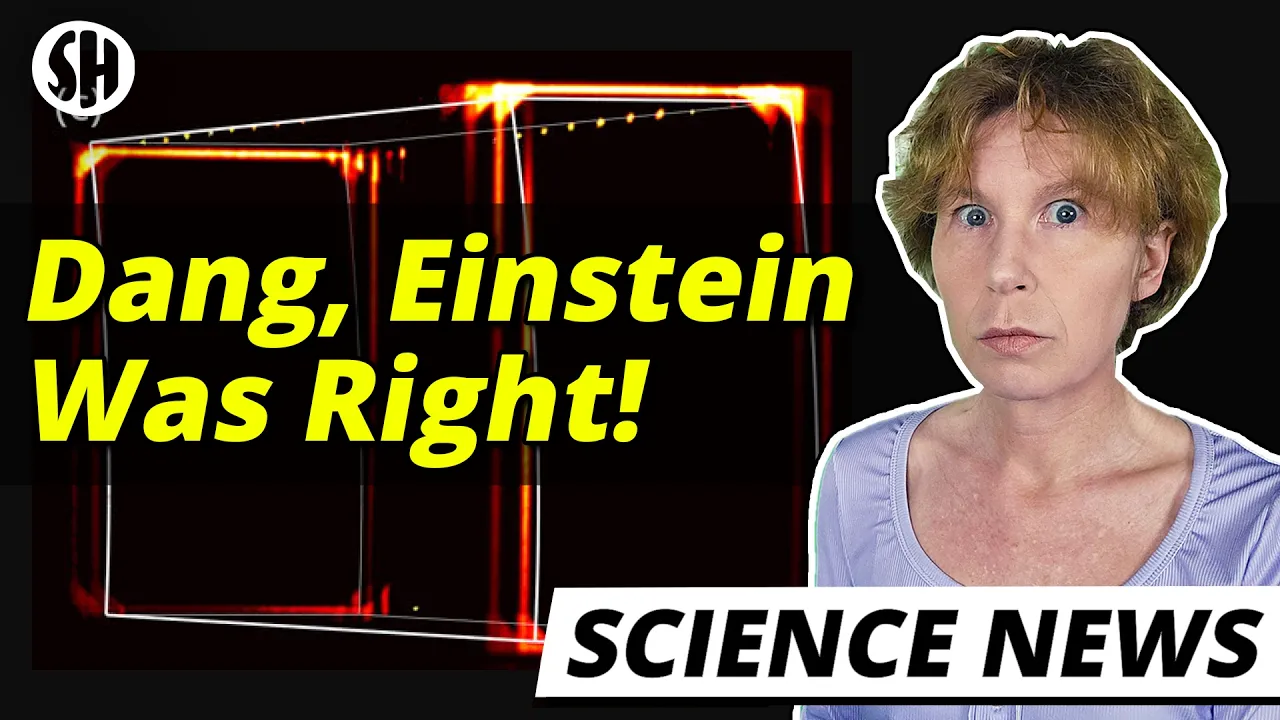






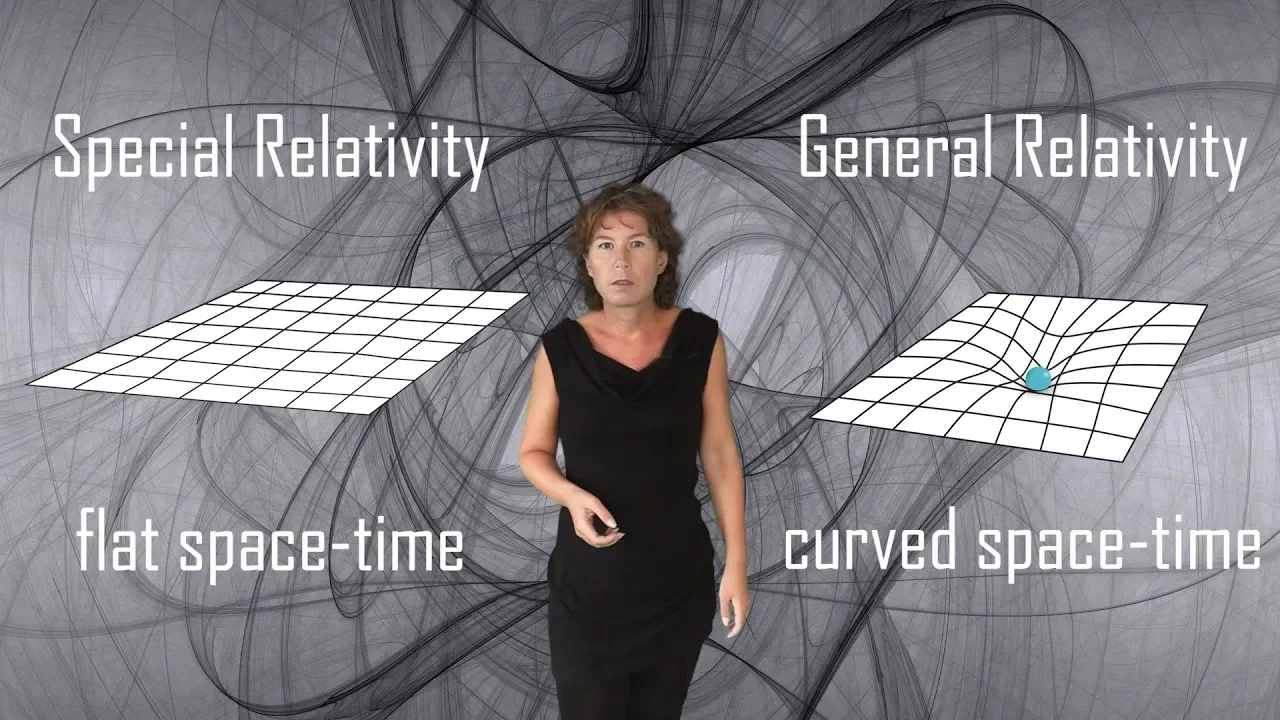
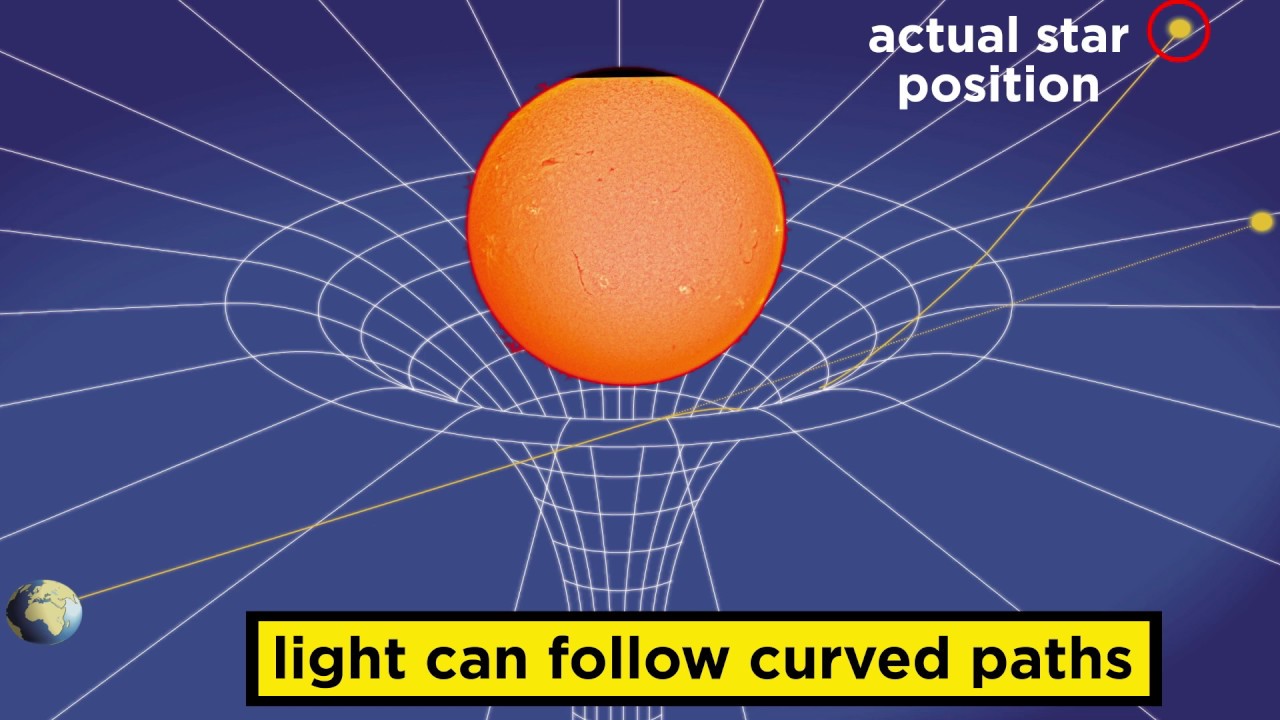
When traveling near the speed of light, several relativistic effects dramatically alter visual perception: the Doppler effect shifts colors (red light appears green at 25% light speed), relativistic aberration concentrates light from the front and dims the rear, and length contraction creates optical illusions where objects curve away and rotate toward the observer rather than appearing flattened. These effects demonstrate that what we see is not always what is objectively true, as different observers moving at different speeds perceive the universe differently according to Einstein's theory of special relativity.
Visual Effects of Near-Light-Speed Travel: Relativistic Optics
Added:Einstein's Special Theory of Relativity, specifically the constancy of the speed of light and the concepts of time dilation and length contraction.
The classical Doppler effect for sound and light waves, including how relative motion affects frequency and wavelength.
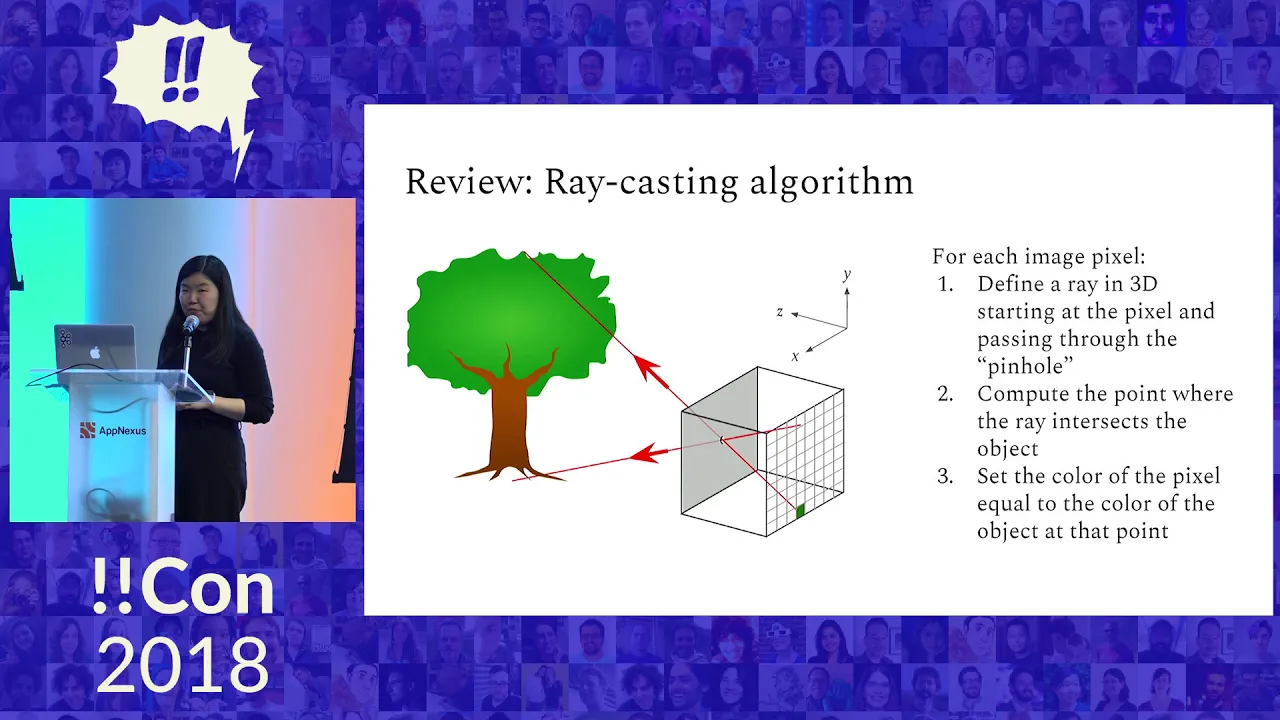
Basic principles of geometrical optics, particularly how light rays propagate, focus, and define an observer's field of view.
The structure of the electromagnetic spectrum and how the human visual system perceives color based on light wave frequencies.
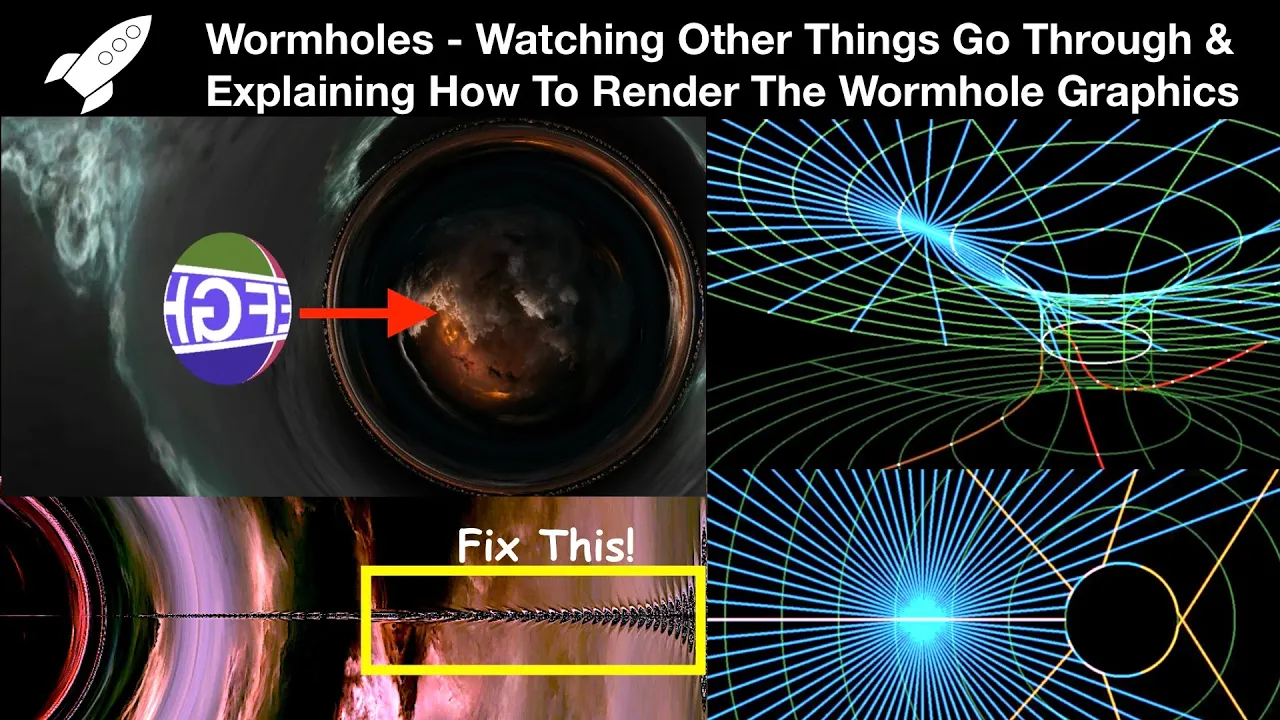
Relativistic ray tracing and the computational methods used by astrophysicists and VFX artists to simulate near-light-speed environments.
The Terrell-Penrose rotation effect, which explains the mathematical proof of why relativistic objects appear rotated rather than simply contracted.
Relativistic beaming (or synchrotron self-absorption) and its critical role in observational astrophysics, such as analyzing active galactic nuclei and cosmic jets.
General Relativity and gravitational lensing, shifting from flat spacetime visual effects to those caused by massive gravitational fields.
267.8K views8.5Klikes16:15Original Release: 2022-01-10
This video is sponsored by Brilliant. Stay tuned to the end for a special offer for Arvin Ash viewers.
When most of us see the world around us, we see it in a myriad of different colors. Eyesight is the most dominant sense that most humans have. But this light that we can see is just a tiny fraction of all the electromagnetic waves present in the universe - the part where the electromagnetic wave has a frequency between 4.3x10^14 Hz to 7.5x10^14 Hz. This spectrum also contains any other imaginable frequency - for example light that we can’t see, such as radio waves, microwaves, infrared light, ultraviolet light, x-rays and gamma rays. Light is energy in the form of an electromagnetic waves governed by this simple energy equation, where E is the energy, h is Planck’s constant and nu is the frequency, or how fast the wave oscillates in spacetime. The electromagnetic waves that we can see are nothing special, as this simple energy equation states. All the different wavelengths are basically equivalent, except for the fact that waves with higher frequencies are more energetic. In principle that’s it. The speed of all these electromagnetic waves, however, is special. All light is made of massless objects called photons. Photons happen to travel at the maximum speed allowed in the universe, as do all massless objects. The universe has set an upper limit to the speed with which information can flow from one part of the universe to another. A finite limit on the rate of information transfer assures that causation is preserved in the universe. And that's the speed at which light travels.
Einstein showed that we live in a relativistic universe, where the world can look very different as you approach this maximum speed, and depending on how fast you move compared to another person. We don’t see this world because the speeds at which we travel, say on a car or airplane are very low compared to this maximum speed. But what would happen if this maximum speed was closer to the terrestrial speeds that we are used to, or equivalently what would we see if we traveled much closer to the speed of light. Well we would enter a universe that would be very strange where thing would appear not as they are when we are standing still. What would we see?
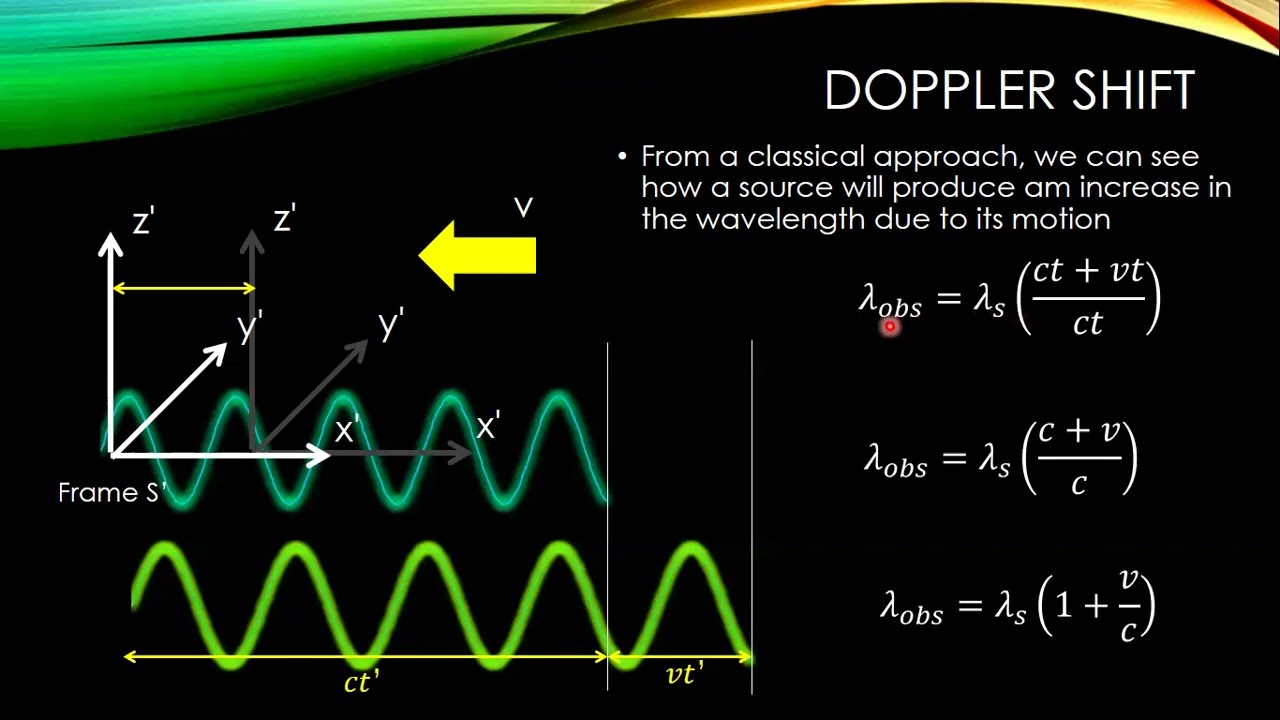
And why would things appear this way? That’s coming up right now… You have probably heard an ambulance or fire truck drive by outside. As it approaches you, the siren makes a high pitched noise, but after it passes you, it changes to a low pitched noise. Why is that? Sound is mediated through the air, at a finite speed. As the siren sounds, it sends out a circular wavefront. But because the emergency vehicle also moves, each wavefront is sent out from a different position as it’s moving. This means that the wavefronts get packed together towards the direction of movement. This results in a higher frequency wave – so you hear a higher pitched sound. Similarly, the wavefronts get further apart in the opposite direction. This results in a lower frequency, or lower pitched sound. The sound waves are simply stretched in the backwards direction and compressed in the forward direction. The resulting frequency is higher up front, and lower in back. This is called the doppler effect. Even though the source of the noise is not changing, it sounds different because that source is moving relative to you, the observer. Something similar happens with light, but on much larger scales. Because light is a wave just like sound, it works in a very similar fashion. But this doppler effect is only noticeable as the source of the light compared to the observer, approaches very high speeds. We don’t see it on earth because our everyday speeds such as driving or flying is a tiny fraction of the speed of light. But we see it in cosmos. If we were to look through a powerful telescope, we would see that most galaxies are redshifted, thus the wavelength is stretched, just like when the ambulance is moving away from you. Similarly, this redshift happens because the galaxies are moving away from us. Now, I should mention that while most galaxies are redshifted, a few are moving towards as well, that are blue shifted. This is called the relativistic doppler effect, and it happens thanks to relativity. We don’t notice this at terrestrial speeds, but what if we could build a superfast spaceship to travel close to the speed of light? In this case a lot of interesting things will happen, as this relativistic doppler effect will actually start to change how you see the world compared to person who is not moving! What would you see? Well, as I mentioned, light is a wave. And our eyes and brains have evolved to interpret light waves of certain wavelengths as the colors that we a familiar with. Thus, if we have a light wave with a frequency of 4.3x10^14 or a wavelength of 700 nm, then our brain interprets it as red light. But, let’s say you are travelling in a spaceship, and there is a traffic light in space. Maybe it’s a very busy strip of space. If you approach it slowly, you would see the stop light normally. But what if you’re going very fast approaching it at a significant fraction of the speed of light, let’s say 20%? What should you do if you see a yellow light? The correct answer is, stop. Why? Well, what happens is that if you’re moving 20% the speed of light, the colors you see would be different than the colors standing still. The red light from the traffic light will actually look yellow to you, as you approach it. Your eyes are still the same. The light source is still the same. But the relativistic doppler effect changes what you see. We can calculate exactly what color light you would see by using this formula: Where lambda r is the wavelength of light we see, and lambda s is the wavelength of the traffic light for someone standing still. Beta is your velocity divided by the speed of light. Lambda s would be 700 nm, in this case, which corresponds to red light. If we plug in the numbers, we find that lambda r is around 572nm, which corresponds to yellow light. But since it’s red to the stationary observer, you should definitely stop. Something even more dangerous would happen if you approached the traffic light just a little bit faster - 25% the speed of light. Lambda r in this case would be 542nm, which corresponds to green light. So the red stop light would look like a green go light! Now what would happen if we passed the traffic light at the same 20% the speed of light? How would the red light look from the rear window? We can use a similar formula to figure out the color of the traffic light we would observe from the back window: The equation is the same but the signs change. Lambda r in this case would be 857 nm, which is in the infrared range. So in this case, we would not see the red light at all, because our eyes can’t detect infrared light. So the traffic light would just appear to be non-functional or broken. In a similar fashion, some of the low energy infrared light that is naturally present in the universe, but invisible to the stationary observer’s eyes, would now appear to be colorful to the moving observer on the spaceship, because just like red light shifts to higher frequency yellow and green, infrared would shift to the higher frequency visible light spectrum. Likewise, natural high energy ultraviolet light which is also invisible to the stationary observer, would shift to the visible range if we were to view it from our rear window. So we might see unexpected objects and colors both in front and in back our spaceship. Things that were invisible to us before could now be clearly seen from the spaceship. This doppler effect is however only ONE of the weird things that would happen as we move at speeds close to the speed of light. Another strange effect you would see looking out of the side window of the spaceship is what is called relativistic aberration, or the "searchlight effect." When looking out of the side window of the spaceship, you would not only see the colors distorted, but you would also notice that the light is bright towards the direction of motion, and less bright away from the direction of motion. This might initially seem strange, but here’s why it makes sense. Light intensity is literally just the number of photons hitting your eyes, and if you are going very fast forward then you are racing into more photons. So naturally as you hit more photons in the forward direction, things will appear brighter! On the other hand, behind you, you are racing away from photons, so things appear dimmer. But there are even weirder effects that you would experience because Einstein’s theory of special relativity shows us that things like length and time are also different for a moving observer, compared to a stationary one. So moving at 60% the speed of light, time will slow down for you compared to a stationary observer, but you will not experience anything different. From your frame of reference, time will tick for you on the space ship just like it does on earth. Moving at 60% the speed of light though, what is 1 meter for a stationary observer is only going to be 80 centimeters for the moving observer according to this equation. This is called length contraction. This should mean that at these speeds, you should start to see objects more squished together. And this is in fact what’s happening. However, this is not what you will see. Instead, what you see is objects curving away from you, and rotating towards you. So if you were traveling at relativistic speeds in a car for example, the buildings would rotate slightly and curve away from you. The reason this happens is because the photons from the front of the building are reaching your eyes earlier than the photons in the back of the building, so you see it curved. This is an optical illusion. the object in fact contracted but you don’t see it that way. This time difference of photons from different part of the object reaching your eyes also means that in space, spherical objects like earth don’t appear squished like a pancake, even though they are contracted. But they remain spherical-looking. The only difference is that at relativistic speeds, they will appear rotated towards you, so that you begin to see the side and back of the sphere. This is not something that would happen at slower speeds. This is again an optical illusion, because the reality is that the object is in fact contracted. You just don’t see it that way. What you will experience though is that distances are reduced, so for example, a trip to Proxima Centauri, the closest star to us, which is 4.5 light years away, will only be 3.6 light years away. The interesting thing is, however, that even though things would be closer to you, they would not appear that way. They would actually look farther away when you viewed them from your front window. Likewise looking out the back window things will appear to be a lot closer. This seems to be a paradox. Shouldn’t things look closer in the front window since there is length contraction when moving so fast? Here’s the simplified explanation for that. Let’s look at what’s happening on this on this graph. B is our spaceship. The angle theta represents the angle of a photon reaching you on the spaceship. But as the spaceship moves faster, length contraction in the direction of motion means that the length on x- axis becomes shorter, so the angle theta becomes larger. Another way to put this is that, you would view the photon from the side of the ship as being in front of the ship. In fact, all the light from the side and even behind the ship would shift forward. This effect becomes greater and greater as the ship moves faster and faster, shifting more and more of the light from the side and behind the ship to the forward direction. We can illustrate this with a circle. If you are in the middle on the spaceship, for the case where you are not moving, photons reaching you from all directions would be the same angle. There is no length contraction in this case. Now as you start moving towards the speed of light, this changes so that you start seeing things that are behind you in your forward view. This means that your field of view increases in the direction of movement and decreases behind the spacecraft. And this effect becomes even more pronounced As you get closer to the speed of light.
This does two things. It make things look crooked or warped, as if you are looking at things through a wide angle lens on a camera. And the other thing that happens is that since the entire field of view from the side and the back of the ship now shifts to the forward window, in order to fit in the field of view, everything looks smaller. This causes the optical illusion of things being further away. But you have to remember that this is only an optical illusion because in reality, length contraction will have caused things to be closer to you, contrary to how it appears. Looking forward in the spacecraft would be like looking through a fisheye lens and looking out in the back would be like looking into a zoom lens. The lesson here is that the universe is truly relativistic. What you see at terrestrial speeds in your everyday life is nothing like how the universe would look if you were moving very fast. Not only would you see different colors, but things that are invisible to you now, would become visible. Time, distances, angles and views would all be different and bizarre. This calls into question, what is really true? Is there an objective reality? You may argue that objective reality is what we would see with zero movement. But what is zero movement? Everything on earth and the universe is moving relative to something else. There may be aliens living on planets moving very fast around a super heavy star? Time and light would be different for them – but they might think of that as their objective reality. If in the future, we develop the technology for interstellar travel at close to the speed of light, then the world I described in this video would be the objective reality of any humans born or brought up in those ships. There is no absolute objective reality in the universe. What’s really true is that everything is relative. If the subject of light fascinates you and you want to learn more, you’re going to love a course available on Brilliant, today’s sponsor, an interactive stem learning platform.
It’s called “Waves and Light.” What’s great about this course is that it walks you through the science of waves intuitively. For example you’ll learn how they travel and interact in things that you are already familiar with, like musical instruments and ropes. This course is particularly insightful because it helps you realize that everything you see and hear is based on information contained in waves. And Brilliant makes easy to retain more information because as you study new concepts you take fun interactive quizzes, And get to truly learn the material by doing it yourself.
Brilliant has a special offer for Arvin Ash viewers right now. If you are among the first 200 people to click the link in the description, you will get 20% off your subscription. If you haven’t tried Brilliant already, this is a great opportunity to start. So be sure to click the link in the description.
And if you have a question for me or any of the other viewers, please leave them in the comments section.
I'll see you in the next video my friend!
Up Next

12:58
Visualizing Special Relativity: Slowing Light to Walking Speed
@TheActionLab
3M views•2020-08-13

12:53
21cm Hyperfine Transition in Neutral Hydrogen: Radio Astronomy Basics
@AaronRobertParsons
12.4K views•2011-10-13
13:19
Why Is the Speed of Light Constant? Maxwell's Equations Explained
@ArvinAsh
2M views•2020-03-25

27:14
Entropy and the Second Law of Thermodynamics Explained
@veritasium
27.5M views•2023-07-01
Related Study Plans & Knowledge Roadmaps
Structured learning paths in Physics
physics
Nuclear Physics (Decay, Fission & Reactors)
01Atomic Structure and the Binding Force
02Radioactive Decay and Half-Life
03Nuclear Fission Mechanics and Chain Reactions
+ 2 more learning modules
12h5 modules
Explore Roadmap
physics
Soft Matter (Polymers, Colloids & Rheology)
01Foundations of Soft Matter & Thermal Forces
02Polymer Physics and Macromolecules
03Colloids, Surfactants, and Self-Assembly
+ 2 more learning modules
38h5 modules
Explore Roadmap
physics
Analytical Mechanics: Lagrangian & Hamiltonian
01Mathematical Foundations: Calculus of Variations
02From Newtonian Mechanics to Constraint Dynamics
03The Principle of Least Action & Lagrangian Mechanics
+ 3 more learning modules
28h6 modules
Explore Roadmap
physics
General Relativity (Spacetime & Cosmology)
01Foundations of Relativity: Special Relativity
02The Geometry of Spacetime: Equivalence Principle & Curvature
03Einstein's Field Equations: The Mathematics of Gravity
+ 2 more learning modules
55h5 modules
Explore Roadmap