











![#VANILLA 30 | TREM INTERCIDADES CONECTANDO A ILHA [Cities: Skylines 2]](https://i.ytimg.com/vi/2fsR5l4mc20/maxresdefault.jpg)





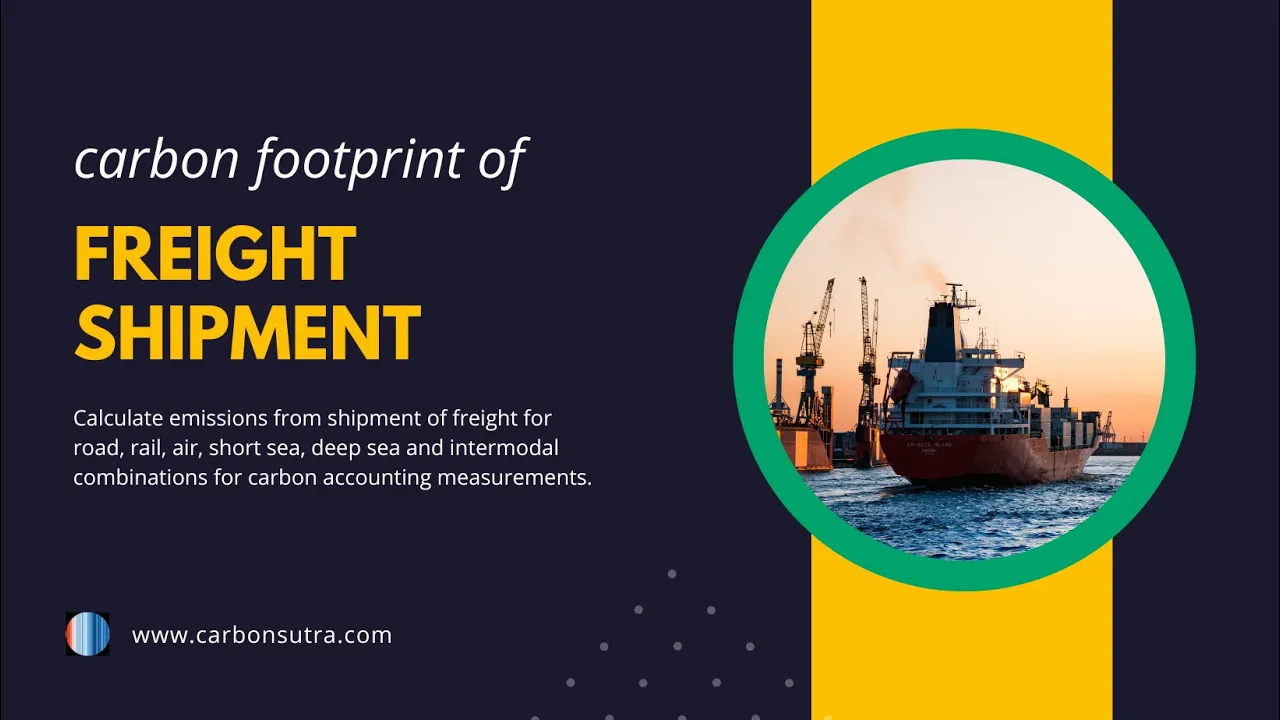
Intermodal rail transport significantly reduces carbon emissions compared to road freight, with studies showing up to 85% CO2 reduction; this is achieved through higher cargo capacity per locomotive (38 units vs. 1 unit per truck), lower energy consumption from electric traction, reduced friction between wheels and rails, and favorable grade limitations (max 6% vs. higher road grades). The technology enables all trailer types to be transported by rail without requiring significant infrastructure modifications, making it accessible to shippers of all fleet sizes through flexible booking systems and open train services.
Intermodal Transport: Cutting Freight Emissions and Costs
Added:Fundamentals of Logistics and Supply Chain Management: Understanding how goods are distributed from origin to destination across different modes of transportation.
The Concept of Containerization: How standardized ISO containers revolutionized global trade by allowing cargo to be transferred across ships, trains, and trucks without unpacking.
Carbon Footprint Metrics in Freight: Understanding how greenhouse gas emissions (specifically CO2) are measured, such as emissions per ton-mile or ton-kilometer.
Basic Modes of Freight Transport: The operational, cost, and capacity differences between road freight (trucking) and rail transport.
Synchromodal Logistics: Learning how real-time data and AI allow supply chains to dynamically switch transport modes based on cost, emissions, and transit times.
Last-Mile Delivery Optimization: Analyzing the environmental and economic challenges of the final leg of delivery, which remains highly reliant on road transport.
Infrastructure and Intermodal Terminal Design: Studying the logistics, technology, and engineering behind modern rail yards and sea-to-rail transfer terminals.
Environmental Policy and Carbon Pricing: Exploring how government regulations, carbon taxes, and ESG (Environmental, Social, and Governance) mandates incentivize companies to adopt intermodal transport.
13.7K views19likes21:10Original Release: 2024-07-08
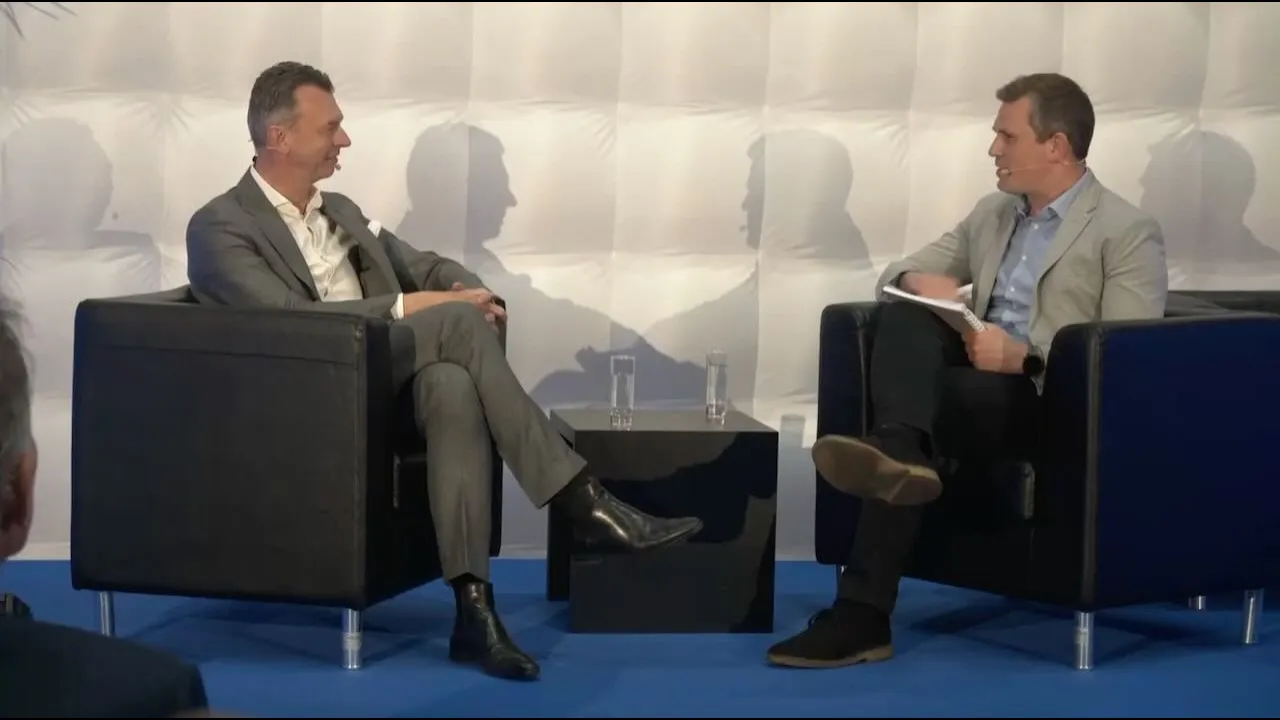
[Music] hello everyone welcome to responsible Logistics podcast our today's guest is Alexander corn boom managing director sales and business development at carob Beamer welcome Alexander hi thanks for having me would you like to tell me a little bit more about uh what you do at carob Beamer for sure so cargo Beamer is a multimodal transport operator uh we have a primary mission to decarbonize the roads of Europe VIA Rail transport uh to do this we have our primary technology which is our special wagon to take all trailer types off the road onto Rail and our special termin terminal technology to rapidly shift with low noise and low energies the trailers from road to rail in our terminals I saw on the cargo Beamer website that uh you're able to save up to 85 5% of uh emissions CO2 emissions yearly um so I would like to ask you how is it possible like what is it what is it you do what is it made of how is it possible to save uh 85% of emissions for sure so we save the emissions in a few different ways uh so we're comparing here a full train Transportation uh versus truck on a unit basis so a full train can of course take 38 units per locomotive not just one unit per truck trailer uh the locomotive is using electricity right we're not using uh diesel to pull our locomotives the Energy Mix uh that we're using for our locomotives is also sustainable in most cases so depending on the energy mix for example in France we're saving 90% CO2 versus Road uh in Germany and Italy we're saving roughly 80% so those are our primary operating countries at the moment the average of that going to 85% CO2 reduction uh we also have some Physics that are playing in our favor here when we look at uh locomotives versus trucks uh the metal friction that we have between the train wheel and the rails has Le less friction than Tire to road we also have um less grades when going uphills right so the rail are really up to a maximum of a 6% grade and the roads can be much higher than that regarding the electricity you mentioned that um there is a difference traveling in different countries maybe you could explain a little bit like what is that difference and what where is the energy coming from for electric trains yeah so the energy uh component is basically coming from the Natural Energy Mix of those companies countries uh so in France we have uh primarily nuclear energy uh which we look at as a sustainable source that creates the 90% outcome in Germany we have a high component of wind and solar however uh there's still a coal component occurring in Germany which leads us to the 80% number there so it really depends on the energy mix of each country uh that provides our locomotive with energy uh as I said in France we have the highest CO2 savings this is primarily due to their High use of nuclear power which we view as a green Source uh in Germany we have solar and uh wind as our primary sustainable sources uh but we also have a coal component there and natural gas component as well uh which lowers the savings slightly to 80% but overall we see a very positive uh savings rate regardless of the energy mix okay then maybe you could uh give a rough estimation or an example of how much uh CO2 cargo Beamer saves every year with um sustainable energy resources and also with the basically in environmentally friendly transport yeah so in 2023 cargo Beamer saved 30,000 tons of CO2 that's the equivalent of planting 2.4 million trees right so we're really uh having a an option here for CO2 savings that is available now uh does not require any large additional Investments uh and create can create CO2 savings across the value chain of any company that decides to shift their supply chain to Intermodal that sounds impressive 2.4 million trees okay um you mentioned that there is no additional investment needed that's um basically because shippers would have to ship anyway right but they can just use the alternative route correct so logis is an an integral part of our our society and of the way companies operate so Goods will have to go uh from a Tob what cargo Bea really strives to do is create a very low barriers to entry scenario uh for all logistics companies uh and their end customers the shippers to activate their supply chains to rail right and how do we do this uh we do this with our special wagon that can really take all types of trailers 70% of the current road Fleet does not have uh the cranab ility points for the majority of the current rail network so we're really providing an option for all the trailers on the road right now without forwarders or shippers having to make any significant Investments uh in their Logistics infrastructure then maybe you could elaborate a little bit more about um uh types of trailers that carob Beamer deals with uh and also with the types of cargo that it's possible to transport via Intermodal rail network yeah so I think that's the the great thing about our service is we really can take all trailer types uh on our Network and really all types of loads right from very fast Transit time to high value to dangerous goods this is all possible with our service right so if we look at an onboarding scenario a freight forwarder comes to us we do a rapid onboarding we check the Safety and Security of their units we verify the load types we take special precautions if necessary but overall we can onboard a new carrier uh in 2 or 3 days give them the Baseline for operating and bring them on to inter modality without any big barriers okay so then um you work directly with the carriers right that's correct so we operate really as a a service for any Freight forwarding entity that has their own trailers right so anyone that has trailers they can bring them to us uh they organize their own Trucking on either end of a rail line create the end to- end service and we provide that rail uh option replacing that long truck leg that produces so much carbon okay this question might be on the tricky side but um may ask you how do you ensure security when cargo Travels by Road for example it if um it's a low value cargo then it's one thing but then if it's a high value cargo then it gets a bit trickier so maybe you could comment a little bit on this for sure so in general uh the highest risk moment that we have in our value chain is when the trailer is parked at the terminal uh in order to guarantee security we do full due diligence with the freight forwarders to maintain custody of the goods throughout Transportation right this can include a special fence area with motion sense lighting and uh guards this is something we've already implemented uh in all of our terminals to maintain the security in those locations um while the train is in transit we generally have a very lowrisk situation especially when using box trailers as geara does um but if a train stops in transit for long periods of time we have people that come and watch the train uh while it's stopped but overall the incidence is extremely low especially considering the strong security mechanisms that many Freight fers are using uh in their locking devices that we have today speaking about Partnerships and uh companies that you work with uh I just um I imagine that this is the way it works that uh it's not possible to just decide today that you want to ship by rail so you have to have some uh agreements and uh perhaps you need to book some have some reservations in advance so I would like to ask if if there is any difference of um like Fleet size or the uh size of the company that can ship by Rail and whether it's um maybe more beneficial for certain companies to um or easier easier access for larger companies to intermodel ra rather than the smaller companies yeah I think that's a a great point and and that's a unique thing about cargo Beamer is that we really want to appeal to all Fleet sizes right whether you have 10 trailers or uh 10,000 trailers cargo Beamer wants to be the option for for every carrier in the market right and the way we do that um is with a very low friction online booking system we operate open trains with no risk and the units can be canceled up to 4 hours before departure Could you um explain what is the open train open train essentially means uh there's no single customer blocking slots they are available for free booking just as if you were booking a flight uh on the internet right and so what does that lead to it leads to a concept that is not really based on the old ways of running trains with extremely long uh loading times and you know the necessity to book fixed placees far in advance the concept really is made to be a road replacement right so from a from a freight forwarder perspective we really want it to be a seamless experience dropping the trailer letting the trailer run on rail picking it up similar to as if it was running on the road right so as low friction as possible ease of booking and Speedy on boarding that actually sounds great uh especially that carriers are able to save so much emissions with the uh rail Transportation but at the same time um maybe here I would like to cover the challenges of Road Transport because uh I saw again on the cargo Beamer website that there are a few fixed Lanes so I imagine if something happens with one rail um for example a tree falls on the rail and uh or someone else or something else happens to the rail then it's harder to um adjust so maybe you could speak a little bit about the infrastructure challenges and maybe some issues in general you face yeah so certainly in Europe we are faced with uh certain challenges when it comes to the updating working and uh overall viability of the rail infrastructure um it is challenging however we really look at our concept in a holistic way and work around the challenges that exist right so I think you know the first thing that we do is run a high frequency service right on our main line from uh Germany to it Italy we run up to four trains per day that means if we have a cancellation uh prior to departure generally the unit is M able to move in a few hours after that on the next train right so we don't have multi-day delays we really can keep our next day arrival Promise by putting them on the next uh departure for those high value Goods right the other piece is is having strong uh agreements and contracts with our locomotive providers that have been in the business for a long time and understand uh the detours that are available uh should tracks become blocked right and have the ability also to deviate to other Terminals and unload should tracks become blocked for a longer period of time right uh that being said you know the primary thing we look at is delays prior to departure and being able to redirect those rapidly and in a customer Centric way uh delays in transits luckily are not a huge problem at the moment once the train is running and has accepted its path uh It generally is getting to its destination in in a good way what about the infrastructure uh development um is it challenging if you're planning on a new route for example to open a new route and then um I imagine it it it must be a little bit more complicated than opening a new route with a truck you know because it's it might may be a bit more flexible to move by road yeah so certainly it it takes a certain uh planning Horizon uh to do this right generally uh to get the good stable tracks right on the on the yearly schedule uh one has to request these a year in advance to have a good quality service and in the end that's the service that cargo Beamer is providing right we are operationalizing these trains and selling them to the market and providing the service along with our wagons um to really create that high quality yet FR frictionless opportunity to activate um another question I have is related to digitalization because um judging from G's perspective we put quite a high emphasis on digital Solutions because they really do help to optimize roots and therefore uh save time expenses cost in general and also um Human Resources let's say because some task can be automated uh which means that um people can focus on more important task or more strategical task let's say so um is it the same case for cargo Beamer like are you putting emphasis on digital Solutions do they help you in your uh operations yeah definitely I would say cargo Beamer is on the Forefront um of digitalization in intermodality we have our in-house uh built booking system where carriers can enter all manner of uh data whether it be unit type unit weight uh and the goods transported uh they're also able to see the trains in transit as they are running to really be a part of the transportation and integrate that into their own track and Trace activities uh and then also get updates should operational changes occur while the train is in transit uh we also oper offer the opportunity to um connect directly with a carrier uh TMS to offer that uh information in real time so basically Integrations between um car Beamer and client system correct right I would also like to ask about the European regulations in general coming back to sustainability topics um is that also the case that you um will have to uh decrease your emissions according to European green deal and uh csrd that will take place soon yeah so the overall goal for for Europe right now is uh 30% by 2030 shifting 30% of truckloads to rail by that point uh cargo Beamer is fully committed to providing the infrastructure to allow all parties involved to reach that goal right so that's part of our growth strategy uh we don't want to only focus on the lanes that we currently are running uh we're definitely looking to expand uh in the on East East West axis and further in Germany and Italy going forward um you know I think the the important point to also mention here is uh when this sustainability reporting uh comes around next year uh where really emission savings have to be shown at the source not only through offsets intermodality and specifically the system that cargo Beamer provides uh is really the best way to do this with no investment and no incremental cost to the current logistic systems already running right and uh that's a really significant thing considering that the savings are 80% of CO2 versus truck right so um we really are are working with our freight forwarding customers to provide the construct to allow shippers to shift here and uh integrate the sustainability planning and Logistics planning into a holistic uh and you already mentioned about the development that is planned for Germany and Italy so maybe speaking about the future um how do you see the future of rail transport um especially from the perspective of as you mentioned Logistics and sustainability and maybe also some plans of cargo Beamer that you're willing to share yeah I think starting next year we really see more and more pressure uh coming on our system and so we're really planning to grow to meet the demand demand um a big part of capturing that demand will also be developing terminals throughout Europe right so the Intermodal terminal uh is the second integral part to the value chain that activates intermodality um so this is where we work with um with carriers like youra to understand what is the topology and where are new terminals needed right and a big part of of cargo Beamer again is building these new terminals with our special loading system that perfectly pairs our wagon uh that activates all trailer types with the terminal technology that is very low noise and low energy to create good outcomes for communities um and good outcomes for carriers and how do you uh what are the some of the criteria you consider when choosing the place for the terminal yeah so generally we look at the the topology of of European Logistics the primary loading and unloading locations uh and draw a circle around that of up to 250 km uh to capture that Demand right and I think that's a unique part also of cargo Beamer terminals is that we are trailer Centric right we're not operating with old processes that require container stacking and a lot of time to to find units and a lot of time where drivers are waiting at the gate to pick up their units we generally can get the driver in and out in 20 minutes and that allows more efficiency per truck day and per driver day as that driver continues his uh tour dropping and picking up units right so that's a big part of what we're doing that rapid terminal operation allows for the extension of the radius that that driver is able to go within his duty time mhm and what are your expectations for the future then and maybe some hopes as well for sure yeah I mean we really want to continue to grow our network uh in line with the EU aspirations of Shifting 50% of Road transportation to rail by 2050 uh this will also involve uh going into shorter distances and domestic distances whether within Germany uh within Spain within Italy uh to really get that to the right place right and we also hope that the necessary invest ment is made into the rail infrastructure to allow for the tracks to be the highest possible quality to meet the expectation of both Freight forwarder and shipper okay then I wish you luck with this journey I hope it takes place in the nearest Future and thank you Alexander for being here with us today and for the discussion thanks so much it was great speaking with you I would also like to thank our listeners for joining us for today's episode if you would like to learn more about sustainability I invite you to visit our website and follow us on social media I'll see you next time
Up Next

63:02
ESG & Sustainability Reporting: Frameworks, GRI & Best Practices
@clearstreamsolutions1842
97.3K views•2022-05-03

12:54
Triumph of Orthodoxy Icon: Byzantine Art & History Explained
@BenCallan
2.1K views•2024-08-06

9:49
FastAPI vs Flask vs Django: Choosing the Right Python Web Framework
@TechWithTim
302.5K views•2024-05-26

1:42
Game of Thrones Opening Credits: A Cinematic Analysis
@gameofthrones
46.3M views•2011-04-18
Related Study Plans & Knowledge Roadmaps
Structured learning paths in General & Interdisciplinary Studies
general-studies
Elevator Engineering: History, Physics & Cities
01From Hoists to Safety Brakes: The Dawn of Vertical Lift
02Hydraulic vs. Traction: The Engineering Physics of Elevators
03Modern Speed, Safety, and Algorithms
+ 2 more learning modules
12h5 modules
Explore Roadmap
general-studies
Rubber: Material Science, History & Geopolitics
01Origins of Natural Rubber & Mesoamerican History
02The Chemistry of Natural Rubber & Vulcanization
03The Geopolitics of the Rubber Boom & Colonization
+ 2 more learning modules
12h5 modules
Explore Roadmap
general-studies
Containerization: Evolution, Logistics & Trade
01Ancient Trade & Bulk Cargo: Amphorae to Barrels
02The Industrial Revolution & Cardboard Packaging
03The Containerization Revolution: Malcom McLean
+ 2 more learning modules
12h5 modules
Explore Roadmap
general-studies
Textile Tech: Evolution, Labor & Global Impact
01Pre-Industrial Textiles: Handloom & Cottage Industry
02Mechanization: The Spinning Jenny to the Power Loom
03The Factory System & Global Labor Transformation
+ 2 more learning modules
10h5 modules
Explore Roadmap