














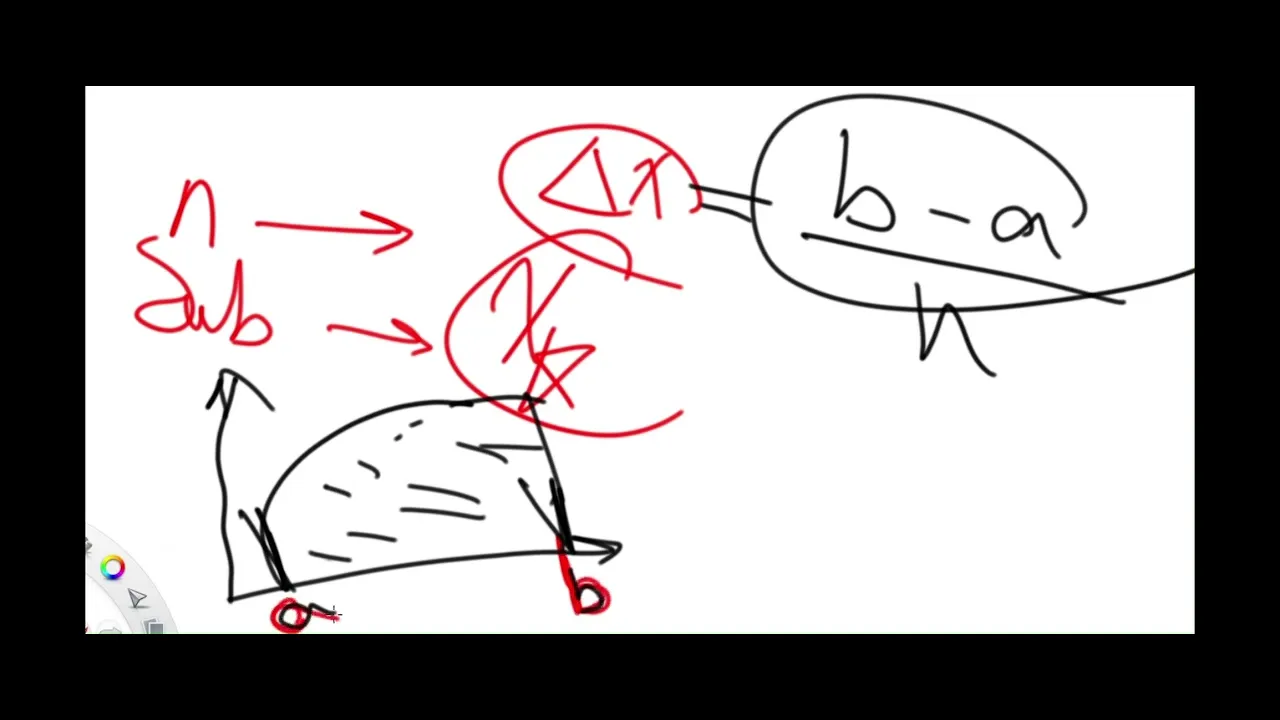
![[UT#1] Comprendre les sommes de Riemann (L'idée)](https://i.ytimg.com/vi/R6ge0QBu3Nk/maxresdefault.jpg)


![CNUM-022 Relembrando a Soma de Riemann [Integração Numérica]](https://i.ytimg.com/vi/LT4xdi4mNyE/hqdefault.jpg)


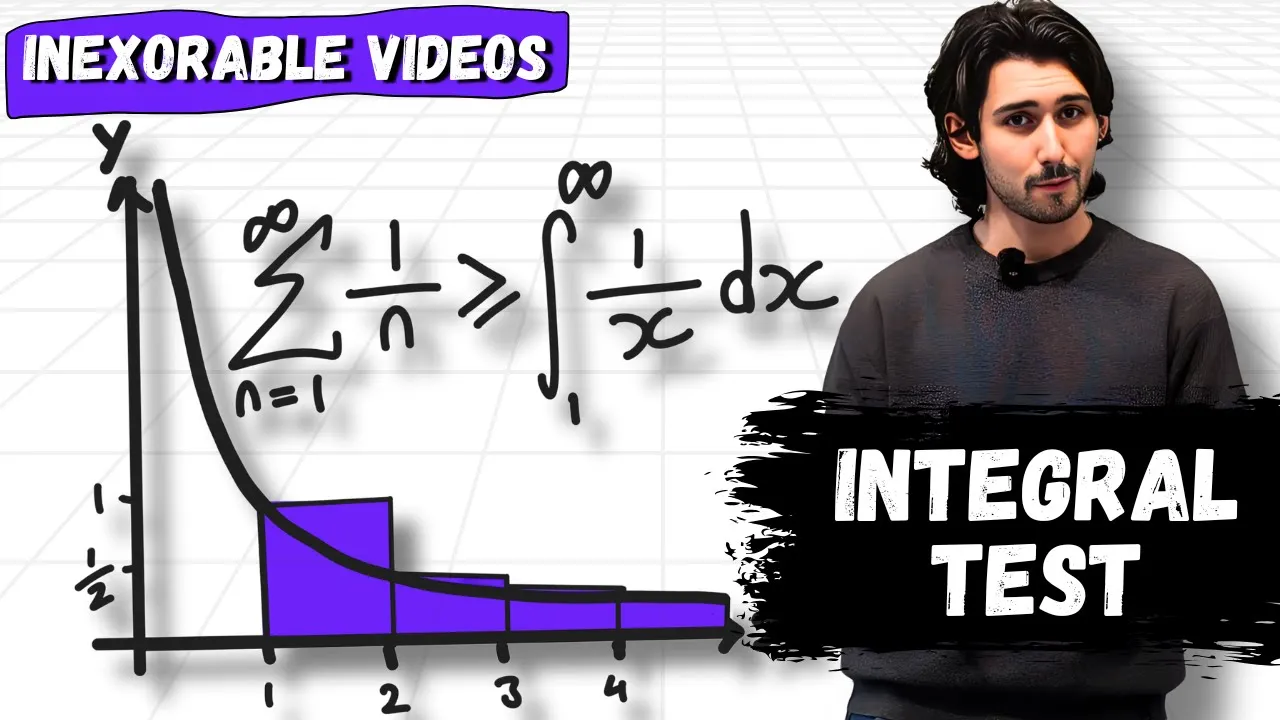

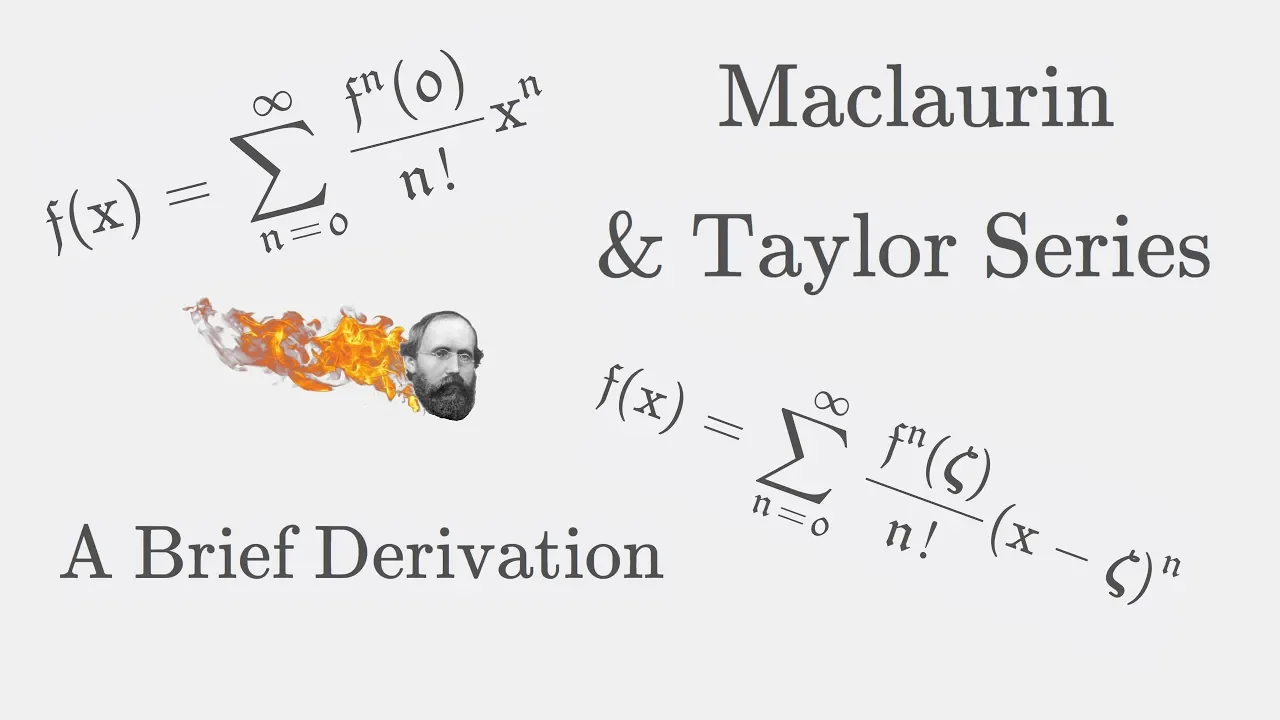
![[고딩 버전] 테일러 급수 | 초월함수가 다항함수?!](https://i.ytimg.com/vi/YHl5jqL-yZA/maxresdefault.jpg)

![[멱급수 전개 (개념 및 예제풀이)] 테일러급수 & 매클로린급수](https://i.ytimg.com/vi/WYicw5Z_vKQ/maxresdefault.jpg)


Sigma notation (Σ) is a concise mathematical shorthand for representing the sum of a series, where the Greek letter sigma indicates summation, the index variable (such as i, k, or j) represents the term being summed, and the lower and upper limits define the range of summation; for example, Σi from 1 to 5 equals 15, and Σi² from 1 to 6 equals 91, with special formulas available for common series like the sum of integers (n(n+1)/2) and sum of squares (n(n+1)(2n+1)/6).
Sigma Notation in Sequences and Series | Engineering Math Basics
Added:Understanding the difference between a sequence (an ordered list) and a series (the sum of a sequence).
Familiarity with arithmetic and geometric sequences, including how to find their general terms.
Basic algebraic skills, including factoring, expanding expressions, and working with variables and subscripts.
Familiarity with function notation, particularly evaluating formulas for given integer values.
Proving standard summation formulas (such as the sum of the first n integers) using Mathematical Induction.
Understanding Riemann Sums as a precursor to the definite integral in Calculus.
Studying infinite series and applying convergence tests (e.g., Ratio Test, Integral Test) to determine if a series sums to a finite value.
Exploring Taylor and Maclaurin Series to represent transcendental functions as infinite polynomials.
Applying summation techniques to engineering applications, such as Fourier Series and discrete-time signal processing.
290 views0likes7:30Original Release: 2020-10-18
often mathematical formula require the addition of many variables summation of sigma notation is a convenient and simple form of shorthand use to give a concise expression for a sum of the values of a variable welcome to mathematics of engineering [Music] the simple definition of summation notation is a concise way of representing the terms in a series summation notation is also called sigma notation denoted by the greek letter sigma it is with the same principle of using s when computing the summation of terms in a sequence s is 4 sigma with the greek letter is the index of summation i but other variables are also used like k j and so on below sigma shows the lower limit or the initial index and that above is the last index or the upper limit for the series presented a simpler expression would be using the sigma notation where the initial index starts with 1 and ends with 5 and the expression will be of the same value as i computing the summation of the terms will be 15.
if the next series has the pattern of taking the square of an increasing index the sigma notation will have the expression of i squared with the initial index of 1 and final index of 6 solving for the sum yields 91.
let's move on to some more examples evaluate the following notations the sigma of n cube with n equal to 1 until 5 expanding the notation will require the substitution of n into the terms giving 1 cube 2 cubed 3 cubed and so on until 5 the final index take the total of the terms which gives 225 in case the example is the sigma 3n where n is from 1 to 5.
in such an example the varying part of the term is its exponent with a base of 3.
thus the expanded form reflects three raised to one plus three raised to two until three raised to five and so the summation is three hundred sixty-three now what if the initial index is zero instead of one many students overlook the fact that the number raised by zero is zero while it is supposed to be one and all the other procedures for the example will be similar with the previous examples where the expression will give a summation of 63.
with a more complicated expression simply plug in the values of the indices to be able to arrive at the proper expansion and answer and with sigma of half of r multiplied by r plus 1 our sum would turn out as 20.
in cases where infinite series are observed the sigma notation will keep n for its final index in the example the sigma of 2 raised to k where k starts to 1 but is infinite the expansion will become 2 raised to 1 2 raised to 2 until 2 raised to n the summation will be undetermined in case the series is provided and you are required to write the notation take for example the series provided starting with negative 1 until positive 1 of 100 in this example the first term negative 1 can also be written as a fraction negative 1 of 1 so the series can be written as shows we also notice that the signs of the terms alternate with a minus sign for the odd number terms and a plus sign for the even number terms so we can take care of the sign by using negative 1 raised to i which is negative 1 when i is odd and positive 1 when i is even we can therefore write the sum as shown we can now see the i term is negative 1 raised to i times 1 all over i and that there are 100 terms so we would write down the sum in sigma notation as shown in order to write the number in sigma notation try to find the formula involving a variable i where the first term can be obtained by setting i equal to one the second term by i equal to two and so on take this other example where the series starts with 9 and terms decrease in a specific pattern as noted earlier the index should primarily start with 1 and counting the terms the final index is 6.
next check the pattern between the terms there is a gap of decreasing 3 with each jump so the sigma notation may have negative 3i now unlike the other series where the first terms are those nearest one this example shows a bigger initial value so with negative 3i check for a value to reach 9 and that is adding 12.
by checking at the initial index negative 3 i is negative 3 times 1 plus 12 which is 9 and at i equal to 2 negative 3i plus 12 is 6 so we arrived at the right notation sigma notation is a recursive method which means that the procedure needs to expand the series first before arriving at the final summation of terms however there are formulas for some special series which only consider the last index first is the sum of n ones where sigma 1 will just be n imagine adding 1 n times will still be n the second formula states that the sum of the positive integers from 1 to n is half of n times n plus 1.
the last formula for special series states the sum of the squares of the positive integers from one to n will be taken as the sixth of n times n plus one and two n plus one let's evaluate the notation for the square of i until the 10th term or the nth term where i starts with 1 expanding the notation will be like saying 1 squared plus 2 squared and so on until 10 squared but needless to complete the expanded form of the notation use the special formula which can simply give you 6 of 10 times 11 times 21 or that would be 385
Up Next

40:11
Calculus 2 Exam 3 Walkthrough: Sequences & Series | Part 1 | Math with Professor V
@mathwithprofessorv
888 views•2025-05-29
4:43
Elliptic Curve Cryptography Explained: ECC, ECDSA, ECDH
@PracticalNetworking
28.5K views•2024-10-21
10:44
Fourier Series Introduction: The Big Idea Explained
@DrTrefor
387K views•2021-05-03

6:00
The Mathematical Impossibility of Accurate World Maps
@Vox
23.3M views•2016-12-02
Related Study Plans & Knowledge Roadmaps
Structured learning paths in Mathematics
mathematics
Tensor Calculus: Vectors to Riemann Curvature
01Mathematical Foundations: Linear Algebra & Calculus
02Covectors, Dual Spaces, and Tensor Basics
03The Metric Tensor and Index Gymnastics
+ 2 more learning modules
40h5 modules
Explore Roadmap
mathematics
Gödel's Incompleteness: Logic, Proofs & Limits
01Introduction to Formal Systems & Hilbert's Dream
02Set Theory, Cardinality, and Cantor's Diagonal Argument
03Arithmetization and Gödel Numbering
+ 2 more learning modules
14h5 modules
Explore Roadmap
mathematics
Galois Theory: Fields, Groups & Solvability
01Foundations of Abstract Algebra: Groups & Fields
02Polynomials & Field Extensions
03Splitting Fields & Symmetries
+ 2 more learning modules
24h5 modules
Explore Roadmap
mathematics
Non-Euclidean Geometry: Models & Geodesics
01Euclid's Fifth Postulate and the Birth of New Geometries
02Hyperbolic Space and the Poincaré Disk Model
03Geodesics: Defining Straight Lines in Curved Spaces
+ 2 more learning modules
15h5 modules
Explore Roadmap