




















This video demonstrates essential techniques for solving calculus problems involving sequences and series, including finding limits by dividing by the highest power of n, using trigonometric identities like sin(x)/x = 1, applying L'Hôpital's rule with natural logarithms for 1^∞ indeterminate forms, determining monotonicity and boundedness through derivatives, solving geometric and telescoping series, applying the integral test with proper condition verification, and testing for absolute convergence using limit comparison with p-series.
Calculus 2 Exam 3 Walkthrough: Sequences & Series | Part 1 | Math with Professor V
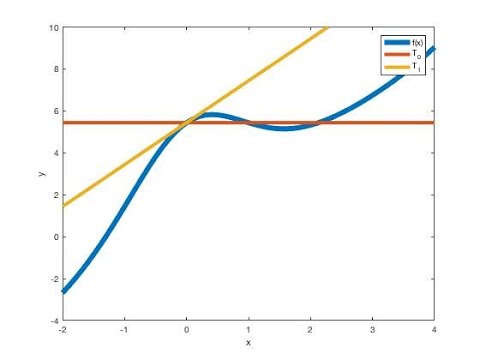
Added:Limits at infinity and L'Hôpital's Rule from Calculus 1, which are essential for evaluating the limits of sequences.
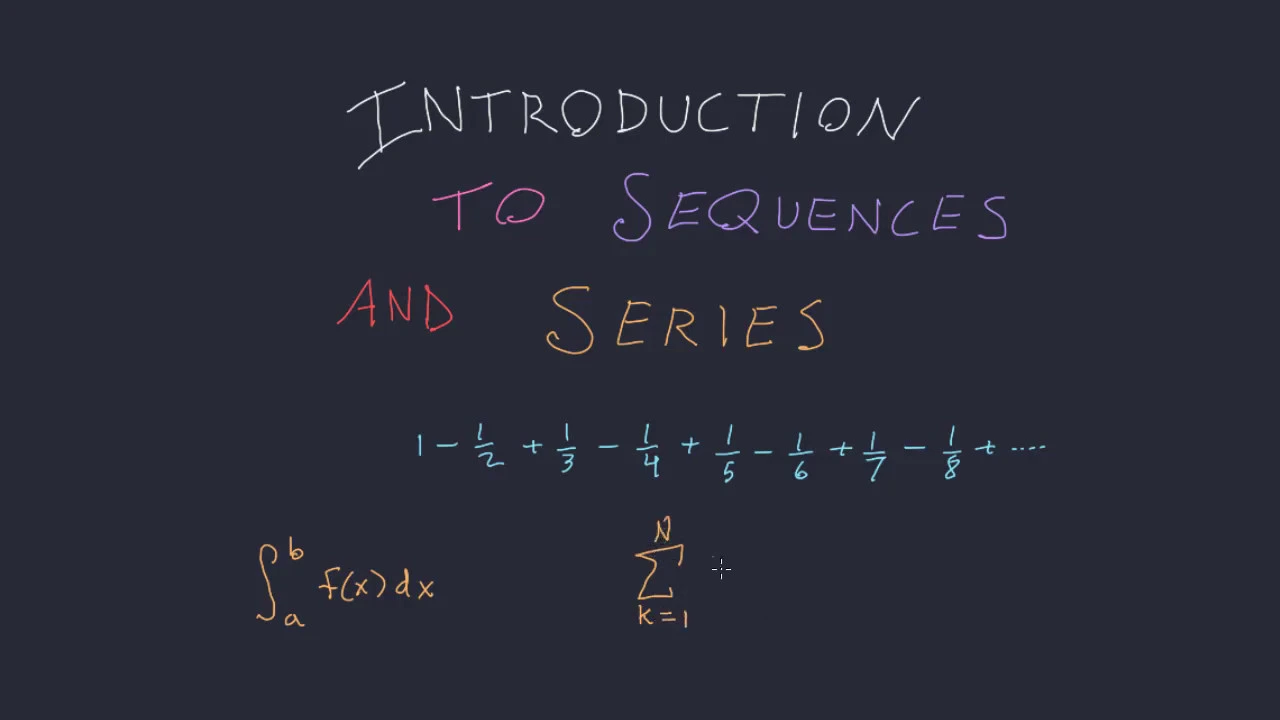
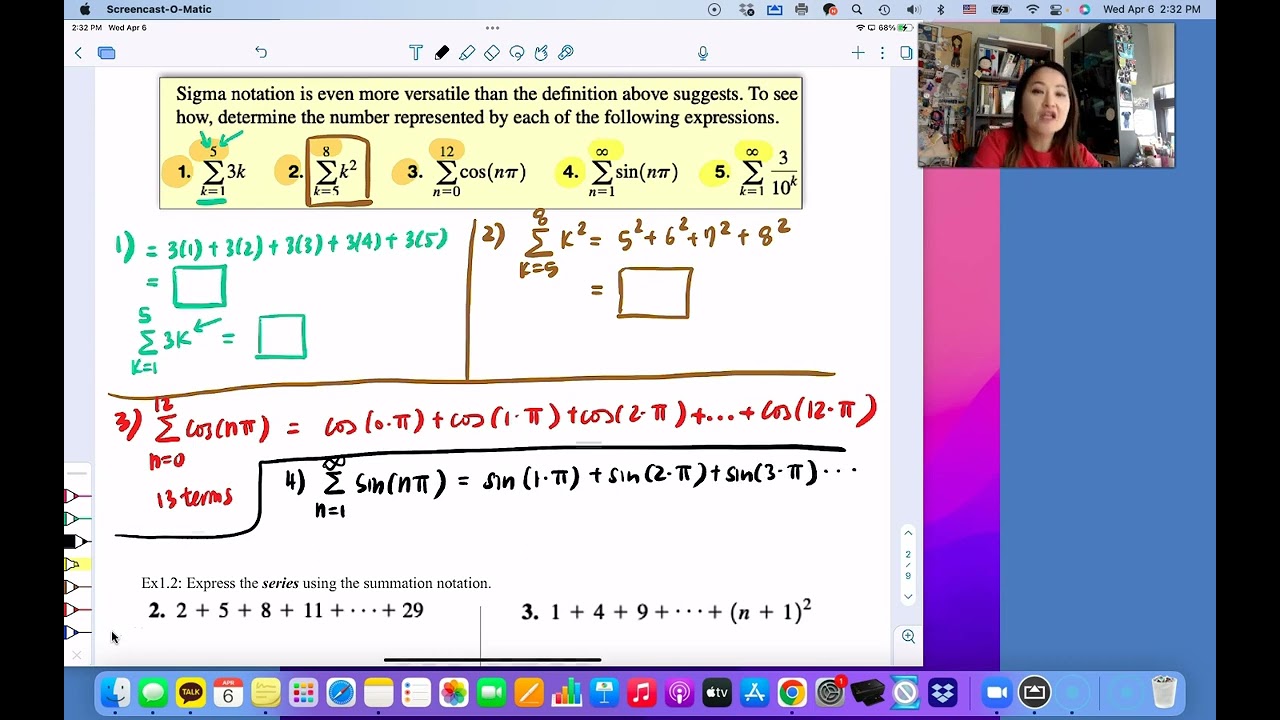
The conceptual distinction between a sequence (an ordered list of numbers) and a series (the sum of those numbers).
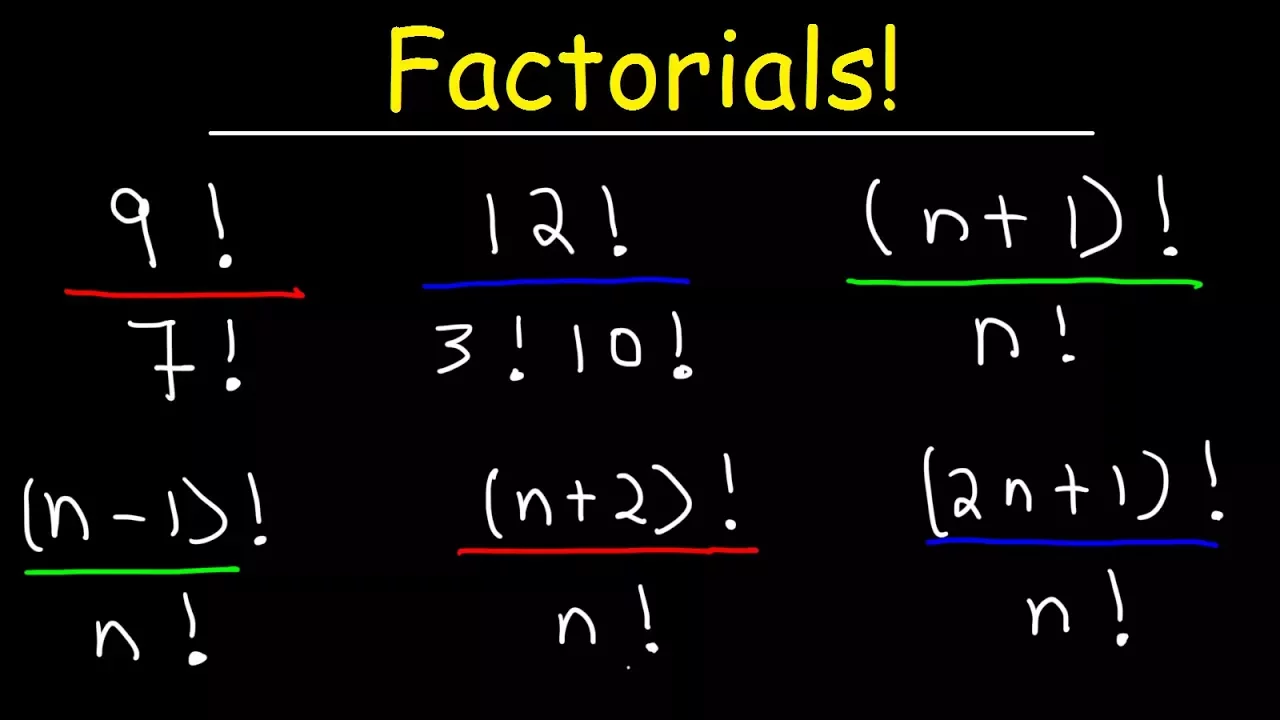
Algebraic proficiency with factorials, exponents, and rational expressions, which are frequently manipulated in convergence tests.
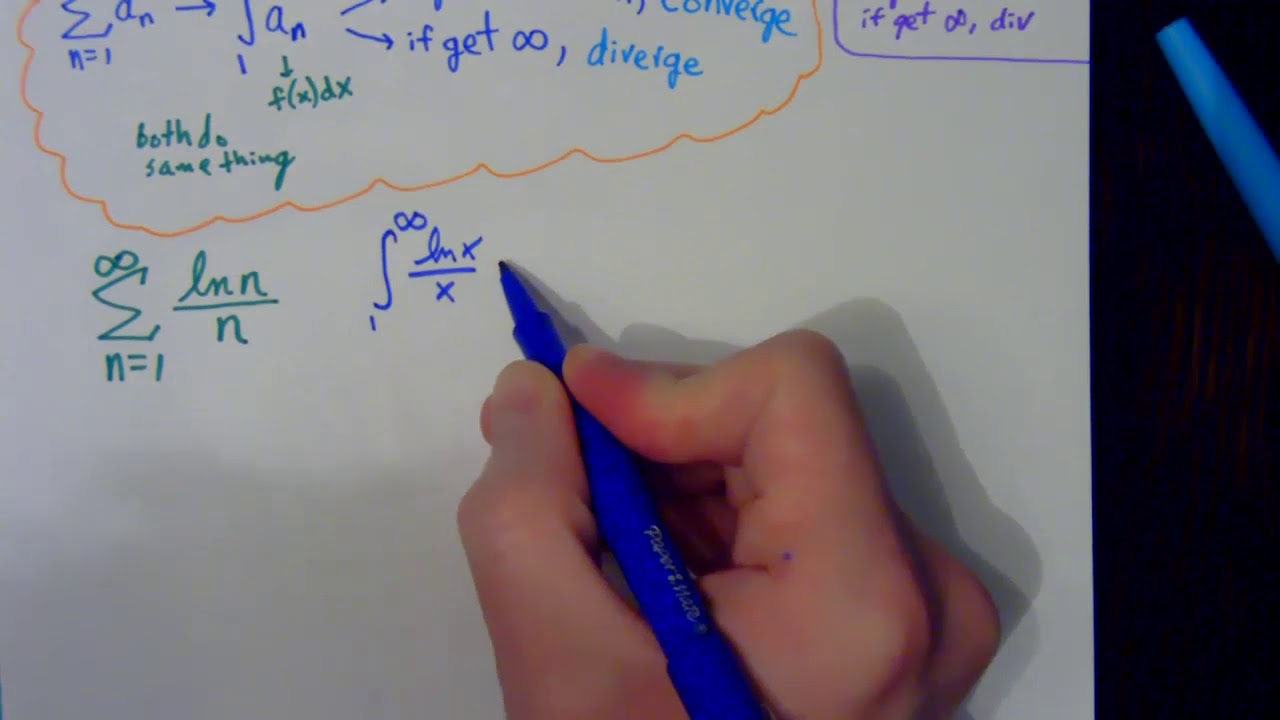
Fundamental integration techniques, as they are a direct prerequisite for applying the Integral Test.
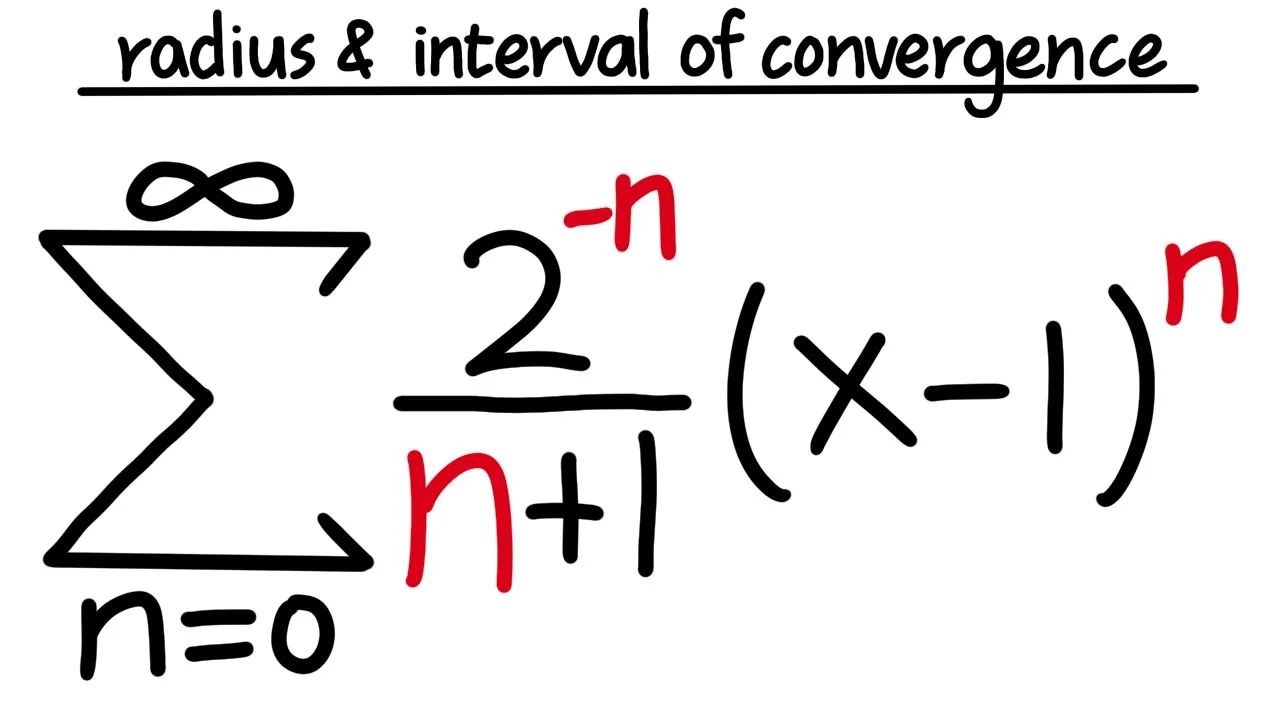
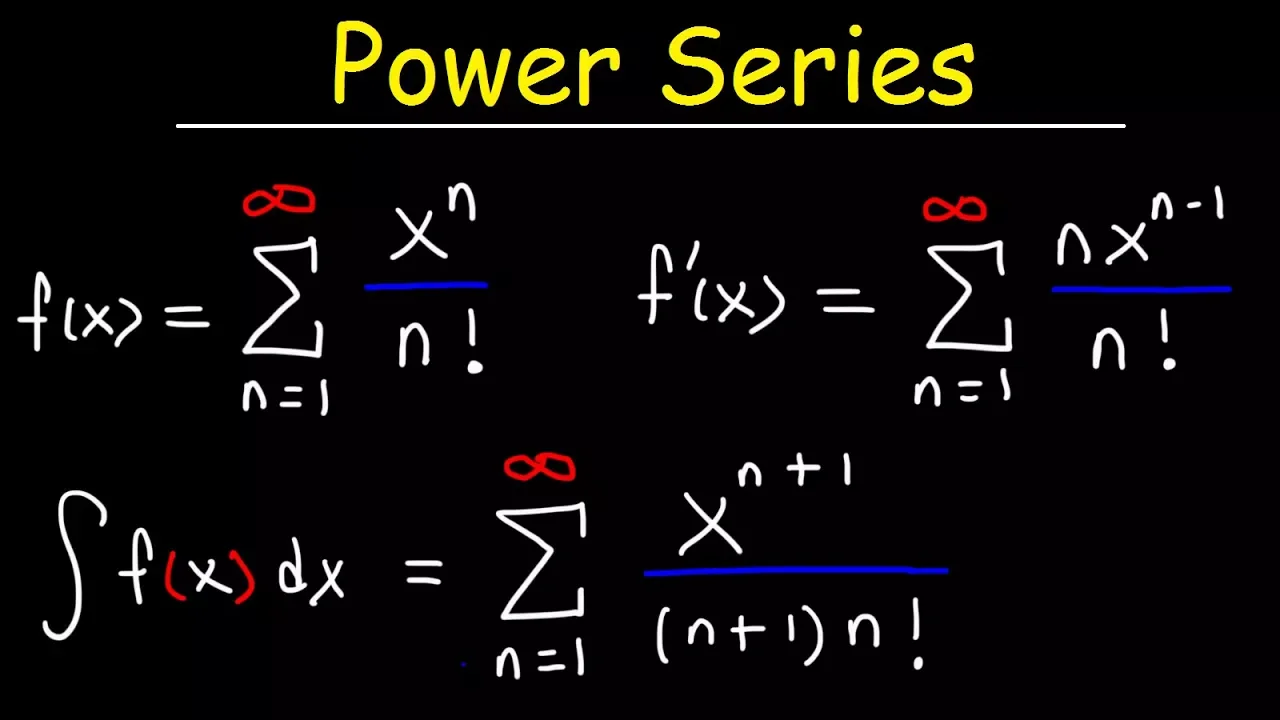
Power Series representation of functions, including determining the radius and interval of convergence using the Ratio Test.
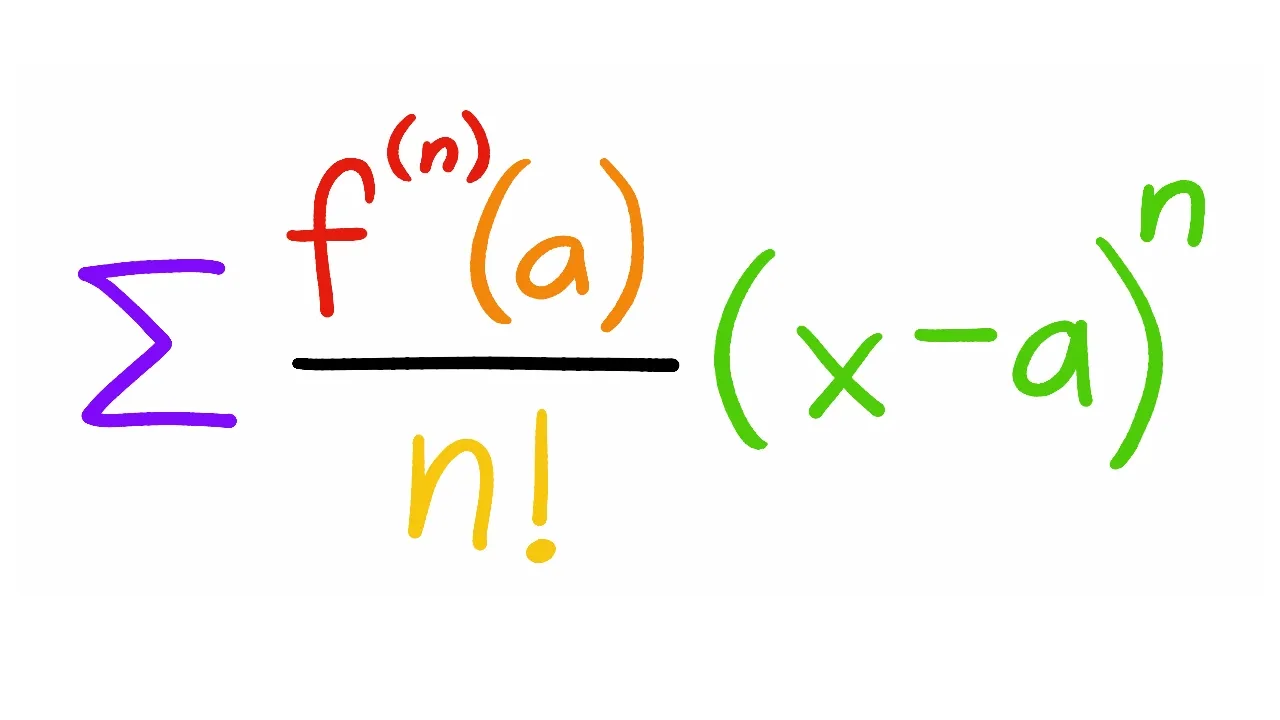
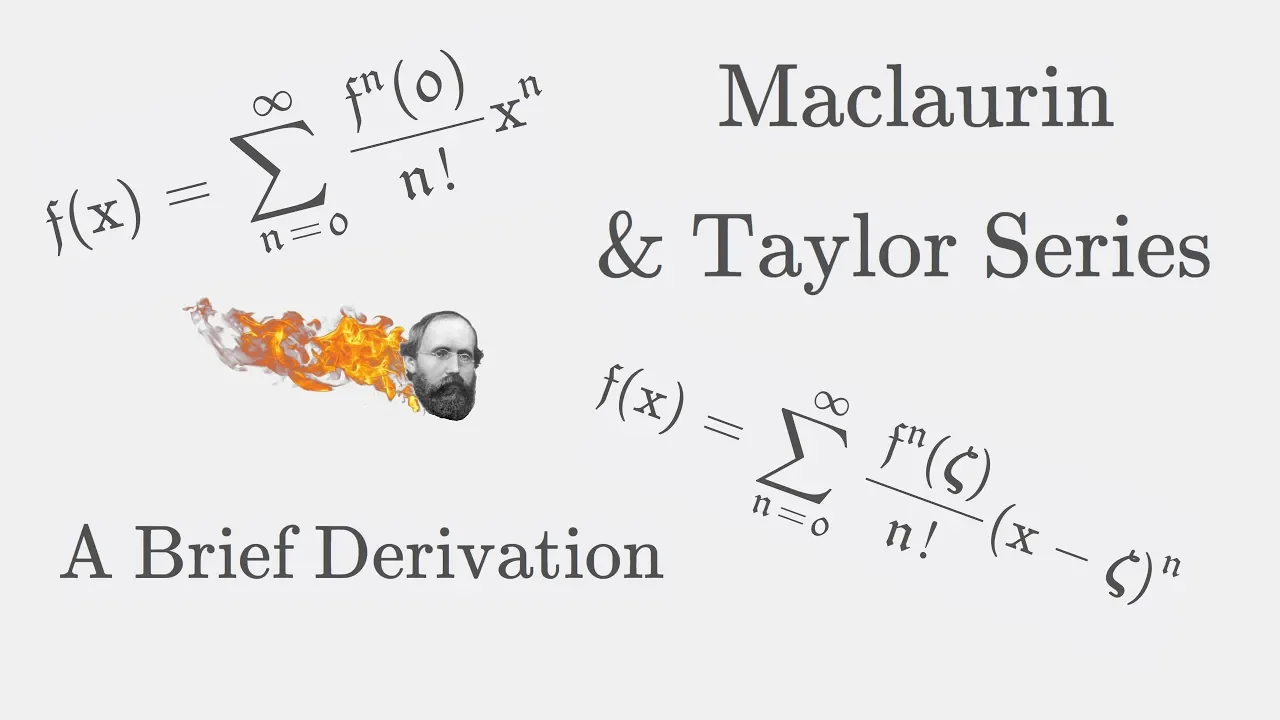
Taylor and Maclaurin Series, which allow for the representation of smooth functions as infinite polynomials.
Approximating non-elementary integrals and estimating approximation errors using Taylor's Inequality or the Alternating Series Estimation Theorem.
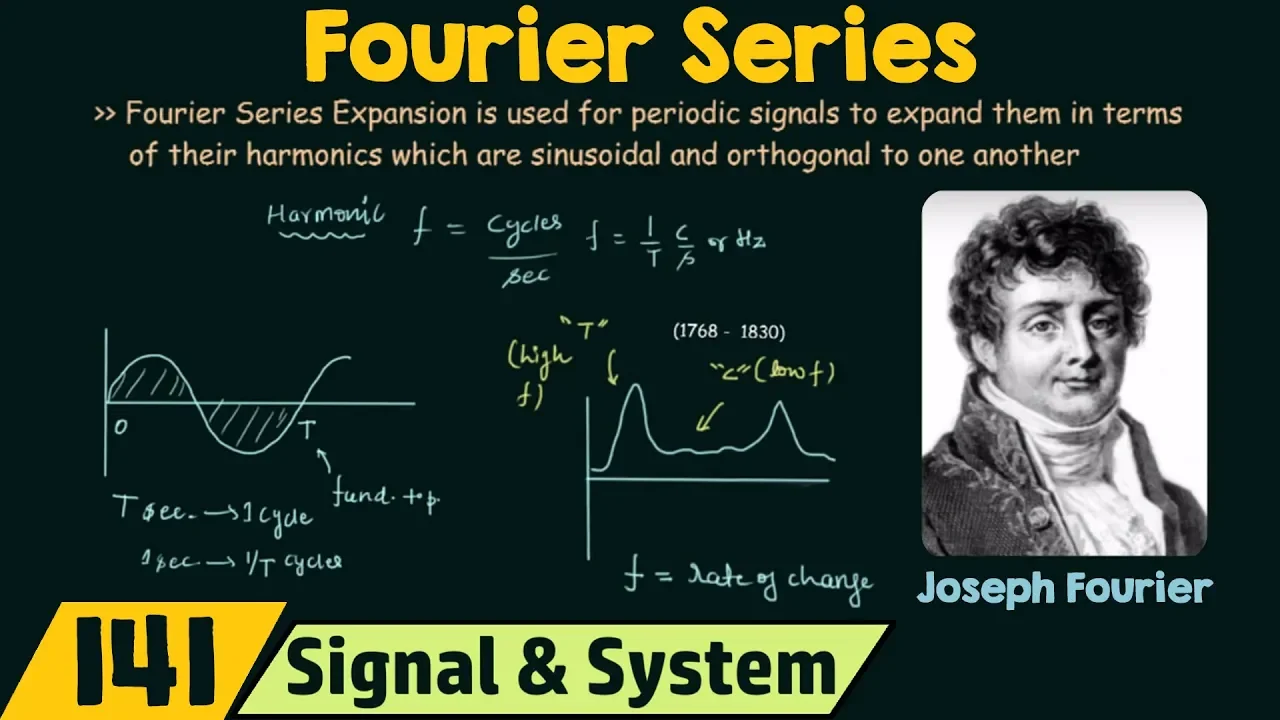
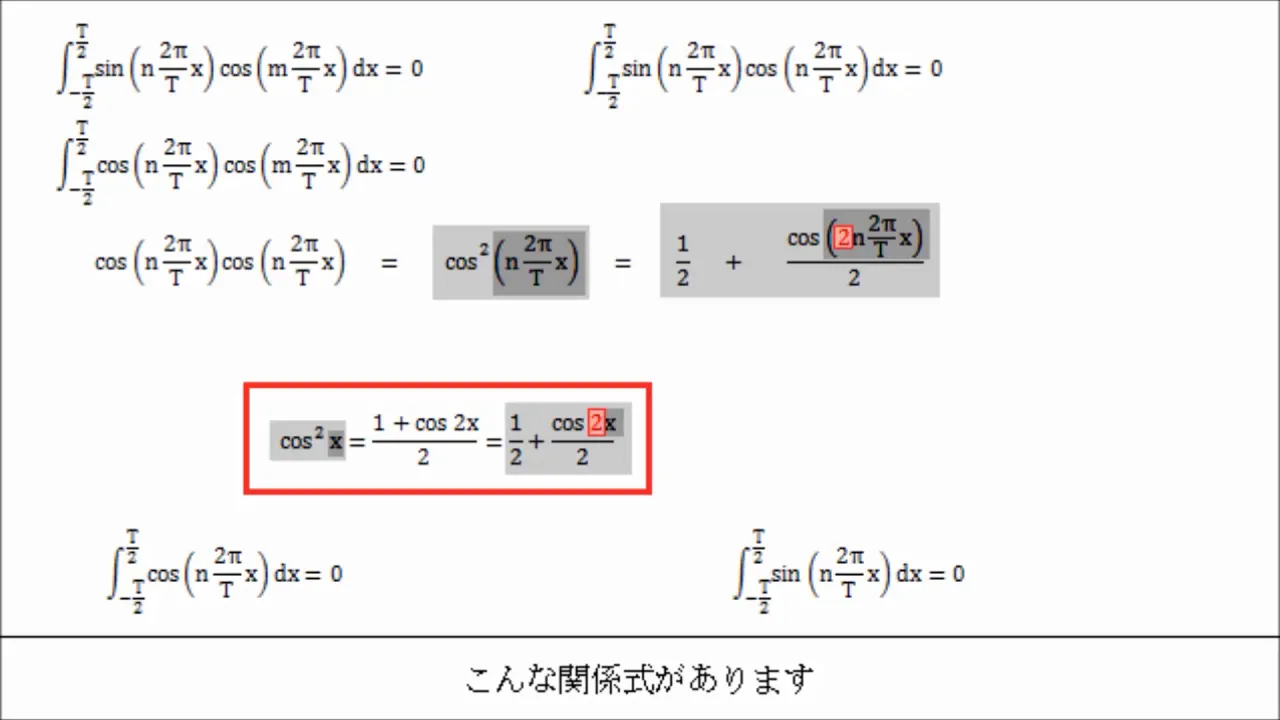
Introduction to Fourier Series, which extends these concepts to approximate periodic functions using trigonometric series.
888 views34likes40:11Original Release: 2025-05-29
Welcome to Math with Professor V. In this video, I'll be solving the third exam that I gave to my calculus 2 class, spring 2025. And this exam covered the entire unit on sequences and series. I'm just going to be working through the problems and solving them. Um, not giving too too much of like a background lecture. So, if you're looking for more in-depth explanations, then check out all the video lectures that are linked in the description that correspond to the topics covered here. Otherwise, let's just dive right in. It might be a good idea if you wanted to try solving these problems before I do them and see how ready you are for your exam on this unit. All right. Find the limit of a or of the sequence and if it converges otherwise indicate divergence. So basically when we're finding the limit of a sequence we always take the limit as n approaches infinity. And in this case our sequence is 9 - n + 8 n 4th over -4 n 4th + 12 n cubed + 5. All right. So from here as n gets large and approaches infinity I can see that the numerator is going to approach infinity. The denominator is going to approach negative infinity. But basically we have an indeterminant form of the type infinity over infinity. Now, we are not allowed to use Li Tall's rule here. No, no, please don't even think about it. Li Tall's rule is only allowed when you have differentiable functions in the numerator and denominator and the terms of a sequence are most certainly not differentiable. So, what could you do when you're in real moments of desperation? You can redefine the terms or the expression that you have as a function of x and then go ahead and do Li Tall's rule. But usually we don't need to resort to that. All we can do is think of how did we take limits when we were first in calculus before we learned Li tall's rule. And when we had an indeterminant form of this type where the limit was going to infinity, we just divided by the highest power of the variable from the denominator. So in this case that would be n 4th. So I'm going to divide everybody by n to the 4th. All right, here we go.
So now we've got the limit as n approaches infinity. This first term will be 9 / n 4 - 1 / n cubed + 8. And then down here we've got -4 + 12 / n + 5 / n 4. Okay. As n gets large, any constant over n to some power is going to go to zero.
So all these terms are going to zero and we're simply left with 8 in the numerator -4 in the denominator which is -2. So this sequence is convergent and the limit is -2. Okay, next example n = n * s of 1 /n. So again let's take the limit as n approaches infinity of n * sin of 1 /n. Now as n gets large this term here will go to infinity. 1 / n is going to 0 and sine of 0 is 0. So we have another indeterminant form of the type infinity * 0. There's seven indeterminant forms just like there's seven deadly sins. And if you're kind of rusty on them, I have a good video on it. So I'll link it in the description as well. So in this case, our previous technique didn't work or it won't work to to apply it here because we don't have some rational expression. So what we're going to do is cleverly rewrite what we're trying to find the limit of. And I'm going to do this by taking the n that's being multiplied out front and moving it into the denominator. It would now become 1 / n if I flip it down there.
And hopefully now you remember some of your introductory limits from calc 1 well enough to spot a familiar limit.
Remember this might have been one of the very first limits you learned. The limit as theta goes to 0 of sin theta over theta = 1. And you could confirm this with li tall's rule but you most likely learn this well before you learn talls rule. And if you notice here, theta has to go to zero and then the argument of your trig function matches what's in the other side of the expression. And then all of this comes out to one. Well, we have n going to infinity. But if n goes to infinity, 1 / n is going to zero. So we're basically in the same scenario. We can make a change of variables if you want. We could say let t equal 1 /n.
Then as n goes to infinity, t is approaching zero. So then we could say this is the same as the limit as t approaches z of sin t / t, which is 1. So again, this sequence is convergent. Okay? But if you didn't think to rewrite this n as 1 / n in the denominator, you'd basically be stuck.
Yeah. Even if you tried to do Li Tall's rule, you would still be stuck. So if you were desperate, say you didn't remember this limit at this point, you'd have to redefine a function of x, say, let f ofx equal all of this and you would change the ends to x's and then take the limit from there and do ls rule and you'll arrive at the same conclusion. Just quite a bit more work.
So I don't recommend I don't recommend. Okay, here's another one. A n equ= 1 + 9 /n raised to the 2n. So let's see what's going on here. When you're finding the limit of a sequence, you always just take the limit as n goes to infinity.
So as n gets large 9 / n, that's going to zero. So my base is approaching 1.
And then 2 * n's going to infinity that's approaching infinity. and one to infinity is another indeterminant form. Oh no. So what technique can we use here? This is the kind of limit when you have an indeterminant power one to the infinity. There's two more um where you have to introduce a natural log and you do have to use Li's rule. There's no way around it. So, first thing first, what I'm going to do is let's say let's go ahead and let f ofx= 1 + 9 /x raised to the 2x. Okay.
Then the natural log of fx = the natural log of 1 + 9x ra 2x. And how do I know to bust out a natural log?
Cuz I've recognized that this indeterminant form calls for this solution technique. Okay, if you've forgotten, it's all right. I'm reminding you now or you can go watch the Li Talls rule video lecture I I cited earlier.
Okay, the whole point of introducing this natural log is so we can move this 2x to the front. Okay, so then I can rewrite this as 2x * ln 1 + 9x. And very very similar to the last problem that we just did, I'm going to flip this 2x into the denominator. You could flip just the x if you want. Should we do that? Should we just leave the two? Why not? 2 ln 1 + 9 /x over 1 /x. Okay. All right. Now, this is the expression that we're going to take the limit of.
So the limit as x goes to infinity of the natural log of fx is the limit as x goes to infinity of 2 ln 1 + 9 /x over 1 /x. And why is this better for us? Because now we can apply li tall's rule. As x goes to infinity 9 /x is going to zero. I'll just have natural log of 1 which is zero.
* 2 which is still zero and then as x goes to infinity we have 1 /x in the denominator so that's going to zero. So we are allowed to apply li tall's rule when we have an indeterminant form of the type 0 / 0.
You can only apply li tall's rule when you have indeterminant form of the type 0 over zero or infinity over infinity.
If you do it when you're not supposed to if it's not one of those two types you won't get the right answer always. I know dangerous stuff. Okay, so now we have to tell the people we're applying Li Tall's rule and then we have the limit as x goes to infinity. So I'm going to take the derivative of the numerator and denominator separately. So the two's just hanging out. Derivative of ln something is 1 over the something and then I have to apply the chain rule multiply by the derivative of what's inside. So derivative of 1 is zero and then don't forget this is 9x to the -1st. So that derivative is going to be -9 x to the2 done over derivative of 1 /x that's the same as x to the -1st. So it's going to be -x to the2. Are we good? Okay. So x to the2nd cancels.
So does the negative sign. So let's see what we're left with here. Going to write this as the limit as x goes to infinity. This 2 * 9 I can put up here in the numerator. So that's 18 over 1 + 9x. And I would just leave it like that because if x goes to infinity, it's easy for me to see. Now this is going to go to zero. So we're just left with 18 over 1, which is 18.
Now don't get too excited. This is not our final answer because remember we just took the limit of the natural log of f ofx. So this tells me that the limit as x goes to infinity of the natural log of fx is 18. How do I get rid of that extra natural log? Because remember, I'm really interested in the limit of this function which matches our sequence that has no natural log. Well, you just take e and raise it to whatever you got here as your limit because basically you have e to the limit as x goes to infinity ln of fx. You can pass the exponential function through into that limit and write it as the limit as x goes to infinity of e to the ln of fx and that would be e to the 18th and then this is just f ofx. Does that make sense? Now I don't care. I don't need my students to write this out every single time. All you need to remember really is that whatever you get for the limit, add e raised to that for your final answer for the limit of the original without the ln. So let's just go back and summarize. I would just say this right here. The limit as n goes to infinity, write back n because that was how the sequence was originally given to us of 1 + 9 /n 2n is e to the 18th. And then that's perfect. That's all we need.
Okay, good. Good. I think that's the most dangerous step. Maybe that and like rewriting. Sometimes students mess up with the derivative and the chain rule here sadly. Okay. Determine if the sequence is monotonic and if it is bounded. So for monotonic, there's a few ways you can check. One way is you can try to compare a sub n +1 versus a subn. So look at a sub n +1. would be 9 * n + 1 + 1 over we'd have n + 1 + 1. So it simplifies to 9 n + 10 over n + 2. Now if I look and compare a n +1 with a n the numerator got bigger. So maybe I can say this is bigger but then this denominator got bigger. And we know when we have a larger denominator, the overall expression smaller. So it's not clear if a n is actually increasing or decreasing. I can't tell if this is bigger than the term that came before it or smaller. Who knows? So in this case, the more definitive way to determine if something's monotonic is by taking the derivative. But remember, we cannot differentiate sequences. They're not differentiable. They're most certainly not. They're not even continuous. So what we're going to say is oh here's my workaround. Let f ofx this is going to be a continuous function and it will be differentiable on its domain. So we can go ahead take the derivative now. So let f ofx be 9x + 1 /x + 1 and frime of x is going to be we got to use the quotient rule. So denominator time derivative of numerator minus numerator time derivative of the denominator over x + 1^2. Now a lot of times students ask me, oh can can't I just rewrite the denominator with a negative exponent and not do the quotient rule. If you like wasting time and making more work for yourself, sure because right now what I want to know is whether or not this derivative is positive or negative. So I need it written as a single fraction. I don't want to have two terms and then have to figure out from there. So the quotient rule exists for a reason. If we could get away with the product rule exclusively and it was just as efficient, then we wouldn't even mess with learning the quotient rule. But there are times when you have to use it because it's just going to create more work to simplify at the end if you did the product rule. So please stop being rebellious. Okay. 9 x + 9 - 9 x -1 over x + 1^ 2 and this is going to give me 8 over x + 1 2. You wouldn't even get there as quickly if you tried to do the product rule like a weirdo.
Okay, so numerator's positive, denominator positive. So I could say that the derivative is positive. when the derivative is positive that means my original function is increasing. So then now I can answer um the first part of the question and say this means that an end is monotonic increasing.
Woohoo. Perfect. That means it's going up up up. Every single term is a wee bit bigger than the one that came before. So now I want to answer the question if it's bounded. Well, I have a lower bound automatically since it's increasing. The first term is can act as my lower bound.
So my lower bound would be lowercase m.
What I want to find out now is is there an upper bound? Is there some capital M that the terms are approaching but do not surpass? Okay, so that's what we have to answer. So I know I have a lower bound for sure. My lower bound is a1 which is 9 * 1 + 1 over 1 + 1. So 10 / 2. So 5. Now the question of whether or not there's an upper bound. How can I determine if that exists? Well, I want to see what happens in the long run to the terms of a n. So we're going to take the limit as n goes to infinity 9 n + 1 / n + 1 and then again just divide everybody by n to the 1stide by n / n. So then this is going to be the limit as n approaches infinity 9 + 1 / n over 1 + 1 /n.
Okay. Okay. Then this goes to zero. This goes to zero. So the limit is 9. So then that's my upper bound. So then I can say yes and is bounded also. So it's monotonic and bounded. And we have a theorem that tells us if a sequence is both those things then it's convergent. But they didn't ask. So, I'm not going to bother telling them that.
You know, if they're not paying you, I wouldn't I wouldn't do way too much extra. Um, good. If it wasn't bounded, what would happen is you would end up getting like infinity or negative infinity for the limit or it doesn't ex No, if it doesn't exist, that doesn't matter. Like cosine and s the limit as n goes to infinity doesn't exist, but it's bounded. Okay? So, um, make sure if you need to review this, I have a whole video dedicated to monotonic and bounded sequences, believe it or not.
Okay, next one. Find the sum of the series. Now, we've moved on. We've left sequences behind. We're looking at series now. So, the minute someone asks you in a question that you need to find the sum, that really gives you a huge clue because you can't find the sum of most series. You can only find the sum of a geometric series, a telescoping sum that converges. And if you have a Mclloren series, if it's not one of those, you can't find the sum. Okay, so I'm looking. This guy does not look telescoping, doesn't resemble a Mclloren, that means it must be geometric. So remember the sum for an infinite geometric series is a over 1 - r. You don't have to put the infinity.
You could also just put plain old s. But don't put s subn. That's a different formula. That means the sum of the first n terms. So can we figure out what r is? It might be kind of tricky.
So the terms of this series are -1 n -1 * 2 over 9. Let's break it up because everything that's being raised to the n is your r. So we have -1 to the n * -1 to the 1st * 2 over 9 to the n. I'm going to group these two guys together.
You see that cuz they're both raised to the n. So we've got -1 over 9 to the n.
And then what is all this? -1 * 2. So that's -2. Aha. So cr is - 1 9th. Perfect. So the sum is going to be the first term. So a is the first term. This guy starts at one.
So if I sub in one for n my very first term is 2 9ths over 1 - r is - 1 9th. Okay so this is going to be 2 9th over 9 9th right 1 + 1 over 9 is 10 over 9. So this is 2 over 10 which is 1/5.
Good. Okay. Remember this formula is null and void if r is greater than or equal to one. So absolute value of r has to be less than one in order for the series to converge. If that is not satisfied, don't even try finding the sum.
Okay, here we have the sum n= 1 to infinity 1 / 2 n - 1 over 9. Now, we're not allowed to distribute a sum infinite unless we know that independently the sum of these two terms will converge.
So, we have to investigate first. Okay.
So, if you wrote out distributing that sigma in the very first line, you would lose points. Okay? Don't do it. So, we've got the sum n= 1 to infinity of 1 / 2 n. That's the same you guys as 12 to the n because basically 1 to the n is the same as 1. It's just easier to spot what r is. Now, r is 12. Absolute value of r is less than one. So, it's going to converge. So, I'll call this my first sum. It's going to be a over 1 - 12. The first term, this guy starts at one. So the first term would be 12 over 1 minus 1/2 is also a half. So this is one. Okay. Now we're also going to consider the sum n= 1 to infinity.
Let's think of this as 1 9th to the n and then again r is 1 9th. Absolute value of r is less than 1. So this second sum is a over 1 - 1 9th.
So 1 9th over 9 over 9 - 1 over 9 is 8 over 9. So this is 1/8. Okay, beautiful.
So they both converge. So then that means I am allowed to write the sum n = 1 to infinity 1 / 2 n - 1 over 9.
Now I can write this since I've justified that each of these converges.
Do you see? Yes. Very dangerous if you split it without confirming first. It may not be true. So then this is 1 - 1/8 which is 7/8.
Good. Very nice. Okay.
Determine if the series converges or diverges. If it converges, find its sum.
Again, they're asking us to find the sum. So, it's either, geometric, telescoping, or Mclloren. Remember that it will help you narrow things down so much cuz they're asking us to find the sum. This certainly does not look geometric, nor does it look Mclloren.
It's telescoping. So when we're dealing with the telescoping sum, first we're going to find the nth partial sum. So we're going to rewrite it as the sum i = 1 to n of tan inverse. We have to switch this to i + 2. You need a new index of summation minus tan inverse of i. If if this does not sound familiar, then go watch. I have a whole video dedicated to telescoping series. Okay. I'm going to list out the first few terms till we see a pattern. Starting with i = 1 this is going to be tan inverse of 3 minus tan inverse of 1 plus this is going to be now i is 2 tan inverse of 4 - tan inverse of 2 i is 3 so tan inverse of 5 - tan inverse of 3. We could do one more for good measure. I is four. So tan inverse of 6 minus tan inverse of 4. And at some point you got to call it because otherwise we'll just expire while listing terms. And here's the thing to figure out what cancels and what survives. I + 2 and I are two apart. So that means I should have two terms survive or basically not cancel out from the beginning. Okay. So tan inverse of three is canceling out. 10 inverse of four is canceling out.
Eventually tan inverse of five will cancel. 10 inverse of six will cancel. I have two survivors. Tan inverse of one and tan inverse of two. How did I know that? Cuz these are two apart. And if you keep thinking about it, they're just going to get larger and larger. The arguments nothing's going to give me a one or a two down the road to cancel with these two guys. And one, two.
That's all the terms I have surviving.
Also at the back end of the sum I should have two survive. Okay, let me do I= N.
So this will be tan inverse N + 2 - tan inverse of N. I'm going backwards. Then n minus one tan inverse n -1 + 2 would be n + 1 - tan inverse n minus one n - 2 tan inverse of n - tan inverse n - 2 you want another one n - 3.
So tan inverse n - 3 + 2 would be n minus one minus tan inverse n minus 3.
Okay. How many do you need? I wrote out more than I need. I know I'm only going to have two survive, right? And once I see what's cancelling, it's kind of clear.
So tan inverse of n cancels.
10 inverse n minus one cancels and the rest of the lower ones will cancel like this will cancel eventually and this will too. What will not cancel is tan inverse of n + 2 and tan inverse of n + one cuz the expressions in n just keep getting smaller. You see that? So this these two were stuck with and these two were stuck with. And I feel good about that cuz two in the beginning, two at the end, these were two apart. It's always going to work out that way. Okay? Don't you love it? And my teachers never bothered to tell me that. I have to figure it out.
It's fine. Here I am telling you. Okay.
So s subn is going to be - tan inverse of 1. Well, we know who that is. That's<unk> /4us tan inverse of two. I don't know what that is. We're going to just leave it. plus tan inverse n +1 + tan inverse n + 2. Okay, what the heck do we do with this now? Well, to find the sum and determine whether or not the series converges, so you only find the sum when it's convergent, right? I said that backwards. Let's take the limit as n goes to infinity of sn. So that's going to be the limit as n goes to infinity of all of this. Will you allow me a copy paste? Oh, wonderful. Okay. Please put parentheses though on the limit. Yes.
Yes. Okay. So let's see what happens as n goes to infinity. This is a constant.
So nothing happens. You know what? Why is this so skinny?
Okay. Also tan inverse of two a constant. I'm going to leave it as is. n is going to infinity. So n + 1 is going to infinity. Imagine the graph of tan inverse. This is approaching p<unk> / 2. Same is true with this term. So p<unk> / 2 +<unk> / 2 that's pi. I've got<unk> / 4 - tan inverse of 2 +<unk> that gives me 3<unk> over4 - 10 inverse of 2. And this is the sum of my infinite series. Okay, so my students don't get a calculator. They would just leave it as tan inverse of two. And that's it.
Converges. Beautiful. If the telescoping series were to diverge, this limit would be infinity or negative infinity or not exist. Something like that. Okay, very good. Use the integral test to determine whether the series converges. Be sure to check that the necessary conditions are satisfied before performing the test. So to start off, let's define the terms here as a function of x. So let's let f(x) = 2x over x^2 + 4. So the conditions that we need to check are that f is continuous on the interval that we would be integrating. So from 1 to infinity. Well, how do you check f is a rational function? We're going to call on some theorems from calc 1. And we know rational functions are continuous on their domain. The domain for f is all real numbers cuz notice the denominator zero u is never equal to zero. So since the domain is all real numbers, it's continuous on all real numbers and therefore it's going to be continuous on the interval from 1 to infinity. That's a subset of all real numbers. The next thing we need to do is check if f is positive on one to infinity. Well, so this means we're only plugging in values of x that are from 1 to infinity. So the numerator is going to be positive. This is always positive.
So we're good. The last thing I need to check is that f is decreasing. So we take the derivative. So f prime is going to be I'm singing the quotient rule. low D high minus high D low over low low. And this is going to give me 2x^2 + 8 - 4x^2 over x^2 + 4 2ar. So then we end up with 8 - 2x^2 over x^2 + 4^2. So we have to be a little careful. This is 2 * 4 - x^2. And in order for f to be decreasing, I need this derivative to be negative. Well, I can see the the denominator is always positive. And 4 - x^2 will be negative.
if x is greater than 2 or less than -2. But nobody cares about that part of the real number line.
Remember, we're only on one to infinity. So f is not decreasing on one to infinity. It's decreasing on 2 to infinity, not including two.
What does that mean? Can we still do the integral test? Totally. We're fine. All we say is it's eventually decreasing. It doesn't keep switching from increasing to decreasing. So that's good enough for our purposes. Now, does that mean we have we should change this to two to infinity? No, we're fine. Cuz whether we went from two to infinity and figured out it converged or one to infinity, it would still converge. And the same thing goes for divergence. Like if you have a series and the sum from two to infinity, it diverges. If you add in an extra term, it's still going to diverge. So, it doesn't really matter.
You just need to make sure eventually it's decreasing the integrant. This is going to be the integrant. Um, so that you can apply the integral test. Okay.
So, if if it wasn't eventually decreasing, you would have a bunch of uh roots to that. So, that would be problematic. Okay. Now, let's go ahead and look at our improper integral. So let's consider integral from 1 to infinity of 2x over x^2 + 4 dx. So first and foremost quick as a bunny rewrite this as the limit as t goes to infinity and then you have integral 1 to t 2x over x^2 + 4 dx. Now hopefully you're pretty comfortable. you can spot. Oh, we should do a u sub. If you want to do the u sub in your head, that's totally cool. If you're not comfortable, I'll write it all out. So, let's let u be x^2 + 4 and then du would then be 2x dx, which we have. Oh my god. And then don't forget to change your limits of integration. A lot of students forget to do this part. It's detrimental. So, u of 1, my lower limit is 1^2 + 4. So, that's 5. And then u of t is just t ^2 + 4. So we're going to rewrite this now. Limit t goes to infinity. Now this is going to go from 5 to t ^2 + 4. And then we have du over u. Good.
Okay. From here anti-derivative is going to be natural log absolute value of u.
And then we evaluate this from 5 to t ^2 + 4. So this is going to be the limit t goes to infinity natural log I can just put parentheses cuz t ^2 + 4 is positive minus ln of 5. So this is going to infinity. ln of something getting very very large also approaches infinity minus ln of five. That's just a constant. So this limit goes to infinity, which tells me that my improper integral diverges, which tells me that the sum n= 1 to infinity of 2n over n oh not n 4th.
Please calm down. n^2 + 4 also diverges by the integral test. Okay? Always cite your test. Okay? Now, if it was up to me and they they didn't say in the problem that I had to use the integral test, I certainly wouldn't. Limit comparisons a million times faster. Okay? Not a billion. I'm exaggerating, but you know what I mean. Okay. Determine if the series converges absolutely plain old converges, which means converges conditionally, or diverges. So unless you can spot right off the bat that this thing's going to diverge, always check for absolute convergence first. Okay, test for absolute convergence.
So, we're going to look at the sum n= 1 to infinity of the absolute value of a n, which all that means for us is that -1 to the n part goes away. Okay, if you're rusty on absolute versus conditional convergence, oh yeah, I got a whole video dedicated to it. Okay, from here we have to choose any appropriate test to determine whether the absolute value of a n which is going to be these terms here if that series converges or diverges. So when I'm looking at it I right away think I'm going to use limit comparison test the numerator who's running the show n^2 the denominator n to the 7th. So n^2 over n to the 9th. My brain did the next step.
I'm sorry. 1 / n 7th. What do I know about 1 / n 7th? Nothing exciting. But what do I know about the sum of n= 1 to infinity of 1 / n 7th? That's a p series. P= 7 which is greater than one and it converges.
So I'm going to do limit comparison test with this p series. Okay. So now I'm going to take the limit as n approaches infinity of absolute value of a n. So 4n^2 + 7 over 5 n + 6 over 1 / n 7th. So this is going to flip up here.
I'll distribute it through all in one fell swoop. So this is the limit n goes to infinity 4 n to the 9th + 7 n 7th over 5 nth + 6. And then to take this limit, nope, don't even think about ly talls rule. Nope, no pre-calc shortcuts.
You're not in pre-calc. We're gonna divide by n to the 9th. Divide by n to the 9th. Highest power of n from the bottom always. And then this is limit n goes to infinity 4 + 7 / n^ 2 over 5 + 6 / n. So these two terms go to zero. I'm left with 4 fths. What do I care about four fths? All I care is that this is finite and not zero. And then the limit comparison test tells me that my series is twinsies or behaves the same as whatever I compared it to. So I compared it to a series that converges, which means this series converges as well.
So the sum n= 1 to infinity of 4n^2 + 7 over 5 n^ 9 + 6 also converges by the limit comparison test. So now actually I'm done because I just showed that the absolute value of a n converges which is the strongest kind of convergence that there is. So since my series converges absolutely I've answered the question. So that's why you always want to check for it first.
Unless you can tell it's going to diverge. So the OG that was alternating, right? It's definitely going to converge cuz without it being alternating, it converged. So of course if it's alternating, it's going to converge.
This converges and now we say absolutely good. Okay. Now, if you had tested for conditional convergence first, when you test for conditional, you use as you wouldn't be done. You'd still have to go back and do this step. And then you're doing more work just to answer the question that could have been answered with one test. All right. So, always try to find the most efficient path. That shows that you understand the logic and the relationship of what's going on.
Absolutely. All right. Well, that wraps up part one. I'm going to take a break right here. I actually have to run to hot yoga and go about the rest of my day. But don't worry, part two is coming. I'll finish solving the rest of the exam. But make sure that you're subscribed and you have your notifications on. That way you know when I upload the solutions part two for this exam. All right. Thank you guys so much for your support. If you need to check out any of the full length video lectures, they're all listed in the description. And you can also follow me on Instagram, Tik Tok, Math with Professor V. I'll be back sooner than later. Bye.
Up Next
17:40
Permutations vs Combinations: Key Differences & Formula Examples
@TheOrganicChemistryTutor
4.5M views•2017-02-10

4:43
Elliptic Curve Cryptography Explained: ECC, ECDSA, ECDH
@PracticalNetworking
28.5K views•2024-10-21
10:44
Fourier Series Introduction: The Big Idea Explained
@DrTrefor
387K views•2021-05-03

6:00
The Mathematical Impossibility of Accurate World Maps
@Vox
23.3M views•2016-12-02
Related Study Plans & Knowledge Roadmaps
Structured learning paths in Mathematics
mathematics
Tensor Calculus: Vectors to Riemann Curvature
01Mathematical Foundations: Linear Algebra & Calculus
02Covectors, Dual Spaces, and Tensor Basics
03The Metric Tensor and Index Gymnastics
+ 2 more learning modules
40h5 modules
Explore Roadmap
mathematics
Gödel's Incompleteness: Logic, Proofs & Limits
01Introduction to Formal Systems & Hilbert's Dream
02Set Theory, Cardinality, and Cantor's Diagonal Argument
03Arithmetization and Gödel Numbering
+ 2 more learning modules
14h5 modules
Explore Roadmap
mathematics
Galois Theory: Fields, Groups & Solvability
01Foundations of Abstract Algebra: Groups & Fields
02Polynomials & Field Extensions
03Splitting Fields & Symmetries
+ 2 more learning modules
24h5 modules
Explore Roadmap
mathematics
Non-Euclidean Geometry: Models & Geodesics
01Euclid's Fifth Postulate and the Birth of New Geometries
02Hyperbolic Space and the Poincaré Disk Model
03Geodesics: Defining Straight Lines in Curved Spaces
+ 2 more learning modules
15h5 modules
Explore Roadmap