







![CHSE Odisha +2 First Year Math Chapter 2 Sets Exercise 2(a) All Concept Discussion [Lecture -1]](https://i.ytimg.com/vi_webp/nfYooMaC8Cc/maxresdefault.webp)

















![[경영경제통계학] 중간고사/기말고사 무료특강! 경영경제통계학인강으로 문제풀이 완벽 마스터! 20211109](https://i.ytimg.com/vi/bxfCujXxLWo/maxresdefault.jpg)



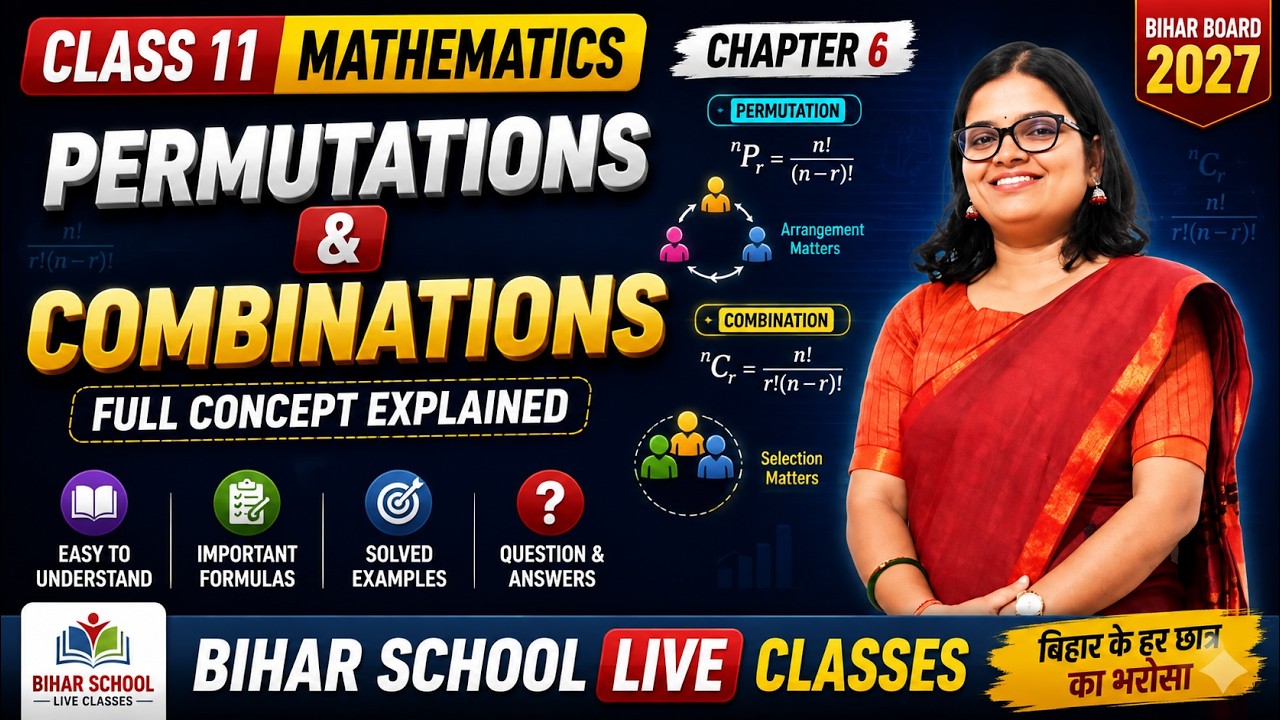
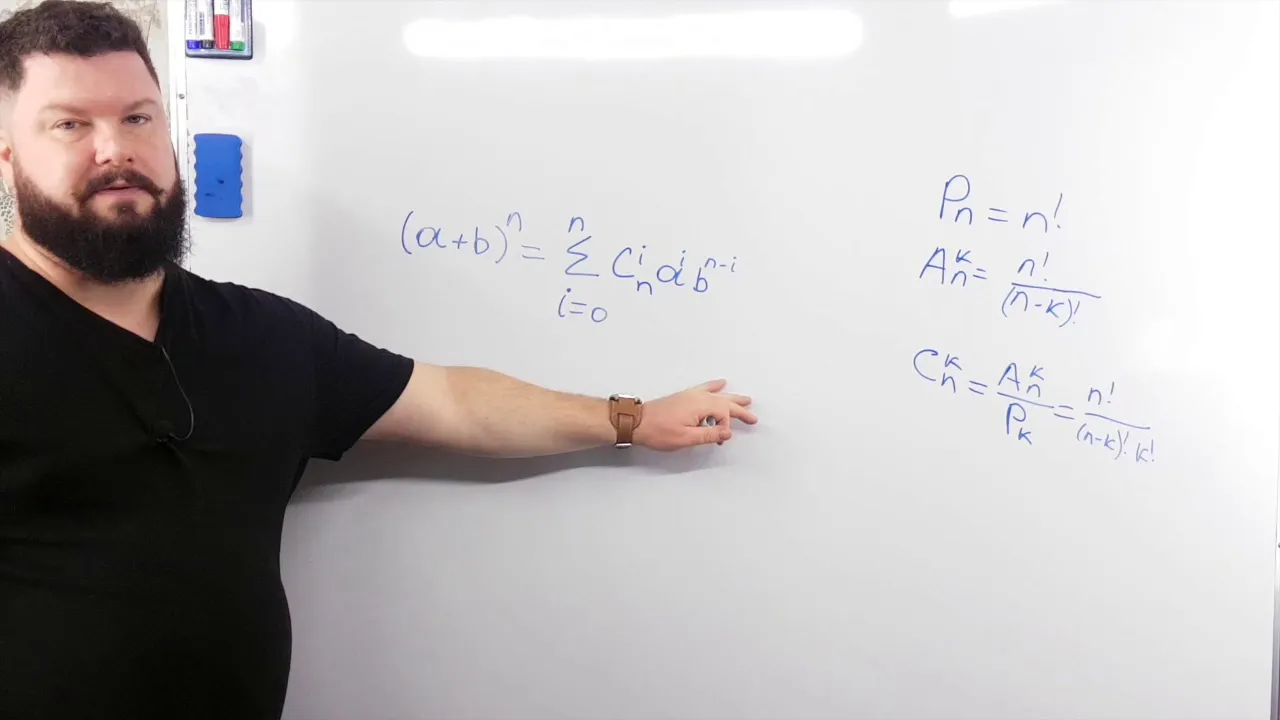
Permutations and combinations are fundamental counting principles used to determine the number of ways to arrange or select items; permutations are arrangements where order matters (calculated using nPr = n!/(n-r)!), while combinations are selections where order does not matter (calculated using nCr = n!/(n-r)!r!), with permutations being useful for problems like arranging books on a shelf and combinations for forming teams or groups.
Permutations vs Combinations: Key Differences & Formula Examples
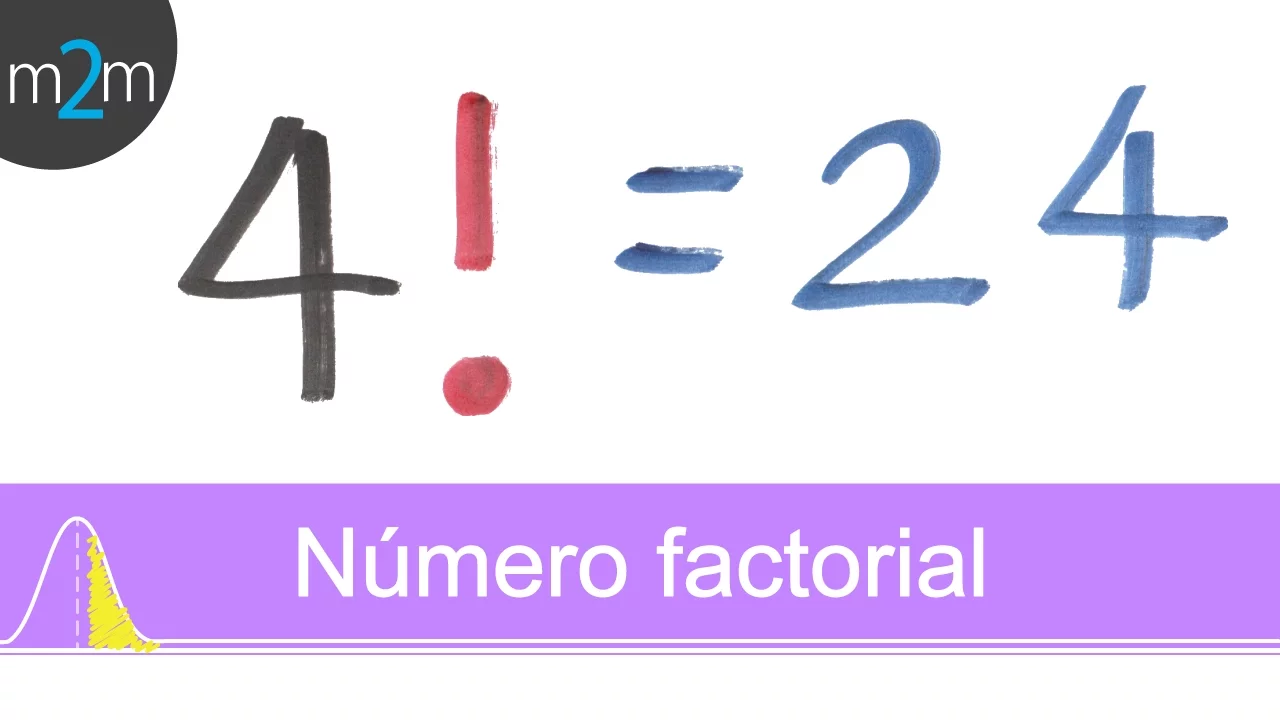
Added:Factorial notation (n!) and the mathematical rules for simplifying factorial fractions.
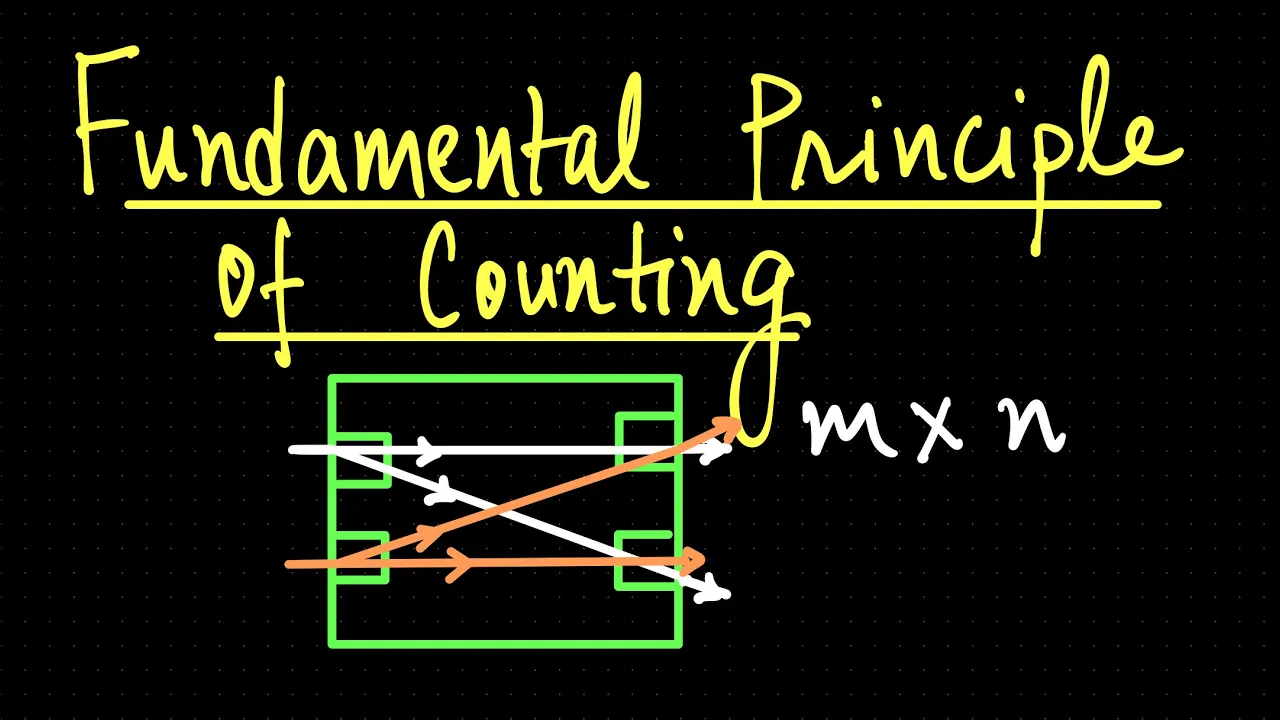
The Fundamental Counting Principle, including the addition and multiplication rules of counting.
Basic set theory concepts, specifically understanding sets, subsets, and the concept of elements.
Distinguishing between ordered sequences and unordered groups in informal, everyday scenarios.
Classical probability theory, using combinations and permutations to calculate event probabilities.
The Binomial Theorem and the application of combinations as binomial coefficients.
Advanced combinatorial techniques, such as circular permutations and combinations with repetition (stars and bars).
Discrete probability distributions in statistics, including the Binomial and Hypergeometric distributions.
4.5M views88.3Klikes17:40Original Release: 2017-02-10
in this video we're going to focus on permutations and combinations but what exactly is a permutation and how is it different from a combination a permutation is associated with arranging things in different order combinations you simply concern about combining things for a permutation the order matters but for combination the order does not matter I guess the best way to to explain this is with an example let's say if we have three letters a b c we could arrange them in this order a b c or we could say c a b now even though we have the same three letters the order is different so these are two different permutations the number of permutations is two however the number of combinations is one these two are considered to be the same in terms of a combination but in terms of a permutation they're considered to be two separate things so just make sure you understand that a permutation the order matters the way you arrange it matters and for a combination the order doesn't matter you just want to combine things so if you have ABC and c a b you still have the same three letters combined in a group so for a combination they're the same let's use another example to illustrate this let's say if we have four letters a b c and d and let's choose two of the four letters and how many different ways can we arrange two of the four letters and also how many different ways can we combine two of the four letters make a list and use that to determine the number of permutations and combinations of choosing two out of the four and then we'll talk about how to use an equation to get that same answer so we can choose a we can choose AC or we could choose a d we can choose ba a b c b d we're only using each letter once every time we s two out of the four we can also use uh CA CB and CD and also da DB DC so notice that there's a total of 12 different ways we can arrange two out of the four letters so the number of permutations in this example is equal to 12 now what about the combinations now if you recall for a combination the order doesn't matter so take a look at AB and ba in terms of permutations these are counted as two separate things but for combination you're combined the same letters and since the order doesn't matter for a combination they're counted once as a combination so if we're going to count a we can't count ba if we're going to count let's say AC we can't take into account CA if we're going to count a d we have to eliminate da if we're going to use BC we need to get rid of CB if we're going to use BD we can't use DB and finally if we're going to use CD we got to get rid of DC so notice that the number of combinations is equal to six 1 2 3 4 five six so now you can clearly see the difference between a permutation and a combination so just remember a permutation the order matters and for combination the order does not matter now how can we calculate these answers is there an easier way in which we can find a value as opposed to making a list of all the different possibilities the first equation you need to know is n p r this helps you calculate the permutations now there's four letters and we're choosing two so it's going to be 4 P2 we're choosing two out of a group of four now the equation NPR is equal to n factorial / n minus r factorial in this case we can see that n is 4 and R is 2 so n minus r that's going to be 4 - 2 now 4 - 2 is 2 so we have 4 factorial / 2 factorial so what exactly is 4 factorial 4 factorial is 4 * 3 * 2 * 1 you start with this number and you multiply four by every integer all all the way to 1 2 factorial is simply 2 * 1 so we can cancel 2 * 1 and we're left with 4 * 3 and we know that 4 * 3 is equal to 12 which is what we have here now how can we calculate the combination what is the formula that we can use NCR is equal to n factorial / N - R factorial / R factorial so basically in terms of a permutation a combination is equal to NP / R factorial this portion right here is NPR and then divide by R so we have four C2 in this example so n is four and R is two so this is equivalent to four factorial divided 2 factorial * 2 factorial and we know that 4 factorial is 4 * 3 * 2 * 1 2 factorial is 2 * 1 and we have another 2 factorial it turns out that 2 * 2 is 4 so we could cancel those twos with the four on top we could ignore one because one time anything won't change the value so what we have left over is three * 2 3 * 2 is equal to 6 and so now you understand how to use the equation and also you understand how to make a list to determine the number of permutations and combinations so now let's work on some example problems in how many different ways can you arrange three books on a shelf from a group of seven now go ahead and try this problem pause the video take a minute and feel free to work on it and then unpause it to see the solution so is it a permutation or a combination does the order matter whenever you see the keyword arrange typically it's a permutation the order is important so what we need to write is 7 P3 we're choosing three books from a group or from a total of seven so this is going to be 7 factorial divid the difference between 7 and 3 7 factorial is 7 * 6 * 5 * 4 * 3 * 2 * 1 7 - 3 is 4 and four factorial is 4 * 3 * 2 * 1 so we can cancel these numbers leaving behind 7 * 6 * 5 now 6 * 5 is 30 and we know that 3 * 7 is 21 so 30 * 7 is 210 this is the answer and how many different ways can we arrange five books on a shelf how is this this problem different from the last problem and is it still a permutation well we're still trying to arrange books so the order matters it's still a permutation but you can use the fundamental content principle to get the answer so we want to arrange five books on the shelf right so there's five positions to place the five books in the first position we can choose any of those five books so we have five options now once we place the first book in the first position there's four books left over to choose from so we could put any of the four books in the second position now that we've placed two books we have three left over so we could put any of those three books in a third position now we have two books left over so we can put any of those two in the second last position and in the last position we can only put the last book there so it's going to be 5 * 4 * 3 * 2 * 1 and that's another way in which you could solve these problems 5 * 4 is 20 3 * 2 is 6 if 2 * 6 is 12 20 * 6 is 120 now in terms of a permutation here's how you can calculate it first you need to find out what is the total number of books in this problem we only have one number the total number of books is five and we're choosing all five books from a group of five so it's going to be five p 5 using the formula NPR is equal to n factorial Over N - R factorial n is five but R is five as well so this is going to be five factorial over 0 factorial now this is not undefined 0 factorial does not equal Z 0 factorial equals 1 make sure you know that that's just something to know if you're wondering why that's just the way it is I don't have the answer for you so this is going to be five factorial over one and we know that 5 factorial is 5 * 4 * 3 * 2 * 1 and this is equal to 120 how many teams of four can be produced from a pool of 12 Engineers so is this a permutation or is it a combination what do you think does the order matter so let's say if I select four individuals John Sue Sally and Chris does it really matter if I select John Chris Sally Sue it's the same team of four so in this problem the order doesn't matter therefore It's a combination so we're choosing four from a total of 12 so it's going to be 12 C4 and this is equal to n Factor or 12 factorial / n - R factorial that's 12 - 4 factorial * R factorial or 4 factorial so 12 - 4 is equal to 8 now if you don't want to write 12 * 11 * 10 * 9 * 8 * 7 all the way to 1 here's what you can do notice that you have an 8 factorial on the bottom so you want to write 12 just before you get to eight so 12 factorial is 12 * 11 * 10 * 9 * 8 factorial because 8 factorial will go from 8 to one and you don't need to write all of it stop at 8 factorial because we can cancel it in the next step now four factorial I'm going to write that out that's 4 * 3 * 2 * 1 so let's cancel a factorial that's going to save us some rting space 4 * 3 is 12 so we can get rid of these two and then 10 / 2 equates to five so we now have is 11 * 5 * 9 11 * 9 is 99 now what is 99 * 5 well if you want to do that without your calculator think of it this way 99 is 100 minus one let's distribute 100 Time 5 is 500 5 * 1 is 5 500 minus 5 is 495 and so we can choose 495 teams of four from a pool of 12 engineers and so that's it for this video thanks for watching if you want to find more videos that I've created in algebra trade pre-cal calculus chemistry and phys physics just uh visit my channel and you could find my playlists on those topics well I changed my mind I just realized that there are some other problems that I need to go over that's related to this topic how many different ways can you arrange the letters in the word Alabama this is a very common question that you might see in this type of uh topic and here's what you need to do first count the number of letters that are in the word Alabama There's a total of seven letters so it's going to be seven factorial on the top of the fraction and on the bottom divide by the letters that repeat there's only one letter that repeats and it's a and a repeats four times so we're going to divide it by four factorial so therefore this is going to be 7 * 6 * 5 * 4 factorial / 4 factorial and so we could cancel these two we know that 6 * 5 is 30 and 7 * 30 is 210 so that's how many different ways you can arrange the letters in the word Alabama let's try another example what about the word Mississippi in class I've seen this a lot so it's a very common example so I'm going to use it so first let's count how many letters that we have there's a total of 11 letters so it's going to be 11 factorial on top divided by now let's find the letters that repeat I repeats four times so we're going to divide it by four factorial s repeats four time so another four factorial and P repeats uh twice so two factorial so this is going to be 11 * 10 * 9 * 8 * 7 * 6 * 5 * 4 factorial divided by I'm going to leave the first four factorial the same I'm not going to change it and the other form I'm going to write it as 4 * 3 * 2 * 1 and then 2 factorial 2 * 1 so we can cancel four factorial and let's see what else can we cancel well we know that uh 3 * 2 is equal to 6 so we can cancel those and also 4 * 2 is equal to 8 so we could cancel that as well so what we have left over is 11 * 10 * 9 * 7 * 5 so 11 * 10 is 110 and 7 * 5 is 35 now 110 * 9 I believe that's uh 990 now we need to multiply 990 by 35 and I'm going to use a calculator at this point so this will give you 34,653
Up Next
5:26
Interval and Radius of Convergence for a Series, Ex 2 Error
@patrickjmt
454.7K views•2011-07-02

4:43
Elliptic Curve Cryptography Explained: ECC, ECDSA, ECDH
@PracticalNetworking
28.5K views•2024-10-21
12:11
Simpson's Rule & Numerical Integration | Calculus Tutorial
@TheOrganicChemistryTutor
812.9K views•2018-03-13

6:00
The Mathematical Impossibility of Accurate World Maps
@Vox
23.3M views•2016-12-02
Related Study Plans & Knowledge Roadmaps
Structured learning paths in Mathematics
mathematics
Tensor Calculus: Vectors to Riemann Curvature
01Mathematical Foundations: Linear Algebra & Calculus
02Covectors, Dual Spaces, and Tensor Basics
03The Metric Tensor and Index Gymnastics
+ 2 more learning modules
40h5 modules
Explore Roadmap
mathematics
Gödel's Incompleteness: Logic, Proofs & Limits
01Introduction to Formal Systems & Hilbert's Dream
02Set Theory, Cardinality, and Cantor's Diagonal Argument
03Arithmetization and Gödel Numbering
+ 2 more learning modules
14h5 modules
Explore Roadmap
mathematics
Galois Theory: Fields, Groups & Solvability
01Foundations of Abstract Algebra: Groups & Fields
02Polynomials & Field Extensions
03Splitting Fields & Symmetries
+ 2 more learning modules
24h5 modules
Explore Roadmap
mathematics
Non-Euclidean Geometry: Models & Geodesics
01Euclid's Fifth Postulate and the Birth of New Geometries
02Hyperbolic Space and the Poincaré Disk Model
03Geodesics: Defining Straight Lines in Curved Spaces
+ 2 more learning modules
15h5 modules
Explore Roadmap