






![AP Psychology Unit 1 Review [Everything You NEED to Know]](https://i.ytimg.com/vi_webp/4yvfd8aoUBc/maxresdefault.webp)


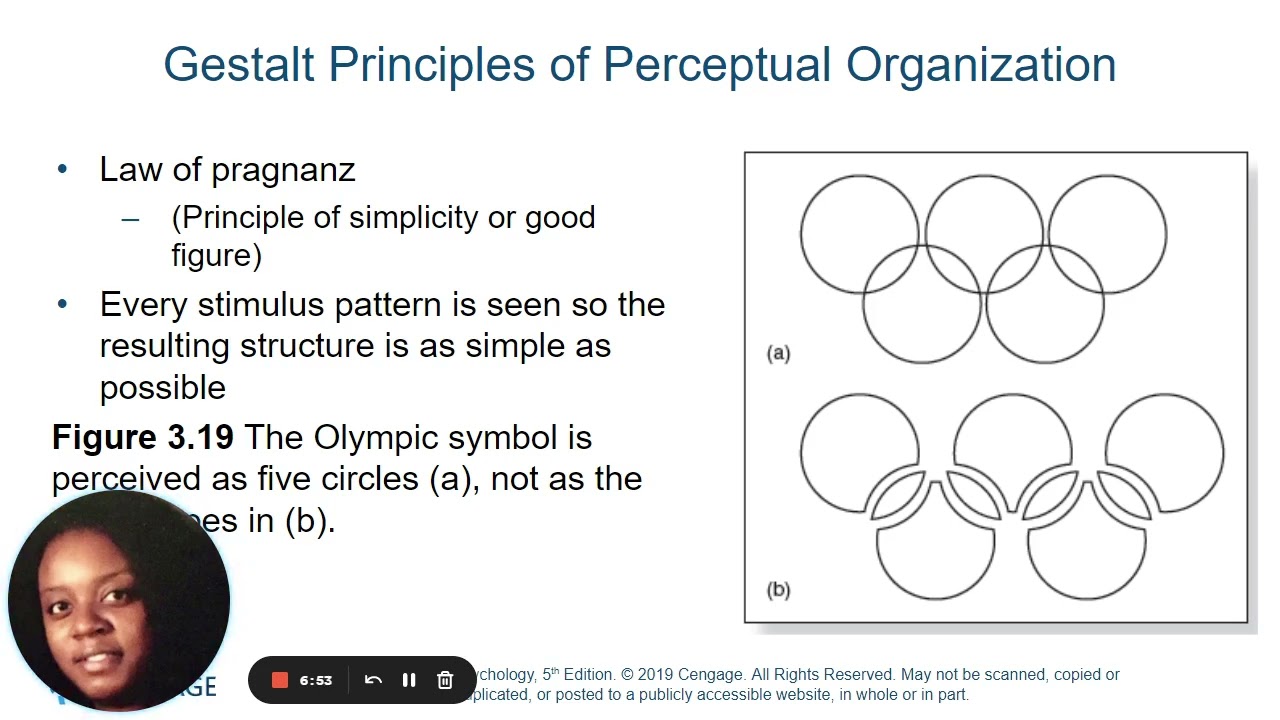




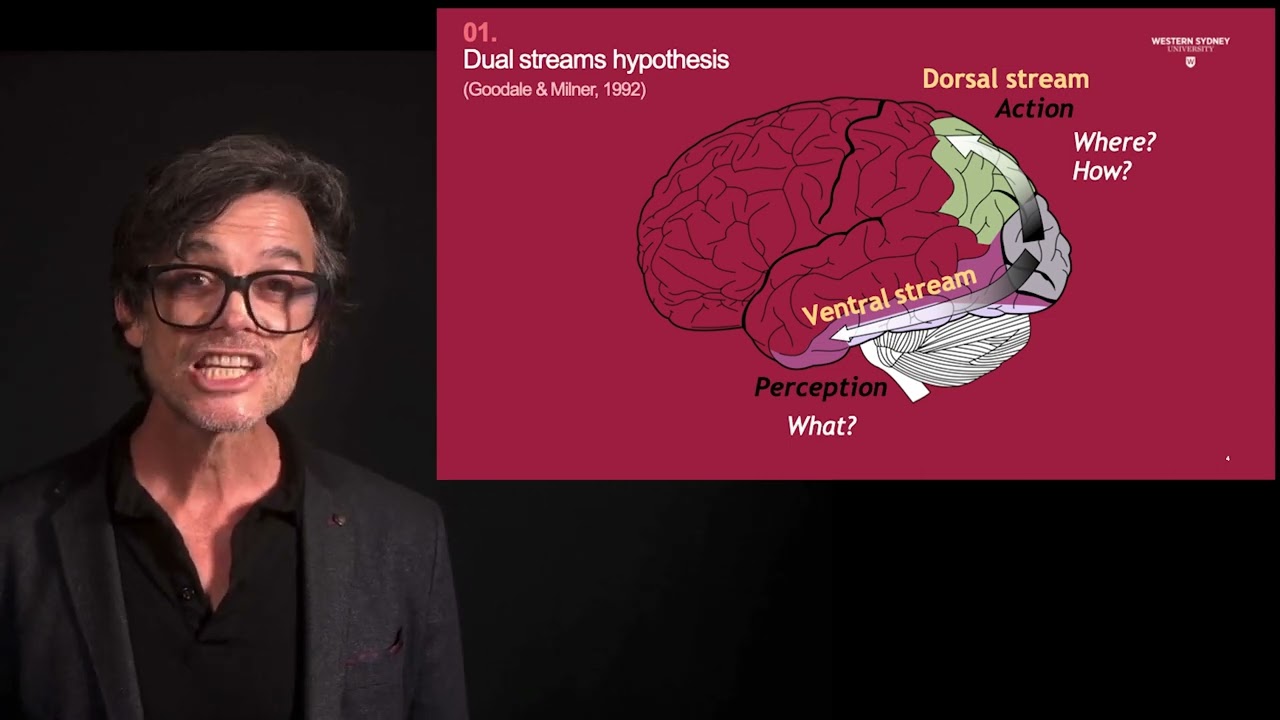


The brain processes visual information through two parallel streams: the dorsal stream (where pathway) handles spatial awareness and visually guided actions by connecting the occipital lobe to the parietal lobe, while the ventral stream (what pathway) specializes in object recognition and form representation by connecting the occipital lobe to the temporal lobe; damage to these streams produces distinct deficits—optic ataxia and hemispatial neglect for dorsal stream damage, and visual agnosia for ventral stream damage—demonstrating functional specialization in visual processing.
Dorsal and Ventral Streams: Visual Processing Pathways Explained
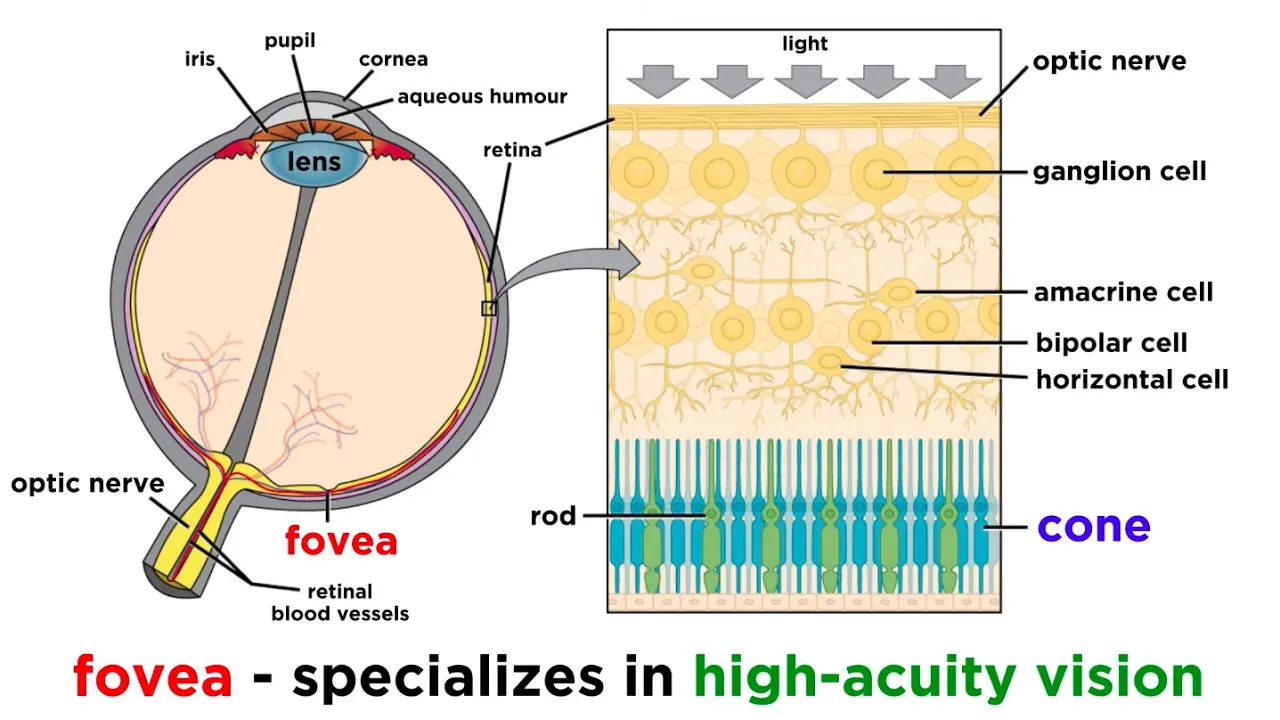
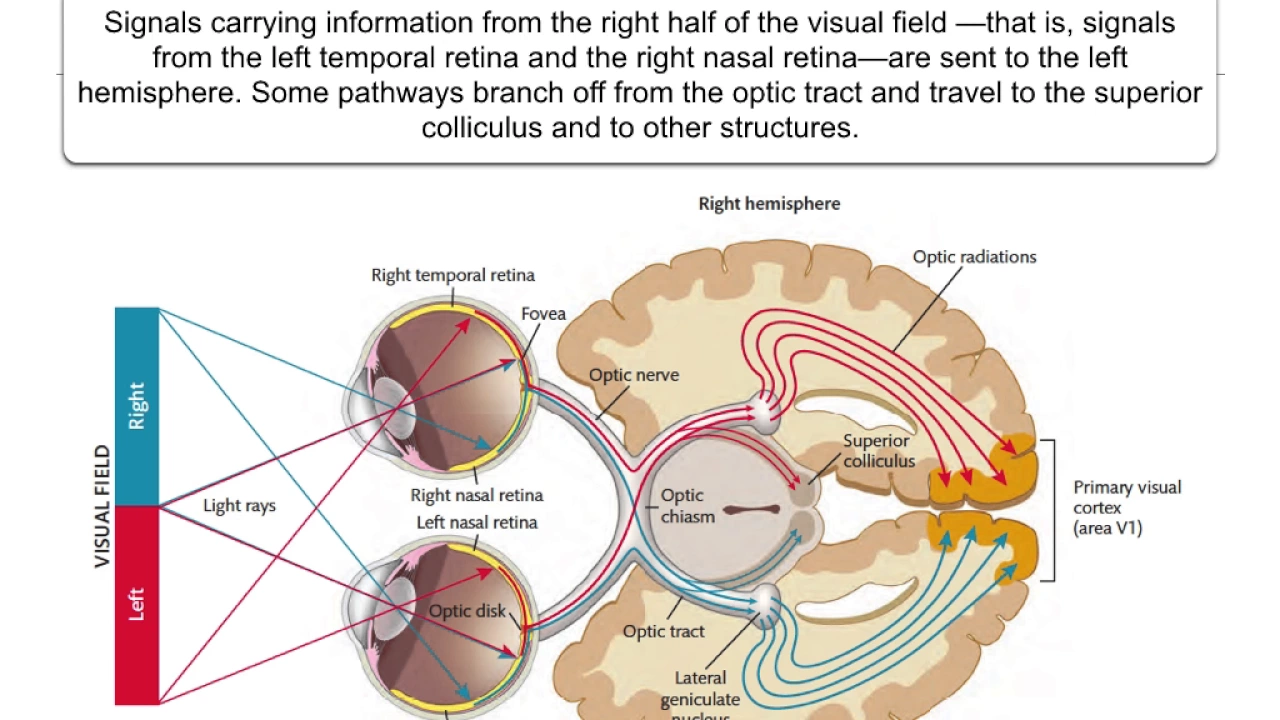
Added:Basic anatomy of the human visual pathway, specifically how visual information travels from the retina to the primary visual cortex (V1/striate cortex).
The concept of functional specialization, which is the idea that different areas of the brain are dedicated to processing specific types of information.
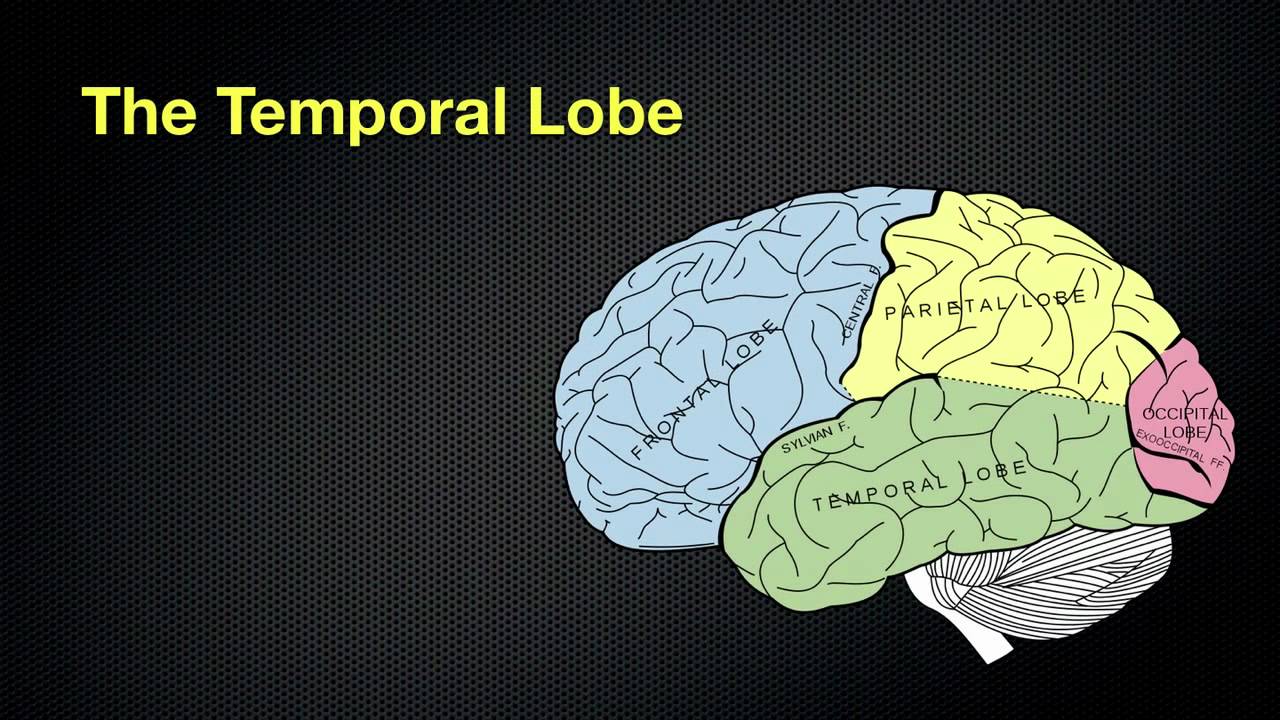
General brain geography, particularly the location and primary functions of the occipital, temporal, and parietal lobes.
The distinction between sensory transduction (receiving light signals) and cognitive perception (interpreting those signals into meaningful experiences).
Clinical neuropsychological disorders resulting from pathway damage, such as visual agnosia and prosopagnosia (ventral stream) versus optic ataxia and hemispatial neglect (dorsal stream).
The historical debate and refinement of the theory, specifically comparing Ungerleider and Mishkin's 'What vs. Where' model with Goodale and Milner's 'What vs. How' model.
Cross-talk and integration between the streams, exploring how the brain combines object recognition and spatial action to perform complex, coordinated movements.
The application of the dual-stream hypothesis in artificial intelligence, particularly in designing computer vision models and robotics that separate object classification from spatial navigation.
136 views2likes6:29Original Release: 2025-09-04
The dorsal stream and vententral stream emanate from a common origin in the visual cortex. Various researchers had put forth similar concepts in the past.
The inspiration for this work can be attributed to studies on blind sight by vice grants as well as previous investigations in neuroscientific vision research. The notion of two visual systems for localization and identification was initially suggested by Schneider in 1969.
Engel in 1973 observed two distinct visual systems in frogs.
Building on this foundation, Etlinger reviewed neuroscychological evidence supporting a differentiation in 1990.
Furthermore, Travaran delineated two separate mechanisms of vision in monkeys as far back as 1968. Anger lighter and Mishkin in 1982 differentiated the dorsal and vententral streams responsible for processing spatial and visual features respectively through lesion studies on monkeys, introducing the original where versus what distinction.
Despite being surpassed by the model of Milner and Goodale, this distinction continues to carry weight. A significant contributor to this model has been the experimental exploration of the abilities of visual agnostic patient DF.
Goodale and colleagues presented the pioneering and highly influential report in 1991, which continues to be a subject of research even two decades later.
Criticism has arisen regarding the model's heavy reliance on data from a single case study.
Goodale and Milner compiled a variety of evidence from different fields to support their model. They proposed that the vententral stream processes visual input to create a detailed map of the world for cognitive tasks. While the dorsal stream transforms visual information to aid in motor planning, the model suggests that visual perception encodes spatial properties like size and location in relation to other objects utilizing relative metrics and scene-based frames of reference.
When it comes to action planning, absolute metrics using egocentric frames of reference define the actual properties of objects relative to the observer. The integration of these different frames of reference helps in reconciling discrepancies in visual illusions when grasping objects against complex backgrounds.
Norman also presented a dual process model of vision, outlining eight key distinctions between the two systems.
The vententral system handles recognition and identification tasks, focusing on details in long-term memory, while the dorsal system is geared towards visually guided behavior, prioritizing motion sensitivity and short-term memory.
The two systems function at different speeds with the vententral system typically slower due to its detail oriented processing and the dorsal system faster to aid in real time actions. Furthermore, the vententral system operates in an alocentric frame of reference focusing on the object itself while the dorsal system uses an egocentric frame of reference centered on the viewer.
The dorsal stream also known as the how pathway is responsible for spatial awareness and guiding actions. It processes information related to spatial properties and object manipulation, connecting the visual cortex to the posterior parietal cortex. Patients like patient DF have shed light on the dorsal stream's role in constructing representations for object manipulation leading to its nickname change from the wearer pathway.
The dorsal stream works in tandem with the vententral stream which is dubbed the what stream responsible for object recognition and form representation. The vententral stream is intricately connected to areas of the brain associated with memory, emotions and motion processing. Visual information is processed through various areas in sequence with each area handling different aspects of visual perception such as color, shape, and integration of stimuli into a holistic image.
Damage to the dorsal stream can lead to spatial disorders like simultanagnosia, opticia, hemispatial neglect, ainatopsia, and aroxia. On the other hand, damage to the vententral stream can result in the inability to recognize faces or interpret facial expressions, highlighting the crucial role it plays in object recognition and significance judgment in visual processing.
The auditory vententral pathway in Hickok and Pebble's dual pathway model plays a crucial role in processing linguistic information such as the phrase my cat. Phonemes are initially processed into syllables and environmental sounds before converging with the visual vententral stream at the middle temporal gyrus and temporal pole to form audiovisisual concepts.
On the other hand, the auditory dorsal pathway is responsible for mapping auditory sensory representations onto articuly motor representations essential for speech production. This pathway starts at the posterior superior temporal gyus and sulcus moving towards the temporal parietal boundary near the sylvian fissure.
The sensory motor interface specifically the left sylvian parietal temporal region is vital for perceiving and reproducing sounds contributing to language acquisition and phonological short-term memory. Further along the pathway, the articulatory network divides into two parts for processing motor syllable programs and motor phone programs located in distinct regions of the brain.
In contrast to the vententral stream, the auditory information for repeating phrases like what is your name? enters the dorsal pathway through the posterior superior temporal gyrus. This information then progresses to the sensory motor interface at the temporal parietal boundary, specifically at the SPT region.
Critics of Hickok and Pebble's model have raised concerns about the oversimplification of the dual pathway theory. Recent research challenges the strict separation of visual functions into two streams, emphasizing the interplay between perception and action.
Neurosychological studies have questioned the independence of the dorsal and vententral streams, suggesting a more integrated approach to understanding visual processing.
Goodale and Milner propose a perspective where the dorsal stream operates under the guidance of executive functions informed by vententral stream processing, highlighting the dynamic interactions within the visual pathways.
Researchers like Robert Macintosh and Thomas Shank suggest viewing the model not as a rigid hypothesis but as a heristic guide for further exploration, advocating for a deeper understanding of how visual brain areas form functional networks in various tasks.
Up Next
72:47
Cognitive Neuroscience: Attention & Neglect (Ch 9-10) | Prof. Jamie Ward
@studentsguidetocognitivene282
8.9K views•2020-03-16
21:55
Deciphering Neural Circuits Controlling Anorexia in Mice | Richard Palmiter
@AllenInstitute
2.3K views•2011-10-10

4:10
Vagus Nerve (CN X): Anatomy, Nuclei & Functions Explained
@Alilamedicalmedia
305.2K views•2022-10-31
13:03
How Exercise Benefits Your Brain: Science Explained
@TED
11.4M views•2018-03-21
Related Study Plans & Knowledge Roadmaps
Structured learning paths in Neuroscience
neuroscience
Appetite Regulation: Brain Circuits & Hormones
01Foundations of Endocrinology and Brain Anatomy
02Introduction to Energy Homeostasis
03Peripheral Signals: Leptin, Ghrelin, and Insulin
+ 2 more learning modules
14h5 modules
Explore Roadmap
neuroscience
Neuroeconomics: Value, Risk & Brain Mechanisms
01Foundations of Neuroscience and Brain Anatomy
02Introduction to Neuroeconomics and Subjective Value
03Dopaminergic Prediction Errors & Reinforcement Learning
+ 3 more learning modules
18h6 modules
Explore Roadmap
neuroscience
Spatial Navigation: Cells, Grids & Brain Maps
01Foundations of Brain Anatomy and Memory
02Place Cells and Head-Direction Cells
03Grid Cells: The Brain's Coordinate System
+ 2 more learning modules
12h5 modules
Explore Roadmap
neuroscience
BCIs: Neural Decoding & Prosthetic Control
01Neuroscience Foundations: How the Brain Signals Intent
02Signal Acquisition: Recording the Brain's Activity
03Neural Decoding: Translating Brain Waves into Data
+ 2 more learning modules
25h5 modules
Explore Roadmap