










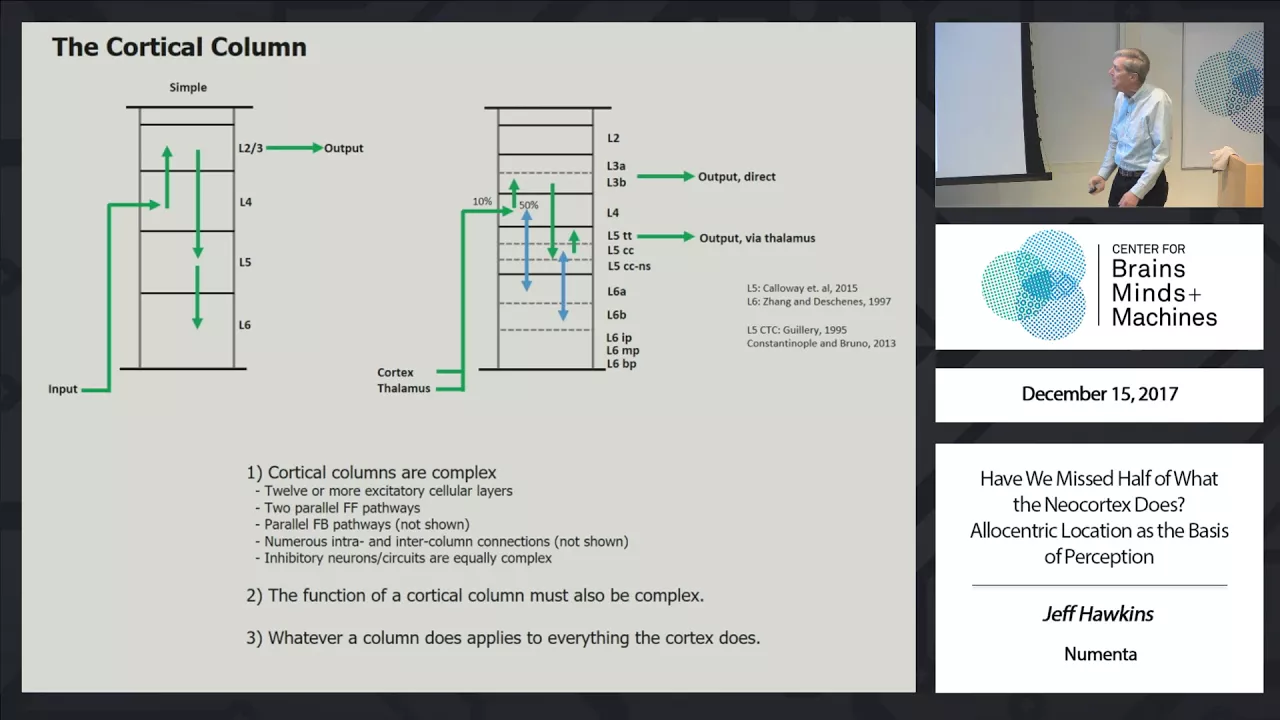

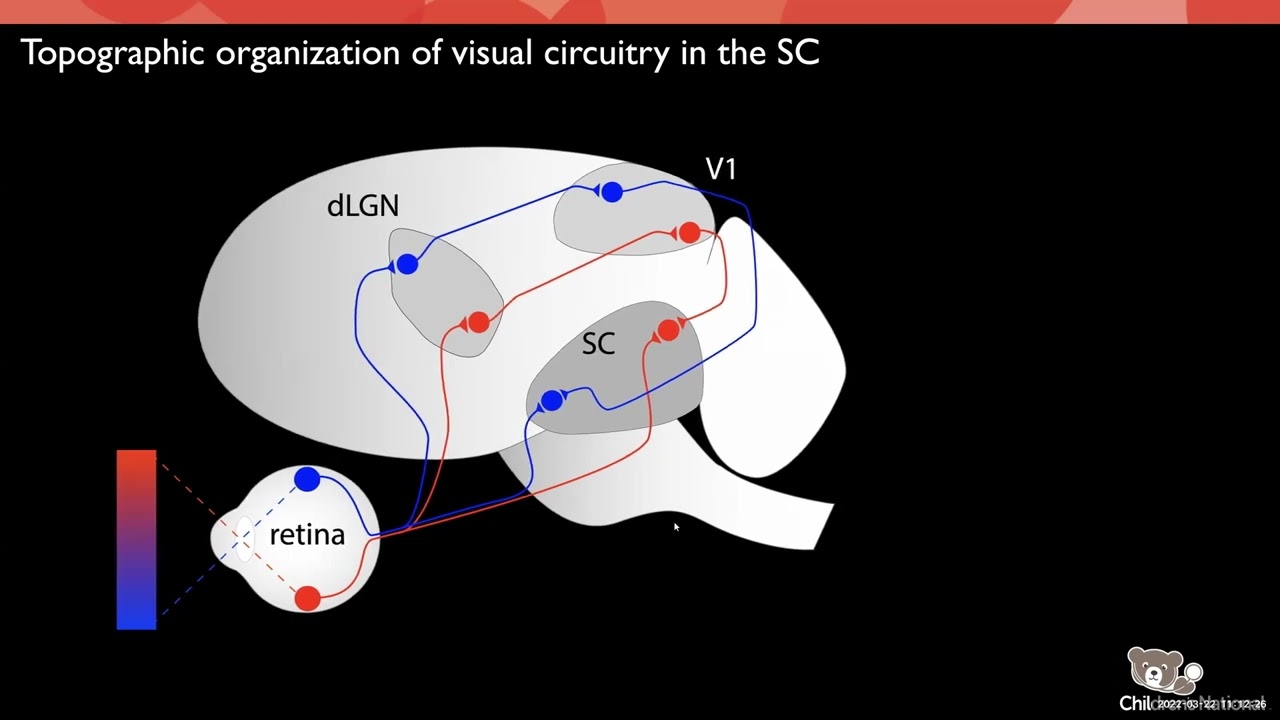


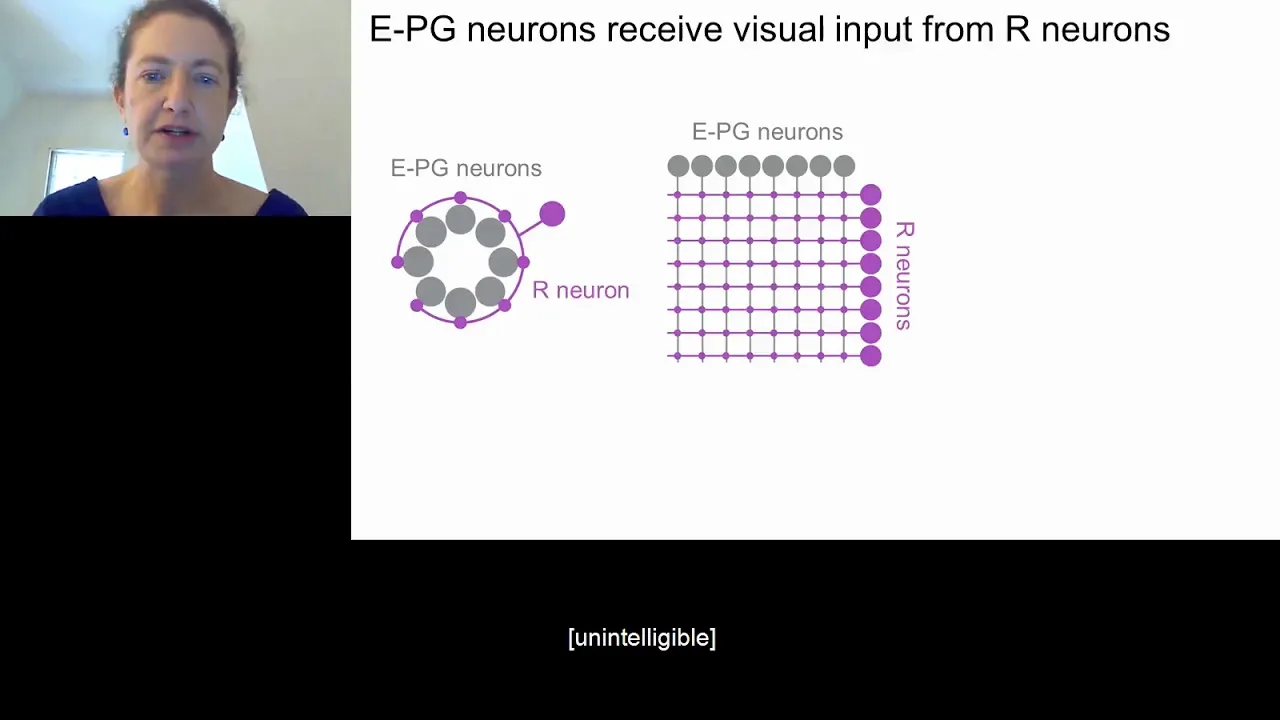
Attention serves as a selective filter that prioritizes sensory information based on goals and relevance, operating through the dorsal stream (where/how pathway) which processes spatial information and guides action, while the ventral stream handles object recognition; this is demonstrated through phenomena like inattentional blindness, the rubber hand illusion showing multisensory spatial map integration, and visual neglect revealing how brain damage to the right parietal lobe disrupts spatial attention more severely than left hemisphere damage, with different spatial maps (retina-centered, body-centered, head-centered) competing and integrating to enable goal-directed behavior.
Cognitive Neuroscience: Attention & Neglect (Ch 9-10) | Prof. Jamie Ward
Added:Basic neuroanatomy of the human brain, particularly the structure and functions of the parietal, occipital, and frontal lobes.
The distinction between sensory processing (sensation) and cognitive selection (attention).
The dual-stream hypothesis of visual processing, specifically the difference between the dorsal ('where/how') and ventral ('what') pathways.
Foundational concepts of attention, such as top-down (endogenous) versus bottom-up (exogenous) attentional control.
Clinical manifestations and diagnostic assessments of hemispatial neglect, such as line bisection tasks and clock-drawing tests.
Rehabilitation strategies for neglect patients, including prism adaptation therapy and virtual reality spatial training.
Advanced theories of spatial representation, specifically the neural distinction between egocentric (body-centered) and allocentric (object-centered) coordinates.
The neural mechanisms of sensorimotor integration, focusing on how multi-sensory maps coordinate visual attention with motor planning.
8.9K views59likes1:12:47Original Release: 2020-03-16
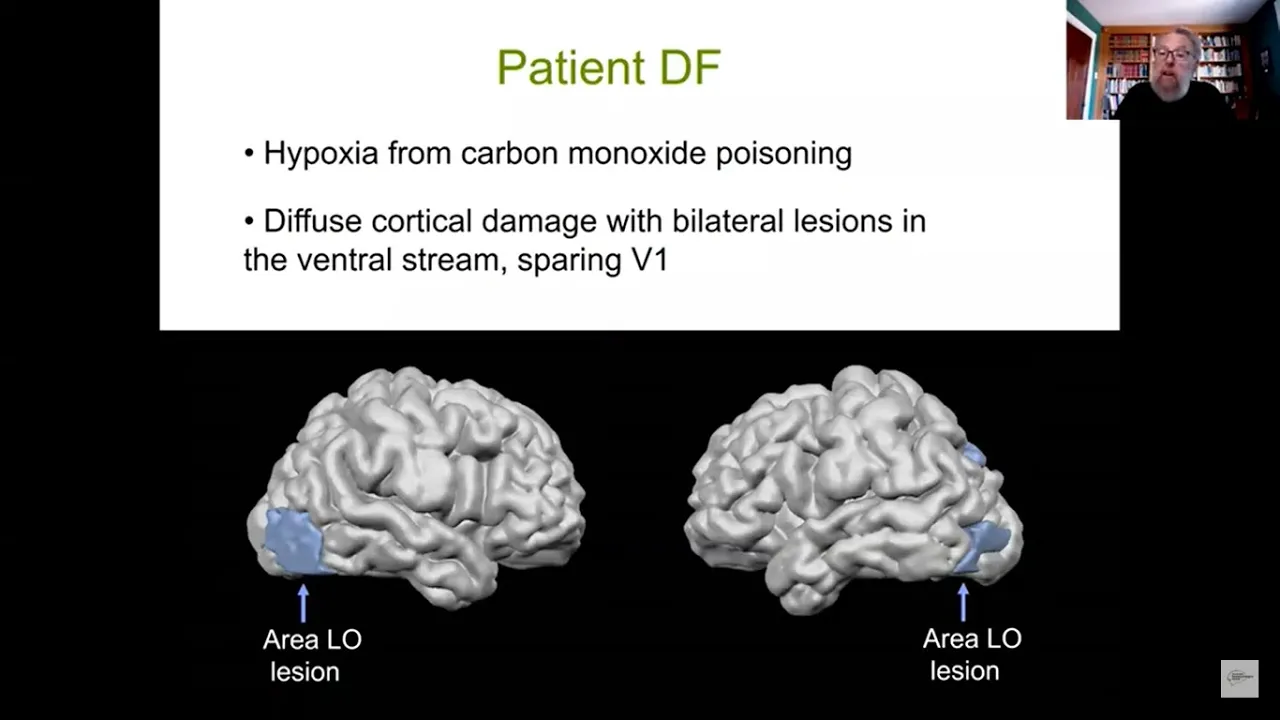
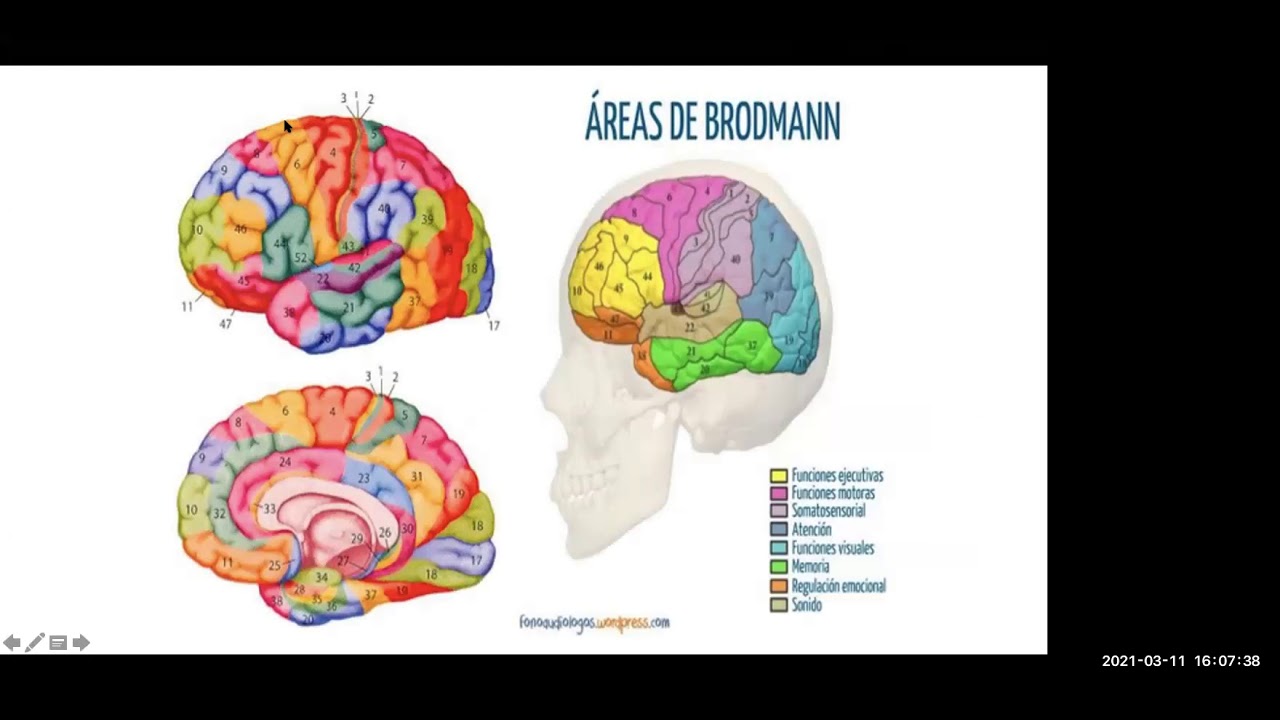
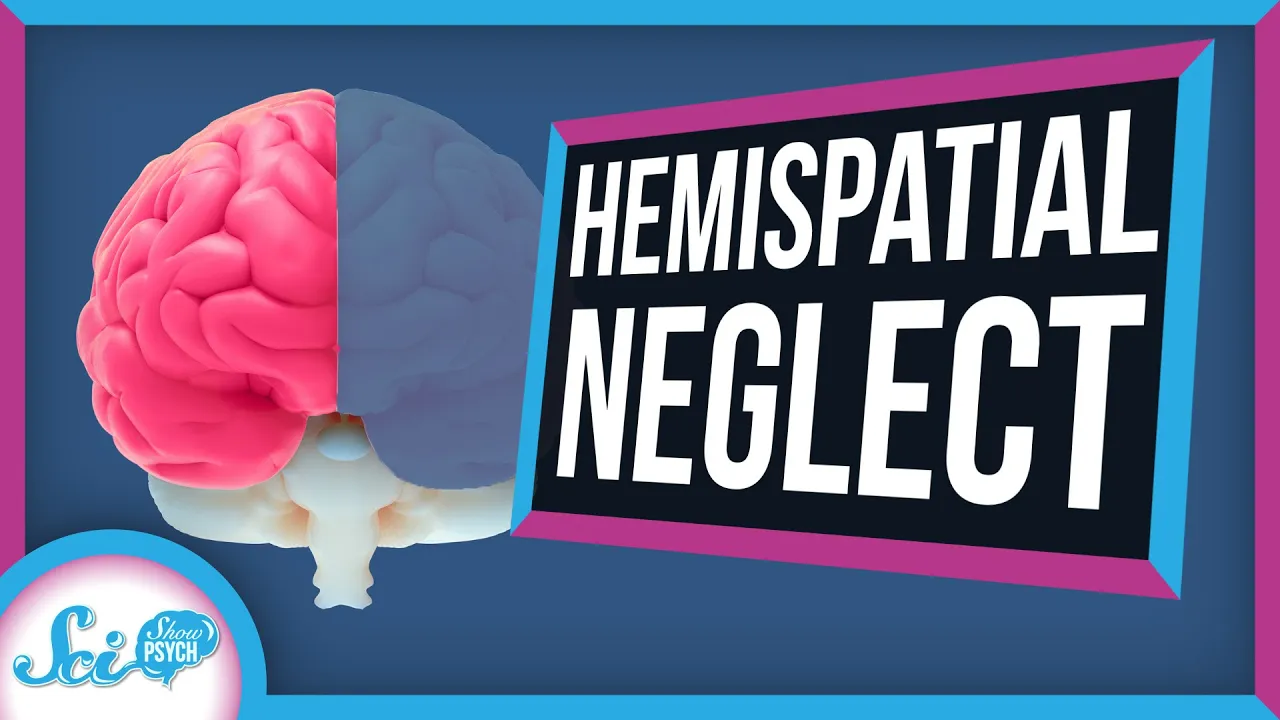
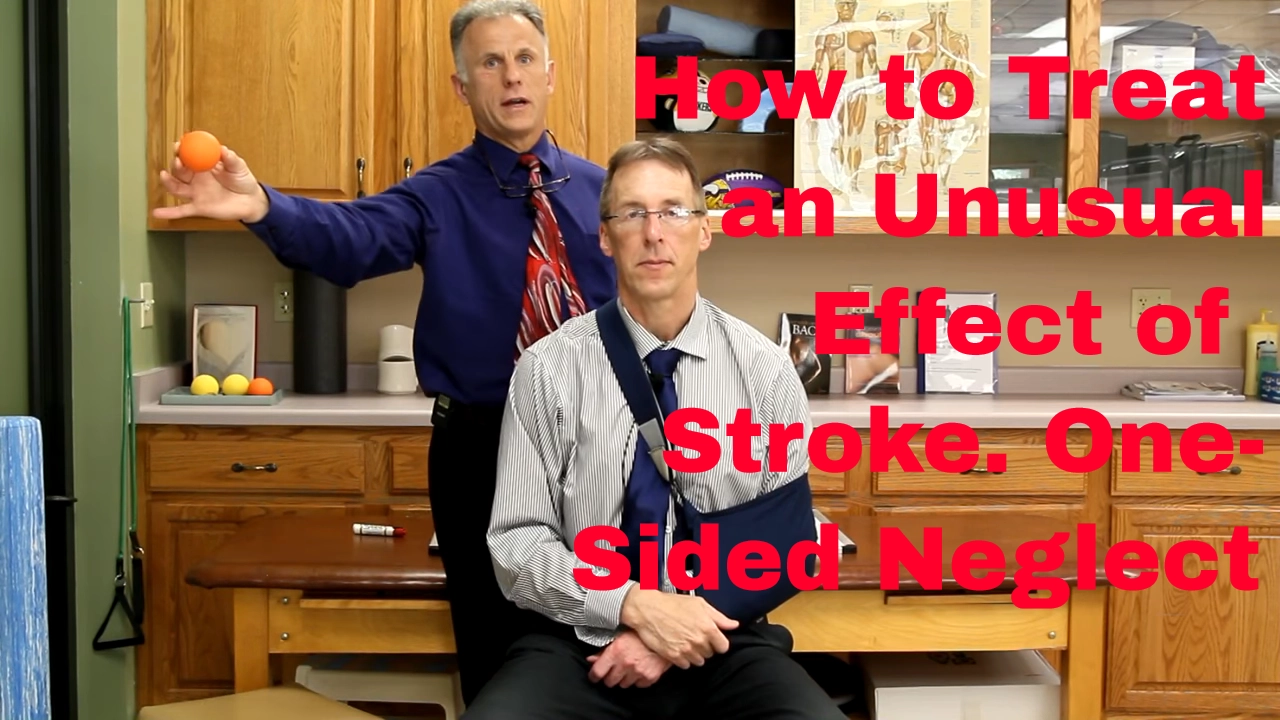
so today's lecture from some where we left off last week which talks about vision in particular and today we're talking about attention which is really what you could think of as selecting from different kinds of information and that will include a vision so when you see a complex room like this how do you focus in on some information not other but it's not just about vision it's about how we do this with all the information that we're given through all of our senses here this is a famous example of something called inattentional blindness which is nothing to do with blindness as we understand it it's basically that sometimes we don't see things if our attention is elsewhere so what this this is a video that you can look on YouTube but basically what you have to do is you have to counter the number of basketball passes that people have when they and they're just throwing it around so it's quite cognitively demanding they're throwing it backwards it forwards but basically the gorilla walks on from left from this side to that side he does that and he walks off about 50% of people do not notice the gorilla okay and about half do so this here is something that is linked to attention your eyes would have seen the gorilla at some level and I'll show some evidence from similar studies that it probably activated things in your visual brain but basically there is something that selects information from that visual template and focuses on some instead of the other and that's kind of what attention is doing so your attention was on these people so you're you miss the gorilla in that case and obviously if there was no people there just the gorilla everybody that's better so what is the tension I'll talk a little bit about this particular term as a visual for action so the idea is that there are multiple branches of vision so worn that support of recognizing objects and one that's involved for acting on the world so picking things up for instance and then I'll talk about this beyond vision so multi-sensory aspects of attention so the body sounds and so on how these kind of enable us to focus in on certain things and to act on them and then I'll talk about the difference between the left and the right Hemisphere's inattention how brain damage can give rise to a symptom called neglect so we can think of attention as being involved in selection so in this image here the idea is that you might be searching for something it might be a line or something like this but you can focus in here on different colors you can focus in on shapes but also there would be sounds that would be smells lots of things would be going on and basically all of these sources of information will be competing with each other here and what you're having to do is to prioritize what is it that you're going to focus on and you might do this according to what your current goals are that you're searching for a lime or maybe you're certain with your friend and so on and essentially what you're doing is you're taking all these sensory inputs and you're kind of dampening down the ones who are not interested in and enhancing the ones you are interested in and that might mean that you look for all the green objects for instance including ones you don't want such as a green apple so yeah so there's a competition between different sensory objects and a competition between your goals and what's coming in through the different senses action also involves a selection as well so whereas in that scene you might be processing all the different colors and sounds that spells simultaneously our bodies pose a certain selection demands on us and that's simply because we cannot do this is that we have to do one thing at a time in general I mean with some limitations obviously ice can do one thing in their hands with another but even so there's a finite range of possibilities that you can do so in effect given an infinite a range of sensory stimuli some extent which would be processed in parallel you're having to focus there serially ultimately into one what are you going to do with your hands or your body or whatever it is so the way this is a kind of propagate from perception to attention to act country balls the [ __ ] from parallel processing processing multiple things at the same time multiple colors objects and so on to what we're being able to do one thing with your hands but in Reverse you the opposite would be happening the action would be so your goals what is it you want to do you want to reach for an apple that affects what you attend to and it affects what you see so in effect your goals and what it is that you want to do with your your body or what what it is that you want to obtain in the world acts like a filter on your sensory flow it's effectively saying right I want to reach for this particular object so all the other objects are going to dampen down and I'm not going to pay attention for so you've got this kind of this try to narrow in on a limited number of things maybe down to one thing that you act people often describe attention in terms of a spotlight the idea behind a spotlight is several things so one idea is that you are focusing on some things and not others it's not everywhere it's in some locations more than others and people talk about this in terms of limited capacity that there's only so many things you can process at once and that might be because of the mechanical constraints of your body it might be because of the the way the limitations on your sensors that there's only so many objects you can perceive and so on but simply the spotlight is inherited lis flexible and so far as this metaphor works so maybe you've got an arrow or a wide beam so the kind of example there is that if you're looking at words you might want to look at a central letter if that's your task but you might want to look at the whole word and basically you can kind of zoom in on one or the other and treat one as being kind of in your attentional focus and the others outside also this spotlight isn't quite the same as eye movements so for instance I could be looking straight ahead and I can have an attentional focus here so the the proverbial looking at corner of your eyes what that means that your eyes are looking straight ahead but your attention is somewhere else okay you're really looking at coordinate your eyes it's an attentional metaphor that you're directing attention elsewhere if this metaphor of the spotlight shouldn't be taken too literally so with this you kind of might imagine well there's only one place in which you can put the spotlight whereas in fact there's evidence that you can attend to say this location of left and that location on the right without attending to the bit in the middle so this is if you feel it kind of I suppose if you carry with her over think you could split it so it's not a single boot beam it's a flexible but the idea of the spot like to see you're processing some things at the expense of others something reporting in the shadow is something like this is another example when the spotlight kind of breaks down in the sense that it's not different locations that you're you're looking at but you're looking at two things which are in the same location so here you've got a face or a house and I could tell you to focus on the house I can tell you to focus on the face eventually if you carry on staring your attention will just flip back these four words spontaneously between the two so here insofar as you think of this as a spotlight it's an object-based spotlight rather than a spatial spotlight would be another way of thinking about it but also think about what your eyes are doing when it's processing this stimulus you're in this case and there it doesn't matter where you look you're still seeing the house and the face your eyes give don't care at all about this is just patterns of light on the back of your eyes was your brain can kind of focus it and in effect what happens is is that when you're asked to focus on say faces they're basically parts of your visual ventral stream so this is the part of the brain we talked about last time in object recognition so the back of the brain here's your early visual cortex your v1 and then as you go down your temporal lobes your inferior temporal lobes you have regions that are spotless specialized for recognizing objects and some degree of specialization same houses and faces and cats of dogs and the sort of thing that we talked about before but what happens is is that if you ask somebody in this stimulus to concentrate on the face what happens is they the goal here is to concentrate on the face and in effect you've got this frontal two parietal so visual a kind of network here but basically you could imagine as shining a spotlight on the face area of the brain and if you measure this in fMRI with your bold response what you find is the parts of the brain that are specialized for faces the activity goes up and for places it is relatively down but of course you could just change the task and you could say right now the task is to concentrate over houses and ignore the faces and basically what we find is that you're in effect flipping between what is activated in your visual stream that goes from the face selective areas to the place selective areas and you're kind of flipping between them so basically we can think of as attention as kind of enhancing or amplifying the activity within sensory systems it is literally increasing than your responsiveness but again here remember that your eyes are seeing both it is just the the brain's representation of that information but the question is who is controlling this spotlight so in this particular example we can say to top down it's based on our goals that the the experimental whatever says look for the houses or look for the faces you're given some kind of context but in other situations things might happen from the bottom-up so there might be things that go on in your visual string that just capture your attention so the kinds of stimuli that do that would be sudden changes so for example if there's a sudden flash of light for instance or a bang what will then happen is is that irrespective of what your goals are this will catch your attention this selects itself if you will in wins the competition irrespective of what your goals are so here in effect you've got a visual stick being selected and then triggering its own action where a typical action for a flash of light or a bang is you move your eyes to it and you you orient your attention and your vision to find out what it is but it might be other kinds of more complex stimuli so here it might be for instance you see a threatening stimulus or something you don't like such as a snake and again the idea is that this will kind of pull the spotlight towards it by which I mean it kind of enhances its own activation so your your representation of snakes become greater than anything else you're looking at and that sends a signal forward which alerts you to do something about it to either discounters to run away and basically we can think of attention as although I kind of rather naively put it as kind of a module in the parietal lobe so as we kind of delve deeper you'll see that that breaks down lots of other little circuits the really attention is kind of a we can think of it as a brain level property of selecting information and different levels so you select information at different levels within your your visual representations that some tend to capture attention more because they're subtle or we assign certain value to them but also our goals and our actions and so on can do it as well and basically all these different levels are kind of always competing and sometimes we select things based on what they look like sometimes we select things based on what we need and so on and this whole system is very dynamic both bottom-up so although there isn't a kind of a single module that we might want to label attention there are some mechanisms in the brain that are clearly involved in kind of this selecting this reducing the amount of input that flows upwards and downwards so first of all if we go back to this model here effectively what we have from the visual cortex are two different kind of branches one that goes this way which is involved in detecting what objects are and one that goes this way which is involved in kind of selection and action deciding what is your priority and what it is you're going to act on and this is what's referred to as dorsal and ventral streams or the water route which is your ventral stream that tells you what things are it's a snake it's a cup and your where or how route which tells you where things are and this is kind of what's illustrated here so what is what tells you that it's a face a house a snake or whatever and this dorsal root here is involved in attention and action some people call it where and what that means is that it's kind of this spatial kind of spotlight metaphor of deciding what is your priority where is it that you're going to look and some people talk about it as how so thinking about how you're going to pick it up or how you're going to act on the object what are you going to do with it you got to look at it you've got to pick it up and so on and essentially both of these are correct insofar as this route here contains neurons that contain what we would call maps of space but also maps of space that link for instance vision with your body so hand-eye coordination for instance it links maps of where your body is with maps of where things are on your retina and I'll talk about both of those so that's how you kind of find out where things are it can be where in multiple space where things are relative to your body or where things are relative to your eyes and in effect what your parietal lobes is doing is trying to link those kinds of information together in order for you to kind of process it further what it also means is that these two routes are kind of carrying different sources of information and that one route might give you an answer that differs from the other and we can look at this both in terms of normal perceptual illusions but also in terms of brain damage so one of the things I talked about last week in terms of object recognition or object constancy which is you're watering your ventral stream is that they have very large receptive fields and what that means is is that the neurons my response something like a pen or a cup but it doesn't care whether the pen or the cup is here here here or wherever it is where is your dorsal stream this root here doesn't really care whether it's a pen or what it is but it cares where it is where is it in space so it's what is a more spatial aspects of vision and one is more shape so the claim here is that in this case what's happening is is that the visual illusion is being driven by this and that's the sense that these objects are different in length but your ability to act on it your hand knows that they're the same length because it's getting more accurate spatial information and it's discounting the the information about the the parallel lines so here the claim is is that your dorsal stream the going into the parietal lobes can accurately pick up the object it doesn't make your hand grip longer than it is so it's not fooled by the illusion even though you're conscious fish needs and that was kind of the claim made here now if the person in the video obviously doesn't have any form of brain damage but you could you can see what happens when you do damage these two streams and show that it has different effects on perception versus action but my perception I mean kind of consciously stating what it is you see and so so remember from the slug the visual agnosia so hja who couldn't integrate parts into holes and things like this is caused by damage to the ventral stream here so this person for instance have problems in recognizing birds couldn't retexe properly couldn't recognize objects presented as line drawings but the question here is can you act on the objects that you can't see and of course you expect here that you would be still able to do that and that's what's fair so david Milner was the the guy in the video that we've just seen and he studied a patient who had a visual agnosia who couldn't do perceptual matching so what he had to do here this is the patient DF a perceptual matching woman he the patient was given is that they were given a they were given a slot and they had to then rotate an object and say whether it's different so you have to say with a sloth like this is the same as a slot like that so it's matching two different parts together but perceptually and he's all over the place with this so the correct solution would is kind of shown here for the control but here instead of just saying were the two things are the same or different what's happened is that he's given a letter to kind of post and then he has to post a letter through the slot with his hands and what we find is that when he's asked to use his hands to kind of reach to the slot and post into it he could do it accurately so here he's able to use vision in order to guide his hand but without his hand he can't tell you where the two slots are the same orientation or not he can't integrate those two pieces of visual information together between integrating vision and motivation and similarly here this is like a t-junction that's basically the patient will occasionally do it this way so again this suggests that he's actually this patient though the patient kind of knows the orientation of one of these lines but makes errors at 90 degrees so if you'll try to post the T through it like that and it suggests that she's treating this object has been to parts rather than as one hole here so there are some differences there in terms of walk and the acted upon weathers simple objects or complex whereas you kind of get the opposite profile if you were to damage the other route here and you get a symptom called optic ataxia so these patients if you show them say images of a pen they'll say it's a pair you show them an image the car will set scars but they're not agonizing they can recognize a visual objects but they struggle to kind of do hand visually guided hand movements onto objects and these are the kind of errors that they make so here they where's the other patient could post their hand through the slots these patients here struggled to do that they make the kind of errors there that they Orion take their hand at the wrong angle or they miss it in effect so agnosia patients can't tell what an object is but they can post their hands or an object from a slot was patient with optic apraxia can recognize objects but they cannot post their handle objects with slots you've got these differences here between visually guided action and recognizing objects and here this is your dorsal stream there so that this particular symptom the other symptom I'll talk about later on is neglect worth basically patients have problems in detecting and stimuli on one side of space it also means that they tend not to act towards but I just like here so you know it's come part of this family so the the dorsal stream is also called the where or the how route and what it's effectively doing is that it's linking different kinds of map the spatial maps together so it's linking together information about where your hand is in space with information about what where visual objects are in space and it's kind of trying to superimpose visual onto in this case bodily and motor information but it also does the same with other sensors such as sounds and touch as well and in effect we could we can think of the parietal lobes as containing multiple different maps of space and that the brain itself contains multiple different amounts of space so the brain doesn't treat space as being a kind of a single entity so what we have for instance is that we've got spatial maps that represents our sensory surfaces so for instance our retina carries information about the pattern of light but our v1 kind of carries that information as well even though there's no light in v1 it's just your signaling it carries a spatial kind of map of where things are on the eyes but knowing where something is on the eye isn't health you need to know where something is out there you're not reaching into your eyes to find objects and then what we have would be spatial maps that tell us where things are relative to our body so I know my hands here I can see an object there so you have something that says and treats my hand has in effect the origin and says right at 30 degrees up there there is an object so here the origin here is my hand and the object is defined relative to that as opposed to being the object being defined relative to the center of my eyes in that case and that you would have locations of objects relative to each other so where for instance one object is relative to that or kind of your spatial maps of space so where marks as fences is a relationship to Churchill Square for instance that would be a very different kind of spatial map that isn't really sensory based it's a bit more kind of abstract or you aren't kind of in the map if you will it's kind of what was called our Centrex so all of these different tasks such as finding your way around picking up a pencil and all these things involve different kinds of maps of space which are located in different parts of the brain so v1 your visual area contains a retina centric map the campus context of our center of map that's hopefully your way around whether your parietal lobes are very interested egocentric space where vision is written relationships your body where sounds are relationships your body and so on and we can illustrate these difference maps of space using a phenomenon called the rubber hands illusion how many people are taking part in it a classical illusion that has been published in 1998 by two Americans between Akande and Cohen to American neuroscientists is the rubber hand illusion the rubber hand illusion consists in placing let's say one's left arm out of sight out of vision and placing in front of the eyes of the subject a hand in plastic a rubber hand and then the experimenter will stroke let's say the left the index finger of my left hand and at the same time the in the left index finger of the of the rubber hand and if he does this synchronously for a minute up to two minutes certain subjects two-thirds of all subjects will start experiencing this hand for some moments as if it were belonging to their body so this is one way and this is normally investigated by questionnaires so the subject will be asked a certain number of questions to respond to and then there's a second measure which is in my opinion even more interesting because if you then after these two minutes of stroking will close the eyes of the subject and ask them will now point to where your hand would really be they do not point with eyes closed to the real arm they will point towards the rubber arm I really felt that my hand was transposed and into that false hand that was presented in front of me the feeling was really an awkward feeling very strange feeling of having a fourth hand belonging to me we see we visually see that the hand is false but we can't separate that from the fact that we actually feel our hand in that place by simultaneously stimulating fake rubber hand and a real hand something that is felt and something that is seen on a hand is integrated in normal under normal conditions when I see something close to a hand and i feel touched at the same position this is always on my hand at least I guess in 99% of all cases having there is that you can't see your own hand you can see the dummy had will you stroke both at the same time and here you in effect you're confusing a visual spatial location that doesn't what you're seeing with the dummy hand with a felt location so you're mixing up your your your map of where you think your real hand is in space with your visual information of what you're seeing and the way that this is measured is as he said their questionnaire measures you ask people did you feel as if the dummy hand belonged to you and people say yes and the other another way of measuring it is you ask people where is your real hand and when they're in the illusion they get confused about where it is and it feels like your real hand is a few centimeters over from where it really is so gravitates towards the the visual location there are other ways of measuring the illusion that you can use something like a skin conductance so what happened there is that somebody came in with a fork and stabbed the dummy hand and he had a very strong kind of reaction to that you could measure that physiologically with like skin conductance or the eyes or any of these kinds of responses here you might wonder what they the control conditions are for they stood two people never the standard one is so what you do is that you would stroke the dummy and the real hand out of sync so instead of doing this with the reel and the dummy hand you do this and then this so that the two are not matched so what you see in what you feel that and you won't get the same startle response you won't get the same measurements of the questionnaire which look like this so these are the the the questionnaire responses the ones underlined to the ones that discriminates that the rubber hand illusion more than the other ones so people say things like I felt as if the rubber hand were my hand and it seemed as though that touch I felt was caused by the paintbrush touching the rubber hand and it seemed as if I were feeling the touch of the paintbrush as a location where I saw the hand touch they tend not to agree with control questions here so I felt as if my real hand returning rubbery interesting if that was the case but people don't agree with that so again this is another way of shaking it's genuine it's not that people agree with any old nonsense things so this where does this leave us in terms of thinking about multi-sensory maps and what the the parietal lobes are doing here in effect to generate the illusion we have three different kind of maps of space that are giving conflicting information and the illusion arises because you're trying to resolve that conflict and figure out what the truth is so first of all we've got visual information about where your hand is but remember the visual information just tells you there's a hand front of you the Vil your vision doesn't tell wits but at your hand was somebody else obviously somewhere in your heads and you know it's a dummy hand yeah but your eyes and your the information going to your v1 and in your and so on is just telling you there's a hand in front of you that's all of your visual information you have then a tactile map of space so you have your body surface has its own particular map of receptors but all your tactile map knows is that your hand has been touched that is all it knows so at this point all you know is that there's a hand in front of you being touched and your hand is being touched what you then have is another kind of spatial map and this tells you where the joints of your body are in space so when I can have my arm kind of bet there are stretch receptors in my joints that in effect tell me what the angle of my various body parts are and this is called proprioception it's different from your sense of touch but it's not a million miles from you though the neurons that are involved in touch are similar to this it is related technically its tends to be classes are different kind of sensory information so in fact what we've got here is that your proprioception knows that your hand is over there you've also got a higher-order belief that you know your hands in there but your visual information is telling you your hands in front and your visual mean your tactile information I'm telling you the both are being touched at the same time and the question is how do you resolve this ambiguity between these different sources of spatial information and the answer is the vision wins and vision wins a lot when it comes to space because basically vision is very accurate and locating where things are knowing where your limb is in space is not too bad but but it's not as accurate as vision knowing where sands are in space is not as accurate as vision so there are some situations at which sounds win but when it comes to space vision tends to beat all the other senses something like this so what happens in that is that you you you're you kind of integrate this information and you believe that the the visual information is true and you discount the information from your joints that tell you that your hand is over there so this is what I mean by different maps for four different senses so vision is at least in early visual cortex i centered so as you move your eyes around all the visual information on the ice moves around all the information your visual cortex moves with your eyes whereas your body has these kinds of representations so one is for touch and one is for body movement this one here is for action and again you can see the hand has a very large kind of your episode take you've got lots of neurons that respond to your hand and your face and less so but essentially the rubber hand illusion all you know is that your hand is being touched you don't know where it is you just know which body parts being touched whereas hearing his head centered so basically the information that comes to you via sound it goes in obviously it's your ears but it depends on where your head is so as you turn your head you will get different sounds even if your eyes with the same basin and in fact will the parietal lobes is having to do is it's having to superimpose these different maps of space onto each other in order to figure out whether a sound is coming from over there or over here and how to link a sound source with a visual source given where your eyes are so let me kind of explain that with so here this is our kind of motor cortex here and this is this strip here so basically what this means is that you got neurons here that response the response phase so as well as having yawns that are tuned to different body parts we also have neurons that attuned to different directions of movement so for instance some neurons for instance in the hand area will fire when the hand moves this direction some neurons will fire when the hand goes in that direction so you've got different doors that are tuned to different directions of movement and to different parts of the body and what you're in effect wanting to do when you're trying to move for towards an object is that you're having to link the information about way or what is with where information is in a visual sense of space and this is what's called kind of sensory motor transformations or remapping or coordinate transformations and essentially what you're doing is that you're taking a kind of a visual map in which you could imagine the origin being the center of the eyes and superimposing it on a body map in which the origin is say your hand or the origin is some other parts of your body your head or your trunk depending on what it is so you're it's like overlaying different maps of space and that's what your parietal lobes do but it does this across multiple sensors so it integrates spatial information from hearing and their information from your body around touch and how you want to move your body with your motor cortex with vision information from your dorsal stream and this is kind of going into it too more detail but as you kind of go into your private labs you find that there are different kind of subpopulations of neurons that do different things I won't go into the lore but basically again a lot of them focus on the this parietal and these kind of frontal regions and again these are regions that will be active in the rubber hand illusion for instance that are linking trying to link together where your body is with what you're seeing in the world so this region here is called the parietal reach region and this is the the region that breaking it down earlier is they vault a kind of optic ataxia so where patients who struggle to post their hand into oriented sloths and things like that that they might struggle to reach towards visually guided objects that are in front of them so in a way we could say what this map is doing is it's trying to link together visual information about objects with information about where the hand is so damaged this region results in this problem of kind of reaching towards objects the other thing about this is that the Nords respond to the direction of our movements relative to gaze so it depends where you're looking at as to where they are that's very different from you'll note of cortex so your motor cortex will respond or the neurons would respond say a movement of 30 degrees up there irrespective of whether your eyes were open or closed or whether your eyes were looking over your to the left or the right so these neurons here in the more frontal lobes are consented on the body if you will whereas these neurons here are centered on the eyes and guide of the body okay but centered on objects that are relative to the eye gaze so although these neurons respond to reaching of the hand one is in ice entered coordinates what's also interesting is that these neurons are specific to the hand so what this means is that you can look at the right location even if you can't reach for it so you have an even finer level of dissociation whereas here you've got another region called the lateral intraparietal area which guides the eyes rather than guides the hands and here this is again in Isetta coordinate so it depends it will encourage you to shift towards the left or the right if you see something say 30 degrees to the left or the right but these regions here also we could think of them as being involved in attention or in kind of selection as well so for instance if you take a monkey and you you'll record from these regions but the task is that the monkey could choose whether to move its eyes or whether to move its hand so this JUCO task there's no right or wrong answer it's just like a free will are you going to look at it or are you going to reach for it and either way you'll get your your juice or your reward or whatever but what you find here is the neural activity in these regions kind of wraps up before the decision is made to move the eyes or that so it's as if it's kind of making the decision as to whether or not the reach area goes up or the eye area Li P goes up and we can think of this as kind of analogous to the example of whether you're attending to faces or houses in the ventral stream but here there is a question whether the intention is about an eye movement or about a reaching but it's ramping up of neural activity that then drives but basically as you go along you've got this transition from things being in I scented coordinates of things being in body centered coordinates so it becomes more abstracted away from the sensory organs the further up this these particular areas that guide eye movements also respond to sounds as well so this is the area here that is responsible for prioritizing eye movements so generally can generate or leads the generation of eye movements it doesn't actually trigger the item to just plans it supposes the or the wasting according to the visual information but what you find here is that there also responds to sounds as well as visual so in this case what happens is though a person is looking straight ahead and you can look at where the receptive fields are force and so this particular neuron who knows where it is is responding to sounds that are twenty degrees towards the left so you're looking straight ahead you play a sound here than your own fires so again this is like a spatial map here where your attitudes are different saturd space what's interesting here though is that the person moves their eyes over here and now the neurons still responds twenty degrees to the left but remember here that the sound is going into the ears exactly the same thing so it sounds or ear centered not I sense it so what's happening here is that you are shifting the location of a sound and putting it in i centered coordinates so wherever your eyes go the sound source and moves with your eyes which is slightly bizarre but it's not moving your ears and your head are not moving your brain is moving around virtual objects in order to align them and integrate them together the other thing about these regions in the parietal lobes is that although they respond to vision they are very selective in what they respond to so where is your visual cortex sir v1 kind of responds to pretty much anything that's in its receptive field these particular parietal regions on what's called sparse so they respond to something leaned more than other and in particular they and they kind of have this property of responding to things that are relevant more than other things so for instance they would respond to stimuli that are unexpected so for instance the classic example is a bang or a flash of light these will trigger activity in these parietal neurons but if there is a constant light source or a constant sound source the neurons don't necessarily fire except that is is if you're attending or if you want to tune in to that particular sound source so where is your sensory cortex responds to sounds and light per se your parietal cortex Tunes into those that are relevant to what you're doing or potentially relevant if they're kind of alert and this is also kind of how these neurons are kind of coding for attention is that they are making decisions about what kind of information to respond to and they are selecting from alternatives so the idea here is that what's happening is that your parietal lobes are kind of creating with salience maps so salience matter are centered on the eyes and the hands and so on that aren't just kind of regular map visual maps they're maps of the important things in visual space the kind of thing that is relevant to what you want to reach for the kind of things that are unexpected so they're not just duplicating information so what you've got here is information that that's kind of flown through the dorsal streams that selecting information according to whether it's relevant to the hands or the eyes and it's selecting information according to whether it's expected or unexpected and then your frontal lobes are what's important for actually executing the action so moving your hands or moving your eyes as I mentioned before this is your motor cortex here that contains representations like that what's interesting is that but all of your body is is here apart from one thing and that's your eyes so you do not move your eyes with your motor cortex they have their own a separate driver if you will and these are what's called the frontal eye fields here so if you would supply electrical currents to this part of the brain people will start to make Sicard state they move their eyes around was if you apply electrical currents that people will move their face in their hands so the eyes have their own separate controller field and it's actually these two regions here the the prat legs which is kind of selecting visual information and your frontal eye fields which are generating the cards are kind of part of your attentional circuit for for orienting to to visual information and also non visual information that although these frontal eye fields are involved in triggering eye movements they also feed down from the top down into the the parietal regions as well so as well as being the end point of action they also the information goes backwards and forwards and essentially we can study that by stimulating this part of the brain and seeing what happens to to visual attention so if we stimulate neurons in the frontal I feel strongly what happens is is that you will move your eyes and again you will move your eyes in a particular thing so some neurons will go for an eye movements here some your that's what eyelids there so we can kind of map individual neurons of where they what happens if you stimulate these neurons weakly so it doesn't trigger an eye movement what happens there is that basically you are good at seeing information in that particular part of space that your eyes would have moved to have they triggered that information so in effect the if you stimulate the neuron the lose my eyes to hear weakly I will be good at detecting visual information there now what this means is that that's kind of a neural basis of looking out of the corner of your eyes in effect what you're doing is that it's a non executed a movement you'll say I want to move my eyes there but I'm not going to do it and that is enough to kind of amplify the visual stimuli there so basically what this graph shows here is your ability to detect visual stimuli in the periphery in one of these locations that are being stimulated so luminance change there means how bright it has to be so what it means is that when this non executed eye movement is stimulated you are good at detecting faint stimuli here if you don't stimulate that part of the moment the frontal eye fields you had need a higher brightness in order to see it so in this way action isn't just kind of the end point of cognition not just what you do when you've found your visual stimulus action actually kind of drives your ability to see things that are out there and we can think of looking at the corner of our eye as literally an eye movement that has been planned that hasn't happened so as I stare here I move my attention around it's triggering but it's helping me to detect okay well have a break for ten minutes and then we'll talk about visual spatial neglect okay can make of stuff so basically to kind of recap where we are with this that's basically when we process sensory information it goes down multiple routes we talked about lots of different kind of supper it's less than primarily going down the ventral stream and today we're talking about the dorsal stream so the ventral stream is important for knowing water objects are where's the dorsal stream supporting where they are so they have these kind of spatial receptive fields that they respond to where things are in space less so than what but they also respond where things are in space in different kind of public or maps or coordinate frames so something that i centered something a head centered some that a hand centered and so on and they respond to locations not just from vision but to the body to hearing and other sensors so we can pull that kind of information together to figure out where things are at space and to be able to act on them this is also important for attention as well as action because it acts as a kind of a filter of sensory information although responds to sounds and vision it does not respond to all sounds of vision it responds to those sounds and visions that are more important either because they're unexpected or bik's they're what you are searching for in your environment so looking for green lines or whatever it is you will activate those within your parietal lobes more than your visual cortex so that's the kind of the essence as to how well I'll talk about the last bit is the difference between the left and the right hemispheres particularly the parietal lobes in spatial attention and neglect so first of all the the parietal lobes work rather differently from the early visual cortex so remember in the early visual cortex the left hemisphere responds to the right side of space only and the right hemisphere of my early visual cortex responds to the left side space your parietal lobes also have a it's varrick's specialization but it's not as drastic as your visual cortex and what that means is that my right parietal lobes will respond to the right to the left side of my right parietal s correspond to the left side of space very strongly it respond to the midline a little bit and it'll respond weakly to that side so your parietal lobes contain information about all sides of space but it contains strong information about the opposite side of space and weak with the other whereas in the early visual cortex you've got a sharp cutoff between left and right here it's a graded response and your left hemisphere does the opposite so they have these or rather come from complimentary profiles here that they are choose the opposite side to space your left hemisphere responsible to the right space one of the things that you also have is that although they have these kind of opposite tuning profiles that one hemisphere is more important for spatial attention than the other and this appears only really in humans you don't see it's another primate but the idea here is that the right hemisphere is more specialized for spatial information than the the left it's not totally clear why I mean the best guesses there's nothing to do with spatial informations to do with language being in the left side and that this is the compromise that you have needing space to be represented in this particular way what this means though is that although you're left in your rice comes through a capable of orienting space the fact that you've got more spatial representations in your right hemisphere means that people naturally are more aware of things on their left of them they are their right and this does seem to be the case of it's called pseudo neglect I don't know whether this how well this works but the idea here is that you have to say which one of these looks a darker and I kind of have a sense that I want to say that this ward looks dark now of course you know that they're mirror images for the amount of luminance information from this bar in this bar is the same but there is something about the left side of this and it seems to be relatively cross-cultural as well if you look a kind of accidents in AME people bump their left way right we will Bund our right side more than their left side on average that they are less attentive to one side of their body than the other you see a kind of an artery so on that that you're more likely to read an image from the left to the right and so on I'll have certain spatial motifs like the Sun will be in particular locations they will know they are more attentive to their left sites they will be injuring their right side and then this is just kind of you'll notice this perhaps if you go on and walk so what are the things that I've noticed there we go or a more with their hazard a sheer drop on one side but it's far worse when you're walking with the sheer drop on your left side from the right side and it's nothing to do with obviously Polly's depend on your eyes but you're looking straight ahead the sensation that you have so look out for it supposedly not related to handedness is some we call my Corvallis which has looked into this it might be related to where language is in your brain which is a different thing which hand you use it is yes that's where that's his club year so I related to language in the sense of whether language is in your left hemisphere your right hemisphere rather than rather than whether your language it reads left to right yeah but there that that's if you're somebody with language in your right hemisphere you might have the opposite profile but it doesn't matter whether you're Chinese or English or Arabic so it's so nice so basically people without break dabit what this means is that we're over attentive to the left and what this means in people with brain damages that damaging one hemisphere can have particularly more drastic consequences for attention than the other and obviously if you damage your left parietal lobes then basically you will still be able to deploy attention to both sides of space you will have in this case you will be overattentive the opposite side of space here but if you have damage to your right hemisphere basically this has far more drastic consequences because the right hemisphere is more specialized it contains far hall-door ones coding this and in effect what we could imagine is that both the left and the right kind of parietal lobes a kind of coding what we'd call a salience map so they're deciding what kind of information in the environments is more important and normally or prioritize information on the left but as you damage one hemisphere than the other side becomes more important so I'll talk about what the characteristics of this is and what it tells us about how attention and space is kind of organized so these are the kinds of clinical tests that you would give to two patients with neglect so one is as in the video here's two copier drawing and see how many features on list and typically a patient will miss their the left side because remember the right parietal EPS causes this damage you will you can't get neglect on the other side but it tends to be a lot more mild because of this hemisphere a case asymmetry and how attention is deployed if you ask people to draw from memory again they miss object but they will remember that there are 12 them so they will go right the bomb that somehow they spatially miss organize them here what they're asked to do is just put a line through all the other lines so they've got a blue pen and they're just asked to cross all the lines but again they don't necessarily cross the lines here the further away tis on their bad side the less likely they are to do it and here this is line by section where the task is to put a blue line through the middle of a line and if you look at the the long line here it's as if they've kind of neglected this part of it here so the true sector of that line would be about here okay that they have they're kind of not deploying attention to that or there some people say they like having space kind of contracted on it is caused by damage to the right parietal legs a game you can have it with damage to the left parietal notes but the symptom would be weaker and often the patient would be able to compensate for it quite well but again it's there's evidence that neglect isn't just one thing that it's multiple things and this kind of corresponds to our idea of there being multiple spatial maps so particular it might be often the case that it's the spatial map that's involved in kind of triggering eye movements which is why the patient doesn't even think to look over there is because there is no there's nothing to tell her that there's something interesting too to move towards for instance but it can be body sensor so here because this looks like a disorder of vision I just want to kind of label why it's a disorder of attention and not vision even though it's affecting the processing of visual information so if you were to do fMRI of somebody with damage their right parietal lobes they will activate their abilities and their ventral stream even projects of they say that they're not aware of so here it might be the side of the cattle you present left and the right object simultaneously and they will react they will ignore the left object and report the the right one but you could show that that is still being activated in their ventral visual stream and also that they can often detect objects if they're cubed there so again if there's something unexpected or the expert says go and have a look at that then they're quite surprised to think that they missed it in the first instance but remember all those the sounds very odd that we often miss things that are in plain sight from it all so it isn't just a visual phenomenon it affects auditory and tactile judgments as well so it's not necessarily the case that our sound on one side is sometimes that missed but often they can be localized that they they appear more set open although they if you touch them on both the left and right side of their body often they will not notice the thing on this is a good example of what what it means of why it is an attention rather than a visual deficit so here what you do is you present this these kinds of stimuli briefly so maybe 200 milliseconds and you the person is looking at the center and the reason you do this is there so they don't move their eyes and you ask them what they see when you present them here they say I see a frog because and when you present them here they say I see a son now this is puzzling because here they've got sting on both the left or the right side what's interesting is what happens when they see a two stimuli worn on the left or on the right and here what they say is I see a son so even though they can see a frog in under normal situations when there are multiple competing stimuli and remember that attention is all around kind of competition that one stimulus wins the competition and that's the one in the correct kind of in tact all the better visual field but this kind of makes sense if you think about the inattentional blindness with the gorilla that you only don't see the gorilla because there are competing stimuli in your visual field that you are doing it would be treated it easy to see the gorilla if it wasn't and this is the same thing here it's trivially easy to see the Frog when there isn't competing stimuli in the visual field but this suggests that it is to do with attention and kind of competition amongst different kind of visual representations rather than seeing itself this is the other kind of evidence so this is a study by of what you mere and basically what they would do is that they would present this particular image in the neglected field and the embarrass the patient what did you see I didn't see anything then what you do is that you present them with these kinds of stimuli and you ask for what is that now basically if you were to present these stimuli without having seen that people would require a lot of information maybe they have to see this to figure out an apple as if they've already seen that before they might get it here with less information and this is a the phenomenon perceptual priming in effect that you can use a kind of recent perceptual memory in order to boost your ability to see but in order to have a perceptual memory you must be able to see that at sub level in the first place so even though they dig noisy if they do that the burping house experiment is that basically you've got two identical houses and one house has flames coming out of the the left side of it and yes can you see a difference between the house and maybe they don't some particularly present it briefly enough but then you ask them which house would you like to live in and they point to the worn without the flames okay so again they have some instinctive idea that there's something not good about that house so this suggests that they are kind of perceiving information in this case of the level of some kind of semantics or certain holistically robbers and here that they're getting some emotional information about Stingley that they are not attending to what we also have is information between different kinds of a spatial map so here this was looking at attending to external information versus internal information so looking for external information would be these kinds of tasks that I've just shown here where you've got to kind of find objects on a page and draw objects or here when you do what is kind of internal imagery well this is things like imagining your way around a familiar location and here they did it in this square in the lab but you could imagine doing it to church square Brighton or Trafalgar Square where you imagine say standing or Nelson's column and looking at a particular way you have to describe all the buildings around you what you find is that some patients with neglect only describe the buildings on their good side so this would be on the right side the right has very context the left side so they only describe well you can then get them to do is to orient or the opposite ends of the square and describe it and now they report all the things that they missed last time around so it's not that they've lost their memory for the scene it's just that they are only attending to objects within that particular attentional frame of reference and as you shift your perspective in two different features what's the interesting thing about this is that some patients can do that the tasks that they only have neglect for imagine space but not for real space and some patients have neglect for real space but not imagine space that they can do this task so again it suggests that there are either different spatial maps or different routes for accessing these maps that have and again these are coming from patients we don't necessarily have a good idea where they are I think that the supposedly the answer is yes that they can yeah if you flesh you briefly then they might not report seeing it but they might have something like a skin conductance response you could also have a dissociation between near and far space and again this has been motivated by evidence from from neurons in the monkey parietal cortex the some neurons will respond to visual information in near space which is flashes of light your fingertips is and other neurons response flashes of light outside of that so even though they're in the same retinal position you have neurons of the parietal lobes that responsive depth and this is important because of see if you're reaching for objects you need to know where they are relative to your body and whether they're within your reach or outside of your reach and there is a very precise definition of near and far and it's where your fingertips end because at that point in order to reach you've got to move your body you cannot move your hands for to move your whole body what you find is that you can also have patients who have neglect of near and far space as some patients struggle to find objects say on their left side of near space for instance on paper and pen asks but they can find objects on the left side of far space and some the other way around what's also interesting is that what's defined as near or far is kind of the end of your fingertips but if you're using a tool like a ruler the near space gets extended out by say 30 centimeters and you could also show this in the the single-cell recordings of monkeys as well that you're kind of bobble as to where your body ends becomes extended by holding tools in your hand and that's the same for a monkey recording from a single neuron it's parietal cortex and it's the same for a brain-damaged patients who for instance has problems in file space if they're holding a tool then all of sudden ear space becomes file space and their deficits start to kind of ameliorate well it's very interesting parallels between the level of kind of single neurons in a monkey and these kind of neurological symptoms but but again the idea here is that you're kind of embodying objects that the objects become part of you so we talked about and kind of body centered kind of maps of space and the cut of more external maps of space whether they're coded relative to I gaze for instance but again this distinction also plays out and neglect so there are some patients who neglect half of their body but don't neglect things visually so to neglect half your body means that for instance that you only put makeup on one half of your face or any shave half of your face but you might have no problems in dealing with information it's doing so the non bodily equivalent would be having a plate of food and missing the food on the left side for instance so you could have patients who don't group half their face but then get the whole of the plate and some patients whom its food on half the plate but fail to do that and again the idea here is that you have multiple different kinds of your representations of space and neglect can impact on how you access or prioritize information in those different Maps selectively depending on the nature of your breakdown the other one that we kind of have is what what's called object centered and kind of object based neglects as opposed to more spaceman so have a look at these what these patients here are do so these think like patients have been asked to circle all the letter A's now what you could imagine that the patient would do is that the patient might circle all the letter A's in this column but miss the ones in there was in fact what the patient's is doing circled all the letter AZ on the right side of this car ad the right side of the column the missed the ones in between so it's almost if they put an attentional focus here then move the attentional focus to there so the the the problems within their attentional map is kind of within a set of objects or within a particular spot like that as the spotlight moves it's kind of intact or simply here you can ask a patient for instance to draw this scene now some patients with wit neglect would draw only the objects on the right and miss the ones on the left okay where's other where's other patients draw every single object on the scene but just miss one side or each object and here again you can imagine that your kind of attentional spotlight or your program your kind of map here is either just set it on the scene as a whole or its centered on individual objects and you move through the spotlight each object and carry on missing one side of every single object as so what you can also have here is that this is another example of objects I didn't neglect where basically you just have to say whether these two objects are the same or different here they're different and the thing that tells them apart is this little kind of not sticking out here this little square what's interesting is that if you put the objects on one side so here the the bitter that you have to detect is on your bad side the left is typically bad for the glare patients because they've got damage to the right parietal lobe but if you rotate to the object now the the difference is on the their good side of space but on the bad side of the object assuming that the object has its axis or in two like that so patients with objects that neglect or bad about this version of the task and that version of the task whereas patients who are just neglecting space defined in terms of the midline would have different performance depending on how you're defining that's here but they go in object centered coordinates or kind of more space centered
Up Next

57:30
Oliver Sacks on Neurological Disorders & The Human Mind | 1986 Interview
@haroldchanner
82.9K views•2007-05-30
21:55
Deciphering Neural Circuits Controlling Anorexia in Mice | Richard Palmiter
@AllenInstitute
2.3K views•2011-10-10

4:10
Vagus Nerve (CN X): Anatomy, Nuclei & Functions Explained
@Alilamedicalmedia
305.2K views•2022-10-31
13:03
How Exercise Benefits Your Brain: Science Explained
@TED
11.4M views•2018-03-21
Related Study Plans & Knowledge Roadmaps
Structured learning paths in Neuroscience
neuroscience
Appetite Regulation: Brain Circuits & Hormones
01Foundations of Endocrinology and Brain Anatomy
02Introduction to Energy Homeostasis
03Peripheral Signals: Leptin, Ghrelin, and Insulin
+ 2 more learning modules
14h5 modules
Explore Roadmap
neuroscience
Neuroeconomics: Value, Risk & Brain Mechanisms
01Foundations of Neuroscience and Brain Anatomy
02Introduction to Neuroeconomics and Subjective Value
03Dopaminergic Prediction Errors & Reinforcement Learning
+ 3 more learning modules
18h6 modules
Explore Roadmap
neuroscience
Spatial Navigation: Cells, Grids & Brain Maps
01Foundations of Brain Anatomy and Memory
02Place Cells and Head-Direction Cells
03Grid Cells: The Brain's Coordinate System
+ 2 more learning modules
12h5 modules
Explore Roadmap
neuroscience
BCIs: Neural Decoding & Prosthetic Control
01Neuroscience Foundations: How the Brain Signals Intent
02Signal Acquisition: Recording the Brain's Activity
03Neural Decoding: Translating Brain Waves into Data
+ 2 more learning modules
25h5 modules
Explore Roadmap