


























Sir John Everett Millais's 'Christ in the House of His Parents' (1850), the first religious painting by the Pre-Raphaelite Brotherhood's founder, shocked Victorian England by depicting the Holy Family in a raw, naturalistic carpenter's workshop rather than idealized settings, using symbolic elements like Christ's bleeding hand, the carpenter's triangle representing the Trinity, and St. Anne reaching for pliers (symbolizing the removal of crucifixion nails) to convey theological depth; this avant-garde approach, which Charles Dickens famously condemned as 'the lowest depths of what is mean, odious, repulsive, and revolting,' ultimately proved transformative for Victorian art and demonstrated how artistic innovation often faces initial rejection before gaining recognition.
Christ in the House of His Parents: Millais' Controversial Masterpiece Explained
Added:My name is Father Patrick, founder of a website called christristian.art. And today we find ourselves in the very center of London at Tate Britain to look at one truly remarkable painting, Christ in the house of his parents, also known as the carpenter's shop by Sir John Everett Millle. It is a stunning and innovative work depicting Christ our Lady and St. Joseph in a style that departs from the classical portrayals of the Holy Family.
A painting by John Everett Mille, founder of the pre- rafflite brotherhood. A movement that was both very exciting but also very highly controversial at the time. And I will explain later why that is. Along with why one very highly respected author of the time absolutely despised this sacred work of art.
Tate Britain sits on the north side of the river temps. The gallery has an extensive collection that includes over 70,000 works primarily from British artists such as Turner, Francis Bacon, David Hawkchney. It is also the permanent home of the prestigious Turner Prize for Contemporary Art. So here we are in room 10 at Tate Britain. filled with pre- rafflite paintings and it takes his name from as the name itself suggests from the pre- raffleite period which all these painters thought was actually a purer period in the history of art and the prefflite brotherhood was founded by three painters William Hullman Hunt Dante Gabrielle Rosetti and John Everett Mille whose painting we're looking at today Christ in the house of his parents Christ in The house of his parents is the first religious subject by the artist. His previous body of work include more literary, historical, and even portrait subjects. But for his first religious painting, he wanted to do something truly unique. Depict Christ as a young teenager. So what are we looking at in terms of composition? So first we have this great horizontal divide that is there with the door at the top and the workbench at the bottom.
So the door at the top meaning that Christ is the door to our salvation but we have to work at it and so the door is resting on an actual workbench. Then we have two straight vertical lines that sort of put the holy family really firmly at the center stage of our composition. And then we have this very beautiful diagonal line which breaks up all those lines and that is going from the feet of Mary through her prayful hands to the bleeding hand of Christ straight into his father's arms of St. Joseph. But let's now look at greater detail at all the six characters that are placed here in our painting. Christ depicted very unusually as a a six, seven year old boy with red hair and he's just after cutting uh his hand on the nail that is just to the left uh of Mary and he's bleeding and the bloods of his hand is now dripping also on his foot. So we have the hands and the feet of course already a foretelling of the crucifixion. But Jesus, when you look at his expression, he's not sort of in pain. He has this sort of like quiet resolve and quiet acceptance already as a young boy of what will happen during passion week. Then we have this figure of our lady who is kneeling in front of him.
And I think this pose definitely sort of reminds us uh of the kneeling Mary already at the foot of the cross. And when you look at her face, she's sort of closing her eyes, about to kiss her son in consolation. Um, but at the same time, again, she's not really hurting or crying for him. She's actually trying to sort of help him and console him. And then on the right, we have this towering figure uh of St. Joseph. His body was modeled on an actual carpenter of a carpenters's workshop uh in Oxford Street not so far from here. And then what Mille has done is superimposed the body with the head of his own father.
And that's why it was such a realistic head and what is also very beautiful are his arms. So his arms we can see the veins of the blood running through his arms and with his sleeve rolled up. So very much this idea of rolling up our sleeves to work for the kingdom of Christ here on earth. And to the left of Mary we see the figure of her own mother uh St. Anne. She played her role in salvation but always more in the background. But what we see she has this action of moving her right hand forward to reach out to the pliers. the pliers that ultimately will remove the nails from the crucifixion so that Jesus's body can be lowered down from the cross, laid in the tomb, and then of course the resurrection will happen. Then on the left of the painting, we have this figure uh of a disciple of an apprentice and this figure of the disciple is working again on this door. meaning that when we keep our eye on Christ and on the holy family that when we work on this door of salvation uh that is what we're meant to do and then echoing that whole sense of disciplehip is this unfinished basket that we see completely to the left of the painting and we very much believe that once we are baptized we start weaving together this Christian life together but it's an unfinished job. And then we have the sixth figure who's that little boy completely on the right and that is St. John the Baptist.
I can tell that he's almost 6 months older uh than little Jesus. And St. John the Baptist, he's wrapped with this camel hair cloak around his waist and he's walking in with this bowl of water.
Of course, a reference to the baptismal waters.
[Music] The pafflites were fascinated by returning to nature and including highly realistic details alongside deeply symbolic compositions. Take for example the wood shavings scattered across the floor, not carelessly added, but rendered with almost sacred precision.
They speak of the gritty, honest mess of daily life, a life the Holy Family knew intimately. This is no idealized sanctity but holiness forged in the dust and splinters of the everyday. If we look at the central axis of our painting, so moving up our gaze from our lady and her son, what we see is we see this triangle, the carpenters's triangle hanging uh above it. And that is a direct reference to the holy trinity. And not only that, then look to the right of that triangle.
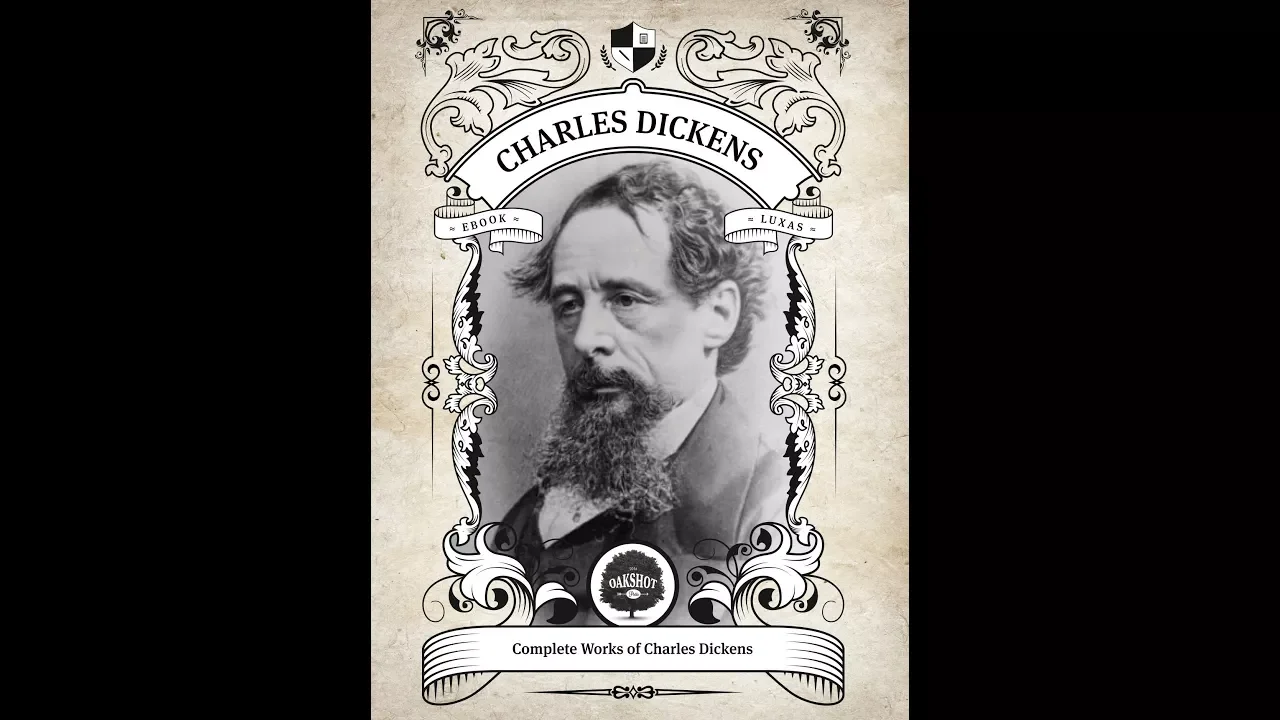
And we have this beautiful ladder which is meant to take us on this sort of way of ascent from this earthly life to the heavens. And who's perched on this ladder is this beautiful white dove, the Holy Spirit watching over all of it. While many today admire Mille's painting of Jesus in his father's workshop, critics of the time were outraged and shocked by its unorthodox approach. Among them was none other than Charles Dickens, the renowned author whose writings remain one of the most esteemed records of Victorian life, and he had plenty to say about this pre- raffleite work. We are here now outside Charles Dickens's home, which is now a museum in the center of London, more specifically in Bloomsbury. and Charles Dickens, of course, author of Great Expectations, Oliver Twist, The A Christmas Carol, David Copperfield. And between 1850 and 1859, Charles Dickens issued a weekly journal because the middle classes were rising in prosperity and rising in literacy. And so he wanted to provide them simply things to read about politics, about culture, about religion, about faith, and about the arts. And in here, as you can see, the 15th of June 1850, he writes about our painting in a very critical and scathing way. I quote, "Pafflite art makes for the lowest depths of what is mean, odious, repulsive, and revolting." So, he's just dismissing paffhelite art altogether.
And then he talks about our painting.
You behold the interior of a carpenter's shop. And in the foreground of that carpenter shop is a hideous rhinnecked blubbering red-headed boy in a bed gown.
He's talking about Jesus here who appears to have received a poke in the hand from the stick of another boy with whom he had been playing in an adjacent gutter and to be holding it up for the contemplation of a kneeling woman. Now he's talking about Jesus's mother Mary.
She is so horrible in her ugliness that supposing it were possible for any human creature to exist for a moment with that dislocated throat, ouch, she would stand out from the rest of the company as a monster in the vilest cabaret in France or the lowest gin shop in England. And then he shifts his attention to the other figures in our painting. And he says, "Two almost naked carpenters, master and journeyman, worthy companions of this agreeable female, are working at their trade. A boy with some small flavor of humanity in him, talking about John the Baptist here, is entering with a vessel of water, and nobody is paying any attention to a snuffy old woman, which is St. Tan in the background who seems to have mistaken that shop for the tobaconists next door and to be hopelessly waiting at the counter to be served with half an ounce of her favorite mixture. What I found really interesting is how these writings by Charles Dickens really reflect the Victorian attitude towards pre- rafflite art. Now we admire all these works but back then they were absolutely despised.
They were avantgard. They were pushing the boundaries.
This did not discourage Millie. He went on to enjoy a distinguished career, becoming one of Britain's most celebrated artists. As a founding member of the P Rafflite Brotherhood, his work helped shape Victorian art and left a lasting influence well into the 20th century. Dickens's fierce reaction reminds us of something vital, that even the greatest minds can sometimes misjudge art. His scorn was certainly sharp, but time seems to have sort of softened the edges of controversy. What once looked irreverent now seems to our eyes actually very reverent. That tells us something of the shifting tides of tastes that what shocked one generation might actually inspire the next. Our tastes evolve not just in our own lifetime but over the centuries as well.
the church evolves reformist. And I think that's the whole point of this is that truth, goodness, and beauty sometimes have a way of revealing themselves over time gradually. And all we have to do is be [Music] patient. I hope you enjoyed our visit to Tate Britain. If you like this video, please subscribe and share with your friends.
And if you haven't already, head over to ww.christian.art and subscribe for free to receive our daily email where I pair the gospel reading of the day with a work of art and write a short reflection exploring beauty to grow closer to God.
Be part of our community and subscribe or simply download the app.
[Music]
Up Next

Andrew Lloyd Webber on the Pre-Raphaelites: A Collector's Insight
@AntPDC
26.3K views•2021-04-28

Christian Iconography: History, Theology, and Meaning | Fr. Panayiotis Papageorgiou
@Trisagionfilms
58.8K views•2020-02-21

Ukiyo-e Art: History, Woodblock Printing & Influence
@japanathand
6.3K views•2023-06-08

Earliest Depictions of Jesus in Art: 10 Ancient Images Explained
@UsefulCharts
5.9M views•2022-06-03
Related Study Plans & Knowledge Roadmaps
Structured learning paths in Art History