In United States v. Jones (2012), the Supreme Court unanimously held that attaching a GPS tracking device to a vehicle without a warrant constitutes a search under the Fourth Amendment, establishing that prolonged GPS monitoring of a person's movements infringes on their reasonable expectation of privacy, even when conducted on public roads.
United States v. Jones | Fourth Amendment & GPS Tracking
Added:Deep Dive
The core components of the Fourth Amendment, specifically the protections against 'unreasonable searches and seizures' and the general requirement of probable cause for a warrant.

Fourth Amendment Search and Seizure: High School and College Level Session
3.5K
The Fourth Amendment establishes two core protections: (1) prohibition against unreasonable searches and seizures of persons, houses, papers, and effects, and (2) warrant requirements mandating probable cause supported by oath or affirmation, with particularity describing the place searched and items seized. The framers connected these concepts to revolutionary experiences, where colonists resisted general warrants allowing unregulated home searches. Without warrants, searches become presumptively unreasonable, preventing petty bureaucrats from rummaging through private spaces without justification.
Click to watch →

Sample We the People Hearing
1.3K
The Fourth Amendment requires searches and seizures to be reasonable, mandates a warrant requirement, and requires probable cause to support the issuance of a warrant permitting a particularized search and seizure. These core requirements remain fundamental regardless of technological changes.
Click to watch →

The Fourth Amendment (Introductory Level)
4.2K
The Fourth Amendment states: 'The right of the people to be secure in their persons, houses, papers, and effects against unreasonable searches and seizures shall not be violated, and no warrant shall issue, but upon probable cause, supported by oath or affirmation, and particularly describing the place to be searched, and the persons or things to be seized.' This establishes three core protections: (1) protection of persons, houses, papers, and effects; (2) protection against unreasonable searches and seizures by the government; (3) the warrant requirement mandating that warrants can only issue upon probable cause with specific descriptions of the place and items to be searched.
Click to watch →
What does the Fourth Amendment say?
3.4K
The Fourth Amendment contains two main components. The first part prohibits unreasonable searches and seizures of a person's houses, papers, and effects. The second part establishes a ban on general warrants, requiring that any warrant must be issued based on probable cause and must specifically describe the place to be searched and the persons or things to be seized.
Click to watch →

Cybersecurity and the NSA 3-8-14
276
The Fourth Amendment to the United States Constitution contains two essential components: first, the right of the people to be secure in their persons, houses, papers, and effects against unreasonable searches and seizures shall not be violated; second, no warrant shall issue but upon probable cause supported by oath or affirmation and particularly describing the place to be searched and the persons or things to be seized. The amendment was specifically adopted to prevent general or non-specific warrants, which were abuses of British authorities who could search wherever they chose. The amendment applies to both searches and seizures, including seizures for later searching, which was considered a distinct abuse requiring particularity requirements.
Click to watch →
Deep Dive
The 'reasonable expectation of privacy' standard established in Katz v. United States (1967), which shifted Fourth Amendment jurisprudence from physical property rights to personal privacy.

Lectures in History: Supreme Court Cases and Privacy
988
In 1967, the Supreme Court ruled in Katz v. United States that the Fourth Amendment protects people, not places, establishing the 'reasonable expectation of privacy' standard. The 7-1 decision overturned Olmstead and held that individuals have a reasonable expectation of privacy in their phone booth conversations, requiring warrants for warrantless wiretaps. Justice Stewart famously stated courts should not debate whether payphones are constitutionally protected areas. This case established that if someone has a reasonable expectation of privacy in an area, law enforcement needs a warrant before searching it. The ruling transformed Fourth Amendment jurisprudence by focusing on privacy expectations rather than physical trespass.
Click to watch →

Fourth Amendment Privacy in a Digital Age, Policing in America, Search/Seizure (High School/College)
2.8K
In Katz v. United States (1967), the Supreme Court overturned Olmstead by establishing the 'reasonable expectation of privacy' test. Charles Katz used a public payphone with a closed door to conduct gambling operations; agents installed an eavesdropping device without a warrant. The Court held that the Fourth Amendment protects people, not places, and that Katz had a reasonable expectation of privacy in his closed conversation. Justice Harlan II articulated the two-prong test: (1) Does the individual have a subjective expectation of privacy? (2) Is that expectation one society recognizes as reasonable? This transformed Fourth Amendment analysis from property-focused to privacy-focused reasoning.
Click to watch →

The Fourth Amendment (Advanced)
4.6K
In Katz, the Supreme Court overturned Olmstead by establishing that the Fourth Amendment protects people, not places. Justice Harlan's concurrence introduced a two-part test: (1) subjective expectation of privacy (did the individual expect privacy?), and (2) objective reasonableness (would society recognize this expectation as reasonable?). Closing a phone booth door created a reasonable expectation of privacy, making eavesdropping a Fourth Amendment violation even without physical trespass.
Click to watch →

Katz v. United States: The Reasonable Expectation of Privacy (Fourth Amendment) | FLETC
24.3K
In Katz v. United States (1967), the Supreme Court established that the Fourth Amendment protects individuals' reasonable expectations of privacy, not just physical spaces; the Court ruled that FBI recordings of Charles Katz's gambling conversations in a closed telephone booth constituted an unlawful search because Katz had a subjective expectation of privacy that society recognizes as reasonable, thereby creating the two-part test requiring both actual expectation of privacy and societal recognition of its reasonableness to determine Fourth Amendment protection.
Click to watch →

Fourth Amendment Privacy Gaps Exposed: Open Fields Doctrine Analysis
293.1K
In 1967, the Supreme Court abandoned strict textualism in Katz v. United States, establishing a new framework based on reasonable expectations of privacy. The Court recognized that technological changes had made it possible for the government to intrude on private lives without physically entering property, making the traditional property-focused approach inadequate. The Katz test asks whether a person has a reasonable expectation of privacy that society recognizes as legitimate, accommodating new forms of government intrusion that couldn't have been predicted when the Fourth Amendment was written.
Click to watch →
Deep Dive
The historical common-law trespass doctrine, which originally determined whether a search occurred based on physical intrusion into protected areas.

Common Law of Trespass
4.1K
Under common law trespass principles, a government physical intrusion into a constitutionally protected area for the purpose of gathering information constitutes a Fourth Amendment search; however, if the government is not attempting to gather information or is gathering information from a place where they have a legal right to be, no Fourth Amendment violation occurs.
Click to watch →

UChicagoLaw Faculty on United States v. Jones
393
In United States v. Katz, the Supreme Court abandoned the prior understanding that searches required physical trespass on property. The Court held that wiretapping a public phone booth constituted a search because it violated a person's reasonable expectation of privacy, establishing that searches can occur without physical intrusion.
Click to watch →

State v. Malloy and the 4th Amendment
970
The trespass test determines whether a Fourth Amendment search has occurred by examining physical intrusion onto property owned by the suspect. Under this test, any physical touching of a person's house, papers, or effects for the purpose of obtaining information constitutes a search. This test was revived in United States v. Jones (2012), where the Supreme Court held that attaching a GPS tracking device to a vehicle constitutes a Fourth Amendment search because the government physically occupied private property for information-gathering purposes, regardless of how long the tracking lasted.
Click to watch →
Justice Scalia’s Original Public Meaning Jurisprudence | Ralph Rossum
260
Prior to Justice Harlan's concurrence in Katz v. United States (1967-68), all Fourth Amendment cases dealt exclusively with trespass—the traditional understanding of what the Fourth Amendment protected against. In Olmstead v. United States (1928), the Court considered federal agents tapping phone lines outside a house, ruling that since the wiretap occurred on public lines where police had a right to be, no trespass occurred and thus no Fourth Amendment violation. Under this trespass doctrine, what a person wants to keep private can be kept private, while what is in public is public. This traditional understanding persisted for decades until Harlan's formulation of the reasonable expectation of privacy standard expanded Fourth Amendment protections beyond physical intrusions.
Click to watch →

Constitutional Law in the 21st Century - Privacy, Personhood, and Freedom with Jeffrey Rosen
271
The Fourth Amendment originally focused on physical trespass as the necessary trigger for constitutional protections against unreasonable searches and seizures. The paradigmatic example at the time of the framing was the general warrant or writs of assistance, which allowed the king and his agents to break into the homes of critics and search for authors of anonymous pamphlets. This physical trespass requirement defined the contours of Fourth Amendment protections for much of the 18th, 19th, and early 20th centuries.
Click to watch →
Deep Dive
The 'automobile exception' to the warrant requirement, which governs when law enforcement can search a vehicle without a warrant.

Johnson, AR TYRANTS ARREST Citizen for Sitting in Police Station Parking Lot-LAWSUIT
36.2K
The automobile exception allows police officers to search a vehicle without a warrant under certain circumstances. This exception exists because vehicles are movable and can be easily disposed of or cleaned. Under this exception, if an officer has probable cause based on something they were lawfully doing (such as smelling marijuana), they can search the entire vehicle, including containers and the trunk, for evidence of the crime.
Click to watch →
LAWYER: Say THESE WORDS to Stop Cops From Searching Your Trunk
427.7K
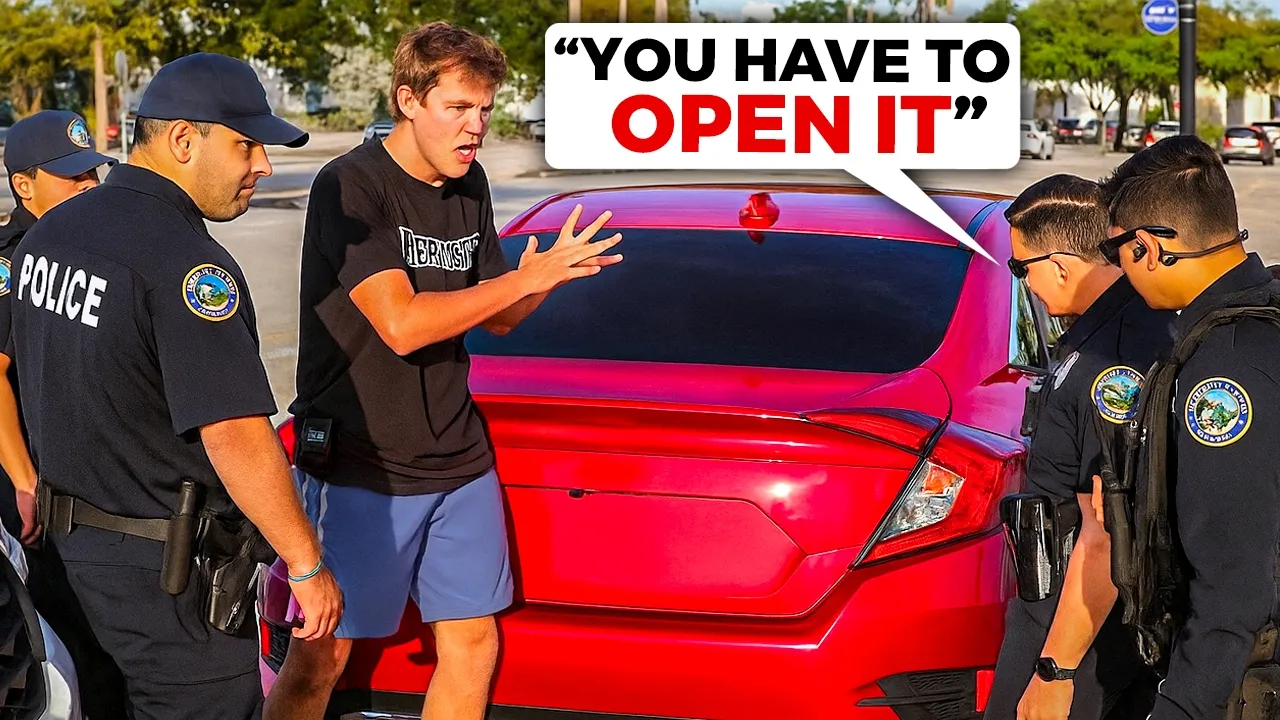
Police can search a vehicle, including the trunk, without a warrant if they have probable cause to believe there is evidence of a crime in the car. This exception originated from United States v. Carroll (1925), where the Supreme Court ruled that because automobiles are mobile, requiring a warrant would allow suspects to flee. The Court later confirmed in United States v. Ross that probable cause extends to every part of the vehicle and its contents that may conceal the object of the search, including the trunk and its containers.
Click to watch →

More Exceptions to the Warrant Requirement: Module 4 of 5
9.6K
The automobile exception permits warrantless vehicle searches when officers have probable cause to believe contraband is present. Originating from Carroll v. United States (1925), this exception recognizes that obtaining warrants is impractical due to vehicles' mobility and potential for evidence destruction. The Supreme Court extended this to cars in police custody (Chambers v. Maroni, 1970) and movable containers within vehicles (United States v. Ross, 1975). Key factors determining applicability include: inherent mobility justifies searches even when vehicles function as homes; parked vehicles inside private residences are not subject to the exception; seized vehicles may be searched at any time; vehicles without engines or obviously non-operational are not covered; and whether a vehicle is mobile depends on circumstances requiring case-by-case analysis.
Click to watch →

Supreme Court Just Ruled 9–0 — If You Keep a Gun in Your Car, Watch This Now
145.4K
The automobile exception is a legal doctrine that allows officers to search a vehicle without a warrant if they have probable cause to believe there is evidence of a crime in the vehicle. This exception exists because vehicles are mobile and evidence can be driven away. The Barnes ruling requires courts to look at the totality of the encounter, but if an officer establishes probable cause in the first 30 seconds, the rest of the ruling becomes irrelevant.
Click to watch →

cops argue with a master of arguments.
2.5K
In the United States, the automobile exception to the Fourth Amendment search warrant requirement allows law enforcement officers to search a vehicle without a warrant if they have probable cause to believe it contains contraband or evidence of a crime, because vehicles are inherently mobile and evidence could be lost or destroyed before a warrant can be obtained. This exception applies regardless of whether the vehicle is parked on private property or in a roadway, as long as the officer has reasonable grounds to believe the vehicle contains illegal items.
Click to watch →
Prerequisite Knowledge
- Concept 01The core components of the Fourth Amendment, specifically the protections against 'unreasonable searches and seizures' and the general requirement of probable cause for a warrant.
- Concept 02The 'reasonable expectation of privacy' standard established in Katz v. United States (1967), which shifted Fourth Amendment jurisprudence from physical property rights to personal privacy.
- Concept 03The historical common-law trespass doctrine, which originally determined whether a search occurred based on physical intrusion into protected areas.
- Concept 04The 'automobile exception' to the warrant requirement, which governs when law enforcement can search a vehicle without a warrant.
Subsequent Learning
- Step 01The legal precedent established in Carpenter v. United States (2018), which addressed Fourth Amendment protections regarding cell site location information (CSLI).
- Step 02The 'Mosaic Theory' of Fourth Amendment analysis, which posits that a cumulative pattern of tracking (even if individual points are public) can constitute a search.
- Step 03The evolution of the 'Third-Party Doctrine' in the digital age, specifically how user data held by tech corporations and telecom providers is protected.
- Step 04Modern law enforcement surveillance challenges, such as the use of automated license plate readers (ALPRs), geofence warrants, and facial recognition technology.
GPS Ruling
GPS Ruling
0:00Playing Section
- 1
Supreme Court reviews warrant requirement for GPS tracking.
- 2
Case involves police monitoring vehicle movements for a month.
- 3
Court overturns conviction, citing Fourth Amendment privacy violation.
The Limitations of the Trespass-Based Approach and the Mosaic Theory
While the majority opinion in United States v. Jones relied on a traditional, property-based "physical trespass" test to rule GPS tracking a search, critics and concurring justices argue this approach is inadequate for the digital age. Justice Alito and others advocated for the "mosaic theory" of privacy, which posits that while isolated public movements are not private, the long-term, continuous aggregation of data reveals intimate details of a person's life, violating reasonable expectations of privacy. Critics argue that Scalia's trespass-centric rationale fails to address modern, non-contact surveillance technologies—such as cell phone tracking, facial recognition, or drones—where no physical trespass occurs. By focusing on property rather than privacy, the majority's reasoning leaves significant gaps in constitutional protections against sophisticated, non-physical government surveillance.
Deep Dive
The legal precedent established in Carpenter v. United States (2018), which addressed Fourth Amendment protections regarding cell site location information (CSLI).

Supreme Court: The Term in Review (2017–2018) Part 1 of 2
3K
In Carpenter v. United States (2018), the Supreme Court ruled 5-4 that obtaining historical cell site location information (CSLI) from cellular providers constitutes a Fourth Amendment search requiring a warrant. The Court, writing through Chief Justice Roberts, distinguished CSLI from other third-party records because it reveals comprehensive details about a person's life including familial, political, professional, religious, and sexual associations. The Court created a narrow exception to the third-party doctrine, holding that law enforcement needs a warrant to obtain CSLI records. The Court specified that 7 days of CSLI records constitutes a Fourth Amendment search. This decision significantly impacts privacy expectations in the digital age, as major carriers provided location data 125,000 times to law enforcement in 2016 alone. The ruling does not apply to real-time CSLI, foreign policy/national security cases, or exigent circumstances exceptions.
Click to watch →
The Fourth Amendment (Advanced)
4.6K
In Carpenter, the Supreme Court ruled 5-4 that obtaining historical cell phone location data constitutes a Fourth Amendment search requiring a warrant. Chief Justice Roberts applied the Katz reasonable expectation of privacy test, noting that cell phone data provides 'sweeping mode of surveillance' creating an 'encyclopedic' record of a person's movements. The Court declined to extend the third party doctrine to this context due to the pervasive nature of the privacy invasion.
Click to watch →

Carpenter v. United States (2018): Cell Phone Location Data, Search Warrants, and Agency Subpoenas
548
In Carpenter v. United States (2018), the U.S. Supreme Court ruled that government acquisition of historical cell-site location information (CSLI) constitutes a Fourth Amendment search requiring a warrant supported by probable cause, rejecting the third-party doctrine's application to CSLI due to the unique nature of cell phone location records and the pervasive role of cell phones in daily life, which creates a reasonable expectation of privacy in one's physical movements; this decision established that administrative subpoenas alone are insufficient for obtaining such sensitive location data, thereby raising the constitutional standard above the lower 'reasonable grounds' threshold found in the Stored Communications Act.
Click to watch →

This FBI Act Likely Violated The First, Second, And Fourth Amendments All At Once: Kelly Armstrong
223.7K
In Carpenter v. United States, the Supreme Court ruled that cell site location information is 'detailed, encyclopedic, and effortlessly compiled.' The speaker argues that financial transaction data released in the Bank of America case is 'any less detailed, encyclopedic, and effortlessly compiled' and should therefore receive the same Fourth Amendment protection. The speaker questions whether any judge would find probable cause to authorize a search for such detailed financial information on many people.
Click to watch →
The Fourth Amendment (Introductory Level)
4.2K
In Carpenter v. United States (2018), police obtained cell phone location data from carriers using the Stored Communications Act (requiring only relevance, not probable cause) to track Timothy Carpenter's movements for 28 days. The Supreme Court ruled 5-4 that accessing this data constitutes a Fourth Amendment search. Chief Justice Roberts held that cell phone location records create a 'sweeping mode of surveillance' providing an 'all-encompassing record' of a person's whereabouts, violating legitimate privacy expectations. Dissenting justices offered four different views: some argued existing precedents should apply; others claimed records belong to companies, not users; another suggested the Court was departing from long-standing precedent.
Click to watch →
Deep Dive
The 'Mosaic Theory' of Fourth Amendment analysis, which posits that a cumulative pattern of tracking (even if individual points are public) can constitute a search.
Carey Holzman claims I hate the 1st amendment 🤦
44.8K
The mosaic theory is a legal concept where many individual observations can collectively constitute a search, even when each individual observation alone would not. For example, one police officer seeing someone once is not a Fourth Amendment problem, but if someone follows you everywhere for 30 days, documents every location, creates a database of it, and shares it with dozens of people, that constitutes stalking and a Fourth Amendment violation. This theory recognizes that the cumulative effect of surveillance can reveal intimate details about a person's life that would not be apparent from any single observation.
Click to watch →
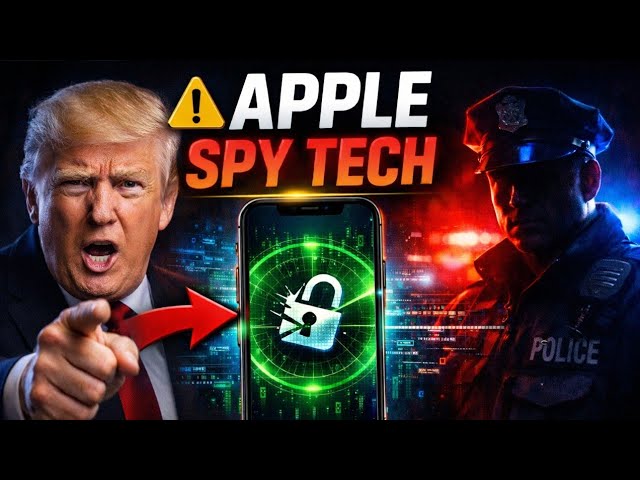
LAWYER WARNING: How Police Use Apple’s Latest Tech to Spy on Your Phone
193
The mosaic theory, articulated in Justice Sotomayor's influential concurrence in United States v. Jones, holds that aggregating large amounts of individually innocuous data points can itself constitute a Fourth Amendment search, even if collecting any single data point would not. One location ping tells you very little, but six months of daily location pings tells you where someone works, worships, seeks medical care, and sleeps—the aggregate is qualitatively different from the sum of its parts. The unresolved question courts are wrestling with is whether Apple's integrated data profile, which aggregates location, health, communication, financial, and behavioral data, triggers the mosaic theory, even when each individual category of data might not require a warrant on its own.
Click to watch →

Lawfare Daily: Orin Kerr on the Digital Fourth Amendment
633
Mosaic theory proposes that Fourth Amendment protection should depend on scale—once the government conducts enough surveillance, it becomes a search regardless of individual components. This theory emerged from the DC Circuit's opinion in United States v. Jones (GPS tracking case), which suggested that 28 days of GPS tracking constitutes a search because it reveals so much about someone's life. However, mosaic theory faces significant criticism: it creates unworkable line-drawing problems about what constitutes sufficient aggregation. Courts cannot consistently determine when accumulated data crosses the threshold into protected territory. The speaker argues this approach is unworkable because police cannot know ahead of time whether their actions constitute a search, creating uncertainty in law enforcement operations.
Click to watch →

National Security After U.S. v. Jones 4-5-12
519
The 'mosaic theory' holds that individually innocuous pieces of information, when aggregated and analyzed together, can reveal intimate details about individuals that would not be apparent from any single piece. This challenges traditional Fourth Amendment analysis which focuses on individual searches rather than cumulative effects. Intelligence analysis uses two main approaches: link analysis (connecting individuals to known bad actors) and pattern analysis (identifying behavioral characteristics associated with suspicious activity). Both have been used historically without computers. Pattern analysis identifies behaviors that deviate from norms, potentially implicating innocent people. The key constitutional question is whether pattern-based searches without specific predicates should trigger warrant requirements, representing a fundamental challenge to existing legal frameworks.
Click to watch →

The Digital Fourth Amendment | Reimagining American Institutions | Hoover Institution
108.3K
National security surveillance operates under FISA's separate statutory framework, receiving greater deference than criminal investigations. For public surveillance, courts divide on whether technologies like license plate readers and facial recognition constitute searches. The mosaic theory proposes that prolonged surveillance accumulates enough information to constitute a search—even if individual observations wouldn't qualify. In Jones v. United States (2012), Justice Alito suggested tracking someone for 28 days creates a sufficiently detailed life picture to constitute a search. However, this creates arbitrary bright-line rules that law enforcement can easily circumvent. Courts struggle to define when accumulated data becomes sufficiently invasive to trigger Fourth Amendment protections, given the difficulty of drawing lines between acceptable and unacceptable surveillance scales.
Click to watch →
Deep Dive
The evolution of the 'Third-Party Doctrine' in the digital age, specifically how user data held by tech corporations and telecom providers is protected.

Media, Popular Misconceptions, and the CSI Effect -- What Does It Mean for InfoSec and Tech Policy?
608
U.S. privacy law faces a fundamental crisis due to the third party doctrine, which holds that individuals have no reasonable expectation of privacy for information voluntarily disclosed to third parties. In 2012, Justice Sotomayor criticized this doctrine as ill-suited to the digital age where people reveal vast amounts of personal information during routine activities. Major corporations exploit user data through opaque practices: Facebook conducted psychological experiments on 700,000 users without proper informed consent; healthcare organizations purchase data brokers' information to identify profitable patients; Wi-Fi enabled trash cans track footfall patterns within four-minute walking distances. The enormous volume of data being collected is amplified by the third party doctrine, which effectively gives companies ownership of collected data, enabling them to sell, aggregate, and profit from personal information indefinitely.
Click to watch →

Deep Dive: Privacy and Security—What’s the Right Balance?
840
The third party doctrine holds that surrendering data to third parties like Microsoft abandons all expectation of privacy. This originated in 1967 when the Court ruled wiretapping was not a search because no physical space was entered. The doctrine assumes if you share information, you have no privacy in it. In the digital age, everyone stores data in the cloud, meaning everyone has surrendered data to third parties. If taken seriously, this means everyone has no privacy today. There are two ways of protecting privacy: constitutional (Fourth Amendment) and statutory (what Congress says about data access). Both are bitterly debated. The tech companies' position in the Apple case was they should not have to give up to judges on amorphous Fourth Amendment standards or rely on the All Writs Act of 1789, written before the light bulb. The solution requires an informed democratic debate about what values society will embrace.
Click to watch →

Anthropic doesn't trust the Pentagon, and neither should you | Decoder
3.3K
The third party doctrine, established in Supreme Court cases from the 1960s and 1970s, holds that individuals have no reasonable expectation of privacy in information voluntarily shared with third parties. Originally applied to phone company records, this doctrine means the government can obtain such information without a warrant. With the rise of digital technology, virtually all personal data—communications, location, transactions—is now held by third-party companies like Apple, Amazon, and Microsoft. This has effectively allowed the government to circumvent Fourth Amendment protections by accessing data through intermediaries rather than directly searching individuals' premises, creating a fundamental tension between digital reality and constitutional privacy expectations.
Click to watch →
Why you NEED to care about privacy
33.4K
The Third Party Doctrine is a legal principle established in the 1970s that states individuals have no reasonable expectation of privacy for information voluntarily shared with third parties. In the digital age, this doctrine means that when users share data with companies (like Google, Facebook, or map apps), the government can access that data without a warrant. Since everything online requires third-party services, this doctrine effectively allows the government automatic access to vast amounts of personal information.
Click to watch →

ESSENTIAL Privacy Tools
152K
The third party doctrine is a legal principle that states because you voluntarily give your data away to third parties (like telecom companies), you no longer own that data. Those companies can choose who to give it to, and if the government wants it, companies are within their rights to hand it over. This means many assumptions about privacy in digital contracts are false.
Click to watch →
Deep Dive
Modern law enforcement surveillance challenges, such as the use of automated license plate readers (ALPRs), geofence warrants, and facial recognition technology.
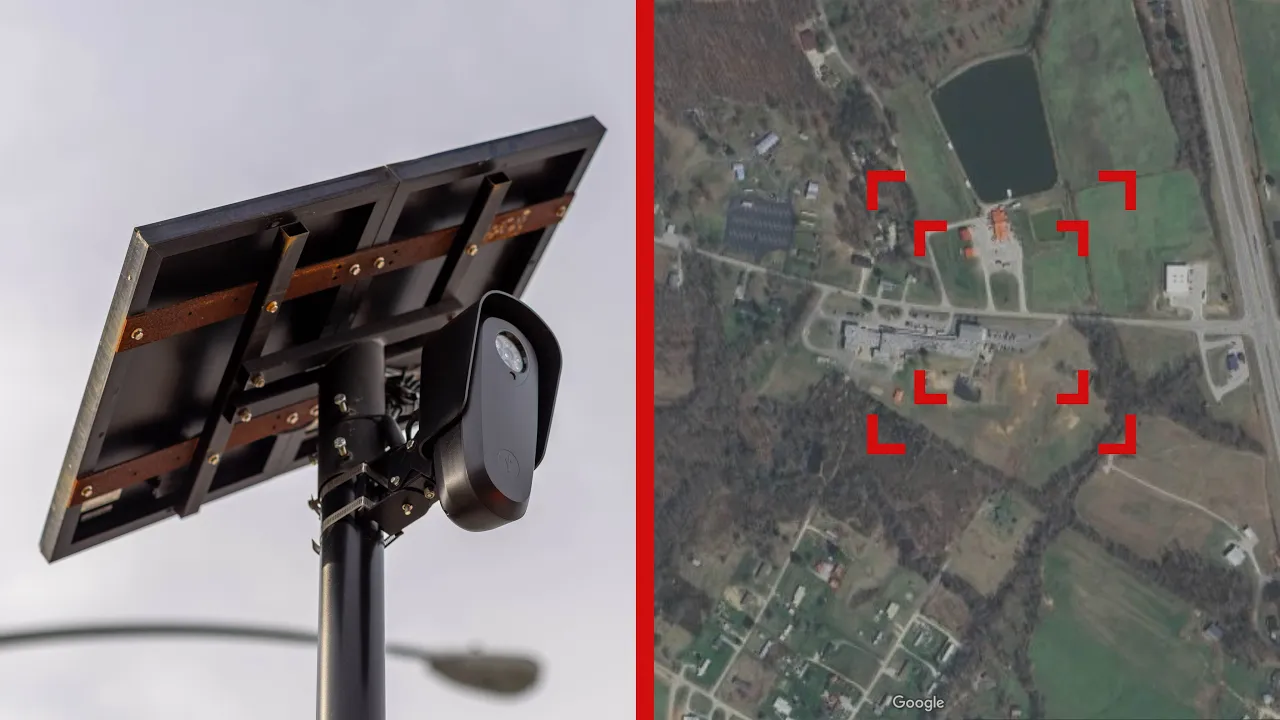
Gov't Surveillance Cameras Found in 7 SHOCKING Spots
95K
Automatic license plate reader (ALPR) cameras installed in American communities use AI to create vehicle fingerprints and track every vehicle without warrants, raising significant Fourth Amendment concerns about warrantless mass surveillance; these cameras have been deployed near sensitive locations like abortion clinics, churches, and mosques, and have been used to stalk ex-partners, prompting legal challenges and community resistance in cities like Denver and Norfolk, Virginia.
Click to watch →

Court Says Police Need Warrants for Some License Plate Reader Data
105.3K
This segment introduces the core debate about whether police should scan license plates at random in public spaces. One perspective argues that since license plates are visible to the public, scanning them should be acceptable. The opposing view counters that scanning involves collecting and checking additional information beyond just the plate number, making it more intrusive. The video presents a Virginia court case (Commonwealth of Virginia versus Bell) where the court found that the FLOCK system, which photographs vehicles and records their locations, constitutes a search under the Fourth Amendment requiring a warrant. The court agreed that vehicles in the current technology age are akin to cell phones, and courts have previously determined that the government's acquisition of historical cell site location data is a search requiring a warrant.
Click to watch →

SECURITY CULTURE 101: Tools of State Surveillance and How Organizers Resist
48.3K
This section provides an exhaustive examination of digital surveillance technologies and resistance strategies. It begins with license plate reader technology, explaining how these systems enable long-term pattern analysis of daily life, tracking residences, associates, and movements. The section details how police deploy gridding operations systematically collecting plates from neighborhoods, and how companies like Flock Safety offer automatic license plate readers blanketing American cities. The section then examines facial recognition technology, revealing severe racial bias with Black individuals up to 100 times more likely to be misidentified than white men, supported by documented wrongful arrests. The section covers social media monitoring where police use software to track communications and predict protest locations, and phone surveillance including stingrays and spyware like Pegasus. Throughout, the analysis emphasizes that surveillance is often presented as safety but has never been distributed equally, targeting poor neighborhoods, communities of color, and activist populations.
Click to watch →

Whistleblower Reveals the Largest Mass Surveillance Operation in History and the Coming Slave State
37.7K
Automatic license plate readers are cameras that take pictures of license plates and run that information back to police or corporate headquarters. The stated purpose is to track down child traffickers, which has become America's most pressing problem according to officials. However, these license plate readers are doing a lot more than reading license plates—there's no law that says they have to restrict their spying to people's license plates. They can spy on people and cars, do facial recognition, and listen to what people say.
Click to watch →

The Mass Surveillance of Cell Phone Data: Geofence Warrants
59.6K
Modern smartphones continuously collect and transmit user data without active consent, creating a world of constant surveillance. Users typically agree to lengthy privacy agreements without reading them, and even when attempting to block tracking, data collection continues. This information is valuable to advertisers, politicians, and law enforcement. Geofence technology creates virtual fences around geographic areas, enabling targeted advertising and political applications like voter registration campaigns. Geofence warrants allow law enforcement to specify a geographic area and time frame to obtain information about all cell phones that entered or left that area during that time. Unlike standard warrants targeting specific suspects, geofence warrants gather information about everyone in an area, potentially hundreds of innocent people. Google is the primary company law enforcement uses for these warrants, with over 25% of all warrants received being geofence warrants. This raises significant privacy concerns, as critics describe it as a 'dragnet' that goes fishing for suspects rather than following evidence. The Fourth Amendment's probable cause requirement is often focused on crime locations rather than specific suspects, raising constitutional questions about unreasonable searches.
Click to watch →
GPS Ruling
GPS Ruling
0:00- 1
Supreme Court reviews warrant requirement for GPS tracking.
- 2
Case involves police monitoring vehicle movements for a month.
- 3
Court overturns conviction, citing Fourth Amendment privacy violation.
The Limitations of the Trespass-Based Approach and the Mosaic Theory
While the majority opinion in United States v. Jones relied on a traditional, property-based "physical trespass" test to rule GPS tracking a search, critics and concurring justices argue this approach is inadequate for the digital age. Justice Alito and others advocated for the "mosaic theory" of privacy, which posits that while isolated public movements are not private, the long-term, continuous aggregation of data reveals intimate details of a person's life, violating reasonable expectations of privacy. Critics argue that Scalia's trespass-centric rationale fails to address modern, non-contact surveillance technologies—such as cell phone tracking, facial recognition, or drones—where no physical trespass occurs. By focusing on property rather than privacy, the majority's reasoning leaves significant gaps in constitutional protections against sophisticated, non-physical government surveillance.
The core components of the Fourth Amendment, specifically the protections against 'unreasonable searches and seizures' and the general requirement of probable cause for a warrant.
The 'reasonable expectation of privacy' standard established in Katz v. United States (1967), which shifted Fourth Amendment jurisprudence from physical property rights to personal privacy.
The historical common-law trespass doctrine, which originally determined whether a search occurred based on physical intrusion into protected areas.
The 'automobile exception' to the warrant requirement, which governs when law enforcement can search a vehicle without a warrant.
The legal precedent established in Carpenter v. United States (2018), which addressed Fourth Amendment protections regarding cell site location information (CSLI).
The 'Mosaic Theory' of Fourth Amendment analysis, which posits that a cumulative pattern of tracking (even if individual points are public) can constitute a search.
The evolution of the 'Third-Party Doctrine' in the digital age, specifically how user data held by tech corporations and telecom providers is protected.
Modern law enforcement surveillance challenges, such as the use of automated license plate readers (ALPRs), geofence warrants, and facial recognition technology.
15K views90likes1:45@QuimbeeDotComOriginal Release: 2020-10-06
imagine that police officers placed a global positioning system or gps tracking device on your car and then monitored your every movement for a month in united states versus jones the supreme court addressed whether the fourth amendment requires a search warrant to do so in 2004 officers in the district of columbia suspected that a club owner named antoine jones was involved in a drug trafficking conspiracy without a valid warrant the officers placed a small gps tracking device weighing only two ounces and about the size of a credit card on the undercarriage of his car the officers then tracked the car's movements including its trip to a stash house used by drug dealers federal prosecutors used the gps tracking records along with other evidence to obtain an indictment alleging that jones was part of a drug conspiracy jones filed a pre-trial motion to suppress the gps records contending that the officer's placement of the gps device and their monitoring of his car's movements violated the fourth amendment the federal district court denied the motion in part ruling that officers gps monitoring of jones car on public roads wasn't a search within the meaning of the fourth amendment a jury then convicted jones and he was sentenced to life in prison jones appealed to the court of appeals for the d.c circuit which reversed the conviction the court concluded that the gps monitoring violated jones reasonable expectation of privacy and therefore violated the fourth amendment the united states then sought review by the united states supreme court [Music] you
Up Next

2:55
Riley v. California: Warrantless Cell Phone Searches Explained
@USLawEssentials
14.9K views•2014-07-21

4:27
US Secondary Sanctions Impact on EU Businesses and Blocking Legislation
@Bureauvandijk
1.6K views•2019-03-20
1:52
Employment Division v. Smith Case Brief | Free Exercise Clause
@QuimbeeDotCom
15.4K views•2021-01-08

24:42
Police Interrogation Tactics: False Confessions & Legal Reform
@LastWeekTonight
7M views•2022-04-18
Related Study Plans & Knowledge Roadmaps
Structured learning paths in Law
law
Self-Defense Law: Imminence & Castle Doctrine
01Foundations of Self-Defense Law
02Imminent Threat & Reasonable Belief
03The Principle of Proportionality
+ 3 more learning modules
12h6 modules
Explore Roadmap
law
Defamation Law: First Amendment & Actual Malice
01Introduction to civil torts and the First Amendment
02Elements of Defamation: Libel and Slander
03Public Figures vs. Private Individuals
+ 2 more learning modules
8h5 modules
Explore Roadmap
law
Hearsay Rule: Trial Evidence & Exceptions
01Introduction to Trial Evidence & Courtroom Basics
02Demystifying Hearsay: The Core Definition
03Non-Hearsay: Exclusions Under FRE 801(d)
+ 3 more learning modules
14h6 modules
Explore Roadmap
law
Medical Malpractice: Law, Liability & Care
01Foundations of Tort Law and Civil Liability
02The Four Elements of Medical Malpractice
03Defining and Proving the Standard of Care
+ 2 more learning modules
12h5 modules
Explore Roadmap