











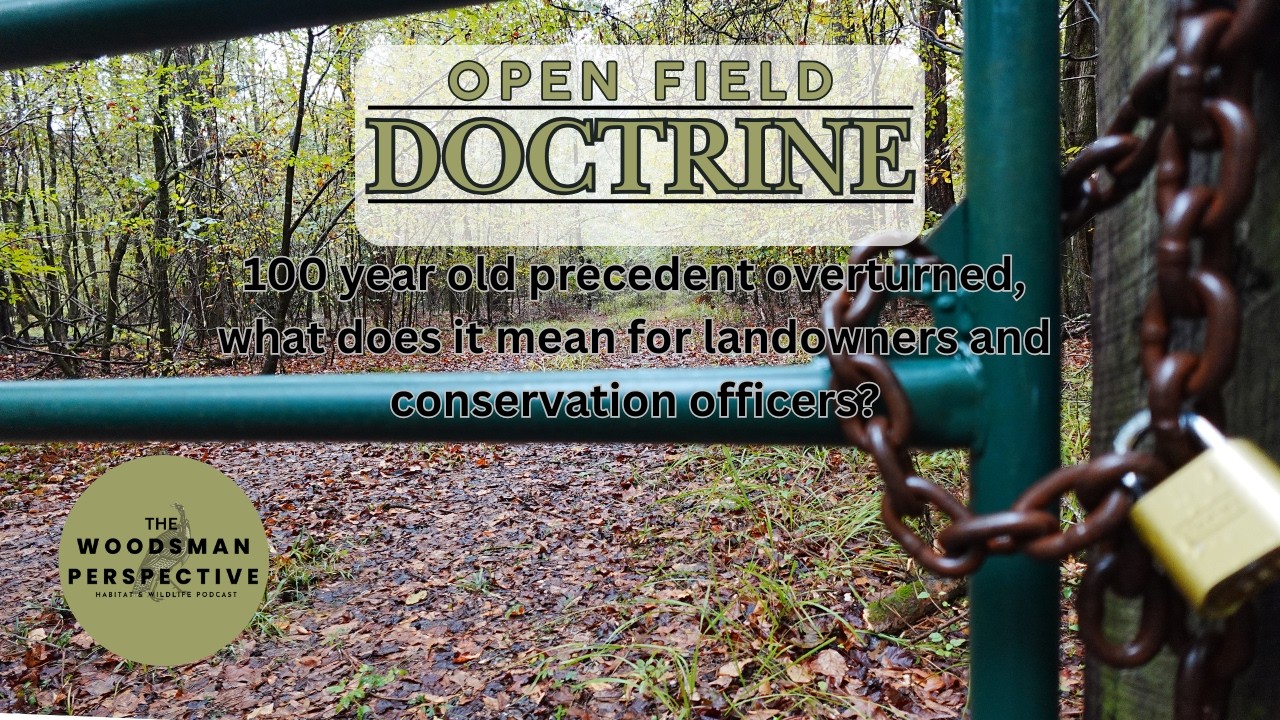







The Open Fields Doctrine, established by the U.S. Supreme Court in Hester v. United States (1924), holds that approximately 96% of private land in America (about 1.2 billion acres) is entirely unprotected by the Fourth Amendment, meaning government officials can conduct warrantless searches and surveillance on vast areas of private property regardless of fencing, no-trespassing signs, or how the land is used; this doctrine originated during the prohibition era and has been reinforced in subsequent cases like Oliver v. United States (1984), creating a significant gap in constitutional privacy protections that affects not just landowners but also visitors and guests who cannot guarantee privacy on private property.
Fourth Amendment Privacy Gaps Exposed: Open Fields Doctrine Analysis
Added:The fundamental text and scope of the Fourth Amendment, specifically its protections against unreasonable searches and seizures.
The 'reasonable expectation of privacy' standard established by the Supreme Court in Katz v. United States.
The legal definition and significance of 'curtilage'—the area immediately surrounding a home that receives high constitutional protection.
The foundational Supreme Court precedents, such as Hester v. United States (1924) and Oliver v. United States (1984), which established the Open Fields Doctrine.
State-level constitutional variations and how some state supreme courts reject the federal Open Fields Doctrine to grant stronger privacy protections under state law.
The legal challenges arising from modern surveillance technologies, such as drones, high-powered cameras, and satellite imaging, operating over private land.
Recent litigation and civil rights advocacy efforts aimed at limiting the authority of wildlife/game wardens to enter private property without warrants.
The broader philosophical and legal tension between private property rights, public interest, and law enforcement efficiency.
293.1K views10.8Klikes36:15Original Release: 2024-05-16
your home is supposed to be your Castle but what about the land Your Castle sits on I'm Kim Norberg of the nonprofit civil liberties Law Firm The Institute for justice joined by co-host Keith Neely Our Guest today is Josh wendam an IG attorney and co-director of 's project on the fourth amendment we discuss why most private land in America gets no protection from warrantless government surveillance this is beyond the brief [Music] so why is it that most land in America doesn't get protection against warrantless searches isn't the Fourth Amendment supposed to do that I think that's what most people think if you take the average person on the street and you ask them does the government need a warrant to search your property or to seize your property they will say yes isn't that what the fourth amendment's all about isn't this America right um unfortunately 100 years ago almost exactly 100 years ago the US Supreme Court made a grave mistake uh and a decision called Hester where they held that so-called Open Fields which really means the vast majority of land people own this country is entirely unprotected by the Fourth Amendment before we go on to unpack Hester and some of the subsequent cases uh I was wondering if there's some way to to quantify how much land falls under this Open Fields exception because you know I was raised in a Suburban home the nearest thing to an open field that I've seen since moving to DC is checking out a winery in lesburg so the open field concept may be foreign to a lot of folks how prevalent is it for land to fall within this gaping exception to the Fourth Amendment yeah I think to understand that we have to understand you know what qualifies as an open field right and so in the line of cases that I'm sure we'll talk about today the Supreme Court has articulated a concept called the curtilage and the curtilage is really just this like small ring of land around your house so if you walk around the area we're all in today Boston in uh in Virginia you'll see that like houses all have kind of a small fenced in yard right that's typically going to be considered protected curtilage and the idea there is that that area is is sort of part of the house for Fourth Amendment purposes but all other land you own anywhere is considered an open field uh regardless of whether you fenced it regardless of whether you have no trespassing signs up regardless of whether you're using it for economic or personal purposes none of that matters if it's outside this small ring of land it's not protected and today JJ released a study which we published in Ko's regulation magazine where for the first time ever we were able to quantify the real world impact of the Open Fields Doctrine and we found that about 96% of all private land in the country or about 1.2 billion acres is entirely unprotected by the Fourth Amendment under current law I know you mentioned Hester as a mistake what do you think led the Supreme Court to carve out that exception I understand that there were some contextual issues at the time that the court was wrestling with and I I think they wrestled with him again um you know some 60 years later in the 80s what was going on what was the court trying to do when they created this Doctrine in the first place well it was a case about moonshine and so you know there was sort of a rising fervor at the time about cracking down on alcohol and this is a couple years a few years before prohibition formally you know comes down but they were federal revenue agents and they were there to see if they could find untaxed alcohol at the time so this is sort of the pre-prohibition era um but it is really a case that is a creature of the prohibition mentality that if you have a forbidden substance on your property the police need to get in and find that and root it out right and if that's the mentality that we give our government officials that you know their job is to root out forbidden substances in people's homes or properties they're going to go rooting around those homes and properties right um but in terms of how we got the legal outcome in the case I mean it's kind of astonishing if anyone watching this can go read the Hester decision because it is two paragraphs long uh and the the operative part of the decision the part that actually produces the legal result is two sentences long and what the court essentially says is and I'm almost quoting here for you the special protection accorded by the Fourth Amendment to the people and their person's houses papers and effects is not extended to the Open Fields and then the court goes on to say um the distinction between the house and the open field is as old as the common law um now we can break that down a little bit and I just want to make two points about it first of all um we this is not how we're supposed to be reading constitutional Provisions what the court does is it pulls five of the fourth amendment's 54 words out of the Fourth Amendment says these five words are all we need to know about the Fourth Amendment and then treats them that list of persons houses papers effects as an exhaustive list of everything that's protected by the Fourth Amendment just to give you kind of another example that is not how we read the First Amendment right the First Amendment says you have the right to freedom of speech and that Congress can't violate that right well we apply it to the executive branch right because the executive can violate your free speech rights in precisely the same way that Congress could and we apply it to all sorts of things that are not like just verbal utterances right if you go to the original meaning of speech it means words coming out of your mouth right but of course the first amendment protects a whole line of conduct from like marching with particular armbands to new dancing art to burning Flags to staying silent all of these things are not speech in the literal sense of that word but they are nevertheless expressive and the the court says look we're going to treat that as sort of the principle behind the First Amendment and extend its umbrella broadly and we could and should do the same thing with the Fourth Amendment so if this analysis in Hester is such a you know aberration is maybe not the right word but it seems kind of you know it's the right word okay all right it's an anomaly it's weird how has it lasted for a hundred years um well I think there's a couple things to say about that one uh in the cases where this issue has come up and I think Keith was alluding to this a second ago um it's it's it's been kind of like parts of the same story so the original case Hester from 1924 was about essentially prohibition before prohibition and the second case that addressed this issue was called Oliver in 1984 so 60 years later that was about America's second War on Drugs it was about marijuana and so there's a kind of massive incentive surrounding swirling around the court at the time to grease the wheels for law enforcement and to kind of like ride with the cultural tide right and so that is I think part of what's motivating the court in these cases is to ensure that police officers can find these forbidden substances and people's properties with ease right um the other thing I'll say is that the court has bounced back and forth between different ways of reading the Fourth Amendment um ear on it applied this kind of hyper or strict textualist approach where we just treat like the literal text read as narrowly as possible is all we need to know the court kind of bounced away from that in the mid 20th century and we can talk about that Trend if you want but the court has shifted back again towards looking at the text reading it kind of narrowly and that's what we get in in cases like for those who are interested Jones hardz and stuff like that so far I know we've been talking a lot about Federal cases and interpretations of the federal Fourth Amendment uh as I'm sure you know right there are also state constitutions with State Fourth Amendment uh analog Provisions uh do do states uniformally follow the Supreme Court with this Open Fields Doctrine is there any Divergence are some states more protective than others or is it is it more or less a carbon copy of how the the federal courts have treated the Fourth Amendment so far uh to our knowledge there are seven states that have rejected the Federal Open Fields Doctrine under their state constitutions and they do it for all sorts of reasons sometimes there's a very clear textual hook that courts will use and rely on and say look the Supreme Court has said it really matters that the fourth amendment protects persons houses papers and effects but looks like our constitution has some different wording in there right so Tennessee where we're litigating and had a great trial court Victory about a year and a half ago and we're hoping for a court of appeals Victory soon in Tennessee they have persons houses papers and possessions and if we know anything about the word possessions going back to the founding it's a concept that applies to land and real profit um other states have right to privacy Clauses uh Louisiana where we filed a case about a a week and a half ago um they haven't even clear a provision Article 1 Section 5 of the Louisiana Constitution protects property and land is property right so it's kind of a dealer's choice you can go state to state and find all these different constitutions but there are some states like New York that have identical text to the Fourth Amendment and they just say look we think the Supreme Court got it wrong and we're going to take our own approach you mentioned a few different uh cases just now and this might be a good opportunity to Pivot and talk about how the Open Fields Doctrine is affecting everyday Americans because as you mentioned in the beginning the Open Fields Doctrine primarily was involved in you know drug type cases but clearly today it has a much broader scope so how how is this impacting JJ's clients for example well I I mean let's talk about our Virginia Open Fields case because it's one that I think a lot of folks might be able to relate to so our client Josh Highlander um bought a property on a secluded residential Street in Providence Forge Virginia um I think he bought about 30 acres and if you if you drive down the street as we did when we first met him you see like fences on the left and right you see mailboxes lining the street you drive past his parents house which is two houses down and he buys this lot at the end of the this Gravel Road um and the lot is a place where he builds a house um he kind of clears a little area of the forest there and he thinks like this is going to be a great private secluded spot next to my family next to our friends where we can raise a family in peace and Solitude and the kids can play in nature and I can do a little hunting too cuz I have 30 Acres right um so that's that's the vision for the house and so he builds it they have two little kids and uh last year uh he was in the shower and his little son about five or six years old and his wife were playing out in the yard they were playing basketball on the basketball hoop next to the trampoline so it's idealic thing you can picture right and uh you know someone drops the ball or bounces away way it rolls towards the edge of the woods and his wife goes to go pick it up and when she looks up she sees a strange man in the wood was wearing camouflage staring at them so Mr Highlander's wife and son run into the house screaming a strange man is on the property you know his son is screaming about the Boogeyman and is afraid to go out for weeks and weeks because he's there might be a guy in the wood watching us right and but Josh goes out walks around the property doesn't see anybody uh until he goes out to his field where he notices something odd uh he had a camera on a pole in the middle of a field um where he where he plants crops on the property and the camera was missing so he goes to the sheriff he calls the sheriff and he says I want to report stolen property there was a strange man on the property they took my camera um and the sheriff calls him back the next day and says sir your camera wasn't stolen it's in the possession of the Department of um the game department the wildlife department and uh they have the camera it's theirs now and they're going to do with it what they will and so what we come to find out is that all of this was basically a kind of Sting operation earlier that day Josh's brother one County over was cited for an alleged hunting violation so I guess guilt by association these three game wardens come to the cold AAC behind his house they step out of their trucks and we have somebody actually saw them doing this and Put on Full camouflage gear and kind of like conducted a sting operation they walked through the back of his property they walked past all his no trespassing sign and they spread out until they could find what they could see right looking for evidence that he was doing something anything wrong and they find a camera and they think to themselves man if we take this camera maybe we can look back through all the photos and kind of like try to find evidence that in the past at some point maybe he committed a violation and uh here we are they didn't have a warrant for any of that they didn't have probable cause and so this case we filed in Virginia is all about whether the Virginia Constitution allows that kind of fishing Expedition on private land because they did suspect him of anything right if they suspected of something they could have just gotten a a warrant this is literally just we're going to dig around through stuff in case we find something yeah the they were there to see what they could see right um maybe we'll catch him doing something wrong if we're on the property if we have proximity to him if we can pour through his camera right um if they had probable cause they could have just gotten a warrant to go on the property as police officers do when they want to enter your house or your curtilage for example um but I think this case gets at and the Open Fields Doctrine issue gets at like a broader historical point which is the fourth amendment was adopted and state constitutional Provisions like it were adopted in response to a particular historical problem um before the founding government officials were using what we called General warrants to invade and search people's property in a general warrant you can think of as sort of like a hall pass or a blank check to kind of do whatever you want to somebody so you didn't if you were the officer you didn't have to have probable cause to get a general warrant uh and if it was issued to you it didn't place any constraints on the timing the frequency the duration of this of the search and so really it was like go find out if joeo or go find out if someone's violating the law in this area right and that gave the authority to search every house on the row and root around their chests and drawers and see what you can find and these are fishing Expeditions right and the whole point of the fourth amendment is to take that discretionary search Power where that made every officer a law into himself right to take that power and put it under neutral and objective control right and so the point of requiring a warrant issued by a neutral judge is the judge gets to decide if you have probable cause to go onto someone's property and the judge gets to say here are going to be the parameters of the search you know you can only look in these places for this sort of thing right and so what's wrong with the Open Fields Doctrine it's the opposite of that it is the embodiment of a general warrant but it's enshrined in constitutional law did you know I represents Ordinary People free of charge as they fight back against government abuse if you're looking for a rewarding way to support our work consider becoming a member of our merry band of monthly donors and stand shoulder-to-shoulder with 's clients every month of the year monthly donations are convenient and cost-efficient meaning more of your money goes directly to our fight for freedom and Justice sign up to donate today at.org monthly one of the things that's creepiest to me about how some of these JJ cases are playing out is you you mentioned them taking Josh's camera and you know the way that technology works now it officers have even more tools at their disposal right like even if they have you know theoretically this General warrant that lets them you know go on your land every day or whatever that's they can do so much more if they have a camera that they can put on your land or they can take your camera that's on your land right um there's cameras involved in in other IJ cases do you want to talk about some of that a little yeah I mean I think that what you're getting at is the idea that if you give them an inch they'll take a mile right and so at the you know in 1924 when we got the original Open Fields case like just to kind of give you the facts of that for a second before we talk about cameras um and this is not in the opinion I had to go read the trial court like transcript and the testimony of the officers to learn this because it doesn't show up in the Supreme Court opinion but what happened was the officers got a tip that this guy had Al Hester had alcohol on the property so they drive up to the property they like creep over to a Grove on the property and they hide out in the Grove and they're behind a fence and they decide eventually like okay let's jump over this fence so they jump the fence and at the moment they jump over the fence they see Hester hand somebody a bottle and they're like that must be the that must be the alcohol the whiskey right and so they they chase him they arrest him shots are fired it's dangerous he's arrested and they prosecute him and he files a motion to suppress and he loses the case all right so that case involved boots on the ground right officers walking on in and seeing something with their eyes which requires Manpower and like they have limited resources to do that if you can install a camera on someone's property or use a drone to do the same thing for example right um you're taking this hole that was poked in the Fourth Amendment 100 years ago and you're dramatically expanding what officers can do with that hole right you're blowing it up and so um we can talk about a few of the cameras um our first Open Fields case was filed in Tennessee um we learned about that case because our clients Hunter Hollingsworth and Terry rainwaters found cameras on their properties which freaked them out right Hunter found Hunter found a camera on his farm that was hanging from a a tree it was actually tied to a tree staring out at him um I wish I had a prop here because I just gave a talk yesterday where I had physical copies of the photos and there's a one of the photos is a is a one of the officers in full camouflage coming to check on the camera and he's staring up into the camera and it's just the creepiest thing you've ever seen right it's it's really kind of ominous but anyway so Hunter found the camera he took it home didn't know who owned it and the police raided his house and accused him of stealing government property Terry found two cameras on his property um while he was riding through with his son they were hanging from fishing lines in his trees and one of them was pointed at the back of one of his tenants houses on the property um the next day the cameras were gone so game wardens must have been aware that they saw the cameras spotted where the cameras were and came and retrieved them before before Terry and his son could do anything about it um who knows how long those cameras were up right Hunter's camera was up for a couple months took hundreds of photos um Josh's camera obviously in Virginia was stolen from his property and then in in our Pennsylvania Open Fields case which is um at the Pennsylvania Supreme Court right now we represent a couple hunting clubs and they've got a bunch of members and thousands of acres of land up there in Northern Pennsylvania and in neither of these cases were we or neither of these um clubs were we aware that there were cameras on the property it was only after we filed the case and sent the government a request for admission to say admit that you put a camera on my client's property right because we we knew the government does this in other cases and they came back with our our client punks ton hunting club and said yeah we admit it and we got records from the camera installation the camera was up for a few weeks took a lot of photos of members walking by trucks driving by um you know the property itself super creepy members were outraged when they learned this right they were astonished to learn the government had put a spy cam on their private land on their sanctuary and SP on them what are they even looking for like okay so you have these cameras you see that people are coming in and going so what right like it's not illegal to come on to your own property what are what's there what are they even fishing for well I'll tell you that in the Pennsylvania case uh the explanation we got for why they put the camera was there there was that they wanted to see if members were feeding elk so 247 surveillance by motion activated camera installed on private property with you know almost 100 members um is Justified because we want to see if you're feeding animals and you know it's legal to feed deer in Pennsylvania and so the concern was if they're putting out feed for deer the elk might be getting into the feed and that's a crime and so we have to make sure the elk aren't getting into the deer feed wait so it's a crime to accidentally feed an elk because you intended to feed a deer that was the Pennsylvania Game commission's position comprom with Theiss all right putk excluders your deer feed but the of the of this is that think of put signs and say this is not for Elk it's just for a deer right the point of this is just think how I mean I don't mean to diminish the importance of some of these laws hunting and Wildlife laws but think about how pyune that is like no one's trying to violate the law here and yet that kind of Suspicion I guess justifies placing a camera on somebody 's private property without a warrant and it's not just that they put the camera there and let it be right what we found in Discovery in the case was that they put the camera there but then they kept coming back to check on the camera so we're talking about entry after entry after entry in addition to 24/7 surveillance I have a related legal question because when I'm I'm hearing this conversation I'm reminded frequently of you know cats and the reasonable expectation of privacy which is this sort of odd you know balancing Factor kind of test that his you know lasted for quite a while in the Fourth Amendment space but one of the tensions it has is with you know as technology changes and evolves it feels like the reasonable expectations of privacy diminish with drones with cameras so how do you see the Open Fields Doctrine and the work that we're trying to do here interacting with the reasonable expectation of privacy is is the end goal to just eliminate that test entirely because it does seem a little at textual or certainly non originalist to have the of you know reasonable expectation of privacy layer on top of what the fourth amendment protects I mean I think that folks have debated cats from all sides of like the kind of Judicial philosophy Spectrum right um and and I think even among ERS like folks have like maybe slightly different views of the cats test um can I interrupt you for a second just for people that maybe aren't lawyers that what is exactly cats and what is this test can you explain that so um I mentioned earlier that in the case the court was applying kind of strict textualism right we're just looking at the the words reading them as narrowly as possible and cats is a reaction to that so in 1967 the court says we're done doing this like hyper literal approach to the Fourth Amendment instead um we got to figure out what the fourth amendment is all about and it seems like it's all about privacy right and the reason to be the reason to make that move is actually not a crazy one it's it's one that comes from a concern about the impact that technology has has on the government's ability to pry into our lives so historically the only way the government could learn private things about you that you didn't disclose in the public sphere was to intrude on your property so historically privacy and property were bound up in a way that was really hard to disentangle right well cats is a 1967 case where the where the government goes to a public phone booth while a guy's in there and puts a listening device on the booth so it's an electronic device that can listen to a private conversation that cats is having in this public phone booth and and the question is is cats's conversation which is like a private conversation a person house paper or an effect right because we sort we sort of start to realize that this way of reading the fourth amendment is not mapping very well onto new ways the government has to intrude on our lives right and so the cat's test which ultimately comes down to this reasonable expectation of privacy framework you mentioned earlier does somebody have a reasonable expectation of privacy that the government has intruded on and how do we figure that out is a tough thing but that test is designed to kind of accommodate the fact that the government can intrude on our lives in New and and Way new ways in ways we can't predict right and so um to your question about what what are we trying to do with Open Fields in the cats test I think what I would say is that the cats test is probably not going away anytime soon right so we have two basic Fourth Amendment Frameworks today we have this reasonable expectation of privacy framework and we have a CA a framework from the cases I mentioned earlier called Jones and hardz and that basically says if the government physically trespasses on a person house paper or an effect that is also subject to Fourth Amendment scrutiny so either of those is sufficient to trigger the Fourth Amendment now under current law and I think our position is like let's use both of those things to our advantage right so let's read the person's houses papers effects uh language more broadly than we're reading it now and treat the kind of physical trespasses that the government is allowed to do Under The Open Fields Doctrine as Fourth Amendment searches and let's recognize in a common sense way that when people fence their property or post their property consistent with what state law says you have to do to prevent trespassing on your property right and it's different in every state some states require fencing some states say you know purple paint is enough right so it's really really varies from state to state but as long as somebody is doing what the law says You must do right in any given state to keep trespassers out that should be enough to establish that your expectation of privacy on your property is a reasonable one so we have four I think it's four right Open Fields cases and they all involve game wardens and you know hunting related things so for people who you know don't hunt who don't have you know acres and Acres of of land why should they care about the Open Fields doctorine how does this affect them well for one you know you might you might be visiting a property where where police have untrammeled authority to to surveil you right and this is actually not a I'm not just making this up it's our clients have expressed this concern where you know what they want to do with their property is have guests over have friends over have family over have private moments with those people right whether they're hunting or taking quiet walks or doing anything else on their property and if they can't guarantee you as a guest that your time will be a private time you're much less likely to want to come and they're much much less likely to want to invite you there right if it's possible that somebody might be spying on you with a camera on my land you're probably not going to want to come to my land right and so just at a kind of Common Sense level this affects more than just the owners of the land um but why should it why should we care if we live in like Urban rural or urban areas and we don't want to visit rural areas right I think because of a kind of um mentality it cultivates in government officials right if you if you I mentioned earlier if you give them an inch they'll take a mile if you tell government officials that they can treat private property as essentially public right that mentality is not going to be limited or cabined to the private land area for for for too long right and we have seen the Open Fields Doctrine kind of mentality creep into other areas that are not just these far-flung rural areas and I'll just give you a couple examples um in uh in the 80s there was a kind of line of cases that that dealt with aerial surveillance right and the issue is the Open Fields line of cases had to do with the government coming onto your property and and and Visually observing things and I think what happened in this line of cases is about aerial surveillance planes and helicopters going going over people's properties was that the court sort of said like ah if we're not going to protect you know visual observation um in these other context in these earlier cases we decided you know what's the point of doing it here right and so what we get our cases holding that if the government hovers a helicopter over what is admittedly your curtilage right in a case called Calo um that's not going to be considered uh a fourth amendment search right there's no constitutional interest at Play and the problem with that right is that we can trans we can transform helicopters into drones right and we can pretty easily see kind of the the creep that would come with that and so imagine a world in which the government can hover a drone over your backyard or over your house and imagine a world in which that drone has a thermal imaging sensor right imagine a world in which that drone can detect what is going on inside of your house and if it's true that simply looking at your house from a place the government has a lawful right to be is not a fourth amendment search then we're talking about like a surveillance State at that point right and so that mentality the idea that we can do that kind of surveillance on people in their homes or on their curtilage I think comes from the premise that the Open Fields Doctrine sets up was that looking at things is not a search and this reminds me a little bit of some of the other areas that we litigate as part of our project on the fourth amendment you know we we've done cases about rental inspections uh I know we we've done cases with cars I mean can you talk a little bit about how the open Open Fields Doctrine fits within JJ's broader project on the fourth amendment yeah I mean the point of the project uh it falls under 's property rights pillar you know and the goal of the pillar is to make sure that people are secure in their property right to to freely and lawfully use that property to pursue their happiness and build productive lives and the fourth amendment project is part and parcel with that and so we want to bolster all Americans right to be secure in their property um from unreasonable searches and seizures right so we have our us private vaults case which deals with the kind of surreptitious use of a of a warrant to to you know to invade people's private vaults out in California we have um our rental inspection case cases which deal with the government coming into people's private homes their rental properties but their private homes without probable cause to do so right we have um cases about searches of stops of cars and searches of cars on public roads which get at this problem called the automobile exception to the warrant requirement right which basically gives the government untrammeled authority to do it with you what it will on the on the side of the road and so all of these are getting at like Fourth Amendment exceptions or areas where Fourth Amendment law has kind of been weakened to the detriment of people's property rights and I think our role and our goal with this project is to close all those all those holes and to bolster the Fourth Amendment so that people in all areas of American Life are getting the protection they deserve so before we go the last thing I want to ask you is just what is the sort of principle at the core of all of these you know very kind of disperate things that we're doing on the fourth amendment what's sort of the the anchor that pulls it all together well I think it all comes from our Insight that the Fourth Amendment starts with the phrase the people have a right to be secure in their person's houses papers and effects and that is not an arbitrary word right it is a word that connotes not just freedom from Invasion which of course you want to protect because if you have the kind of privacy that property gives us right having property gives us a sphere that we can control free from the government's prying eyes and intrusion right if you have that kind of privacy you can build a life you can pursue your happiness you can do what Josh Highlander was trying to do when he bought that patch of land two houses down from his parents which is build a house raise children do some hunting take quiet walks right his wife works from home so she's earning a living the I mean property gives us everything we need to build you know with our own little sphere in this world a life that we value and care about right and so part of it is just having the freedom to to have that life right um but but you know it's more than just that uh I think part of what security gives us too is the knowledge that the government isn't going to come in any time burst through our windows and doors or spy on us surreptitiously right and that's not just a um that's not just a we want the government not to come in problem it's a because I know the government can't come in whenever it wants I can feel confident that I'm living in a free Society I can feel confident that my choices are mine uh my choices are private my decisions are my own I can raise the family my family the way I want to and so I don't have to tremble inside my castle right that's what security gives us thanks for watching today's episode we had a lot of comments and questions from our last episode about government retaliation so let's get started at V Ellis 7866 writes in the first case mentioned I have to wonder if the sheriff is still office or has he been voted out as the deputies under him would take their cues from him that's a great question Bon unfortunately the sheriff and the detective who investigated the case are still employed at ugala man writes keep up the great work IJ proud to support you well thank you the Joseph Santos writes love what you guys do at Winston Smith writes the lack of professional bodies enforcing ethical standards is a real problem said aside the obvious lack of morality most of these abusive power situations should be prevented without resorting to court action well you're absolutely right Winston in a perfect world these abuses of power would be stopped by responsible officials before they happened but the reason these abuses happen is because it's so difficult to hold officials responsible in the court of law qualified immunity breeds complacency not accountability at need pargal rights 42 USC section 1983 supersedes qualified immunity money damages plus statutory attorney fees well I wholeheartedly agree that section 1983 supersedes qualified immunity but the problem is that the Supreme Court doesn't see it that way despite the statute's plain text and despite ample legislative history in fact Professor Alex reinard at the cardoo school of law recently published a piece in the California law review pointing out that when section 1983 was originally enacted it included a notwithstanding Clause that expressly disclaimed immunity doctrines like qualified immunity that language was inexplicably removed when Congress codified Federal statutes for the first time in 1874 but when Congress did so it was careful to make clear that it was not making substantive changes to the laws it was rectifying this is strong evidence to suggest that when Congress enacted section 1983 IT wanted the statute to supersede immunities unfortunately when the Supreme Court created qualified immunity nearly a century after section 1983 was enacted it neither acknowledged nor engaged with the notwithstanding Clause but that's just another reason for the court to revisit the issue today at Kermit Wilson writes didn't the Supreme Court just rule against the onion on their satire case last year how does that affect cases like this if they get appealed above the lower court decision and how could it diminish Free Speech going forward thanks for the question Kermit I believe you're referring to Novak versus Parma an J case that involved an Ohio man who was arrested and criminally charged after creating a satirical Facebook page for his local police department the sixth circuit awarded the officer qualified immunity but the Supreme Court declined to take up his case despite an absurdly clever Amicus Brie filed by The Onion perhaps the most widely recognized satirical publication in the world although this was a disappointing outcome for our client in that case Anthony Novak the Supreme Court's decision not to take up his case has no bearing on how other appeals courts across the country interpret and apply section 1983 that means our victory in the fifth circuit remains intact and other appeals courts are free to make similar decisions in their cases I will work hard to make sure that they do just that at carolene kelman 3829 writes who pays for the $200,000 in Damages does it come out of the sheriff's personal Pockets or is it taxpayers money in theory the damages are supposed to come out of the officer's Pockets but as UCLA law professor Joanna Schwarz recently pointed out in practice officers are almost always indemnified for their conduct that means that the taxpayer is on the hook for damages either directly or through the Department's insurers hiking their premiums do you think that's fair let me know in the next comment section and I'll respond next time as always thanks for tuning in and for supporting our work here at J
Up Next

6:56
Katz v. United States: The Right to Privacy in a Phone Booth
@iammrbeat
102.9K views•2020-06-12

4:27
US Secondary Sanctions Impact on EU Businesses and Blocking Legislation
@Bureauvandijk
1.6K views•2019-03-20
5:27
Forensic Phonetics: Speaker Identification in Legal Cases
@nptel-nociitm9240
539 views•2025-03-19

24:42
Police Interrogation Tactics: False Confessions & Legal Reform
@LastWeekTonight
7M views•2022-04-18
Related Study Plans & Knowledge Roadmaps
Structured learning paths in Law
law
Self-Defense Law: Imminence & Castle Doctrine
01Foundations of Self-Defense Law
02Imminent Threat & Reasonable Belief
03The Principle of Proportionality
+ 3 more learning modules
12h6 modules
Explore Roadmap
law
Defamation Law: First Amendment & Actual Malice
01Introduction to civil torts and the First Amendment
02Elements of Defamation: Libel and Slander
03Public Figures vs. Private Individuals
+ 2 more learning modules
8h5 modules
Explore Roadmap
law
Hearsay Rule: Trial Evidence & Exceptions
01Introduction to Trial Evidence & Courtroom Basics
02Demystifying Hearsay: The Core Definition
03Non-Hearsay: Exclusions Under FRE 801(d)
+ 3 more learning modules
14h6 modules
Explore Roadmap
law
Medical Malpractice: Law, Liability & Care
01Foundations of Tort Law and Civil Liability
02The Four Elements of Medical Malpractice
03Defining and Proving the Standard of Care
+ 2 more learning modules
12h5 modules
Explore Roadmap