


![중동의 국경이 직선인 이유 [인남식 교수의 중동학 개론 2화]](https://i.ytimg.com/vi_webp/Gel0u3SF3sE/maxresdefault.webp)
![[세뇌탈출] 846탄 - 트럼프, 중동 평정! 다음은 북한! - 1부 (20200106)](https://i.ytimg.com/vi/DnP93_9e3m8/maxresdefault.jpg)


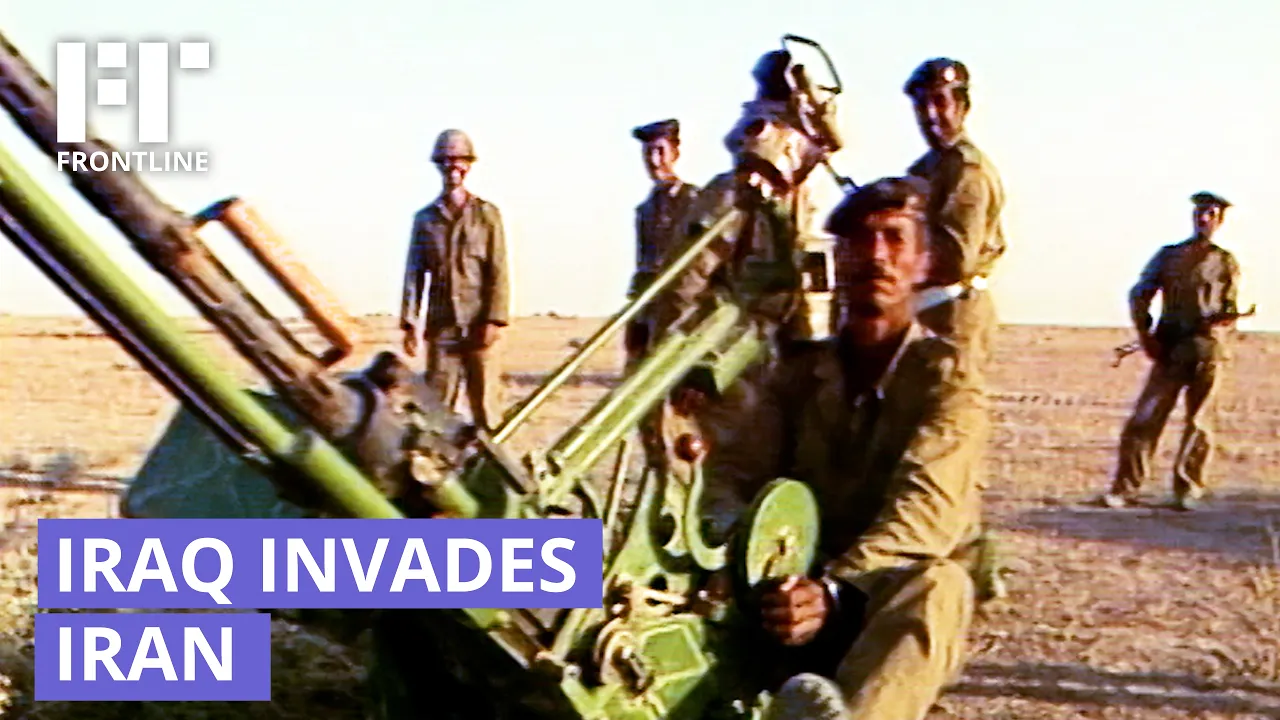




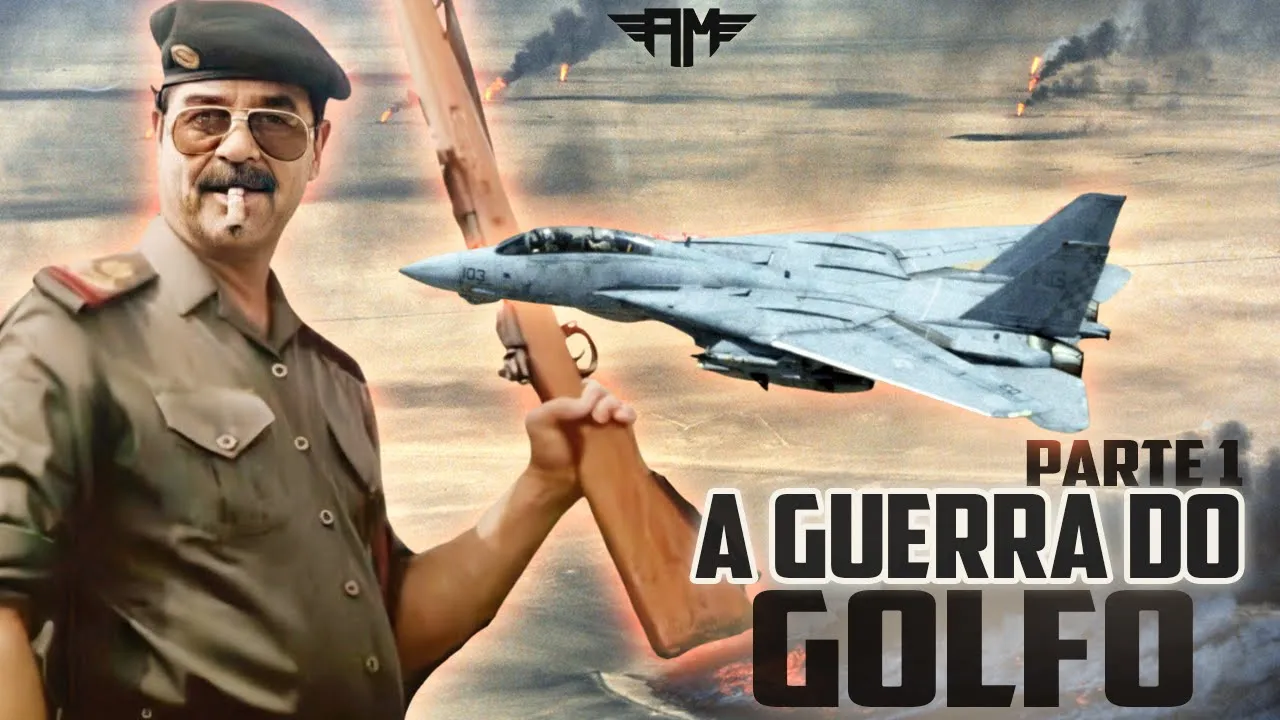



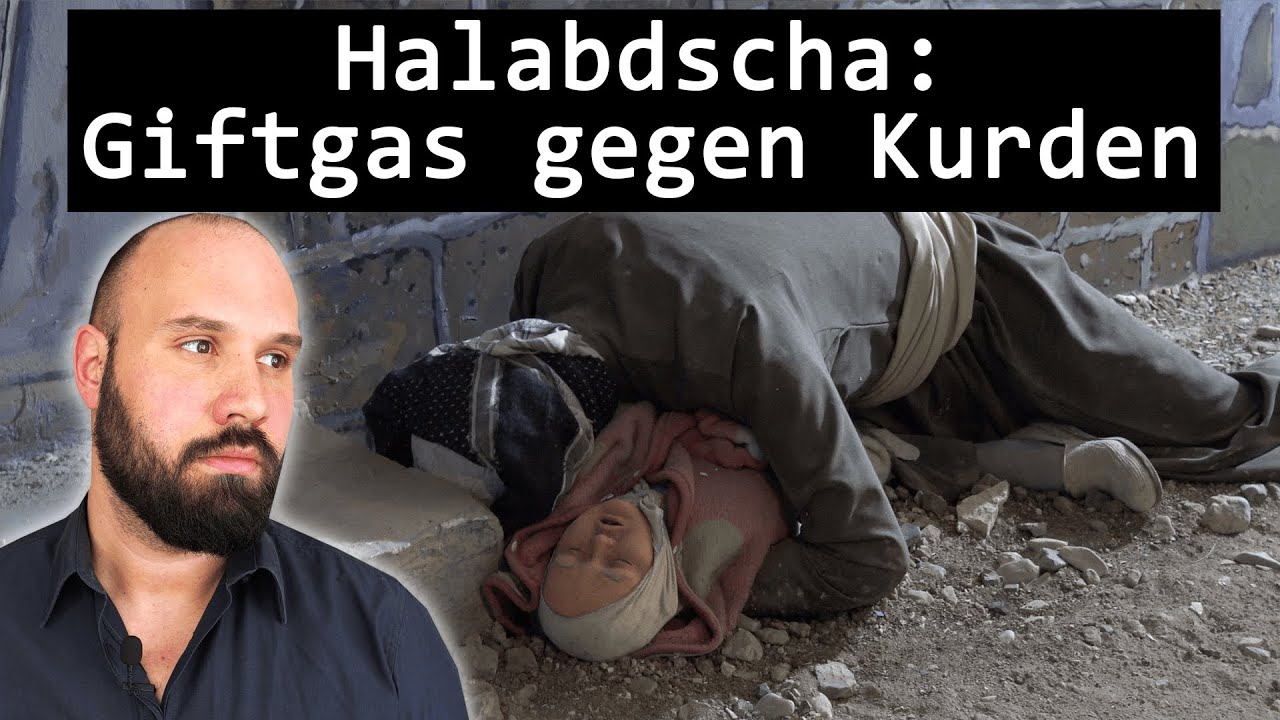


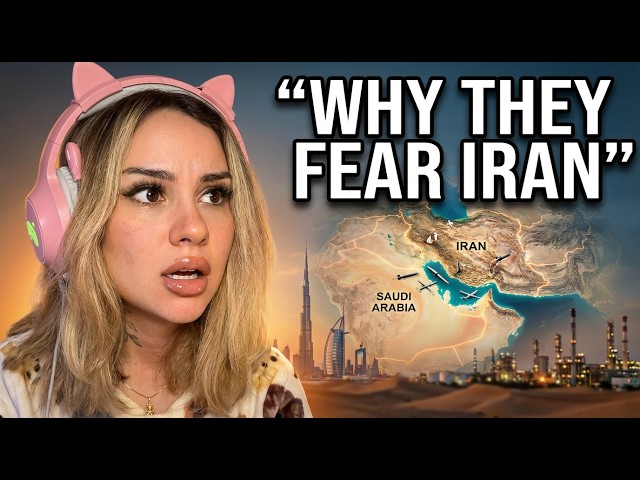



The Iran-Iraq War (1980-1988) was an eight-year-long conflict between Iran and Iraq that began when Iraqi dictator Saddam Hussein invaded Iran in September 1980, seeking to secure control of the Shatt al-Arab waterway and prevent the spread of Iran's Islamic Revolution; despite initial Iraqi advances, the war devolved into a brutal stalemate characterized by massive casualties, the use of chemical weapons, and extensive foreign intervention, ultimately resulting in approximately one million deaths and leaving both nations devastated, with Iraq emerging as a weakened state surrounded by hostile neighbors.
Iran-Iraq War: The Original Gulf War Documentary Analysis
Added:The 1979 Iranian Revolution and the establishment of the Islamic Republic under Ayatollah Khomeini, which fundamentally altered regional power dynamics.
The historical sectarian divide between Sunni and Shia Islam, specifically regarding the demographic makeup of Iraq and Iran.
The geopolitical significance of the Shatt al-Arab waterway and long-standing territorial disputes between Arab and Persian states.
The broader Cold War context, including how the United States and the Soviet Union managed diplomatic relationships in the Middle East.
The 1990-1991 Persian Gulf War, analyzing how Iraq's post-war economic crisis and military mobilization led to its invasion of Kuwait.
The history and ethical implications of chemical weapons usage, focusing on the Halabja chemical attack and the international community's response.
The development of Iran's strategic doctrine of asymmetric warfare, regional proxy networks, and 'forward defense'.
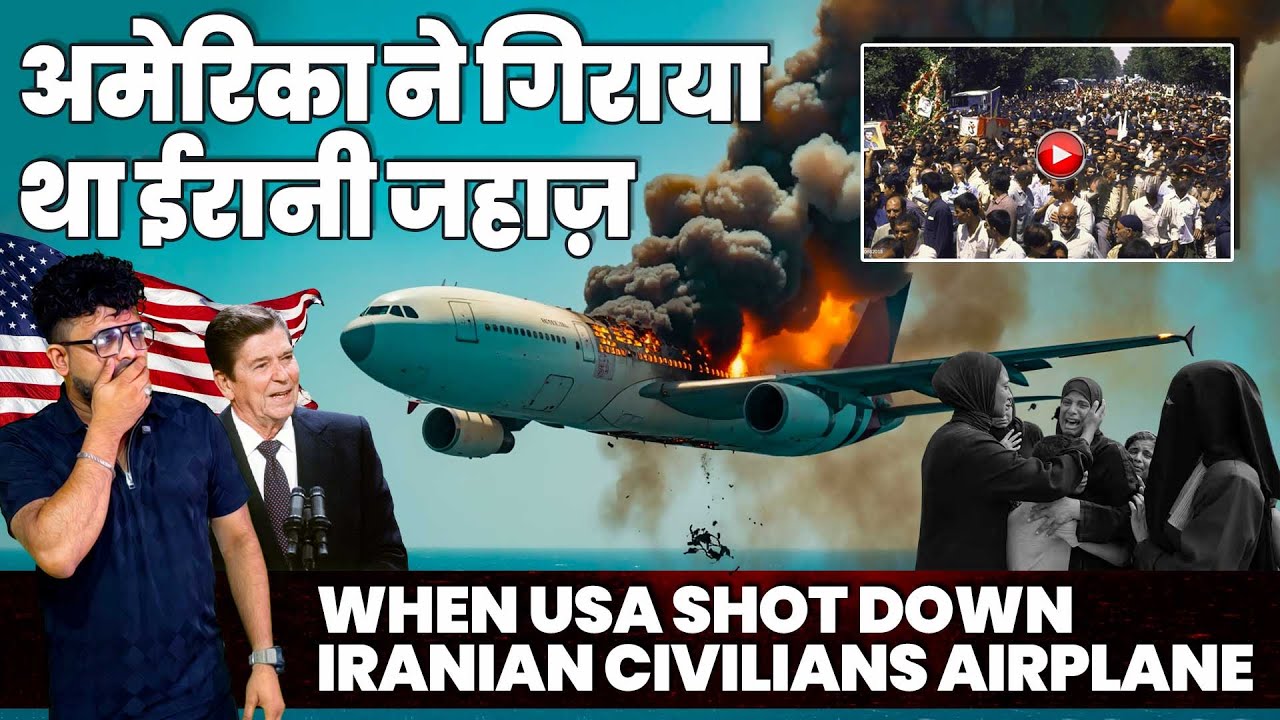
The long-term deterioration of US-Iran relations, including the geopolitical fallout of the Iran-Contra Affair and the downing of Iran Air Flight 655.
4.2M views46.4Klikes40:43Original Release: 2021-06-25
(slow music) - [Narrator] On January 17th, 1991, the skies over Kuwait and Iraq roared with the largest and most sophisticated air armada in history.
Their mission was to destroy the army of Iraqi dictator, Saddam Hussein, who in August of the previous year had seized the tiny oil-rich kingdom of Kuwait in order to plunder its wealth.
Remembered in the West as the Gulf War, this conflict was proceeded by another major war in the Persian Gulf in which Iraq fought an eight-year-long struggle with its powerful eastern neighbor, Iran.
Given the events of the region that would come in the 1990s and up to the present day, many around the world now overlook this essential chapter of history.
It is a story of revolution, of political ambition, of behind the scenes scheming, and the cost of all those things paid for in blood.
This is the Iran-Iraq War, the original Gulf War.
Welcome to "Wars of the World."
(dramatic music) (slow music) Given the current tension between the United States and Iran, it is difficult for the modern mindset to appreciate the fact that in the mid-1970s Iran was one of the West's closest allies in confronting Soviet efforts to expand their influence in the Middle East.
Ruled by the Shah Mohammad Pahlavi since 1941, Pahlavi took full advantage of this close relationship with the West, and Iran's vast wealth, to build up his armed forces and equip them with some of the latest Western weaponry.
These included powerful British-made Chieftain tanks, which were more than a match for the T-55s and T-62s the Soviets were supplying to regional rivals like Iraq.
But it was probably the acquisition of American F-14 Tomcat fighters that best demonstrated how close an ally to Washington Iran was in this period.
The F-14s were without a doubt the premier fighters flying at that time, not only in the Middle East, but the world.
While not as advanced as the US Navy's own F-14s, they were still capable of firing the massive AIM-54 Phoenix, which could hit an airborne target 100 miles away.
The F-14s meant that Iran ruled the skies over the desert, with not even Israel possessing an equivalent until the arrival of the F-15 Eagle.
But for the West, keeping Iran as an ally was a full-time chore for their intelligence agencies, with the biggest threats to the shah coming from within Iran itself.
In 1953, American and British intelligence agents helped secure the shah's position during a power struggle with the prime minister.
And in order to prevent other political rivals, the shah later dismissed the country's parliament and instigated his so-called white revolution.
This stripped much of the wealth away from regional leaders, many of whom were Islamic religious leaders who had ruled their peoples for generations, and turned the money towards a program of cultural and technological reforms, which many Iranians viewed as the Westernization of their culture.
Opposition groups, each with their own political or ideological agendas emerged from the shah's white revolution and grew in popularity.
The shah trying to suppress such groups, but one man, the Ayatollah Khomeini, a populist cleric exiled from Iran in 1964, managed to rally many of the opposition groups together, emphasizing the shah's close ties to the West and Israel to further alienate the shah from the people.
In January of 1978, thousands of young religious students took to the streets, and they were soon joined by countless others opposed to the shah, who was by now physically weakened by cancer.
Government forces tried to quash the uprising, but the violent response only drew in further supports.
The Iranian revolution had begun, and nothing could stop it.
Within a year, the shah and his family had publicly stated they were going on vacation.
But in reality, on January 17th, 1979, he abdicated the throne.
Khomeini returned home in triumph.
And after ousting the remnants of the shah's government, on April 1st, 1979, the Islamic Republic of Iran was founded.
For the West, the Iranian revolution was devastating and embarrassing.
Hostages were taken from the US Embassy in Tehran and paraded on television for the world to see.
An American operation dubbed Eagle Claw aimed to rescue them.
But it ended in tragedy when eight US service personnel and one Iranian civilian were killed after one of the rescue helicopters crashed into a supporting C-130 Hercules cargo plane.
The long-term problem for the West now was that they faced a major regional opponent that was armed to the teeth with the very latest weaponry they themselves had supplied.
(slow dramatic music) At the same time that the shah was being ousted from power, power was also changing hands across the border in Iraq.
On July 16th, 1979, Iraqi president Ahmed Hassan al-Bakr was forced to step down following the political scheming of his deputy, one Saddam Hussein.
Both men were members of Iraq's ruling party, which promised Arab nationalism and functioned under an Arab interpretation of socialism.
Neighboring Syria was also ruled by the same party, and Al-Bakr had begun negotiations to essentially merge the two countries, creating a much more powerful single state.
But this would have curtailed Saddam Hussein's own ambition for power.
With Al-Bakr removed, the movement to link the countries ended, and Saddam Hussein took power in the Iraqi capital of Baghdad.
Then, like so many dictatorships when a new absolute ruler appears, Saddam Hussein began purging the government of potential rivals.
Between July and August literally hundreds of his potential opponents were executed.
But this was not the end of potential resistance to his authority.
In the north of the country, on its border with Turkey, Syria, and Iran, were the Kurds, an indigenous people who had long campaigned for their own homeland called Kurdistan, a struggle that continues to this day.
Between 1960 and 1975, Kurdish fighters and Iraqi troops fought a brutal and bloody campaign, with the Iraqi-Kurds receiving some support from Iran.
But that support ended in 1975 with the signing of the Algiers Agreement.
The agreement was intended to end decades-long disagreements and even recent fighting between Iraq and the shah's Iran concerning their borders.
But it also aimed to cull the Kurdish rebellion, in which it briefly succeeded.
Iran then attempted to instigate a policy of Arabization to suppress the Kurdish culture, although this ultimately failed and only fueled future resentment.
But Saddam had potential threats closer to home, for he and his leadership were members of Iraq's Sunni population, which was a minority group in the country compared to the largest Shiite population.
The rise of the Shiite Ayatollah Khomeini in Iran prompted fears that Iraq could see a similar revolution supported by their old Persian neighbor and regional adversary.
The political instability in Iran after the revolution, and the new-found hostility towards the ayatollah from the international community, did not go unnoticed by Saddam Hussein, who sensed the opportunity to strike a short, sharp blow against his eastern neighbor.
Saddam wanted Iraq to secure control of both banks of the Shatt al-Arab waterway, which had previously been used to mark the border between the two countries, and seize the oil-rich region, citing historical claims over the land as justification for military action.
He knew he had to strike quickly, for with every day that passed Iran could become more stable and present a greater threat to his ambitions, or alternatively incite the Shiite uprising he feared.
He therefore took personal command of the planning for the operation, despite the fact that he himself had never served in the armed forces.
Taking influence from Israel's preemptive strike during the 1967 Arab-Israeli War, he knew the key to success would be to destroy the Iranian Air Force quickly by catching their planes on the ground, while at the same time launching an encompassing thrust into Iranian territory.
If successful, the Iranians would have little time to effect a coordinated response.
And with their objective seized, the Iraqi Army could fend off the Iranians until they were forced to concede defeat.
On September 17th, 1980, Saddam Hussein publicly withdrew from the Algiers Agreement, claiming that the new regime in Iran were not abiding by it.
Then on September 22nd, his forces struck.
(slow dramatic music) As Saddam Hussein had ordered, the Iranian Air Force was the first target with 10 airfields all being hit in the first wave by Iraqi fighter bombers.
However, already Saddam Hussein's plans were showing cracks.
For while his air force did extensive damage to the airfields themselves, Iranian warplanes suffered relatively light damage.
And with their runways hurriedly repaired, the Iranian Air Force rose to meet the attackers.
Within 24 hours, Iraqi Air Force bases were themselves coming under attack by Iranian pilots flying American-made F-4 Phantoms and F-5 Tigers under an operation simply dubbed Revenge.
On the ground, Iraqi forces sent six divisions into Iran on three fronts.
The most concentrated effort was the operation to seize Khuzestan, which saw four Iraqi divisions deployed with the aim of controlling the waterway.
While the remaining two was sent to block any Iranian counterattack.
Some of the bloodiest fighting took place during this first battle, where Iranian anti-tank teams inflicted a heavy toll on Iraqi tanks, but were eventually forced into retreat.
The battle cost the lives of some 7,000 soldiers and civilians, leading to Iranians referring to the city of Khorramshahr as the City of Blood.
But while an Iraqi victory, the fighting had stalled the Iraqi advance, buying Iran time to mobilize.
And by the end of 1980, Iraqi troops were now on the defensive, their reserves becoming increasingly depleted.
Rather than the quick victory he had promised, Saddam Hussein's Iraq and the Ayatollah Khomeini's Iran were now settling in for a prolonged war of attrition.
On paper, the Iranians seemed to be holding all the cards when the war broke out, but its vast military power accumulated under the shah was now being sapped by Western sanctions.
Iran's alienating of the West's great adversary, the Soviet Union, following the revolution, also excluded them from their supports.
Thus, in order to keep their advanced Western weapons operational they had to cannibalize large amounts of them to keep others working.
For example, Iran's force of 80 F-1 Tomcats would be halved over the coming years.
And in some instances, they even flew with their advanced radars being non-operational.
This equipment problem was only exacerbated by a culling of generals and other senior officers who were viewed as still having loyalties to the shah.
However, the Iranians would quickly prove themselves to be adept at improvisation, and they instead began a major program to produce their own spares and ammunition for their tanks and aircraft.
This would see them regenerate huge amounts of their equipment that had initially been rendered inoperable, and allow them to keep the pressure on Iraq.
Iraq, meanwhile, was being armed and trained by the Soviet Union and France.
Saddam Hussein had every reason to be confident in his forces in 1980.
They were well-equipped for the region.
They already had a wealth of combat experience fighting the Kurds, and they were well-motivated thanks to the cults of his own personality.
However, his insistence on personally directing the campaign saw the Iraqis overextend themselves along the front lines, being given too many objectives at once, rather than focusing more of their might on fewer targets where they could have easily destroyed the poorly-equipped Iranians and then moved on to the next.
Worse still for the Iraqi Army, when its generals realized they were fighting battles they could not win because they didn't have the support of their comrades, who were themselves fighting their own desperate battles, some of them decided to retreat and reorganize themselves.
This was intolerable for Saddam Hussein, who viewed it as cowardice or incompetence, and so had them executed as a warning to others.
The atmosphere of fear amongst the leadership to speak out in opposition to his plans, or even appear to do so, would ultimately reveal Saddam's own shortcomings as a wartime leader.
Many defensive strategies and contingencies were often overlooked.
A prime example being when Iran launched an air campaign against Iraqi oil fields in an effort to cripple the Iraqi economy.
Expecting to blast the Iranian Air Force on the ground, Saddam Hussein had not adequately prepared for such attacks.
And thus the Iranian planes often encountered little in the way of Iraqi air opposition during these initial strikes.
Hussein's invasion of Iran also had an unfortunate side effect for the Iraqi leader and his military ambitions.
A large part of his planning counted on the disorganization and internal instability of the new Iranian regime.
But his invasion only served to unite Iran against the foreign invader.
In essence, he had given the ayatollah exactly what he needed to hold onto power and secure the future of the Islamic Republic of Iran.
Calling on the people to rally against the Iraqi invaders, Iran saw a major mobilization of its young men, producing scenes at train stations and bus terminals akin to those of the First World War.
New regional units were raised, comprising of men who had grown up with one another and were now off to fight together.
But the World War I comparison does not end there.
For the Iran-Iraq War would see the Iranians adopting a widespread use of networks of trenches with which to keep the Iraqi army at bay.
The trenches were vital for Iran's defense, since they were at a numerical disadvantage when it came to armored units.
Meaning they had no choice but to rely heavily on infantry warfare.
Just like at the Somme, the Iranian infantry would launch massive human wave assaults from these trenches, often across large open fields, where Iraqi artillery made quick work of them.
The Persian sands were stained black and red with smoke, fire, and blood.
After both armies ground to a bitter and bloody slog among the front lines during 1981 and beyond, Saddam Hussein took to punishing Iranian cities and their populations.
Skud-B surface to surface missiles and Tupolev Tu-22 bombers, both imported from the Soviet Union, rained down devastation upon, amongst others, the capital city of Tehran, sending thousands of people heading into the surrounding hills during the hours of darkness.
Like the terror bombing of cities in World War II, the attacks were intended to demoralize the Iranian people.
But instead, the Iranians called out for vengeance.
And so Iranian war planes retaliated against Baghdad.
These eye for an eye strikes became collectively known as the War of the Cities.
The Kurds also took the opportunity presented by the war to continue their fight against Iraq for an independent Kurdistan.
Backed by Libya, Syria, and of course Iran, they laid siege to the roads into Turkey, blocking the export of Iraqi oil out of the country by road, further hurting Saddam's already weakened economy.
By May of 1982, Iraq had lost much of its land gains from early in the war.
And so Saddam Hussein ordered his forces to retreat back to Iraqi territory.
This, after executing his own generals, who had themselves ordered retreats.
Hussein now sued for peace, declaring a unilateral ceasefire on June 10th, 1982, expecting Iran to be satisfied that it had reclaimed its lost land.
However, the ayatollah rejected this ceasefire and instead made demands for Saddam Hussein to be removed and Iraq to pay war reparations for the damage incurred in Iran.
This was unacceptable for Saddam Hussein.
And so reluctantly, both sides continued the war.
And what a terrible war this would be.
Embroiling not only the two nations themselves, but the great superpowers of the time in their bid to secure oil interests in the region.
Suddenly the world would focus in on this conflict and the fallout would change history forever.
(slow music) Given the strategic importance of the Middle East and its oil supplies, nations outside of the two primary combatants inevitably had an interest in this conflict's outcome.
While Iran was relatively isolated from the international community, Iraq found itself an attractive prospect for the world's arms suppliers and nations looking to gain influence with the burgeoning Middle Eastern power.
Both the Soviet Union and France were key suppliers of arms and technical assistance to Iraq.
But while Soviet material support superseded the French's contribution, Paris was instead giving Iraq potentially its greatest tool to power the country into the 21st century, the power of the atom.
In 1976, France agreed to transfer the technology for a 40 megawatt reactor and assist the Iraqis in building and operating it in a new nuclear center near Baghdad.
Construction began in 1979, and the reactor, dubbed Osirak by the French workers, was intended to use weapons grade plutonium imported from Italy.
Fearing a nuclear-armed Iraq, or simply looking for a major propaganda coup, the Iranians launched a surprise attack on the reactor on September 30th, 1980 in what was history's first strike on a nuclear facility.
Dubbed Operation Scorch Sword, Iranian war planes inflicted significant enough damage on the reactor to stall the Franco-Iraqi project by up to three months.
But Iran was not the only one who feared a nuclear Iraq.
As work resumed on the reactor, the following year on June 7th, 1981, jet engines could be heard over the facility once again.
But instead of Iranian markings, the aircraft carried the Star of David.
The Israeli Air Force inflicted significant damage on the facility in what is regarded as one of the greatest air raids in history.
The Israeli F-16 Fighting Falcons flew at ultra low level across Saudi and Iraqi airspace at the very edge of their range and delivered their bombs with extraordinary accuracy.
International reaction towards Israel was mixed, and Iraq vowed to rebuild the facility.
But with the financial and political pressures of war with Iran stacked against them, France pulled out of the project in 1984 and Saddam could ill afford it any longer.
However, France would still provide conventional arms and equipment for the Iraqi war effort.
Saudi Arabia and Kuwait, like the Iraqis, were concerned about Iran exporting its revolution or inciting or funding Shiite uprisings in their own countries.
And so they provided war loans to the Iraqi government, all to pay for the acquisition of new equipment.
As well as the traditional suppliers in Moscow and Paris, Spain and Italy both provided the Iraqis with helicopters armed with anti-tank missiles.
And eventually the United States did the same, although to a lesser degree than many European nations.
Iraq also turned to China who sold unlicensed copies of Soviet weaponry, such as the T-55 tank, to replace the actual Soviet-manufactured equipment destroyed by Iran.
The Soviets themselves also provided export versions of their T-72 tank to Iraq, which became much feared by Iranian tank crews.
They also supplied Iraq with advanced fighters in an effort to offset the powerful Iranian Tomcats.
Iran was not without its own backers however.
North Korea supplied around 300 Chinese-manufactured Type 59 tanks to Iran before China supplied Iran directly, despite officials in Beijing denying they were doing this.
But perhaps their most surprising supporters however with the Jewish state of Israel and the CIA.
Israel viewed both Iran and Iraq as potential enemies in the future.
And so it was in their own best interests to keep the two sides fighting each other.
Israel therefore provided both training and equipment to the Iranians, which as well as serving Israel's own geopolitical goals, aided Israeli businesses involved in the small country's defense industry.
It also allowed Israel to negotiate for the safe passage of Persian Jews from Iran to Israel.
Meanwhile, factions in the CIA saw Iran as a way of funding anti-socialist rebels in Nicaragua known as the Contras.
Weapons and spares for their American equipment were quietly sold to Iran, who in turn agreed to negotiate with Hezbollah fighters in Lebanon who were holding seven Americans hostage.
The arms were delivered via Israel, and portions of the Iranian payments were then transferred to the Contras.
The discovery of the deal by the US Congress caused a scandal for the Reagan administration, who were accused of trading arms for hostages, an action which is against US policy and technically treason.
(slow music) With his foreign backers supporting Saddam Hussein's war effort, he placed large orders with France for new equipment in 1981, including Dassault Mirage F1 fighters, of which 20 were configured for anti-ship operations and armed with the Exocet missile.
Such was the urgency of this order, given Iraq's depleted air force, that these Mirages were actually diverted from delivery to the French's own air force and given to Iraq.
With his Arabian blitzkrieg now in tatters and his economy faltering due to the pressures of war, Saddam Hussein knew that a long drawn-out war of attrition could ultimately favor Iran.
And so in order to inflict heavy damage on Iran's ability to function, he intended for the Mirages to start a campaign of sinking Iranian tankers.
Later this was extended to include foreign tankers carrying Iranian oil.
While waiting for the Mirages to arrive, Saddam's forces used helicopters to launch attacks.
But this was not nearly as effective as Saddam had hoped.
In desperation, he struck a deal with France to lease five Super Etendard attack planes from the French Navy to tide him over until the Mirages were ready.
In 1982 these Super Etendards struck terror into British forces engaged in the Falklands War.
And now it was going to do the same to shipping in the Persian Gulf.
The Iraqi Super Etendards began their missile attacks on March 27th, 1984.
And by the end of the year they had attacked 34 ships of various nationalities in the Gulf.
Destroying these Etendards became a high priority for Iran's fighters and navy.
But despite Iranian claims, the little Etendards escaped destruction.
Their small size coupled with their pilots flying at terrifyingly low levels over the Gulf, their jet exhausts often being seen causing the sea to ripple, made them extremely elusive targets.
And only one would be lost in Iraqi service during a landing accident.
Iran responded by conducting its own attacks against Iraqi shipping using F-4 Phantoms with bombs.
There was almost nothing Iraq could do to stop these attacks for Iraq had a relatively minuscule coastline.
And the Iraqi Navy was a small force that had already suffered heavy damage due to Iranian air strikes.
Iraqi oil exports were also heavily dependent on foreign shipping, which became prime targets for Iranian war planes and fast attack boats.
Iranian warships also took to mining waterways used by the pro-Iraqi tankers.
The world's press labeled the campaign being waged by both sides as the Tanker War, and it became an intolerable situation for the Western powers.
America, Britain, and France deployed their warships into the Gulf to protect their respective nation's ships.
But the United States, under President Ronald Reagan, went a step further and had a number of tankers from countries like Kuwait reflagged as American vessels, and thus afforded them American protection.
It was an extremely dangerous move that risked dragging the United States into the war in the Gulf, but it failed to stop the attacks, which only rose in number as the war dragged on into the second half of the 1980s.
(slow dramatic music) In the beginning of the war, Iran enjoyed a numerical advantage over the Iraqis.
But as the Iraqi Army swelled, it began to, at the very least, match Iran's military might.
And in some areas, such as tanks, it surpassed its Persian adversary.
With the military commands of both countries closed off to the Western powers, many observers in Washington, London, and Paris were confused as to why Iraq was not able to defeat Iran given its qualitative edge in armor particularly.
The truth was that the Iraqi leadership, which still centered on Saddam Hussein, was failing in its ability to conduct the war successfully, despite the army now numbering a million men, making it the fourth largest in the world.
While Iran selected experienced, but ideologically sound commanders for its own troops.
These commanders had a better grasp of how to conduct military campaigns and were resourceful when it came to addressing Iran's equipment shortfalls.
As a result, Saddam Hussein began resorting to chemical weapons, such as during an Iranian offensive into Northern Iraq in September of 1983.
The Iranians, with Kurdish support, advanced 15 miles into Iraqi territory before helicopters sprayed chemicals over them, killing 5,000 Iranians and 2,500 Iraqis, stopping the advance in its tracks.
Further south, Iran had undertaken numerous operations to capture the strategically important Iraqi city of Basra.
But the defenders stubbornly refused to let the city fall.
Having been on the defensive since his thrust into Iran had stalled in 1980, Saddam Hussein's forces had re-grouped and re-equipped to the point where he was able to order a large scale offensive in early 1986.
The aim was to recapture Majnoon Island, which had been lost to the Iranians in 1984 and was key to Iraq's oil exports.
The offensive failed to retake the island due to a dogged Iranian resistance.
And worse still for Saddam, the distraction allowed Iran to attack the Al-Faw peninsula at the mouth of the Al Shatt.
Using their elite revolutionary guard forces, Iran was able to take and hold the peninsula relatively quickly.
Holding this peninsula allowed Iran to threaten shipping with land-based Silkworm missiles.
By 1987, Iraq's generals were quickly losing patience with Saddam, who was continually interfering in their war plans.
Threatening him with a full-scale mutiny, Saddam reluctantly took a step back from conducting the war and allowed his generals to call upon their own expertise to continue the fight.
This saw a doctrinal change in the Iraqi Army, which now placed greater emphasis on training up troops before sending them out to the front.
And this included large-scale war games.
This saw the quality of Iraq's troops grow, as well as their number.
But the strategic situation they were left in still seemed to be favoring Iran.
However, unbeknown to the people outside the Islamic republic, Iran's population were now becoming increasingly war weary and the numbers of volunteers to fight began to drop.
Morale and equipment serviceability were also beginning to crash, problems exacerbated by the growing threat from the United States Navy in the Tanker War, which at times were taking an active role against Iran in protecting its shipping.
Since these crucial Iranian oil exports weren't afforded the same protection as Iraq's from Washington, and with the threat of Iraqi air attack, fewer and fewer countries were willing to cooperate with the country any longer.
Even when an American destroyer, the USS Stark was hit by an Iraqi missile, Washington spun the event in such a way as to blame Iran, although the Iraqi government ultimately accepted culpability.
Nevertheless, Iran was able to mount a successful offensive in the northern theater of the war with the help of the Kurds, pushing deeper into Iraqi territory than before.
However, they were unable to fully capitalize on this success.
The United Nations called both sides to cease operations on July 20th and return to pre-war boundaries.
But while this was rejected, both countries knew it was only a matter of time before they would have to find some kind of peace.
As by 1988, both sides were growing increasingly exhausted from the war, which had claimed almost 1 million lives.
The problem was that the only thing Saddam Hussein and the Ayatollah Khomeini could agree on is that they would not be the one to admit defeat.
1988 opened with Iraq amassing for a new, fresh offensive set for April.
Prior to this offensive, Saddam Hussein ordered attacks against the Kurdish town of Halabja on March 16th, 1988.
Two days before, the town fell under Iranian control.
And so it was a prime target for a nerve gas attack by Iraqi war planes and helicopters.
The result was a massacre of 7,000 people and the injuring of another 10,000.
Iraq's April offensive forced Iran to start withdrawing its remaining troops from pre-war Iraqi territory, including supporting the Kurds in the north.
During this offensive, Iraq fought to oust Iranian forces from the Al-Faw peninsula.
And as well as amassing over five times as many troops as Iran had stationed there, the Iraqis still resorted to using sarin gas to deadly effect.
Iraq also carried out chemical attacks against Iranian towns along the border and threatened to use them on Iranian cities if the war was allowed to continue.
At sea, the Tanker War would see more tragedy for Iran, when on April 18th US Navy forces retaliated against the Iranian Navy for their mining operations and sank an Iranian frigate during Operation Praying Mantis.
Then, on July 3rd, 1988, the US destroyer USS Vincennes, which was protecting American shipping in the Gulf, mistook an Iranian airliner for a war plane and they shot it down, killing 290 civilians.
In Tehran, the ayatollah's advisors warned him that in order to continue the war the military budget would have to be increased again many times over, and they predicted the war would continue into the 1990s.
This was simply too much for the Iranian leader, who reluctantly accepted UN Resolution 598 on July 20th, 1988, agreeing to a ceasefire and the start of negotiations for a complete withdrawal by all sides to their pre-war borders.
UN peacekeepers acted as a buffer between the two forces in the immediate aftermath.
But the negotiations stalled as Iraq tried to hold onto large areas of Iranian land.
Then in a shocking move, on August 2nd, 1990, Iraq invaded Kuwait, the small oil-rich country that had supported its fight against Iran.
The world that had largely turned a blind eye to Iraq's aggression towards Iran was furious.
And led by the United States, a force was amassed to expel Saddam Hussein's troops.
The 1991 Gulf War was a war he could never win.
The technological edge the US and its allies enjoyed obliterated Iraq's army in little over one month.
(slow dramatic music) The legacy of this conflict is brutal.
1 million dead.
Iraq illegally invading Iran.
Iraq using chemical weapons against civilians.
Iraq deliberately bombing civilian populaces.
Iraq killing Western sailors.
And yet smarting from a sense of betrayal by the Iranians, the Western powers still viewed Iran as the bad guys in this fight.
A case could be made that this indifference actually gave Saddam Hussein a good reason to believe that his invasion of Kuwait would be met with equal indifference, and with Kuwait's wealth he could restore his economy depleted by the war.
But he was wrong.
In the span of 11 years, beginning with the war against Iran, Saddam Hussein had led Iraq from being a burgeoning regional power to a third world country surrounded on all sides by hostile nations and dependent on the whims of a United States, who felt that without removing his regime from power in 1991, they had left the job half finished.
With this mindset, and with the War on Terror breaking out in the 21st century, Iraq found itself the target of the United States and United Kingdom once more.
But while the 2003 invasion may have ended Saddam Hussein's reign of tyranny, it opened the door to years of chaos and terrorism.
As for Iran, the country continued to be something of a pariah within the international community.
The Iranian leadership would not forget how quickly certain countries had rushed to support Iraq.
And soon they responded in kind by supporting insurgent groups in Lebanon, Syria, and Yemen.
The Iran-Iraq War and the feeling of an impending war with America or Israel has done much to focus the Iranian people outward rather than inward in the decade since the war.
And this has helped solidify the republic's leaders in their position, leaders who have at times experienced fluctuating popularity levels from its people.
With the Middle East still reeling from further wars, insurgencies, and ideological struggles, only time will tell what the final legacy of the Iran-Iraq War will be.
Thank you for watching.
Please leave a comment down below with your own thoughts and reactions.
And remember to like this video and subscribe to support the channel.
This is "Wars of the World."
Up Next

15:08
The Evolution of Elevators: From Ancient Lifts to Skyscrapers
@TheHistoryGuyChannel
436.7K views•2020-01-08

33:02
The Great Schism of 1054: Causes and Consequences
@SacredCathedrals
113.5K views•2026-02-19
35:11
The Spanish Civil War (1936-1939): A Nation Divided | Documentary
@warsoftheworld1945
71.3K views•2025-07-18
17:05
Understanding the Cold War: Superpower Conflicts and the Road to Détente
@OverSimplified
46.1M views•2019-01-24
Related Study Plans & Knowledge Roadmaps
Structured learning paths in History
history
Byzantine Iconoclasm: Theology, Art & Politics
01Foundations of Byzantium and Early Christian Images
02The First Iconoclasm: Leo III and the Crisis of Images
03Empress Irene, Nicaea II, and the Second Iconoclasm
+ 2 more learning modules
9h5 modules
Explore Roadmap
history
Iranian Revolution (Causes, Events & Legacy)
01The Pahlavi Dynasty and the Roots of Discontent
02The Spark of Rebellion and the Rise of Khomeini
031979: The Fall of the Shah and the Climax of the Revolution
+ 2 more learning modules
8h5 modules
Explore Roadmap
history
Mali Empire: Mansa Musa, Trade & Timbuktu
01Foundations of the Mali Empire
02The Trans-Saharan Gold and Salt Trade
03The Reign and Pilgrimage of Mansa Musa
+ 1 more learning modules
6h4 modules
Explore Roadmap
history
1947 Partition: Politics, Borders & Legacies
01Foundations of British India and the Divide
02The Political Negotiations and the Mountbatten Plan
03Drawing the Boundary: The Radcliffe Line
+ 2 more learning modules
8h5 modules
Explore Roadmap