

















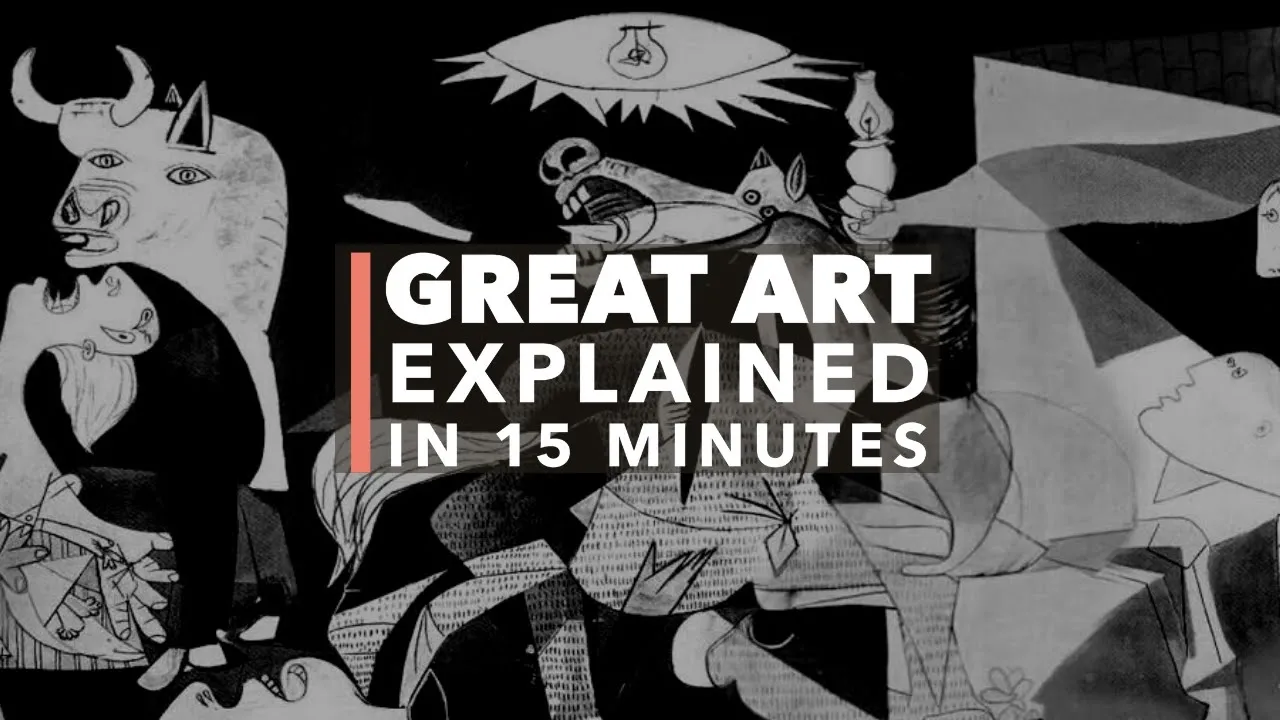
The Spanish Civil War (1936-1939) was a brutal conflict between Republicans and Nationalists that resulted in over 500,000 deaths, emerging from decades of political instability, social inequality, and military tensions. The war began when military officers led by Francisco Franco launched a coup against the Second Republic, which had implemented progressive reforms that alienated conservative sectors including the military, church, and landowners. International volunteers from around the world fought on both sides, with Germany and Italy supporting the Nationalists through military intervention. The conflict featured devastating battles such as Badajoz and the Ebro, and ended with Franco's victory in April 1939. He established a personalist authoritarian dictatorship that lasted until his death in 1975, though Spain eventually returned to democracy.
The Spanish Civil War (1936-1939): A Nation Divided | Documentary
Added:There was too much pain, too much that was despicable in this war between brothers. Defeat had to be better than to continue killing and dying. End quote. For three brutal years in the rolling countryside and mountain ranges of the south, as well as in populated cities such as Madrid, Barcelona, and Malaga. Spain suffered the massacre and carnage of civil war as Republicans fought nationalists. A conflict that witnessed the slaughter of over 500,000 both civilians and combatants alike.
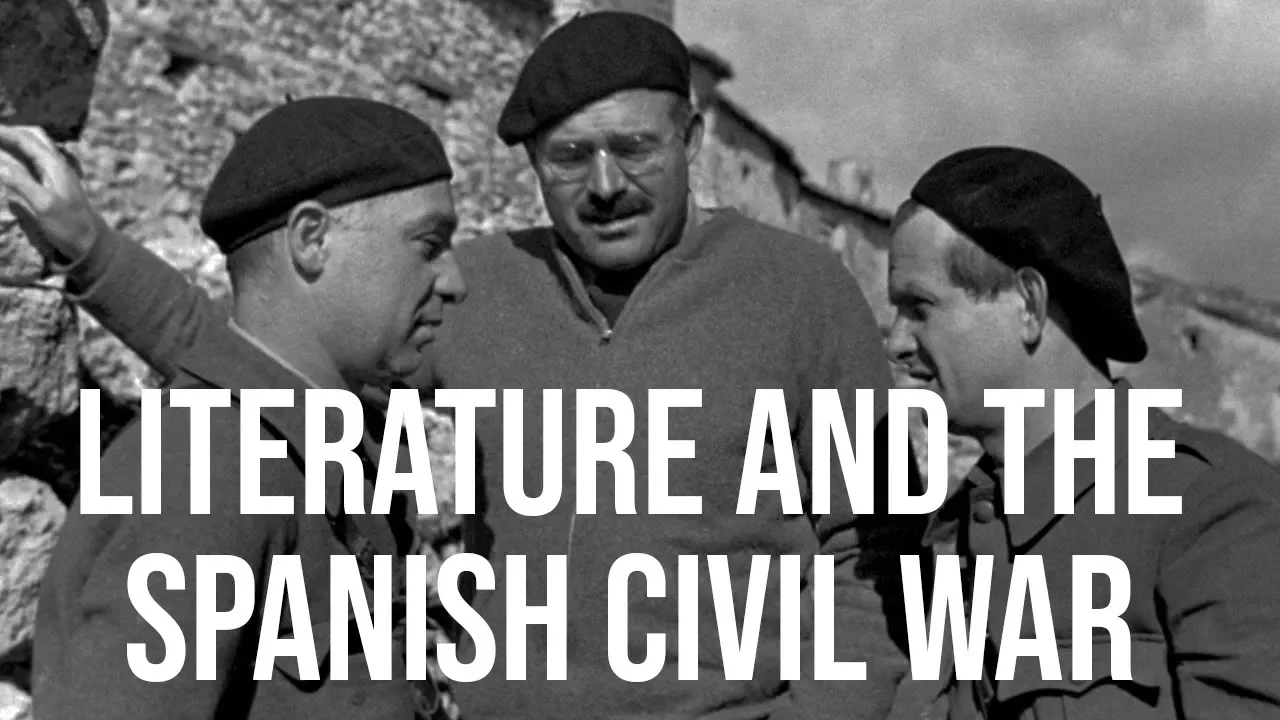
Bloodshed at the likes of Bad Hoth, Erun, Guadalahara, Teruel, and the Ebro etch themselves onto the nation's psyche, and popular narratives such as Picasso's Gernica, Hemingways, for whom the bell tolls, and Orwell's homage to Catalonia amongst them, ensured the world would never forget Guerrero civil Espanola.
In today's video, we venture into Spain's nightmare years of 1936 to 1939.
The bloodiest conflict that Western Europe had experienced since the end of the First World War. Welcome to Wars of the World.
[Music] [Music] Civil wars erupt from the complex interaction of political, social, economic, and regional tensions that develop over decades. or even centuries in some circumstances. And throughout the 19th and early 20th centuries, Spain had suffered from chronic political instability and corruption. The House of Borbin, a dynasty that originated in France and was established as the monarchy in Spain by King Philip V in 1700, was repeatedly challenged by Republicans, liberals, dictators, and regionalists. And whilst the current king of Spain, Filipe V 6th, remains a member of the House of Borbin, their sovereignty has been overthrown and then later regained no less than four times since 1700.
Spain consistently lacked a stable parliamentary democracy and in an attempt to create a constitutional monarchy with alternating liberal and conservative governments, a period referred to as the restoration was implemented in 1874.
Being largely undemocratic and increasingly out of touch with social realities, it ultimately collapsed in 1931 following the fall of the monarchybacked dictatorship of Miguel Primo de Rivera who had gained power via a military coup in 1923.
D Rivera's nationalist promise to reimpose conservative order, urbanize the masses, and usher in economic prosperity was initially welcomed. But despite temporarily suppressing civil unrest and perhaps unfairly taking personal credit for the economic boom that followed the first world war, the dictatorship could not mask the deeprooted cracks in Spanish society and D. Rivera resigned amidst a loss of popular support in March 1930.
April 14th of that year heralded a return to the second Spanish Republic and a new democratic government intent on introducing ambitious reforms and fundamental redistribution of both social and economic power in Spain alarming conservative sectors of society. monarchists, the military and the church predominantly.
Secularization of education, the introduction of voting rights and progressive education for women, civil marriage laws and restrictions on celebrations and processions reduce the church's control and influence on the populace. This led Catholic authority to view the republic's restructuring as an attack on traditional religion and Spanish culture. Reactions from the Spanish military to the republic's reforms became increasingly hostile and suspicious over the 5 years of rule, particularly within the officers corps, who are aligned with conservative, authoritarian, and nationalist values.
The republic's prime minister, Manuel Azana, aimed to both modernize and democratize the army, who previously had largely enjoyed independent, unchecked autonomy, almost being an elite faction.
Quote, "Since the end of the empire, the officer corps have become an increasingly self-encclosed cast. The militarymies overwhelmingly favored the sons of officers. The daughters of officers married into military families.
This was a world where the military authority had fewer and fewer personal ties to the country's working class."
End quote. At Spain's main military academy at Zaragoza, teaching staff were predominantly colonial officers. known as the Africanistas who' bloodied themselves on campaign in Morocco. The academy therefore became the breeding ground for ideas of imperial rebirth of the military as the guardian and savior of Spain and thus an integral part of the emergent politics of the ultra nationalist right. In response, one of the Republic's first prominent actions was to shut down Zaragoza in June 1931, angering hardliners like General Alio Mher and Francisco Franco, who had both lost status and influence and would later spearhead the coup in 1936.
Despite industrial urbanization, the country remained a predominantly agrarian society with stark divisions between the rich landowners and the dirt poor peasants. In southern Spain, a small traditional elite owned vast estates known as latafundia, while landless peasants lived in extreme poverty and often worked seasonally with financially untenable results. In the cities, industrial workers had endured harsh conditions, low wages, and little union or trade protections, giving rise to powerful anarchist and socialist movements, particularly in regions like Catalonia in the north and Andalusia in the south. The boom years of the previous decade had withered, leaving mass unemployment and overcrowded trades in its wake. Following a return to conservative government in November 1933, inevitably things came to a head. In October of the following year, socialist activists sought to wrestle back some semblance of control through a revolutionary general strike, bringing with it devastating consequences.
While this quickly ran out of steam in areas like Catalan or Madrid, coal miners in the northern principal of Atorias exploded in mass armed insurrection, occupying the capital of Vedo and burning over 50 churches, convents, and other religious sites, as well as executing a number of those in positions of authority. Despite mobilizing over 30,000 workers, the defense lasted only 2 weeks. Spanish forces under General Eduardo Lopez Ooa Eottoando shattered the uprising, unleashing the air force's bombers in the skies above the villages in Atorias, shelled the coastal towns from naval craft offshore and flooded the ground with Bellico's infantry troops.
Subsequently, quote, a harsh and extensive repression ensued throughout Atorias.
Constitutional guarantees were suspended across Spain. 30,000 people were imprisoned and many of them tortured.
Party and union premises were closed and the left's press silenced. Socialist town councils were overthrown. Civil servants of liberal or left opinions were discriminated against and everywhere employers and management took the opportunity to dismiss trade unionists and left activists on mass.
End quote. When a general election was called two years later in 1936, the left had reorganized and united in a cohesive coalition of progressive forces named the Popular Front, who went on to win the February elections with ease.
The country then rapidly declined into anarchy. Revolutionary masses took to the streets, releasing prisoners that they believed had been wrongly convicted. Conservative buildings and churches were overrun and then set ablaze and voters of the opposition were attacked and had their businesses ransacked and prominent politicians were assassinated in their own homes. Under the guise of restoring order, Franco and Mhler had proposed martial law. But when this was refused, they resorted to overthrowing the republic in a military coup backed by nationalist sympathizers and with the powerful support of the armed forces. On July 17th, Franco led the Spanish Foreign Legion and the Army of Africa in an attack on the southern mainland. In the meantime, Mhler mobilized forces in the north. Civil war had erupted.
Born into relatively upper class society in Spain's northern region of Galysia, Francisco Franco Bahamande's adolescence was shaped by the brutal colonial campaigns of North Africa. A period that not only established his reputation as a capable and ruthless soldier, but also deeply molded his authoritarian worldview, laying the foundation for the military doctrine and tactics he would later deploy with devastating effect during the war.
At the age of just 14, Franco entered Toledo Military Academy as an officer cadet in 1907 and graduated four years later with the rank of second left tenant. Quickly seeking promotion and prestige. He was commissioned into the Fuezas Regularas Indigenous, an infantry unit made up of colonial soldiers and Spanish officers known as the Army of Africa. And thus he was posted to the continent where it was said that he would receive laaha or laafaha or to put it in English a coffin or a general sash. Deployed to Spanish Morocco in 1913 a colony where Spain was engaged in a protracted and brutal conflict with the indigenous Amaz tribe in a campaign known as the riff war between 1911 and 1927.
Franco soon drew attention for his staunch discipline, stoicism, and tactical competence on the chaos of the battlefield. He was wounded only once in action when he was shot in the abdomen during an assault on a guerilla position at Elitz and was not expected to survive. For his actions, he was awarded Spain's highest honor for gallantry, the Cruz Laurada de San Fernando along with the coveted cross of Maria Christina, first class. His promotion quickly followed to the rank of captain in 1916, major in 1917, making him the youngest in Spain's army at the time to then being second in command of the Spanish Legion in 1920, and later the youngest general in Europe, aged just 33 in 1926.
Founded by Lieutenant Colonel Joseé Milan Stray in 1920, the Spanish Legion was modeled after the notorious French Legion Roné, flooding its ranks with troops from foreign countries and recruiting experienced Spanish officers to command them. They were garrisoned at Quartel de Reut Plaza de Colon.
Motivations for those joining Leon Espanola ranged from patriotism and romantic notions of valor to deserters from national armies, exile, and petty criminals looking for food, shelter, and pay. Quote, "Some recruits were discharged after the Great War, but wanted to stick to their profession, preferred active combat duty or service in a colonial environment associated with exoticism and adventure. Some saw the Legion as an opportunity to see the world. It was also a destination for working migrants who could not find a job, were stranded, or who were fired after strikes.
Many entered the Legion because they were desperate, drunk, or shanghide, also known as coerced, tricked, or intimidated. A few indeed had escaped an unlucky marriage, life crisis, or even the justice system. End quote. Rapidly earning the moniker bridegrooms of death during the riff insurrection, the legion established a cult of violence, martyrdom, and patriotic fervor that was both lorded in nationalist newspapers and spread terror amongst the indigenous Amma.
Horrific tales of mutilation, beheadings, human trophy hunting, and the immolation of enemy combatants and civilians alike soon circulated. quote, "Perading several heads on bayonets or mailing them in baskets, the Legion became notorious for this excessive violence, which was in some cases even practiced and encouraged by officers."
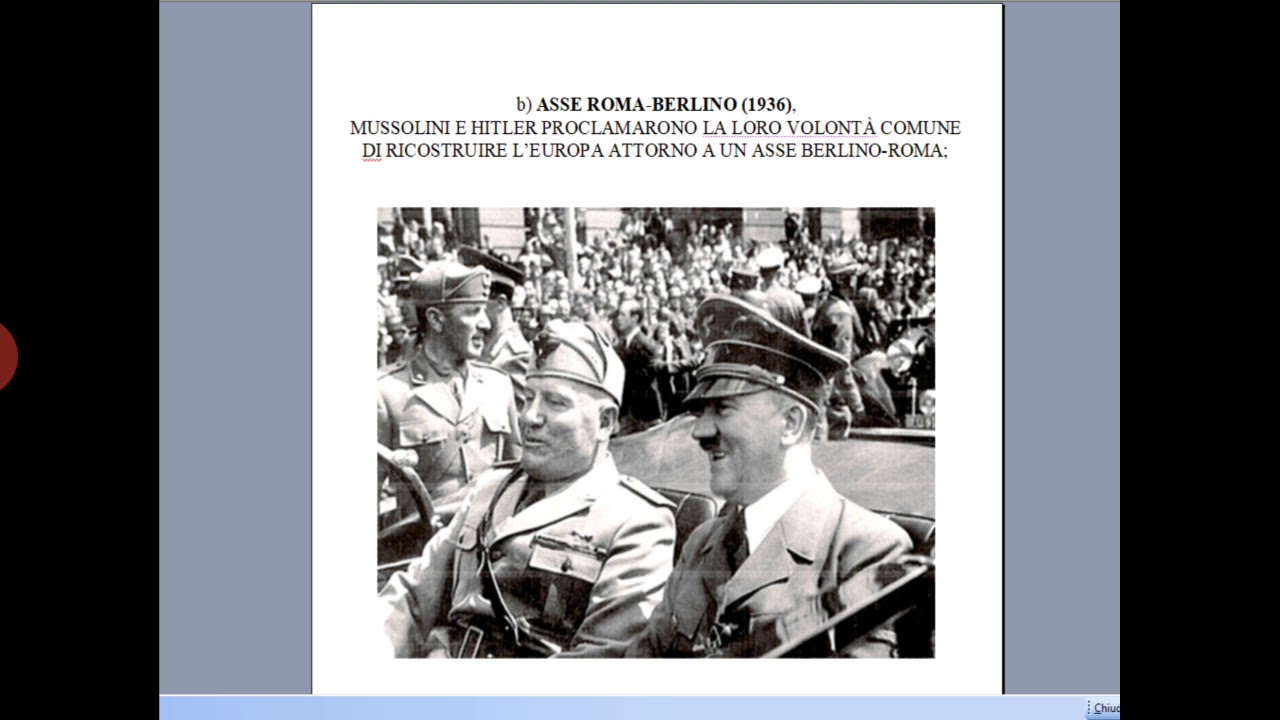
End quote. Just a week after the initial coup, two other fascist European powers, Germany and Italy, pledged their support to the rebellion in the form of armaments, vehicles, ammunition, and transport, hoping for a quick victory and a new found ally.
In an effort to avoid the Republican naval blockade of the Strait of Gibraltar, which separates North Africa from the European mainland, the Spanish Legion and Fuez Regularis indigenous use German Junkers 52 transport planes and Italian Savoya Marchetti 81s to ferry their elite troops, artillery, and equipment in the first successful airlift operation. Over 85 days from July to October, around 14,000 soldiers and just under 300 tons of war stock was flown into Spain, largely by foreign pilots and engineers in a devastating blow to Republican forces.
As the revolt spread into outright civil war, the division became evident in Spain's landscape. Urban centers with labor unions and workers embroidered into the very fabric of society remained largely republican, particularly so in the staunchly anti-entralist regions of Valencia and Catalan or the capital city of Madrid. The rural areas of the center north and northwest fell under the control of the rebels who derive popular support from the anti-progressive conservative classes and religious peasantry. However, in the rebel controlled areas where public support for the coup wasn't offered, violent repression was soon meated out to crush the resistance.
In the port city of VGO, protests and demonstrations were met with massacre and bloodshed. Local military commanders exterminated any and all opposition.
Hundreds of political and union rivals, mayors, lawyers, teachers, doctors, and even sailors and workers were murdered by their fellow soldiers.
In villages and towns, people were forced to pick a side less so on their belief in Republican or nationalist ideology, but more on the immediate threat facing their loved ones. quote, "Those who had entertained even vague Republican sympathies suddenly felt compelled to align themselves publicly with the new rebel authorities in order to protect their families, even if this meant betraying friendships and personal allegiances." End quote. With the absence of any meaningful and in some cases even functioning police or judicial authority, anarchy and brutal vigilante reprisals were soon rampant in many areas of the country. As all manner of personal scores were settled, as well as acts of outright criminality pursued under the guise of revolutionary justice, anti-clerical violence was also rife within Republican controlled territory with the murder of nearly 7,000 religious personnel, mass desecration, and the disintering of prominent graves representing a vile kickback against the traditionally anti-progressive doineering hand of the church. Quote, "In Republican territory, the objective for some individuals was killing as a means of achieving tabular raza or a blank slate and with it a brave new world. In rebel areas, killing was widely perceived as a cleansing action designed to rid the community of sources of pollution and the dangers they represented. Cleansing people who symbolize cultural change and thus posed a threat to old ways of being and thinking. progressive teachers, intellectuals, self-educated workers, new women, those known to have ideas, thinking for oneself being considered doubly reprehensible in women. Rebel violence was targeted against the socially, culturally, and sexually different." End quote. As the Legion and the Army of Africa advanced rapidly to the north, they cruy swept aside any and all resistance in their path. opposition that didn't come in the form of a trained militia, as is often popularly claimed, but were merely civilians armed with whatever they could find, fought futilely against 20th century tanks, bombers, and crack infantry. Strategic butchery, torture, systematic rape, mass graves, dehumanization, massacre, and slaughter laid strewn in their wake, reducing Spain's pro-republican populace to nothing more than mere targets for shooting practice or subjects for sadistic cruelty.
Southern Spain became a killing field with estimates ranging from 38,000 to 130,000 executions carried out during the war.
Appallingly, 50 to 70% of all the executions conducted by Franco's entire regime from 1936 right through to 1975 occurred during just the first 3 months of the civil war.
Located in Extre Madura on Spain's west coast, the fortified border city of Badoth sits on the banks of the river Guadana, close to the Portuguese border and is believed to have been founded as early as the 8th century. After disastrous losses, Badoth remained the only Republican position left on the Portuguese border in August of 1936.
A vital outpost soon isolated from reinforcements by the rapidly mobile nationalist forces who wish to unite their northern and southern forces while securing their western flank. Within the ancient fortress walls, 500 regular soldiers and around 3 to 4,000 Republican militia, men and women alike, under the command of Colonel Ilonso Pedendolas Pon Delejon, prepared for the inevitable siege. Armed with an old assortment of small arms, light machine guns, and small caliber artillery.
Opposing them, Lieutenant Colonel Juan Yaguay Iblano, one of the original officers from the Spanish army who'd revolted alongside Franco, brought with him the combined might of the Spanish, German, and Italian war machine. a little under 3,000 Spanish foreign legionnaires, 750 Moroccan infantrymen, and a stunning five whole field batteries of artillery, around 30 guns ranging from 37 mm anti-tank pieces to 75 mm field guns and devastating 150 mm howitzers. They were supported by bombers from the air force descending on Bad Hoth on the morning of August 14th.
For the last 3 days, Bad Hoth had been shelled almost continuously by artillery and aerial bombardment, reducing much of the ancient defenses to dust and rubble and swelling the city with terrified refugees.
In an act of blatant dereliction at around 0900, Pedendolas and a core of local authorities fled across the border to Portugal before the battle had even begun. Moroccan regularis stormed the city's southern walls with ease. The defenders either folded under the offensive or surrendered their arms and defected to the nationalists. But at Porter de la Trinidad or the Trinity Gate, the rebel assault was checked by an immensely brave unit of Quo de Carabineros.
The Carabineros holed up in a pre-built defensive position at the gate, manning a machine gun and supported by riflemen and an old field gun, cut down swaves of the attacking Spanish legion in a determined last stand. One company of the fourth battalion lost 76 out of its 90 legionnaires and all but one officer.
Despite these losses, Leon Espanola again assaulted the barricades. This time managing to fight their way through the devastating gunfire and clear the position. In another area, around 50 militia were holed up inside the cathedral, firing down into the chaos until they finally ran out of ammunition and were flushed out. Once past the Carabineros, the fourth battalion linked up with the other legionnaires and regularis and began to pursue the remaining defenders through the city streets, more often than not, dispatching any survivors by bayonet or by trench knife in brutal hand-to-hand slaughter. Sporadic fighting continued through the night, but by early morning, Badoth belonged to the rebels. The events that followed the battle earned Juan Yaguay Elblano the sinister moniker of butcher of Bahoth. As on his orders, an estimated 4,000 unarmed civilians were massacred in the days after victory, executed in their own homes or seeking sanctuary within the cathedral and most horrifically rounded up in the Plaza de Toros. Here in the city's bull ring, machine guns and firing squads surrounded the innocent men, women, and children as they were lined up in the center, cutting them down in mass numbers before the next batch of prisoners could be delivered by the truckload to face the same fate. Their bodies would later be burned in burial pits. One journalist reported on the 15th, quote, around 200 people have been shot by firing squad. We have seen the sidewalks of the Commandanthia Militar soaked in blood and the arrests and mass executions continue in the bull ring.
The streets are swept by bullets covered in glass tiles and abandoned bodies. In the Cay Sanuan alone, there are 300 corpses. End quote. Setting their sights on Madrid, nationalist forces now controlled western Spain from Lacarunia in the north to Kadith in the south, encompassing the entire frontier with Portugal.
During the course of the war, upwards of 32,000 foreign volunteers fought on behalf of the nation. the majority in support of the Republican cause, but also in no small amount backing the nationalist rebels. For German, Italian and Austrian Republican volunteers, it offered the opportunity to combat fascism after fleeing regimes in their home countries. Whilst British, American, and French volunteers, disillusioned with their government's policy of non-intervention, saw the war as a moral imperative. If democratic powers would not stop fascism, they would. Volunteers who formed the leftist international brigades or brigades internalis were unofficially supported by the USSR who viewed the war as a people's government under siege by reactionary forces and the perfect breeding ground for socialist ideology.
Established by the common turn the communist international in October 1936.
The brigades were organized under the opaces of the Soviet aligned Spanish communist party but they attracted fighters of many leftist tendencies including anarchists troskists and unaffiliated anti-fascists.
They were divided into several divisions. The 11th International Brigade was composed of primarily German, Austrian, and Central European volunteers. The 12th Brigade included Italians, Hungarians, and Polish. Balkan fighters made up the 13th Brigade and French, Swiss, and Belgians, the 14th, while the 15th brigade invited British, Irish, American, and Canadian volunteers.
This latter brigade included units who had come to symbolize the romantic ideals of adventure and fateful heroism.
The British battalion, the Irish Connelly column, the American Abraham Lincoln battalion and the Canadian McKenzie Papinu battalion and amongst whose ranks served Ernest Hemingway, WHorden, Felicia Brown and Tom Winteringham. Of these international volunteers, Francois propaganda proclaimed, quote, "They were an army of criminals constituted by the scum of the earth, the scourings of its jails, lunatic asylums, dosses, and brothel."
In Spain, these men behaved according to type. Thus naturally they were gallows foder for the secret police as well as cannon foder for Franco's army. A gang of adventurers men used to a life of depravity whose hands had already been often stained with blood. End quote.
On the other side, perhaps the most infamous of the pro- Franco volunteers, even though their exploits and efficiency have been extremely inflated, are Owen Oduffy's fascist blue shirts, who are attached to the Spanish legionnaire as the 15th Bandera or Battalion 15.
Odafi, an ineffective party political infighter and poor tactician, was on the tail end of a disastrous political career as Urswile president of Finiguale when war had erupted and giving the prevailing political climate in Ireland post AngloIrish war of independence saw an opportunity to revive his career and win the support of the powerful Irish clergy who was staunchly anti-Republican.
Heading to Spain in September 1936, Oduffy boasted to the press of 20,000 Irish volunteers willing to fight.
Gaelic crusaders who had bloodied themselves in the rebellion against England. Yet he arrived in the country with less than 700 men, many of whom could neither fight nor strategize.
While initially optimistic to have the support of these battle tested warriors, rebel attitudes towards the Irish blue shirts soon soured, particularly amongst the Spanish Legion after Oduffy refused an order to participate in an attack near Madrid in 1937.
A refusal for which any other army officer would have been shot.
In country for just six months, the Blue Shirts returned to Ireland in the spring of 1937 with their tails between their legs. Having taken part in only two minor insignificant engagements and being sent home by Franco, whose opinion was that their meager activity amounted to nothing more than a pathetic little misadventure.
Despite their vast numbers and combined devotion to the cause of both Republican and nationalist volunteers, the death toll amongst them was enormous. At least 20% of the brigadisters would go on to lose their lives.
In early 1937, the war had descended into a protracted and bloody struggle.
In February, the Battle of Jerama attempted to prevent nationalist forces from cutting the main road between Madrid and Valencia. And although the Republicans succeeded in holding the road, the battle was inconclusive and costly. This was followed in March by the two-week battle of Guadalara where pro- Franco Italian forces suffered a significant defeat at the hands of the Republicans aided by the Brigadas Internationales.
Guadalajara was one of the few Republican victories and so it served as a propaganda triumph undermining the assumed prestige of the Italian troops with nationalist focus set on the conquest of the industrial north. The campaign in the Basque country, particularly the notorious bombing of Gernika in April by German piloted Condor Legion aircraft, shockingly targeted civilians, serving as a harrowing foretelling of the horrors to come during the Second World War. The fall of Bilbao in June and then Santandere in August marked a steady nationalist advance and by October Guhon had also fallen, plunging the entire northern front under nationalist control and depriving Republican forces of critical industrial resources and manpower. By 1938, the conflict had increasingly turned in Franco's favor.
In March, nationalist forces launched the Aragon offensive, smashing through the Republican lines and steamrolling their defensive positions using heavy artillery and aerial bombardment, reaching the eastern city of Vineros and thus the Mediterranean on April 15th, effectively splitting Republican held territory in two and isolating Catalonia from the rest of Spain. This offensive demonstrated the growing superiority of nationalist forces, particularly in their coordination, mechanization, air mobility, and overwhelming firepower, largely a result of the continued support from Nazi Germany and Mussolini in Italy. In response, the Republicans launched their largest and most ambitious counterattack in what came to be known as the bloody battle of the Ebro from July to November 1938. the largest, longest, and arguably most decisive engagement of the entire war.
Calculated to reconnect their defensive line and reverse some of the rebels momentum. The battle initially showed promise for the 80,000 strong Republican forces when on July 25th they advanced across the Ebro River in a surprise attack under the cover of darkness, capturing the town Gandesa and making significant gains in the Terra Altar region. However, the nationalists gradually regained ground using superior firepower, German aerial support and massed artillery. Franco refused to be drawn into a mobile battle and instead decided to wear down the defenders through ruthless attrition and trench warfare under the searing summer sun.
After months of grueling fighting and amassing huge casualties, by October, the Republicans were in retreat, having failed to break through at Gandesa, the key to advancing towards the coast and running out of wars stock and supplies.
Ultimately, they withdrew completely across the Ebro on November 16th. The battle had exhausted Republican military capacity, manpower, and morale, and marked the final turning point in the war. After the Ebro, they had little ability to launch further large-scale operations, culminating in the Catalonia offensive from December 1938 to February 1939.
Rebel forces captured Barcelona on January 26th, 1939 as organization and unity among the defending Republican troops disintegrated.
By March, internal divisions had fatally weakened the Republicans.
Prime Minister Juan Negrin proposed to continue resistance, hoping for the outbreak of a European war which would ultimately not come until September. But he was opposed by the other Republican leaders. Amongst them, Spanish army Colonel Seismundo Casada Lopez, who led a coup against Negrin. Casado hoped to negotiate a peace with Franco, who deafly refused any terms of surrender and ordered his forces to push on. They entered Madrid on March 28th without significant resistance and Franco declared a nationalist victory on April 1st, drawing to a close three long years of bloodshed.
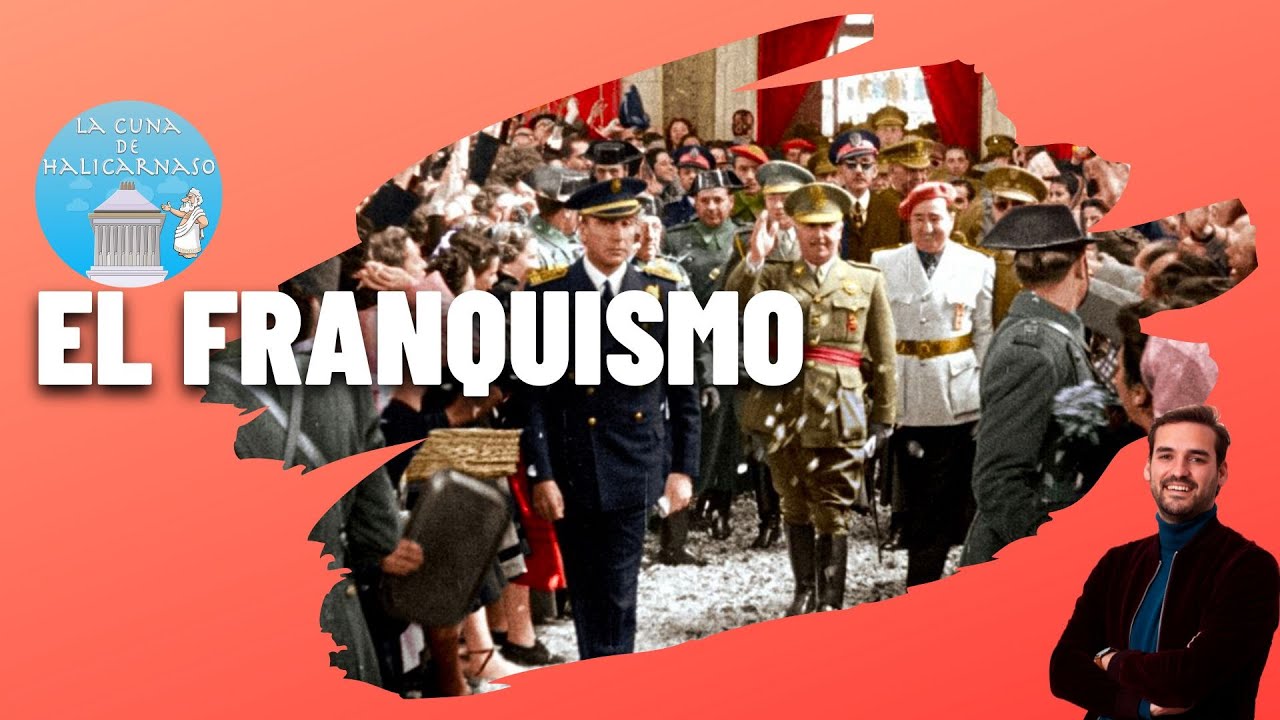
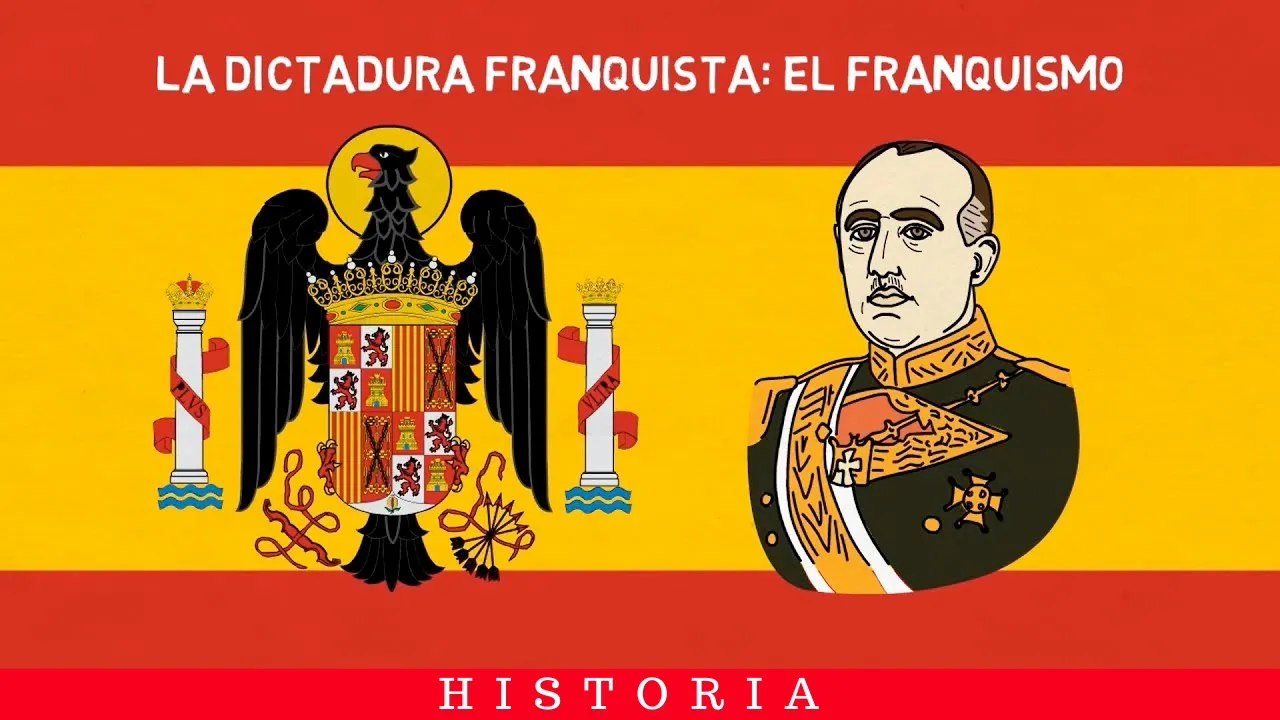
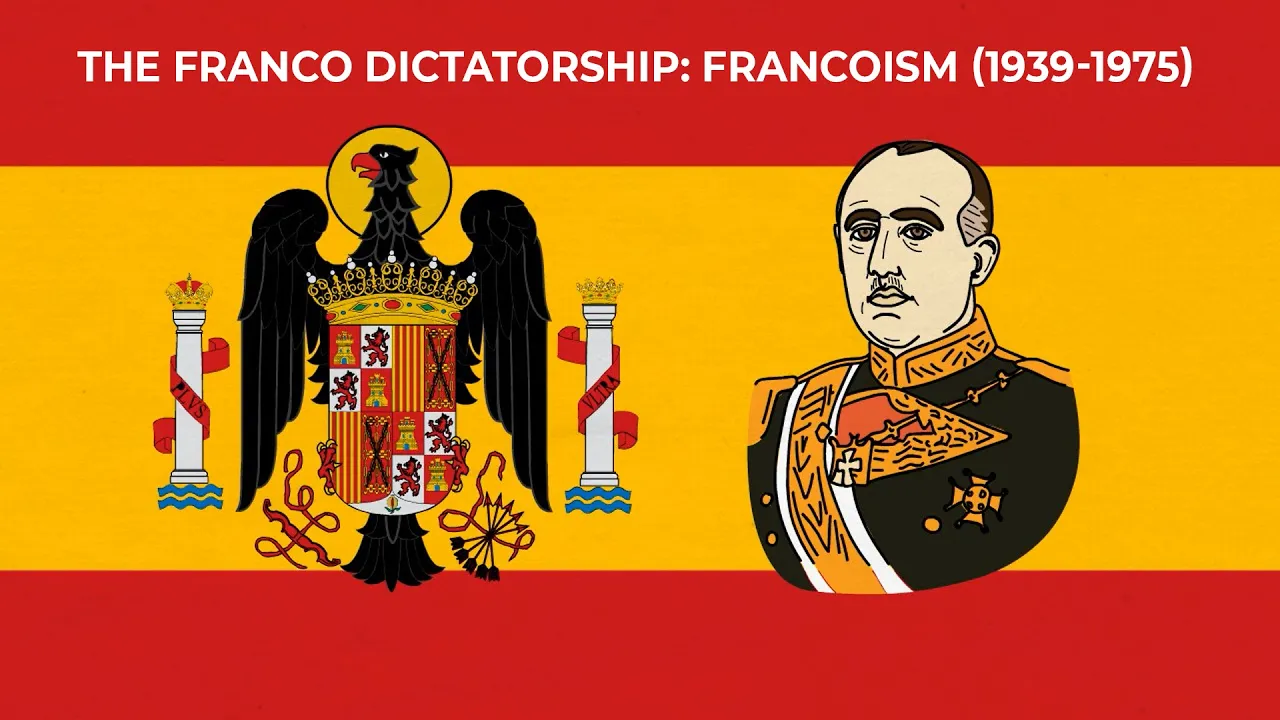
Franco rapidly established a personalist authoritarian dictatorship that lasted until his death on November 20th, 1975.
He imposed strict censorship, the outlawing of political parties and trade unions, and widespread repression, including executions and the imprisonment of dissident. The self-titled Caillo symbolized centralized power, military influence, and the suppression of regional identities. Initially aligning with fascist principles through the fan party, Franco gradually distanced his regime from Axis powers after their defeat in World War II. Economically, Spain experienced stagnation during the Second World War, exacerbated by Antarctic policies, but this shifted towards liberalization and growth during the 1950s and60s in what's referred to as the Spanish miracle. Repositioning Spain as staunchly anti-communist during the Cold War era, Franco earned tacit Western support from its Ursil enemies.
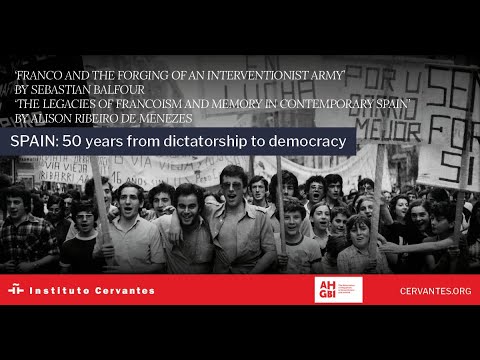
Despite his blatant dictatorship, Franco's regime ultimately failed to prevent the democratization that followed in the wake of his death as the nation reverted once again to democracy.
Up Next

Siege of Madrid: Key Battles of the Spanish Civil War
@danielrico1330
419 views•2014-06-22

The Great Schism of 1054: Causes and Consequences
@SacredCathedrals
113.5K views•2026-02-19

Iran-Iraq War: The Original Gulf War Documentary Analysis
@warsoftheworld1945
4.2M views•2021-06-25
Understanding the Cold War: Superpower Conflicts and the Road to Détente
@OverSimplified
46.1M views•2019-01-24
Related Study Plans & Knowledge Roadmaps
Structured learning paths in History