








![[올배움KISA] 임산가공기사 실기 필답형 문제풀이 샘플강의 권현준 교수님](https://i.ytimg.com/vi/VF3TCm9MfXY/maxresdefault.jpg)


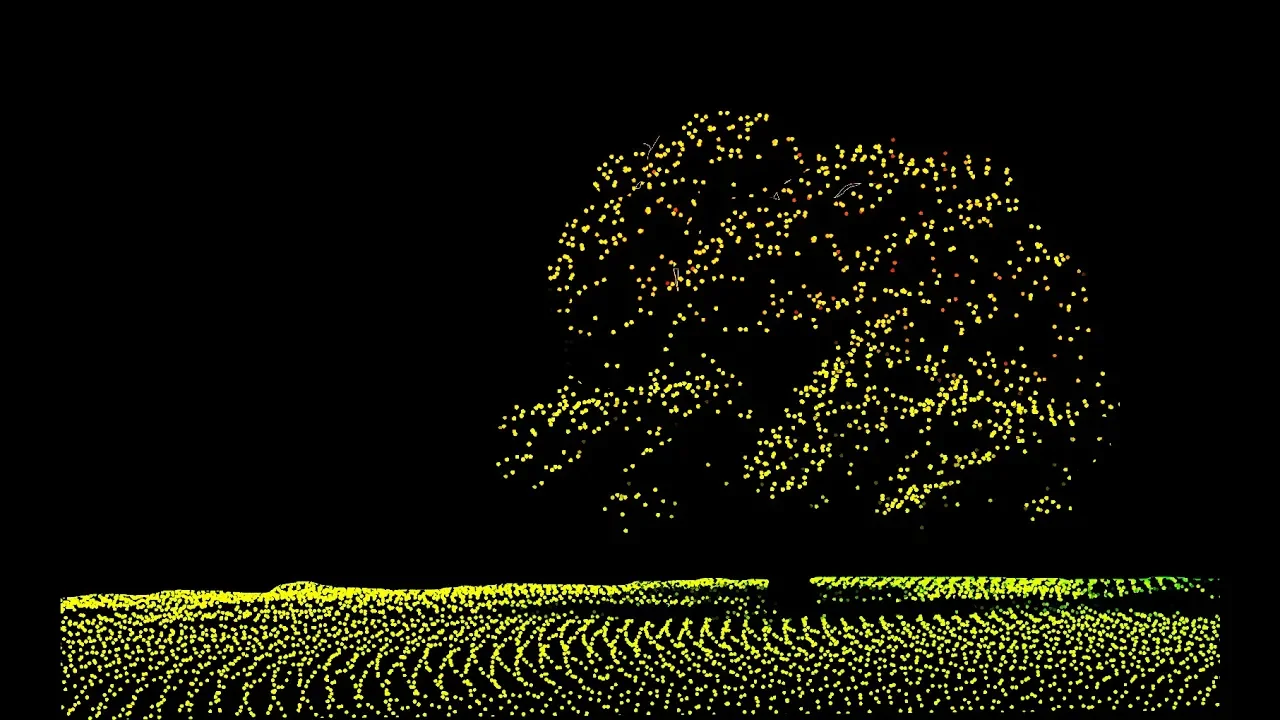






This video explains how to calculate above ground biomass (AGB) using species-specific equations based on diameter at breast height (DBH), estimate below ground biomass (BGB) using root/shoot ratios or species-specific equations, and determine total biomass by summing AGB and BGB; it further demonstrates converting total biomass to carbon content using a 0.5 carbon factor and to CO2 equivalents by multiplying by 3.67, noting that while these methods work for general forest assessments, formal carbon accounting requires expert consultation and adherence to local legislation.
Calculating Tree Biomass and Carbon Storage Methods
Added:Basic forest mensuration techniques, specifically how to measure tree Diameter at Breast Height (DBH) and total height.
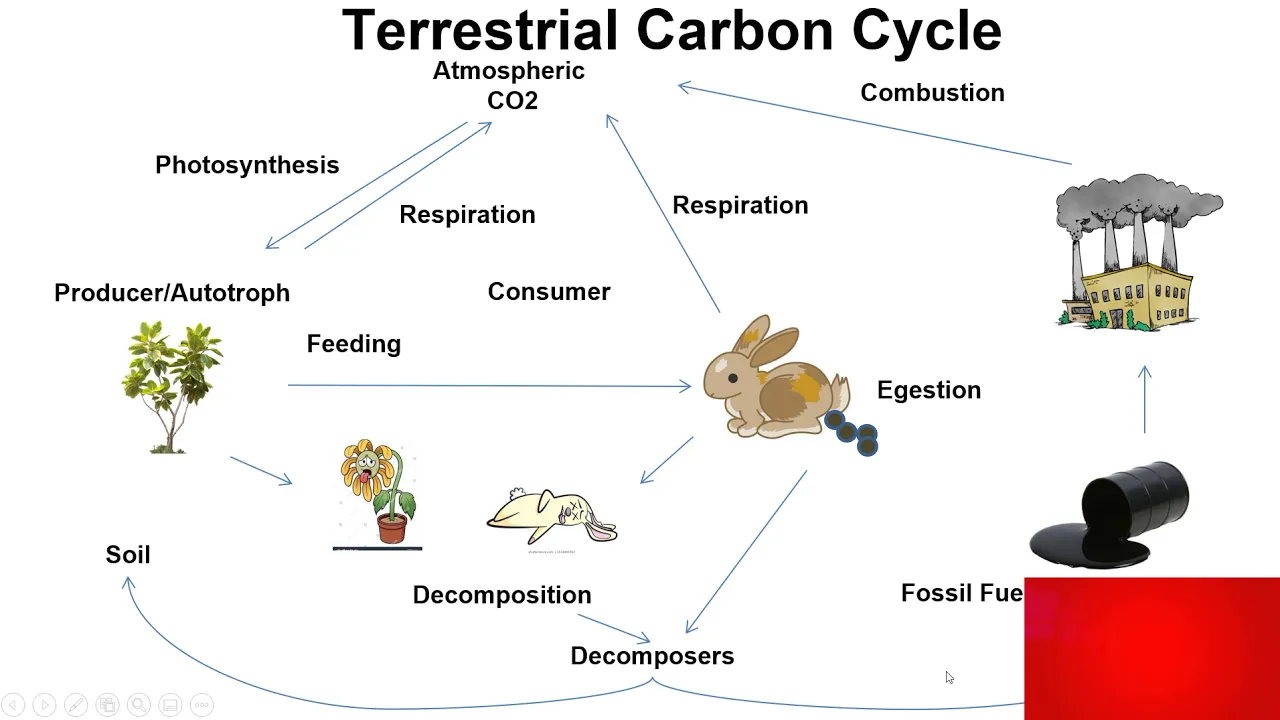
The biological concepts of photosynthesis, respiration, and the carbon cycle in terrestrial ecosystems.
Basic algebra and an understanding of how empirical mathematical formulas (allometric equations) are used in ecological modeling.
An understanding of wood properties, specifically the difference between green weight, dry weight, and wood density.
Methods for scaling up tree-level calculations to ecosystem or landscape levels using GIS, remote sensing, and LiDAR technologies.
Application of carbon data in environmental policy, carbon credit verification protocols, and global carbon markets (e.g., REDD+).
Estimation of other forest carbon pools, such as soil organic carbon, litter, and deadwood carbon dynamics.
Silvicultural techniques and forest management strategies optimized specifically for carbon sequestration and climate mitigation.
26.9K views0likes4:14Original Release: 2023-07-10
This video will describe methods to calculate the above ground, below ground and total biomass of a tree or forest and how to convert biomass to carbon and carbon dioxide equivalents.
However, for formal carbon accounting purposes, ensure you seek expert advice and follow all relevant legislation and guidelines, which may differ to the methods described here.
Above ground biomass (AGB) is a measure of the dry weight of a tree, including the stem, bark, branches, leaves, buds, flowers, cones and capsules.
Dry weight is the weight of the tree components, dried in an oven to remove their water content until the weight no longer changes with continued drying.
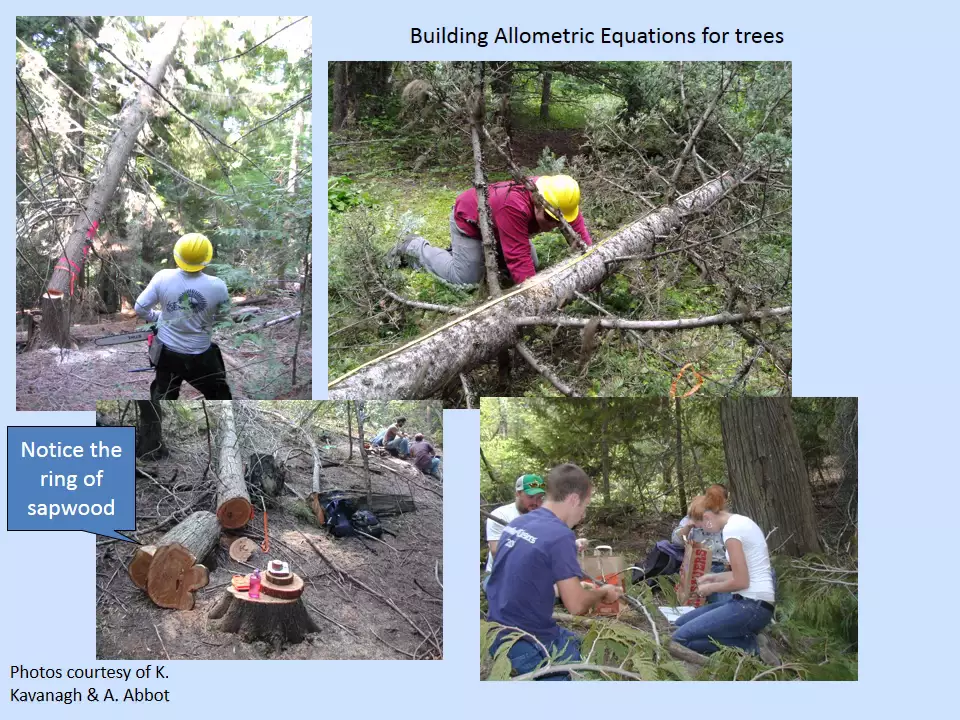
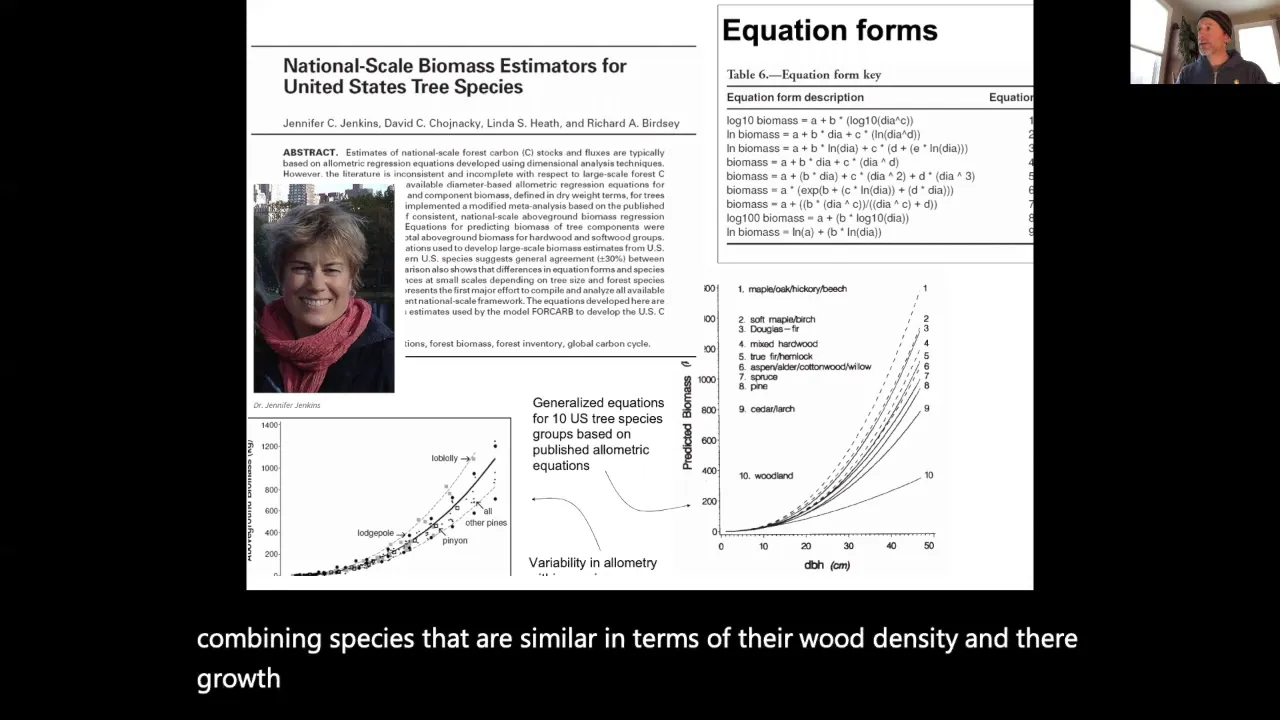
For most tree species, the AGB is related to the DBH, so foresters have developed various equations to estimate these values.
This example of an equation for AGB gives the dry weight of a spotted gum.
There are many other equations that have been developed for various species in various locations.
And these equations are more general in nature. They give an AGB value for: hardwood trees from the Eucalyptus, Corymbia and Angophora genera, conifers from the Pinus, Araucaria and Agathis genera, that typically have relatively low stem wood density, and other tree species that typically have relatively high wood density.
They are valid for plantations and natural forests throughout Australia for the DBH values displayed.
It is important to note that they are less accurate for individual trees, but when predictions are made across a wide range of data, such as a whole forest, individual errors are largely cancelled out.
Below ground biomass (BGB) is a measure of the dry weight of the large and fine roots of trees.
BGB can be calculated by species-specific equations, which as before, have been developed for particular species and locations.
These are the most accurate to use if available.
This example of an equation for BGB gives the dry weight of spotted gum roots from plantations in Southeast Queensland.
There are many other equations that have been developed for various species in various locations, and these should be used if available.
Otherwise, a general root / shoot ratio can be applied to the AGB of a forest to estimate the BGB.
These general ratios should only be used across a number of trees such as a stratum or a forest, as they may not provide a very accurate estimate for individual trees.
Total biomass is the sum of the ABG and the BGB, or the mass of all living parts of a tree or forest.
For an individual tree, once you have calculated the AGB and BGB values, they can be added together to give the total biomass in kilos.
For an entire forest or stratum, biomass is often expressed in tonnes of dry matter per hectare, so to calculate this figure, add the total biomass of all trees in all plots in kilos, then divide by the total plot area and by 1,000 to convert from kilos to tonnes.
The total forest biomass can also be expressed in tonnes.
Calculating the carbon sequestered by a forest is an increasingly common reason to measure trees and forests.
With the value of total forest biomass that you have calculated, it is an easy process to estimate both the carbon content and CO2 equivalent of your forest.
Total forest biomass is converted to carbon by applying a carbon factor, which estimates the proportion of dry biomass that is carbon.
Generally speaking, biomass is made up of around 50% carbon, so the carbon factor typically used is 0.5.
Greenhouse gas emissions are commonly reported as carbon dioxide equivalents.
This measure allows a comparison of the impact of various greenhouse gasses, such as methane or nitrous oxide, in relation to their degree of atmospheric warming potential.
To convert total stand carbon to carbon dioxide equivalents, multiply by 3.67, which is the ratio of the weight of a molecule of carbon dioxide to the weight of an atom of carbon.
Up Next

3:05
Measuring Mangrove Carbon: Field Methods for Blue Carbon Assessment
@sustecsol
136 views•2025-09-27

15:54
Life in Biosphere 2: Sustainable Ecosystems & Human Survival
@TED
334.9K views•2009-06-16
14:30
Microplastics Everywhere: How Plastic Impacts Our Lives
@TEDx
100.9K views•2018-05-08
10:28
Ice Stupa Artificial Glaciers: Solving Ladakh's Water Crisis
@SonamWangchuk66
3.2M views•2015-05-03
Related Study Plans & Knowledge Roadmaps
Structured learning paths in Environmental Science
environmental-science
Ocean Noise: Cetacean Impacts & Mitigation
01Fundamentals of Underwater Acoustics
02Marine Mammal Bioacoustics
03Anthropogenic Noise: Shipping & Seismic Surveying
+ 2 more learning modules
16h5 modules
Explore Roadmap
environmental-science
Road Ecology: Corridors, Overpasses & Fencing
01Foundations of Habitat Fragmentation and Carnivore Ecology
02The Road Barrier: Ecological Impacts of Transport Infrastructure
03Principles of Ecological Corridors and Connectivity Mapping
+ 3 more learning modules
14h6 modules
Explore Roadmap
environmental-science
Ocean Acidification: Kelp Buffering & Shellfish
01Fundamentals of Ocean Chemistry & pH
02Chemical Pathways of Coastal Acidification
03Bivalve Physiology & Calcification Under Stress
+ 2 more learning modules
18h5 modules
Explore Roadmap
environmental-science
Ice Stupas: Glacial Retreat & Water Security
01Foundations of Glaciology & Mountain Hydrology
02Climate Change and Glacial Retreat Dynamics
03The Science of Ice Stupas & Artificial Glaciers
+ 2 more learning modules
14h5 modules
Explore Roadmap