










![[en] Polios 250 PA/LV/06 - Polyester Polyol for the Production of Composite Panels](https://i.ytimg.com/vi/lqBy38hs6to/maxresdefault.jpg)













Melting temperature (Tm) is the point where crystalline polymers transition from solid to liquid, involving a phase change where polymer chains break free from their organized structure, while glass transition temperature (Tg) marks the transition of amorphous polymers from a hard brittle state to a softer, more flexible state without a phase change, reflecting increased chain mobility; crystalline polymers have a sharp Tm, whereas amorphous polymers only exhibit Tg and gradually soften as temperature increases.
Melting vs Glass Transition Temperature in Polymers | Key Differences Explained
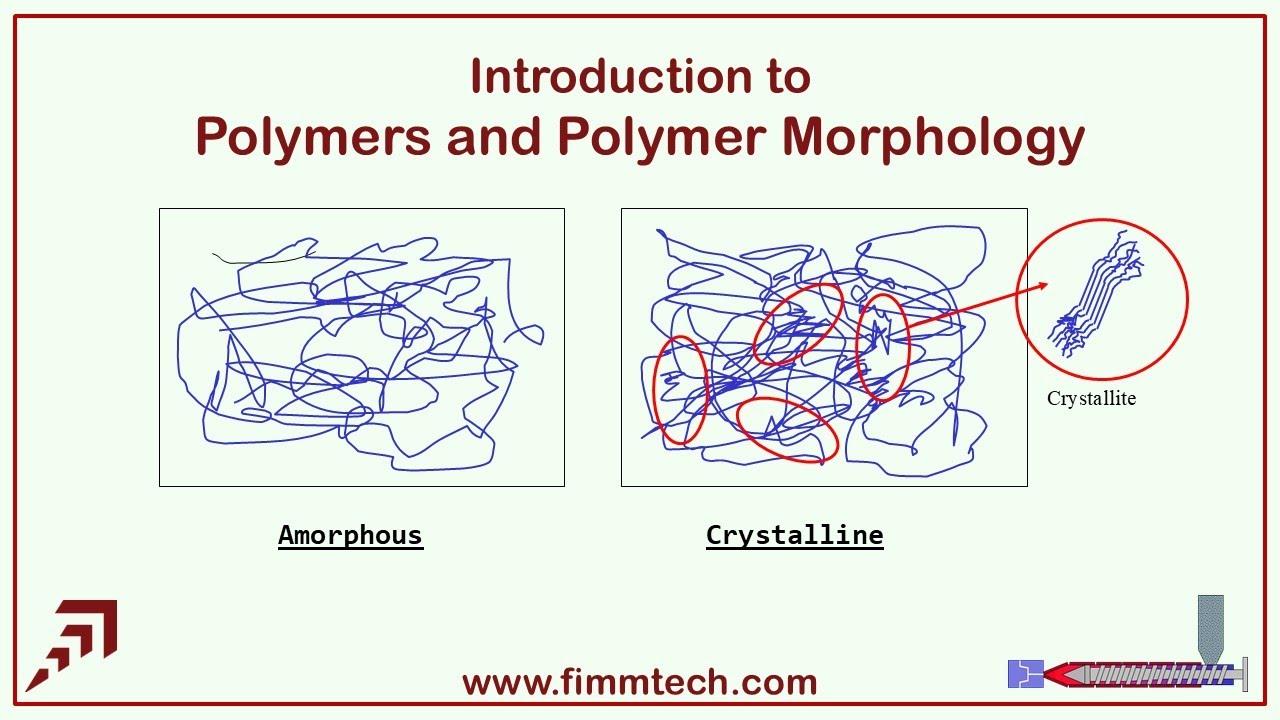
Added:Basic Polymer Morphology: Understanding the difference between amorphous (disordered) and crystalline (ordered) regions in polymer structures.
Intermolecular Forces: Knowledge of how secondary bonds (Van der Waals, hydrogen bonding) and chain entanglement restrict polymer chain movement.
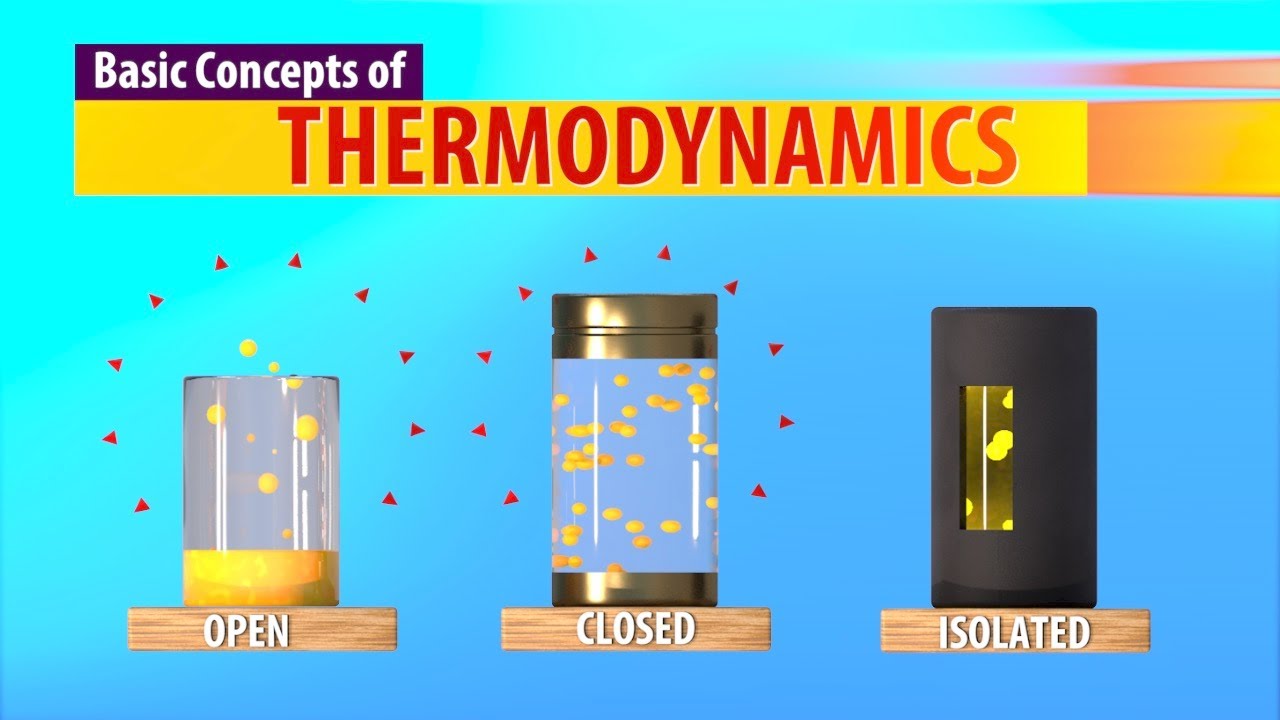
Fundamental Thermodynamics: Basic concept of phase transitions and how temperature relates to the kinetic energy of molecules.
Polymer Processing Windows: How Tg and Tm dictate the temperature boundaries for manufacturing methods like injection molding, extrusion, and thermoforming.
Thermal Analysis Techniques: Learning how Differential Scanning Calorimetry (DSC) and Dynamic Mechanical Analysis (DMA) are used to experimentally measure Tg and Tm.
Structural Factors Influencing Transitions: Exploring how molecular weight, backbone stiffness, side groups, and plasticizers alter a polymer's Tg and Tm.
Engineering Material Selection: Applying Tg and Tm data to select the correct polymer for specific temperature environments (e.g., rubbery elastomers vs. rigid structural plastics).
140 views0likes3:15Original Release: 2025-08-16
What is the difference between melting temperature and glass transition temperature?
Have you ever wondered why some plastics melt while others just get softer? Today we will clarify the difference between melting temperature and glass transition temperature, especially in the context of polymers.
Melting temperature, often abbreviated as TM, is the point where a polymer changes from a solid crystalline state to a liquid. This happens when the organized structure of the polymer chains breaks down, allowing them to move freely. TM is specific to crystalline or semicrystalline polymers.
On the other hand, amorphous polymers do not have a defined crystalline structure, so they do not have a sharp melting point. Instead, they gradually soften as the temperature rises.
Now let's talk about glass transition temperature which is often abbreviated as Tg. This temperature marks the transition of an amorphous polymer from a hard brittle state to a softer, more flexible state. Unlike melting, Tg does not involve a phase change. Instead, it reflects the increased movement of polymer chains. Below Tg, the chains are locked in place. Above Tg, they gain mobility, which changes their mechanical properties such as elasticity and stiffness.
So what are the key differences between TM and TG? First, TM involves a phase change from solid to liquid while Tg is a kinetic transition from a glassy state to a rubbery state. Second, TM requires a crystalline structure while Tg occurs in the amorphous regions of the polymer.
Lastly, at TM, the polymer loses its structural integrity and starts to flow.
At Tg, the polymer maintains its solid structure but becomes more flexible.
Understanding these differences is important in practical applications.
For example, the glass transition temperature helps determine the operational temperature range of a polymer. Rubber tires need to stay above Tg to remain as flexible and effective.
When it comes to processing, heating a semi-rystallin polymer above TM is essential for molding it into shape. In contrast, shaping amorphous polymers is done near Tg.
The performance of polymers also varies with these temperatures. Polymers below Tg can be brittle, which means they might crack easily in cold conditions.
However, those above Tg become ductal and can withstand more stress.
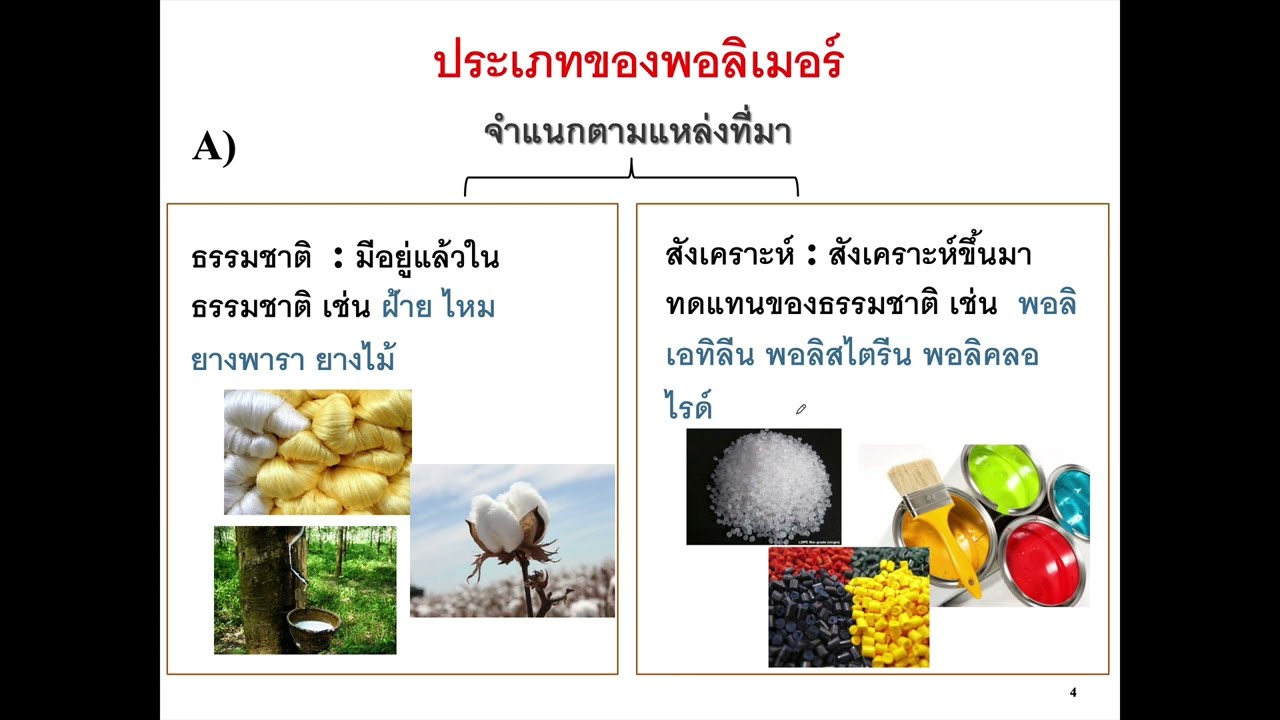
In chemistry education, grasping the concepts of TM and Tg is fundamental. It helps students understand how the molecular structure of polymers influences their thermal behavior. For instance, polyethylene has a distinct melting temperature due to its semi-rystalline structure, while polystyrene is defined by its glass transition temperature because it is amorphous.
By learning about melting temperature and glass transition temperature, students can better appreciate how these properties affect the design and application of polymers in various fields.
Up Next

15:41
Conduction in Conducting Polymers: Animation & Applications
@viewchem338
25.6K views•2022-01-17
83:56
Biocatalysis and Catalysis in Islatravir Synthesis | Merck Webinar
@SCIwheresciencemeetsbusiness
675 views•2020-10-08

3:15
Understanding PET: Polyethylene Terephthalate Structure and Uses
@Chemistry-For-Everyone
439 views•2025-03-15

17:31
Edible Water Bottles: A DIY Guide to Sodium Alginate Spherification
@ryan
10.5M views•2019-06-21
Related Study Plans & Knowledge Roadmaps
Structured learning paths in Chemistry
chemistry
Nuclear Chemistry: Decay, Meds & Fuel Cycle
01Introduction to Nuclear Structure and Radioactivity
02Decay Dynamics and Kinetics
03Radiation Interaction and Detection
+ 2 more learning modules
24h5 modules
Explore Roadmap
chemistry
Supramolecular Chemistry: Forces & Machines
01Foundations of Chemical Bonding and Intermolecular Forces
02Introduction to Host-Guest Chemistry
03Thermodynamics and Dynamics of Self-Assembly
+ 2 more learning modules
16h5 modules
Explore Roadmap
chemistry
Photochemistry: Excited States & Reactions
01Foundations of Light-Matter Interactions
02Molecular Orbitals and Electronic States
03Photophysical Processes and Jablonski Diagrams
+ 2 more learning modules
18h5 modules
Explore Roadmap
chemistry
Coordination Chemistry: Bonding & Properties
01Introduction to Transition Metals and Ligands
02Crystal Field Theory (CFT) and Geometry
03Magnetic Behavior and Spin States
+ 2 more learning modules
14h5 modules
Explore Roadmap