
![[악필주의]사회문화 전단원 개념정리](https://i.ytimg.com/vi/7NtdoIlHDnI/hqdefault.jpg)










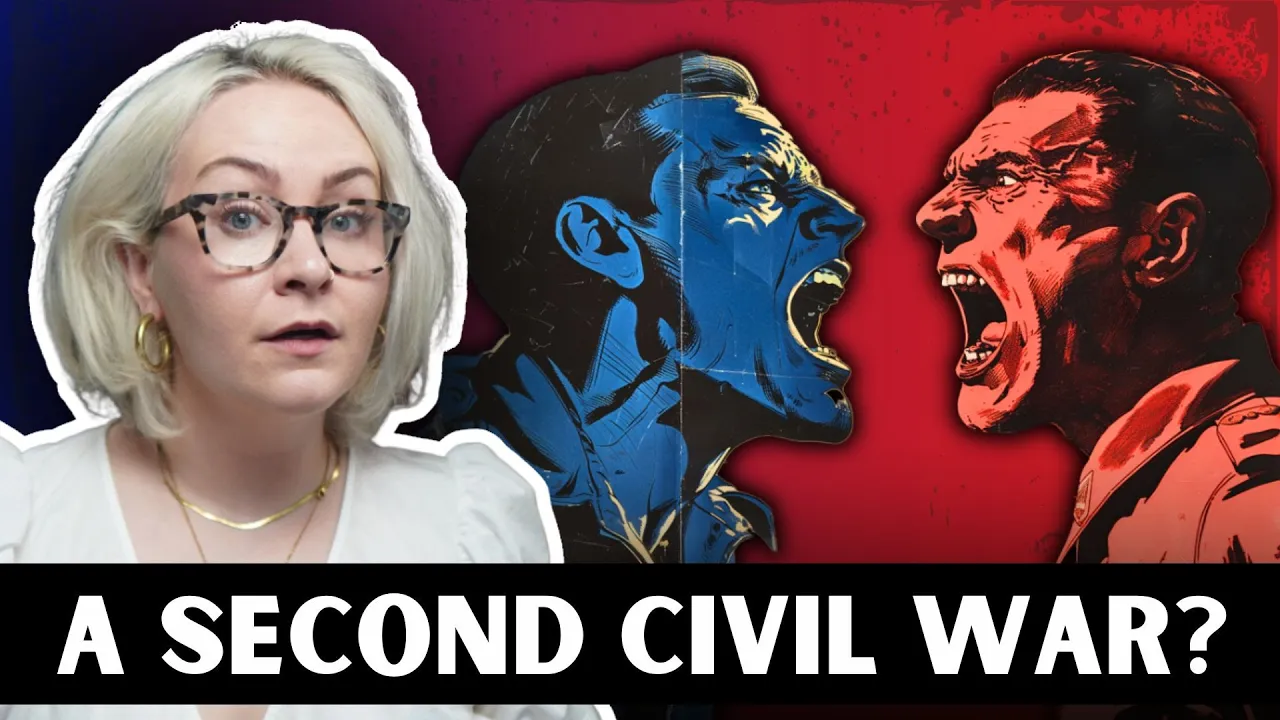









American politics has transformed from a periodic civic activity into a core aspect of personal identity, driven by three converging factors: geographic sorting into homogeneous communities, the rise of partisan media creating echo chambers, and party purification eliminating moderate positions. This shift means political affiliation now predicts personal behavior across diverse domains including relationships, consumer choices, and social interactions, fundamentally altering how Americans perceive and relate to those with differing views.
The Psychology of Political Identity in America: A Social Analysis
Added:Basic tenets of social psychology, particularly how individuals define themselves in relation to group memberships (in-group vs. out-group dynamics).
The historical structure of the American two-party system and the baseline concept of political polarization.
Fundamental cognitive biases, such as confirmation bias and motivated reasoning, which dictate how individuals process information.
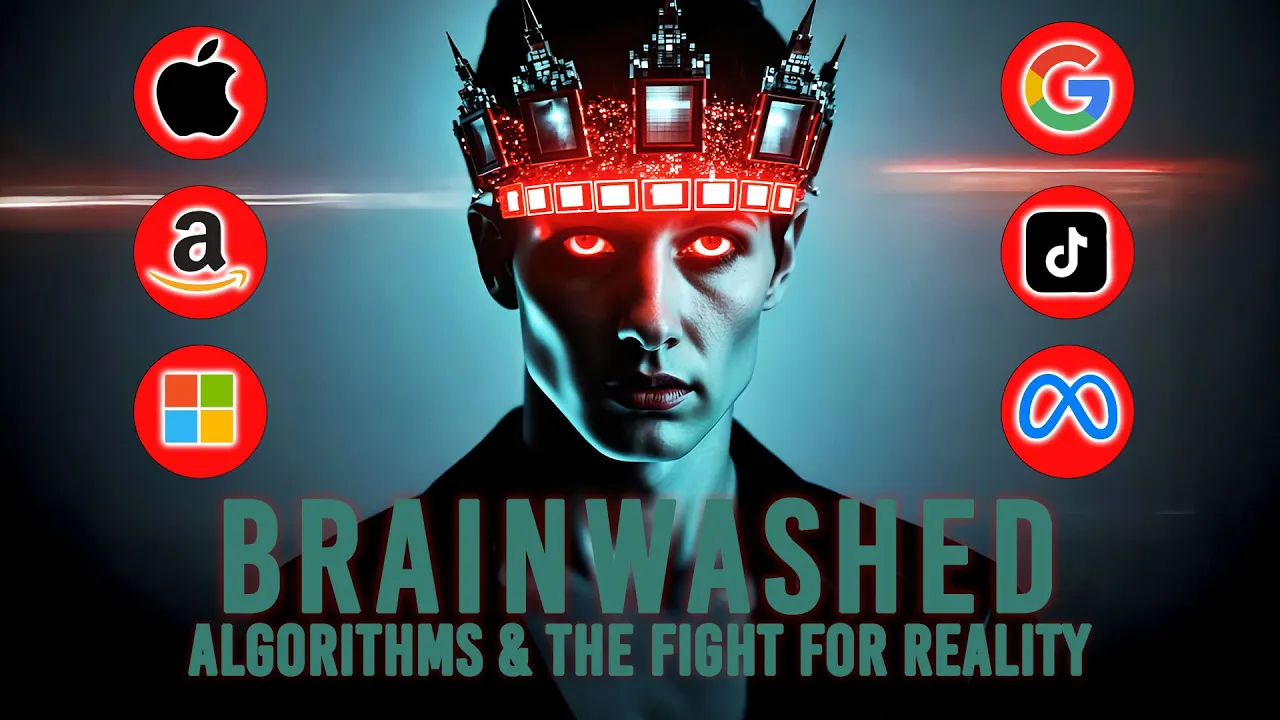
The basic mechanics of digital media consumption, including how algorithms curate personalized content feeds.
The concept of 'affective polarization' and how emotional hostility between political groups impacts social cohesion and daily interpersonal relationships.
Advanced studies in neuropolitics, examining how biological and neurological differences may correlate with political orientation.
Strategies and psychological interventions designed to reduce polarization, such as structured intergroup dialogue and media literacy programs.
The systemic consequences of hyper-partisan identity on democratic institutions, legislative gridlock, and policy-making.
26.7K views2Klikes30:38Original Release: 2026-02-06
Imagine you're at Thanksgiving dinner.
The turkeyy's carved. Everyone's settled into their seats. And conversation is flowing. Someone mentions they just started a new job. Someone else talks about their kids soccer team. Normal family catching up stuff. And then someone, maybe your uncle, maybe your cousin's new boyfriend, brings up something that happened recently in the news, something political. And then the vibe in the room changes instantly.
People's eyes dart around. Someone suddenly needs to refill their drink.
someone else focuses very intently on their mashed potatoes because there's a question that you're not supposed to ask anymore. Not at dinner, not on a first date, not at work, not really anywhere.
What do you think about insert literally any political topic here? 30 years ago, this was a normal conversation. You might have disagreed, maybe the discussion got heated, but it was just a conversation. Today, asking someone their political views is treated like asking them to describe their deepest, darkest trauma. like you've just activated a landmine because you might have. According to recent surveys, nearly 40% of Americans say they've ended friendships over politics. One in five Americans has cut off a family member. People are checking political affiliation before hiring employees, before renting apartments, before going on dates. So my question is, when did the way we vote become more important than our personalities? When did half the country start thinking that the other half is fundamentally evil? And why does it feel like there's no way back? Here's the thing. This didn't happen by accident and it didn't happen all at once. And it's not because Americans suddenly got more passionate about policy. Something changed.
Something specific. And if you look closely, you can see exactly when and how it happened.
Politics used to be something that you did, something you participated in every few years. You voted, maybe you argued about it at the bar, and then you moved on with your life. Now, politics is something you are. It's an identity, a core part of how you define yourself, like your religion, your ethnicity, or your sexual orientation. And I'm not exaggerating. The data proves it. Let's start with how we view the other side.
In 1960, about 5% of Americans said that they'd be upset if their child married someone from the opposite political party. Just 5%. It was barely even a consideration. By 2020, that number had skyrocketed significantly to nearly 40%.
Think about that. 4 in 10 Americans now say they'd be unhappy if their own child married someone who votes differently than them. Or look at this. According to Pew Research, 70% of Democrats and Republicans now say that the other party's policies are so misguided that they threaten the nation's well-being.
Not just that their policies are wrong, or not just that it's a bad policy, but that it's an existential threat. And people are acting on these beliefs.
Dating apps like Bumble, Hinge, and OkCid have all added political filters because so many users demanded them.
Political affiliation has become as important as age or location in finding a romantic partner. And people are also choosing where to live based on politics. In 1976, about 20% of Americans lived in what political scientists called landslide counties, places where one presidential candidate won by more than 20 percentage points.
By 2020, that number had more than doubled to 60%. We're literally sorting ourselves into red and blue territories.
Even consumer choices have become tribal markers. You can predict someone's political affiliation with surprising accuracy just by knowing what car they drive, pickup truck or a Prius, where they shop, Whole Foods or Walmart, what they drink, Craft IPA or Bud Light, what news they watch, CNN, Fox News or neither. Studies have even found correlation between political affiliation and pet ownership. Dog people skew slightly more conservative and cat people slightly more liberal.
Now, here's the kicker. None of these consumer choices are actually about policy. Your preference for where to buy groceries has nothing to do with your stance on healthcare or immigration or tax policy. These are tribal markers, signals you send to your inroup to show you belong and the out groupoup to show you don't. We've turned everything, literally everything, into a political statement. But here's the thing, this isn't natural. Human beings didn't just evolve to hate half their neighbors over tax policy. Our ancestors lived in small tribes where cooperation was essential for survival. We're wired to work together, to find common ground, to see each other as human. So, what changed?
How exactly did we get here? To understand that, you need to understand what politics used to look like because it wasn't always like this.
Let me paint you a picture of American politics from the 1950s through the 1980s. This is going to sound bizarre if you're under 40 because it's so different from what it looks like today.
Back then, political parties weren't ideological monoliths. They were coalitions, messy, complicated coalitions of people who disagreed with each other about all sorts of things.
The Democratic Party included both northern liberals who supported civil rights and southern conservatives who opposed them. It included union workers who wanted economic protections and businessfriendly moderates. It was a big tent with lots of internal disagreement.
Same with Republicans. You had northeastern moderates, the Rockefeller Republicans, who were liberal on civil rights and environmental issues. And you had Western libertarians who wanted the government out of everything. And you had Midwestern conservatives who focused on traditional values. They didn't all agree, and your party affiliation didn't predict everything else about you. A Democrat from Alabama and a Democrat from Massachusetts might disagree on almost everything except labor unions. A Republican from Vermont and a Republican from Texas might only agree on lower taxes. This created something that political scientists call crosscutting cleavages. You might oppose someone on race but agree with them on economics.
You might disagree on foreign policy but align on education. These crosscutting relationships made coalition building possible. And because of this, politics was transactional. It was about negotiation. It was about I'll vote with you on this bill if you vote with me on that one. It wasn't ideological warfare.
It wasn't your evil and must be destroyed. Look at the Civil Rights Act of 1964. It passed with bipartisan support. Yes, more northern Democrats and Republicans voted for it than southern Democrats. But the point is both parties had significant numbers on both sides. It wasn't a purely partisan vote. Or look at the relationship between Ronald Reagan and Tip O'Neal.
Reagan was a conservative Republican president. O'Neal was a liberal Democratic speaker of the house. They fought like hell during the day and then they'd have drinks together at night and work out compromises.
>> We got along and Nancy and I had Tip and his wife over for dinner and um then one day I picked up the paper and read where he had made a statement about me that was [laughter] pretty harsh and I called him and I said, "Tip, I thought we had a relationship here where we could do business together and all." And now I read in the paper that you said. And he interrupted me and said, "What a old buddy. That's just politics." He said, "After 6:00, we're buddies. We're friends."
>> They were political opponents, not mortal enemies. Ticket splitting was also more common. Lots of people voted for a president from one party and a senator from another. In the 1970s and 80s, it was totally normal to split your ballot based on the individual candidates, not just their party label.
And political mixed marriages, no one really cared. James Carville, a Democratic strategist, is married to Mary Meline, a Republican [clears throat] strategist. This was seen as quirky and interesting, not scandalous or impossible. So, what changed? When did politics become allconsuming? Why did the parties become these monolithic, ideologically pure tribes? Well, three things happened and they all happened at roughly the same time, starting in the 1980s and accelerating through the 2000s.
>> [music] >> The transformation didn't happen overnight, but if you look closely, you can see exactly when and how it happened. Three massive forces converged to fundamentally reshape American politics. Starting in the 1970s, something strange started happening.
Americans began moving, not just for better job opportunities or better weather, but something more intangible.
They were seeking places that felt like them, places where people thought like them, voted like them, and lived like them. Bill Bishop [clears throat] documented this in his book, The Big Sort. He showed that we didn't just disagree more, but we physically separated ourselves into like-minded communities. Remember those landside counties I mentioned? In 1976, about 20% of Americans lived in a county where one presidential candidate won by more than 20 percentage points. These were politically lopsided places. By 2020, 60% of Americans lived in landside counties. We're talking about massive geographic sorting. Liberals move to cities and inner suburbs and conservatives move to exper.
Look at Austin, Texas versus rural Texas or Portland, Oregon versus rural Oregon.
These places are the same, but they might as well be completely different countries. The urban rural divide has become the norm. And here's why this matters so much. Because when everyone around you thinks the same way, the other side becomes something abstract.
You stop seeing them as your neighbor with different views. You stop having these cross-cutting relationships, the Republican uncle at Thanksgiving, the Democratic co-orker you chat with at lunch. Instead, they become this faceless mask, those people over there.
And it's much easier to demonize an abstraction than a human being that you know and like. So, this creates a feedback loop. Homogeneous communities lead to homogeneous media consumption, which reinforces your existing beliefs, which makes you more likely to seek out even more homogeneous communities. It's self-reinforcing. The psychological effect is profound. Without regular contact with people who think differently, your view of the other side becomes a caricature. You only see them through news reports about the most extreme examples. You lose the humanizing daily interactions that remind you that they're just people. The second force was a complete transformation in how we consume news and information. And this happened in three waves. In 1987, the FCC eliminated something called the fairness doctrine.
This was a rule that required broadcasters to present multiple viewpoints on controversial issues. It kept radio and TV relatively balanced, even if imperfectly. [music] The moment it was gone, Rush Limba launched his national radio show in 1988.
Conservative Talk Radio exploded. Within a few years, Limba had 20 million listeners. Sean Hannity, Michael Savage, dozens of others followed. By the mid '90s, conservative talk radio dominated the AM dial across America. And these weren't just news programs. They were entertainment built on outrage. The formula was simple. Make liberals look ridiculous, mock them, get your audience angry, and keep them listening. And it worked brilliantly. In 1996, Fox News launched with a clear mission to be the conservative alternative to what they saw as liberal mainstream media. Fair and balanced was their slogan. But everyone knew what they were, the Republican news network. And it was massively successful. MSNBC initially tried to be centrist, but by the mid200s they had pivoted hard to the left to compete with Fox, Keith Oberman's angry liberal rants, Rachel Matto's progressive deep dives. They became the Democratic news network. CNN tried to stay in the middle, presenting both sides of every issue, and they got destroyed in the ratings because here's what they learned. People didn't want information. They wanted validation. The business model had changed. For decades, news was a loss leader for networks. It was a public service that they provided because the FCC required it for their broadcast licenses. It wasn't profitable and it wasn't supposed to be. But cable news made it profitable. And profit comes from engagement. Engagement comes from outrage. Outrage comes from making the other side look not just wrong, but evil. So that's what they did. If you watch Fox News, you see a constant stream of stories about how liberals are destroying America. If you watch MSNBC, you see a constant stream of stories about how conservatives are destroying America. The result, two separate information ecosystems. Not just different interpretations of the same facts, but different facts entirely.
Different realities. Fox viewers and MSNBC viewers literally live in different worlds, informationally speaking. And then came social media.
Facebook launched in 2004, Twitter in 2006. YouTube was already taking off by then. And that turbocharged everything I just described. Here's the problem with social media, the algorithm. Facebook, [clears throat] Twitter, even YouTube, they're all optimized for one thing: engagement. And how do you get engagement? By showing people content that triggers strong emotions. What triggers the strongest emotions? Anger, fear, tribal signaling. So, the algorithm learns to show you content that makes you angry at the other side.
Your feed becomes an echo chamber where everyone agrees with you. And the only time you see the other side is when someone is mocking them or highlighting their worst behavior. Studies show that false information spreads six times faster than true information on social media. Why? Because falsehoods are often more outrageous, more emotionally triggering, more shareworthy. And here's the scary part. Facebook's own internal research, which was leaked, showed that their algorithm was radicalizing users.
People who joined moderate groups were being recommended increasingly extreme groups. YouTube's recommendation algorithm was doing the same thing, creating what researchers call a radicalization pipeline. The platforms knew this was happening. They had the data, but the engagement was too profitable to fix it. So now you've got geographical sorting, partisan media, algorithmic echo chambers, a perfect storm for political tribalism. But there's one more piece to this puzzle.
Remember those messy coalition parties I described? The Democrats with both liberals and conservatives, the Republicans with both moderates and hardliners, they don't exist anymore.
Both parties purified themselves ideologically. And this happened through a series of political realignments. For Democrats, the big shift started with the Civil Rights Act of 1964. Southern Democrats who opposed civil rights began leaving the party. This process took decades, but eventually the Democratic Party had shed its conservative southern wing entirely. Today, blue dog Democrats, conservative Democrats are nearly extinct. The party became consistently liberal on every issue.
Social policy, economic policy, environmental policy, foreign policy. If you're a Democrat, you're expected to hold the full package of liberal positions. For Republicans, the same shift happened in the opposite direction. Nixon's southern strategy brought conservative southern Democrats into the GOP. The northeastern moderate Republicans, those Rockefeller Republicans, were pushed out. The Tea Party movement in 2010 accelerated this.
Moderate Republicans were primar and replaced with hardline conservatives.
And then Trump in 2016 completed the purge. Rhino, which stands for Republican in name only, became the worst insult. If you didn't tow the party line on everything, you were hunted to extinction. Political scientists measure this using something called DW nominate scores, which track how ideologically consistent members of Congress are. In the 1970s, there was significant overlap between the parties.
Lots of conservative Democrats and liberal Republicans. Today, there's virtually no overlap. The most liberal Republican is more conservative than the most conservative Democrat. The parties have effectively sorted themselves into perfectly distinct ideological camps.
And here's why this matters. Because now your stance on one issue predicts your stance on every other issue. If you're pro-life, you're probably also against gun control, skeptical of climate change, opposed to higher taxes, and want stricter immigration policies. If you're pro-choice, you're also probably for gun control, concerned about climate change, support higher taxes on the wealthy, and want more lenient immigration policies. But here's the thing. These issues separately have nothing to do with each other. There's no logical reason why your position on abortion should predict your position on climate change or why your stance on gun rights should tell me your views on healthcare. You could theoretically be pro-life and pro- universal healthcare.
At least you would think. You could be pro gun and pro- environment. You could be pro-immigration and be fiscally conservative. None of these are logical contradictions, but they're tribal violations. If you hold those combinations of views, neither party wants you. you don't fit cleanly into either tribe. So people just adopt the entire ideological package. So that's how we got here. Not because they thought deeply about each policy issue and arrived at these conclusions independently, but because that's what their tribe believes. It becomes about identity and fitting in and not about your ideology. Geographic sorting meant you only knew people who think like you.
The media revolution meant you only heard information that confirmed the beliefs you already had. And party purification meant you adopted an entire identity package rather than individual policy positions. And that's how politics became your entire identity.
And that's where things get dangerous.
So we know how politics became tribal.
But now you might be thinking, so what?
People have always fought about politics. Elections have always been contentious. So what's really different now? Here's what's different. Political tribes are not like other kinds of tribes. And that difference is dangerous. Social psychologists have studied what happens when group membership becomes core to someone's identity. There's something called the social identity theory and it shows that when being part of a group becomes central to how you see yourself, outroups or people not in your group automatically become a threat. There's a famous experiment called the minimal group paradigm. Researchers divided people into groups based completely on arbitrary criteria. Whether they preferred one abstract painting over another. That's it. No real differences, no history, no stakes. And even within these meaningless groups, people immediately showed in-group favoritism and outgroup hostility. They rated their own group members as more intelligent and more trustworthy. They allocated more resources to their group even when it meant everyone got less overall. Now imagine that same idea with something that actually matters to people with something tied to their deepest values and beliefs. Studies show that for many Americans, partisan identity is now stronger than racial, religious, or class identity. And when that happens, disagreement becomes an existential threat. When the other side isn't just wrong, but fundamentally evil, compromise becomes impossible. You can't meet evil halfway. You can't find common ground with an existential threat.
Research shows partisan bias is in everything. hiring decisions, dating preferences, how much we trust information, whether we attribute intelligence or morality to someone, even implicit association tests, which measure unconscious bias, show strong partisan prejudice. We've essentially created two teams who view each other the way sports rivals do, except instead of just rooting against each other, we have to live together and govern together. And this tribal warfare has real consequences for governance. When politics is identity based, it becomes almost impossible to compromise. Think about it. If your political views are just policy preferences, you can negotiate. You can trade. You can update your opinions when presented with new information. That's normal. But if your political views are your whole identity and personality, then changing your mind means destroying yourself. Compromising means betraying who you are.
Acknowledging that the other side has a point means admitting that your identity might be wrong. So we get paralysis.
Issues that have 70% 80% even 90% public support can't get passed because they've been coded as belonging to one tribe or the other. Universal background checks for guns, infrastructure investment, basic pandemic response measurements.
These aren't actually controversial topics among the public, but they're tribybally coded, so they die without ever being passed. and politicians who dare to compromise get primar challenged by more extreme members of their own party. The incentive structure rewards tribal loyalty and punishes moderation.
And what we're seeing increasingly today is that people aren't voting on things because they want to see it implemented in their communities. They're just doing it to own the libs. Political strategy has become about humiliating the other side and not actually governing. And the damage this causes isn't just to governance. It's to our entire social fabric, to our actual relationships and communities. 40% of Americans have ended friendships over politics. 20% have cut off family members. These aren't hypothetical statistics. These are real people losing real relationships.
Workplaces have become minefields. You have to be careful what you say, what bumper stickers you have on your car, what articles you share. Political tension is everywhere. Community institutions that used to bring different people together, churches, civic organizations, local clubs, are declining or becoming ideologically homogeneous themselves. And there's been a real rise in political violence, an increasingly mainstream rhetoric that dehumanizes the other side and treats them as enemies rather than fellow citizens. We're also seeing connections to the loneliness epidemic. When you can't be friends with people who vote differently, when you can't have basic social interactions without worrying about revealing your politics, you lose community. You lose connection. And like it or not, humans need that. So, we're stuck, right? Once politics becomes your personality, you can't just decide to care less. It's too core to who you are.
But before we talk about solutions, we need to address the elephant in the room. Because I know what some of you are thinking right now. This whole politics as a personality trait works great when we're talking about tax rates and zoning laws or infrastructure spending. Those are policy disagreements. You can compromise on those. You can see the other side's point. But what about when someone's politics are about whether or not certain people deserve rights? What about when politics stop becoming about policy disagreement and starts being about someone's fundamental humanity?
You can't ask me to separate a person from their political beliefs when their political beliefs are that my marriage shouldn't exist or that my family should be deported or that trans people shouldn't have healthcare or that women shouldn't control their own bodies.
Let's just disagree about politics sounds great until those politics are about whether I should have rights. And you know what? That's completely fair.
It is different. And pretending that it isn't would be dishonest. Politics has fundamentally shifted in the last few decades. Pre 1990s, most political fights were distributional. How much should we tax? How much should we spend?
Who gets what? These are negotiable.
There's a middle ground here. But increasingly, today's political fights are existential. They're about identity and personhood. Who deserves protection under the law? Who belongs in this country? These positions feel non-negotiable. These are things you can't compromise on. Just look at the data. Political advertising and rhetoric increasingly focuses on identity groups rather than economic policy. Culture war issues have exploded as a percentage of political discourse. Voters consistently say the identity issues are among their top concerns. In the 1980s, Reagan Democrats disagreed about marginal tax rates. In the 2020s, we're fighting about whether trans people should be allowed to exist in public spaces. These two are not equivalent. So, let me be very clear. When someone's political position is that you are somehow less than human or don't belong in this country, asking for civility is asking the target to accept dehumanization politely. And that's not acceptable. And this isn't a both sides thing. There's an asymmetry here. Let me be specific on immigration. I want stricter border enforcement is not the same as immigrants are poisoning our blood. The first is a policy position. The second is dehumanization on LGBTQ rights.
Saying, "I'm uncomfortable with rapid social change," is not the same as, "Trans people are groomers." The first is expressing discomfort. The second is dehumanization on race. Saying, "I oppose affirmative action is not the same as DEI is anti-white racism designed to destroy America." The first is a policy position. The second is a conspiracy theory and grievance on abortion. saying, "I believe life begins at conception," is not the same as women who get abortions are murderers. The first is a moral position. The second is demonization. There's been a measurable increase in explicitly racist, xenophobic, and homophobic rhetoric from elected officials, and hate crimes have risen in correlation with this rhetoric.
So yes, if someone supports politicians who actively campaign on taking away your rights or dehumanizing your community, then no, you cannot just separate the person from their politics because at that point, their politics is a statement about your personhood.
Here's the nuance, though. Not everyone who votes Republican is doing so because of the xenophobia or the anti-trans rhetoric. Not everyone who votes Democrat agrees with every single progressive position. But here's the problem. They're willing to tolerate it.
And there's a really difficult question at the heart of this. Imagine this conversation. Person A says, "I vote Republican because I care about gun rights and lower taxes. I don't agree with the anti-trans stuff." Person B, who happens to be trans, says, "But you're willing to empower the people who want to erase me in order to get your tax cuts?" Person A might say, "That's not fair. I'm voting for a lot of reasons. I'm a complex person with multiple priorities." But person B thinks, and one of those reasons is that my rights aren't a dealbreaker for you.
This is hard because from person B's perspective, there's no meaningful difference between active bigotry, saying I hate trans people, and passive tolerance, saying, "I don't hate trans people, but I'll vote for people who do if it gets me what I want." Both result in the same harm. And this isn't a new idea. Martin Luther King Jr. wrote about this in his letter from Birmingham jail.
He said the biggest obstacle to progress wasn't the overt racism, but the white moderate who preferred order over justice, who wanted black people to wait patiently for our rights, who valued their own comfort over others freedom.
It's the privilege of making someone else's rights a single issue you can overlook. It's only possible to do that when it's not your rights on the line.
So, here's the paradox. This video's topic is that politics shouldn't be your entire personality. But the reality is that for some people, politics determine whether or not they're treated as full human beings. So, how do we resolve this? Here's what I think. There is a moral hierarchy of political positions.
Not all political disagreements are created equally. Disagreeing with someone about marginal tax rates is fundamentally different from disagreeing about whether or not you should exist.
The question here isn't should you be friends with bigots. The answer to that is obviously no. The question is, how many people are actual bigots versus people who have been sorted into tribal bundles and haven't thought critically about what they're supporting? The data suggests that most people's political views are very thin. They're not deeply considered. Most people vote based on identity markers, not careful policy analysis. When you depolarize the environment, people's views often shift.
Polls show majority support for progressive policies when they're not labeled as democratic. Many conservatives support Affordable Care Act propositions when they're not labeled as Obamacare. People change their views when they personally know someone affected by an issue. Some people though are actual bigots. And for those people, cut them off. Draw that boundary. But many people are just in a tribe and haven't examined what that tribe stands for. They've adopted positions because it's what their group believes, not because they thought deeply about them. And breaking this tribal sorting might actually get more people to think about positions individually instead of just adopting the whole package. So yes, if someone's politics involve dehumanizing you, you don't owe them your friendship, and you're not obligated to maintain relationships with people who support your oppression. But we can acknowledge and recognize that this tribal system has made it worse. We can draw moral lines and recognize that we've sorted ourselves in ways that make it impossible to compromise. Remember that question that you're not supposed to ask, that political question at the dinner table that might end relationships. Sometimes the answer to that question is disqualifying. If someone tells you that they support policies designed to harm you or the people you love, you're not required to smile and pass the gravy. Some bridges are meant to be burned. But here's what we've lost. We've lost the ability to distinguish between irreconcilable moral differences, which are real, policy disagreements, which are negotiable, and tribal signaling, which is artificial.
Politics became a personality trait because we bundled everything together.
Tax policy, gay rights, climate change, immigration, healthcare, education, all packaged into two seats. You pick a team and you adopt every position. You don't think through each issue individually.
You just take the bundle. And that doesn't make fighting for rights easier.
It makes it harder. Because when every issue is tied to every other issue, you can't build coalitions. You can't get someone who's pro-life to support universal healthcare, even though those positions aren't contradictory. You can't get someone who's proun to vote for climate policy, even though those have nothing to do with each other.
Everyone has to be allin on their tribe or they're a traitor. And that's exactly how the people with real power want things to be. When we're divided, we're manageable. When we're united on specific issues across tribal lines, that's when we become dangerous to the people in power. Americans don't think politics is a personality trait now because we're divided more than ever. We think it's a personality trait because we've organized our entire lives around division. We sorted ourselves geographically. We built separate media ecosystems. We've purified our parties ideologically, and we did it to ourselves. Politics is supposed to be about building the world we want to live in, not about who we are as people. It was never meant to be our entire identity. Because when politics becomes your entire personality, you stop becoming a citizen. You just become a soldier. And soldiers don't build countries. Citizens do.
Up Next
77:43
Election Analysis: Beyond the Polls with Ferguson, Podhoretz, and Olsen
@HooverInstitution
243.1K views•2024-11-26

24:30
BRICS Pay and de-dollarization: A New Financial Order Emerges? | 55 chars
@DannyHaiphongYT
164.6K views•2024-10-22
7:33
Government Surveillance Methods: 10 Ways You May Be Watched
@BeAmazed
1.6M views•2017-04-09
10:19
Explaining the Saudi-Iranian Proxy Conflict in the Middle East
@Vox
18.2M views•2017-07-17
Related Study Plans & Knowledge Roadmaps
Structured learning paths in Political Science
political-science
Economic Statecraft: Sanctions & Chokepoints
01Foundations of Geoeconomics and Economic Statecraft
02The Mechanics of Weaponized Interdependence
03International Sanctions: Types, Implementation, and Efficacy
+ 2 more learning modules
12h5 modules
Explore Roadmap
political-science
Central Bank Independence: Politics & Policy
01Foundations of Central Banking and Monetary Policy
02The Time Inconsistency Problem & Inflation Bias
03The Delegation Model and Designing Independence
+ 2 more learning modules
12h5 modules
Explore Roadmap
political-science
Consociationalism: Power-Sharing & Stability
01Democratic Dilemmas in Divided Societies
02Introduction to Consociational Democracy
03The Four Pillars of Consociational Design
+ 2 more learning modules
12h5 modules
Explore Roadmap
political-science
Rebel Governance: Legitimacy, Economy & State
01Foundations of Rebel Governance and Statehood
02Establishing Political Legitimacy and the Rebel Social Contract
03Wartime Economies and Rebel Resource Management
+ 2 more learning modules
14h5 modules
Explore Roadmap