


![IGCSE BIOLOGY REVISION - [Syllabus 5] Enzymes](https://i.ytimg.com/vi/XEB2ycc3O6U/maxresdefault.jpg)












![Lineweaver-Burk plot (Enzyme Kinetics) - Vmax, Km & [S] - Biochemistry 🧪](https://i.ytimg.com/vi_webp/nivkBZkmu14/maxresdefault.webp)


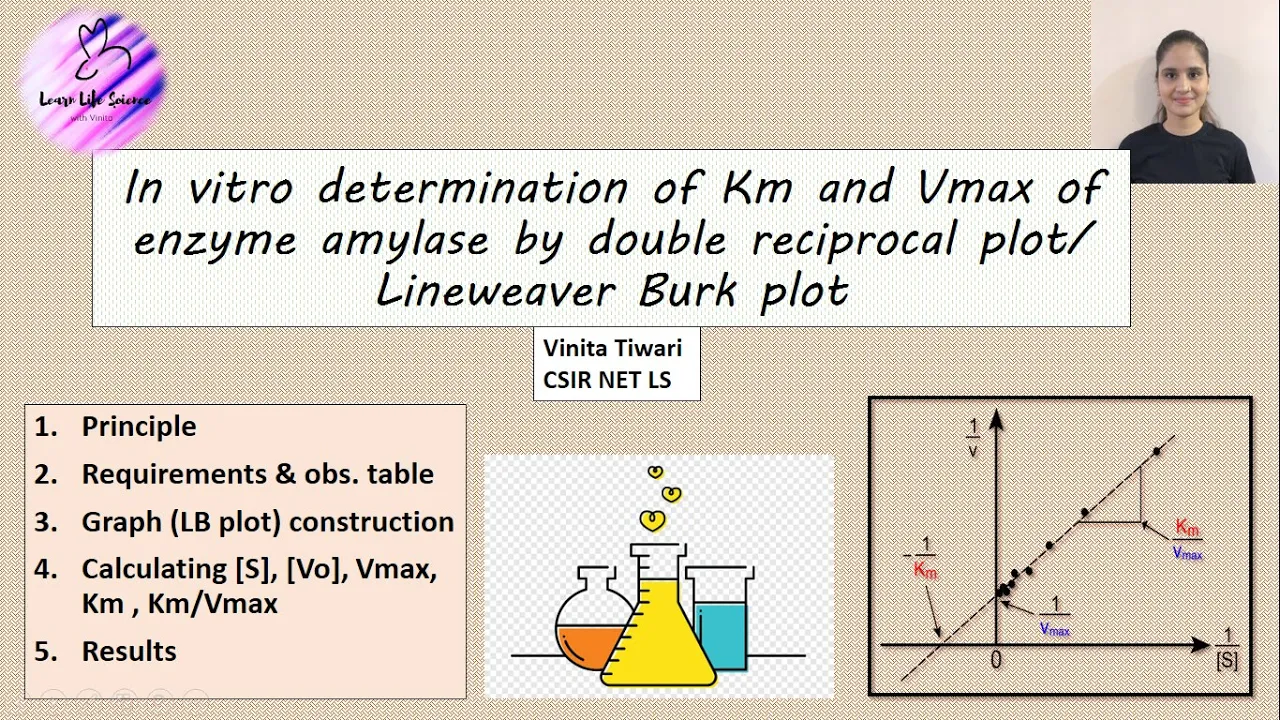


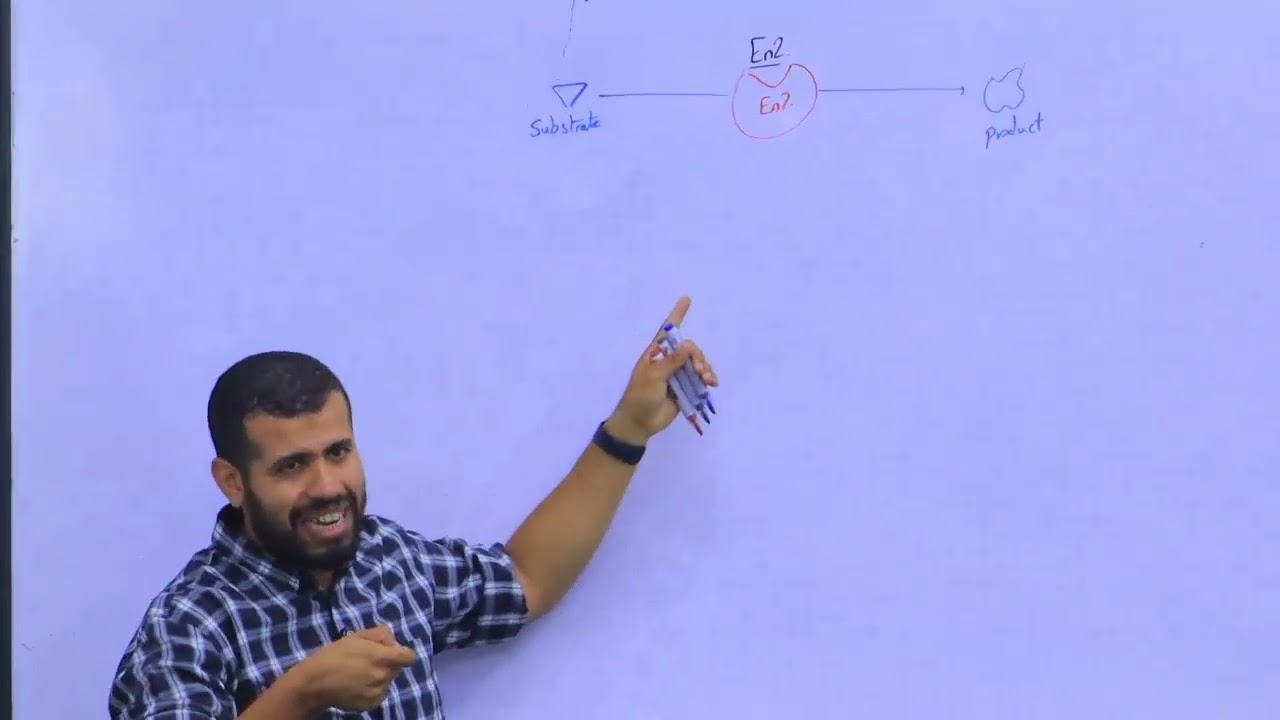


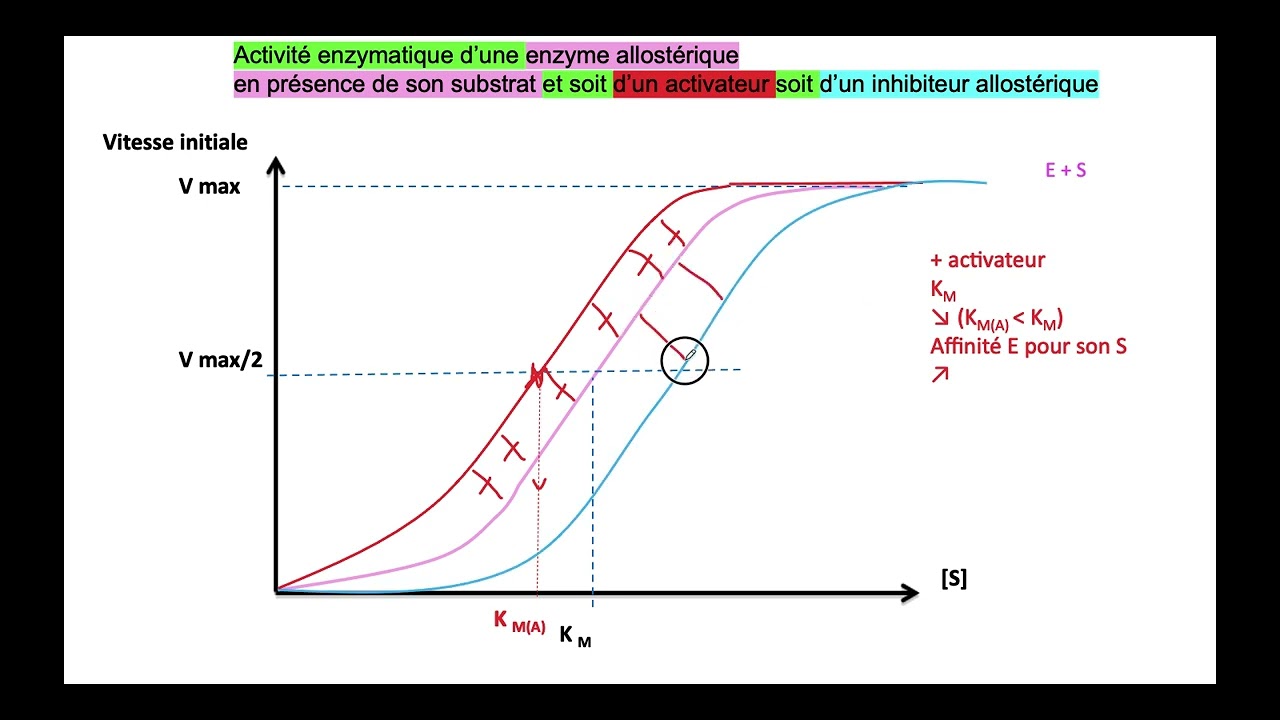







The Michaelis-Menten equation (V₀ = Vmax × [S]/(Km + [S])) mathematically describes enzyme-catalyzed reaction kinetics by establishing a relationship between initial reaction velocity (V₀), maximum velocity (Vmax), substrate concentration ([S]), and the Michaelis constant (Km). The equation explains both first-order kinetics (linear increase in velocity with substrate concentration at low [S]) and zero-order kinetics (plateau where velocity becomes independent of substrate concentration at high [S]). The derivation assumes the enzyme-substrate complex reaches equilibrium (equilibrium assumption) and that the ES complex concentration remains constant during the reaction (pseudo-steady-state hypothesis). Km represents the substrate concentration at which reaction velocity equals half of Vmax, serving as a measure of enzyme-substrate binding affinity.
Michaelis-Menten Equation: Enzyme Kinetics Explained
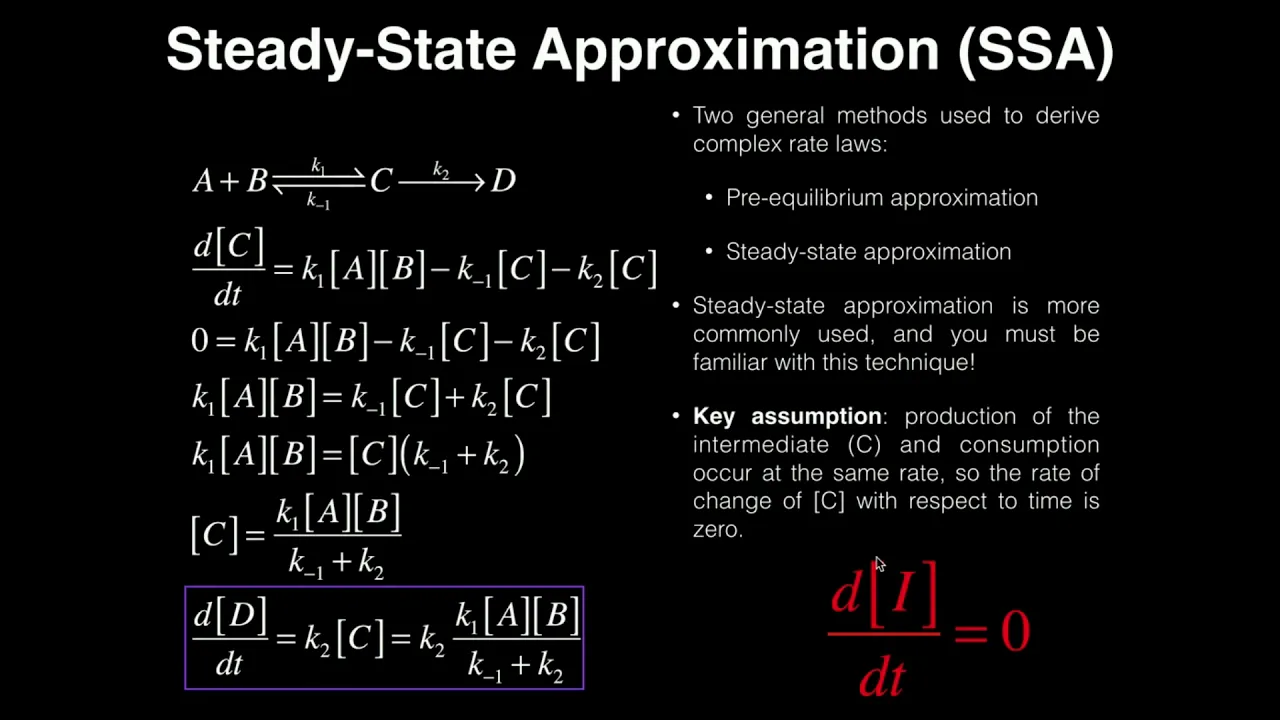
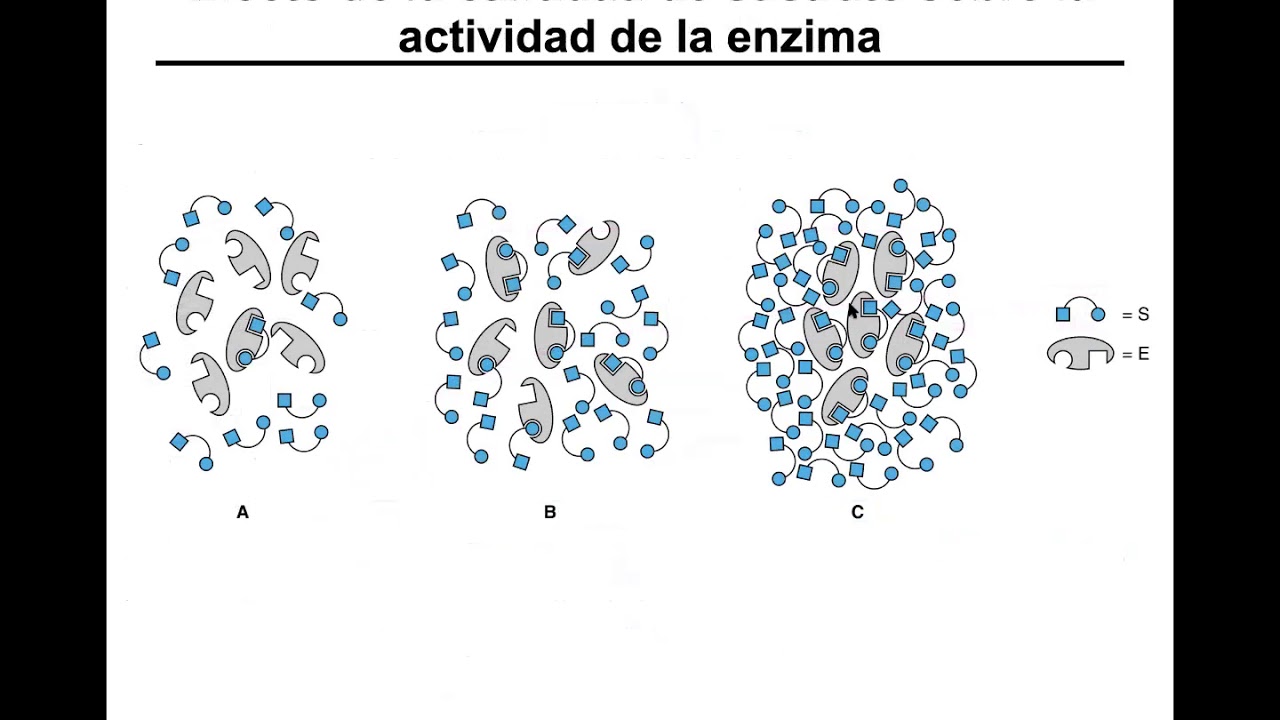
Added:hey guys click by chemistry basics here is took about Michaelis Menten equation when the enzyme acts on the substrate the substrate gets converted into product and the product is finally released hence with respect to time the concentration of substrate decreases and the concentration of product increases taking slope of the graph gives information about the rate of reaction there is change in the concentration with respect to time hence we can also call this as velocity of the reaction now when we measure velocity of reaction at different substrate concentration then what we get is a graph which looks like this if we observe this graph carefully then what we can see is that the first part of the graph is linear where the rate of reaction increases linearly with the substrate concentration this linear increase is called first-order reaction kinetics then the graph shows a plateau region where the increase in substrate concentration no longer increases the velocity of the reaction at this stage the velocity have reached maximum velocity or remax this plateau region is known as zeroth order reaction kinetics which means velocity is independent of substrate concentration now the first-order reaction kinetics can be explained easily with the equation y is equal to MX plus C where Y is the velocity and mr. slope C is the intercept on y-axis and X is the substrate concentration however this equation cannot be used for the Plato region as the velocity is independent of the substrate concentration and this is the reason why we need to derive Michaelis Menten equation now the Michaelis Menten equation explained this curl mathematically the aim of this equation is to establish a mathematical relation between V 0 V Max and game such that both first order and zero order kinetics can be explained so here we go the enzyme acts on the substrate and forms enzyme substrate complex this is a reversible reaction under equilibrium this is also known as equilibrium assumption according to law of mass action II into s into K F is equal to e s into K R if we take a ratio key are two key F number to get is that this Association constant the disassociation constant is represented by term KD besides equilibrium assumption there is a second assumption known as pseudo steady state hypothesis according to this the concentration of es complex remains constant during enzymatic reaction when we say the concentration of es complex remains constant this means rate of formation of es is equal to rate of breakdown of es complex es is formed by the forward reaction between enzyme and substrate therefore es formation is equal to KS into e into s es complex is broken down into E and s or E and B therefore es breakdown is equal to kr into es plus K cat into yes as es formation is equal to es breakdown we can say KS into e into S is equal to kr into es plus K cat into es now on the right hand side we can take es common so that KF into e into s is equal to es into bracket kr plus K cat so taking the ratio e into s upon e s is equal to kr plus K k't divided by K F this is known as km or Michaelis Menten constant now let's go back to our aim our aim is to establish a mathematical relation between v-0 we max and km now II into s upon e s is equal to km is one equation that we have now we need to think about equation for the velocity and maximum velocity V Max the velocity of the reaction is DP by DT rate of product formation per unit time and product formation depends on this association of es complex so velocity can be expressed as V zero is equal to K CAD into e s in this system there will be some free enzyme molecules which are not bound with the substrate and other enzyme molecules bound with the substrate so total enzyme concentration can be given as e zero is equal to e plus es now watch carefully when all enzyme molecules are bound with the substrate there is no free enzyme left hence a zero is equal to es as all enzyme sites are occupied by the substrate the velocity reaches maximum velocity or v-max therefore v-max is equal to K cat into e0 where a 0 is equal to es now let's rearrange the equation to get one single equation e zero is equal to e plus yes taking es on the other side we get e zero minus es is equal to e this can be replaced in the equation of KM therefore km is equal to e0 minus es into s / yes now let's multiply s with the term a zero - yes so we get km is equal to e 0 into S minus e s into s / e yes now let's rearrange es and the equation becomes something like this km is equal to e0 into s upon s - s now the term is zero can be replaced as we max by k-kat of cake at and es is v-0 if we take - s on the other side with km then what we get is km plus s is equal to we max into s divided by V 0 and finally if we rearrange km plus s and V 0 then we get V 0 is equal to we max into s upon km plus s now let's try to understand this equation when the substrate concentration is very large the value of km will be very less as compared to value of s hence km can be ignored when compared to s so the equation now becomes we zero is equal to we max into s divided by s hence we zero becomes equal to v-max now let's consider the case where we zero is half of VMAX in this case half of VMAX becomes equal to we max into s upon km + s if we rearrange this equation then what we get is km is equal to s which is nothing but the definition of km the substrate concentration at which velocity becomes half of VMAX
Up Next

Plasmid Vectors Explained: Features, Cloning & Protein Expression
@DrDavidSmith
93.2K views•2017-05-06
Quantitative Real-Time PCR (qPCR): Principle, Method & Data Analysis
@animatedbiologywitharpan
129.2K views•2023-09-06
Microbial Degradation of Plastics: Biodegradation Pathways & Sustainability
@majeedhammad
2.9K views•2021-04-11

CRISPR and Genetic Engineering: How Gene Editing Works and Why It Matters
@kurzgesagt
30.5M views•2016-08-10
Related Study Plans & Knowledge Roadmaps
Structured learning paths in Biotechnology