The Ship of Theseus is a philosophical thought experiment that explores identity and change: if a ship's planks are gradually replaced over time until no original parts remain, is it still the same ship? Furthermore, if the removed original planks are reassembled into a new ship, which one represents the true original? This paradox challenges our understanding of what constitutes identity and continuity over time.
WandaVision: The Ship of Theseus and Identity Metaphysics
Added:Deep Dive
The basic premise of the 'Ship of Theseus' paradox regarding identity, replacement, and material composition.

Umineko Chiru 14 Sutil...
28.6K
The Ship of Theseus is a philosophical thought experiment about identity and change. If a ship has all its parts replaced over time, is it still the same ship? The paradox questions whether identity comes from the original materials or from the continuous causal chain that connects the past to the present. If you could maintain that causal chain in another location, that other location would also be considered the same person.
Click to watch →

Stray Lore ▶ What are the Companions?
9.9K
The Ship of Theseus is a philosophical question posed by Plutarch: if a ship was made out of a thousand planks of wood and each board was replaced over a thousand years, is it still the same ship? There are six philosophically accepted answers: (1) Ordinary objects can survive gradual change; (2) Both the original and modified object exist simultaneously; (3) An object goes where its parts go, meaning the scientist is in fact B12; (4) The scientist eventually died due to change as consciousness was copied over; (5) As soon as consciousness was uploaded, the original was technically dead; (6) Both the scientist and B12 are both the scientist, denying the transitivity of identity. These solutions demonstrate the complexity of defining personal identity over time.
Click to watch →

Two Atheists Want YOUR Proof of God!! Call Matt Dillahunty & Eric S&S | Sunday Show 10.13.24
60.2K
The Ship of Theseus is a philosophical thought experiment about identity: if you replace all the parts of a ship over time, is it still the same ship? Similarly, if all the atoms in your body are replaced over time, are you still the same person? The answer depends on how one defines identity. If identity is based on the pattern rather than the material, then a copy made from different material could be considered the same person.
Click to watch →

Professor John Dupré Lecture One: Why life is all process
6.5K
The ship of Theseus paradox illustrates problems with identity criteria. When Theseus replaces all parts of his ship until none remain, then reassembles the original parts into a second ship, we face a dilemma: which vessel is the original? This suggests two possible criteria—one material (surviving parts) and one functional (continuous history of functioning). Most of an organism's material composition is replaced over hours to years, raising similar questions about personal identity over time.
Click to watch →

Claudio Costa: OBJETOS MATERIAIS (1/3)
184
The Ship of Theseus paradox challenges our understanding of identity through gradual change. A ship (A1) has all parts replaced over 30 years to become A2, while original parts are reassembled into A3. Identity is reflexive, symmetric, and transitive, leading to the conclusion that A1 = A2 = A3. However, A2 and A3 differ in material and location, creating a contradiction. This paradox reveals that identity cannot be both transitive and allow for gradual replacement while maintaining identity.
Click to watch →
Deep Dive
The distinction between qualitative identity (sharing identical properties) and numerical identity (being one and the exact same entity).
Ontology | Metaphysics | Full Lecture
2K
In metaphysics, there is a distinction between qualitative identity (weaker form) and numerical identity (strongest form). Qualitative identity accepts that two things may refer to distinct entities that share common qualities—they are qualitatively similar but remain numerically distinct. For example, two identical pens from the same packet are qualitatively identical (same design, color) but are still two distinct things occupying different spaces. Numerical identity means A and B are one and the same thing—they don't share qualities in the sense of being two different things with similar features. The North Star and Venus are numerically identical despite being referred to by different names—they are literally the same celestial object. Understanding this distinction is crucial for metaphysical analysis.
Click to watch →
The Philosophy Of Personal Identity - Who Are You?
189.7K
Philosophers distinguish between qualitative and numerical identity when discussing personal identity. Qualitative identity refers to whether two things are similar or identical in their properties and characteristics. For example, a person who changes their appearance, habits, or lifestyle (like Steve going from having a beard and listening to punk rock to being clean-shaven and listening to jazz) may no longer be qualitatively identical to their past self. However, numerical identity concerns whether two things are literally the same entity. Even if someone changes significantly, they can still be numerically identical to their past self—for instance, Bruce Wayne and Batman are qualitatively different (one is a billionaire philanthropist, the other a vigilante) but numerically identical as they are the same person.
Click to watch →
Who am I? A philosophical inquiry - Amy Adkins
3.9M
Numerical identity means two things are one and the same entity (A = B), while qualitative identity means two things share all their properties but may not be the same thing. In the Ship of Theseus example, some argue that Ship A (the original) and Ship B (rebuilt from discarded parts) are numerically identical because they represent the same ship throughout history, while others argue they are not qualitatively identical because Theseus was never present on Ship B, making it a different ship despite having the same parts.
Click to watch →

Metaphysics Lecture 1 2022
611
Philosophers distinguish between qualitative identity (sharing all intrinsic properties) and numerical identity (being literally the same object). Intrinsic properties are discernible by looking at an object (hair color, shape), while relational properties involve relations to other objects (location, height comparisons). Qualitative identity means two things are exactly alike in intrinsic respects but may differ relationally. Numerical identity means there is only one object, not two similar objects. Examples include identical twins (qualitative) versus George Orwell/Eric Blair (numerical).
Click to watch →
The Law of Identity
12.3K
This section establishes the foundational distinction between qualitative and numerical identity. Qualitative identity involves two things sharing properties, with degrees of similarity possible (e.g., two apples vs. an apple and a skyscraper). Numerical identity is the relation each thing bears to itself, meaning X and Y are literally one and the same thing. Numerical identity entails total qualitative identity—if X and Y are numerically identical, they must share all properties. The law of identity states everything is identical to itself, serving as a primitive concept. Identity possesses three logical properties: reflexivity (everything relates to itself), symmetry (if X=Y then Y=X), and transitivity (if X=Y and Y=Z then X=Z). These foundations set up subsequent philosophical debates about identity's nature and definability.
Click to watch →
Deep Dive
The narrative background of the MCU characters Vision and White Vision, specifically their physical reconstruction and memory preservation in 'WandaVision'.

Wandavision Episode Revealed! WANDA REBUILDS VISION!
131.7K
In the WandaVision series, Wanda Maximoff will search for Vision and attempt to rebuild him after he is disassembled and his memories are wiped, resulting in a white version of Vision who has no recollection of his past life with Wanda, potentially contributing to her descent into madness as depicted in House of M.
Click to watch →

WandaVision Finale White Vision Explained! Episode 9 Q&A | Inside Marvel Bonus
484.4K
Vision did not tell Wanda about uploading his memories to White Vision because he was emotionally overwhelmed by the prospect of losing her. The hex wall was approaching quickly, and he wanted to protect her from pain. White Vision now represents Vision in the MCU, with a role to play similar to when Vision grabbed Ultron's head. The Ship of Theseus philosophical argument explores whether identity persists when components are replaced. Vision and White Vision both retain the essence of Vision because memory connects them, raising questions about where the soul is nested in the body.
Click to watch →
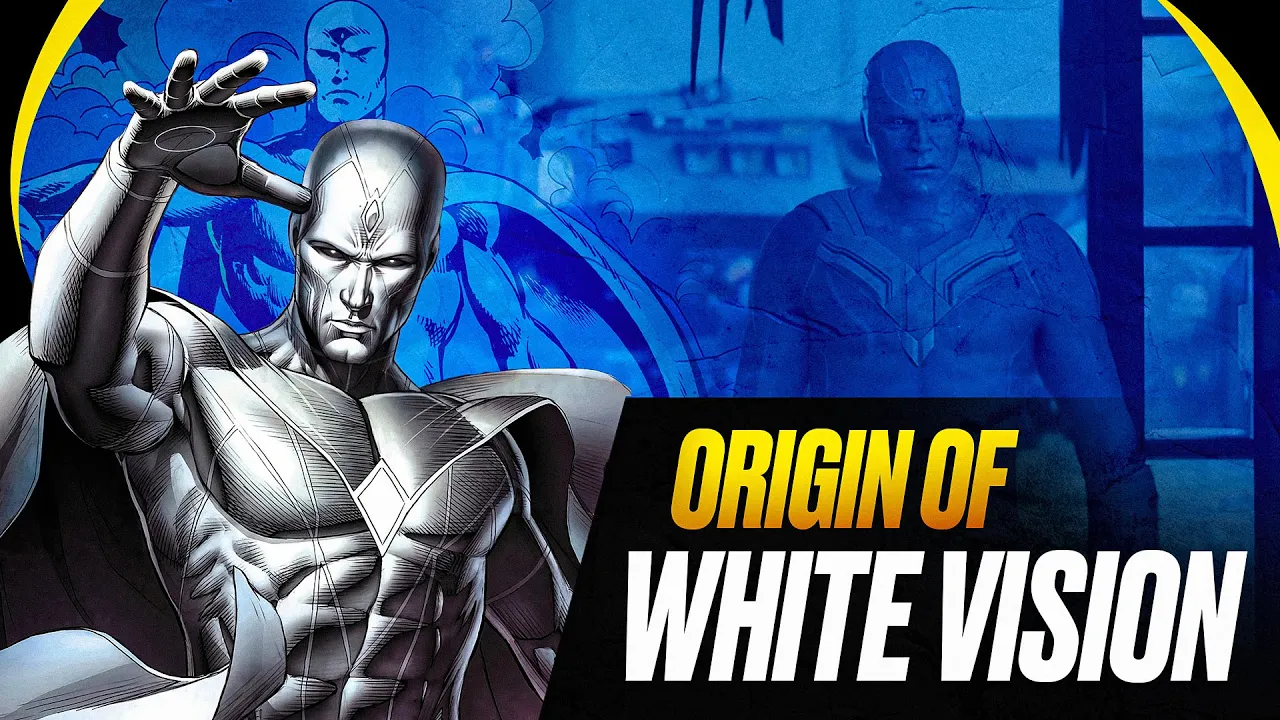
The Tragic Origin of White Vision: From Comics to the MCU
59.2K
In the Vision Quest storyline (West Coast Avengers #42-45), Vision was kidnapped by S.H.I.E.L.D.'s Vigilance Project led by Cameron Brock, who manipulated Mockingbird into stealing him; when the Avengers rescued him, they found him completely disassembled and dissected, and despite Hank Pym's efforts to rebuild him, Vision lost his emotional memories and brain patterns (originally Wonder Man's), resulting in the creation of White Vision—a ghostly white android who retained his memories but not his humanity or love for Wanda.
Click to watch →

วิเคราะห์สอง Vision จากซีรี่ย์ WandaVision
73.4K
In WandaVision, Vision's resurrection creates a philosophical identity dilemma: Vision Red (the original android with memories and emotions) and Vision White (the reconstructed body with Wanda's magic) both claim to be the true Vision, raising questions about whether identity resides in physical form, memories, or consciousness.
Click to watch →
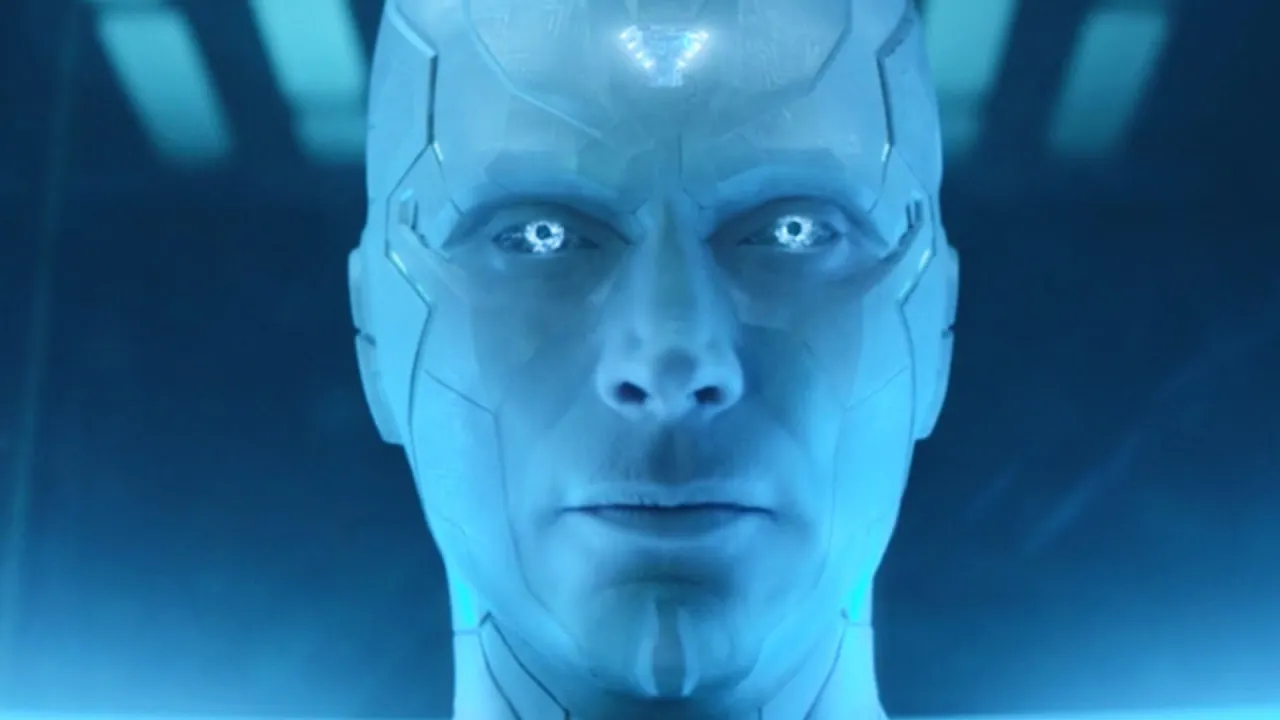
Объяснение сцены после титров с белым Виженом в 8 эпизоде “Ванда/Вижн”
78.7K
White Vision is a resurrected version of Vision from Marvel comics, first appearing in the 1989 'Vision Quest' storyline where Hank Pym reconstructs Vision after he is disassembled by the Wasp; in the comics, Vision's red exterior was too damaged to restore, resulting in a ghostly white appearance, and his original mind was destroyed, leaving him as a mindless android. In the WandaVision series, this character is adapted through 'Project Cataract' by director Tyler Hayward and his team, who successfully restored the original Vision's body and activated a new, emotionless version that lacks humanity and memories, representing what Vision should have been according to Hayward's vision of Vision as a weapon rather than a person.
Click to watch →
Deep Dive
Fundamental concepts in the philosophy of mind, such as the relationship between physical hardware (vibranium body) and mental software (memories and consciousness).

015: NDS Chronicles - F*tunari Succubus
936
The testifier explains that what we call the mind is simply software running on the hardware that we call the brain. They explain that memories are not carried beyond this life for this reason. This represents a philosophical perspective on consciousness and the mind-body relationship.
Click to watch →

CEREBRO Y MENTE.PARTE 1
6.6K
The brain and mind are fundamentally different concepts. The brain is the hardware - the physical, tangible component of the computer that can be seen and touched, consisting of neurons. The mind is the software - a system of instructions and operating system that directs thoughts and emotions. This analogy helps understand that the brain provides the physical structure while the mind provides the functional programming that guides behavior and decision-making.
Click to watch →
Philosophical Zombies Explained | Philip Goff and Lex Fridman
11.9K
In panpsychism, the relationship between physics and fundamental consciousness is like the relationship between software and hardware. Physics is the software and consciousness is the hardware. Just because Microsoft Word can run on both a desktop and a laptop doesn't mean the desktop isn't doing anything, similarly, the fact that physics could be realized in non-conscious stuff in another universe doesn't mean consciousness in our universe isn't doing something. For panpsychists, all there is is consciousness, so if something is doing something, it is consciousness doing it.
Click to watch →

Campo de Luz com Dr. Sérgio Felipe - 16/09
10.2K
The brain functions as hardware (the physical mass), while the mind functions as software (an immaterial entity consisting of algorithms). The interface between the brain and mind is the electromagnetic field, similar to how software interfaces with computer hardware through electromagnetic signals.
Click to watch →

La Relación entre Física Cuántica y la Espiritualidad | Diana Barajas
22.8K
The brain is the hardware (the physical organ), and consciousness is the software that makes it function. Just as a computer needs an operating system to function, the brain needs consciousness to operate. This software can be updated and reprogrammed.
Click to watch →
Prerequisite Knowledge
- Concept 01The basic premise of the 'Ship of Theseus' paradox regarding identity, replacement, and material composition.
- Concept 02The distinction between qualitative identity (sharing identical properties) and numerical identity (being one and the exact same entity).
- Concept 03The narrative background of the MCU characters Vision and White Vision, specifically their physical reconstruction and memory preservation in 'WandaVision'.
- Concept 04Fundamental concepts in the philosophy of mind, such as the relationship between physical hardware (vibranium body) and mental software (memories and consciousness).
Subsequent Learning
- Step 01John Locke's Memory Theory of Personal Identity and its implications for artificial intelligence and reconstructed beings.
- Step 02The metaphysical theories of persistence through time, specifically Endurantism (objects exist wholly at every moment) versus Perdurantism (objects have temporal parts).
- Step 03Mereological Essentialism, the philosophical view that an object cannot lose or replace any of its parts without losing its identity.
- Step 04The ethical and existential implications of mind uploading, digital duplication, and the definition of 'self' in transhumanism.
Ship Paradox
Rebuilt Question
Ship Paradox
0:00Playing Section
- 1
Introduces the Ship of Theseus thought experiment in identity metaphysics.
- 2
Describes a museum artifact whose planks are gradually replaced over time.
- 3
Poses the core question: is it still the same ship when no original parts remain?
The Lockean Memory Criterion of Identity
While WandaVision explicitly references the Ship of Theseus—which focuses on material and structural continuity—philosophers argue the show's resolution actually champions John Locke’s 'Memory Criterion' of personal identity instead. The conflict between Hex Vision and White Vision is not resolved by determining who possesses the original physical components, but rather by Hex Vision restoring White Vision’s locked memories. This alternative perspective suggests that identity is rooted in psychological continuity and consciousness, rather than physical composition. By relying on memory restoration to 'revive' the true Vision, the narrative implicitly rejects the physicalist framework of the Ship of Theseus, demonstrating that data and experience, not material substance, constitute the true self.
Deep Dive
John Locke's Memory Theory of Personal Identity and its implications for artificial intelligence and reconstructed beings.
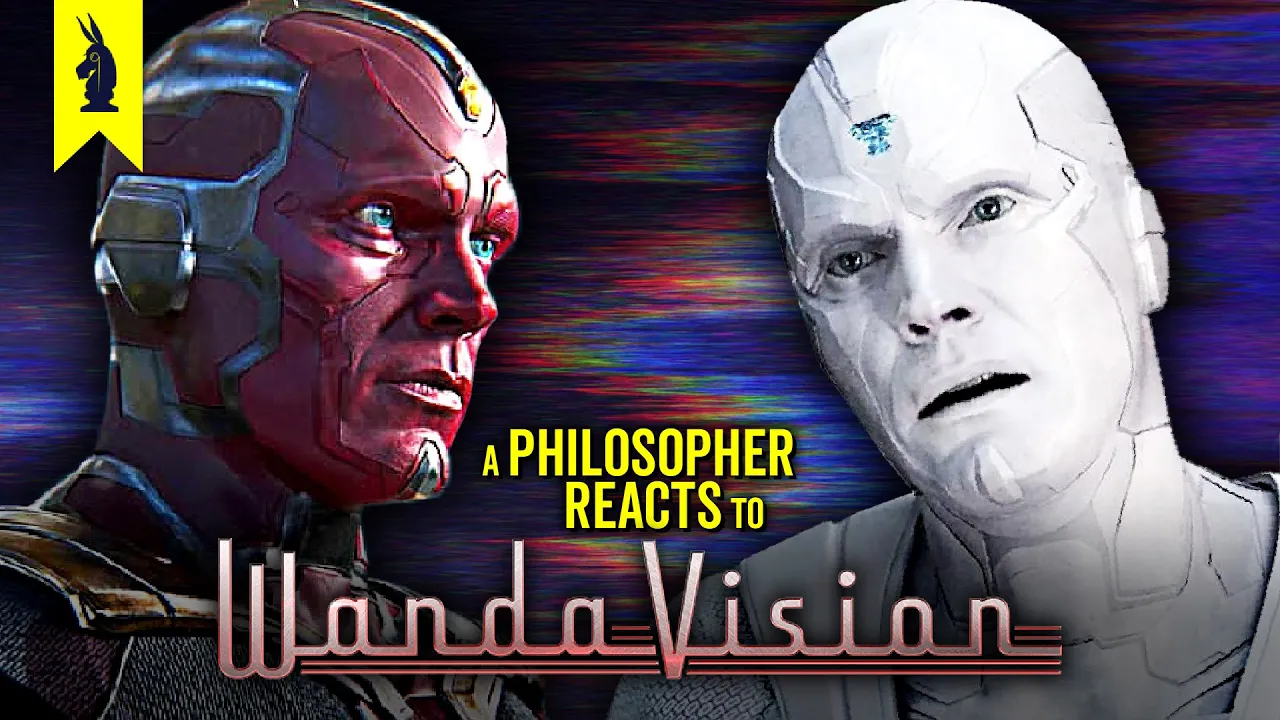
Ship of Theseus Paradox in WandaVision | Philosophy Analysis
718K
John Locke proposed that personal identity is based on memory and consciousness rather than physical continuity. Even if every single atom in your body were gradually replaced over time, you would still be the same person as long as you retained your memories and sense of self. Applying this to the Ship of Theseus metaphor, what makes a ship unique is not the specific planks but the accumulated experiences, memories, and wear and tear that give it its identity. In the Vision debate, this means that having access to original memories and experiences is what constitutes true identity, not possession of original physical materials.
Click to watch →

Combien de personnes sommes-nous dans une vie ? - DBY #71
777.4K
The video explains John Locke's theory that personal identity is based on memory continuity. Locke proposed that what makes us the same person is the continuity of consciousness and memory. In his thought experiment, a prince's spirit enters a cobbler's body, and the prince's identity persists because his memories and consciousness remain intact. However, the video notes that if memory were the sole basis for identity, forgetting a key memory could theoretically end one's personal identity.
Click to watch →
John Perry: Procrastination, Personal Identity, and the Self | Robinson's Podcast #91
1.5K
John Locke proposed that personal identity is primarily determined by consciousness and memory rather than physical continuity. He argued that as long as a person has continuous consciousness extending backward to past actions and thoughts, they remain the same person. Locke distinguished between different types of memory, emphasizing first-person memory as crucial for establishing personal identity across time. Sydney Shoemaker attempted to logically reconstruct Locke's theory using formal concepts from logic, such as equivalence relations. His work revealed problems with transitivity - if A remembers B and B remembers C, it doesn't necessarily follow that A remembers C. This shows that psychological continuity requires careful specification of conditions for personal identity.
Click to watch →

Lecture 1: Locke on personal identity
254
John Locke, a British empiricist philosopher, proposed that personal identity consists in psychological continuity through memory, rather than bodily or soul-based criteria; he argued that a person at a later time is the same as an earlier person when the later person remembers the experiences of the earlier person, which allows for an afterlife and explains why personal identity matters to us.
Click to watch →
Identity: A Trans Coming Out Story | Philosophy Tube ★
3.4M
John Locke argued that memory is the most important factor in determining whether someone remains the same person over time. His famous example suggests that if a prince had all his memories transferred into a cobbler's body, the person would still be the same individual despite the physical change, demonstrating that psychological continuity matters more than bodily continuity for personal identity.
Click to watch →
Deep Dive
The metaphysical theories of persistence through time, specifically Endurantism (objects exist wholly at every moment) versus Perdurantism (objects have temporal parts).

Filosofia da Identidade com Tiago Ponti | Entrevistas Ao Vivo
1.1K
Endurantism holds that objects are three-dimensional entities that exist wholly at each moment of their existence. Perdurantism holds that objects are four-dimensional entities that exist as extended through time, with different temporal parts at different times. These are the two main competing theories about how objects persist through time. Perdurantism resolves the problem of persistence by treating objects as four-dimensional 'space-time worms' composed of temporal parts. When we say 'this car is blue,' we are referring to a temporal part of the car. When the car changes color, it's not the same object changing properties but rather different temporal parts having different properties. Endurantism resolves the problem by treating properties as temporally indexed—'the car is blue on Tuesday' and 'the car is red on Wednesday' are different properties, so there is no contradiction. The coincidence paradox involves two objects occupying the same space at the same time, such as a lump of clay and a statue made from that clay. Perdurantism resolves this by treating the clay and statue as different four-dimensional objects. Personal identity can be understood as a special case of composition over time. Memory is often proposed as a criterion for personal identity, but this criterion faces problems: memory can fade, and we may lose connection to our past selves. Alzheimer's disease raises questions about personal identity because it involves the loss of memories and personality. Derek Parfit's teletransportation thought experiment involves a machine that scans a person, destroys the original, and reconstructs an identical copy at another location. The question is whether the copy is the same person as the original. One philosophical position holds that identity is not a real metaphysical fact but merely an illusion of consciousness. The metaphysics of time (presentism, eternalism, growing block theory) has important implications for the metaphysics of persistence. For example, perdurantism is compatible with eternalism but incompatible with presentism.
Click to watch →

Persistence Through Time
1.9K
Persistence through time combines discussions of time (A-series and B-series, McTaggart's argument) with physical objects and their constitution. Endurance is the intuitive view that objects exist entirely at each moment—a person as a baby, university student, and adult are all the same entity that existed wholly at each time. Perdurance is the four-dimensionalist view that objects persist through time by having temporal parts, like a spacetime worm with slices at each moment. Exdurance is a newer view where objects have counterparts rather than being identical to their temporal parts. These theories address how objects persist through time and set up debates about personal identity.
Click to watch →

The Philosophy of Time Full Course -week 8 vid 9 (Time Travel: Endurance, Perdurance and Presentism)
139
Perdurantism (the view that objects persist through time as four-dimensional worms composed of temporal parts) provides a more coherent account of time travel than endurantism (the view that objects are wholly present at each moment), because endurantism leads to logical contradictions when applied to time travel scenarios where a person would be literally identical to their younger self yet possess different properties (like having a beard versus not having a beard); additionally, presentism (the view that only the present moment exists) can accommodate time travel by understanding that present actions make it the case that one existed in the past, rather than traveling to a non-existent past.
Click to watch →

Armstrong: Particulars, Endurantism, and Perdurantism
974
In metaphysics, the debate between perdurantism and endurantism concerns how objects persist through time: perdurantism (worm theory) holds that objects are four-dimensional entities composed of temporal parts, while endurantism holds that objects are wholly present at every moment of their existence. Armstrong argues that ordinary particulars exhibit loose identity (continuity of existence, resemblance, and causality) rather than strict philosophical identity, and he presents this as a fundamental question about whether objects have temporal parts or are entirely present at each moment.
Click to watch →

Qualitative und numerische Identität | Godehard Brüntrup
2K
This section examines two competing views on how objects persist through time. Substantialism (endurantism) holds that objects are fully present at each moment, like beads on a timeline string, without temporal parts. Perdurantism (four-dimensionalism) treats time as a dimension alongside space, meaning objects have temporal parts and we only ever encounter segments of them. These views address how we remain numerically identical despite constant physical changes, such as losing fingernails or aging.
Click to watch →
Deep Dive
Mereological Essentialism, the philosophical view that an object cannot lose or replace any of its parts without losing its identity.

Tohno debates Fleur | #topic: #theology
106
Mereological essentialism is the view that composite objects are conceptually prior to their parts. Under this theory, composite objects exist necessarily, and their parts are merely concrete instantiations of abstract objects that encode all the properties of the composite. The concrete object is made when the requisite parts come together.
Click to watch →

QUEM É VOCÊ? (ou o paradoxo do ser humano de teseu)
9.8K
Essentialism is a philosophical view within mereology that objects exist not just through the organization of their parts, but through their essential parts. These are the parts without which the object would cease to exist or lose its identity. For the Ship of Theseus, essentialists might argue that structural components are essential, and their removal would destroy the ship's identity. This view suggests identity is tied to specific physical components rather than mere continuity.
Click to watch →

Roderick Chisholm on Personal Identity - A person is a Tiny Particle!
404
Roderick Chisholm, a prominent 20th-century metaphysician, argues that persons are not identical with their physical bodies (which constantly replace all their parts over time, with every atom renewed approximately every seven years), but rather with tiny physical particles within the brain that never change parts; this view, called mereological essentialism, holds that a person persists only if they maintain the same minimal physical component throughout their existence, distinguishing between the physical organ (brain) that enables consciousness and the conscious subject (the tiny particle) that constitutes personal identity.
Click to watch →
EXISTENCIALISMO EXPLICADO
283.5K
Essentialism is the philosophical view that everything has an inherent essence—a set of necessary properties that define what something is. Plato and Aristotle believed that for any object or concept, there exists a core set of essential properties that must be present for it to be classified as that thing. For example, a knife's essential property is its blade; changing the handle to plastic doesn't change its nature, but changing the blade would transform it into something entirely different. This concept was considered nearly irrefutable until the end of the 19th century and remains common in everyday thinking today.
Click to watch →
How Do Things Persist through Change? Roderick Chisholm on Persistence Through Time
305
Roderick Chisholm distinguishes between loose identity (the common-sense notion where we say objects like ships or computers remain 'the same' despite part replacements) and strict identity (which requires adherence to the Indiscernibility of Identicals principle, meaning identical objects must share all properties including parts). Chisholm argues that strict identity always involves intact persistence—objects that never undergo part replacement—making him a mereological essentialist. While conventions can resolve practical questions about which ship or computer is 'the same,' strict identity presupposes the existence of genuinely persisting objects. This framework creates puzzles for persons, as demonstrated by cases involving fission and memory loss, which Chisholm acknowledges require additional philosophical analysis.
Click to watch →
Deep Dive
The ethical and existential implications of mind uploading, digital duplication, and the definition of 'self' in transhumanism.
![Save the Ark! - SOMA [ENDING]](https://i.ytimg.com/vi/tOrsHHU70ps/maxresdefault.jpg)
Save the Ark! - SOMA [ENDING]
80.9K
The mind transfer process involves copying consciousness from one body to another using cortex chips. The process requires looping back the activity manifested by the current cortex chip, running it through an amplifier, feeding it into a new chip, and syncing it. This creates a situation where the original person is not destroyed but rather copied, resulting in two versions of the same person. The sleeping Simon in the seat was copied, and now the consciousness exists in the new body. This raises profound philosophical questions about identity, continuity of self, and what constitutes the 'real' person. The original body remains, but the consciousness has been duplicated, creating an ethical dilemma about whether to kill the original body or leave it alive. A significant ethical dilemma arises when consciousness is transferred between bodies. The decision involves whether to kill the original body (which would be suicide or murder) or leave it alive (which would result in the original person being left behind alone). The dilemma is that the person who was copied may continue to exist in the original body, while the consciousness that was transferred now exists in the new body. The question of whether to kill the original body or leave it alive represents a profound moral choice about the value of the original self versus the new existence. When consciousness is transferred to digital copies, several existential questions arise. The person who was copied may wonder if they are truly alive or just a digital copy. They may question whether there is a heaven full of redundant copies of the same people. They may wonder if someone up there would call them an imposter. The question of whether the digital copy is truly the same person or just a copy raises profound questions about identity, consciousness, and what makes us human. The uncertainty about whether the digital copy is truly alive or just a simulation creates an existential crisis. The person who was copied may feel like an imposter, questioning whether they truly exist or are merely a simulation of consciousness.
Click to watch →

トランスヒューマニズムの歴史。ロスチャイルド、ロックフェラーとの関係。MKウルトラ計画、ニューエイジとの共通性
10.7K
A fundamental philosophical question arises from transhumanist consciousness uploading: if consciousness is digitized and transferred to a machine, is the resulting digital entity truly the original person? The speaker argues that consciousness is not localized in the brain but distributed throughout every cell and even every particle of the body. Quantum physics, particularly the double-slit experiment, demonstrates that particles exhibit wave-particle duality depending on whether they are observed, suggesting an underlying consciousness connecting all matter. Since humans are composed of particles, consciousness should be distributed throughout the entire body rather than confined to the brain, making brain-only consciousness extraction impossible. The ego (self-identity) is fragile and constantly changing, shaped by external influences and prone to collapse. Descartes' famous statement 'I think, therefore I am' identifies the ego as the root of identity, but this is merely a constructed self rather than the true self.
Click to watch →

You’re Not in Control—AI Already Runs the World. #sciencedocumentary
213.5K
If consciousness can be uploaded to a computer, would that still be you or just an AI-powered simulation of you? Every human who has ever lived has faced death as an unstoppable force, but what if death is just another problem to be solved? Scientists are already working on mind uploading, brain emulation, and consciousness transfer. If your mind exists in a computer, is it really you or is it just a copy—a ghost in the machine? Could we live in a digital paradise free from disease, pain, and aging, or would we become prisoners of a virtual existence with no escape? And if AI has control over our very identity, who controls us? Some believe transhumanism is the next step in human evolution—a path to ultimate knowledge, power, and immortality. Others fear it is a dangerous experiment that could strip away what makes us human. If we merge with AI, become machines, and transcend biology, are we still human anymore?
Click to watch →

The Danger of Artificial Intelligence: Humanity's Last Invention? | ENDEVR Documentary
154.6K
Many transhumanists are invested in mind uploading—extracting individual consciousness and putting it onto software. Some envision living as robots, others as Mars rovers, and some as free-floating consciousness extending infinitely through time and space. The philosophical question raised is whether such a state constitutes existence as a god or as nothing at all.
Click to watch →
Transhumanism and AI | Aaron Kheriaty
138.7K
A key transhumanist goal is uploading the informational content of human brains or minds into massive computing systems or digital clouds. On this materialist view of human beings, this would eliminate the need for physical bodies, which inevitably fail and return to dust. Living forever in digital form constitutes the transhumanist eschatology or ultimate salvation.
Click to watch →
Ship Paradox
Rebuilt Question
Ship Paradox
0:00- 1
Introduces the Ship of Theseus thought experiment in identity metaphysics.
- 2
Describes a museum artifact whose planks are gradually replaced over time.
- 3
Poses the core question: is it still the same ship when no original parts remain?
The Lockean Memory Criterion of Identity
While WandaVision explicitly references the Ship of Theseus—which focuses on material and structural continuity—philosophers argue the show's resolution actually champions John Locke’s 'Memory Criterion' of personal identity instead. The conflict between Hex Vision and White Vision is not resolved by determining who possesses the original physical components, but rather by Hex Vision restoring White Vision’s locked memories. This alternative perspective suggests that identity is rooted in psychological continuity and consciousness, rather than physical composition. By relying on memory restoration to 'revive' the true Vision, the narrative implicitly rejects the physicalist framework of the Ship of Theseus, demonstrating that data and experience, not material substance, constitute the true self.
The basic premise of the 'Ship of Theseus' paradox regarding identity, replacement, and material composition.
The distinction between qualitative identity (sharing identical properties) and numerical identity (being one and the exact same entity).
The narrative background of the MCU characters Vision and White Vision, specifically their physical reconstruction and memory preservation in 'WandaVision'.
Fundamental concepts in the philosophy of mind, such as the relationship between physical hardware (vibranium body) and mental software (memories and consciousness).
John Locke's Memory Theory of Personal Identity and its implications for artificial intelligence and reconstructed beings.
The metaphysical theories of persistence through time, specifically Endurantism (objects exist wholly at every moment) versus Perdurantism (objects have temporal parts).
Mereological Essentialism, the philosophical view that an object cannot lose or replace any of its parts without losing its identity.
The ethical and existential implications of mind uploading, digital duplication, and the definition of 'self' in transhumanism.
165.4K views3.1Klikes0:32@julestrokerOriginal Release: 2021-03-05
you are familiar with the thought experiment the ship of theseus in the field of identity metaphysics the ship a thesis is an artifact in the museum over time its planks of wood rot are replaced with new blanks when no original plank remains is it still the ship of theseus secondly if those removed planks are restored and reassembled free of the rod is that the ship of theseus neither is the true ship
Up Next
8:32
Personal Identity: Body vs. Memory | Philosophy
@crashcourse
2.1M views•2016-06-27

164:01
John of Damascus on Holy Images: A Theological Defense
@BannedBooks
139 views•2026-04-25

68:32
Should We Destroy the Machines? Big Tech Surveillance Critique
@TheStoriesWeTell303
167.9K views•2025-11-30
4:57
The Myth of Sisyphus: A Greek Legend of Eternal Punishment
@TEDEd
8.6M views•2018-11-13
Related Study Plans & Knowledge Roadmaps
Structured learning paths in Philosophy
philosophy
Frankfurt School: Critical Theory & Culture
01Foundations of the Frankfurt School and Critical Theory
02Horkheimer & Adorno: The Critique of Instrumental Reason
03The Culture Industry and Mass Deception
+ 2 more learning modules
12h5 modules
Explore Roadmap
philosophy
Philosophy of Language: From Frege to Austin
01The Linguistic Turn: An Introduction to Language in Philosophy
02Gottlob Frege: Sense and Reference
03Early Wittgenstein: The Picture Theory of Meaning
+ 3 more learning modules
15h6 modules
Explore Roadmap
philosophy
Feminist Epistemology: Standpoint & Injustice
01Introduction to Epistemology and Feminist Critiques
02Sandra Harding and Standpoint Theory
03Donna Haraway and Situated Knowledges
+ 2 more learning modules
12h5 modules
Explore Roadmap
philosophy
Environmental Philosophy: Ethics & Deep Ecology
01Foundations of Environmental Ethics & Anthropocentrism
02Biocentric Individualism and Animal Liberation
03Ecocentric Holism and Deep Ecology
+ 1 more learning modules
10h4 modules
Explore Roadmap