












![Ein inszenierter Tod? Das Rätsel um Annie | #178 Schwarze Akte [Podcast]](https://i.ytimg.com/vi_webp/8CowagTs_DA/maxresdefault.webp)
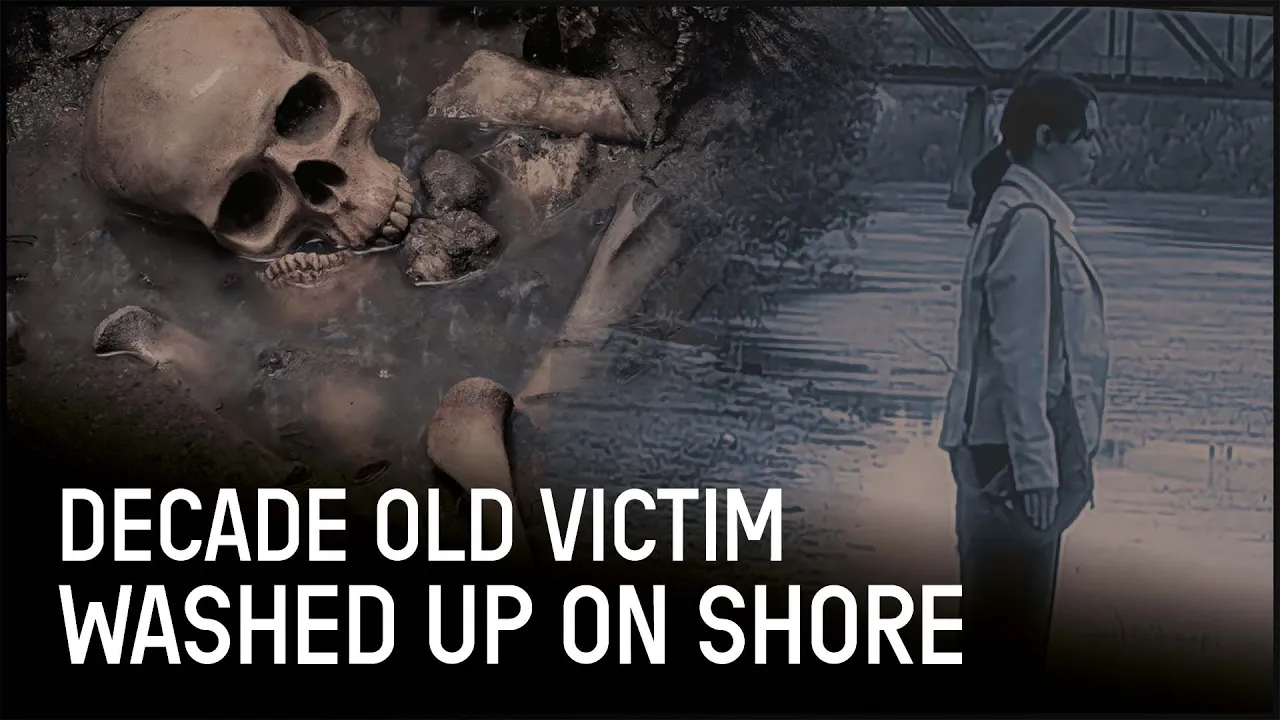




A medical examiner determines cause of death through systematic forensic examination, including analyzing trauma patterns, internal injuries, and toxicology results. In this case, Dr. G identified that Jeanette Dawson was killed by Danny Barton through blunt force trauma to the head, after he shot her multiple times but failed to kill her initially. The autopsy revealed multiple gunshot wounds, skull fractures, and brain injuries that were fatal. This demonstrates how forensic pathologists use physical evidence, wound analysis, and toxicology to reconstruct events and identify perpetrators.
Forensic Autopsy Techniques in Homicide & Drowning Cases
Added:Basic human anatomy and circulatory physiology, particularly how oxygen deprivation impacts the brain and vital organs.
The fundamental distinction between the 'Cause of Death' (the physiological disruption) and the 'Manner of Death' (homicide, accident, natural, suicide, or undetermined).
Introduction to blunt force trauma pathology, including how contusions, abrasions, lacerations, and skeletal fractures manifest on the body.
The basic physiological mechanisms of drowning, including freshwater vs. saltwater submersion effects and asphyxiation.
Forensic Toxicology: How chemical analysis of vitreous humor, blood, and tissue samples detects substances that contribute to impairment or death.
Diatom Analysis: Utilizing microscopic algae present in water bones to definitively diagnose drowning and pinpoint the location of submersion.
Aquatic Taphonomy: Studying how decomposition, adipocere formation, and marine life scavengers affect a body submerged in water over time.
The legal and courtroom responsibilities of a medical examiner, specifically regarding how autopsy findings are translated into expert witness testimony during homicide trials.
336.3K views5.7Klikes49:18Original Release: 2021-06-17
[MUSIC PLAYING] NARRATOR: An unidentified body is found lifeless on the side of a road.
She has no ID on her, or anything that will give us an idea who she was.
There's a lot of trauma to her head.
Almost to the point of being unrecognizable.
NARRATOR: Now, it's up to Dr. G to figure out who this woman is, and exactly how she died.
There are clues here.
We just need to find them.
NARRATOR: Then, a routine boat ride turns deadly.
They do find him at the bottom of the lake, in about 12 feet of water.
NARRATOR: And each new discovery only deepens the mystery.
Oh, my God.
Look at that.
There, I find something else.
Something totally unexpected.
Oh.
He's got some problems here.
[THEME MUSIC] NARRATOR: Altered lives, baffling medical mysteries, shocking revelations.
These are the everyday cases of Dr. G, Medical Examiner.
It's early morning in Orlando, Florida.
And Dr. Jan Garavaglia, Chief Medical Examiner at the District 9 Morgue, is already at work.
Today, there is a difficult case that requires her immediate attention.
Wow.
This case was initially called in to the police by a truck driver who was just driving his rig down the road and sees something suspicious.
[MUSIC PLAYING] NARRATOR: It appears to be a person, face down and motionless on the side of the road.
I just saw a body.
The police arrive.
They do their initial scene investigation.
NARRATOR: What they discover is a woman's body, battered, bloody, and clearly dead.
Dr. G wastes no time dispatching medical investigator Steve Hanson to examine the scene.
He'll look at the body to kind of give the police some indication of what happened.
We've got a body that shouldn't be in a place alongside the road.
There's significant trauma.
We proceeded with the idea that she may have been beaten, or she'd been hit by a car and then slid along the ground for 20 or 30 feet.
This is potential homicide.
NARRATOR: Police immediately launch an investigation, but they have their work cut out for them.
JAN GARAVAGLIA: She has no ID on her.
She has no purse around.
She has no vehicle around, or anything that will give us an idea who she was.
When you have what might be suspected to be homicide, historically, you start looking at who the people that know the person are.
Husbands, wives.
And start building that chain to find out what was going on, and who it is, and who might have done it.
NARRATOR: But with an unidentified victim on their hands, police don't even know where to begin.
They're really anxious for us to get the body into the medical examiner's office and do an examination.
NARRATOR: Dr. G's job is straightforward.
But far from easy.
Help police make a positive ID on the victim, determine the cause and manner of death, and look for any evidence that could shed light on who, or what, killed her.
The moment Jane Doe's body rolls into the morgue, the race to identify her is on.
Because I know that her identification is going to be crucial, as soon as I clear those hands, and I'm done taking trace evidence off of her skin, I'll let Steve usually come in and fingerprint the body for me.
NARRATOR: He takes two types of prints.
First is a digital scan.
We use this Quick Print ID system that we've got.
We roll the laptop into the morgue.
So we'll go ahead and put the index and middle finger.
We'll transmit that through the laptop into the database.
NARRATOR: Then Steve also pulls traditional rolled ink prints from the victim.
The fingerprints will be sent over to the police ASAP.
They'll run it through their system very quickly.
NARRATOR: In addition to taking fingerprints, Dr. G usually takes photos of the decedent.
But today, this is not an option.
The trauma is simply too severe.
I don't think anybody's going to be able to identify her through a photograph.
NARRATOR: As a result, Dr. G will have to provide police with the next best thing-- a detailed physical profile of the victim.
She had, you know, not a lot of wrinkles.
She looks like maybe she's in her 40s.
She's a black woman.
Now, one of the things we'll look at for identification is going to be teeth.
Because teeth will certainly give us unique characteristics.
Oftentimes, we get a presumptive ID some other way, and then make the scientific ID through comparing your dental records with your teeth.
Let's see her mouth.
Oh no, it's-- NARRATOR: But here, Dr. G encounters another challenge.
JAN GARAVAGLIA: Well, we see right off that she doesn't have any teeth.
She has dentures.
Now, it would be the holy grail if her social security number was engraved on the dentures, but not many dentists do that.
NARRATOR: But the prosthetic teeth do provide one possible clue.
She had a gold tooth on her denture.
So her dentures were somewhat unique.
NARRATOR: Dr. G creates a preliminary profile for homicide investigators.
The victim is an African-American woman, about 40 years old, with dentures and a gold tooth.
Police then run a check to see if the description matches anyone who's been reported missing in the surrounding area.
But detectives will be relying on Dr. G for more than just a profile.
It's my job now to try to figure out exactly what happened to her, so we need to gather as much information-- forensic information-- as we can.
So we've got-- NARRATOR: Dr. G begins by examining each of the injuries on Jane Doe's head.
So we've got the second and third.
The cheek bones are fractured.
The mandible's fractured.
Her nose is fractured.
NARRATOR: And clearing away the blood and dirt that's matted to Jane Doe's scalp, Dr. G begins to get a glimpse of what this woman endured.
Oh, gosh.
OK.
NARRATOR: This was no hit and run.
She was beaten.
I find 10 blows to the head.
Lacerations where the skin has torn.
I draw each one of them individually, and I measure where they're located on the scalp.
NARRATOR: One of the reasons Dr. G scrutinizes the wounds so closely is so that she can try to determine what was used to make them.
If Dr. G can make a determination of the type of instrument that's used, and she passes that on to the police, well, they can certainly pass that onto their crime scene people who are looking at the scene.
NARRATOR: Once they know what to look for, detectives might have an easier time finding the weapon that was used.
That weapon could harbor fingerprints or other identifying evidence that could lead police to a perpetrator.
Looking at the size and shape of the wounds, Dr. G begins to get an idea of what type of weapon was used.
Clearly, multiple areas of trauma, all with a blunt instrument.
NARRATOR: But she can't specify what type of blunt instrument until she examines the inside of the cranium.
Until I see the skull and see the injuries internally, I really can't make much of a determination of what type of instrument.
NARRATOR: And as she makes her way down the body, Dr. G is confronted with another gruesome discovery.
Oh, look at this.
I can't imagine who would do this to this woman.
You know, what did she do that would deserve this?
[MUSIC PLAYING] NARRATOR: Dr. G is examining the body of an unidentified woman, who police found brutally murdered on the side of the road.
And she's just made a startling new discovery.
She's got at least five gunshot wounds.
NARRATOR: One pierced her abdomen.
Two on her left leg.
One on her hip.
And one that went straight through her hand.
It's a brutal display of violence.
But it could also be the biggest clue yet.
Are there bullets in her?
Where are these to be retrieved?
NARRATOR: Dr. G orders a full body X-ray.
Any bullet still lodged inside Jane Doe's body could lead detectives to her killer.
They could be matched to a gun that caused her gunshot wounds.
NARRATOR: As soon as the X-rays are completed, she carefully examines the images.
We can find things on X-ray that may help us identify the body.
NARRATOR: And sure enough, Dr. G discovers a unique feature.
We see evidence of an old broken wrist, which may or may not help us identify her later.
And if we have a presumptive identification, and I get then an X-ray-- a previous X-ray, I can say for sure that's who it is.
NARRATOR: But something else she sees could help the case even more.
When we do the X-rays, we find two bullets.
NARRATOR: Luckily, two of the bullets did not exit the body.
They could now be the key pieces of evidence that ultimately lead detectives to the perpetrator.
We always will retrieve the bullet if one is present.
So I really need to do the internal exam.
NARRATOR: Dr. G cuts open the body from the shoulder blades to the pelvis with a Y incision.
And using only her gloved fingers, she carefully extracts the bullets.
Hopefully, the casings will match up with a weapon that police already have on file.
When a bullet extends down the end of the barrel, there are unique nicks and imperfections on that barrel that will impart unique characteristics on the edge of the bullet.
So if we have the gun, they can test fire it and see if it matches to the bullet I've recovered from that body.
NARRATOR: And examining the five gunshot wounds more closely, she notices something odd about the trajectory of the bullet paths.
They're all kind of going downward.
NARRATOR: This gives Dr. G an idea of where the victim was positioned in relation to the shooter.
It suggests that she's sitting up.
And that the wounds are from somebody slightly higher shooting at her.
NARRATOR: Since Jane Doe was found lying down on the side of a road, this finding indicates that she was most likely shot in a different location.
But that's not all.
Following the paths of the bullets through Jane Doe's body, Dr. G makes another surprising discovery.
They didn't hit any major vessel.
It didn't hit any major organ.
None of the gunshot wounds are fatal.
They're not the cause of death.
So the last thing I do is the internal exam on the head.
NARRATOR: Dr. G slices through Jane Doe's scalp, and peels it back, exposing the top of the skull.
And immediately, she makes a gruesome discovery.
The victim's cranium is completely shattered.
She's got these multiple displaced fractures, not just on the top of the skull and sides, even the base of the skull.
NARRATOR: Dr. G scrutinizes the fragmented pieces of skull in an attempt to determine what kind of instrument inflicted the injuries.
Now, what I look for, though, is to see if I can see any imprints.
Like, if you have a hammer, you'll oftentimes see these curvilinear imprints on the bone.
If I have like a thin crowbar, sometimes you can see those fractures a little different.
This fracture really indicated something more broad-base, not thin.
NARRATOR: This finding suggests that Jane Doe was beaten with a blunt object.
But the skull is too damaged for her to determine what type of blunt object was used.
Piece by piece, she removes the fragments of skull.
Usually, her morgue assistant would open the skull by sawing across from one end to the other.
But this case is different.
We'll actually use some of these large fractures to help open the cranial cavity.
Oh.
Her head's not good.
I am really surprised at the sheer amount of deep trauma to her brain.
This woman has pieces of bone fragments driven into her brain to the point where her brain stem is lacerated.
Clearly, these are unsurvivable injuries.
These are injuries that would have caused her death.
At this point, the autopsy is done.
NARRATOR: But Dr. G's work is far from over.
Well, the big thing left is, we still need to identify her.
But at this point, unfortunately, I get word from the fingerprint examiners, that they can't make her identification off of fingerprints.
Once we can't identify her through fingerprints, you know, people think we'll just use DNA.
Well, there's no database for the most part in DNA.
So that's not going to work.
And that's going to take a couple weeks.
The case will be cold by then.
Oh, wow.
NARRATOR: Police also report that the bullets found in Jane Doe's body have failed to provide any leads.
And Dr. G's initial physical profile hasn't panned out either.
The municipality where this occurred didn't have any missing persons report that matched.
NARRATOR: No clues.
No leads.
No ID.
The case is growing colder by the moment.
If Jane Doe's body isn't identified soon, she will be laid to rest anonymously.
There is nowhere to send this body, because she's unidentified.
There's nobody to claim her.
There's nobody to have a funeral on her.
So unfortunately, she'll be buried as an unidentified.
NARRATOR: It's a prospect that doesn't sit well with Dr. G.
I don't like putting people in the ground where no one is there to grieve for them.
No one knows who they are.
I don't even know if their next of kin would want that, you know?
Maybe that's against their religious objections.
They'd rather have her disposed of in another way.
You know, I just always hate doing it.
NARRATOR: And worse, police may never track down her killer.
Is it possible her killer is never brought to justice?
Yes.
There is a real possibility.
Particularly if you never figure out who she is.
[MUSIC PLAYING] NARRATOR: Dr. G has just finished autopsying the unidentified victim of a grisly homicide.
But none of her findings have led to a positive identification.
It's very difficult to solve the case if you don't know who it is.
NARRATOR: But Dr. G's not ready to give up yet.
JAN GARAVAGLIA: Somewhere in this town, somebody is missing this woman.
Now, my police agency that has this case doesn't have any missing persons reports.
But somewhere, I have a feeling somebody is looking for her.
NARRATOR: Fortunately, she and her investigators have one last tool at their disposal.
I am going to have to put the word out to the media.
When it goes on the evening news, we will get calls from people who are looking for their missing loved ones or friends.
NARRATOR: But the first wave of news reports hit the airwaves and still the phone lines in the morgue remain eerily quiet.
After 48 hours, Dr. G knows the chances of identifying Jane Doe and catching her killer are slim.
JAN GARAVAGLIA: You know, most of all of our cases that come in unidentified, we will identify them very quickly.
And your chance of identifying them really goes down, the colder it gets.
Yes, this is Jessica with the medical examiner.
NARRATOR: Then, six full days after the autopsy, they finally get a hit.
One of my investigators gets a phone call.
And their mother is missing.
I haven't seen my mother in six or seven days.
She is a black woman.
She's about 5 foot 6, in her late 50s.
NARRATOR: But Dr. G had presumed that the woman on her table was at least 10 years younger.
So we lost a little bit of hope.
NARRATOR: But then, the caller says something that instantly changes the game.
They got further information.
And although the age didn't match, all the other details matched really well.
What's a good time for you?
Tomorrow?
She's got dentures.
In fact, one of the teeth of her dentures was covered with gold metal.
So we're sitting here going, OK, more and more of it's clicking.
This could be her.
We immediately called law enforcement, that we have a good lead, and that we were having her come in that afternoon.
It must be a terrible, terrible thing to have to come down to the morgue to try to identify your mother.
I can't imagine.
I don't know if they really-- I am assuming they hope it's not her.
Hi, my name is Jessica.
NARRATOR: In a conference room at the morgue, one of Dr. G's investigators sits down with the distraught family member and pictures of the decedent.
JAN GARAVAGLIA: The first thing we do is we showed her a picture of the left side of her face, which wasn't as disfigured as the right.
And they couldn't say for sure.
So we had to work something else out.
At some point in time, the daughter said she could recognize her if she just saw her feet.
JAN GARAVAGLIA: It was extremely odd.
But we went down, we pulled her out, and we took a picture of her feet.
As soon as she saw that picture of the feet, she said, that's my mom.
She was able to identify the body.
NARRATOR: To confirm the identity, the daughter gives Dr. G her mother's medical records to review, including a chest X-ray that Dr. G compares to one taken of the dead body.
They're a perfect match.
At this point, I was able to put my signature on the fact that this was this woman's mother.
[MUSIC PLAYING] NARRATOR: Jane Doe finally has a name.
She's Jeanette Dawson, a divorced 59-year-old mother of two, who earns a living bartending at a local tavern.
The positive ID is devastating news for Jeanette's family.
But at least now there's a chance that police will be able to get a lead on a possible suspect.
JAN GARAVAGLIA: Once we knew who she was, they know where to start looking.
Where she's last seen, where she worked.
And sure enough, when they go to the bar where she's a bartender, people remember that she had given somebody a ride.
[POLICE SIRENS] NARRATOR: Police track down the last man seen with Jeanette, a convicted criminal named Danny Barton.
And when presented with the evidence Dr. G uncovered at autopsy, along with the findings from the investigation, Barton quickly cracks under pressure.
JAN GARAVAGLIA: He gave details and a scenario that perfectly matched what I found at autopsy.
I have no doubt that he's telling the truth.
NARRATOR: It's 1 o'clock in the morning.
And 59-year-old Jeanette Dawson is finishing up her shift at a downtown tavern in Orlando.
JAN GARAVAGLIA: This fellow was there and struck up a conversation with her.
When she got off work, she gave him a ride home.
NARRATOR: But the friendly encounter soon takes a sinister turn.
JAN GARAVAGLIA: He had ulterior motives for the ride home.
DANNY BARTON: OK.
Pull over.
JAN GARAVAGLIA: He pulled a gun out.
Shut up and just do as I tell you.
He wants the title of her car.
NARRATOR: Barton forces Jeanette off the road.
Anything, anything.
NARRATOR: She complies with his demands and hands over the keys and title.
But for Barton, it's not enough.
Afraid she'll go to the police, he decides then and there to end her life.
He exits the car, comes around to the driver's side, and shoots her several times.
[GUNSHOTS] JAN GARAVAGLIA: The direction of those bullet wounds match the fact that she was sitting in that car when he shot her.
NARRATOR: But Barton has a problem.
JAN GARAVAGLIA: She's still alive.
And he was out of bullets.
JEANETTE DAWSON: Please, please.
JAN GARAVAGLIA: He finds the area, drags her from the car, and then he bludgeons her to death multiple times.
NARRATOR: From the trauma to her skull, Dr. G concluded that Jeanette was struck with a blunt object.
And not surprisingly, this coincides precisely with investigators' findings.
Barton beat her with a large wooden log.
JAN GARAVAGLIA: Until, in his words, her head gets soft.
And that's what we found.
And then he leaves her there, takes the car, and drives the car until it doesn't drive anymore.
NARRATOR: Barton is sentenced to 16 years in prison.
And while it won't heal her wounds, Jeanette's daughter is relieved to know that her mother's killer is locked away.
JAN GARAVAGLIA: You know, it always feels good to know that you add a little piece of the puzzle to help a criminal be held accountable for his crime.
[MUSIC PLAYING] There's no rhyme or reason to this world sometimes.
I don't understand the senseless killing.
What was the purpose of it?
What did it mean?
Sometimes you just-- it's hard to put things in perspective.
[MUSIC PLAYING] NARRATOR: Every day, families are depending on Dr. G to solve the mysteries behind their loved ones' sudden deaths.
But some mysteries are more baffling than others.
And when 41-year-old Cisco Rivera is found dead at the bottom of a lake, his family is left groping for answers.
We have a guy that's just out taking his boat out, and the next thing we know, he's in the water.
What happened?
[MUSIC PLAYING] NARRATOR: Beaches, lakes, and plenty of sunshine.
Fans of water sports flock to Florida's shores all year round.
JAN GARAVAGLIA: In Orange County alone, we have over 370 named lakes.
We have a lot of water skiing, a lot of fishing.
So my dream is to someday own a boat.
NARRATOR: But as the chief medical examiner for these counties, Dr. G knows that boating can also be deadly.
We have quite a few drownings that come through our office.
[MUSIC PLAYING] NARRATOR: And it appears as if her next decedent may be one of these unfortunate victims.
A repairman named Cisco Rivera, who was found at the bottom of a lake near Orlando last night.
[MUSIC PLAYING] NARRATOR: It's 6:30 PM on Saturday.
And the shores of East Lake Toho are packed.
Not with boaters and their families, but with paramedics, police, and one of Dr. G's medical investigators, Carol Crosby.
I was at work and received a notification call from the police department, indicating that they had found a gentleman who had perhaps fallen off his boat.
[MUSIC PLAYING] There's numerous firefighters, rescues, there's different agencies there.
NARRATOR: And Carol is at the center of the action, with the dead body of Cisco Rivera, and his grieving cousin Manny, the last person to see him alive.
CAROL CROSBY: Our job is to find out everything we can about what occurred.
So I spoke to him, trying to obtain some information.
You saw him go out?
NARRATOR: Manny tells Carol that earlier that same day, Cisco had invited him to come to the lake, so he could see his new boat.
This boat's old.
It's from the late '60s, early '70s.
So it's just a metal jon boat.
And he wanted to make sure that it was safe to put in the water.
[MUSIC PLAYING] NARRATOR: At about 11:00 AM, they lower the boat into the lake.
It doesn't appear to have any leaks or structural problems.
So Manny waits on shore, while Cisco takes it out for a quick spin.
And that's the last the cousin sees of him.
NARRATOR: An hour later, Cisco has still not returned.
And he's waiting.
And he's waiting.
And the next thing he knows, another boater is coming in and says, there's a boat out there with nobody on it.
CAROL CROSBY: So the rescue boat went out.
They did discover the boat.
JAN GARAVAGLIA: Now the boat engine is still on.
It's idling.
But they can't find this fellow.
He's nowhere to be found.
So the dive team comes out, and they search the water.
And unfortunately, after about six hours, they do find him at the bottom of the lake, in about 12 feet of water.
[MUSIC PLAYING] JAN GARAVAGLIA: Let's see.
NARRATOR: Dr. G thumbs through Carol Crosby's detailed investigator's report.
On first glance, she's surprised to discover that Cisco was a strong swimmer.
But she doesn't believe the 41-year-old just went for an impromptu dip.
JAN GARAVAGLIA: He was fully clothed.
And he had his cell phone in his pocket.
So I doubt that he just went in the water, because it was hot, and he decided to go for a swim.
NARRATOR: To add to the mystery, investigators found Cisco's life jacket in the boat.
Though Manny insists he was wearing it when he left.
JAN GARAVAGLIA: Interesting enough, the life vest was in this boat, which he had on when he first took the boat out.
NARRATOR: But despite the seemingly suspicious circumstances, Carol's thorough investigation quickly rules out foul play.
There was no sign.
No sign of a struggle or that anything else occurred.
JAN GARAVAGLIA: There's a lot of factors that can play a role in why somebody can't get out of the water.
Foul play is probably low on the list of possibilities here.
NARRATOR: Suicide is also low on that list.
Dr. G knows that intentional drownings are unusual.
And there was no evidence at the scene to suggest this is what happened.
JAN GARAVAGLIA: This wasn't a suicide.
NARRATOR: But one possibility immediately springs to mind.
JAN GARAVAGLIA: 60% of adults who drown, the vast majority of which are male, will have alcohol in their system, and are intoxicated.
Alcohol and water do not mix.
NARRATOR: But a closer look at the investigator's report tells her that this case may not be so simple.
Let me go get a quick verbal.
Hey, Carol, could you give me a quick verbal on our guy there?
NARRATOR: According to his cousin, Cisco didn't consume any alcohol while they were together.
And Investigator Crosby saw no evidence in the boat to suggest otherwise.
OK. Thanks.
CAROL CROSBY: I found no indication that the decedent had been drinking or doing any kind of drugs.
There was no alcohol found, no beer cans found.
NARRATOR: So then how did the seemingly healthy 41-year-old end up dead at the bottom of the lake?
JAN GARAVAGLIA: Did he have some type of natural disease, whether it's seizures, whether it's a heart attack, whether it's something wrong with diabetes?
All of those things can occur in the water.
NARRATOR: And Dr. G knows that there's only one way to find out.
That's why we do autopsies.
OK.
Let's see.
NARRATOR: Dr. G begins by examining Cisco's head.
And not surprisingly, she finds his airways filled with water.
JAN GARAVAGLIA: If you spend enough time in water, even dead, you might get water up your nose, into your sinuses.
[MUSIC PLAYING] NARRATOR: But then she notices a gash close to two inches long across the bridge of his nose.
JAN GARAVAGLIA: He's got a lot of blood concentrated in the area of the nose and on the forehead.
So was it that he slipped and fell, and got hit by the propeller?
NARRATOR: In Cisco's case, police have made a special request, that Dr. G check for trace evidence in his head wound.
Their theory is that he fell off the boat, hit the propeller, and that's what causes him to drown.
So they asked me to look for fiberglass, which is what the propeller blade was made out of.
So I don't want to clean it too much before I look at it.
Could you hand me-- throw me that towel?
So I try to dab some of the blood away.
NARRATOR: With each dab, the reported gash on Cisco's face comes into better view.
And what Dr. G sees next casts serious doubt on this theory.
It really is highly improbable that that was from the propeller.
[MUSIC PLAYING] NARRATOR: But if the propeller didn't kill Cisco, then what did?
We have a guy that's just out taking his boat out, and the next thing we know, he's in the water.
What happened?
[MUSIC PLAYING] NARRATOR: Dr. G gently palpates around the injury on Cisco Rivera's face.
Last night, the 41-year-old was found dead at the bottom of a lake.
Until now, it seemed likely that he drowned after falling from his boat, and hitting the propeller.
But Dr. G has just found a surprising clue that contradicts that theory.
Once we clean the blood off, he-- there really isn't a gash on the forehead.
There is an abrasion to the nose, but it really is superficial.
There's-- there's nothing else there.
It really wasn't consistent with, at all, with being hit by a propeller.
Even on a small engine.
OK.
NARRATOR: She now suspects that Cisco received these wounds after he died, when police were recovering his body from the lake.
JAN GARAVAGLIA: They'll often use a wire mesh basket with sides.
They'll get scrapes and bangs to the body that are actually postmortem.
[MUSIC PLAYING] NARRATOR: But this revelation only deepens the mystery.
JAN GARAVAGLIA: We're not going to know anything until we finish the autopsy.
[MUSIC PLAYING] OK.
Tom, let's do his head.
[MUSIC PLAYING] NARRATOR: Dr. G begins the next stage of her investigation by drawing her scalpel across the back of Cisco's head.
JAN GARAVAGLIA: I'll do my usual scalp reflection to see if there is any trauma underneath the scalp.
NARRATOR: While Cisco clearly wasn't hit by the boat's propeller, it's still possible that he fell out of the boat and hit his head on something else.
But after a thorough examination of his exposed cranium, she finds no signs of damage.
I don't see any kind of impact site.
NARRATOR: She presses on, opening up Cisco's skull and inspecting the brain itself.
Old trauma.
No trauma.
We've ruled out trauma to the brain.
It doesn't look like he was knocked out, going out on the boat, or knocked out, you know, hitting the water.
NARRATOR: With head trauma ruled out, she must now search his brain for any natural abnormalities.
Maybe he had a stroke.
Maybe he had a bleed inside the brain.
The head could have the reason why he collapses and goes in the water.
[MUSIC PLAYING] NARRATOR: It's a long shot.
Cisco is only 41 years old.
Still, she dissects the brain, scouring for signs of a fatal or incapacitating stroke.
But I just find the normal brain.
It doesn't look that there is any natural disease in his brain that would have caused him to go in the water.
His brain looked absolutely great.
I can't really put together the mystery of what happened to this fellow.
We're going to have to finish the autopsy and see if there's anything that can give us a hint of what happened.
[MUSIC PLAYING] OK.
So I do my usual Y incision.
I look at all the body cavities.
What's going on here?
Looking pretty good on the inside.
There really isn't any evidence of trauma.
NARRATOR: One thing is now clear.
Cisco did not sustain any physical injuries that would have caused him to drown.
I think we have fulfilled that he had no trauma.
NARRATOR: But then how did the 41-year-old wind up under 12 feet of lake water?
Maybe he had some type of natural disease.
[MUSIC PLAYING] NARRATOR: As a next step, Dr. G takes fluid samples for toxicology.
She then begins removing and dissecting Cisco's organs, one by one, looking for any signs of illness.
But there doesn't appear to be any natural disease going on in his abdominal cavity.
Doesn't look so bad.
NARRATOR: Next, she cuts open the rib cage and removes the lungs.
JAN GARAVAGLIA: Heavy lungs.
They're going to be full of fluid.
NARRATOR: As expected, she can tell right away that they're heavy with lake water.
JAN GARAVAGLIA: And you see the fluid oozing out.
He was face down in the water for about six hours.
Even after death, the water will go in there.
[MUSIC PLAYING] NARRATOR: But then she spots something else that takes her aback.
His lungs do have a lot of anthracotic pigment, that black, tarry material that's never going to leave your lungs if you smoke.
NARRATOR: This evidence tells Dr. G that Cisco was a heavy smoker.
That means, despite his healthy appearance, he was at risk of developing a laundry list of natural diseases.
Smoking certainly increases the chance of many cancers.
It certainly increases the chance of having heart disease.
NARRATOR: With this information in hand, Dr. G turns her attention to Cisco's heart, still cocooned in the pericardial sac.
And the moment she exposes the organ, she can see that something is terribly wrong.
Oh, my God.
Look at that.
There, I find something else.
Something totally unexpected.
Oh, he's got some problems here.
[MUSIC PLAYING] NARRATOR: Dr. G is examining the body of Cisco Rivera for evidence to explain how he wound up dead at the bottom of a lake.
[MUSIC PLAYING] And when she gets to the heart, she uncovers her biggest clue yet.
His heart looks enlarged.
Look at that.
That is a big heart.
You know, a heart on this guy should be less than 400 grams.
His is 580.
That's a big heart.
NARRATOR: An enlarged heart is usually a sign that something is seriously wrong.
To find out what, Dr. G begins slicing it into sections.
The left ventricle, the part of the heart that pumps the blood through the aorta, is thickened.
That's what we typically see with high blood pressure.
NARRATOR: It's clear that Cisco's heart has been severely damaged by high blood pressure, a condition he probably didn't even know he had.
And cutting into his arteries, Dr. G finds another disturbing abnormality.
He has got bad coronaries.
The left main-- the coronary artery that supplies most of that left side of his heart, has an 85% narrowing.
That is severe in that location.
That's a widow-maker.
And then as you go to the left anterior descending, the one that supplies the front of the heart, that's still at least an 80% to 90% narrowing.
NARRATOR: Bottom line-- Cisco's arteries are all but filled with atherosclerotic plaque.
And when Dr. G opens the right coronary artery, she finds the smoking gun.
Oh, look at that.
The plaque has broken open, and has totally occluded that coronary artery.
100% narrowing.
I guess that's it.
NARRATOR: Dr. G now knows that on that peaceful Saturday afternoon, Cisco suffered a heart attack.
But as she soon discovers, the chain of events that led to his death was not nearly that simple.
We already have what appears to be him falling off the boat.
We have the bad heart.
And there's actually another factor that plays a role that surprised me.
[MUSIC PLAYING] NARRATOR: It's a beautiful Saturday morning.
And Cisco and his cousin Manny are enjoying the fresh air as they prepare to launch his new boat.
Little do they know, inside Cisco's body, there is a catastrophe brewing.
JAN GARAVAGLIA: He's probably got bad genetics to have such bad coronary artery disease at his age.
But he also smokes, which accelerates coronary artery disease.
And he appears to have high blood pressure.
His heart is a walking time bomb.
[MUSIC PLAYING] NARRATOR: But there's also something else going on.
Something that Dr. G had all but ruled out until she received the results of Cisco's routine blood test.
JAN GARAVAGLIA: When I first get the tox report, I am really surprised.
He was highly intoxicated.
His blood alcohol was over twice the legal limit for driving and boating.
This was not just a couple of beers in the morning.
There was a period of time between when he left home to launch that boat and pick up his cousin, so that blood alcohol was higher just before he got in the water.
NARRATOR: And there's more.
JAN GARAVAGLIA: Besides alcohol, he has alprazolam, which is an anti-anxiety medication, a central nervous system depressant.
The alprazolam was high.
It wasn't dangerously high.
But it certainly also could have played a role.
[MUSIC PLAYING] NARRATOR: Still, Cisco is determined to take his new boat out for a spin.
JAN GARAVAGLIA: They launch the boat.
He had his life jacket on.
Because he's worried that maybe this boat isn't water-safe.
He tools out, the boat's just fine.
NARRATOR: But Cisco is not fine.
He's highly intoxicated, and makes a hazardous decision to remove his life jacket.
JAN GARAVAGLIA: It's a hot day.
This is in the summer here in Orlando area.
And he probably got hot and took it off.
So to get that life vest off, he stands in the boat.
NARRATOR: But it's a small, unsteady boat.
And standing up inside would be challenging even for someone who isn't intoxicated.
JAN GARAVAGLIA: So he falls over.
And goes into the water.
This panic of trying to rescue himself out of the water puts extra strain on a heart that's already diseased.
And that could have, in and of itself, ruptured the plaque, totally occluding that coronary artery.
NARRATOR: A fragment of plaque soon breaks away from Cisco's narrow artery wall, creating a complete barrier that abruptly stops blood flow to the heart.
JAN GARAVAGLIA: The heart muscle was starved of oxygen.
And that set off an electrical instability, causing an arrhythmia.
NARRATOR: Suffering from cardiac arrest, Cisco can't swim or call for help.
He has no life jacket, and no one is around to witness his struggle.
Water fills his lungs, and he dies.
[MUSIC PLAYING] As her final duty, Dr. G makes the difficult call to Cisco's grieving family.
JAN GARAVAGLIA: The cousin was shocked that he had heart disease, because he looked the picture of health.
SONG: Take me away from here.
JAN GARAVAGLIA: High blood pressure is a silent killer.
Coronary artery disease may not raise its ugly head until you're dead.
NARRATOR: But Dr. G knows that heart disease was not the lone culprit in Cisco's death.
JAN GARAVAGLIA: When you're highly intoxicated, it affects your judgment.
It affects your coordination.
It affects your ability to think clearly.
SONG: I've got no one but myself to ask how did I get here.
You know, it's amazing how alcohol plays a role in so many people's deaths.
NARRATOR: Truth is, if Cisco wasn't intoxicated in the first place, he might not have fallen in the water and died when he did.
JAN GARAVAGLIA: People really just need to think about their actions.
Because if you really think about your actions, you could prevent a lot of what we call accidents.
SONG: But it feels like the end.
[MUSIC PLAYING]
Up Next
14:59
Jack Reacher Fight Scene Analyzed by an Orthopedic Surgeon
@ChrisRaynorMD
382.1K views•2022-03-13

48:47
Graphic Medicine: Comics for Collaborative Healthcare Communication
@nationalpatientadvocate
189 views•2023-12-04

10:28
Neuroanatomy: Central and Peripheral Nervous System Divisions Explained
@AKLECTURES
136.2K views•2014-09-20
3:05
Stages of Labor and Vaginal Birth | Childbirth Animation
@nucleusmedicalmedia
52.1M views•2017-08-18
Related Study Plans & Knowledge Roadmaps
Structured learning paths in Medicine
medicine
Abnormal LFTs: Diagnostic Workup & Pathology
01Liver Anatomy and Basic Physiology
02Introduction to Liver Function Tests (LFTs)
03Hepatocellular vs. Cholestatic Patterns
+ 3 more learning modules
12h6 modules
Explore Roadmap
medicine
Analyzing Blood Smears: RBC, WBC & Platelets
01Introduction to Blood Components & Smear Preparation
02Normal Morphology of Blood Cells
03Erythrocyte Pathologies & Morphological Variants
+ 2 more learning modules
12h5 modules
Explore Roadmap
medicine
Mechanical Ventilation: Waveforms & Alarms
01Anatomy and Physiology of Breathing
02Introduction to Mechanical Ventilation & Core Modes
03Ventilator Settings and Waveform Interpretation
+ 2 more learning modules
12h5 modules
Explore Roadmap
medicine
Neuro Exam: Localization & Stroke Syndromes
01Foundations of Neuroanatomy and Vascular Supply
02The Neurological Examination: Step-by-Step
03Principles of Neurological Localization
+ 3 more learning modules
18h6 modules
Explore Roadmap