Psychiatric Emergencies: Drugs & Rapid Sedation
LEARNING GOAL: Pharmacological Management of Psychiatric Emergencies and Acute Agitation
This curriculum is designed for emergency department physicians, psychiatric residents, emergency nurses, and advanced paramedics. It delivers a comprehensive pathway from basic neurochemistry to advanced rapid tranquilization protocols, with a strong emphasis on differential diagnosis (e.g., organic delirium vs. psychiatric psychosis) and the management of high-risk medication adverse effects (e.g., QTc prolongation and Neuroleptic Malignant Syndrome).
- Prerequisites: Basic human biology, foundational physiology, and general pharmacology concepts.
- Estimated Total Study Time: 12 Hours
Module 1: Brain Chemistry & Behavior Basics
Module Overview
To effectively manage psychiatric crises pharmacologically, a clinician must first master the neurochemical signaling pathways of the central nervous system. This module builds the foundation by detailing synaptic transmission and the specific receptors targeted by rapid-acting psychotropic medications. Focus is placed on the balance between excitatory pathways and inhibitory modulators (primarily GABA) and the dopaminergic pathways (mesolimbic and mesocortical) that drive acute psychosis and agitation.
Recommended Videos
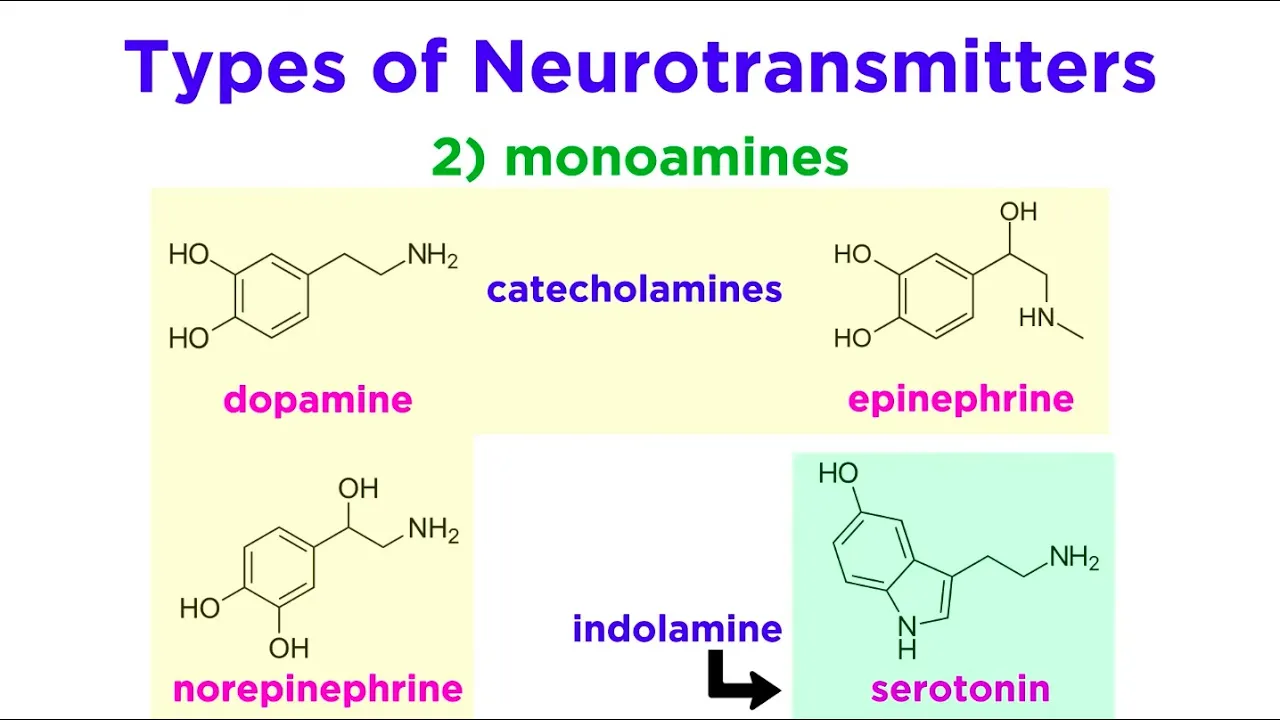
1. Neurotransmitters: Type, Structure, and Function
-
Why this video is valuable: This video serves as the perfect baseline, classifying neurotransmitters into amino acids (such as GABA and glutamate) and monoamines (such as dopamine and serotonin). It clearly outlines how their chemical structures dictate how they cross synapses and bind to postsynaptic receptors, establishing the structural framework required to understand drug binding.
-
Knowledge Checkpoint:
- Identify the chemical differences between amino acid neurotransmitters and monoamines.
- Explain how synaptic vesicles release neurotransmitters into the synaptic cleft.
- Define the primary role of GABA as the principal inhibitory neurotransmitter in the central nervous system.
2. Synaptic Transmission: Chemical Synapse, Neurotransmitters & Action

-
Why this video is valuable: A highly visual, animation-focused breakdown of how action potentials stimulate chemical transmission across a synaptic cleft. This provides the conceptual anchor for understanding how competitive antagonists (such as typical antipsychotics) block neurotransmitters.
-
Knowledge Checkpoint:
- Describe the sequence of events starting from action potential arrival to neurotransmitter binding.
- Distinguish between the presynaptic membrane and the postsynaptic membrane during chemical signaling.
3. Psychiatrist Debunks Dopamine Fasting | Dr. K Explains

-
Why this video is valuable: Dr. Alok Kanojia (Dr. K) provides an exceptionally clear clinical explanation of the major dopaminergic pathways. He contrasts the mesolimbic pathway (implicated in reward, drive, and positive psychotic symptoms) with the mesocortical pathway (implicated in executive function and negative symptoms). This distinction is vital for understanding why blocking dopamine can relieve agitation while sometimes exacerbating flat affect or causing cognitive slowing.
-
Knowledge Checkpoint:
- Locate the origins and terminal projection zones of the mesolimbic and mesocortical pathways.
- Explain how excessive dopamine in the mesolimbic pathway correlates with acute agitation and psychosis.
Module 2: Understanding Psychiatric Emergencies
Module Overview
Agitation in the emergency department is a symptom, not a diagnosis. A critical clinical error is assuming all agitated or psychotic patients are experiencing a primary psychiatric flare. This module addresses a key clinical gap: differentiating organic delirium (which requires underlying medical treatment and is worsened by heavy sedation) from primary psychiatric psychosis or acute mania. You will learn to execute rapid psychiatric triages, identify fluctuating levels of consciousness, and safely transition from verbal de-escalation to chemical restraint when safety is threatened.
Recommended Videos
1. An Approach to Altered Mental Status (e.g. delirium)

-
Why this video is valuable: This comprehensive masterclass teaches clinicians to avoid using "altered mental status" as a catch-all term. It introduces a structured diagnostic framework based on the level of consciousness (alertness vs. arousal) and the content of consciousness (cognitive processing). This is the key video for recognizing when an agitated patient is suffering from an organic medical emergency (such as sepsis, hypoglycemia, or toxidrome) rather than a primary psychiatric disease.
-
Knowledge Checkpoint:
- Define altered mental status using the distinct axes of "level" and "content" of consciousness.
- Identify clinical signs that indicate an organic, systemic medical cause of delirium.
- Describe how hyperactive delirium mimics psychiatric psychosis and the parameters used to tell them apart.
2. FMGE "Psychiatry" Flashback 2023 | Past 5 Years Must Know PYQs by Dr. Ankit Goel

-
Why this video is valuable: Dr. Ankit Goel directly targets the core differential diagnosis between delirium and acute psychosis. He explains that delirium is marked by an acute onset of fluctuating, impaired consciousness and clouding of sensorium, whereas acute psychosis or delusional disorders present with intact consciousness and a clear sensorium despite severe hallucinations or delusions.
-
Knowledge Checkpoint:
- Differentiate delirium from acute psychosis based on the patient's state of consciousness.
- Describe the onset characteristics (acute fluctuating vs. insidious/stable) for both conditions.
3. Understanding Agitation: De-escalation
-
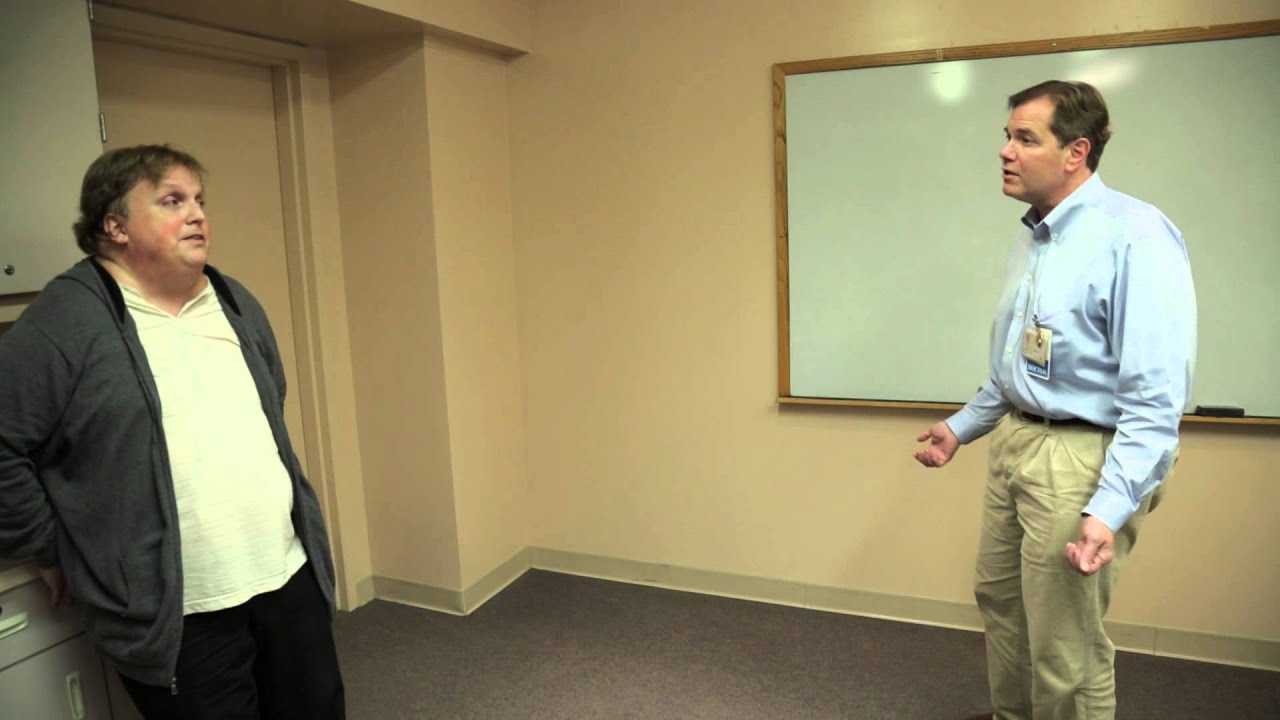
Why this video is valuable: Pharmacological intervention should always be preceded or accompanied by verbal de-escalation when safe. This video outlines the spectrum of agitation (from mild irritability to violent outburst) and presents non-pharmacological, trauma-informed techniques to defuse tension, thereby minimizing the need for physical and chemical restraints.
-
Knowledge Checkpoint:
- Identify early non-verbal and verbal signs of a patient moving up the agitation spectrum.
- Implement at least three verbal de-escalation strategies to establish clinical boundaries safely.
4. Approach to Delirium in Emergency Department.

-
Why this video is valuable: This lecture focuses heavily on the clinical presentation of delirium within the emergency department. It categorizes delirium into three sub-types (hyperactive, hypoactive, and mixed) and explains how to systematically screen for underlying precipitating factors in vulnerable patients.
-
Knowledge Checkpoint:
- List the three clinical sub-types of delirium and identify which is most frequently misdiagnosed as psychiatric psychosis.
- Detail the immediate medical assessments needed in the ED when a patient presents with fluctuating attention.
Module 3: Pharmacology of Key Psychotropic Medications
Module Overview
Rapid sedation requires a granular understanding of the medications used. This module focuses on the mechanisms of action, pharmacokinetics, and formulation differences (IM vs. IV vs. PO) of atypical antipsychotics, typical antipsychotics (primarily haloperidol), and benzodiazepines (such as lorazepam, midazolam, and diazepam). You will learn how these drugs alter receptor dynamics to reduce agitation and how the route of administration dictates the speed of clinical onset.
Recommended Videos
1. 5 differences between typical and atypical antipsychotics
-
Why this video is valuable: This video provides an excellent comparative analysis of first-generation (typical) and second-generation (atypical) antipsychotics. It explains receptor binding profiles: typicals are high-potency D2 antagonists, whereas atypicals act as transient D2 blockers with added 5-HT2A serotonin receptor antagonism. This pharmacokinetic difference explains why typical antipsychotics pose a much higher risk for extrapyramidal symptoms (EPS).
-
Knowledge Checkpoint:
- Contrast the D2 receptor binding properties of typical vs. atypical antipsychotics.
- Explain how 5-HT2A receptor antagonism in atypical antipsychotics reduces the incidence of extrapyramidal side effects.
- Identify which class is associated with a higher risk of immediate acute motor side effects.
2. Benzodiazepines | Anxiolytics | Pharmacology Help For Nursing Students

-
Why this video is valuable: A concise overview of benzodiazepines, detailing how they act as positive allosteric modulators at the GABA-A receptor. By increasing the frequency of chloride channel openings, they hyperpolarize neurons and suppress excitability. This video is crucial for understanding how benzodiazepines provide immediate, non-specific sedation in highly agitated states.
-
Knowledge Checkpoint:
- Describe the cellular mechanism of action of benzodiazepines on GABA-A receptors and chloride channels.
- Identify the standard therapeutic indications for benzodiazepines in acute sedation.
- List key monitoring parameters (e.g., respiratory rate) following administration.
3. ER doctor and her husband react to the Pitt episode #4

-
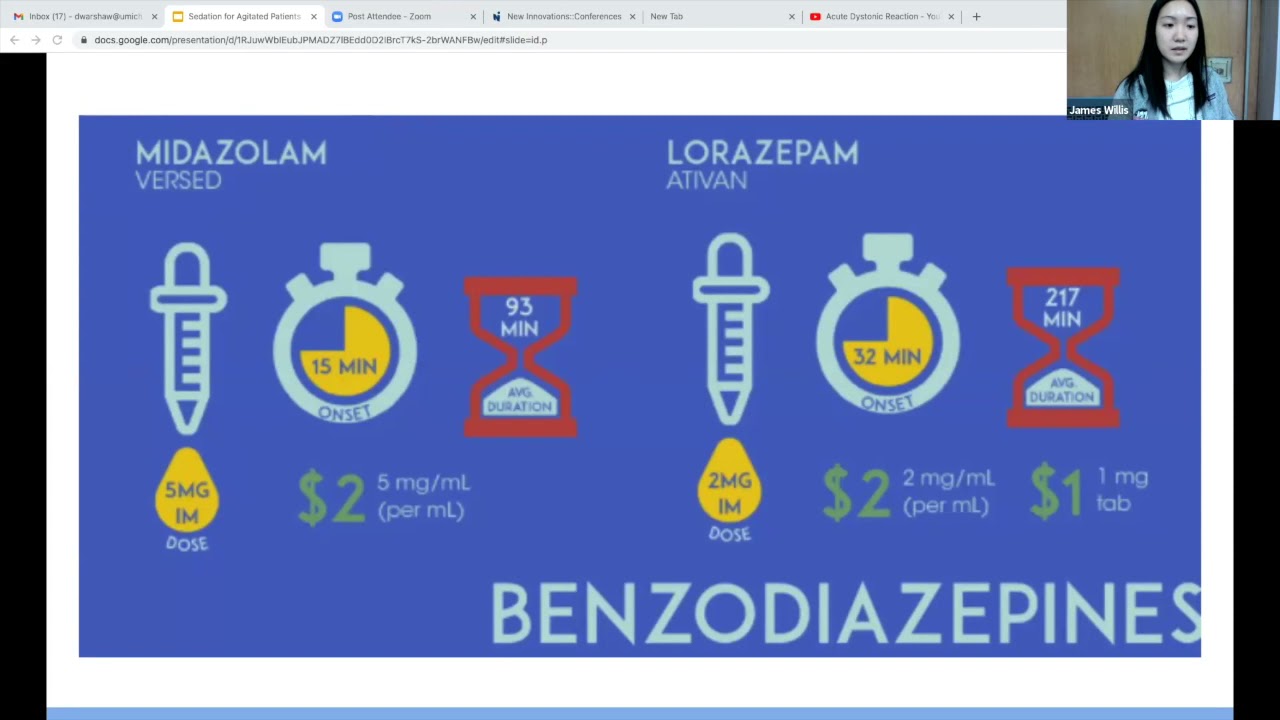
Why this video is valuable: This short segment addresses a major clinical gap: the practical selection of medication routes. An ER physician details the onset differences and clinical considerations of Intramuscular (IM) vs. Intravenous (IV) medications. It highlights why IM routes (like IM midazolam/Versed) are heavily favored in highly combative, uncooperative patients where establishing an IV is impossible or unsafe.
-
Knowledge Checkpoint:
- Compare the onset time of IM midazolam/lorazepam to IV formulations in an emergency.
- Explain the safety and practical limitations of attempting IV access in a violently agitated patient.
Module 4: Clinical Protocols for Rapid Tranquilization
Module Overview
Note: This module has been renamed to avoid military aircraft search confusion and focus exclusively on emergency medicine guidelines.
When verbal de-escalation fails and a patient poses an immediate danger to themselves or others, clinical protocols for rapid tranquilization must be executed. This module details chemical restraint cocktails, specifically demystifying the famous emergency medicine "B-52 protocol" (Benadryl 50mg, Haloperidol 5mg, Ativan 2mg). You will learn how these drugs work synergistically to provide safe, rapid sedation while mitigating side effects, and how to structure clinical protocols for agitated patients.
Recommended Videos
1. ER Nurses React to Horrific Medication Errors | The ER Edit Ep. 2

-
Why this video is valuable: This segment provides a rare, direct explanation of the "B-52" cocktail used as a chemical restraint in emergency medicine. It outlines the specific active ingredients: Benadryl (Diphenhydramine - 50mg), Haloperidol (Haldol - 5mg), and Ativan (Lorazepam - 2mg), explaining how the combination rapidly calms a patient during severe psychiatric crises.
-
Knowledge Checkpoint:
- State the three medications that make up the "B-52" cocktail and their standard dosages.
- Explain the clinical purpose of adding Diphenhydramine (Benadryl) to Haloperidol (hint: it prevents dystonia; see Module 5).
2. Dr. Mai - "Sedation of the Agitated Patient"
-
Why this video is valuable: Dr. Mai presents an exceptional, highly structured emergency department protocol. He covers the entire workflow: from attempting verbal de-escalation twice, to offering oral or parenteral medications, to managing severe agitation with standardized chemical cocktails. It provides a real-world blueprint for clinical decision-making.
-
Knowledge Checkpoint:
- Detail the escalating steps of the sedation protocol from verbal de-escalation to involuntary parenteral medication.
- Explain the clinical criteria for choosing an atypical antipsychotic over a typical/benzodiazepine combination for moderate agitation.
3. (Emergency Medicine) - Management of Violent Psychiatric Patient. Dr (Prof) Vivek Kumar

-
Why this video is valuable: This video focuses on the acute management of extremely violent psychiatric patients. It walks through rapid tranquilization goals: achieving a state where the patient is safe and cooperative without causing over-sedation or respiratory depression. It highlights essential monitoring protocols during chemical restraints.
-
Knowledge Checkpoint:
- Identify the primary safety goal of rapid tranquilization.
- List the vital signs and physiological parameters that must be monitored continuously after administering emergency chemical restraints.
Module 5: Managing Adverse Reactions & Safety
Module Overview
The administration of rapid chemical restraints comes with a high risk of life-threatening side effects. This module provides critical-care training on the recognition, prevention, and emergency management of antipsychotic adverse effects. You will study acute extrapyramidal symptoms (specifically acute dystonic reactions), analyze ECGs for QTc prolongation to prevent Torsades de Pointes, and master the diagnosis and emergent treatment of Neuroleptic Malignant Syndrome (NMS).
Recommended Videos
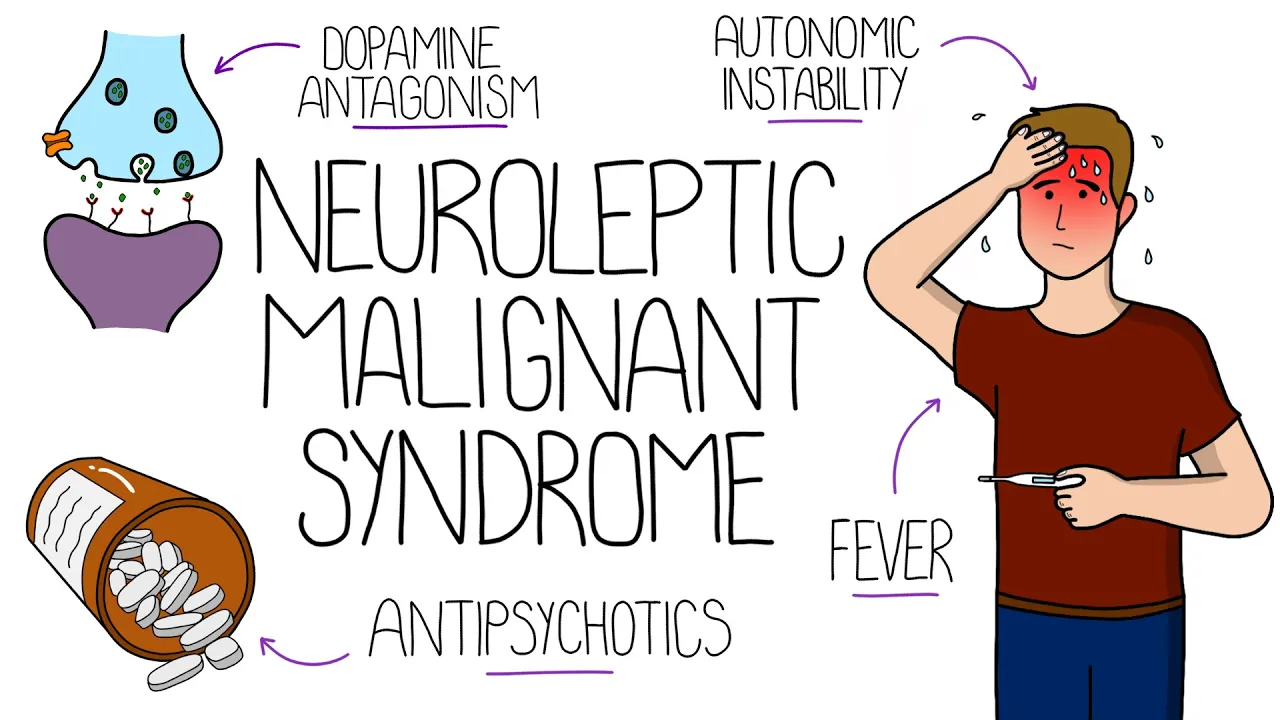
1. Neuroleptic Malignant Syndrome (NMS) Explained
-
Why this video is valuable: This is the gold standard lecture on Neuroleptic Malignant Syndrome (NMS). It provides an in-depth review of NMS pathophysiology (severe dopamine blockade in the hypothalamus and basal ganglia) and details the FEVER mnemonic: Fever, Encephalopathy, Vitals unstable, Elevated enzymes (CK), and Rigidity ("lead-pipe"). Crucially, it walks through diagnostic markers and emergent medical treatment (such as discontinuing the offending agent, supportive cooling, and dantrolene/bromocriptine).
-
Knowledge Checkpoint:
- Explain the pathophysiology of NMS and why it is triggered by dopamine antagonists.
- Memorize and describe each component of the FEVER mnemonic for NMS.
- Detail the immediate clinical steps and pharmacotherapy (e.g., Dantrolene, Bromocriptine) required to treat NMS.
2. Antipsychotics in QTc Prolongation: How to Prescribe?
-
Why this video is valuable: This video targets a crucial clinical gap: the risk of cardiac arrhythmias associated with rapid-acting antipsychotics. It details which drugs carry the highest risk of QTc prolongation (such as intravenous Haloperidol and low-potency typicals), explains the mechanism of hERG potassium channel blockade, and outlines ECG monitoring protocols to prevent Torsades de Pointes.
-
Knowledge Checkpoint:
- Explain how antipsychotics cause QTc prolongation at the cellular level (hERG channel blockade).
- Identify which antipsychotics and routes of administration carry the highest risk for QTc prolongation.
- State the threshold QTc interval lengths (in milliseconds) at which typical antipsychotics should be held or avoided.
3. Acute Dystonic Reaction

-
Why this video is valuable: A highly dramatic, real-world clinical demonstration of an acute dystonic reaction (oculogyric crisis and torticollis) in a patient following antipsychotic administration. It shows the immediate, highly successful treatment using an anticholinergic/antihistamine agent (such as Diphenhydramine/Benadryl), demonstrating why these agents are co-formulated in protocols like the B-52.
-
Knowledge Checkpoint:
- Identify the clinical presentation of an acute dystonic reaction, including torticollis and oculogyric crisis.
- Explain the neurochemical mechanism behind acute dystonia (dopamine blockade leading to relative acetylcholine excess).
- Describe the emergent pharmacological treatment for acute dystonia and its typical onset time.
Course Map
Key People & Channels Index
- Professor Dave (@ProfessorDaveExplains): An expert educator specializing in simplifying complex biochemistry, organic chemistry, and pharmacology principles for health science students.
- Dr. Strong (@StrongMed): A prominent clinician and medical educator known for creating systematic diagnostic frameworks for complex hospital and emergency presentations.
- Dr. Ankit Goel (@PrepLaddermedpg): A renowned psychiatry specialist preparing postgraduates for advanced clinical board examinations through deep-dive differential diagnoses.
- Dr. Larry Mellick (@lmellick): Professor of Emergency Medicine who documents real-world emergency medicine procedures and clinical presentations to improve clinical education worldwide.
Final Self-Assessment
Complete this comprehensive self-assessment to verify your mastery of the pharmacological management of psychiatric emergencies:
- Neurochemistry: Can you explain how dopamine antagonist binding in the mesolimbic vs. nigrostriatal pathway causes therapeutic antipsychotic effects vs. extrapyramidal side effects?
- Differential Diagnosis: Can you list three distinct differences in presentation between hyperactive delirium (organic) and acute psychosis (psychiatric)?
- Delirium Screening: Do you know the clinical steps required to evaluate fluctuating attention and level of consciousness in an agitated geriatric patient?
- Pharmacokinetics: Can you compare the onset and duration of action of oral (PO), intramuscular (IM), and intravenous (IV) formulations of lorazepam and haloperidol?
- GABA Modulation: Can you draw or describe the molecular mechanism of benzodiazepines at the GABA-A receptor and how they cause rapid, non-specific CNS depression?
- The B-52 Protocol: Do you know the exact drugs, dosages, and clinical rationale of the "B-52" cocktail?
- Dystonia Prevention: Can you explain why diphenhydramine (Benadryl) or benztropine is administered alongside haloperidol to prevent acute dystonic reactions?
- NMS Emergency: Can you immediately identify NMS using the FEVER mnemonic and outline the clinical steps to take, including pharmacological antidotes?
- ECG & QTc Monitoring: Can you identify a prolonged QTc interval on an ECG and state the maximum safe QTc duration before administering intravenous haloperidol?
- De-escalation Integration: Can you outline an emergency department protocol that seamlessly integrates verbal de-escalation, voluntary medication, and rapid tranquilization?