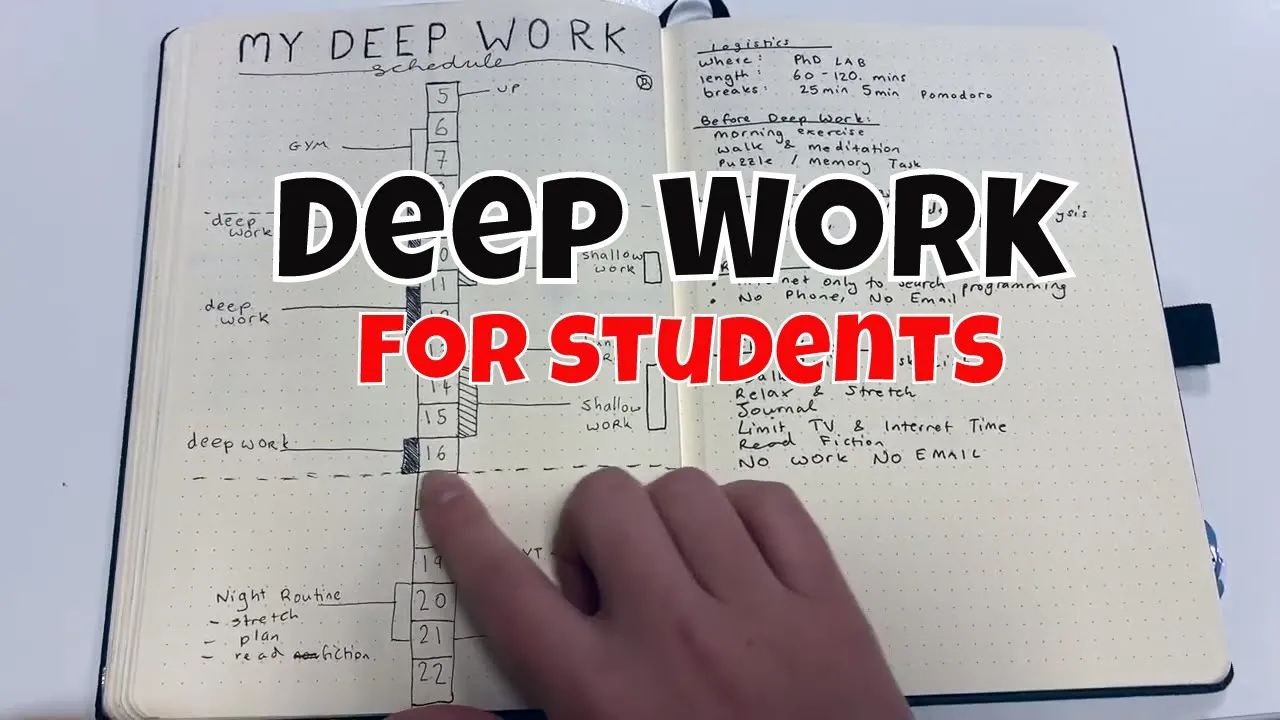

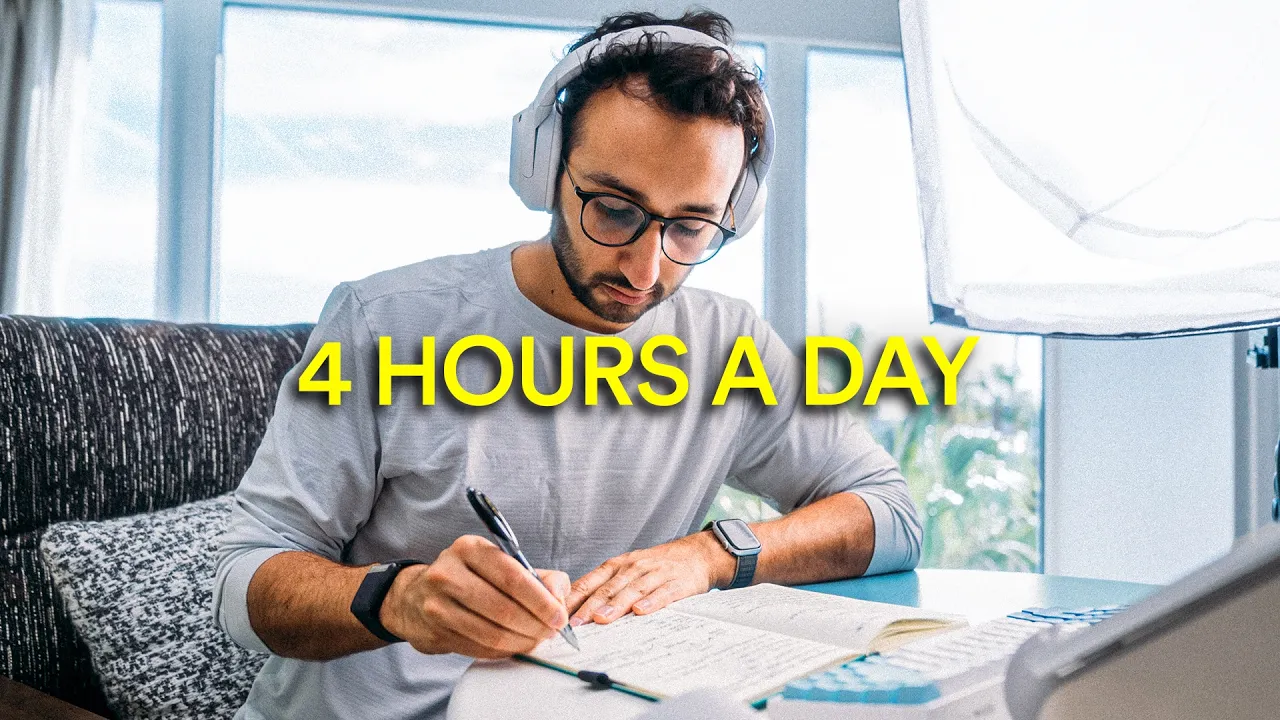







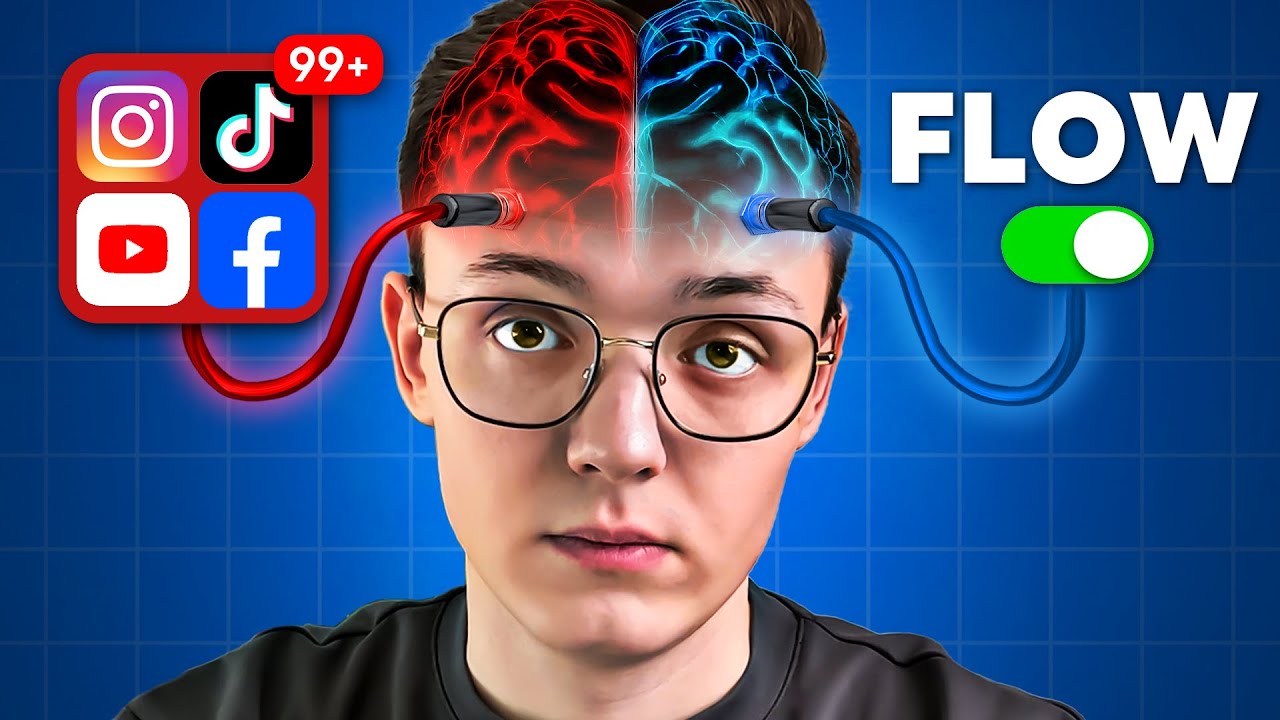




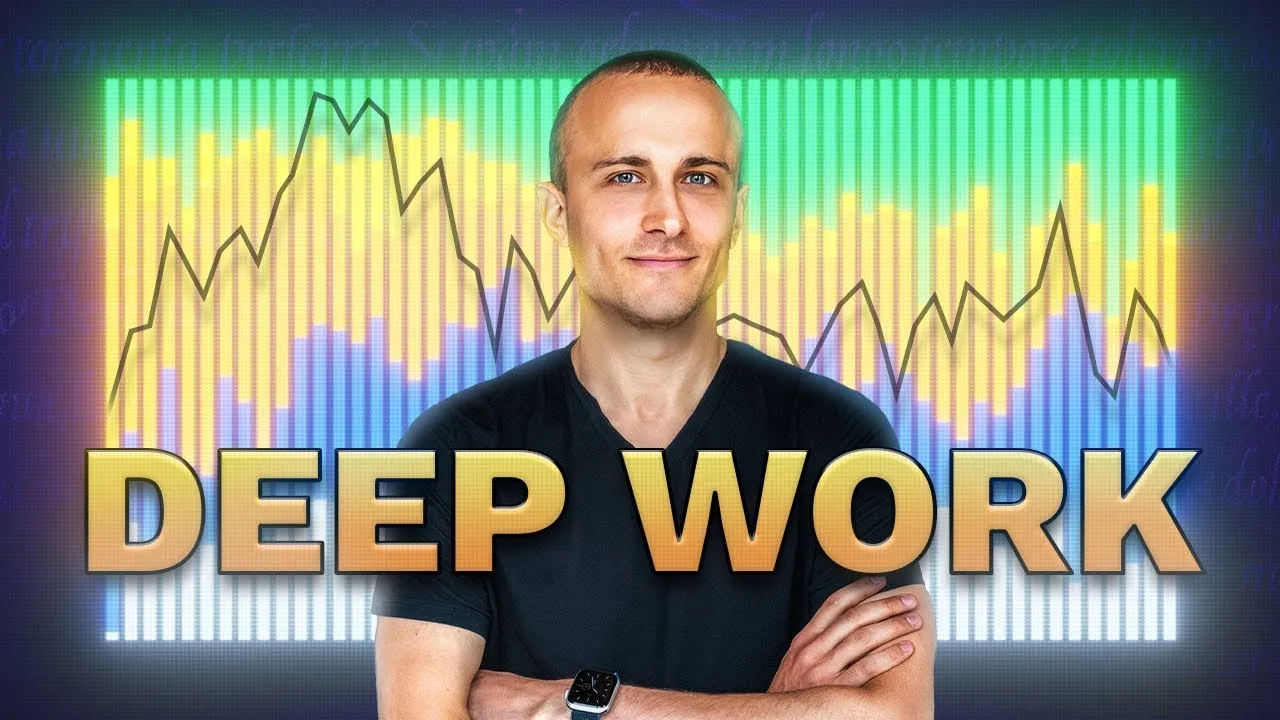



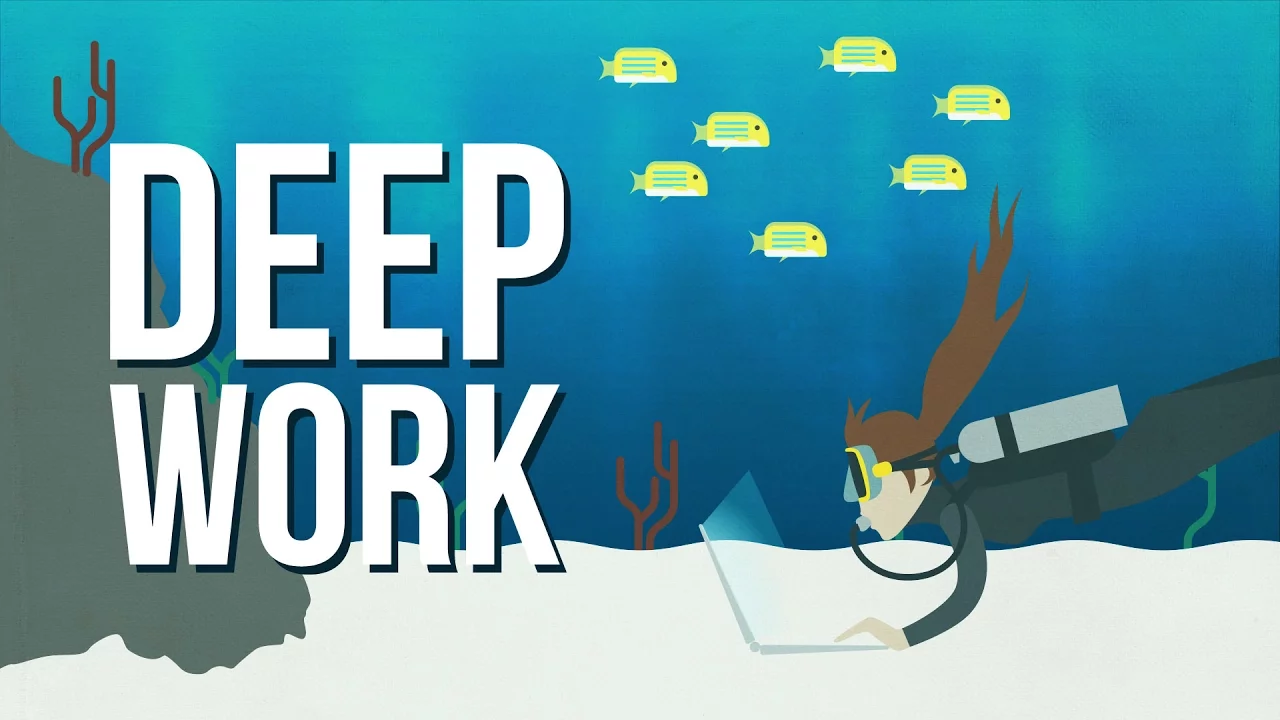






Deep work is a focused state where individuals can accomplish more in a few hours than others do in an entire week, and it can be achieved through three key practices: (1) a consistent setup ritual before work that prepares the mind and body, (2) an optimized environment that eliminates distractions such as phone notifications and visual cues, and (3) a shutdown ritual that signals the end of work and helps transition to rest, enabling sustained productivity with less total work time.
How to Achieve Deep Work: A Practical Guide to Peak Productivity
Added:The distinction between deep work (cognitively demanding tasks) and shallow work (non-cognitive, logistical tasks) as defined in modern productivity theory.
The concept of 'attention residue' and how frequent context-switching or interruptions degrade cognitive performance.
Basic principles of cognitive load theory, particularly how working memory limits affect information processing and focus.
Familiarity with fundamental time-management strategies such as time-blocking, task batching, and the Pomodoro technique.
The neuroscience of 'flow state' (Csikszentmihalyi's theory) and advanced physiological triggers used to sustain high-level focus.
Designing and implementing institutional or team-wide deep work cultures, including asynchronous communication protocols and meeting reduction strategies.
Methods for quantifying intellectual productivity, such as tracking deep work hours and measuring high-value output versus shallow metrics.
Advanced habit formation and behavior design theories, such as habit stacking and environmental choice architecture, to automate the entry into deep work.
256.5K views16.3Klikes16:01Original Release: 2021-05-23
jeffrey does shallow work at best he says he works all day but he constantly destructs himself with his phone and youtube at the end of the day he hasn't accomplished anything of value but he feels fatigued and overworked adonis adonis does deep work he enters a deep workflow that no one could pull him out of he remains focused for a couple of hours achieving more than jeffrey does in an entire week afterwards he rests his brain by meditating journaling and working out in nature let's go boys this is gonna be the best front lever i've ever hit in my life [Music] so [Music] bye [Music] [Music] goddamn boys i think i'm looking inserted bro [Music] you can enter a deep workflow by having the exact same setup and shutdown ritual every single day as well as making sure that your environment is working for you i made a 30 minute class that you can watch for free on how to enter this deep workflow in this video we're going to cover it briefly if you'd like to watch the full class go to the description right now the top link it's a skillshare class you can watch it with the free trial without getting charged and then if you want to be sneaky 12 13 days into the free trial you can go in and just cancel the free trial you won't get charged and also on the same free trial you can watch literally all of my skillshare classes and i believe there's like five classes which have been made for self-improvement productivity dopamine detox social skills scroll down and click on the top link in the description right now to watch the full class on screen right now is the setup ritual it's my morning ritual that i do before i enter my deep workflow i wake up i immediately do some gratitude journaling bolt is a breath oxygen test it's not really relevant for this i have a cold shower i meditate i have some protein to start muscle protein synthesis and then i start my deep workflow it's the same schedule every single time and by now it just feels normal to me it feels completely normal to wake up to go through this routine and then to end up here in front of my computer to start my deep work tasks now you can replicate that setup ritual to fit into your life preferably it'll be first thing in the morning attached to your morning routine but it can even be later on if it needs to be the important part now is to set up your environment first and most importantly is going to be your phone environment you must disable your notifications your phone must not come on or make any noise whatsoever there's different ways to do this some people just grab their phone and throw it into a different room others can just turn their phone off i keep my phone on the exact same settings all the time so i have it on silent i also have it on do not disturb i also went onto the notification setting on my phone and disabled them to the point that they do still pop up but instead of showing me who's messaged me and what the message is you know what they've messaged me what details they wrote down at least he just says what's up gmail youtube so i don't get distracted by it next you can also change your phone settings to make sure that it doesn't light up on screen that's very important you also don't want to see your notifications on the home page we want to make it that if you do need to grab your phone in the middle of your deep workflow because sometimes you do have to we want to make it that there is no notification on screen that pulls you out of this flow state and so make sure nothing pops up on your screen make sure that your screen doesn't light up and take you out of this flow state and a very simple and easy tip that i've had is simply put your phone out of sight like make just make sure you can't see it with your your visual field right now make sure you can't see it this is like my secret weapon which has been one of the most effective things i'm increasing my productivity simply putting my phone on charging and then just sliding it underneath my bed covers that's that's enough for me to even forget that my phone exists for the three hours that i do deep work in the morning also a part of the environment is the data collection which you can start right now if you open up a new document on your computer just write deep work and start to track down the data that we can start to manipulate the variables that you could change to see how it affects your deep workflow so for example i wake up i do gratitude i meditate the reason why i do these behaviors in the same step is because i've already tracked data to see if doing them would increase my productivity during my deeper work hours and it does but you will have to find it for yourself because for example i do my work fasted and i find that i do it so so much better faster but other people i've spoke to tried it faster than they were far more hungry and far more distracted than if they ate their first meal so start your data collection documents and start to just change a few of the variables to see how it affects your work hours during the deep work tasks and finally part of the environments is to have a timer i literally have one on screen right now so i've been recording videos for 53 minutes this timer is quite vital we'd like you to work to a timer because it induces parkinson's law when you set on a timer you give yourself a very specific deadline and you just automatically start being more productive because you know i've got something right now that says you've got 36 minutes of work left you've got 36 minutes to record two more videos so i'm not going to mess around after recording this video i'm not just going to suddenly get up and go talk to my family or to go check my phone notifications because i've got 36 minutes to record the next two videos so i'm gonna do that and finally the shutdown ritual has just shown up on screen right now it's very important that you have a consistent ritual to end your work day so this is the process that i go through at the end of my work day now i end my work day on different hours because that's what my schedule is like but in general we'd like you to end working at pretty much the same time every single day and then to go through the same ritual to to fully end the work day so the ritual for me is to review some of the tasks i've got send the last few messages and then to just double check my calendar for the next day and then also to like just say like an affirmation say like a sentence which just acknowledges that okay i'm done with the workday i'm not gonna look at messages i'm not gonna look at emails i'm like now just a human i'm not a coach i'm not a youtuber i'm just hamza although this seems simple this has been far more beneficial than it would appear at first glance you'll find that in the modern day you never truly stop working you stop working but then you're still in a work mode because you still take emails you're still over thinking about it because none of us are mindful these days by getting into the shutdown ritual you start to get away from that and it feels like you recover better you rest more your brain feels like it just performs better and so you end the day you don't feel like you're in work mode anymore you don't feel overworked you go to sleep you wake up nice and refreshed for the next blocks of deep work so what's your life especially your work life going to be like if you just follow these three things the setup ritual the environment and the shutdown ritual your production what you produce is going to increase significantly but you're actually going to spend less time working this is literally what we've always wanted is more production more success but with less time needed and this is what deep work does now students struggle and really just everyone struggles shoot and struggle businessmen struggle people in korea struggle that's because they don't even get into deep work we are in like a disease of shallow work right now where people think it's normal to check their phone in between their work hours like the slightest difficulty the slightest thing that they can't immediately do just straight to the phone because you know you're only checking your message your mouth breathing as well but you're only checking your message for like three seconds sending a quick text while smiling breathing you're only sending a quick message so it's not that detrimental is it it's worse than being stoned like you literally may as well get high as [ __ ] then check your phone through your work hours if you're on like a personal level with me you'll know that i'm not exactly very active on my phone and even i would say that i am too active on it and i'm too active because it's still my part of my business to check up on people but i'm still more active than i would like to be if you find that you're one of those students or one of those guys in the career or if you're the guy trying to be the entrepreneur and it does feel like you're somewhat overworking like you don't exactly feel rested you feel overworked but you also feel like you're not really making as big progress as you should be that it feels like your work hours are going and you're just not really achieving so much deep work will change that for you it will mean that you'll finish work on time it'll mean that you will finish your studies by 6 pm and you'll actually be able to rest and unwind instead of being one of those dumbass students who continue studying until like 2 a.m [ __ ] up their health this ritual will become a very consistent schedule of work which i found reduces that overthinking you get which at least i get which is it's like a sense of unknowing where you're at with your work your production and you also feel more confident and capable because you get more time to rest so if you follow these three things the setup ritual the environment and the shutdown ritual you'll get into a very very nice consistent flow of work consistent schedule of work and when you and when you are working you are going to find yourself slipping into that deep workflow far far more often than you usually do which is awesome because when you're in that deep workflow an hour passes by and it literally feels like it was 20 minutes please reconsider if you're one of those people who think that working all day 14 hour study days is the better way just know that you are not only messing up your health but you're actually not accomplishing anywhere near as much as you think apart from the accomplishments of social validation and social influence and ego is because you like telling people oh i study for 12 12 hours a day but you don't you study for about three or four it's just that you keep checking your phone and you keep having to reread the same paragraph again and again so i'm going to tell you briefly about my experience going from a complete dumbass who just wasn't productive at all the standard students started my work literally a couple hours before it was due in even submitting assignments that were nowhere near the word count as well to being on the dopamine detox somewhat having a consistent schedule but not even knowing about deep works and finally knowing about deep work and actually actively getting into the deep work schedule i only work about three hours a day now how awesome is that like i only do like tasks like this like recording videos scripting videos and these type of things related to youtube for about three hours max then i take about an hour hour and a half of coaching calls i'd say all in all my whole day of work is less than five hours and my production is insane like i'm not even going to sugarcoat it maybe this is my ego speaking i'm future hamsa is going to watch this video back like it wasn't that good relax younger hamza but i would like to think of my productions skyrocketed recently the video editor sam he can't even keep up this is the fourth video i'm recording in a row right now like i've recorded three videos before this this is the fourth video and i'm i'm going to record one more video think of that right now a youtuber recording five videos in one sitting usually you'll hear of someone doing like two maybe three like i record five and i blast them up to like the little document that me and sam have he sees them all coming he's still trying to edit a video from like three weeks ago we're just waiting on him poor guy when i was writing my story i was as it's a book that i'm writing like a novel i was writing on average 3 000 words in 90 minutes 3000 words in 90 minutes i wrote a 70 page about 70 page novella 27 000 words in less than two weeks and i was only working 90 minutes a day and i also took a couple days off and so i want to drill this into right now and i'm gonna be biased because i have a course that i'm like trying to share to you and of course you know if the youtubers made some if the youtubers gonna be making money from it they're gonna be like by the way guys even though it's sponsored i was using this this thing already but deep work is the lifestyle that i think you should be getting into for the last year or so i've dove deep into productivity trying to find you know the best system of output to create this life for myself and deep work by far in terms of the work hours has improved it the most because in general it's the idea of working as little as possible little hours but very very focused determined disciplined hours of like three to four hours max and then spending essentially the rest of your time to recover from that to set yourself up for a better deep work tomorrow this is the business lifestyle that i truly truly am grateful for i have so far sent the the class that i've made the skillshare class i've so far sent that to now eight people and all a people you know they're gonna be biased because i've sent it to them so of course they're gonna say like wow hamza that's really good but all eight people not have just told me they've all told me but i'm not just i'm not gonna count that but they've shown a significant increase in their productivity so if you'd like to see the full 30 minute class of entering this deep workflow and you can watch it for free as well scroll to the description right now click on that skillshare link and you do have to put in your car details and take the free trials i know it's a bit of a hassle but along with that you get to watch all my courses get all that knowledge and also watch like literally every other course on skillshare as well and then you literally don't have to get charged if you don't want to keep the skillshare membership and you could even consider keeping the membership if you want because it's literally like pennies it's a couple of pounds per month scroll down right now click on that link and you can just see the page and you can see the little intro i've made for the class if you'd like to get my free one-to-one advice on any kind of problem you're experiencing especially if it's related to self-improvements you can scroll down right now and go to the second link in the description to book a little chat with me it's not a sales call or anything it's literally just like i like having friends so you if you just want to be my friend and you want to speak to me about your problems i'm not going to try and sell you anything if you want to do that if you just want my advice with something now if you do want to pay me and you want me to be your self-improvement coach if you want me to hold you accountable every single day and give you your own individual plan of self-improvement you can go to the second link or the third link now in the description for self-improvement coaching all of the details are right there if you just scroll down right now click on the link that you want and finally if you want to see more videos from an unconventional small youtuber i suggest you scroll down right now click on the subscribe and the post notification buttons and you'll get messages for my next videos when they get uploaded do the hard work especially when you don't feel like it
Up Next

3:46
Landlord-Tenant Dispute Over Unpaid Rent and Property Damage
@JudgeJudy
228.5K views•2024-12-17

26:22
Walking in the City: Urban Rituals and the Flâneur in Contemporary India
@PSBTIndia
1.9K views•2016-08-02
9:49
FastAPI vs Flask vs Django: Choosing the Right Python Web Framework
@TechWithTim
302.5K views•2024-05-26

1:42
Game of Thrones Opening Credits: A Cinematic Analysis
@gameofthrones
46.3M views•2011-04-18
Related Study Plans & Knowledge Roadmaps
Structured learning paths in General & Interdisciplinary Studies
general-studies
Artificial Light: History, Tech & Human Impact
01The Pre-Electric Era: Fire, Oil, and Gas Lighting
02The Incandescent Revolution and Grid Electrification
03Gas Discharge and Fluorescent Illumination
+ 3 more learning modules
14h6 modules
Explore Roadmap
general-studies
Elevator Engineering: History, Physics & Cities
01From Hoists to Safety Brakes: The Dawn of Vertical Lift
02Hydraulic vs. Traction: The Engineering Physics of Elevators
03Modern Speed, Safety, and Algorithms
+ 2 more learning modules
12h5 modules
Explore Roadmap
general-studies
Rubber: Material Science, History & Geopolitics
01Origins of Natural Rubber & Mesoamerican History
02The Chemistry of Natural Rubber & Vulcanization
03The Geopolitics of the Rubber Boom & Colonization
+ 2 more learning modules
12h5 modules
Explore Roadmap
general-studies
Containerization: Evolution, Logistics & Trade
01Ancient Trade & Bulk Cargo: Amphorae to Barrels
02The Industrial Revolution & Cardboard Packaging
03The Containerization Revolution: Malcom McLean
+ 2 more learning modules
12h5 modules
Explore Roadmap