















Public relations is defined as the management of communication between an organization and its public, involving the research, programming, implementation, and evaluation (RPIE) process to influence values, opinions, beliefs, and behaviors. Unlike advertising or marketing, PR focuses on building authentic relationships and managing organizational perception across various publics including employees, consumers, media, and communities. The profession is people-focused, ethically grounded in truth and honesty, and offers diverse career paths across sectors such as corporate, nonprofit, government, and agency work.
What is Public Relations? An Introduction to PR Basics
Added:Basic understanding of the communication process, including senders, receivers, messages, and feedback loops.
A foundational awareness of the media landscape, including the differences between news outlets, social media, and paid broadcasting.
General knowledge of how organizations (corporations, non-profits, and government agencies) function and communicate with external audiences.
An introductory grasp of ethics, particularly how truthfulness and transparency impact public trust.
Advanced techniques in crisis communication and reputation management during organizational emergencies.
Strategic PR campaign planning using industry frameworks like RACE (Research, Action, Communication, Evaluation).
The practical skills of media relations, such as writing effective press releases, media pitching, and building relationships with journalists.
The integration of digital PR, social media management, and influencer relations in modern communications.
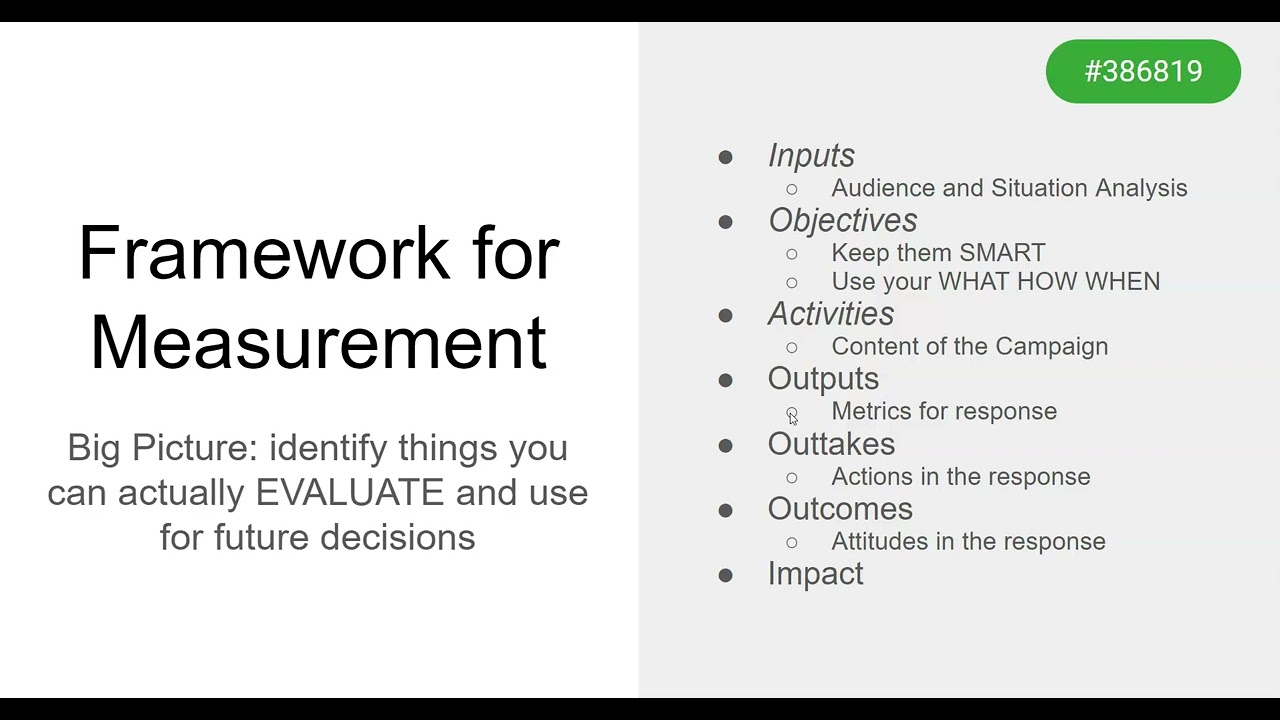
Methods for measuring and evaluating PR success, transitioning from output metrics to outcome-based business impact.
240.3K views3.8Klikes48:16Original Release: 2013-07-11
this is obviously the introduction to public relations but before we get into that I want to give you a little bit of background on myself I came here this is my second year teaching here at Biola and before that I was in the pr industry I was in the agency World kind of the lingo for PR which meant I worked with a company that represented numerous individuals anyone know who that person is oh so sad okay really famous guy Nixon Administration prison fellowship angel tree his name is Chuck Coulson great guy get to know him he well he died but his legacy still lives on he was my client and probably my favorite account that I ever represented and that tells you actually a lot about me I use this picture in my intro classes because you will find in the world of PR people are complex communication is complex and it's not just one thing that lets you understand how someone thinks and then all of a sudden you can figure it out and solve this communication quandry they're actually multiple layers to people and that seems very obvious but sometimes in the world of PR you want to make brush Strokes across people so something else you can tell about this picture is I'm with another person happens to be my husband his name is Kong Kim so if you came in expecting to find a Korean that's why my last name is Kim I'm married a Korean and he and I both worked in the agency world now he works at Compassion International specializing in the Korean market and that should tell you another layer to me I am a cross-cultural person because of an interracial marriage for the last two years except for the last couple months I was in an all Korean Church the only white person every Sunday and it was taught in Korean except for youth group so I understand that Dynamic and I love that I love being pushed out of my comfort zone usually and I think that's something you should embrace probably as a PR person because you want to get to understand other publics other points of view other ways of living life my background academically speaking I was here in the same seats as you for my undergrad I was a journalism public Rel public relations emphasis and my masters was in Christian apologetics then I went into the industry and I got my APR which is kind of like the CPA for accounting but for public relations we call it the accreditation for public relations so out of the 120,000 people in the US who say they are PR professionals there's about 5,000 who have gotten their APR so it's kind of something that I would encourage you to shoot for long term if you're going to stay in the industry it's a worthwhile thing to pursue that's a bit of my background we're going to jump into PR now so what is PR I want you to turn to the people next to you and just choose one person so you can brief tell them what you think public relations Is I like talking so do please [Music] talk [Music] [Music] [Music] I all right you guys have a lot of good ideas I know I'm interrupting some of them but I'm going to give you a glimpse of man on- the street interviews where people were asked this question what is public relations can you tell us what it is because what I want you to understand is there's a lot of misconceptions about what public relations is one of the reasons I'm passionate to be here at Biola teaching you is not only because I love students and I love getting to journey in life with you but because I love public relations and it's really misunderstood and when you understand what it does and the power plays in culture it just well I think makes you fall in love with it that's why I do it for a profession but here's some ideas that you might hear when other people try to Define public [Music] relations you know what PR stand for don't take a guess what does the initial PR stand for PR per rate okay what if I told you the pr could also stand for public relations ever heard of that public relations public what the I mean where they are they are public relations oh public relations public relations okay that is right but un like people who work in for theu right right now is that a job you ever want to do would like to work Republic relation I'm not too sure because you got have character for that but I mean like got to deal with people basically I try not to Rel well not really but communicating uh being in the real working world you would need to have public relations skills really why would that be like well they from what I've read that most of your stud today don't get enough public relations skills as far as communicating with the public they're good at what their skill is but they not good dealing people need PR help who do you think needs PR help today well I would say the the whole world whole world our help I would I would think so no matter at what level you communicate you need to be able to speak and to get across your point whether it be in medicine whether it be in education whether it be in even sociology or whatever your field is really even if you're just a BL worker you still need to be able to communicate with people so I would say it wouldn't hurt anyone to take courses in communication speaking it's rels they're trying to create an image not generally truth unnown balloon money goes into you look at advertising as a kind of PR and it's billions okay it keeps going you could keep getting other perspectives I really find that to be fascinating one because I have to try to explain what public relations is all the time and what each of those people said I usually get Snippets from different people either well you deal deal with people good that's in the name true or it's all about communicating and everyone has to communicate in life so obviously you need to be a PR professional okay we do communicate or it's all about hiding and spinning the truth and it's where the money is so if you really want to make a lot of money and you can lie really well get into public relations that's kind of some of the predominant thoughts which honestly it makes me laugh but it also makes me sad because I love the field of public relations I think it has incredible potential and I'm going to tell you more about that but first I'm going to show you the academic definition for public relations and guarantee you you will want to know this it's on almost every quiz every exam that I give is what is the definition for public relations and I do look for word for word so this is the one we use for this class public relations is the management of communication between an organization instead of and and its public now we can expand on this but this base definition helps us understand a few things one public relations deals with at least two entities you're dealing with a large scale group or Public Image so you can represent a single individual and be their public relations professional representative but you're doing it on their Public Image so you might be doing that for a president for a celebrity for even just a really famous figure so for example DBC here on campus he has public relations efforts that go out on his behalf and the public relations person is concerned with all of the public we're going to talk a little bit about misconceptions I can't tell you how often public relations is used as a synonym for advertising or for marketing sometimes it's used as like the evil step child to journalism but if you understand the definition of what we do you get to see a glimpse of the role we play in culture and business public relations is C ious to know how every public is responding to an organization that means you're going to look at employees you're going to look at consumers you're going to look at the neighborhood you live in and the people who are responding you're going to look at mainstream media you're going to look at social media if a crisis happens you're going to look at the people impacted by that crisis you are concerned with the entire public so in this way you are kind of managing the perception of an organization or a individual who represents an organizational Persona if that makes sense and that's why it's so applicable so here's a couple of the facts that let you understand why public relations is such a big deal first one that I like to start out with is US News named us one of the best professions to be in between now in 2020 and it just makes sense when you look at the second statistic that shows the growth right now we've had a lot of economic concerns right I heard a lot of people say shoot I'm graduating what job do I get it's so competitive public relations is really good because it's growing right now there's a lot of opportunity primarily because we work with all of the publics and we work with any number of entities so you can be a nonprofit you can be a for-profit you can be in this country you can be out of this country you can work at an agency you can work inhouse you can work for causes you can work for religious organizations you can work for schools all of these are organizations that need to manage their communication with the public and that's one of the reasons for our huge growth one of the the things I like about it is I tend to be a very passionate person which you guys will get to see throughout the semester I get very excited and I really want to come behind and help organizations with what they're doing that's why I loved working with Chuck Coulson he did what I believed in he helped apologetics he helped prisoners families he helped people understand how your faith and culture intersects and I got to help him spread that message I couldn't think of anything better when I recent when I started to graduate when I was getting ready to leave I was thinking of heading to the Amazon and helping a missions organization I could not think of anything better than to be in the Amazon doing PR great combination I have friends who work with the Red Cross I have friends who work with Disneyland I've had friends who work in professional sports all of it is something that kind of hits to the core of who they are they've discovered something that makes them passionate they've discovered something they care about and they care about it so much their job is to help spread the word and to manage that communication that can make me get up in the morning on those days when you're like it's Monday it's early I can't believe I'm getting out of bed but at least I'm doing something I love that's why PR is growing so much so let's talk about PR in everyday life because this is abstract organizations can represent anything publs can mean anything there's a couple there's always PR industry things happening but there's a couple I want to show you recently Subway anyone heard about this PR Fiasco oh don't worry you'll hear a lot this happened just recently a guy I believe he was in Australia took a picture of his Subway sandwich his foot long Subway sandwich next to a ruler ah yeah ringing a bell it was 11 in this is a problem for their brand Subway's brand is that they will give you a foot long sub and if their subs are 11 in this is an issue and you wouldn't think it'd be a big issue until lawsuits started coming out about people who said you have been deceptive you are telling the public a lie so the Public Relation side from Subway needed to step into this they needed to manage that communication right because you can't as an organization just ignore it you can't just stay silent that sends a different message it sends a message that you're hiding or that you've lied so how do you interact with that how do you respond to something like this how do you admit fault but carry your brand forward how do you point back to the values that your organization is founded on anyone watched this good good a couple of you this is kind of a big deal for our country and all it's the inauguration and this also is a huge public relations Endeavor now there's multiple types of PR involved with this one could be media relations those are the people who specialize working with reporters figuring out where they're going to be able to stand during this when they can ask questions which reporters are going to be admitted where the microphones are going to be what the best angles for pictures are going to be what can be used what's going to be released to the Press but you also have a whole bunch of VIPs that you can see sitting in the background there's a lot of public interaction there if you have dignitaries coming if you have diplomats who are showing up how are they going to be escorted in where are they going to sit what's their impression of the US going to be based on their experience in this situation then you have the whole public crowd if you saw outwards you would see thousands of people crammed into a very tight space what's their impression going to be what's their view of the organization of the United States going to be after they attend an inauguration and how can you influence that how can you help that along how can you make it a positive experience anyone participate in this also in January human trafficking awareness day was in January and a lot of organizations especially nonprofits there's a ton down in Orange County who are all around this cause public relations again right there how do you get someone to not only say yeah public relations okay and I can get on board I don't think there should be human trafficking how do you go from that to someone who will donate who will help support support your cause who maybe will volunteer who will go and speak to the Press on your behalf how do you get someone from yeah I think what you do is a good idea to I am a huge fan and I will support you no matter what that's what this is about how do you get an awareness day out there how do you make people passionate about that cause because it's a good cause right I think we can all agree human trafficking is bad but how many of us are active in that cause and how could they make us active that's a PR question how do you influence values opinions beliefs and behaviors what about this anyone go to an Angels game they haven't started okay there's a couple good Angels is right down the street they have a lot of PR involved this is kind of the celebrity side so one of the things I was able to do last year is go behind the scenes and see their media relations efforts that's a lot they have a lot of young guys coming into play ball can you imagine how much training you have to do with them they told stories about people who would get contracts and if they tweet out that information before it's official you can lose your contract with the major league or if someone is participating in a lifestyle that might not reflect on what they want their brand to be and that's captured and shared on Twitter what do you do as a PR person so how do you equip these guys who are there to play baseball who are very good at what they do to interact and carry a public image of All-American wholesome family how do you do that that's a PR question the biggest thing one of the latest n PR that's changed the industry absolutely is social social media this has kind of revolutionized How We Do Life how we communicate and a lot of people right now are into social media so I the adviser for our PR students and inevitably a couple times a semester I have students coming to me saying I got a social media internship that's because all organizations right now want to understand how it works how do you get on board with social media what does that mean how do you actually build an authentic relationship via something like Facebook and how do you respond when something goes wrong on Facebook for your brand hopefully you've all seen that happen brands have had something bad and how do they respond that's a fascinating thing and you should be interested you should be watching as PR students so what is it really we've talked about what it looks like the organizations you can be in some of the glamour behind it some of the ways basically that you can get involved in any sector of business but what could public relations be it's a process it's something you're going to learn that you just approach and it's very rhythmatic now now PR is interesting because you have this Rhythm and you also combine it with Incredible creativity because it is a very competitive industry but this process is one you're going to become very familiar with and you will use across the board it's called rpai some people call it rope some people call it race you may have heard it used other things for this class rpai so it represents research programming implementation evaluation almost all your PR programs can be broken into those four categories anything you're doing for a client you can come up with using this model and as you look at the different ways PR is taking place in the world around you you will be able to identify those sections so research anytime you're getting behind a client when you're getting ready to do a campaign you need to know what you're talking about you research your client you research the industry you research anything and everything there's a student run PR agency here on campus and they take on real world clients one of their clients that they worked with was the LA Zoo when they were doing their research they didn't just look at the LA Zoo they looked at who went to the LA Zoo what else did those people do how often did the media cover the LA Zoo what do people generally think about when they think the zoo what kind of other zoos are doing activities and what are those and who are they attracting and what demographics do those represent so you start doing this broad brush stroke so you understand the big picture because any time you're representing an organization it's not just one organization it's not the first time that's ever happened in humanity you can find information that will inform your idea for a campaign which leads into programming programming is kind of the fun part it's the part that a lot of people just want to jump to because it's where you put your big Ideas down and we're going to talk about how you make big ideas and then how you make them tangible so you can measure them so you can get an Roi so you can show to your company to your bosses to the SE Suite all of the value behind what you did and that's where the creativity comes in that's where all of the new ideas that you really think are going to make your brand stand out your message stand out because we live in a world where you are bombarded with messages how is yours going to be any different that's where it comes out implementation is a crazy calendar you put down anything and everything you have to do and PR people care about the details you have to understand how long is it going to take a printer to print something how long is it going to take to get approval for a quote because you can't just say someone said something do you need photo rights when do you need to reserve different areas do you need City licenses all these questions are things you care about because it can Implement your ability to run a campaign so you find out everything you need to do you assign someone to it you put the dates in and you start watching it and it's a beautiful thing when it goes well as you will learn in PR there's always experiences where there's nothing that's going well and you change Midway through at the end you do an evaluation say here's what we set out to do did we do it did we not do it and you give an explanation for why if you succeeded fantastic give ideas of how you could do something even better next time if you didn't succeed it happens to everyone in the industry it's part of being in PR give ideas of what went wrong and why so that next time they attempt it it can have a better result evaluation is not a win or lose type thing it's really informing your next step whatever that step is going to be so there's a couple distinctions that really make me love public relations that I wanted to share with you one is that it's people focused I think especially with a negative image that that we have about public relations or that some people can have it's easy to lose sight that it's about people so if you're someone who loves people who's passionate about getting to know others and is fascinated by that communication Dynamic public relations is a really strong fit for you because it's about influencing values opinions beliefs and behaviors when people equate us with advertising or marketing there are a lot of similarities but we're not necessarily concerned with whether product sells we're concerned with whether you believe in our product whether you want to buy it or not whether you think we're a good company whether you can get behind our values whether you know what our values are because we want to influence your opinion about us and sometimes that influences values and beliefs and the last set is behaviors because if you can get someone to act that's huge so in the human trafficking there's a lot of people who believe that it's a bad thing to have human trafficking there's equally a huge number of people who don't do anything about it the pr process guides you through that how do you influence it it's also ethically bled now you heard the last person in that video talking about oh PRS you know they they're really good at like spinning and hiding things that is unfortunate that we have that reputation in our industry and I would argue that we're quickly overcoming it the industry as a whole has said that is not what we're about that's a misunderstanding because we are based in ethics and everything you do in public relations comes out of your ethical understanding of the industry now it's true there are people who have messed up there are people who have done very unethical things and abused this power that comes with influencing values opinions beliefs and behaviors but that is not the industry standard our industry is based in ethics and that's something I can get behind especially coming from Biola you're going to find a lot of connections with that value in the industry because it's all about valuing the people truth honesty Integrity advocacy those are fundamental pillars to the entire industry and I love that about it I also love its role in culture business and society when you are influencing values opinions beliefs and behaviors you're going to make a lot of change now some people have a hard time because in PR you can often be behind the scenes you're usually not the one on the stage a lot of people probably don't know your name but you get to see the change that you helped bring about it takes a lot of work it's a lot of late nights a lot of early mornings you are playing the go between between different parties if you're a middle child you're kind of familiar with this but you really have a unique role and you see change because of what you do and when people come to me and I usually I ask when they say oh I want a major in PR and say okay what do you want to do what do you care about if you find something that you are so passionate about you want to see it succeed you're really good fit with PR because you're behind it trying to make that change in the business world we need people representing us we need people in an organizational sense who will be that go- between who will monitor what the public thinks about us because if you don't monitor your brand your business is not going to succeed public relations has made and broken different businesses and obviously Society the businesses that function in society the values that culture holds all help form what kind of world we live in I am thrilled to be in a profession that actually influences that in a very very tangible way and I think throughout the semester I'm hoping to show you all the different facets that public relations touches last but not least one of the things I love especially because I am a Christian that informs my view of the profession is our role in how public relations actually I think connects to our faith I put up one Bible verse 2 Corinthians 5:20 you're probably very familiar with it it's about being an ambassador for Christ right you guys familiar all right just making sure we're awake so public relations is representing an organization to the public the church the Christian Life is representing God to the world around us right we are called to be able to do that we are given a sacred calling of having something very profound lifechanging that we hold and we're trying to get the public the world to understand that we're trying to influence values opinions beliefs and behaviors that's the foundation of our faith we want people to fall so madly in love with Jesus Christ that their world changes because our world was different and it's interesting to me a lot of people ask me why in the world did you do your Masters in apologetics because I really love apologetics I think our faith has a lot of reason behind it I love any chance to talk about it but they seem to get a disconnection between public relations because then they say well why are you in the lying profession and I said you know I'm actually in the profession that aligns closely with Christian apologetics I'm all about representing and understanding where people are at so you can manage that communication process I don't want to walk into a room and just guess what the Public's speaking and I think often unfortunately that can sometimes happen in the church when we don't understand a group of people who are different than us who are not in the church who are not Christians we might classify them very quickly and say this is what they believe this is how they behave but public relations knows better public relations knows that every public is very intricate that there's a lot of dynamics that make it up and public relations Is people focused so you spend time getting to understand the other side and then saying okay now that I know you and I value you as someone who Bears the image of Christ you hold this opinion and I can value that whether or not I agree with it how can I communicate truth in such a way that you hear it not so I'm throwing slogans at you not so you say oh good one more Christian crossed my path and didn't even know who I was but so that you can authentically see that I care so deeply about you I wanted to share this truth with you that that to me is exciting that to me is a deep connection with my industry and my faith and that again is another reason why I can wake up every morning and be thrilled that I'm here teaching you about PR that I still do PR in the industry I do Consulting and that I get the opportunity to integrate so deeply into culture society and values so throughout this course we're going to cover a couple things we're going to look at the developments of public relations one is the historical Foundation we have a younger historical Foundation than some may think there's a lot that started with PR around the 1900s some in the late 1800s but other professions seem to go really really far back I like to argue that you could look at some of the things the early church did as public relations so I will bring that up in class and say that we are quite historical but for the most part I'm going to be talking about our founding fathers the people who really brought about modern-day public relations and then we're going to look at the modern day application because as you saw our industry is rapidly growing there's a lot of new developments based on the type of communication Styles we have now social media has changed things but mass communication changed things the rise of business changed things so all of these changes formed our industry because we're new We're Young we're also going to look at the changing landscape of the communication platforms it wouldn't be a tangible PR class without talking about what does it mean that your brand can be influenced by a Twitter post what does it mean that any employee in your organization can post private information at the flick of a hand that changes things so public relations is different because of our communication climate and finally we're going to look at the globalization and Industry expansion we live in in some ways a much smaller world than we used to and I love how PR can bring together organizations internationally my husband is an example to me he works with Compassion International but he specializes in the Korean relations and they're talking with people in South America that's a unique blend and it's made possible through communication and also through the Advent of an interest in the relation to Public's outside of your front door we live in a small world we live in a globalized economy and then industry expansion there's a lot of Niche markets now I'll ask people you know what do you care about what do you want to go into and sometimes the very specific answers I get shock me like I want to be in healthcare for children size 1 through three I'm like oh okay that that's interesting because there probably is that industry you love that I talked to someone today who's going into an internship with a bug extermination area like it's an industry right these things didn't used to be Industries maybe one or two people but there's huge Industries now and because of that and because of the role public relations plays we have changed you can go into so many different sectors and the titles we take on are different you might become a director of Communications in one area or an account executive in another you might be a community man manager AKA running Facebook in some places or you might be the crisis Communications coordinator there's so many different ways we interact with culture now and that they're all public relations functions in intro to PR I really want you to have a solid understanding of the process by the end of this class rpie is going to be so familiar you're not even going to wonder what it means you're also going to know the historical framework if I ask you who the father of modern public relations Is you're going to know you're going to know who Ivy Lee is you're going to know about how railroads influenced our profession those kind of things will just be natural pardon me sometimes I think people dread the historical side of understanding this but what I hope you come to see and what I've come to see is that the history gave us the foundation to be where we're at and unless you fully understand your history you're not going to understand the context with which we practice public relations today you might have kind of a brushstroke view a a kind of idea of how it works now but why does it work this way now how did we arrive at this place and what was our original intention in society why do we have a bad reputation how long will it be before we have a good reputation all of these questions can kind of be formed by our history when you look and understand what we've done ethical guidelines is huge we're going to spend time talking about that I mentioned that our industry is formed on ethics and it's true across the board we have eth ethical foundations and there's Industries or I guess sectors of the industry that have you sign ethical agreements before you practice in them so we'll look at some of those but at the end of the day I want you to understand the ethics that guide this I talked to a PR student who was not coming through any classes you're taking so don't worry but I asked you know what did you learn about the ethics of PR and she looked back at me and said that there are ethics that was the extent of what she could tell me about the ethics in PR you are now all equipped to know that there are ethics by the end of this class I want you to be able to articulate what those ethics are what they mean and sometimes I think in this Christian context we can get complacent we can say well of course we're going to be ethical we all have Jesus we're all at Biola we all go to Chapel but if I'm honest with you my most difficult ethical decisions that have come in public relations have been around other Christians it has been in the Christian context that my ethics in my profession are most challenged so I want you to understand what these ethics are how they play out the real tension that can be there so that when you're faced with an ethical decision it doesn't surprise you and you're ready to go you know how you're going to handle it we're also going to talk about the industry sectors and opportunity I named off a ton but each one is unique government public relations is very different from corporate public relations agency work is very different from in-house crisis public public relations is so different than community relations so I want you guys to understand kind of those sectors become familiar with them and maybe even discover a couple or one if you're really that gung-ho that you want to be in that you find interesting CU usually the truth is all of them will not interest you I'm never surprised when someone comes up to me and says that really was not interesting what I do want you to know is that if one sector doesn't interest you that's okay don't write off the whole profession sometimes people hear one part and say oh I do not want to work with the media I can't do PR I so well what about the community like do you like little kids CU you can go out and run a booth those kind of things there's so many applications and I want you to know those applications to truly appreciate what the industry is so now we're going to go into talking about the class a little more we're going to go through objectives and the syllabi and all of that I'm going to go ahead and hand those out for you guys we have three main objectives in this class that you'll see in your syllabi but the first is to gain factual knowledge about PR this is intro to PR I want you familiar with course terms I want you familiar with things that we use in the industry all the time for example if I say go pitch to the media what do I mean I want you to understand again the difference between maybe billing practices and all those different terms so gaining factual knowledge who what where when all those terms that's encompassed in that I want you to learn the fundamental principles of PR how does this industry work how does it Thrive what role does it play those are principles that kind of guide the industry and then I want you obviously to develop skills competencies and points of view needed by PR professionals I am fresh out of the industry and I I hate using that term because I'm actually not out of the industry I'm still doing public relations work and I'm teaching here at the same time so I am very passionate about making the most out of these 16 weeks with you I do not want this just to be head knowledge I wanted to be something that informs how you practice public relations if you leave my class and intend to go into public relations I hope this is of use to you that's why everything we're going to do is geared towards making you the best public relations professional possible your background understanding your knowledge of the process and your insight into the current industry is what will help take you to the next level so that's why we're going to develop skills and specific competencies there's a couple assignments actually several but we'll go through them when you have a campaign presentation this is your opportunity to look at any industry sector you want and find an interesting public relations campaign you're going to tell me about it is essentially what this assignment is now I would encourage you to find something you're interested in every time I talk to PR people I can almost tell you across the board people who stay in PR who like the classes are doing stuff that they're interested in people who end up leaving PR or who hate the class which I hope is not the case with any of you tend to pick stuff that they're not interested in I would hate that too PR is something that requires passion requires dedication requires hard work so find something you care about and review a campaign from there it'll make it much more interesting for you we're also going to do an agency presentation there are so many agencies in between LA and Orange County but you can do any and they all specialize in different things some specialize just in the sporting industry others specialize in nonprofits some specialize in representing the food industry what you care about is probably the kind of agency you'll want to look into and you'll look at things like do they take interns and what is their history what campaigns have they done what are they currently working on who are their current clients all of those things will be part of your presentation and you'll make a professional presentation I love while you guys are doing presentations you can take so many notes because you're going to get a lot of insight if you need a PR internship because everyone's going to be coming and sharing about different agencies you're going to do a campaign proposal this is the largest project for intro to PR and it is essentially you getting behind an organization and creating a PR campaign for them now in this class you don't have to launch the campaign in other PR classes that you'll take you probably will but in this one you just create it for them if you launch it you get extra credit I'd recommend launching it but I'm an overachiever so whichever way you want to go on that with creating a campaign you have to interact with an organization it's basically impossible possible to make a campaign for someone you've never talked to so you're going to need to pick a campaign pick a person that you want to work with or an organization talk to them interact and do that throughout the semester because it's going to take a lot to make this campaign you do not want to put it off at the end we'll be talking about your group so you'll have some time today to meet with your group and figure out when you guys want to meet up what organization you might want to do what your backgrounds are and how you can all contribute if this seems overwhelming don't worry most people told me they were scared spitless when they heard this but at the end of the class they thought it was the easiest assignment ever because you're going to do this so much throughout class we do have a quiz because a core function of this class is to get you a familiar with factual knowledge the quizzes can be a little intimidating take notes attend class make sure you're doing your reading and you should be fine it's going to be over terms it's going to be over Concepts we're going to have a midterm and a final I really am not a fan of surprising students that's not my favorite thing in the world to do so you should be very clear with what's on your midterm and final based on what the quizzes were based on the class material so save those study those and of course we'll review as we get closer some things that you want to know about the class you have two unexcused absences which equals six hours of learning that's a huge block and a lot of money if you look at the tuition count and then you after that your attendance percentage drops the syllabus outlines that I use your Biola email I put a lot of information on blackboard we'll have class announcements there you'll be turning in assignments and usually that's linked to your Biola email so if that's not connected or if you don't check your Biola email this semester would be an awesome time to start doing that and I really love getting to know you I am here yes I do love PR but teaching was never on my agenda it was a passion for public relations and a passion for people so I'm here because I want to get to know you I want to help you towards your future goals so come meet me sign up for office hours get to know me I do bribe people there are brownies and blueberry muffins in my office as we speak so do come by see me hang out get to know me ask questions about class I'm usually hesitant to sometimes put this up but I've decided I'm just going to start including several things at the start of classes to get the most out of this class you have to own the experience you have to decide that this is going to be a valuable 16 weeks for you that you're going to make it something that contributes to your long-term success not just just the end of the semester so to do that obviously you have to do homework you have to show up you have to be present knowledge and academic training it's hard work public relations is hard work though so it's good practice you need to plan ahead for your assignments PR is not a last minute thing you can't throw together a PR campaign the night before you could people have tried and their grade reflects that so on second thought just plan ahead do well really get behind the organization if you care about what you're doing a campaign for you will want to do a good job on it you will want it to be something that goes into your professional portfolio that you want to show employers later on don't be afraid to fail in this class not as in an F if you're like me I freaked out anytime someone said a minus so not that kind of fail but in the sense that you're not going to get everything right this class is designed to take you from Mostly not knowing a lot about PR to having a solid foundation I don't expect you to know all the answers and we're going to do a lot of in-class exercises and practices and times for feedback you're not going to be perfect at that but if you're letting that fear of wanting to be perfect hold you back from really throwing yourself in the process you're not going to grow so don't be afraid to fail because you have plenty of room to make mistakes in this class it's not going to make or break this class your grade if that's what motivates you but more so it makes you a better PR professional if you're not afraid to fail because you're willing to take risks and some of those pay off really well so I expect you or would hope that you could use this class as more than just a class make it an experience that informs your future informs your profession and is truly valuable to you so I've also added this because I've been surprised since I've come out of the agency World professors are human this is a picture of me and my husband hanging out at Catalina Island which brings up an important point I'm married I love being married being a wife is my favorite thing in the world so on weekends I'm being a wife when you email me on Sunday night at midnight asking me what homework is Du on Monday I'm not going to answer I'm with my husband keep that in mind lack of planning does not constitute an emergency that's seems harsh but as I've thought about it I think it's empowering actually because it requires you to plan ahead it requires you to be on top of it I love questions I love meeting up with you I love talking we'll have lots of time in class where you can ask questions time in my office hours you can email me during the week and I turn that around in about 24 hours usually but I also think one of the things we can lose not only in this day and age of social media but in the industry where you're on call 24/7 if you've had a PR job it can be draining learning boundaries is hard there's a high burnout rate and I want a model for you how not to burnout so I decided to treat this almost like a client I want to give you my all and I will I'm going to pour a ton into this class and I think great things are going to happen but I'm also going to have boundaries because in our lives we need to be able to have those boundaries to have other areas flourish marriage take notes be active be proactive they have a Blog out there I almost shared it but then I thought it might be too harsh for the first day of things professors hate to hear so please don't miss my class and then email me and ask if you missed anything important no I just showed up for 3 hours but since you weren't there we did nothing important that day and we decided to hang out of course you're going to miss something important if you miss class so please don't do that if you do Miss class and I understand we're all human things happen talk to someone get notes find out what you missed from them it's really hard for me to to regurgitate in an email 3 hours of face- to-face experience so make sure you're talking to someone if you do come to class which I hope all of you do quite regularly be ready to take notes one of the things that surprised me last semester was so often when people wouldn't take a note even if it was one sentence on the board that I'm like this is important and then I'd take the PowerPoint down and they' be like hey could you email me that well yeah but take notes because it makes you remember there are some things that there's going to be a ton of information I'll put that up on blackboard in a presentation but for the most part you want to get in the habit of recording information you need that's valuable in the industry one of my first lessons when I got an agency job was never go to a meeting any meeting without pen and paper even if your boss just said hey can you step in for 5 minutes always have pen and paper because it's not their job to remind you what they said you want to be on top of it that's how you're going to make it in the industry that's how you're going to make it in this class there's a couple things that's because you're new to Biol maybe to PR probably that I want to let you know about Biola prssa is the Biola public relations student Society of America we're just going to call it prssa and they are the largest pre-professional Organization for PR students in the country we have a chapter here on Bolis campus with over 40 members now there's some pictures last semester they went to the American Music Awards down below you can see when we went to Angel Stadium and saw their media relations up above the six girls they were up in San Francisco at a national conference there's a lot of professional experience that comes from this we have two parent chapters one in La prsa the Public Relation Society of America in Orange County that means you have instant connection to a lot of people you have a lot of people who are looking out for you because you're part of prssa our first meeting is on February 5th it's at 7 or 7:30 somewhere in there in the business building you'll see information coming out about this I will definitely have it but I'd recommend getting involved in prssa if you're interested in taking your PR skills to the next level another area that you might want to consider for future semesters is six Street PR it's our oncampus student run PR agency and as you know by now I'm a big advocate of making the most of your experience do something that matters take it with you beyond just a class so we work with real world clients they've done LA Zoo Phoenix 54 judson's Legacy we car from Enterprise lots of others we've been around for about four semesters and what you can do is get involved as just a staff member but you can also work your way up and you can become an account executive they have a student director over the whole firm we have a creative director there's a lot of different facets it's a legitimate position that you can put on your resume we've had numbers of clients come to campus and be really impressed and say wow I thought I was going to get a student presentation that was fantastic here's my business card call me if you're looking for an internship those kind of things are what come out of this so it's a worthwhile experience to get a lot of hands-on experience I guess at the other side of it you're involved with prssa you're taking classes you're doing internships here's what some of our students have done we've had a student do media relations over this past summer in DC with World Vision they've been at Laguna Playhouse we have one of our graduates with the Spanish speaking subdivision of Lionsgate we've had them at the LA Galaxy Academy Warner Brothers records the far bottom left your right is a agency a a PR agency probably most of you aren't familiar with it but we've placed a couple of our students there so you have a huge opportunity I think sometimes we underestimate it public relations has not been widely known on biolis campus that is changing but more so it's changing because our students are doing incredible things they are finding what they're passionate about they are getting the skill set to do it and they are being competitive we are in a competitive market we're in La you guys we are competing with Cal State Fullerton which has a huge PR program we're competing with the school of annenburg at USC which has a dynamic PR program and you know what our students are making it they are placing in competitive internships they are doing extraordinarily well and that makes me excited again because I love PR and also because I love seeing Christian PR professionals doing things well in the industry because when you do well in PR you bring glory to God it's not just about being good at being a Christian and being okay at PR it's about doing excellent things to bring God glory to change culture to help people who really need it Biola University offers a variety of biblically centered degree programs ranging from business to Ministry to the Arts and Sciences visit biola.edu to find out how Biola could make a difference in your life
Up Next

14:22
The 1982 Tylenol Cyanide Poisonings: A Crisis Case Study
@TheInfographicsShow
1.4M views•2021-05-09

26:22
Walking in the City: Urban Rituals and the Flâneur in Contemporary India
@PSBTIndia
1.9K views•2016-08-02
63:12
First Principles: The Psychology of Coddling and Campus Fragility
@BiolaUniversity
151.2K views•2018-09-10

1:42
Game of Thrones Opening Credits: A Cinematic Analysis
@gameofthrones
46.3M views•2011-04-18
Related Study Plans & Knowledge Roadmaps
Structured learning paths in General & Interdisciplinary Studies
general-studies
Artificial Light: History, Tech & Human Impact
01The Pre-Electric Era: Fire, Oil, and Gas Lighting
02The Incandescent Revolution and Grid Electrification
03Gas Discharge and Fluorescent Illumination
+ 3 more learning modules
14h6 modules
Explore Roadmap
general-studies
Elevator Engineering: History, Physics & Cities
01From Hoists to Safety Brakes: The Dawn of Vertical Lift
02Hydraulic vs. Traction: The Engineering Physics of Elevators
03Modern Speed, Safety, and Algorithms
+ 2 more learning modules
12h5 modules
Explore Roadmap
general-studies
Rubber: Material Science, History & Geopolitics
01Origins of Natural Rubber & Mesoamerican History
02The Chemistry of Natural Rubber & Vulcanization
03The Geopolitics of the Rubber Boom & Colonization
+ 2 more learning modules
12h5 modules
Explore Roadmap
general-studies
Containerization: Evolution, Logistics & Trade
01Ancient Trade & Bulk Cargo: Amphorae to Barrels
02The Industrial Revolution & Cardboard Packaging
03The Containerization Revolution: Malcom McLean
+ 2 more learning modules
12h5 modules
Explore Roadmap