


![[THE DIGITAL FACTORY] Nassim Nicholas Taleb on Antifragile](https://i.ytimg.com/vi_webp/g2LYTUEOn20/maxresdefault.webp)





















Dr. Jonathan Haidt argues that three toxic ideas—'what doesn't kill you makes you weaker' (promoting overprotection), 'always trust your feelings' (encouraging emotional reasoning), and 'always interpret life as a battle between good and evil' (fostering tribalism)—are undermining higher education and setting a generation up for failure; he proposes that wise education should instead teach antifragility through adversity, critical thinking through cognitive behavioral techniques, and mature perspective through exposure to diverse viewpoints and understanding human complexity.
First Principles: The Psychology of Coddling and Campus Fragility
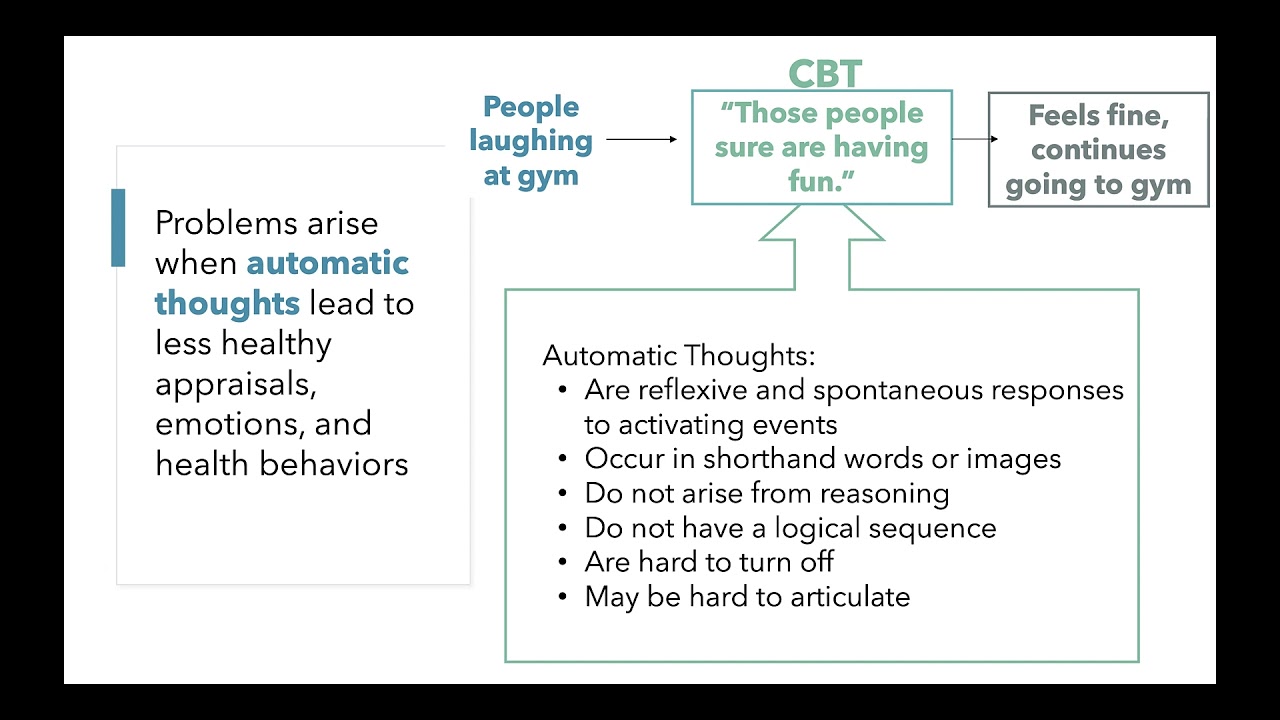
Added:Basic principles of Cognitive Behavioral Therapy (CBT), specifically common cognitive distortions such as 'emotional reasoning', 'catastrophizing', and 'binary thinking'.
Nassim Nicholas Taleb's concept of 'Antifragility'—the idea that some systems, including human minds and immune systems, require stressors and challenges to grow and adapt.
Social Identity Theory and the evolutionary psychology of tribalism, focusing on in-group/out-group biases and collective identity.
The historical philosophy of liberal education, particularly John Stuart Mill's arguments for free speech and the clash of ideas in 'On Liberty'.
Jonathan Haidt's Moral Foundations Theory, to understand the deep-seated psychological variations that drive political polarization.
The systemic impact of smartphones and algorithmic social media on youth mental health and social development (e.g., 'The Anxious Generation' paradigm).
Practical applications of viewpoint diversity and academic freedom in institutional design, such as the initiatives led by the Heterodox Academy.
The legal and philosophical boundaries of the First Amendment on university campuses, including the debate over safe spaces, trigger warnings, and speech codes.
151.2K views2.4Klikes1:03:12Original Release: 2018-09-10
[light music] - Dr. Jonathan Haidt is a social psychologist and noted researcher.
Specializing in the field of moral psychology, he serves as professor of ethical leadership at New York University's Stern School of Business and is a best-selling author and highly sought after speaker.
In addition to The Righteous Mind, he's written The Happiness Hypothesis: Finding Modern Truth in Ancient Wisdom.
In recent years, Dr. Haidt's scholarship has increasingly brought thoughtful insight to the rising illiberalism and regressive ideologies in higher education, which has spread quickly with often toxic implications for public policy and society at large.
In 2015, he co-founded an organization to counter this trend.
Heterodox Academy is a consortium of more than 1,700 academics devoted to improving the quality of research and education in universities by increasing viewpoint diversity, mutual understanding and constructive disagreement and we're grateful for you, Johnathan, for your being here and for the healthy pluralism that you advocate for, that there's room for each other.
We've had some good conversation about that.
Dr. Haidt is joining us today giving what is officially his first lecture on his latest book to be released this summer, and it will be a best-seller.
Now, I know that.
I'm not a prophet and I work at a nonprofit organization, so I can't claim too much, but it will be, so please order in advance your copy of The Coddling of the American Mind: How Good Intentions and Bad Ideas are Setting up a Generation for Failure.
Please, Biola University, join me in welcoming Dr. Jonathan Haidt.
[audience applauds] - Thanks, Barry.
So, this is my first time speaking at a Christian school and Barry used the word pluralism and I think that really is the word that we all have to keep in mind.
Where we are in this country right now, we're being torn apart along so many dimensions.
I think we're losing sight of the great liberal tradition, liberal in the philosophical, classical sense of how do you have a society that creates maximum room for people to live the lives that they want to live, to form the variety of communities without coercion, without force and these are really complicated problems that we're not handling well as a country and what so impressed me in my talk with Barry, when he came to visit me at NYU, was the way that Biola is wrestling with these political currents, political trends, challenges of inclusion, trying to reconcile contradictions and conflicts between doctrine and politics and efforts to deal with the students and faculty as humanely as possible.
So I was very impressed.
I really enjoyed our conversation and I'm very pleased to be here.
As Barry said, this is my very first time giving a talk on the content in the book, so it's gonna be a little bit, a little bit rough.
This is just a black and white slide.
Usually, the speaker has some images in the background, things like that, but I literally finished it this afternoon in the hotel room, so I hope you enjoy it.
It is really new stuff, but I think it's a really interesting story and I think it's a story that will help you think about the kinds of issues that you're dealing with, the kinds of issues that divide different groups on campus, that divide our country.
So one of the difficulties that every university president has, in addition to all the pressures of cost and affordability and regulation and politics and now I find out having lock down practices on campus today, in addition to all those challenges, a big one that everyone faces is what is our mission?
The mission changes from decade to decade in subtle ways and so I think it's very helpful, I find it very helpful to think about the concept of telos.
Many of you have encountered this from Aristotelian philosophy.
Aristotle often analyzed things- one approach to analyzing was to say what is the telos of a knife?
The telos of a knife is to cut and so if something does not cut well, it's not a good knife.
What's the telos of a physician?
It's to heal and a physician who doesn't heal his patients is not a good physician, so what is the telos of a university and from looking at the mission statements and the slogans of many universities, the best answer is truth, most of them have the word truth somewhere in their title, sometimes it's knowledge.
So if universities of all sorts are aiming at truth and interestingly, of the Christian schools I've looked at and I just looked around on the web, they also have the word truth generally, as you do here.
Well you have it, it's in your values, the three values.
So truth, transformation and testimony.
And what I find so interesting about your set here is until I saw that, I was just gonna say that well, you know, we're all seeking truth, but we want more than that.
We want our students to grow in some way.
Not just in increasing knowledge, we want them to be more mature, more wise.
We want to change them in a moral or character sort of way and so I think your three values here do a very good job of capturing that.
Truth, of course, and truth in a Christian university has a somewhat different meaning or different ideas of authority than in a secular university, but why would you have a university if it wasn't devoted to discovering more truth and passing it on?
So truth, of course, but also transformation and then often action.
In a Christian case, it's testimony.
In some schools, it's social justice or social action to change society, although of course, that would be here as well.
So, what is the telos of university?
It's complicated.
In my talk today I want to talk about wisdom versus unwisdom as we talk about the purpose of education.
I want to focus on three principles.
That's what my new book is mostly about, this new book with Greg Lukianoff.
The book is focused on three really, really bad ideas.
Ideas so toxic that if you believe all three, I cannot guarantee that you'll fail in life, but you probably will.
[audience laughs] So here are the three ideas.
What doesn't kill you makes you weaker, Always trust your feelings, and always interpret life as a battle between good people and evil people.
If you do those three things, you will not just be miserable yourself, you will make everyone around you miserable.
[audience laughs] And then I'll talk about iGen a little bit and then how to create a wise university, so let's go.
So my first book was called the Happiness Hypothesis: Finding Modern Truth in Ancient Wisdom.
My own research is on morality.
I don't study wisdom.
It really just grew out of the fact that I was teaching Psych 101 at the University of Virginia and while presenting psychology, I would quote from the Ancients and from the Bible and from the Dhammapada, and from the world's wisdom literature and I thought it would be fun to write a book collecting all the psychological claims of the Ancients and then testing them.
So that's what that book was about.
But then when I got to writing a book on my own research on morality, it turns out that it really was an extension of The Happiness Hypothesis because the Ancients had certain insights into social interaction and morality and hypocrisy and self-righteousness that have stood the test of time and that we're all, not just dealing with today, but in a sense, that are our undoing, that are making our country come apart.
So I wrote that book back when our polarization seemed just completely horrible and terrible back in like 2008 and 2009.
It just seemed like oh my god, what's happening to us and you know... Now if you take these two books and you take the prescriptions in them for how to have a wise, healthy and happy society, you take, say the top 10 or 15 prescriptions, I would say that in our universities, we're doing probably none of them, in effect.
In some ways, we're going backwards and that's true in our country as well.
Our ways of living are- I shouldn't overstate it.
In some ways, we are going very much against the advice of the Ancients, not in all ways, but in some ways and that's what led to this third book, The Coddling of the American Mind.
I didn't pick the title.
The editors at the Atlantic picked it.
It's a catchy title.
Unfortunately, it's kind of insulting to young people.
At least, in our negotiations, Greg and I at least insisted that we get to pick the subtitle.
What the book is really about is how good intentions and bad ideas are setting a generation up for failure.
That's what the book is about.
That's what I want to talk to you about now.
So if you look at these three ideas, it turns out that these three terrible ideas are all basically the opposites of three specific chapters in the Happiness Hypothesis.
So here's the first one, the uses of adversity, chapter seven and it opens with a quote from Friedrich Nietzsche, what doesn't kill me makes me stronger.
You've all heard that.
Here's a better articulation of it.
This is much more explicit and clear.
I love this.
This is from Mencius or Meng Tzu.
When heaven is about to confer a great responsibility on any man, it will exercise his mind with suffering, subject his sinews and bones to hard work and place obstacles in the paths of his deeds so as to stimulate his mind, harden his nature and improve wherever he is incompetent.
We all know what that means.
That makes perfect sense, right?
Or from Romans, we rejoice in our sufferings, knowing that suffering produces endurance and endurance produces character, and character produces hope.
So every society has recognized that adversity has a number of beneficial effects and that you need adversity to grow into a mature, capable human being.
The deep psychology here was best articulated in a fairly recent book by Nassim Taleb, the author of The Black Swan.
He followed it up with this wonderful book called Antifragile and he made up this title because there is no word in the English language for what he wanted.
We all know some things are fragile.
A wine glass is fragile.
You better protect it and don't let kids play with it because if it bangs, nothing good will happen.
It will break and then it's gone.
So we don't let kids play with glasses.
We let them play with plastic cups, 'cause they're resilient, right?
If they drop it, nothing bad happens to a plastic cup, but it doesn't get better.
It's not good for a cup to drop it and Taleb was studying systems that need to be dropped, systems that need to have threats and challenges in order to develop and he was looking at banking and regulation systems and the immune system and all kinds of systems that will basically fall into decay if they are not challenged.
As he puts it, there are systems that increase in capability, resilience or robustness as a result of mistakes, faults, attacks or failures.
They need those.
He says the resilient resists shocks and stays the same, the antifragile gets better.
Here are three examples.
Bones are antifragile.
If you take it easy on your bones, they thin out and if you put a lot of weight and you bang them around, and they get shocks and stresses, they get stronger.
The immune system, which I'll go into a moment, and children.
All of these things are antifragile.
[audience laughs] Now, here's the case, this is so cool.
This is so well worked out.
So peanut allergies are on the rise.
Raise your hand if you have a peanut allergy in this room.
How many people here have a peanut allergy?
Okay, not many, but if we did this in an elementary school, there'd be a lot because the number is rising very, very fast.
It started in the late '90s and then it's been increasing very steadily since then, so among younger people, elementary school students, there's a huge number of peanut allergies, why?
Why is it rising?
Well, a few years ago, or I guess it started 10 years ago, a group of immunology researchers thought, you know, banning peanuts probably is not helping things and they commissioned a study to find out.
So the LEAP study stands for learning early about peanut allergy.
They put together this giant clinical study and it was published a few years ago, just two or three years ago in the New England Journal of Medicine and here's the headline and what they said- so in an article summarizing the finding, they wrote peanut allergy is an aberrant response by the body's immune system to harmless peanut proteins.
The prevalence of peanut allergy has doubled over the past 10 years in the U.S and countries that advocate avoidance of peanuts during pregnancy, lactation and infancy.
In those countries, peanut allergies are rising and rising very, very fast.
What's going on?
So they commissioned a study, the LEAP study.
It was based on a hypothesis that regular eating of peanut containing products, when started during infancy, will elicit a protective immune response rather than an allergic immune response.
If you understand the immune system in even the most basic way that most of us do, you get that and what did they find?
What they did was they took 640 high risk infants, that is kids who already had some allergy issue, either they had eczema or an egg allergy.
So these are kids at high risk of developing peanut allergies and half of them, their mothers were told, the parents were told standard advice, stay away from peanuts.
Your kid's at risk, stay away.
Don't let any peanuts near your kid and half were told no, do give them peanuts or peanut containing things.
Now, obviously with... if there's an allergic reaction, they have to do something.
It's not just go do it and whatever happens, but the point is there was graduated exposure to peanut proteins and here's what they found.
Of those who did the standard advice and avoided, 14% at age five had a peanut allergy.
That's high, but these were at risk kids, so that's what you'd expect for an at risk population.
Among those whose parents ate peanuts and gave the kids peanuts and the mothers had peanuts, 2%, only 2%, that's an 85% reduction.
If this advice went national, there would be only 15% as many kids with peanut allergies, if that number generalized, so this is a huge, huge effect, a huge result.
As they say in the article about the finding, for decades, allergists have been recommending that young infants avoid consuming allergenic foods such as peanuts to prevent food allergies.
Our findings suggest that this advice was incorrect and may have contributed to the rise in peanut and other food allergies and that's why our subtitle is how good intentions and bad ideas are setting up a generation for failure.
Let's try that again.
Let's consider how we should raise kids.
Who here wants their kid to fall down a staircase?
Nobody, so let's protect our kids.
Let's keep them safe, really safe.
If somewhat safe is good, very safe is better.
Let's wrap them in bubble wrap.
Let's help them out.
We don't want them to have a bad day.
We'll do things for them and I do this too.
My wife and I do this too and we have to catch ourselves and it's hard not to.
Your kid needs something, you start reaching, you want to help them, but if you do this, if you help your kids all the time, if you keep them safe and protect them from danger and help them out when they're in trouble, they don't learn to do it for themselves.
They don't become antifragile.
You take a naturally antifragile kid and he or she will end up fragile and you can't stop.
If you've been doing it through elementary school and middle school, you have to keep doing it through high school and then college.
This is so obviously a bad idea.
When you see these cartoons, that's what a good cartoon does.
It really conveys a truth very powerfully and it's the opposite of the folk wisdom, prepare your child for the road, not the road for your child.
Now, there's evidence that- well, I can't say that the overprotection is what's causing this, but we do know that the millennials and then especially iGen, the generation afterwards are having some problems and there are a lot of reasons for it.
I'm not saying that the overprotection is the only cause.
We don't know, but it is consistent, this finding that increasing numbers of young people, especially young men are failing to launch, failing to get started on life.
Pew data is very, very powerful here, the Pew Research Center.
For the first time in modern history, living with parents is more common for young people than living independently or living, especially married or with a partner.
Here's the data.
You can't really read the numbers, but the top graph is for men.
What you see, the top bar, is the percent who were between ages 18 and 34, I think it is, were men living with a partner or married and that reached a peak around 1960, 56% and has been going down ever since.
Today, or in 2014 I should say, 28% of young men were married or cohabiting or had a romantic partner.
35% of them were living with their parents.
35% of young men are now living with their parents, substantially more than are living with a partner.
For women, it's a little better, but the trend is the same.
It might just be because women get married earlier, on average than men, but no, the men are doing worse is generally the finding in this case, so that's that there.
So, again, how good intentions and bad ideas, we want to protect our kids, we want to help them.
All parents want to help their kids, but if you help them too much, you're hurting them.
That's the problem.
Psychological principle number one, people are antifragile.
We can say the wisdom version of it is prepare your child for the road, not the road for your child.
The unwisdom version is what doesn't kill you makes you weaker, therefore, we're gonna protect you.
All right, so that was chapter seven of The Happiness Hypothesis, the uses of adversity.
Now, let's jump to chapter two, changing your mind.
Here we have the most widespread principle of pop psychology and ancient wisdom.
Every society has this truth, that we are all prone to emotional reasoning and the confirmation bias.
That's the psychological way of saying it.
Here's the more elevating way.
From Epictetus, a Greek slave in Roman days who went on to become a stoic philosopher, what really frightens and dismays us is not external events themselves, but the way in which we think about them.
It is not things that disturb us, but our interpretation of their significance.
It's as we filter it through our minds, through our appraisals.
This is the great works of English literature.
In Hamlet, when Hamlet says Denmark is a prison and Rosencrantz says no it isn't and then Hamlet says "well then to you it isn't, but there is nothing "either good or bad, but thinking makes it so.
"To me, it is a prison."
Same idea in Paradise Lost, the mind is it's own place and in itself can make a heaven of hell, a hell of heaven.
Now, this is not just a western idea.
Every culture has this.
The Buddhist and Hindu traditions are probably the most evolved in having techniques, meditation techniques, prayer techniques to gain control of your automatic thoughts.
So as Buddha says in Dhammapada, your worst enemy cannot harm you as much as your own thoughts unguarded, but once mastered, no one can help you as much, not even your father or your mother.
He follows it up with this example of how yes, bad things happen.
Bad things happen to you, but it's up to you what you'll do with them afterwards.
He says, look how he abused me and beat me, how he threw me down and robbed me.
If you live with such thoughts, if you hold onto them, it's up to you.
If you hold onto them, you will live in hate.
Look how he abused me and beat me, how he threw me down and robbed me.
If you abandon such thoughts, then you can live in love.
You have control.
This is the advice from the Ancients east and west.
The Buddhist tradition, the eightfold noble path, half of the pathways, half of the path is techniques for things you do inside your own mind, much of what you do while meditating, but these are ways of getting your thinking right, getting yourself more loosely or disconnected from the stream of things coming in and appraising them properly, philosophically, properly.
Now, meditation works.
The research on meditation is very, very powerful, but when I've assigned this in my classes, most students don't stick with it, it's hard.
It's easy to fall off the wagon.
It takes a lot of discipline, repetition and time.
So as the Buddhists put it, you have to basically tame an elephant.
There's a very different way of doing the same thing or reaching many of the same goals, which is much easier.
Cognitive behavioral therapy is the most widely used form of therapy.
It was developed by Aaron Beck at the University of Pennsylvania and some other people at the same time in the 1960's.
What Beck observed working with very depressed people in the '60s, was that they had all kinds of really distorted beliefs about themselves.
They thought they were terrible, I'm a terrible person, and they thought that the world was terrible and depressing and miserable and unfair and they thought that their future in this world was hopeless and each one of those beliefs, of course, supports the others and people were locked in to what he called the depressive triad.
What he found is that if he could talk with people and get them to see that one of them was wrong, there'd be an unraveling and they would actually be freed from- it was like the clouds parted, for a few minutes at least.
Maybe, I don't know, maybe an hour or two.
It didn't last, but there were moments of hope.
So he kept going with this and he developed a technique for teaching people to challenge those thoughts themselves and in just a few weeks, you can learn.
You hear the thoughts and here they are.
Here are the common distortions.
There are about 15 or 20 of them, but here's 12 of the most common.
If I just say the names, you'll probably know that you do it yourself.
Catastrophizing, you believe that what has happened or will happen will be so awful and unbearable that you won't be able to stand it.
Mind reading, you guess what other people are thinking, despite having no evidence.
Overgeneralizing, and the most important one of all is emotional reasoning.
This is really the basic one.
If we're feeling in a negative way, we interpret everything as negatively as possible.
So we let our feelings guide our interpretation.
Now, emotional reasoning is so important and so ubiquitous because it is the distortion that reflects one of the most basic facts about the way thinking works.
As human beings, we have this amazing reasoning capacity, but our reasoning isn't really there to find the truth.
We're not very good at that.
Our reasoning and I write about this in The Righteous Mind, our reasoning is really, really good for social reasons.
We're incredibly good at justifying what we wanna do and in justifying ourselves to others and so if we want to believe some proposition, we ask can I believe it?
Do I have permission to believe it and then we send our reasoning out to find support.
It's very hard for us to say what's true, go out and look on both sides.
More typically, we start with a proposition we want to support and then we look for support.
Whereas if we don't want to believe something, we ask the opposite question and we're so smart and the world is so ambiguous, that the answer to both- the answer to the first question is always yes, I can and if you're asking must I believe it, the answer is always no, you don't have to.
Let me give you an example.
In one study, subjects come into the lab.
They've been taking a psychology course.
They're learning about experimental design and they're given a study that seems to show a relationship between caffeine consumption and breast cancer and their job is critique the study.
Is it a good study?
How strong is it?
Who do you think finds a lot of problems, a lot of flaws in that study?
Just call it out.
Coffee drinkers, right, coffee drinkers hate it, right?
All coffee drinkers hate it, right?
All coffee drinkers?
Women who drink coffee find a lot of flaws in that study because they approach it by saying must I believe it and the answer is no, they can find a flaw and they can dismiss it, but other people say "oh, "I guess coffee causes breast cancer.
"I didn't know that."
So here's another study by Balcetis and Dunning.
You come into the lab and you're sitting in front of a computer monitor and you push a button.
Every time a letter flashes up on the screen, you push a button, you get five cents or something like that let's say and so you're there and then something flashes up on the screen.
Something flashes up on the screen.
What was that?
[audience members speaking faintly] Got a wise guy over here.
So if you're paid to spot letters and these things are flashing by very, very fast, 1/10 of a second each.
If you're paid to spot letters, that's a B, that's a B, that's a B, but half the people are paid to spot numbers.
They saw it as a 13.
So nobody sees it as the letter L or as a pine tree.
It's either a B or a 13, but there's ambiguity and so you see what you want to see.
Now if people can see what they want to see in this case, the real world is quite ambiguous.
People can see what they want to see in just about everything.
So, here we are.
So all of this psychology and all of this ancient philosophy illustrates, I think, David Hume's dictum that reason is, and ought only to be the slave of the passions and can never pretend to any other office than to serve and obey them.
He was responding to Plato and other rationalists who said no, reason is the master.
Reason is the charioteer guiding the horses who are the passions and Hume said no.
Reason isn't that smart.
Reason isn't that powerful.
It's really the emotions that are more in charge.
But I think the better metaphor, rather than a slave or a butler or anything like that, the best metaphor is really a press secretary whose job is to go before the camera and just justify, justify, justify.
No real bearing, no real foot on the ground in terms of what's true.
What can be justified.
Although just last week, I got a better metaphor.
This is really quite amazing.
So Peter Navarro, who has some role in the Trump Administration and for trade policy, he actually said this in an interview with Bloomberg, Bloomberg Politics.
He said, well, this is the president's vision.
Here he's trying to justify raising tariffs, which most economists say is a very, very bad idea, but he's an economist who's saying it's a good idea.
He says this is the president's vision.
My function, really, as an economist, is to try to provide the underlying analytics that confirm his intuition.
And his intuition is always right in these matters.
[audience laughs] I mean, [sighs] and I was thrilled.
I couldn't find better post-hoc justification for what I want to believe.
[audience laughs] So the metaphor that I came up with in writing The Happiness Hypothesis isn't like a horse and rider.
It's actually because... Emotion or intuition is actually really smart and it's really big and powerful, so the metaphor that I came up with, I might've taken this from Buddha.
I really don't know where I got it, but the human mind is really more like a small rider perched on top of a gigantic elephant and the rider can steer the elephant unless the elephant doesn't wanna go and if the elephant wants to go the other way, it's gonna go the other way.
So here's the way to play that out in psychological terms.
There are two ways that our minds work and so if you read Dan Kahneman's book, Thinking Fast and Slow, he calls them system one, system two.
I call them automatic and controlled.
So our minds are pattern matchers.
Brains have been in evolutionary development- okay, I'll just say it.
Brains have been in evolutionary development for 450 million years, we can talk about that later.
[audience laughs] So they're very, very good at pattern matching and sometimes, we don't know when we got language.
Sometime, I think it was probably in the last million years, we got language.
We got this new way of thinking and solving problems.
So the automatic system is automatic, it's fast.
It's connected to motivation.
It makes us do things.
It's almost all of cognition.
For other animals, it's 100% of cognition, for us it's 99%, 98%, but we developed this other language based system.
It's slow, it's effortful.
If you are tired, if you are inebriated, that goes to pieces.
This isn't affected so much, but this really requires a lot of focus and energy and it gets tired.
You can't study for that long.
You can't use logic for that long.
You get tired.
Now, if you look at it this way, now let's return to the question of what are we trying to do in an educational institution?
What is higher education really about?
And so I'm just trotting this out for the first time.
I really thought of this last night in my hotel room when I was preparing this talk for you and I thought you know, what we're really trying to do here is change both of those and I think here's how it goes.
Education should change character.
You should come out different than you came in and character, and this is especially clear in a religious institution, where there's much more awareness, that character takes a long time to train.
It's things that become habitual.
This is certainly what Aristotle thought, it's what Confucius thought.
It's an approach that's taken in Christian schools, as far as I know.
Character development over a very long period of time.
So we can think of that as a well trained elephant with good habits, good thinking habits, good behavioral habits.
So we want education to improve the elephant.
We also of course want it to improve the rider.
Critical thinking, basically, is having a stronger rider.
One that is not gonna be moved around just by whatever you want to believe, by your emotions.
It's gonna be more independent.
It's gonna do less emotional reasoning.
If you don't come out of here a better reasoner than you came in, then I think Biola has failed you.
But it's not just that we want them to work better separately.
Maturity, I think, is when the two work together well and you can see this in children.
They want something.
They think they should have something, but they're not coordinated.
Or you can see it in a person who's very neurotic or who's continually getting into trouble, making their own problems.
The elephant and rider don't work together well.
But when they do in a mature person, in which the rider understand the elephant, the elephant understands the rider, they're able to do amazing things together, so we want college students to be better coordinated by the time they graduate than they were when they came in.
So this'll give us a bit of a framework for thinking about what we're trying to do in higher education, whether it's secular, whether it's Christian, whatever the denomination.
Now, how are we doing at doing this?
Greg Lukianoff, a friend of mine came to me a few years ago and said, John, I'm seeing- he runs the Foundation for Individual Rights in Education.
They defend free speech rights and free inquiry rights on campus and he said I'm beginning to see some strange things happening on campus.
I'm beginning to see students talking in ways that are exactly the same as the CBT distortions that I learned to overcome in my cognitive therapy for depression.
Greg is prone to depression.
He had a terrible depression in 2006 or 2007 and he learned how to do cognitive therapy and then he began to see these very distortions at work on college campuses coming out of some students about matters related to speech and so he had this great idea and we wrote this article in which we argued that actually some of the things we do on college campuses are teaching students to do these distortions.
So microaggression training.
I'm not denying that there are not small indignities and small offenses, I'm not saying that they don't exist, but to call them aggressions and to encourage people to see microaggression when there was no bad intent.
That's a key thing.
Microaggressions are often well-intentioned.
They don't have to be any sort of bad intent.
To teach people to take more offense, to see more threats and danger and aggression when there wasn't any intended is a really, really bad idea and it's teaching them to magnify.
It then encourages them to do emotional reasoning, that if you feel offended, that means you have been aggressed against and somebody needs to take action.
We do fortune telling, trying to predict that students will need trigger warnings when it doesn't really look like there's much evidence either that they need them or that they do any good.
So the point of this article was that in some ways, some practices on campus may be making students less wise and less mentally healthy, so we published that article in August of 2015, it came out.
This is before the wave of protests and the attention to safe spaces and microaggressions that became very national and so we said at the time what are we doing to our students if we encourage them to develop extra-thin skin in the years just before they leave the cocoon of adult protection?
Wouldn't they be better prepared to flourish if we taught them to question their own emotional reactions and to give people the benefit of the doubt?
This is what we should be teaching people before we send them out into the world.
These practices we're doing are, we believe, well-intentioned, but setting students up for failure and conflict.
So psych principle number two, we're all prone to emotional reasoning and the confirmation bias.
Wisdom is what Buddha said over there, unwisdom would be always trust your feelings.
Third principle, the faults of others.
We are all prone to dichotomous thinking and tribalism.
So the quote we use in the book is from Alexander Solzhenitsyn, a Soviet dissident.
He was arrested, he said some bad things about Stalin in a private letter to a friend.
Of course the letter was read and he was thrown into a prison camp for many, many years afterwards.
While he's marching to the camp, he's describing dissonance.
While marching to the camp, he's looking at the Secret Service officers and he reflects on how is this book really gonna be about those evil torturers, these evil apparatchiks and the good prisoners, who are the victims and he realizes well actually, I once considered joining the Secret Service and if I had gotten in, I would be exactly doing what he's doing and then he says, it's not so simple.
You can't just divide people into the good and the bad.
If only there were evil people somewhere insidiously committing evil deeds and it were necessary only to separate them from the rest of us and destroy them, but the line dividing good and evil cuts through the heart of every human being and again, wise people in every tradition have realized this.
Nobody has put it better, I think, than Jesus when he said why do you see the speck in your neighbor's eye, but do not notice the log in your own?
We all do this, we are all flawed, but man are we good at pointing out the flaws in others.
Interacting with this hypocrisy is our tribalism.
We do this especially when it's us versus them and so there's an old Bedouin saying.
It's reported in many places, but there's a nice version of it in this novel by Nafisa Haji.
So the Bedouin saying, I against my brothers.
I and my brothers against my cousins.
I and my brothers and my cousins against the world.
It's a very deep, social-psychological truth, that we're really, really good at joining with the people who are on our team to fight the other team, but the instant it becomes a different team, we can reconfigure the teams and now we'll fight them.
We're really, really good at this.
Many cartoons capture this here too that I love.
The little soldiers behind, "I hear it's because "we're right and they're wrong."
[audience laughs] and here, this is the best psychology cartoon in all of human history, I'm about to show you.
This is totally geeky of me 'cause you're not gonna find it as funny as I do, but it's "there can be no peace "until they renounce their Rabbit God "and accept our Duck God."
[audience laughs] Okay, I'm glad a few of you liked it as much as I do.
So let me tell you about one of the most famous experiments on tribalism.
It was done with 12 year olds, but it applies to everybody.
So in the 1930's, Muzafer Sherif, actually, sorry, I forget the year, but anyway, many decades ago, Muzafer Sherif got permission from 22 sets of parents of working class kids to go to a free summer camp.
He told them that it was gonna be for a study.
So 22 kids, 11 and 11, were taken in two separate buses on different days to a camp in Oklahoma and the boys didn't know- each bus, they didn't know that the other bus existed.
They were taken in different parts.
For the first week, the boys do camp stuff.
They're isolated from each other, but even without any competition, they do tribal stuff.
They come up with a name for their group.
One calls themselves the Rattlers.
One calls themselves the Eagles.
They have leaders emerge.
They start having practices and rituals that they do and this is with no competition, but then, Sherif arranged it so that the baseball field that the kids were using, he kept them separate before.
He let one group see that the other kids were on their baseball diamond and boy did they get mad about that 'cause it was their baseball diamond and now we're off to the races.
So in the second week, there's competition and the kids, they get angry, they want to challenge the other team to all kinds of sporting competitions, so Sherif suggested a tournament.
So they have a sports tournament and he really tries to ramp up the competition and the frustration and they get really mad at each other and they start insulting each other.
They start doing raids on each other's bunks.
They start making weapons where he had to step in and say whoa, no weapons.
[audience laughs] But the point is that he was able, just a little competition and they ramp it up into basically tribal warfare.
And then in week three, he turns it around.
Just to say a nice quote here.
What he notices is during the week of competition, performance in all activities, which might now be competitive, such as tent pitching or baseball, was entered into with more zest and also more efficiency, so the kids loved it.
It was fun and they really worked hard to beat the other team.
Week three, he deactivates it.
He does all sorts of things like he engineers little crises that they have to cooperate to solve.
So the truck that brings water up to the camp water tower breaks down.
It's at the bottom of the hill.
Oh, we can't get water.
What should we do?
And the kids figure out oh, well if we all work together, we could push it up the hill and then connect it.
So they do and it works and so a few things like that, you give them a common goal, a common challenge and now, after a few of those, now they're having a great time together and the tribal divisions go away and when it's time to go, they could all have gone- they have their two separate little minibuses, but they chose to all cram into one bus so that they could be together for a few more hours.
Isn't that lovely?
[audience laughs] So the lessons of this are profound and they're obvious.
You have a diverse institution.
Every institution has... Most institutions are trying to diversify.
What's the right way to do it?
If you're gonna have more diversity, which has many benefits should you A, emphasize common identity, common humanity and school spirit?
Is that the best way to begin your year, in particular?
Or should you begin by emphasizing different identities, conflicts and threats and so the Sherif and basic social psychology says the more diversity you have the more important it is to try to find and emphasize and create common interests, a common identity, common bonds, then you can talk about the more difficult stuff.
If you try to talk about the more divisive, difficult stuff, we'll divide at the drop of a hat.
So it's very easy to split apart any group.
You have to work to prepare it for difficult conversations.
So, I'll just briefly go through this wonderful article by- this is a very insightful article by a young man named Trent Eady.
He was a student at McGill in Canada, but the logic you'll see is very similar.
And again, I urge you, you can just Google this.
You can find it, Everything is Problematic is the title and so he describes himself.
He was a queer activist since high school, He goes to McGill in Montreal.
He becomes much more radical, much more active, but his senior year, he begins to step back and he comes to some insights that I think are real evidence of maturity and wisdom.
He says I used to endorse a particular brand of politics that's prevalent at McGill and in Montreal.
This particular brand of politics begins with good intentions, good intentions, and noble causes, but it metastasizes into a nightmare.
He says I've pinned down four core features that make it so disturbing, dogmatism, groupthink, a crusader mentality and anti-intellectualism.
And then another sign of his maturity, he says the following is as much a confession as it is an admonishment.
I will not mention a single sin that I have not been fully and damnably guilty of in my time.
I wanna note that these four, I think he really nailed it.
These four are absolutely incompatible with education.
These four are the hallmarks of a mind preparing for tribal warfare.
Now he's analyzing a group on the far radical left.
That's what you're more likely to find on campus, but of course you find the same illiberal, intense, prepare for war mindset on the far right.
So this is an equal political sin.
It'll have a different flavor, but they're both illiberal and incompatible with education.
And then he says, I love this, he says, thinking this way quickly divides the world into an ingroup and an outgroup, believers and heathens, the righteous and the wrong-teous.
Every minor heresy inches you further away from the group.
When I was part of groups like this, everyone was on exactly the same page about a suspiciously large range of issues.
Internal disagreement was rare.
Again, imagine trying to run an educational institution where this kind of thinking is common.
Once again, whether it's well intentioned or not, it is setting people up for failure.
So what should we be doing instead?
The answer comes to us, interestingly, what I find as I'm reading and as written in the book, the best articulations of the opposite way of doing identity politics, 'cause identity politics is necessary.
There is injustice, there is oppression of groups.
You have to have some form of identity politics, but the common humanity version of it, I think it reached its highest development in the black civil rights movement, which grew out of the black church and so here is Pauli Murray, I think she was an Episcopalian minister and then got a law degree from Yale.
She said in 1946, I intend to destroy segregation by positive and embracing methods.
When my brothers try to draw a circle to exclude me, I shall draw a larger circle to include them.
Where they speak out for the privileges of a puny group, I shall shout for the rights of all mankind.
And this is very much the same idea you find, you find it in Buddha, you find it in Gandhi, you find it in Mandela.
So this is the part I showed you before, here's the next line.
In this world, hate never yet dispelled hate.
Only love dispels hate.
This is the law, Ancient and inexhaustible.
So, this is principle number three, we are all prone to dichotomous thinking and tribalism.
The wisdom phrase here is that the line dividing good and evil cuts through the heart of every human being.
So those are the three principles.
Now, much more briefly, part two, there's some real problems for young people today.
There are many problems, economic problems, political problems, but some are psychological.
They're all related, but I wanna show you some things that you may not know or you may have heard, but I think these graphs will surprise you.
So there's a new book out called iGen, short for internet generation.
Undergrads here, what generation are you?
Raise your hand if you consider yourself a millennial.
Is that what you call yourself?
Raise your hand, millennials?
Okay, only a few of you.
What else do you call yourself?
Gen Z?
Okay, so Gen Z, Twenge's point is that most generations don't wanna be derivative of the one before, so she thinks you'll probably will wanna choose something that's not just like your- anyway.
[audience laughs] She suggests the term iGen for internet generation and while we thought the millennials generation went until the year 2000, based on research that's coming in now for many people, it looks as though there's much more of an inflection point around 1995, so people born 1995 and after had a different kind of childhood and they're different than people born in the early 1990's, even.
And so here for example, here's one graph.
Most of the book is graphs like this.
So what Twenge reports is that iGen is growing up more slowly.
It doesn't reach the sort of developmental markers that other previous generations had for activities in teen years.
So you can't read this, but the top line is have a driver's license.
So in the '70s and '80s, when I was in high school, at eight o'clock on the next day, you were there to get your driver's license, but for millennials, and then for iGen, no.
Many of them don't even get their driver's license at all.
Have ever tried alcohol.
I mean, we started drinking in junior high school.
[audience laughs] I'm not saying that's good, I'm just saying that driving, drinking, going out on a date and then also working for pay, these are things that teenagers have done and we generally think that they, in some way, show independence from parental authority and those are plummeting.
All of those things are plummeting.
Now, there's less teenage pregnancy, there's less drunk driving, so there are many good things about it, but if it's the case that members of iGen are spending much less time away from their parents, and outdoors and out with friends, they're spending much more time under the protection of parents and with their devices.
Much, much more time looking at a screen.
So there's social life through a screen, but very much of it is with a screen and this seems to be having some amazing and horrible consequences.
Now we can't say that this is primarily due to screen time.
Twenge thinks that it is the primary cause.
This is still being debated, we don't know, but look what's happened.
This is from a national survey on drug use.
These are teenagers 12 to 17 who've had at least one major depressive episode.
That means on a checklist of nine symptoms, they had at least five.
That's the criterion and it's always been the case that girls have higher rates of depression and anxiety than boys, but suddenly, with iGen, it starts going way, way up.
There is a mental health crisis for teenage girls in this country and this is not just that teenage girls are willing to say it.
It's not just that they think they're depressed.
It's not just that they use the word differently.
The suicide rate is doing the same thing.
It's up.
So, girls have more depression, boys have more actual completed suicide.
And so the boys' rate is up.
It doesn't appear to be related to... That still is unclear.
So the boys' rate is up, but the girls' rate- because the girls' rate is so low, as a percentage, the girls' rate is up 100%.
The rate of adolescent suicide among girls in this country has doubled, doubled in the last 10 years.
This is incredibly serious.
Now when we go to college, so we look at college, a national survey, do you have a psychological disorder?
So this is more subjective.
This is students saying yes I do and the question was exactly this.
It said depression, et cetera, it didn't spell out all of them, but what we find is that up to 2012, when everybody was a millennial, the rates were pretty much as they'd been for decades before and as soon as iGen starts coming in, the boys' rate goes up and the girls' rate goes up a lot more.
So, now one in six women on college campuses in this country say that they have a psychological disorder.
It's all depression and anxiety.
It's not schizophrenia.
It's not bipolar disorder.
It's all depression and anxiety.
And this has led to a flood of people coming in all over the country.
College campuses are overwhelmed.
I don't know what's going on here.
Maybe in the Q and A period, we'll talk about what's happening here at Biola.
Another problem that's happening on campus is changing attitudes about speech.
This is again controversial.
People have different views on that.
Greg and I have one particular view, but the famous case at Middlebury where a professor was actually attacked and injured a couple weeks ago, Christina Hoff Summers was shouted down at a law school in Portland.
So the rate of these has been increasing steadily.
Students are increasingly talking about the feeling of walking on eggshells, the feeling of being afraid that if they say something, they'll offend someone and get in trouble.
Social media is obviously a huge amplifier of this issue.
I'll just briefly, read very briefly, one essay from a woman at Smith.
During my first days at Smith, I witnessed countless conversations that consisted of one person telling another that their opinion was wrong.
The word "offensive" was almost always included in the reasoning.
Within a few short weeks, members of my freshman class had quickly assimilated to this new way of non-thinking.
They could soon detect a politically incorrect view and call the person out on their "mistake."
I began to voice my opinion less often to avoid being berated and judged by a community that claims to represent the free expression of ideas.
I learned, along with every other student, to walk on eggshells for fear that I may say something "offensive."
That is the social norm here.
When I read that at colleges across the country, when I talk with people, there seems to be widespread agreement among people on the left and the right that this is going on, what's called call out culture.
Nobody likes it, everybody hates call out culture and again, social media is what makes it so gripping.
If not for social media, it would not be nearly this bad.
So these are the sorts of things that led us to write our article and after our article came out, a professor at Northern Colorado, I think it was, assigned the article and tried to foster discussion of controversial ideas 'cause he said "here, let's read this article.
These guys say that you can't talk about controversial things anymore.
Let's give it a try" -- and sure enough, he was reported to the bias response team by one of the students and he was ultimately, I think his contract was not renewed.
[audience gasps and groans] So, part three, ending the lecture here.
Given everything I've said, what should we do?
How can we create a wise college or how can we set iGen up for success?
So very briefly, I'll just run through a few suggestions and I hope in our discussion, I hope we'll really try to work this out for Biola in particular.
So if we start with this framing that what we want to achieve is an improvement in automatic processes, strengthening and improvement in control processes and greater integration of the two.
If that is at least one way to think about what a good college education should do, what can we do?
Well, we can use the three principles that I told you about.
We can use wisdom rather than unwisdom.
I won't go through it, this is basically what I just showed you.
I've just put it all together in one table.
The three psychological principles, the three wisdom statements and then the three unwisdom statements.
So education for wisdom or a wise university, you know, the same thing, but a wise university would presumably wanna wipe out those three.
You would stop doing any of that and you'd focus on those three and what I just realized, again, or actually three o'clock this morning because I was on New York time.
What I realized is that there's kind of a nice match here that if you do this, if you prepare your child for the road, if you recognize your children's antifragility, they're going to develop more character.
Now, more things go into character than that, but there's a very close relation between the antifragility principle and character.
And if you recognize the truth of this principle and you act on this, your kids or your students are going to end up with better critical thinking.
While there's much more to maturity than this, a real hallmark of maturity, I think, is overcoming the simple minded I'm right, you're wrong, us, them, that is a hallmark of an immature mind or an undeveloped soul.
Mature people, generally, are able to understand the nuance of moral disagreements.
It worked pretty well, I think, as a framework for thinking about what we- these wisdom principles have relationships to these three outcomes that I think we want to produce.
So very briefly, a few suggestions for using each.
If you want to develop character, you would build up our antifragility.
A great article appeared in the Wall Street Journal by a well known psychologist, should we let toddlers play with saws and knives?
And her answer is probably yes and they do it in Europe.
In Germany and other places, they let kids play with tools and what happens?
Actually, here, this is great, watch this.
So she says trying to eliminate all such risks from children's lives might be dangerous.
There might be a psychological analog to the hygiene hypothesis, which I told you about.
She says in the same way, by shielding children from every possible risk, we may lead them to react with exaggerated fear to situations that aren't risky at all and isolate them from the adult skills that they will one day have to master.
Another perfect example, oh it didn't show.
I was gonna put the good intentions thing there.
So just last week, the British have realized that they were doing the same thing as us in America.
Most of you probably played when you were kids, you played on playgrounds with those stupid little plastic houses that's incredibly safe and there's the rubber matting.
So in Britain, they're realizing they made a big mistake in doing that, in following us down that.
They are experimenting with giving kids things to play with that are not safe, [audience laughs] and what they find, it says in the article, sometimes the kid will cut himself once or he'll get a splinter once and then they learn.
You have to get cut.
You have to get splinters.
You have to burn your fingers and if we protect kids all the way through to 18, we've harmed them.
So what can you do, for those of you who are parents, I suggest that you buy the book Free Range Kids, a wonderful book by Lenora Skenazy and Lenora Skenazy, she's known as America's worst mom because she let her nine year old ride the subway a few years ago and she was excoriated for letting her kid ride the subway alone, like oh, he'll be snatched!
But I think she has the solution or she has one of the solutions to what's going on in our country.
Lenora is so wonderful that I suggested to her, me and some other people suggested that she start an organization to really bring the best practices out to the world, so I'm on the board of this new group called Let Grow, which is run by Lenora.
So if you're a parent, please go to LetGrow.org.
Lots of great ideas for you there and now, moving onto college, lots of university presidents have made wonderful statements.
Here's one of my favorites.
University president, well educators, really understand this.
Ruth Simmons, the first African American president of an Ivy League school, at Brown, she said learning is the antithesis of comfort.
The collision of views and ideologies is in the DNA of the academic enterprise.
We do not need any collision avoidance technology here.
So this is an educational philosophy.
Wisdom principle number two, critical thinking.
What can you do?
Well, why not teach CBT to all incoming students?
Why not?
If there's an epidemic of depression and anxiety, and CBT is the best validated method for addressing it, there are others, but this is the one that has the best evidence base and it's so easy to learn and you can get it on all kinds of apps and you can do it yourself with a cheap book.
Why not teach it, not just for the mental health issue, but because CBT is basic good thinking.
It's critical thinking skills.
If you learn to catch yourself and others catastrophizing, overgeneralizing, discounting the positives, these are bad thinking.
Why not make it part of freshman orientation?
Another thing I want to alert you to, you may know about this already, IntellectualVirtues.org.
Jason Baehr is doing great work, I think, on how do you educate for the intellectual virtues, virtues of character like curiosity, open-mindedness, intellectual courage.
These are skills we want students to develop.
- [President Corey] He's one of our graduates, Jason Baehr.
- Is he really?
Wow, good for you.
A gift to the country.
[audience laughs] And on his site, I just found this this morning, on their site, they use this wonderful image.
Okay, I don't have to say anything else about it.
[audience laughs] Okay, and then another point on this.
Viewpoint diversity is so important.
You have to expose young people to conflicting views in a forum in which the debate isn't nasty and bitter, but in which people can actually learn from each other.
As John Stuart Mill said, he who knows only his own side of the case knows little of that.
Because On Liberty is such an important work, but it's a little bit dense.
It was written in 1859, it's a little dense and kind of hard to read for young people.
It has a lot of historical stuff that they wouldn't understand, so at Heterodox Academy, we took Mill, we took just the second chapter, which is the most brilliant thing ever written about the value of viewpoint diversity and free speech.
We took that, we cut it down by 50% so you have a 7,000 word essay.
You can read it very quickly and an artist came to us and said can I help you with anything?
I said, yes, can you illustrate Mill?
He said oh my god, what a great project.
So we made these beautiful illustrations, so if you go to HeterodoxAcademy.org/Mill, it'll be released in a few weeks, but go there now, you can pre-order it on Amazon and we'll have a free version, a PDF version on the site.
So this should be required reading at schools all over the country and again, it's free, so I'm not just trying to drum up business here.
Okay, we do make a little bit on the Kindle version, but we're giving it out free online.
And then finally, principle number three, we're all prone to dichotomous thinking and tribalism, well, the logic of tribalism kind of gives you the answer.
Rather than going with that and as she says, she finishes the quote by saying this is the way of the world when the world is thrown into chaos.
It is our job to avert that chaos.
How do you do it?
You do it by drawing a larger circle.
That's the most powerful technique.
You use love and acceptance.
You don't take the bait.
You don't get drawn into the mutual escalation, which is happening all over our country and all over the world.
Mutual escalation of outrage, anger and violence.
So if you go to Heterodox Academy, we have some wonderful tools there.
HeterodoxAcademy.org.
Our most powerful tool for this is called the Open Mind Platform.
You can go straight there too.
What we do is we basically take you on a five step journey to understand why it's good for you to be exposed to different viewpoints, why you benefit from it.
We have quotes from the Ancients, quotes from the Bible, to bring you into that mindset that we all know of intellectual humility, but we forget about it often.
We then go through the basic moral psychology, some of which I showed you today and then we give you skills for how do you talk to someone who has very different values from you?
How do you start the conversation?
So, this tool, where we just rolled it out last August in a beta version.
It's improving very rapidly.
It's being used all over the country and in many other countries to basically help groups engage in difficult conversations.
Everyone has a common language and an understanding of why these things are so hard.
So you can go to OpenMindPlatform.org to go there directly.
So, to conclude, let's think about what we're trying to do here.
What is the telos of a university?
What is the purpose of a university?
How would we know if we're doing our job well?
How would you know if you're getting a good education?
Here are my thoughts.
These are at least one way to approach it, based in ancient wisdom for many, many traditions and I look forward to our first principles conversation.
Thank you very much.
[audience applauds] [soft music] - [Announcer] Biola University prepares Christians to think biblically about everything, from science to business to education and the arts.
Learn more at Biola.edu.
Up Next

44:19
Humans Aren't Evolved for Modern Life: An Evolutionary Biologist's Warning
@Channel4News
430.4K views•2025-08-15

12:54
Triumph of Orthodoxy Icon: Byzantine Art & History Explained
@BenCallan
2.1K views•2024-08-06

48:16
What is Public Relations? An Introduction to PR Basics
@BiolaUniversity
240.3K views•2013-07-11

1:42
Game of Thrones Opening Credits: A Cinematic Analysis
@gameofthrones
46.3M views•2011-04-18
Related Study Plans & Knowledge Roadmaps
Structured learning paths in General & Interdisciplinary Studies
general-studies
Elevator Engineering: History, Physics & Cities
01From Hoists to Safety Brakes: The Dawn of Vertical Lift
02Hydraulic vs. Traction: The Engineering Physics of Elevators
03Modern Speed, Safety, and Algorithms
+ 2 more learning modules
12h5 modules
Explore Roadmap
general-studies
Rubber: Material Science, History & Geopolitics
01Origins of Natural Rubber & Mesoamerican History
02The Chemistry of Natural Rubber & Vulcanization
03The Geopolitics of the Rubber Boom & Colonization
+ 2 more learning modules
12h5 modules
Explore Roadmap
general-studies
Containerization: Evolution, Logistics & Trade
01Ancient Trade & Bulk Cargo: Amphorae to Barrels
02The Industrial Revolution & Cardboard Packaging
03The Containerization Revolution: Malcom McLean
+ 2 more learning modules
12h5 modules
Explore Roadmap
general-studies
Textile Tech: Evolution, Labor & Global Impact
01Pre-Industrial Textiles: Handloom & Cottage Industry
02Mechanization: The Spinning Jenny to the Power Loom
03The Factory System & Global Labor Transformation
+ 2 more learning modules
10h5 modules
Explore Roadmap