










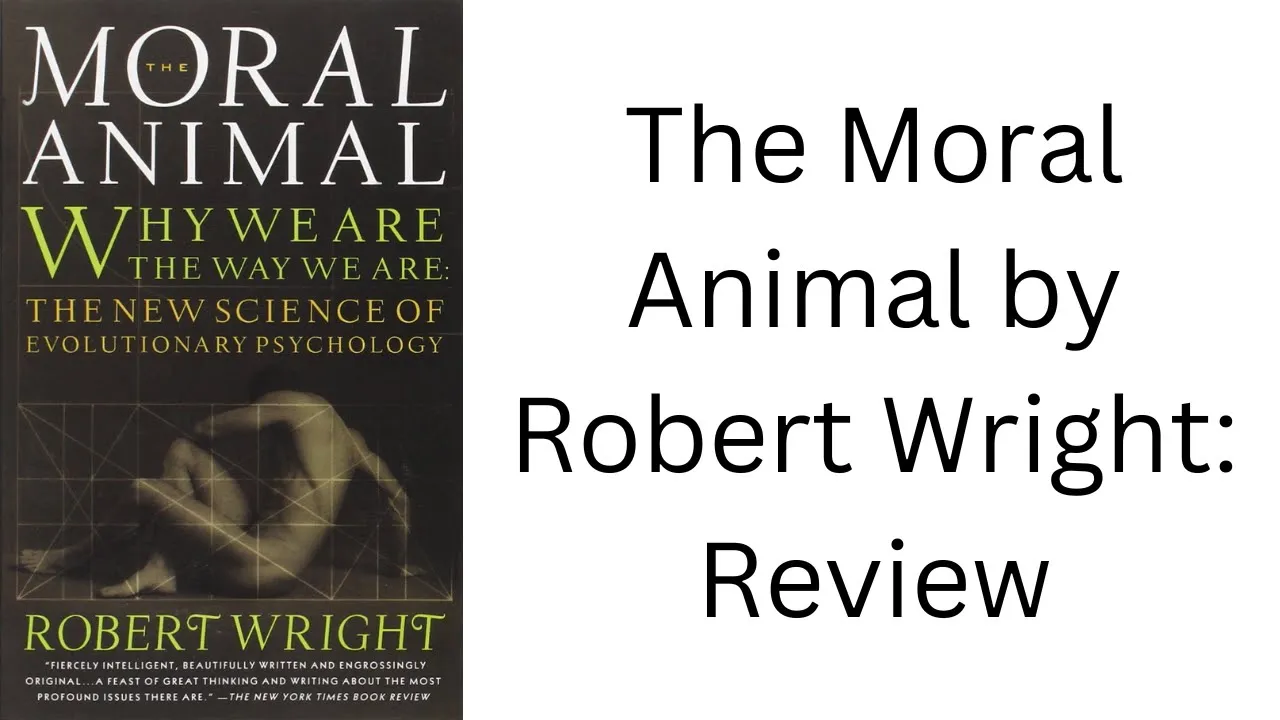







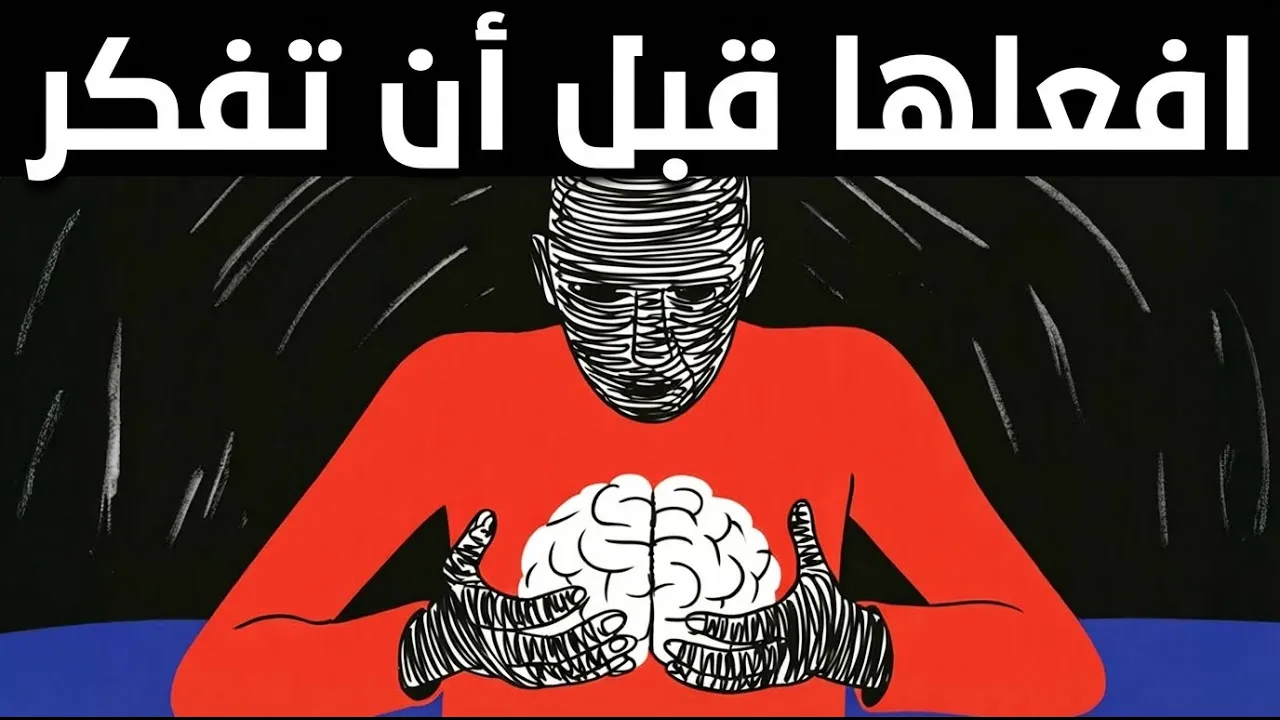


Humans evolved for small tribal communities of about 150 people in caves, not for modern cities and technology, which creates a fundamental mismatch causing many contemporary problems; additionally, medical advances have significantly weakened natural selection, potentially halting human evolution, while tribal psychology makes people resistant to scientific ideas that challenge their group identity.
Humans Aren't Evolved for Modern Life: An Evolutionary Biologist's Warning
Added:The fundamental principles of natural selection and how physical and behavioral traits adapt over evolutionary timescales.
The concept of the Environment of Evolutionary Adaptedness (EEA), representing the ancestral conditions under which human traits evolved.
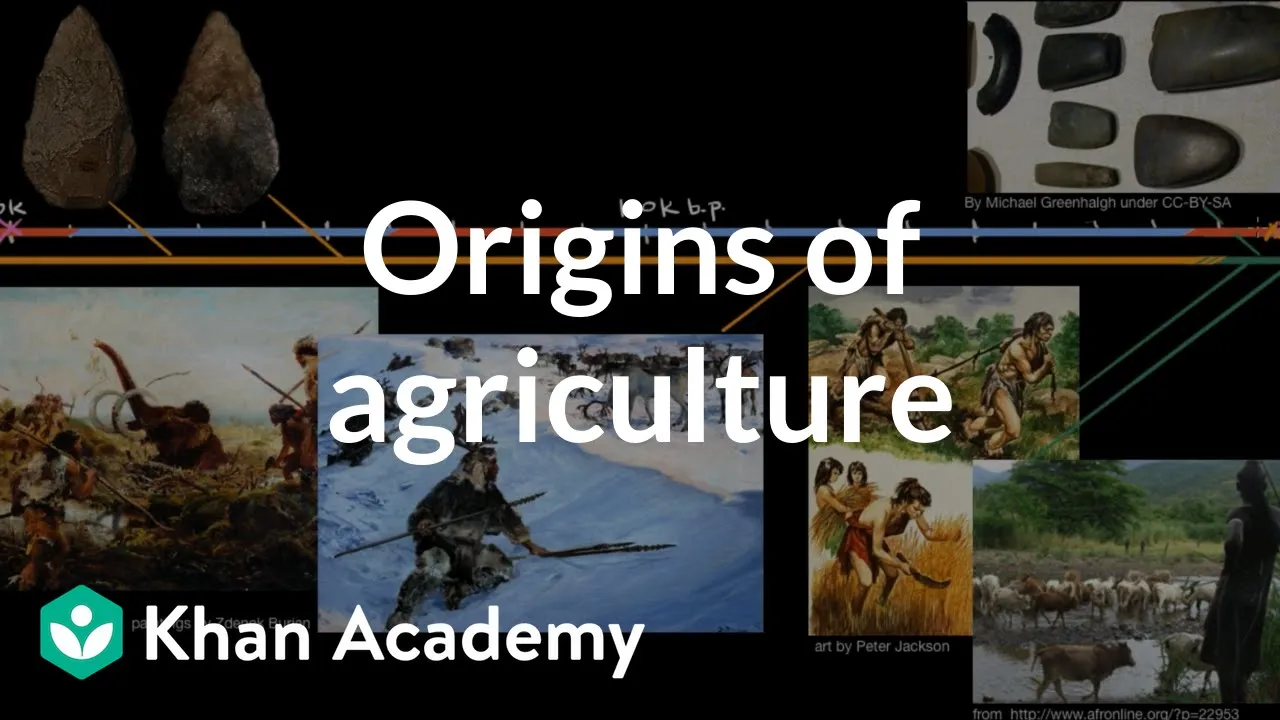
Basic human evolutionary history, specifically the transition from hunter-gatherer societies in the Paleolithic era to modern agricultural and industrial societies.
An introductory understanding of social psychology, particularly in-group favoritism and out-group bias (tribalism).
The study of Evolutionary Mismatch Theory and its applications to modern health crises like obesity, chronic stress, and sleep disorders.
How evolutionary psychology explains modern digital behaviors, such as social media addiction, echo chambers, and online outrage.
Sociopolitical analysis of modern tribalism, focusing on how ancestral coalition-building instincts fuel political polarization and identity politics.
Cultural Evolution Theory and Dual-Inheritance Theory, examining how cultural adaptation can outpace and influence biological evolution.
Designing environments and public policies (choice architecture) that align with, rather than exploit, our Stone Age biological wiring.
430.4K views13.5Klikes44:19Original Release: 2025-08-15
studying human evolution, you cannot help but be impressed with our species.
I mean, we're a nightmare of species at the same time, don't get me wrong, but time and time again, we are resilient against all odds. And every single person listening to this is literally the result of thousands of people who against all odds survived. I have a lot of hope in our species.
>> You are a questioning scientist. You're a professional skeptic.
>> Yeah. But as as a teenager, yeah, >> you were a religious um missionary >> missionary zealot.
>> So you had a massive personality change in in in over over the period of time.
>> I think that is the nature though of tribalism.
You agree with your tribe.
>> Hello and welcome to ways to change the world. I'm Christian Guri Murphy and this is the podcast in which we talk to extraordinary people about the big ideas and their lives and the events that have helped shape them. My guest today is best known for exploring our human origins, but her own origin story is a gripping tale, too. Ella al- Shamay. He grew up as a Muslim creationist but was converted to evolutionary biologist at university and is now a paleoanthropologist exploring the evolution of homo sapiens in the BBC series human. Elllet, welcome.
>> Welcome. Thank you for having me.
>> First of all, what is a paleo anthropologist?
>> It's somebody who studies deep, deep time. So like I wouldn't wake up for the Romans as an archaeologist, but I would wake up for early civilizations and I'd certainly wake up for early man.
>> And and and how much of it is anthropology and projection and how much of it is science?
>> Don't ask me that. Not at the top.
Yeah, it's like a staff in the heart. Um yes, uh we have very very few remains and we build a lot of stories out of that. Um, >> cuz the thing that always, you know, uh, grips me with BBC landmark series like Human is how sure >> the script is of of what we did and how we did it and all the rest of it. And and I wonder how sure you are.
>> I I will say look at the script carefully or hear it carefully. There are a lot of maybe there are a lot of perhapses. Um, sometimes we have a maybe and a perhaps in a single sentence just to, you know, appease everyone. Um, I will say though we actually now have quite a lot of evidence to paint a certain picture because we also have DNA and I think that has been a massive massive game changer. So so for example just a simple one like did Neanderthalss and homo sapiens interbreed which is really just a fancy way of saying did we have sex >> this has been like a story that's been just debated for the longest time.
>> As soon as you start getting ancient DNA it's game over. you can answer that question. So I would say ancient DNA has has really I mean it's revolutionized the field without a doubt. I mean there's a reason Sweet Pa won a Nobel Prize. It was a year ago or something because it was just him invent well he didn't invent it. He he was able to extract that DNA was so pivotal to the field >> and what human has done is is look at all the different >> types of people Yeah. who were who were on the planet coexisting which is not something we thought about a lot. Yeah.
Has it made you question taxonomy, you know, and and make you think, well, actually, we we've given names for all these things, but are they really as distinct as all of that given they were all interbreeding?
>> So, it's interesting that you say types of human because I would say that they're different species of human.
But you're so right to ask about the taxonomy thing. Um most people at school, this is slightly technical, but most people at school got taught uh what a species is. And the understanding of a species is, oh, it means that it's basically if two um individuals um can have children, but those children are infertile, that basically means they're two different species. That is called the biological species concept. Turns out there are over 20 different species concepts because it's all to some extent bull because we are trying to put a taxonomy and a a framework on nature and nature knows no framework, right? But it is a useful tool to help decipher because we're clearly different to those other species and there were many of them. And I think in that show in the show um one of the things that is just so exciting is that we're able to portray this world of many. And I think for most people they just haven't grasped this concept that this is the only time in human history that only one species has walked the earth. This is a bizarre. The last 20,000 years is not the norm. For for hundreds of thousands of years, we shared the planet with many other humans, human species.
>> And they were they were things like Homoctus, Neandertos, all these things we learn to draw at school.
>> If you Yeah. And a lot of time people weren't even taught this stuff at school. And you know, there's some species in there that seem fantastical.
I keep talking about the so-called hobbit, which is actually called homophoresensis, which is this tiny human who came up to about my I'd say about my hip, so about a meter tall. Um, so just over three feet. Um, they had brains the size of chimps, and yet they were able to make fire, make stone tools, stood upright, were humans in the full sense of the word. Um, but they lived on this one island in Indonesia with um giant maribou stalks that were taller than me. um miniature elephant-like mammals called stegodons, giant rats. There's a reason we call it the Hobbit. And there's a reason why I would argue that that was a Lord of the Ringsesesque world except it was real.
And I I do feel very strongly that partly it is just a fantastic story to tell.
>> And and have you come to any conclusions yourself about why we were the ones who won? If you put 10 paleo anthropologists in a room, >> everybody would give you a slightly different answer. Some of them would be wildly different.
>> I present in the show what I feel is most accurate and I kind of come down to a few um reasons and they're reasons that obviously it has to align with some of our series consultants and what have you. But there is a joy in being able to present your field and go, you know what, this is the theory I am going to run with. And they're often theories that people aren't expecting, right? So a lot of people have just assumed it's our brain size. But Neanderthalss had similar sized brains to us. And also, if it's just about brain size, I keep saying this, if it was just about brain size, elephants and whales would be on this podcast right now and not us. Like it's not just brain size. So, one of the things we argue actually is that friendliness, cooperation is what gave us an edge as a species. And that shocks people because they look at us and they go, "The friendly species really?" And I'm like, "Yes, actually cooperate.
There is so much evidence to show that we are a hyper highly cooperative species in a way that no other species has ever been. Um, and that that gave us this edge. And there are theories that state things like language and our brain kind of being superior. And I'm saying this in inverted commas isn't actually because that was being that's what was being selected for. That was what you know um we were driving um towards. It's that actually we were a highly cooperative species and so we ended up with better brains and we ended up with language just to help us be these social cooperative. So actually us being smarter is kind of a side effect of us just being really social. which is kind of wonderful. I'm like, why are we not talking about this? Especially in the political climate we're in right now. Yeah. It feels relevant. It feels relevant that actually that hyper cooper cooperation is the cornerstone to our success in my opinion.
>> Yes. Although you you might then say that we're we're aggressing um in terms of sort of the dominant human characteristics on display around the world right now. Tribalism, war, fights.
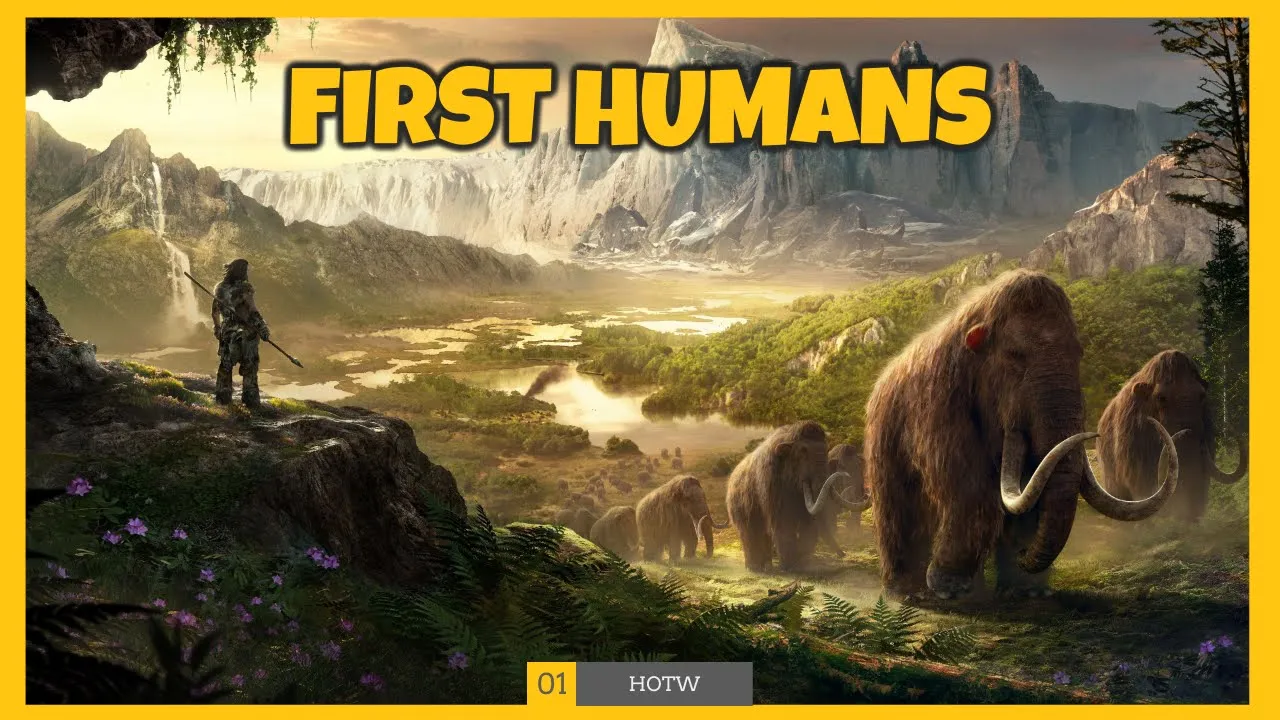
>> Yeah. And that's where it gets uncomfortable for me because a lot of us in the field would argue that the world around us today is not the world we've evolved for. It's just not. And and we will probably never be evolved for the world that we're in ever again because we evolved for caves being prime real estate for a tribe of aboutund I don't know 150 people where I don't know twothirds of them would have basically been your your dad's relatives. um where you knew everybody by name. We did not evolve for farming cities um and certainly the last 400 years where there's just been this absolute technological overhaul.
>> Um and that comes with problems. It just does. And that's an existential conundrum for me because I see it as a trade-off, right, Krishna? Like on the one side truthfully if our ancestors hadn't made that huge massive leap farming um cities etc etc we wouldn't have the beauty that we sometimes see I don't mean to sound you know but like you art things that are truly the kind of art that takes your breath away the kind of creativity that takes your breath away also we wouldn't have the capacity to support as many people you and I realistically just wouldn't have like you know our ancestors wouldn't have made it but the tradeoff is that we're not evolved for the world that we're in. We don't fit here. Like it it it doesn't it is not um a it is not a it's not a good fit in any way to the extent that I I think we can blame a lot of things that are going wrong on the fact that we're cave people. We're just stuck here with many benefits. You know, like truthfully, if you held a gun to my head and were like, "Okay, well, you go back to the paleithic." be like, "No, no, no, please. I'm actually quite happy where I am." But there's so much that isn't working. And in my opinion, it isn't working because this isn't the world we've evolved for.
>> Right. But do you believe as an evolutionary biologist now that that evolution will have the answers to this?
No.
>> And and that this is something that's constantly moving and changing and >> No. I think I agree with um other evolutionary biologists that basically think evolution is now dwindling to the point of almost not existing in our species because we have medicine and science that have just taken away the things that would normally have cast out people that you know for example I mean the most extreme example and this is uncomfortable so I'm really sorry about this but like infertility infertility that is the biggest thing that would normally be selected against just by very nature of it. Um now well infertility is something to be solved with science which is a wonderful thing like natural selection is no longer >> operative. If it's it does still exist it's very weak. It's very very weak.
Certainly in the west it's incredibly incred you know >> I mean because that it's quite it's a massive claim though isn't it? You're saying human behavior Yeah. has halted evolution.
>> Oh yeah. I don't think that's controversial. That's, you know, that's we've been saying this for for a while now. Um, it's just, you know, do people want to hear it?
Because it sounds like I'm being a ly and I'm not. I'm saying it's wonderful that you can um that you can do all this stuff like truthfully, you know, looking at St. Paul's, for example, takes my breath away. I cycle past it. Every single time I cycle past it, I have to stop myself from stopping because it takes my breath away. And yet there's there's it's a trade-off and it's I would argue it's the biggest trade-off we've ever made.
>> But why wouldn't we evolve to get better? You know, human behavior can preserve us as we are.
>> Yeah.
>> Um but why why wouldn't we actually get better at living on this planet that we now live on?
>> Because the two things, one is the brutal reality of uh natural selection is that um if something is not advantageous, you would not be having children or you would be having less children. That's just not our world today. Our world today, you can you can be um brilliant by every standard and choose not to have children and that be, you know, absolutely normal. Um you can have some kind of a s like any kind of disease that normally would have we laugh in our family that quite a few of us have got allergies and one of us has an allergy to dust and we just laugh at that particular sibling because we're like can you imagine how you would have handled the caves like you bless you.
It's a good job that the Shimahis were like, you know, hanging around right now and not back then, basically. Um, and the the flip side is that technology is evolving way too fast. So, I have a condition. People see me sometimes typing with a stylus on my on my um smartphone. And I am sure that a lot of people think I'm a hipster, and I am. But I do it because this motion, which is where you move your thumb to swipe, is something I can no longer do on my right hand because I overused my phone 10 years ago answering emails, being a workaholic, etc., etc., and I gave myself repetitive strain injury, which they used to call Blackberry syndrome. Like they actually called it blackberry syndrome because in the early days of technology the blackberry isn't even around anymore. So I have a condition but I have a condition because of technology that the ancestor there was no no early homo sapiion was sitting in a cave needing to do that motion to make a stone tool to create art to do anything. I need to do it for my phone today. Ironically the name given to my syndrome colloquially it is obsolete because that technology is now also obsolete. Do you see what we're dealing with? It's I don't know what to do with half of this because I'm just you know is it's such an existential Yeah. It is an existential dilemma. I think it's in one way I try to argue that it's wonderful because it gives me context for things. We have for example a problem with procrastination and negativity bias and we see it playing out for example in social media. Um, and for those who don't know about negativity bias, that's that study upon study has shown that we remember and have a stronger reaction to negative things over positive things. So if I was to lose $50, in fact, this is an actual experiment. Um, I have a stronger reaction to it than if I was to find $50. And you think, right, so so just we're screwed, right?
Except if you understand the evolutionary context of it. Because once upon a time, it was more helpful for me to remember the thing that would kill me. I don't know, the mushrooms on the left of the cave that are going to kill me than the lovely grapes on the right of the cave that are just nice to eat.
That information, the mushrooms that are going to kill me, that's the information I have to have a stronger reaction to because I might die if I don't remember that. So it's, you know, it's like we survived to, we didn't survive to thrive, we just survived to survive, basically.
>> Now, I mentioned in the intro that your own origin story is is is uh is as gripping. And the truth is you were brought up not to believe >> Yeah.
>> most of what you've >> Yeah.
>> said.
>> Yeah.
>> Um so, so what was your childhood? I mean, you you were you were brought up as a creationist effective.
>> Yeah. So this was a community, a Muslim community that was highly conservative.
And at the time, and I really do want to point out the community has moved on since then, but at the time there was no space for evolution. Everybody was a creationist. But it wasn't just that. It was that I was I was a missionary. I decided to become a missionary at the age of 13. Um or something ridiculous.
I I guess I have a certain personality type. It's been incredibly um freeing but if I'm to be honest uncomfortable Krishna to talk about this in the last few days um because it's a huge part of my life my story all my friends know about it I make sense to them because of that um and yet it's something I kind of have very much kept mostly under wraps um but I was a missionary and one of the things that I had identified as an incredibly young missionary was that we had a real problem with our response um to evolution. Um if you walked into almost any Muslim bookshop at the time um the bookshops were filled with uh books by a particular author called Harona who is now in prison and has been exposed as a cult leader but at the time was the Muslim answer to human evolution. Um and I'm really glad that the community has moved on since then and it's a community now that is very pluralistic. So many people are very very very chill with evolution, but that just wasn't the case even 13 years ago.
Um, and so I decided as a very very young person with the arrogance I think to some extent of youth, I'm kind of smiling because I realize how embarrassing this is in some ways to say that I thought I was going to go to university to study evolution so that I could destroy it. um because I thought we were either being lied to or that something else was going on.
>> So, what did you actually believe?
>> I I believed um in a very very I I just would not comprehend the idea of any evolution actually, not just um humans, but the evolution of any kind.
Um >> so God created everything.
>> Yes. But created everything in its final form because there are Today, for example, you'll find a lot of religious.
>> There's plenty of religion that's compatible with >> Exactly. Exactly. And and um Yeah. I mean, loads.
>> You were very literal about it.
>> Yes. And to be fair, um the community at the time that was that was the orthodoxy that >> when you talk about the community, I mean, do do you mean I mean was it your parents who brought you up this way or was it everyone around you or >> everyone around me? And I I am sure that there were some people that were probably chill with evolution. They just weren't saying it publicly. Um, certainly not in the UK. Um, and certainly in the missionary world. Yeah, we weren't going to we weren't going to mess with that.
>> Were you just not questioning of it at that time?
>> I I mean I was question I but I was I understood that I had the absolute truth and that my interpretation was absolutely correct and the interpretation that my community and my missionary crowd all had was absolutely the truth. and therefore I why wouldn't I I think this is the thing that people don't um often understand is a lot of the time in um whatever your tribe is if you really believe in something you really believe it like you you assume that the scientists are either lying or or they're just wrong somehow and that's what I thought and >> so so when you talk about your community >> I mean because obviously there are lots of Muslim community it's not it's not a single entity so what do you mean do you mean because you're Yemenian origin I mean Is is that significant in this or?
>> No. So, so if you if you look >> what was your community?
>> So, my community I would say was a broad-based um very um conservative Muslim community that was kind of panarab I would say. Um but then in the missionary world um it was much much broader. So um a lot of um Pakistanis in that world it was basically missionaries a more um conservative interpretation of the faith and also the thing obviously well maybe it's not obvious but if you're a missionary um or as we say in Arabic da or you're doing daer um by and large you tend to take the most conservative interpretation for everything. It's just the way it is.
>> But I'm quite I'm really interested in how you came to be like this. You know, do you do you now think I was brainwashed or I was raised this way or >> I think >> you know because you you are this questioning scientist. You're a professional skeptic.
>> Yeah.
>> But as as a teenager >> Yeah. you were a religious what um >> missionary >> missionary >> zealot you know I mean what's >> I mean the yeah those words >> massive personality change in in in over over the period of time >> yeah I mean obviously still got a big personality gez um I think that is the nature though Christian of of tribalism you agree with your tribe and you pretty much accept by and large the opinions of your tribe. And there isn't there were so many incidents which were very telling to me because I obviously turned up to university and there were one or two people there who were also from my community. They weren't missionaries but they were from my community. Um and I remember looking at one of them who was had to take an evolution class. So I turned up to university taking every single evolution class I could. That was I was on mission. Yeah. I was there.
>> Whereas others we're at University College London. They're not going to let you. It's historically UCL was you know the godless place on Gow Street. It have a huge genetic evolutionary kind of tradition. Um the Darwin building is literally where Darwin lived etc etc. um and they they're not going to teach you a lot of their biological subjects without forcing you to take a number of um evolution classes. And I looked at one of them and I said, "Okay, so I thought I found my sister in like, you know, brainstorming." Um and I was like, "Great. So I'm thinking there's a weakness here and there's a potential weakness here. Um what what are you thinking?" And she she was panicked and she was like, "I don't want to think about this. I have to take this class to pass and to get this, you know, to get through the year. I do not want to think about this. And I was like, for me, looking back now, I see what that was.
Um, that was you fall in line with your tribe. Um, and you don't want to question something because at the time that was actually questioning your faith. It wasn't questioning. It's not like there was the alternative that there is today. It wasn't like there was a bunch of today there are actual Muslim scholars who will vocally support evolution. that was not happening at the time. Um, and I think when you live in that world, and I think it's relevant today because of things like um climate denial, uh, vaccine science denial, um, people, those people are not sitting there um, lying. They genuinely think that the science is wrong. either that the scientists are lying to them or that the science scientists are incredibly biased and are not being honest about the data.
And that's where I was. I just thought these people are either lying or they're so brainwashed into disbelief that they are just reading the data in the way that they want to.
>> You thought they were the tribe.
>> I thought they were a tribe and I thought I was a tribe. I was part of a tribe obviously 100%. And then the more I studied it, the more Yeah. the more obviously. Yeah. It was awful cuz I was like, >> was that a gradual process or was there was there a moment where you thought I've got to actually >> change what I say and think?
>> It was gradual and it was over many many years. I mean, I was so I was so in love with that community. I wasn't going to leave and even have unorthodox opinions easily. Um, >> and were you wearing hijab at university? hijab and also jilbab for a lot of the time which is the kind of long um clothes.
>> So so when did you take the hijab off?
>> So it was basically um I was studying studying the first thing was that very quickly I realized that the scientists weren't lying to me very quickly I was like these guys really believe. So, so then I was like, "All right, there's the bias that's going on here." And then it was trying to look into every bit of evidence that that could possibly be used to support either um either narrative. And obviously, you know, it got to the point where it was like that that Darwin, I don't know if I'm allowed to swear, but and it just got to the point where I was like, you just you you're going to have to accept. And it was it was a moment actually even just even just talking about it like kills me. It was a moment actually in the shower where I really had had that kind of you know um that conversation with myself because I've been having like elements of the conversation with myself for a really really long time and there was this moment in the shower where I was like and I can't I I'm sure it's in a diary somewhere but it's something along the lines of you need to grow a pair and you need to accept that you believe in evolution and in In that moment, like I like I fell to the floor. Like I just I cried my eyes out. And it was because in I just knew that there is no way I could continue to exist in that missionary world, a world that I loved, that I had no problems with. Um and I was like, "Right, what's this going to mean?"
First of all, my ex-husband and I were having problems, but what it meant was there was no way in hell I could go back to that marriage. Um, it meant that I had no idea what was going to happen with my family. Thankfully, my siblings are the most incredible people in the world and they decided to continue kind of holding me tight. And the third thing is realizing that I had to leave. And in in realizing I had to leave, I can't tell you how terrifying that was because that was everybody I knew. That was a paradigm shift on that scale. I mean, I'm struggling to tell you this right now and this is how many years has it been? I'm I'm you know that I was 27 when that happened. I'm 41 now and I still can't talk about it without like really and um and it was just like I'm going to have to start all over again. I'm going to have to say goodbye to everyone. And it had to be extreme. It had to be I had to have to say goodbye to everyone because um without a goodbye, which is the really weird bit because I knew the missionary training. They were just going to try and drag me back. There was no the there was one or two people that I maintained some kind of contact with from that world um friends and when I broke the news to one of them she just looked at me and went you're the one that got us into all this and you're just going and I was like >> did you feel as a missionary then working for Charles Darwin that you then had to go and tell them look this is all rubbish?
>> No. The reason I decided not to do that and I have had quite clearly zero interest in um pushing um that kind of thinking within individuals um of any kind is that I had no intention of putting anybody through what I went through. I was like you believe what you want to believe. My hope was that the community would evolve to the point where it didn't feel like a choice and that is exactly what's happened. Um, I've actually had a number of people um, in the last week and a half, many, many people actually, uh, message saying like, "Is Islam compatible with evolution?" Um, or telling me that they think it is or telling me that they think it isn't and they're struggling or what have you. And my attitude has been, I I'm my those days are over.
>> My missionary days are over. I'm not here to tell you exactly what to believe.
I think evolution is completely correct, but your relationship with science and faith and your reading of the Quran is up to you. And here's the and what I will actually do, which is kind of very unmissionary like of me. I will present them with the arguments that I know Muslim theologians today are making to support a literal interpretation of the Quran and marrying it up with evolution.
Now, obviously, if you're like me and you don't believe in a literal interpretation of the Quran, you're you're fine, right? It's it's metaphorical. It's this, it's that, and the other. But if you believe in a literal interpretation, like many Muslims do, um, I want to point out to them, you don't have to take the path I took. You can because what I did was heartbreaking, and I don't want anyone to do it if they don't want to.
>> And, and did it make you reject everything about religion? So, you're now an atheist?
>> No, no, no, no. So I and I think that's become a a thing that I want to scream really loudly actually um that science cannot be a playground just for left-wing atheists. Um I myself I'm a nonpracticing Muslim. It just it basically means that I don't take the Quran literally. I I you know I I I am >> But you believe in God. Yeah. I believe in a creator.
>> Yeah. It's not but it's not like I have to then believe in every single I have many people in in my world for example who are incredibly comfortable with their interpretations of things and they're just not um very literal interpretations. I don't want people to feel like it should be this choice. But part of the reason I'm talking about it now is that I'm seeing a polarization of science that scares the hell out of me.
And so I'm I I think it feels even more relevant today.
>> And what is that polarization?
>> There is a real crisis. I would say I would personally say that I completely agree that we live in the post-truth era. Um vaccine science um climate science is is is massively contested.
There's a real crisis of of trust in science. Um what's the OG theory that people didn't like and still don't like and that they still don't like? It's it's evolution. I happen to be able to speak to that quite extensively. Um, and my opinion is, and I say this not just as somebody who's been through this, but it's my opinion as a paleonthropologist, as an evolution biologist, your opinions are the opinions of your tribe. And that that has been selected for um over, you know, hundreds of thousands of years and has been to great advantage historically. Um and fundamentally you you choose the opinions of your tribe.
You choose the opinions of the people that you love. Um you don't often cross over the aisle. And if we present science like it is in any way a tribal issue, we are asking people to choose between the people that they love and the paradigm that they exist in and science. And that is not going to end well for us scientists. like it's just not because most people will choose the people that they love. I didn't but question I was in too deep. I was years into studying this subject.
>> So so what you're talking about in terms of current culture wars if you like are you know people who are growing up in vaccine skeptic communities >> um or you know people who are just generally challenging >> the establishment and the status quo which is sort of a huge >> trend at the moment and growing in power. And also people that are um on the right I I would say as well also devout people highly religious people depending on the area of science.
It's hard to find people that will openly say that they're very religious in any of any part of evolutionary biology.
I know that there are some they're hiding in plain sight. They don't feel feel particularly comfortable talking about it because they're bluntly ridiculed often or you know eyebrows are raised. You see even in medicine you know um people people are surprised by it but not >> you talk about co as an example where but where where the the lab leak theory was sort of poo pooed at first by science >> that was >> and now seems to be widely accepted >> that was so quickly polarized um politically polariz so what I have seen personally and this is my interpretation of things is in the last few years um science has always been kind of left-leaning the playground for atheists certainly in the evolutionary um science you know by and large that's kind of but it has got to a point which feels too tribal in my opinion um so you had for example um Jordan Peterson's um very short kind of chair um in 2019 rescended at Cambridge makes me feel quite uncomfortable it's not that I like Jordan Peterson find his opinions to be yeah uncomfortable etc etc Um but if you are on the right or you um support some of his opinions and you see that you see right well how hold on how many right-wing scientists can I count if if the data point is is so if there are only like three data points and I know that one of them has just had their chair canled.
It looks like science is not because >> is that about left or right because you know obviously Elon Musk is going through the same thing. Yeah.
>> Uh with the Royal Society. Yeah. where there are lots of scientists who are part of the Royal Society who want them expelled.
>> Yeah.
>> Um >> now is that about left or right or is that about people who are you know the reason they are going for him many of them say he is dam he is part of something that is damaging science.
>> I I am trying to avoid >> because of the cuts to science in America.
>> So the Elon Musk thing I think comes out of my arguments slightly because he was in the administration and was responsible for stuff. Jordan Peterson wasn't. um the people that were supporting the lab leak theory in the early days when they were being decrieded as racists um they weren't part of the administration like they they were not in political power um they were scientists some of whom were right leaning sure I I'm not even arguing by the way that um some on the right weren't utilizing this for political gain but what I am saying is and it is so uncomfortable to for for some of my tribe to hear this we have some culpability on the left Because what I saw with the lab leak theory, that's a really good example is that kind of throwing around of oh this is a racist ideology etc etc. And what it really took was one or two really big names who were willing to step outside of their tribe and vocally say and and I would argue at the time it took a little bit of guts but for example Francois Balu, Professor Franis Balu at UCL um saying he was open to the lab leak theory clearly being on the left that kind of helps the the energy dissipation.
>> What's interesting is the politics is actually getting in the way of good science.
>> Yeah. Yeah. But I would argue that while we have done a really good job I think of arguing um and I for bloody good reason right that the left have a huge amounts of culpability um you know I have a masters in biodiversity like climate climate science is is currently being denied in a way that just absolutely boggles the mind. Um, but I would say that we are really, really good at pointing all that out and we are completely correct. But I think we need to go look at our own tribe as well for a minute and accept that there is some culpability and accept as a general rule that if we have somebody on the right who has opinions that we really really disagree with, as long as they are not causing physical harm and as long as they are following the scientific method, they need to be in the room and we need to be arguing very loudly that those people need to be in the room. And what I have is that I am a brown woman. And I I stopped myself at saying an advantage because obviously, you know, but in this particular instance, I would say it's an advantage because as a brown woman and as somebody whose career was basically built on me going into hostile territories and saying these people deserve science as well, I've kind of proven to some extent my progressive credentials. does that like as in it's much more difficult for people to come at me when I go and defend a right-wing scientist and and we'll you know and we'll turn around and say things like I will say things like look I don't necessarily have to like their opinion but you guys need to get over it and this person needs to be in the room um partly for the good of science because those bias their biases are going to be slightly different from my biases and and that's really important just for the health of science but then there's the wider existential very of the moment conversation about the health of science which is if those people aren't here.
What that means is that the general public look at science as if it is um not not of their tribe. And that will reduce faith in science, but also and we're seeing this now, it makes funding cuts so much easier because you can argue this is we're funding leftwing science as opposed to no, we're just funding science. And I I know some people have got a bit annoyed with me um saying this in in recent days, but I'll be honest with you, more people have been messaging me going, "Yeah, yeah."
>> Because do you think what's happening in America, which is which is huge cuts to science funding, you know, medical trials being stopped mid-flow, whole tranches of research basically being locked off because so much government so so much science funding in America actually comes from central government?
>> Yes.
>> Is is that a risk here as well? Uh it absolutely is if we continue going down this road and that's why I think I will say to people we each need to go we each need to go collect our tribes. you know, I will be calling out and I will be trying to re in when our tribe is is getting a bit too polarizing, being a bit too um aggressive uh and unwelcoming to those on the right and to those who are religiously devout. And um and I would hope that those on the right um are also willing to call out things like cuts um to science funding or denial of science that's quite robust. This kind of science that really shouldn't be kind of called into question. We all need to start really thinking about what's at stake here and what's at stake here is science and that is terrifying. it it we should be really really concerned about this and yet I think we're more comfortable pointing to the other. Um I will say though I really do think the majority actually kind of agree. Um but a lot of people are scared to say it. A lot of the people that have been messaging me are white men who are scientists. Is is it partly because science has has often thrived and medical science in particular I suppose has thrived on on certainty and um you know giving people the impression that we know what we're talking about definitively. Yeah. And the truth is >> it's it's not it's never that quite that clearcut.
>> That's a fair criticism. I I do think that is a fair criticism. I think it depends on the bit of science but I do think um we have not always done a very good job um and and to some extent this isn't just scientists fault this is also government's fault for you know you've got to build up the education system so that people understand that science is just an interpretation of a set of data points at a particular time and that can change and I do think that sadly most people understand science to be gospel um and uh >> you can't argue with the science people well actually you can it is a really difficult one it is and I do think you know as a as a science communicator u maybe we work on that one a little bit. Um but at the same time I it is it is a time that is quite scary right now. Um I have turned around recently though I was having a chat with um someone on the right in science and we kind of looked at each other and we're like what did we think was going to happen? You know, we have we have been so loud um about bringing down right-wing thinking in the sciences and right-wing individuals. What did we think was going to happen? Did we really think that half of the population who are on the right would continue look at it and get science and think h you know no we've we've got to be really really careful um and have a more nuanced discussion um I think this moment should be a wakeup call but I uh I can and I definitely know that some people are having a small wake up.
I think some of them though are having that wakeup call because their funding has been cut and they're like, "Oh crap, I've got to play the game."
>> I mean, so ju just finally, I mean, to sort of pull pull things together a little bit, I mean, you know, as somebody who thinks evolution seems to have stopped.
>> Um, >> I love how you're really focused on that. You're like slightly alarmed by it. not completely stopped, but I would say it's it's it's trudging along like very very >> that we're facing this sort of crunch point in science >> where a huge number of people around the world >> could lose faith in facts and science.
>> Um are are you able to maintain any sense of optimism about human development as a result of all of this or are you or are you a sort of a a bit of a catastrophizer?
>> No, no, no. I Okay, so I would say two things to this. One is um studying human evolution, you cannot help but be impressed with our species. I mean, we're a nightmare of a species at the same time, don't get me wrong, but time and time again, we are resilient against all odds. And every single person listening to this is literally the result of thousands of people who against all odds survived.
I mean, there were seven species of human.
Most of them were, let me put it a different we were the underdog of the group and yet we're the ones that are left standing. I have a lot of hope in our species. But the second reason is my own story. I I think for somebody to be able to make such a traumatizing shift and find the funny in it, you know, I learning, let me tell you, learning how to exist in a secular world, having grown up, I often say, you know, arranged marriage, by the way, by my imam. My imam arranged my marriage to Tinder was quite the journey, let me tell you. And the fact that fine, do you know what I mean? I'm absolutely fine and can come out the other end presenting a BBC landmark on human evolution. For me, I'm like, we have the capacity within us to be resilient, to come up with ideas, to step outside of our tribe, to change, etc., etc. But it's difficult.
>> If you could change the world in any way, how would you change it? I would ensure that social media companies um could not encourage polarization and tribalism.
I don't know how exactly they would do that. We'd need some research into it.
But uh if there was one thing I could do, it was enforcing whatever is being advised to stop that polarization.
>> Lal Shami, thank you very much indeed.
>> Thank you for having me.
>> Um I hope you enjoyed that. If you did, then give us a rating or a review and then other people will find the program.
You can watch all of the ways to change the world interviews on the Channel 4 News YouTube channel. Until next time, bye-bye.
Up Next
77:51
Examining the Dead Internet Theory and Digital Deception Realities
@CampGagnon
20.6K views•2026-07-23

12:54
Triumph of Orthodoxy Icon: Byzantine Art & History Explained
@BenCallan
2.1K views•2024-08-06
5:03
Ibelin: How Gaming Fostered Real Friendship in a Disabled Youth
@Channel4News
480.1K views•2024-10-20

1:42
Game of Thrones Opening Credits: A Cinematic Analysis
@gameofthrones
46.3M views•2011-04-18
Related Study Plans & Knowledge Roadmaps
Structured learning paths in General & Interdisciplinary Studies
general-studies
Elevator Engineering: History, Physics & Cities
01From Hoists to Safety Brakes: The Dawn of Vertical Lift
02Hydraulic vs. Traction: The Engineering Physics of Elevators
03Modern Speed, Safety, and Algorithms
+ 2 more learning modules
12h5 modules
Explore Roadmap
general-studies
Rubber: Material Science, History & Geopolitics
01Origins of Natural Rubber & Mesoamerican History
02The Chemistry of Natural Rubber & Vulcanization
03The Geopolitics of the Rubber Boom & Colonization
+ 2 more learning modules
12h5 modules
Explore Roadmap
general-studies
Containerization: Evolution, Logistics & Trade
01Ancient Trade & Bulk Cargo: Amphorae to Barrels
02The Industrial Revolution & Cardboard Packaging
03The Containerization Revolution: Malcom McLean
+ 2 more learning modules
12h5 modules
Explore Roadmap
general-studies
Textile Tech: Evolution, Labor & Global Impact
01Pre-Industrial Textiles: Handloom & Cottage Industry
02Mechanization: The Spinning Jenny to the Power Loom
03The Factory System & Global Labor Transformation
+ 2 more learning modules
10h5 modules
Explore Roadmap