




![Science & Technology Q&A for Kids (and others) [Part 23]](https://i.ytimg.com/vi/waCQNWpZRAg/maxresdefault.jpg)













Cosmic rays are high-energy particles from outer space that act as messengers, carrying information about the universe's composition and potentially revealing undiscovered matter; discovered by Victor Hess in 1912, these particles originate from violent astronomical events like supernovae, accelerate to near-light speeds through magnetic fields, and when studied using instruments like the Alpha Magnetic Spectrometer on the International Space Station, provide insights into elemental abundances, antimatter, and dark matter.
Cosmic Rays: Messengers from Deep Space | Science Explained
Added:Understanding of basic particle physics, including subatomic particles like protons, electrons, and atomic nuclei.
The distinction between electromagnetic radiation (photons) and particulate radiation (high-energy matter particles).
Familiarity with Earth's magnetosphere and interstellar magnetic fields, and how they deflect charged particles.
A foundational concept of the stellar lifecycle, particularly supernova explosions as potential particle accelerators.
Advanced high-energy astrophysics, including the study of active galactic nuclei (AGN) and gamma-ray bursts as cosmic ray sources.
Practical methods of cosmic ray detection, such as Cherenkov radiation telescopes and space-based magnetic spectrometers like AMS-02.
The physics of dark matter candidates (e.g., WIMPs, axions) and how cosmic ray anomalies are used to hunt for them.
The study of space weather and the biological and technological impacts of cosmic radiation on deep-space travel and satellites.
198K views2.9Klikes4:40Original Release: 2014-09-23
How much can we really know about the universe beyond our galaxy?
The Hubble Telescope has enabled us to see objects in space as far 13,000,000,000 light years away.
But this still doesn't give us the answers to all our questions, questions like, "What is the universe made of?"
"Which elements are the most abundant?"
"Does space contain undiscovered forms of matter?"
"Could there be antimatter stars or galaxies?"
Some of these questions cannot be answered solely from visual images, but what if we had messengers bringing us physical data from distant parts of the cosmos, beyond the reach of explorers or satellites?
In a way, we do, and these "space messengers" are called cosmic rays.
Cosmic rays were first discovered in 1912 by Victor Hess when he set out to explore variations in the atmosphere's level of radiation, which had been thought to emanate from the Earth's crust.
By taking measurements on board a flying balloon during an eclipse, Hess demonstrated both that the radiation actually increased at greater altitudes and that the sun could not be its source.
The startling conclusion was that it wasn't coming from anywhere within the Earth's atmosphere but from outer space.
Our universe is composed of many astronomical objects.
BIllions of stars of all sizes, black holes, active galactic nuclei, astroids, planets and more.
During violent disturbances, such as a large star exploding into a supernova, billions of particles are emitted into space.
Although they are called rays, cosmic rays consist of these high energy particles rather than the photons that make up light rays.
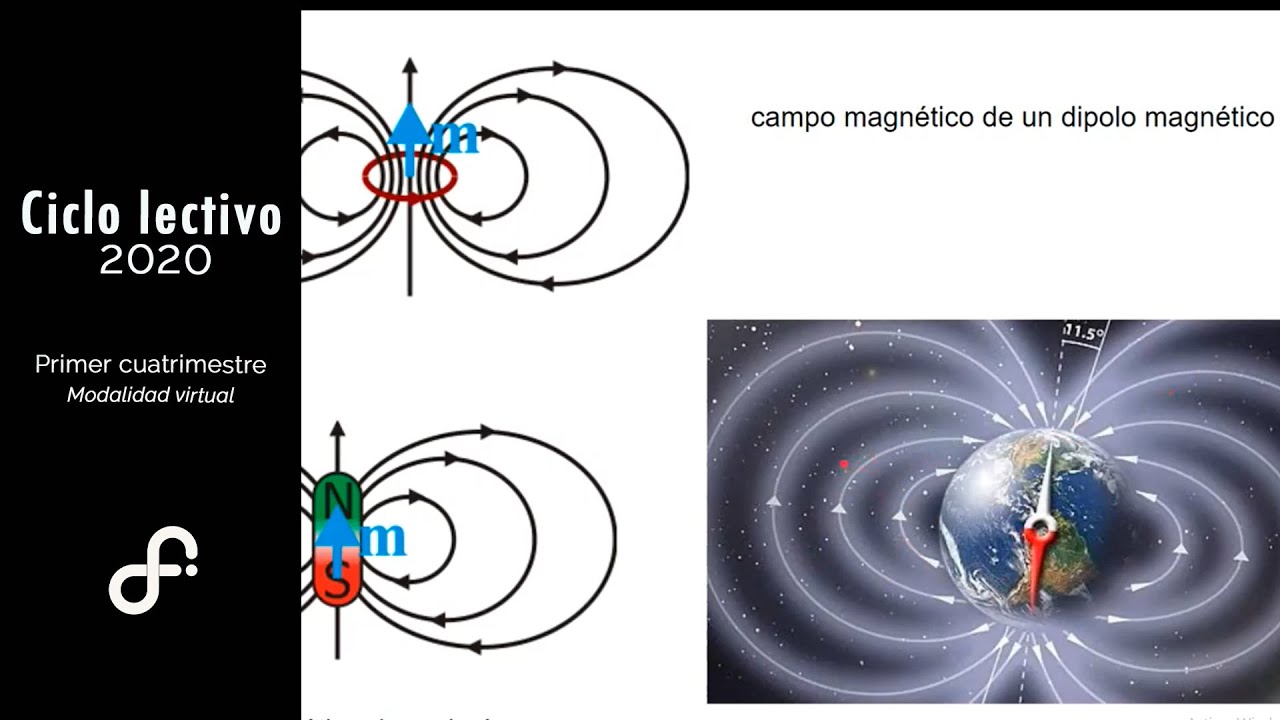
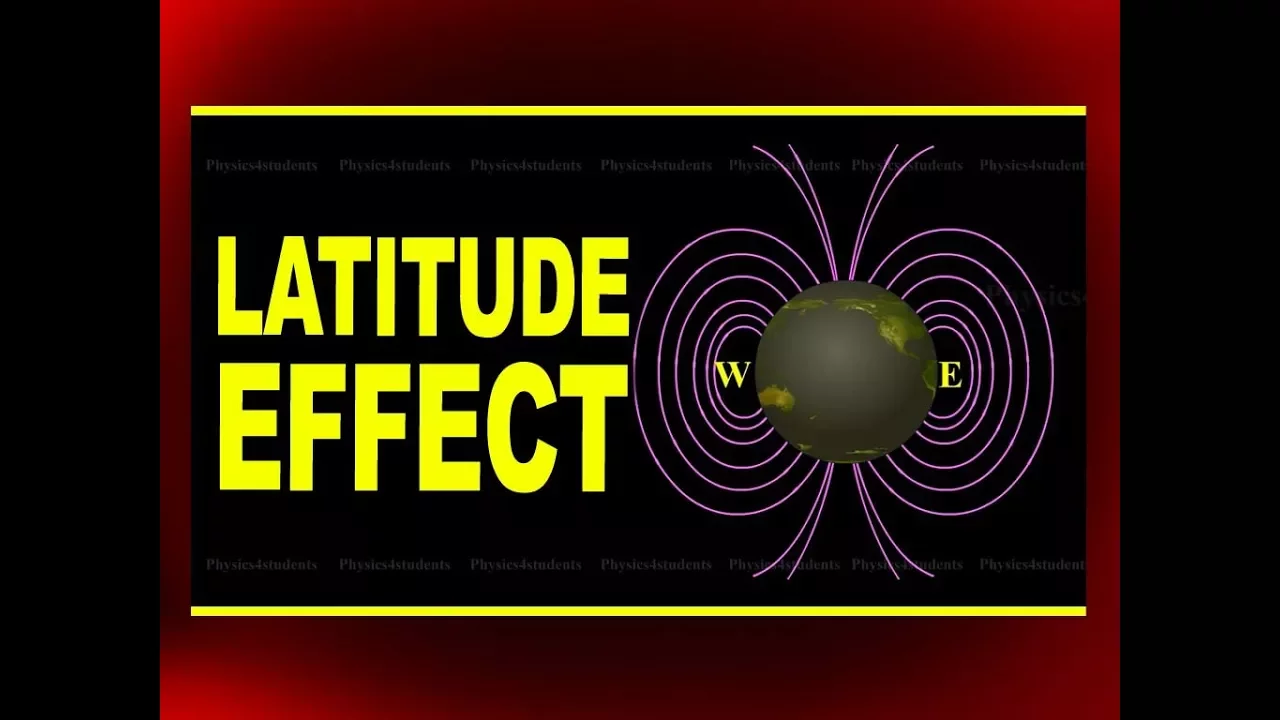
While the light from an explosion travels in a straight line at its famous constant speed, the particles are trapped in extraordinary loops by magnetic shockwaves generated by the explosion.
Crossing back and forth through these magnetic field lines accelerates them to almost the speed of light before they escape.
There are lots of cosmic rays in space, and some of these particles have traveled for billions of years before reaching Earth.
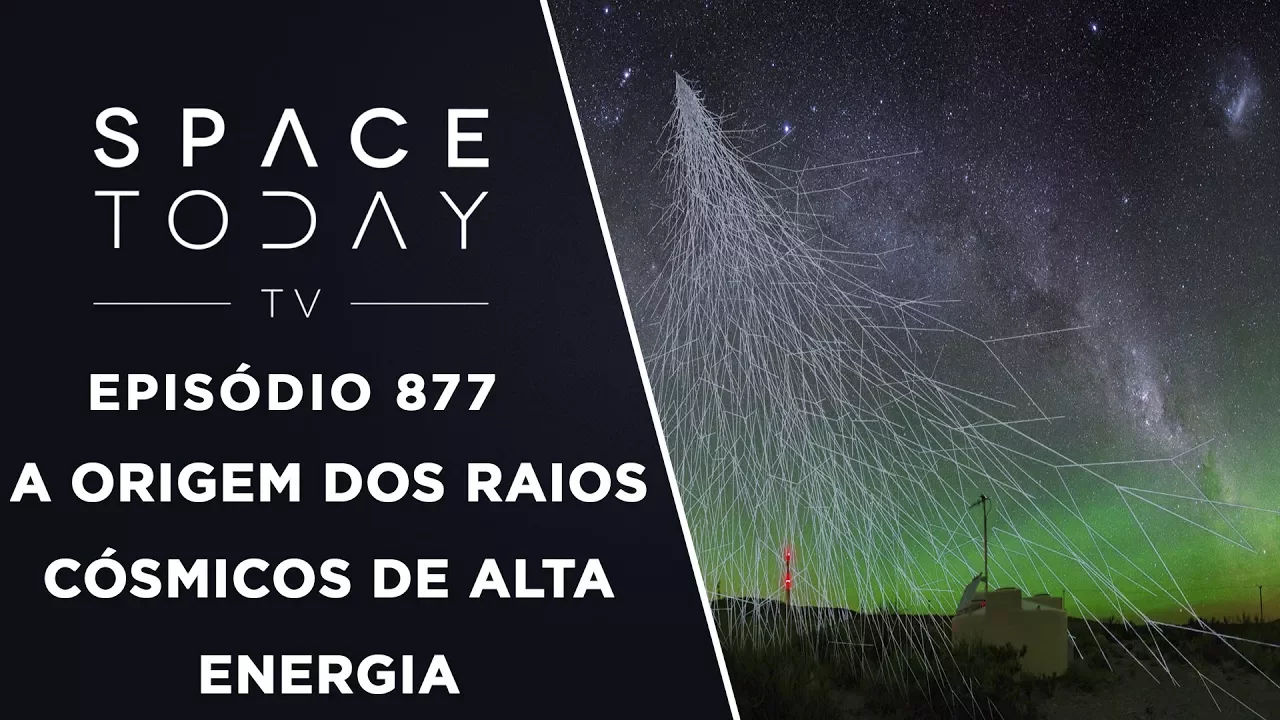
When they enter our atmosphere, they collide with the molecules there, generating secondary cosmic rays, lighter particles with less energy than the original.
Most of these are absorbed into the atmosphere, but some are able to reach the ground, even passing through our bodies.
At sea level, this radiation is fairly low.
But people who spend a lot of time at higher altitudes, such as airline crews, are exposed to much more.
What makes cosmic rays useful as messengers is that they carry the traces of their origins.
By studying the frequency with which different particles occur, scientists are able to determine the relative abundance of elements, such as hydrogen and helium, within the universe.
But cosmic rays may provide even more fascinating information about the fabric of the universe itself.
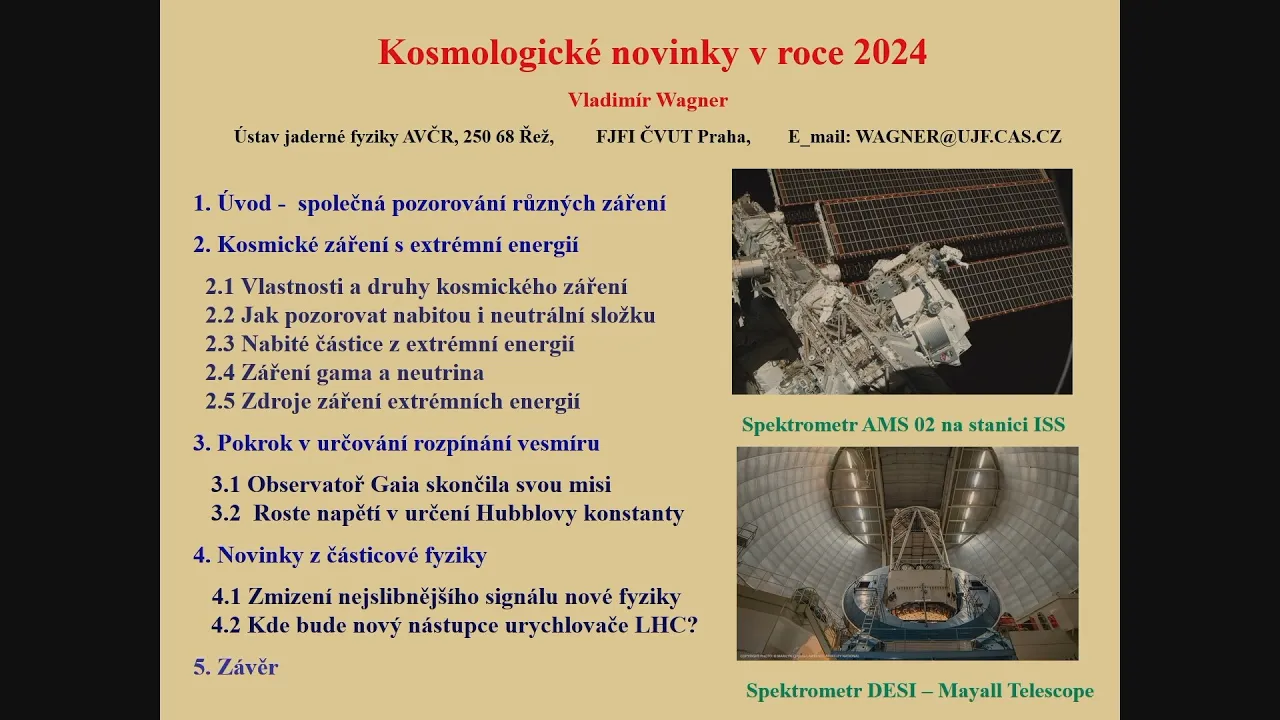
An experiment called the Alpha Magnetic Spectrometer, A.M.S., has recently been installed on board the International Space Station, containing several detectors that can separately measure a cosmic ray particle's velocity, trajectory, radiation, mass and energy, as well as whether the particle is matter or antimatter.
While the two are normally indistinguishable, their opposite charges enable them to be detected with the help of a magnet.
The Alpha Magnetic Spectrometer is currently measuring 50 million particles per day with information about each particle being sent in real time from the space station to the A.M.S. control room at CERN.
Over the upcoming months and years, it's expected to yield both amazing and useful information about antimatter, the possible existence of dark matter, and even possible ways to mitigate the effects of cosmic radiation on space travel.
As we stay tuned for new discoveries, look to the sky on a clear night, and you may see the International Space Station, where the Alpha Magnetic Spectrometer receives the tiny messengers that carry cosmic secrets.
Up Next

65:40
Ultra-High Energy Cosmic Rays: Origins and Acceleration
@solvayinstitutes3796
486 views•2021-03-24
61:17
First Billion Years of the Universe with the Square Kilometre Array
@iaaudc
121 views•2022-05-26

6:25
Kepler's Laws of Planetary Motion Explained (Educational Astronomy Video)
@Peekaboo_Kidz
404.9K views•2023-02-17
6:10
Gamma-Ray Bursts: Cosmic Snipers Explained | Astronomy
@kurzgesagt
15M views•2016-07-31
Related Study Plans & Knowledge Roadmaps
Structured learning paths in Astronomy
astronomy
Reionization: Pop III Stars, IGM & 21cm Line
01Foundations of Cosmology & the Early Universe
02Population III Stars & Cosmic Dawn
03Physical Mechanisms of Reionization
+ 2 more learning modules
17h5 modules
Explore Roadmap
astronomy
Planetary Rings: Dynamics, Roche & Resonances
01Foundations of Gravity and Orbital Mechanics
02Tidal Forces and the Roche Limit
03Structure, Composition, and Collisions
+ 2 more learning modules
10h5 modules
Explore Roadmap
astronomy
Asteroseismology: Stellar Waves, Ages & Cores
01Foundations of Stellar Astrophysics & Wave Mechanics
02Stellar Oscillation Modes: P-modes and G-modes
03Mathematical Framework of Asteroseismology
+ 2 more learning modules
35h5 modules
Explore Roadmap
astronomy
Adaptive Optics: Physics, Engineering & Control
01Foundations of Wave Optics and Wavefronts
02Atmospheric Turbulence & Optical Distortion
03Wavefront Sensing Technologies
+ 3 more learning modules
35h6 modules
Explore Roadmap