











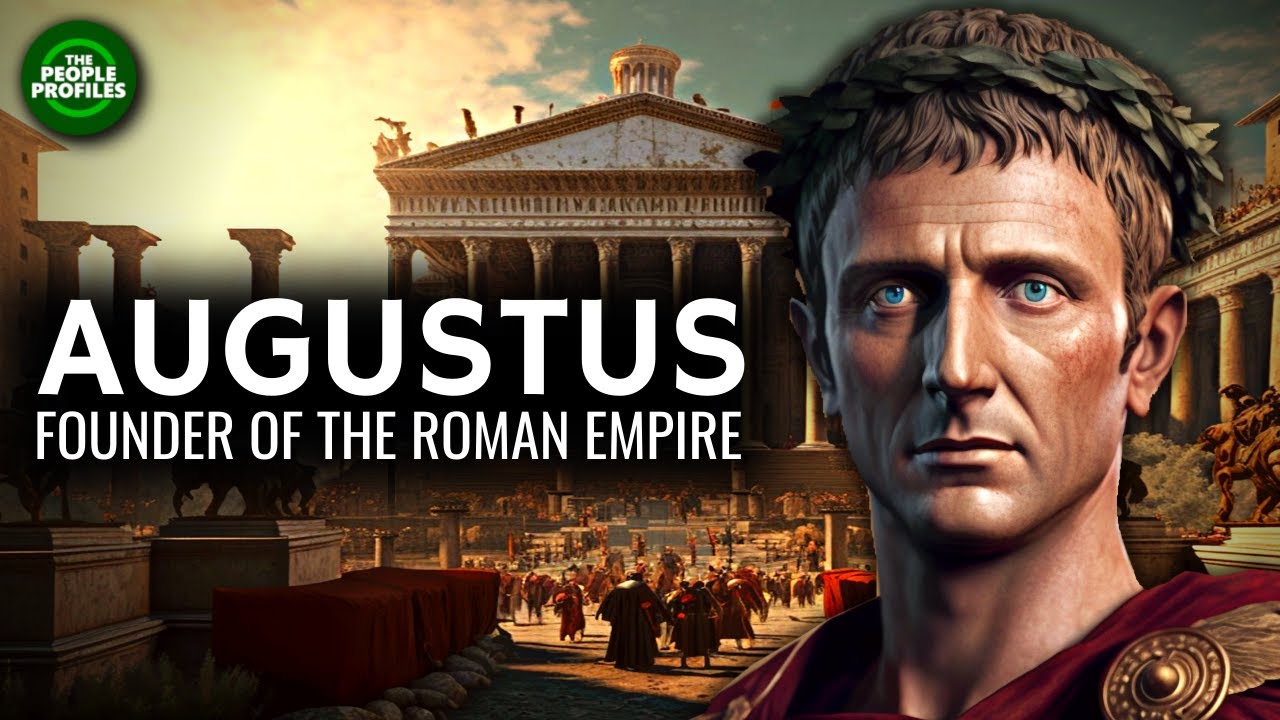









Gaius Octavius (later Augustus), Julius Caesar's great-nephew and adopted heir, transformed the Roman Republic into an empire through a combination of political acumen, military victories, and theatrical diplomacy. After Caesar's assassination in 44 BC, Octavian navigated complex political alliances, including the formation of the Second Triumvirate with Mark Antony and Lepidus, ultimately defeating Antony and Cleopatra at Actium in 31 BC. Rather than declaring himself dictator like Caesar, Octavian employed a sophisticated strategy of appearing to restore republican institutions while gradually consolidating power. On January 16, 27 BC, the Senate granted him the title 'Augustus' and the position of 'princeps' (first citizen), allowing him to maintain the facade of republican governance while exercising imperial authority. This period of relative peace and stability, known as the Pax Romana, marked the definitive end of the Roman Republic and the beginning of the Roman Empire.
Rome's Transformation: From Republic to Empire (27 BC - 14 AD)
Added:Julius Caesar would have been proud.
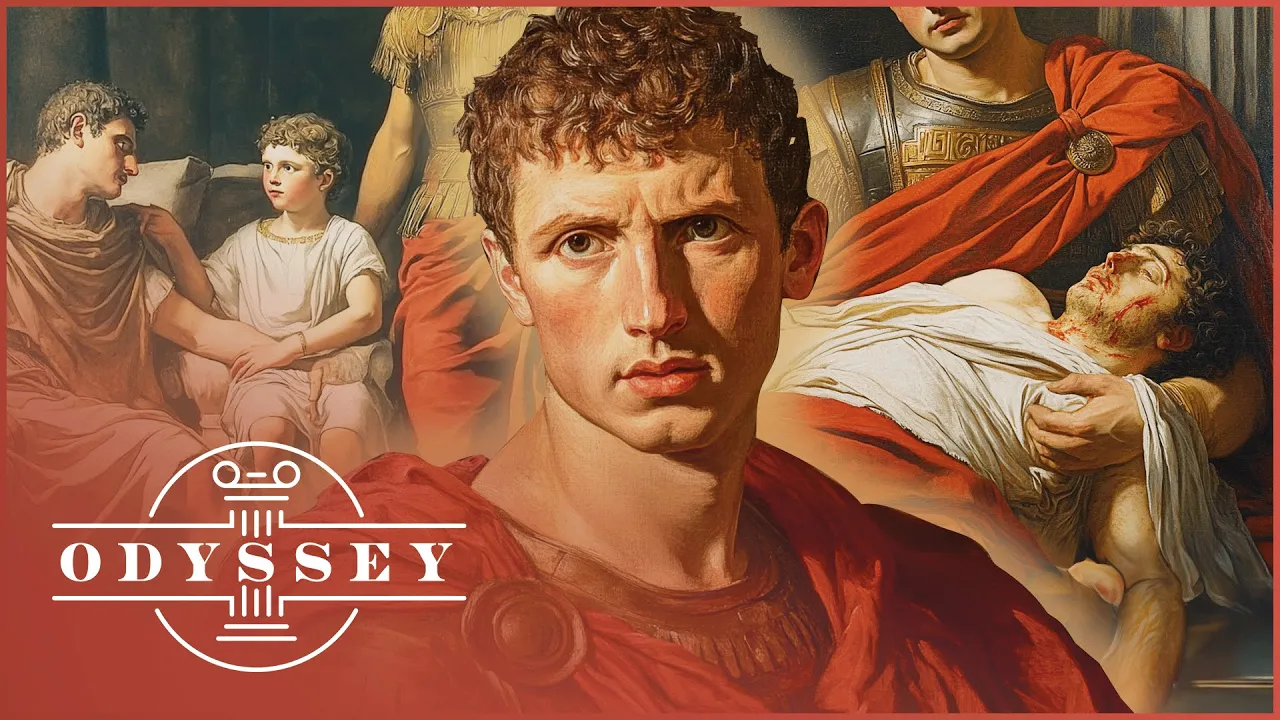
One by one, his heir had cut down the opposition, clearing the well-trodden path to Rome…and power… … Before that bloody Ides of March, before the Second Triumvirate, before the war against Cleopatra, Gaius Octavius was a young, sickly boy with scarcely anything to offer. His family is believed to have been a prominent one in their town of Velletri, and both his parents were of notable stock. His father was a governor of Macedonia for some time and his paternal family as a whole is thought to have been involved in both military and politics. But, leaps and bounds more importantly, Octavius’s mother was the niece of none other than Julius Caesar… The boy’s childhood was nevertheless more mild than was his bloodline. After the death of his father in 59 BC, when young Octavius was a mere 4 years old, the child’s mother remarried to Lucius Marcius Philippus, who was not too keen on becoming a stepfather. Thus, Julius Caesar’s sister, Octavius’s grandmother, took the boy in until her death by 51 BC.
By now Philippus had little choice and Octavius’s mother took her son back in.
By his teenage years, the boy was already finding purpose in his life. He was elected to the College of Pontiffs in 47 BC and eagerly began looking for additional responsibilities. When Julius Caesar had begun preparations for his expedition in Africa, the ardent young Octavius showed an interest in joining his elder relative. Failing to obtain his mother’s support for the endeavor, Octavius reluctantly sat out - at least until his next opportunity.
When Caesar was later carrying out his campaign in Hispania, Octavius finally got his wish. Off he went, to Hispania… The journey to join his great-uncle in battle was a laborious one. Before he’d even begun, Octavius fell gravely ill - an occurrence that would plague his life until the very end of it. Caesar, who already looked very aloofly upon his juvenile relative, had likely written Octavius off entirely by now. Young, weak, sick - not much of an aid to the soon-to-be dictator. But Octavius thought differently. He was determined. Focused. He wasn’t done… Having at last recovered from his bout of ill-health, Octavius boarded his ship and sailed off for his destination. Nearing Caesar’s battlefield, the zealous teen’s vessel was wrecked. Somehow making his way ashore with only a small bunch of his men, Octavius reached the coastline, though he was now on enemy territory. Still unwilling to back down, the boy marched on, finally reaching Caesar’s camp - stunning the latter.
Caesar had anticipated a disappointment from his great-nephew, not this magnificent feat.
And yet here was Octavius - weakened, drained, but eager to please. It was in this moment, historians believe, that Julius Caesar realized just how important this wily teenager could be.
Upon his return to Rome, Caesar presented the Vestal Virgins with his updated will - this one making young Gaius Octavius his one and only heir… By now, 44 BC, Octavius had left the service of his great uncle and traveled to Apollonia for further military training for his now bright future. This stint would come to an abrupt end when word arrived in Illyria of the brutal murder of Julius Caesar. In the face of stern warnings and advices against showing up in Italy so soon after the conspiracy had taken place, Octavius, now known as Octavian after his adoption by Caesar, set his sails for Rome… It’s likely that Octavian until now was unsure what, if anything, Julius had left for him. Mark Antony too hadn’t known that the assassinated dictator had given everything of importance to the rising star of the family. After finding out about the will, Octavian accepted his late-relatives offers, prompting Antony to begin flinging slanderous accusations his way, implying that the young man had only gained his position by immoral means. This hadn’t been true, but it is fair to say that Octavian soon gained notable funds through such methods - demanding that which had been held for Caesar’s planned military campaigns and stealing yearly tribute funds.
Still, the loyal veterans of the deceased dictator’s wars were quick to join the ranks of Octavian. The only problem now was that Octavian wasn’t short of a rival. Mark Antony was an equally valid option as the leader of Caesar’s remaining supporters. Thankfully for Octavian, however, the Senate was in favor of Caesar’s named heir, not the would-be one in the form of Antony. This led to the clash between Antony and Octavian brought on by the siege of Mutina. During Antony’s campaign, back in Rome, Octavian had been made a senator as well as imperium pro praetore.
Whether Octavian had made his next move based on purely internal motives or the fact that he felt the Senate had heaped far more praise on Decimus Brutus than himself after the defeat of Mark Antony is hazy. But either way, it was thus that Octavian switched sides, now demanding the revocation of the declaration that Mark Antony was an enemy of Rome, and insisting that he claim the consulships left open by the death of both consuls. When the Senate refused, Octavian used a show of military capability to change their tune. This was what led to his election as consul alongside Quintus Pedius, all the while Mark Antony was shaking hands with Marcus Aemilius Lepidus. And here is birthed the Second Triumvirate… The alliance that lasted from 43 BC to its official expiration in 32 BC did little more than push Octavian closer and closer to the helm of what remained of the Roman Republic. After the defeat and suicide of Mark Antony and Cleopatra, the true and sole remaining heir to Julius Caesar was left with three obvious options.
In one instance, he could march back to Rome and take two on his grand-uncle's plan to seize all power over the Republic. Repeating the steps of Caesar would be highly risky, however. Rome was undeniably in a state of instability and wanting a strong leader, but that didn’t mean that the Senate at a minimum had sunk so low as to hope for another dictator. For Octavian to storm into Rome and declare himself the singular ruler would open the door for yet another conspiracy and assassination. So to follow the path of his predecessor seemed scarcely a viable option.
Alternatively then, Octavian could do the complete opposite of what Caesar had done. He could return to Rome, finish out his duties, then return to a typical political life as anyone else. This would be a much safer way to go and life would be fairly easy. But, Octavian gave no thought to the concept of easy. Thus, his next option would be the one he would ultimately choose.
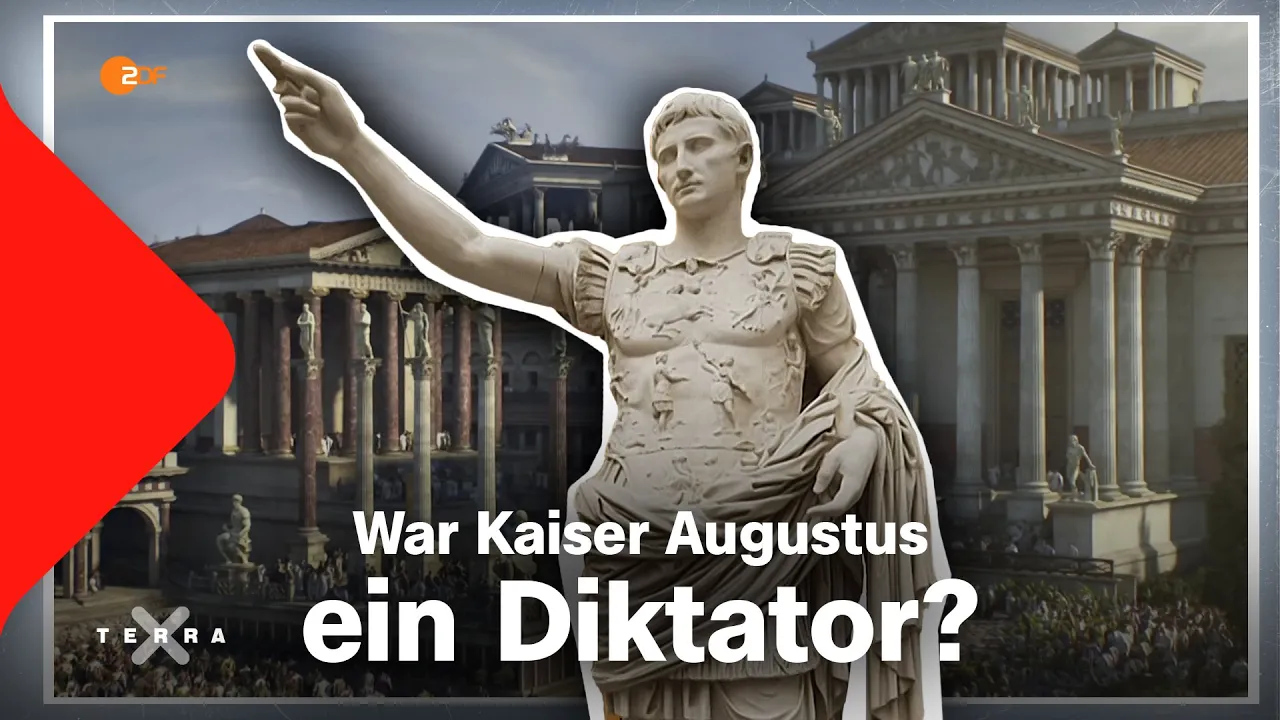
And that was to ease, or as some may say weasel, his way into power… After returning to Rome, and knowing that he still held enough potency as consul and had secured the loyalty of citizens and soldiers around the Republic, on January 13, 27 BC, in theatrical fashion for all to see, Octavian relinquished his prior-earned extra-constitutional powers, alongside his provinces and their legions, to the Senate. As he likely predicted, the Senate reacted by turning right back around and giving Octavian’s powers back, as well as granting him full control over the legions and provinces of Cyprus, Cilicia, Egypt, Syria, Hispania, and Gaul. Octavian played his role well, seeming hesitant to accept such a hefty offer and even appearing humbled by the idea of it all. Giving the impression that he was simply acquiescing to Senate pressure, the great victor of Rome finally accepted the 10-year offer of authority. With twenty legions now under the steady hand of Octavian and less than 10 under the weakened Senate, it appeared from the outside that the Roman Republic, or the ruins that had been left of it after the murder of Julius Caesar, were still intact. From the inside, the picture was not quite so clear though. From within, one could see the act put on by Octavian, continuing his role as the humble servant to the people of Rome who’d simply assumed power for the sake of the citizenry and the good of the Republic. And yet, at the same time, one could not deny the evident imbalance of power and Octavian’s comfort to wield that which he was given. And yet, what other option did the people or Senate of Rome have? Someone had to calm the chaos… On January 16, 27 BC, Octavian, by courtesy of the Senate, was styled both augustus and princeps. The former would from that point on become the title given to every Roman Emperor and is seen thus as the beginning of Octavian’s role as just that. However, the Senate intended more to bestow their ruler with an honor, not an empire. The latter title, however, signified his position as the most powerful of Rome’s political leaders - including the Senators themselves.
And yet, Octavian, now known as Augustus, was yet to break character. He still played the part of the servile leader and refused to wear nor utilize the signs of authority that his predecessor had, such as Caesar’s purple toga. Augustus dismissed crowns, diadems, scepters, and the like. How could such a modest man adorn such signs of unabashed absolute power?... Augustus was a good actor. The Senate fell for his every line and scene. Thus they granted him both the corona civica and a marvelous golden shield with the words “valor, piety, clemency, and justice” ironically inscribed upon it. If Augustus had wished for such a response from the Senate, then he’d carried out his plan quite perfectly. But, not everyone was as smitten as Rome’s politicians. Some saw through the scripted performance.
As months turned to years Augustus’s role as consul remained as sturdy as a rock. As humble as the man may pretend to be, year after year his power was maintained and one must question if he was really so opposed to it after all.
Augustus nevertheless was a terrifically perceptive and clever man. If people were starting to realize that Caesar’s heir may be more like Caesar than they’d assumed, the man himself was already aware the skepticism was hatching. And, he was soon granted a torturous yet perfect opportunity to take his acting to a higher level and silence such suspicion… In 23 BC, Augustus fell deathly ill. It wasn’t the first of such bouts of disease but it was this one that many, including Augustus, believed would be his final fight. And though he believed he was on his way out of this world, he was not going to leave without a closing act. As such, Augustus’s subsequent performance shocked many Romans and silenced those who had been doubting him. Despite having a clear favorite in his nephew Marcus Claudius Marcellus in terms of who he would like to see succeed him as princep, Augustus took no notice of Marcellus when it came time to divvy out his inheritance. Going through great pains to maintain his air of republicanism and fairness, the ruler of Rome named only possessions which he would pass down. His greatest general and ally, Agrippa, would inherit Augustus’s signet ring - a subtle way of signifying that this was his true successor as princep, though the apt Augustus would never state so directly. And as for nearly all else, Augustus’s co-consul and republican, Calpurnius Piso, would take the rest.
If this man, Julius Caesar’s heir, Augustus, truly was an unspoken emperor…why had he done only this?... For any who still saw through the princep’s production, they must have been greatly dumbfounded when Augustus returned to health, and declined to remain consul.
This was a genius political move, and by now, it stands hard to even prove that Augustus had a goal of becoming any type of imperial leader. In response, the Senate came to a new agreement with the now-proconsul, ensuring Augustus’s power throughout Roman lands and essentially securing yet again his unofficial role as emperor.
But, some still remained skeptical. After all, what was nearly Augustus’s final act had been quite necessary, and for good reason. Prior to his illess in 23 BC, the curtain had nearly shut on the sagacious ruler for reasons other than death… Either just before the diseased spring of 23 BC or a bit earlier at the end of 24 BC, Augustus participated in a trial ripe with scandal and the potential to strip him of his mask and reveal his true aims. This was because the former proconsul of Macedonia, Marcus Primus, was on trial for instigating a war with the Odrysian Kingdom - an ally of Rome. Primus had done so without consultation with the senate, something that was absolutely inexcusable. As the trial carried on, drama began to unfold when Primus’s defense declared that it was Augustus who had not only approved, but ordered the military action. Primus himself clarified that it was the ruler’s nephew, Marcellus, who gave him the command. Either way, the implication of Augustus was catastrophic. If this was found to be true, all was ruined for Caesar’s cunning heir. He would no longer be able to deny his desire for dominance and willingness to throw the Senate’s rights and authority to the curb. The consequences of such findings were in fact so potentially deadly for his aims, that Augustus himself showed up to testify during the trial… To lie under oath was a considerable undertaking. Nevertheless, some members of the jury believed that when Augustus spoke of having given no order for war to Marcus Primus, he had done just that. So, while Primus would ultimately be found guilty, a new crack had formed in Augustus’s facade, and the willingness of multiple jurors to vote against the guilty verdict must have given the princep a racing heart… Having escaped the doom of an acquittal of Primus, Augustus now saw his reaching authority resecured. Powers of proconsul, censor, tribune, and so forth were all held by the wily ruler. Scene after scene were acted out and as the years ticked by, Augustus maintained the thin veil of republicanism as to not alarm any, though remarkable support from the citizenry who wanted to see even more power in the hands of Augustus notwithstanding.
More titles and powers were bestowed upon him thus in the years to come. As his powers grew, Augustus looked to embrace them more and more. In one part through legislation, such as his new laws promoting marriage and reproduction utilizing both rewarding incentives to those who follow the rules and serious punishment to those who don’t, namely adulterers. In the other form, his shows of power came from military expansion. Growing Roman holdings in Hispania, Lusitania, and more. And yet within Rome, there was, at long last, peace… Having been plagued by calamitous and bloodstained periods of civil war, Rome had much needed a time of calm, and Augustus brought just that. This span of time, which would continue far into the AD era, became known as Pax Romana.
But all legends die, and Augustus had already spent most of his life on borrowed time. The sand in the hourglass had run out… On August 19, 14 AD, at the ripe old age of 75, the extraordinary and illustrious Caesar Augustus breathed his last breath. It’s believed that his final words to the Roman public before his passing in Nola were, “I found Rome of clay; I leave it to you of marble”. And to those closest to his heart whom he saw in his dwindling hours, the first emperor of Rome, at long last, took off his mask and broke character. “Have I played the part well?”... … With the curtains closed and the show over, there was only one question remaining in the minds of Augustus’s grieving fans - who would play his part in the sequel?... Even in his endmost days, Caesar Augustus laid claim to no son nor obvious heir. It would be the job of his sister, Octavia, his wife, Livia, or his daughter, Julia, to provide the great ruler with his trusted successor. The first of these women had given her brother the option of Marcellus, her son, but he had already met his end in 23 BC. Subsequently, Augustus next turned to his daughter, Julia, whom he wed to the reliable and quite remarkable Agrippa. This marriage produced 5 sons, 2 of which the emperor took quite a liking to. He adopted both boys, Gaius and Lucius, with full intentions of making one of them his chosen heir - that is, unless one of Livia’s sons from her prior marriage could serve him better. And this latter option was still quite probable. Augustus’s stepsons Drusus and Tiberius were both experienced military generals and significantly older than his juvenile grandsons. Still, Caesar hoped to see Lucius and Gaius gain their own battle experience and prove themselves to be equally valuable choices. This wish was utterly crushed, however, when much to the unbridled horror of Augustus, Agrippa and his two chosen sons all met their ends within the span of scarcely more than a decade. Further to the sheer consternation of the now aging ruler, Drusus was also dead by the end of the BC years… Lucius had succumbed to illness, Gaius due to battle wound, and Drusus to a fall from his horse. The only life left deemed worthy by Augustus of ascending to his throne was Tiberius - who didn’t exactly want any of this.
After Agrippa’s death, Augustus had forced his stepson to divorce his then-wife and instead marry his step-sister, Augustus’s daughter. Both adult-children were resentful toward the situation as a whole, being painfully aware of their places as pawns in Augustus’s imperial games. Julia would thus affair herself into being exiled by her own father while Tiberius too opted to stay away from the emperor.
But alas, in 4 AD, Augustus was calling, and Tiberius had to go… Returning to Rome and thus to his overbearing stepfather and puppet master, Tiberius was officially adopted by Caesar Augustus and named heir to the unofficial Roman Empire.
And just like that, the curtain was drawn, and Act Two commenced…
Up Next

Augustus and the Foundation of the Roman Empire: A Historical Analysis
@OverlySarcasticProductions
597.6K views•2018-09-21

The Great Schism of 1054: Causes and Consequences
@SacredCathedrals
113.5K views•2026-02-19

The Geopolitics of the Ukraine War and the Rise of Global Autocracy
@JordanHarbingerShow
468K views•2025-04-19

Understanding the Cold War: Superpower Conflicts and the Road to Détente
@OverSimplified
46.1M views•2019-01-24
Related Study Plans & Knowledge Roadmaps
Structured learning paths in History