



















Soil organic matter serves as Earth's largest carbon reservoir, containing more carbon than the entire atmosphere, and its management is critical for global carbon cycling; building soil organic matter requires balancing inputs (plant residues, root exudates, cover crops) against outputs (decomposition, erosion, leaching), with conservation practices like no-till and cover cropping helping to slow decomposition and protect organic matter through physical aggregation and reduced disturbance, though achieving measurable increases requires substantial biomass inputs over extended periods.
Soil Biology & Organic Matter Management for Soil Health
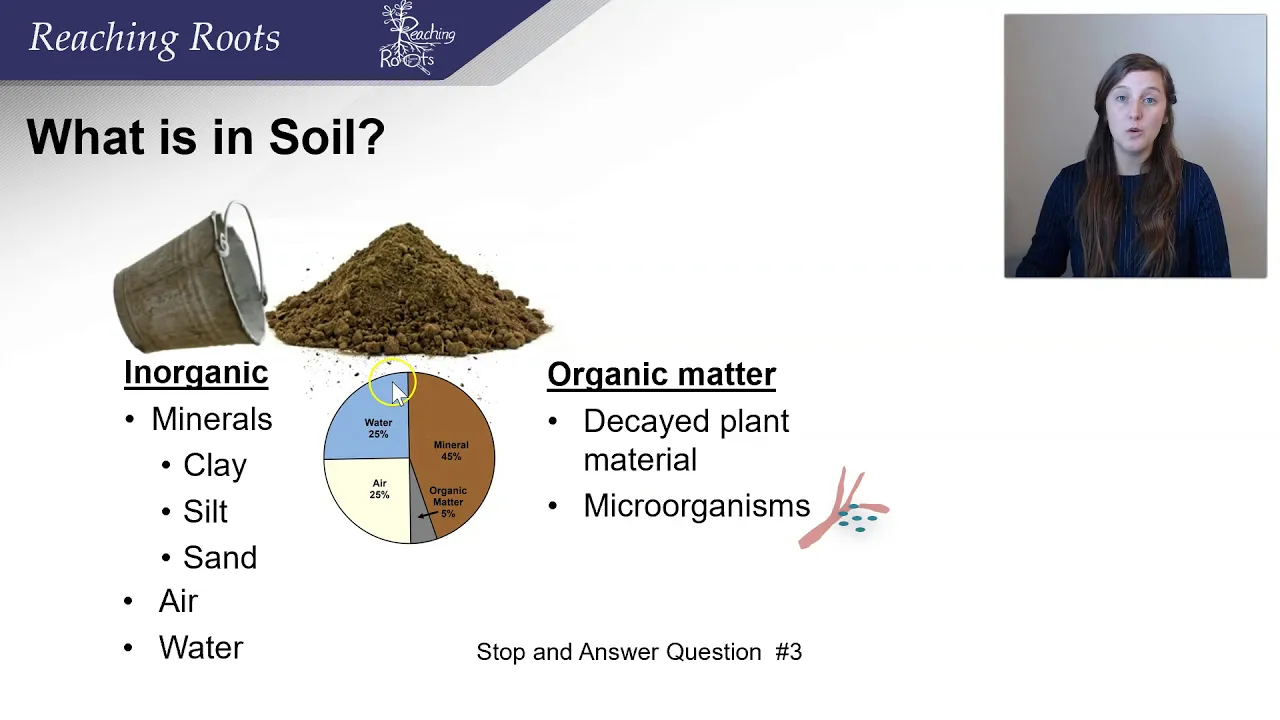
Added:Basic soil composition and texture, including the distinction between mineral components (sand, silt, clay) and organic components.
The fundamental carbon cycle, specifically how plants capture atmospheric carbon dioxide through photosynthesis and transfer it to the soil.
An introductory understanding of soil ecology, recognizing that soil is a living ecosystem inhabited by bacteria, fungi, protozoa, and nematodes.
The basic concept of cover cropping and its general purpose in agricultural systems compared to cash crops.
Regenerative agriculture practices and conservation tillage (such as no-till farming) that minimize physical disruption to soil biology.
Advanced rhizosphere ecology, focusing on chemical signaling between plant roots and beneficial microbes (e.g., mycorrhizal fungi).
Soil testing methodologies and biogeochemical assays used to measure soil microbial biomass, respiration, and active carbon fractions.
The economics of soil carbon sequestration, including carbon credits, agricultural policy, and climate change mitigation strategies.
40.7K views595likes51:02Original Release: 2018-03-01
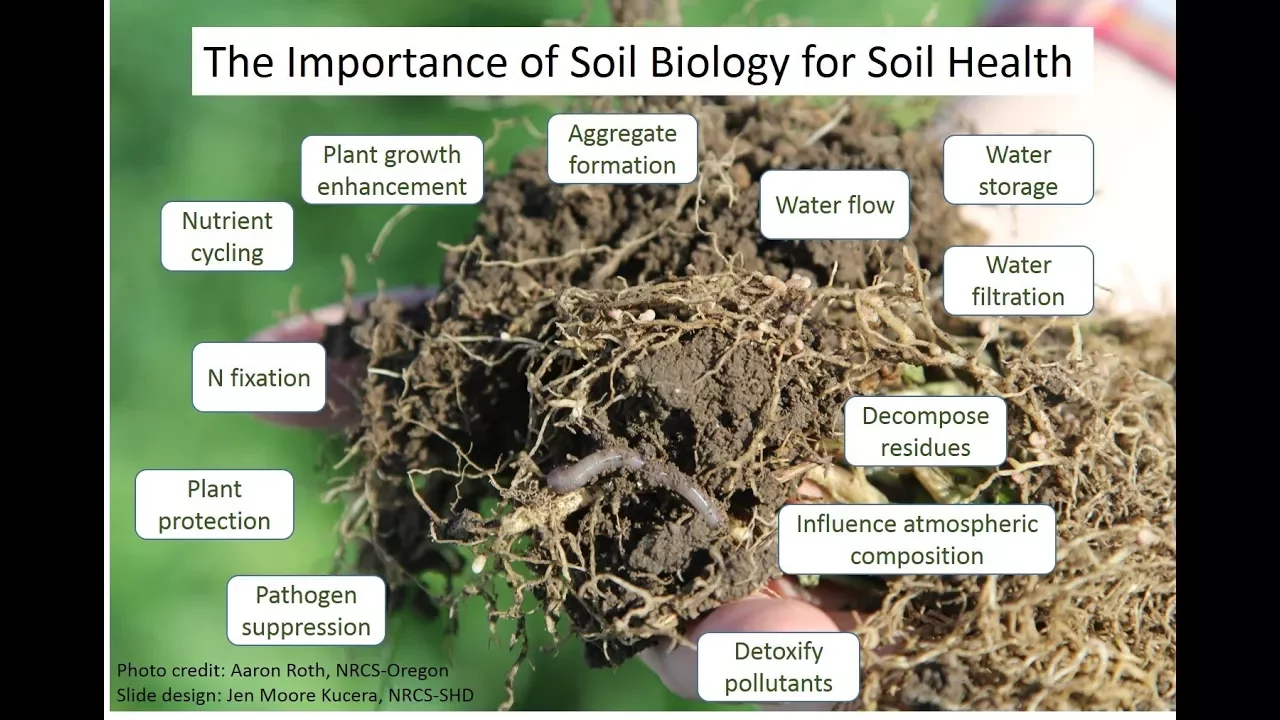
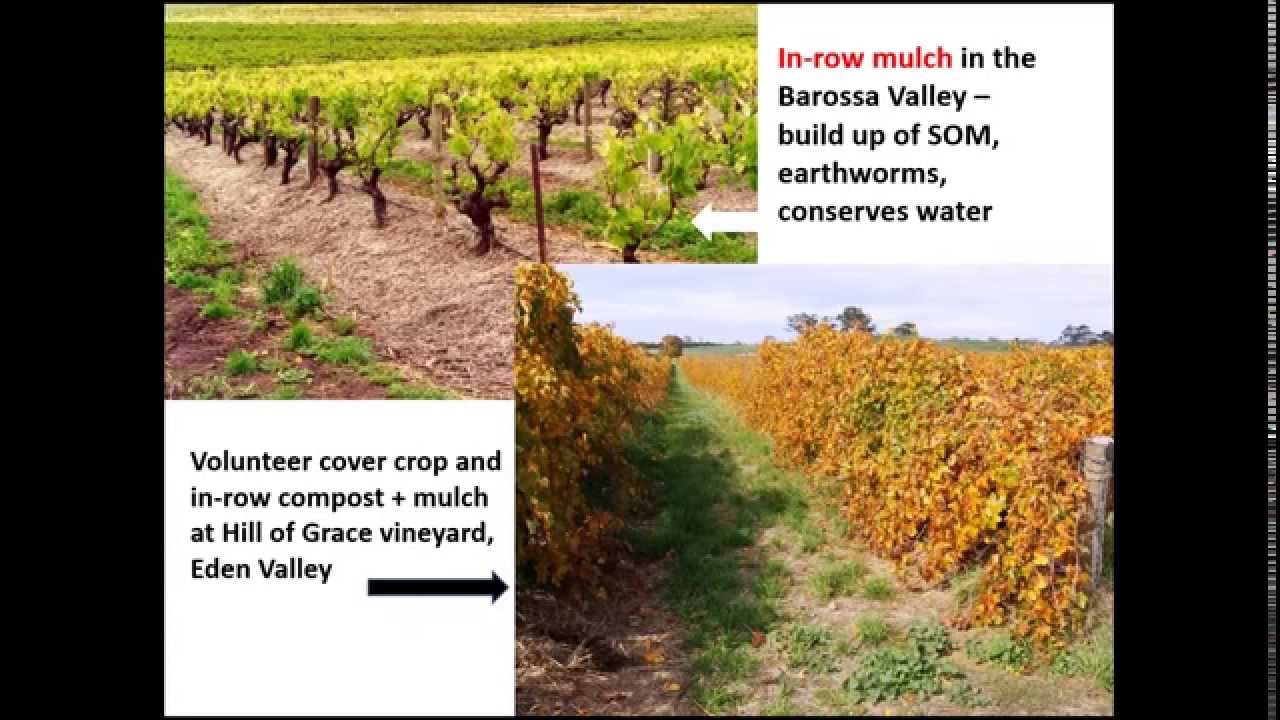
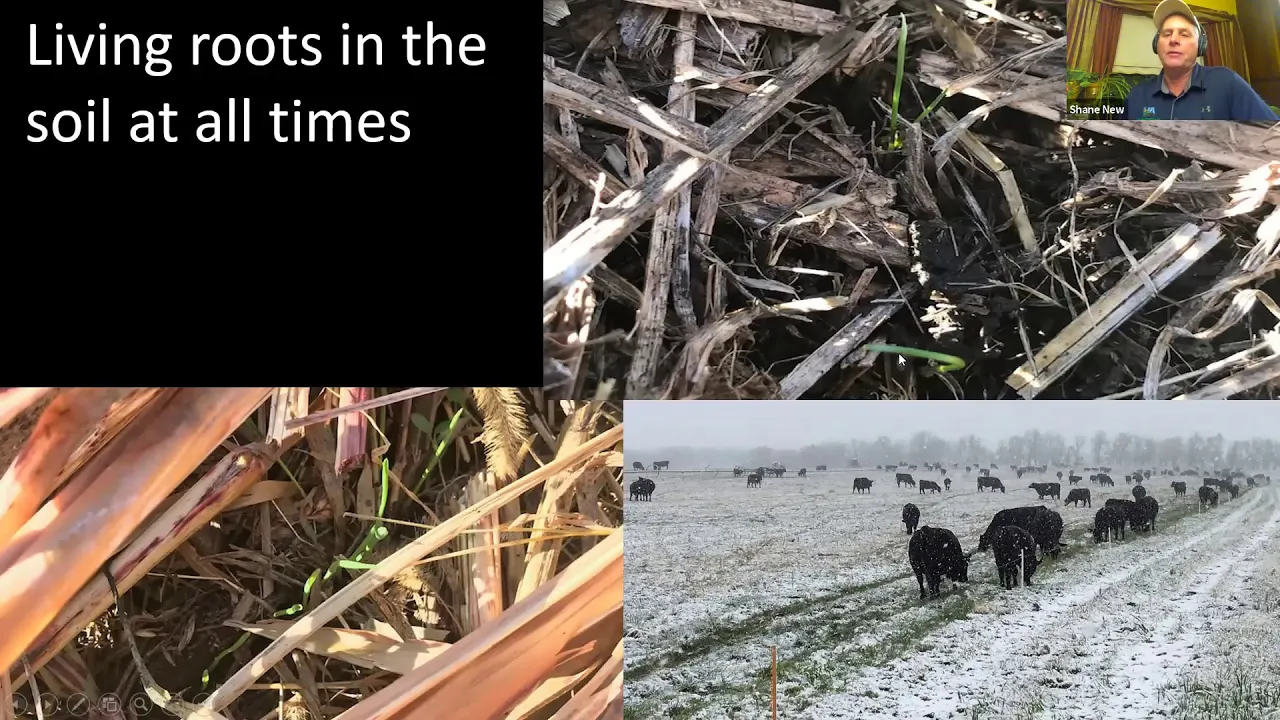
so I'm going to start out breaking breaking whatever rules after all this is a revolution right all right I really didn't know where to start with this guy's I was teaching it about five until about 5:30 yesterday evening in College Park Maryland his last day of the semester so I couldn't very well leave and by the time I got into the hotel and hit the bed it was about 2:00 in the morning so I'm not totally here you know what ever wanted to charge to get from the airport to here you know how over is takes advantage of you right $175 what the uber price was I I found the sir I found a taxi for 75 so we're doing all right I want to start with this some of you may have visited this place he's become kind of a tourist attractions in Arizona out in the desert although first off what are they doing all that grass growing in the desert right well they're obviously not too too smart ecologically but this was supposed to be the pinnacle of our ecological knowledge this was started oh gosh about 30 years ago wealthy individual invested in this first it then got taken over by number of universities and research groups is called biosphere 2 I never really found that about biosphere 1 but it's basically a gigantic sealed greenhouse it includes some lungs that expand so that an air pressure changes the greenhouse volume can change so they can keep it sealed and they think well right we're we know so much about ecology and how the earth works we'll be able to really learn if we sort of make this mesocosm but we can create this world we're going to monitor everything and monitor all the gases and seal it up and we should be able to create a balanced system you know plants produce oxygen and animals use it and well they had different biomes that some of these greenhouses were oceans and some were tropical rainforests and some are grasslands it's somewhere agricultural and it was it was very complex and then they put some people in it they called them biosphere Ian's they had a team of young scientists and this is supposed to be all sealed up that's wrong it's a balanced ecosystem so part of their job is to grow their own food they weren't sent me anything in all right the water gets recycled the air is recycled well first first thing these people found it was really hard to grow your own food if anybody ever tried that I had a grad student who many of you know Joel Gruber anybody know Joel Gruber it's not too far from here everybody I'll tell I'll tell Joel that lots of hands ones right out well what an interesting guy huh he was my grad student years ago and one year he came in in the middle of his program he said for the next six months I'm only going to eat what I can grow my garden that's it and he had boxes of sweet potatoes and roots and stuff stored in the cooler where we keep our samples and it was it was an interesting experience he started losing weight and he stuck with it so these folks find it was hard but worse than that they were in there for a few weeks and I started getting dizzy and feeling woozy and they were sort of getting a high altitude sickness like as if you were you know over 15,000 feet at the top of the Andes Mountains or something and they're monitoring all this stuff and they're running out of oxygen the oxygen is getting low I said well you have everything in balance we had enough plants to produce the oxygen what was going on here these guys forgot about the soil so they wanted to grow plants and so they they had to put soil into this thing so they done up there was an old lake bed out in the desert and they dug that up and mixed it with peat moss and compost creating a kind of a potting mix and filled it to about three three or four feet deep now you know what soils look like right the organic matters at the top it's not like organic rich all the way down so they had this huge amount of organic matter in the soil because that sounded like a good idea and they stuck it in this ecosystem and of course all the bugs in the soil went wild there's the middle of the desert time and it's totally out of equilibrium and the soil starts to decompose right using up all the oxygen giving you all the co2 up the concrete by the way didn't help either we often forget about concrete but it's a carbonate so they had it they had a cheat these people were gonna die they had they got to pump in oxygen and cheap so this was sort of the best efforts thought we knew everything thought we could create a system hmm wasn't that simple and the big problem was they forgot about the soil everybody forgets about the soil it's just like people that study plants forget about the roots yeah how much do you know it's above ground how much do we know but below guys well it's hard right if you've ever tried to study roots it's hard we don't live down there it's hard to get really hard to get samples almost nobody does it they just use some kind of estimate from some old paper someplace and they said well we doubled the top it must have doubled the roots but that doesn't work that way so soils are a really important part of the whole carbon cycle in the world just like that greenhouse model ecosystem we can't forget about the soil it's really important if you look at where the carbon is and this is what's driving all this crazy weather you know this you know increase for okay then the rains come and they don't come and they come too hard and all this strange stuff we have going on is being driven by too much carbon in the atmosphere this is a global carbon cycle and and the part of it that's that's active is up up here you know that it's driven by solar energy of course and the vegetation doesn't have as a part of it but there's more carbon in the soil and you hear this statistic a lot but not everybody appreciates it the soil is where the carbon is depending on how deep you go and what you include three or four thousand these are petagrams that's a big number so there's actually more in the soil than there is in the entire atmosphere of the planet Earth and all of the vegetation the soil has been soaking it up and storing it from so every year there's about a hundred and ten pentagrams that are taken out of the atmosphere by the vegetation photosynthesis you know above 50 goes back in by the same plants you know at night they perspire right and most of the difference goes into the soil that's the dead plants that's the root exudates that's all all of that now what goes into the soil and what comes out of the soil in balance that's a big part of the problem and that's because of the way we manage soils it's not just agricultural soil as part of its the fact that we've got 7 billion people on this planet and we've cleared more land and turn more of an into agriculture or it's and grasslands than ever before so every year the way we're doing it now the soils are losing carbon anybody that's taken cleared natural vegetation a forest or plowed up the Prairie did I say plow strike that that converted you know a grassland to cropland those that under most conditions you start losing organic matter so what we really need to do is build this organic matter and change that balance we have to put more into the soil than what the soil is respiring out and is losing and you so it's not that huge difference right 60 and 62 out should be doable I think it is if everybody we're doing stuff that a lot of the farmers in this room are doing we'd be making a lot of progress right it's it's sort of scaling up and improving what we do so organic matter is really kind of an input-output thing it's like your bank account yeah and organic matter has these fine that you can make a financial analogy it's a little bit like money there's a quandary and you can save your money and put it under the mattress but then what good does it do you right you got money on you get money under the mattress or you can spend it in part have a good time buy a new tractor and you our take trip and then you've run out of money we really want to do both and we want to do both with our organic matter we want to protect it accumulate but we also have to spend it if you want to get the nutrients out of it but we want to feed the food web we have to use it you have to keep it cycling okay so let's look at your organic matter is kind of like a tank that we're trying to fill and most of it comes from plant residues that's really the only way to fill it sometimes we think we can do it by buying organic material compost from down the road the newer from the feedlot or something like that but in the big picture you only do it by growing plants and some of that comes above ground but a lot of it comes from below ground and the below ground stuff is actually more important there's a little less of it but it'll stick around longer and you'll have a bigger impact on soil organic matter the stuff that comes from the roots so those are the main inputs plant residues animal waste manure and rise a deposition and roots and that has to be balanced with the with the carbon going out we need to know what's coming in we need to know what's going out so we can make sure that there's always more coming in than going out as far as we can now you get to a point where you're probably going to be in equilibrium but let's hope that's a really good point right most of it's going out by oxidation all those critters are doing what you're doing right now digesting your breakfast and breathing out co2 and soil is breathing out co2 all the time which is a good time we just have to make sure we feed it enough right some bits harvested which is a good thing too because that puts money in the bank we have to take some of that carbon away we have to haul out that the corn grain or the hay whatever it is we're taking away but we have to keep in mind that what however sneaks out a bit but there's no excuse for letting some of it wash down the hill there's really no excuse anymore ten thousand years of agriculture we didn't know how to control that that we know how to do it now right I think there's folks in this room who probably have seen that difference during their lifetime and they don't worry about our erosion anymore because they know how to control it it doesn't happen on their farm virtually none when you're doing no-till and cover crops and minimal disturbance keeping that residue mat on the surface erosion is ancient history you're almost as good as the forest but not everybody's doing that so I hope NRCS for instance doesn't forget their erosion erosion method message in their drive for soil health the erosion is still important in lots of places maybe not so much in this room some of it leeches out with the water it's dissolved organic carbon and it goes down into the groundwater and there's a certain amount of that that's a natural process in fact that's one of the main ways forests and natural systems lose their carbon so we have some control or the ins and the outs just real quickly it's again it's kind of an input output it's like a tank you got water going in and you have a drain and we can control what's the level of that organic matter the level of that water by whether or not we have the drain wide open and what opens and closes the drain the biggest control on that is with how much we physically disturb the soil that's where no-till comes in so we want to conserve the soil integral cover crops cover crops is just adding more photosynthesis taking more carbon out that wasn't being done before right so it's a added input and we want to have high productivity if we have low fertility and poor management low input agriculture is not conserving anything there's plenty of low pending input agriculture all around the world I work all over the world with poor farmers they can't afford inputs that are working under marginal conditions and the soils are going downhill fast literally and figuratively you course need to return the residues that's a question if you're doing biofuels you have to keep this in mind there's lots of work for shows if you take all the residues off or or something like silage very hard on the soil and it happens quick you start taking that residue off you start bailing it and selling it and it does not take long I mean it just takes a year or two before you start seeing things like the infiltration decreasing and your soil fertility going down and pretty soon you're getting calm production it's going to go down as well so you really have to balance the value that you get from those residues and how much you can afford to take off you pretty much need to leave at least a third of the production above ground production on the soil grazing is great now cows get a bad rap cows not really bright animal those of you work with cows they're not the brightest if you if you let the cows do the managing which is what most ranchers and farmers do they don't do a very good job of it but if the farmer does the managing in a really intelligent way controlled grazing is a benefit to the soil and a benefit to the ecosystem and a big benefit to the farmers bottom line we could we could do a whole session on that if you want to talk about building soils you want to have maintain moisture and soils organic matter is very closely related to moisture all those processes need moisture keep that surface mulch I've already had a lot of things appropriate n levels I'll talk about that a little bit more in terms of Jennifers Goldilocks story in a sweet spot that's exactly right year-round vegetation and people often say well we only had six months of vegetation in a corn soybean rotation is that true six months what six months tell me what six months you've got active roots and covered soil with green vegetation and a corn soybean rotate which months is your field covered green and you see the land in April in May when does it when does it when is it completely covered when do you have roots all over in the soil when do you have a vegetated soil probably June right in July it looks great August pretty good but what about the end of August since artisan s start to mature what do you think is happening underground when you see those leaves yellowing at the bottom of the plant the roots are dying the roots the nutrients basically by the end of August Nick you're not eggs all done maybe into September depends on your growing season but a long time before you harvest so really it's June July and August it's not six it's three months by September you just got dead dead and dying plants out there the roots are no longer doing much and they're just sitting there so you've got three out of 12 months in the typical corn soybean rotation and we need to get those cover crops in while the crop is still there well that dead crop is sitting there drying and getting ready for harvest we want the cover crops coming up and the roots would be populating stuff enough to do of course erosion is the worst number one don't forget about it it's not a dead issue and most on most farms tillage but also low print productivity lots of problems fire there's still lots of places where they burn crop residues these are the Kansas suitable yeah okay what can you say total rely on sat inorganic fertilizers I'm not saying inorganic fertilizers aren't a good thing but when you're totally relying on it to the point where you're excluding any organic sources then it could be a problem especially with excessive mineral nitrogen and using plants that don't have a lot of roots which is sometimes what is actually an aim for I've seen engineer types figuring out this biofuel business and say well we want we can Harper don't I'm wasting all that photosynthesis energy and putting into roots we want to have sort of the minimal roots that will support a plant and then so we can harvest everything and send it to the ethanol plant all right no I don't think you're gonna get too far with that strategy but that's what they're working on and then we have sort of the hard fact that most of the carbon that we put into the soil whether we're putting it in with a cover crop or with compost or whatever mostly it's gonna get respired it's gonna get eaten its food for the all those creatures that Jennifer was talking about some are more efficient than others so some of them breathe out more of it and some grow on more of it but but this is sort of the the range that you can expect you put a hundred grams 100 pounds of plant material into the soil you can expect whoops 60 to 80 percent of that to be respired during the first year in other words most of its gonna go which is good I mean that's that's work in the process but you can't expect to build organic matter in direct relationship to what you're putting in it most of its going to get lost some of its going to turn into living organisms and they're gonna be around you're gonna build a biomass maybe three to eight percent pretty similar to what Jennifer was saying and some of its going to be various forms of remaining either the remaining plant tissue or the microbes the dead microbes or other forms that have been stabilized they're gonna stay there for a while and when while might mean decades it might mean centuries sometimes we carbon date this stuff and it stays there for thousands of years we want some of it to build up because we're going to think about it microbes and the organisms the soil extremely responsive to food you put a little food on the soil they take off they multiply they turn on their enzymes and they use it up so why is there any organic matter in Soylent to begin with why isn't it all get eaten up there shouldn't be any yeah it's not all hamburgers and french fries well you're implying that the food just mean you think there's some cardboard packaging to good eating that's true to some extent but not much there almost any kind of organic food outside of plastics most plastics there's an organism that can eat it you know the white rot fungi do pretty well on lignin and wood so biologically you'd think well there wouldn't be any soil organic matter it keeps coming in that you know if you put in more you're just gonna grow more microbes lives and they all get eaten the reason is that the products of it end up getting into an environment in the soil where they can't get digested where they're either physically protected or they're chemically adsorbed onto clay surfaces it's one of the reasons why clay soils have a lot more organic matter it's easier to build up and in a sandy soil or the environment may be too cold I think things are cold the whole thing slows down so if you're in Canada or North Dakota and the same rainfall you're gonna have a lot more organic matter than in Texas just because it's cold and the cold slows down the decomposition more than it slows down the plant growth or it might be too wet that's why weapons and low spots and poorly drained soils have more organic matter now we used to think this is a this is a chart of my previous edition of textbook that I wrote in 2007 and I was behind the times 400 by 150 years scientists been studying soil organic matter and they really misses boat so this might be this might be a little hard on you but this is sort of a traditional way of defining organic matter of course there's the living there's the dead and then there's really really did that's Fred nag coughs terminology and the really dead is the what we call human and we used to think there were these humic substances and non-heme big stuffs as well they're not humic substances were things like enzymes and you know biomass and stuff like that and the humic substances you could extract from the soil what they used with sodium hydroxide so it's been about 150 almost 200 years since they started extracting salt with sodium hydroxide standard method now yours you use sodium hydroxide around the house one brand name is Drano all right concentrated sodium hydroxide what do you use it for put it down the drain to dissolve organic gunk like grease and hair and stuff that's in the drain right does the same thing in the soil it'll dissolve all the organic matter out of the soil and you'll get this black soup of dissolved organic matter and almost everything we know about humans has been studied on that black soup that was dissolved out of the soil well it turns out making that black suit really changed the organic matter dissolving all that stuff and most of what we thought of there's there's it's really ashamed there's a humic substances Society and it's full of scientists and their whole career studying these things in the black soup and this humic acids and fulvic acids that come out so the old idea was that leaves and or you know it would decay and they decay longer and they'd be used by the microbes and they'd be turned into bigger and bigger molecules that were so complex that they couldn't decompose that was kind of that it's not all hamburgers and french fries I think is what he was probably getting at first of all there's no really chemical reason why complexity would make it harder to decompose but that's the way people thought about it and secondly turns out that that that's not really what's in the soil that's what you get in that black soup and you dissolve it in Drano but when they we now have instrumentation that can look at organic matter in the soil through imaging through spectroscopy through there's number MRI and hexanes we have a lot of high-tech kinds of instrumentation that can look at the kinds of chemical bonds that are in the soil and the kinds of molecules that are there we don't find this stuff we don't find these huge complex molecules so this is what we used to thank you miss was made out of and bless their hearts children schnitzer spent their whole career trying to figure out the structure of these molecules but it was all what's in the black suit this is what we think is really happening in soil so this is a diagram for the new edition of my textbook came out last year I think I should have brought a whole box of these because I've been asked for them but I get there online so organic matter is is that starts with plant material there's a nice cover crop profile with mixed cover crop plant material and microbes microbes take this whatever the plant is giving the dead leaves the dead roots the root exudates and most of the microbial microbial digestion takes place outside of the microbial cell they exude enzymes EXO enzymes and this is breaks down this plant material some it creates these small dissolved molecules so we have a lot of dissolved organic carbon and that's what the microbes can take up the sugars the amino acids things like that okay so this kind of a cycle now to help this thing out these little critters that Jennifer was talking about the soil animals the earthworms the smaller criticals and critters like the columella and the mites even some of the nematodes they can do some shredding so the bacteria don't have any teeth even the fungi don't have teeth it's kind of hard to grind up a leaf and get through the coatings and stuff so that becomes these little bits of plant tissue in the soil I've got this unlabeled box at the bottom I'll get to that in a minute but full of these tiny little bits of plant tissue call it a particular organic matter and some of that gets digested with those microbial enzymes and then the microbes of course are producing molecules including their own cells so the microbes are growing on this and they're using anywhere from 20 to 30 or 40 percent of the carbon to grow on funds are more efficient than bacteria some bacteria are more efficient than others and all the time they're breathing so a lot of this carbon as we said is going up back into the atmosphere and fortunately they're also releasing nutrients from this and this organic this the whole beginning material is being adsorbed especially onto clay services clay surfaces will hold these and that will prevent it from the decomposed and it also biddies or - it's in equilibrium and the microbial biomass is producing all kinds of microbial compounds and especially cells so they grow and then they die and often the cell walls that is the debris from the microbes it's no longer plant tissue but they're little they're these all these tiny cells that are coating the soil particles will get absorbed the insides of the cells will leak out and decompose and release in nutrients but those cell walls will remain there and be kind of fossilized on the on the surface and a lot of the organic matter builds up is actually these cell walls that are tightly absorbed to clay surfaces and of course during this process when there are more nutrients than the microbes needs to build their cells they then excrete these into the into the solution and that's really promoted as Jennifer also mentioned I don't know if you caught that but those nematodes are really important in keeping the bacteria from growing really big colonies and just holding on to all the nutrients the grazing the you know grass gets stimulated when you when you're grazing the regrowth it's pretty much what happens to the microbial colonies on these soil surfaces these critters like the mites and the nematodes come along and they graze these call and that stimulates the growth but it also stimulates the release of nutrients okay so as they graze it they've become excess nutrients and they get excreted and that's what plants are going to use they're going to use these excess nutrients now there's another interesting wrinkle that we ignored for a long long time and that's the product of fighter fire is a natural part of almost any ecosystem over the oh they're over the millennia they're prairie fires and forest fires it's a natural phenomena as we well know if you're from California right and for the longest time we just ignored it because most of the chemical methods we use to measure organic matter if you claim you have heard of the Walkley black method it's from the 1930s it didn't it didn't react with this stuff charcoal is very resistant to being oxidized so these are the ignore it just didn't count they had a fudge factor there's if you've ever done this in sort of a number you x that was supposed to account for this but you know it really really didn't we're now looking at soils and realizing this black carbon is really important it's very stable for the most part has tremendous amount of surface area you've heard of biochar that's where we intentionally make this stuff as a soil amendment but soils have a lot of this black carbon in it from the it's not ash its its from the low oxygen burning right that produces char and then that's very stable so a lot of what we a lot of the properties we ascribe to these mythical humic substances actually are being probably due to some of this black carbon in soils especially the grassland Prairie soils the Mallis all's I have a lot of black carbon in them now why is it accumulate because of conditions in the soil not so much the chemistry most of these are molecules that we can recognize they're proteins they're plant molecules that microbial molecules their components are cell walls but they're protected because of the environment it may be too cold or too wet either in the whole soil or in microsites in the soil or their adsorbed thru metals so these biomolecules get absorbed onto the clay surface usually from a metal like calcium or an iron bond and then the enzymes that normally would break them down can't get to the reactive sites this was anything accumulate and that's one of the main reasons why having clay in the soil or even silt to some degree will enhance the accumulation of organic matter could put some of this stuff away it's like taking some of the food and putting it in the freezer where it's not gonna like putting the ice cream in the freezer where it won't melt yes now this particular organic matter is free to decompose if it's exposed but aggregates tend to build up around it so you get through the process of bacteria and through fungi but bringing soil particles together and in trapping little bits of this relatively on the composed mostly plant material also some microbial cells so this is responsible for protecting and building up organic matter by physically occluding it inside these really small pores or even the bacteria can't get at it and of course tillage breaks that up so this is a real important reason why aggregation is so important we're talking about micro aggregates not they're almost too small to see but the difference between a dispersed soil and aggregated soil so these are all conditions that help protect that and this results in some of the organic matter being look too quick on the trigger here huh some of the organic matter being labile or active turning over be enough fuel it's readily decomposable and some of it becoming stabilized and I still like to use the word humans because we know what it is it just turns out to be something different than we thought but it's the stable organic matter that builds up in the soil both of them have a function there's cash flow up here and there's capital down there and you need to maintain both the only way you can maintain both is good income right and that's what we need to have is a good income so we can spend some so these aggregates these are things if you take take some soil next time you're out out of the hotel wherever you are some of your own soil and take a little bit of it and crumble it dennis is one of the psychologically most satisfied things you could do anywhere right especially if you're a no tiller you dig up a chunk of your soil you get a handful of this when it's about the right moisture you start crumbling it and just the way it sort of crumbles and falls apart into these natural aggregates it's just a very satisfying feeling it's not sticky it's not gooey it's just crumbly and you do that and then you look for the smallest little particles that you can find put them on your finger you think I found a particle and I could get rich doing this you'd be willing to bet against me I'd bet that if you take that smallest little particle you can find and you rub it it's going to turn out not to be a particle it's going to turn out to be a aggregate of a thousand particles even the smallest one so those little tiny particles that are almost too small to see are really clumps and advocates and that's where the organic matter siding and that's what makes the soil function so we see these big ones that are several millimeters across and your quarter of an inch those are nice big aggregates that are held together by roots but they're made up of these smaller aggregates so we take a look at a smaller one that's where the fungal hyphae really become important gluing these together these green things of the fungal hyphae here's your plant root but even those are made up of even smaller aggregates so it's a hierarchical structure so this is a scanning electron microscope from the University of Bremen that shows how these aggregates are just covered with a net of high C this is really the sort of hair net that's holding the soil together the tillage disrupts and not feeding organic these these are living they are eating they have to have organic matter to keep them going and then it's a really microstate scale you can see these little bits of particulate organic matter and these little clay particles holding it together and then down here you can see that the clay is a very smallest scale the clay is it has it has an important function of holding these particles together as well and remember that these little eggs these little tiny pores are where the water is for your plants so one of these insights that I mentioned it may have slipped by you is that we used to think of all this organic matter as being a plant origin but as Jennifer said we're now finding that a lot of it is actually dead bacterial and archaea anybody know what archaea are it's another thing that's changed and some of us went to high school and learned biology I never learned about archaea when I was in high school in fact I don't think I learned about it in college either so archaea are a whole other branch of life the basically three branches of life on this planet the bacteria are one of them the archaea or another everything else is just like us and the eukaryotes so you are more closely related to a mushroom or a fungal hyphae than the bacteria are related to the archaea even though they look pretty similar under the microscope so there are these cells and not all of them decompose the cell walls are pretty resistant they get absorbs they have all these sort of adsorbed dead cells an important part of the organic merits how we store carbon and nutrients and then because we said the conditions you have to be realistic as to what you can do with organic matter and building it a lot of it is based on the conditions you have on your farm and where you are this is just an example if you got the malla saul's grassland soils in minnesota they're going to have more organic matter forested soils in Indiana well and if they're poorly drained that is their wetter they're going to have more organic matter and then if they're at the top of the hill and they're well-drained because less oxygen means it's going to decompose and that's going to be true before us that's all some grassland soils right so it doesn't take a lot of topography this is on the Eastern Shore of Maryland it's pretty flat but you get a little bit lower and you can see much darker soil that's a tilled field that's about the only good thing about tillage is that you can see the changes in soil color so this is an old picture and back when they used to still in Maryland you know the very few farmers still in Maryland anymore on the Eastern Shore and you can and you know of course with the kind of ecosystem that was there before you served your farm has a big impact on how much organic matter you're gonna build up I might skip through this this was an old experiment that was done in Maryland and for 20 years the guy that did this experiment Edie Strickling had a couple of different rotations and the extremes were he planted the corn every year with tillage versus he left the thing in blue grass sod applied the same rates of nitrogen to everything after 20 years - grew corn on everything he plowed it up through corn and everything so he was looking at the impact of different kinds of management he had different rotations I came in and sampled those and the 25th year of this experiment and the soils looked pretty similar this result loam is not particularly well structured but there was a difference in organic matter that occurred after 20 years of difference in management you know growing corn and tilling it reduced the organic matter a little and growing grass increased it a little I think it started around 1.5 so there was a difference and this is percent organic matters percent carbon again about half that so fairly small difference but significant effort one years but look what happens when you add water to these beakers and this is what happens when it rains on your field same amount of water and at the each beaker you've used up the active organic matter that glues those aggregates together by tilling it and not returning much residue and not having perennial vegetation as opposed to maintaining it and you can see these aggregates are just maintained and and this is holding all the water and this one is just settled down and it can't even hold all the water and of course when it dries you see that know how many neighbors do you have I'm sure none of your fields are till but if you walk out into your neighbor's fields that's what the surface looks like in the middle of summer isn't it that's what most agricultural land in America looks like especially on California just to bother Jennifer's works out there now California every time I visit California thank know there's our problem child how do we solve their problems in their economic environment so they can do some of this stuff and I know they're farmers out there that are doing it so this is something you can take home and do do this with your fields dig up a few little claws let them dry on the kitchen table for a few days and then drop them in a glass of water and you can score yourself as to how well you're doing this is one of the simplest and most meaningful tests for for looking at soil health just how does this hold together when it gets wet this is a soil that's been in permanent vegetation this is one that's been not well managed this happens to be from Africa you can do this anywhere in the world do it here in Indiana get the same thing I think do I have time I don't know what's when is this so there's not much time okay so I want to talk a little bit about how you can build organic matter through building productive crops and one of the controversial issues is nitrogen fertilizer because it really is a Goldilocks situation it grows bigger crops which produces more carbon but it also speeds decomposition it reduces the carbon the nitrogen ratio and it also stimulates this decomposition tremendously so you don't want to have too much of it aside from the fact that it's wasting money and the pollutes your water makes your neighbors in Toledo pretty angry with you right and it's really the below ground organic matter that you want to build up so this is one thing we've also learned in recent years is that a pound of roots is worth about pound and a half of above-ground material in terms of building organic matter part of that's because where the roots are they don't get added to the top that get added intimately in middle of those aggregates and part of its what the roots are made out of they have a lot of Superintendent which decomposes much more slowly in tends to accumulate what this study showed and this was looking at for a number of sites in in the Midwest was that the relationship between the organic carbon and this is this is a long-term study so after many years the organic carbon was related to the below ground inputs much more than to the above-ground inputs basically fertilizer doesn't grow Reed's very well it stimulates top growth much more than than below ground however too little nitrogen is also not very smart because you don't grow enough plant material to keep up with the soil respiration and you're falling behind so if you're under fertilized now this is this is also so unfortunately none of this is done no-till with cover crops so this is cultivated corn this is a recent paper that looked at it studies that went on for several decades in Iowa but you can see that the this is the soil organic matter change from the beginning the zero would be just holding still if you're at the lowest fertilizer rates you were losing carbon and at the highest you started coming down again to this continuous corn with soybeans it's it's harder to maintain organic matter because soybean residue decomposes so easily and there's a lot less of it so every second year you're putting a lot less carbon in so this is the concept is that adding nitrogen to the point where it doesn't increase yields anymore economically is a good thing and unite you from legumes anything from manure heading in from fertilizer whatever the source we don't always have that pin down very well right that's one of the one of the issues that's hard to figure out how much is the right amount of nitrogen but we need to figure out what that economic optimum nitrogen is we often miss calculate that and how many people fertilize for that one year that mythical perfect year that's going to happen next year right you want to have enough fertilizer out for that year so every year you put out enough fertilizer for that one year that might happen one in ten years or something if you're lucky that means the other nine years you over fertilized so that's a problem we need to deal with and that over fertilization is eating up your organic matter as well as your bank account as well as the patience of your neighbors are drinking the nitrate in their in their water supply so the problem with accumulating inorganic nitrogen and eventually leeching it is really a problem of excessive application as long as that nitrogen is at the right amount we're not creating much in the way of problems and of course the efficiencies does go down but you need to keep in mind and that's the more fertilizer you use the less efficient that last did it is the less you get back for it and you don't want to go all the way to zero and start getting negative what we found with tillage is when we stopped tilling we're slowing down that respiration we're not exposing all that organic matter and organic net accumulation for a long time we thought we had just solved that carbon problem and the inner CS was all excited about no tillage and it increased carbon and almost all our samples were right near the surface and that's where the changes take place first if you want to see the impact that you're having with your management changes in no-till you want to measure it in the top couple of inches but it turns out that if we take deeper samples maybe we weren't getting that far ahead we're just not sure on this typically we find in no till a lot more carbon near the surface than until but the deeper we go sometimes these lines tend to cross it may be that when they the people that are using conventional tillage are forcing the roots to go deeper because that surface dries out and so the deeper roots are putting a little more carbon in there when we go down to like three feet deep this isn't centimeters so it's a meter we often find that that difference in tillage is the overall carbon and the whole profile disappears doesn't mean we shouldn't be using no tillage we're improving the health of the soil up here we're doing a lot of good things but in terms of the total carbon pulled out of the air it may not be that different now depending on a lot of a lot of other factors so this was a bit of a disillusion than for a lot of us in the soil conservation but this is this is just a fact we're right we're out of time okay so I could quit here I did have a couple of things that I wanted to get to this calculation see if we have time for this so I think some of us are being a little unreasonable patience as to what cover crops are going to do and of course a cover crop there's huge differences in cover crops right the average cover crop it's a good thing more and more people are growing cover crops I'm guessing that we're up to something like five to ten percent does anybody know what the latest statistics are and we have a feel for that in Indiana or Ohio it's about 10% of acreage but about a million acres of cover crops in Indiana so that's that's my feeling is that it's pushing up around in different states Indiana's probably ahead of the game is pretty good state regard but how good are those cover crops you know what's the biomass how much can you really build organic matter with them so given what we said first of all when you measure organic matter there's so much of it and it's so variable that you're lucky if you could measure it within ten percent of reality so there's gonna be some error so let's take a soil it's 2% soil organic carbon which would be 4% in organic matter roughly which translates to about 40,000 pounds of carbon given that air you can only measure between someplace between 38 40 mm so in order to measure a difference in order to see that you've increased your organic matter from cover crops you're going to have to increase it for that soil which it's really typical soil around here by about 4,000 pounds of carbon per acre now remember about 75% and this depends on who's doing the respiring but about 75% of the carbon you add is being inspired so to get to 4,000 pounds that's a measurable increase you're going to need to be adding about 16,000 pounds of carbon in residues now remember that residues are only about 40% carbon so that's about 40,000 pounds of dry matter in order to just you see a change in soil organic matter so you could do that in about four or five years of a really big cover crop I mean that's the cover crops that you let the ride go and you've got a huge I don't know how many of you measure your biomass but eight thousand pounds ten thousand pounds those are really heavy cover crops and most farmers aren't brave enough to try to deal with that much we now know I'm sure this has been covered that the easiest way to deal with it is the plant right into it while it's still alive and that works really well it most equipment so for most of our typical cover crops that I see out there that grow about six eight inches tall and then they get killed early in spring they're probably producing less than a thousand pounds of dry matter so at that rate it might take you know forty years before you have a measurable increase in total soil organic matter you can see the direction you're going in by measuring the active component but don't don't expect to see those numbers go up really fast if you're just throwing a little bit of rye out killing it early all right I'm gonna stop there but I want to get that back of the envelope calculation [Applause]
Up Next
55:21
Gabe Brown: Cover Crops for Grazing & Soil Health Principles
@GrassfedExchange
277.8K views•2016-08-19

12:54
Triumph of Orthodoxy Icon: Byzantine Art & History Explained
@BenCallan
2.1K views•2024-08-06

9:49
FastAPI vs Flask vs Django: Choosing the Right Python Web Framework
@TechWithTim
302.5K views•2024-05-26

1:42
Game of Thrones Opening Credits: A Cinematic Analysis
@gameofthrones
46.3M views•2011-04-18
Related Study Plans & Knowledge Roadmaps
Structured learning paths in General & Interdisciplinary Studies
general-studies
Elevator Engineering: History, Physics & Cities
01From Hoists to Safety Brakes: The Dawn of Vertical Lift
02Hydraulic vs. Traction: The Engineering Physics of Elevators
03Modern Speed, Safety, and Algorithms
+ 2 more learning modules
12h5 modules
Explore Roadmap
general-studies
Rubber: Material Science, History & Geopolitics
01Origins of Natural Rubber & Mesoamerican History
02The Chemistry of Natural Rubber & Vulcanization
03The Geopolitics of the Rubber Boom & Colonization
+ 2 more learning modules
12h5 modules
Explore Roadmap
general-studies
Containerization: Evolution, Logistics & Trade
01Ancient Trade & Bulk Cargo: Amphorae to Barrels
02The Industrial Revolution & Cardboard Packaging
03The Containerization Revolution: Malcom McLean
+ 2 more learning modules
12h5 modules
Explore Roadmap
general-studies
Textile Tech: Evolution, Labor & Global Impact
01Pre-Industrial Textiles: Handloom & Cottage Industry
02Mechanization: The Spinning Jenny to the Power Loom
03The Factory System & Global Labor Transformation
+ 2 more learning modules
10h5 modules
Explore Roadmap