








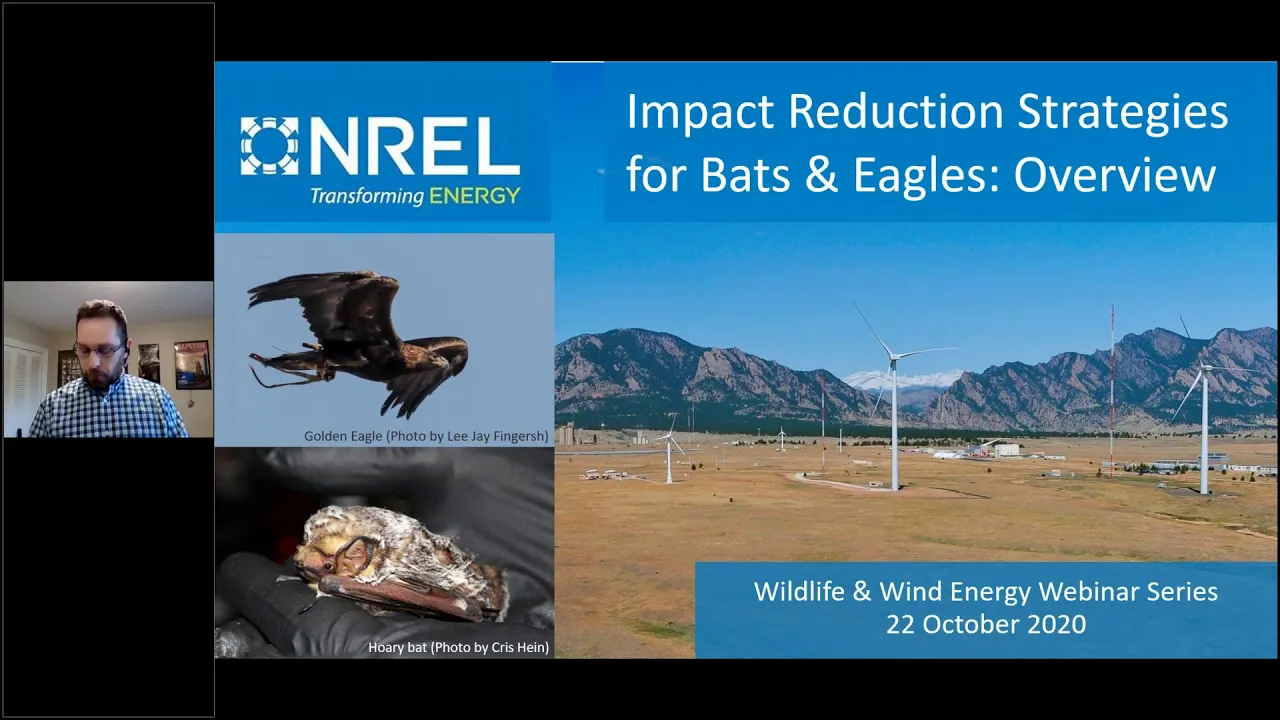


Post-construction fatality monitoring at wind energy facilities involves systematic carcass searches to estimate wildlife deaths from turbine collisions, requiring careful consideration of monitoring objectives, target species, search area design based on turbine dimensions and ballistic models, appropriate search frequencies adjusted for species size and persistence, and statistical correction for detection probability to account for carcasses that disappear or are missed during searches.
Post-Construction Fatality Monitoring for Birds & Bats at Wind Farms
Added:Basic ecological sampling techniques, including transect-based field surveys and search grids.
Fundamental concepts in statistics, particularly probability theory and bias correction (such as searcher efficiency and carcass persistence).
An understanding of the ecological footprint of wind energy infrastructure, specifically collision risks for avian and chiropteran (bat) species.
Basic wildlife biology, including the migration corridors, flight behaviors, and sensory biology of birds and bats.
Use of specialized statistical software and models for mortality estimation, such as GenEst (Generalized Estimator of Mortality).
Implementation of operational mitigation strategies, such as smart curtailment protocols and acoustic deterrents for bats.
Regulatory and policy frameworks governing wildlife conservation in renewable energy development, such as the Endangered Species Act (ESA).
Population viability analysis (PVA) to assess the long-term, cumulative impact of wind farm fatalities on specific wildlife populations.
114 views1likes1:18:56Original Release: 2023-12-01
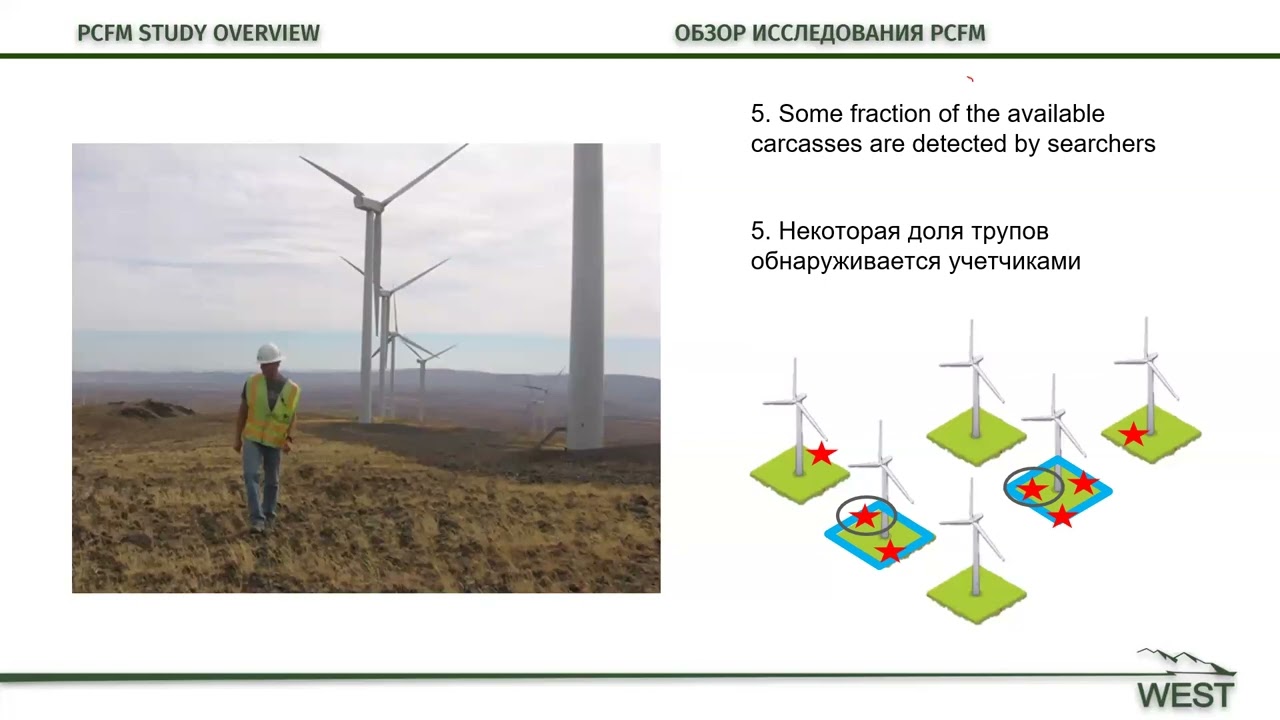
welcome everyone I'm Jill schaer and I'm here with Todd katzner we work for the US Geological Survey and we are organizing this lecture series on wind Wildlife interactions before we introduce today's speaker Todd and I would like to thank all of you for joining us and we would also like to support the organizations that have supported this lecture series that includes the US Embassy in atina that proposed this idea the uh organiz ation that is hosting today's zoom acbk and the US Geological Survey that has allowed Todd and I at the time to do this project Chevron has donated the monies for translation services for this lecture series and we thank them we also like to thank our speakers who have agreed to share with you their expertise on various topics just as a reminder of what this lecture series the purpose of it is it's Des designed to review the background information Concepts and techniques that reflect the state of the art in the science mitigation and policy regarding wind Wildlife interactions in the United States of America as wind energy grows in Central Asia and Beyond these issues are of growing importance our goal in these lectures is to Pro to provide a basic background on the study and assessment of wind Wildlife interactions and to provide you our participants an understanding of the tools used for those assessments please note that we are providing the literature sources that we talk about in each of the lectures so that you can do your own reading on the background information and also have that information readily at hand for future reference all of these resources including the pre-lecture reading the post lecture list of sources and the actual recorded lectures themselves are available on the acbk website which I you y Le you could put your link up to the acbk website on the chat but I believe most of the participants had to register through that portal anyway the seven themes of our lectures are pre-construction surveys for birds and pre-construction surveys for bats post construction surveys for all taxa estimating detection rates mitigation approaches Regulatory and policy considerations and best management practices to ameliorate any negative wind Wildlife interactions Todd and I introduced this lecture series back in September and in atina and almati and this is a continuation I believe we're on about lecture number four in terms of the virtual components and we are thrilled to present today's lecture so Todd would you be so kind as to introduce our speaker absolutely uh our speaker today is Tara conkling and Tara is a wildlife biologist with USG s the US Geological Survey which is also my organization um she is uh she works from the the Snake River Field Station in Boise Idaho but she's actually stationed in Davis California Tara has more than 15 years of experience focusing on applied ecological research addressing factors such as renewable energy human Wildlife interaction actions behavioral ecology and uh General Aven ecology importantly for this this presentation she has for several years uh about six or eight years been a member of the Alam County techn Technical advisory committee for the Altimont Pass Wind resource area Tara has her bachelor's degree from Kansas State University and and then her master's from Texas A&M University and her PhD from Mississippi State University her Masters and her PhD focused on uh aspects of Aven ecology related to human Wildlife interactions so uh before I turn it over to Tara I just want to remind everybody that you should feel free to ask questions at the end of the presentation um you are welcome to write questions in the chat if questions are written in Russian or kazak they can be translated so don't be shy um and then you can also raise your virtual hand if you want to uh actually speak a question um and then the the last thing uh and we will remind you about this at the end we are trying to do a surve on a regular basis so that Jill and I can understand how we can make this lecture series more useful to you so please at the end of this fill out the survey let us know what what we can do better so without further Ado Tara do you want toh take it away and try and share screens yes let's see if Zoom cooperates this morning or this evening I suppose I should say let's see looks good okay awesome well good morning or I I guess it is evening over most everyone else is um Todd said I'm Tera Conlan and I'm here today to talk a bit about post construction fatality monitoring at wind energy facilities looking at both birds and bats if my SC so EV here we go so renewable energy as we all know has been growing in recent years to help us meet renewable energy portfolios reduce our dependencies on fossil fuels help with climate change but for all of its benefits it can still have some negative impacts on Wildlife species these can include habitat loss and fragmentation especially when build building or maintaining facilities they can also serve as a direct source of fatalities this happens a lot at wind facilities particularly when they collide with the turbine blades um so we can get a good understanding of what's going on in terms of fatality monitoring at the local facilities to help us gain a better understanding of the species that are being impact imped by these deaths not only um the number of species but also how many individuals may be being killed and if this might potentially have population level impacts compiling all this information is important to help us answer these questions so with monitoring at wind facilities there's uh monitoring that happens at a number of different stages as there's been a previous topic looking at pre-construction surveys a lot of these surveys are designed to help determine what Wildlife populations are in an area and how may be potentially affected by the development of that wind farm these can include a variety of different survey methods such as acoustic surveys for birds and bats breeding surveys especially if Raptors are concern looking for breeding birds migration counts and even just looking at the literature review looking through previous reports and data sets to get an idea of the species that may be impacted in a given area now post construction is looking specifically at what's happening at the site after the facility is operational so these can include a number of surveys as well uh the most common one and what we'll be talking about later is carcass searches so looking for dead birds and bats on the ground as well as many other survey types such as behavioral observations how birds or bats are flying around interacting really useful in terms of developing meta analysis but for the purpose of this talk we're going to focus specifically on these carcass searches here in that post construction phase um many of the factors to consider when setting them up and then kind of where we go from there so carcass searches the main goal of these surveys is to estimate fatalities from these Raod cats because when you're going out and looking for dead birds and bats on the ground you're finding a number of carcasses out there but the number of uh dead birds and bats that you find is actual un an estimate of the actual deaths because carcasses disappear you may miss carcasses during your searches um Predators May remove the carcasses before you even have a chance to find them um you may be searching a smaller area than where they're falling so there's many factors that can influence whether or not you're counting all the carcasses out there and so there's four parts to consider when you're designing these carcass searches thinking about not only what your overall objectives are in terms of what day you want to collect what research questions the answer the target species of what you're specifically looking for and then some other inherent biases that can influence these results and then detection probability which allows you to uh correct for these carcasses that you may be not observing that are in the landscape so for monitoring objectives the the main goal of this is to identify the species killed at facilities or often to estimate the number of fatalities that are killed at a Wind Facility because these numbers can help us inform mitigation so it might be very useful especially if a facility is in a novel environment where there haven't been many say a desert environment or grassland in your region to I just know what species are passing through the area and are likely impacted by dying at that facility um but it could also be really useful to understand how many of each of those species may be killed especially if there's rare or threatened species of interest if a really rare species has one or two birds that are killed that might be less of a concern than if you realize that you're killing 50 to 100 of that rare species then that could be really useful for informing mitigation practices um and using that data to help reduce those fatalities at that facility and broader so these species can include um either a species of concern especially if there are threatened endangered species of a given area and they can also include uh potentially site specific or region specific thresholds for example in Ultima wind resource area which is in California on the west coast of the US they have set fatality thresholds for uh four or five different focal species for example the golden eagle fatality threshold is set at 08 Golden Eagle deaths per installed megawatt so this provides a baseline so when you estimate how many birds are being killed if the number of golden eagle deaths is greater than that number then the particular uh Wind Farm has to undergo mitigation practices to reduce those fatalities so that's an example of a site that's using a predetermined value that might not be addressing any scientific research questions but is driven more on what the location is interested in so your monitoring objectives can also help determine if the any temporal or spatial patterns and fatalities this is really useful if there's concern about changes in species populations over a number of years especially if they're impacted by other factors such as droughts um High death years low productivity and it can also be useful especially when setting up mitigation practices um for example bats during fall migration many bat species here here in the US experience really high levels of fatalities at wind farms especially during fall migration periods when large numbers are passing through and so if you understand and you can determine when these fatalities are happening you can use mitigation appropriately such as setting seasonal curtailments to reduce the when turbines moving as much during these seasonal peaks of migration to reduce fat deaths you can also set them to address specific research questions as scientists we love to have these questions answered um but often times monitoring at least in the US at when facilities is often more driven by specific project requirements usually permit requirements that tell that you need to look for dead birds and bats for X number of years and sometimes the studies are set up just to address those specific questions and maybe not as much collecting data to help kind of answer broader research questions especially in terms of Meda analyses where you can combine data not only from a single facility looking at spatial variation across turbines but also looking at meta analyses across multiple facilities or regions by being able to pull that data that's being collected so answer standardized research questions across multiple sites could be really useful approach to use um that we don't necessarily use to the full strength that we can here in the US um and it can also help address cumulative or population scale impacts if you're collecting the type of data that can help answer those questions but again it's thinking of incorporating these specific research objectives into the monitoring strategies before the monitoring begins so once you figure out what questions you want to look at the type the data you want to collect then it's important to consider the species that you want to focus on for the monitoring periods now these can include species of conservation interest whether they be iucn listed species or listed species at a national or Regional level um in the US a good example of this are golden eagles that are protected by a number of federal laws in this country and so it's often important to specifically monitor Golden Eagle fatalities at one turbines to understand how many deaths are occurring at fatal facilities and to help reduce those deaths and understand what's happening in the population as a whole especially since they have a fairly Limited lied population of I think around 60,000 Birds um in North America whereas other FAL species might be of interest for a facility but they may be fairly common red tailed hawks have world over millions of individuals but they also have a very high potential for collisions with wind turbines they're one of the top five species of documented fatalities in the Us in terms of being killed um so it might be really important to understand what's happening to this common species to help reduce deaths as well because what helps reduce deaths for species like red tailed hawks or Mexican freetail bats those are also a very common species killed in high numbers might also be practices that can then be useful for Less common species that are also at risk other bat species other Raptors Etc can also focus on different size classes or species groups if that is what your particular site or project is interested in these can include classifying looking just at large birds or small birds bats uh Raptors song birds or even looking at all species now this can have an impact on how you go about post construction monitoring because if you're focusing on all species that means you need to have specific search intervals and search methods that can find the carcasses of very tiny birds and bats on the ground such as hummingbirds whereas um a search for a large dead Golden Eagle is going to be quite different and it's going to be much easier to find those Eagles you may need to search less frequently ly um so keeping in mind the species that are being monitored will very much Drive how you survey some of the other sources of bias in this process can include um study periods of when you're collecting the data for example um there's often seasonal peaks in terms of dur [Music] for allence abil for uh for avable for surveying or a lot of times it's also based on Fall distance based using a common ballistic model so just using General Physics of if a turbine is hitting a bird or bat how far that carcass is likely to fly through the air before it lands on the ground now a smaller bird or bat is going to fly very much less of a distance than a big uh heavy carcass um and so these calculations are based mostly on body size but they're also assuming a very flat ground um so it's not turbine on a hill the carcass May roll down a hill it's not accounting for factors like wind that may blow a carcass further out um but in a sense a lot of these survey size areas that have been used traditionally in the US are based on these ballistic simplistic ballistic models um so for bats or example on the right side of the screen it estimates that bat carcasses even for large uh modern scale turbines up to the 100 150 MERS in height should be falling no more than 80 met outside the area so if you're searching an area bigger than that you should in theory be finding all the carcasses now we find that that's often not the case but you can correct for that uh search area where you're looking versus where the carcasses are falling now in general these are some recommendations based on um historic data use again these are Le 10 years old um but often times the recommendations for searching for bats the trans or the survey area width was at least half the turbine height to the ground so that's accounting for total turbine height from the top tip of the blade to the ground whereas they suggested a bird survey area of twice a turbine height now in practice a survey area areas tend to be more representative of that distance for bats rather than the fall distance for Birds um so we might be kind of underestimating our survey areas a bit because what happens if bats fall further than that distance well you can correct for some of these using uh value that Paul will talk a bit more about in his presentation in a couple weeks but density weighted proportion is the proportion of area searched where the carcasses are likely to fall so it accounts for that whole area around the turbine and that whole area where those carcasses are going to land on the ground um and you can use how much area that you're searching within that full circle um to account for carcasses you may have missed so this might be if you're searching a smaller circle around a turbine then where those carcasses are going to fall or if there's areas within your search area so in the figure down here in this yellow area here if there's a cliff face in the bottom half that you can't search or there's some really dense vegetation that you can't search you can also account for that area that you missed um in the surveys this can be used sometimes people survey for bats using only looking for bats on roads and pads around the turbines themselves so that's accounting for you're only searching a small proportion of that area where those fats are likely to fall so your density weighted proportion would be much less than 1.0 where one is you're searching everywhere they may fall now in the case of bats we find that sometimes they're falling much farther than we think they are this plot down here is some raw carcass data from a turbine monitored in Altimont pass in California and so all those dots there are various different bat species and where they fell now this circle is over 120 meters in diameter or not diameter in radius which means that we would be expecting based on that ballistic model that there shouldn't be any bat carcasses past this Middle Point here um but clearly there are a lot of bats here and we don't know what would have fallen outside this point because the Searchers only searched within this area here so um but we can account for the bats that may be out here and birds that we may have missed by setting that density weighted [Music] proportion usually used you can often do circular search areas around those the size of that is again determined by how big that turbine is because the height of that turbine is going to determine how far it can throw carcasses that hit those blades and those the blade length can also be important a turbine that's 150 meters tall but has 50 meter long blades it's going to um potentially throw carcasses a different distance than one that's um with 80 M blade length but just a shorter Hub height just due to physic and the length of that fpr room for launching those birds so accounting for the turbine in terms of setting how wide of a search area you need to cover is important um and then determining the search H pattern within that search area is going to be very much dependent on the size of uh species that you're looking for if you're searching for small birds and bats the den it of your survey transacts is going to be much closer maybe 5 to 10 meters apart than searching for a large carcass like a golden eagle on the landscape you might be able to kind of space your survey transects a little bit further apart because you're searching for a much bigger object on the ground now in terms of how many to search that again varies based on the size of your facility you want to collect enough data so you have a reasonably good idea of what's going on the landscape so if there's a small facility it's generally recommended that if you have uh 10 or less turbines it's just easy enough to sample all of them in a regular matter however you have a lot more turbines than that say 50 100 200 turbines then you're not going to be able to efficiently cover all of those at any reasonable amount of time so you'll need to randomly select some turbines to monitor it could be a in a subset each turbine monitored for one year for multiple years um but using some kind of probabilistic sampling approach for selecting those using random sampling to ensure that your sample is representative of what's going on at the site as a whole and if you have drastically different habitat types especially within a facility it would be really useful to stratify those turbines that you're selecting by those habitat types um but this practice is not commonly done and it's usually assumed that everything is the same across the sites which may or may not be an accurate assumption now in terms of where you're searching in the landscape again those transects vary a lot not only based on the species that you're looking for but also the terrain if you're dealing with really difficult terrain you may have to space your transects accordingly um as some sites they do uh concentric rings around turbines you just go in a larger and larger Circle looking around um this can be useful in some sites and other times it's can be pretty difficult because you're spending all your time looking at that Center turbine to figure out how far you are out um and so a lot of studies that we've done we've just had a systematic grid put out in the landscape so then you're just heading in a north south Direction back and forth across the grid um but you may still end up with areas that you're not able to search to the terrain um in this picture it's a very small Cliff drainage but in some cases you can have really steep Rocky Cliffs that you can't necessarily search over um and so those are just some factors to keep in mind that there may be areas within uh the fall area that you want to search that you just have to exclude due to hazards um such as terrain roads um or other factors and again bigger pots the more area is SED around a turbine the more carcasses you're going to find especially if you're searching out far enough to make sure that you're covering that entire ground where the birds and bats can fall um so finding more carcasses then can help you also increase your detection probability in terms of refining more birds and bats so you can then generate more precise fatality estimates to have a better idea of what's happening at your facility but that also requires a balance because you are doing more effort for search if you have a rectangular search area extending your searches on either side you know you're adding a little bit area here so it's not adding as much but if you're doing a full circular search for every um 10 met you're expanding that search area you're increasing your total search area pretty substantially um so it's finding that nice balance between searching a large enough area that you feel you're able to adequately uh find the carcasses that you're looking for but not spending all your time searching in the landscape um for carcasses that may not be out there because you can use um the estimating programs the like Jen asked to help correct for some of that so in terms of Seasons or search frequencies I mentioned season a little bit earlier especially depending on the species that you're looking for it may be really important to have yearr round searches especially for multiple years to get an idea of when seasonal peaks of fatalities occur especially if there's interest in reducing fatalities during those High kill times such as fall migrations um but sometimes there may be some focal species where you're only looking at migration periods so you may only be doing those surveys or concentrating efforts on those surveys during those fatality Peaks or maybe there's areas that are inaccessible During certain Seasons such as winter when there may be lots of snow on the ground very few fatalities it may be not worth the time and effort to look for fatalities there if you can concentrate your efforts on when you're more likely to find carcasses and then using mitigation practices during those times to better reduce fatalities in terms of search frequencies this can also change quite a bit depending on what species you're focus on you'll need shorter time between visits especially if you're including smaller birds in your monitoring this because the smaller birds tend to disappear quite quickly off the landscape um Predators carry them off and so it can be really challenging to schedule a visit within a period of time where you're going to find that dead bird on the ground whereas larger Birds create larger carcasses that um may stay longer in the landscape even even it's not as full carcasses finding pits and pieces and feather spots you may be much more likely to find U pieces of a larger bird because it's going to be more challenging for a predator to carry off that entire carcass such as the scre here in this picture so some of the most common search patterns for fatality searches can range from as frequently as every day um to couple times a week once a week even monthly or bonly now the bimonthly surveys were used historically they're not used very much now just because you miss a lot of data um there's a lot of carcasses that disappear and those estimates are not really that useful in terms of monitoring so the more common used ones are usually that the three 3 days to 7 days to 14 days so doing surveys twice a month out in the landscape now it is that time cost balance for search effort versus the potential for missing carcasses so in this figure down here we have a couple of different example carcasses that may be in the landscape now if you're doing searches every 14 days we may be able to find um this dead bird on the ground by that 14-day search but this one we miss because a predator comes along and removes it before we have a chance to even go out there and find it in the landscape so sometimes searching more frequently like on a weekly basis allows um you to be able to find more carcasses before they're removed get a better idea of that detection probability and get a better idea of how many fatalities may be happening in that landscape especially if you're looking for those smaller birds and bats um that can be quite challenging to [Music] find in terms of survey duration um it's often recommended to do at least one year but multiple years of data is always much better for identifying temporal patterns um but sometimes that length is often determined by uh regulations or permit requirements usually if a permit says do onee monitoring the facility may only monitor for that one year but again as we know in science more years help us get more data more data helps us answer better answer our questions so having multiple Seasons or year on surveys in multiple years of data if you can afford to do so it's always more useful to help capture those um changes in fatalities between years so detection probability is um also that important factor consider It's a combination of Searcher efficiency so how well those Searchers can find those dead carcasses on the landscape and how long they stay out there for us to find before scavengers remove them and it includes a number of different factors that all combine together and this will all make much more sense when Paul includes it in his discussion about gen s but detection probability allows us to correct for uh the carcasses that we don't find out in the landscape so we know how many we do find but since we missed some the combining with Searcher efficiency so the ones that we missing that are out there the ones that are removed by the Predators so they don't persist in the landscape and then also accounting for how many turbines we're surveying if we're only looking at two of the 10 turbines out there then obviously our raw numbers are based on a small subset of turbines and we have to uh expand that to the estimate how many fatalities would be occurring at the whole facility and then of course accounting for that area that we're searching or not searching where the carcasses may be falling and so this just has a quick definitions of all these different terms again so Searcher efficiency is just how many we found carus persistence how long do they last out there um and then combined with how many of the total turbines were searching and then the unsearchable areas that we are not including in our our searches her Searcher efficiency it can vary quite a bit by the size of the carcass and the vegetation so in this picture here this is a red tailed hawk um found at one of the turbine sites so when you're searching for a big bird and a very open landscape it can be really easy to find that carcass and that thirst IR efficiency is really close to one which means you're finding everything out there however this can vary quite a bit when we change the landscape and we change the size of what we're looking for um so if you look at closely at this picture there is a dead bat on the ground in this picture um anyone can't find it this is a really good example of why search your efficiency for bats can be quite low especially for humans in some cases it be less than 5% um the bat is somewhere within the circle I promise um here's a nice closeup so this is what a free tail bat can look like on the ground this is a trial carcass but that just shows how difficult it can be to find some of these out in the landscape now dogs can find much do te usually find so these trial carcasses can be distributed across time and turbines you do need to make sure that you have sufficient samples across different size classes so are small sometimes medium and large birds having separate carcasses for bats and you may also need to put additional carcasses out there if you have a lot of variation in vegetation types or if you suspect that um the Predator situation may change quite a bit across Seasons if there's periods where Predators may be much more likely to remove of carcasses from the landscape or if vegetation may be more likely to hide carcasses say during growing season when grass may get really tall they can hide carcasses that Searchers may miss so this was just kind of a brief overview of many different factors consider um when constructing post construction monitoring there's a lot more details in terms of if you have a site determining what specific search intervals or areas to cover um and then you can ALS use all of this to estimate your true number of fatalities so you're taking your numbers found on your surveys and accounting for that number missed using those detection probability estimates with those Searcher efficiency ccus persistence and other factors and you can do all this with computer software nowadays um gen asked is a freely available program um that's easy to use and it will be the topic of the next lecture series Paul rabie will be talking all about genest and I believe using some sample data to walk through the entire process of analyzing data I hope um and with that um I guess we'll take any questions thank you very much for um taking the time out of your busy days to attend Le's lectures it's much appreciated thank you Tara that was fantastic Yan Le can we also unmute Jill yeah that's perfect we've we've had a number of questions in the chat um and I think we should go back all the way to the first one if possible um uh Alexandra asked uh if monitoring if post construction monitoring is mandatory in a preliminary environmental assessment um and uh specifically she meant collecting data on bird deaths before construction and after construction that is a great question and um we no it is not but it would be really useful if it was because that would help address um I know that background mortality is a term that people like to bring up a lot in terms of whether or not the birds and bats you're finding on the ground are just they're already dead in the landscape and not necessarily dying because of the turbine blades um but usually there's not anybody going out and looking for dead birds and bats and fatalities in that preconstruction stage um I think we've done a literature review looking for that type of data and I think it occurred in maybe less than 2% of any of the reports that we looked at where sites were specifically collecting that data beforehand um but it' be really great if they did because then that would account for that and kind of give you a very nice before after comparison so uh Pia wrote a question in the chat but also has her hand up so and Paul Raby answered the question in the chat Pia if your question uh is more of the same maybe repeat the question in the okay well let me repeat the question and the answer and then give you a chance um Pia asked if the speed of the blade affects the fall distance for the carcass and Paul from West who will be our speaker next week uh answered very clearly which the basic answer is yes the speed of the blade does have an impact the size of the blade has an impact the direction of the wind has an impact and the speed of the wind so all of these things can impact how a carcass falls to the ground um Pia do you want to ask your question next and then we have two other questions in the chat uh yes of course first I would like to thank um Tarra for having this uh presentation it was very interesting I've been keeping track of all the research that's been going on um in regards to wind energy and bird uh fatalities so my question is related uh also for the the post post construction monitoring but more in terms of avoidance behavior in relation to the indirect habitat loss so um today we've been talking about the carcass monitoring but now I'm wondering have you done any Telemetry studies on the breeding pairs of the golden eagle there in the alamont area and if you did have you noticed any indirect habitat loss to those pairs I been involved with any of the Telemetry monitoring for those golden eagles um there are number of there are a couple researchers that have been putting Telemetry units on golden eagles in that area and been kind of looking at use I don't know how much they've specifically addressed um in terms of like avoidance or behaviors in that regard especially at that site but I know Todd may have more familiarity in terms of Eagle Telemetry at wind facilities and what's been monitored I I think with regard to habitat loss uh there are there have not been good studies showing behavioral changes for Eagles um we do know uh on migration Eagles will if they see a wind turbine they will go they will make a detour they will change their flight to avoid it uh but we don't have similar data from uh Telemetry or from territorial golden eagles so um Tara there's a NE the next question in the chat is do you have any recommendations in terms of literature regarding Hub Plus blade length and detection area calculations I think that's search area calculations um I don't know off hand but that may be a really great question for Paul if not for now for in two weeks um because he's probably much more familiar with the statistical side and those physics equations in terms of the best search areas for doing based on those turban Dimensions okay uh the next question is it possible to map concentric detection belts uh for bats and then small birds and then large birds um so do you see patterns in Fall distances uh based on size and then What proportion of birds of large birds are wounded and are able to to walk or fly away and later die as far as the second question for the crippling bias um I'm not sure if anyone has a known specific answer other than it's usually pretty small is know ter practice handbook on Pro construction monitoring and is uh has some information on turbine sizes and search areas and we put that in the chat I think at the last presentation and we can we can put that information uh if I think it's on the web the acbk web page as well uh but we can make that we can provide people the links to that if they're interested yeah and that one is also listed in the the list of papers for the lecture this week as well okay so it's it's in the literature cited for that Tara put on the uh on the the acbk web page next question are there reports of increases in the number of fatalities of Aven scavengers and Raptors that might be due to attraction birds being drawn in to the facility to scavenge on dead animals it depends I think for the most part A lot of the species killed at the wind facilities at least in more recent years have usually been just kind of species occurring in the landscape I don't know if uh some of these species might be coming in because of other dead birds and bats on the ground but they're usually not scavenger species in terms of there's not increases of say vultures uh dying at the landscape um at some solar facilities there's more instances of species being detected did not necessarily killed at the sites but just being present in larger numbers like common Ravens coming in because of the facility being built um and in some of the older generation turbines there was a lot of higher number of introduced species that are more common with people around like uh Rock pigeons or um species like that but those numbers have kind of decreased in recent years as they' switch to the bigger more modern New Generation turbines um and so we're not quite sure why there's fewer non-native kind of more scavenger species around at some of these wind facilities but um in terms of yeah just attracting them in there it doesn't necessarily be the case or if they're being attracted they're not necessarily being killed um when attracted to this increased potential of prey base this as far as I that's yeah uh another question and by the way it it's now we have now reached the end of the hour I think Tara and I I know Jill has to leave Tara and I can can be uh can stay for a little while longer at least and answer questions but uh we understand if people have to go the next question on the methods are um uh I guess uh Raymond I don't completely understand your question um uh are such approaches possible for environmental impact assessment how can they be applied in terms of temporal scale scale variations um yley could you unmute Raymond maybe or or uh to clarify or you can write if you prefer um but uh good morning or good afternoon consideration of methods first of all this appears to be an expensive um studies if you to just on one tax or because if you looking at maybe birds and Bs in themselves and looking at investment alone it will turn up to be an expensive study if you are considering integrating it in environmental impact assessment and now when you are going to look at the impacts themselves on those Taxas you can see that the risk is higher higher rated than what you would have invested in now the the problem is on the if you're going to do such a study and integrating it in Impact assessment itself would this be acceptable for most of the maybe investors or is it something that you could recommend Tara that for the financials for example African V bank World Bank IFC that this is a good method and if you're going to do it it's very expensive and in the time of count and then do it of course we have institions which are working with bad life International I they willing take it up but you see on the Baseline level I am wondering how this is possible to be acceptable those are all very good points um and yeah uh within USGS luckily we don't have to deal with trying to balance all those costes we just provide the sign um and leave other organizations to make those policy recommendations um but yes there it is an expensive process um but I'm I'm sure that there's probably entities or parties out there that can help kind of balance and especially if there's key focal species or species of interest um kind of tailoring the survey efforts to focus on those particular ones um so you can kind of maximize the amount of data and information that we can collected in a very cost efficient manner um to kind of get the most uh value out of any dollars being spent um because monitoring just for monitoring sake it also be really expensive and not a great use of funds but um I'm sure that there's organizations out there that can help kind of B with that Todd do you have something to add yeah one one thing that we have recently learned is that a lot of the international financing organizations now require environmental impact assessment with these types of surveys and so USGS is we are working with a few people to help design surveys but we also hear of many others I know that there are some large wind facil wind and solar projects planned for Kazakhstan and usbekistan and in each case there are environmental impact assessments that are part of the funding uh the financing required so I think Raymond one answer to your question is to encourage the the banks to to require this because if the banks require it then it will get done there's another question in the chat uh what is the threshold of the number of feathers found to consider a fatality or blood or tissue what if you only find one one feather um and that especially becomes a problem with dogs because they can find such Small Things yeah that's a great question as well um in terms of what usually counts as a carcass out in landscape they usually do a feather spot is at least usually 10 feathers um or or body parts that are consistent with um that the bird or bat is probably dead so like if you're finding a wing fragment out there in the landscape chances are the bird's probably not uh flopping around without that wing on there so you can usually assume that that's a carcass now it gets a little more tricky like Todd talked about in terms of dogs because dogs are really great on hitting on uh carcasses or hitting on feathers um even if it's a feather patch here and a feather patch over here that might potentially be coming from the same carcass that's just kind of been torn apart in the landscape and found even on multiple visits um so it can be sometimes a challenge to uh determine whether or not you're finding new carcasses or not or whether they're just a feather piles or bits and pieces from previously found carcasses um so if you're finding body parts you can usually kind of do better comparison um seeing if you have a left leg and a right leg um things like that um but sometimes it's kind of just a using of a best guesstimate in terms of um that this is likely the same carcass or a different carcass and just acknowledging that that might be one of the places where you might be um overestimating the number of carcasses you're finding out there if you're counting multiple feather spots as the same bird but in terms of numbers yeah it's usually at least 10 feathers in a pile together to count as a carcass uh there is I I just put a uh I just put a link in the chat to the good practice handbook um Alona offered to translate the the question in in Russian in the chat uh alonia are you unmuted uh and yes we had one question in the chat which was uh what in what time of the day uh the most golden legal fatalities uh are happening um I'm not sure anybody really knows as to when they're actually getting hit because usually they're just finding them um either you know sometimes after if you're finding the actual live injured bird usually it's within a few hours um but sometimes you're finding them days or weeks afterwards um and unless there's a camera footage or Telemetry units on the birds and you won't know exactly when they're being killed I know that there have been a few tetur birds that have been killed at facilities but I don't know offhand in terms of when those birds would have been killed um but that would be an instance where some of that data might be available yeah one one thing to understand is that uh in the USA most searches for golden eagle happen every 30 days once per month and so it's very difficult to know what time even what day a bird died when you only search once a month but uh p in the chat noted that there are not established post construction monitoring in in her country and I I think that that is uh that is fairly typical for most countries including the USA um uh Ohad you have a question and then there will be at least one more in the chat hi Todd thank you I want to continue on my previous question that Tera answered a in a document a technical report of the American wind Wildlife Institute it was in from 2019 considered two feathers or a feather spot as a as a as a fatality from the turbine to answer this and we had a long arguments with one of the of of the participants here about how to interpretate such a case what we do we do a searches we call control search searches near the turbines in the same environment and then we compare what if there are single feathers in this area and then we deduct it from our calculations and I must say it's there is another question in the chat uh do you remove the carcass each time a trial carcass so that or even a a carcass you find so that you don't find it again the next day or the next time you were that is again very much dependent on a site by site basis um for some species you need to get approval for even picking up the carcasses such as golden eagles if the search team finds a golden eagle they have to call in a a a person from Fish and Wildlife service to come in and see the carcass on the ground and often collect the carcass themselves um and in some other cases if the a company or consultant monitoring um at least in the US they have to have permits to salvage the carcasses on the ground so if they don't have those permits then they're not going to be picking up those carcasses in the first place um but you can uh account for those and you can pick those up or you have your search schames going out and documenting that you know that you had this carcass out there before um and picking up or leaving it on the landscape and then sometimes it also may be that sometimes carcasses get left out there even if they're found because they might be part of some of those other trials like those uh carcass persistence trials where you're leaving carcasses out on the landscape to see how long they're going to stay out there now those can get kind of tricky especially when you're using things like dog teams because the dogs do have a memory and they do tend to know that when they've hit a carcass in a certain area they like to go back to that certain area to find bits and pieces again because they get rewarded for finding things um so sometimes you might have to adapt in terms of putting those uh trial carcasses in a similar landscape but not necessarily within your search area to avoid um having those dogs keep finding things all the [Music] time okay one more question in the chat and then a hand is raised uh are there Technologies in development with for sensors that can detect when a blade collides with an animal yeah I believe that there are um I'm not sure like how fully developed or Deployable they are or how sensitive they are in terms of can it tell if a giant blade is getting struck by a golden eagle versus a bat um because being able to distinguish between those might be really important um but they do have sensors that can detect when a blades are getting hit I know that they've tested some of this technology by I think launching tennis balls at turbine blades um but in terms of whether or not it's like ready for like full-time deployment or how much it would even cost for a deploying that facility um I don't really know answers to that the um for those of you who are interested most of those Technologies are accelerometers it's very simple the same accelerometer that's in your phone you can put one on one end of the blade the other on the other end and the accelerometer can measure the vibrations and the difference in the time that it is sensed can tell you where on the blade it was struck and also how big and all that stuff um let's have P's question and maybe make that the last one for the day Pia do you want to go ahead yes thank you if it's not related to this presentation please stop me but um I I heard that there's a dog expert here so I'm just I have a question because I'm also training my dog for searching so I have a question related to the the age and the overall status of the carcass and I was wondering if have you noticed any difference if the tus carcass is dry or fresh or in any uh very decompos very decomposed have you noticed any difference in the the overall detection rates of the dogs I think it's fine actually it's probably a good question I do know dos [Music] the but I don't see a hand so email me and I can forward it to Ohad uh thank you all for participating this is really good we have we had we we have 50 people still on the call which tells me that
Up Next

87:28
Webinar: Communicating Wind Energy Wildlife Monitoring Results
@tethys-environment
160 views•2020-10-19

15:54
Life in Biosphere 2: Sustainable Ecosystems & Human Survival
@TED
334.9K views•2009-06-16
14:30
Microplastics Everywhere: How Plastic Impacts Our Lives
@TEDx
100.9K views•2018-05-08
10:28
Ice Stupa Artificial Glaciers: Solving Ladakh's Water Crisis
@SonamWangchuk66
3.2M views•2015-05-03
Related Study Plans & Knowledge Roadmaps
Structured learning paths in Environmental Science
environmental-science
Ocean Noise: Cetacean Impacts & Mitigation
01Fundamentals of Underwater Acoustics
02Marine Mammal Bioacoustics
03Anthropogenic Noise: Shipping & Seismic Surveying
+ 2 more learning modules
16h5 modules
Explore Roadmap
environmental-science
Road Ecology: Corridors, Overpasses & Fencing
01Foundations of Habitat Fragmentation and Carnivore Ecology
02The Road Barrier: Ecological Impacts of Transport Infrastructure
03Principles of Ecological Corridors and Connectivity Mapping
+ 3 more learning modules
14h6 modules
Explore Roadmap
environmental-science
Ocean Acidification: Kelp Buffering & Shellfish
01Fundamentals of Ocean Chemistry & pH
02Chemical Pathways of Coastal Acidification
03Bivalve Physiology & Calcification Under Stress
+ 2 more learning modules
18h5 modules
Explore Roadmap
environmental-science
Ice Stupas: Glacial Retreat & Water Security
01Foundations of Glaciology & Mountain Hydrology
02Climate Change and Glacial Retreat Dynamics
03The Science of Ice Stupas & Artificial Glaciers
+ 2 more learning modules
14h5 modules
Explore Roadmap