






![[Introduction to Linguistics] Phonological Rules and Derivation](https://i.ytimg.com/vi_webp/McO4Bcfk3zc/maxresdefault.webp)









![Michael Campbell - Chinese Languages: comparison and acquisition tactics [EN] - PG 2017](https://i.ytimg.com/vi_webp/ACMkU55_Bi8/maxresdefault.webp)
![[AFLA27] Tracing constraint movement: Austronesian binary feet and word minimality - Alexander Smith](https://i.ytimg.com/vi/BQHy93O7Qcc/maxresdefault.jpg)
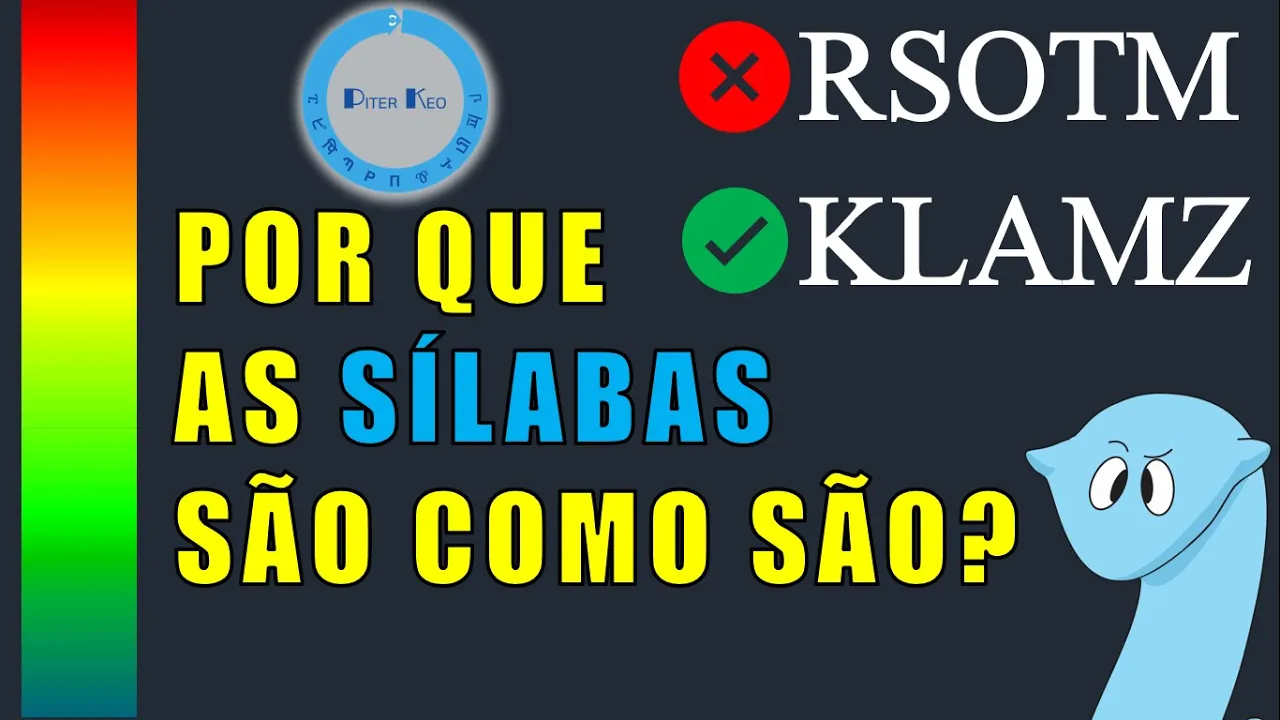
Syllable structure processes are phonological mechanisms that modify the distribution of consonants and vowels within words to avoid phonologically unacceptable patterns like hiatus (two adjacent vowels without intervening consonants). These processes include deletion (removing sounds, such as the /ɡ/ in 'design' or unstressed vowels in fast speech), insertion (adding sounds, like French definite articles before vowel-initial nouns), coalescence (merging two segments into one), and metathesis (reversing sound positions). These unconscious rules help speakers produce pronounceable forms across languages by simplifying complex consonant clusters or preventing adjacent vowel sequences.
Syllable Structure Processes in Phonology: Deletion and Hiatus
Added:Basic anatomy of a syllable, including the concepts of onset, nucleus, coda, and rhyme.
The distinction between vowels and consonants, specifically their acoustic and articulatory differences.
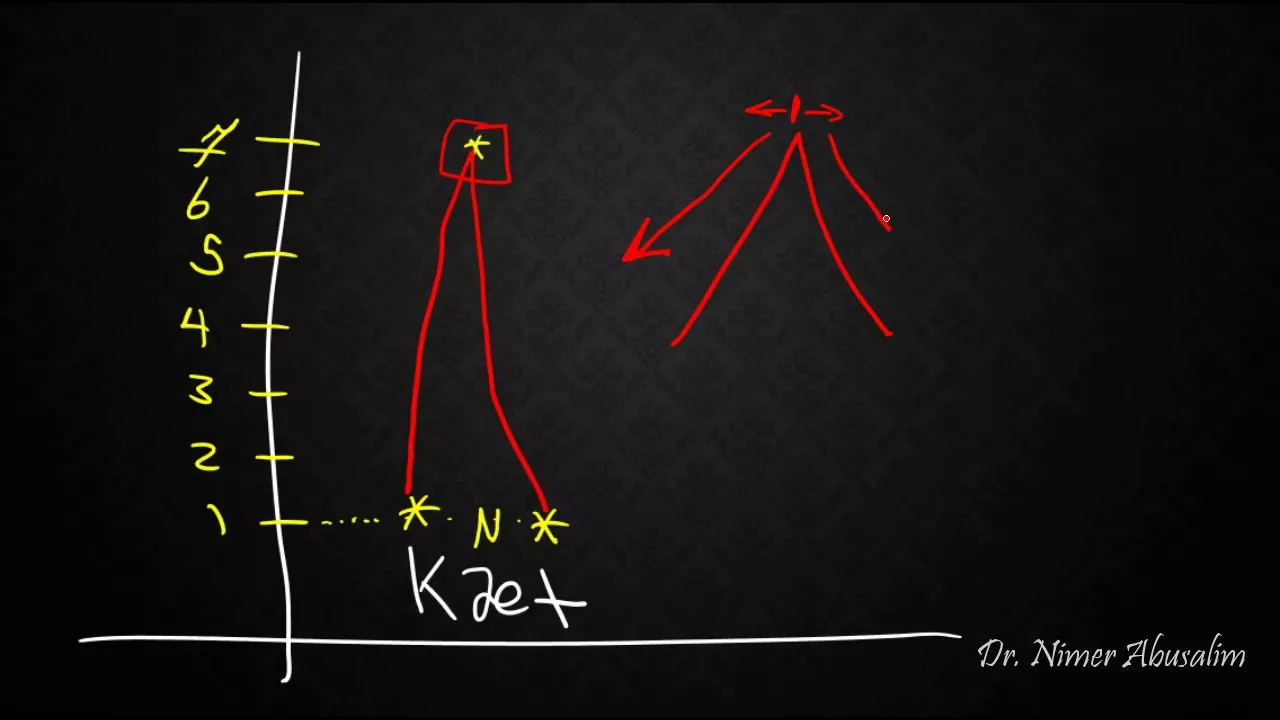
The Sonority Sequencing Principle (SSP) and how sonority levels govern syllable templates.
The concept of phonological rules, underlying representations (UR), and surface representations (SR).
Other syllable-repair strategies, such as epenthesis (consonant/vowel insertion) and coalescent assimilation.
Optimality Theory (OT) constraints related to syllable structure, such as ONSET, NO-CODA, MAX, and DEP.
Connected speech phenomena and external sandhi, observing how hiatus resolution operates across word boundaries (e.g., in French liaison or Italian elision).
Diachronic phonology, exploring how historical sound changes are driven by the optimization of syllable structures over time.
17.3K views437likes18:14Original Release: 2020-04-22
[Music] hello there welcome to the fruitful almost force again in the previous video we talked about phonological processes we've seen so many examples related to assimilatory processes like palatalization like legalization like the or seen like nasalization today we're gonna cover more other phonological processes but before that I would like you to look at this example of a part of speech of mr. the president Trump each of you embodies the warrior cream your devotion OS jurors is not just the heart of three great religions on the southern half of this financial replace chasms of distrust and the Internet then you will gain momentum terminating the diversity lottery diverse eree and diversity which trans into the traditions and I have to Spade really talk about Cassandra poor lamb and God bless the United States in fact what happened to President Trump in this video is this when we write words normally we'll leave some spaces between them in order to distinguish them in sentences or phrases but when we speak normally we don't make any pauses to distinguish between one word and the other in rapid flow what happens is that sounds they change entirely according to context so whenever there is a context in which there are similarities of sounds mistakes we will take place and that's exactly what happened here we already defined a single Ettore processes as those processes that actually affected sounds it's when one sound is trying to look similar to the another sound it's when one sound is the features from the neighboring sound here but it is another process which is totally the opposite this is exactly what we call this simulation the simulation is the opposite of assimilation what does it mean look at this example the six chefs six sheep is sick let's try to save these senses in a rapid way and many times the 6x6 ship is saying six chef's six ship is sick it's actually too difficult why because we have in this sentence we have many sounds of our actions similar like what like the sound sir like the sound sure these are fricative so this fricative similarity affect our pronunciation so what happens mistakes changes will take place and this is exactly what happens to mr. the President Trump the construction of words is made by bringing together sounds they can be actually consonants or vowels but many languages or languages in general are different some languages they actually accept the construction of words made by only a sequence of vowels other languages they do not accept words made up of just actually the sequence of vowels other languages they actually can accept a cluster of consonants but others do not they need to break that cluster by actually a vowel that should be there between those consonants let's take the example of these three words here taken from these three languages in Japanese language the Hawaiian language and the Swahili language in the first Japanese word we have the word are we which means blue the second one is actually you WA which means to purify the third one is actually ayiiia which means in Hawaiian to rise up these three words are actually very difficult for us to pronounce why because the construction of these words are made of just a sequence of vowels is this acceptable in other languages now this is exactly what happened with speakers from other actually languages when they want to pronounce these words they find it very difficult why because in the phonological system of their mother tongues they do not accept words made up just of sequence of vowels this is exactly what we call in phonology hiatus the word is hiatus hiatus is what it refers to two vowel sounds occurring in adjacent syllables - syllables of are adjacent and the first one the second one are both of them made of just one vowel so when they are together actually those actually vowels the juxtapose so what's the and with there is no intervening consonant so what will happen hiatus is not acceptable in many languages so what they do to avoid hiatus is to use what we call syllable structure processes so what are syllable structure processes syllable structure processes refer to those processes that affect distribution of consonants and vowels within words and this is for one purpose which is to avoid hiatus which actually the fact that many languages do not accept this phonological phenomenon hiatus to adjacent syllables made up of only dollars so consonants of words may be deleted or inserted two segments make qualies into a single segment a segment may change major class features such as a vowel becoming a client two segments may need to change any of these processes called calls an alternation in the level structure so these are the first level structure processes we have first division for what we call Elysian we have also insertion or what we call appendices we have the another assimilatory process which is koala sense and we have also meta thesis it's when two sounds it to change their possessions so let's see them all together the first syllable structure process is what we call invasion or deletion it is a lesion because it comes from the verb to elide it is deletion because it also it comes from the verb to delete so what is a lesion the lesion is when a sound which is present in the end the lion phonemic form is not expressed at all in the surface phonetic form it's actually when you delete a sound that actually exists in the phonetic form but in the pronunciation it's not there it's not actually pronounced a lesion it's a pronunciation or self logical process which actually takes place when you delete a sound that exists in your phonetic representation but does not exist in your actual pronunciation of phonetic representation let's see some examples they start with the first example in English in English the get sound is actually pronounced in many examples like the example of the world signature like in the example of the word designation like in the example of the word paradigmatic like in the example of the word resignation but what about when the get sound is actually deleted or not pronounced now if we take signature and we try to derive the verb from the this now here the verb is to sign designation try to derive again here the noun or the verb so we have design or to design paradigmatic we have paradigm the resignation we have resigned now the difference between the two words here sign and signature inside there is no gap sound while in in signature we have the get the sound InDesign we have the we we delete it again the get sound also the paradigm we delete indicates l and the resign also the is deleted now it is deleted in these words but it is not actually deleted in signature designation of paradigmatic and resignation this is an example of gap so we understand from a logical or as a phonological process or native speakers they have this as an unconscious phonological knowledge the gap sound is deleted here whenever it occurs before a word final possession if we take any example this is phonological knowledge that all native speakers of English path if we imagine we give native speakers words in which they have get before a nasal in word final and we give them again get followed again by a nasal but in not in a word file and let's check how these native speakers will pronounce this sound are they going to delete it yes or no in fact because this is an unconscious phonological knowledge that these native speakers have they will not delete in certain context but they will delete that in certain in other certain contexts if we take this example of these strange words that are actually do not exist and imagine this conversation here how were the native speaker of English pronounce this so native speaker will actually say he was a seligman man the words lignans which is actually not a real English word native speakers will pronounce the gate sound because it's actually in a context in which gap is before a nasal but not in a file possession but in the second world did he Szalai the words align somebody native speakers will not say silligan or saligan they will say salon why because the gate sound exists in phonological context which is before a nasal in a word final possession so automatically this rings a bell in their phonological system or in their mind which is like the words design resign paradigm so they would not they will delete that get sound this is an example of deletion let's take another example of deletion and also in English the head sound is deleted whenever it is it is found in an a stressed syllables let's take the example of this census here he handed her his hat he handed her his hat actually in a fast pitch the hep sound in the word her and also in the word his will be deleted because the vowels in the in those syllables are actually a stress so what will be the case the pronunciation will be this way not he handed her his hat but actually we will say he handed her his hat he handed the Reese hat this is a deletion an example of this deletion in English another example in English is exactly when we delete for cluster simplification the case in which we have sequence of consonant or we call consonant cluster in one word and we delete one consonant in order to simplify the pronunciation the example of grand parents the example of standpoint take an example also of handbook the pronunciation do not look hand book grand parents stand point you can notice that in the world for example standpoint we have a constant plus or not and standpoint in the pronunciation here it's not going to be the same we are actually going to delete one consonant in order to simplify the the cluster and also the pronunciation so instead of saying standpoint and handbook and also grandparents we're gonna say it's ten points I'm gonna say handbook I'm gonna say grandparents and here this is the deletion of exactly the sound depth there in these cases in order to simplify the pronunciation let's take an example again of these words pumpkin or jumpsuit or dump truck these three words again we have a consonant cluster we have math but cut in the first word we have met but set in the second word and also we have mapped in the third one the pronunciation here will not be exactly the same what we have here is map cut or method set or method but what we actually pronounced in the phonetic Turner form is the following we say pumpkin not pump pumpkin jumpsuit not jumpsuit jumpsuit and we say Tom truck not dump truck these are actually a real pronunciation of native speakers in certain context and specifically in fast speech we've seen examples of constant elysian when we delete a consonant now let's move to see some examples of vowel elysian when we actually delete a vowel in french this is coming it's exactly when we delete the vowel or off for the definite articles learn and la lu and law are two definite articles in France and when these two articles are actually added to a noun that actually starts with a vowel the earth or are in these two articles is deleted why in order to avoid again what we call hiatus the example of law or law plus the word me which means in English friend we don't say Lua me or la me but what we say exactly is la me and this is very common also in other examples in French like che and like laughs now let's move to English in English there are some words that actually and with vowels and when we want to change them to negative we add a suffix Murphy but when that morpheme is actually starting again by another vowel we will have again hiatus English does not again except hiatus so what will happen we delete take these examples of word Mexico or the word Morocco or the word cello these three words here they all end with the vowel oh now what if we want to change them to negative we can add the morpheme which is the adjective either here and so instead of saying or what we say exactly is Moroccan for Morocco and Mexican for Mexico but for the word cello we will add the morpheme as a suffix with his East which is actually again starting another vowel which is e so we say cellists so these are examples Morocco Moroccan Mexico Mexican cello cellist what happened here there is a deletion of vowels or in order to fall or to avoid the phonological phenomenon which is exactly hiatus let's see another example in English another example of vowel elysian and let's take example of when a vowel is deleted because it is weak because it is unstressed and because it is actually found in a stress and between two syllables take the example of the world separates take the example of the world chocolate these two words for example we have three syllables in each but the middle one we have a vowel that is actually a stressed now in fast speech separate becomes separate in chocolate becomes chocolates so in fast pace speech we don't say separate we say separates in fast speech we don't say chocolate we say chocolates and also other examples like family family like finally family like other examples like factory not factory other examples like temperature not temperature temperature and many other examples so in English what we can see here is that English when we have a stressed vowels between syllables those Astra's vowels are actually deleted [Music]
Up Next

10:07
Child Language Acquisition: Transcript Analysis for A-Level
@likemaria
11.8K views•2023-04-28
36:52
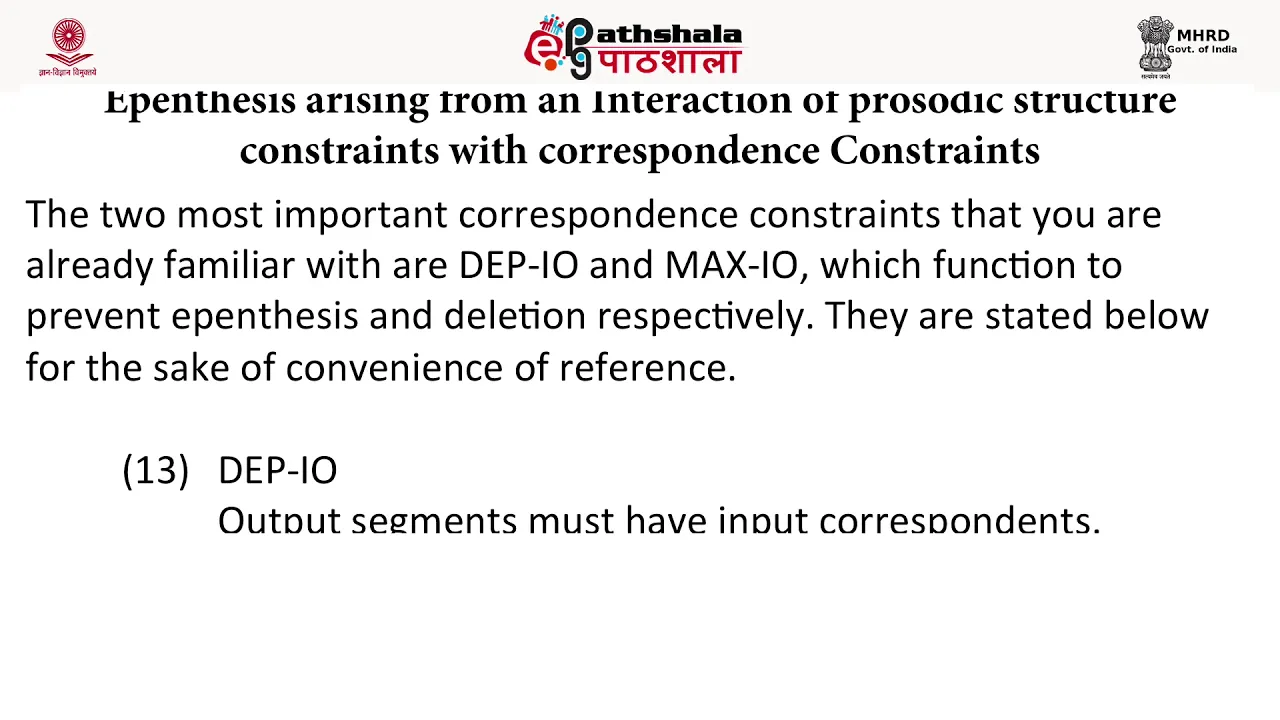
Constraint Interaction in Optimality Theory: Epenthesis & Deletion
@Vidyamitra
180 views•2018-08-20

8:59
Forensic Linguistics: How Language Solves Crimes | PBS
@pbsstoried
1M views•2024-01-25

21:32
Accent Expert Explains U.S. Regional Dialects | Part 1
@WIRED
9.3M views•2021-01-21
Related Study Plans & Knowledge Roadmaps
Structured learning paths in Linguistics
linguistics
Optimality Theory: Tableaux & Constraints
01Phonological Basics: Sounds, Syllables & Rules
02Foundations of Optimality Theory: GEN, CON, and EVAL
03The Constraint Inventory: Markedness vs. Faithfulness
+ 2 more learning modules
15h5 modules
Explore Roadmap
linguistics
Morphosyntactic Alignment: S, A & P Systems
01Foundations of Syntax: Transitivity and Arguments
02The Linguistic Variables: Mapping S, A, and P
03Nominative-Accusative Alignment
+ 3 more learning modules
12h6 modules
Explore Roadmap
linguistics
Analyzing Sign Language: Phonology & Syntax
01Foundations of Sign Language Linguistics
02Phonology: The Five Parameters of a Sign
03Morphology: Word Formation and Classifiers
+ 2 more learning modules
14h5 modules
Explore Roadmap
linguistics
Pragmatics: Speech Acts, Grice & Politeness
01Introduction to Pragmatics: Meaning in Context
02Grice’s Cooperative Principle & Implicature
03Speech Act Theory
+ 2 more learning modules
14h5 modules
Explore Roadmap