![Gleichgewichtsbedingungen [Technische Mechanik] |StudyHelp](https://i.ytimg.com/vi_webp/bZQDOm9cUfE/maxresdefault.webp)










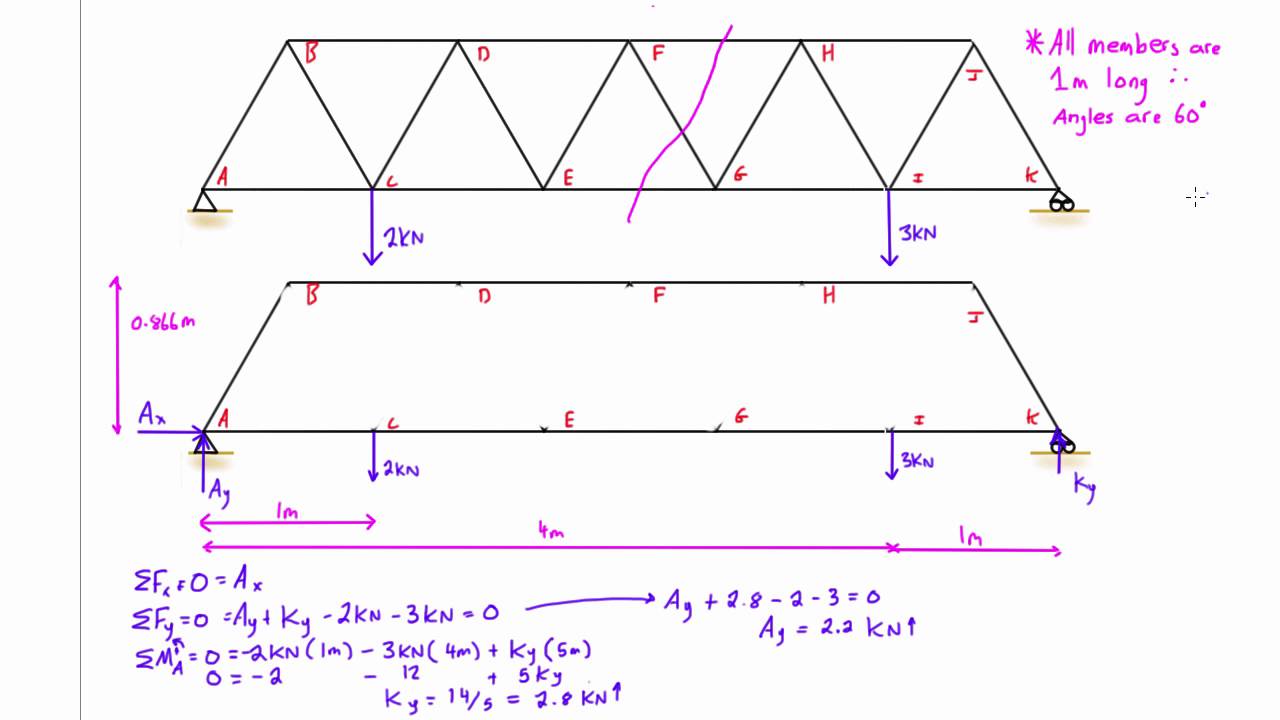
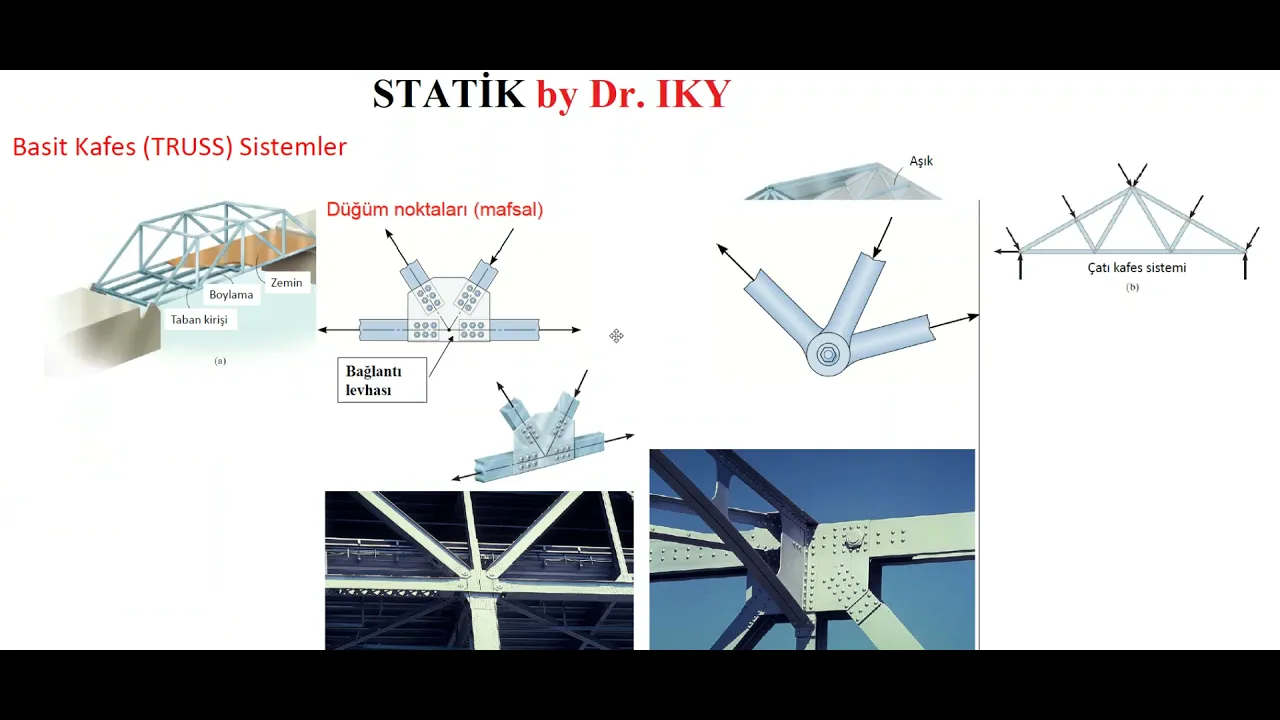
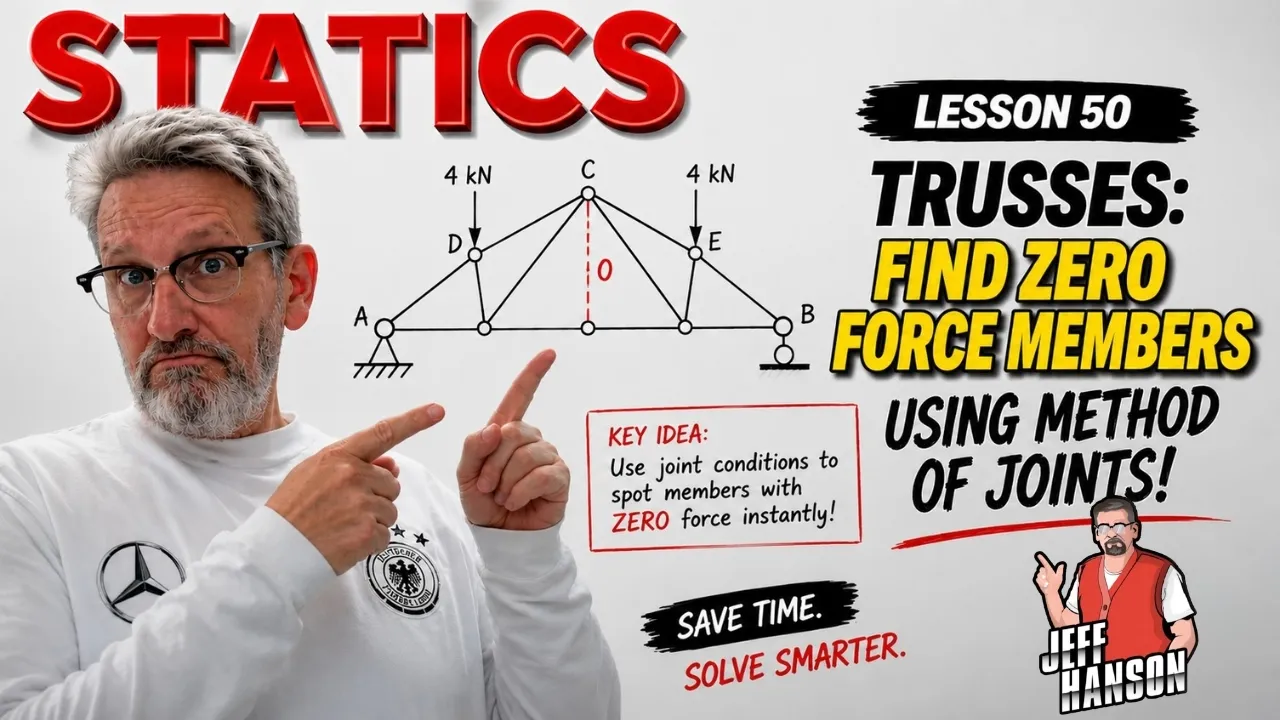


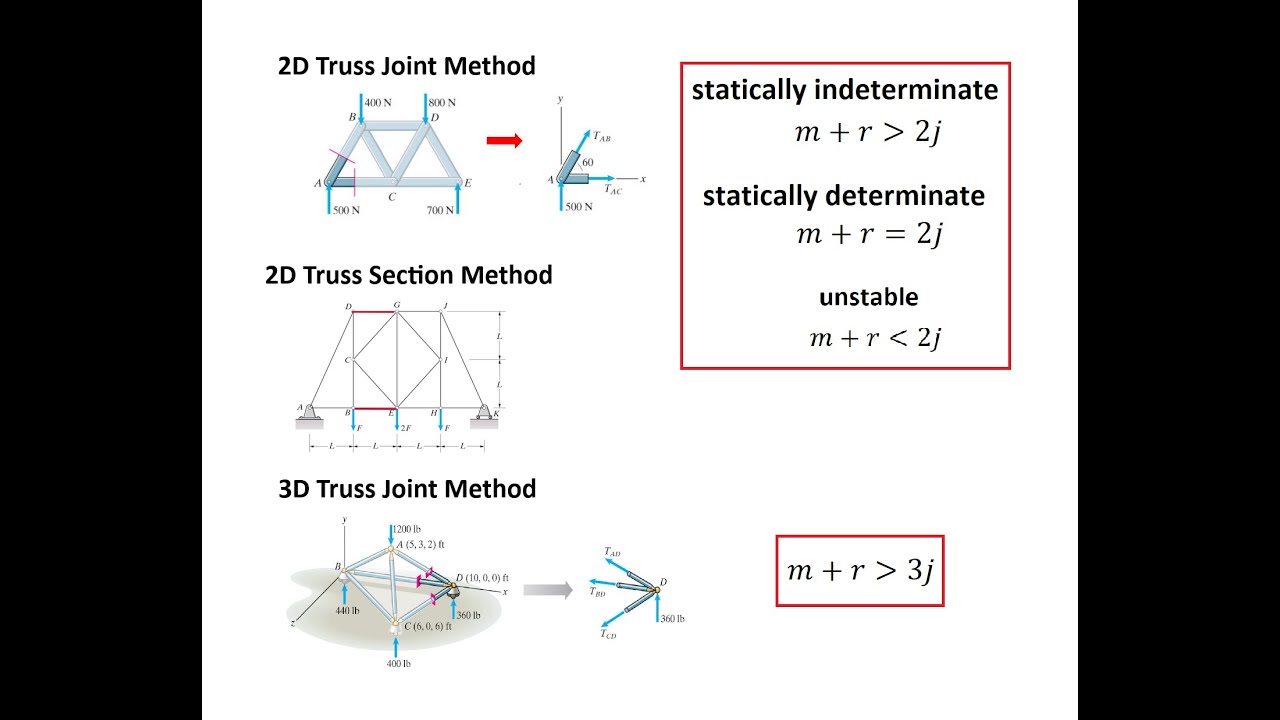






The method of joints is a systematic approach to determine internal forces in truss members by first calculating support reactions using equilibrium equations (ΣFx=0, ΣFy=0, ΣM=0), then drawing free body diagrams for each joint with unknown forces initially assumed in tension; if the calculated magnitude is positive, the member is in tension, and if negative, it is in compression. The analysis proceeds by solving joints with only two unknowns first, using the known forces from previously solved joints to find subsequent unknowns, and finally verifying the solution by checking that forces at the last joint balance to zero.
Truss Analysis Using Method of Joints | Statics Worked Example #1
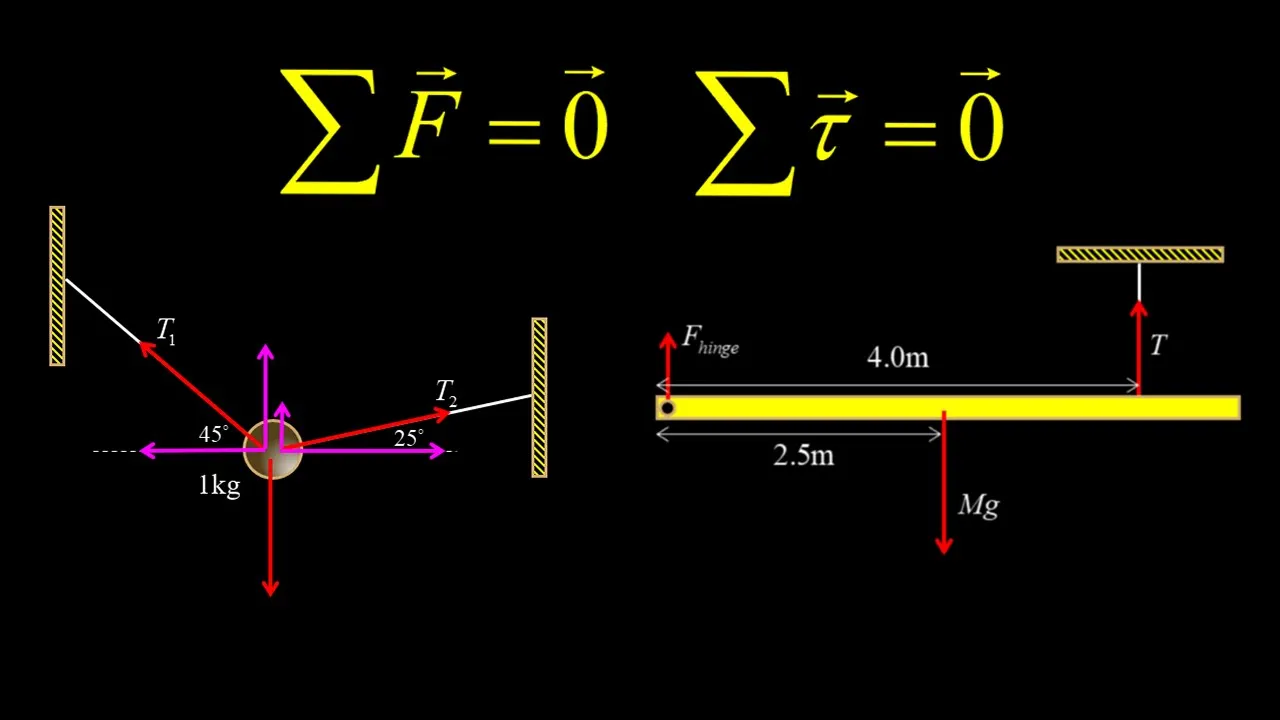
Added:Understanding of static equilibrium conditions in 2D, specifically that the sum of horizontal and vertical forces must equal zero.
Ability to draw accurate Free Body Diagrams (FBDs) to isolate joints and represent all acting forces.
Proficiency in vector decomposition and basic trigonometry to resolve angled member forces into x and y components.
Basic knowledge of calculating external support reactions (such as pins and rollers) for a rigid structure.
The Method of Sections, an alternative and often faster technique for determining internal forces in specific truss members.
Identification of zero-force members by visual inspection to quickly simplify complex truss analysis.
Three-dimensional truss analysis (space trusses) using 3D vector algebra.
Introduction to Mechanics of Materials, specifically calculating axial stress and strain to determine if the truss members will fail or buckle under load.
Deflection analysis of trusses using energy methods such as the Method of Virtual Work.
927.6K views9.4Klikes14:52Original Release: 2016-06-19
all right in this video I am just doing an example on how to use the method of joints to solve a truss problem in Statics so here we have R trust it's pretty simple there's just one externally applied force here and it's simply supported um all of the members in the truss are 1 meter long so that means all of these triangles are going to be equilateral triangles so every angle you see is going to be 60° okay so the first thing that we need to do for using method of joints is to draw our free body diagram of the entire structure and now we can find the reaction forces here at A and E so if we take the sum of forces in the X Direction well that's just ax and that has to be equal to zero so ax is equal to Zer if we take the sum of forces in the y direction we know that we have to have -200 Newtons that's that applied force down plus a y plus e y and that all has to be equal to zero and then we have to come back to that so we'll take a sum of moments we'll pick some positive sense and let's take the sum of moments about a okay so when we take the sum of moments about a we know that's going to be equal to zero so we have uh this will be negative cents so we have -200 * 1.5 M that's 200 Newtons * 1.5 Newtons plus the moment caused by this guy so it'll be plus ey * 2 m all right that's all equal to zero then we just rearrange for ey and we'll get ey is equal to this is 200 * 1.5 so that is uh that's 300 Newton M over 2 m and that's going to give us 150 Newtons then bringing this back in here we just have to sum up to 200 using our sum of forces in the y direction so we're going to find that a y is equal to 50 Newtons and these guys are both pointing up all right so now the next thing that we need to do is we need to draw a free body diagram for each of the joints all right so now we have all of the free body diagrams for each joint I've drawn all of the unknown forces which is are all the internal forces in the members themselves I've drawn them all in tension so they're always pulling away from the point notice if for example member a b if it's intention at a it's pulling away from a it's also pulling away from B that's if it's intention somewhere in the rod it's intention everywhere in the rod um the reason we do this this is just a sign convention so if when we're solving for the magnitudes of these uh forces if we get it to be a positive force that we know that it is actually in ttention and if we find that it's a negative magnitude then we just know that it's uh the member is actually in compression all right so let's go ahead and let's start solving these one by one and we have to start with one that has a maximum of two unknowns so we can just start with uh with joint a here okay so uh we'll start with the sum of forces in the y direction and we do that because we already know something in the y direction so we have 50 Newtons going up and then we have plus AB sin 60 and that H has to be equal to zero so if we just rearrange for ab we get AB is equal to -50 over 0.866 that's just the sign of 60 and when you punch it in your calculator you're going to find that the force the internal force in AB is 57.7 Newtons so that negative sign means that this is in compression and we'll just indicate that with a c in Brackets just to keep things straight okay so now we'll take the sum of forces in the uh in the X Direction so sum of forces in the X Direction and we get uh well we know that that we have this 57.7 Newton so it's pointing this way actually so in the X Direction that's the negative component uh so we have negative there we go 57.7 time COS of 60 plus we have ab and that's uh this member is entirely it's all the internal force will be entirely oriented in the X Direction uh and that's equal to zero so if we just have cos 60 * 57.7 cos 60 is just 0.5 so we're going to find out that uh oh sorry this is AC uh what am I doing there we go okay A C all right so Plus so AC we just reorganize that and we're going to find that this is equal to 2 8.85 Newtons this number is positive so we know that this is actually in tension and that's exactly what we want now something that that might be worthwhile doing is as we progress now that we know that something is in compression we know that AB is in compression I would suggest that you come back and you switch the arrows here uh you know you don't have to you might be you might find that you're doing it a slightly different way in your in your exam and things but I just like to keep track of which way we're actually going all right so now when we when we want to solve for b next let's grab the free body diagram for B okay so we're going to move this in now we know that AB is in compression and it has a magnitude of 57.7 Newtons so we already have the the sense here properly so we can actually instead of writing AB what we can do is we can just write 57.7 Newton okay so let's take the sum of forces in the Y Direction first so we'll have 57.7 * s of 60 s of 60 and then we'll subtract out bctimes uh the S of 60 right because this is also on a 60° angle because of all of our equilateral triangles that's equal to zero what we can do is we can actually just divide out the sign of 60 from both sides bring the BC over and so we're going to find that BC is actually going to equal Al POS 57.7 Newtons and again this is a positive value so that means we're in tension if we analyze this for 1 second we can look at this point and we see that there's this X this's Y component from this guy pointing up so it would give it the tendency to want to translate up so just looking at this this is the only other component or this is the only other force of the Y component so it has to be pulling down to counteract that so we're not getting any of that translation for this particle basically uh so that's something a quick check you can usually do to make sure if you're if these numbers are making sense okay so let's take the sum of forces in the X Direction now so sum of forces in the X direction for joint B we have 57.7 * COS of 60 that's 60 plus then we're going to add this because they're both going to the right hand in the positive X Direction so we have plus BC so this will be 57.7 * COS of 60 and then we also have plus BD and that's all equal to Z okay so when we add those all together so cos 60s is 0.5 so 0.5 * 57.7 * 2 is just going to equal and we'll bring it to the other side so we'll get BD is equal to 57.7 newtons and that negative sign again that means we're in compression all right so then what I would do just to make sure we're keeping keeping track of what was actually going on I'll actually just change the sense of this so it is in compression so it's pushing on the joints it's not pulling on the joints and we'll be able to use that once we come over here so we'll have the proper sense okay moving on um let's let's pull out this guy there we go okay so let's go ahead and solve for these guys now so let's do the sum of forces in the Y Direction first sum of forces in the Y so we're going to have 57.7 so we have the Y component of this Force 57.7 * s of 60 plus the Y component of this Force so we plus CD * s of 60 and there's no other y components of the other forces because they're just in the X Direction so that will just be equal to zero what we can do is we can just divide out the sin 60 again and we're going to find that CD if we bring it to the other side uh is going to equal 57.7 Newtons and that means that it is in compression all right uh when we take the sum of forces in the y direction or sorry sum of forces in the X direction for joint C we have negative a c and we found that AC was 28.852 point8 Newtons I'm putting negative here because it's going to the left in the negative X Direction then we have minus BC cos 6 and BC was 57.7 so we have 57.7 cos 60 and now we have plus CD cos 60 and CD was 57.7 sorry we have minus because this is in compression see it's really easy to get screwed up with that um so we have minus CD so 57.7 cos 60 and then plus c e plus c e just like that all right when we just add up these together and bring them to the other side then we'll get C is equal to positive 8655 Newtons and so that positive number means that this guy is in fact in tension so we had CD was in compression what we should do is we should just come back again make sure we update that so we're not getting confused like I almost did in here uh and then we'll indicate that CD is in fact in compression uh and then now when we go to solve for joint D will actually know the proper sense of this all right so let's actually go and solve this one now so we have that's our free body diagram all right let's bring it down here and give us Sol some space okay so we want to solve for joint D now so let's take the sum of forces in the y direction and that's actually all we'll need to do because we have this one as known this one is known this one is known we only have one unknown so we have the sum of forces in the y direction is going going to be equal to 57 so we have cd uh this is in compression 57.7 57.7 * s of 60 right and this is positive because of the compression it's pushing upwards uh then we'll have -200 Newtons and then we'll have minus D * s of 60 okay and this is all equal to zero so this term Here 57.7 sign 60 is actually just equal to 50 this is 100 so if we rearrange that we're going to get that uh we're going to get that de is equal to about it's 150 over sin 60 so that's 0.866 and if you just simplify that we'll find that de is 173.jpg we just found out that that's in compression so we can just come back and update this if you want I guess if if you don't have this and if you're just doing these individual diagrams you can update your diagrams as you go uh just as long as you're indicating um that you're actually changing and actually I need to write uh sorry that was negative there we go negative and negative yeah watch out for that okay so if you notice actually we've actually just solved for all of the internal force uh all the internal forces and all the members and that was the the the goal of the problem so looking back we have a b maybe I should draw some boxes around them so here's one of our answers here's a another one of our answers there was BC right there we had BD uh we we found all the magnitudes and senses so whether or not they're in tension or compression uh and then lastly we also had de down here okay so we have found all of the internal forces but one thing that we could do is we haven't done we haven't tested joint e here the very last joint what we can do is if we if we test joint e here and we find that uh everything Nets out to zero then we'll know that we've done everything correctly so uh the last thing we want to do is just do our check there we go okay one last free body diagram little analysis down here all right let's come down here all right so we'll just check that our sum of four forces in the y direction is actually zero at this joint using the internal force that we got so we have uhde where was de right here uh so we have [Music] -73.0133494 73.2 is 150 right with that negative sign there so plus 150 and we're going to net out to zero so that looks like we've done that correctly if this guy checks out then we'll know we've done everything right so we'll also take our sum of forces in the X Direction and we just have what was that that was de again so it was in this case it's positive because we're going in the positive X Direction so it's [Music] s of 60 oh sorry times COS of 60 this time times COS of 60 for the X component of De and then we'll subtract out CE and CE was 8655 and that should equal zero and cos 60 is just 0.5 0.5 * 173 we're going to get H just basically 86.6 minus 86.6 this just some rounding throughout the problem uh but that's basically going to get us to zero so look we know that we've done this correctly because our internal forces when we get to the other end of the truss are actually nitting out to zero with Al with also the applied force of the reaction and we know that we've done everything correct so again looking here we have found all of our internal forces we check to make sure that they're actually correct and that's everything that you need to do in the problem
Up Next
9:13
Truss Analysis Using Method of Joints (Part 1) | Structural Engineering
@CTSCIVIL
818.7K views•2009-12-02
30:32
Ultrasonic Transducers: Resonant Frequency Measurement and Horn Design
@imajeenyus42
229.9K views•2017-02-22
54:16
Polymer Environmental Degradation: Mechanisms & Stabilization
@iit
1.8K views•2012-07-10
33:39
How a Student's Question Saved a NYC Skyscraper from Collapse
@veritasium
22.8M views•2025-04-26
Related Study Plans & Knowledge Roadmaps
Structured learning paths in Engineering
engineering
Building Acoustic Levitators: Physics & Arduino
01The Physics of Sound and Standing Waves
02Piezoelectric Transducers and H-Bridge Drivers
03Arduino Programming: Generating 40 kHz Signals
+ 2 more learning modules
14h5 modules
Explore Roadmap
engineering
Building Peltier Cloud Chambers: Particle Tracks
01Cosmic Rays & Cloud Chamber Physics
02Thermoelectric Cooling (TEC) Fundamentals
03Custom Liquid-Cooling Loop Design
+ 2 more learning modules
18h5 modules
Explore Roadmap
engineering
Yagi-Uda Antennas: Modeling, Build & VNA Test
01Introduction to RF and Antenna Fundamentals
02Yagi-Uda Antenna Design Principles
03Antenna Modeling and Simulation in 4NEC2
+ 2 more learning modules
18h5 modules
Explore Roadmap
engineering
ECG Monitor Design: Op-Amps, Filters & Noise
01Electronics & Breadboard Basics
02Op-Amps and Instrumentation Amplifiers
03Bioelectricity and ECG Fundamentals
+ 2 more learning modules
18h5 modules
Explore Roadmap