







![[Hindi] Gear Box of Automatic Transmission | Epicyclic Gear Box | Sun & Planet Gear | Reverse Motion](https://i.ytimg.com/vi_webp/FzHOZngjeic/maxresdefault.webp)





![KTOM : GEARS & GEAR TRAINS (11) Problem-6 [Compound Epicyclic Gear Train - 2] by Tabular Method](https://i.ytimg.com/vi_webp/i5xrzTB7ZrA/maxresdefault.webp)




![[사마귀 기계요소] 56. (예제) 유성기어설계](https://i.ytimg.com/vi/CqOxPcGRIU8/maxresdefault.jpg)
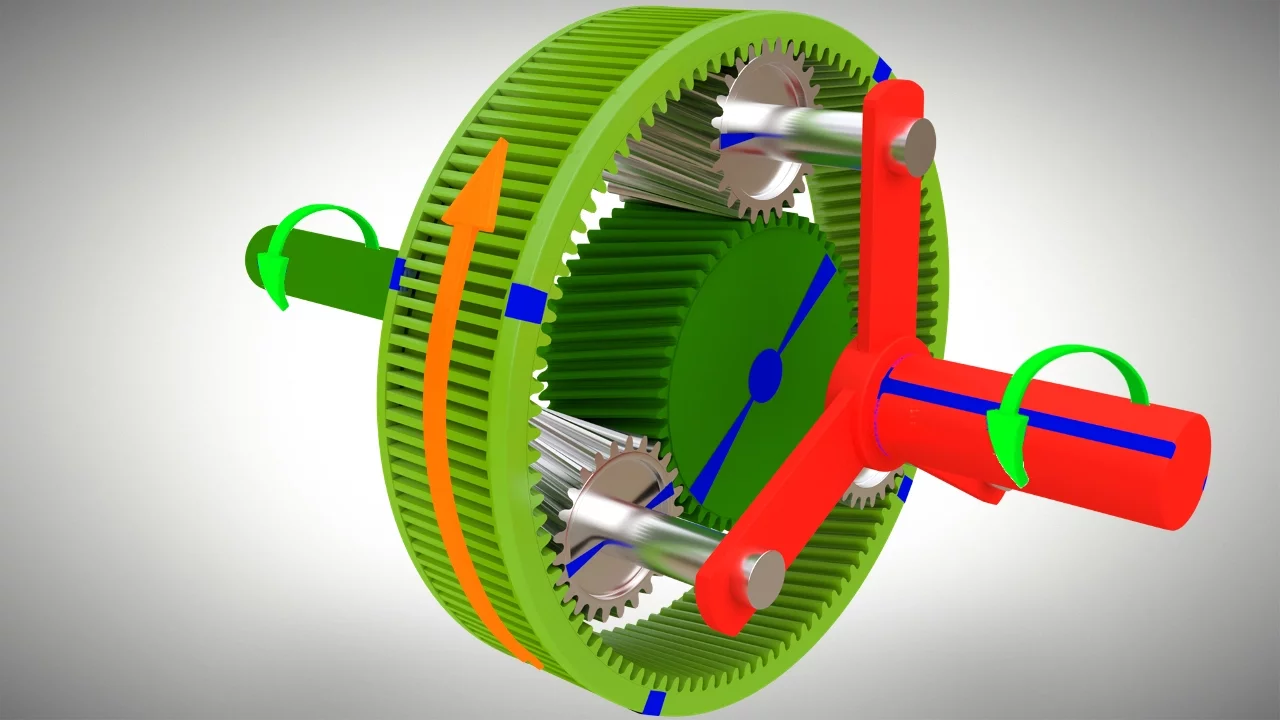
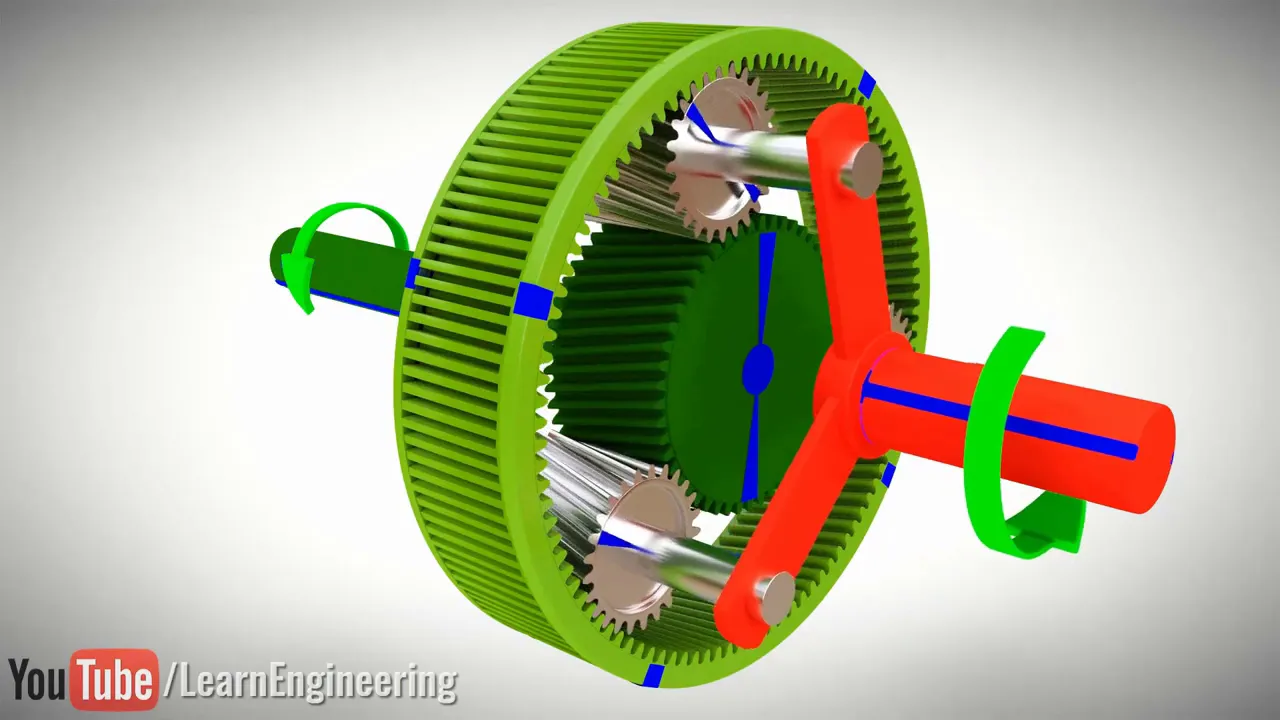
The gear ratio for a planetary mechanism is derived by combining the relationships between linear and angular velocities with the geometric constraints of the system; specifically, the ratio equals (ZR - ZS)/ZS, where ZR is the number of teeth on the ring gear and ZS is the number of teeth on the sun gear, which can be understood by analyzing the rolling motion of planet gears and applying the principle that linear velocity equals angular velocity times radius.
Planetary Gear Ratio Derivation: Formula Explained
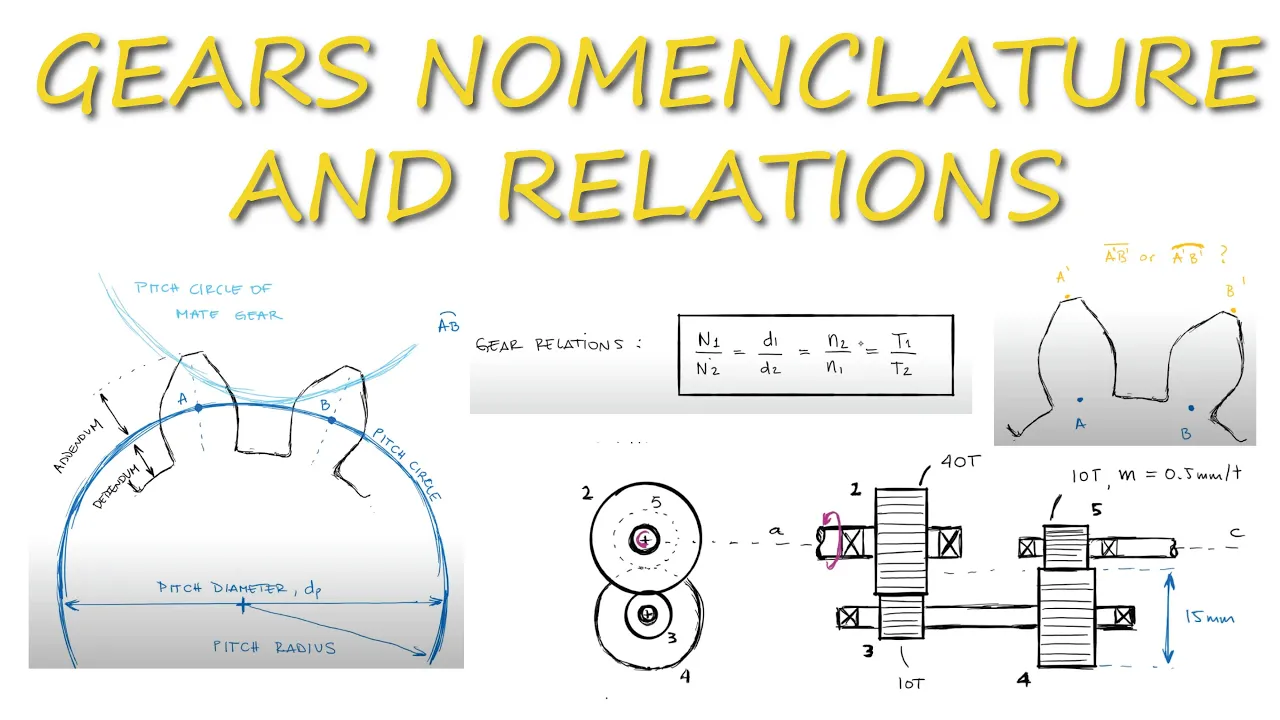
Added:Basic gear terminology and the fundamental law of gearing, including relations between tooth count, pitch diameter, and angular velocity.
Rotational kinematics principles, specifically the mathematical relationship between linear velocity, angular velocity, and radius (v = ωr).
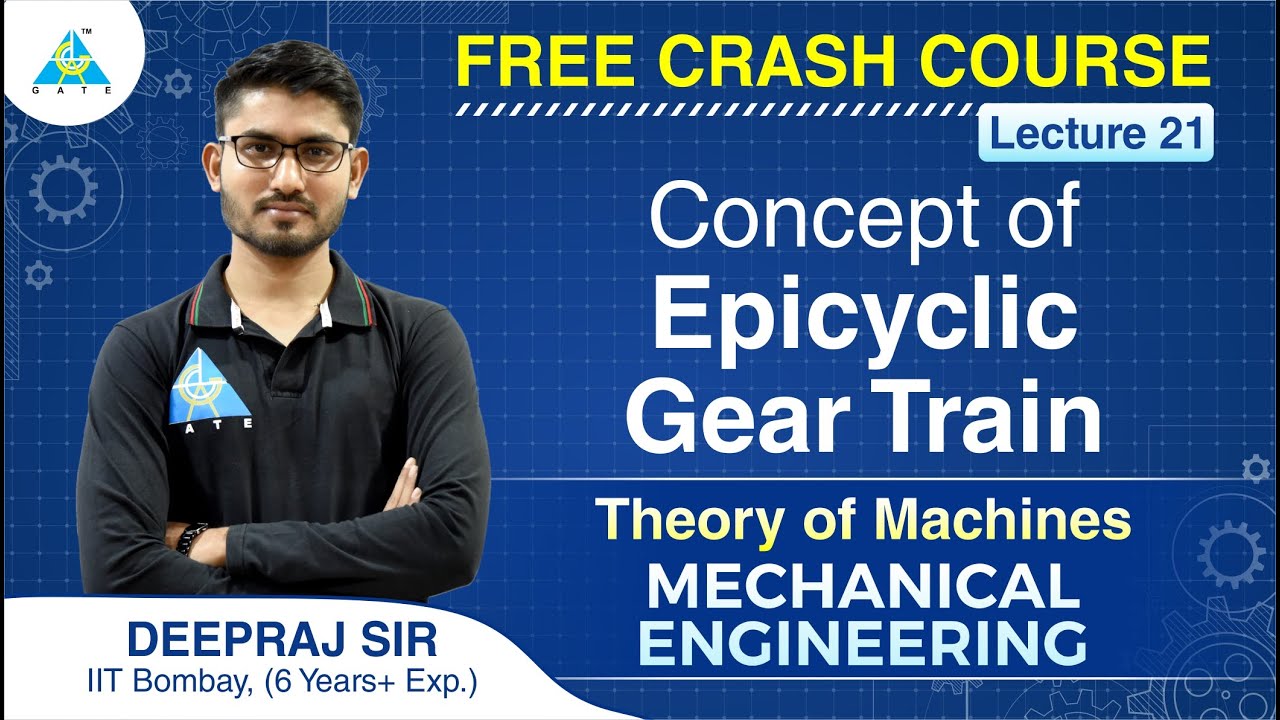
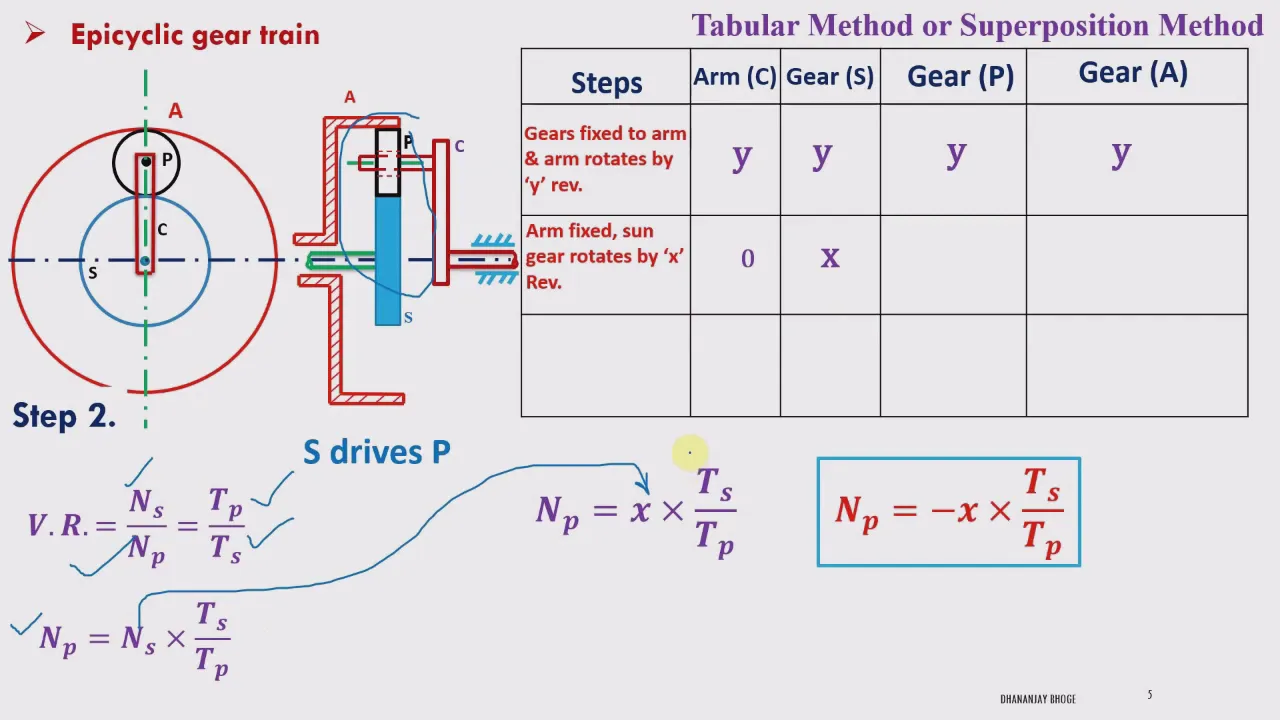
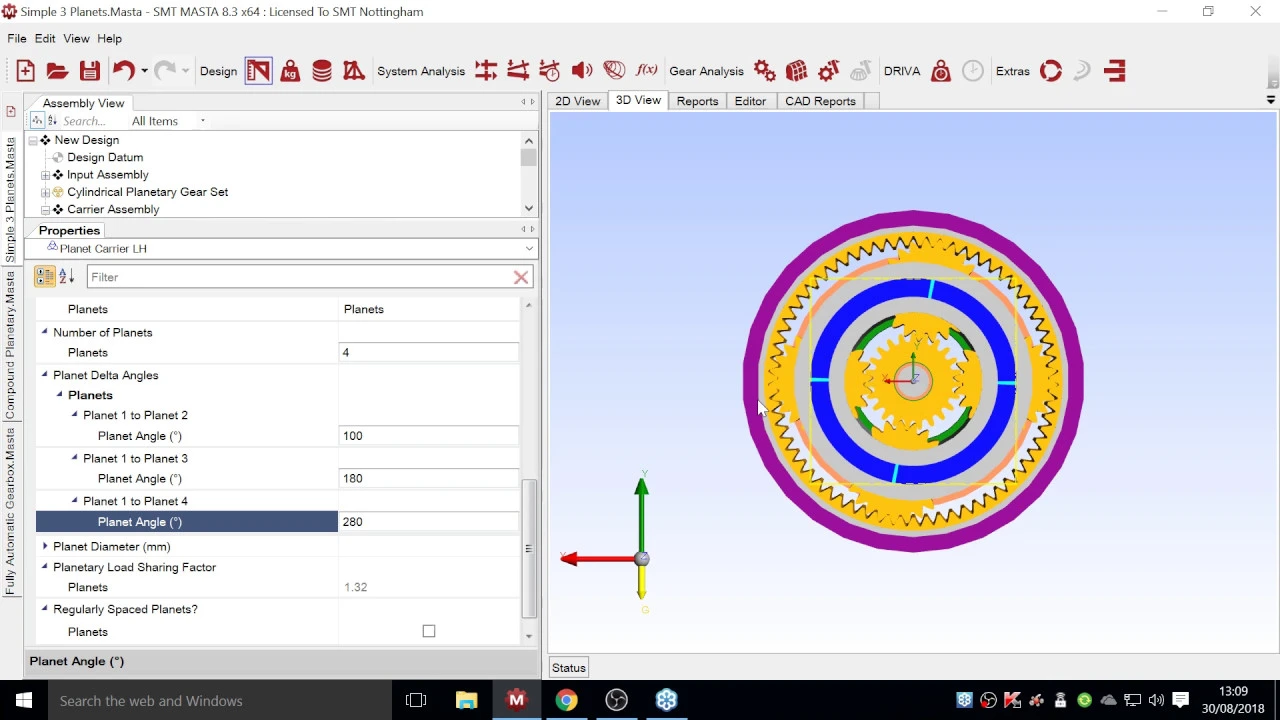
The anatomy and component functions of an epicyclic gear train (identifying the sun gear, planet gears, ring gear, and carrier).
The concept of relative motion and frame of reference transformation in mechanical systems.
Analysis of complex, multi-stage, and compound epicyclic gear trains, such as the Simpson and Ravigneaux gear sets.
Torque distribution, mechanical efficiency, and power flow analysis in planetary gear systems under dynamic load.
Real-world engineering applications of planetary gears in automotive automatic transmissions, heavy machinery, and wind turbine drivetrains.
Alternative analytical methods for complex gear systems, such as the Tabular Method (velocity/turns table) and Willis' formula.
365.4K views4.6Klikes5:55Original Release: 2018-01-09
the gear ratio formula for a simple gear drive is simple and intuitive while the formula for the gear ratio of a planetary mechanism is not in this tutorial we will show you an original and easy to understand approach to deriving this formula first let's go over a few basic facts about meshing gears a gear is fully defined by as few as two parameters the number of teeth and a number called module which is a unit of size that determines how big or small the gear is the gears diameter is simply the number of teeth times the module for two gears to mesh they must have the same module since the module is / its number of teeth the following is true therefore the ratio of the number of teeth equals the ratio of the diameters and since the diameter is two times radius it also equals the ratio of the radii let's now look at the planetary mechanism there are four components the center gear is called the Sun gear the outer gear with its teeth pointing inwards is called the ring gear the gears meshing with the Sun and ring gears are called planet gears the spinning platform on which the planet gears our mouth it is called the carrier you from this diagram it is clear that the sun planet and Rinca radii must satisfy the following equation for reasons soon to be revealed we will rewrite this equation as follows one last important equation we need to review connecting linear velocity and angular velocity for an object moving in a circle with a fixed radius its linear velocity equals its angular velocity times the radius of the circle let's go back to gear ratios the object of this tutorial for a simple two gear mechanism the gear ratio is the ratio of the number of teeth of the larger gear to the number of teeth of the smaller gear this comes from the linear versus angular velocity formula we just discussed the instantaneous velocity of the point of contact of two meshing gears is the same for both gears if it weren't one gear would slip relative to the other and the gear teeth prevent that from happening since the linear velocities are the same the angular velocities times the radii are also the same since the gear ratio is the ratio of one angular velocity to the other it equals the ratio and the second radius to the first or the second number of teeth to the first you what about the planetary mechanism in the most common scenario the input shaft is connected to the Sun gear and the output shaft to the carrier the gear ratio for the planetary mechanism is therefore the angular velocity of the Sun gear to that of the carrier to compute it let's consider a school level physics problem a wheel rolls without slipping the linear velocity of the wheel Center is V what is the instantaneous velocity of the top point of the wheel it turns out that velocity is simply two times V that is because the rolling viewed as an instantaneous rotation around the point where the wheel touches the ground since the top point of the wheel is twice as far from that point than the wheel Center the linear velocity is also twice as great this applies not only to a wheel the rolls along a straight line but also to a wheel rolling inside a circle just like a planet gear in the planetary mechanism we now have all the pieces in place to derive our gear ratio we need to find the ratio of the angular velocity of the Sun to that of the carrier near velocity of the carrier is in the angular velocity of the carrier times its distance from the center the instantaneous linear velocity of the point of contact between the planet and Sun is the angular velocity of the sometimes it's radius according to the physics problem we just discussed this also equals two times the linear velocity of the carrier this gives us this equation the gear ratio is Omega s divided by Omega C according to the formula we arrived at earlier the two times are P term can be replaced with RR minus RS which can be simplified to since the radii are proportional to the number of teeth this can be rewritten as in our example Zr is 60 and zs is 12 so the gear ratio is 6 and that concludes our tutorial thanks for watching
Up Next
24:47
Equation-Driven Involute Spur Gear Modeling in SolidWorks
@YangCaoUBC
338.7K views•2014-02-24

30:32
Ultrasonic Transducers: Resonant Frequency Measurement and Horn Design
@imajeenyus42
229.9K views•2017-02-22

54:16
Polymer Environmental Degradation: Mechanisms & Stabilization
@iit
1.8K views•2012-07-10

33:39
How a Student's Question Saved a NYC Skyscraper from Collapse
@veritasium
22.8M views•2025-04-26
Related Study Plans & Knowledge Roadmaps
Structured learning paths in Engineering
engineering
Building Acoustic Levitators: Physics & Arduino
01The Physics of Sound and Standing Waves
02Piezoelectric Transducers and H-Bridge Drivers
03Arduino Programming: Generating 40 kHz Signals
+ 2 more learning modules
14h5 modules
Explore Roadmap
engineering
Building Peltier Cloud Chambers: Particle Tracks
01Cosmic Rays & Cloud Chamber Physics
02Thermoelectric Cooling (TEC) Fundamentals
03Custom Liquid-Cooling Loop Design
+ 2 more learning modules
18h5 modules
Explore Roadmap
engineering
Yagi-Uda Antennas: Modeling, Build & VNA Test
01Introduction to RF and Antenna Fundamentals
02Yagi-Uda Antenna Design Principles
03Antenna Modeling and Simulation in 4NEC2
+ 2 more learning modules
18h5 modules
Explore Roadmap
engineering
ECG Monitor Design: Op-Amps, Filters & Noise
01Electronics & Breadboard Basics
02Op-Amps and Instrumentation Amplifiers
03Bioelectricity and ECG Fundamentals
+ 2 more learning modules
18h5 modules
Explore Roadmap