


![Syntax: Intro to Linguistics [Video 5]](https://i.ytimg.com/vi_webp/I9RPueD8wGs/maxresdefault.webp)
![[Syntax] Constituents](https://i.ytimg.com/vi_webp/Ia7d4slVL6s/maxresdefault.webp)










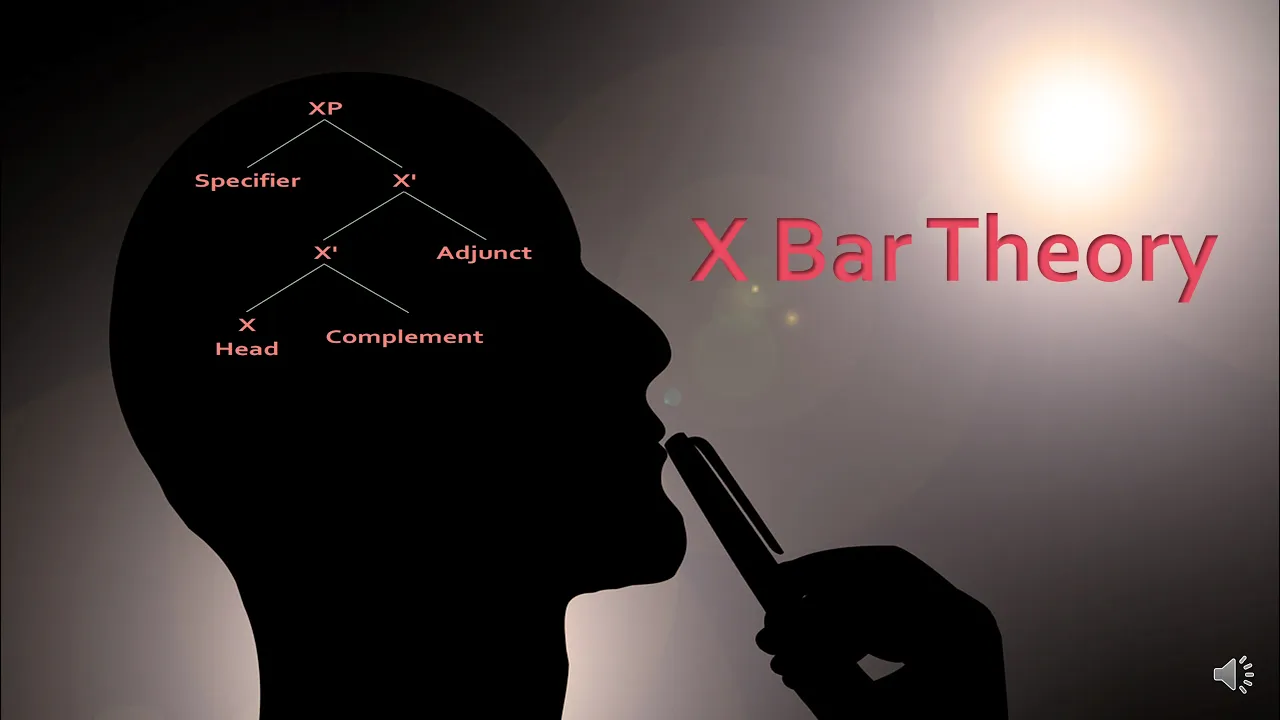
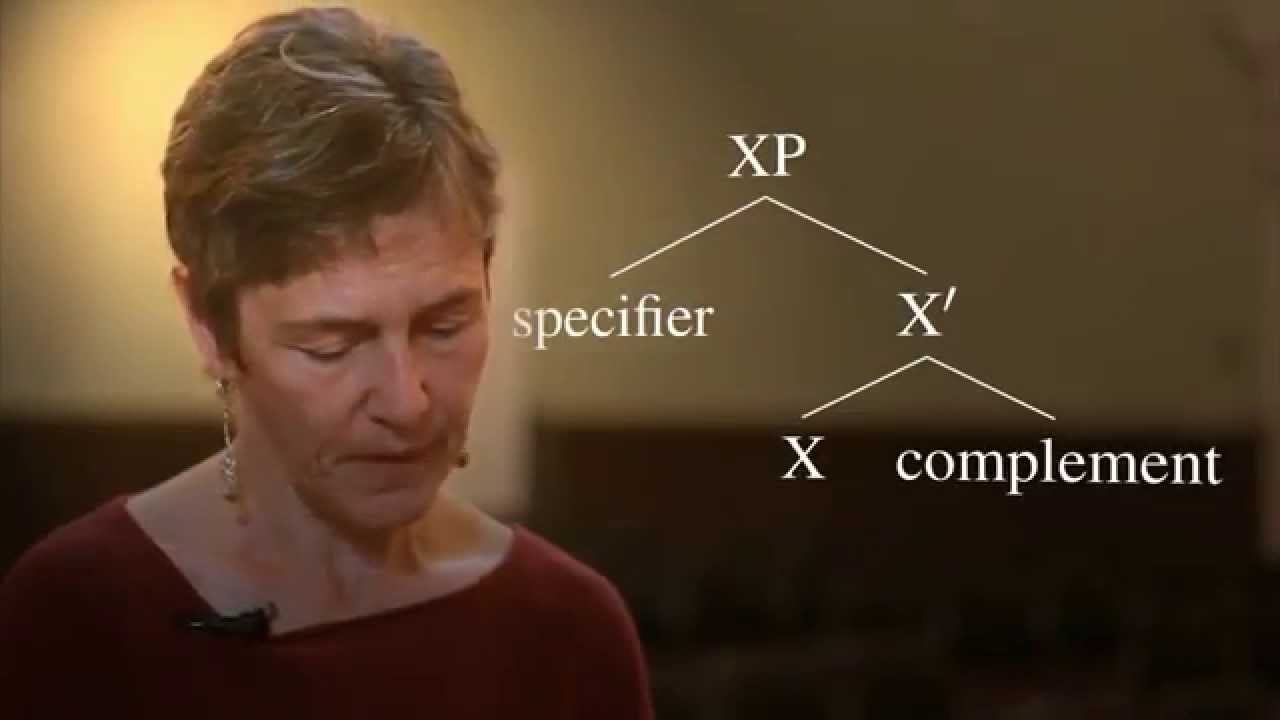

![[Syntax] X-Bar Theory - Specifiers, Adjuncts, and Complements](https://i.ytimg.com/vi_webp/n8TYuq173N0/maxresdefault.webp)
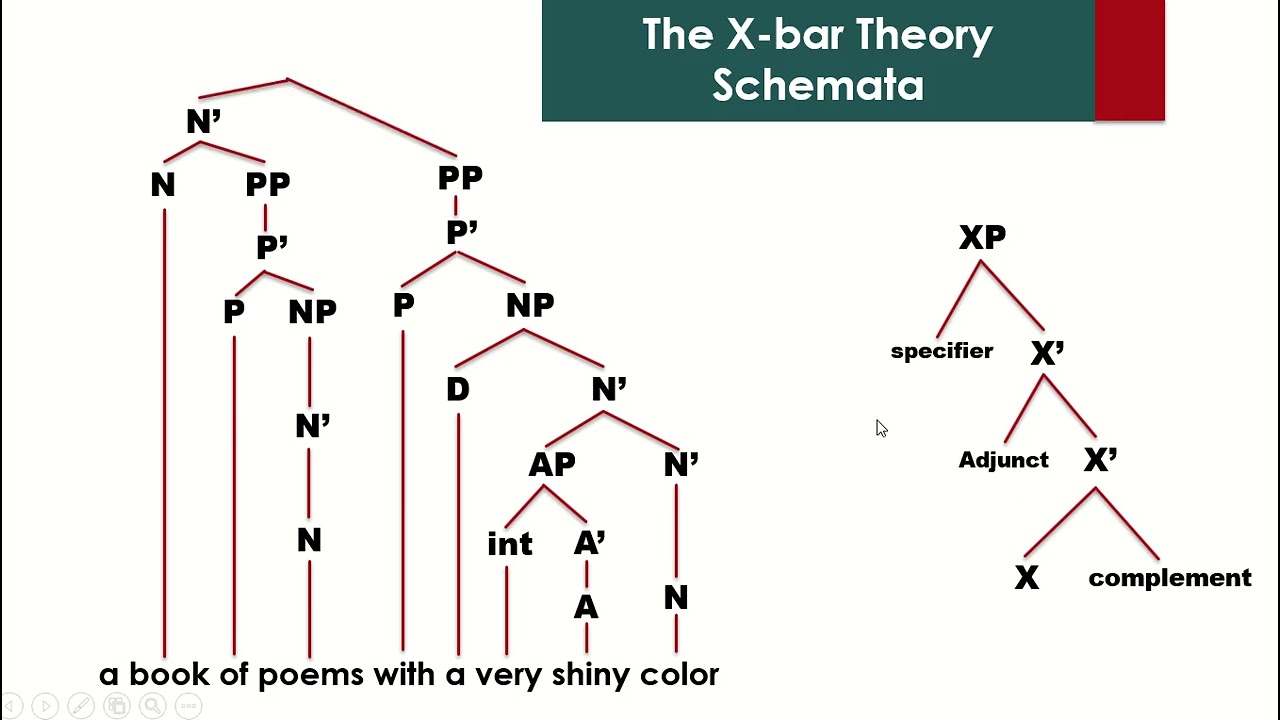
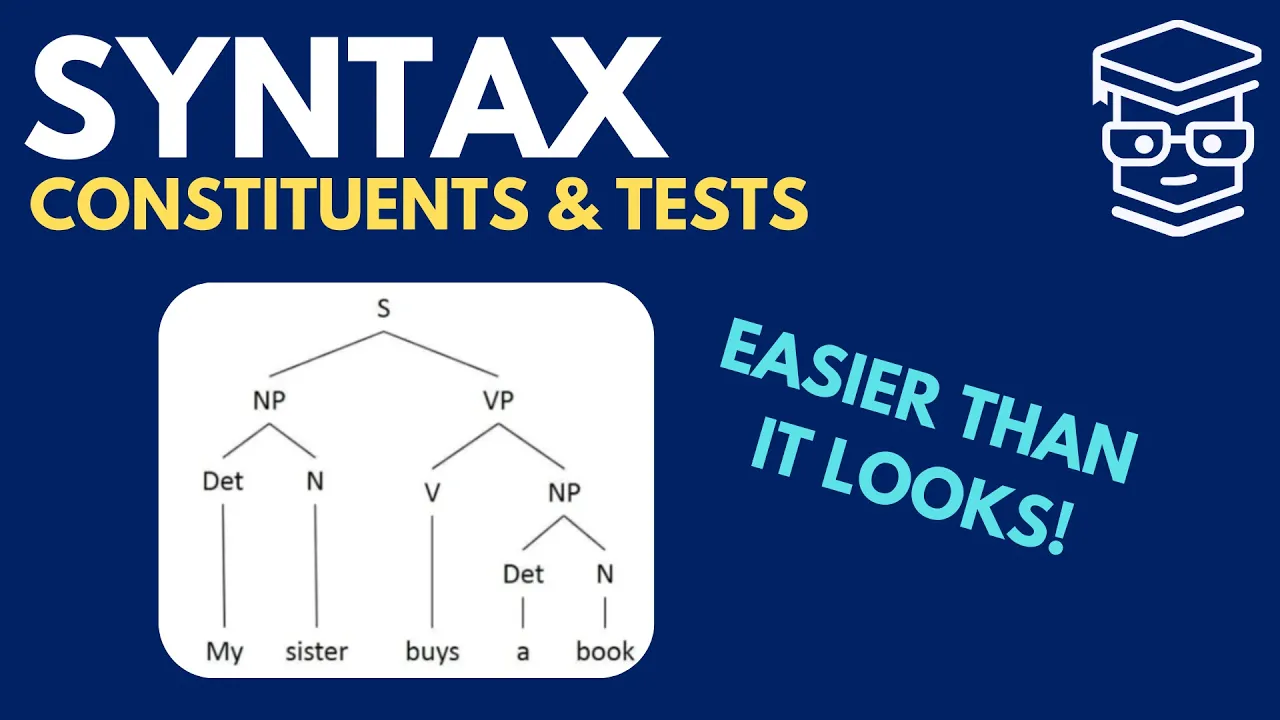
In generative syntax, substitution tests are a primary diagnostic for identifying constituents: a sequence of words is a constituent if it can be replaced by a single word (such as pronouns for noun phrases, 'there/then' for prepositional phrases, or 'do so' for verb phrases), and this replacement reveals the phrase's head, which projects grammatical properties like number and gender to the entire phrase.
Identifying Constituents in Syntax: Substitution Tests
Added:Basic understanding of parts of speech (lexical categories) such as nouns, verbs, adjectives, and prepositions.
The foundational definition of a 'constituent' in linguistics as a word or group of words that functions as a single unit within a hierarchical structure.
Familiarity with the concept of phrase structure and the idea that sentences are not just linear strings of words but are hierarchically organized.
Applying other syntactic constituency tests, such as movement (clefting, fronting), coordination, and omission/deletion.
Constructing phrase structure trees (syntax trees) to visually map out the hierarchical relationships between constituents.
Using constituency tests to diagnose and resolve cases of structural ambiguity in complex sentences.
Exploring formal syntactic frameworks, such as X-bar theory or Generative Grammar, to model how human language structures phrases.
50.1K views971likes19:29Original Release: 2015-09-12
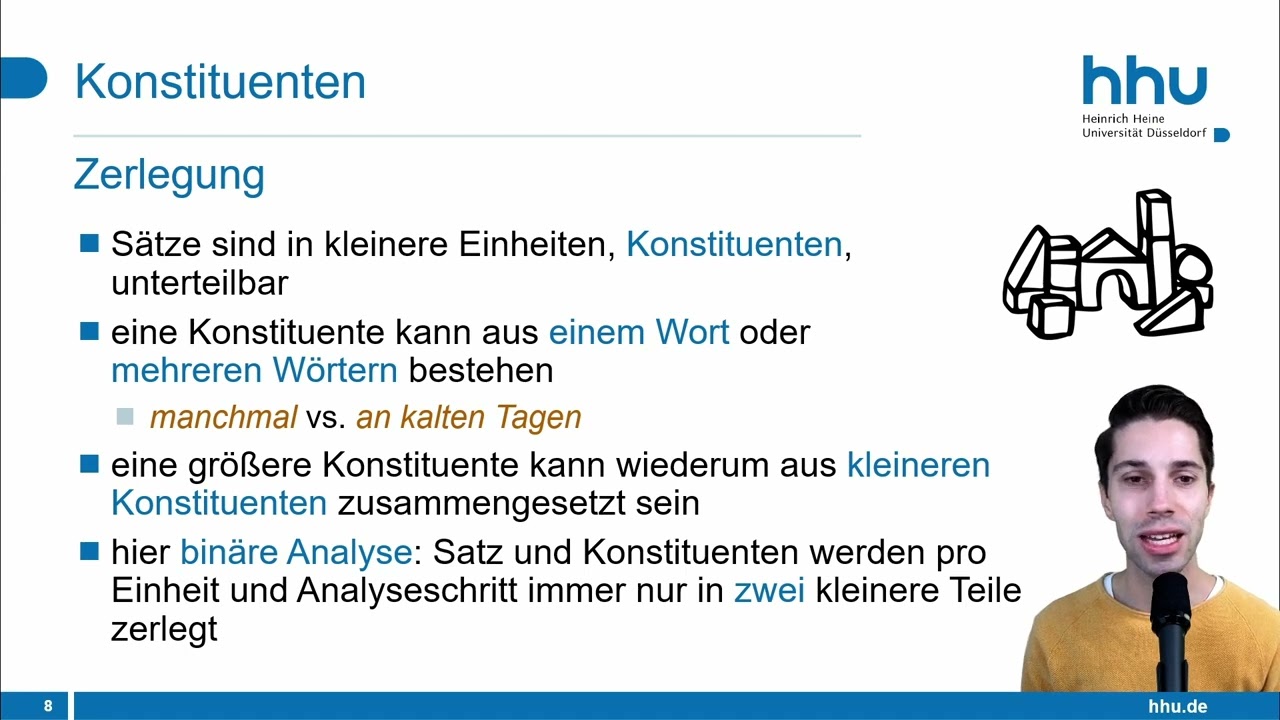
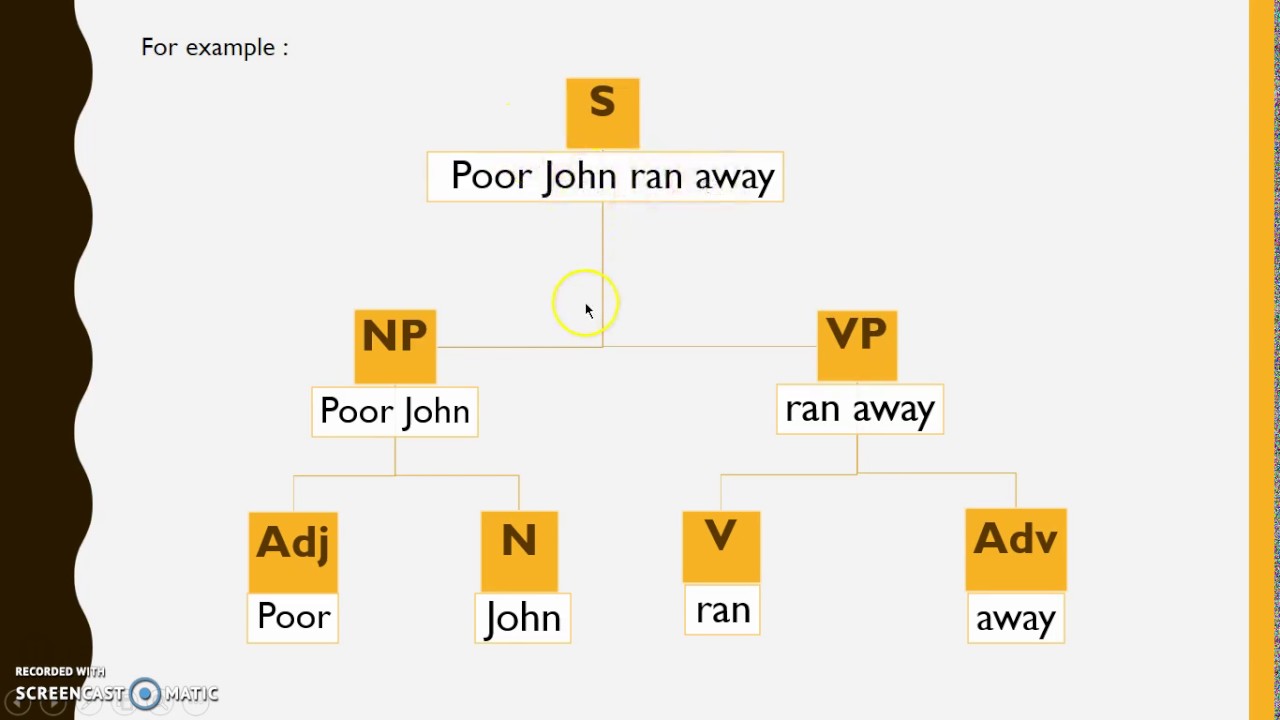
[Music] [Music] we've seen that sentences have an internal structure they consist of constituents which themselves May consist of smaller constituents so far we've looked at it at a kind in a kind of theoretical way but now we can take that and put into practice ice and the question is going to be then if you have a sequence of words if you have a string of words how can you determine what the constituents are that make up that string what is the evidence for a certain sequence of words being a constituent or not being a constituent that is to say are there diagnostics for constituent structure that can be applied the main two Diagnostics that can be used to work out what the constituent structure of a sentence or a phrase is are on the one hand whether that sequence that you're looking at can be replaced by a single word so that's one family of tests for constituency replacement or substitution tests whether you can replace the sequence that you're concerned with by a single word and the other main class of tests for constituency is movement or displacement that is can that same sequence of words that you're looking at and trying to work out whether or not it's a constituent can that sequence of Words Be Moved within the sentence can it be displaced and occurs somewhere else while the meaning of the whole sentence is more or less preserved that may not make a lot of sense at the moment but you'll see some examples so those are the two main types of test that can be used for constituency and when we've looked at those we'll look at some others as well now we're looking at how we can diagnose constituency and in particular starting with the test that we can call substitution or replacement noun phrases are one kind of phrase a phrase that's built around a noun evidently and that's the general pattern that inside each phrase there's one distinguished word that gives the phrase its category so we have noun phrases which are built around nouns we'll see you have adjective phrases built around adjectives prepositional phrases built around prepositions that distinguished word within a phrase is called the head of the phrase other terminology that gets used for this is to say that a word projects a phrase so a noun projects a noun phrase an adjective projects an adjective phrase so a noun projects the noun phrase the noun is the head of that phrase one reason for saying that the noun is the distinguished word within noun phrase is that it's the word that is least likely to be omitted so this is characteristic of heads of phrases so there are lots of different sizes of noun phrases we can have for example uh just the word cats so we could say cats are lovely we can also say intelligent cats are lovely we can say cats with long tails are lovely or intelligent cats with long tails are lovely in all of these of course we've got the word cats if we ommit that we'd wind up things with things like intelligent with long tals are lovely or with long tals are lovely and those are ungrammatical so in this case we see that it's the head of the phrase that has to be there that can't be omitted and that's typical perhaps not completely Universal but a typical property of the head of a phrase a second fact about the head of a phrase is that it shares grammatical properties with the phrase we've already seen that it shares the category so a noun is the head of a noun phrase so that grammatical category of noun is shared between head and phrase but other grammatical properties may be projected from the head to the phrase one property for example is plurality for example you could take in English a phrase like the dog the dog is singular and you can tell because if you add a verb you get singular agreement on the verb so you'd say the dog is waiting and not the dog are waiting of course you would say the dogs are waiting so the noun pH phrase there is plural and notice because the head is plural we could take another noun phrase like um seven heads right so that's plural you'd say seven heads are better than one now we can make a larger noun phrase we've seen that you can have phrases inside phrases so we could have a larger noun phrase where we put these together so we get something like the dog with seven heads now notice what happens if you try to make a verb agree with that you'll get the dog with seven heads was waiting not the dog with seven heads were waiting so despite the fact that heads which is plural is close to the verb it's not what the verb is agreeing with the verb is sensitive to the number that is determined by the head of the phrase and the head of the whole noun phrase the dog with seven heads is dog which is singular so the number of the head inside the phrase determines the number of the whole phrase in English we can see this with plurality there are other grammatical properties which can be determined by the head of a noun phrase uh we don't see in English but in many languages nouns are divided into number of classes which are sometimes called genders in different languages the number of different genders the number of these formal classes are nouns varies um you may be familiar with French which has two distinct genders masculine and feminine and all nouns fall into one or other of those classes and again just like plurality in English and in fact plurality in French the gender of a noun phrase is determined by the gender of the head and one way to see this is that other words also agree with it so we saw that in English the verb agrees in number number with the number of the noun phrase that's the subject in French we get also agreement in gender on adjectives so you could have a sentence like um so mother is feminine it makes the whole noun phrase feminine and the adjective Mor has a t sound at the end which is the feminine agreement on the other hand if you had a masculine word like um J the man's name George that would be masculine and if you wanted to say George is dead you'd get George without that t sound at the end so again the the the in this case the gender of the head determines the gender of the whole phrase and again we can build up a larger phrase so we could have La the mother of J and if we now see what gender we get on the adjective we'd get la GE ort again with the feminine ending so there again although the word that's closest to the adjective is masculine the the agreement that you get on the adjective is feminine because the whole noun phrase the mother of J the gender of that is determined by the noun mother so there again we see a grammatical property of the head of a phrase projected to the whole phrase there's a classic example in the literature that relies on this property of heads if you take the phrase visiting relatives can be boring it's actually ambiguous there's two quite distinct meanings so on the one hand it means something like relatives who visit can be boring on the other hand it means something quite different that is your going to visit relatives yourself can be boring so it has these two meanings but notice there's it's a property of the word can that it actually doesn't show a agreement for singular or plural so you say the boy can and the boys can but if you take a verb that does show a difference now we actually see the ambiguity splitting up so you would say visiting relatives is boring or visiting relatives are boring and those two sentences now each one has only one of the meanings and you've got that different agreement and what's happening there is that where you get visiting relatives of are boring on that reading where it's the relatives who are boring relatives is the head of the noun phrase visiting relatives it's plural so the whole noun phrase is plural and you get plural agreement but with the other meaning where it means to visit relatives is boring in that case the noun visiting is the head of the noun phrase and that is singular and so you get singular agreement on the verb so there you see a very minimal example which shows that the head of the noun phrase is determining the the number on the noun and in this case it goes with a real difference in meaning of the noun phrase as a whole so that's some properties of phrases and heads of phrases and in particular of noun phrases but now to get back to the question of the diagnostic for noun phrases and a particular the diagnostic of substitution or replacement a characteristic of noun phrases then is that they can be replaced by a single word which is called a pronoun so that's what pronouns do notice that although we call them pronouns it's actually a bad term because a pronoun doesn't replace a noun it replaces a whole noun phrase so for example if you take a sentence like John saw the boy who fed the cats we could replace the whole sequence the boy who fed the cats with the pronoun him so John saw the boy who fed the cats I saw him too and him is referring to that whole sequence the boy who fed the cats so that tells us it's a noun phrase notice you could also say John saw the boy who fed the cats um I saw the girl who fed them where now them is replacing the cats so that is also a constituent it's also a noun phrase so should we be worried that we have one diagnostic which says the boy who fed the cats is a noun phrase and another diagnostic that says the cats is a noun phrase well obviously not because we've seen that phrases can contain other phrases constituents contain constituents and in particular we have recursive cases of this that a noun phrase can contain another noun phrase and this is just one example of that we've looked a bit now at noun phrases Es at phrases headed by nouns now we can look at at another kind of phrase a prepositional phrase that is a phrase headed by a preposition prepositions in English include words like in on after under and so on it's actually a bit unfortunate that we have this word preposition because it includes within it the ordering that the preposition has with respect to the phrase it combines with so in English prepositions precede the phrase they combine with so we get um in London from Japan uh to Edinburgh preposition followed by a noun phrase in other languages you have postpositions that is the equivalent kind of word but which follows the phrase it combines with in Japanese you'd find that the equivalent of a preposition occurs after the noun phrase it combines with so in English we'd say to Tokyo in Japanese you'd say toyo e or Tokyo and the same with all of the other equivalent words we by calling them prepositions versus postpositions it makes it sound like it's two different categories what we'd really want to say is that there's a single category which we could call add position and that in English they go before the thing they combine with in Japanese they go after but preposition and postposition are very well established uh pH very well established terms so we'll stick to those for for the moment so English are ad positions are prepositions they come before the thing that they combine with which is typically a noun phrase or we'll although we'll see that they're a case of prepositions combining with other categories prepositions can express different kinds of Concepts prepositions that relate to location or locative prepositions when those combine with phrases the result can often be replaced with a locative expression like their or here so I could say for example I went to Philadelphia in 1985 I went there in 1985 I came to Edinburgh in 2002 I came here in 2002 so locative prepositional phrases can often be replaced with with here or there other prepositions can denote things to do with time and these temporal phrases that result can also be replaced often with a temporal word like then so we could say uh she lived in Philadelphia in 2008 she lived in Philadelphia then we could do both so she lived in Philadelphia in 2008 she lived there then we've replaced the two prepositional phrases with these two words there and then other prepositions denote con other Concepts than time or place so for example there's a preposition for it can has many uses but you can say I did this for my aunt there's no single word that can replace for my aunt we still think it's a prepositional phrase but it doesn't have a corresponding single word like there or then we'll see later on though that there are other Diagnostics that we can use to show that it is indeed a phrase we've seen noun phrases headed by n we've seen prepositional phrases headed by prepositions another type of phrase is an adjective phrase an adjective could be a word like ill or loud and these can be expanded to make larger phrases so we could say for example Mary is extremely ill or that noise is too loud to be tolerable extremely ill is an adjective phrase too loud to be tolerable also an adjective phrase in for some speakers these adjective phrases can be replaced by the form so for such speakers you could say for example uh Marian seems extremely ill and bill is so too where so picks up extremely ill but not every speaker uses so in this way not every speaker accepts that I myself don't find it very natural for speakers who do have that use of so it's a good diagnostic for an adjective phrase at least even for such speakers though there is a cavad here adjective phrases appear in two main types of position you can use adjective phrases attributively or predicatively what that means is to use something predicatively to use an adjective phrase predicatively is to use it an expression in an expression like uh Marian is ill or uh the mantlepiece is Dusty to use it attributively is to use it within the noun phrase so a very ill woman or a Dusty mantlepiece and even speakers who can use so to replace adjective phrases can only do so when those adjective phrases appear in the predicative position so you'll have speakers who can say she is very tall and my brother is so too but the same speakers don't accept for example uh I saw a very tall man and she saw a so woman so that use of so is restricted to adjective phrases in predicative position for the speakers who can use it and the final type of phrase that we'll consider now is a phrase headed by a verb a verb phrase verb phrases can occur in various positions uh an example would be to insult your mother is disgraceful insult your mother there is a verb phrase or um Jenny will attend the conference attend the conference is a verb phrase or Laura painted a portrait of the dog painted a portrait of the dog is a verb phrase the substitution that you can do for verb phrases is actually not with a single word verb phrases can often be repl placed with the form do so uh so for example you can say to insult your mother is disgraceful to do so is disgraceful so insult your mother we saw is a verb phrase and indeed we can replace it with do so or Jennifer will attend the conference I will do so too I will attend the conference too so we see that attend the conference is also a verb phrase or Laura painted a portrait of the do her sister did so too her sister painted a portrait of the dog too so painted a portrait of the dog also a verb phrase as you can see a complex verb phrase which contains a noun phrase inside it so do so is the form that can substitute for an entire verb [Music] phrase
Up Next
12:52
Constituency Tests in Syntax: Replacement, Movement & More
@DrNimerAbusalim
125.3K views•2017-09-23
36:52
Constraint Interaction in Optimality Theory: Epenthesis & Deletion
@Vidyamitra
180 views•2018-08-20

13:19
The DP Hypothesis in Generative Syntax | Noun Phrase Structure
@edinburghLangScience
47.1K views•2014-10-08

21:32
Accent Expert Explains U.S. Regional Dialects | Part 1
@WIRED
9.3M views•2021-01-21
Related Study Plans & Knowledge Roadmaps
Structured learning paths in Linguistics
linguistics
Optimality Theory: Tableaux & Constraints
01Phonological Basics: Sounds, Syllables & Rules
02Foundations of Optimality Theory: GEN, CON, and EVAL
03The Constraint Inventory: Markedness vs. Faithfulness
+ 2 more learning modules
15h5 modules
Explore Roadmap
linguistics
Morphosyntactic Alignment: S, A & P Systems
01Foundations of Syntax: Transitivity and Arguments
02The Linguistic Variables: Mapping S, A, and P
03Nominative-Accusative Alignment
+ 3 more learning modules
12h6 modules
Explore Roadmap
linguistics
Analyzing Sign Language: Phonology & Syntax
01Foundations of Sign Language Linguistics
02Phonology: The Five Parameters of a Sign
03Morphology: Word Formation and Classifiers
+ 2 more learning modules
14h5 modules
Explore Roadmap
linguistics
Pragmatics: Speech Acts, Grice & Politeness
01Introduction to Pragmatics: Meaning in Context
02Grice’s Cooperative Principle & Implicature
03Speech Act Theory
+ 2 more learning modules
14h5 modules
Explore Roadmap