


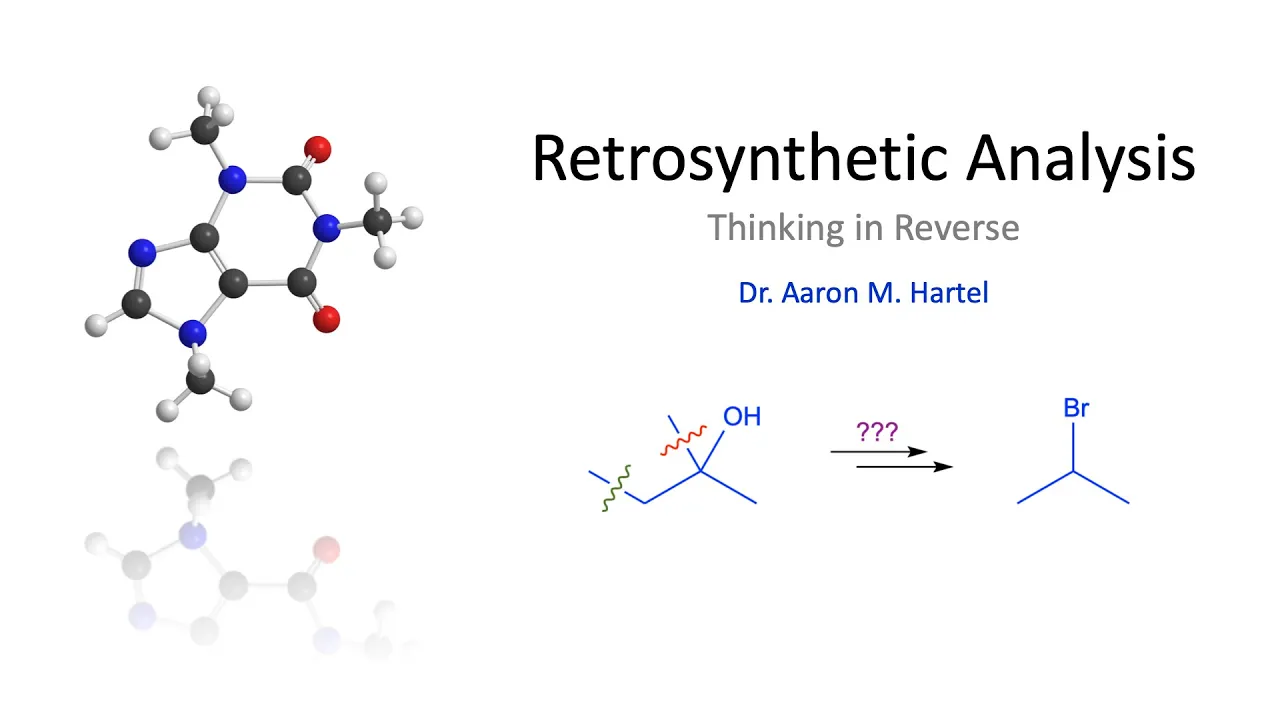













Retrosynthetic analysis is a systematic approach to designing total synthesis of complex molecules, pioneered by Nobel laureate E.J. Corey, where chemists work backwards from the target molecule by breaking bonds one at a time to identify simpler precursor molecules, prioritizing reactions that form bonds between carbon and heteroatoms over carbon-carbon bonds, and using known reactions strategically to connect complex structures to commercially available starting materials.
How to Design a Total Synthesis: Retrosynthetic Analysis
Added:Fundamental organic reaction mechanisms, including nucleophilic substitutions, eliminations, and polar addition reactions.
Core functional group interconversions (FGIs) and common carbon-carbon bond-forming reactions (such as Aldol, Grignard, and Diels-Alder reactions).
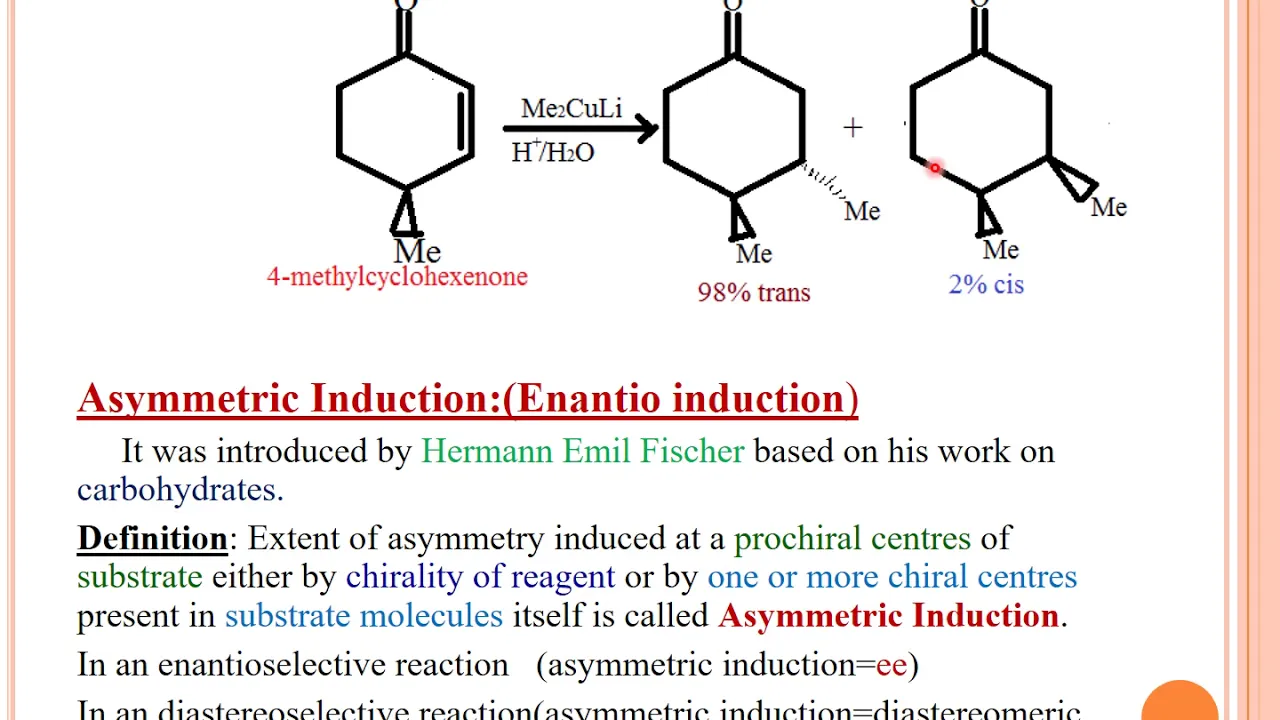
Stereochemistry principles, including stereocenters, enantiomers, diastereomers, and the basics of stereoselective synthesis.
The concept and strategic application of protecting groups to manage chemo- and regioselectivity in multi-step organic synthesis.
Analysis of classic and modern total syntheses of complex natural products (e.g., Taxol, morphine, or strychnine) to see retrosynthetic principles in action.
Advanced asymmetric synthesis techniques, including the use of chiral catalysts, chiral auxiliaries, and enantioselective transformations.
Modern synthetic strategies focusing on step-economy, atom-economy, and protecting-group-free or biomimetic pathways.
Introduction to Computer-Assisted Synthesis Design (CASD) tools and artificial intelligence platforms used to predict retrosynthetic pathways.
44.2K views1.1Klikes18:31Original Release: 2013-06-19
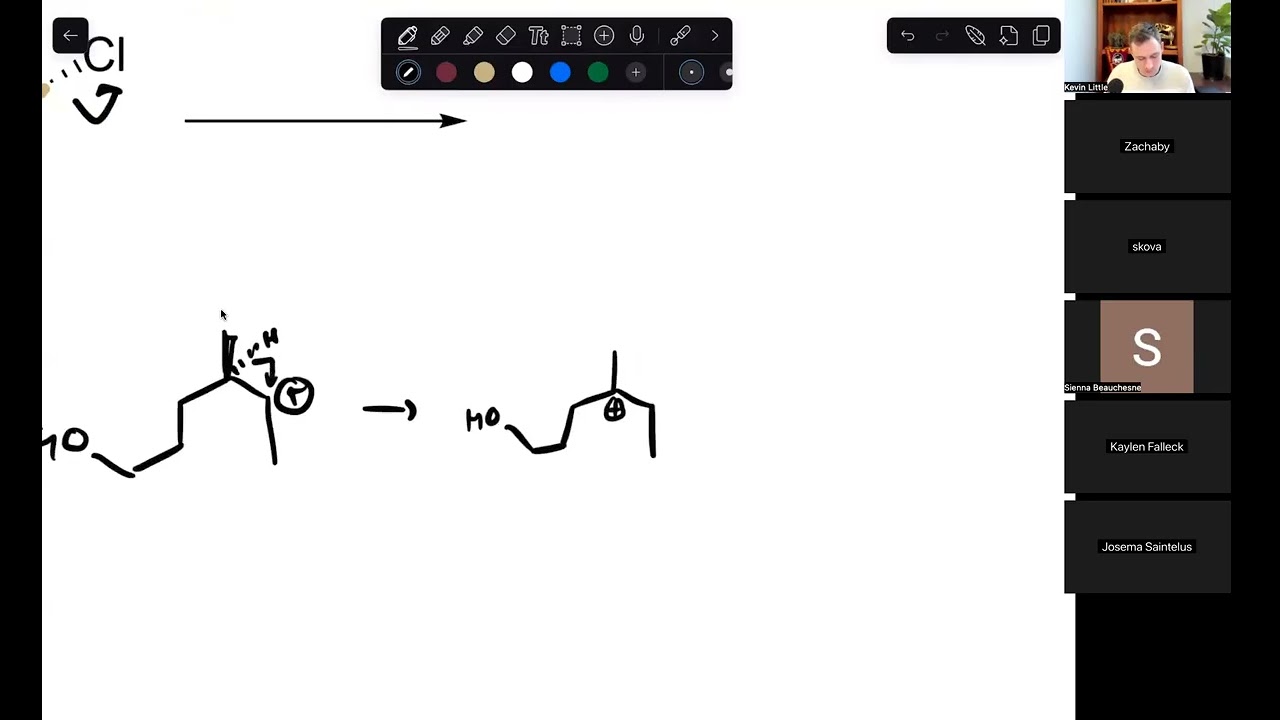
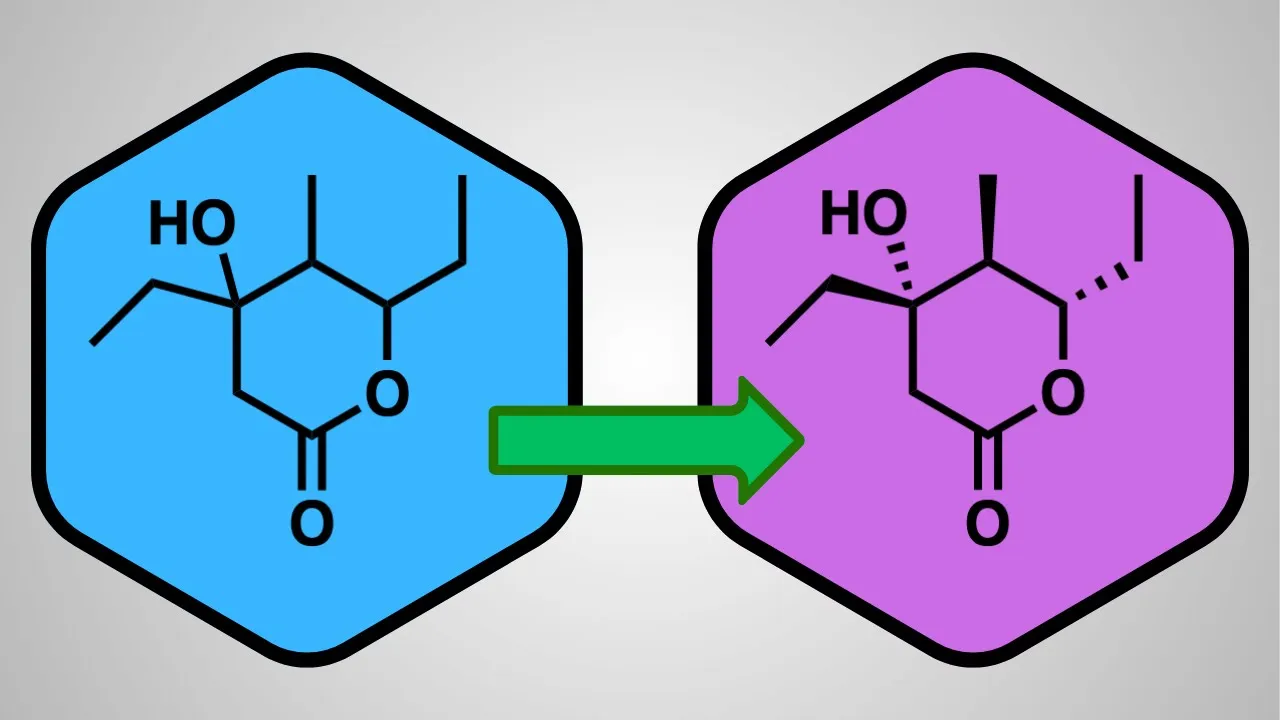
the following is a video recording of an unscripted lecture that I delivered to some of my sophomore undergraduate organic chemistry students in which I taught them how we organic chemists go about designing a total synthesis of a molecule once we have chosen a molecule to synthesize many of the pictures that I show in this actually come from poly youranus Bru's book entitled organic chemistry sixth edition which I uh site in my lecture slides and I'm also citing here for your reference in case you're interested while I realize that this information is not completely comprehensive and may lack many of the details necessary for rigorous total synthesis I hope that I've at least delineated some of the general principles that go through a chemist's mind when he or she is trying to design a total synthesis of a molecule I hope to that end that you will find it Illuminating and useful for any of your attempts at designing total synthesis of molecules so I'm going to talk about and teach you guys today how to design a total synthesis of a molecule I did that a little bit last week we'll go into a more depth today uh I've already written these dorky questions I guess once I've picked a molecule how do I come up with a way of synthesizing it uh I've written that section 6.12 of your textbook can help you with this but here are sort of my own highlights so in synthesis we chemists generally always consider cost so generally but not always cost of a synthesis is lower by either using very straightforward wellestablished well understood chemist chemical reactions and or using the fewest number of steps possible there might and generally you want to have the highest yields possible so if you have a reaction that has a lower yield but makes some kind of transformation that saves you 15 Steps um you know that that might be okay we also you know consider the cost of the reagents and everything so often the easiest way to design a total synthesis of a molecule is to start at the end product and work your way backwards yeah the name of this process is called retrosynthetic analysis that technique has been used by chemist for a long time this term itself was coined by uh a chemist at Harvard named EJ Corey he won the Nobel Prize for his work in designing this uh process so these are some examples I stole from your book how could I go from making this or taking one buttine and converting it into this compound which is pentanone once again we chema start at the product and work our way backwards so here's the product any of you guys guys without looking at the answers even though they're right there in front of you want to take a guess at what kinds of reactions I might have to do how many carbons are in the starting material four and in the product yeah there's one two three yeah there's six in the in the product so I'm going to have to do some kind of reaction to take my starting material and add on some more carbons do we know reactions that do that yeah okay and to get a ketone here from an alkine is there a reaction that we know that can take an alkine and turn it into a ketone there is we talked about it last class period so retrosynthetically we start at this product and we say hey I've got a ketone can I go backwards to an alkine I can and then can I go backwards from this alkine that has six carbons in it to my starting material that has four carbons in it the answer is yes once we have our retrosynthetic design written down we then go in the four forward Direction and actually write down the specific reagent so here's the forward direction if I start with this buttine I treat it with na2 you remember that strips off the terminal proton and gives you a negative charge on that carbon I can then alculated it with an alkal halide in this case ethyl bromide but I can use any length that I want I need a two carbon length to go up to six carbons right negative charge on this carbon attacks this carbon here kicks off the bromide and I get this then you might remember if I treat that with H2O h2so4 and usually we have to use mercury sulfate to add a little bit extra kick you might remember from last semester that that turns an alkine into a ketone so there's an example here's another example can I take this alkine ethine and turn it into this product h bromopropane of course I can because it's written there what kinds of reactions am I going to have to do go backwards yeah go backwards yeah take our starting material how I got a brome there what what how do I put a bromine on something H hbr and what kind of starting material do I have to have an alken so I take an alken and I have an hbr or I add hbr I can put a bromine on alken okay okay so I could imagine then I've got this end product if I went back to this alken if I took this alken and treat with hbr the bromine would go to the internal position giving me the marcovnikov product so that would work now there's a big difference between this alen on my starting material my starting material is obviously an alkine and and what's the other difference between this Al this alken and my starting material that's pretty obvious yeah it's longer so how do I lengthen an alkine same way we did on the last slide right so if I could somehow start with this alkine here could I convert it into this alken you guys know a way of taking an alkine and turning it into an alken how do I do that yeah linder's Catalyst and hydrogen gas now this alkine here can I go backwards to my starting material and take this starting material and lengthen it by that amount to get this alkine so you can see sort of what we do we we have the starting material in our brains in these kinds of problems in the back of our brain so that we're trying to work towards it but we go backwards one step at a time when we're doing total synthesis in real life life we frequently don't have the starting material in our minds we work backwards until we get to any starting material that I can buy basically that seems reasonable in the forward Direction I take this alkine treat it just like we did the previous slide N2 deprotonates negative charge treated with this propyl bromide adds on my three extra carbons now I've got the right chain length H2 linder's Catalyst reduces that to an alken and I hit that with hbr as you said Eric and that puts my bromine on there the marical position ready for another example these are boring I know I've got an alkine here and I want to go to making this o now look at that o how could I install an O there at the terminal end of that of that carbon thing there yeah the bh3 thing that's the uh hydroboration oxidation in other words if I take an alken and I do that bh3 fall by the per basic peroxide workup I can uh get the alcohol and the antiarc composition so let's look at this starting at my product I'm going to this alken so I could do that now starting this alken I want I'm going backwards to my starting material Aline do we know a reaction that will do that yeah linders again so now we go in the forward Direction I take this alkine hit it with leners or you can use this sodium and liquid ammonia do you guys remember that the difference between these two linders adds the two h's cyst to each other and sodium liquid ammonia adds them trans to each other so that gives me this uh alken in this particular case it doesn't matter if the hydrogens are trans or Cy because this is a terminal I've got two hydrogens here so there's not really a trans or Cy either way it doesn't matter which of these conditions I choose I take this treat it with my hydro bration oxidation condition it installs the O in the antiarom composition so this is sort of a review of retrosynthetic analysis a little bit one of the biggest synthetic challenges that we aregan at chemist or should say new organic chemists face is gaining the ability to see how to apply reactions that they already know to unfamiliar situations where it's not super obvious I personally call this ability fluency so I'm going to show you an example you guys are all familiar with this reaction right fredle Craft's isolation if I gave you this product and I said I want you my dear student to tell me how I could synthesize this thing I think you guys could all give me the right answer start with Benzene treat it with this acid chloride and and aluminum Tri chloride freal craft isolation right but what if I gave you this product now this is an example you guys have seen in class this product um for some students might not look as obvious or it might not be as obvious that this product is indeed the product of a freal Craft's isolation but it is you can see that if I started with this start material which is just once again an acid chloride it's just that the acid chloride is Tethered to the Benzene ring this is an intr molecular fral Craft's isolation so can you see what I'm talking about um it's really easy to sometimes see how to run reactions with things that look exactly the same as what you've studied but sometimes it's hard to gain the ability or the fluency to see how to apply them in slightly different situations here's example fral crafts isolation that I think might be very unobvious this is an aromatic ring and I got this from these uh this paper that was published here in 2005 this is not a Benzene ring this compound is called uh sorry parole it's also an aromatic ring though can you see that uh cyclic everything uh has pi electrons in the ring and if I add the lone pairs 2 46 that solves uh the equation for n plus 2 it can undergo a freal craft isolation so these guys traded this this with conditions that I'm not showing and were able to form a bomb between this carbon and this carbonal close that ring to form that strange looking compound now once again could you guys I'm not expecting to answer this right now but could you guys look at this product and say oh yeah that's a freal craft desolation I I know that I could assemble that and I don't know the answer to that question maybe you don't either but that's sort of the ability that we have to gain as synthetic chemist to be able to go retrosynthetically from complex looking structures to simpler materials the fluency how in the world do we gain fluency the answer is brce which takes time unfortunately we don't have all the time necessary to make all of you guys fluent so what I'm going to do is uh or or to teach you every single little Nuance about synthetic chemistry retrosynthetic analysis so what I'm going to do is just give you guys a couple of tips here are my tips tip one is when designing a synthesis start at the end product and break bonds one Bond at a time so this is a product that I want to make I'm going to break this Bond right here retrosynthetically and you can see that if I broke that Bond and Were Somehow able to start off with these Pro or these starting materials A and B in other words if I had a minus charge here at that carbon and a plus plus charge here at that carbon you could imagine this minus charge forming a bond here and and it would give me this product right do you see any issues with compounds A and B the biggest issue is that they don't exist so I can't have a just a ch2 with a plus charge sitting here on a Benzene ring by itself and have that exist except for maybe transitorily in a reaction solution and having a minus charge on this carbonal looks really odd that those exact reagents don't exist but are there reagents that I do know of that would behave like these what can you guys think of that might behave like compound a yeah bromine so if I want to have a positively charged carbon if I have that carbon bonded to a hallogen like bromine which is one of our favorites it acts effectively like that in a reaction now uh carban ions what are what are the popular agenty you guys know that react as if there were a negative charge on a carbon yeah gards right so gards are other like lithium stuck to a carbon or or copper stuck to a carbon that's like a negative charge on a carbon now I can't personally come up with any ragent that I know of that has a magnesium in a grenard ragent stuck to a carbonal carbon on a carboxilic acid like that that looks really weird and even if it did exist the negative charge on the carbon would just steal this hydrogen off of another molecule of itself and become protonated because this is an acidic hydrogen but are there any reagents that we know of like the one that I just deleted that behave or can later be transformed into a carboxilic acid that one so sodium cyanide this is like a NE a negative charge on this carbon and I can later convert this cyanide into a carboxilic acid do you guys remember how to do that yeah so it's acid and water yeah so now going in the synthetic direction if I took compound C and I had a negative charge on this carbon the negative charge would come in kick off the bromide I'd have the cyanide attached here then if I took that Cyanide and reacted with water and acid h204 would be great it can be HCL as well it converts this carbon that's triple bonded to nitrogen into a carbon that's double bonded to one oxygen single bonded to another o so that's tip one break bonds write what you make a negative and a positive and then see if you can come up with actual reagents that would behave like that so how do I choose which bonds to break I taught you guys this last semester generally speaking forming bonds between carbon and other atoms that aren't carbon is usually easier than forming carboncarbon bonds carbon carbon bonds are often very difficult to form so here's this example I could think of breaking Bond a or Bond B if I broke Bond a I would go up here to this where I've got a negative charge on that carbon and a positive charge on that carbon Bond B I could have a negative charge on oxygen a positive charge on this carbon which one looks better to you guys yeah B in and of course I've written that right there I'm sorry but why does that look better yeah it's a carbon that's bonded to an atom other than carbon right so if I B break Bond B I could come up with an O minus and a ch2 plus now once again neither of these two reagents exist but can I come up with something that might behave like that if I want to have a ch2 plus what behaves like that yeah exactly ch2 stuck to hallogen like bromine now an O minus doesn't exist by itself but I could have an O here can I convert an O into an O minus yeah just by by hitting it with base right it strips that hydrogen off and gives me o minus and then if this were ch2 stuck to a bromide or bromine that minus could come in form a bond kick off the bromide now let's consider this example up here I've got a ch2 minus and a ch2 plus the only way I could have that happen is having like a magnesium stuck to this carbon or some kind of other metal that would behave like a carbanion and then a Brom bromine over here is that going to be easy to form you guys know it of course not you guys know that having a bromine if I had a bromine on this ch2 and I dumped in magnesium it would put a magnesium here too so that would be very very difficult to do so generally speaking what I'm trying to tell you guys is breaking carbon carbon bonds is usually a less effective way to go if you have other options you all you often will get to the point where you have no choice though and we've studied many many reactions that can form carboncarbon bonds and that brings us to tip number four tip number four is remember your reactions now believe it or not you guys have learned quite a few do you guys believe that you probably feel like you've learned a zillion of them right you guys have learned quite a few reactions so it's good to keep the reactions that you know and are familiar with in the back of your minds or the Forefront of your minds as you guys are designing retro syntheses of compounds tip five is take advantage of usu's resources we have a number of different resources that can all be accessed at this HTML and unfortunately in this PowerPoint slide which is posted on canvas this is not a clickable hyperlink so if you want to go to this HTML you have to copy it and then paste it in your web browser sorry now the most important uh one of these resources that I want you guys to be familiar with today is this resource called scifinder scholar it's so important that I'm going to teach you how to use it right now now at this point I went on to teach my students how to use scifinder scholar I not including that lecture footage here in this video but I do have it elsewhere on my YouTube channel which you can access at this HTML hope this has been an enjoyable video till next time have a good day
Up Next

50:12
Alkyne Reactions and Organic Synthesis | Orgo Lecture
@joshprice176
126 views•2021-03-25
83:56
Biocatalysis and Catalysis in Islatravir Synthesis | Merck Webinar
@SCIwheresciencemeetsbusiness
675 views•2020-10-08
10:06
1H NMR: Determining Number of Peaks from Structure
@MSJChem
59.2K views•2017-04-06

17:31
Edible Water Bottles: A DIY Guide to Sodium Alginate Spherification
@ryan
10.5M views•2019-06-21
Related Study Plans & Knowledge Roadmaps
Structured learning paths in Chemistry
chemistry
Nuclear Chemistry: Decay, Meds & Fuel Cycle
01Introduction to Nuclear Structure and Radioactivity
02Decay Dynamics and Kinetics
03Radiation Interaction and Detection
+ 2 more learning modules
24h5 modules
Explore Roadmap
chemistry
Supramolecular Chemistry: Forces & Machines
01Foundations of Chemical Bonding and Intermolecular Forces
02Introduction to Host-Guest Chemistry
03Thermodynamics and Dynamics of Self-Assembly
+ 2 more learning modules
16h5 modules
Explore Roadmap
chemistry
Photochemistry: Excited States & Reactions
01Foundations of Light-Matter Interactions
02Molecular Orbitals and Electronic States
03Photophysical Processes and Jablonski Diagrams
+ 2 more learning modules
18h5 modules
Explore Roadmap
chemistry
Coordination Chemistry: Bonding & Properties
01Introduction to Transition Metals and Ligands
02Crystal Field Theory (CFT) and Geometry
03Magnetic Behavior and Spin States
+ 2 more learning modules
14h5 modules
Explore Roadmap