









![Reactions of Aldehydes and Ketones [Overview]](https://i.ytimg.com/vi/an7_MtcPLYI/maxresdefault.jpg)



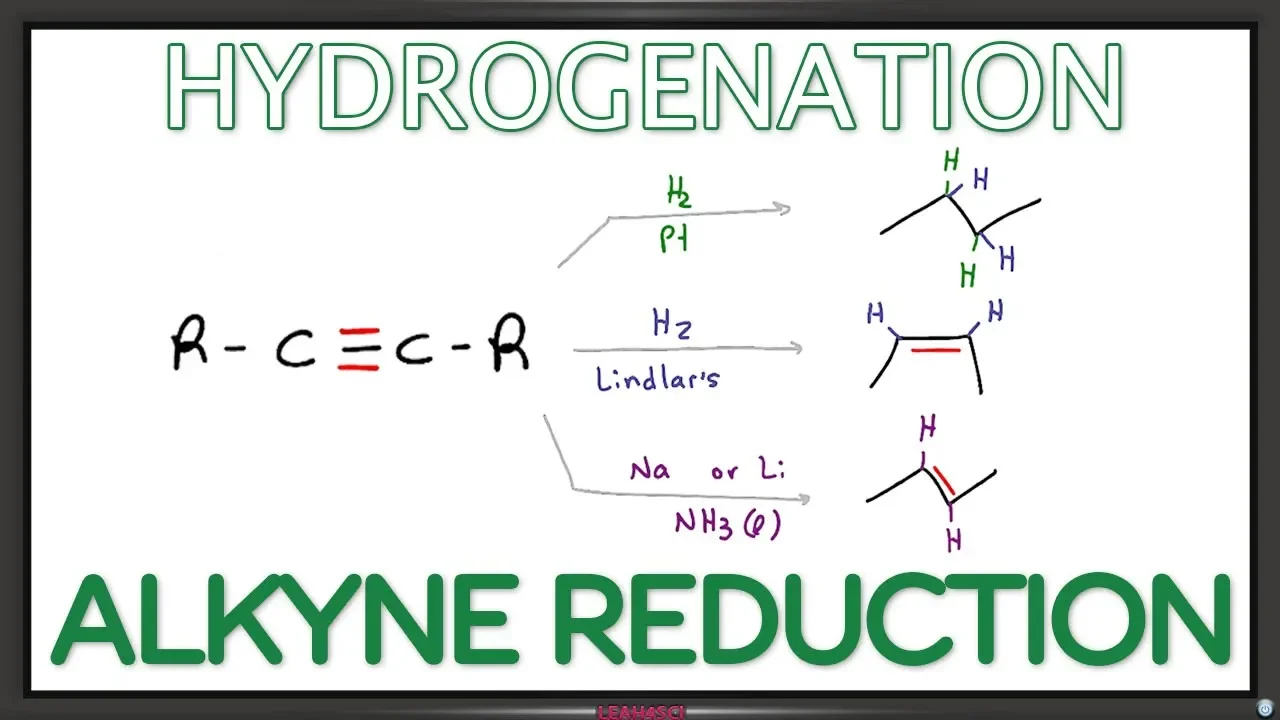



Alkynes undergo addition reactions similar to alkenes but with two pi bonds, including hydrohalogenation (adding HBr to form geminal dibromides), hydration (producing enols that tautomerize to ketones), and hydroboration-oxidation (producing enols that tautomerize to aldehydes); alkynes can be synthesized through double elimination using strong bases like sodium amide, and the acetylide ion formed by deprotonation serves as a nucleophile for carbon-carbon bond formation in SN2 reactions; effective organic synthesis requires recognizing structural patterns and working backward from the target molecule to identify necessary carbon-carbon bond-forming reactions.
Alkyne Reactions and Organic Synthesis | Orgo Lecture
Added:Understanding of alkene addition reactions (such as hydrohalogenation, hydration, and halogenation) and the principles of Markovnikov's rule.
Concept of orbital hybridization, specifically sp-hybridization, and the molecular geometry and electron density of triple bonds.
The acidity of terminal alkynes, including pKa values and the formation of acetylide anions using strong bases like sodium amide.
Fundamental organic reaction mechanisms, including nucleophilic attack, electrophilic addition, and the use of curved-arrow electron-pushing formalism.
Retrosynthetic analysis and designing multi-step organic synthesis pathways that convert alkynes into alkenes, alkanes, aldehydes, or ketones.
Reactions of acetylide nucleophiles with electrophiles other than alkyl halides, such as epoxides and carbonyl compounds (aldehydes and ketones).
Stereochemical control in synthesis, specifically the selective reduction of alkynes to cis-alkenes (using Lindlar's catalyst) or trans-alkenes (using dissolving metal reduction).
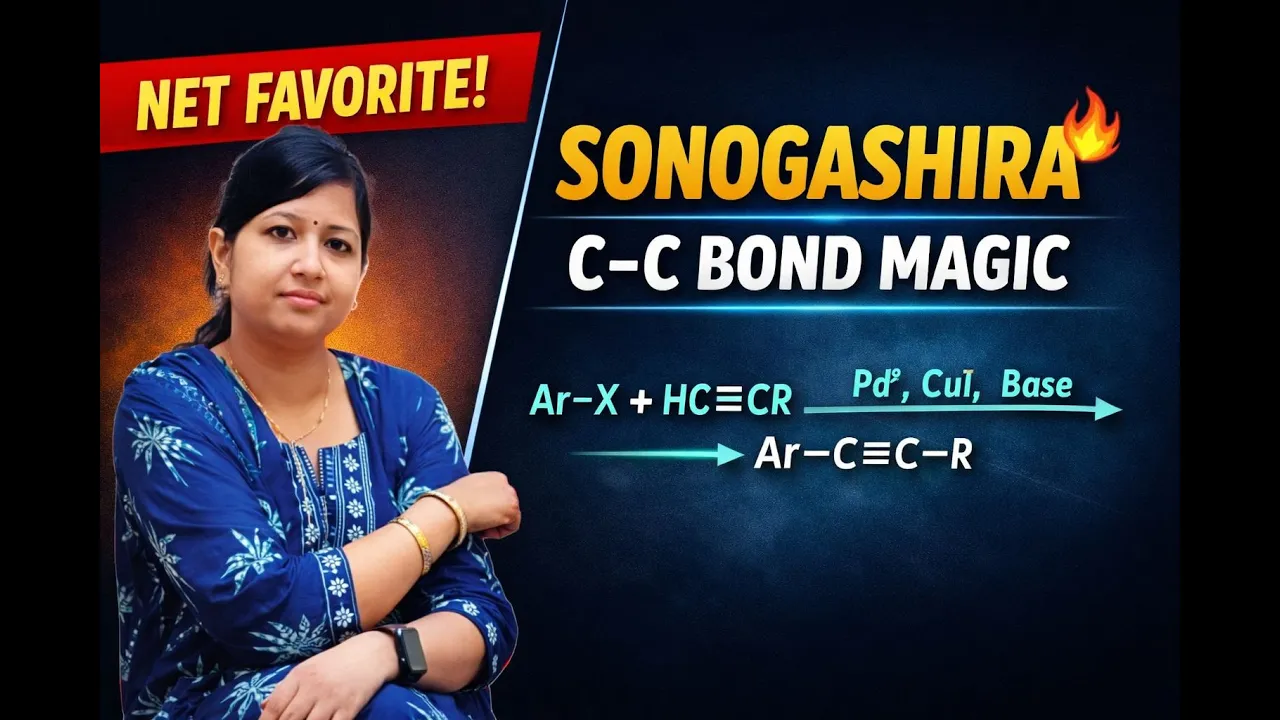
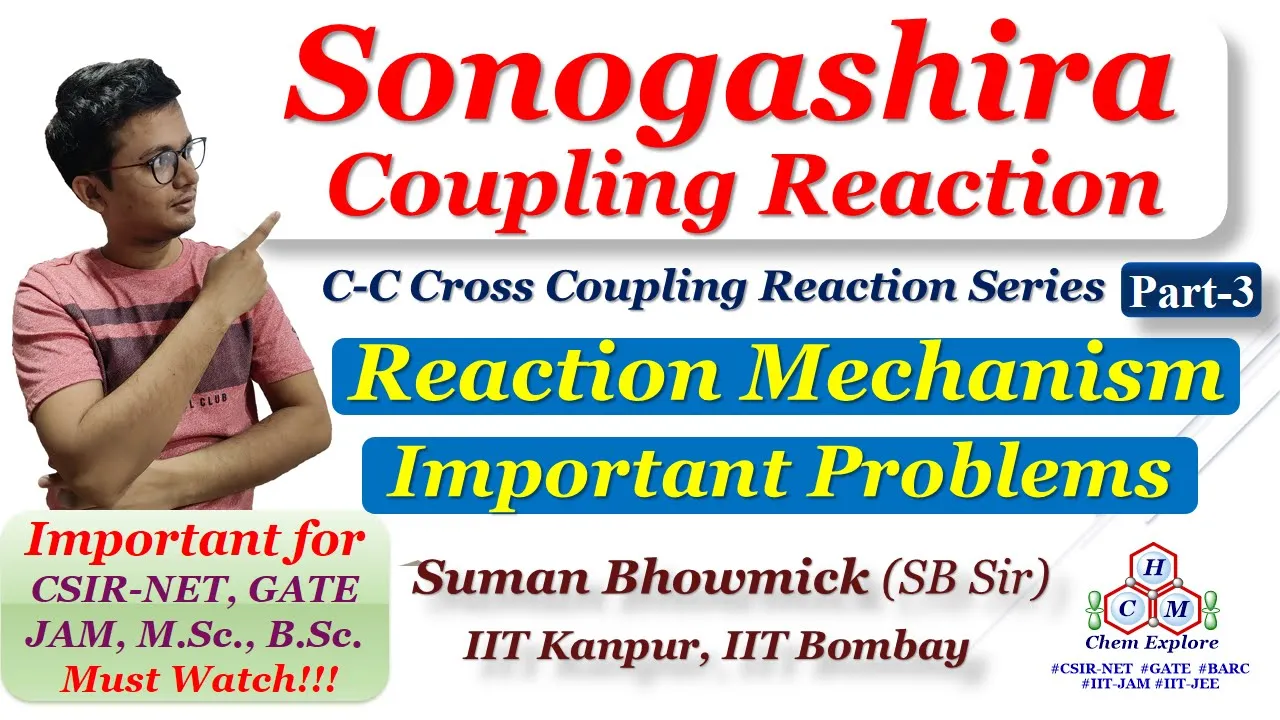
Transition metal-catalyzed carbon-carbon bond-forming reactions involving alkynes, such as the Sonogashira coupling.
126 views0likes50:12Original Release: 2021-03-25
well all right um welcome back the jacket's coming off i'm sweating up here because uh last lecture was i think frustrating for some individuals so i will uh warn you to take a deep breath and hang on because this one's a doozy uh in part because we're putting together a lot of things in ways that you maybe haven't done so yet but which really test how well you've mastered a bunch of different reactions uh i want to start out just real briefly giving you you know maybe 10 minutes of what we need to know from chapter 11.
all right i don't like chapter 11 very much in part because some of the mechanistic details are complicated enough that they're beyond the scope of an undergraduate class so and the other thing i don't like about chapter 11 is that it presents reactions with alkynes as though they're separate and maybe different from what you did in chapter 10. and they're not they're exactly the same the only difference is that sorry i'm getting emails and it's showing up on the screen there we go the only difference is that you're dealing with an alkyne that has two pi bonds instead of an alkene that has one so for example in chapter 10 we did hydro hydrohalogenation where you would take an alkene and you would add hbr and you would add you would get the alkyl bromide as your product if you use an alkyne uh i'm sorry i think i wanted to choose a starting material that was a little bit more complicated i hope you'll forgive me because this gives us a chance to deal with regioselectivity the bromine ends up on the more substituted carbon because you have a carbocationic intermediate and that's where the carbocation is more stable that's chapter 10 and that should hopefully be familiar to you in chapter 11 if you add hbr and let's say we're just adding one mole of hbr for every mole of this what we're going to call a terminal alkyne that is an alkyne that has a proton attached to one of the carbons we're going to do exactly the same thing the bromine is going to end up on the more substituted carbon because of the presence of presumably a carbo-cationic intermediate and the carbo-cations more stable on the more substituted carbon and then bromine will attack that more substituted carbon mechanistically i'm not going to ask you to draw the mechanism for this reaction but it certainly would involve this kind of thing where the pi electrons from the alkyne attack the proton of hbr the thing that's that gets attacked ends up on the less substituted carbon so the positive charge can be on the more substituted carbon and um then bromine ends up on the more substituted carbon uh we've got we got some comedy going on in the chat this lecture is going to be al kinds of trouble sounds good oh and speaking of comedy i have to show you this uh text i got from my sons the other day let's see there it is so this is meme meme poetry m-e-m-e poetry roses are red i am groot where is my super suit so i don't know where he got this or whether there's more of these kinds of things but i was pretty pretty entertained by that okay joking's over back to business so you get exactly what you would predict uh and then if you were to add another equivalent of hbr it's going to happen in exactly the same way as we do hydrohalogenation of alkenes the pi electrons attack the hydrogen of hbr bromine leaves you create a new carbon-hydrogen bond with the less substituted carbon so that the more substituted carbon can have the positive charge and then bromine attacks the more substituted carbon and you end up with this product which is called and you don't need to memorize this a vicinal nope actually it's not vicinal it's geminal that means bromos on the same carbon uh geminal dibromide from the greek gemini for twins and one reason that another reason that the bromo ends up on the more substituted carbon is because the positive charge is better when it's adjacent to bromine because it's resonance stabilized the lone pairs on the br can kick down and uh delocalize that positive charge all right so the difference here is you've got two double bonds instead of one but in terms of the details and mechanism of the reaction you can think of it as exactly the same i will specify whether we're just adding one equivalent or two equivalents of hbr i will point out that if your alkyne is a little bit more complicated that is if it has two non-hydrogen things attached and the two non-hydrogen things are different from each other you're gonna get two possible products one in which the two brs are adjacent to the r group and the other in which the two brs are adjacent to the r prime group all right so there's not really a lot to see here other than if you see a product with bromines on two carbons you should be thinking hmm i maybe could have got that from an alkyne of some sort now we can do exactly analogous things with alkynes and hydration reactions so your text makes a big deal out of saying that for some alkynes you need to add a mercury catalyst and we're going to ignore that completely as before when we did hydration of alkenes we're going to get a product where the more substituted carbon gets the oh group this kind of product though is not the final product it is a enol which is sort of an unstable intermediate the enol has an isomer that is actually more stable and it's a special kind of isomer that involves moving only a proton and a pi bond just to be clear here's the proton that moves and here's the pi bond that moved these two molecules the enol and the ketone are a special kind of isomer they are called tautomers because they differ only in the location of a proton and a pi bond i won't ask you the mechanism for getting from enol to ketone it's actually pretty easy you just remove the proton from the alcohol of the enol then recognize that the resulting conjugate base is resonant stabilized with negative charge on this oxygen and on this carbon and if you protonate on that carbon you get the ketone the ketone is more stable than the enol because carbon oxygen pi bonds are more stable than carbon-carbon pi bonds okay some housekeeping questions from the chat when is test three it is on saturday the 27th is chapter 11 going to be on the test only the parts that i'm talking about now um now suppose instead of the ketone product suppose you wanted the oxygen to end up on the more on the less substituted carbon that is suppose you wanted to make an enol that looked like this and then when you did the isomerization process you would get the aldehyde instead of the ketone do we know of a reaction that will put an o h on the less substituted carbon of a pi bond sure that's a chapter 10 reaction this is hydroboration oxidation which uh proceeds in the same way you have the pi bond attack the boron and then a hydride gets delivered to the more substituted carbon the boron on the less substituted carbon then in the second step you convert the bh2 group into an oh group again this is a less stable enol which tautomerizes or isomerizes to the more stable aldehyde this will be the first time i think in this class that we've made an aldehyde or a ketone so if you see one of these as a product and you're asked to provide a reagent or a starting material you need to start thinking okay aldehyde or ketone i could have made that from an alkyne right question so far this will work better if you connect what we're seeing now with alkynes to what you learned about alkenes if you don't think about them in separate categories no this the the word tautimer describes the relationship between these two compounds they are isomers of each other it happens spontaneously in aqueous solution yeah and i you'll learn the mechanism for this in 352. uh it's as i said it's not it's not hard but i think it's a detail that that we can defer until then others all right oh sorry go ahead um so can you make the aldehyde out of just like under any basic condition does it have to be the bh3 can you make the aldehyde under any basic condition no the thing that puts the oh on the more substituted carbon is that hydroboration reaction and you would get an intermediate that looked like this the second step with hydrogen peroxide is an oxidation step and you end up replacing the carbon boron bond with a carbon-oxygen bond yeah okay uh i guess lastly um of course if you wanted to you could do a bromination reaction on um an alkyne if you used one equivalent of bromine you would get the following molecule where the bromo groups are trans to each other presumably this would pass through a bromonium ion intermediate just like with the alkene if you added a second equivalent of bromine that is a second mole of bromine for every mole of starting material you could do the bromination reaction again and that would put bromines on two bromines on adjacent carbons it's not new it's just two bromination reactions because the alkyne has two pi bonds you might call this a tetrahalide i don't know what it's good for mostly to provide a complicated product to make synthesis questions more difficult for you so again it's going to work best if you put these reactions in the same drawers as you developed for the alkene reactions okay what else anything i have a question okay yes sorry i forgot that the odd audio well these reactions usually go through uh two like the one equivalent and the second equivalent is that really common okay the question is uh will the reactions always go to two equivalents always go to the fin uh let me rephrase that better is it possible in these reactions to just add one mole of of reagent and get the product that comes from adding just one mole yes you can stop there if you add a second equivalent or a second mole of reagent for every mole of starting material you can go on to the final product so it will depend i will always say in a predict products question i will always say whether there are one or two one or two equivalents of reagents for these alkyne reactions yeah so just kind of a follow-up on that do so does that first reaction the first step always go entirely to completion until that first reagent is completely okay yeah this is a good question whether the question here in class is whether um whether the reaction is as ordered as we're pretending it is that is um once this product forms does any remaining reagent so as you start to form this product does it does it compete with the original starting material for the remaining hbr that sounds reasonable we're going to pretend like it isn't a problem it might be i just don't know it's sort of a practical issue that you'd have to deal with if you ever wanted to make these in the lab we're going to pretend and assume that these reactions work step wise you add one equivalent of starting material you get to this step you add the second and you get there yeah all right um one other thing about alkynes that i neglected to do in the first hour and i want to show you where on earth we get alkynes from in the first place um if i mean how we would synthesize them uh you can get them in through a strategy that's very similar to the way that you get alkenes that is through an elimination reaction so if you used a really strong base the base that your text uses most often for this purpose is sodium amide if you use two equivalents of that really strong base you're going to be able to do two tandem e2 reactions and i'll show the mechanism of this first you eliminate this beta proton electrons kick down to form a pi bond and the leaving group leaves then the second equivalent of base removes the other beta proton electrons kick down to form a pi bond and the leaving group leaves to give you this alkyne so uh that's not a new reaction and i may have shown it to you before i can't remember but likely you've forgotten it but it's one of the useful ways to generate alkynes now you might ask why would we bother generating alkynes and the answer is alkynes are starting materials for one of the only carbon bond-forming reactions that we know of if i use a base that's strong enough and again sodium amide is usually the base of choice the pka of a proton attached to an alkyne is 25 so a base whose conjugate acid has a pka greater than that is able to remove a proton from the alkyne and of course you would form the conjugate acid of the amide anion which is ammonia pka 38 or something so this is a great reaction to generate the this anion the anion we call the acetylide it's the conjugate base of acetylene and you can use it as a nucleophile in sn2 reactions so i could react to this with some alkyl halide to make a new carbon-carbon bond and that's important in organic chemistry because the molecules we're interested in have lots of carbon-carbon bonds and so every reaction that allows us to make a carbon-carbon bond increases the number of cool organic molecules we can make all right anything you want to ask there sure sorry so it's this is when like you uh reacted with a uh a nucleophile that has a chronic acid of the 25 uh yeah let's be clear the proton on this alkyne has a pka of 25.
uh this is our base the base removes a proton from the alkyne and the reason it can do that is because the conjugate acid of the base has a pka of 38.
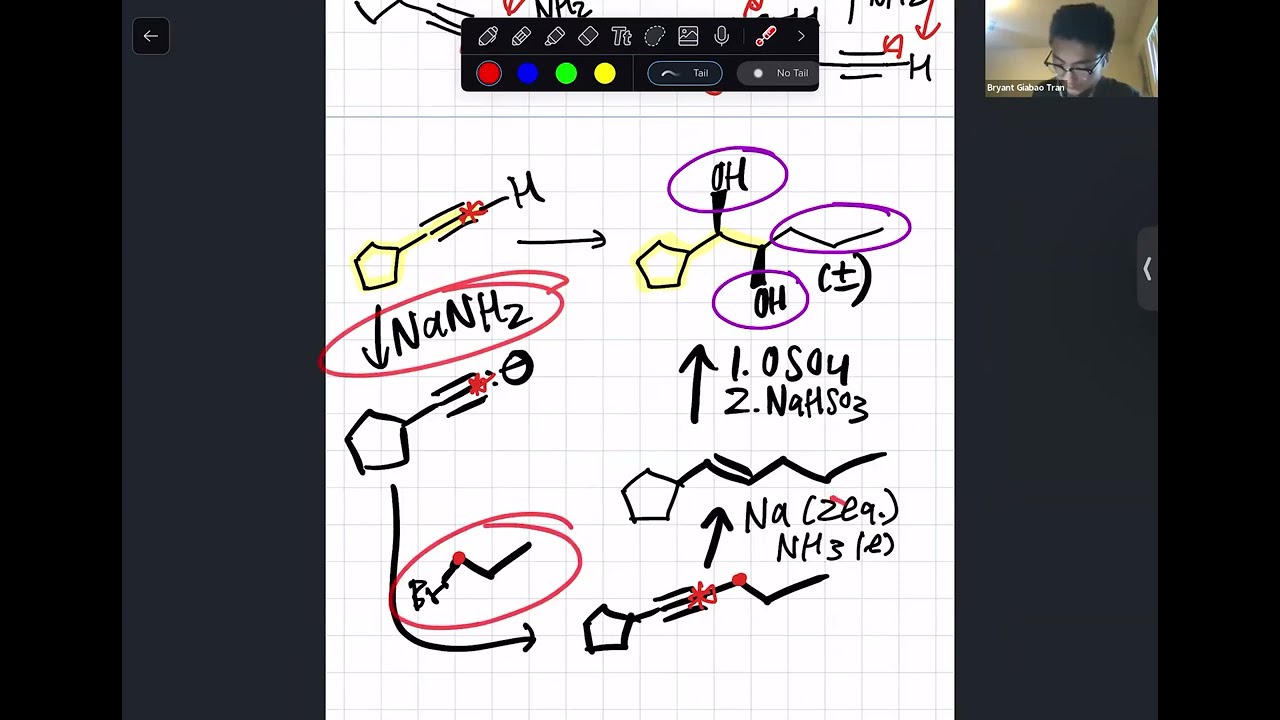
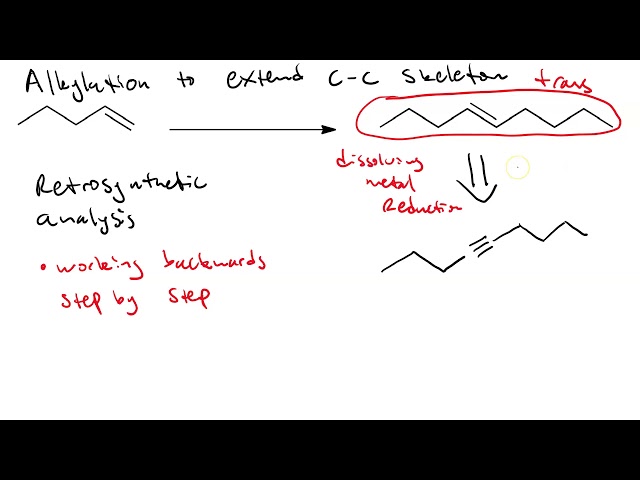
so this is just acid-base sort of chapter two chemistry but it's one way after you've made this alkyne you can turn the alkyne which is just a hydrocarbon into a nucleophile that you can then use to make carbon-carbon bonds all right did i see other no okay at this point you're like well what the heck are those noon kids worried about this has been okay so far you ready [Laughter] like luke skywalker on the planet dagobah you tell yoda that you're not afraid and he says i can't do it you will be except in a creepier way all right so let's talk about synthesis this is uh synthesis literally means bringing things together and uh in organic chemistry we mean we're making complicated molecules from simple precursors simple starting materials why do we do this well first it's a good way to test whether or not you have mastered the reactions that we're learning because in order to succeed at synthesis you need to know what reagent reacts with what starting material to give what kind of product you need to understand the stereochemical and regio selectivity issues associated with each reaction but then it's also useful from a practical standpoint for organic synthesis is behind many of the small molecule drugs that we depend on to to solve all our medical problems of course a lot of the drugs that hulu is advertising to me i think hulu has figured out that i am no longer in the coveted 18 to 35 demographic so hulu has is now advertising lots of um drugs for old people sicknesses and conditions and i suppose that's that's appropriate a lot of the new new drugs that are coming out of the pharmaceutical industry happen to be proteins and antibodies but in any case every major drug company has a really strong synthetic organic area that is working hard to make new molecules that have interesting properties so that's another reason why we why we show it to you now many of you are most of you are unlikely to get a job as a drug developer in a pharmaceutical industry doing organic chemistry unless you decide you want to major in chemistry and you want to go work for steve castle or david michaelis upstairs and learn all these reactions but if you aspire to be a physician someday it might be nice to have some appreciation of the kind of work that goes into making the molecules that you're prescribing for people to to take so a synthesis problem in organic chemistry starts with the end in mind so i'm going to draw a product and will uh let's see did i do that right nope i don't no i did that's right that's correct so this is our desired product whoa sorry struggling with font size this is our desired product and then you need to know what the allowed starting material is in this class the allowed starting material is determined by me and it is arbitrary i just choose a starting material that makes the problem complicated enough to allow you to really test your mastery of the material uh in in actuality the allowed starting material could be anything but uh the process needs to be economical right if you're going to make kilograms of some drug to do clinical trials the the process has to be cheap and easy and so the simpler the starting material often the better because i'm in charge i'm going to choose our starting material as ethanol and so the scenario here is that you've woken up on a deserted island and there's nobody there and you're insanely bored but you discover [Music] a hunt that has a refrigerator well stocked with all kinds of things that you'd like to eat and there's an xbox there and so you get bored after a while of of gorging yourself on hot pockets and and playing xbox and so you wander around and in the basement of the hut is a fully stocked organic synthesis lab that has all these reagents but the only sources of carbon that you can use are these bottles of vodka which having made covenants you're not going to use to to uh while away the time and [Music] as jack sparrow might do but instead you decide to use it as your synthesis starting material is that far-fetched enough all right so every carbon in your product has to come from this starting material we'll start by comparing the number of carbons in this allowed starting material with the number of carbons in the product and that's going to give us a sense for first how many carbon-carbon bonds are we going to have to make those are generally the most difficult bonds to make in a synthesis so we want to pay attention to those first my product that i that i want to make has one two three four five six different carbons and so that suggests that one efficient way of building this molecule might be to get these two carbons from my starting ethanol starting material and then these oops i wanted to change colors there then these two carbons also from my ethanol starting material and i would have had to make the bond between the purple section and the orange section that sort of makes sense if all you're allowed to use is something with two carbons you're going to have to connect some of those two carbon units similarly it looks like one efficient way to do this might be to connect the two carbons on the end with the purple segment all right you have to think through this systematically and not panic and the best way to do that is to start asking for these new carbon-carbon bonds that i'm going to have to make what kind of bonds are they and do i know of a reaction or a kind of reaction that could give me that bond so this bond on the right is a sigma bond it's between two carbons one of which is sp hybridized and the other is sp3 hybridized so now i need to think do i know of a reaction that gives me that kind of bond as the product go ahead yeah we just did it up above with an alkyne right this is where familiarity with reactions is really important and actually mastery of reactions is important because nothing's going to save you from looking at that and say and saying i got nothing and you can scramble through all the handouts that i might provide and through your textbook and through your notes but if you haven't practiced and developed some sense and some intuition for how to make certain kinds of bonds it's going to be hard for you to solve these problems so um so you're going to want to practice this kind of thing this kind of thing and there are challenging synthesis problems at the back of chapter 10 and the back of chapter 11 and there will continue to be synthesis problems moving forward so yeah the reaction we just showed you up above where uh an alkyne we'll call it the purple segment acts as a nucleophile in sn2 fashion to make a new carbon-carbon bond and to kick off br minus as the leaving group and presumably this would be the orange section all right so that's progress because we've figured out a way to take simpler starting materials and make our more complicated product now we're not finished in part because we haven't yet figured out how to connect the blue section with the purple section and we haven't yet figured out how to get the purple section and the orange section from the allowed ethanol starting material so we can approach this in a couple different ways uh we can try to take these purple and orange sections and connect them to this starting material or we can worry about the other bond so go ahead um so yeah the question in class i think is if you have an alkyne you've got two protons and so if i add my base and i add one equivalent of base i mean that's how i control it i had one equivalent of base and then i only remove one proton but but the question another way of looking at that question is the pka of the first proton is 25 but once you take one proton off that pka gets really sky high because to remove it you'd have to have a diamond two negative charges in the in the same molecule and that would be pretty unstable so you so yeah you you only remove the one proton okay other questions so let's talk about where we get alkynes from we just reviewed that anybody remember go ahead i remember the text said that if you like halogenate uh okay like it comes from when you have the two halogens right you want to have two halogens on adjacent carbons so that and that's the reaction we talked about just a few minutes ago where you use two equivalents of a strong base to do the two tandem e2 reactions uh so we would need two equivalents of a strong base sodium amide notice that's the same reagent for the next step in practice people just take this starting material and add three equivalents or even an excess of this base and they get that acetylide anion so yeah the reaction there is just two elimination reactions you remove a beta proton electrons kick down to form a pi bond and leaving group leaves then you do it again with the second equivalent of base you get the alkyne with the third equivalent of base you remove a proton from the alkyne that converts it into a nucleophile and then you can do the sn2 reaction we're still not to our simple alcohol starting material so where do i get the dihalide from give you a hint that's a chapter 10 reaction give you another hint it involves an intermediate like that looking familiar go ahead yeah that's just olefin halogenation so the alkene would be the starting material there and then now we can ask do we have a way of making the alkene from our two carbon starting material that is a chapter 9 reaction and there's actually a couple of things that work there yeah you can use pocl3 and pyridine to make to convert the alcohol into a good leaving group and then do the elimination reaction or you can do acid catalyzed alcohol dehydration typically you'd add a catalytic amount of h2so4 and that would that would eliminate okay so that's sort of hard to work through the first time but this is a pathway that takes a very simple starting material and converts it into things we can do carbon bond forming reactions and this is the only one that we know of so far you're going to learn tons in 352.
so it would be good to sort of practice this pathway until you're comfortable with it so we've taken the purple section and we've taken it all the way back to our allowed starting material what about the yellow or orange section do we have any reaction that could connect the alkyl bromide the orange section could generate that from our two carbon alcohol go ahead right you'd want some kind of substitution reaction like an sn2 reaction pbr3 is a great reagent for that that converts the oh into a good leaving group and then br minus comes in from the back and attacks to give you the bromide so now we've got that section and we know how to get here all right so this part is a little tough we know how to connect the orange and the purple sections now we need to think about the connection between purple and blue so thinking sort of in a forward direction you might ask what could we do with this alkyne and there are tons of things but one might be to deprotonate the alkyne using a strong base so that we would have a nucleophile again and this nucleophile could do sn2 type chemistry now to simplify what we're wanting to do in making this new bond let's ask the question do we know of a reaction that gives us that kind of product that is a reaction where we have a nucleophile on carbon 1 and then an o-h on carbon 2.
so you're thinking br2 and h2o from an alkene so let's just sort of try that out because that would generate this kind of thing okay and so let's ask is there any way to take this and combine it with this to get this product you're going to be tempted to say sure it looks great because oh look sn2 reaction but there's a problem anybody see the problem alcohols have pkas of 16 and alkynes are good nucleophiles but their conjugate acids have really high pkas so actually when acid-based chemistry can happen it is often the fastest thing to happen so actually what would happen if we tried this is we would just deprotonate the alcohol so that doesn't quite give us what we want nevertheless it puts us as close to the right track because there's something similar another reagent that has an uh that has similar consequences and that is an epoxide we talked about this in i think chapter nine when we talked about epoxides and how if you see the pattern of an o h group and a nucleophile on adjacent carbons you could have gotten that by opening up an epoxide so just highlighting the segments of our molecules i guess we'll call this carbon 1 and carbon 2.
we do an sn2 reaction backside attack on the epoxide leaving group leaves that would make a new bond with carbon 1 and then carbon 2 would still have the negatively charged oxygen which would pick up a proton from solvent or during workup and actually there we go we have our product okay now it's possible that this came out of left field for you it's possible that where did you get the epoxide from i forgot that that epoxide existed in retrospect i want you to convince yourself now that if you see a nucleophile adjacent to an oh group i want you to be thinking hmm i could have opened up an epoxide to get there all right questions about that that was sort of where i lost the noon class yeah right good how do we get the epoxide because we're not done yet we have made the final product but we did not yet figure out how to get those two blue carbons from starting material but other questions about that final reaction i guess this is the kind of thing i mean have you ever taken a test yes and uh gotten a problem wrong and then you come back and look at it after a while with fresh eyes and you're like oh shoot i thought i knew that and actually i can see now how my answer is obviously wrong and then of course next time you wouldn't make that same mistake synthesis is a lot like that you can only learn it by trying it and making a bunch of mistakes but you got to learn from that and one of the things you can learn from synthesis is structural patterns right one of these is nucleophile on a carbon adjacent to an oh group think epoxide opening another structural pattern is alkyne with a bond between a carbon sp sp sorry alkyne with sp hybridized carbon bonded to an sp3 hybridized carbon i could have got that through an sn2 reaction these are the kinds of patterns that you will start to recognize if you've practiced enough and that will make this kind of thing a little bit easier any other questions before we talk about where we got the epoxide from okay we started with our alcohol we did we used pbr3 in an sn2 reaction to convert the alcohol into a good leaving group we're going to use that later we took the same alcohol and we dehydrated it to get an alkene we brominated to get the dibromide we did the double elimination to get the alkyne then removed a proton from the alkyne with that in place we now have a nucleophile and an electrophile for our sn2 reaction shown here where we bring the purple and the orange pieces together having done that we can remove a proton from the other proton from the alkyne to have a nucleophile and then use that to open up this blue epoxide and that gives us this final product so the only missing piece now is where we got the epoxide from other questions i'm worried because either i'm explaining this way better than i did at noon or you guys are understanding it way better than they did at noon or i'm explaining it poorly and you're not understanding it but you're too afraid to say so i'm not sure which it is go ahead so would you say that the best strategy to approach these problems is to like divide it into its parts that you want at the very end and then figure out how you got to that part all right let me repeat that so is the best strategy to like divide it into the for example we divided into three sections of carbons and then we just said okay how do we get through these parts so would you do it like three different columns and say these are the final materials that i want to interact with each other and then just figure out how you got there yeah so so uh the question is how best to approach this kind of problem you can approach it from either direction it is kind of like solving a thousand piece puzzle um in the end you're gonna get there it may not matter whether you start with the pieces in the middle that have a particular color that is easy to see or you start with the edges that have a particular shape that's easy to see you're get you can you may need to work backwards a little bit and forwards a little bit until you can connect the dots it is useful if once you know what the allowed starting materials are to figure out are there any carbon-carbon bonds i had to make because that's going to be the the key point in whatever strategy that you do so yeah breaking it apart as we did here and then treating each individual piece as a separate synthesis problem is actually a pretty good way to do it sometimes you're going to find that things that you did to generate one intermediate are also useful to generate others for example if you're to ask where we got this epoxide from well it turns out you can get it from this alkene which we made previously doing this halohydrin formation reaction then you simply add a strong base that's a poor nucleophile sodium hydride is great for alcohols because h minus is not that soluble but it is very fast at removing a proton from the oh group the resulting negatively charged oxygen then is a great nucleophile for a super fast sn2 reaction that happens in an intramolecular fashion to give you the epoxide and we don't need to describe how to make that alkene again because we already did that up here so this is uh an example of what we call a convergent synthesis we start with starting materials obviously what else are you going to do with starting materials we elaborate them using reactions to get the individual pieces we need and then we stitch those pieces together that's a common strategy used in a lot of different complicated molecules all right there are some questions about format on the test yeah it's hard to give it open [Music] it's hard to give an open-ended synthesis question on an exam what i might do would be something like this i would give you this starting material and then i would give you the desired product and then i would say how do you get from there to there the what i would have to do is i would have to have lists of reactions and in order for this to work i would probably have to have at various points pieces that you could bring in that did not come from in other words it's hard to do a convergent synthesis like this in multiple choice format what i have to do is give you a single starting material and a list of reagents and then i have to give you possibilities a through x actually learning suite doesn't let me do possibilities a through x i think i have to stop at j so maximum of 10 possibilities uh in a multiple choice question like this it can be tempting to try to evaluate all 10 things by saying okay what happens if i do this to the alcohol and then this and then this and then this and you try to do that 10 different times and you get kind of panicked and hurried and make some mistakes it can be better to try to approach this problem strategically in the way we did thinking about okay well two carbon starting material i know i'm going to have to make a couple of bonds and then go from there yeah so each of those options for um the multiple choice answers would be which of these is the best reagents used for what you have like reagents missing that you would need in order to synthesize that and that yeah so there's actually a lot of ways to format this one would be to um but if if i format it in this way yeah i would have i wouldn't have missing reagents i just have lists of reagents and some of them would be bogus or not work or or look or have some [Music] some incorrect or issue that would make the reaction not work so you'd have to identify the one that works another way would be to actually draw out the synthesis and have show intermediates along the way and have you fill in the reagents that make those reactions happen okay yeah um so with these reactions where there's like multiple steps and we start with one starting material like ethanol what are the rules on like what we can and can't use okay what are the rules about what you can and can't use any reaction that works that's the standard the reaction has to actually work so you can use any reaction that you've learned there are multiple ways for example to get from this alcohol to this alkene product and anything that works is good all right we'll have to leave it there because we're past time we'll work some more on this next time
Up Next

54:04
Organic Synthesis: Dos and Don'ts for Students
@josephjobskayiirachemistry4858
25.6K views•2021-11-25
83:56
Biocatalysis and Catalysis in Islatravir Synthesis | Merck Webinar
@SCIwheresciencemeetsbusiness
675 views•2020-10-08
10:06
1H NMR: Determining Number of Peaks from Structure
@MSJChem
59.2K views•2017-04-06
17:31
Edible Water Bottles: A DIY Guide to Sodium Alginate Spherification
@ryan
10.5M views•2019-06-21
Related Study Plans & Knowledge Roadmaps
Structured learning paths in Chemistry
chemistry
Nuclear Chemistry: Decay, Meds & Fuel Cycle
01Introduction to Nuclear Structure and Radioactivity
02Decay Dynamics and Kinetics
03Radiation Interaction and Detection
+ 2 more learning modules
24h5 modules
Explore Roadmap
chemistry
Supramolecular Chemistry: Forces & Machines
01Foundations of Chemical Bonding and Intermolecular Forces
02Introduction to Host-Guest Chemistry
03Thermodynamics and Dynamics of Self-Assembly
+ 2 more learning modules
16h5 modules
Explore Roadmap
chemistry
Photochemistry: Excited States & Reactions
01Foundations of Light-Matter Interactions
02Molecular Orbitals and Electronic States
03Photophysical Processes and Jablonski Diagrams
+ 2 more learning modules
18h5 modules
Explore Roadmap
chemistry
Coordination Chemistry: Bonding & Properties
01Introduction to Transition Metals and Ligands
02Crystal Field Theory (CFT) and Geometry
03Magnetic Behavior and Spin States
+ 2 more learning modules
14h5 modules
Explore Roadmap