
















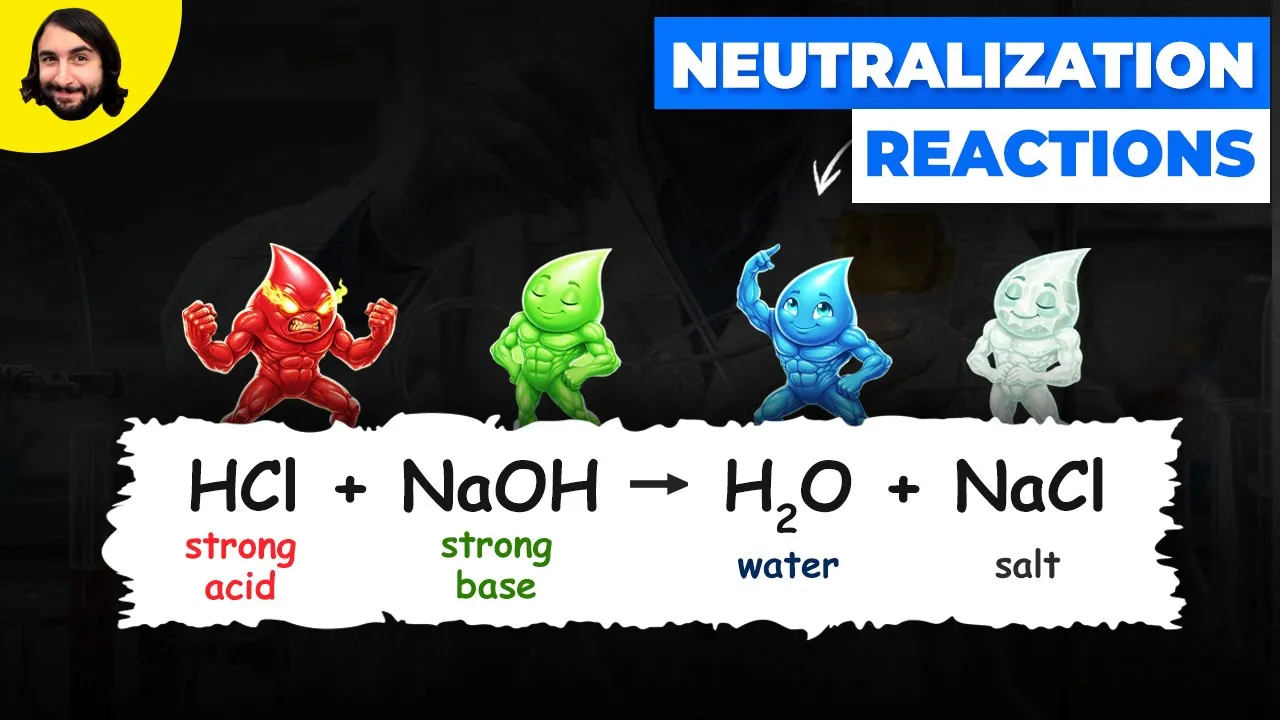





Chemical reactions can be classified into four main types: synthesis (combination) reactions where two substances combine to form one product, single displacement reactions where one element replaces another in a compound, double displacement reactions where two compounds exchange ions, and decomposition reactions where one compound breaks down into multiple products. Additionally, reactions can be classified chemically as precipitation reactions (forming solid precipitates from aqueous solutions), neutralization/acid-base reactions (producing salt and water), and oxidation-reduction (redox) reactions (involving electron transfer). In aqueous systems, ionic compounds dissociate into ions when dissolved in water, making them electrolytes that conduct electricity, while covalent compounds do not dissociate. Pure water does not conduct electricity, but tap water and other natural waters do because they contain dissolved ions.
Chemical Reactions & Aqueous Solutions | Electrolytes Explained
Added:chemical reactions and the way i classify them is by i don't know what to say let me just leave it like that my first classification is just types of reaction the other one i'll figure out how to pay for it too but in any case the types of reactions that you have they're typically four types of reactions that we talk about the first one is what we call synthesis a synthesis reaction is also called combination and a combination reaction is where you're trying to combine two things together okay so the first reaction i wrote out for you carbon plus oxygen you get carbon dioxide this is a combination reaction it's also called a synthesis reaction because you're trying to make something okay in there so that's a synthesis reaction usually for a synthesis reaction you will have a lot more chemicals on the left-hand side and less on the right-hand side okay less meaning not atomic wise or weight-wise but the numbers that you have in there okay so there are two chemicals here only one over here so that synthesis second reaction that you can have is what we call a single displacement single displacement displacing means that you're trying to get rid of something or just placing something else and we've done this reaction also this was hydrochloric acid and zinc wrote this reaction out for you last week and this was zinc chloride and h2 and as you keep going with more and more chemistry then things will hopefully start bothering you if they are not right and hopefully it's bothering you now is it bothering you what is it hcl you want it to be too hcl yeah okay good yeah and that's the it's that you need to scratch okay and just to scratch it okay because it's nice it's good to know that your equations are balanced all right so this is what we call a single displacement how is it a single displacement here is a single chemical which is zinc existing by itself and in this reaction it displaced hydrogen okay and so then hydrogen is by itself now and zinc is combined with chlorine over here okay so this is a single displacement the third one is what we call a double displacement i've written i think almost all these reactions for you one way or another it's just not putting it in context so here if you have h2so4 plus sodium hydroxide so curic acid custodium hydroxide to give you sodium sulphate and water and again yes if you want to go ahead and scratch the edge you can go ahead and do that 2 naoh and then i think it should be 2 h2o now we'll balance the equation in a single displacement you were displacing only a single chemical which means that an element existed by itself in case of double displacement there are two things that are getting exchanged okay so here sodium is combining with the sulfate okay so two things are displacing here so one sodium here is combining with the sulfate then the h2 you're now combining with the oh okay to give you the h2o and then lastly is decomposition and as the name says decomposition it means you're decomposing something which means you're going to start with one thing end up with more than one thing classic example of this one is this example here with potassium chlorate kclo3 to give us kcl plus o2 and yes we can go ahead and balance the equation 2 2.
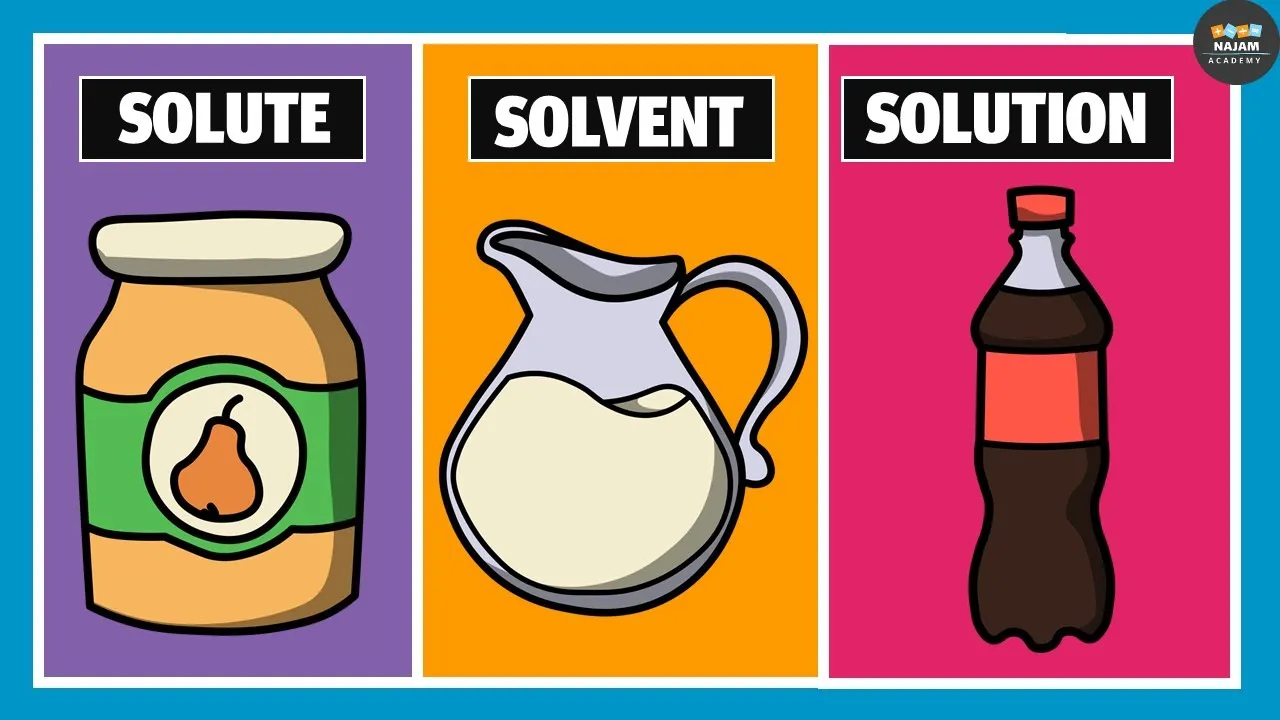
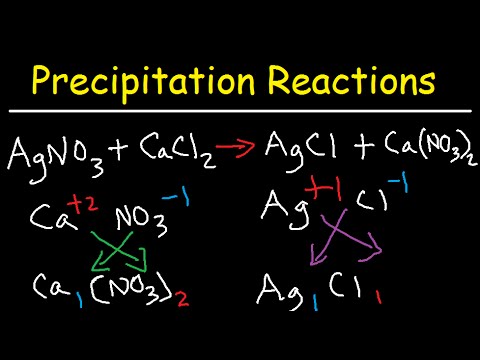
so in case of decomposition you start with one chemical you end up getting more than one in the product okay this is a very basic fundamental classification almost all reactions can be classified in one of these categories okay whether it's a single displacement double displacement whichever type it is you will be encountering all kinds okay and especially in this chapter you will encounter all of these kinds of reactions and you will have to classify them one for another at least you should be able to identify it okay all right so this is one type of classification of reaction the second type of classification is chemical classification as you may want to call it i don't know and in the chemical classification of reaction we have three different kinds of reaction one is called precipitation reactions precipitate is something a solid that forms so for example if i take silver nitrate add sodium chloride to this i will get silver chloride and sodium nitrate when we start doing chemical classifications of reactions then it's really important that we also start writing our state functions okay and they're the functions whether it's a solid liquid gas and in these case in this case particularly these are all aqueous agcl however is a solid and then sodium nitrate is aqueous which means three things are soluble in water one of them is not soluble in water and that's the precipitate that's forming okay looking at this reaction right now the precipitation reaction which one would you classify it as so this is single double decomposition double displacement very good okay so precipitation reactions generally are double displacement reactions if you want to write that little note for yourself you're most welcome to okay because it's nice to know that these are double displacements okay the second type of reactions are considered to be neutralization reactions these are also called acid-base reactions and i will write a different one here for you there is already one on the board but still again since this is a chemical classification i'll have to specify whether something is aqueous or liquid or whatever so here we go this is aqueous koh is also aqueous and then kcl potassium chloride is aqs and then water is a liquid water is by itself not aqueous if something is dissolved in water it's considered to be aqueous but when water is by itself it's considered to be a liquid okay all right how would you classify this one one second which classification would you put that in single double double also this is also double displacement okay all right what's your question somewhere do you just know that they're aqueous because like that's how you know like right now that's how we yeah that's how we know and eventually as we learn the chapter more you will know okay yeah so just as you learn what each time a whole yes or what reaction is something i'm already getting a little ahead of myself over here because i want to do the classification first so that when i get there it will be a little easier for you okay yeah but i am a little bit ahead but you're right okay you will know whether something is aqueous either by reading the problems okay or by learning the properties which we refer to yeah okay the neutralization reaction by the way neutralization means acid-base reaction and from chapter two you should know your acids and bases okay so hydrochloric acid which is always aqs right acids are always going to be aqueous bases may not need to be aps okay can you identify one other reaction on the board that is acid base number two i see the acid there i don't see the base there please thanks for not seeing one yeah number three sulfuric acid and sodium hydroxide acid base okay thus i was asking you whether this is double displacement hopefully if you said double displacement you would look for double displacement there but you just do that you should have done that okay yeah all right make the connections okay so uh neutralization reaction so that's also acid-based reaction and that's why i took a different example so you at least have two acid-base equations here with you the third one is called oxidation reduction reaction these are also called redox for short and redox reactions are a little bit weird okay because they can be any kind okay a lot of their oxidation reduction reactions are actually uh the first two kinds there the synthesis the single displacement and sometimes even decomposition so those three are actually going to be your uh redox reaction so it's a lot i'll just do this one over here hcl plus zinc to give zinc chloride and h2 so two here hcl is aqueous zinc is a solid zinc chloride is aqueous and hydrogen is a gas and again write a little note for yourself somewhere that oxidation reduction reactions are primarily synthesis and single displacement reactions okay and some some of the decomposition ones yes if you're given like two compounds it's pretty much always going to be a double displacement or a decomposition correct if you're given two compounds it could be synthesis also okay so you have to look at the totality of the reaction okay not just one thing yeah so those are the two different kinds of classifications for chemical reactions that you can have now let's talk a little bit about aqueous systems all right aqueous what does aqs mean it means when something is dissolved in water there's one thing that you have to be really careful of okay when you talk about aqueous things when you take sodium chloride and you add water to it the sodium chloride disappears right and you've done that in your separation lab also so when that sodium chloride disappears you have to think about the process that is happening in there okay what would you call that process it's dissolving in there okay a lot of times i hear people saying it turned into a liquid did it turn into a liquid no no because that would actually be liquid sodium chloride correct going from solid state to a liquid state so a solid to liquid state meaning that you have to provide energy okay just like you have to provide energy to boil something okay so even to go from solid to liquid you have to provide energy but that didn't happen you could do that at room temperature okay although some things do require water to be soluble but still okay so the process here is really important that you understand that when sodium chloride is going from solid state into a water state with water then it's actually dissolving in there okay so which means that if you have nacl as a solid and you add water to it it becomes nacl acres the water is just there the water doesn't do any reaction and then what happened at the end of the reaction at the end of the lab what did you do you evaporated the water off right and you got the sodium chloride back and you know that also it was a physical process then because you didn't lose your sodium chloride and you didn't lose the water well you lost the water but only because you didn't collect it okay you could have easily collected it also all right so here if you add water you get this if you subtract water you get the solid back so it's a physical process okay that you're doing over here so my concern is right here okay right here when you have sodium chloride going into sodium chloride aqueous okay sodium chloride would you consider that as an ionic compound or a covalent compound ionic compound okay because it's made of a metal and a non-metal by the way that is your first task in this chapter to figure out if a compound is ionic or not which is so chapter two now okay that you should already know this so if you have an ionic compound which is a metal and a non-metal then it's going to be ionic again if it's ionic then this is what happens to it in water as soon as you add water to it okay as soon as you add water to it it dissociates to give you two ions okay and this is aqueous and now this is also aqueous and these ions are dissociated in water so salt water isn't just like salt floating around the water it's actually like sodium floating around the water no sodium ions dissolved in the water okay yeah not sodium you can't say sodium because sodium itself is a metal okay so not sodium and it's yeah so it's important we say sodium ions and here we'll say either chlorine ions but nobody says chlorine ions you call it chloride okay and that's why i gave you that nomenclature sheet also to make sure that you understand the difference between ions and compounds okay themselves so you have these two ions down here okay what about the water where is the water between them everywhere okay so the water is actually all around them so when nothing happens to the water why did nothing happen to the water because water is oily sodium chloride was ionic compound and water is covalent compound okay so it's a covalent compound and covalent compound i mentioned to you that they share electrons they don't transfer electrons and because they shared they can't break apart like that okay when you have ionic compounds and you have a transfer of electrons give and take those compounds are not held together like this with the bond they're just associated with each other so they can go apart but then they can also come together covalent compounds don't break apart okay at all this process by the way where you have sodium ions over here and chloride ions here and water all around this is called hydration hydration because there are water molecules over here in broader terms it would be called solvation not salvation solvation so solvation means that when you have a solvent molecule somewhere okay solvent means that you have something dissolved in something okay so let me tell you that also the two components over here this is the solute this is the solvent and then at the end you end up getting what's called the solution solute is generally a smaller quantity solvent is the larger quantity here water turns out to be the solvent if your water was in smaller amount and salt was a large amount your salt would actually be the solvent okay which why would anybody use salt as a solvent is beyond me but okay but it's a matter of quantity that's what i'm trying to say okay so it's not that water is always going to be the solvent no okay it depends on what your what your solution is okay so solute is a smaller quantity solvent is larger quantity and then you end up getting a solution okay so the solvation here is a broader term for when you have a solvent in there okay and hydration is very specific when you have water okay so far so good any questions no malik has none somehow okay so if you had more say you had more salt than you had water and the salt like soaked up the water would it be essentially the same reaction it would essentially form a solution so but instead it would be the hydrogen or the water ions don't break apart so never going to it would just be pieces of water ions attached to the nacl okay not water ions just water molecules water these are water molecules yes the only time yeah to each of these okay okay later on when you get to gen chem 2 you're going to learn a little bit more about this okay but right now yeah this is and in that situation the nacl wouldn't break apart would it like if the salt soaked up the water with the nacl it would it would they'll be breaking it or break apart okay yes so it will still give you sodium and chloride okay okay just depends on how much water there is right so if you have a lot of sodium chloride but you have only in water on one side of it then you don't have ions here you only have ions here okay okay that's what it really means yeah the only time that water will break apart which it does break apart but it's not like breaking into anything else and that would be with acid-base reactions okay yeah that's the only time that water behaves a little bit differently okay but other than that you will have water only as water for all these reactions that we do precipitation neutralization oxidation reduction if you see aqueous anywhere that just means water is there it's not part of the equation okay unless you see it as part of the equation like here okay then it is a product okay but otherwise it's just there okay it's just there we ignore it for most part okay so then my sec my question to you i don't know if it's the second question third question whichever question it is we have three things over here okay we have three things we have sodium chloride as in a saw in a solid we have water as in a liquid and you combine these two to give sodium chloride as an aqueous okay so my question to you is will these three have different properties i think about it for 30 seconds before answering i got to raise the borders so we'll make these three things have different properties and physical properties not chemical okay so the answer first of all is just yes or no yeah yes okay fantastic we're on the right path so yes they should have different properties because they're in different states okay so i will ask you for sodium chloride solid and aqueous will they have different properties yes yes yes okay they should have different properties because in one case this is a solid and in one case this is aqs okay now this is dissolved in the sodium chloride were there any ions there are ions but it's neutral right electrically neutral but when you look at nacl as aqueous now you can clearly see the ions in there right so now this is going to be a little bit different okay and the first part of our chapter here is about electrolytes and electrolytes are solutions or solvents whatever it could be that conduct anyone electricity so nacl solid versus nacl aqueous which conducts electricity all right aqueous conductor electricity is everybody nodding their heads yes and you're very true okay the acres will conduct electricity because it has the irons nacl also has the ions but those ions are actually held together okay they're tightly bound they have no space to move so they cannot cut back electricity when you have power going on in these lines over here that's because the electrodes are in motion okay they're carrying the electricity with it so in this case where you have a solid structure again i can pick up my crystal structure from here everything is held tightly in place okay so it will not conduct electricity by the way just as a little uh information for you if i were to turn the sodium chloride into liquid liquid not aqueous now liquid will it conduct electricity yes it should okay because suddenly now it has that free flowing of electrons possible in the earth okay so you can change the properties of any substance okay by changing this uh the state of the substance so here we change it from solid to aqueous now my question two is about water water is a liquid by itself does it conduct electricity yeah yes well if well you can get it so yes it does right okay it depends on the type of water so do you want to clarify that then tap water very good because salt water has the iron has maybe more ions in it okay so yeah you're on the right track there okay what about water isn't just pure h2o yeah something like that it doesn't pure h2o there's nothing in it nothing in it except for water just h2o does not conduct electricity okay so pure water which is just h2o liquid okay the problem is that we don't encounter such waters yeah that's our problem okay and that's why sometimes we don't know the answer to this because the water that we encounter is usually tap water sea water dirty water rain water all of these waters they all have something dissolved in it okay and bottle water companies if they ever tell you this is the purest water possible but get it okay that is not possible next week i'm going to show you how that works okay um not today because i have to bring my whole shebang thing with me but um yeah but otherwise you can clearly tell okay so please next time you come do bring those water bottles with you okay the more variety we have the better it will be for us but um you can test the water and tell whether it's pure or not just by testing it because if it is an electrolyte then it has ions in it right and if it has ions it conducts electricity which means that you should be able to right right okay so that's what we're going to try and do h2o by itself pure water should not have any electrical current in it okay and actually that's how i found out that some of our distant water was not distilled water okay because it was conducting electricity you should not be conducting electricity but anyhow it happened okay so what what do you do there are two kinds of water that we talk about in labs usually one is deionized water one is distilled water okay distilled water generally is when you boil the water and you condense the vapor that comes out that's distillation and technically speaking the vapor that comes out that you condense is supposed to be the purest form of water also yes but can the purist form can't only be in a vapor yes because if it touches anything else and it automatically has other eye on it exactly so that's why it depends so the vapor that you form in the atmosphere is not the purest form because the atmosphere has all sorts of other things in it but when you're distilling water in a lab then it's a closed environment but even if it's in a glass like anything on the sides of the glass could get so hopefully you have clean glassware i hope in the lab we have clean glassware right the other type of water that you have is what we call deionized water deionized water means that all the iron ions have been taken out okay so depending on which lab you work in like our gen chem labs usually don't require deionized water okay because we're not doing any kind of high phi chemistry okay we're doing just normal type of chemistry and you can work with distilled water but in biochemistry and stuff where you really need pure pure pure water okay or electrochemistry for that matter you would need deionized water so you want to make sure there are absolutely no ions in there so there is a different process for that where you remove all the ions okay and that would be more pure water distilled water and the ionized water are not the same the processes are not the same okay the processes are not the same for both ideally speaking the product should be the same because the vapor water that you have the steam that you end up getting should be pure provided all your other glassware is clean you're really worried about your glassware aren't you well i mean even like because the distilled water in the lab is in a plastic bottle yeah and how is how are you and what is that plastic is that organic is that is that turbulent or is that ionic compound something that's a covalent bond it will stay distilled as long as there's nothing inside so as you learn more chemistry you will learn about solubility of molecules a little bit more when you get to jenkins ii and then you can have a little bit more idea okay about how you can figure out what kind of solvents should be kept in what kind of bottles because yes we are very careful of that in our chemistry labs because your concern is our concern exactly okay that you don't want any contamination in there okay but that is something you learn as you go on okay not everything can be answered right here okay but you answered correctly though for most part that this is not an electrolyte this is an electrolyte and technically pure water should not be an electrolyte okay but the water that you encounter for most part is an electrolyte because it's not pure water okay tap water has ions in it all sorts of water has ions in it
Up Next
Oxidation Reduction Reactions & Periodic Trends Explained
@melissamaribel
68.4K views•2017-11-16
Biocatalysis and Catalysis in Islatravir Synthesis | Merck Webinar
@SCIwheresciencemeetsbusiness
675 views•2020-10-08
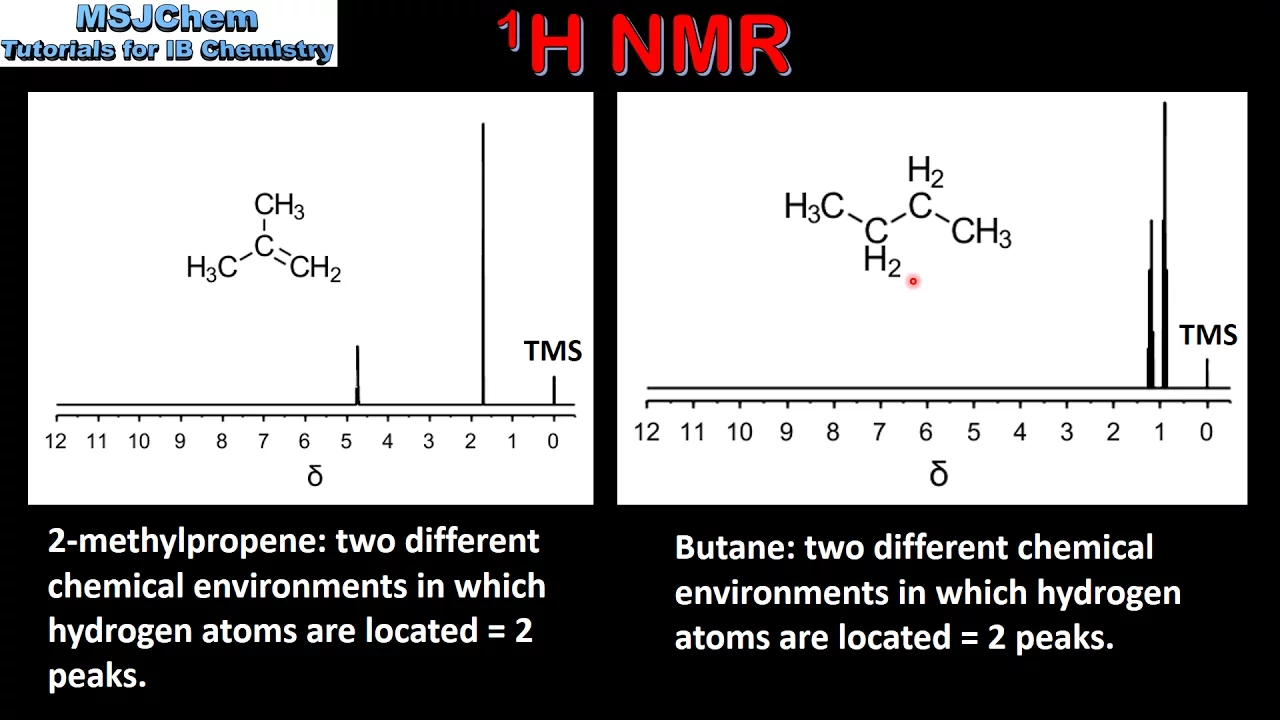
1H NMR: Determining Number of Peaks from Structure
@MSJChem
59.2K views•2017-04-06

Edible Water Bottles: A DIY Guide to Sodium Alginate Spherification
@ryan
10.5M views•2019-06-21
Related Study Plans & Knowledge Roadmaps
Structured learning paths in Chemistry