






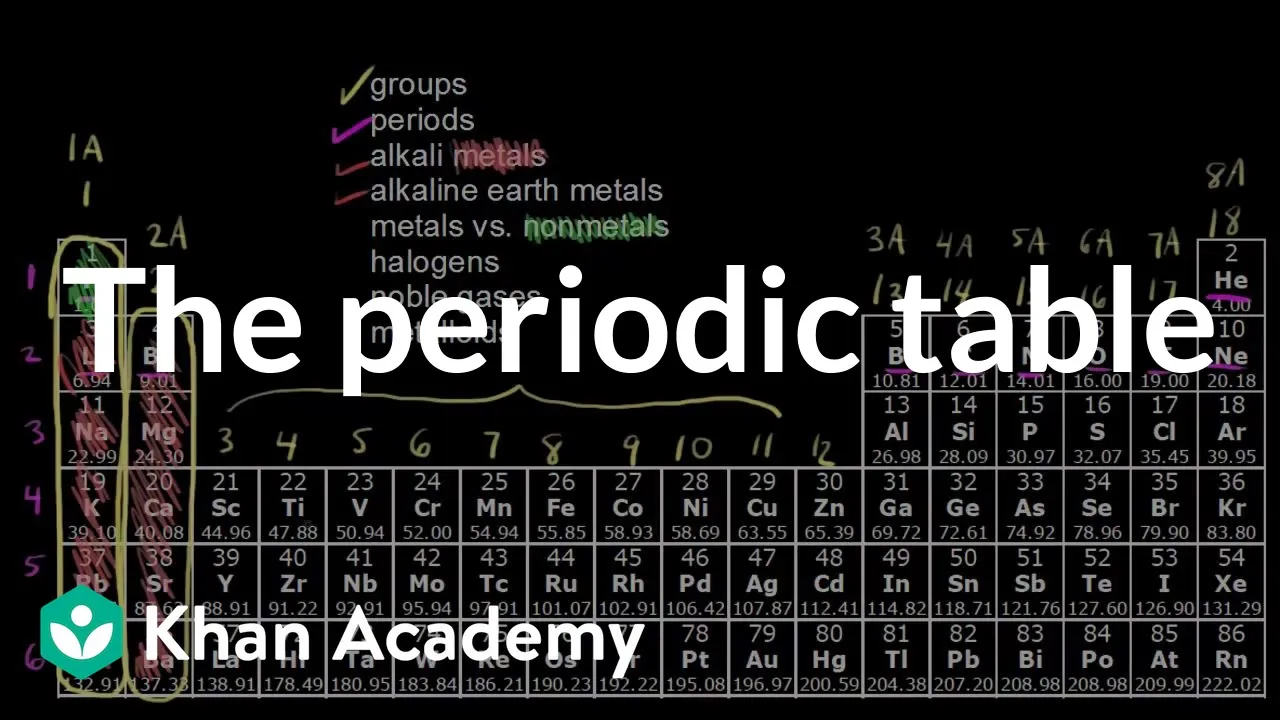
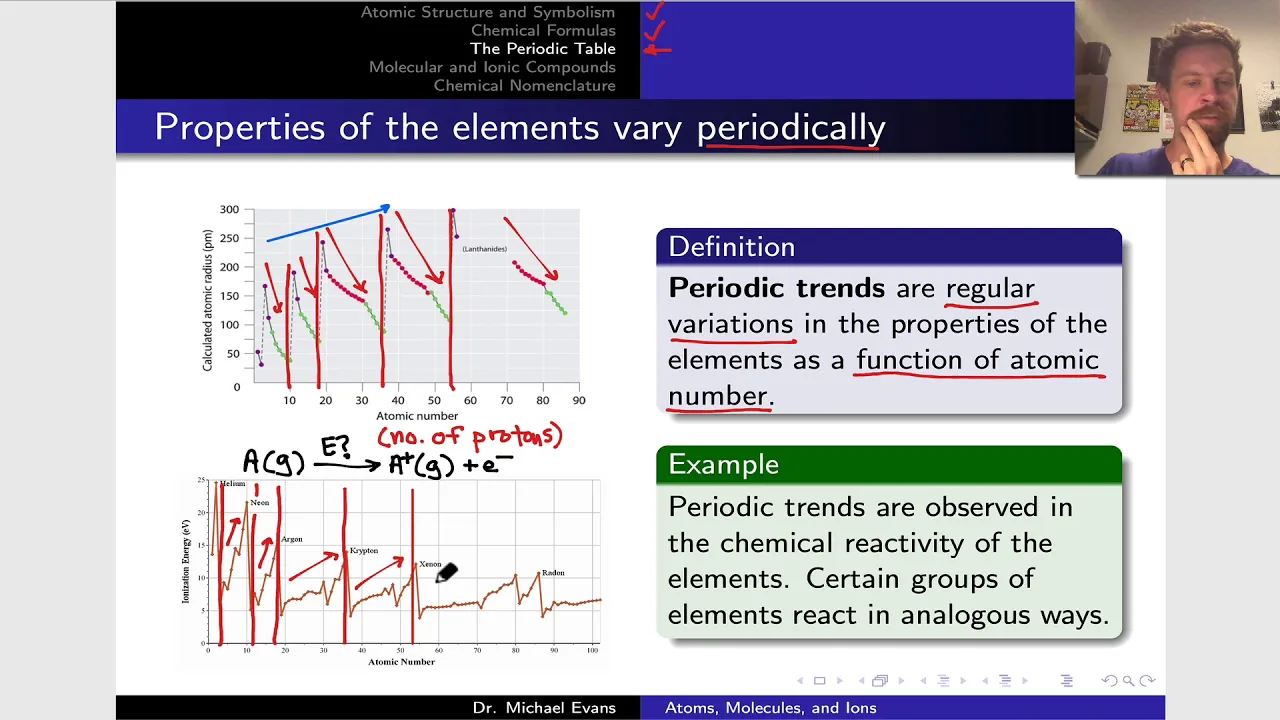
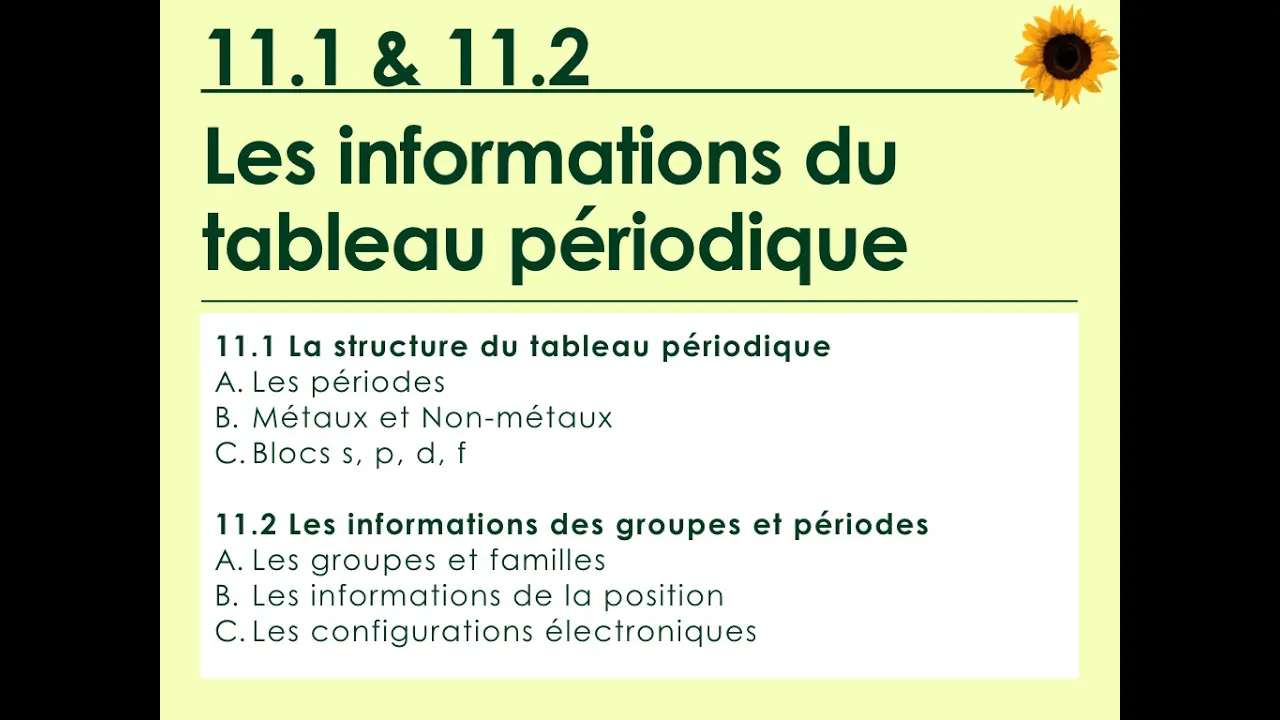

















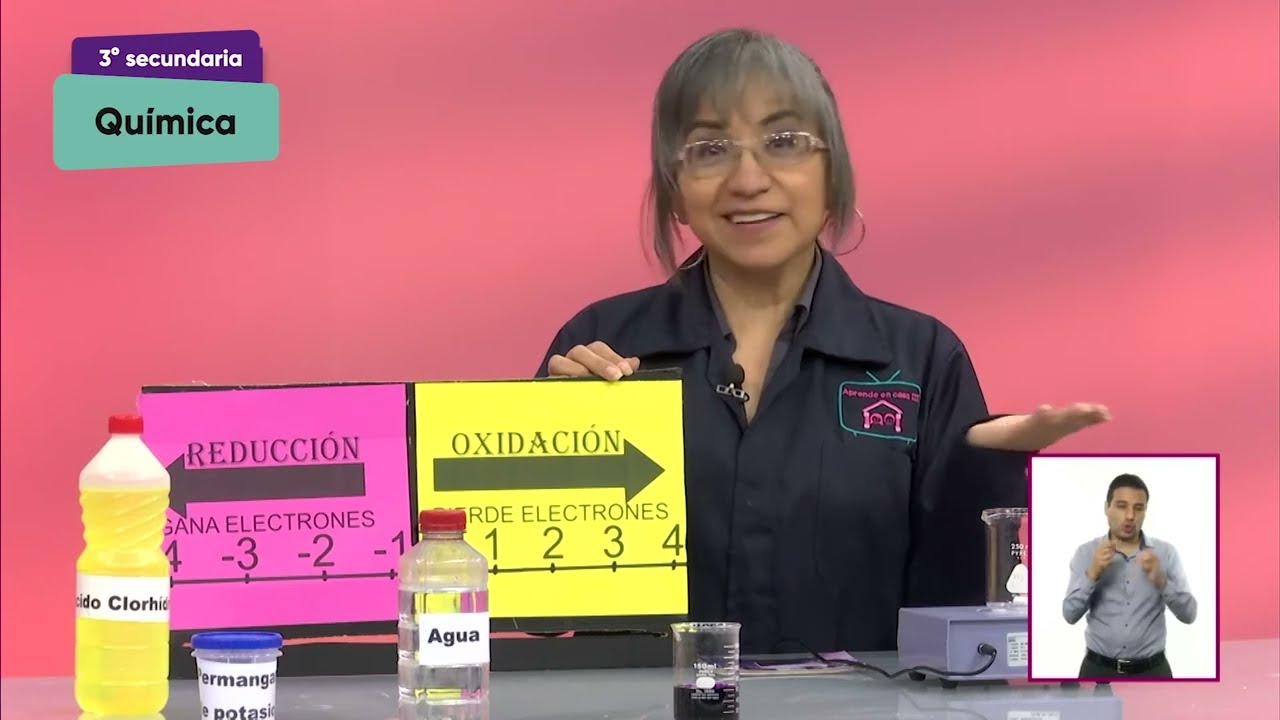
This video explains periodic trends including electronegativity (increases left-to-right and up-down the periodic table, with fluorine being the most electronegative), ionization energy (energy required to remove an electron, following the same trend), electron affinity (energy required to add an electron, same trend), atomic radius (opposite trend, increases left-to-right and down), and metallic character (increases toward transition metals). It also covers oxidation numbers (rules for assigning charges to atoms in compounds) and redox reactions where oxidation involves losing electrons (becoming more positive) and reduction involves gaining electrons (becoming more negative), with oxidizing agents being reduced and reducing agents being oxidized.
Oxidation Reduction Reactions & Periodic Trends Explained
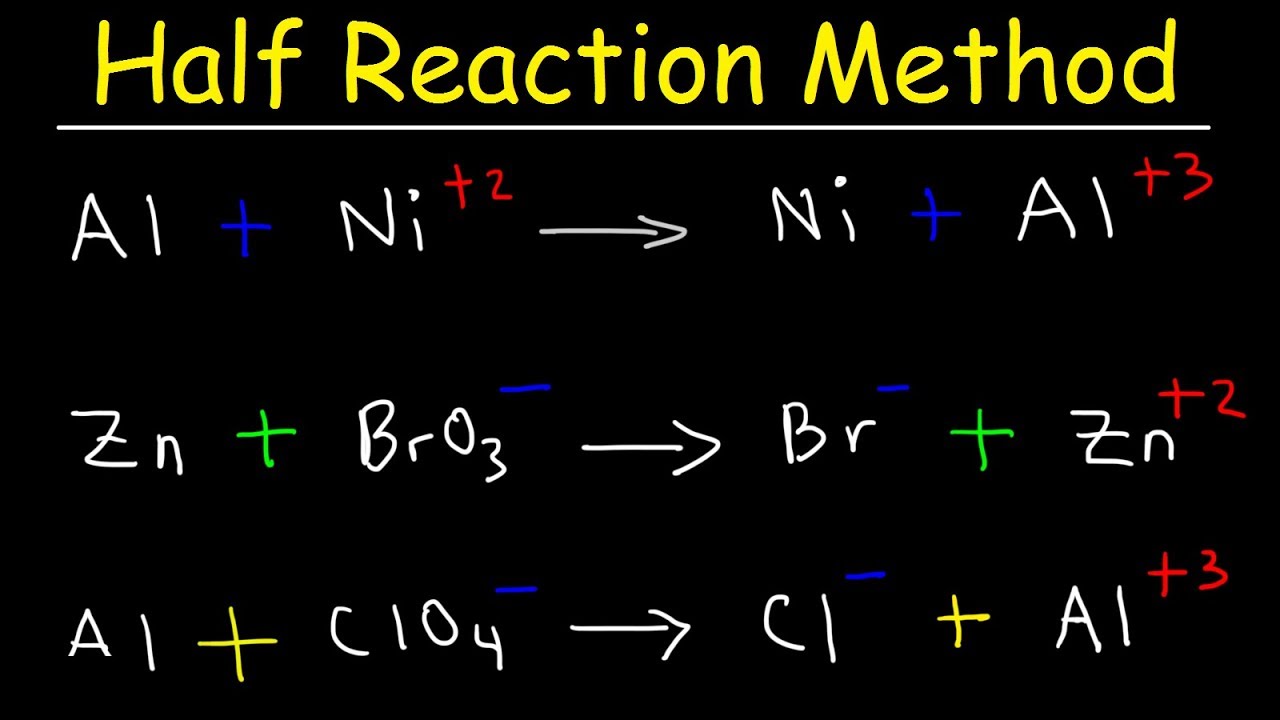
Added:hello hello everyone welcome to another Sunday tutoring session with me Melissa Maribel so happy you can join us today and just be a part of this chemistry learning community and I also wanted to go over it really pretty much just what you guys are on right now I keep asking you every single time because it keeps changing and I know that everyone is just on different topics and different subjects and I'm really trying to just get these Sunday sessions to help you guys as much as possible so covering everything that you guys are on right now so at any point go ahead and leave in the chat leave a comment below let me know what you're on what you need help with what you want me to cover next Sunday or maybe in another video or so on and you also might I really know that I'm doing something very cool that if I reach 10,000 subscribers with your guys's help I will do an eight hour long live tutoring session yes you heard that correctly eight hours so please share my videos you know tell people in your class or your friends or your teachers anyone who you think will benefit from these videos please spread the word and help us get to ten thousand subscribers and well I'm pretty much just gonna be doing this for you guys as finals so you can succeed on your finals because I know the chaos week trust me I've been there a lot of times so why don't we go ahead and get started as more and more people trickle in so today we're focusing on periodic trends and all the different types that we see in that like electronegativity or electron affinity and so on then after that we're gonna move on to redox reactions so that's oxidation and reduction so if you're looking for that specific topic hang on that's going to be towards the end and we're gonna focus on a lot of redox reactions because I know that gets confusing as well as oxidation numbers so let's dive right in alright the first topic that we're going to be talking about is electronegativity now with electronegativity I just want to go over like the concept as a whole we use this a lot and I don't know if you saw my last by tutoring session where I talked about polarity electronegativity is basically the the that some sort of atoms are more attractive per se than other atoms so what that's really saying is that they will attract more electrons so if that atom attracts more electrons it is more electronegative does that make sense so that's the concept overall now we'll see here the different types of trends or the different like increasing or decreasing portions of this so electronegativity as you see on the screen it increases as you move left to right from the periodic table and then as you go down to then up your column for your periodic table so something to know is fluorine will be right here fluorine is a type of halogen and that is actually the most electronegative atom so what I like to think of is if you're looking for whatever you know is the most electronegative atom what you're focusing on is what is closest to fluorine so in case you forget this you know what is it increasing where is it decreasing just think for electronegativity the ones that will be the most electronegative are the ones that are closest to fluorine now with the exception of course exceptions right chemistry with the exception of your noble gases which are right here typically and I'll show another periodic table in a second so your noble gases are completely stable and they don't want to give up or lose any of their electrons they're happy so that's why they're not going to add any electronegativity or not be electronegative whatsoever it's your halogens that typically are very electronegative so I'll show you another table that tells you kind of shows you all of the different types of like actual electronegativity values so you'll see here it actually tells you those are not your masses overall that's actually gonna be how electronegative those atoms are so if we look at fluorine we'll see that it has 4 point 0 that's the electronegativity value and if you compare it to everything else on your periodic table that's why it's the most electronegative atom because it's the highest so and then we'll also see that your noble gases which are all right here they don't even have anything for electronegativity so they're an exception to that rule so you know that noble gases are not electronegative whatsoever it's only going to be everything in this column which are your halogens okay so remember that this is calm over all over here those are your halogens those be those will be very very electronegative that being said there's another little thing that I want to mention a lot of times professors or teachers might tell you you know what if you were to have you if you were comparing the electronegativity of oxygen or chlorine they're both pretty close right if you didn't know the actual electronegativity value then you would you might even say well it's a tie it's not so anything that is typically closest to fluorine as we said is the most electronegative now chlorine is a little bit below fluorine and then oxygen is a little bit above and then just right next to it so it's kind of a rule of thumb to know that oxygen would be more electronegative just because it's higher up on the the periodic table so that kind of takes preference whenever you're kind of looking at that trend whatever is higher up so if we're if we're having like oxygen and chlorine that's why opposition wins because of that that idea that trend that it's higher up and it's really really close to fluorine so be aware of that so if you were at been asked a question is oxygen or chlorine more electronegative it would have been oxygen and we also see that with the value of 3.5 versus chlorines 3.0 let's try so that being said now that we know that our electronegativity increases as we move left to right and from down to up let's arrange these in increasing electronegativity all right so I'm just gonna highlight and circle all the ones that we have here so the first one we have is bromine so BR is right there calcium CA is right there mg is right there magnesium and then I iodine is there and lastly nitrogen so arranging this an increasing order is actually going to mean that we're going from smallest to largest so our smallest is going to be anything on the sit side or farthest away from fluorine because remember your trend is that it increases going up and going from left to right so anything closest to fluorine will be the highest so then your smallest is going to be anything further down and further away from fluorine so in our case it would be calcium so calcium would be the smallest the next one up would then be magnesium and the next we'll go into our halogens and see okay which one is possibly gonna be better well I know that iodine is lower so that's not going to be good so that would be lower in electronegativity and then I'm going to compare nitrogen and bromine and they're both pretty close to fluorine but what if I were to go back to that concept of okay well anything that's a little bit higher up is then going to be better right so if we were to look at nitrogen and bromine well bromine is barely 2.8 and nitrogen is 3.0 so nitrogen wins because it's a little bit further up even though they both have like one space or one atom they're both one atom away from fluorine because nitrogen is higher up then that one is more electronegative so that'll tell us that all right bromine is next and nitrogen is the most electronegative atom in this case all right let's continue on if at any point you guys have any questions feel free to live leave a message or I'm gonna chat a comment anything let me know if you guys have questions so I can answer those right away let's move on to the next trend it's called ionization energy ionization energy is the energy required to remove an electron all right so it's all about just removing electrons overall and we're gonna see which ones are higher up in an ionization energy there's also a concept that there are more than one ionization energies dependent on whatever atom you're looking at so I'll make more sense of that in a second but I just want us to see that the same trend applies eyes electronegativity for ionization energy so once again we're going to be increasing as we move from left to right and as we move from down to then up the periodic table will see that it would be increasing for your ionization energy continuing with that concept what I meant by there are multiple or there's more than one ionization energy depending on that element or in our case a metal it's always dependent on metals by the way so for ionization energies you really look at it as since we're trying to remove an electron right so magnesium has a charge of two plus so we want to remove two electrons because we want to remove two electrons then it has to ionization energies so it has like it's really dependent on the charge of that metal or that atom as a whole so like let's say if you were to have some sort of atom that has three electrons or a three plus charge then we want to remove three electrons thus it then has three ionization energies so and so and that's really the concept between this and what I'm showing you with magnesium it starts off neutral that's where this comes in it's neutral in its gas State and then next for the first ionization energy we're showing that we're really removing an electron that's why it's on the product side and it because it starts neutral in the reactants and then we're removing an electron and then now we have one in the product side and that just shows the removal of one electron next I'm going to keep going with that concept now going to the second ionization energy so that's why I take this mg plus because now it's a plus one charge and then my second ionization energy is then gonna be removing again the second electron so you could only remove an electron one at a time you can't do that just right off the bat and then lastly that's where we get our actual typical charge of magnesium two-plus that concept making some sense so it's really just dependent on your charge of your atom that tells you how many ionization energies you will have and let's get back to trying some of these so this states of which element has the larger ionization energy so we're going to be comparing these two different atoms to each other and just seeing the trend as to which one would have the highest ionization energy remember our trend is that it increases going in this direction it's also going to increase going up so let's look at aluminum and sulfur and compare which one will have the larger ionization energy so aluminum which is right here and sulfur which is right here so though they're on the same row we still can figure out what our ionization energy would be so since it's higher as once again we're getting closer to the halogens our fluorine in general then we'll see that sulfur would be larger and ionization energy so sulfur wins in that case and then I'm going to look at arsenic so arsenic is right here and here's SB and then looking at those two they're in the same column so then now we have to look at the increasing ionization energy as we move down and then up the periodic table so in our case since arsenic is higher up then that's going to be larger in ionization energy see how we're doing this and then next I'm going to look at nitrogen and silicon and we see that nitrogen is once again higher up and it's also closest to fluorine or it's more to the right so that in that case nitrogen wins and that has the larger ionization energy it's really all what we're looking at it's just knowing just remembering all of those different trends as well as knowing the concept in the definition so I have seen a lot of multiple choice questions by the way that teachers do ask you you know explain what ionization energy is explain what electronegativity is so definitely know those concepts understand the definitions of them and what they are besides just knowing the actual trends and let's move on to a different type of trend so you can kind of think of this as the opposite now or yeah really the opposite of ionization energy electron affinity is the energy required to add an electron so ionization energy was the energy required to remove an electron electron affinity is the energy required to add an electron and we'll see the same trend again it just keeps going we're gonna see from going from left to right that's gonna be increasing and from down to up that's also increasing pretty easy so far right if all these trends are the same so far so good this is really just seeing that I just have to know it's going from left to right that's increasing and down and up and that's increasing again so knowing that let's understand the concept a little bit further so since we're adding electrons in this case we're gonna be looking at our halogens right now so chlorine is a type of halogen meaning it's in this column and chlorine if it's in its typical gas state meaning it's gonna be completely neutral if we were to add an electron we're gonna add that to the reactant side and then what's going to be produced on your product side or the right-hand side of the arrow then we see that that would have been our minus charge so that's electron affinity and that's kind of why it's really just reversed right so we saw with ionization energy we're actually removing removing an electron and then that electron would then be added to the product side and then rather for electron affinity we're adding electrons to the reactant side because we're actually adding electrons right so that's that's the overall process of this that's the overall concept typically you don't see anything with more electron affinities that's really just ionization energy where you're gonna have multiple of them however electron affinity you really don't see that so let's try a problem with arranging increasing order once again of electron affinity going back to our trend and just remembering that we're still increasing the same exact way as we move along left to right and as we move up so we fix this a real quick so as we move right along let's just see which one would be the smallest because whenever it's saying we're increasing and we're going in increasing order it's actually smallest to largest so let's just start kind of like putting where everything is and see what we have here so we have lithium we have fluorine chlorine arsenic and we have potassium all right so let's just look at the ones that are going to be furthest away from this corner up here so meaning anything chlorate closest to fluorine once again so anything closest to fluorine will be higher in electron affinity rather anything further away will be lower in electron affinity so in our case the one that's the furthest away would then be potassium it's okay so because this is further down right that's why it's decreasing so then now the next one that's really really far away from fluorine would then be lithium and then we're gonna keep increasing now and we'll see that the next one that is a little bit further away from fluorine is arsenic keep going now lastly we said that the most electronegative the most the highest and ionization energies and electron affinity is fluorine so anything closest to fluorine is a great thing to just see okay that's going to be higher in electron affinity however we have fluorine in this case so then fluorine would be the largest and chlorine would be next so this is increasing order so potassium is the furthest away and fluorine is the most the closest to that trend in the most electronegative are actually sorry electron affinity in this case and it is the most electronegative so let's keep going with all the different trends so finally we are changing our trend I wish it could all be the same it'd be easy to memorize but this is the concept of atomic radii and atomic radii is really just looking at you might have seen a drawing or figure something like this where they put some sort of item next to another atom so next to another atom and then we're just looking at really the radius of these two atoms so there's another little concept here that it's really just talking about a atomic radii is the distance from the nucleus of an atom to the outermost electron I'm gonna say that again so if your nucleus is right here okay let's just say that's our nucleus and then we're then going to the outermost electron then this is pretty much the radius that we're looking at right here and that's typically what they look at the atomic radii is really kind of saying I wouldn't say it's it's talking about how big the atom is per se even though it is easier to think about that it's more specific of course it's chemistry it really talks about the distance of your nucleus to the outermost electron all right so continuing with that concept now our trend is going to be the opposite so now it's going to be larger in this corner okay so in this case and by the way that's that little corner is seccion so if anything is closer to sessom for atomic radii then that is going to be the largest anything that's further away so now anything that is by fluorine is then going to be lower in atomic radii all right so now as I mentioned that now going from right to then left then we'll see that it's actually increasing for atomic radii as we move from top to then bottom of our periodic table that's also increasing in atomic radii here's a better representation of this and here you can really just see the overall size of these atoms as a whole and then even just looking at this concept it really shows you the trend here as we start to get larger than an atomic radii this then starts to increase as we move down as we move down our periodic table and then also as we move more to the left that also shows that it's increasing as well so this is just a really good diagram telling you okay is going to be a lot larger in atomic radii and that just helps us identify where do I look how do I remember this concept so kind of going back to real quick just going back to the concept here that ionization energy electronegativity and electron affinity all of those are going to be highest when they're closest to fluorine so any atom closest to fluorine would be higher in electronegativity in ionization energy and electron affinity and then now the opposite now for atomic radii anything closest to assess iam would be larger all right so just knowing those actually is really helpful to be able to figure out you know what's higher in whatever you're looking for so let's try one and actually let's continue let's continue another concept because this also kind of goes hand in hand with atomic radii because it's still talking radii so it's called ionic radius and essentially what we're looking at is we're looking at ions so remember ions are just it's an element that has a charge so we have two different types of ions we have cations and we have anions cations are positively charged and anions are negatively charged so now we're comparing really our cations or anions larger whenever we have that sort of atom so I know there's so much more that we're comparing in this sense but let's make it a lot simpler and really what we're just looking at is the larger the cation or that larger the positive charge that means we're actually gonna have something that's smaller all right so that's what this is essentially saying so if we have something that's very very large in charge like let's say if we were to have I'm going to say iron and that has a three plus charge or something like that then that's actually gonna mean that it is a smaller atom or a smaller cation as a sense it actually makes the original atom smaller that's what I want you to think of and then now our if we have a larger negative charge like let's say if we had let's say goodness we can do anything I'm just talks ajuns typical one so if we had oxygen and it had a larger negative charge then that has a larger anion so cations typically tend to be smaller and anions are typically larger all right so that's kind of the concept with this overall and then we're going to put this into practice just understanding that again so I'm going to say that one more time so our lot the larger the positive charge that means the smaller the cation the larger the negative charge that means the larger the anion all right so if we were to let's say arrange this in order for this first one note that every single cation or every single ion is the exact same right so since they're exactly the same then we're just going to kind of look at the overall trend and you're trying is going to be the same exact thing as your atomic radii so note that it's going to increase as we move along as we go closer to assess ium and and so on so in our case let's just figure out where in the world are these elements and looking at this we'll see they're all right here right so they're all going to be in the same exact column and the same is that group so in our case we're going to look at which ones are then going to be increasing due to that trend so due to that trend as we move further down the column or down our periodic table then it starts to increase so which ones further down that will tell us okay HF so that one is larger and then next this one's next and TI is lost so it's really just kind of going off of first let's look at our charges so it's a little bit different in this case but we look at our charges first since they're all the same charge then that tells you okay but they're probably in the same group and then in that case we're just going to look at our overall atomic radii trend where we know that it starts to increase as we move down so that's why this is our proper order this is this is going to be your largest and this would be your smallest moving on so now let's pay attention to all of our different charges in this case so sodium and a plus that is a positive charge meaning it's a cation so we know that that's probably gonna be a little bit smaller right and then same thing goes with magnesium since that's a two plus charge then we know that okay anything that has a larger cation that means it's gonna be smaller anything that has a larger anion or a negative charge that will be larger so in our case the only negative charge that we have is fluorine and we'll see that in a second which one here let me go back to this which one would actually win so we would align this according to and this by the way the way that this was showing this was our largest and this was our smallest it was in increasing order so now looking at this next type it's called isoelectronic I want to explain what that means so isoelectronic is essentially just saying they all have the same electron count okay so isoelectronic just means they have the same amount of electrons so looking at that we arrange this according to the anion or the cation so essentially the cation that has the largest positive charge is then magnesium that's why it would then be the smallest the next cation that we have is sodium that would then be the second smallest because it's a cation and we know they're small and which would which one would then be larger or the largest that then it would be our anti on which is fluorine so that's why this is the largest because it's our only anion now I also want to mention just how I even knew any of this so another concept or another way to go about this is really just looking at your different types of electron counts and let's just see if they really all would give us the same exact electrons so let's say magnesium magnesium typically has how many electrons so we have 12 electrons overall so 12 electrons and by the way what I'm looking at I'm looking at the atomic number remember the atomic number is equal to the same amount of electrons if it's a neutral atom now that we're adding two electrons or actually sorry we're removing two electrons now we have a two plus charge so mg 2 plus typically has two 12 electrons this 2 plus is actually removing 2 electrons so minus 2 that gives us 10 overall electrons so now we have 10 electrons I'm also going to look at and see does everything else give me Jose 10 electrons so sodium na will see na typically has 11 electrons this is a plus one charge so I'm going to actually remove one electron and yep 10 electrons same concept for the next one so fluorine - we'll see that that typically has and let's just look at the atomic number that gives us 9 so there's nine electrons and I'm actually going to add one now so since it's been negative one charge we're actually adding an electron so I'm going to add one electron and that gives us a 10 counts four electrons alright so lastly let's go to neon and neon is neutral it's a noble gas it already has 10 electrons so that's why it's known as isoelectronic excuse me it's known as isoelectronic because they all have the same amount of electrons and then from there we're really just looking at our overall trend we could also look at actually we're not looking at our overall trend right now we're then looking at our overall charges so in this case since they would all be the same exact atom they would all add up to just being neon right if we were to do that but they all have ten electrons then what we look at next is really just looking at your different types of ions so as I mentioned anything that has a higher cation or a larger cation would then be smaller as we saw before and then anything with an anion or a larger ana anion in general that would then be the largest in ionic radii and so on that's the overall concept so just for the sake of time I'm going to keep going and the last trend that I will talk about is called metallic character what metallic character is even talking about it's really just saying does the element behave like a metal that's essentially it and it's looking at the different properties of something that behaves as the metal and your metal is going to be a great conductor it's going to be more malleable it's going to be easier to ionize so ionization by the way is really just talking about how we're able to dissociate or break something apart that's the idea of ionization or just ionizing anything in general it's like how quickly or how better can we break something apart and also like a conductor is really saying can it conduct electricity that's what we're focused on so if it has that sort of property that it is higher in metallic character and then our specific types then are going to be increasing as we go kind of like diagonally in our case so as we go diagonally and the reason for that is because right here in this corner we should know that these are typically our nonmetals and it makes sense that they won't behave like a metal right because they're not metals so we know that it's gonna be higher in metallic character wherever we get closer and closer or more to our transitional metals which we know those can behave as metals since they are metals so it makes more sense so that's essentially the concept here and if we're looking at that overall trend let's just try one real quick so if we're looking at that overall trend and just looking at SN which is right here tin and then T E Trillium and looking at those two and looking at our trend since know that it just crosses this way as we increase then we know the one that's farthest or closest even to the our transitional metals would then be ten so ten would win in this case it would be the most metallic character in our case and I'm gonna keep going cuz I really want to get to oxidation and reduction because I know this topic is a little bit trickier all right why don't we first just start talking about oxidation numbers and what in the world they are and how they help us identify you know what's oxidation much reduction and so on so in our case I just want to make a note that oxidation numbers or oxidation states are not going to be your ion charges so I don't want to say that they're the ion charges per se essentially what they do it's it's a temporary charge or it's a charge that tells us what that element is within that compound but it's only used to figure out if the atom if the electrons are being you know oxidized or reduced or if the electrons are being gained or lost so this is the overall concept of oxidation numbers it tells us that charge of that element within the compound all right so like let's say like real quick like with water like if I knew that oxygens typical oxidation number is a negative two then okay then and I know I'm hydrogen is typically a plus one those would be my oxidation numbers and that's really just telling us what's the specific charge within this compound what's the specific charge of oxygen within this compound but it's really just looking at the electron flow or are we gaining or losing electrons as a whole so just knowing that it's really really not your ion charges I just want to make that that note so no one gets confused with that and let's just go into the oxidation numbers that you need to know so in this little table you'll see that the first type would be anything that's in its solid state so when we have an individual element like let's say in our case we have na and it's in its solid state right off the bat anything that's one individual element in its solid state has an oxidation number of zero so I don't want you to think that let's say if we had something like this and oh it's in its solid state boom it's zero no because there it's a compound it's not one individual element it's a compound right there's two elements within that so that's why that would not be one of the cases in this case for for iron chloride that we would have to see the individual charge or oxidation number of iron and chlorine but if this were just Fe and its solid state it was just iron and solid state then yes that would fall into that rule that okay it's one element it's in its solid state so it is an oxidation number of zero and let's look at another type so another type that we should know is oxygen so oxygens oxidation number is negative two hydrogen is a plus one and any sort of halogen is a negative one so remember your halogens your halogens are bromine fluorine chloride chlorine and then iodine these are most typical halogens that you will be seeing in these types of questions those are always going to be a negative one for your oxidation number and then next your diatomic atoms so remember diatomic or the dye meaning two just means that that atom doesn't exist by itself but always wants somebody so in our case I like to remember diatomic atoms it's kind of silly but it helps me Shawn I like to think of it as Shawn as well as your halogens so diatomic atoms how I remember it it's Shawn meaning it's carbon it's hydrogen it's oxygen nitrogen and all of your different types of halogens so they always exist in pairs so carbon won't just be a C it would be C 2 or H 2 for hydrogen and whatnot so I wrote that all here all of those are going to be an oxidation number of 0 yep so an oxidation of 0 know that alright any sort of diatomic atom and as I mentioned if it helps you to remember how how I learned it was Sean and it's also your halogens so moving on the next type anything that already has a charge then that is going to be the charge right it makes sense so in our case like if we had Fe three-plus then we know that that charge would then be a three plus because it already told us that but that's only element again so it wouldn't be the case if we had something like this because that's a compound that has two elements with it so because of that reason no we wouldn't just say oh this overall is just a negative one it's not what we're looking at we would actually have to figure out and determine the oxidation number of each individual element before getting to that alright so in that case on there's one more thing by the way so for groups one that would have a charge of +1 so remember group 1 is really just that first column where we have and here I can show you with our periodic table this is Group 1 so Group one is like lithium and sodium potassium so on that has an oxidation number of plus one for group two that has an oxidation number of a positive two with plus two so those are ones that we use pretty much as like a last resort so the ones that I put in the very very beginning you use those first so you look at that and you see okay which elements do we have so far and I'm going to apply those first rules and then if I don't have anything else that I can't figure out any oxidation numbers then I'll use the rules on the further down so lastly kind of use this group as a last resort so group two would be a plus two oxidation number let's try a bunch of these all right so let's just apply these rules and understand how to take how to find oxidation numbers so right off the bat we have BR 2 anything that's a diatomic atom we then know it's zero so boom done oxidation number of 0 next we have K plus so anything that already has a charge at its already just one element would then just have an oxidation number of whatever that charge initially is so in our case it's just going to be a plus 1 because of this charge now we're gonna start applying all these different rules and looking at this so ok now we're looking at lithium fluoride and we'll see alright so we have a halogen we have fluorine right so we know that lithium fluoride let's see fluoride has or fluorine has a negative 1 charge because that's a halogen and then now lithium has a plus 1 charge and we'll see that this compound is neutral what I mean by neutral is if we were to add these oxidation numbers together it would give us 0 and this compound as a whole didn't have a charge like if this had a two plus charge or a negative 1 charge then your oxidation numbers have to add up to that specific charge of your entire compound so in our case this does check out because both of those oxidation numbers added together do give us that neutral or zero number or charge as a whole so that checks out and then now I'm going to do another type so sio2 and we'll see that oxygen that's one that we know is a two minus charge so oxygen is our 2 minus charge now I'm going to do a little bit of math here so it's a 2 minus charge but we have two oxygen right we have that subscript of 2 so in our case I'm going to multiply that 2 minus by that 2 subscript which actually gives us a 4 minus now what I'm doing right here is only it's my it's my way of pretty much figuring out how in the world am I gonna figure out what carbon is okay I'm looking for the oxidation number of carbon so I don't want to say that the 4 minus charge is going to be your oxidation number because it's not it's our oxidation number of oxygen is a 2 - I'm only using that for - to then figure out algebraically what our carbon charge would then be so in our case to be able to add up to 0 this must have been a 4 plus charge and we're not sure of that then here let me show you a different way let me show you an algebraic algebraic way so let's say if I were to do that negative 4 charge again I'm gonna do it a little bit differently though it's gonna say minus 4 and I know that this has to add up to 0 because it's neutral it's a neutral compound because there's no charge on CO 2 and then next I don't know what carbon is but I'm gonna say that that's X yep lookin algebra again right that's chemistry for you so now continuing with this I'm going to that install for X by adding 4 to both sides to cancel it out and there I see that X is equal to a positive 4 so yep carbons oxidation number is then a plus 4 so our oxidation numbers in this case would have been carbon with a 4 plus charge or oxidation number I'm sorry not charge and oxygen with a 2 - och sedation number all right that making some sense please let me know in the comments if you guys have any questions or also what you want me to talk about for next Sunday I'm going to keep going with a couple more examples I'll do one more and then we're gonna practice really just understanding the concepts of oxidation and so on so let's look at something that actually is charged so so4 with a 2 minus charge so we know in total all of our oxidation numbers would then add up to this 2 minus charge some we're really gonna put that so 2 minus charge all right so I could even just say it if we want to do the algebraic way I can say it as a negative 2 so now we know oxygen has a negative 2 oxidation number so then I'm going to look at this and say okay then there's 4 of them so I have to multiply 4 times the negative 2 gives us a negative 8 and now I'm trying to figure out what in the world sulfur would be so I'm going to label that as just X I don't know what that is so we have X minus 8 gives us a negative 2 let's solve this algebraically by adding 8 over to the opposite side these cancel X is now equal to 6 because we have 8 minus 2 so then sulfur had to have been a positive six for our oxidation number and right then and there I see okay my oxidation numbers then are six positive six for sulfur and negative two for oxygen you'll see that oxygens charge or not charge oxidation number doesn't does not change whatsoever because that's just one that is in grain and we just know it for sure so other elements will change that's why I kind of showed you all those different oxidation numbers to start off with and those help you identify what what other oxidation numbers we have for like metals or nonmetals of that we don't necessarily know the oxidation number so let's put this all into practice let's understand the concept now of oxidation and reduction so you might have heard this as oil rig or Leo the Lion goes her there's a lot of different ways to know this and remember this and whatever if that kind of helps you remember it then great I have my own way of remembering this and it's just kind of you know it just makes more sense to be personally into my students as well but first off I just want you to know the concept that atoms that lose electrons are being oxidized so for losing electrons it's being oxidized and atoms that gain electrons are being reduced so I know it's kind of like reverse thinking in our case where a lot of times like you might have seen this as oil rig as I mentioned and that's why it's saying it's saying oxidation is losing electrons and reduction is gaining electrons so if that helps you remember at my all means use that how I like to look at this is and will see this kind of more in our actual actual reactions real redox reactions where if it's more positive it's going to be oxidation but I want you to then see okay well why is it more positive where well electrons are negative so I must be losing electrons right so as we think about it this way kind of more like logically so if black cons are negative or electrons are negative people then if we lose those from our lives that we become more positives so we become more oxidized follow me on that and and then kind of think of it as something else then you know for then gaining electrons and I said reduction is becoming more negative then as we gain electrons or as we gain more negative people in our lives we become more negative or reduction okay that's how I typically like to look at it it's kind of more just easier for myself and sometimes for my students to see and I'll still keep going with that concept overall but that's what I want you to think of losing electrons as being more oxidized and then gaining electrons it's being reduced so we'll see with an example here by the way a redox reaction overall has to be a mixture of oxidation and reduction for it even to exist as a redox reaction so just just definitely know that if there's only one thing that's being oxidized and there's no reduction whatsoever that is not a redox reaction so it has to combine both now we'll see here that I really placed all the oxidation numbers as a whole so carbon would have been zero because it's individual it's by itself and then sulfur would have also been zero because once again that same concept its individual elements so it's by itself so then it has a zero oxidation number now if I were to then look at my oxidation numbers for carbon on the product side we'll see that it became more positive so it went from a zero to a four plus charge so because that became more positive than more positive means it's going to be oxidation so and then now and then think about that again why is it becoming more positive because we lost those negative people in our lives right so we lost those electrons that's why we're more positive and then now looking at reduction we'll see it goes from zero to negative two so it became more negative so if we became more negative than we gained more negative people or more elect in our lives right so that's really the concept with this and that's kind of why I'm saying you know oxidation it becomes more positive going from zero to four plus and then reduction going from zero to a to minus and it becomes more negative it's just kind of easier for myself and even some people to just grasp that concept of okay yeah I can see it becomes more positive okay I can see it becomes more negative and so on so in our case since carbon changes from zero to four plus carbon as I mentioned is then losing those negative people or losing electrons and that's why it's being oxidized and then sulfur is going from a zero to a negative two charge or negative 2 oxidation state I'm sorry and then now sulfur is gaining those negative people or gaining electrons that's why it's being reduced or more it's becoming more negative now they're kind of understanding that process overall let's continue and now we'll throw in something else so something known as oxidizing agents and reducing agents okay so with this concept it's kind of flipped around a little bit I know why does chemistry do this I told got it guys really I'm not a fan of it either by oxidizing agents bare with me with this oxidizing agents are going to be the element that are being reduced so it's pretty much reversed it's it's like the opposite of what you would anticipate right so you would think okay the oxidizing agent must then be oxidized nope the oxidizing agent is going to be the element that's actually being reduced and then vice versa the reducing agent is then going to be the element that's being oxidized so that's something to definitely know whenever we're looking for those agents it's really just saying okay it's going to be the opposite of what I'm anticipating or what I'm thinking and I know that oxidizing agent is actually going to be the element that's being reduced and then the reducing agent is then going to be the element being oxidized alright so just knowing that back and forth and now it's kind of like understanding alright what in the world reduce based on what we just learned and then also what is being oxidized based on what we learned again so we're gonna see this process again I'm just gonna keep having us practice some of these because they can get tricky so why don't we just start off with our oxidation numbers once again and looking at this first example we see that we have one individual element that's sodium in its solid state so we know okay boom that's zero and then we also see all right we have a diatomic atom so once again that is zero and next we'll see that okay we have a halogen so we know that chlorine is typically a negative one charge and sodium well that's in Group one so okay that's typically a positive one charge even though I know this kind of told us here but still plus one and then if we were to add up those those oxidation numbers that would give us zero which is correct because this is a neutral compound as a whole so in our case we'll see okay well what is being oxidized what is being and this is a negative what is being reduced so okay I know that going from sodium from R it's going from zero to two plus one from our reactants to our products well that's becoming more positive right so because this is becoming more positive it is then being oxidized or that's oxidation okay so since sodium is then being oxidized that I know well then what is being reduced what's becoming more negative so in our case we'll see okay well the chlorine is becoming more negative freights going from zero to a negative one so then that must be reduction so that CL 2 must be what is being reduced as a whole so okay now let's look at our different types of agents and let's see is this is this going to be you know a oxidizing agent or a reducing agent and we'll come to see that since we know that this was oxidized or oxidation I said that the sodium going zero to plus one charge or plus one oxidation state is going to then be oxidized so if that's being oxidized then I know that's the opposite of what I'm anticipating or what I'm thinking so then na must be our reducing agent so as I mentioned here so na is going to be oxidized thus it is the reducing agent throw always opposite right they're always opposite from each other so then now chlorine or co2 went from zero to a negative one and we said that that was reduction right because it became more negative and we'll see all right chlorine so then this is going to be reduced and then in our case our CL 2 is then the oxidizing agent so that's essentially the concept and and really just kind of seeing that they're opposites from each other all right let's just keep on practicing these different types like I said if you guys have any questions by all means leave it a chat leaving a comment below let me know what your questions are is this making sense and so on so let's try another one and let's start off with our oxidation numbers once again we'll see that we have 10 has a 4 plus charge since it has a 4 plus charge boom that's my oxidation number so four plus okay and then now I see well there's calcium but there's nothing else it's one individual element so I that has to be 0 and then I'll see all right tin has another charge again and that has a 2 plus and then we'll see your plus 2 they're not the ion charges so and then now looking at this calcium has a 2 plus so that also has to then be our oxidation number because remember that anything that's charged that is going to be the oxidation number of that element and then we'll see what happened so let's see what's being oxidized what's being reduced we went from a zero to a two plus or plus two that is becoming more positive so because this is becoming more positive we are then losing negative people or losing electrons so then that is oxidation and then our reduction must be the one that's being reduced right going from four to two we're becoming more negative so we're going from a four to A two so two we're really just kind of moving or we're being reduced by two electrons as a whole we'll see that there so because this is becoming more negative or it's really being reduced more so okay now let's go back to our concept of which one's being oxidized which one's being you know reduced what's our agents and so on so as we mentioned we said that our tin is actually what's occurred is actually going to be our reduction and then our calcium is going to be what's oxidation is forming right what oxidation is happening because it's becoming more positive so calcium is what is being oxidized so if that's being oxidized then we know okay calcium must then be the reducing agent because it's the opposite of what you're thinking so that's our reducing agent and then now looking at ten we know that tin is being reduced because it's involved in reduction so if it's being reduced then that must be the oxidizing agent and that's how they how about here so it's always reversing what you're thinking so calcium is oxidized then calcium is our reducing agent if 10 is reduced then 10 is our oxidizing agent and so on and by the way you'll probably notice that I'm only using the reactants part of that reaction reduction or that oxidation so in our case for 10 I didn't use the 2 plus I use the 4 plus because you're looking at what you're starting with and remember everything that's on the left hand side anything that's really here these are your reactants so that's what you're starting with initially so that's what's actually going to be either reduced or oxidized because that's what's going to make a change to our products so that's essentially what we're looking at for anything that's being oxidized anything that's being reduced anything for your reducing agent an oxidizing agent we're not focused on the products were only focused on our reactants all right we have time for a few more so let's try another one and I actually want to try something a little bit more difficult with you guys if we have time I'll go back to the other one something like this all right so that's just identify all the different types of oxidation numbers right off the bat so with our first type we'll see all right we have iron and it's by itself it's in its individual state so I'm going to say that that's zero now looking at this next type there is a charge as a whole our whole entire compound would equal a negative one charge so I'm going to start with what I know so I know that oxygen has a minus two oxidation number and then we'll see okay well algebraically I don't have to multiply this four subscript with that negative two and and the reason why I'm doing this by the way like if that concept isn't making sense I want you to think of there being four oxygen like if I were to draw a one two three four oxygen and they all had an oxidation number of negative two because we know oxygen has a negative two oxidation number and if we were to add up every single one of these oxidation numbers as a whole that would be the same exact thing as four times that negative two and that's why I'm using that that's why I'm just multiplying them up right off the bat so if this I hope that this makes more sense now as to why in the world we've been doing that so it's just because there are actually four oxygen and that subscript tells us that and then that's why I'm just multiplying four times that negative two which then gives us negative a and this would also give us negative eight if we were to add them all up at that same way so continuing with that concept now I'm going to now set this equal to the charge of the overall compound which is a negative one because of this charge right here and now I'm trying to figure out what in the world am i doing so what is this oxidation number here I'm gonna put that this is an X and we'll see with that so if this is X minus eight and it equals a negative one then I'm going to try to figure out what our X would actually equal so I'm going to add over that eight and X would equal a positive seven so all right we have positive seven for manganese so Manion YZ rmn would then be a positive seven oxidation number and then from there I'm just looking at so I did all this algebra and all this work just to figure out what in the world the oxidation number for manyy means wise so I'm going to erase this now because it is not part of your oxidation number your oxidation numbers are these the negative two with your oxygen that's only going to be your oxidation number it's not gonna be the negative eight and then your positive seven for your manganese and I'm gonna keep going and then keep going with this concept will see that our hydrogen early has a plus one charge which we know that is going to be the oxidation number either way and then iron has a three plus charge here so then that has to be the oxidation number as well and next I'm going to keep going and just looking at these different charges and we'll see that oxygen here once again oxygen has a negative two oxidation number and we're going to multiply we're going to multiply by two so that would give us a negative four and there is no charge in this case so it would equal a neutral compound or it would be zero and then we're trying once again to figure out what in the world manganese is so I'm going to add over that four to solve for X and that would give us a +4 oxidation number and erasing this because this is not your oxidation numbers it's only that post four and that negative two and then lastly looking at water we know that your oxy once again is negative two and then our hydrogen if we were trying to figure this out even though you do know that hydrogen is plus one I'll still show you how I know you know looking at all this so we can do this whole concept again where this would have been equal to at to zero actually this is a neutral compound and then now what I could do with this if I didn't know what hydrogen's oxidation number was I could have said well there's two of them so if I were to do this algebraically this would have been 2x does that make sense because there are two atoms I am now saying there is there's a two in front and I'm going to then solve for what X is so I would then add over that to those cancel this as two is equal to 2x and I divide this two because they're being multiplied and I want to get rid of that these cancel X is then equal to 2 divided by 2 which is 1 so then this gives us a plus 1 oxidation number and a negative 2 as we saw before for actually plus 1 I'm sorry plus 1 and we know that that actually is true with oxidation number for hydrogen is plus 1 and the oxidation number for oxygen is a negative 2 so did all that algebra just to figure out in case you didn't know but if you do remember that chart that I mentioned in the very beginning it is really helpful to just know that hydrogen is a plus 1 and that's not going to change so looking at all this these are all your different types of oxidation numbers I hope this really helps you guys understand how to figure out oxidation numbers as a whole I know I'm out of time but I'm going to just look at this real quick with you guys just seeing what we would have gotten so in our case all of our oxidation numbers are as shown and we'll see that we have iron as zero and then we're going from zero to a plus 3 so that's becoming more positive that's why that's being oxidized so we have oxidation in this case so what is being oxidized is our iron this iron right here is being oxidized and then we'll see that ok our reduction process note that it's not going to be your oxygen we're not focused on oxygen because oxygen oxygens oxidation number will always be a negative - that's not going to change what's changing here is MN or manganese and we'll see that that's going from a plus seven to a plus four so it's being reduced because it's going down it's becoming more negative and then in our case we'll see that this entirely is then going to be what's being reduced because we always look at what is in the reactants rather than what's in the products because that's what's going to actually be oxidized or be reduced is what we initially start with which is always in your reactants so now looking at this if iron is being oxidized then that must be our reducing agents right back and forth is always the opposite of what you're thinking so that's why iron is your reducing agent and then now we'll see that Manion ease or that initial reaction that we'll see is going to be the oxidizing agent because it is being reduced so o is just opposite of what you're anticipating or what you're thinking as a whole and so on alright so overall we went to pretty much just talked about everything with oxidation and all your periodic trends definitely write those down make flashcards if you need to what helped me overall was just practicing a ridiculous amount of practice problems and just looking at this over and over again personally that's the main you know process and key for education that's how personally I succeeded with my education and was able to just understand these concepts and now even teach them was just repetition so I would write my notes over and over again just trying to just then figure out okay is there an easy way to look at this now that I finally understand the concept you know if I were to do these practice problems over and over again will I get them wrong and I'd kind of test myself with that another thing that I also wanted to mention with you guys is if anyone struggles with test anxiety I personally struggle through it forget about a time where I just I would freak out on my exams and I never really felt like I like I would go to the exam than my brand with my brain would just go nope we don't remember a thing and that kind of test anxiety how I overcame that and how I moved through that was really just I would put myself in that environment beforehand and I would literally time myself where I had like I practice problems and I'd put a timer and I would kind of really get prepared for that anxiety or get prepared for that kind of like feeling of being in that atmosphere of my exam so that really personally helped me and now I can you know happy happily say that exams don't really scare me anymore or you know after I did that I really done then succeeded but that's just something I wanted to mention for you guys and another thing as I keep mentioning please oh please let me know what you guys are working on what you guys need help with you know I want these Sunday sessions to really just be helpful for you guys you know feel free to ask me questions jessica's are really letting me know what she needs help with thank you so much I would you know I just really want to know what you guys need help with and also reserve your spot for next week I will be letting you guys know what I will be covering for next week as I said I just really want to get ideas let me know what you guys are working on what you need help with and please share and like my videos and just spread the word so I can do an eight-hour live session for you guys before your finals and thank you so much for being here I'll see you guys next Sunday see ya
Up Next
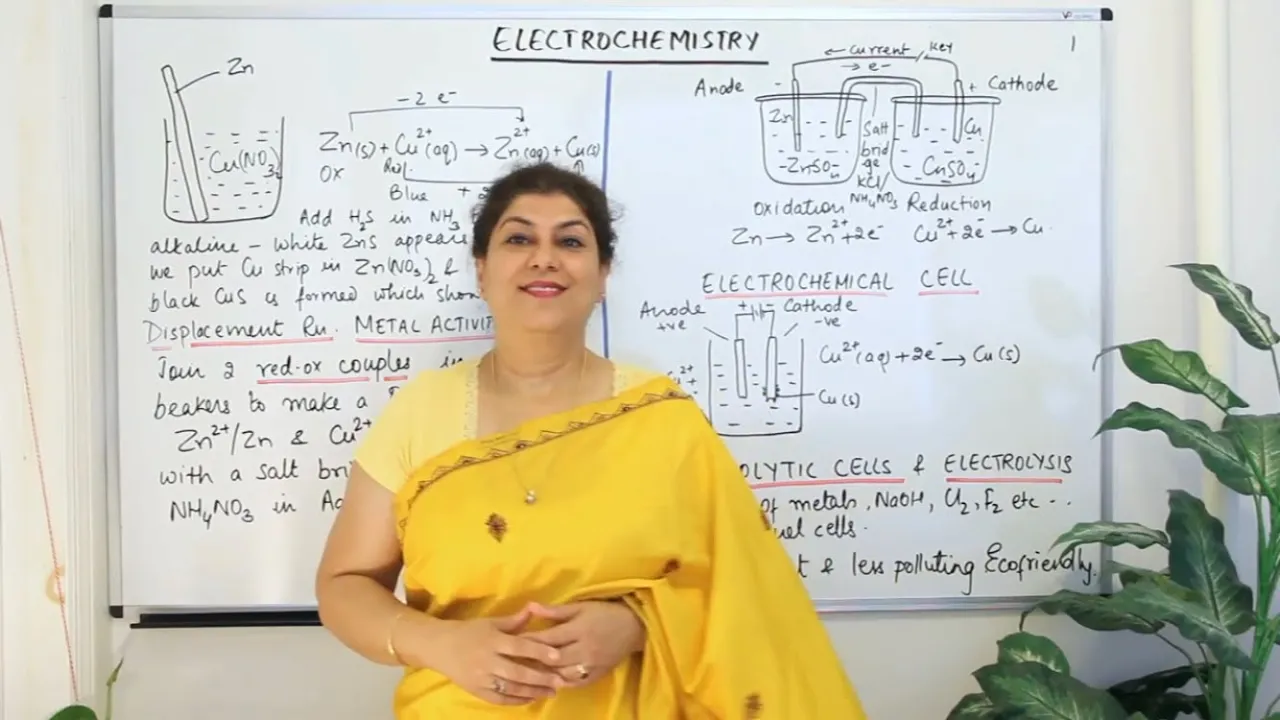
Electrochemistry Introduction: Redox Reactions & Electrochemical Cells
@SeemaDhawanArora
82K views•2019-06-26
Biocatalysis and Catalysis in Islatravir Synthesis | Merck Webinar
@SCIwheresciencemeetsbusiness
675 views•2020-10-08
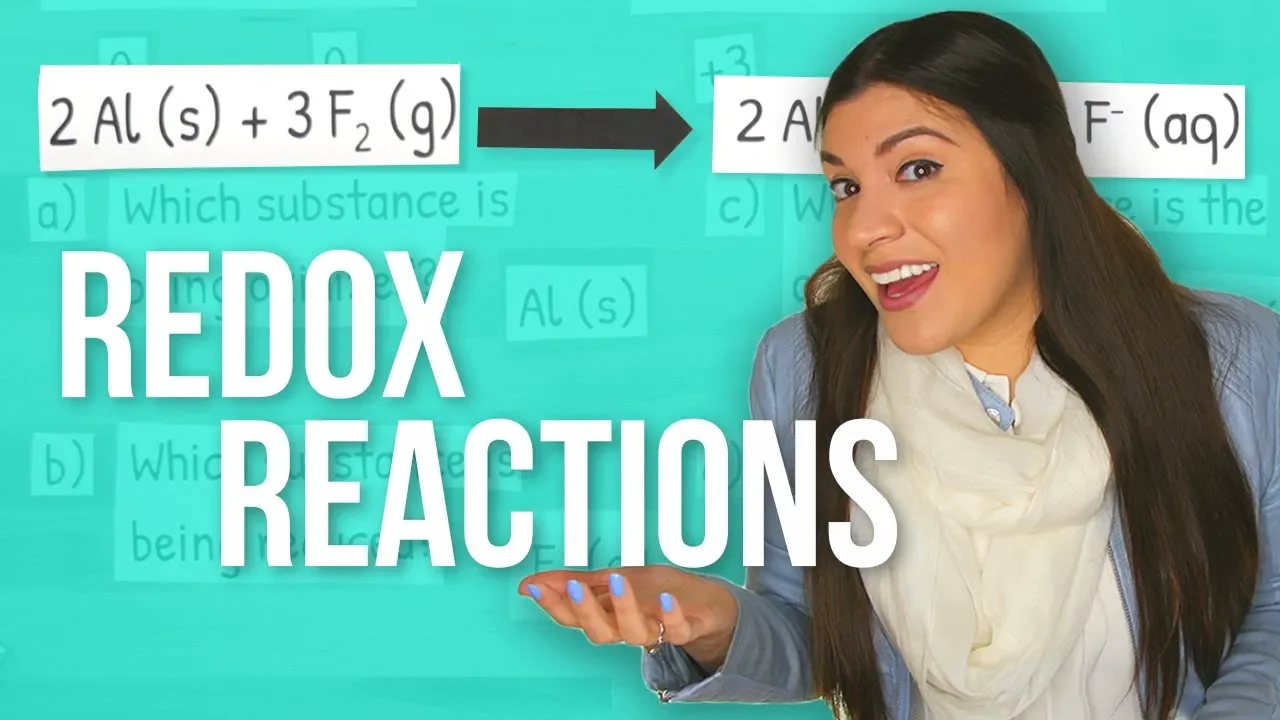
How to Identify Redox Reactions: Oxidation Numbers Explained
@melissamaribel
559.1K views•2018-04-23

Edible Water Bottles: A DIY Guide to Sodium Alginate Spherification
@ryan
10.5M views•2019-06-21
Related Study Plans & Knowledge Roadmaps
Structured learning paths in Chemistry