



















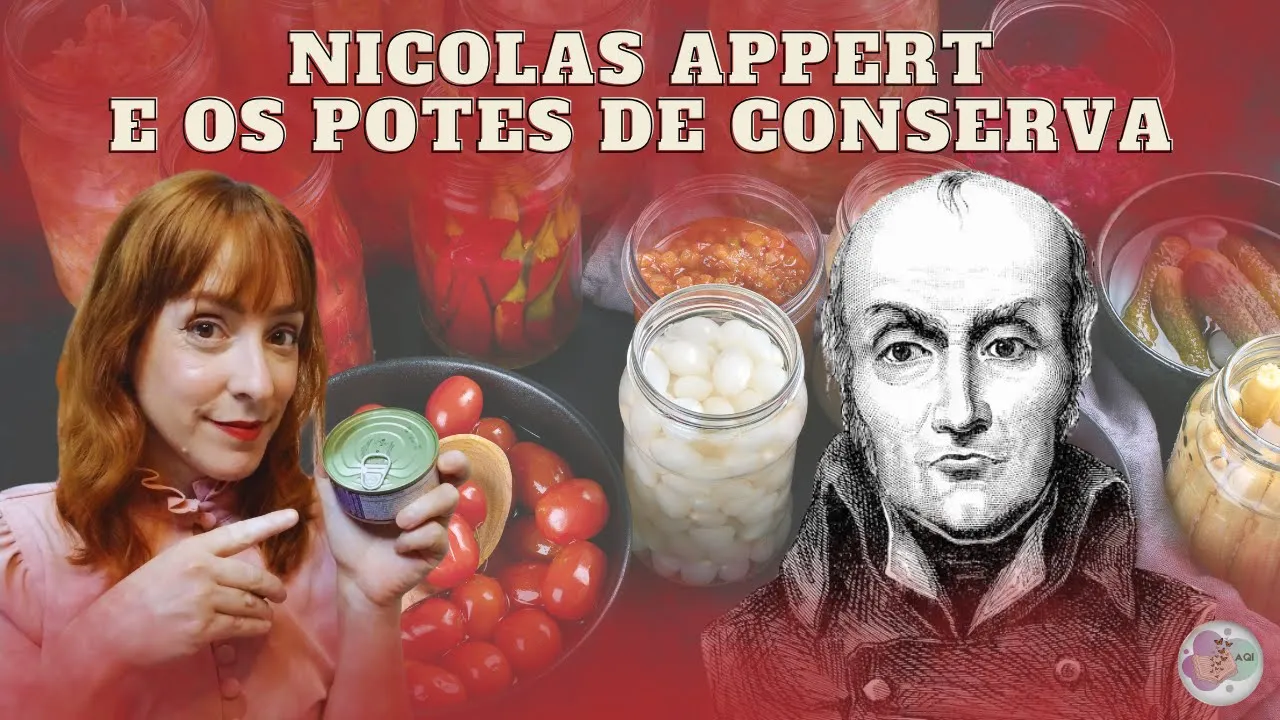






Nicolas Appert, a French confectioner without formal scientific training, invented the canning process in the late 18th century through trial and error, developing a four-step method involving sealing food in glass containers and heating them in boiling water baths, which revolutionized food preservation and enabled the modern global food supply chain; his work laid the foundation for subsequent innovations including metal cans, home canning equipment, and scientifically optimized preservation techniques that transformed how societies store, transport, and access food.
How Nicolas Appert Revolutionized Food Preservation: The Birth of Canning
Added:Traditional food preservation methods (such as salting, drying, smoking, and fermentation) used prior to the 19th century.
The historical context of the Napoleonic Wars and the urgent military demand for long-lasting food supplies.
The basic concept of food spoilage and the early historical understanding that exposure to air and heat played a role in decay.
The mechanical concept of a hermetic (airtight) seal and how it isolates a substance from the external environment.
Louis Pasteur's Germ Theory of Disease, which later provided the scientific explanation for why Appert's heating and sealing process worked.
The technological transition from Appert's glass jars to Peter Durand's tin-plated cans, which laid the foundation for the modern canning industry.
The microbiology of canned food safety, specifically the threat of Clostridium botulinum and the invention of high-pressure autoclaving to eliminate bacterial spores.
The socioeconomic impacts of industrialized food preservation on global trade, urbanization, and military expeditions in the 19th and 20th centuries.
954 views11likes37:37Original Release: 2023-06-17
foreign to stuff you missed in History Class A production of I Heart Radio [Music] hello and welcome to the podcast I'm Tracy V Wilson and I'm Holly Frye today we're going to talk about an innovation that dramatically changed how people around the world have dealt with food and that's canning it is a topic that has been on both of our short lists for a while yeah like I think we talked about it like four years ago yeah four years ago and then more recently like there's it's been a thing that has come up a bunch of times um and I started thinking about it again earlier on in the pandemic here in the U.S and in other parts of the world we've we were having some disruptions in the supply chain folks were stocking up on non-perishable stuff to get through shutdowns and then there's also just been a huge huge increase in the need for food from food banks and similar resources and now we are recording this five months to the day after the World Health Organization declared covid-19 to be a pandemic all of this stuff is still really relevant and so after having put it aside for other things having had it Linger on both of our lists for so long I finally moved it back up to the top so food preservation stretches back to the very beginnings of human history it is generally agreed that people started smoking meat not long after learning to start a fire and all over the world people have been smoking drying salting curing pickling and fermenting food for thousands and thousands of years people in cold climates figured out early on the frozen food lasted longer and people have built structures like root Cellars and springhouses to keep food cooler so it will not spoil as quickly in addition to just making their food last longer peoples around the world have developed food preservation techniques that are also culturally important or significant and in some cases also delicious as well just as one example we have a whole episode in the archive about how the world's cheeses tell the story of when and where they were developed and one of the reasons for making cheese is that it can have a longer shelf life than fresh milk does and trading in these preserved Foods has also been a huge part of economies all over the world for Millennia for example people in coastal areas drying and salting fish to sell to people further Inland most of these methods of food preservation they come with some drawbacks though many extend shelf life for a few weeks or months but not far beyond that and some others will change the flavor or Texture or nutrient content or even the overall quality of the food in a way that isn't necessarily desirable for example salted meat can be incredibly salty I don't see why that's a problem and soaking it to remove the salt also washes away water-soluble nutrients curing food also takes a lot of sugar or salt and those can be expensive or scarce depending on when or where you're talking about yeah obviously these are also just examples things can also get a lot more complicated with all of this if you are a nation that has gone to war with most of your neighbors causing you to lose most of your trading partners while also needing to support an army and a Navy in other words if you're France around the turn of the 19th century um thanks for margarine yeah there's so much stuff that we've talked about on the show that is related to yeah military history in France in the late 1700s early 1800s yeah uh so some of the specifics of France's search for a better way to preserve food are a little bit fuzzy uh there are a lot of General articles that describe Napoleon's government offering a reward for a food preservation method that could help sustain the Army and Navy in 1795 but Napoleon did not actually have control of the government in 1795. he became first console in 1799 an emperor of the French in 1804. his highest rank in 1795 was commander of the army of the Interior other sources described the French director which was the French Revolutionary government offering a reward in 1795 or Napoleon himself offering it in 1800. uh the book that actually earned this award though does not mention any of that instead it describes the society for the promotion of National Industry which had been established in 1801 which offered rewards for quote discoveries from which the nation and Humanity May draw substantial benefits the book also describes the Agricultural Society putting out a call in 1809 to quote collect all the information and documents which might contribute to the composition of a work on the art of preserving buy the best possible means every kind of Elementary substance the person who earned that prize for the development of canning leading to the writing of this book was Nick who was awarded 12 000 francs under the condition that he write up this detailed account of the work that he had done and provide the board with 200 copies of that book printed at his own expense I wonder how much that bit into that 12 000 francs it's a good question uh a pair was born in Shalom now called Shalom or Champagne France on November 17 1749. he was the son of an Innkeeper and he did not have a formal academic education he was interested in food and cooking though and he learned how to brew and pickle from his father and he did Apprentice with a chef in 1780 a pair moved to Paris became a confectioner and five years later he married Elizabeth Benoit the two of them went on to have five children and by this point he had his own business which combined a confectionary with the grocery store he had enough money to spare that he donated to the Revolutionary army during the French Revolution and he was also prominent enough to represent his political district at the execution of Louis XVI this also meant that he was prominent enough to be targeted during the reign of terror he was arrested but ultimately cleared of Suspicion in the 1790s a pair added a wholesale produce business to his confectionary and grocery store and that seems to be when he became more interested in food preservation but he was missing a huge piece of knowledge that really would have helped him in his research and that was knowledge of microbiology back in 2018 we did an episode on Anthony Von labenhook who is known as the father of microbiology thanks to his spending a lot of time observing things through a microscope and documenting what he saw law he had started this work back in 1673 but by a pair's lifetime two centuries later this field was still really in its infancy people didn't understand what these tiny things were that Von lavenhoek had described as animal kills they didn't understand how they got there or what they did a lot of people believed that these little things that he had documented so carefully somehow just spontaneously generated I still want there to be an animated series called animal kills I think that would be a lot of fun I would watch it it would sell like hot cake um just me in 1767 so almost 100 years after Von lavenhook started his work priest and biologist Lazaro spalenzani published a paper on this subject he had done experiments with four vials of bras one opened one sealed one boiled and then left open and one boil and immediately sealed when he looked at the broth under a microscope after some time had passed the first three contained microorganisms the fourth that one that had been boiled and sealed did not spelenzani concluded that what he was seeing in those other three vials were living organisms that had been carried in from the air balance on his work did not totally convince proponents of spontaneous generation though they made arguments that like he had damaged some kind of vital Essence that was necessary to spontaneous generation by boiling his broth for too long he also hadn't really made the connection that the life forms that he was observing could spoil food or cause illness but he did demonstrate that heating something up and also protecting it from exposure to the air accomplished something and his work on this subject was really the only thing in print when a pair was doing this work that documented that connection poorly understood as it was you've killed the animal kills now a pair became convinced that sealing food away from Air was the key to preserving it and it took him almost 15 years to come up with a method and to demonstrate that it worked his conclusion after all that time quote it is obvious that this new method of preserving animal and vegetable substance proceeds from the simple principle of applying heat in a due degree to the several substances after having deprived them as much as possible of all contact with the external air we'll get into more details about that after a quick sponsor break [Music] Nicola a pair started trying to work out a way to preserve food in 1795 and we understand today that what he was doing was getting the food hot enough to kill the microorganisms in it at least most of the time but without cooking it so much that it became inedible he was also keeping the food in a sealed container so that Airborne microorganisms could recontaminate it the sealed environment also meant that if any bacteria survived the heating process they would not have the oxygen that they needed to survive although bacteria that did not need oxygen like the one that causes botulism still could potentially Thrive but a pair didn't really know about the connections between microorganisms food spoilage and illness he didn't know what temperatures it took to kill these organisms or how long they had to be at that temperature he also didn't have a way to immediately tell whether whether he had been successful at any of it so he had to do all of this work by trial and error including just allowing time to pass before he opened his containers to see whether the food within them had spoiled or whether the containers swelled up and burst or otherwise were visibly ruined his first successful attempts were in 1804 nine years after he started but it took another five years before he was confident that he was seeing consistent results since a pair was really sure that air was what was causing food to spoil he worked with glass Containers closed with an airtight seal some of the first experiments he did he used champagne bottles which were designed to be stronger than a lot of other glassware eventually he was using custom made Vessels ones that were roughly the size and shape of a champagne bottle for liquids and ones that had a larger mouth more like a jar for solid foods although the specifics varied from one food to another in every case the method a pair developed followed the same basic four-step process in his words translated from the French quote it consists principally first in enclosing in bottles the substances to be preserved second in corking the bottles with the utmost care for it is chiefly on the corking that the success of the process depends third in submitting these enclosed substances to the action of boiling water in a water bath balnea Marie for a greater or less length of time according to their nature and in the manner pointed out with respect to each several kind of substance fourth in withdrawing the bottles from the water bath at the period described a pair stressed that the cork use for this absolutely had to be high quality you could not skimp on it cheap cork could break or leak and let the air in and that would ruin the contents the same was true for the glass which had to be able to withstand the pressure of the cooking process and being jostled around and transport even with those precautions though sometimes his bottles did break during cooking and for this reason he put the bottles and jars into purpose-made Canvas OR linen sacks and then that would cushion the impact if they bumped against each other while they were cooking and it would also contain all the pieces if they shattered I remember my grandmother doing the same thing after cooking the bottled food for a greater or less length of time according to their nature a pair typically let things cool for about 15 minutes before draining the water from the bath then he let everything cool for another two hours or so before carefully removing and inspecting each bottle any that had cracked or developed some kind of flaw in the glass were discarded so were any that had moisture around the cork which was a sign that they weren't actually airtight even after all this careful inspection though there were still times when the food went bad a pair identified several possible failure points as the cause of this in some cases the bottle itself was to blame it had some kind of flaw that wasn't immediately evident but beyond that he noted four sources of spoilage quote one from a bad cork two from Bad corking three from the bottle having been filled two near the brim and four from Bad tying that was the tying of the cork to keep it in place he also noted quote a single one of these faults is sufficient to spoil a bottle more easily therefore a complication of them the book that a pair wrote to document all of this was called The Art of preserving all kinds of animal and vegetable substances for several years and it describes a number of modifications of the basic process to get the best results when working with various Foods this includes boiled meat gravy broth various cuts of meat new laid eggs milk cream whey vegetables peas asparagus which are vegetables but they get specific Natures uh various beans artichokes cauliflower Sorrel herbs fruits juices chestnuts Truffles and mushrooms and soups his breakdown of categories is funny to me because there are some things where it's like peas and asparagus are vegetables also artichokes and cauliflower are well so there's the general vegetable version and then there's this is actually best for peas though yes so he found peas to be the vegetable that was the hardest to work with if they were harvested too young they were so tender that they just disintegrated in the cooking process but if they were harvested just a few days later they tended to lose their flavor or else they would ferment and cause the bottles to explode milk had to be condensed before preserving and he found that unless egg yolks were added in there the cream settled out of it as flakes when you used it later and heated it back up it would be reincorporated but it wasn't that attractive in the bottle a pair also canned eggs recommending freshly laid eggs for the best results put into a jar with bread crumbs to fill up the spaces and protect the eggs from breakage for strawberries he found that he had to add a lot of sugar but even then their color really faded a pair also detailed how to use foods that had been preserved through his methods and in a lot of cases it was basically I use these how I'd use them normally or I warmed this up with a little bit of salt reading through that part of the book was really funny to me because a lot of it really is I drained the water out of this and cook it and eat it some of them was like I dilute this condensed soup and then I eat it it's uh I don't know but that part of it delighted me in addition to keeping bottles and jars of food on hand to see his results for himself a pair also gave samples of them to various people in the French Army and Navy and other officials who opened them up after months or years and then ate or served what was inside and then reported the results back to him his book included a written report from the society for the encouragement of National Industry whose committee had received samples of patofu consume Milk Way green peas small Windsor beans cherries apricots currant juice and raspberries overall the committee described each of these Foods as retaining their flavor and their character and just generally being excellent a pair published his book and in 1810 he collected his monetary award within a year the book had been translated into multiple other languages he was also awarded a gold medal from the society for the encouragement of National Industry a pair seems to have understood that his invention could do a lot more than just provide food for the Army which had been part of the reasoning for this work in the first place in his practical remarks at the end of the book he wrote quote medicine will find in this method the means of relieving Humanity by the facility of meeting everywhere and in all season sins animal substances and all kinds of vegetables as well as their juices preserved with all their natural qualities and virtues by the same means it will obtain resources infinitely precious in the production of distant regions preserved in their fresh State he went on to say quote from this method will arise a new branch of Industry relative to the Productions of France by their circulation through the interior and their exportation abroad of the produce with which Nature has blessed the different countries and then he concluded quote finally this invention cannot fail to enlarge the domain of chemistry and become the common benefit of all countries which will derive the most precious fruits from it so many advantages and an Infinity of others which the imagination of the reader will easily conceive produced by one and the same cause are a source of astonishment P was really not wrong for her overstating any of this canning really changed the world in a lot of ways and it has also evolved a lot from a pair's work with glass bottles and jars back in the late 1700s and early 1800s we'll hit the highlights on that Evolution after a sponsor break [Music] as is just so often the case we can't really get into the details of every single development in the world of canning in the course of one episode so we're just going to touch on some of the biggest moments almost immediately after Nikola A Pair worked out his methods using glass containers people also started doing the same thing with metal cans in 1810 Peter Durant of England was awarded a patent for preserving Foods in a range of vessels including tin coated iron cans these cans were made by Rolling a sheet of iron on a cylindrical form and then soldering the top and bottom of the can onto it steam escaped from a hole during cooking and then that hole was soldered shut afterward this even though he got the patent for it was not his own invention though it had been quote communicated to him by a certain Foreigner living abroad that person was Philippe de Gerard of France who had apparently gone to London to pursue his work because of administrative hassles at home but since Britain and France were at War de Gerard could not apply for a British patent himself so Durand applied for the patent on his behalf and then sold it to Brian Duncan of Duncan Ironworks tin coated iron had some advantages over glass the biggest being that it was not so fragile but these early cans were also a lot different from the ones that are in use today they were a whole lot thicker and heavier and a tin Smith had to make each one of them by hand the solder that was used to seal the seams also typically contained lead which could leach into the food and cause lead poisoning the canning process itself could be incredibly time intensive with the cooking process taking several hours at a minimum and that meant the quality of the food often was not that great which was compounded by the fact that a lot of what was being canned was sort of the cast off stuff it wasn't pretty or fresh enough to be sold at a market also no one had invented a can opener yet so getting the food out of these tins was a hassle even with a can opener I struck all even so by 1812 Duncan had a factory up and running it wasn't providing food to the general population though the cans themselves held up to 30 pounds of food and Duncan's primary customer was the British royal Navy even within the Navy canned food was mostly reserved for very long voyages or Expeditions that wouldn't have good opportunities to resupply and also for hospitals that were treating sick and convalescing Men a pair was still working in France and he opened to the first commercial Cannery there in 1812 although it was destroyed in 1814 as a result of the Napoleonic Wars he had to rebuild after the war was over the pair's new Factory used tin cans rather than glass canning was also spreading Beyond Europe in the early 19th century with Robert Ayers opening a cannery in New York City in 1812 and other canneries in the U.S following from there but still people didn't really know why canning were hurt they just knew that it did most of the time sometimes cans swelled up and exploded or when they were opened the food inside was spoiled but people just didn't really know why to protect their reputations canneries often stored their products for a while before shipping them out to customers inspecting them for signs of swelling or other indicators of spoilage before filling their orders for the next few decades the canning industry continued to grow and evolve Nicola a pair died on June 3rd of 1841 at the age of 91. although he'd received numerous awards for his work during his lifetime and he'd also done other work in in the world of food he had developed bullion cubes he had created a method of extracting gelatin and he'd also developed an autoclave in addition to his work on canning he died alone and was buried as a popper by the time of a pair's death canned food was becoming more available outside of military contexts but often it hadn't really been accepted by the general public in many places that started to change as soldiers returned from war having gotten used to eating canned foods while they were serving for example in the United States Gail Borden received a patent for canning condensed milk in 1856. his Factory could make 16 quarts of it per day and during the U.S Civil War there was so much demand for it from the Union Army that Borden had to license his method to other factories Confederate soldiers got a taste for condensed milk in hospitals and prisoner of war camps and also after raiding Union supplies consumer demand for condensed milk and other canned foods Rose sharply in the United States after the war was over the first practical can openers were patented in the 1850s solving a long-standing problem at that point it was also in the mid 19th century that home canning Technologies started to evolve one step in that process was John L Mason's patent for the Mason jar with a threaded neck that could accommodate a screw-on cap and that patent was issued in 1858. in 1861 Isaac Solomon of Baltimore started adding calcium chloride to the water used for boiling cans which raised its temperature from 212 to 240 degrees Fahrenheit that's from 100 to 115 degrees Celsius the higher heat let canneries reduce the cooking time required to make the food food mostly safe then after all of this Decades of canning being in existence in 1864 Louis Pasteur concretely established the link between microbial contamination and spoilage he was building on the work of earlier scientists who had determined that the yeast involved in fermentation was alive he was trying to help a distiller figure out why his products were going sour during fermentation and he discovered that bacteria were contaminating the fermentation process this led to the development of pasteurization this started to give canners more information to go on in terms of what temperatures they needed to use in Canning and for how long but at the same time there was still a lot of trial and error involved consequently canneries were extremely protective of their methods and formulas and within the industry there was a lot of corporate Espionage and attempts to entice skilled employees and the knowledge knowledge that they had developed away from their employers yeah really your formula for what you were canning and your process for doing it mostly safely it was just like a highly valuable piece of information and it totally made the difference on whether your Cannery could succeed or fail the first machine cut rather than handmade tins came out in 1868 and that was part of an overall trend within the canning industry to cut down on the time and labor that was required at this point low paid laborers typically women did a lot of the food preparation the packing and the labeling skilled tinsmiths who were usually men and were paid at a much higher rate capped and sealed the cans so the industry really worked toward mechanizing the lower paid jobs to reduce the need for labor there entirely and then automating the task that required specialized training so they could be done by less experienced workers other Innovations shortened the cooking process which both increased a Factory's output and helped improve the quality of the food one of these was the steam retort patented by Andrew Shriver in 1874. the steam retort was like an autoclave which used Steam and pressure to cook canned foods faster but which also tended to explode in its first iterations there's just a surprising amount of things exploding in the history [Laughter] in 1895 Samuel C Prescott and William Underwood started taking some of the mystery out of all of these times and temperatures that were needed for safe canning Underwood was the director of Underwood food company which canned a variety of foods including red devil ham Prescott was an assistant chemist at the Massachusetts Institute of Technology Underwood had gone to MIT for help because his company's canned clams kept spoiling and while they were inspecting their goods before shipping to keep the spoiled clams off the market this meant that they were just wasting a lot of product they were canning a bunch of stuff that they had to throw away they discovered that the culprit was a spore-forming bacterium that could survive boiling for 24 hours through trial and error they discovered that 10 minutes of exposure to pressurized steam at 120 degrees Celsius that's 248 degrees Fahrenheit would kill it Prescott and Underwood then started examining other Foods figuring out which microorganisms were causing their spoilage and what needed to be done to kill those microorganisms yeah this was way more specific than the previous work which had kind of worked out the time and the temperature but not really understanding why that was what worked most of the time Prescott turned this work into a career that focused a lot on food safety and microbiology and played a huge role in reducing bacterial contamination and spoilage in canned foods but in spite of his work some things continued to be a problem including specifically botulism and the United States for example there weren't clear standards for botulism prevention in the canning industry until the 1920s that was after a series of outbreaks in the 19 teens botulism contamination has also continued to be a rare but deadly issue in foods that are canned at home home canning was becoming more widely available and easier to do by the late 19th century the ball corporation started producing home canning jars in 1884. care glass Manufacturing corporation started doing the same thing in 1903 and in 1915 Alexander care was awarded a patent for a two-piece metal canning lid which replaced more complicated and harder to use lid systems from earlier models care built on the work of Julius landsberger who had created a canning lid that had Incorporated a ceiling gasket the first pressure canners for home use were developed by the early 1920s although at first they were so expensive that multiple households in the same family or Community usually had to share one among them to make it cost effective in 1904 the Maxim's Machine Company of New York unveiled the double seam can this involved a machine that rolled a metal sheet onto itself creating a seam that only needed to be soldered on the outside the machine also sealed the can and crimped the edges in addition to making this whole process a lot less labor intensive this also meant that there was no longer lead containing solder on the inside of a can the filling and capping process also became a lot easier before this point most of the industry was filling cans through a hole in the cap and then sealing just that hole it took about 15 years before double seam cans were really reliable though before that they again tended to burst at the seams by 1910 commercial canning lines could produce about 35 000 cans of food per day that's a huge increase from the 60 cans a day back when tin Smiths were making cans by hand and the cans today look a lot like they did in 1910 although now they're more specialized Coatings to protect the food quality and their Innovations like peel tops and aluminum cans for beverages the industry has also seen a range of criticisms over the years involving whether canned foods are healthy everything from the botulism contamination that we already talked about to the salt content of the food to the use of things like bisphenol a in can construction even so at least 1 500 different items are sold in tin plated steel cans today and Americans alone used more than 36 billion cans of food per year in 2018 the global canned food market was valued at 91.4 billion dollars that's billion with Abby the development of reliable cost-effective canning has had such an enormous impact on the world that it's kind of difficult to describe it in a concise way in general canning has made the global food supply more homogenized so many foods became available outside of their regular growing season and outside of the region where they are grown prepared and traditionally eaten many farms moved from growing a variety of crops that their immediate Community would need to growing a few crops to be sold to processing companies the Farms themselves Consolidated and so did the canning companies clearly there is more involved with that whole shift than just canning but canning is a significant piece of it yeah canning also made a lot of other things possible or at least a whole lot easier including everything from the westward expansion of the United States to long-term scientific voyages to Warfare to food relief efforts like there's a lot of stuff that rests on the ability to get food to people and canning made a lot of that a lot easier whether people are buying canned goods from a store or canning food themselves canning has also made it possible for people to keep more food and more types of food on hands for emergencies in a way that just wasn't possible before it was developed I mean you might have a whole lot of dried fruit and and dried beans and hard tech and you know some salted meat that's a whole different world from just being able to open a can of corn anytime you want canned peaches yeah um canned tomatoes when tomatoes are not in season right it's like I mean there's a whole other part of it about how things like air travel have made it possible to get foods that are in season some other completely different part of the world yeah that's that's like a whole other story um I didn't write this in here but like if you have the means to contribute to a food bank near you either with some canned goods or some money there is such a huge need right now and like I know that's not within the means of everyone right now but like if you can there's a definite way to help people in this moment that we're living in yeah I mean that's that's to me like the real gift of canning at least in terms of how it impacts our modern world is that like there are so many ways of giving that are now available to people you know even you probably have it in Massachusetts I know we have it here in our community uh where the mail carrier will periodically be like we're doing a canning Drive oh yeah and all you got to do is put it in a little bag and hang it on your mailbox and that goes to people that actually need that food so just small things like that that seem insignificant in your daily life but it's a huge impact thanks to Nicola a pair yeah um so I'm glad we finally moved all of that up to the top of the list in this moment where it seems particularly relevant uh I have some listener mail from Rebecca Rebecca says Hi Tracy and Holly I wanted to write to you about your recent episode about Ignatius Sancho and the episode you mentioned that there is a portrait of sancho by Thomas Gainsborough in the National Gallery of Canada in Ottawa I live in Ottawa and last week the National Gallery reopened for the first time since the start of the pandemic and I was lucky enough to be able to visit I wasn't sure where the portrait would be or if it would even be on display but while walking through the gallery I saw the portrait and immediately knew it was him the accompanying description noted Sancho's quote easy pose saying his quote nonchalance and self-confidence were considered appropriate for men of status which I thought perfectly matched your description of him in the episode thanks for everything you do on the show I've been listening for eight years and I'm always struck by how thoughtful you both are in your choice of topics your choice of words and how you approach difficult issues in history stay healthy and sending lots of happy thoughts from Canada all the best Rebecca thank you so much for this note Rebecca um I am glad to know that it's on display right now in uh in Ottawa it's uh it's always tricky when you know something is in a collection of a particular Museum that doesn't necessarily mean that it's on display in the museum right now correct yeah so anyway thanks for letting us know if you would like to write to us about this or any other podcast or at History Podcast at iheartradio.com and there were also all over social media at missing history so you'll find our Facebook and Pinterest and Twitter and Instagram and you can subscribe to our show on Apple podcast the iHeartRadio app and anywhere else that you get podcasts stuff you missed in history class is a production of I heart radio for more podcasts from iHeartRadio visit the iHeartRadio app Apple podcasts or wherever you listen to your favorite shows [Music]
Up Next
13:02
History of Food Canning | US Dept. of Agriculture Documentary (1957) | Educational Film
@TheBestFilmArchives
112.9K views•2017-06-04

33:02
The Great Schism of 1054: Causes and Consequences
@SacredCathedrals
113.5K views•2026-02-19
91:57
The Geopolitics of the Ukraine War and the Rise of Global Autocracy
@JordanHarbingerShow
468K views•2025-04-19

17:05
Understanding the Cold War: Superpower Conflicts and the Road to Détente
@OverSimplified
46.1M views•2019-01-24
Related Study Plans & Knowledge Roadmaps
Structured learning paths in History
history
Byzantine Iconoclasm: Theology, Art & Politics
01Foundations of Byzantium and Early Christian Images
02The First Iconoclasm: Leo III and the Crisis of Images
03Empress Irene, Nicaea II, and the Second Iconoclasm
+ 2 more learning modules
9h5 modules
Explore Roadmap
history
Iranian Revolution (Causes, Events & Legacy)
01The Pahlavi Dynasty and the Roots of Discontent
02The Spark of Rebellion and the Rise of Khomeini
031979: The Fall of the Shah and the Climax of the Revolution
+ 2 more learning modules
8h5 modules
Explore Roadmap
history
Mali Empire: Mansa Musa, Trade & Timbuktu
01Foundations of the Mali Empire
02The Trans-Saharan Gold and Salt Trade
03The Reign and Pilgrimage of Mansa Musa
+ 1 more learning modules
6h4 modules
Explore Roadmap
history
1947 Partition: Politics, Borders & Legacies
01Foundations of British India and the Divide
02The Political Negotiations and the Mountbatten Plan
03Drawing the Boundary: The Radcliffe Line
+ 2 more learning modules
8h5 modules
Explore Roadmap