![재정학 기초경제학 제10강 게임이론[P.160]](https://i.ytimg.com/vi_webp/QBvcgRo6_yc/maxresdefault.webp)

![[노동경제학] 경제학짱박사의 공인노무사2차_노동경제학_기초입문특강 (1)](https://i.ytimg.com/vi/ga0m6eO-qU4/maxresdefault.jpg)







![ECONOMÍA - Modelos de Mercado [CICLO FREE]](https://i.ytimg.com/vi/jLcqz9m03r4/maxresdefault.jpg)











![[직업상담사2급무료강의]2017년(1회)- 4과목 노동시장론](https://i.ytimg.com/vi/WfbzOom75AM/maxresdefault.jpg)

Gary Becker's 'taste for discrimination' model (1950s) explains how prejudice affects economic outcomes by incorporating discrimination into utility functions; employers with discriminatory tastes face a 'psychic cost' when hiring disliked groups, causing them to pay lower wages or hire fewer workers from those groups, though this model predicts that non-discriminating employers would gain competitive advantages in markets, potentially driving discriminatory firms out of business.
Taste for Discrimination: Becker's Economic Model Explained
Added:Basic labor economics principles, including wage determination through labor supply and demand curves.
The concept of utility maximization and how non-monetary preferences (tastes) can be integrated into consumer or producer utility functions.
Marginal Productivity Theory, specifically how the Marginal Revenue Product of Labor (MRPL) determines competitive wages.
Market structures, particularly the differences between perfectly competitive markets and monopolistic/oligopolistic markets.
Statistical Discrimination Theory (Arrow and Phelps), which explains discrimination arising from information asymmetry rather than animus.
Empirical research on the long-term effects of market competition on reducing employer discrimination (e.g., testing Becker's hypothesis).
The economics of public policy interventions, such as Affirmative Action and equal pay legislation, and their impact on market distortions.
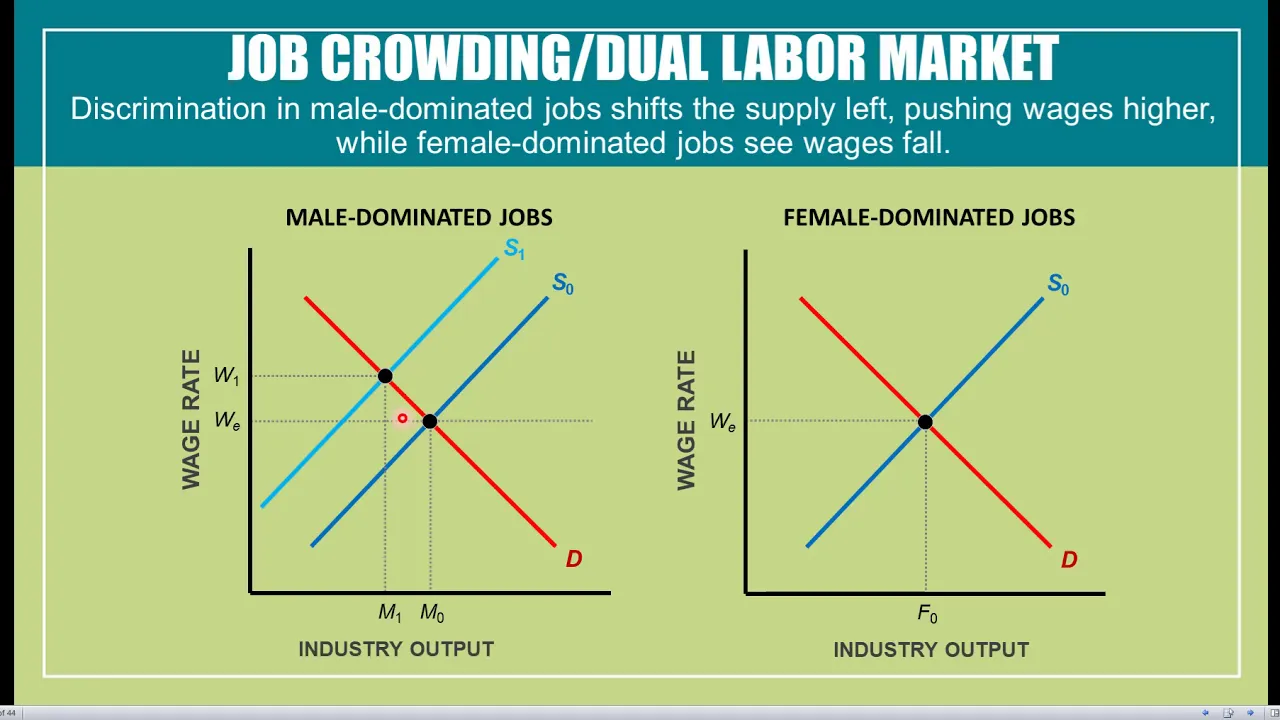
The Crowding Hypothesis and models of occupational segregation, which explain persistent wage differentials across demographic groups.
1.1K views17likes8:33Original Release: 2019-11-01
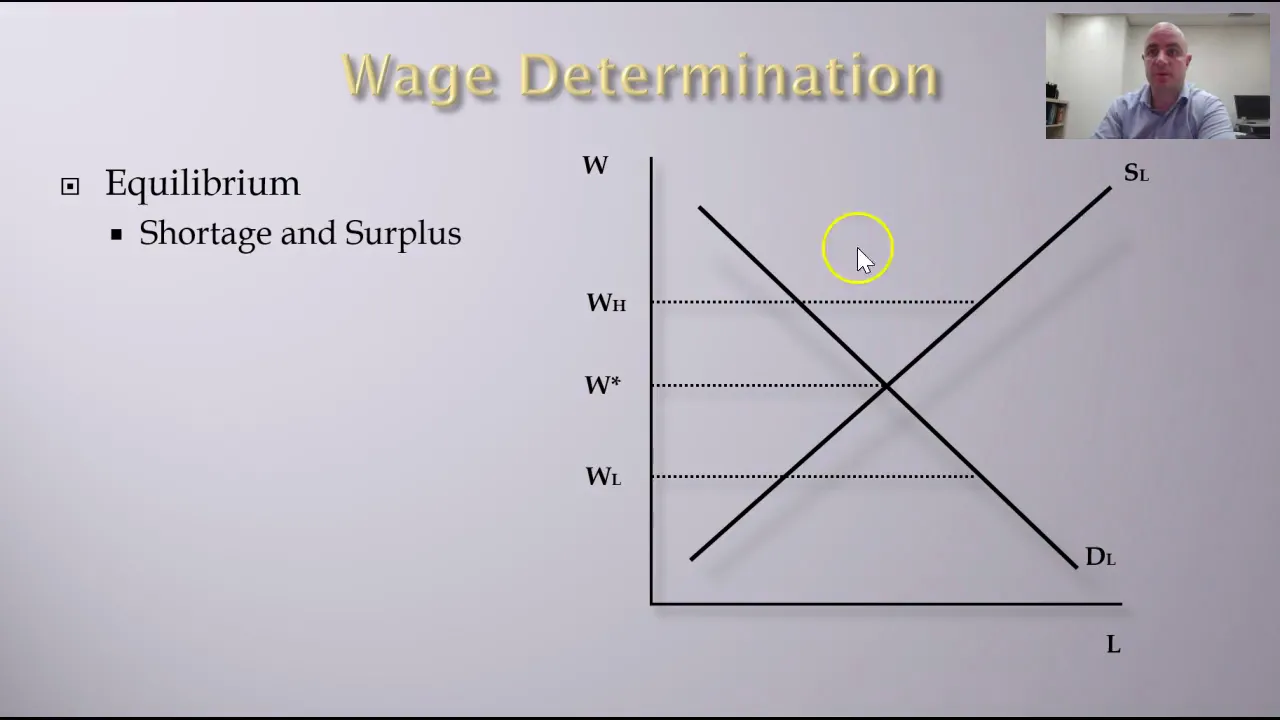
right in this video we're going to start talking about the taste for discrimination so we can talk about a model which is the early model in economics to look at discrimination this has come up with the gary becker came up with this in the 1950s and his goal was to try to bring you cannot bring race and discrimination into a way that economics could consider it in the in the existing economic models okay as soon as the idea was that some people may have a taste for discrimination so they have a you can think of this kind of like a prejudice or something like this that then becomes actionable right so the three potential sources of prejudice that might cause discrimination so one is the discrimination could come from the employers right so it could be the employers have a prejudice towards a certain group and therefore it affects their interactions with them it could come from the employees so the workers themselves have a prejudice of some sort which then affects their ability their willingness to work with this group and finally it could come from the customers the customers could have a preference about who they want to serve them and that could then affect the in the hiring practices of the companies so in each case we can think the discriminator has a taste for discrimination and the kind of tricky part is that then this can be measured in monetary terms um so let's go ahead with the first one of the employer type so employer discrimination works like this if the employer is the source of the discrimination it works like this so basically they're they're you can think of them as having a utility function and their utility function has to two parts so normally we would just have profits right so we had our profits here normally we just have profits so they they they get they like profits firms like profits and owners and firms like profits so that's normally all we think they would care about so you get utility from these profits that's why it has a positive and this means they get satisfaction or they like it but now there's a second part there's also a dislike group so this this group that they don't really like or they don't like actually I should say and this group enters negatively for them so it means hiring this group is going to affect this employer so ecologically they're gonna feel bad about hiring them so we can say they don't like the destroy groopman it's a psychological cost to employing them so so to the employer the wage for the destroyed group feels like this so the wage feels like this so let's suppose we're talking about about women here for example so then the wage for female feels as if they're paying that wage plus this extra thing and this extra thing is called the psychic cost okay and then this one this this w star here is the we can say this is what the wage feels like and that W Prime I guess I wrote this is what the wage feels like so it feels like they're paying them more because not only they pay their money but they have this psychological cost to hiring this group so D is known as the discrimination coefficient it's a measurement of how discriminatory that the person is and the larger D the more prejudiced the employer is okay so if these really large the employer really really dislikes this group and if it's small then they just have a slight a slight preference no you can say okay so this is it seems a little contrived probably but it's a it's a way to fit in discrimination into affecting people's wages okay so now you're you know what let's do some predictions so what's gonna happen when everybody wants to discriminate but they all want to discriminate the same okay that's our first thing and the second thing is what should happen if it's not the same for all firms meaning some firms have a bigger one they want to discriminate more and other firms would want to discriminate more and other firms don't want to discriminate at all and how will competition play into that part okay so let's take a look at this so if if every firm degrade zero means it means the firm's want to discriminate and it's the same for all firms so that they all want to screw me at the same amount then it's clear the markets going to favor the the liked group so in the case of one way we set it up that would be man the way the original paper was the original theory came over that he came up with was comparing blacks and whites so in that case the the the white group would be the benefit shuri and the black group would be the dislike group in that case so it ends up being that they in the prediction of this is that the women will be paid less okay or the dislike group in general be paid less we can move this to the other side we can move the D to the other side sorry about that and so we're gonna say well are they gonna make less so they're gonna be paid less and also it's gonna be harder it's the other prediction of this it's gonna be harder to get jobs if you can't pay Lit if we can't pay less we can say if it can't this so you can imagine back 1950s factories deciding who to hire and the the factory owners all have a prejudice and then they they will only hire black workers if they can pay them less right so that that's kind of the prediction of this idea now one thing comes in the Equal Pay Act says that people have to be paid the same so once the Equal Pay Act comes in actually that could increase unemployment for a group who is the recipient of this prejudice because the firm's won't be able to pay them less they would like to but they won't be able to pay them less so so anyways that would actually make it that would predict you okay become harder for that group to find jobs all right so let's now look at the last part what if the different employers have different levels of discrimination this is where there's some a little bit of issues with this model the it it predicts that the employer with no prejudice okay so you have some employers with no prejudice let's put them here see should we well--that's highlight them okay so employers in Oakridge it is every employers no pressures here and then we have D grande zero for other firms so this would it would seem to think if you if you remember back to microeconomics it seemed to think it'd be an advantage to hire the cheaper workers so remember in this model for example in 1950s african-american workers would be significant because they're being discriminated against so they're being discriminate against which is pushing their wages down so then those who don't want to have prejudice will hire the group which is the dislike group because they're cheaper right and they should be able to focus if they're focused on profit maximizing they should be able to make a profit by doing this so this is they this is kind of a criticism of this model because in fact you know we did not we saw maybe to some extent but we didn't see that so much going on so the basic thing would be that less discriminating employees should have a competitive advantage in the long run in a competitive market they will drive the discriminating employers out of business because they're essentially hurting their bottom line by discriminating in that viewpoint if you view it this way they're hurting their bottom line by discriminating because they're they're turning away workers who are capable and productive in favor of other workers who are more who are equally productive but more expensive okay and so that would be the idea of it so we would expect in a competitive market if people enter and are not discriminating that it will benefit and that they will drive the other ones out of business and maybe in the long run we've seen that in the short run back at that time we did not see that without the help of laws to to limit the behavior the discriminatory behavior of the firms now in a monopolistic market we could see the the firm's continued discriminate because they can sort of afford to they don't have just they don't have competition so if a firm is in a monopolistic type market house quite a bit of market power it could continue to discriminate and that could push it out now um so anyways though the basic prediction is that we'll see more discrimination going on in places where there's monopolies or firms with significant market power and we might also see that the the group that's being discriminate against we're more likely to be found in competitive markets and will be the preferred group might be more likely to be found in markets where there's monopolies or more market power and that's just because those things that are those firms in those markets can sort of afford to do the discrimination even if it hurts their bottom line
Up Next

8:44
Statistical Discrimination in Labor Markets: Microeconomics
@NickHuntingtonKlein
436 views•2021-12-16

5:07
Impact of Yuan in Indo-Russian Trade Amid Sanctions
@WION
261.9K views•2022-07-01
10:33
Behavioral Economics Explained: Rationality, Nudges, and Risk
@crashcourse
1.1M views•2016-03-12

113:18
The Age of Easy Money: Fed & Inflation | Full Documentary
@frontline
21.2M views•2023-03-15
Related Study Plans & Knowledge Roadmaps
Structured learning paths in Economics
economics
Sovereign Debt: Defaults, IMF & Restructuring
01Introduction to Sovereign Debt & Government Bonds
02Debt Sustainability & Credit Ratings
03Anatomy and History of Debt Crises
+ 2 more learning modules
12h5 modules
Explore Roadmap
economics
Market Design: Matching Theory & Gale-Shapley
01Introduction to Market Design and Price-Free Markets
02Two-Sided Matching & The Gale-Shapley Algorithm
03School Choice Systems and Mechanism Design
+ 2 more learning modules
10h5 modules
Explore Roadmap
economics
Impossible Trinity: Forex, Capital & Policy
01Introduction to Monetary Policy and Central Banking
02Exchange Rates and International Capital Flows
03The Mundell-Fleming Model
+ 2 more learning modules
8h5 modules
Explore Roadmap
economics
Healthcare Economics: Market Failures & Systems
01Introduction to Healthcare Markets and Market Failure
02Asymmetric Information and Adverse Selection
03Moral Hazard and Insurance Design
+ 2 more learning modules
12h5 modules
Explore Roadmap