

![Ayudantía 3 - Fundamentos de Economía - Preparando la PEP 3 [Benjamín Sepúlveda]](https://i.ytimg.com/vi/Z_ZqGRRuNOk/maxresdefault.jpg)
![[공기업경제학 기본강의 42] 제15장 국제무역 (2)](https://i.ytimg.com/vi/Gsk93g-sa-o/maxresdefault.jpg)






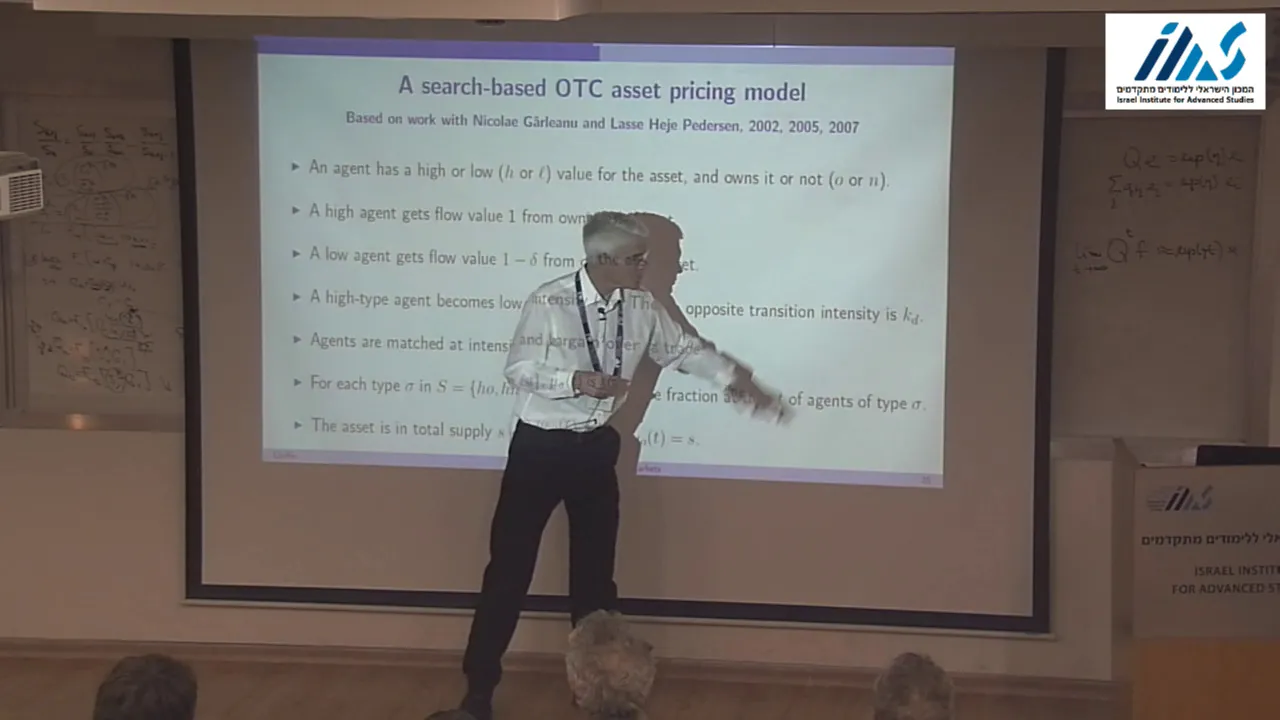
















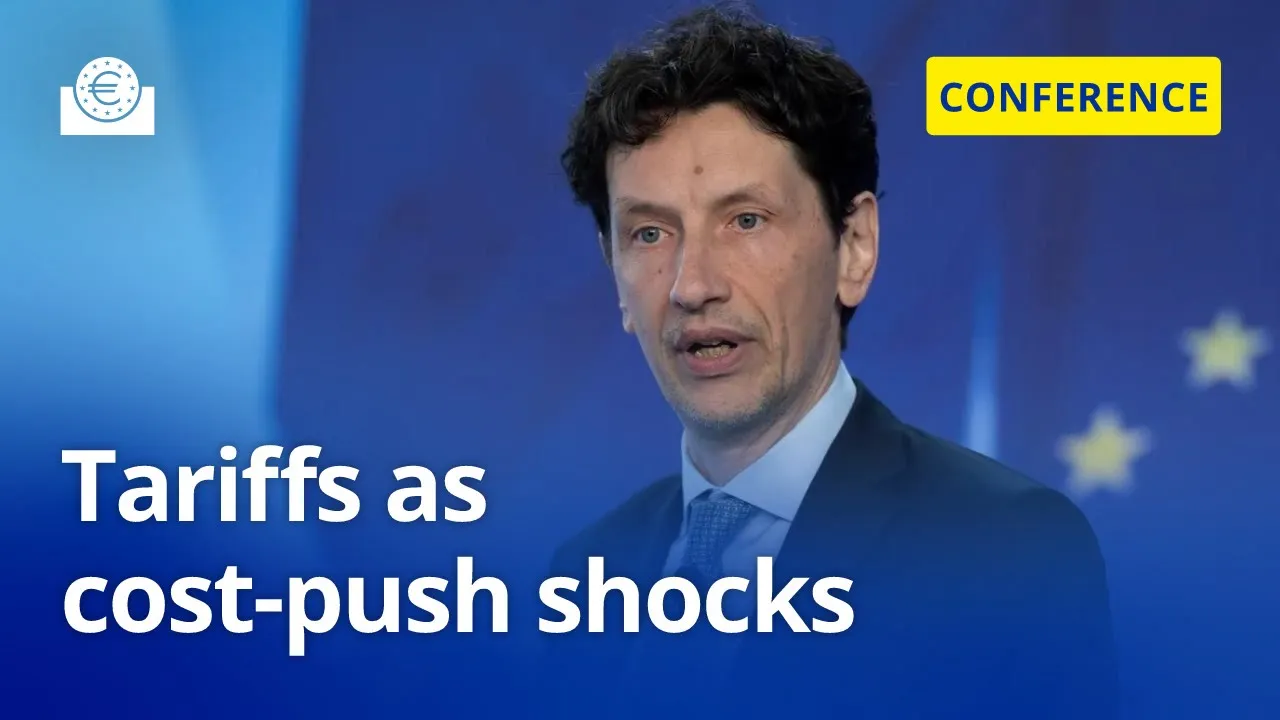

This lecture presents a theoretical model explaining how tariffs on intermediate inputs disrupt global supply chains through search costs and bargaining mechanisms. The model shows that tariffs create a wedge between the marginal cost of inputs that buyers perceive and their true social cost, distorting welfare calculations. Small tariffs (below a critical threshold) increase input prices through renegotiation without inducing supplier replacement, while large tariffs trigger trade diversion to higher-cost countries, incurring additional search costs. The welfare effects depend critically on demand elasticity: when demand is elastic (elasticity > 1), tariffs reduce profits without new entry; when demand is inelastic (elasticity < 1), tariffs attract new firm entry. The bargaining power of buyers also plays a crucial role, as tariffs can potentially benefit buyers with low bargaining power by improving their negotiating position.
Tariffs and Global Supply Chains | Elhanan Helpman on Trade Policy
Added:okay thanks okay thanks very much so as you can see this is a joint paper gene and he will answer most of the questions and i'll move straight forward some background we try to go quickly over the background so that we have enough time to talk about the paper so the first observation is that intermediate inputs comprise the majority of world trade manufacturers about two-thirds and that among them some inputs are purchased on anonymous markets but many are transacted within global supply chains and the nature of these transactions is quite different than anonymous markets these transactions have distinguished distinctive features which were elaborated by the most recent world development report which was devoted to global supply chain and they have identified a set of characteristics of trade in intermediates in these global supply chains so first they are they were made possible by fragmentation and this is a old head that has been discussed in the literature for a long time but they emphasize that these transactions impose significant search costs of buyers or suppliers they require matching of compatible partners because the products are not generic and they often involve relationship specificity as a result they are sometimes governed by incomplete contract and these parties engage in frequent renegotiations and despite these short-term contracts there are long-lasting relationships so there is some stickiness in in these relationships now there is a very large literature on global supply chains that cover a lot of ground and in this slide we mentioned a few of them like geography productivity implications and the life but there is very little literature on the impact of trade policy on these global supply chains and particularly how the strait policy lead to reorganization of these supply chains so in terms of background uh the difference between say tariffs on intermediate inputs and final goods are very significant so for example the mfn tariffs in the g20 countries were about three quarters higher than tariffs on final goods and in the u.s tariffs on final goods were about four times as high as tariffs on intermediate inputs and in the u.s the weighted average of the terrorist and immediate goods were very low a little bit below one percent but these things have changed with the tariffs imposed by president trump so by september 2018 uh more than 80 percent of intermediate goods imported from china were covered by terrors and only 29 of consumer goods were covered and we calculated average applied tariffs on impulse of consumer goods and intermediate inputs and you can sort of see the escalation of tariffs in the last few years so through this entire period until 2017 the average tariff on final goods was higher than on 18 inputs and it was still below 1 but then there was a rapid rise in tariffs on both final goods and intermediate inputs and the rise in terrorism intermediate input the blue line was much steeper and they are now significantly higher on final goods so this is our point of departure and we are going to focus on tariffs on intermediate goods and leave aside turks on final goods so there is a lot of anecdotal evidence in the business press about how these tariffs on intermediate goods affect behavior i don't want to go through the detail but essentially the tariffs on china brought about a reallocation of sourcing from china to some other countries like vietnam happened and many companies were involved in this change in sourcing pattern some very big companies and it stopped that we don't rely only on anecdotal evidence but we can do some calculus some estimation and see that indeed this reshuffling has been significant so we did the just for it is illustrative purposes a different in diff regression along the lines of amity redding and weinstein's law where we use data on final goods and intermediate inputs and let me jump to the table so what you see in this table is how the difference between the tariffs on china and tariffs on 13 low-cost countries which include vietnam malaysia and countries of this resort how this difference affected imports from china and imports from these countries and you can see the negative impact on the imports from china and the positive impact on imports from the other 13 low-cost countries so the this is the motivation for paper which is a theoretical paper and the goal of the paper is to develop a model of international trade in intermediate inputs that captures some of the salient features of the global supply chains that i mentioned when i discussed the world bank report so the features that our model captures are the fragmentation of production but this is trivial it has to be part of it what is novel and important in our framework is the role of search costs where bias of intermediate inputs have to hire different countries and we allow for variable match productivity when as a buyer finds a supplier they engage in negotiations they they negotiate about price and this generates a very short-lived contract that can be renegotiated if there is a shock to the system and then finally there are some sun costs involved and what the these samples do is they generate stickiness in the relationship so one doesn't rush to immediately replace suppliers if there is some small change in circumstances but if the change is big enough then there's going to be a change that i will discuss in detail so um so is there some i mean i get the sense that you're thinking about the sub the substitution that happens at the intermediate input stage is different than at the final good stage um and so i could think of that as being some sort of elasticity you know some measured elasticity of substitution um is is that sort of much lower in intermediate inputs than if i think of final goods um or even like raw materials it's not an elasticity of substitution as you will see it's a it's a structural substance it's a structural substitution and i mean you could think that similar considerations apply to final goods so i don't i don't want to exclude it but we focus on intermediate inputs so it's not that we fought with that we just assume some substitutability across inputs uh supplied by different countries and some elasticity of substitution they can be perfect substitutes but what we want to emphasize is the these switching costs across suppliers and this will be the sort of key mechanism that will work in the model so we start at the price and welfare effects of these tariff shocks and the way we think about it is that it's an unanticipated shock so as you will see we'll start with an economy that settles down in what you can consider to be a long run equilibrium like a steady state and then the system is shocked by an unanticipated tariff and we ask the question how does it adjust to this unanticipated shock so the there are two uh essentially tariff levels uh that are qualitatively different one is what we call a small tariff it's a small terrorist a tariff such that it doesn't give advantage to some other country in the supply of intermediate inputs but nevertheless because there is negotiation overpriced even if companies that sells these inputs do not switch search to other countries the tariff can affect the price that they have to pay to the supplier and then for large enough tariffs and i'll talk in more detail about when they arise what's happening is that at least some of the expensive suppliers in the original country of supply are replaced by suppliers from some other countries and if the tariff is high enough it makes it worthwhile for the buyer to invest in new search of suppliers in another country that for example is not subjected to the tariff so it's important here that the tariff is discriminatory and this other country may also be the home country so this is not excluded and in fact in the paper we discuss the the different welfare effects when this buyer switches to suppliers in her own country versus in some other country that's not subjective to the subjected to the higher territory but i will not say much about switching to home supply today because the seminar is too short for all these details and then we keep away from some issues which we'll discuss in some earlier literature such as the newspapers by one ellis and turner and anthon steiger and their work has emphasized the holdup problem in incomplete contract which we at this point decided to exclude and focus on this alternative mechanism that has to do with search okay so a brief description of the model before i start presenting the equations think about a country that has two sectors one sector is producing a homogeneous good wisconsin returns to scale and this sector is using only labor and then there is a second sector that produces different differentiated products so there are many varieties of this differentiated product and in this sector there is monopolistic competition and relational supply chains and i'll explain more about the supply chains in a moment so the technology for the differentiated products looks like this they combine labor and composite intermediate goods to produce each variety of the differentiated product the composite go intermediate input requires a continuum of inputs and for convenience we assume that they are required in fixed proportions this sort of simplifies the correlations although it's you know it's not sort of essential and then inputs are imported from in principle from one or more source or they can be produced at home and also they can be produced in house if necessary so the search and bargaining is what was what's important in this framework so the final producer has to search for a supplier of every one of the of this continuum of intermediate inputs and the search involves cost so the buyer has to design strategy and i'll talk about it more in a moment so then why after the search is done the supplier is matched with a supplier of each one of these in terms of this intermediate intermediate inputs and the match generates a productivity so the question how does she search and when does she stop searching is a question i'll answer soon then once she decides to match with the particular suppliers they negotiate a shorthand contract if the negotiations fail she can always go and search again for another supplier or she can decide to produce the good in-house but in our formulation as you will see the option is to search for another supplier is always better than to produce in-house and then we construct a long-run equilibrium of this economy where the entrance uh to the differentiated product sector zero profits in anticipation of free trade so we assume that everybody anticipates free trade and this is therefore the long run equilibrium and this is going to be our point of departure for the trade policy analysis okay so this is the storyline so now more details so the utility function that we use is a well-known quasi-linear utility function where y is the homogeneous good and it has a constant marginal utility and e x is the aggregate of the differentiated product we'll we'll use a constant elasticity of demand for capital x so this elasticity will be epsilon and the elasticity of substitution across varieties is sigma so all of this is standard and we are going to assume that sigma is very larger than epsilon but importantly as you will see this elasticity of demand epsilon proves to be quite important so for example we could have reformulated this problem with many sectors x say x i and then within every sector you can have a different elasticity of demand and elasticity of substitution and then you would see following our analysis that the way a tariff shocks this economy can be very different across sectors if they differ in the demand elasticity epsilon okay so we decided to work with one sector because the whole analysis is within the sector but in principle you can have multiple sectors so then we have a price index capital p result of usual price in price index that ces functions generate so now what about production so as i mentioned already the homogeneous good is so um so you didn't specify like time preferences over time um i i thought you were kind of going you started out by saying there's some substitution that might be different in different horizons i got the sense of that is that not something that you you want to talk about so think about like i can talk about it but it's not it's not important the way we think about it is that there's a constant discount rate and the discount rate is equal to the interest rate and so we will have an interest rate but you know we remember that here it's a quasi-linear utility function so think about the discount rate as the interest rate and the interest rate will play a role because these firms will have some capital expenditures so they'll have to immortal amortize it okay but yeah i didn't do it explicitly because we it's not an interesting part of what i do i guess it just goes like if you're going to think about the transition following a shock then that might be more of a macro factor where the interest rate moves around there's some substitution and um and so yes in our case the yeah the interest rate doesn't move yeah so okay so you'll see okay since you raise the issue in our case the adjustment will be instantaneous and this is because what we assume about the search technology so you'll see it very clearly when i explain okay and if i wanted to do a more complicated search technology it will be more it will be better but it turns out to be something which is quite complicated so it complicates things tremendously so we are going to make a very strong assumption about search to get away from some of these complications okay so the production of the varieties of the differentiated product have a production function z of l and m so m is the bundle of intermediate inputs that they use and l is the amount of labor this is constant returns to scale for much of the analysis we just assume that this is called that last and then the unit cost function is phi which is the marginal cost to the power of alpha where alpha is the share of labor essentially okay so in principle you can think there are many countries in the world from which a firm in the home country can solve and there is symmetry across fans and inputs so all producers initially choose one country say country a from which they source all these inputs because of the symmetry and at the end i'll say something about it so there is some wage rate w a which for now we'll denote by w also so that we don't carry around a as long as we talk about a single source of these inputs which is the country with the lowest wage rate and this is the correct specification because we assume that the distribution of productivity of potential suppliers is the same in every country if this weren't the case then one would have to use the search theory to determine which is the source country of the inputs but with this simplification it's very easy it's the country with the lowers wage as long as there are no tariffs [Music] involved okay so here here is uh the search story so there's some capital cost capital f that a firm has to bear in order to [Music] search for a supplier and the search recovers a supplier from some distribution g of a parameter a which is the labor cost of the supplier to supply exactly the input that you need so and this is the same distribution uh for every one of these inputs in the continuum between zero and one so if you spend f you learn the inverse match productivity a which is in the interval 0 1 and you can engage this supplier to produce your input and the cost of the supplier will be wa where w is the wage rate of the supplier as i mentioned before this is the wa but we just drop hey as long as we have one country that supplies the inputs so if i engage with this supplier i negotiate with him a con a prize and if i don't want to engage with him i can do another search where another capital cost capital f and find hopefully a supplier who is a match which who matches with me more efficiently and therefore the costs of production of this input lower so here is uh george the the strong the assumption we make so we assume that you can sample suppliers as many times as you want and it doesn't take any time to do it so it happens instantly okay now if we don't do this assumption then we'll run we run them into the problems that exist in the label search literature of uh on the job search and this complicates the the problem significantly so what this assumption does it says okay initially you can sample as many times as you want then you settle on the supplier and production begins and so on so it's not time consuming to search but as i understand it it's still sequential within the instant the yes yeah don't choose the number you sample initially you just start sounding no you do it sequentially that's right it's like a mccall's problem is it yeah it's a very it's a very standard search problem and it has a very simple solution so we know that this type of search problems their solution is to choose a cut off which we call a bar then if you find the supplier with a below the cut-off you stop searching and you negotiate with him the the contract so the yeah so so it's a very simple and standard solution of the search problem so because uh they can do it in a sequence so the capital cost of search which is denoted here by capital s and it's a function of this cutoff that you choose it's an endogenous variable that will play an important role in the analysis so because of this stationarity you can easily calculate it because if you search once you bear a cost of f and then with the probability g of a bar you find somebody with a below the cutoff and then you stop searching so there are no additional search costs but with probability one minus g you find somebody during the search who has a higher a and then you continue to search and the new search costs as much as the old one in with the capital expenditure because of this strategy so it's cost again s so you can calculate that s is simply capital f over g and here george comes in the interest rate so you can transform it into the flow cost uh so instead of looking at the capital cost think about the flow cost and if so we denote by lowercase f the flow cost of capital f and then the flow cost of surge is simply lowercase f over g of a bar so this gives us the functional form of the search cost and we will often use the assumption that the probability distribution is pareto and sir and because a is between 0 and 1 then the g is a to the power of theta where theta is the shape parameter of this distribution and again this data is going to play an important role in the analysis okay so this distribution is important the interest rate is not so important because all we care about is about f if and if there's going to be another capital expenditure of entry so you also transform it into a flow cost using the interest rate okay so is this clear so this is one of the fundamental specifications that we employ in the analysis so now what about bargaining so if i sampled and found a match a which is below the cutoff then i negotiate the price which is the note here but denoted here by a row of a and the negotiations uh take place these are nash negotiations with weights beta for the final good producer and one minus beta for the supplier of the intermediate so again this beta this way the way the distribution of bargaining power is going to play an important role in the analysis and the assumption that we are using is the following recall that we have a continuum of the suppliers of these inputs and the bundle that you need is in fixed proportions so if you want m units of input in the production of the final group you need at least m units of each one of this continuum of intermediate inputs so the way the bargaining works is that and there's a continuum of this supplier so when i negotiate with one particular supplier i take as given the bargaining outcome with every other supplier and i want this supplier to supply m units of the input because if she supplies less than m it's no it's no use to me and i have no reason to order more than them so i i go to the negotiations requesting m units to be supplied and we negotiate over the price so what are the options in these negotiations so for the supplier it's simple it's just zero if i don't buy from uh from him then he has no business with me but what is the buyer's negotiation what your mine my negotiation strategy so think about the buyer she goes to negotiate with this supplier she has the outside option which consists of two she can produce the good in-house which we assume is more expensive than what you get and can get through search because otherwise you wouldn't search in the first place so the outside option is to if the negotiation breaks down to go and find another supplier and because everything happens in an instant of time there is no discounting of this and therefore the outside option is simply the conditional mean of whatever row i may end up paying if i look for another supplier and it's a conditional mean because it depends on my strategy namely on the cut of a bar that i choose so mu of rho as a function of a bar is this conditional mean and then i have to bear a flow cost of searching so this mu gives me the cost per unit or the expected cost per unit and then i have a fixed cost of searching which is f over g and this produces the outside option of the buyer in the negotiation so you solve a standard bargaining problem and you can calculate then the total cost for the buyer of acquiring m units of the input and this total cost consists of two parts one part which depends on the volume m and one part which does not so the part that doesn't and the part that does not depend on the volume is related to the search cost this is the second term in this cost function the first part is the expected value of a when i conditional on a bar and this determines the perceived marginal cost as you can see in this specification so there is an average cost and a marginal cost and average is higher than the margin like in many models of this type but the the fixed the the average is higher than the marginal because of the search cost so you can see immediately that the buyer and supplier through the negotiations they share in these search costs okay okay so the rest of the model will be straightforward so we can calculate the quantity m that the buyer needs using shepard's lemma where lowercase x is the quantity of the final good that she wants to produce then given m you can calculate what's the search cutoff that minimizes the cost of getting this quantity so this is this simple program and then by substituting into the negotiated price this solution to the optimal search problem you get a price which is a weighted average of the cost of producing the input by the supplier and the cost of producing the input by the most expensive supplier that you might have encountered under your search strategy so this is basically the story about bargaining and the prices that emerge and then one gets some simple relationship between the optimal cut off and the quantity this equation uses the pareto distribution and what you see is that if you want to use a larger quantity of intermediate inputs then you use a more stringed stringent search so you use a lower search cutoff so that you get on average better better outcomes in terms of in terms of suppliers then we saw already the perceived marginal cost fee so the pricing of the final good is the standard pricing and then there's free entry so the operating profits pi zero which you calculate from everything that i told you so far has to equal to the amortized entry cost fe plus the search and this is true for each one of these intermediate inputs and because if we use the functional forms we can solve the model essentially in closed form so everything is cla is neat and nice and very intuitive and so on okay so this is the background we and here is where we start so we start with this type of equilibrium where there was entry of firms that brought down to zero the profits yes and there is optimal search and there is production and there's bargaining there's production and so on so everything is clean and nice so we start from here it took me a long time to describe the model and now we come to the real analysis so we start from this equilibrium and we ask the question how does an unexpected tariff shock this equilibrium and the important thing to note is that we start from an equilibrium in which there are already firms in the industry so when you shock it the question is what happens to the profits of these firms so even if their profits decline they don't necessarily really leave the industry because they achieved zero profits including the search cost the entry cost and these are already sunk at this point in time so as long as the operating profits are positive they stay in the industry and then the question is the might can it happen that new films will come in so we'll talk about these things in a moment okay so let me start with the case of a small unanticipated so remember a small tariff is a tariff that doesn't induce search in another country for suppliers so i i'm going to introduce back the index of the country capital a and we denote by tau one player plus the tariff rate so it's an advantage and as i said the tariff is not anticipated so the number of firms in the industry at the point when the tariff is imposed is the number of entrants in the full equilibrium that i described before so the small tariff is given in the last line here it's a tariff such that tau times wa is smaller than the minimum wage in the other countries that are not subjected to detail so the way we think about it is that the tariff is imposed on country a but not in other countries and as i said before one of the other countries can be the home country so you can just you can decide to visual and search for a supplier in your own country so there is some new price that's negotiated this is low to the power of tao sometimes of notation what we do is uh m as a function of tau tells you how many units of the intermediate a firm wants to use in the tariff equilibrium yeah i'm a little confused with the timing here so you've already found your supplier yes and this tariff hits you at a point where you have identified the all the suppliers that you work with yes yeah so you've done the search process already not knowing about the tariffs now you found this the low-cost supplier and suddenly you find that you have to pay this tariff you found your supplier but you hadn't negotiated the price the tariff count i negotiated the price but this was before the tariff there was no theory so we negotiated some price but now there's a new price but now there's going to be a new prize yes exactly so we have here the raw uh superscript tau which is the price that you'll pay in the tariff equilibrium and it will not be the same as the one you paid uh in the equilibrium without tariffs so the tariff inclusive cost of uh of the intermediate is going to be tau times rho to tau times so then this is just accounting so element just just to be clear about the expectations this is um a permanent change in tariffs yes yes okay so so we go from a permanent expectation of zero tariffs to a permanent expectation of a tariff at some level but we are going to discuss alternative levels so then there is a new outside option in the negotiation john which influences the outcome and you end up with some new price which is a function of a the a of the supplier and the tariff level and then now you have to design a new search strategy if you are going to search for a supplier now what's important here is the following that even if i choose not to search for a new supplier my outside option in the negotiation depends on this choice why because i can walk away from you and look for somebody else to supply the good so the negotiations take place in the shadow of the possibility that i will look for another supplier and then the question is what is my incentive to look for another supplier and if i look for another supplier what sort of optimal self strategy will i use and this optimal strategy is denoted here by a bar of tau so this depends on obviously on the turf so we go through the whole calculation uh and we show that the new price is also a weighted average like the other one except that now instead of a bao we have a bar tau so this means that if under the tariff i'm used to engage in search which is more lux namely a higher a bow then i will end up paying a higher price for a given for an input both from a green supplier with technology a and if i will choose more stringent search strategies and the a bar will be lower then this will lower my price but of course a bar is endogenous and is determined with all the other endogenous variables in general equilibrium okay so the question is now the following suppose that we are we are shocked with this tariff i have the option to retain all my suppliers that i already found and then i don't pay any search cost there's no additional cost that i have to bear to find suppliers but we are going to renegotiate the price in view of the terror so the the ren negotiations take place in the shadow of the terror so the question is is it possible that there is some cut off ac such that i choose to replace all the suppliers whose costs are high mainly higher than acwa and retain those who are efficient suppliers higher with low input requirements so this is the question basically that one has to answer so the first thing to notice we show that such an a cut of ac has to be the minimum between the new optimal search cutoff a bar which is a function of tauna and the original one a bar so this means that if i want to choose a more stringent self strategy now then i'm going to replace a bunch of suppliers but if as a result of the tariff i choose to use a more relaxed search strategy namely about how bigger than a bar then i retain all the suppliers i still might pay different prices but i'm not going to replace anybody so the question is under what circumstances do i want to replace some of these suppliers and what we show is the following holding constant the number of firms in the industry namely this is the number of firms that entered in the original equilibrium i use a more aggressive or more stringent search strategy if and only if the elasticity of demand is smaller than one so you remember i mentioned to you that this elasticity of demand is going to play a big role on the other hand if i had the elasticity of demand is bigger than one then i use a more relaxed search strategy and the implication here is the following that as long as the number of firms stays constant then if the elasticity of demand is bigger than one and i choose to use a more relaxed search strategy i'm going to pay higher prices because this weakens me in the price negotiations with the suppliers whom i retain i don't replace anybody so my profits decline and therefore in the case in which the elasticity of demand is bigger than one there are no new entrants and the firms who are in they basically suffer some loss in operating profits but as long as the operating profits are positive they stay in the industry on the other hand if the elasticity of demand is smaller than one then what we show is that this because this raises higher prices raise the demand for the or expenditure on the differentiated product when the elasticity is smaller than one then what happens is that this raises the profit but if it raises the operating profits then it makes it attractive to new firms to enter the industry so the number of firms does not remain the same under these circumstances so in one case the number of firms remains the same and they suffer a loss in profits in the other case as what we call inelastic demand elasticity smaller than one there is entry of new firms into the industry and the entry proceeds so that until the optimal search strategy converges to the original search strategy and then there is no replacement of any suppliers about the original producers so to summarize this point uh i i would say the following no matter whether the elasticity of demand is bigger than one or smaller than one there is no replacement of suppliers but what's driving this result is different in the two cases of elastic in in the last month in the elastic demand it's because profits fall and these firms suffer losses in the inelastic case profits go out and this attracts entrance and the entry of these firms basically reduce profits back and we end up with the same search strategy and other things remain the same and so on okay so to summarize these points we have here a proposition and which says what you see here that in the elastic case a small tariff generates no new searches and no entry or exit but negotiation with suppliers leads to higher input prices and consumer prices rise and the price index rises it says under assumptions one two three the assumptions are cob douglas pareto and assumption three is assumption on parameters which ensures that the second order conditions are satisfied which is essentially that theta the shape parameter of the pareto distribution is larger than alpha which is the share of labor in production times sigma minus one and then if in the case of inelastic demand a small tariff generates no new searches by the original producers and no changes in default price as they pay to their suppliers there is entry and the new producers adopt exactly the same search strategies as the original ones did and again consumer prices rise and the price index rises despite the fact that there is more variety so the price index rises because we have this tension on the one hand there is entry so there's more the variety it should reduce the price index on the other hand costs are higher and this raises the price index and the equilibrium is such that there's a at the end of the day a hike in in the price index okay so now you can ask the question you know what are the welfare implications of all this i don't know how do you want to conduct it i was told to finish in an hour but i i don't see that i can finish in an hour so shall i take another 15 minutes or and you can take a few extra minutes sure okay okay so let me just go jump over these things and go to the to the large turf case okay okay so now let's think about large tariffs so what does a large tariff mean you remember that the small tariff has a ceiling which makes the cost the labor cost in the two countries identical so a large tariff is a tariff which makes the labor cost in the original country country a bigger so this is the inequality a large tariff is a tariff such that the wage in another country which is not subjected to the terror yes is smaller than tau times the wage in country a and as i said the country b can be the foreign country or it can be a foreign country or the domestic country so now you have to go through the equilibrium the calculation of bargaining and so on and the basic question now is the following the question is whether a producer who sources source inputs in country a decides to replace some of his suppliers some of her suppliers in a if she does then there exists some cut off a b such that she replaces all the suppliers in country a above the scatter with suppliers in the in country b which is a higher wage country but it's not subjected to the terror okay so the question is basically uh you know whether this is possible and i'll go straight to the result so think about an economy which satisfies these three assumptions that i mentioned before and we look at a big tariff hype one which makes it cheaper or makes the tariff adjusted wage in country a higher than the wage in country in country b then what's happening in the inelastic case if the elasticity is smaller than one then producers retain their original suppliers in country a up to a point so there is a cut off which is described here in this inequality the first inequality on on the right hand side so this is the cut off such that below it you retain the suppliers in country a above it you drop them and you search for new suppliers in country b okay and the number of firms is not as the original number but the number that emerges when the tariff is just of the border between what we call large tariffs and small terms what happens if the elasticity is bigger than one then with without looking at the equation what's happening is the following that there is some extra room for retaining all the original suppliers and this extra room is up to a tariff level which we identify which we characterize precisely in the paper so in this range the behavior is like in this small turf case because you don't essentially replace anybody but once the tariff hits above this level you replace some inefficient suppliers from country a and you find new ones in country b and this replacement is more pronounced the higher the tariff is okay the number of active is the original numbers because remember in this case their profits fall so there is no incentive to to or for new firms to enter so now look this is sort of interesting because you can calculate the terms of trade for this case and this is just one simulation so this is a case where the wage rate in country b is 20 percent higher than country a and this critical tariff tausey is delineated here by this second vertical uh line so what you see is that small tariffs small tariffs are twelves up to twenty percent in this in this case they bring about a deterioration of the terms of trade and the deterioration is bigger the higher the tariff but once you hit the boundary of the small tariff what's happening is if this tariff goes beyond it then the terms of trade improve why do they improve because once you start moving so because once you hit this the shadow of country b in your negotiations with suppliers in country a is such that you get a better b so you don't replace anybody but you have suddenly a better outside option in country b and you negotiate a better deal with your suppliers in country a and this brings about an improvement in your terms of trade but this doesn't last forever because once you hit this critical tariff level tau c if you go beyond it then you start moving inputs away from a and into b and this now entails search costs so you have additional cost involved so you still negotiate a better deal with your suppliers in a but you have to bear this additional fixed cost of search so for a while you still improve your terms of trade but eventually your terms of trade deteriorate and this is what you see in this rising last power so this has implications of course for welfare so this is what happens to welfare here welfare declines and then in this narrow window when you have the option of moving production to b but you don't do it because it's still optimal to stay with your old suppliers but you negotiate better prices wealth arises a little bit and after that it keeps falling and the key is falling because now you have new search codes that come with search in country b and you suffer deterioration in the terms of trade due to the standard venerean trade diversion because you move now to a country which is a higher wage country and this is where you find your supplier and this is where you buy your goods from and you see you can see that the welfare laws can be quite substantial these uh large tariffs and for some and it's also you have some concavity here so in this simulation it's not so visible but it's basically there and when you look at the inelastic case when the inelastic case initially it's possible to gain a little bit but eventually you lose in welfare terms now i mentioned so on i do one more point and then i summarize okay so the i mentioned before and didn't do much with it because i didn't go through some results that the bargaining weight plays an important role and it plays an important role because if you have a very high bargaining weight namely if the buyer is powerful in the bargaining then tariffs are very bad but if the buyer doesn't have a lot of bargaining power then tariffs can enhance the bargaining power of bio and then a tariff can be actually a good thing and gene told me that if i show this simulation i will lose many friends because it suggests that terrorists can be welfare improving so this is a simulation with much lower bargaining power of the buyers and the low elasticity of substitution and what you see is in this case uh tariffs can be beneficial even high tariffs however the gains are very small and we were not we were not able to produce very high gains but it's sort of curious and the point is excuse me and the i think the important point that this emphasizes is the way trade policy works in this environment depends very much on the demand elasticity and the bargaining power of the fine of the final good producer so to summarize we investigate a new mechanism uh for terrorists to affect prices and welfare and this a mechanism emphasizes search and negotiations in particular it emphasizes renegotiations when tariffs are suddenly [Music] imposed and the bargaining is important here i didn't talk about the various welfare elements but bargaining drives the wedge between marginal cost of inputs that the buyer perceives the producer of the final good and their true social cost and this distorts the welfare calculus so we have some discussion of this and the important thing is what we know from the evidence and also intuitively we obviously understand that if tariffs are very high and they are discriminatory then they will cause trade diversion to higher cost countries and this person may be a bad thing but in our case the sort of novel twist of this is that this trade diversion hides also costs that have to do with the search that typically we don't pay attention to but it plays an important role as we have seen in these supply chains if indeed buyers have to identify suitable suppliers for their intermediate inputs now what are the sort of elements missing from the analysis well i'm sure everybody can make their own list but i'll point out just a few so one thing about heterogeneous suppliers with comparative advantage in different countries and then you will not concentrate you search for suppliers in one country even in the original equilibrium so this in principle can be introduced but we haven't done it there's this search issue that we already discussed in view of george's question so our search is timeless and this simplifies the analysis tremendously but obviously it eliminates transition dynamics that can be costly and can generate possibly additional effects so obviously we miss this and there is this question that i mentioned before about hold up problems that people have looked i think that we can easily introduce it in some ways that will not change the analysis too much but we haven't done it so far we thought that it would be useful to have a sort of pure setup which emphasizes search and bargaining and that's the end of my story great i'll take over for kim i did such a good job last week thanks elenin um we sort of opened the floor to some more questions so so i'll follow up a little bit which is um there's several papers that that kind of looked at this pricing um following exchange rate shocks and search models um it seems like a lot of what you're talking about would kind of operate the same way um following any movement in the exchange rate is there any reason to think about it differently um i think well i think if we knew where exchange rates the welfare analysis might be different but uh it will be different also if if say the dollar weakens relative to all the other currencies but if it weakness only vis-a-vis the rambini but not vis-a-vis some other currency then it will be similar it will have similar elements so it sort of depends you know what the exchange rate movement is about and i think the welfare analysis will presumably be different but i cannot think through immediately what it will be it seems like um it could give a nice explanation of kind of heterogeneity and the amount of a pass-through the tariff you know that you would might well see in uh in the kind of micro data sort of like the type of data used in the goldberg and kander wall and bagel one paper where you you're you're kind of giving an explanation for a lot of different possible responses because of the re-bargaining and so on yeah so the pass-through will be different across inputs because um the movement in the search cutoff is common and and then if you look uh how it's reflected in percentage changes in the prices that the buyers pay it will have different percentage changes depending on whether you look at a more efficient or a less efficient supplier but we didn't think about it so jean will write it down and he will think about it after dinner today there's a renimbi revaluation here could lower price you could get negative pass-through right it raises the bargaining power of the buyers uh yeah yeah yeah so it depends on what unions we measure these things [Music] well one way to think i mean if you have so the if there is a devaluation of the dollar then it becomes more expensive in dollar terms to buy from china then this is like the wage rate of china goes up in propaganda so so the [Music] third so yes looks similar but i think those are implications should be really quite different for example don't collect any tariff revenue when this happens yes in the welfare analysis we do absolutely yeah but if you didn't doesn't entry couldn't the firm like the tariff the importer [Music] an importer like the tariff couldn't the importer like well the importer likes the tariff only if the elasticity of demand is smaller than one yeah but yeah but then but you know he he likes it only for an instant before the new films enter and they eliminate whatever gains the importer might have enjoyed so again this is why i mean you know if if it if it was the proper dynamic analysis then there would be some transition dynamics and some of these issues will be better understood but we really avoid it you can see why we avoided engaging in in the in these transition dynamics because we have a lot of going on as is so maybe you know maybe in the future when we become sharper we will do it okay anyone else okay so we'll uh we'll call this the end of the open recorded part and then we'll just kind of go off record now people can just hang out and if they have more questions they can get it off record
Up Next
Why Pakistan's Military Buildup Signals Desperation, Not Deterrence
@Firstpost
323.7K views•2025-05-28

Impact of Yuan in Indo-Russian Trade Amid Sanctions
@WION
261.9K views•2022-07-01
Behavioral Economics Explained: Rationality, Nudges, and Risk
@crashcourse
1.1M views•2016-03-12

The Age of Easy Money: Fed & Inflation | Full Documentary
@frontline
21.2M views•2023-03-15
Related Study Plans & Knowledge Roadmaps
Structured learning paths in Economics