



![Сборник - Открытый космос. Тайны звёзд. [Третий сезон. Эпизод 1]](https://i.ytimg.com/vi/vrVwJ6KbdN4/maxresdefault.jpg)













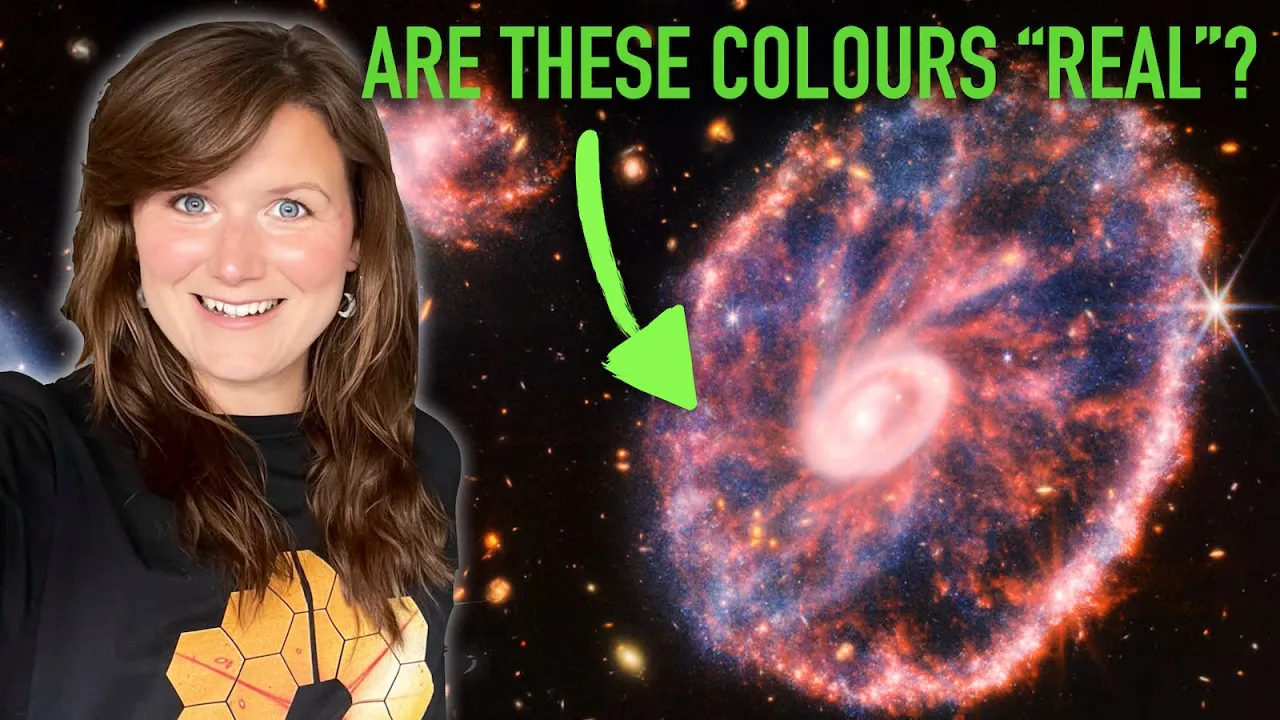







The James Webb Space Telescope has captured unprecedented mid-infrared images of 19 galaxies from the PHANGS (Physics at High Angular Resolution in Nearby Galaxies) project, revealing detailed dust structures that trace the history of star formation and death in these galaxies. The images show bright red regions where dense, hot dust shrouds protostars forming new stars, while blue regions indicate older stellar populations. The false coloring convention maps shorter infrared wavelengths (hotter objects) to blue and longer wavelengths (cooler objects) to red, similar to how blue light is more energetic than red in visible light. These observations demonstrate how dust—formed from heavy elements created when stars die—glows in mid-infrared wavelengths, allowing astronomers to track where stars have lived and died throughout a galaxy's history.
JWST's Stunning 19 Galaxy Images & More | Night Sky News Feb 2024
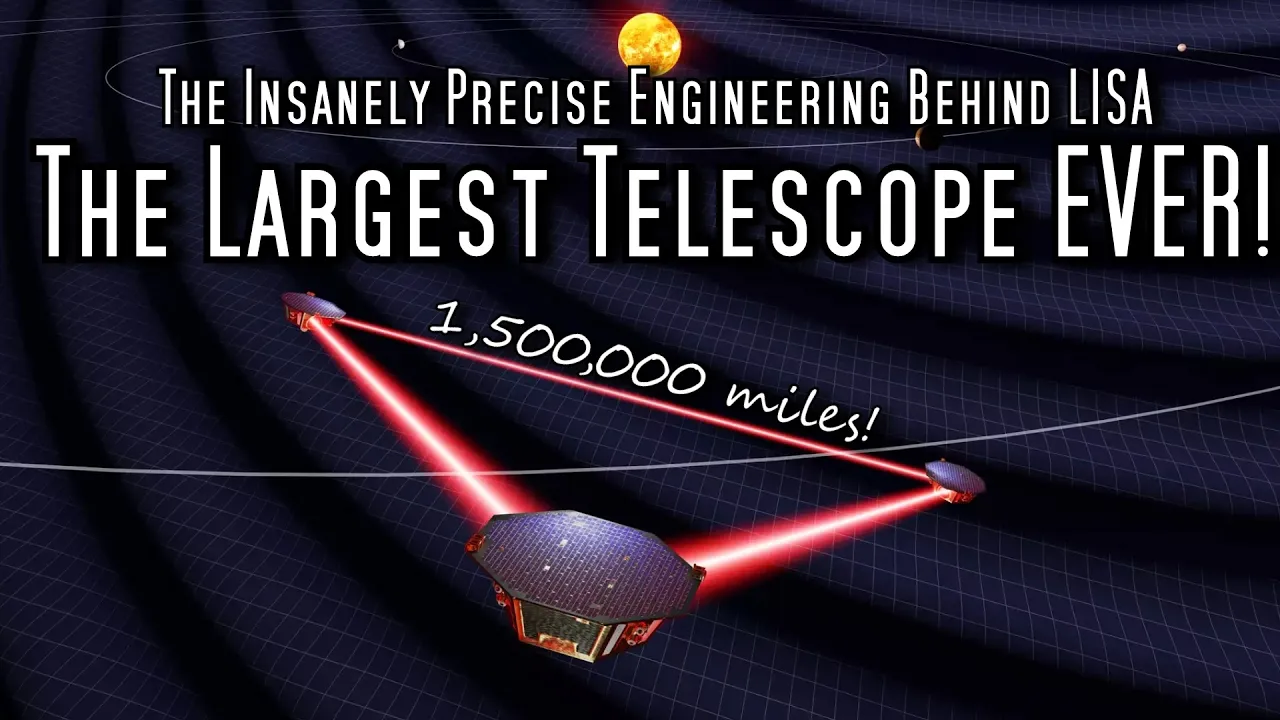
Added:hello and welcome to another episode of Night Sky News for February 2024 with me astrophysicist Dr Becky smithurst this is a show where we chat about what you should look out for in the night sky in the next few weeks and then we chat about what's been happening in space news in the past few weeks in this episode we're chatting about the Juno probes latest flyby of Jupiter's moon IO and the incredible images it sent back JW's discovery of an isolated dwarf Galaxy that shouldn't exist and JD wy's latest incredible images of these 19 galaxies which just look incredible and reveal so much about how these Galaxies have evolved there's chapped markers down here if you want to skip ahead to any of those specific news stories plus any scientific research papers I mention are all going to be linked in the video description down below free to read also a big thanks to Planet wild for sponsoring this video but more on them later and now without any further Ado let's kick things off and start by looking all right first up it is nearly the full moon words that an astronomer never really wants to hear because the full moon is so bright that it washes out a lot of fainter objects in the sky but the full moon on the 24th of February will be the most distant full moon of 2024 February's full moon is a micro Moon occurring when the moon is near apy in its oval orbit around the earth it's most distant position it gets from Earth at around about 405,000 km away now the moon will technically look smaller and a lot less brighter in the sky but just like I say every time there's a super moon the differences are going to be too subtle for your eye to actually pick out especially because you're not going to have like a normal moon right next to it on the sky to make any sort of comparisons too so nothing really to see here but you know if you spot the moon in the sky in the next couple couple days it's quite fun knowing that you know it's 22,000 km further away than it normally is now as we head into March and our nights sadly get shorter here in the northern hemisphere as we approach the Equinox on the 20th here's what you should look out for from the 7th to the 9th of March if you have a clear morning and you're up before the sunrise look out for Venus Mars and the cresant Moon in a triangle together in the Eastern sky so looking towards that brightening glow of the sunrise now this is not one for those of us up north the further south you are here the easier this is going to be to spot because the two planets and the moon will rise higher in the sky before the sun does behind them all the solar system objects take the same path through the sky it's called the ecliptic because the solar system is just one flat plane and the angle of the ecliptic to the Horizon at this time of year in the morning is just too shallow the further north you go so they just don't rise High Enough for those of us above around about 40° North or so for those who are a bit further south you can spot it Venus will be the brighter of the two objects it is the brightest thing in the night sky after the moon so that should be fairly obvious to spot and then Mars will just have that slight reddish tinge to it so you know have a go also see if you can capture this with your smartphone as well because smartphones really struggle when the sky is very dark and you know the planets are trying to a picture of or the moon are very bright like they struggle with that contrast but the fact this is going to be quite close to Sunrise means the sky will be much brighter there won't be as much contrast between the bright planets the moon and the sky so your phone should be able to capture this so you know have a go at some astrophotography then you know if we want something for everyone wherever you are in the world a couple of days later on the 13th and 14th of March the now waxing cresant moon will pair up with Jupiter in the west just after Sunset now the further south you are the quicker the pair will set they're only going to be around for about an hour hour or so whereas the further north you are they'll be around for a few hours or so before setting on the 13th the moon will be closest to Jupiter and then by the 14th it will have actually moved between Jupiter and the pides star cluster which we'll be losing from our Sky soon so try and spot it while you still can similarly speaking of losing things from our Sky by the 17th of March the now half moon will have moved into the winter hexagon six bright stars that ring the Orion constellation so if you start with Riel on Orion's left foot and then head over to sirius the dog star then up to prion up again to cter and Pollock in Gemini across to Capella down to alaran the red eye of the bll in the torus constellation and then back down again to Riel you complete the hexagon it's not a constellation it's just like a collection of the six brightest stars in the winter sky that you can see even in the most light polluted area is and once you have spotted it you will not be able to unsee it in the sky if you haven't spotted it before it is a lot bigger than you would necessarily think and the moon should be able to help you know where to start looking in the sky for that distinctive hexagon shape March really is the last chance that you've got to spot this poster child of the winter Sky along with the constellation of Orion as well which I think is many astronomers favorite constellation because they'll just get too low to see as we head into spring and they won't be back again until next winter then a few days after the Equinox on the 22nd of March we then got a conjunction of Venus and Saturn in the early morning sky in the East Just Before Sunrise again this is sadly not a sight for those of us up in the more northly regions because again of that angle of the ecliptic to the Horizon in the morning at this time of year but for those further south you should be able to enjoy this conjunction where Venus and Saturn will come as close as 2° away from each other from our perspective here on Earth that's about the width of your finger held out at arms length so they'll come very close together and it's not just the morning of the 22nd you should look out for this you know if it's cloudy that day because in the days leading up to it they'll creep closer to each other and then in the days after move away from each other again as they move along their orbits which is always really fun to notice right over a couple of days because like it just really connects you to the fact that these are like objects that are moving along their orbits which I love as they do get very close together you should be able to see them both as you look down like a single pair of binoculars or like a a low magnification telescope so if you have a clear view of that Eastern Horizon and you fancy getting up early or you know you're already up that early anyway I definitely think it'll be worth it and finally I just want to give you all a heads up on a comet that people are keeping a close eye on in case it gets bright enough that we be able to see it in the night sky with just our eyes at least here in the northern hemisphere anyway it's called Comet Pon Brooks and it currently has a magnitude or brightness of plus seven magnitude is just the scale we use to classify objects brightness in the sky it is reversed so the more positive the number the fainter something is and the more negative the number the brighter something is and people talk about like the magnitude limit for the human eye and people estimate that it's around about sixish but that's really only in the darkest of skies I think sort of you know for the classic like suburb of a city that magnitude limit is probably more like 3 to 4ish magnitude is also a logarithmic scale so a difference in magnitude from 7 to four means an object is about 17 times fainter so this comet has got a lot of brightening up to do as it gets closer to the Sun for us to be able to spot it with our eyes I'll pop a link in the video description below if you want to keep an eye on the observations of this Comet and the predictions from the models plus it's going to be near enough to the Andromeda galaxy in the skies that could be a good astrophotography opportunity as well plus there's also the total solar eclipse coming up in early April that's Crossing North America and if the comic gets bright enough by then you might be able to see it during totality when the moon fully blocks out the sun which would just be incredible and add this whole new level of excitement to the eclipse so I'll keep an eye on it for you but if there is a big change I'll make sure to post a YouTube short about it so keep an eye out for that otherwise I'll just give you another update in next month's Night Sky News for March now before we chat about what's been happening in space news I'm really excited to be partnering with Planet wild again for this video Planet wild is an initiative that I'm really passionate about it's a global community of people who care about the planet I want to give Back To Nature every month Planet wild goes on a mission to bring back an endangered species or clean up our oceans or restore forests it's Wild Spaces like this that we still find these pristine dark night skies so protecting them is a win-win for us astronomers and for nature they fund these projects using their monthly memberships and then they also make a YouTube video to document the process so you can support them in so many ways either through membership like I do which costs less than a Netflix subscription every month and you know you can cancel any time and then with your membership you then get access to their app where you can actually vote for like what project you want to see them do next with your membership funds but you know if you're not in a position to support them through membership then you can support them by simply watching their project videos on YouTube on their latest Mission they're helping to restore an ancient Caledonian Pine Forest by making R right allowing light in and providing neut nutrients for various species which was such an inspirational video to watch this probably easy to see why I love Planet wild so much which is why I'm actually giving out A month's free subscription on me to the first 200 people that sign up using the code Dr Becky you can either scan the QR code or you can follow the link in the video description down below I've also linked their amazing YouTube channel down below as well so make sure you check them out all right now let's come back down to earth and chat about what's been happening in space news in the past month all right let's start with some telescope news because the biggest ever telescope is currently under construction in Chile known as the European extremely large telescope or E LT it has a mirror to collect light that is 40 m across four times bigger than the current biggest telescope so the building that houses it is practically the size of a stadium it's a huge construction project but the construction did hit hit a big milestone this past month as the Dome so the structure that will like protect the telescope but also open up so that it can peer out actually rotated For the First Time The Dome needs to rotate because the telescope needs to track objects as they move through the sky so the Dome that houses it needs to move with it this first test move the Dome 10 m in either direction at just 1 cm/ second but the vyl operating speed will be about like a normal walking p about 5 km an hour and ISO released this footage of the test and it's really only when the humans pop into frame do you realize how big this thing actually is it's an incredible feat of engineering especially when you consider the fact that the Dome and the telescope actually have to be completely separate structures from each other right you have to isolate the telescope from any vibrations that are caused by the dome's movement otherwise your telescope is just going to shake as you point it at the guy and we need it to be incredibly precise if you want to know more about the E and the science that's going to be done with it check out my video on the next five big astronomical observatories I'll link it for you in the video description down below and in other telescope news this month Issa actually approved the laser interferometer space antenna Mission also known as Lisa a telescope to detect and study gravitational waves but from space so these are ripples through space itself caused when two very dense objects like black holes merge together and they change how space is curved and give us the effects of gravity so we currently have the ligo and Virgo detectors which are gravitational wave detectors on the ground right now which is sensitive to gravitational waves when like two fairly light black holes merge together the kind of black holes that are formed when a star dies anywhere from like three to 100 times the mass of the Sun but Lisa has been designed to be sensitive to the gravitational waves from the merger of super massive black holes you know the kind that are found in the centers of galaxies that are millions to billions of times heavier than the Sun and also be sensitive to any gravitational waves that we think might be produced in the very early Universe we're talking like the first few fractions of a seconds of the universe's life allowing us to test our theories of what happened then like never before if you want to know more about why different gravitational wave detectors are sensitive to gravitational waves from these different types of events I've made a video before about this and how the detectors actually work if you want to check that out again I'll link it in the video description below now the design Felisa has three lasers in a triangle and the lasers are there essentially to measure the distance that the laser is actually traveling so if a gravitational wave passes through it squashes and stretches space and so you detect that as a distance change that the laser has traveled and then you can work out okay what was the shape of the gravitational wave that passed through and what direction did it come from and then you can use that to try and study whatever went bump out there in the universe to make the gravitational wave to be sensitive to gravitational waves from merging super massive black holes though these lasers need to be separated by a distance of 2.5 million kilm which is about 6.5 times further away than the Moon is from Earth So the plan is to have this detector Trail the Earth in its orbit around the sun it sounds crazy and impossible but this month Issa announced that Lisa went through the formal adoption stage of its missions happy birthday here L which essentially says yeah right the mission concept and the Technologies are all sufficiently advanced enough and it gives the go-ahead to actually start building the instrument ments and the spacecraft so work is now set to start in January 2025 after like a European like industrial contractor who's actually going to build this thing has been appointed but now we're just bringing Lisa just that one step closer to reality in some sadder news now on the 22nd of January 2024 the radio astronomer Aro penas passed away at the age of 90 panzas along with Robert woodro Wilson discovered the co mic microwave background radiation for which they won a share of the Nobel Prize in physics in 1978 I think every astronomy student has heard the story of penas and Wilson and how they discovered the cosmic microwave background you know an observation that is now like a a fundamental part like the foundation of our best model of the universe and when they first detected it they at first thought it was just noise coming from bird poop on the antenna I found out the news a few weeks ago while I was prepping my video from last week on the Unsolved Mystery of the Horizon problem which stems from our observations of the cosmic microwave background and you know I was just really saddened by the news so join me in saying a very sad but thankful goodbye to Aro penas a real giant of the field another goodbye we had to say this month was also to the Ingenuity helicopter on Mars little jinny which during a flight seems to have had a crash landing damaging one of its rotor blades I made a YouTube short when that happened so if you want to know more about that check it out I'll link it down below while we're on the topic of solar system missions we had some incredible images back from the Juno probe this month which is in orbit around Jupiter as it made a second very close flyby of Jupiter's moon io on the 3rd of February reaching just 1,500 kilm from io's surface it did the same sort of close flyby back in December and these twin flybys were designed essentially so that we could better understand what Powers io's volcanic activity because IO has over 400 volcanoes making it the most geologically active place in the solar system to give you some context IO is only slightly larger than Earth's moon it's the fourth largest moon in the solar system it orbits the closest to Jupiter of the four famous Galilean moons that you know you can actually see with like binoculars or a telescope from you back garden and fun fact it has mountains higher than Mount Everest so the question has always been what is powering this extreme geological activity on iO now the thought is that because IO is so close to Jupiter that it is a tidal effect that's causing this so like how a tidal effect between the Moon and the Earth causes the tides in our oceans perhaps Jupiter pulls on an ocean of magma under IO surface which is what triggers these volcanic eruptions one of these eruptions was actually captured during the flyby with two plumes spotted by Juno you know they're either coming from like two vents close together or perhaps it's two plumes from the same like giant volcano there's two ton of these images from the flyby that have all been made publicly available if you want to check them out again I'll pop the link in the video description below and citiz and scientists have already been getting their hands on them too as well to process and even colorize them themselves like in this image which shows one side of ey Li by the sun which is nice thing clear but the other side lit by reflected sunlight from Jupiter so similar to Earth shine on our own moon this is Jupiter shine that we're seeing here so the next step will be for the science team on the Juno mission to analyze all of these images in great detail along with the other data that the Juno probe collected during the flyby of the gravitational field around IO also try and work out what is actually going on under the surface the images will also be compared to the ones taken by the Galileo Pro back in 2002 which did an even closer flyby of IO coming just 102 km from its surface so what they'll do is like compare images side by side of like the same regions that were imaged by both probes to see if they can spot any sort of surface changes that have happened due to geological activity in the past 20 years on iO or trying to get like what is going on under the surface of IO so I'm going to keep an eye out for those sort of science results being published in a research journal in the next couple of months maybe year or so was see how long it takes them um and when that happens I'll make sure to make a video report on it on this channel um so make sure you're subscribed so you don't miss out on that but for now we've just got a lot of incredible images to enjoy but they weren't the only incredible images that were released this month because jwst has spoiled us again with these incredible images from the Fang team and honestly I have been so excited for these images to get made public cuz I've seen seen a few members of like the fangs Jade team like give seminars on this including one of my colleagues here at Oxford as well and every time I've just been sat there just like mesmerized by them just like I cannot wait for these images to get made public so that I can share with you like how incredibly cool they are so for some context fangs stands for physics at high angular resolution in nearby galaxies and it's a big collaboration of astronomers worldwide that are trying to get really high resolution data for just a small sample of about 74 galaxies across all the different wavelengths of light that are sensitive to different things different processes going on in a galaxy so from Radio light that's sensitive to the emission of gas that could form stars to UV and blue light that's sensitive to newly formed stars and to red and near infared light that traces old stars and now with jwst observations into the mid infrared that can trace the glow of dust itself so when we say dust we mean sort of like lumps of heavy molecules that have clumped together under Gravity to give us these little grains they're the heavy elements like carbon oxygen and nitrogen that are made when a star runs out of fuel and dies and either just sort of like Fizzles out or if it's big enough will go supernova and that's what distributes all those heavy elements out into space dust is essentially Supernova poop right and what's more if it mixes with like more pure hydrogen gas it can actually act as a catalyst to speed up the formation of new stars so observing dust is great because it can actually track a lot of the the history of where stars have lived and died in a galaxy and what's more dust thankfully glows in mid infrared wavelengths so with the Mir instrument on board jwst we can actually capture where the dust is and we can get these incredible images for 19 of the 74 fangs galaxies so far the resolution is obviously incredible like as you'd expect it's jwst right and yet I'm still not used to seeing it like it's been two years of jwst and yet still I look at this and my brain goes that's got to be a computer simulation because it's so high res and yet this is just the new normal now so yeah these images are spectacular to just soak in the beauty but let's get into the detail of what we can see here so the bright red spots they're really dense hot balls of dust that are like shrouding where you've got Proto Stars forming so new stars these are the areas that like in a few thousands of years the newest most massive stars will have formed then you've also just got this incredible structure that you see across the whole galaxy right where there's holes in the gas and the dust especially along like the spiral arms in the galaxies that's where there's been like a supernova so blasting out these holes in the gas and the dust and concentrating it then along these filaments where new stars will then form in the future then if you look at the center of these galaxies you'll also see how some look sort of bluish and that's because of the way these images which are taken in infrared light that we can't actually see with our eyes have been falsely colored so that we can actually pass like the scientific information that's contained in the images so shorter infrared wav length detected by the near instrument that Trace hotter things have been colored blue and the longer infrared wavelength detected by mirie that trace the cooler things have been colored red which is just like what we do with Optical images blue light is more energetic that traces the hotter things red visible light is less energetic it traces the cooler things so the galaxies with Bluer centers are dominated by their Stars lights most likely like the older smaller Stars whereas the galaxies with pinkish reddish centers and that especially have these in the middle from where something has been so bright it's saturated the detector those have got growing super massive black holes in the center it's not the super massive black hole itself that we can see it's the gas and dust that's orbiting around it that's you know traveling at such a huge speed that it's super heated so much that it glows and that we can see it what's more is that if you then add all the other wav length of light to this that these Galaxies have been observed in by the fangs team you get even more information about them which is apparent even if you just compare the jbst images taken in the infrared to the hobble images taken inv visible light the two Trace completely different things so these images this month were made public with this paper by Williams and collaborators who also described like the data processing pipeline they used to go from like the raw image fresh off the telescope to their final images with sources of noise removed that code has also been publicly released so you know other scientists can use it on their own images or even double check the methods that the Fang team have used if they want to again I'll link all of this down below if you want to get your hands on the raw images and play around with the code to process it yourself Williams and collaborators also note that these 19 galaxies are just from the first year of JD's observations in cycle one there's 55 more of the fangs Galaxy example that have been observed by Jay bristy in cycle 2 its second year of observations and those are going to be released very soon and I'm sure there'll also be just a slew of scientific research papers that dive into all the intricacies of what's been found in these images and what we've learned from them so again I'll keep an eye out for those cover it on my channel when they're release make sure you subscribe so that you don't miss out but last but not least let's chat about this research from Carlton and collaborators who also used jwst to find an extra faint dwarf Galaxy like we've never seen before dwarf galaxies are around sort of like a th000 to 10,000 times less massive the normal galaxies like our own the Milky Way if you've ever seen the southern hemisphere night sky you might have spotted the large or small melenic clouds these are dwarf galaxies in orbit around the Milky Way now the dwarf Galaxy population has a huge amount of variation across it mainly because they get knocked around a lot their gravity is not very strong so if they interact with a much larger Galaxy they tend to get stretched out into these long streams so when we observe the dwarf Galaxy population as a whole like we're not entirely sure that you know all the observed properties that we record whether they're due to like the fact that this is a dwarf Galaxy and that's its nature or whether it's to do with all the external effects that are going on so people look for like isolated dwarf galaxies to understand this better that aren't in orbit around you know any other Galaxy but almost all of them that we found are still happily forming Stars so one big outstanding question is how do dwarf galaxies shut off their star formation and die like we see in other larger galaxies no one's ever really found a like truly isolated dead dwarf Galaxy that's no longer forming any stars and it's probably because they'd just be incredibly faint making them so difficult to spot Divine these things you're going to need a really big telescope that can like collect enough light to be able to Spot It also preferably one that observes in the infrared as well because these sort of stars that are left the longest after a galaxy has died the oldest stars and they give out the most light in infrared so lo and behold the James of Space Telescope has done just this with Carlton and collaborators serendipitously discovering this dwarf galaxy in the prime extragalactic areas for reionization and lensing science or pearls project which is a deep field survey on jdst to study very distant galaxies but this dwarf Galaxy essentially photobombed one of those images and jwst could resolve the individual stars in this galaxy which meant that Caron and collaborators could use them to get at a distance of this dwarf Galaxy of 30 megap Parx or around about 100 million light years away so that's about 50 times the distance to the nearby Andromeda galaxy now turns out this dwarf Galaxy had actually been spotted in previous Galaxy surveys before that had been done from the ground in visible light but it had just been seen as a faint fuzzy blob and people weren't sure well is that a nearby very faint dwarf Galaxy or is it a very distant Galaxy that appears small because it's so far away from us and so faint because it's so far away from us but what's useful about those previous observations in the different wavelengths of light is that Carlton and collaborators could use those those previous observations to work out a star formation rate of.4 Sun's worth of stars per year that's incredibly low which because this dwarf Galaxy is isolated and it's completely separate from any uh external processes that could be affecting it you can say that the dead nature of this dwarf Galaxy it's very low star formation rate is due to some in internal property of the dwarf Galaxy itself now Carlton and collaborators don't really discuss what this internal process could be this paper was really just to announce its Discovery and initial properties that were so different from anything that we've seen before with dwarf galaxies but in the discussion they say that more work is going to be needed like to properly understand this and of course as usual we'd ideally find more of these things that we can actually study them as a population of isolated dead dwarf galaxies to really try and figure out what is going on but jwd has shown that they do actually exist now like maybe we're just going to start seeing more of these photobombing faint dead dwarf galaxies appearing in these deep Galaxy survey images that we do hopefully it's all just a matter of time all right that's it for Night Sky News for this month and also for this filming space as well for those that missed it I actually shared on my Instagram story last week the good news that we are moving house something that has been made possible thanks to you guys watching my videos on YouTube and Just loving space as much as I do so just a huge thank you again I feel like I say it quite often but like I still can't get over this just a huge huge thank you just for being here and supporting the channel and watching my videos what I mean means is that I'm going to have a new office space in that house and therefore a new filming space as well which is just a blank slate at the minute so I'm really excited to like you know like design and decorate it as well and I want to take you guys along for the Journey of that so I'm going to be sharing a bit of it over on YouTube shorts for more day-to-day stuff over on Instagram and Tik Tok as well if you want to follow along with the process I'm actually filming the next 3 weeks worth of video for my YouTube channel today straight after this just so that they're done and it's one less thing to worry about during the move so that means that the first video that will be filmed in the brand new filming space of the new house which will probably still just be a blank white box at that point will be Night Sky News for March 2024 so until then everybody happy stargazing last Night Sky News in this filming space it's crazy with me astrophysicist Dr I can't even do my own name today hello that's too slow hello and welcome to another was a bit more hello and then we chat about what's been happening sorry I was like Canin something moved behind oh the bars for my mic going up or the mic on the camera I thought I'd did something move behind me that's so weird trick of the eye anyway hello and welcome to another episode of Sky News for February 2024 with I'm already doing this like with me has two thumbs and can't get this script right darkest most least light polluted most least light polluted for those a bit further SP spou for those a bit further spou who can spot it South who can spot it spou it sounds crazy and impossible but an but Ana announced Easter announced and the thought was always the thought has always been face is hard words hard I have nothing to sing I have no inspiration for singing this week apparently because life is in the minute just a mess it's a mess
Up Next
Decoding the Hertzsprung-Russell Diagram: Stellar Evolution & Temperature
@evanthorizon
2.5M views•2025-09-25
First Billion Years of the Universe with the Square Kilometre Array
@iaaudc
121 views•2022-05-26
JWST Finds Evidence for First Stars in Universe
@DrBecky
243.6K views•2024-04-04
Gamma-Ray Bursts: Cosmic Snipers Explained | Astronomy
@kurzgesagt
15M views•2016-07-31
Related Study Plans & Knowledge Roadmaps
Structured learning paths in Astronomy